Lenny.com
Explore
Create
ActivitiesNewMathEnglish Language ArtsScience & EngineeringSocial StudiesGlobal LanguagesHealth & Physical EducationSpecial EducationCounseling & Life SkillsArts & CreativityESL
Lenny.com
Lenny.com
Explore
Create
ActivitiesNewMathEnglish Language ArtsScience & EngineeringSocial StudiesGlobal LanguagesHealth & Physical EducationSpecial EducationCounseling & Life SkillsArts & CreativityESL
Lenny.com

Citizenship

Rights, responsibilities, and the legal process of naturalization within a democratic framework. Examines the importance of civic participation, ethical engagement, and the balance between individual liberties and community obligations.

Lenny.com

Solutions

Lenny for EducatorsLenny for SchoolsLenny for Districts

Product

ExploreSign inCreateSupportAbout

Resources

Getting startedMTSS Acceleration Program

Newsletters

School Funding Newsletter

© 2026 Lenny Learning Inc.

TermsPrivacyAccessibility
LinkedInInstagramX
Lenny
Social StudiesSocial Studies PracticesLocation WordsMapsOrder EventsChronology and CausationEvaluating SourcesHistorical ThinkingGeography, Humans, & the EnvironmentAmerican Symbols and LandmarksCitiesStatesState CapitalsRegions of the United StatesGeographic SkillsPhysical GeographyHuman GeographyRegional GeographyGeography of AfricaGeography of AsiaGeography of EuropeGeography of OceaniaGeography of the AmericasSociety and Environment of EuropeSociety and Environment of AsiaSociety and Environment of The AmericasSociety and Environment of the Middle EastSociety and Environment of AfricaHistoryPrehistoryComparing Ancient River CivilizationsAncient MesopotamiaAncient Egypt and KushAncient South AsiaEarly ChinaGreeceRome and the Byzantine EmpireAncient World HistoryNative Peoples of North AmericaNative Peoples of Mesoamerica and South AmericaAfrican EmpiresMedieval AsiaMedieval EuropeThe Silk RoadMedieval HistoryIslamic EmpiresWorld ReligionsRenaissance PeriodAge of ExplorationThe Thirteen ColoniesThe American RevolutionUS History Early RepublicFounding of the United StatesUS History AntebellumUS Civil WarReconstruction PeriodThe Gilded AgeUS ImperialismWorld ImperialismWorld War IUS History 1920sGreat DepressionWorld War IIThe Cold WarUS History 1950-60sUS History 1960s-70sWorld History 20th CenturyContemporary US HistoryContemporary World HistoryHolidaysCivics and GovernmentCitizenshipGovernment FoundationsThe ConstitutionUS ConstitutionExecutive BranchLegislative BranchJudicial BranchState and LocalPolitical ParticipationPublic PolicyPolitical SystemsPower and AuthoritySocial MovementsDefining DevianceTheories of DevianceCrime and Criminal JusticeEconomicsBasic Economic PrinciplesSupply and DemandWhat is MoneyEconomic FundamentalsMicroeconomicsMacroeconomicsBanking and FinanceEconomic SystemsGlobal EconomicsCorporations and PowerThe Changing WorkplaceUnemployment and LaborClass and InequalitySocial MobilityGlobal InequalityPsychologyHistory of PsychologyPsychology as a ScienceBrain and Nervous SystemNeuroscience and BehaviorGenetics and BehaviorSleep and ConsciousnessSensory ProcessesPerceptual OrganizationClassical ConditioningOperant ConditioningObservational LearningCognitive LearningMemory ProcessesThinking and Problem SolvingLanguage and CognitionTheories of MotivationStress and CopingPrenatal and Infant DevelopmentChildhood DevelopmentAdolescent DevelopmentAdulthood and AgingSelf and IdentitySocial CognitionSocial InfluenceAttraction and RelationshipsGroup BehaviorPrejudice and DiscriminationAnxiety and Mood DisordersClinical PsychologyForensic PsychologyPhilosophy & EthicsIntroduction to PhilosophyMajor Philosophers & IdeasMind and Body ProblemFree Will vs DeterminismEthics & MoralityReligion & PhilosophyPolitical Philosophy

Videos

Exploring the Types of Taxes in the United States

Exploring the Types of Taxes in the United States

This educational video provides a comprehensive overview of the United States tax system, breaking down revenue collection across three main levels of government: federal, state, and local. Hosted by Caroline, the lesson begins by connecting the abstract concept of taxation to the tangible reality of a paycheck stub, explaining how tax dollars fund essential services ranging from NASA space missions to local libraries. It demystifies the complex web of deductions that most citizens encounter, such as Social Security and Medicare, while also introducing broader economic concepts like graduated income tax rates. The content explores a wide variety of specific tax types, distinguishing between those levied on income, consumption, and property. Key topics include the federal income tax structure, capital gains, corporate taxes, tariffs on imported goods, and excise taxes on specific products like gasoline. It further differentiates how state governments rely on sales and income taxes, whereas local municipalities primarily depend on property taxes to fund community services. The video also touches on modern revenue streams like tolls and lodging taxes. Beyond the technical definitions, the video offers high educational value for civics and financial literacy curriculums. It engages students with a segment on "weird taxes"—such as New York's tax on sliced bagels or Kansas's hot air balloon tax—to illustrate how tax laws can be specific and sometimes quirky. By the end, students gain a clear understanding of civic responsibility and the financial mechanisms that support public infrastructure, making this an excellent resource for introduction to economics or government classes.
Miacademy & MiaPrep Learning ChannelMiacademy & MiaPrep Learning Channel

8mins 45s

Exploring the History and Forms of Democracy

Exploring the History and Forms of Democracy

This educational video provides a comprehensive overview of the history, definitions, and forms of democracy. It begins by tracing the roots of democratic government back to Ancient Athens, introducing key historical figures like Cleisthenes and explaining foundational Greek concepts such as the Boule and Ecclesia. The narration breaks down the etymology of the word "democracy" and connects ancient practices to modern civic responsibilities. The core of the video analyzes three distinct forms of democracy: Direct, Pluralist, and Representative. Using relatable analogies like a family vacation planning session, it explains how direct democracy functions versus the efficiency and challenges of representative systems. It also explores the concept of pluralism, where various interest groups compete to influence policy, and contrasts this with authoritarian or single-view systems. For educators, this resource serves as an excellent primer for Civics and Government units. It moves beyond simple definitions to explore the "how" and "why" of government structures. The video emphasizes the critical role of the citizen, encouraging students not just to understand the system, but to actively participate through voting, debating, and staying informed. It is particularly useful for introducing the concept of a Republic and the balance between government efficiency and individual accountability.

Miacademy & MiaPrep Learning ChannelMiacademy & MiaPrep Learning Channel

11mins 24s

How Federal Indian Law Shapes Native Sovereignty

How Federal Indian Law Shapes Native Sovereignty

This episode of Crash Course Native American History tackles the incredibly complex and often confusing subject of Federal Indian Law. Host Che Jim explains that this isn't just a single set of rules, but a centuries-long accumulation of treaties, court cases, executive orders, and statutes that define the legal relationship between the United States government and Native nations. The video uses the metaphor of a tangled string of Christmas lights to visualize how messy and interconnected these legal precedents are, covering everything from international travel to criminal jurisdiction. The video explores three main levels of impact: the individual, the community, and the land. It provides concrete examples for each, such as the Haudenosaunee lacrosse team's struggle to travel on their own passports, the jurisdictional crisis contributing to the Missing and Murdered Indigenous Women (MMIW) epidemic, and the legal hurdles regarding land use and hunting rights. The concept of "Domestic Dependent Nations" is introduced to explain how tribes retain sovereignty while still being subject to U.S. federal power. For educators, this video is a vital resource for civics, government, and U.S. history classes. It moves beyond abstract definitions of sovereignty to show real-world consequences of legal technicalities. It addresses hard truths about systemic inequalities while also highlighting Indigenous resilience and legal victories, such as the restoration of hunting rights and the revival of traditional ecological practices like clam gardening to combat climate change.

CrashCourseCrashCourse

10mins 44s

How Religion in America Evolved Through History

How Religion in America Evolved Through History

This educational video provides a comprehensive overview of the evolution of the religious landscape in the United States, tracing its roots from a predominantly Protestant colonial society to a diverse modern nation. The narrator uses relatable analogies to explain complex social dynamics before diving into key historical periods, specifically focusing on how the Great Awakening reinforced early Christian dominance and how subsequent waves of immigration introduced Catholicism, Judaism, and Eastern philosophies to the American cultural fabric. Key themes explored include the tension between the constitutional promise of religious freedom (the Free Exercise Clause) and the historical reality of discrimination faced by minority groups. The video presents case studies on Jewish immigrants fleeing antisemitism and Chinese immigrants arriving during the Gold Rush, highlighting both their contributions and the systemic barriers they encountered, such as the Immigration Act of 1924. It defines important concepts like "religious revival," "secularism," and "antisemitism" within their historical contexts. For educators, this video serves as an excellent resource for U.S. History and Civics units. It connects abstract constitutional rights to concrete historical events, allowing students to analyze demographic shifts and discuss the social impacts of immigration. The video features built-in pause points for document analysis activities, making it a ready-to-use tool for teaching about the First Amendment, the history of immigration policy, and the value of cultural diversity.

Miacademy & MiaPrep Learning ChannelMiacademy & MiaPrep Learning Channel

11mins 56s

Women in the 19th Century: Reform and Rights

Women in the 19th Century: Reform and Rights

This fast-paced and informative history lesson explores the complex role of women in 19th-century United States history. Host John Green moves beyond the simple timeline of suffrage to examine the legal, social, and economic structures that defined women's lives, including the concepts of "coverture," "Republican Motherhood," and the "Cult of Domesticity." The video illustrates how American women, though legally barred from political participation, leveraged their perceived moral authority to drive massive social changes through reform movements like temperance and abolition. Key themes include the intersection of the abolitionist movement with the women's rights movement, the economic impact of the Market Revolution on gender roles, and the struggle against the legal doctrine of coverture. The video highlights key historical figures such as Elizabeth Cady Stanton, Lucretia Mott, Sojourner Truth, and the Grimké sisters, while explaining the strategic differences between various reform groups. For educators, this resource serves as an excellent synthesis of social history, connecting disparate events like the Seneca Falls Convention and the temperance movement into a cohesive narrative. It challenges students to understand historical agency, analyzing how disenfranchised groups found ways to exert political influence and reshape democratic institutions long before they secured the right to vote.

CrashCourseCrashCourse

13mins 11s

How Election Day and Voting Work

How Election Day and Voting Work

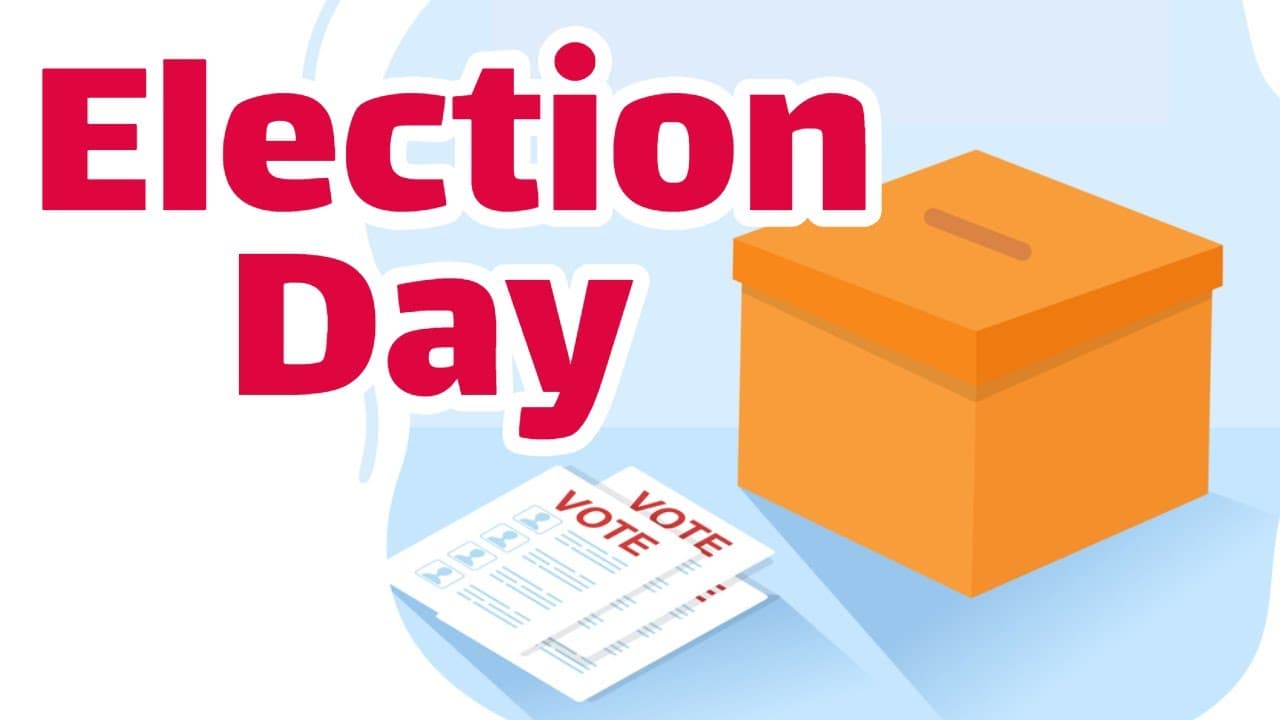
This engaging animated video provides a comprehensive introduction to Election Day in the United States, specifically tailored for elementary students. It explains the timing of Election Day (generally the first Tuesday in November), clarifies the schedule of presidential versus midterm elections, and defines the core purpose of voting as a way for citizens to make decisions about their government. The narrator uses a friendly, energetic tone to break down civic concepts into digestible parts, covering how the "government of the people, by the people" functions through the ballot box. The content explores several key themes including the mechanics of voting, the difference between voting in person versus by mail, and the role of polling places in the community. It highlights the cultural significance of the "I Voted" sticker as a symbol of civic pride and responsibility. The video also touches on the frequency of elections, using a timeline to show how federal elections occur every two years, alternating between presidential and midterm cycles. For educators, this video serves as an excellent anchor for lessons on civics, calendar math, and community engagement. It addresses common student questions—such as why we don't vote every year or if everyone has to vote on the same day—and provides a non-partisan explanation of the democratic process. It is particularly useful for establishing a foundational understanding of civic duty before running a classroom mock election or discussing current events during election season.

Homeschool PopHomeschool Pop

6mins 45s

Materials

Civics Class Syllabus

Civics Class Syllabus

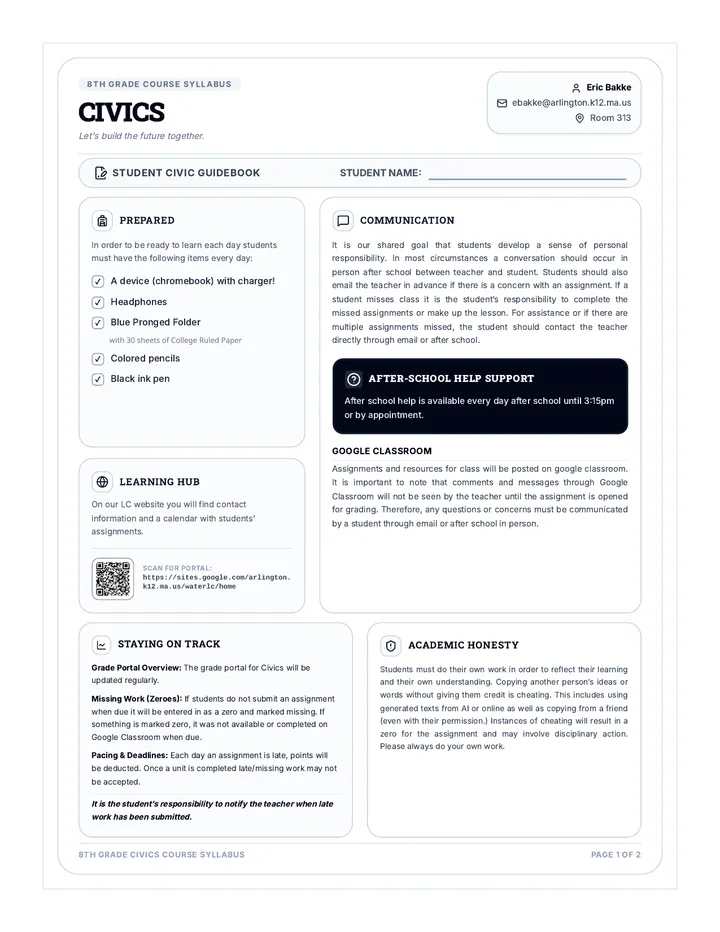
Civics Class Syllabus updated with an extra large QR code filling approximately half of the Digital Spaces container for maximum visibility and effortless scanning.

E

ebakke

Bilingual Civics Picture Quiz

Bilingual Civics Picture Quiz

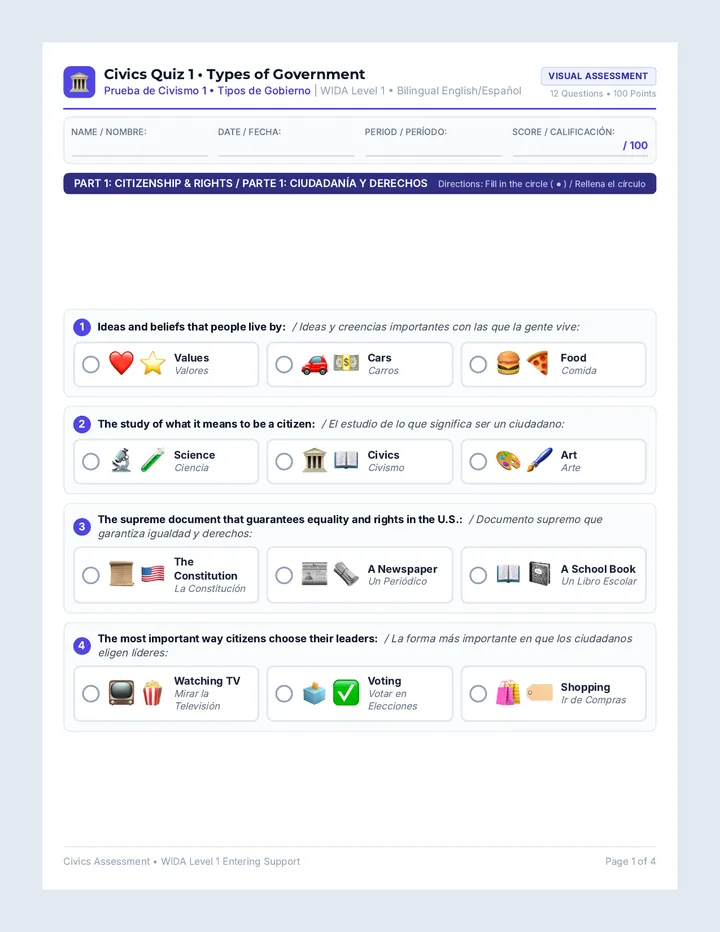
A 4-page print-ready bilingual (English and Spanish) Civics and Types of Government quiz specifically modified for WIDA Level 1 English Learners, featuring simplified sentence frames, pictorial icons for every prompt and choice, identical answer styling, and an educator scoring and accommodations guide.

N

nebouchard

Central American Freedom Reading Worksheet

Central American Freedom Reading Worksheet

A Grade 8-9 dual-language reading and multiple-choice worksheet covering Central American Independence Day (September 15, 1821). Features a 4-paragraph parallel English and Spanish text alongside 6 standards-aligned bilingual multiple choice questions assessing key historical concepts, leaders, and civic traditions.

GJ

Gerardo Jimenez Ramirez

Pocket Vocab Lab Activity Templates

Pocket Vocab Lab Activity Templates

A printable horizontal mini-composition notebook interactive vocabulary toolkit for Ohio 6th Grade Social Studies. Features wide horizontal inserts for dual-coding icon vaults, relational analogy engines, geographic semantic webs, and historical context decoders with cut lines and glue tabs.

MG

Mary Grose

Council Minutes Packet

Council Minutes Packet

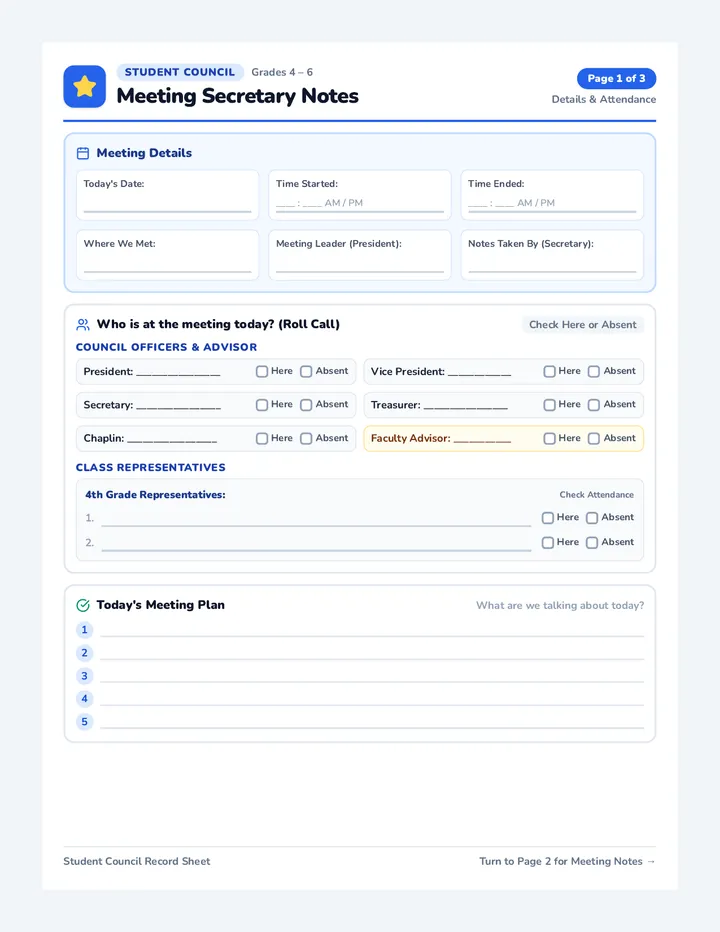
An elementary-friendly, three-page Student Council Meeting Record Packet designed for 4th-6th grade secretaries. Includes roll call with Chaplin, 2 dedicated lines for 4th grade class representatives, a 5-item meeting plan, 3 discussion topics, 3 vote tallies, an expanded 6-item to-do list, and dual sign-offs.

RJ

Rachel Johnston

Democracy Design Project Guide

Democracy Design Project Guide

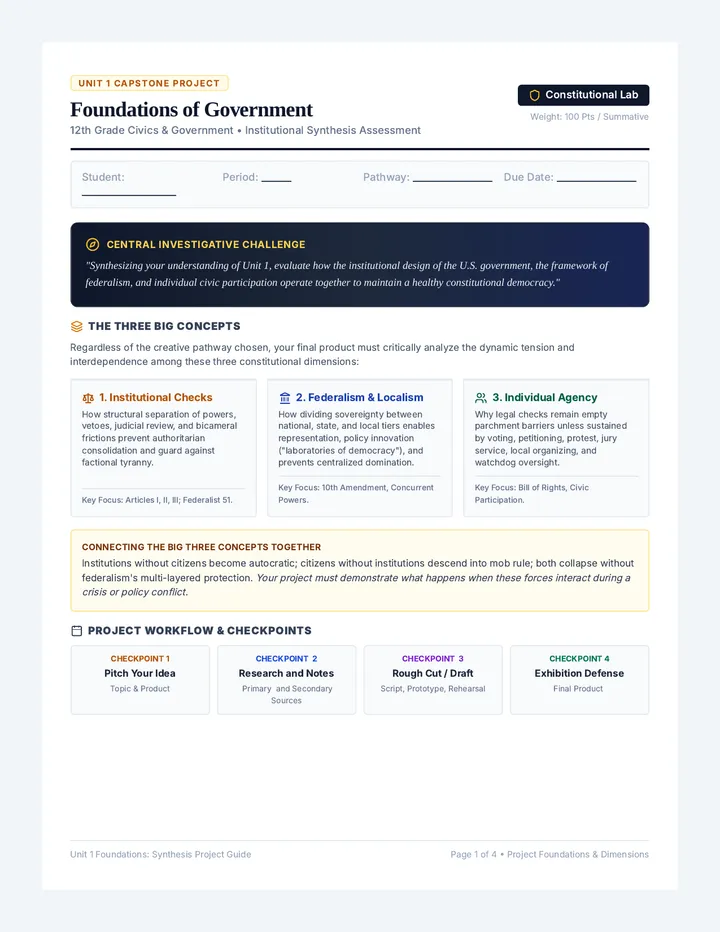
A comprehensive 4-page student project assignment guide for 12th-grade Civics and Government, detailing 5 creative project pathways (podcast, documentary, interview simulation, reader's theater drama, and board/card game), an analytical rubric across the three core constitutional dimensions, and a student planning blueprint.

JG

Joshua Griffith

Sequences

Liberty Ledger Annotation Worksheet

Spirit of Independence

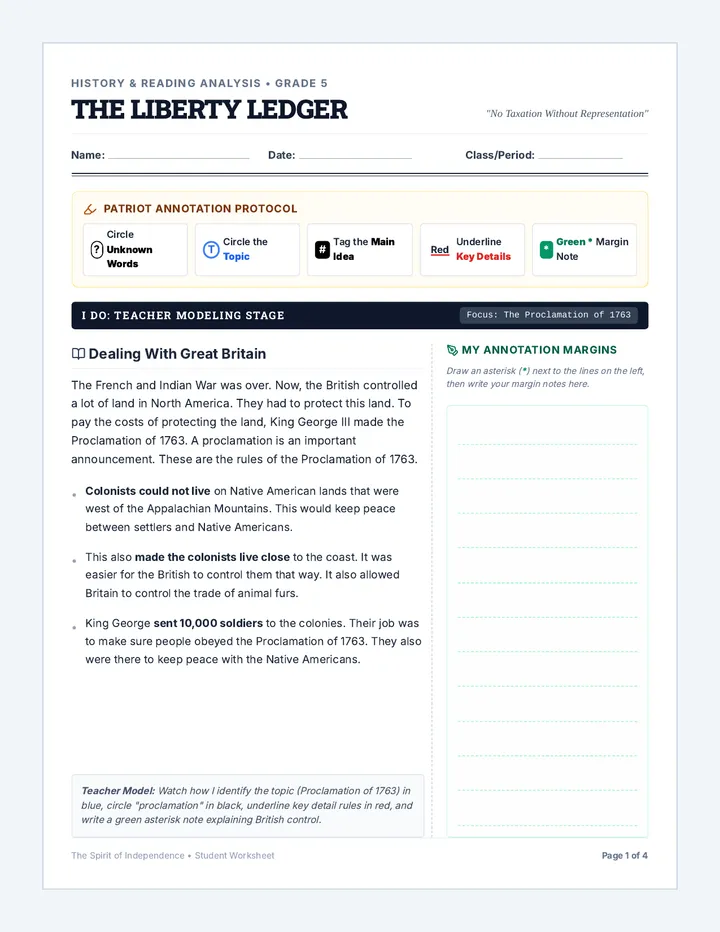
A fifth-grade social studies and active reading unit exploring the growing friction between Great Britain and the American colonies, focusing on the causes, consequences, and motivated actions that led to the American Revolution.

MN

Monica Nava

7
Thirteen Friends Worksheet

Democratic Foundations

A series of lessons exploring the foundational documents and processes of the United States government, from the birth of the nation to the creation of modern laws.

SB

Stephanie Bizeur

40
Skelton Spotlight Teacher Guide

Skelton Spotlight

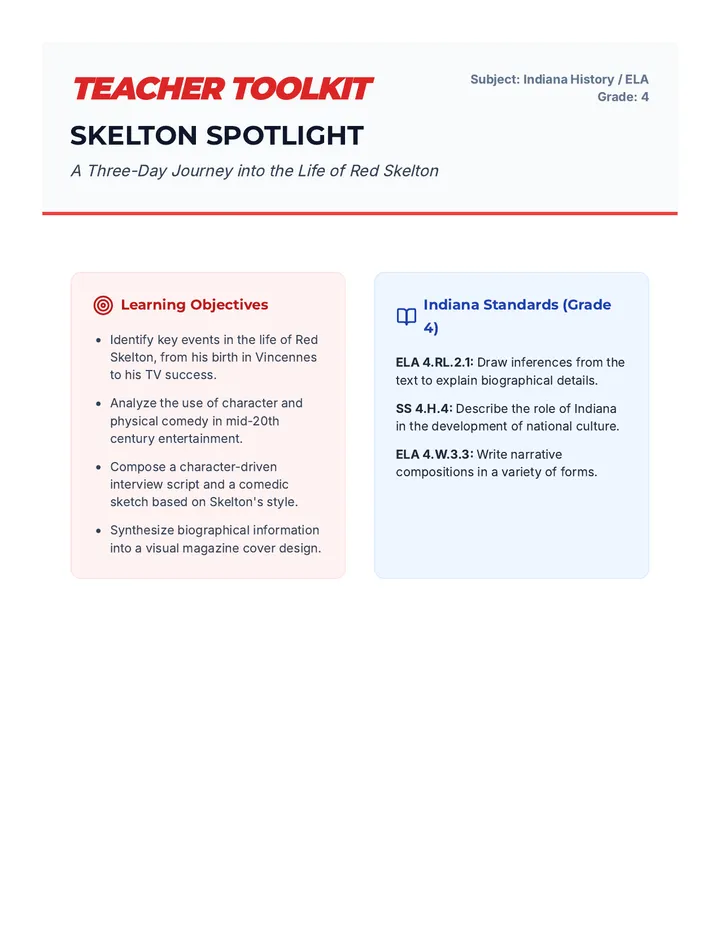
A three-day exploration of the life and legacy of Indiana-born comedian Red Skelton, presented in a vibrant magazine format. Students explore his early life in Vincennes, his iconic characters, and his lasting impact on American comedy through reading and creative performance activities.

MG

Matthew Gaudin

8
Unity Roadmap Teacher Guide

Unity and Growth

A modified Modern US History curriculum (Founding to Present) for Tier 2 and 3 special education students, based on Grade 11 Social Studies standards. Focuses on government, industrialization, world wars, and civil rights.

D

dfleisch

26
Washingtons Warning Lesson Plan

Washington's Farewell Legacy

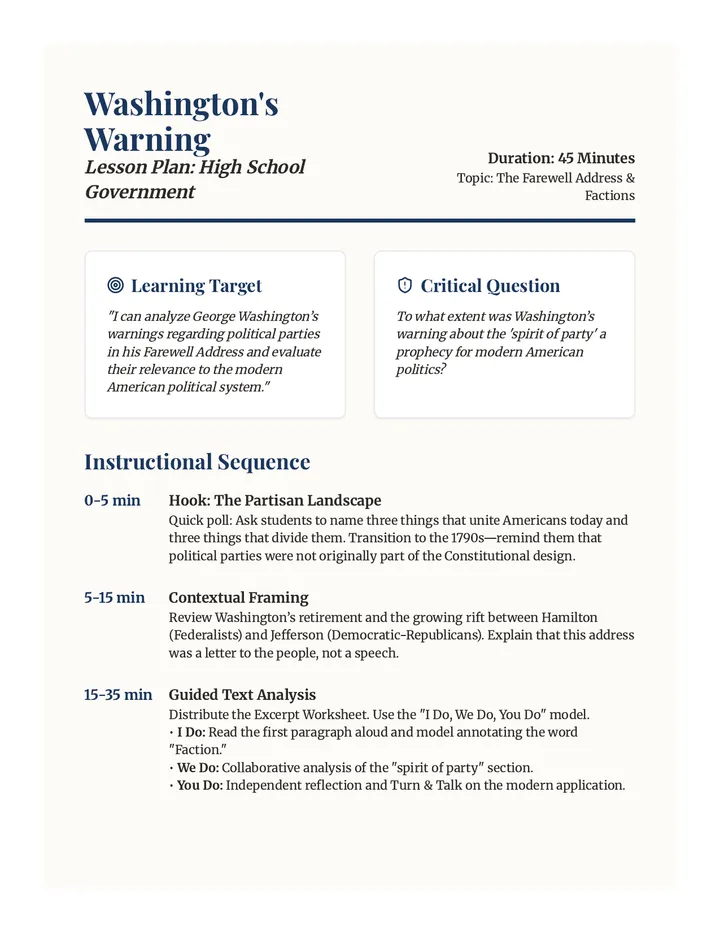
A two-part sequence that takes students from a deep-dive analysis of George Washington's Farewell Address to a modern-day evaluation of his warnings regarding political parties, media bias, and national unity.

CE

Chelsea Elliott

24
Master Plan Slides

Power Players

A 5-week unit exploring the foundations of the United States government, the three branches of power, and the responsibilities of citizenship, specifically tailored for 4th-grade learners in Illinois.

KC

Kady Carter

8