Say (Cause Modeling): "Class, look at the first paragraph of Page 1. Historically, the French and Indian War was a major CAUSE of the conflict. Britain won, but they were left with a massive debt. I will circle the topic 'Proclamation of 1763' in BLUE, and circle the word 'proclamation' in BLACK. I am going to underline in RED that Britain needed to pay the costs of protecting this new land."
Say (Consequence Modeling): "Now let's think about the direct CONSEQUENCE of that debt. Because Britain needed money and control, King George issued the Proclamation of 1763. This restricted colonists' freedom. Let's underline the key details of this proclamation in RED: 'Colonists could not live on Native American lands west of the Appalachian Mountains' and 'sent 10,000 British soldiers' to enforce it."
Say (Margin Notes): "To capture this cause-and-consequence connection, I draw a green * in the margin next to the text. In my white margin space, I'll write: *Britain restricts westward movement to control colonies and pay off war debt. Make sure to copy this down!"
Taxation Tyranny • Educator Resource Page 1 of 2
Lesson 1: No Taxation Without Representation
Guide students through Pages 2 and 3. Focus heavily on how new laws served as direct consequences.
On Pages 4 and 5, release full responsibility. Students must complete annotations and the Cause/Consequence matrix on their own.
"Writs of assistance took away privacy because British officers could search a colonist's home or store at any moment without a warrant."
"It allowed officers to seize goods immediately based on suspicion. This meant colonists had to prove they did not smuggle, rather than officers proving guilt."
"The Stamp Act was a direct tax on items printed inside the colonies. Because colonists had no representatives in Parliament to vote on it, they saw it as tyranny."
1. Consequence of the Townshend Acts:
"It immediately angered the colonists and triggered another widespread boycott. Specifically, women organized protests and supported the boycotts by weaving and wearing homemade fabrics."
2. How the Daughters of Liberty Were Motivated:
"They were motivated by their anger over unjust import taxes. To bypass buying British goods, they actively organized boycotts and promoted colonial self-sufficiency by making homemade fabrics."
Taxation Tyranny • Educator Resource Page 2 of 2
Partner Goal:
Locate the three basic rights in the bullet points. Underline them in red. Draw a green * note next to them.
Work closely with your partner to find these key historical clues! Slide 4 of 6
Page 4 of Worksheet
Read Page 4 of your worksheet on the Stamp Act & Resistance completely on your own.
Locate how Patrick Henry and Samuel Adams organized protests and resolutions against internal taxes!
Examine how colonial actions led to the repeal of the Stamp Act! Slide 5 of 6
Page 5 of Worksheet
Read Page 5 of your worksheet on the Townshend Acts & Daughters of Liberty.
Discover how Parliament tried to tax imported goods (glass, tea, paper) and how colonial women led a massive homemade clothing boycott!
Once annotated, answer the questions at the bottom of Page 5:
Explain a major CONSEQUENCE of the Townshend Acts of 1767.
Explain how the Daughters of Liberty were MOTIVATED to act.
Demonstrate your understanding of causes and consequences on Page 5! Slide 6 of 6
Post-Game Discussion: Name one peaceful protest (like a boycott) and one aggressive protest (like an effigy) that occurred during your journey.
The Spirit of Independence • Grade 5
After one soldier was knocked down, the nervous redcoats did fire. They killed five colonists. Among the dead was Crispus Attucks, a dockworker who was part African, part Native American. One Bostonian cried: "Are the inhabitants to be knocked down in the streets? Are they to be murdered . . . ?" The colonists called the tragic encounter "the Boston Massacre."
Collaborative Guided Question: What evidence in the text shows how verbal insults escalated physical actions into violence?
Circle key names like Crispus Attucks. Underline descriptions of violence in red. Write margin notes!
The Spirit of Independence • Unit 1 Chapter 1 Lesson 2 Page 2 of 5
Unit 1 • Chapter 1 • Lesson 2
Page 66-67 Lesson 2 Uniting the Colonists
NAME:
DATE:
CLASS:
WE DO: GUIDED PRACTICE (STAGE 2) Focus: Propaganda & Resistance
Colonial leaders used the killings as propaganda—information designed to influence opinion. Samuel Adams put up posters that described the Boston Massacre as a slaughter of innocent Americans by bloodthirsty redcoats. Paul Revere made an engraving that showed a British officer giving the order to open fire on an orderly crowd.
The Boston Massacre led colonists to call for stronger boycotts of British goods. Troubled by the growing opposition in the colonies, Parliament repealed all the taxes imposed by the Townshend Acts on British imported goods, except the one on tea. In response, the colonists ended their boycotts, except on tea. Trade with Britain resumed.
Still, some colonists continued to call for resistance to British rule. In 1772 Samuel Adams revived the Boston committee of correspondence, a group used in earlier protests. The group circulated calls for action against Britain. Soon committees of correspondence sprang up throughout the colonies, bringing together protesters opposed to British measures.
Explaining: How did the Massacre affect relations? Answer how the Boston Massacre affected the relations between the colonists and Britain:
Draw your green *. Circle vocabulary words propaganda & committee of correspondence.
The Spirit of Independence • Unit 1 Chapter 1 Lesson 2 Page 3 of 5
Unit 1 • Chapter 1 • Lesson 2
Page 67-68 Lesson 2 Uniting the Colonists
NAME:
DATE:
CLASS:
YOU DO: INDEPENDENT PRACTICE (STAGE 1) Focus: Crisis in Boston & The Tea Act
How did the British government react to the actions of the colonists?
The British East India Company was vital to the British economy. Colonial refusal to import British East India tea had nearly driven the company out of business. To help save the company and protect the British economy, Parliament passed the Tea Act. It gave the company nearly total control of the market for tea in the colonies. The Tea Act also removed some—but not all—of the taxes on tea, making it less expensive for colonists. Yet the colonists remained angry. They did not want to pay any tax, and they did not want to be told what tea they could buy.
Colonial merchants called for a new boycott. Colonists vowed to stop East India Company ships from unloading. The Daughters of Liberty issued a pamphlet declaring that rather than part with freedom, "We'll part with our tea."
Despite warnings of trouble, the East India Company continued shipping tea to the colonies. Colonists in New York and Philadelphia forced the tea ships to turn back. In 1773, three ships loaded with tea arrived in Boston Harbor. The royal governor ordered that they be unloaded. The Boston Sons of Liberty acted swiftly. At midnight on December 16, colonists dressed as Native Americans boarded the ships and threw 342 chests of tea overboard. As word of the "Boston Tea Party" spread, colonists gathered to celebrate the bold act. Yet no one spoke out against British rule itself. Most colonists still saw themselves as loyal British citizens.
Reflecting on the Boston Tea Party: Explain why the colonists chose to destroy tea in Boston Harbor, and how they viewed themselves afterwards.
Apply your Patriot Protocol rules to this page completely on your own! Circle the topic and underline details.
The Spirit of Independence • Unit 1 Chapter 1 Lesson 2 Page 4 of 5
Unit 1 • Chapter 1 • Lesson 2
Page 68-69 Lesson 2 Uniting the Colonists
NAME:
DATE:
CLASS:
YOU DO: INDEPENDENT PRACTICE (STAGE 2) Focus: The Coercive & Quebec Acts
When news of the Boston Tea Party reached London, King George III realized that Britain was losing control of the colonies. He declared, "We must either master them or totally leave them to themselves."
In 1774 Parliament responded by passing a series of laws called the Coercive Acts. Coercive (co • UHR • sihv) describes actions meant to force someone to do something. These laws were meant to punish the colonists for resisting British authority. One Coercive Act applied to all the colonies. It forced the colonies to let British soldiers live among the colonists. Massachusetts, though, received the harshest treatment.
One of the Coercive Acts banned town meetings in Massachusetts. Another closed Boston Harbor until the colonists paid for the ruined tea. This stopped most shipments of food and other supplies to the colony. Parliament was trying to cut Massachusetts off from the other colonies. Instead, the Coercive Acts drew the colonies together. Other colonies sent food and clothing to support Boston.
Following the Coercive Acts, Parliament also passed the Quebec Act. This law created a government for Canada and extended its territory south all the way to the Ohio River. This action ignored the colonies' claims to that region.
The colonists believed all of these new laws violated their rights as English citizens. They expressed their feelings about the laws by calling them the Intolerable Acts. Intolerable means painful and unbearable.
Write margin notes explaining how the Coercive Acts had the opposite effect of what Parliament intended.
Summarizing Assessment: List the effects of the Coercive Acts on the citizens of Boston.
The Spirit of Independence • Unit 1 Chapter 1 Lesson 2 Page 5 of 5
Samuel Adams and Paul Revere spread propaganda. Colonists launch stronger boycotts. Adams revives the committee of correspondence.
Partner Task:
Work together to solve the historical mystery! Circle those vocab terms. Slide 4 of 5
Independent Practice
Read Page 4 (The Boston Tea Party) and Page 5 (The Intolerable Acts) of your worksheet completely on your own.
Apply active reading annotations to analyze how Britain's punishment of Boston backfired and united the colonies.
After annotating, complete the final assessment box at the bottom of Page 5:
Contrast the differences between the Townshend Acts and the Stamp Act.
List the severe consequences of the Coercive Acts on the citizens of Boston.
Put your best individual effort onto the page. Work silently and completely. Slide 5 of 5
Setup: Distribute the Boston Bloodshed Worksheet. Display Page 1 on your document camera. Have students ready with blue, black, red, and green coloring utensils.
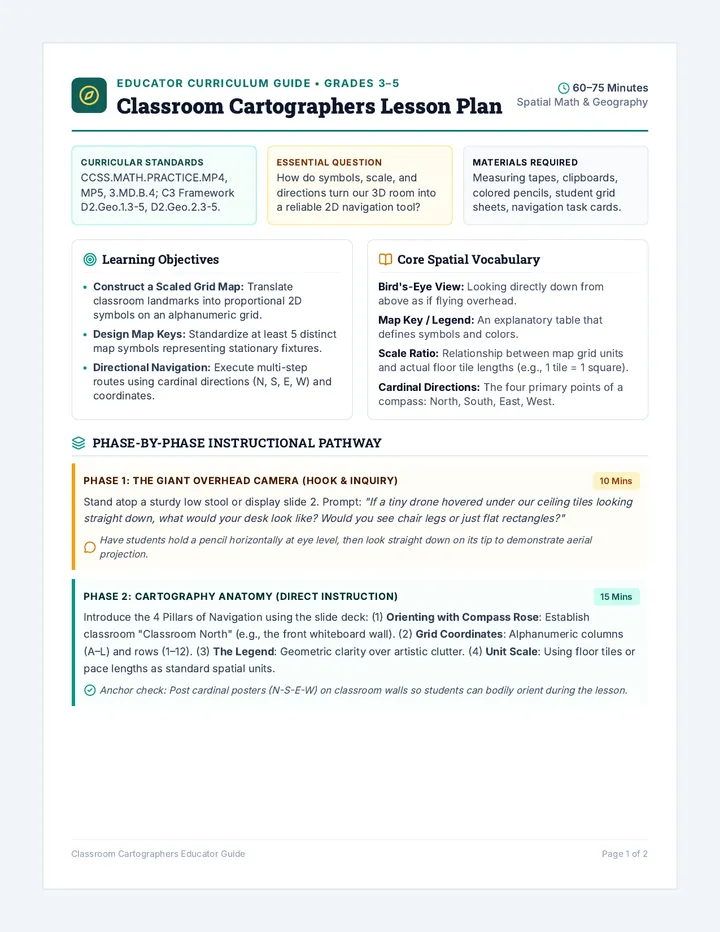
Say (Topic & Vocab Modeling): "Class, look at Page 1. Let's find the topic of our new lesson. It is 'Trouble in Massachusetts' so we circle that in BLUE. Next, look at our vocabulary words. I see the word rebellion, which means a rejection of British authority. I will circle that in BLACK as a key term."
Say (Detail Underlining): "Now, let's look for why colonists were so angry. Underline these key details in RED: 'Now Britain had sent an army to occupy, or take control of, colonial cities.' and 'soldiers in Boston acted rudely... stolen from local shops... competed for jobs.' These are our key causes."
Say (Margin Notes): "Next, I place a green asterisk * in my margin. Beside it, I will write my margin note: *Colonists angry that rude British soldiers took their local jobs and occupied their home city. Write this on your worksheet to model excellent active reading!"
Uniting the Colonists • Educator Resource Page 1 of 2
Lesson 2 • Uniting the Colonists
Guide students through Pages 2 and 3. Emphasize how street tension boiled over, and how leaders used media to coordinate resistance.
Release full responsibility to students on Pages 4 and 5. Circulate to check for rigorous annotation habits and text analysis.
"It prompted colonists to start stronger boycotts. This forced Parliament to repeal the Townshend Acts (except the tea tax), but led colonists to set up committees of correspondence to organize resistance."
"They destroyed the tea because they did not want to pay any tea tax and refused to let the British East India Company control their market. They celebrated, but still saw themselves as loyal citizens."
"1. Closed Boston Harbor until the ruined tea was paid for (cutting off food and shipments).
2. Banned all town meetings in Massachusetts.
3. Forced citizens to quarter (let live in their homes) British soldiers.
4. Ignored colonists' land claims by extending Canadian territory south to the Ohio River through the Quebec Act."
Uniting the Colonists • Educator Resource Page 2 of 2