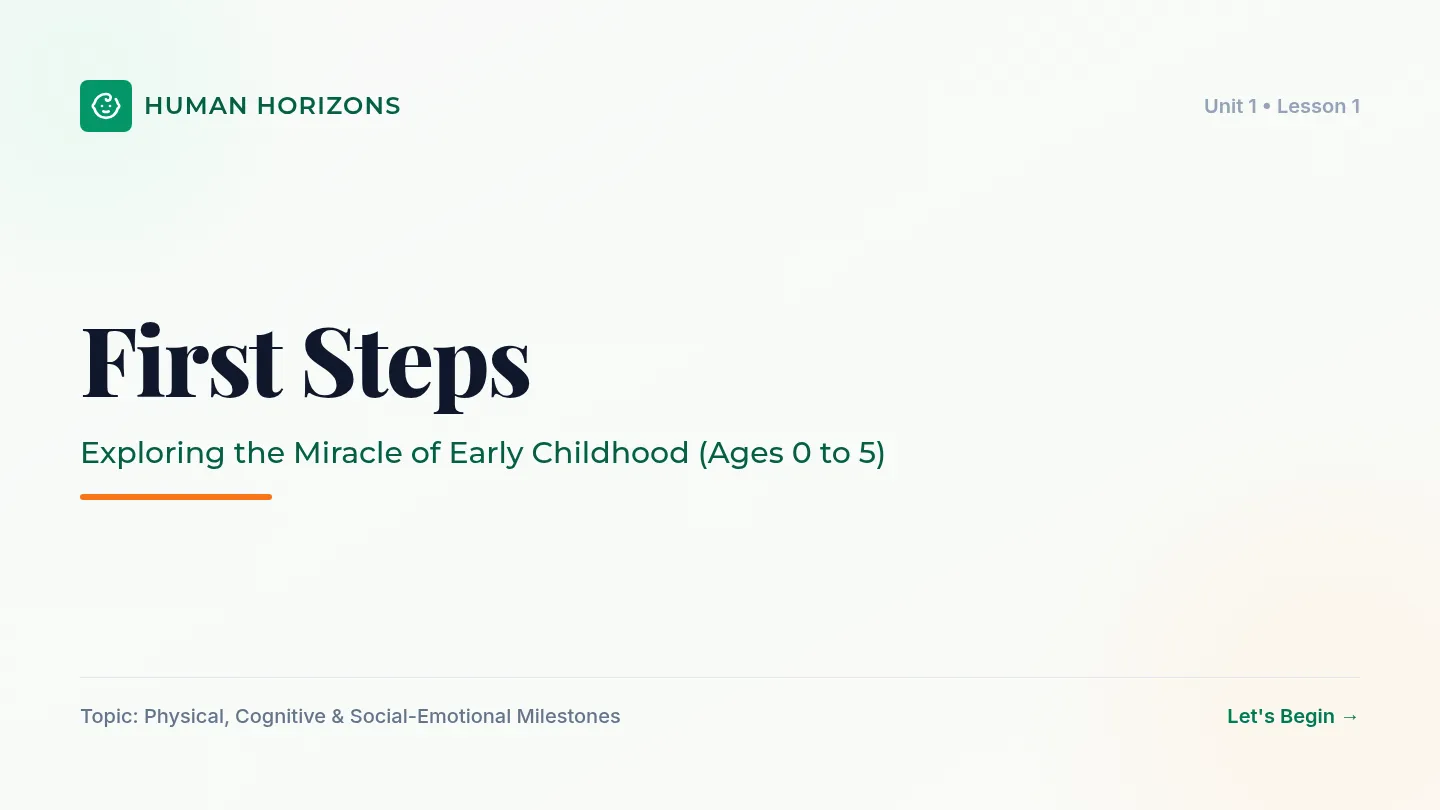
Physical, cognitive, and socio-emotional milestones from infancy through adolescence. Examines major theories of growth including attachment, cognitive stages, and moral development.
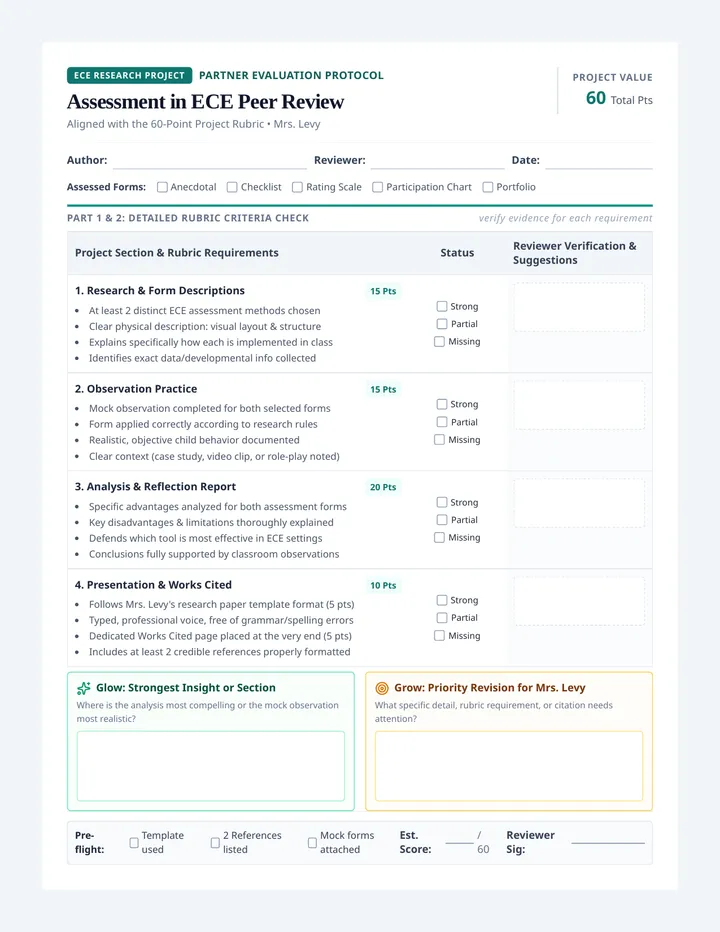
A targeted one-page peer review protocol aligned with Mrs. Levy's 60-point Early Childhood Education assessment project rubric. Guides partners through evaluating research descriptions, mock observation practice, comparative analysis, and works cited formatting.
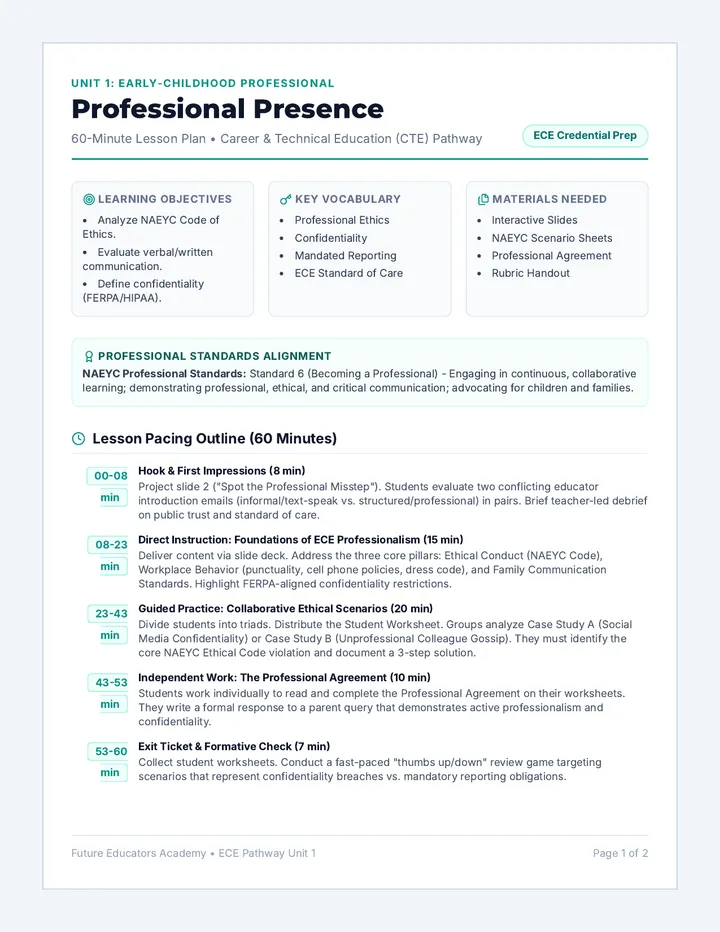
A comprehensive, 4-unit sequence designed for a CTE Career Pathway in Early Childhood Education. Each lesson equips high school/adult students with formal workplace preparation, industry-standard credentials, and professional habits.
A comprehensive unit on child development from birth through age 18, focusing on physical, cognitive, and social-emotional growth across early childhood, middle childhood, and adolescence.
An undergraduate psychology sequence exploring the mechanisms of bonding, relationship maintenance, and dissolution through Attachment Theory and other major theoretical frameworks. Students analyze how early childhood models influence adult intimacy, explore Sternberg's Triangular Theory, and evaluate Rusbult's Investment Model to predict relationship stability.
This sequence guides students through the biological and psychological progression of human life from conception to toddlerhood, analyzing prenatal stages, environmental risks, neonatal reflexes, milestones, and attachment theories.
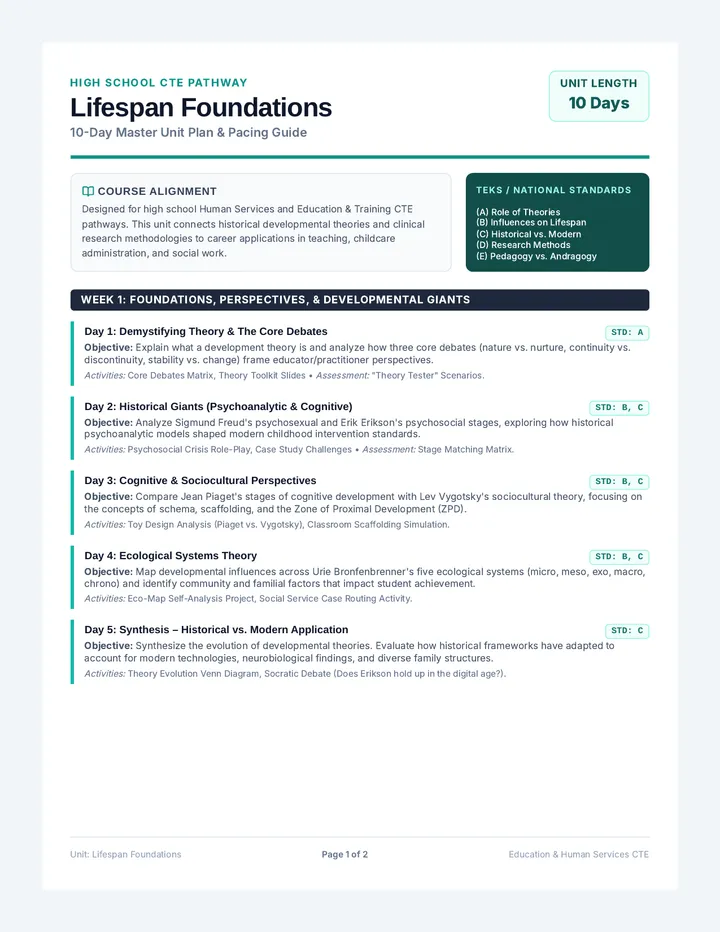
A comprehensive instructional sequence designed for high school CTE pathways in Education & Training and Human Services. The unit introduces students to the foundational theories, modern research methodologies, and instructional models (pedagogy vs. andragogy) that govern lifespan human development.
This sequence explores the psychosocial aspects of adolescence, using Erik Erikson's framework to examine identity formation, social influence, digital presence, and family dynamics. Students analyze how internal conflicts and external pressures shape the transition to adulthood.
A high school child development lesson using a jigsaw strategy to explore Piaget's four stages of cognitive development, featuring expert research and peer-to-peer teaching.
This lesson uses a relatable analogy of a candy store tantrum to introduce the complex historical concept of appeasement, helping students understand why giving in to aggression can lead to greater conflict.
A comprehensive scenario-based assessment on the PIES domains of child development (Physical, Intellectual, Emotional, Social) and the fundamental principles/characteristics of human development.
An active, hands-on child development lesson exploring foundational developmental principles, directional growth patterns (cephalocaudal and proximodistal), and real-life observational scenarios through interactive sorting cards, guided analysis, and debrief reflection.
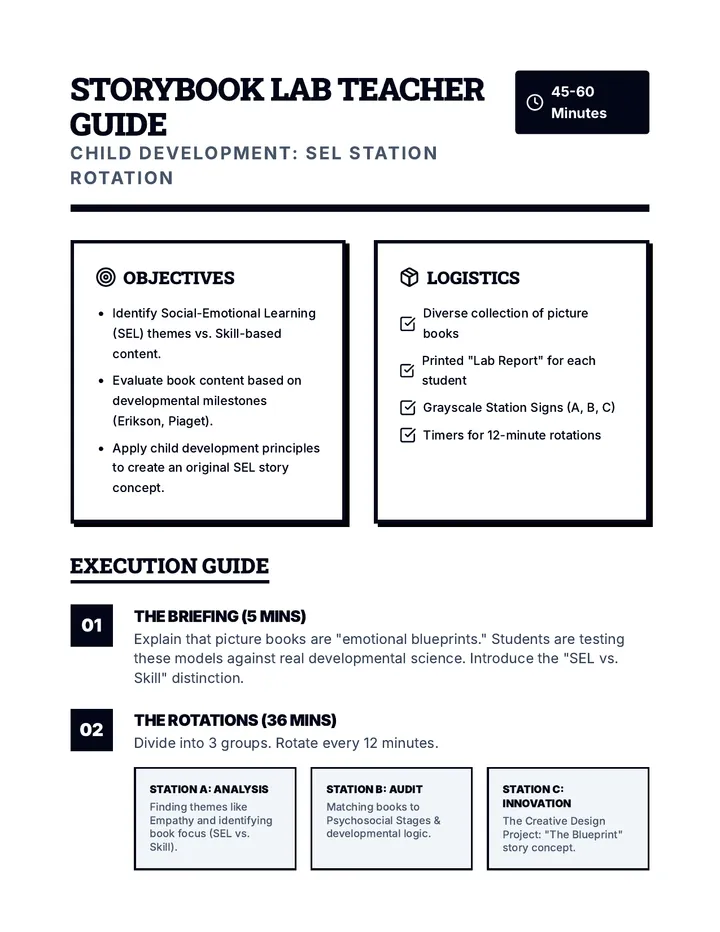
A high-energy station rotation activity where high school students analyze child development through the lens of social-emotional learning (SEL) in picture books, culminating in a creative book design project.
A comprehensive assessment covering developmental domains, brain growth, major ECE theorists, and strategies for supporting young children's self-concept and identity.