Lenny.com
Explore
Create
ActivitiesNewMathEnglish Language ArtsScience & EngineeringSocial StudiesGlobal LanguagesHealth & Physical EducationSpecial EducationCounseling & Life SkillsArts & CreativityESL
Lenny.com
Lenny.com
Explore
Create
ActivitiesNewMathEnglish Language ArtsScience & EngineeringSocial StudiesGlobal LanguagesHealth & Physical EducationSpecial EducationCounseling & Life SkillsArts & CreativityESL
Lenny.com
Lenny.com

Solutions

Lenny for EducatorsLenny for SchoolsLenny for Districts

Product

ExploreSign inCreateSupportAbout

Resources

Getting startedMTSS Acceleration Program

© 2026 Lenny Learning Inc.

TermsPrivacyAccessibility
LinkedInInstagramX
Lenny

Thinking and Problem Solving

Cognitive strategies including heuristics, algorithms, and divergent thinking. Examines common barriers to effective decision-making such as confirmation bias and functional fixedness.

Social StudiesSocial Studies PracticesLocation WordsMapsOrder EventsChronology and CausationEvaluating SourcesHistorical ThinkingGeography, Humans, & the EnvironmentAmerican Symbols and LandmarksCitiesStatesState CapitalsRegions of the United StatesGeographic SkillsPhysical GeographyHuman GeographyRegional GeographyGeography of AfricaGeography of AsiaGeography of EuropeGeography of OceaniaGeography of the AmericasSociety and Environment of EuropeSociety and Environment of AsiaSociety and Environment of The AmericasSociety and Environment of the Middle EastSociety and Environment of AfricaHistoryPrehistoryComparing Ancient River CivilizationsAncient MesopotamiaAncient Egypt and KushAncient South AsiaEarly ChinaGreeceRome and the Byzantine EmpireAncient World HistoryNative Peoples of North AmericaNative Peoples of Mesoamerica and South AmericaAfrican EmpiresMedieval AsiaMedieval EuropeThe Silk RoadMedieval HistoryIslamic EmpiresWorld ReligionsRenaissance PeriodAge of ExplorationThe Thirteen ColoniesThe American RevolutionUS History Early RepublicFounding of the United StatesUS History AntebellumUS Civil WarReconstruction PeriodThe Gilded AgeUS ImperialismWorld ImperialismWorld War IUS History 1920sGreat DepressionWorld War IIThe Cold WarUS History 1950-60sUS History 1960s-70sWorld History 20th CenturyContemporary US HistoryContemporary World HistoryHolidaysCivics and GovernmentCitizenshipGovernment FoundationsThe ConstitutionUS ConstitutionExecutive BranchLegislative BranchJudicial BranchState and LocalPolitical ParticipationPublic PolicyPolitical SystemsPower and AuthoritySocial MovementsDefining DevianceTheories of DevianceCrime and Criminal JusticeEconomicsBasic Economic PrinciplesSupply and DemandWhat is MoneyEconomic FundamentalsMicroeconomicsMacroeconomicsBanking and FinanceEconomic SystemsGlobal EconomicsCorporations and PowerThe Changing WorkplaceUnemployment and LaborClass and InequalitySocial MobilityGlobal InequalityPsychologyHistory of PsychologyPsychology as a ScienceBrain and Nervous SystemNeuroscience and BehaviorGenetics and BehaviorSleep and ConsciousnessSensory ProcessesPerceptual OrganizationClassical ConditioningOperant ConditioningObservational LearningCognitive LearningMemory ProcessesThinking and Problem SolvingLanguage and CognitionTheories of MotivationStress and CopingPrenatal and Infant DevelopmentChildhood DevelopmentAdolescent DevelopmentAdulthood and AgingSelf and IdentitySocial CognitionSocial InfluenceAttraction and RelationshipsGroup BehaviorPrejudice and DiscriminationAnxiety and Mood DisordersClinical PsychologyForensic PsychologyPhilosophy & EthicsIntroduction to PhilosophyMajor Philosophers & IdeasMind and Body ProblemFree Will vs DeterminismEthics & MoralityReligion & PhilosophyPolitical Philosophy

Videos

The optimism bias | Tali Sharot

The optimism bias | Tali Sharot

In this engaging TED Talk, cognitive neuroscientist Tali Sharot explores the phenomenon known as the "optimism bias," a cognitive illusion that affects approximately 80% of the human population. She explains that this bias causes individuals to overestimate the likelihood of experiencing positive events—such as career success, happy marriages, and talented children—while underestimating the probability of negative events like divorce, accidents, or illness. Through accessible examples and research data, Sharot demonstrates that this tendency persists regardless of age, gender, or cultural background, revealing a fundamental aspect of human psychology that shapes our expectations of the future. Sharot delves into the psychological and neurological mechanisms behind this bias, debunking the common assumption that low expectations lead to happiness. She presents three key reasons why optimism is beneficial: interpretation matters (optimists interpret success as a result of their own traits), anticipation itself induces happiness (the joy of looking forward to an event), and optimism acts as a self-fulfilling prophecy by encouraging persistence and reducing stress. Furthermore, she shares fascinating neurological research using fMRI scans that show how the brain selectively processes positive information while failing to integrate negative data, effectively shielding us from realistic but discouraging statistics. The talk concludes by addressing the potential pitfalls of unrealistic optimism, such as financial collapse or risky behavior, but ultimately argues for a balanced approach. Sharot suggests that while we should be aware of our cognitive biases to avoid danger, we should also embrace hope. The educational value lies in its clear explanation of complex psychological concepts, making it an excellent resource for discussing human behavior, decision-making, mental health, and the neuroscience of belief. Teachers can use this video to help students understand their own thought processes, the importance of resilience, and how to balance hope with realistic planning.

TEDTED

17mins 41s

Materials

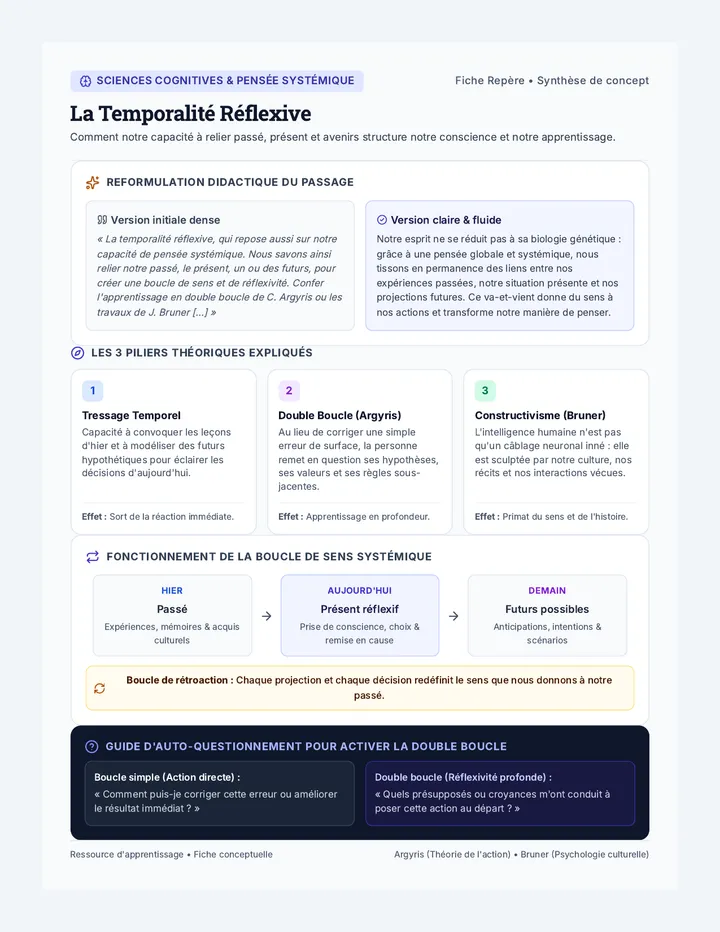
Boucle Reflexive Handout

Boucle Reflexive Handout

Fiche de synthèse et d'analyse clarifiant le concept de temporalité réflexive, de pensée systémique et les apports théoriques de Chris Argyris et Jerome Bruner.

S

stirn

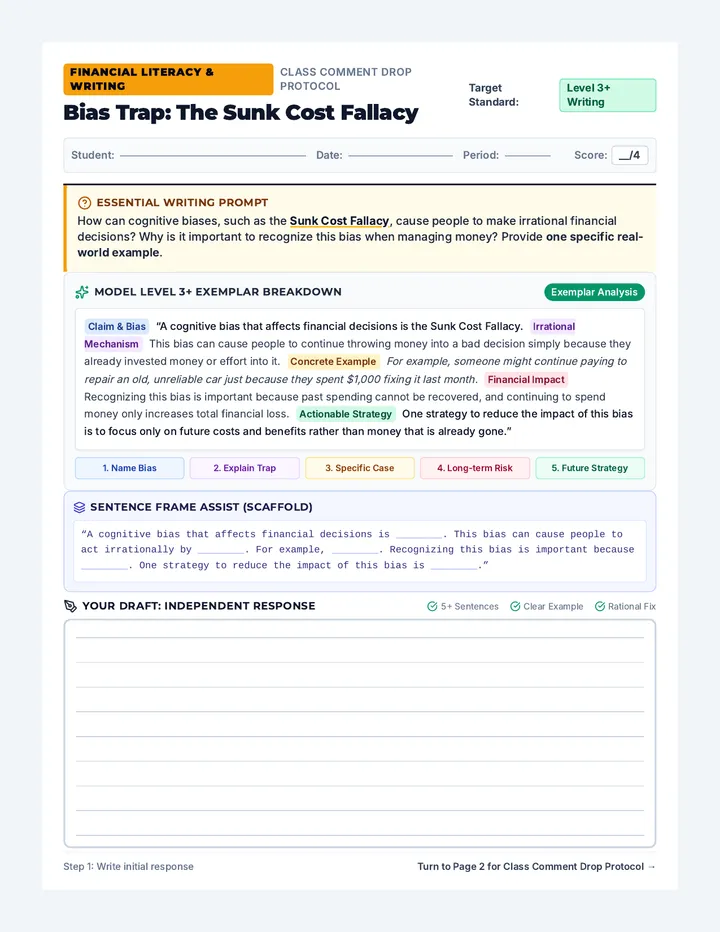
Bias Trap Worksheet

Bias Trap Worksheet

A two-page behavioral economics and writing worksheet exploring the Sunk Cost Fallacy and financial cognitive biases. Features a deconstructed Level 3+ model response, sentence frame scaffolds, independent writing lines, and a structured Class Comment Drop peer review protocol with Accountable Talk stems.

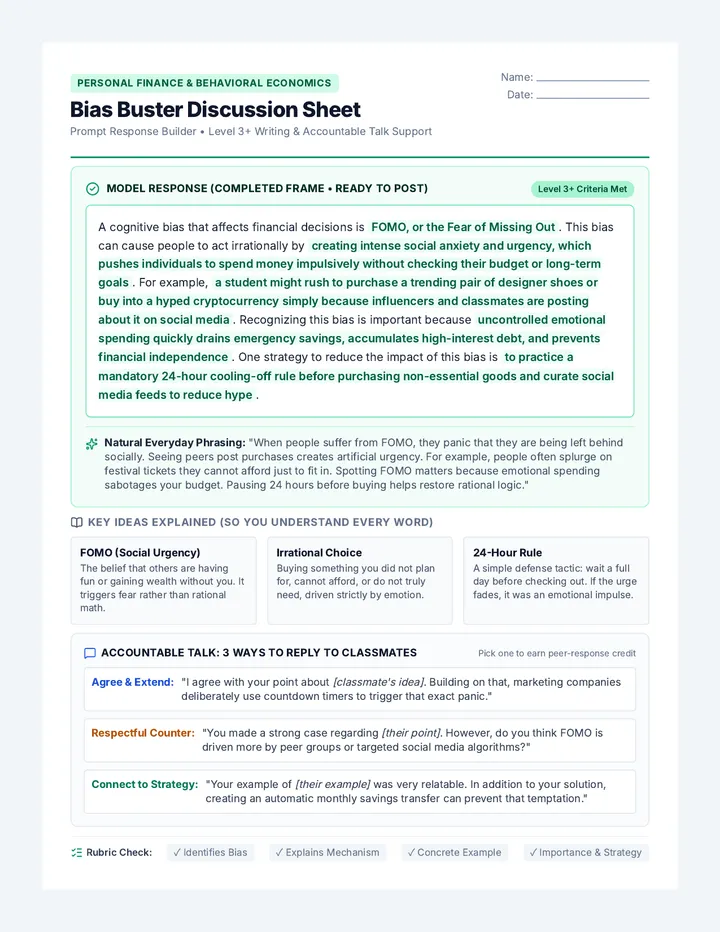
Bias Buster Discussion Sheet

Bias Buster Discussion Sheet

A structured discussion prep and sentence-frame response guide for students addressing how cognitive biases like FOMO drive irrational financial decisions, complete with Level 3+ exemplar models, vocabulary support, and Accountable Talk reply stems.

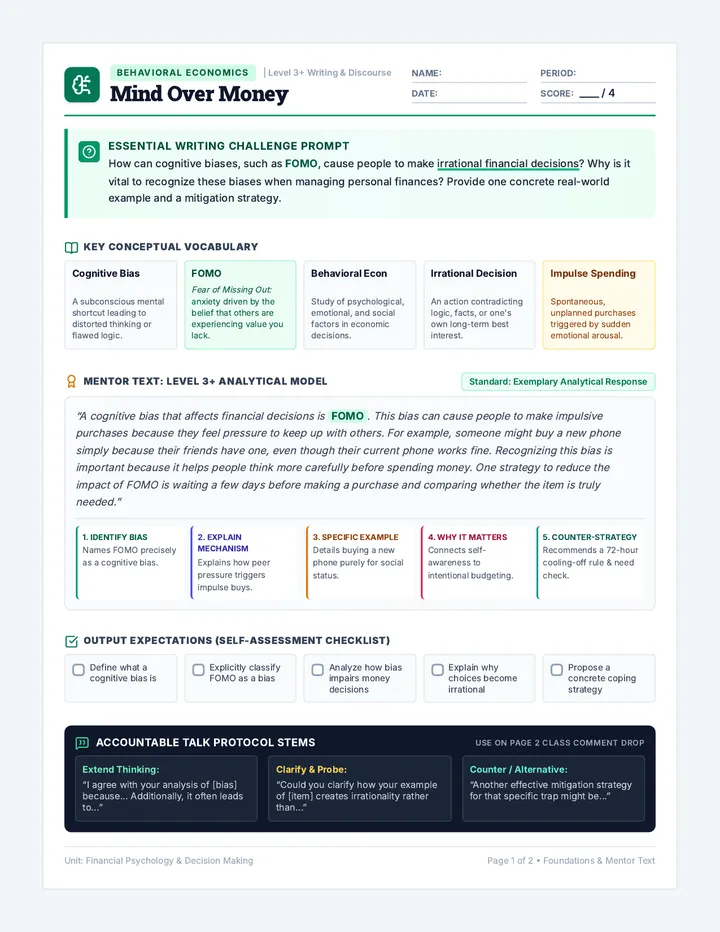
Mind Over Money Worksheet

Mind Over Money Worksheet

A two-page behavioral economics writing worksheet and peer comment drop guide exploring how cognitive biases like FOMO drive irrational financial decisions. Includes key vocabulary, an annotated Level 3+ exemplar, sentence frames, structured student writing lines, and an accountable talk peer-feedback station.

Sequences

Archetype Playbook Slides Extension

Game Changers

A 4-week unit exploring the construction of heroism and villainy in sports through media analysis, persuasive writing, and investigative interview techniques. Students will analyze how public perception is shaped and ultimately create their own investigative podcast script.

W

william.whitlow

46
Resisting Hype Slides

Decoding the Feed

A comprehensive 4-part sequence on media literacy, digital algorithms, bias, journalism, and health-related media messaging. Designed using multiple distinct teaching styles—including Direct Instruction, Collaborative Stations, and Project-Based Inquiry—to help middle and high school students decode modern media and its impact on behavior.

DN

Donna Nelson

8
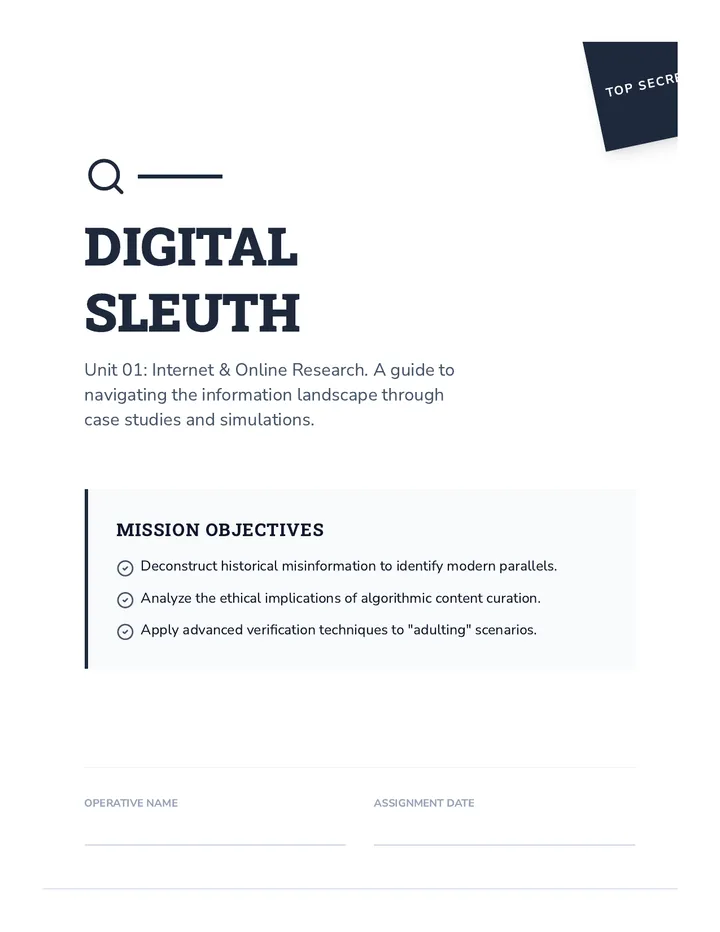
Digital Sleuth Workbook

The Citizen Dossier

A comprehensive curriculum covering financial literacy, economic principles, and civic systems through historical case studies, ethical dilemmas, and real-world simulations.

CM

carley Martin

10
Brain Blueprint Study Guide

Mind Mechanics Review

A comprehensive multi-day review sequence for psychology units on emotion, motivation, memory, and forgetting, featuring structured study aids, interactive challenges, and practice assessments.

MM

Michele Magee

6
Behavior Lab Slides

Mechanisms of Behavior Modification

A comprehensive 12th-grade psychology unit exploring B.F. Skinner's operant conditioning. Students investigate the Law of Effect, differentiate between types of reinforcement and punishment, analyze reinforcement schedules, and design ethical behavior modification plans.

12
Fallacy Taxonomy Slides

Cognitive Refutation Sequence

A graduate-level sequence merging rhetorical theory with cognitive science to enhance rebuttal and refutation skills. Students explore cognitive biases and advanced refutation techniques like pre-bunking and turnarounds to dismantle sophisticated arguments.

12

Lessons

Piaget Pro Teacher Guide

Cognitive Climb

A high school child development lesson using a jigsaw strategy to explore Piaget's four stages of cognitive development, featuring expert research and peer-to-peer teaching.

JB

Jennifer Baley Gunn

6
TikTok Influence Slides

Viral Influence

An exploration of TikTok's psychological and marketing influence, focusing on algorithmic power, social proof, and peer-driven trends through modeled annotation practices.

AR

Ashley Robbins

7
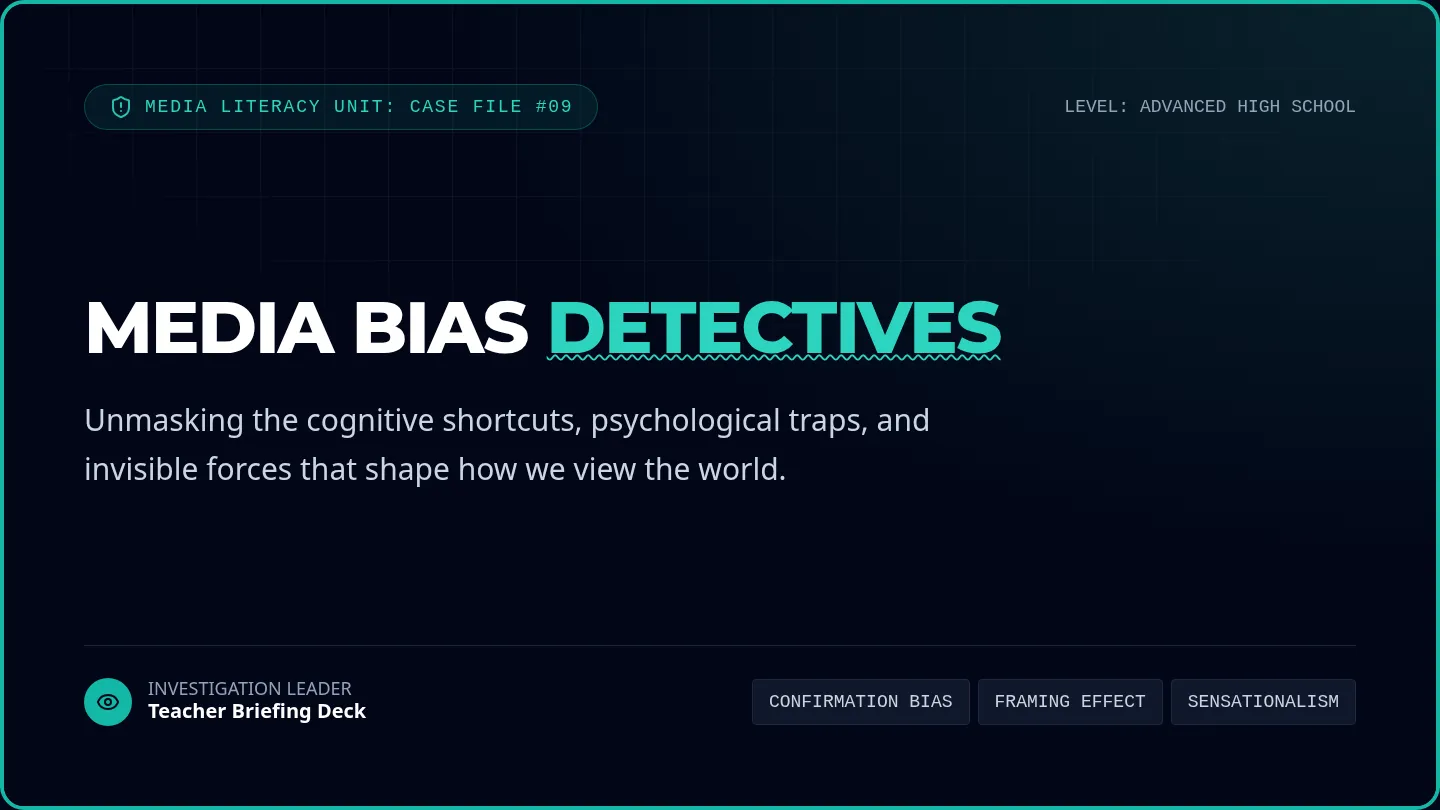
Media Bias Slides

Media Bias Detectives

A comprehensive media literacy lesson that teaches students how to identify cognitive biases—specifically Confirmation Bias, Framing, and Sensationalism—in modern news and social media. Includes an interactive slide deck, a critical analysis worksheet pack with real-world simulated media scenarios, and a complete teacher guide with answer keys.

LS

LeVar St Germain

3
Guilty Feelings Handout

The Psychology of Guilt

A deep dive into social psychology research exploring how guilt functions as a targeted social mechanism rather than a broad emotional state. Students will analyze academic text, define complex vocabulary, and evaluate the specific behavioral consequences of guilt.

AP

Alexis Paolini

8
Market Movers Slides

Market Movers

A deep dive into how economic principles like scarcity, incentives, and market forces shape consumer behavior and market structures. Students analyze real-world marketing tactics through the lens of economic theory.

I

isaac_daigle

3
Chinese Room Slides

Thinking Machines

An exploration of John Searle's famous thought experiment, examining the distinction between syntax and semantics and the debate over Strong Artificial Intelligence.

NM

Nick Masoner

3