Lenny.com
Explore
Create
ActivitiesNewMathEnglish Language ArtsScience & EngineeringSocial StudiesGlobal LanguagesHealth & Physical EducationSpecial EducationCounseling & Life SkillsArts & CreativityESL
Lenny.com
Lenny.com
Explore
Create
ActivitiesNewMathEnglish Language ArtsScience & EngineeringSocial StudiesGlobal LanguagesHealth & Physical EducationSpecial EducationCounseling & Life SkillsArts & CreativityESL
Lenny.com
Lenny.com

Solutions

Lenny for EducatorsLenny for SchoolsLenny for Districts

Product

ExploreSign inCreateSupportAbout

Resources

Getting startedMTSS Acceleration Program

© 2026 Lenny Learning Inc.

TermsPrivacyAccessibility
LinkedInInstagramX
Lenny
Social StudiesSocial Studies PracticesLocation WordsMapsOrder EventsChronology and CausationEvaluating SourcesHistorical ThinkingGeography, Humans, & the EnvironmentAmerican Symbols and LandmarksCitiesStatesState CapitalsRegions of the United StatesGeographic SkillsPhysical GeographyHuman GeographyRegional GeographyGeography of AfricaGeography of AsiaGeography of EuropeGeography of OceaniaGeography of the AmericasSociety and Environment of EuropeSociety and Environment of AsiaSociety and Environment of The AmericasSociety and Environment of the Middle EastSociety and Environment of AfricaHistoryPrehistoryComparing Ancient River CivilizationsAncient MesopotamiaAncient Egypt and KushAncient South AsiaEarly ChinaGreeceRome and the Byzantine EmpireAncient World HistoryNative Peoples of North AmericaNative Peoples of Mesoamerica and South AmericaAfrican EmpiresMedieval AsiaMedieval EuropeThe Silk RoadMedieval HistoryIslamic EmpiresWorld ReligionsRenaissance PeriodAge of ExplorationThe Thirteen ColoniesThe American RevolutionUS History Early RepublicFounding of the United StatesUS History AntebellumUS Civil WarReconstruction PeriodThe Gilded AgeUS ImperialismWorld ImperialismWorld War IUS History 1920sGreat DepressionWorld War IIThe Cold WarUS History 1950-60sUS History 1960s-70sWorld History 20th CenturyContemporary US HistoryContemporary World HistoryHolidaysCivics and GovernmentCitizenshipGovernment FoundationsThe ConstitutionUS ConstitutionExecutive BranchLegislative BranchJudicial BranchState and LocalPolitical ParticipationPublic PolicyPolitical SystemsPower and AuthoritySocial MovementsDefining DevianceTheories of DevianceCrime and Criminal JusticeEconomicsBasic Economic PrinciplesSupply and DemandWhat is MoneyEconomic FundamentalsMicroeconomicsMacroeconomicsBanking and FinanceEconomic SystemsGlobal EconomicsCorporations and PowerThe Changing WorkplaceUnemployment and LaborClass and InequalitySocial MobilityGlobal InequalityPsychologyHistory of PsychologyPsychology as a ScienceBrain and Nervous SystemNeuroscience and BehaviorGenetics and BehaviorSleep and ConsciousnessSensory ProcessesPerceptual OrganizationClassical ConditioningOperant ConditioningObservational LearningCognitive LearningMemory ProcessesThinking and Problem SolvingLanguage and CognitionTheories of MotivationStress and CopingPrenatal and Infant DevelopmentChildhood DevelopmentAdolescent DevelopmentAdulthood and AgingSelf and IdentitySocial CognitionSocial InfluenceAttraction and RelationshipsGroup BehaviorPrejudice and DiscriminationAnxiety and Mood DisordersClinical PsychologyForensic PsychologyPhilosophy & EthicsIntroduction to PhilosophyMajor Philosophers & IdeasMind and Body ProblemFree Will vs DeterminismEthics & MoralityReligion & PhilosophyPolitical Philosophy

Media Bias Detectives

A comprehensive media literacy lesson that teaches students how to identify cognitive biases—specifically Confirmation Bias, Framing, and Sensationalism—in modern news and social media. Includes an interactive slide deck, a critical analysis worksheet pack with real-world simulated media scenarios, and a complete teacher guide with answer keys.

LSLeVar St Germain

THE METRO GUARD (PRO-CAMERA)

"SAFE STREETS: New Safety Cameras Drastically Reduce Intersection Crashes by Nearly One-Third!"

Focuses entirely on safety, life-saving, and public order.

THE DAILY TRIBUNE (ANTI-CAMERA)

"CASH GRAB: Predator Cameras Siphon $4.5M in New Secret Tax, Hardest Hit on Working Poor!"

Focuses entirely on unfair costs, class divisions, and corruption.

1. Language Audit: What loaded verbs/adjectives did each publication use to manipulate emotions? (3 pts)

2. The Framing Effect: How does focusing on accidents saved versus revenue squeezed alter public political support for local politicians? (3 pts)

3. Objective Synthesis: Write a neutral, unbiased 20-word headline summarizing the facts without taking any side. (4 pts)

PAGE 2 OF 3 // COGNITIVE LABS CONFIDENTIAL WORK IN PROGRESS

Official Investigation File

THE OUTRAGE SANITIZER

SUBJECT: SENSATIONALISM REWRITING LAB

CASE #09-MBD

MISSION 3: NEUTRALIZING THE CLICKS

Sensationalism uses extreme verbs and emotional hyperbole to force your flight-or-fight response to trigger. Your job is to act as an Editor. Strip the headlines below of all emotionally-charged clickbait and rewrite them into factual, objective observations.

ORIGINAL CLIKBAIT Trigger: Fear / Division

"Tech Giant DEMOLISHES Local Competitor in Savage, Backhanded Hostile Acquisition!"

REWRITTEN FACTUAL VERSION (3 pts):

ORIGINAL CLIKBAIT Trigger: Parental Outrage / Urgency

"Furious Parents SLAM School Board Over Terrifying New Schedule Chaos Starting Next Month!"

REWRITTEN FACTUAL VERSION (3 pts):

ORIGINAL CLIKBAIT Trigger: Environmental Panic

"DOOM AHEAD: Shocking Study Confirms Sea Level Rise Will Swallowed Small Coastal Towns Entirely!"

REWRITTEN FACTUAL VERSION (3 pts):

4. Professional Reflection: Why do digital media outlets rely on sensationalist verbs? Explain using the concept of modern click-based revenue models. (1 pt)

PAGE 3 OF 3 // COGNITIVE LABS CONFIDENTIAL WORK IN PROGRESS

Q1. Evidence Selectivity: What specific data did Tyler choose, and what did he ignore?

Model Answer (3 pts): Tyler highlights Sweden's carbon pricing cutting emissions by 11%. He entirely ignores the potential negative economic consequences of that tax, such as inflation or high tax burdens on lower-income delivery drivers.

Q2. Echo Chambers: How do their online identities affect what information they click on tomorrow?

Model Answer (3 pts): Tyler represents pro-environmental ideals. Algorithms will feed him headlines targeting this (green success stories). SkepticalLiberty's feed will prioritize tax failures, driving them both into highly polarized echo chambers.

Q3. Algorithmic Impact: If they search "Sweden carbon tax results" on Google, what happens?

Model Answer (4 pts): Google results are personalized based on history. Tyler's results will emphasize positive green keywords ("emissions decline success"), whereas SkepticalLiberty's queries will emphasize negative results ("high costs," "business closures").

MISSION 2: THE FRAMING DUEL (TRAFFIC CAMERA CASE)

Q1. Language Audit: What loaded verbs/adjectives did each publication use to manipulate emotions?

Model Answer (3 pts):
• Metro Guard: "Safe streets", "safety cameras", "drastically reduce" (positive safety frame).
• Daily Tribune: "Cash grab", "predator cameras", "siphon", "secret tax" (negative cost frame).

Q2. The Framing Effect: How does focusing on accidents vs revenue alter political support?

Model Answer (3 pts): Focusing on accidents saved drives voters to view the cameras as vital safety infrastructure. Focusing on revenue squeezed frames the cameras as greedy municipal corruption, inciting taxpayers to vote politicians out.

Q3. Objective Synthesis: Write a neutral, unbiased 20-word headline summarizing the facts.

Model Answer (4 pts): "New automated traffic enforcement cameras generated $4.5 million in city revenue as intersection accidents dropped thirty percent."

PAGE 2 OF 3 // COGNITIVE LABS FOR TEACHERS CLASSROOM USE RESTRICTED

Instructional Companion Guide

ANSWER KEY // MISSION 3

WORKSHEET PAGE 3 ASSESSMENT & RUBRICS

CASE #09-MBD

MISSION 3: THE OUTRAGE SANITIZER (REWRITING LAB)

Headline 1: "Tech Giant DEMOLISHES Local Competitor..."

Analysis of Outrage Words:

"DEMOLISHES", "Savage", "Backhanded Hostile Acquisition" represent severe dramatization.

Model Factual Rewrite (3 pts):

"Tech corporation completes the acquisition of a local software company to expand market reach."

Headline 2: "Furious Parents SLAM School Board Over Terrifying New Schedule..."

Analysis of Outrage Words:

"Furious", "SLAM", "Terrifying Chaos" are heavy hyperbole designed to manufacture anger.

Model Factual Rewrite (3 pts):

"Local parents voice concerns to the school board regarding the upcoming school schedule changes."

Headline 3: "DOOM AHEAD: Shocking Study Confirms Sea Level Rise..."

Analysis of Outrage Words:

"DOOM AHEAD", "Shocking", "Swallowed Entirely" evoke direct existential climate panic.

Model Factual Rewrite (3 pts):

"New climate research predicts sea level rise will impact low-lying coastal municipalities."

Q4. Economic Reflection Solution

Model Answer (1 pt): Modern media platforms make money based on pay-per-click ad revenue. Pure facts are often dull, whereas high emotional arousal (especially anger, fear, and outrage) drives high click-through rates. Sensationalism is an economic survival tactic for modern journalism.

GRADING SUMMARY (30 TOTAL POINTS):

Mission 1: 10 pts
• Q1: 3 pts (Selectivity)
• Q2: 3 pts (Echo Chamber)
• Q3: 4 pts (Search Alg)

Mission 2: 10 pts
• Q1: 3 pts (Linguistic)
• Q2: 3 pts (Framing)
• Q3: 4 pts (Synthesis)

Mission 3: 10 pts
• Rewrite 1: 3 pts
• Rewrite 2: 3 pts
• Rewrite 3: 3 pts
• Q4: 1 pt (Reflection)

PAGE 3 OF 3 // COGNITIVE LABS FOR TEACHERS CLASSROOM USE RESTRICTED
You might also like

Provenance Sleuths Slides

Curator Studio

A comprehensive project sequence guiding high school students through professional museum curation, artifact evaluation, historical storytelling, and polished exhibit design.

Lenny Avatar
Lenny
6
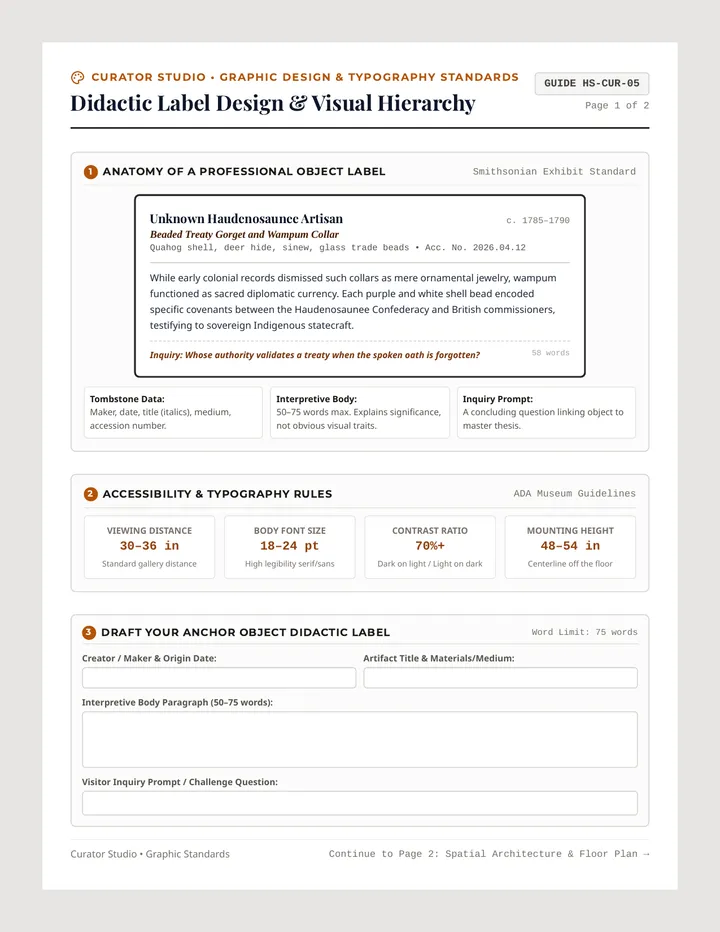
Didactic Design Guide

Exhibit Blueprint

Students master museum graphic design principles, draft concise didactic labels, and construct a polished exhibition floor plan ready for public showcase.

Lenny Avatar
Lenny
2
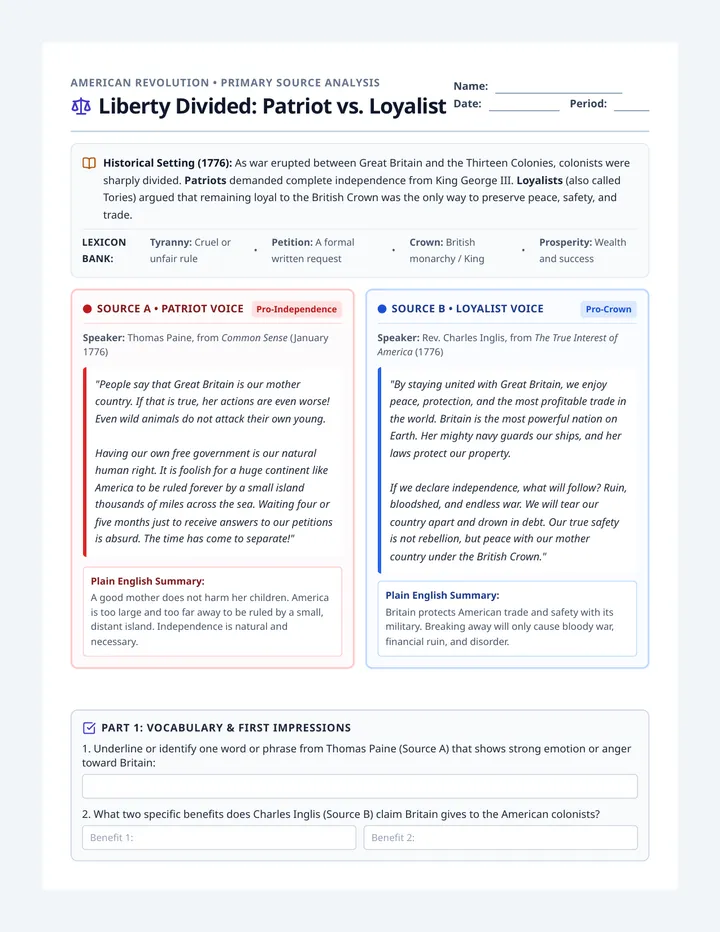
Liberty Divided Source Worksheet

Liberty Divided Source Worksheet

A two-page primary source analysis worksheet comparing adapted Patriot and Loyalist perspectives from 1776 using accessible lexicon. Includes historical background, side-by-side primary source excerpts with vocabulary helpers, a comparative analysis chart, text-dependent comprehension questions, and an evidence-based synthesis writing prompt.

SS

Shannon Slygh

Business Blueprint Slides

Market Makers

A hands-on introductory curriculum that equips students with foundational business acumen and marketing savvy through practical entrepreneurial challenges, financial basics, and campaign design.

D

despinoza

9
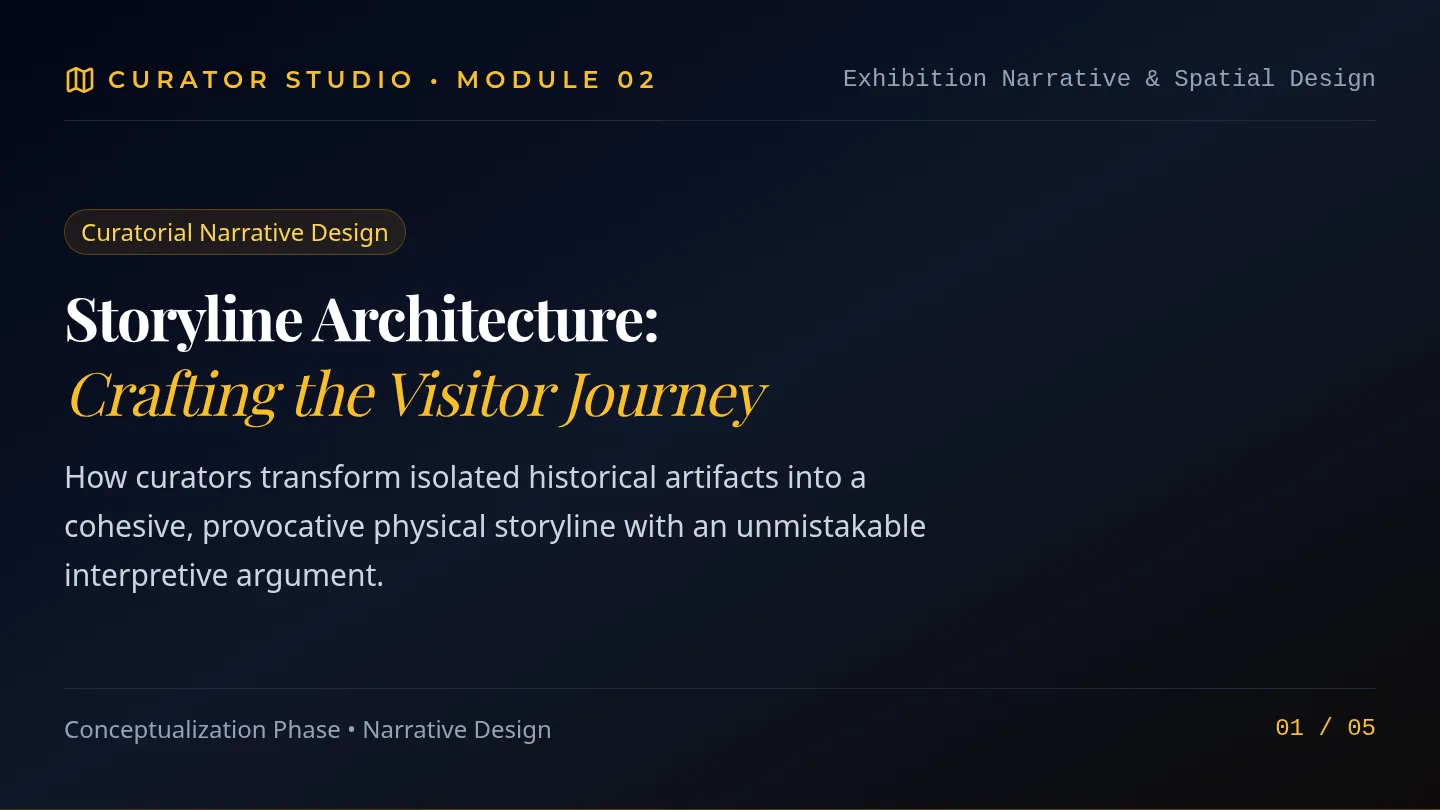
Curatorial Narrative Slides

Storyline Architecture

Students craft an interpretive exhibition thesis, map visitor journeys through physical and thematic spaces, and structure engaging historical narratives.

Lenny Avatar
Lenny
2
Unit 1.1 Migration Slides

Unit 1.1 Migration Slides

A 12-slide presentation on Paleolithic subsistence practices, global migration patterns, and technological adaptations featuring an authentic migration map and embedded YouTube migration video on Slide 5, with the learning objective displayed on every slide.

JM

Justin Montalvo

Store Master Syllabus Guide

Campus Store Launchpad

An eight-week experiential introduction to marketing centered around operating and scaling a campus retail store. Students master brand positioning, assortment strategy, pricing mechanics, visual merchandising, and sales analytics through authentic store management.

D

despinoza

8
Provenance Sleuths Slides

Artifact Investigation

Students evaluate source credibility, establish object provenance, and analyze primary artifacts to determine historical significance and curatorial value.

Lenny Avatar
Lenny
2
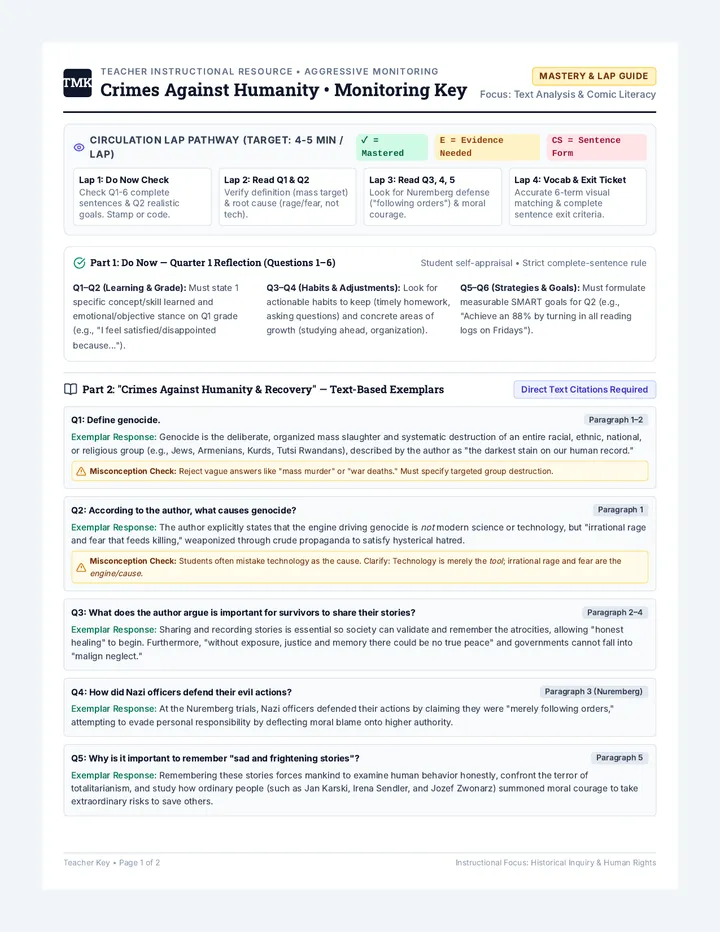
Crimes Against Humanity Monitoring Key

Crimes Against Humanity Monitoring Key

A comprehensive teacher monitoring key and exemplar guide covering the Quarter 1 reflection, 'Crimes Against Humanity' reading comprehension questions, graphic novel vocabulary matching, and the exit ticket with aggressive monitoring laps, student misconceptions, and targeted scaffolds.

TA

Trudy Allen

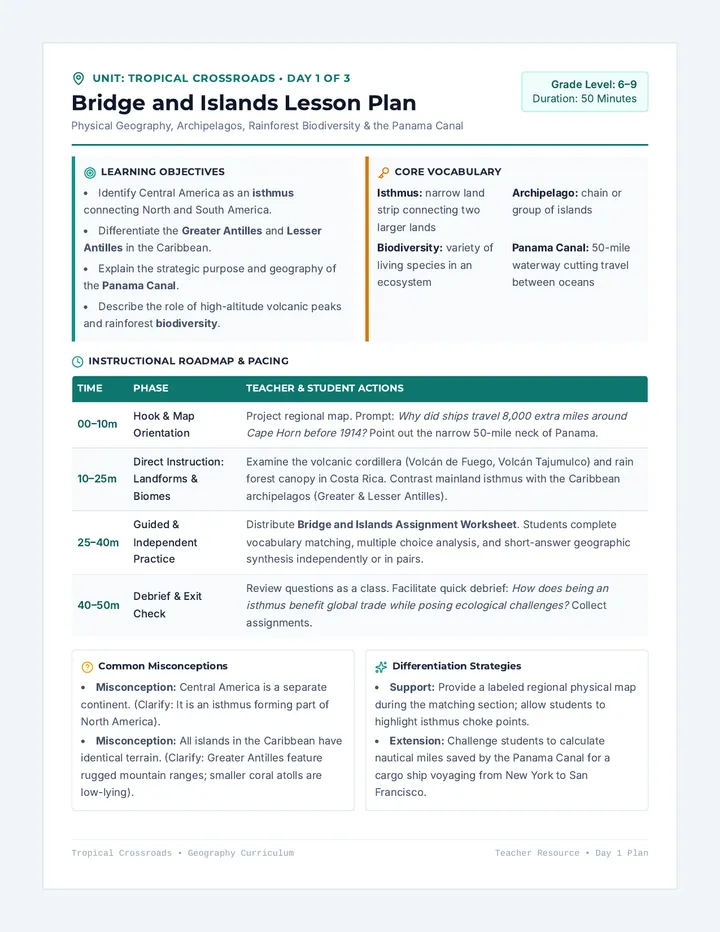
Bridge and Islands Lesson Plan

Tropical Crossroads

A comprehensive 3-day middle/high school geography unit examining Central America and the Caribbean, covering physical geography, natural hazards, and human-environment interactions.

D

dcampbell

9
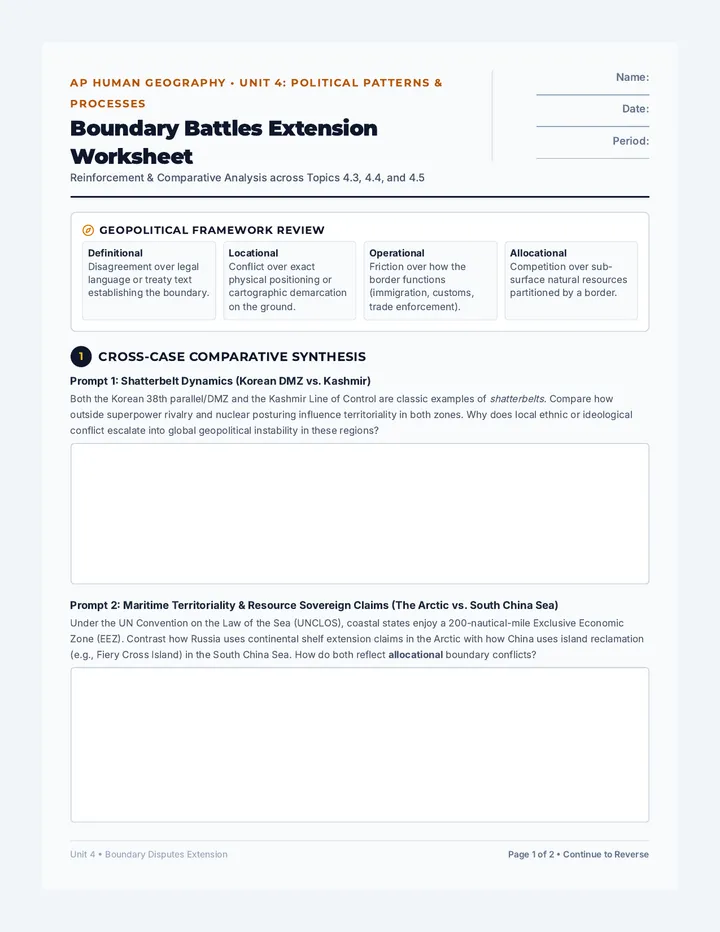
Boundary Battles Extension Worksheet

Border Battles

An advanced AP Human Geography lesson analyzing the nature, functions, and conflicts surrounding international boundaries, territoriality, choke points, and shatterbelts through global case studies.

CM

Casey Moriarty

3
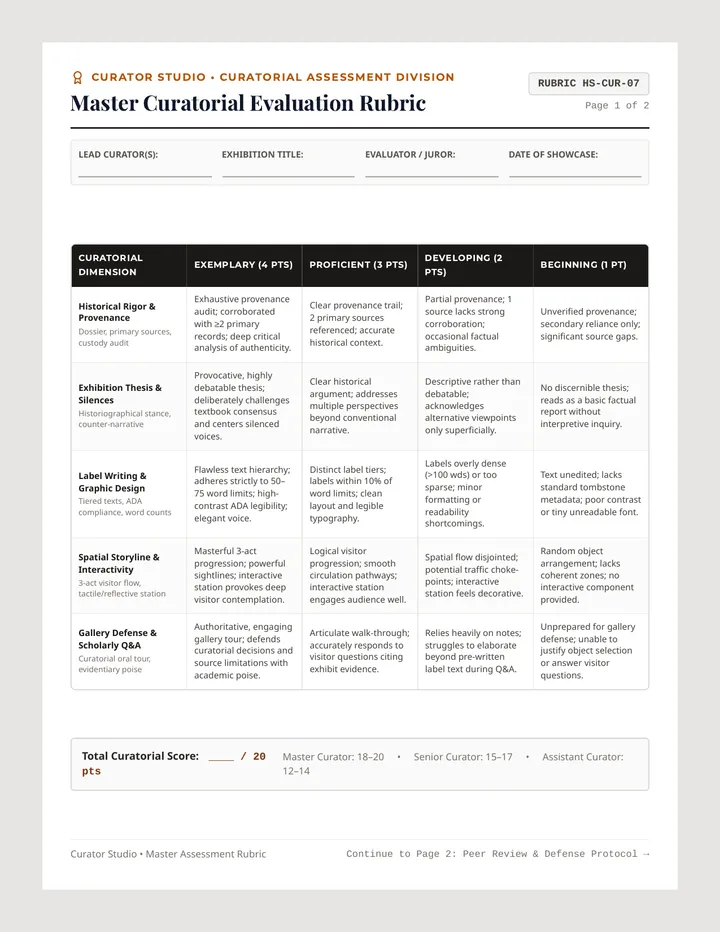
Exhibition Showcase Rubric

Exhibition Showcase Rubric

A comprehensive evaluation rubric and peer-audit protocol assessing historical scholarship, provenance rigor, label design, spatial flow, and gallery defense.

Lenny Avatar
Lenny