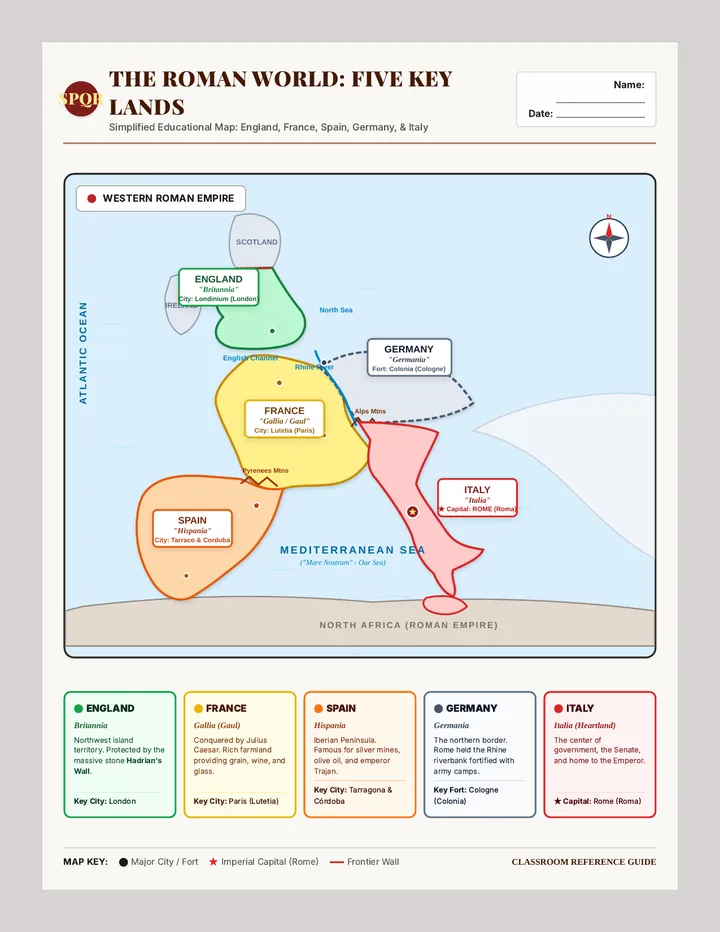
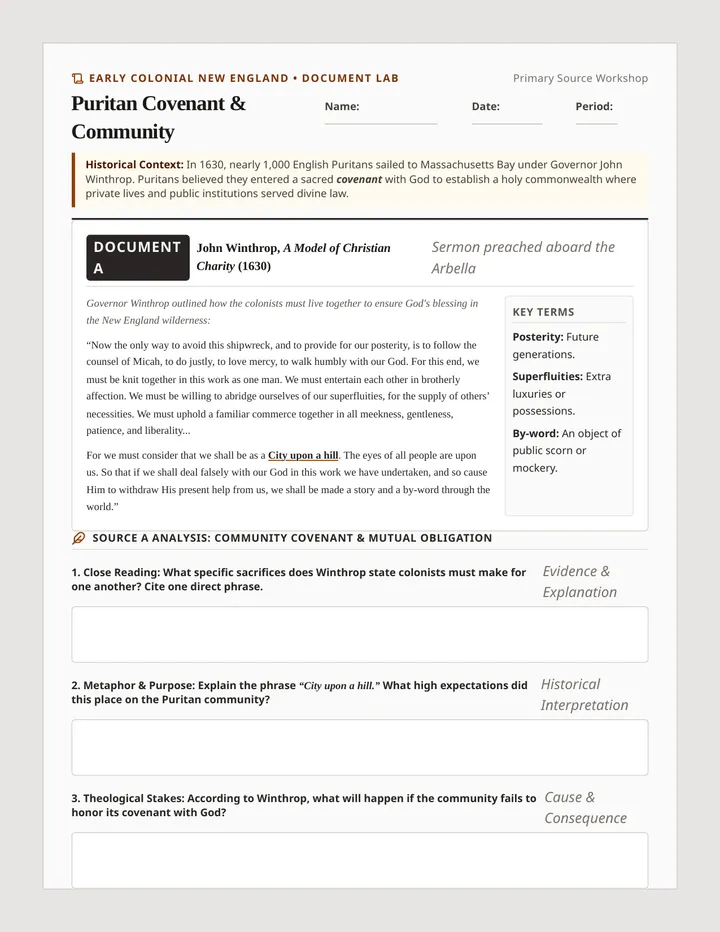
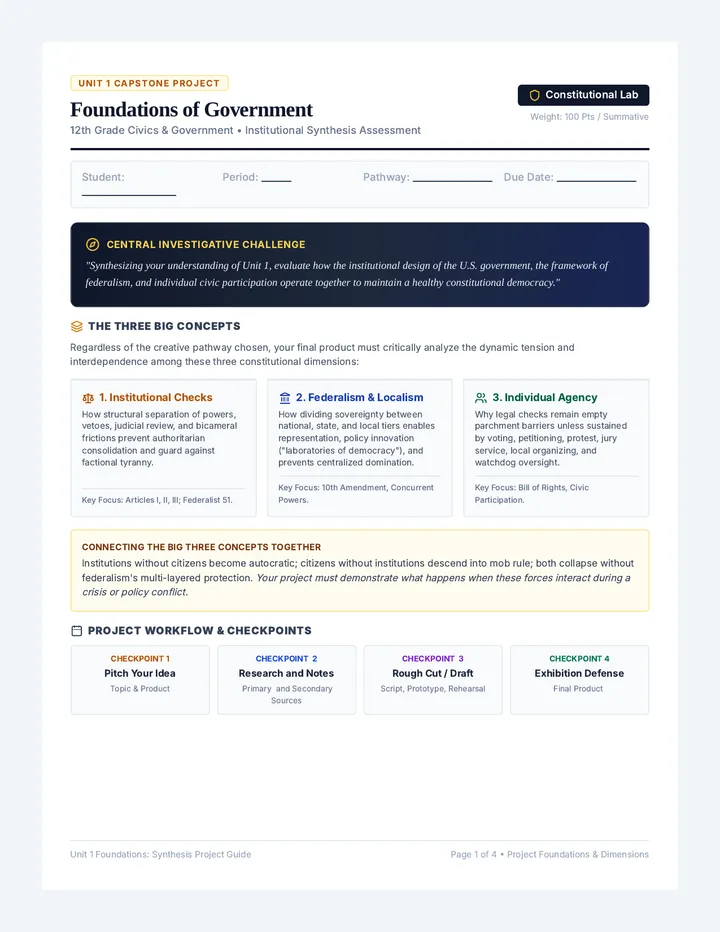
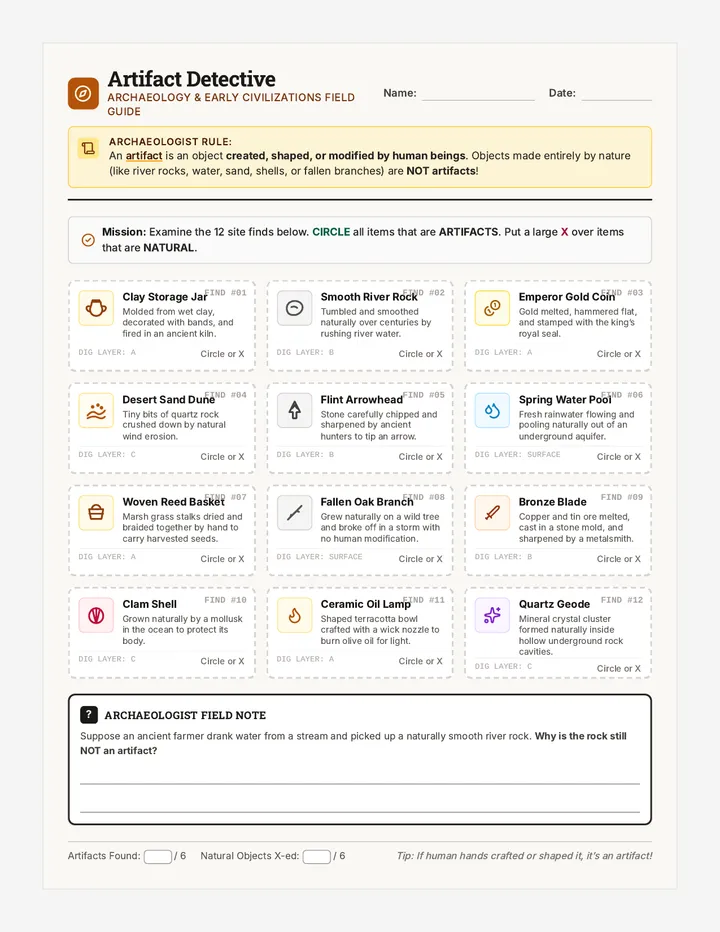
Analytical frameworks for interpreting history, geography, and civic information. Equips learners with tools for chronological sequencing, map literacy, and critical evaluation of primary and secondary sources.
A culminating mapping activity where students place Northeast landmarks on a regional map and identify their locations relative to one another.
Focuses on iconic New York City landmarks: the Statue of Liberty and the Brooklyn Bridge. Students learn historical significance through visual storytelling.
Explores specific landmarks in Boston, including the Paul Revere Statue, Zakim Bridge, and TD Garden. Focuses on historical facts and their location on a city map.
Introduces the concept of a landmark as a recognizable place or structure with historical or cultural significance. Students learn to identify landmarks using visual cues.
Students share their final video with the school community and reflect on their learning journey.
Students script and film their video tour, applying their knowledge of school roles and locations.
Students learn to use geographic tools to create specific routes and paths between important school locations.
Students analyze the reasons why we move through the school and the different ways we travel from place to place.
Students investigate different areas of the school to discover how spaces are alike and different in purpose and appearance.
Students explore their identities as members of the school family and identify the different roles people play to make the school work.
Students will learn to navigate their local community by mastering map keys and symbols. This lesson includes instructional slides, a reading passage, and a hands-on mapping activity.
A foundational geography lesson designed for early emergent learners to distinguish between their state (Texas) and their country (USA) using visual nesting and simple categorization.
A two-page printable teacher's answer key corresponding exactly to the Revolution Roadmap Worksheet, providing historical answers, grading tips, and discussion guidance for High School World History.
A two-page printable student graphic organizer and timeline chart designed to help students map the social structures, key phases, and cause-and-effect transitions of the French Revolution from 1789 to 1799.
A visually striking, highly structured slide deck analyzing the phases of the French Revolution (1789-1799) from the National Assembly to the Directory, designed for High School World History with visual flowcharts and primary source quotes.
A structured single-page exit ticket designed for easy writing, prompting students to synthesize their figure's main struggle, achievement, and character traits.
A visual anchor chart detailing the key steps of historical research, how to evaluate primary vs secondary sources, and critical questions to ask.
A highly engaging 2-page research packet ("Case File") for students to explore their chosen historical figure, documenting origins, motivations, struggles, achievements, and legacy.
A structured 1-page guide for teachers detailing lesson setup, common misconceptions, pacing, and differentiation strategies for the Legacy Hunters history webquest.
A 1-page student reading and activity sheet on the freeze-dried potato chuño technology of the Inca, exploring dehydration, preservation, and food storage. Includes a science process-sequencing activity.
A 1-page student reading and activity sheet on the grass suspension bridges of the Inca, exploring tension and cooperative community maintenance. Includes a bridge safety evaluation worksheet.
A 1-page student reading and activity sheet on the decimal knot-record quipu system of the Inca, exploring communication and census keeping. Includes a knot decoding and calculation exercise.
A 1-page student reading and activity sheet on the monumental Aztec Sun Stone calendar, exploring cosmic myths and temporal tracking. Includes a visual decoding and analysis activity.
A 1-page student reading and activity sheet on the Aztec education systems, exploring the Calmecac (noble school) and Telpochcalli (commoner school). Includes a comparative selection and reflective analysis activity.
Une séquence complète d'activités clés en main d'Éducation Morale et Civique (EMC) pour la classe de Terminale, conforme au nouveau programme 2026. Elle se concentre sur les défis du numérique : intelligence artificielle, désinformation, espace public numérique et souveraineté technologique.
A comprehensive unit bundle investigating the origins of American democracy, covering European Enlightenment roots, colonial geography and regional economies, the analysis of founding documents, and the structural principles of the U.S. Constitution.
Une collection complète de fiches de révision classiques (recto-verso A4) très ciblées pour préparer les élèves de Troisième aux épreuves d'Histoire, de Géographie, d'EMC et de Physique-Chimie du DNB. Chaque fiche traite d'une leçon précise des programmes officiels.
A comprehensive 3-day unit for Grade 5 exploring the plantation economy, the lived experiences of enslaved people, the abolitionist movement, and the Emancipation Proclamation.
A comprehensive study of the Atlantic slave trade, the plantation economy, forms of resistance, and the eventual path to emancipation.
A comprehensive unit on citizenship, focusing on the rights, duties, and active involvement of individuals in society.
A critical exploration of the Seminole Wars and the unique alliance between Indigenous people and self-liberated Black individuals, framed through Howard Zinn's 'history from below' perspective.
A comprehensive research project for 4th-grade students to explore world countries, focusing on geography, culture, history, and government. Students will learn to use vetted digital resources to gather and organize information.
A comprehensive 5-day reading comprehension packet focusing on European exploration and early American settlements. Each day features a high-rigor historical passage followed by 10 multiple-choice questions designed to build critical ELA skills.
A comprehensive one-week social studies and ELA integration unit covering North Carolina history and symbols, designed to match the rigor of the NC 3rd Grade E.O.G. assessment.
A comprehensive 2-block day unit covering the major milestones of the Cold War, from the Berlin Airlift to the fall of the Berlin Wall, culminating in a Document-Based Question (DBQ) essay. Students analyze primary and secondary sources through a 'Classified Dossier' lens.
An intensive review series for the Modern World History NYS Regents exam, structured as high-speed 30-minute 'blueprint' sessions focusing on key units and test-taking strategies.
A comprehensive 7th-grade social studies curriculum sequence focused on the Eastern Hemisphere (Africa, Middle East, Asia, and the Pacific). This standards-aligned sequence includes detailed teacher lesson plans, student guided reading and worksheets, interactive presentation slides, and rigorous assessments with DBQs.
A comprehensive 4th-grade social studies unit where students analyze the Olmec, Maya, Aztec, and Inca civilizations. Through primary-source-style document analysis, geographical exploration, and civic action, students discover what made these empires successful and apply ancient engineering solutions to improve the modern City of Surprise.
A final project sequence designed for middle school students with emerging literacy skills, enabling them to showcase their historical knowledge of geography, the Farmers' Movement, government, and the Harlem Renaissance through highly visual, expressive mediums.
A series of materials focused on Massachusetts coastal geography and cartography.
A project-based learning unit where students curate historical 'one-pagers' to synthesize key eras of US history, available in both English and Spanish.
Une séquence pédagogique sur la frontière coréenne composée d'un escape game immersif et d'une étude de cas sous forme d'enquête géopolitique. Les élèves explorent la DMZ, ses enjeux historiques, militaires et internationaux.
Cette séquence pédagogique explore la frontière intercoréenne comme laboratoire des tensions géopolitiques mondiales. Elle couvre l'histoire de la partition, la militarisation extrême de la zone et les enjeux contemporains à l'échelle régionale et internationale.
A comprehensive 10-day exploration of Indiana's early indigenous cultures, from the Paleo-Indians to the arrival of Europeans, using an archaeological field journal theme. Students investigate the Adena, Hopewell, and Mississippian cultures through primary-source style readings and hands-on synthesis activities.
A geography unit exploring iconic Boston landmarks for 5th-grade students with low literacy needs. The unit includes structured worksheets for nine key locations, focusing on vocabulary, simple sentence construction, and visual recognition.
Une leçon complète sur la guerre froide (1947-1991) pour les élèves de 3ème, alliant fiches de cours visuelles, mémorisation active et entraînement intensif pour le Brevet.
A comprehensive AP U.S. History study of the internal conflicts of the Confederacy, the legal boundaries of Reconstruction, and the long struggle for civil rights in Mississippi, structured around the historical events depicted in the film Free State of Jones.
An advanced, interdisciplinary lesson for high school and undergraduate students exploring the causal relationship between 1930s Home Owners' Loan Corporation (HOLC) redlining maps and modern-day urban heat island (UHI) effects, analyzing systemic racism and environmental injustice.
A lesson that contextualizes the key phases of the French Revolution (1789-1799) from the National Assembly to the Directory, guiding students to analyze social dynamics, political shifts, and cause-and-effect relationships.
An advanced AP US History lecture series exploring the constitutional, economic, and political crises that fractured the United States between 1833 and 1861. This lesson highlights key legislative compromises, executive decisions, and judicial rulings that made sectional conflict and the Civil War inevitable.
A complete history webquest lesson bundle designed for late elementary students to independently research diverse historical figures. Students act as research detectives to discover the lives, struggles, and lasting legacies of inventors, activists, and leaders.
A middle school history lesson exploring Martin Luther's role in the Protestant Reformation, focusing on key biographical events, critical vocabulary, and cause-and-effect historical analysis.
A comprehensive lesson focusing on the transition of European society from the rigid feudal systems of the Middle Ages to the cultural, scientific, and religious revolutions of the Renaissance and Reformation.
A cumulative three-page reflection portfolio designed for Honors World History scholars to synthesize high-level historical themes, vocabulary, and critical thinking.
A 10th-grade social studies stations activity investigating the Constitutions of 1791, 1793, and 1795. Students analyze how France repeatedly drafted and revised its foundational laws in a turbulent quest for a more democratic society.
An inquiry-based lesson investigating the transition from the roaring 1920s to the Great Depression. Students analyze how economic policies, consumer credit, and social tensions fueled a cultural boom that ended in systemic collapse.
A comprehensive lesson exploring the transition from the roaring optimism of the 1920s to the structural causes of the Great Depression, including the agricultural crisis, income inequality, global trade collapse, and the 1929 stock market crash.
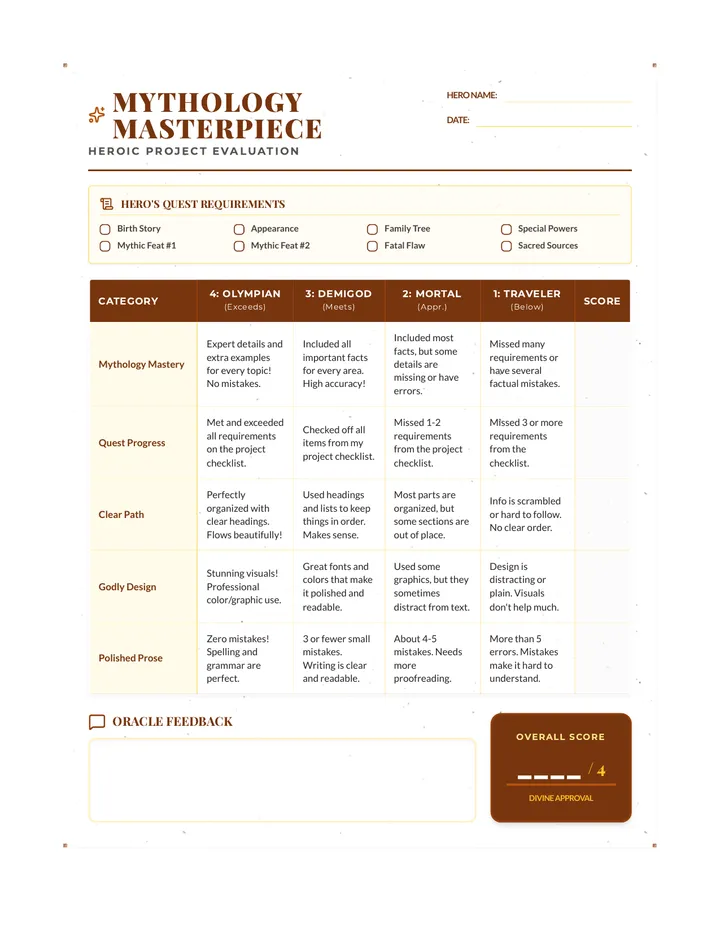
A revised 2-page rubric and reflection document featuring three updated categories: Accuracy and Content Knowledge (40%), Creativity and Execution (30%), and Professionalism, Respect, and Teamwork (30%), along with a student self-assessment sheet.
A 2-page graphic organizer portfolio designed for student pitch creation. Includes dedicated brainstorming quadrants, a historical inquiry question builder, structural blueprints, and a 3-source scholarly citation tracker with clean writing boxes.
A multi-page structured document for students outlining the History Sandbox project guidelines. It features the four core 9th/10th-grade historical themes, collaborative grouping guidelines (up to 3 students), a strict zero-tolerance AI academic honesty policy, and a curated selection of project format options divided into pathways.
A classroom slide presentation to introduce the History Sandbox final project. It includes a project overview, the three tailored pathways, a categorized choice board, and guidelines on how to craft a successful project pitch.
A high-impact teacher guide and answer key for the "Chasing the Tricolor Worksheet" bell ringer, providing the correct classification of excerpts, historical context, and sample student responses. Excerpt codes are simplified to the constitution years.
A high-impact bell ringer student worksheet where 10th-grade history students analyze primary source excerpts from the French Constitutions of 1791, 1793, and 1795, sorting them into the core revolutionary ideals of Liberty, Equality, and Fraternity. Excerpt codes are simplified to the constitution years.
Un questionnaire exhaustif d'entraînement au Brevet de 3 pages contenant 30 questions de mémorisation active couvrant tout le chapitre sur la Guerre froide, suivi du corrigé officiel et détaillé à la fin. Les deux premières pages offrent des espaces d'écriture blancs pour les réponses des élèves.
Une fiche de révision active de 3 pages pour les élèves de 3ème. La première page contient 6 flashcards pliables avec des questions clés et des zones d'écriture blanches pour s'entraîner. La deuxième page propose un schéma de synthèse conceptuel à compléter. La troisième page contient le corrigé officiel des flashcards et du schéma pour favoriser l'autonomie.
Une fiche de cours synthétique, visuelle et ultra-pédagogique de 3 pages sur la Guerre froide (1947-1991). Elle comprend une frise chronologique, un comparatif des blocs, l'analyse des crises de Berlin et Cuba, une méthode d'analyse de document, et une page dédiée aux élèves en difficulté avec une analogie simplifiée, les pièges à éviter et un modèle de rédaction Brevet (développement construit).
A highly structured, four-page AP U.S. History film study viewing guide and historical analysis packet for the movie 'Free State of Jones'. It connects Period 5 Civil War/Reconstruction themes with Period 8 20th-century Civil Rights contexts, focusing on Southern class dynamics, Unionism, and racial classification continuities.
A highly analytical AP U.S. History film study worksheet for 'Free State of Jones'. It bridges Period 5 Reconstruction issues with Period 8 civil rights struggles through the film's 1948 trial flash-forwards, structured with pre-viewing context, a chronological guide, a thematic comparison grid, and an LEQ essay outline.
An AP U.S. History teacher guide and answer key for the 'Constitutional Crucible Worksheet'. Includes primary source alignments, exemplar student responses, historical background, and an AP-aligned grading rubric.