A comprehensive unit for 6th-grade students on the methods and ethics of archaeology. Students move from understanding basic observation to conducting a mock excavation and debating the ownership of historical artifacts.
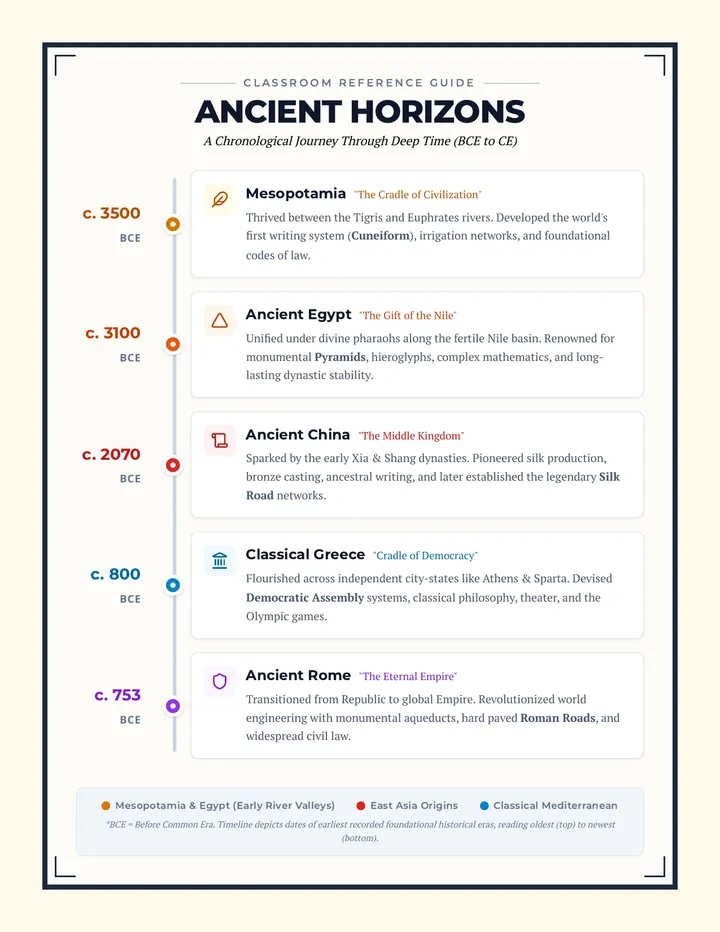
A middle-school history unit exploring the emergence of early humans, their prehistoric migrations, the radical transition of the agricultural revolution, and the foundations of early civilizations.
A final project sequence designed for middle school students with emerging literacy skills, enabling them to showcase their historical knowledge of geography, the Farmers' Movement, government, and the Harlem Renaissance through highly visual, expressive mediums.
A comprehensive unit on citizenship, focusing on the rights, duties, and active involvement of individuals in society.
A series of materials focused on Massachusetts coastal geography and cartography.
A comparative study series exploring the geopolitics and economics of different nations through their national soccer teams.
A focused exploration of World War I through the experiences of American soldiers, known as Doughboys, and the memorials built to honor their service.
A comprehensive 10-day exploration of Indiana's early indigenous cultures, from the Paleo-Indians to the arrival of Europeans, using an archaeological field journal theme. Students investigate the Adena, Hopewell, and Mississippian cultures through primary-source style readings and hands-on synthesis activities.
A comprehensive 5-day reading comprehension packet focusing on European exploration and early American settlements. Each day features a high-rigor historical passage followed by 10 multiple-choice questions designed to build critical ELA skills.
A three-day exploration of the life and legacy of Indiana-born comedian Red Skelton, presented in a vibrant magazine format. Students explore his early life in Vincennes, his iconic characters, and his lasting impact on American comedy through reading and creative performance activities.
A series of activities exploring the rise of cities and factory life during the Industrial Revolution, designed for middle school students with very low reading levels. The materials focus on visual evidence and basic cause-and-effect relationships.
A four-part exploration of the Reconstruction era, focusing on the economic, social, and legal challenges of rebuilding the United States after the Civil War. Students analyze primary sources to understand the transition from slavery to freedom and the obstacles faced by formerly enslaved people.