Lenny.com
Explore
Create
ActivitiesNewMathEnglish Language ArtsScience & EngineeringSocial StudiesGlobal LanguagesHealth & Physical EducationSpecial EducationCounseling & Life SkillsArts & CreativityESL
Lenny.com
Lenny.com
Explore
Create
ActivitiesNewMathEnglish Language ArtsScience & EngineeringSocial StudiesGlobal LanguagesHealth & Physical EducationSpecial EducationCounseling & Life SkillsArts & CreativityESL
Lenny.com
Lenny.com

Solutions

Lenny for EducatorsLenny for SchoolsLenny for Districts

Product

ExploreSign inCreateSupportAbout

Resources

Getting startedMTSS Acceleration Program

© 2026 Lenny Learning Inc.

TermsPrivacyAccessibility
LinkedInInstagramX
Lenny

World Imperialism

Examines the motives, mechanisms, and consequences of global colonial expansion during the 19th and 20th centuries. Analyzes the Scramble for Africa, resistance movements, and the enduring geopolitical impacts on colonized regions.

Social StudiesSocial Studies PracticesLocation WordsMapsOrder EventsChronology and CausationEvaluating SourcesHistorical ThinkingGeography, Humans, & the EnvironmentAmerican Symbols and LandmarksCitiesStatesState CapitalsRegions of the United StatesGeographic SkillsPhysical GeographyHuman GeographyRegional GeographyGeography of AfricaGeography of AsiaGeography of EuropeGeography of OceaniaGeography of the AmericasSociety and Environment of EuropeSociety and Environment of AsiaSociety and Environment of The AmericasSociety and Environment of the Middle EastSociety and Environment of AfricaHistoryPrehistoryComparing Ancient River CivilizationsAncient MesopotamiaAncient Egypt and KushAncient South AsiaEarly ChinaGreeceRome and the Byzantine EmpireAncient World HistoryNative Peoples of North AmericaNative Peoples of Mesoamerica and South AmericaAfrican EmpiresMedieval AsiaMedieval EuropeThe Silk RoadMedieval HistoryIslamic EmpiresWorld ReligionsRenaissance PeriodAge of ExplorationThe Thirteen ColoniesThe American RevolutionUS History Early RepublicFounding of the United StatesUS History AntebellumUS Civil WarReconstruction PeriodThe Gilded AgeUS ImperialismWorld ImperialismWorld War IUS History 1920sGreat DepressionWorld War IIThe Cold WarUS History 1950-60sUS History 1960s-70sWorld History 20th CenturyContemporary US HistoryContemporary World HistoryHolidaysCivics and GovernmentCitizenshipGovernment FoundationsThe ConstitutionUS ConstitutionExecutive BranchLegislative BranchJudicial BranchState and LocalPolitical ParticipationPublic PolicyPolitical SystemsPower and AuthoritySocial MovementsDefining DevianceTheories of DevianceCrime and Criminal JusticeEconomicsBasic Economic PrinciplesSupply and DemandWhat is MoneyEconomic FundamentalsMicroeconomicsMacroeconomicsBanking and FinanceEconomic SystemsGlobal EconomicsCorporations and PowerThe Changing WorkplaceUnemployment and LaborClass and InequalitySocial MobilityGlobal InequalityPsychologyHistory of PsychologyPsychology as a ScienceBrain and Nervous SystemNeuroscience and BehaviorGenetics and BehaviorSleep and ConsciousnessSensory ProcessesPerceptual OrganizationClassical ConditioningOperant ConditioningObservational LearningCognitive LearningMemory ProcessesThinking and Problem SolvingLanguage and CognitionTheories of MotivationStress and CopingPrenatal and Infant DevelopmentChildhood DevelopmentAdolescent DevelopmentAdulthood and AgingSelf and IdentitySocial CognitionSocial InfluenceAttraction and RelationshipsGroup BehaviorPrejudice and DiscriminationAnxiety and Mood DisordersClinical PsychologyForensic PsychologyPhilosophy & EthicsIntroduction to PhilosophyMajor Philosophers & IdeasMind and Body ProblemFree Will vs DeterminismEthics & MoralityReligion & PhilosophyPolitical Philosophy

Videos

How the Haitian Revolution Ended Slavery and Defeated Empires

How the Haitian Revolution Ended Slavery and Defeated Empires

This educational video provides a fast-paced and comprehensive overview of the Haitian Revolution, arguably the most successful slave rebellion in history. Host John Green explains the complex social and economic structures of the French colony Saint-Domingue, detailing how a hierarchy of wealthy white planters, free people of color, poor whites, and enslaved Africans created a powder keg that ignited alongside the French Revolution. The narrative traces the transition from a pirate outpost to the world's most valuable sugar colony, highlighting the brutal conditions of plantation slavery that necessitated constant importation of human lives.

CrashCourseCrashCourse

12mins 35s

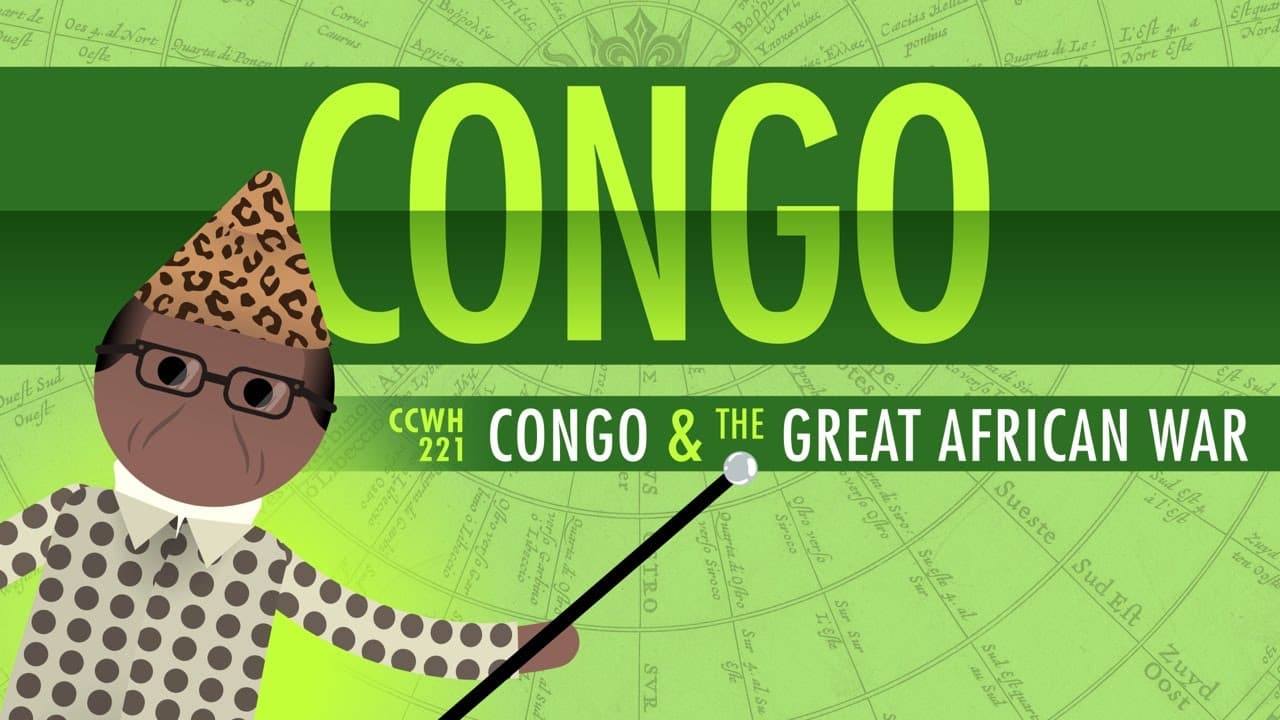
The History of Conflict in the Congo and Africa's World War

The History of Conflict in the Congo and Africa's World War

This educational video provides a comprehensive historical analysis of the Democratic Republic of Congo (DRC) from its decolonization in 1960 through the devastating conflicts known as "Africa's World War." Hosted by John Green, the video explores the structural challenges left by Belgian colonialism, the rise of the dictator Mobutu Sese Seko, and the complex geopolitical web that led to the First and Second Congo Wars. It specifically connects the Rwandan Genocide to the destabilization of the Congo, illustrating how regional ethnic tensions and refugee crises sparked continent-wide warfare. The content delves into key themes such as the "resource curse," examining how the Congo's vast mineral wealth (gold, diamonds, coltan) has paradoxically fueled violence and corruption rather than prosperity. It also analyzes the concepts of kleptocracy and clientelism under Mobutu, the impact of Cold War politics on African leadership, and the shifting dynamics of international intervention, ranging from Western financial institutions like the IMF to recent infrastructure deals with China. For educators, this resource is invaluable for teaching modern World History, African Studies, and Geopolitics. It helps students move beyond stereotypes of "backwardness" to understand the specific historical, economic, and political drivers of instability in Central Africa. The video provides a rigorous framework for discussing difficult topics like genocide, neo-colonialism, and the ethics of global supply chains, making it highly relevant for high school and undergraduate classrooms dealing with post-colonial history and international relations.

CrashCourseCrashCourse

12mins 57s

Island Hopping: A Journey Through Polynesian History and Culture

Island Hopping: A Journey Through Polynesian History and Culture

This educational video takes students on a comprehensive tour of Polynesia, exploring its geography, history, and rich cultural traditions. Hosted by an engaging narrator named Brian, the journey begins by defining the Polynesian Triangle—anchored by Hawaii, New Zealand, and Easter Island—and tracing the incredible maritime migration of the Lapita people thousands of years before European explorers. The video uses maps, historical photos, and animations to visualize the vast distances traveled by early settlers in outrigger canoes.

Miacademy & MiaPrep Learning ChannelMiacademy & MiaPrep Learning Channel

10mins 34s

Exploring the Geography, History, and Cultures of Southern Africa

Exploring the Geography, History, and Cultures of Southern Africa

This educational video provides a comprehensive overview of the countries in Southern Africa, excluding the nation of South Africa. It covers a wide range of topics including physical geography, history, economics, politics, and culture. The video uses maps, statistical data, and vibrant stock footage to illustrate the diversity and complexity of the region, touching upon nations like Angola, Botswana, Zimbabwe, Zambia, Mozambique, Namibia, Lesotho, and Eswatini (Swaziland). It breaks down complex geopolitical concepts into digestible segments suitable for middle and high school students. The content explores key themes such as the legacy of colonialism, the "resource curse" in economies heavily dependent on mining versus agriculture, and the struggle for political stability and democracy. It contrasts the development levels of different nations, highlighting Botswana's relative success compared to the challenges faced by countries like Zimbabwe and Angola. The video also delves into physical characteristics like the Kalahari Desert and Victoria Falls, as well as demographic trends, religious composition, and health statistics like life expectancy. For educators, this video serves as an excellent anchor for a unit on African geography or global studies. It provides distinct data points (GDP, Freedom House scores, population projections) that can be used for comparative analysis activities. The included discussion prompts about the relationship between agricultural employment and poverty, as well as the pros and cons of resource-based economies, offer immediate opportunities for critical thinking and classroom debate. The video's structured approach makes it easy to segment into lessons on geography, history, or economics.
Miacademy & MiaPrep Learning ChannelMiacademy & MiaPrep Learning Channel

8mins 42s

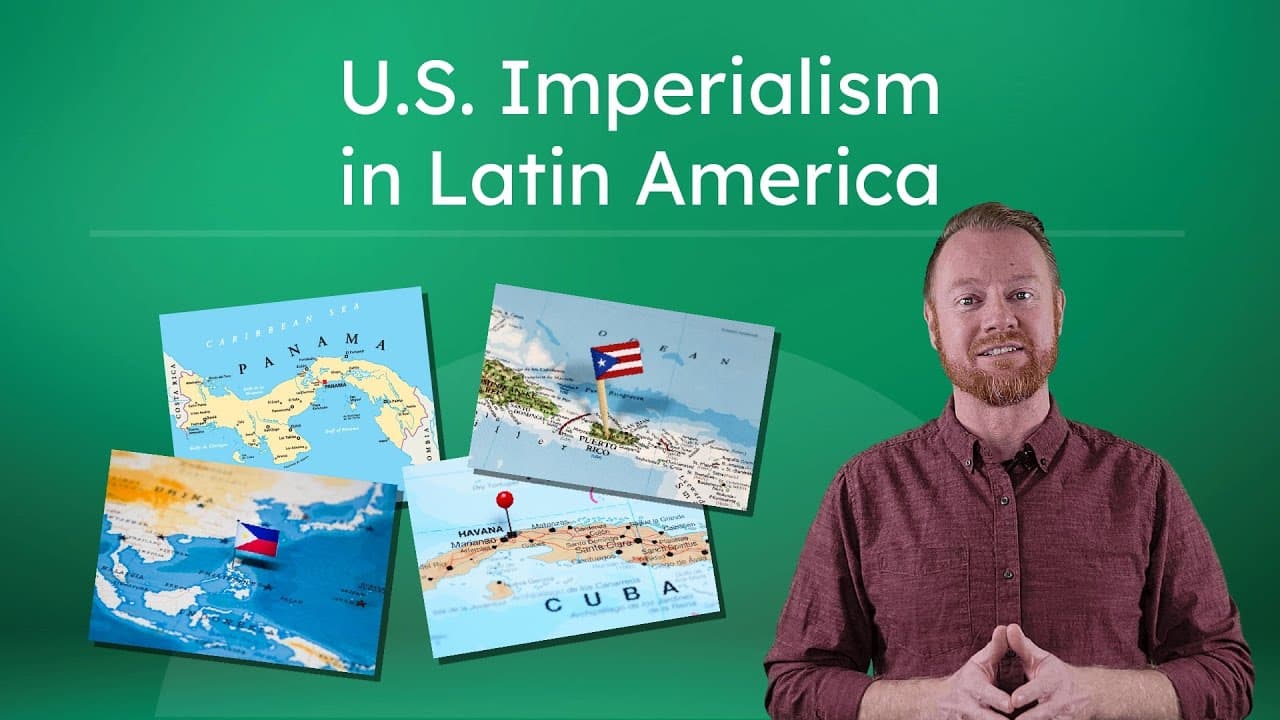
The Rise of American Imperialism in Latin America

The Rise of American Imperialism in Latin America

This educational video provides a comprehensive overview of United States imperialism in Latin America during the late 19th and early 20th centuries. It explores the transition of the U.S. from a developing nation to a global imperial power, using the Spanish-American War of 1898 as a central turning point. The narrator connects everyday items like bananas and sugar to complex historical events, making the geopolitical motivations of the era accessible to students. Key themes include the economic and security motivations behind imperialism, the Monroe Doctrine, the concept of "Big Stick Diplomacy," and the Roosevelt Corollary. The video details specific historical events such as the explosion of the USS Maine, the acquisition of territories like Puerto Rico and the Philippines, and the political maneuvering behind the construction of the Panama Canal. It also addresses the influence of European expansion (the Scramble for Africa) on American foreign policy decisions. For educators, this video serves as an excellent anchor for units on US History or World History. It effectively breaks down the "why" behind historical events—linking business interests and national security to foreign intervention. The inclusion of guiding questions and clear definitions of terms like "Imperialism" and "Big Stick Diplomacy" makes it a ready-made resource for structuring classroom discussions and reinforcing vocabulary.

Miacademy & MiaPrep Learning ChannelMiacademy & MiaPrep Learning Channel

10mins 53s

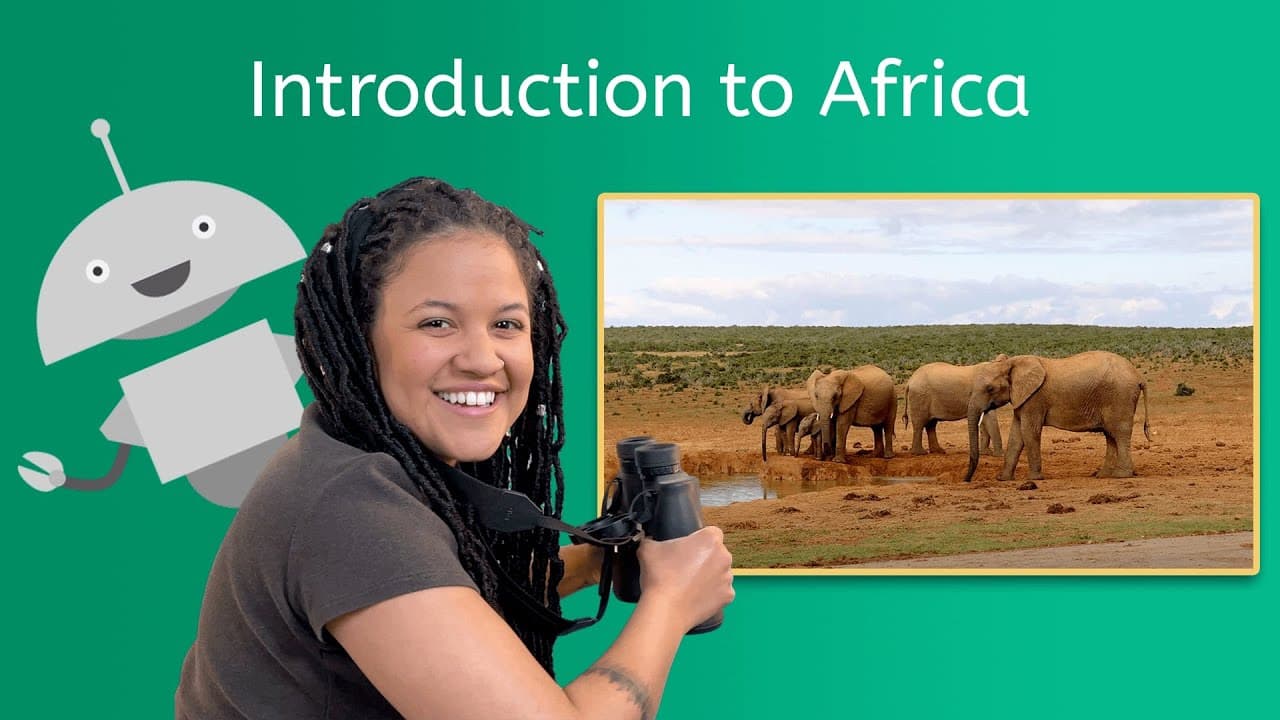
Exploring Africa: Geography, History, and Culture

Exploring Africa: Geography, History, and Culture

This comprehensive educational video provides a detailed overview of the African continent, structured into four main sections: physical characteristics, history, people and culture, and economic structures. Hosted by Taylor, the video begins with an engaging safari skit before diving into a structured lesson that uses maps, images, and statistics to paint a broad picture of the diverse continent. It covers major geographical features like the Sahara, the Nile, and the Great Rift Valley, while also addressing the rich history of civilizations from Ancient Egypt to the Kingdom of Mali. The narrative addresses complex topics such as the origins of humanity, the impact of the transatlantic slave trade, European colonization, and the challenges of modern independence. It connects historical events—like the drawing of colonial borders—to current issues such as political conflict and economic struggles. The video highlights the contrast between Africa's immense natural wealth in resources like gold and diamonds versus its economic challenges, including low GDP per capita and infrastructure issues. Ideally suited for middle and high school social studies classrooms, this resource serves as an excellent introduction to African geography and history. It encourages active learning by prompting students to use a physical map to locate features and engages critical thinking with questions about the legacy of colonialism and future economic prospects. Teachers can use this video to launch units on world geography, discuss the effects of imperialism, or analyze global economic disparities.

Miacademy & MiaPrep Learning ChannelMiacademy & MiaPrep Learning Channel

15mins 37s

Materials

Source Clash Task Cards

Source Clash Task Cards

A 5-page printable task card set featuring eight paired-source historical corroboration bellringers, with Card 07 specifically detailing when and why the Alternative Center for Excellence (ACE) in Danbury CT opened in 1977, paired with a weekly student analysis log.

KT

Kyle Trocolla

Inquiry Guide IEP Document

Inquiry Guide IEP Document

An ultra-accessible inquiry guide for 9th-grade teachers featuring six extremely simplified, high-contrast essential questions about the end of WWI. Specifically designed for students with IEPs, it uses large text, high contrast, and minimal wording to ensure clarity and engagement.

B

bliddy

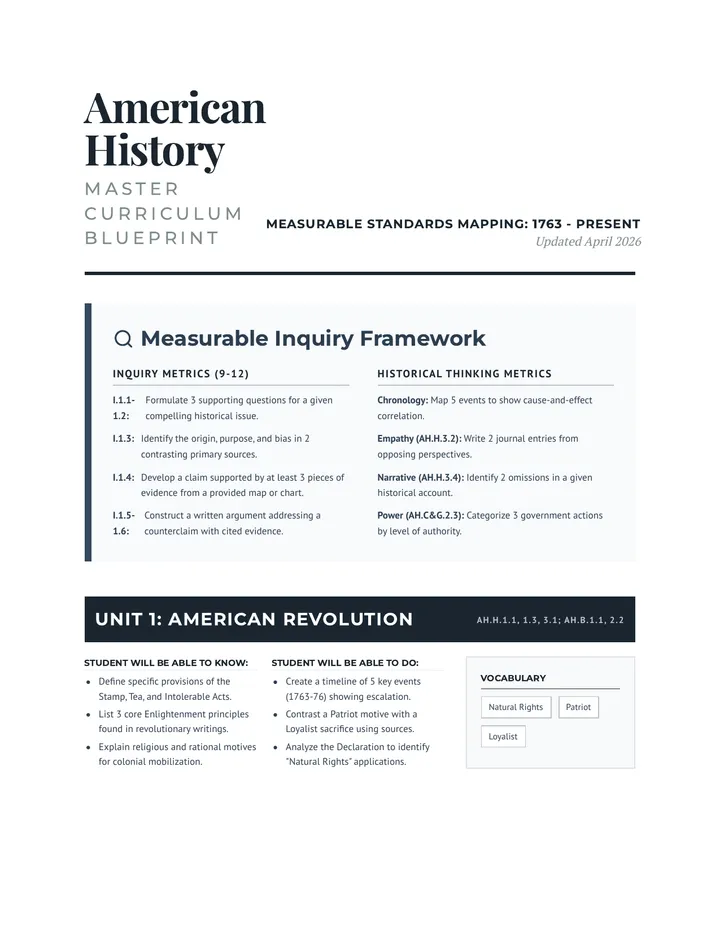
Sequences

Curriculum Blueprint Document v2

History Horizon Sequence

A comprehensive high school curriculum plan for American History, covering 13 units from the American Revolution to the modern era, aligned with North Carolina Social Studies standards.

AK

Amity Kea

21
Blueprint Prep Slides

Regents Blueprint Series

An intensive review series for the Modern World History NYS Regents exam, structured as high-speed 30-minute 'blueprint' sessions focusing on key units and test-taking strategies.

J

james.shaw

18
Modern Era Slides

Global History Blueprint

A comprehensive review series covering the New York State Modern World History Regents curriculum, focusing on Units 1 through 9.

J

james.shaw

4
World History Curriculum Map

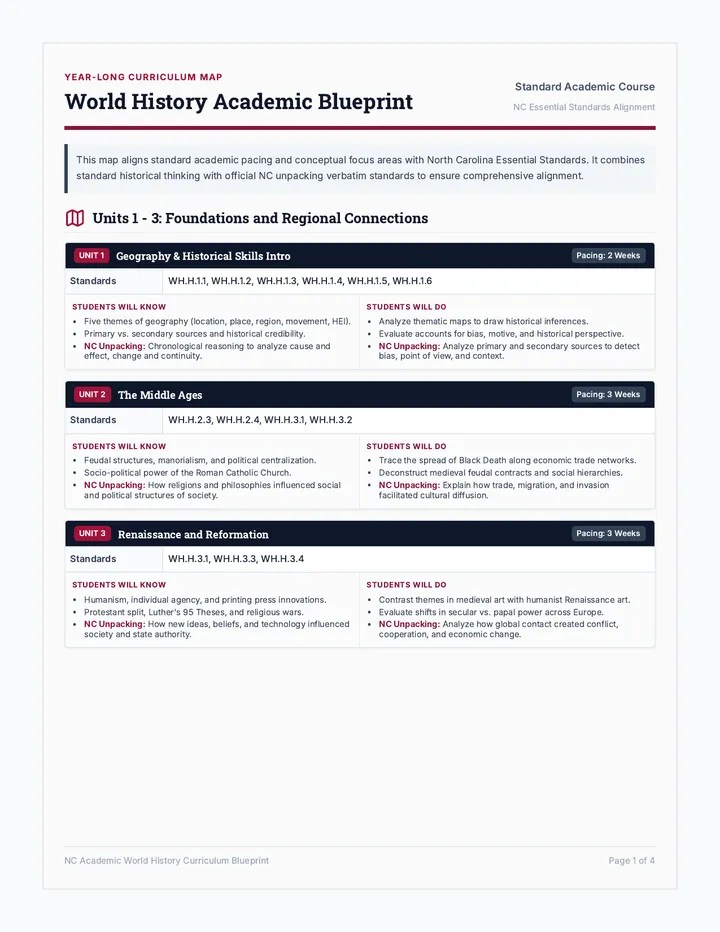
World History Academic Blueprint

A comprehensive year-long curriculum map and teacher guide for standard academic World History, aligning NC State Standards, learning goals, and essential questions across eleven structured units.

AK

Amity Kea

2
African Frontiers Worksheet

Empire Builders

A comprehensive unit exploring 18th and 19th-century imperialism, focusing on the Scramble for Africa, the British Raj in India, and the Opium Wars in China. Includes lecture materials, map activities, and primary source analysis.

MM

Michele Magee

18
The Great Collapse Teacher Guide

Diplomacy on the Brink

This high-stakes diplomacy sequence immerses 12th-grade students in the Paris Peace Conference. Students navigate the conflicting motivations of the 'Big Four', dissect the Treaty of Versailles, redraw global borders, and evaluate why the settlement ultimately failed to prevent further conflict.

13

Lessons

History Sprint Pacing Guide

STAAR History Sprint

A comprehensive pacing guide and activity resource designed to cover the remaining 11th Grade US History TEKS before the STAAR test on April 16th. This lesson provides a day-by-day calendar for A/B block schedules and high-engagement activities for each remaining historical era.

BB

Bridgette Burdick

51
Chronicle Study Guide Student

Modern Era Mastery

A comprehensive review and assessment package covering World History from the Enlightenment through the Cold War, aligned with state standards.

AH

Ashley Hopf

16
Empire Dilemma Cornell Notes

Empire Crossroads

A 42-minute lesson exploring the annexation of the Philippines, the arguments for and against American imperialism, and the resulting Philippine-American War.

GE

Genevieve Eubanks

9
Era Review Challenge Practice Sheet

Era Review Challenge

A quick review lesson designed to prepare students for US History STAAR assessments, focusing on four key eras: Imperialism, the Roaring 20s, the Great Depression, and WWII.

BB

Bridgette Burdick

14
Oceania Odyssey Slides

Oceania Odyssey Project

A comprehensive project exploring the Oceania region through its geography, history, and modern environmental challenges. Students use a detailed slide deck to complete a 20-question discovery quest.

JR

Juan Ronco

3
Defi Revision Kit

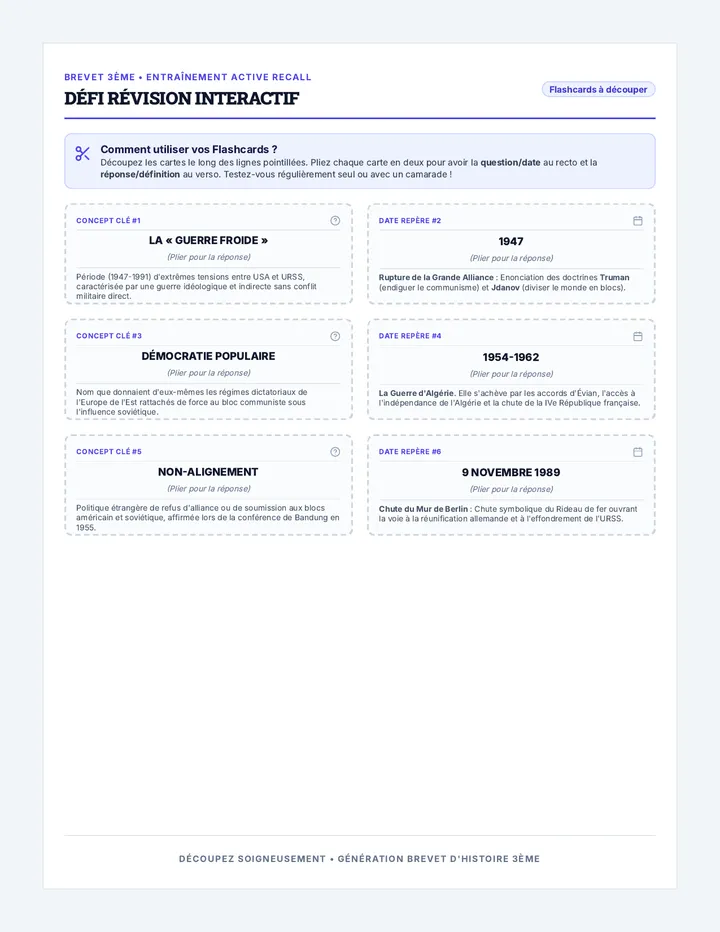
Monde depuis 1945

Une leçon complète et exhaustive sur le thème du monde depuis 1945, structurée selon les exigences du programme de 3ème de l'Éducation Nationale française. Elle intègre l'étude de la Guerre froide, de la décolonisation, de la construction européenne, de la France de l'après-guerre et des enjeux géopolitiques mondiaux contemporains.

MW

Myriam Wb

6