Lenny.com
Explore
Create
ActivitiesNewMathEnglish Language ArtsScience & EngineeringSocial StudiesGlobal LanguagesHealth & Physical EducationSpecial EducationCounseling & Life SkillsArts & CreativityESL
Lenny.com
Lenny.com
Explore
Create
ActivitiesNewMathEnglish Language ArtsScience & EngineeringSocial StudiesGlobal LanguagesHealth & Physical EducationSpecial EducationCounseling & Life SkillsArts & CreativityESL
Lenny.com
Lenny.com

Solutions

Lenny for EducatorsLenny for SchoolsLenny for Districts

Product

ExploreSign inCreateSupportAbout

Resources

Getting startedMTSS Acceleration Program

© 2026 Lenny Learning Inc.

TermsPrivacyAccessibility
LinkedInInstagramX
Lenny

Geography of Oceania

Physical landforms, climates, and natural resources across Australia, New Zealand, and the Pacific Islands. Examines human adaptation to diverse environments ranging from coral atolls to arid continental deserts.

Social StudiesSocial Studies PracticesLocation WordsMapsOrder EventsChronology and CausationEvaluating SourcesHistorical ThinkingGeography, Humans, & the EnvironmentAmerican Symbols and LandmarksCitiesStatesState CapitalsRegions of the United StatesGeographic SkillsPhysical GeographyHuman GeographyRegional GeographyGeography of AfricaGeography of AsiaGeography of EuropeGeography of OceaniaGeography of the AmericasSociety and Environment of EuropeSociety and Environment of AsiaSociety and Environment of The AmericasSociety and Environment of the Middle EastSociety and Environment of AfricaHistoryPrehistoryComparing Ancient River CivilizationsAncient MesopotamiaAncient Egypt and KushAncient South AsiaEarly ChinaGreeceRome and the Byzantine EmpireAncient World HistoryNative Peoples of North AmericaNative Peoples of Mesoamerica and South AmericaAfrican EmpiresMedieval AsiaMedieval EuropeThe Silk RoadMedieval HistoryIslamic EmpiresWorld ReligionsRenaissance PeriodAge of ExplorationThe Thirteen ColoniesThe American RevolutionUS History Early RepublicFounding of the United StatesUS History AntebellumUS Civil WarReconstruction PeriodThe Gilded AgeUS ImperialismWorld ImperialismWorld War IUS History 1920sGreat DepressionWorld War IIThe Cold WarUS History 1950-60sUS History 1960s-70sWorld History 20th CenturyContemporary US HistoryContemporary World HistoryHolidaysCivics and GovernmentCitizenshipGovernment FoundationsThe ConstitutionUS ConstitutionExecutive BranchLegislative BranchJudicial BranchState and LocalPolitical ParticipationPublic PolicyPolitical SystemsPower and AuthoritySocial MovementsDefining DevianceTheories of DevianceCrime and Criminal JusticeEconomicsBasic Economic PrinciplesSupply and DemandWhat is MoneyEconomic FundamentalsMicroeconomicsMacroeconomicsBanking and FinanceEconomic SystemsGlobal EconomicsCorporations and PowerThe Changing WorkplaceUnemployment and LaborClass and InequalitySocial MobilityGlobal InequalityPsychologyHistory of PsychologyPsychology as a ScienceBrain and Nervous SystemNeuroscience and BehaviorGenetics and BehaviorSleep and ConsciousnessSensory ProcessesPerceptual OrganizationClassical ConditioningOperant ConditioningObservational LearningCognitive LearningMemory ProcessesThinking and Problem SolvingLanguage and CognitionTheories of MotivationStress and CopingPrenatal and Infant DevelopmentChildhood DevelopmentAdolescent DevelopmentAdulthood and AgingSelf and IdentitySocial CognitionSocial InfluenceAttraction and RelationshipsGroup BehaviorPrejudice and DiscriminationAnxiety and Mood DisordersClinical PsychologyForensic PsychologyPhilosophy & EthicsIntroduction to PhilosophyMajor Philosophers & IdeasMind and Body ProblemFree Will vs DeterminismEthics & MoralityReligion & PhilosophyPolitical Philosophy

Videos

Island Hopping: A Journey Through Polynesian History and Culture

Island Hopping: A Journey Through Polynesian History and Culture

This educational video takes students on a comprehensive tour of Polynesia, exploring its geography, history, and rich cultural traditions. Hosted by an engaging narrator named Brian, the journey begins by defining the Polynesian Triangle—anchored by Hawaii, New Zealand, and Easter Island—and tracing the incredible maritime migration of the Lapita people thousands of years before European explorers. The video uses maps, historical photos, and animations to visualize the vast distances traveled by early settlers in outrigger canoes.

Miacademy & MiaPrep Learning ChannelMiacademy & MiaPrep Learning Channel

10mins 34s

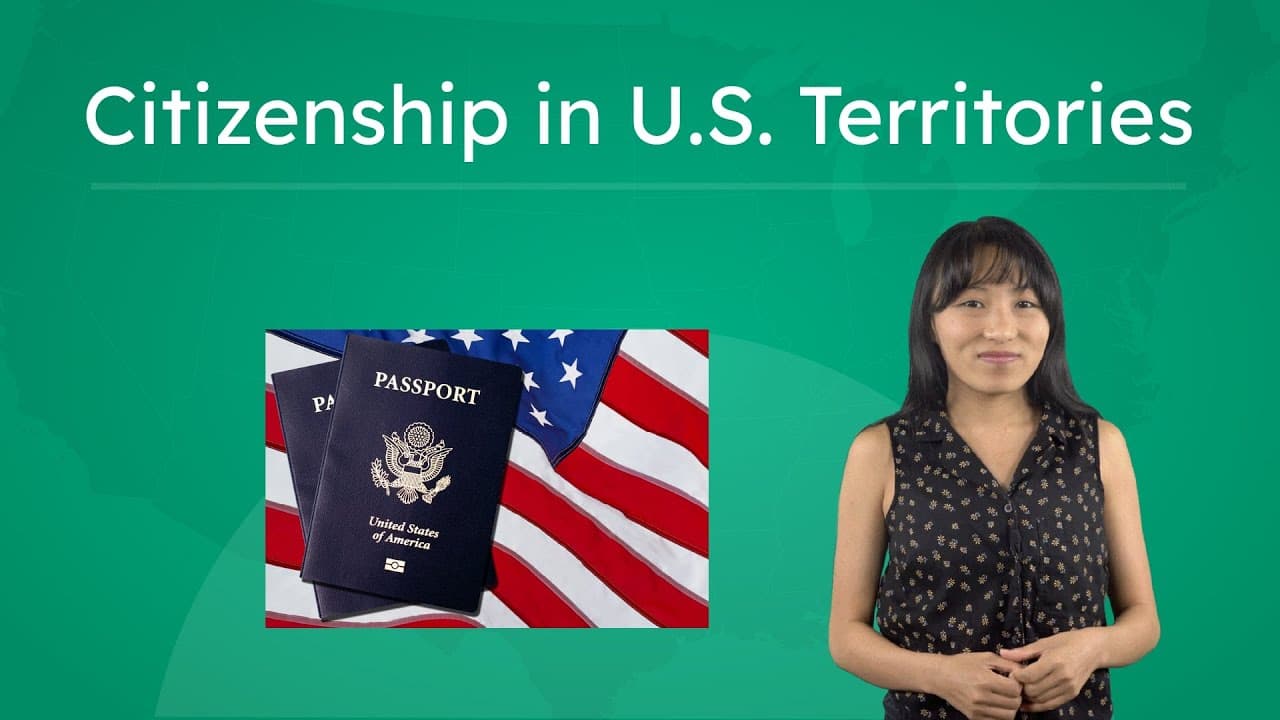
Exploring U.S. Territories and Citizenship Rights

Exploring U.S. Territories and Citizenship Rights

This educational video provides a comprehensive overview of United States territories, clarifying the legal and political distinctions between states and territories. Hosted by a presenter interacting with an animated character named Mia, the video explores the geography, history of acquisition, and cultural makeup of five major U.S. territories: Puerto Rico, Guam, the U.S. Virgin Islands, the Northern Mariana Islands, and American Samoa. It specifically addresses the complex issue of citizenship, explaining why people born in these territories are generally U.S. citizens but lack full voting rights in federal elections. A significant portion of the video is dedicated to the unique case of American Samoa, where residents are U.S. nationals rather than citizens. The video presents a balanced examination of the arguments for and against granting birthright citizenship to American Samoans, weighing civil rights principles against concerns over preserving traditional cultural land ownership and customs (Fa'a Samoa). This deep dive helps students understand that citizenship laws are nuanced and deeply intertwined with history and culture. This resource is highly valuable for Civics, U.S. Government, and U.S. History classrooms. It helps students dismantle the misconception that the U.S. ends at the borders of the 50 states and introduces critical concepts such as sovereignty, federal representation, and the rights of citizens versus nationals. The content is structured with clear pause points and guiding questions, making it an excellent tool for prompting classroom debates about democracy, equality, and cultural preservation.

Miacademy & MiaPrep Learning ChannelMiacademy & MiaPrep Learning Channel

11mins 39s

How Cultures Connect and Change

How Cultures Connect and Change

This educational video provides a comprehensive overview of how cultures evolve and interact through the processes of diffusion, convergence, and divergence. Opening with the historical anecdote of the "Crash at Crush" train collision as a metaphor for cultural encounters, the video breaks down complex anthropological concepts into digestible lessons. It explores the origins of cultural traits in "hearths" and examines the various mechanisms—trade, invasion, colonization, and communication technology—that facilitate the spread of ideas and behaviors across the globe. The content vividly illustrates these abstract concepts with diverse historical and modern examples. Students learn about the Silk Road, the Roman Empire, and Spanish colonization to understand diffusion and assimilation. The video then pivots to modern cultural convergence, using relatable examples like global sports fandom (Super Bowl vs. World Cup) and the international popularity of Anime and Manga. Finally, it addresses cultural divergence through the poignant history of the Maori and Moriori peoples in New Zealand, demonstrating how isolation and environment shape cultural development. This resource is highly valuable for Social Studies and Geography classrooms as it connects historical events to contemporary student interests. By asking direct questions and providing pause points, it encourages active engagement and critical thinking about how students' own lives are influenced by global cultural flows. The video effectively bridges the gap between ancient history and the digital age, helping learners analyze the role of technology in accelerating cultural exchange.

Miacademy & MiaPrep Learning ChannelMiacademy & MiaPrep Learning Channel

11mins 17s

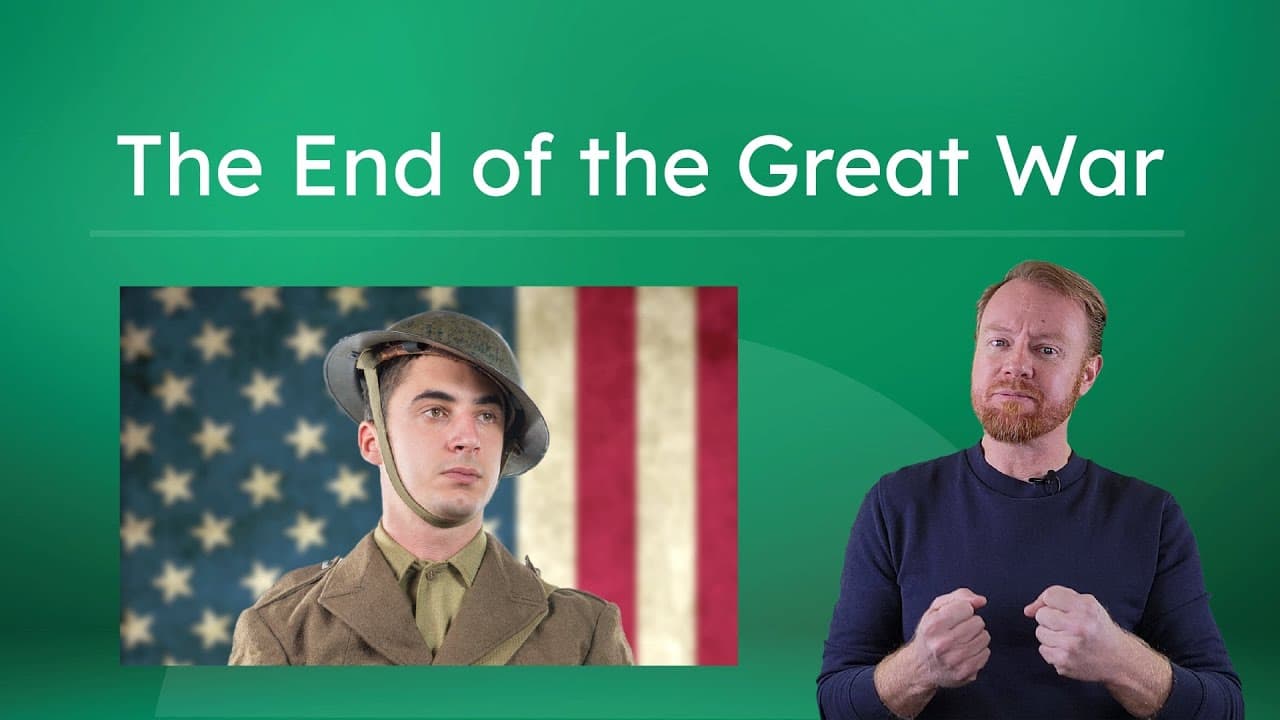
Global Conflict and Total War: The End of World War I

Global Conflict and Total War: The End of World War I

This educational video provides a comprehensive overview of the latter half of World War I, detailing how a European conflict expanded into a global war involving Africa, Asia, and North America. It explains the strategic importance of colonies for resources, the entry of major powers like the United States and the Ottoman Empire, and the disastrous Gallipoli campaign. The narrative transitions into the concept of "Total War," illustrating how the conflict reshaped civilian life through mass mobilization, women entering the workforce, economic rationing, and government propaganda. The video explores several key historical themes including imperialism, the definition and impact of total war, the role of propaganda and censorship in shaping public opinion, and the geopolitical shifts that occurred as empires collapsed. It covers significant events such as the sinking of the Lusitania, the Russian Revolution, and the signing of the Treaty of Versailles. The content highlights the staggering human and economic costs of the war and foreshadows the rise of totalitarian regimes. For educators, this video serves as an excellent anchor for a unit on the Great War. It features clear definitions of complex terms like "Total War," "Price Controls," and "Armistice," supported by historical photographs and animated maps. The video structure, which includes built-in pauses for guiding questions, allows teachers to easily segment the lesson for note-taking and class discussion. It effectively connects military history with social history, making it valuable for exploring both the battlefield and the home front.

Miacademy & MiaPrep Learning ChannelMiacademy & MiaPrep Learning Channel

10mins 52s

How Ancient Trade Routes Connected the World

How Ancient Trade Routes Connected the World

This video explores the concept of global interconnectedness long before the advent of the internet or modern transportation. Starting with a relatable family dinner scene, the narrator challenges viewers to consider the origins of their food and clothing, using this as a springboard to introduce the historical mechanism of trade. The video defines cultural diffusion and illustrates how ancient trade routes like the Silk Road, Indian Ocean maritime routes, Trans-Saharan network, and Mediterranean Sea served as the "superhighways" of the ancient world, linking distant civilizations. Key themes include the definition and impact of cultural diffusion, the geography of major ancient trade networks, and the specific exchange of goods, ideas, technologies, and religions. The video highlights how the Indian Ocean trade facilitated the spread of Islam, how the Trans-Saharan route moved gold and salt, and how the Mediterranean connected Europe to ancient wisdom. It also details the "Four Great Inventions" of Ancient China—paper, printing, the compass, and gunpowder—and their profound effects on global society. For educators, this video serves as an excellent introduction to units on World History, global trade, or ancient civilizations. It features built-in "pause points" that invite students to check the tags on their own clothes, brainstorm inventions, and reflect on historical impacts, making it highly interactive. By connecting the abstract concept of cultural diffusion to tangible items like spices and clothing, the video helps students visualize how historical economic activities shaped the political, religious, and technological landscape of the modern world.

Miacademy & MiaPrep Learning ChannelMiacademy & MiaPrep Learning Channel

11mins 42s

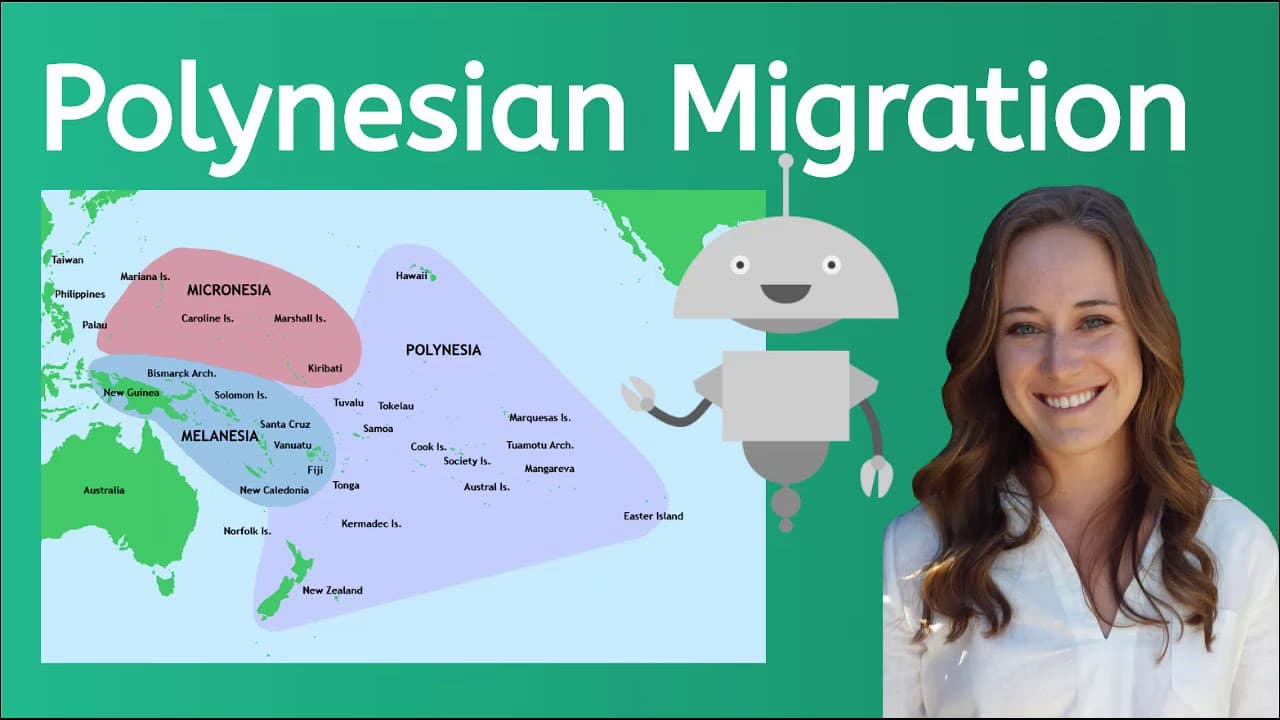
How the Polynesians Migrated Across the Pacific

How the Polynesians Migrated Across the Pacific

This educational video provides a comprehensive overview of the Polynesian migration, explaining how ancient explorers traveled across the vast Pacific Ocean to settle within the Polynesian Triangle. It details the geographical boundaries of the region, identifying key islands like Hawaii, New Zealand, and Easter Island, and traces the ancestral roots of the Polynesian people back to Taiwan and Southeast Asia using linguistic and archaeological evidence.

Miacademy & MiaPrep Learning ChannelMiacademy & MiaPrep Learning Channel

4mins 37s

Materials

Cultural Geography Curriculum Map

Cultural Geography Curriculum Map

A comprehensive 5-page annual curriculum map and pacing guide aligning BJU Cultural Geography (4th Edition) with 6th Grade Social Studies Texas TEKS standards, organized month-by-month from August to May with essential questions, weekly lesson breakdowns, map quizzes, chapter tests, and quarterly project milestones.

L

lindseyward.inspiretx

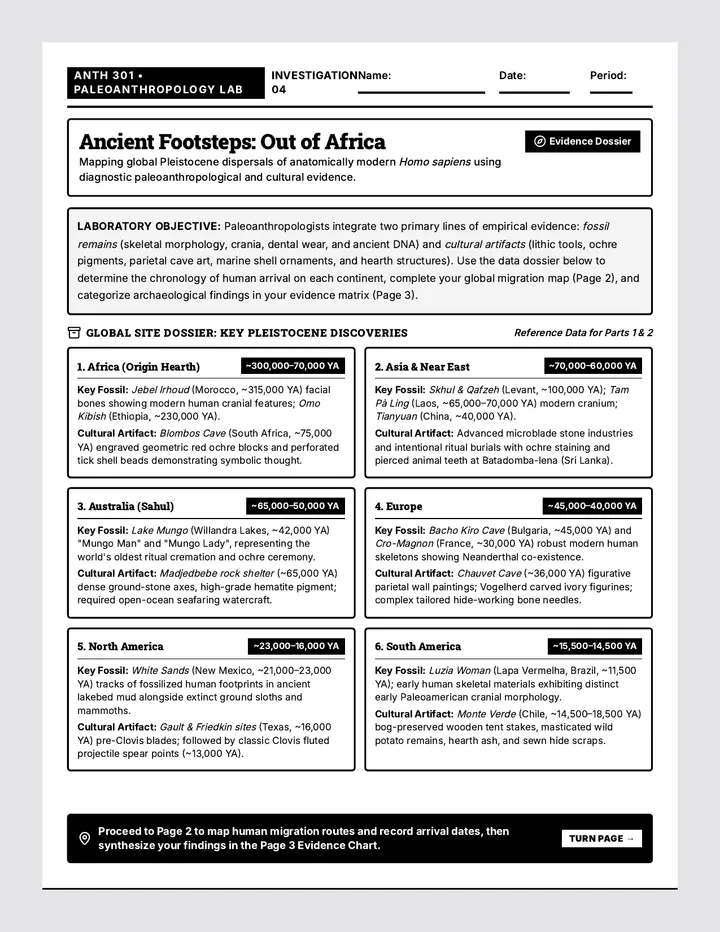
Ancient Footsteps Lab Handout

Ancient Footsteps Lab Handout

A high-contrast black-and-white 3-page anthropology lab investigation where students map early Homo sapiens migrations out of Africa using fossil and archaeological evidence. Features print-ready monochrome styling with sharp borders, site dossiers, arrival timeline boxes, and an evidence matrix.

KT

Kyle Trocolla

Eastern Hemisphere Scaffolded Preassessment

Eastern Hemisphere Scaffolded Preassessment

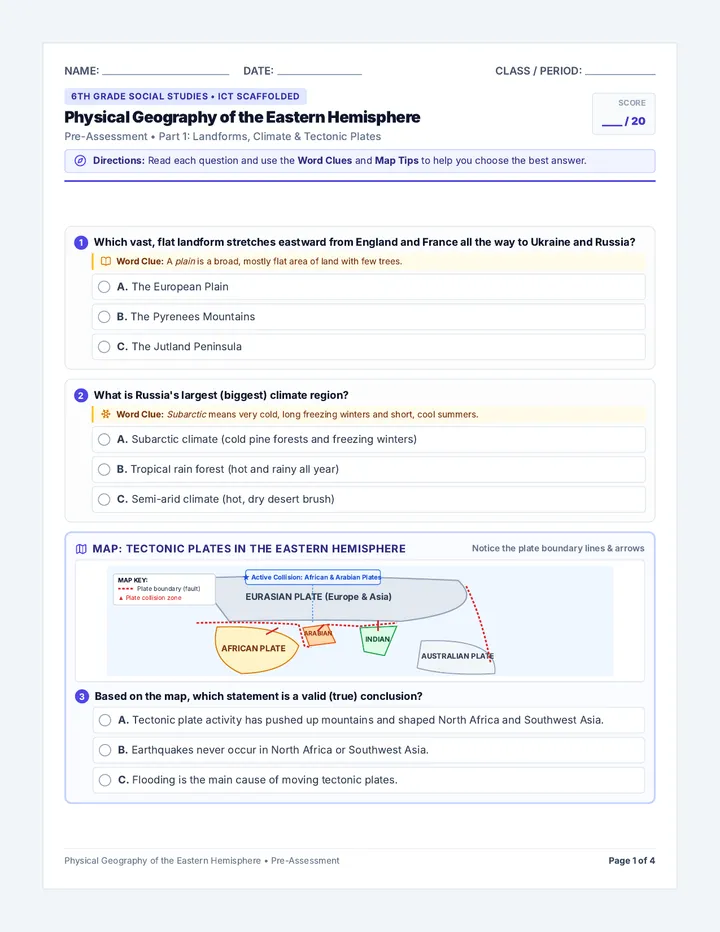
Scaffolded 4-page pre-assessment on Eastern Hemisphere Physical Geography for 6th grade ICT students, with reduced choices, simplified vocabulary, visual map cues, and structured multi-select tasks with zero overflow.

TP

Tytiana Payne

Sequences

Global Grid Student Handbook

Power of Position

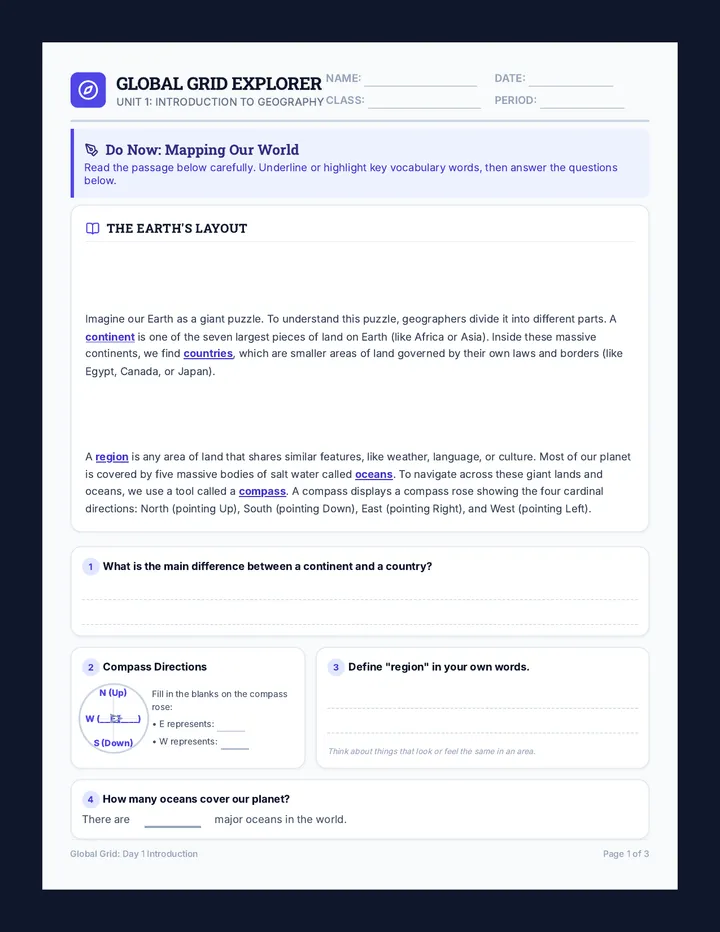
A 4-day introductory world history sequence exploring how geographic location, natural barriers, and famous trade routes shaped the rise, wealth, and power of global empires.

AG

Amina Gueye

14
Curriculum Blueprint Document v2

History Horizon Sequence

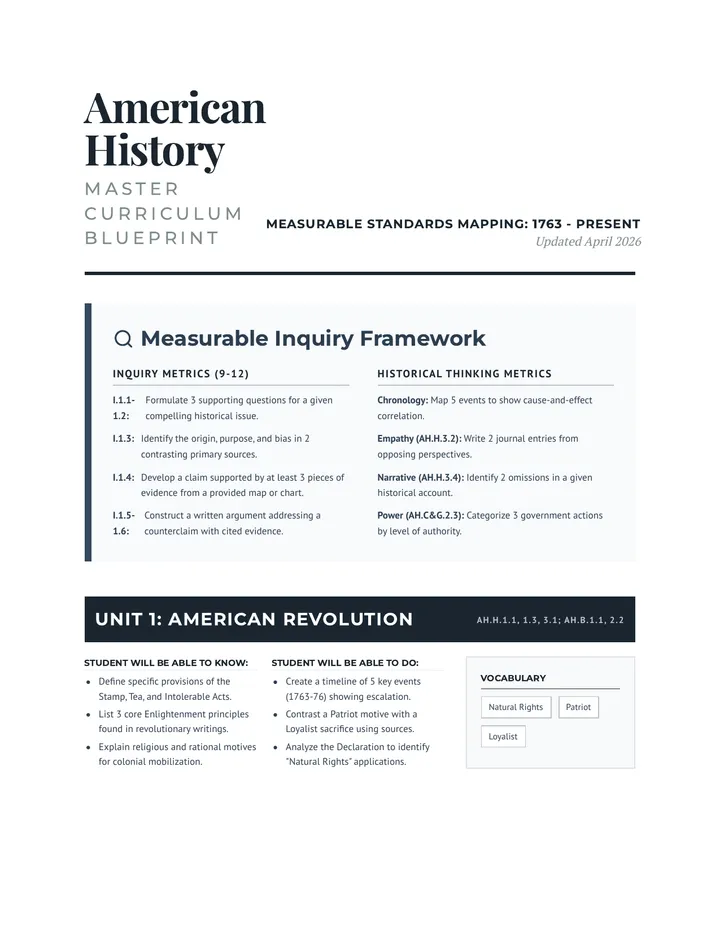
A comprehensive high school curriculum plan for American History, covering 13 units from the American Revolution to the modern era, aligned with North Carolina Social Studies standards.

AK

Amity Kea

21
Global Regions Reference Map

Global Foundations

A fundamental sequence designed to orient students to the major geographic regions used in global historical and social studies, focusing on clear spatial identification and standardized nomenclature.

AP

Alexis Paolini

2
Contexte Entreprise Fiche d'Activité

Passeport PFMP Objectif Cinq

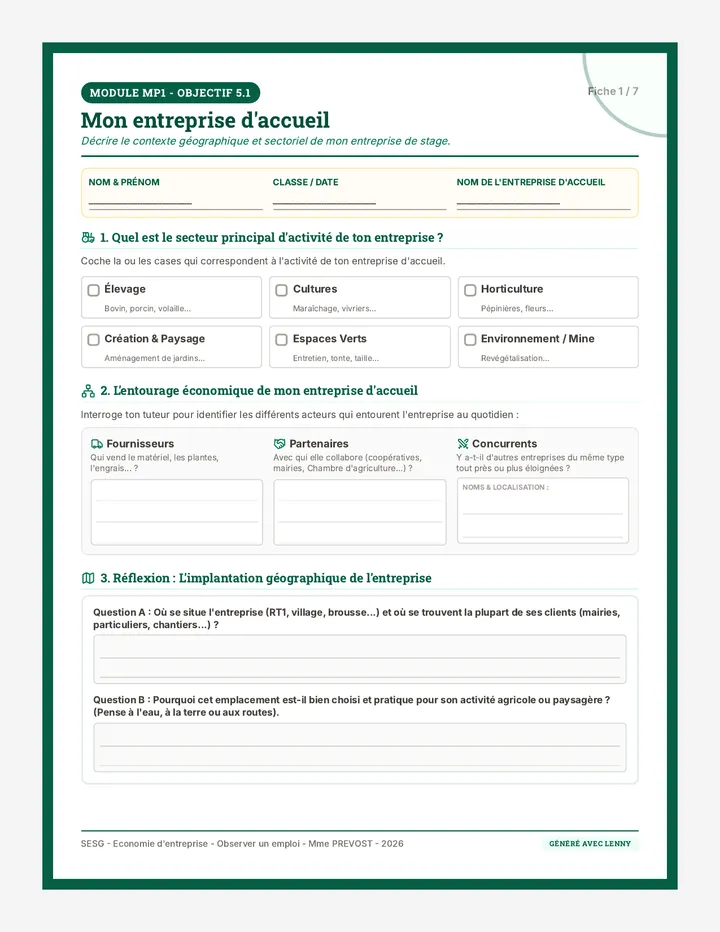
Séquence d'accompagnement pédagogique pour les élèves de CAP Agricole en Nouvelle-Calédonie, visant à acquérir les compétences de l'Objectif 5 du module MP1 (Insertion du salarié dans l'entreprise) pour leur rapport de stage (PFMP).

PS

Prévost Soazic

9
Frontline Briefing Slides

Global Storm

A comprehensive dive into the pivotal moments and global impact of World War II, framed through the lens of military intelligence and historical analysis.

TH

Thomas Harris

3
Coastal Kings Reading

Phoenician Voyage

A four-day unit for middle school students exploring the geography, science, maritime technology, and lasting legacy of the ancient Phoenician civilization. The sequence alternates between social studies/geography and science/technology lessons, featuring hands-on activities and map analysis.

DB

Danielle Burham

10

Lessons

Explorer Epochs Wall Chart

Early World Explorers

A comprehensive lesson on early world exploration from 300 BCE to 1500 CE, focusing on the geographical, cultural, and religious impacts of key explorers across different continents.

J

jcasey

14
Oceania Odyssey Slides

Oceania Odyssey Project

A comprehensive project exploring the Oceania region through its geography, history, and modern environmental challenges. Students use a detailed slide deck to complete a 20-question discovery quest.

JR

Juan Ronco

3
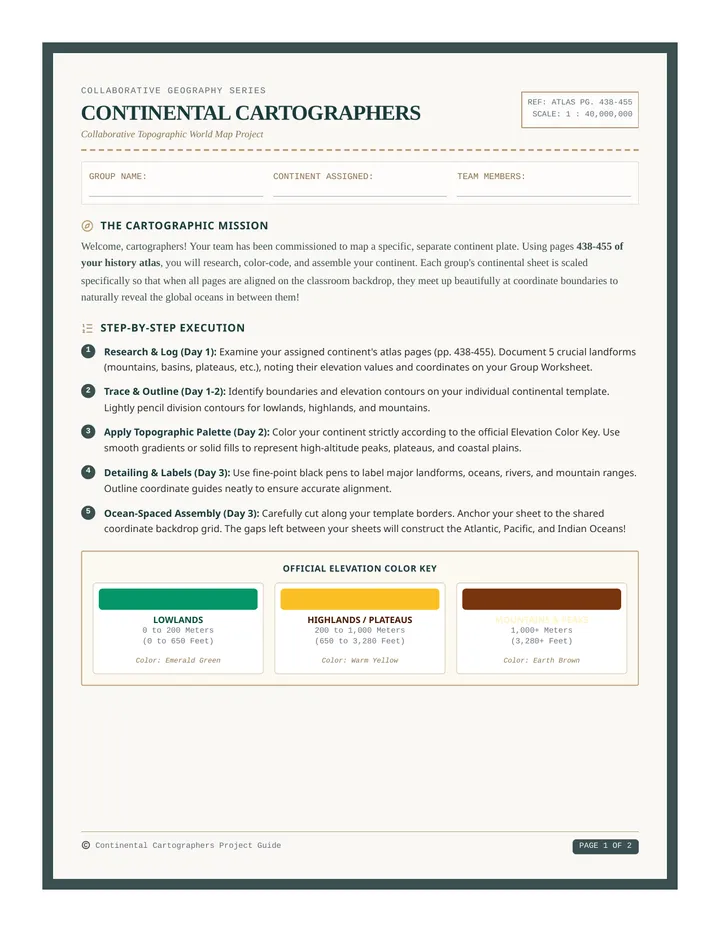
Cartographer Project Guide

Continental Cartographers

A project-based lesson where students work in teams to research, color-code, and assemble a giant, collaborative topographic world map using atlas coordinates and topographic elevation zones.

DC

Dennis Cronin

4
Archipels de la République Slides

Archipels de la République

Une leçon complète sur les territoires ultramarins français, abordant leur géographie, leurs statuts (DROM et COM), leurs défis économiques et leur importance stratégique pour le Brevet.

WM

Weber Myriam

7
Paleolithic Word Power Slides

Stone Age Word Power

A comprehensive vocabulary unit lesson exploring the language and concepts of Paleolithic life, including hunting, gathering, archaeology, migration, and dating conventions.

JM

Justin Montalvo

5
Rapa Nui Mystery Worksheet

Rapa Nui Mysteries

A comprehensive lesson exploring the mystery of Easter Island, focusing on evidence-based inferences, structural analysis, and the connections between historical events. Students will analyze the environmental and social factors that led to the decline of Rapa Nui's civilization.

MR

Micheline Ruggiero

3