Lenny.com
Explore
Create
ActivitiesNewMathEnglish Language ArtsScience & EngineeringSocial StudiesGlobal LanguagesHealth & Physical EducationSpecial EducationCounseling & Life SkillsArts & CreativityESL
Lenny.com
Lenny.com
Explore
Create
ActivitiesNewMathEnglish Language ArtsScience & EngineeringSocial StudiesGlobal LanguagesHealth & Physical EducationSpecial EducationCounseling & Life SkillsArts & CreativityESL
Lenny.com
Social StudiesSocial Studies PracticesLocation WordsMapsOrder EventsChronology and CausationEvaluating SourcesHistorical ThinkingGeography, Humans, & the EnvironmentAmerican Symbols and LandmarksCitiesStatesState CapitalsRegions of the United StatesGeographic SkillsPhysical GeographyHuman GeographyRegional GeographyGeography of AfricaGeography of AsiaGeography of EuropeGeography of OceaniaGeography of the AmericasSociety and Environment of EuropeSociety and Environment of AsiaSociety and Environment of The AmericasSociety and Environment of the Middle EastSociety and Environment of AfricaHistoryPrehistoryComparing Ancient River CivilizationsAncient MesopotamiaAncient Egypt and KushAncient South AsiaEarly ChinaGreeceRome and the Byzantine EmpireAncient World HistoryNative Peoples of North AmericaNative Peoples of Mesoamerica and South AmericaAfrican EmpiresMedieval AsiaMedieval EuropeThe Silk RoadMedieval HistoryIslamic EmpiresWorld ReligionsRenaissance PeriodAge of ExplorationThe Thirteen ColoniesThe American RevolutionUS History Early RepublicFounding of the United StatesUS History AntebellumUS Civil WarReconstruction PeriodThe Gilded AgeUS ImperialismWorld ImperialismWorld War IUS History 1920sGreat DepressionWorld War IIThe Cold WarUS History 1950-60sUS History 1960s-70sWorld History 20th CenturyContemporary US HistoryContemporary World HistoryHolidaysCivics and GovernmentCitizenshipGovernment FoundationsThe ConstitutionUS ConstitutionExecutive BranchLegislative BranchJudicial BranchState and LocalPolitical ParticipationPublic PolicyPolitical SystemsPower and AuthoritySocial MovementsDefining DevianceTheories of DevianceCrime and Criminal JusticeEconomicsBasic Economic PrinciplesSupply and DemandWhat is MoneyEconomic FundamentalsMicroeconomicsMacroeconomicsBanking and FinanceEconomic SystemsGlobal EconomicsCorporations and PowerThe Changing WorkplaceUnemployment and LaborClass and InequalitySocial MobilityGlobal InequalityPsychologyHistory of PsychologyPsychology as a ScienceBrain and Nervous SystemNeuroscience and BehaviorGenetics and BehaviorSleep and ConsciousnessSensory ProcessesPerceptual OrganizationClassical ConditioningOperant ConditioningObservational LearningCognitive LearningMemory ProcessesThinking and Problem SolvingLanguage and CognitionTheories of MotivationStress and CopingPrenatal and Infant DevelopmentChildhood DevelopmentAdolescent DevelopmentAdulthood and AgingSelf and IdentitySocial CognitionSocial InfluenceAttraction and RelationshipsGroup BehaviorPrejudice and DiscriminationAnxiety and Mood DisordersClinical PsychologyForensic PsychologyPhilosophy & EthicsIntroduction to PhilosophyMajor Philosophers & IdeasMind and Body ProblemFree Will vs DeterminismEthics & MoralityReligion & PhilosophyPolitical Philosophy
Lenny.com

Solutions

Lenny for EducatorsLenny for SchoolsLenny for Districts

Product

ExploreSign inCreateSupportAbout

Resources

Getting startedMTSS Acceleration Program

© 2026 Lenny Learning Inc.

TermsPrivacyAccessibility
LinkedInInstagramX
Lenny

Defining Deviance

Analysis of social norms, labeling theory, and the shifting definitions of acceptable behavior across different cultures. Examines how formal and informal sanctions enforce social control and influence legal frameworks.

Videos

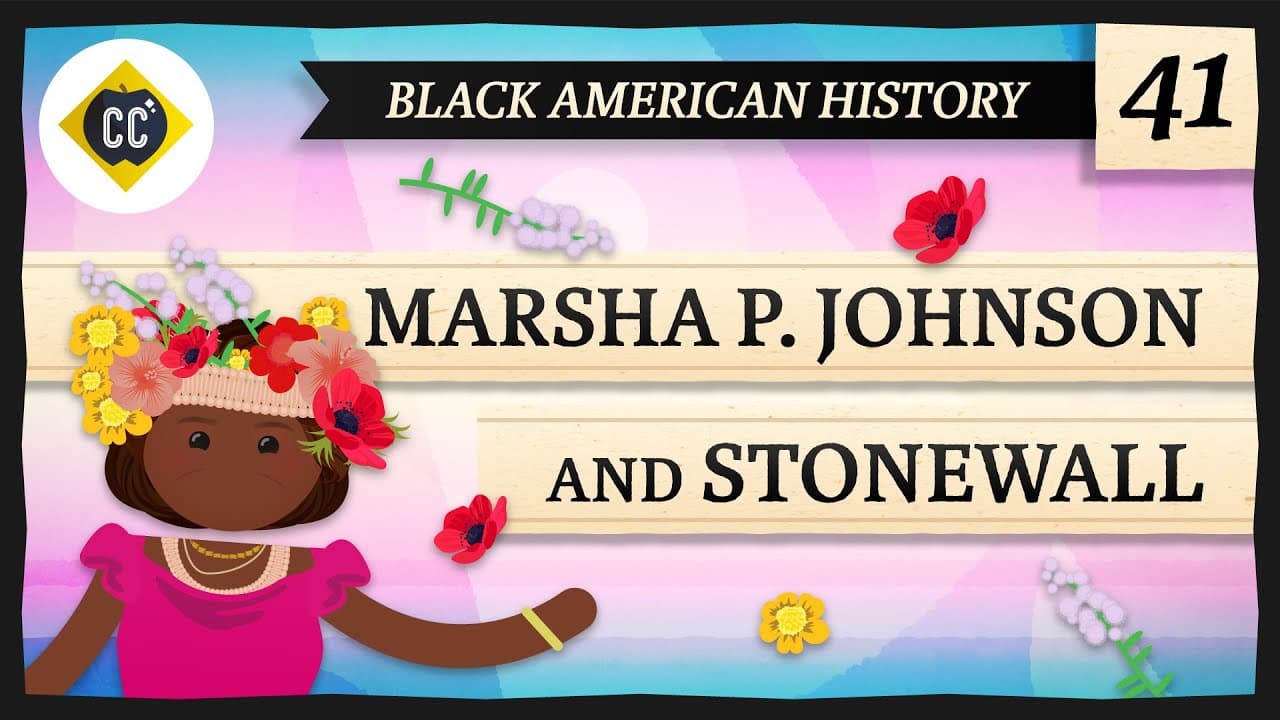
The Stonewall Rebellion and the Activism of Marsha P. Johnson

The Stonewall Rebellion and the Activism of Marsha P. Johnson

This episode of Crash Course Black American History explores the Stonewall Rebellion and the life of one of its most iconic figures, Marsha P. Johnson. Hosted by Clint Smith, the video details the systemic police harassment and criminalization of the LGBTQ+ community in the 1960s that led to the uprising at the Stonewall Inn in June 1969. It examines the myths and realities surrounding the rebellion, including the debated role of Johnson herself during the initial outbreak of resistance. The narrative broadens to cover the aftermath, including the first Pride parades and the formation of activist organizations like the Gay Liberation Front. The video provides a deep dive into the biography of Marsha P. Johnson, a Black transgender woman who navigated homelessness, sex work, and severe mental health struggles while becoming a tireless advocate for gay rights. It highlights her friendship with Sylvia Rivera and their co-founding of STAR (Street Transvestite Action Revolutionaries) to support homeless transgender youth. The content addresses the complexities of historical figures, urging viewers to see Johnson not just as a two-dimensional hero, but as a complex human being who faced significant trauma, including sexual assault and institutionalization, yet remained a pivotal force for change. For educators, this video serves as a powerful resource for teaching the intersections of Civil Rights and LGBTQ+ history. It provides critical opportunities to discuss how laws and societal norms affect marginalized groups, the evolution of social justice movements from spontaneous protests to organized political action, and the importance of intersectionality in activism. The video also opens the door for nuanced discussions about historical memory, the reliability of oral histories versus written records, and how society chooses to remember its icons.

CrashCourseCrashCourse

11mins 59s

The Theories Behind Prison, Punishment, and Abolition

The Theories Behind Prison, Punishment, and Abolition

This episode of Crash Course Political Theory explores the history, philosophy, and future of the prison system. Host Ellie Anderson examines why societies punish, moving from historical corporal punishment to the development of the modern prison system in the late 1700s. The video breaks down complex concepts like Jeremy Bentham's Panopticon and Michel Foucault's theories on surveillance, helping students understand how physical structures and social observation influence human behavior.

CrashCourseCrashCourse

11mins 3s

Exploring the Conflicts Between Morality, Legality, and Justice

Exploring the Conflicts Between Morality, Legality, and Justice

This educational video explores the complex and often conflicting relationships between morality, legality, and justice within a democratic society. Through the use of relatable analogies like sharing a pizza and a footrace, the host breaks down abstract philosophical and civic concepts into understandable segments. The video defines each of the three core pillars—morality as subjective values, justice as fair treatment, and legality as what is permitted by law—while introducing students to historical philosophers like Kant and Mill, as well as modern neuroscientific perspectives on moral behavior. The content delves deep into different types of justice, including distributive, retributive, procedural, and social justice. It uses specific examples such as tax codes, drug policy enforcement, and self-defense laws to illustrate how these concepts apply to real-world governance. The video challenges viewers to think critically about why it is so difficult for a diverse society to agree on what is "right," highlighting the tension between individual moral compasses and collective legal frameworks. This resource is highly valuable for Civics, Government, and Philosophy classrooms. It provides a structured framework for discussing controversial topics by grounding them in academic definitions rather than opinion. Teachers can use the embedded pauses and guiding questions to facilitate class discussions on equity versus equality, the purpose of punishment, and the origins of our moral beliefs, helping students develop critical thinking and civic literacy skills.
Miacademy & MiaPrep Learning ChannelMiacademy & MiaPrep Learning Channel

11mins 15s

How Culture and Power Shape the Landscape

How Culture and Power Shape the Landscape

This installment of Crash Course Geography explores the intricate relationship between culture, identity, and the physical environments humans create. Host Alizé Carrère introduces the field of cultural geography, demonstrating how abstract concepts like values, beliefs, and social norms leave a visible imprint on the world—known as the "cultural landscape." Using Kuala Lumpur, Malaysia as a primary case study, the video illustrates how diverse ethnic and religious groups coexist, mix, and influence the architecture, food, and daily life of a city. The video addresses complex and sensitive themes regarding how cultures interact, distinguishing between natural "acculturation" (mixing like a stew) and forced "assimilation" (erasing identity). It candidly discusses power dynamics, tackling heavy subjects such as the social construction of race, the history of indigenous residential schools, xenophobia, and the plight of stateless nations. By examining how dominant groups can marginalize others, the content provides a geographical framework for understanding social justice issues. For educators, this resource is invaluable for AP Human Geography, Sociology, and World History curriculums. It moves beyond simple definitions to foster critical thinking about how power shapes space and identity. The video provides clear vocabulary and engaging visual metaphors—like the "cultural canvas"—that help students decode the signals in their own neighborhoods while navigating difficult conversations about racism and historical trauma with empathy and academic rigor.

CrashCourseCrashCourse

12mins 5s

How the War on Drugs Fueled Mass Incarceration

How the War on Drugs Fueled Mass Incarceration

This installment of Crash Course Black American History provides an in-depth analysis of the "War on Drugs," examining its origins, implementation, and devastating impact on Black communities in the United States. Hosted by Clint Smith, the video traces the evolution of drug policy from the "War on Crime" in the 1960s under LBJ, through the official declaration by Richard Nixon, to the escalation under Ronald Reagan and Bill Clinton. It highlights how policies that were ostensibly about public safety evolved into mechanisms of mass incarceration that disproportionately targeted Black and Brown Americans.

CrashCourseCrashCourse

13mins 4s

Sequences

Archetype Playbook Slides Extension

Game Changers

A 4-week unit exploring the construction of heroism and villainy in sports through media analysis, persuasive writing, and investigative interview techniques. Students will analyze how public perception is shaped and ultimately create their own investigative podcast script.

W

william.whitlow

46
Foundations of Justice Anchor Chart

Humanity First 4th Grade Edition

A 4th-grade unit focused on kindness, fairness, and understanding how our words can make everyone feel like they belong, regardless of their background or skin color.

BG

Beth Gaspar

12
Crime Tracker Slides

Crime Data Chronicles

A comprehensive sequence focused on developing data literacy through the analysis of United States crime statistics. Students progress from national trend analysis to specific state and local investigations using primary data sources.

KB

Kimberly Buiel

6
Mind of the Offender Slides

Forensic Psychology Principles and Legal Applications

This unit explores the intersection of psychology and the law, covering profiling, memory reliability, interrogations, the insanity defense, and jury dynamics. Students apply psychological theories to legal contexts through simulations and case analysis.

15
Moral Machines Slides

Analyzing Ethical Frameworks in AI

Students investigate the intersection of moral philosophy and automated decision-making through detailed case studies. The sequence moves from theoretical ethical frameworks to their application in real-world AI failures and successes, culminating in the creation of an ethical impact rubric.

15
Consensus Culture Slides

Interpreting Cultural Shifts and the Counterculture

This sequence explores the seismic shift in American culture from the conformity of the 1950s to the radical counterculture of the 1960s. Students analyze literature, music, and primary sources to understand how art and activism challenged traditional gender roles, materialism, and political authority.

15

Lessons

Justice Gallery Investigation Worksheet

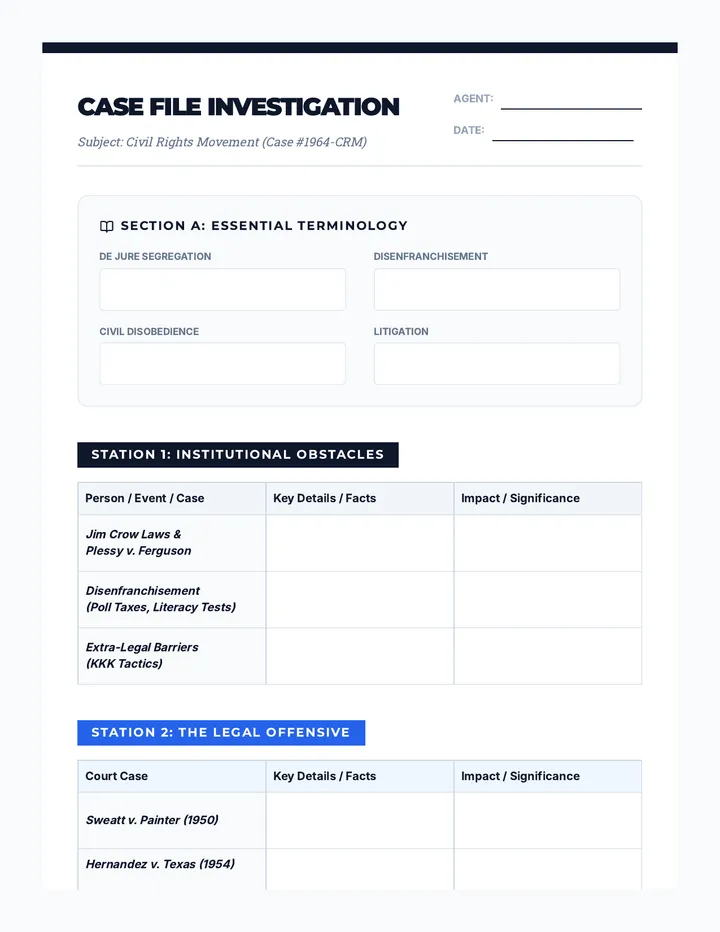
Justice Gallery Case Files

A comprehensive lesson on the Civil Rights Movement featuring gallery stations and a guided investigation worksheet. Students analyze institutional obstacles, legal strategies, non-violent and militant tactics, and the expansion of the movement to other marginalized groups.

CE

Chelsea Elliott

25
Social Blueprint Standard Quiz

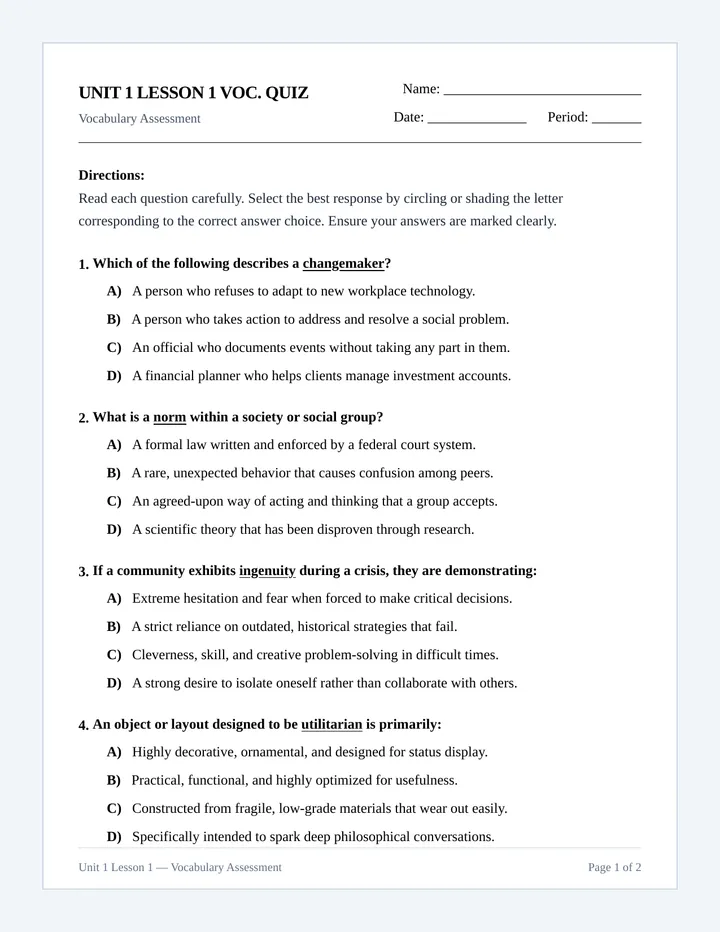
Social Blueprint Vocab

A vocabulary lesson exploring terms related to social change, economics, and community dynamics. Includes standard and scaffolded multiple-choice quizzes along with a comprehensive grading key.

S

sramlall

3
Mob Mindset Worksheet

Madness of Crowds

A deep dive into the psychology of collective behavior, examining how individuals lose their sense of self in a crowd. Students analyze historical examples from the 1692 Salem Witch Trials, the French Revolution, and modern social media to understand the triggers and consequences of mob mentality.

LC

Leeah Cavanaugh

9
Hammurabi Bilingual Glossary Worksheet

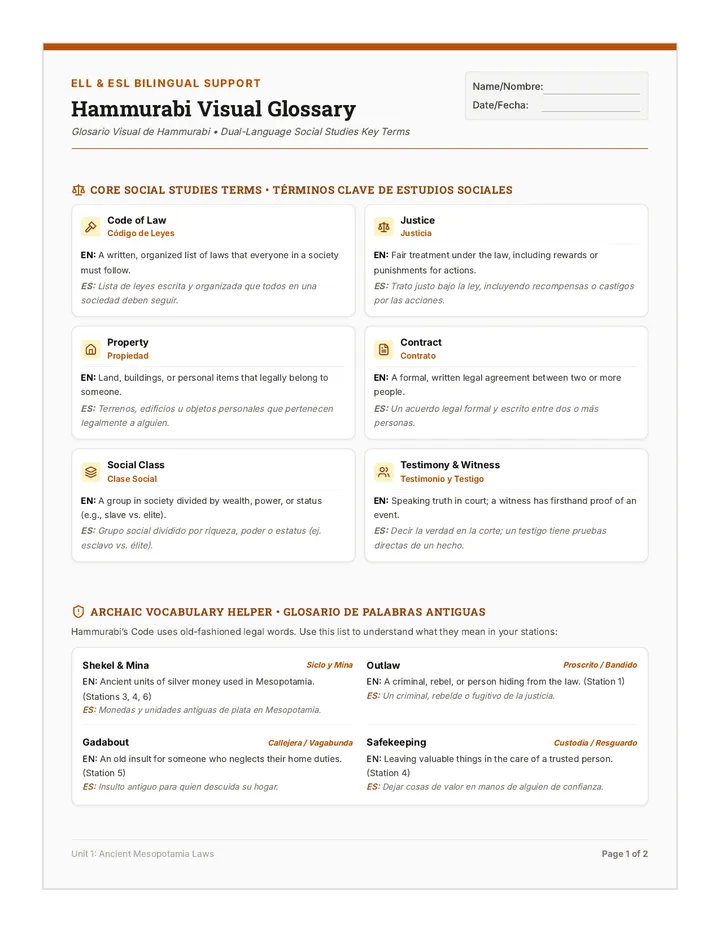
Hammurabis Code

A comprehensive investigation into the ancient laws of Hammurabi, focusing on crime, justice, property, and social classes in Mesopotamia. This lesson includes scaffolds for language learners.

JO

Jacob Obannon

2
Jones Rebellion Worksheet

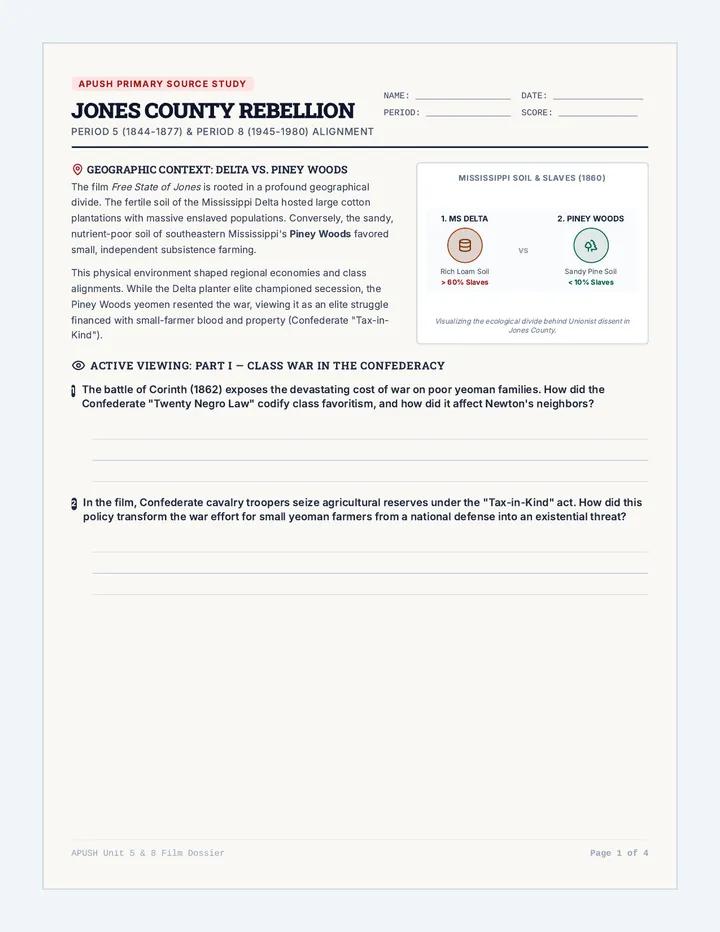
Piney Woods Rebellion

An AP U.S. History film study lesson on 'Free State of Jones' exploring Civil War dissent, Reconstruction failures (Period 5), and their long-term legacy in 20th-century Jim Crow courts (Period 8).

JG

Joshua Griffith

2
Justice Quest Worksheet

Verdict at Nuremberg

A lesson focused on evaluating the historical impact and adequacy of the Nuremberg Trials through structured writing and evidence-based argumentation.

NP

Nicole Palmiotto

2