Lenny.com
Explore
Create
ActivitiesNewMathEnglish Language ArtsScience & EngineeringSocial StudiesGlobal LanguagesHealth & Physical EducationSpecial EducationCounseling & Life SkillsArts & CreativityESL
Lenny.com
Lenny.com
Explore
Create
ActivitiesNewMathEnglish Language ArtsScience & EngineeringSocial StudiesGlobal LanguagesHealth & Physical EducationSpecial EducationCounseling & Life SkillsArts & CreativityESL
Lenny.com
Lenny.com

Solutions

Lenny for EducatorsLenny for SchoolsLenny for Districts

Product

ExploreSign inCreateSupportAbout

Resources

Getting startedMTSS Acceleration Program

Newsletters

School Funding Newsletter

© 2026 Lenny Learning Inc.

TermsPrivacyAccessibility
LinkedInInstagramX
Lenny

Psychology as a Science

Scientific methodology, empirical research designs, and ethical standards for investigating human behavior. Identifies the transition from philosophical inquiry to data-driven experimentation and statistical analysis.

Social StudiesSocial Studies PracticesLocation WordsMapsOrder EventsChronology and CausationEvaluating SourcesHistorical ThinkingGeography, Humans, & the EnvironmentAmerican Symbols and LandmarksCitiesStatesState CapitalsRegions of the United StatesGeographic SkillsPhysical GeographyHuman GeographyRegional GeographyGeography of AfricaGeography of AsiaGeography of EuropeGeography of OceaniaGeography of the AmericasSociety and Environment of EuropeSociety and Environment of AsiaSociety and Environment of The AmericasSociety and Environment of the Middle EastSociety and Environment of AfricaHistoryPrehistoryComparing Ancient River CivilizationsAncient MesopotamiaAncient Egypt and KushAncient South AsiaEarly ChinaGreeceRome and the Byzantine EmpireAncient World HistoryNative Peoples of North AmericaNative Peoples of Mesoamerica and South AmericaAfrican EmpiresMedieval AsiaMedieval EuropeThe Silk RoadMedieval HistoryIslamic EmpiresWorld ReligionsRenaissance PeriodAge of ExplorationThe Thirteen ColoniesThe American RevolutionUS History Early RepublicFounding of the United StatesUS History AntebellumUS Civil WarReconstruction PeriodThe Gilded AgeUS ImperialismWorld ImperialismWorld War IUS History 1920sGreat DepressionWorld War IIThe Cold WarUS History 1950-60sUS History 1960s-70sWorld History 20th CenturyContemporary US HistoryContemporary World HistoryHolidaysCivics and GovernmentCitizenshipGovernment FoundationsThe ConstitutionUS ConstitutionExecutive BranchLegislative BranchJudicial BranchState and LocalPolitical ParticipationPublic PolicyPolitical SystemsPower and AuthoritySocial MovementsDefining DevianceTheories of DevianceCrime and Criminal JusticeEconomicsBasic Economic PrinciplesSupply and DemandWhat is MoneyEconomic FundamentalsMicroeconomicsMacroeconomicsBanking and FinanceEconomic SystemsGlobal EconomicsCorporations and PowerThe Changing WorkplaceUnemployment and LaborClass and InequalitySocial MobilityGlobal InequalityPsychologyHistory of PsychologyPsychology as a ScienceBrain and Nervous SystemNeuroscience and BehaviorGenetics and BehaviorSleep and ConsciousnessSensory ProcessesPerceptual OrganizationClassical ConditioningOperant ConditioningObservational LearningCognitive LearningMemory ProcessesThinking and Problem SolvingLanguage and CognitionTheories of MotivationStress and CopingPrenatal and Infant DevelopmentChildhood DevelopmentAdolescent DevelopmentAdulthood and AgingSelf and IdentitySocial CognitionSocial InfluenceAttraction and RelationshipsGroup BehaviorPrejudice and DiscriminationAnxiety and Mood DisordersClinical PsychologyForensic PsychologyPhilosophy & EthicsIntroduction to PhilosophyMajor Philosophers & IdeasMind and Body ProblemFree Will vs DeterminismEthics & MoralityReligion & PhilosophyPolitical Philosophy

Videos

The History and Ethics of the Tuskegee Syphilis Study

The History and Ethics of the Tuskegee Syphilis Study

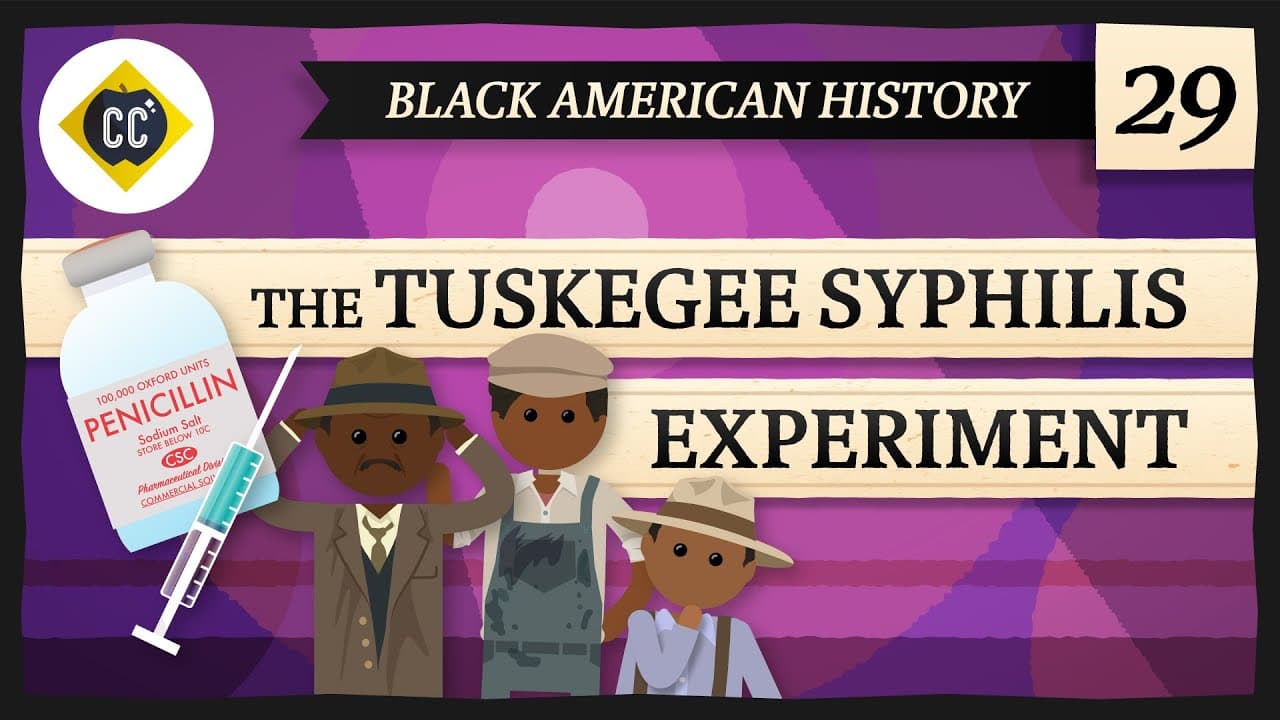
This educational video from Crash Course Black American History, hosted by Clint Smith, provides a comprehensive examination of the Tuskegee Syphilis Study (1932-1972). It details how the United States Public Health Service recruited 600 Black men in Macon County, Alabama, under the guise of receiving free health care, only to withhold life-saving treatment for syphilis to observe the disease's progression. The video explores the historical context of scientific racism that fueled the study, the specific unethical methodologies employed, and the devastating impact on the men, their families, and the broader Black community's trust in the medical system. The narrative delves into the complex layers of the study, including the role of the Great Depression and poverty in coercing participation, the lack of informed consent, and the involvement of Black medical professionals like Nurse Eunice Rivers. It highlights the eventual exposure of the study by whistleblower Peter Buxtun in 1972, the subsequent class-action lawsuit led by Fred Gray, and the resulting changes in medical ethics laws, including the National Research Act of 1974 and the establishment of Institutional Review Boards. For educators, this video is a powerful tool for teaching about bioethics, civil rights history, and systemic racism in healthcare. It connects historical events to contemporary issues, such as medical mistrust and health disparities, encouraging students to think critically about the responsibilities of scientific institutions. The video serves as a case study for understanding the importance of informed consent and the long-term sociological effects of unethical government actions.

CrashCourseCrashCourse

13mins 48s

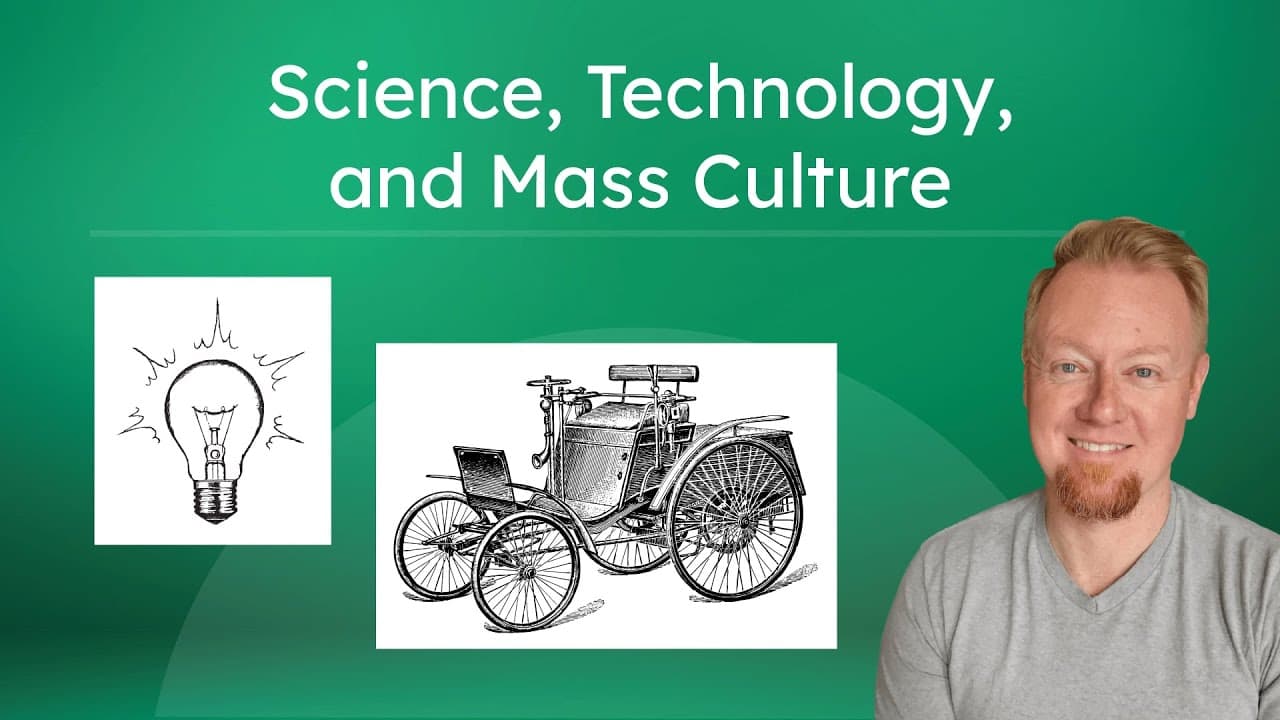
Innovation, Mass Culture, and the Ethics of Progress (1880-1914)

Innovation, Mass Culture, and the Ethics of Progress (1880-1914)

This video explores the dynamic period between 1880 and 1914, often called the Progressive Era or the Belle Époque, examining the explosion of scientific and technological innovation that defined the age. It details how industrial powers like Britain, the United States, and Germany funded research and public health initiatives, highlighting key figures like Josephine Cochrane, George Soper, and Madame C.J. Walker. The narrative explains the shift from a survival-based economy to a consumer culture driven by mass media, advertising, and the rise of the middle class. The video delves into the complex relationship between capitalism, industrialization, and popular culture, illustrating how wealthy industrialists influenced scientific progress and how businesses shaped consumer desires. Crucially, it also addresses the darker side of this era, discussing the rise of pseudosciences like phrenology and eugenics. It explains how scientific language was misused to justify racism, oppression, and unethical experimentation, grounding these concepts in the historical context of Social Darwinism. For educators, this resource serves as an excellent synthesis of early modern history, connecting technological advancements with social and ethical questions. It challenges students to consider the moral implications of progress, asking the big-picture question: "Just because we can, does it mean we should?" It is particularly useful for World History and U.S. History units on the Industrial Revolution, providing diverse examples of inventors and prompting critical thinking about the double-edged sword of scientific discovery.
Miacademy & MiaPrep Learning ChannelMiacademy & MiaPrep Learning Channel

11mins 20s

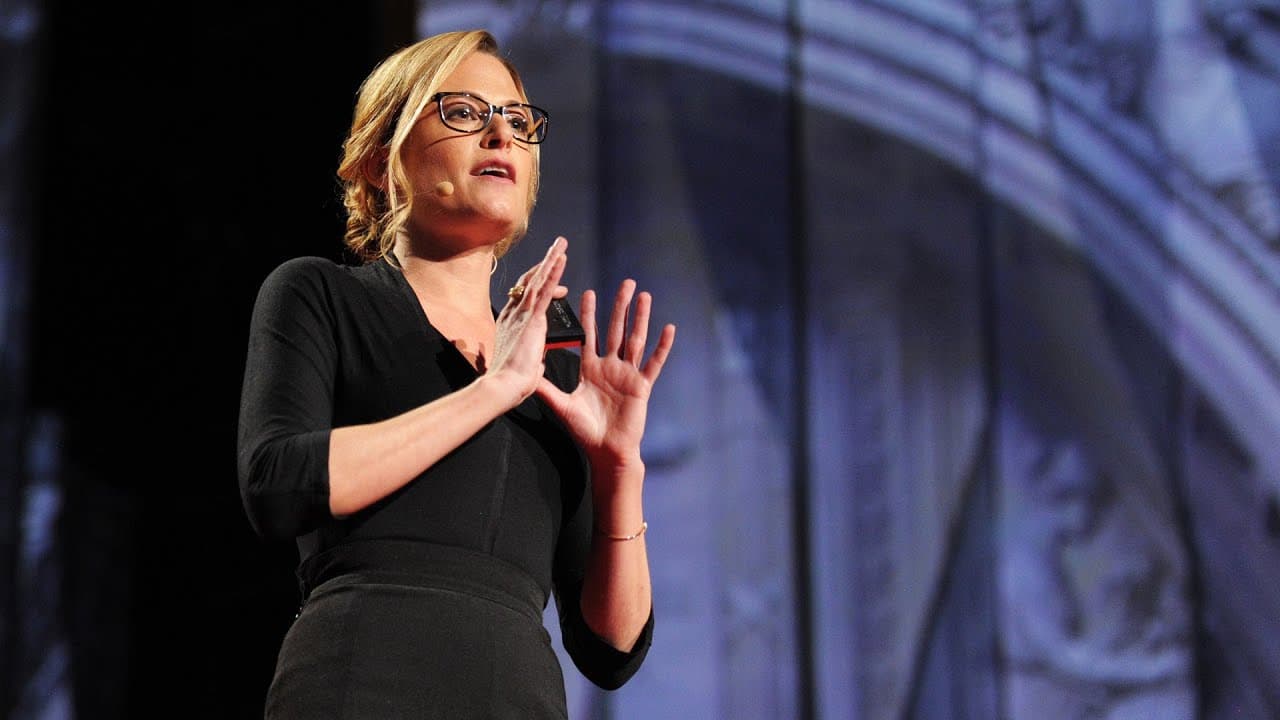
The optimism bias | Tali Sharot

The optimism bias | Tali Sharot

In this engaging TED Talk, cognitive neuroscientist Tali Sharot explores the phenomenon known as the "optimism bias," a cognitive illusion that affects approximately 80% of the human population. She explains that this bias causes individuals to overestimate the likelihood of experiencing positive events—such as career success, happy marriages, and talented children—while underestimating the probability of negative events like divorce, accidents, or illness. Through accessible examples and research data, Sharot demonstrates that this tendency persists regardless of age, gender, or cultural background, revealing a fundamental aspect of human psychology that shapes our expectations of the future. Sharot delves into the psychological and neurological mechanisms behind this bias, debunking the common assumption that low expectations lead to happiness. She presents three key reasons why optimism is beneficial: interpretation matters (optimists interpret success as a result of their own traits), anticipation itself induces happiness (the joy of looking forward to an event), and optimism acts as a self-fulfilling prophecy by encouraging persistence and reducing stress. Furthermore, she shares fascinating neurological research using fMRI scans that show how the brain selectively processes positive information while failing to integrate negative data, effectively shielding us from realistic but discouraging statistics. The talk concludes by addressing the potential pitfalls of unrealistic optimism, such as financial collapse or risky behavior, but ultimately argues for a balanced approach. Sharot suggests that while we should be aware of our cognitive biases to avoid danger, we should also embrace hope. The educational value lies in its clear explanation of complex psychological concepts, making it an excellent resource for discussing human behavior, decision-making, mental health, and the neuroscience of belief. Teachers can use this video to help students understand their own thought processes, the importance of resilience, and how to balance hope with realistic planning.

TEDTED

17mins 41s

Materials

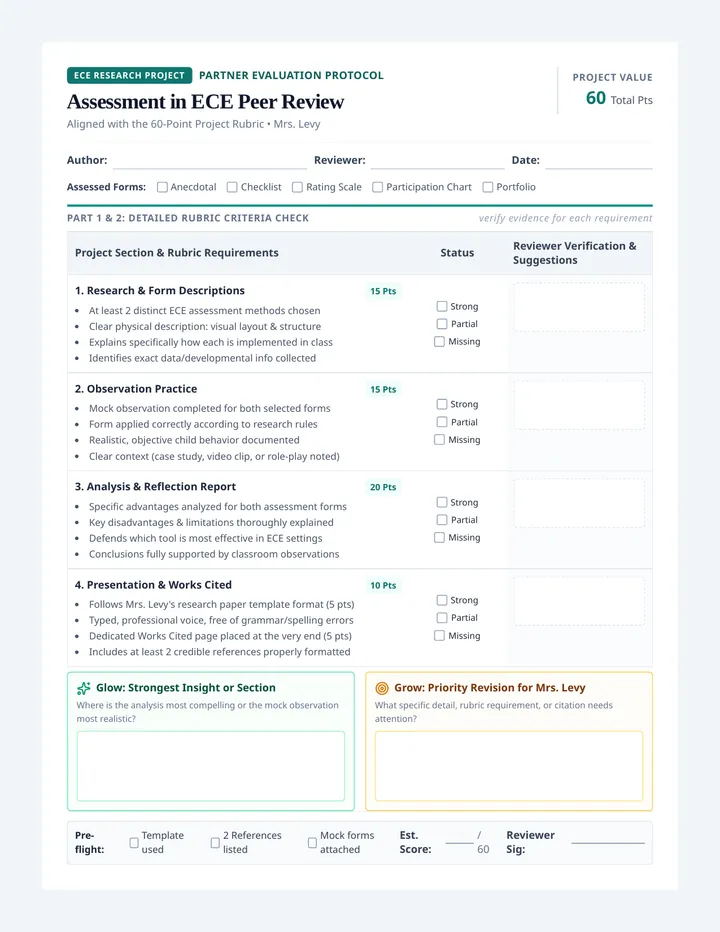
ECE Assessment Review Sheet

ECE Assessment Review Sheet

A targeted one-page peer review protocol aligned with Mrs. Levy's 60-point Early Childhood Education assessment project rubric. Guides partners through evaluating research descriptions, mock observation practice, comparative analysis, and works cited formatting.

AL

Alex Levy

Sequences

Neural Foundations Slides

Synaptic Circuits

A comprehensive introductory psychology sequence for university students, exploring the biological, cognitive, and social foundations of human behavior through a lens of scientific inquiry and critical analysis.

KM

Kyaw Min Oo

15
Identity Blueprint Guidelines

Nature vs Nurture

A comprehensive unit focused on the psychological debate of Nature vs. Nurture, culminating in a major literature review research paper. Students will explore theoretical frameworks and synthesize existing research.

AT

Amanda Torres

4
Operationalizing Behavior Slides

Foundations of Behavioral Observation

A comprehensive introduction to objective behavioral assessment for undergraduate students, focusing on operationalizing behavior, ABC recording, quantitative measurement, setting events, and data visualization.

15
Identity Dynamics Guide

Bias and Identity Dynamics

An advanced graduate seminar sequence exploring the psychological foundations of intergroup bias, from Social Identity Theory to the design of evidence-based interventions for systemic change.

13
Master Pacing Unit Plan

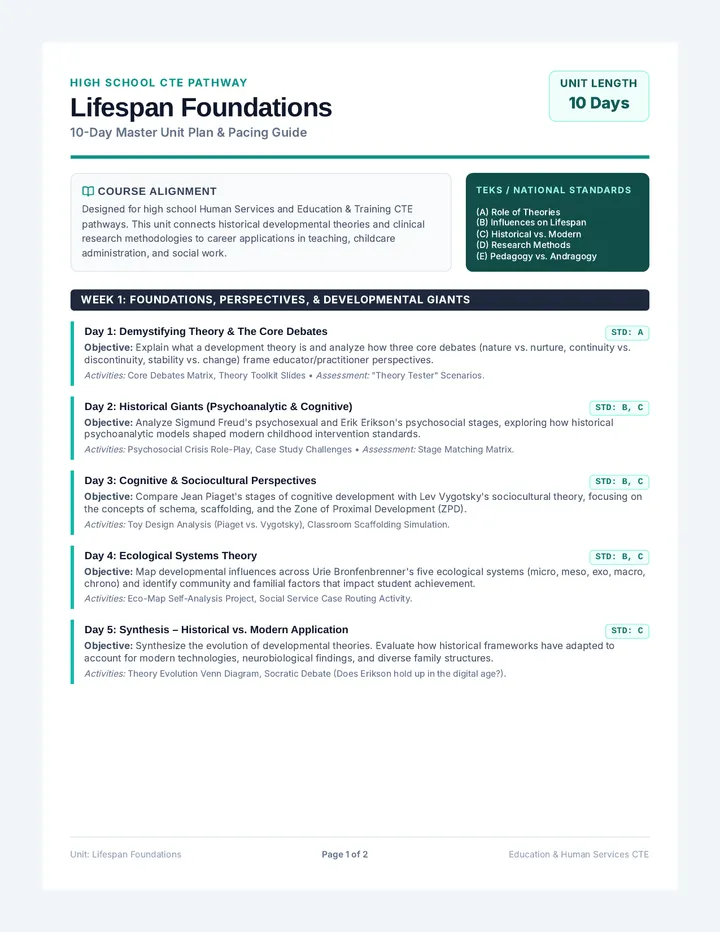
Lifespan Foundations

A comprehensive instructional sequence designed for high school CTE pathways in Education & Training and Human Services. The unit introduces students to the foundational theories, modern research methodologies, and instructional models (pedagogy vs. andragogy) that govern lifespan human development.

9
Pengantar Psikologi Industri Slides

Dinamika Kerja

A foundational sequence introducing undergraduate psychology students to the core concepts, history, and applications of Industrial and Organizational Psychology.

3

Lessons

Introductory Data Slides

Psych U1 LE4

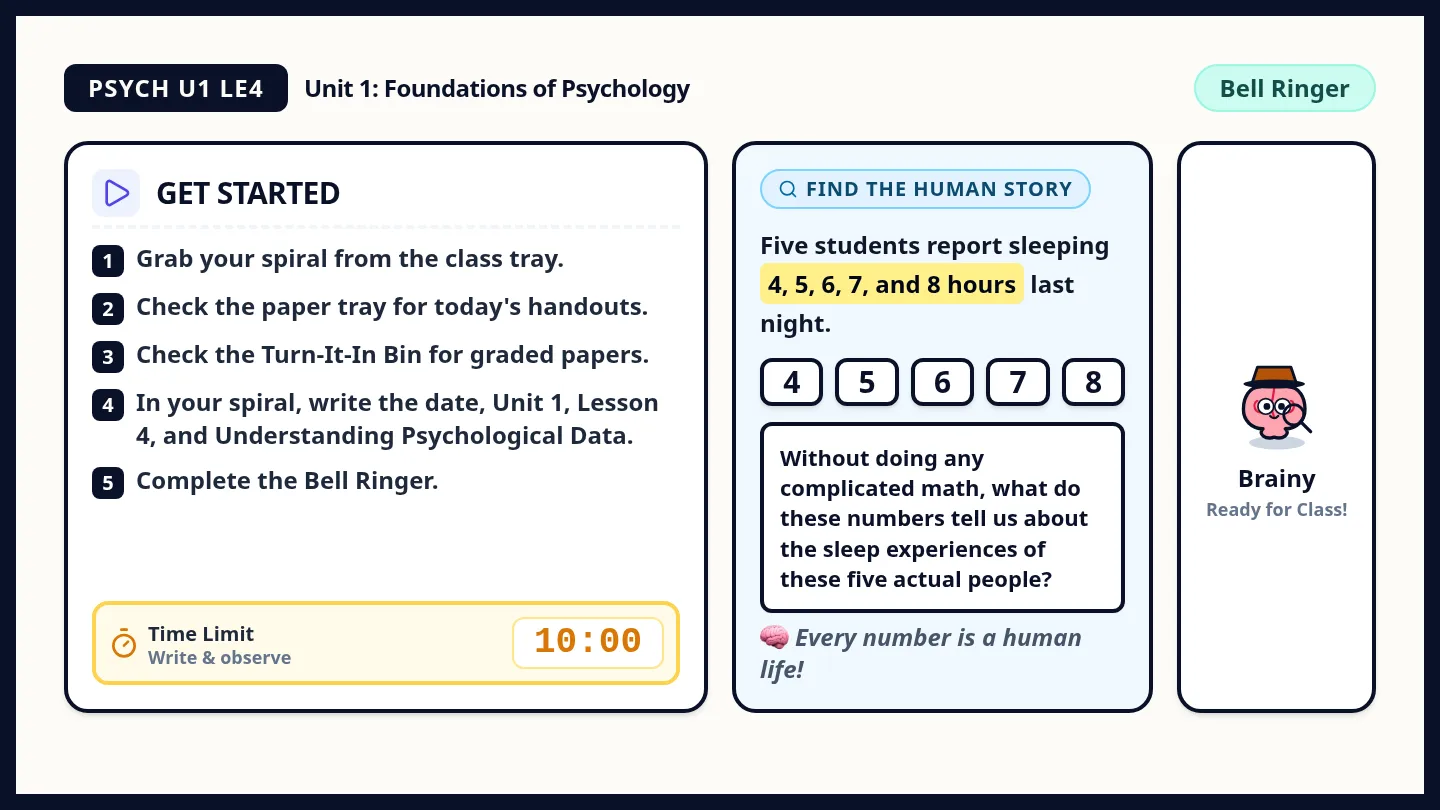
An introductory psychology lesson on how researchers organize, describe, and interpret psychological data using basic descriptive statistics, designed for beginners with no prior math background.

AC

Amanda Cummings

1
Mind Science Slides

Psych 1.3

High-school psychology lesson on psychological research: variables, bias, and ethical guidelines. Aligning with Texas Essential Knowledge and Skills (TEKS) and Irving ISD curriculum standards.

AC

Amanda Cummings

1
Guilty Feelings Handout

The Psychology of Guilt

A deep dive into social psychology research exploring how guilt functions as a targeted social mechanism rather than a broad emotional state. Students will analyze academic text, define complex vocabulary, and evaluate the specific behavioral consequences of guilt.

AP

Alexis Paolini

8
Testing Trap Comic

The Testing Trap

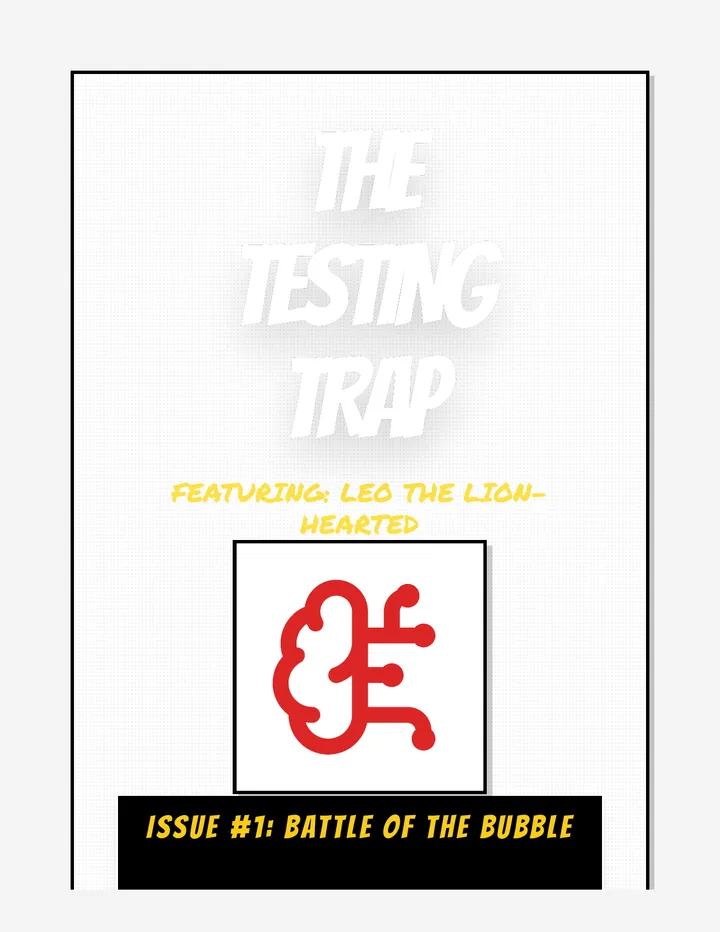
An exploration of the history, mechanics, and fairness of standardized testing through the lens of a neurodivergent student's experience. This lesson uses a retro-style comic to illustrate the disconnect between traditional testing and real-world intelligence.

J

JLaytner

3
Mind Media Lesson Plan

Mind Media

A comprehensive lesson on Public Relations in Psychology, focusing on translating complex research for public consumption, managing public perception of psychological science, and ethical communication.

C

ConceptX

5
Pressure Point Discussion Cards

Conformity Under Fire

A deep dive into Solomon Asch's classic conformity experiment, examining behavioral mechanisms, neural pathways of peer pressure, experimental design flaws, and quantitative data analysis.

LR

Leisa Refalo

2