Lenny.com
Explore
Create
ActivitiesNewMathEnglish Language ArtsScience & EngineeringSocial StudiesGlobal LanguagesHealth & Physical EducationSpecial EducationCounseling & Life SkillsArts & CreativityESL
Lenny.com
Lenny.com
Explore
Create
ActivitiesNewMathEnglish Language ArtsScience & EngineeringSocial StudiesGlobal LanguagesHealth & Physical EducationSpecial EducationCounseling & Life SkillsArts & CreativityESL
Lenny.com
Lenny.com

Solutions

Lenny for EducatorsLenny for SchoolsLenny for Districts

Product

ExploreSign inCreateSupportAbout

Resources

Getting startedMTSS Acceleration Program

© 2026 Lenny Learning Inc.

TermsPrivacyAccessibility
LinkedInInstagramX
Lenny

Geography of the Americas

Physical landscapes, climate zones, and human-environment interactions across North, Central, and South America. Examines how diverse terrains and natural resources shape cultural development and economic patterns throughout the Western Hemisphere.

Social StudiesSocial Studies PracticesLocation WordsMapsOrder EventsChronology and CausationEvaluating SourcesHistorical ThinkingGeography, Humans, & the EnvironmentAmerican Symbols and LandmarksCitiesStatesState CapitalsRegions of the United StatesGeographic SkillsPhysical GeographyHuman GeographyRegional GeographyGeography of AfricaGeography of AsiaGeography of EuropeGeography of OceaniaGeography of the AmericasSociety and Environment of EuropeSociety and Environment of AsiaSociety and Environment of The AmericasSociety and Environment of the Middle EastSociety and Environment of AfricaHistoryPrehistoryComparing Ancient River CivilizationsAncient MesopotamiaAncient Egypt and KushAncient South AsiaEarly ChinaGreeceRome and the Byzantine EmpireAncient World HistoryNative Peoples of North AmericaNative Peoples of Mesoamerica and South AmericaAfrican EmpiresMedieval AsiaMedieval EuropeThe Silk RoadMedieval HistoryIslamic EmpiresWorld ReligionsRenaissance PeriodAge of ExplorationThe Thirteen ColoniesThe American RevolutionUS History Early RepublicFounding of the United StatesUS History AntebellumUS Civil WarReconstruction PeriodThe Gilded AgeUS ImperialismWorld ImperialismWorld War IUS History 1920sGreat DepressionWorld War IIThe Cold WarUS History 1950-60sUS History 1960s-70sWorld History 20th CenturyContemporary US HistoryContemporary World HistoryHolidaysCivics and GovernmentCitizenshipGovernment FoundationsThe ConstitutionUS ConstitutionExecutive BranchLegislative BranchJudicial BranchState and LocalPolitical ParticipationPublic PolicyPolitical SystemsPower and AuthoritySocial MovementsDefining DevianceTheories of DevianceCrime and Criminal JusticeEconomicsBasic Economic PrinciplesSupply and DemandWhat is MoneyEconomic FundamentalsMicroeconomicsMacroeconomicsBanking and FinanceEconomic SystemsGlobal EconomicsCorporations and PowerThe Changing WorkplaceUnemployment and LaborClass and InequalitySocial MobilityGlobal InequalityPsychologyHistory of PsychologyPsychology as a ScienceBrain and Nervous SystemNeuroscience and BehaviorGenetics and BehaviorSleep and ConsciousnessSensory ProcessesPerceptual OrganizationClassical ConditioningOperant ConditioningObservational LearningCognitive LearningMemory ProcessesThinking and Problem SolvingLanguage and CognitionTheories of MotivationStress and CopingPrenatal and Infant DevelopmentChildhood DevelopmentAdolescent DevelopmentAdulthood and AgingSelf and IdentitySocial CognitionSocial InfluenceAttraction and RelationshipsGroup BehaviorPrejudice and DiscriminationAnxiety and Mood DisordersClinical PsychologyForensic PsychologyPhilosophy & EthicsIntroduction to PhilosophyMajor Philosophers & IdeasMind and Body ProblemFree Will vs DeterminismEthics & MoralityReligion & PhilosophyPolitical Philosophy

Videos

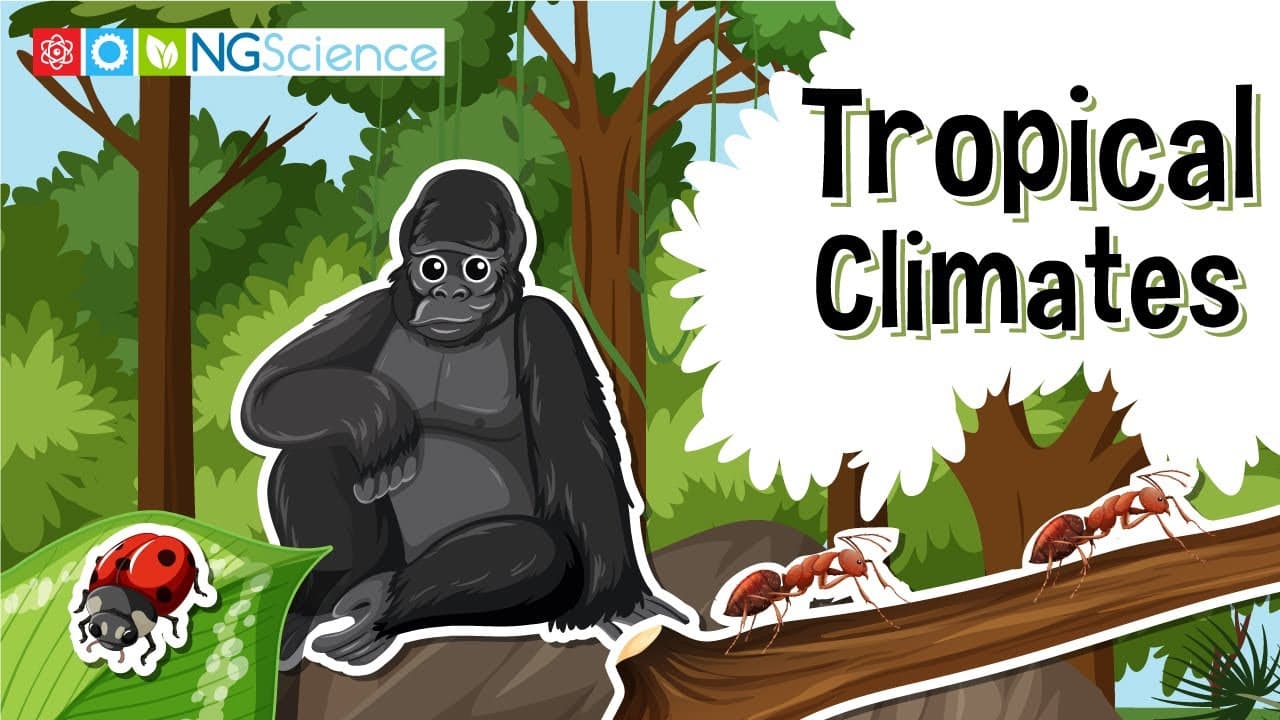
Exploring Tropical Climates and Rainforests

Exploring Tropical Climates and Rainforests

This educational video provides a comprehensive overview of tropical climates, also known as equatorial climates. It explains the geographical location of these zones near the equator, covering approximately one-third of Earth's land surface. The video details the defining characteristics of tropical climates, specifically their consistent high temperatures year-round and significant rainfall, distinguishing their two-season cycle (wet and dry) from the four-season cycle found in temperate regions. The content highlights major tropical rainforest regions including the Amazon Basin in Brazil, the Congo Basin in Africa, and forests throughout Southeast Asia. It emphasizes the incredible biodiversity of these habitats, noting that they are the most diverse land ecosystems on Earth and home to millions of plant and animal species, many of which remain undiscovered. The video features high-quality footage of various rainforest animals such as monkeys, colorful frogs, exotic birds, and insects. The final segment addresses the critical environmental issue of deforestation, showing powerful imagery of logging and land clearing for agriculture and infrastructure. It concludes with a conservation message, urging viewers to understand the importance of protecting these vital ecosystems to ensure the survival of their unique flora and fauna for future generations.

Next Generation ScienceNext Generation Science

2mins 26s

How Place Names Shape Identity and Power

How Place Names Shape Identity and Power

This episode of Crash Course Geography explores the subfield of Human Geography through the lens of "toponyms," or place names, illustrating how names reflect power, history, and culture. The video uses the specific case study of Denali (formerly Mount McKinley) in Alaska to demonstrate how political power at different scales—local, national, and global—influences the identity of a place. It explains that geography is not just about memorizing locations, but understanding the complex spatial relationships between people, power, and the environment. Key themes include the concepts of "Place" versus "Space," the impact of colonization on indigenous landscapes, and the geographic concept of "Scale." The video breaks down how naming a location is an act of claiming ownership and shaping perception. It details the historical struggle between the Athabascan name "Denali" and the imposed name "Mount McKinley," using this narrative to introduce broader geographic concepts like political, economic, and urban geography, as well as formal and perceptual regions. For educators, this video is an invaluable resource for introducing AP Human Geography concepts, specifically within the units on Cultural Patterns and Processes or Political Organization of Space. It provides a concrete, high-interest example of how abstract concepts like "cultural erasure" and "scales of analysis" play out in the real world. The video encourages students to critically examine the maps they use and understand the historical narratives embedded in the names of their own local communities.
CrashCourseCrashCourse

10mins 11s

Managing and Conserving the Colorado River Watershed

Managing and Conserving the Colorado River Watershed

This educational video provides a comprehensive look at water resource management using the Colorado River watershed as a primary case study. It begins by examining how major cities like Phoenix rely on freshwater for diverse needs ranging from agriculture and manufacturing to domestic use and recreation. The video illustrates the complexity of watersheds, explaining how multiple states and millions of people depend on the same interconnected water system, necessitating careful management and cooperation. The content explores the historical and modern challenges of water conservation, introducing the Colorado River Compact of 1922 which divided the watershed into Upper and Lower Basins to manage allocation. It transitions into current environmental challenges, using data visualization to show how rising temperatures and climate change are accelerating evaporation and causing droughts. The video distinguishes between human overuse and natural depletion, emphasizing that legal frameworks alone are insufficient to protect water supplies in a changing climate. Finally, the video outlines actionable solutions for water conservation across three levels: government regulations, technological innovations (like drip irrigation and desalination), and personal community actions. This resource is highly valuable for environmental science and geography classrooms as it connects abstract concepts like the water cycle to real-world civic issues, encouraging students to analyze data and consider their own role in sustainable resource management.

Miacademy & MiaPrep Learning ChannelMiacademy & MiaPrep Learning Channel

10mins 23s

Reclaiming Sovereignty: The Land Back Movement Explained

Reclaiming Sovereignty: The Land Back Movement Explained

This episode of Crash Course Native American History explores the "Land Back" movement, a decentralized effort by Indigenous peoples to reclaim authority over stolen land and resources. Hosted by Che Jim, the video breaks down the concept beyond slogans and hashtags, defining it as a multifaceted approach to asserting tribal sovereignty. It examines various methods used to achieve these goals, ranging from legal battles and government settlements to voluntary "settler rent" and direct action protests like blockades.

CrashCourseCrashCourse

10mins 19s

Is History Everywhere? A Global Tour of Resistance and Remembrance

Is History Everywhere? A Global Tour of Resistance and Remembrance

In this engaging finale to a World History course, the narrator takes viewers on a virtual "world tour vacation" to demonstrate that history is present everywhere we look. Using a travel narrative framework, the video visits three distinct locations—Cusco, Peru; Isandlwana, South Africa; and Hiroshima, Japan—to explore how historical events shape modern landscapes and cultural identity. The video moves beyond a dry recitation of dates, instead focusing on the enduring legacy of resistance, conflict, and the universal desire for peace. The content highlights three specific historical moments: the rebellion of Túpac Amaru II against Spanish colonial rule in Peru, the Zulu victory over British forces at the Battle of Isandlwana, and the solemn remembrance of the atomic bombing at the Peace Memorial Park in Hiroshima. Through these examples, the video explores profound themes including indigenous resistance to colonialism, the fragility of imperial power, and the importance of historical memory in preventing future tragedies. This video serves as an excellent capstone for a World History unit or as a standalone lesson on historical significance. It demonstrates how to connect past events to present-day locations, encouraging students to look for history in their own surroundings. Educators can use the specific case studies to discuss the long-term impacts of imperialism and war, or use the video's framework to launch a "history is everywhere" inquiry project where students investigate local statues, battlefields, or memorials.

Miacademy & MiaPrep Learning ChannelMiacademy & MiaPrep Learning Channel

11mins 3s

Exploring the People and Settlement of Latin America

Exploring the People and Settlement of Latin America

This educational video provides a comprehensive overview of the human geography of Latin America, focusing on the diverse origins of its people and their unique settlement patterns. The narrator breaks down the population into three primary historical groups: Native peoples who migrated across Beringia, European colonizers (primarily Spanish and Portuguese), and Africans brought via the slave trade. It further explores how these groups mixed over centuries to create distinct cultural identities like Mestizo and Mulatto, explaining the historical context and modern implications of these terms. The second half of the video shifts to settlement geography, analyzing where people live and why. It highlights the traditional preference for coastal living due to trade and transportation, but also examines the unique high-altitude settlements of the Andes, such as La Paz and La Rinconada. A significant portion is dedicated to the concept of a "forward capital," using Brasília as a case study for how governments attempt to shift population density and economic opportunity inland from the coast. For educators, this video serves as an excellent resource for World Geography, Social Studies, and Latin American History units. It connects historical events (colonization, slavery) directly to modern demographics and urban planning. The content covers essential geography concepts like urbanization, migration push/pull factors, and human-environment interaction, making it a versatile tool for teaching how history shapes the physical distribution of people today.

Miacademy & MiaPrep Learning ChannelMiacademy & MiaPrep Learning Channel

8mins 55s

Materials

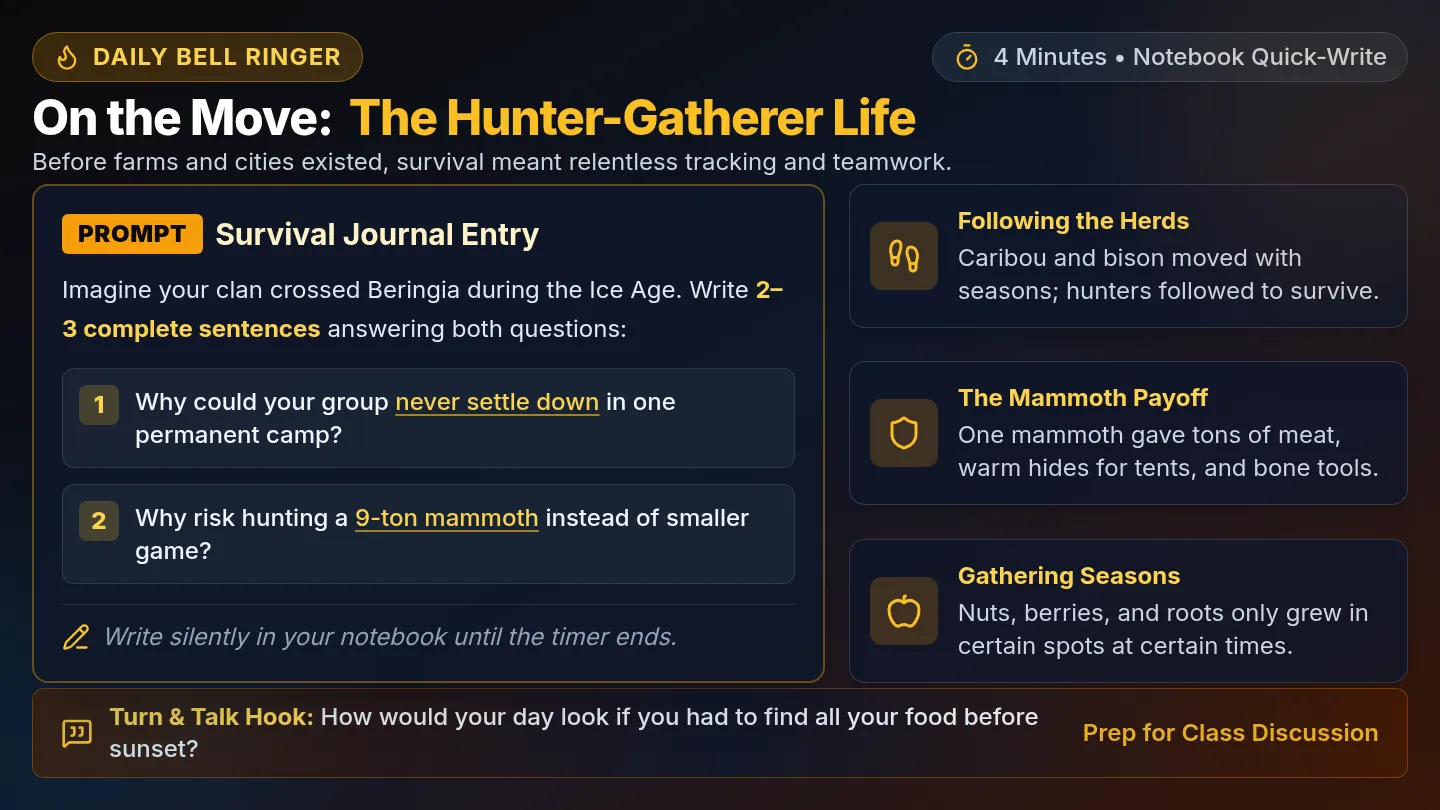
Nomad Survival Bell Ringer Slides

Nomad Survival Bell Ringer Slides

A 2-slide introductory deck for early American history featuring a nomadic survival bell ringer and a structured 'What We Will Learn' roadmap covering migration, megafauna hunting, and the agricultural revolution.

MA

Maria Avery

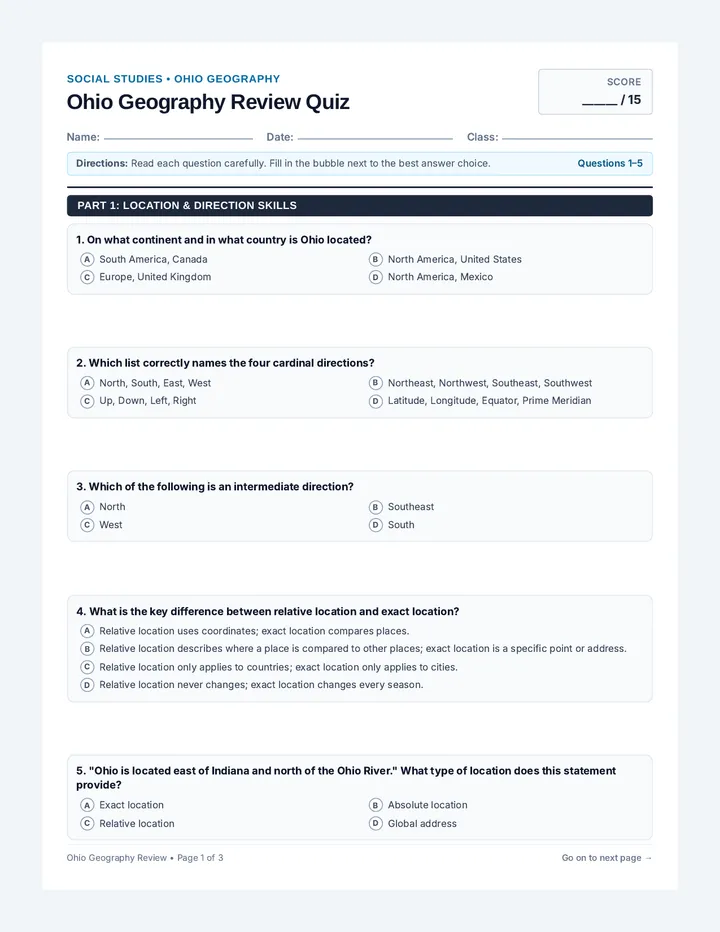
Ohio Geography Review Quiz

Ohio Geography Review Quiz

A comprehensive 15-question multiple-choice quiz reviewing Ohio's location, physical and human features, human-environment interaction, and geographic regions.

KM

Karah McAlister

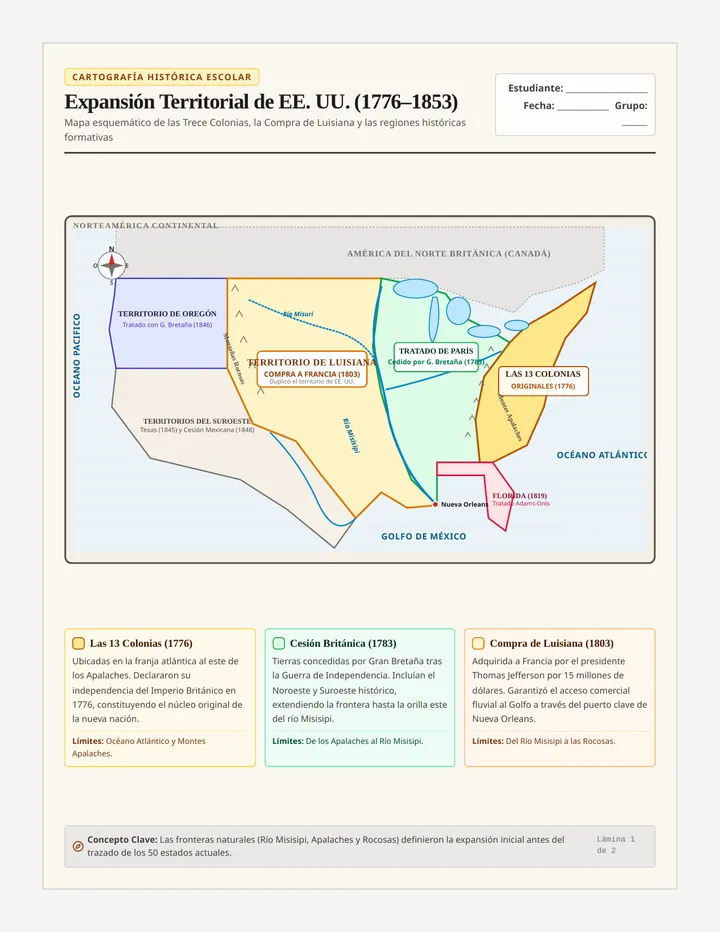
Expansion Territorial Mapa Didactico

Expansion Territorial Mapa Didactico

Mapa histórico esquemático de Estados Unidos que ilustra las Trece Colonias, el Territorio de Luisiana y las etapas clave de la expansión territorial temprana sin fronteras estatales modernas. Incluye una lámina de referencia cartográfica detallada y una ficha pedagógica de análisis y comprensión histórica.

CS

Carlos Santos

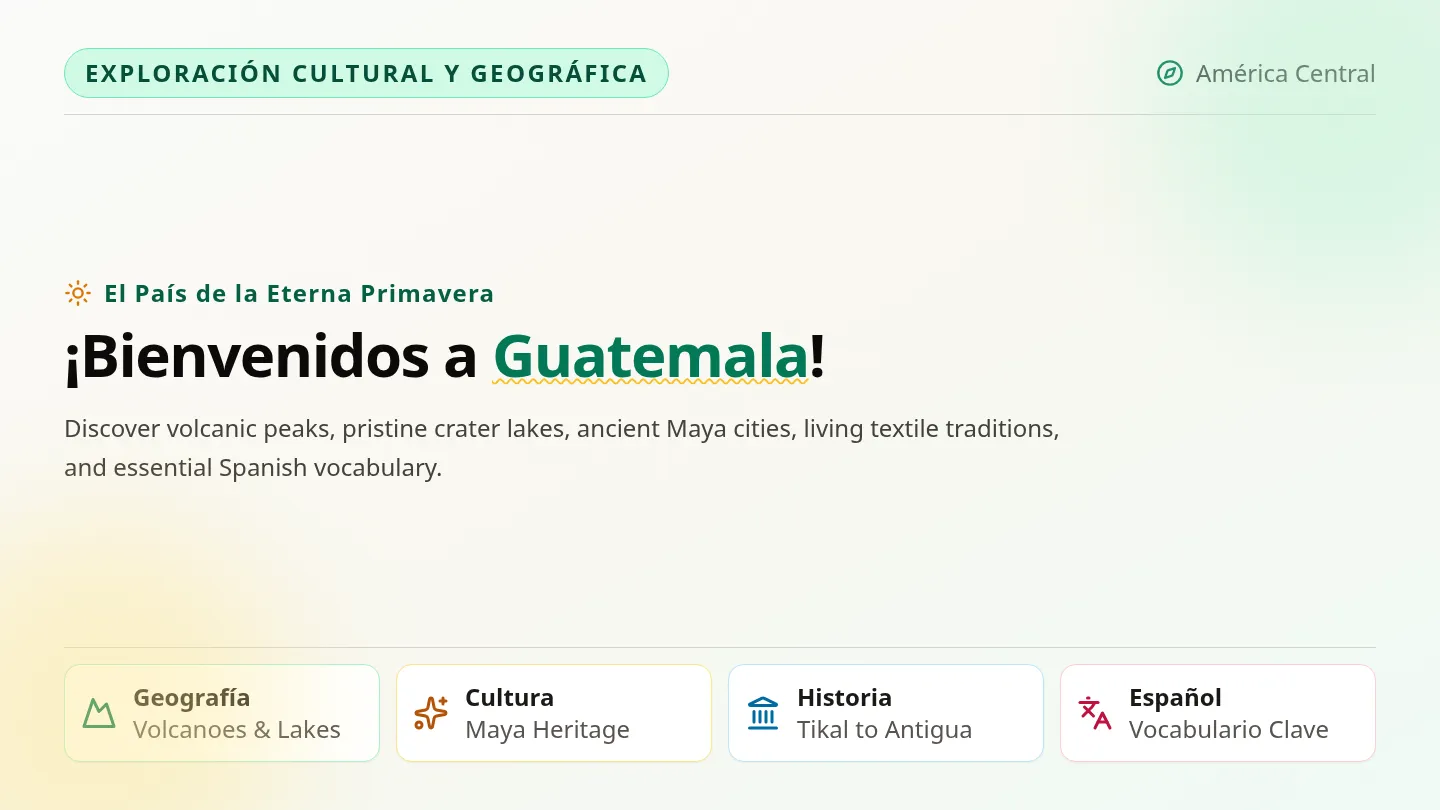
Guatemala Discovery Slides

Guatemala Discovery Slides

An expanded 11-slide presentation exploring Guatemala's geography, Maya heritage, historical milestones, sacred Maya symbols with ancestral words, and living traditions.

MI

Maria Ipina

Repères Américains Worksheet

Repères Américains Worksheet

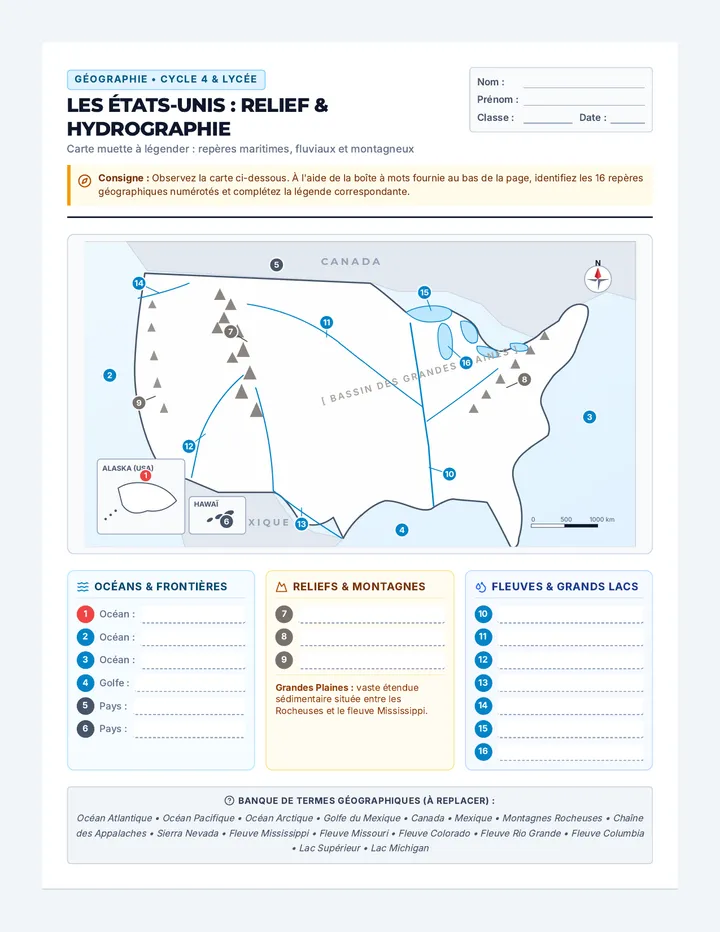
Fiche de géographie recto-verso à imprimer consacrée aux États-Unis. Comprend une carte physique détaillée à légender (relief, fleuves, océans, Grands Lacs) et une carte politique pour identifier les États majeurs et métropoles avec tableaux de synthèse.

CS

Carlos Santos

World Celebrations Slides

World Celebrations Slides

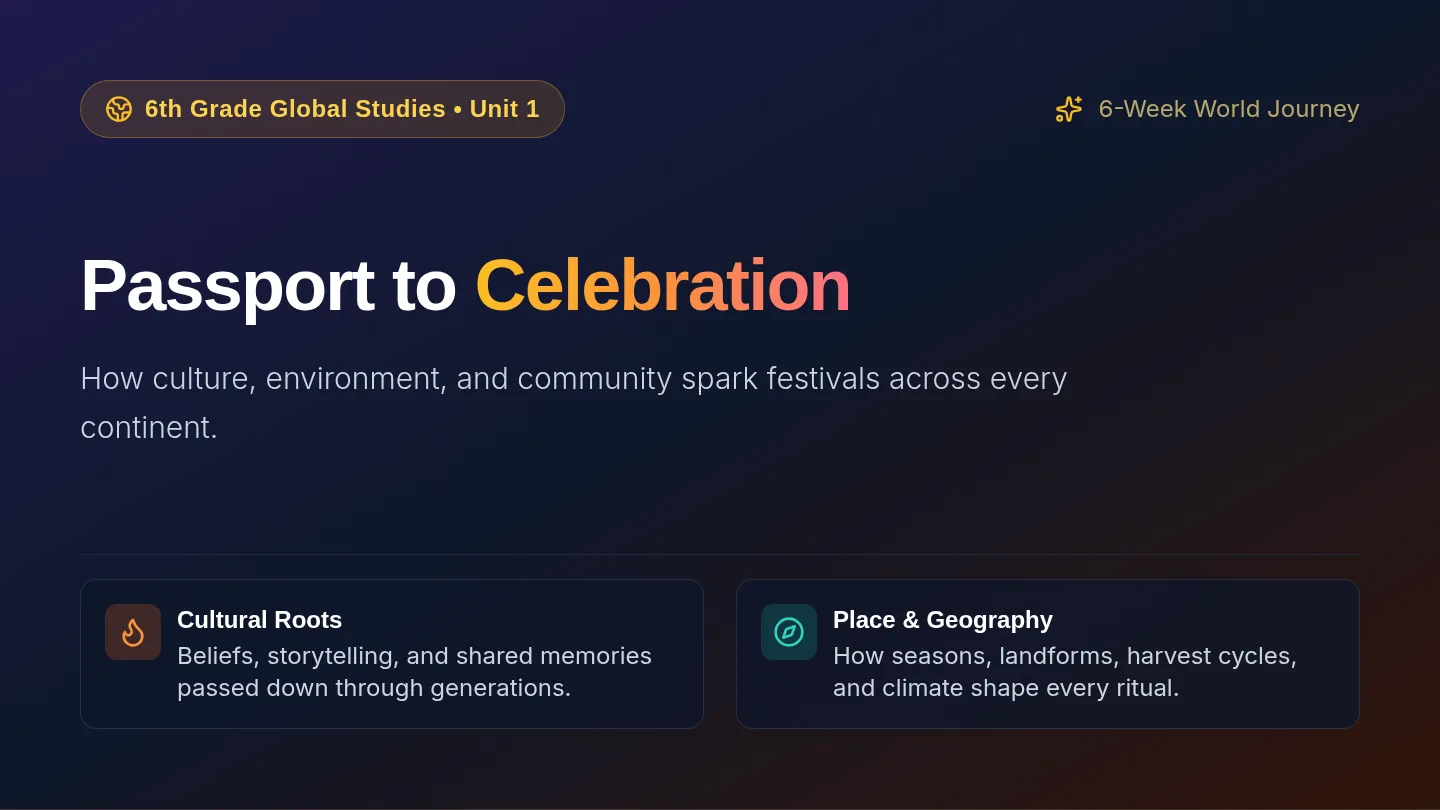
An engaging 8-slide classroom presentation for 6th grade introducing global festivals, exploring how cultural traditions, beliefs, and geographic environments shape celebrations worldwide.

J

Jojones

Sequences

Curriculum Blueprint Document v2

History Horizon Sequence

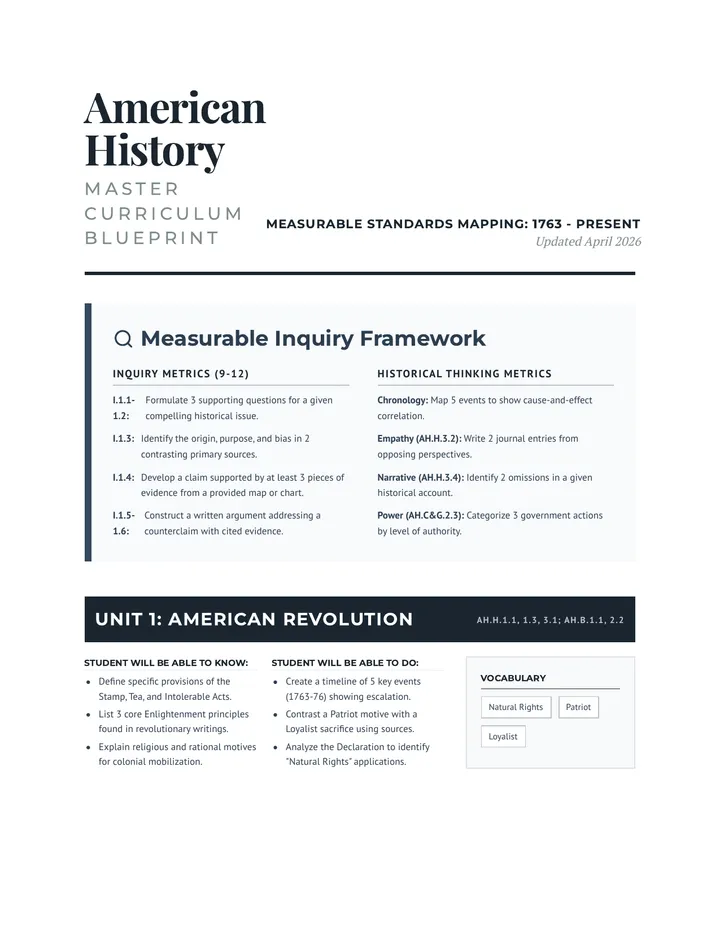
A comprehensive high school curriculum plan for American History, covering 13 units from the American Revolution to the modern era, aligned with North Carolina Social Studies standards.

AK

Amity Kea

21
Heritage Launch Teacher Guide

Viva Heritage

A 5-day multidisciplinary unit for grades K-4 celebrating Hispanic Heritage Month through identity, inspiring leaders, arts and music, cultural traditions, and community belonging.

DM

Delilah Murray

11
Albiceleste Dossier Packet

Pitch Power World Tour

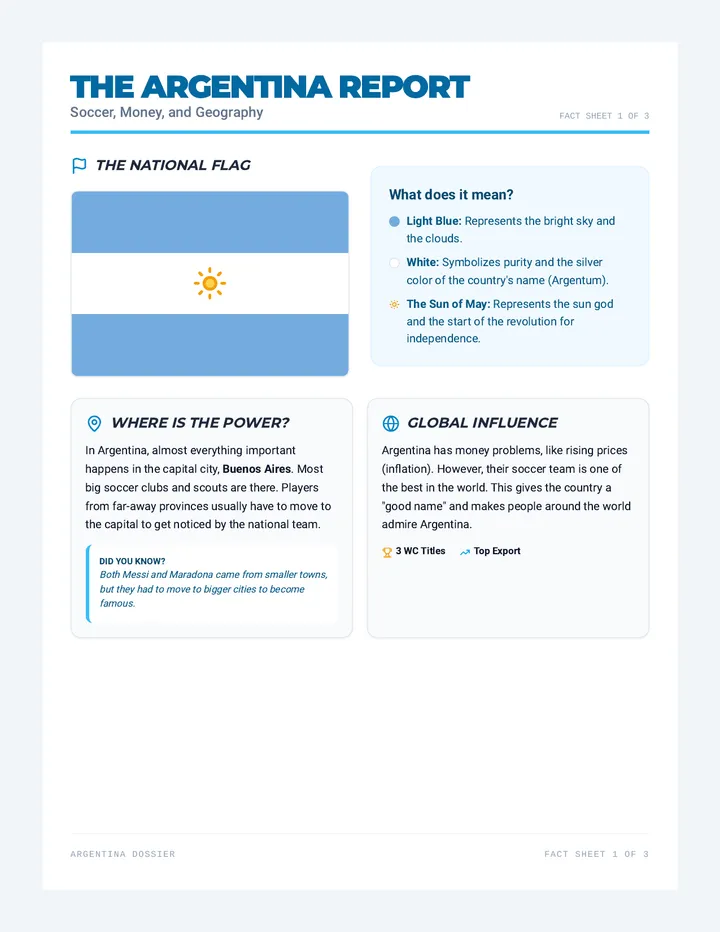
A comparative study series exploring the geopolitics and economics of different nations through their national soccer teams.

AA

Adam Amster

25
Foundations Comprehension Quiz

The American Ledger USH Remediation

A 25-day intensive remediation program for 11th Grade US History students, focusing on the Cold War, Civil Rights, Vietnam, the Reagan Era, and contemporary history. Each day features a 'Ledger' reader with embedded annotations and a review worksheet, aligned with Texas TEKS standards.

CE

Chelsea Elliott

62
Earth's Anatomy Slides

Global Landscapes Mastery

A global geography unit focusing on the identification and analysis of the Earth's diverse landscapes. Students will master map-reading skills including elevation, contour lines, and global physical regions to understand how geography shapes our world.

YP

Yovanna Plummer

27
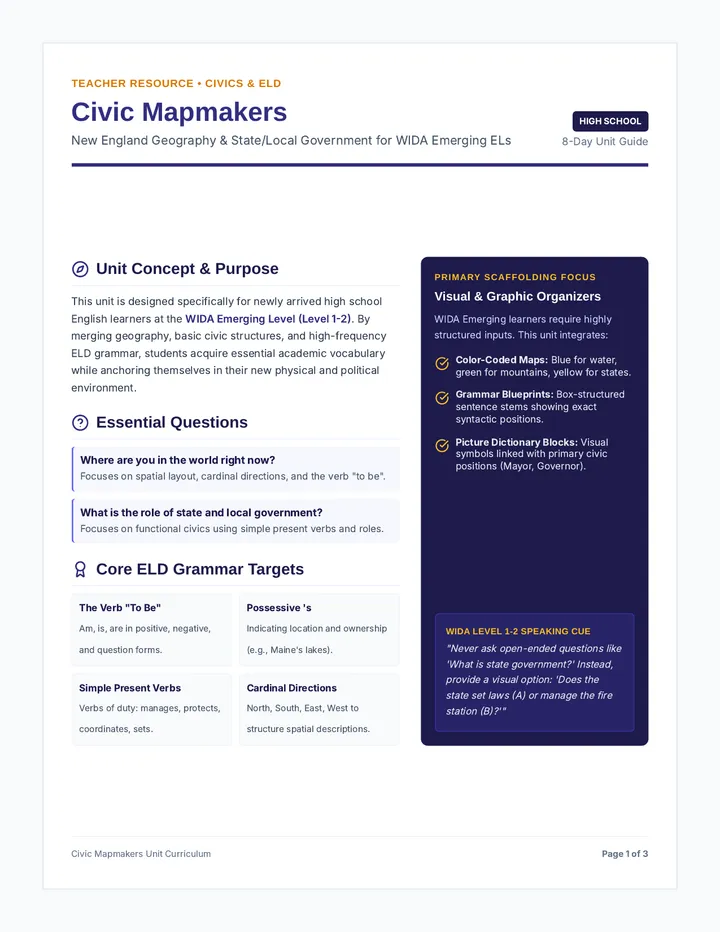
Civic Mapmakers Teacher Guide

Civic Mapmakers

An 8-day social studies and English language development unit for WIDA emerging English learners in high school. Students explore New England's physical geography, climate, and the respective roles of local and state government, while acquiring foundational English grammar including the verb 'to be', possessive 's', simple present verbs, and cardinal directions.

CS

Christine Staugler

5

Lessons

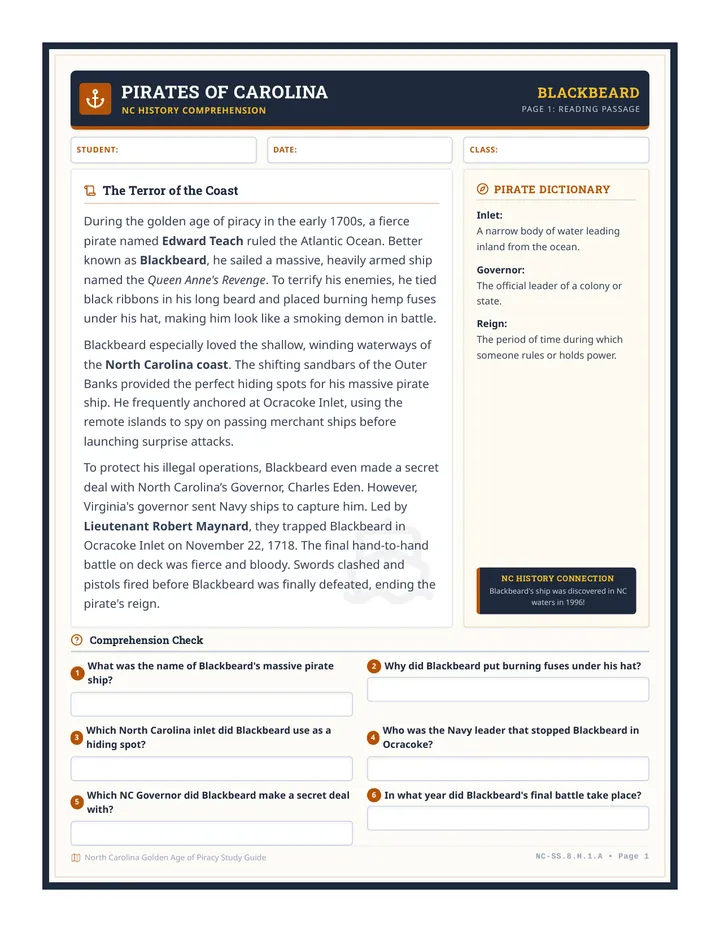
Blackbeard Legends Worksheet A

Pirates of Carolina

This lesson features differentiated reading comprehension worksheets about Blackbeard the Pirate along the North Carolina coast. Tailored for middle school special education students, it provides 2nd-grade and 5th-grade level texts in visually identical layouts to preserve student dignity.

KS

Kathleen Suther

11
Border Lines Activity

Harriet Tubman Escape

A lesson exploring Harriet Tubman's 1850 escape and the significance of the Mason-Dixon Line as a geographical and legal boundary in the pre-Civil War United States.

TL

Tanya Larson

46
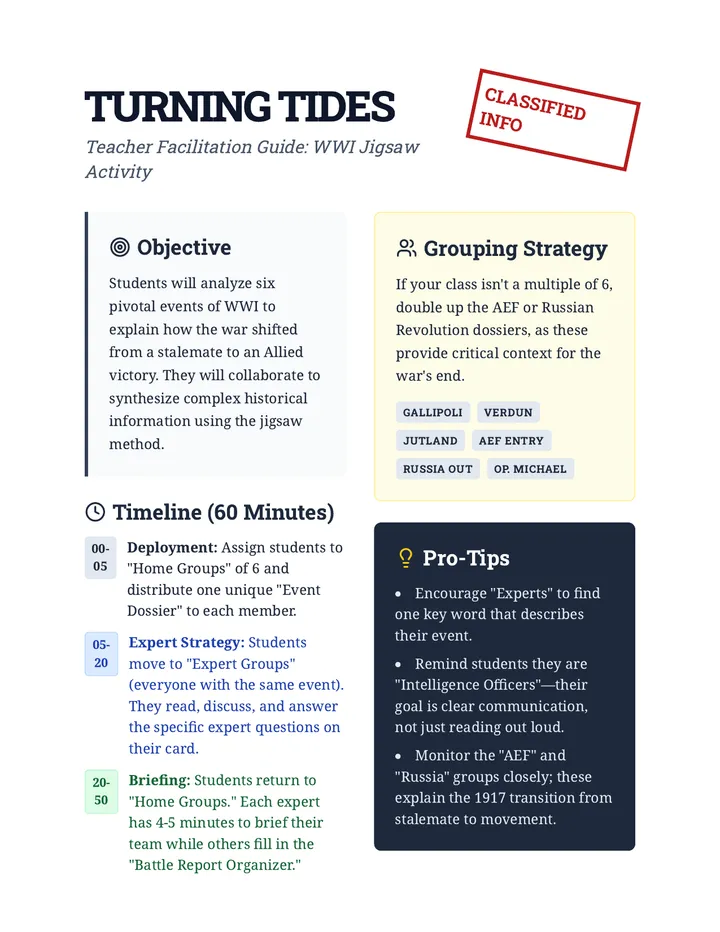
Turning Tides Teacher Guide

Turning Tides

A comprehensive jigsaw activity focusing on six pivotal events of World War I, designed for a 60-minute class session. Students act as intelligence officers to piece together the shifting dynamics of the Great War.

B

bliddy

34
Jersey Creator Activity

World Stage Kickoff

A 45-minute lesson for 10th-grade ELL students exploring the history and global impact of the FIFA World Cup through reading, narrative analysis, and creative design.

KB

Kathleen Basoco

5
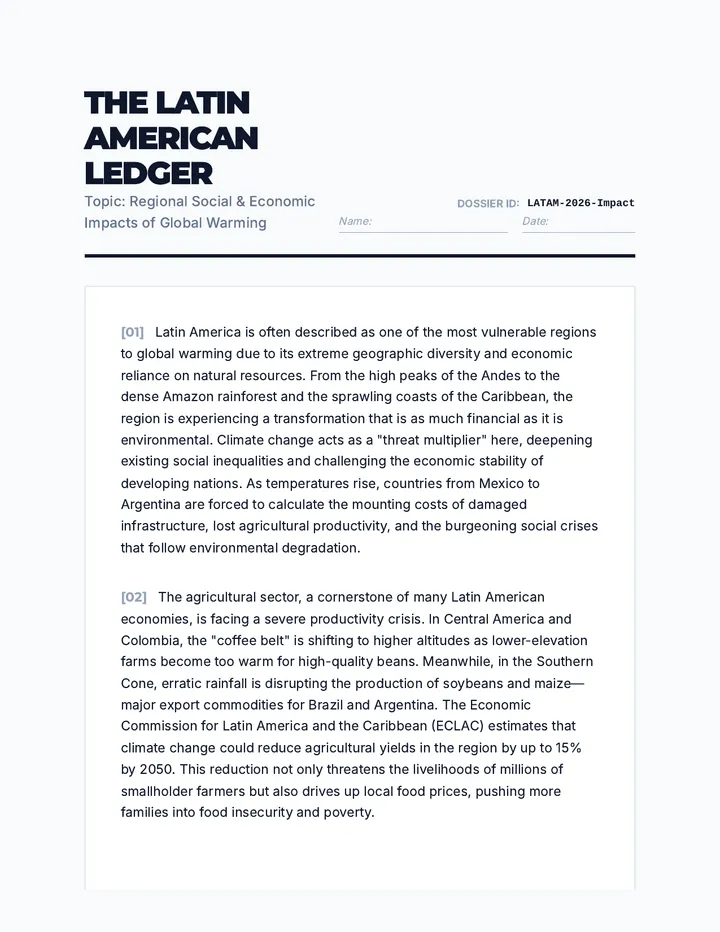
Latin American Ledger Reading

The Latin American Ledger Project

A regional investigation into the social and economic consequences of global warming in Latin America, focusing on human displacement, glacial melt in the Andes, and agricultural shifts. Students analyze a detailed text and construct a Claim-Evidence-Reasoning (CER) argument.

GJ

Gerardo Jimenez Ramirez

10
Colonial Caper Slides

Colonial Case Files

An immersive investigative experience where students solve the 'Case of the Missing Charter' by exploring the regional differences, economy, and daily life of the 13 original colonies.

S

sheenad

5