Lenny.com
Explore
Create
ActivitiesNewMathEnglish Language ArtsScience & EngineeringSocial StudiesGlobal LanguagesHealth & Physical EducationSpecial EducationCounseling & Life SkillsArts & CreativityESL
Lenny.com
Lenny.com
Explore
Create
ActivitiesNewMathEnglish Language ArtsScience & EngineeringSocial StudiesGlobal LanguagesHealth & Physical EducationSpecial EducationCounseling & Life SkillsArts & CreativityESL
Lenny.com
Lenny.com

Solutions

Lenny for EducatorsLenny for SchoolsLenny for Districts

Product

ExploreSign inCreateSupportAbout

Resources

Getting startedMTSS Acceleration Program

© 2026 Lenny Learning Inc.

TermsPrivacyAccessibility
LinkedInInstagramX
Lenny

Brain and Nervous System

Biological foundations of behavior including neuroanatomy, synaptic transmission, and the division of the central and peripheral nervous systems. Connects brain structure to cognitive functions and sensory processing.

Social StudiesSocial Studies PracticesLocation WordsMapsOrder EventsChronology and CausationEvaluating SourcesHistorical ThinkingGeography, Humans, & the EnvironmentAmerican Symbols and LandmarksCitiesStatesState CapitalsRegions of the United StatesGeographic SkillsPhysical GeographyHuman GeographyRegional GeographyGeography of AfricaGeography of AsiaGeography of EuropeGeography of OceaniaGeography of the AmericasSociety and Environment of EuropeSociety and Environment of AsiaSociety and Environment of The AmericasSociety and Environment of the Middle EastSociety and Environment of AfricaHistoryPrehistoryComparing Ancient River CivilizationsAncient MesopotamiaAncient Egypt and KushAncient South AsiaEarly ChinaGreeceRome and the Byzantine EmpireAncient World HistoryNative Peoples of North AmericaNative Peoples of Mesoamerica and South AmericaAfrican EmpiresMedieval AsiaMedieval EuropeThe Silk RoadMedieval HistoryIslamic EmpiresWorld ReligionsRenaissance PeriodAge of ExplorationThe Thirteen ColoniesThe American RevolutionUS History Early RepublicFounding of the United StatesUS History AntebellumUS Civil WarReconstruction PeriodThe Gilded AgeUS ImperialismWorld ImperialismWorld War IUS History 1920sGreat DepressionWorld War IIThe Cold WarUS History 1950-60sUS History 1960s-70sWorld History 20th CenturyContemporary US HistoryContemporary World HistoryHolidaysCivics and GovernmentCitizenshipGovernment FoundationsThe ConstitutionUS ConstitutionExecutive BranchLegislative BranchJudicial BranchState and LocalPolitical ParticipationPublic PolicyPolitical SystemsPower and AuthoritySocial MovementsDefining DevianceTheories of DevianceCrime and Criminal JusticeEconomicsBasic Economic PrinciplesSupply and DemandWhat is MoneyEconomic FundamentalsMicroeconomicsMacroeconomicsBanking and FinanceEconomic SystemsGlobal EconomicsCorporations and PowerThe Changing WorkplaceUnemployment and LaborClass and InequalitySocial MobilityGlobal InequalityPsychologyHistory of PsychologyPsychology as a ScienceBrain and Nervous SystemNeuroscience and BehaviorGenetics and BehaviorSleep and ConsciousnessSensory ProcessesPerceptual OrganizationClassical ConditioningOperant ConditioningObservational LearningCognitive LearningMemory ProcessesThinking and Problem SolvingLanguage and CognitionTheories of MotivationStress and CopingPrenatal and Infant DevelopmentChildhood DevelopmentAdolescent DevelopmentAdulthood and AgingSelf and IdentitySocial CognitionSocial InfluenceAttraction and RelationshipsGroup BehaviorPrejudice and DiscriminationAnxiety and Mood DisordersClinical PsychologyForensic PsychologyPhilosophy & EthicsIntroduction to PhilosophyMajor Philosophers & IdeasMind and Body ProblemFree Will vs DeterminismEthics & MoralityReligion & PhilosophyPolitical Philosophy

Videos

The optimism bias | Tali Sharot

The optimism bias | Tali Sharot

In this engaging TED Talk, cognitive neuroscientist Tali Sharot explores the phenomenon known as the "optimism bias," a cognitive illusion that affects approximately 80% of the human population. She explains that this bias causes individuals to overestimate the likelihood of experiencing positive events—such as career success, happy marriages, and talented children—while underestimating the probability of negative events like divorce, accidents, or illness. Through accessible examples and research data, Sharot demonstrates that this tendency persists regardless of age, gender, or cultural background, revealing a fundamental aspect of human psychology that shapes our expectations of the future. Sharot delves into the psychological and neurological mechanisms behind this bias, debunking the common assumption that low expectations lead to happiness. She presents three key reasons why optimism is beneficial: interpretation matters (optimists interpret success as a result of their own traits), anticipation itself induces happiness (the joy of looking forward to an event), and optimism acts as a self-fulfilling prophecy by encouraging persistence and reducing stress. Furthermore, she shares fascinating neurological research using fMRI scans that show how the brain selectively processes positive information while failing to integrate negative data, effectively shielding us from realistic but discouraging statistics. The talk concludes by addressing the potential pitfalls of unrealistic optimism, such as financial collapse or risky behavior, but ultimately argues for a balanced approach. Sharot suggests that while we should be aware of our cognitive biases to avoid danger, we should also embrace hope. The educational value lies in its clear explanation of complex psychological concepts, making it an excellent resource for discussing human behavior, decision-making, mental health, and the neuroscience of belief. Teachers can use this video to help students understand their own thought processes, the importance of resilience, and how to balance hope with realistic planning.

TEDTED

17mins 41s

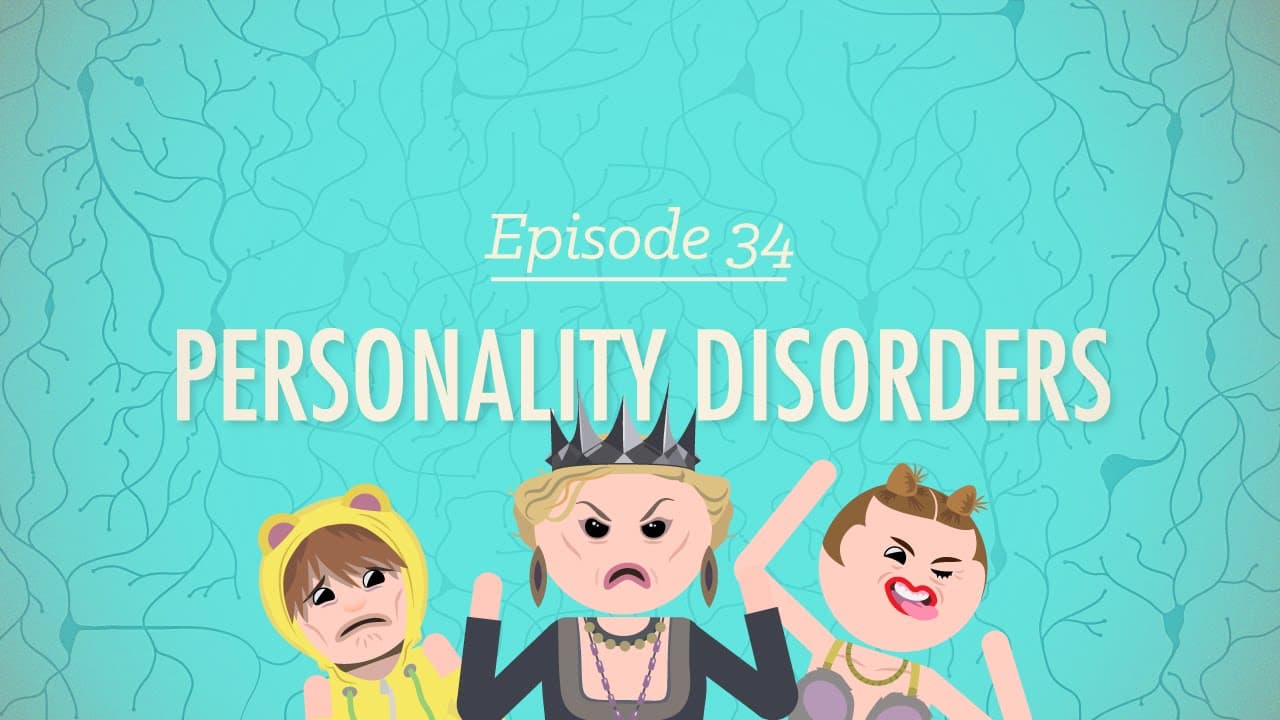
Personality Disorders: Crash Course Psychology #34

Personality Disorders: Crash Course Psychology #34

This educational video provides a comprehensive overview of personality disorders, explaining how they differ from other psychological conditions due to their enduring, inflexible nature and often ego-syntonic characteristics. The host, Hank Green, breaks down the ten specific personality disorders listed in the DSM-5, organizing them into three distinct clusters: Cluster A (odd/eccentric), Cluster B (dramatic/emotional/impulsive), and Cluster C (anxious/fearful/avoidant). This structured approach helps viewers categorize complex behaviors and understand the nuances between similar-sounding diagnoses. The content dives deeply into two specific and often misunderstood disorders: Borderline Personality Disorder (BPD) and Antisocial Personality Disorder. It explores the complex interplay of biological, genetic, and environmental factors that contribute to these conditions, such as the "bio-psycho-social" roots of BPD and the neurological differences observed in those with antisocial traits. The video also discusses historical perspectives, modern diagnostic challenges, and the potential future shift toward a "dimensional model" of diagnosis rather than rigid categories. For educators, this video serves as an excellent resource for psychology and health classes. It demystifies conditions often sensationalized in media, like psychopathy and sociopathy, replacing stigma with scientific understanding. By explaining the neurological underpinnings—such as reduced frontal lobe activity in violent offenders—and the impact of childhood trauma, it fosters empathy and critical thinking. Teachers can use this to spark discussions on nature vs. nurture, the criminal justice system's intersection with mental health, and the importance of early intervention.

CrashCourseCrashCourse

10mins 58s

Sequences

Blueprint Curriculum Syllabus

Social Brain Blueprint

A comprehensive 5-part curriculum exploring social neuroscience through a macro social work lens, focusing on systemic change, practitioner wellbeing, and collective action.

DE

Dr. Erick Clinton Lear

16
Neural Foundations Slides

Synaptic Circuits

A comprehensive introductory psychology sequence for university students, exploring the biological, cognitive, and social foundations of human behavior through a lens of scientific inquiry and critical analysis.

KM

Kyaw Min Oo

15
Hijacked Brain Slides

The Addicted Brain

A high school psychology unit exploring the biological and environmental underpinnings of addiction, focusing on the nature vs. nurture debate and the brain's capacity for adaptation.

4
Rhythm of Life Slides

Biological Rhythms and the Psychology of Consciousness

A comprehensive 10th-grade psychology unit exploring circadian rhythms, sleep architecture, disorders, dream theories, and psychoactive substances. Students investigate how biological and chemical factors regulate and alter human consciousness.

12
Brain Blueprint Teacher Guide

Mind Explorers

A foundational university-level psychology curriculum covering biological bases, cognitive processes, behavioral theories, and social dynamics. This sequence provides a rigorous introduction to the scientific study of the human mind and behavior.

10
Theory of Leakage Slides

Forensic Affect Lab

This graduate-level sequence explores the detection and analysis of micro-expressions and subtle affect. Students move from theoretical foundations of emotional leakage to high-fidelity real-time clinical simulations.

15

Lessons

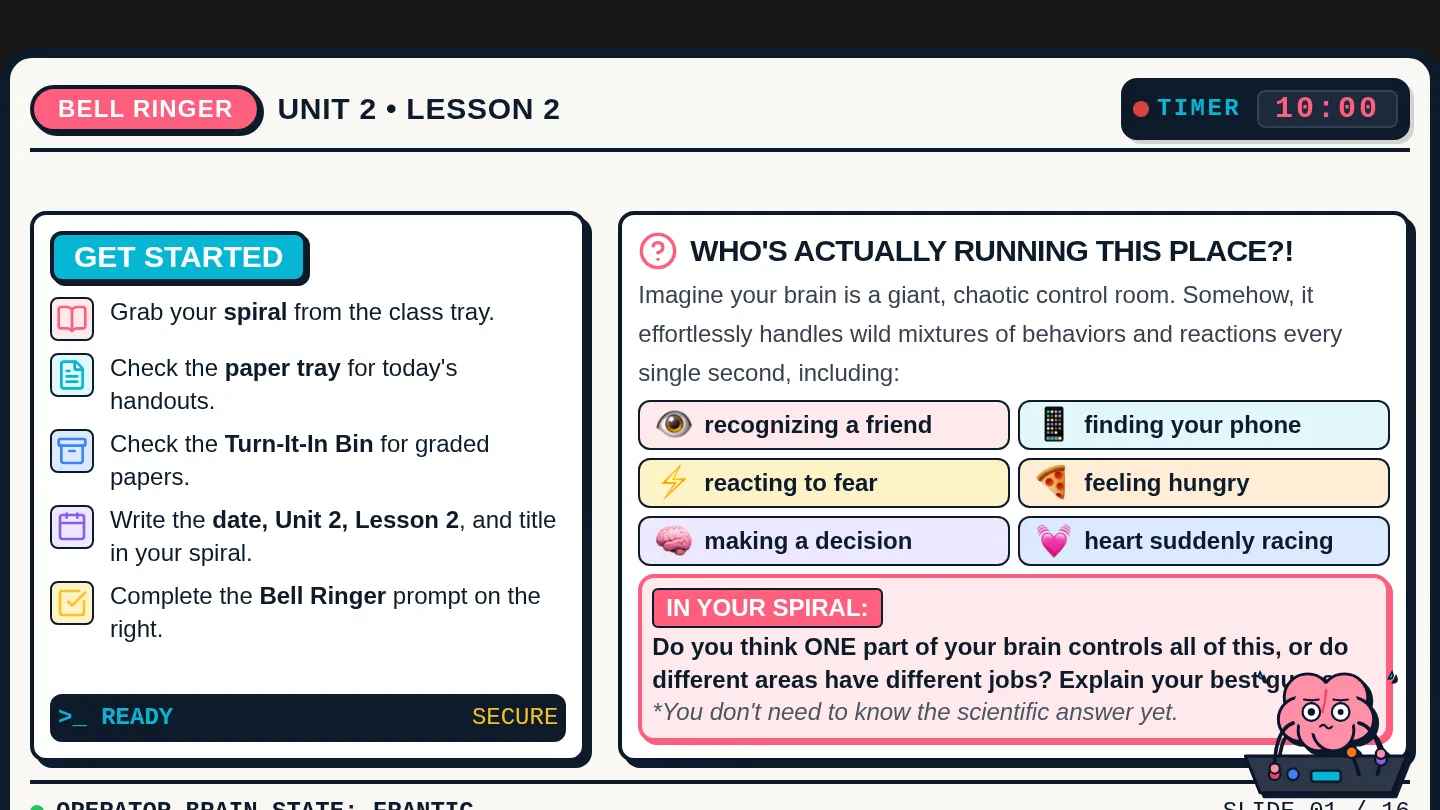
Psych U2 LE2 Slides

Psych U2 LE2

An introductory lesson that frames the brain, body chemistry, and behavior as an active control room operated by a busy supervisor. Covers how different areas divide the workload, how messages are sent, and what happens during malfunctions.

AC

Amanda Cummings

1
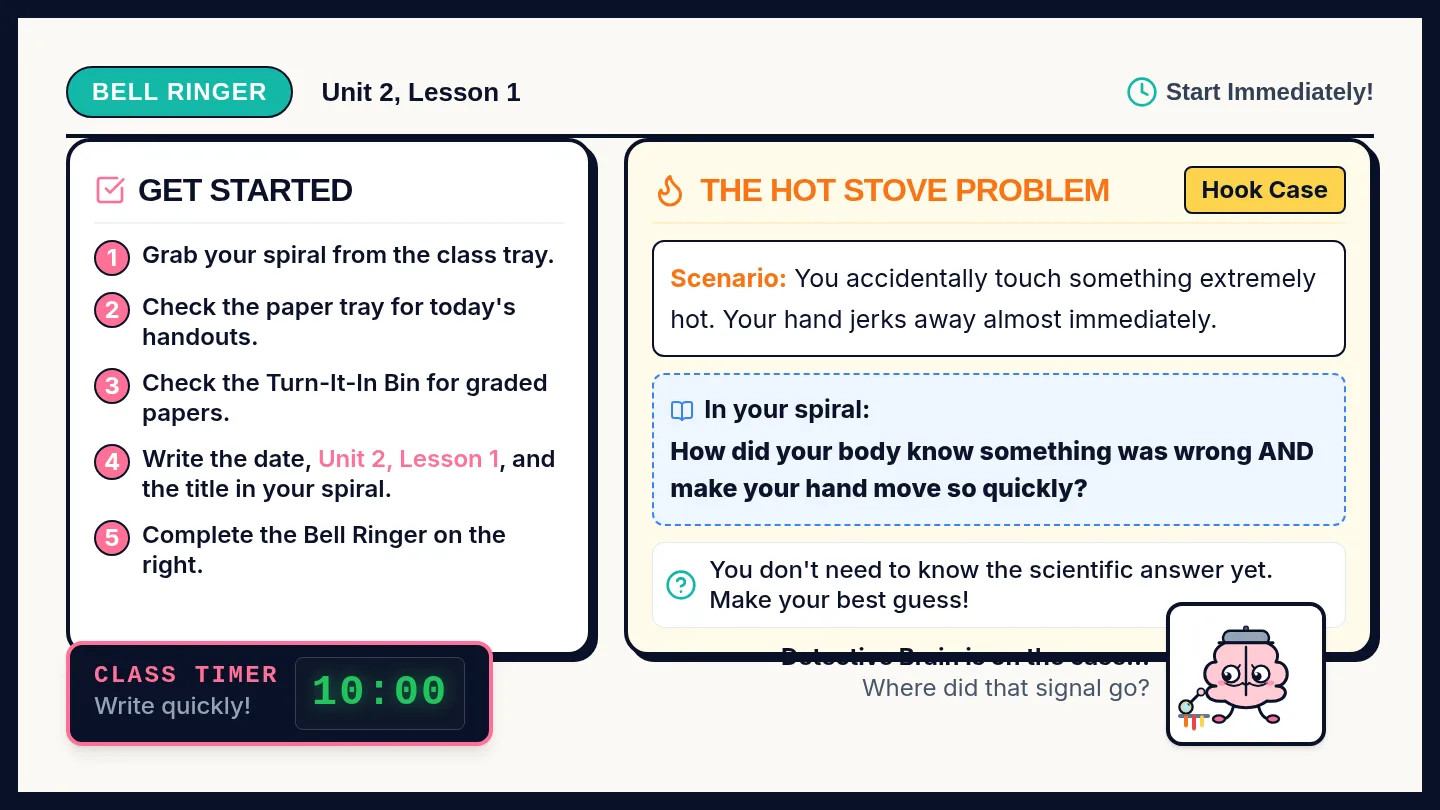
Signal Spark Slides

Psych U2 LE1

This lesson introduces biological psychology and explores how the brain and body communicate through the nervous system. Students will learn about the CNS, PNS, neurons, synapses, neurotransmitters, and the autonomic and somatic systems.

AC

Amanda Cummings

1
Caregiver Blueprint Teacher Guide

The Critical Window

A complete Early Childhood Education lesson exploring brain development, attachment theory, and systemic factors during the first 1,000 days of life, centered on the PBS documentary.

AL

Alex Levy

5
Neural Network Slides

Neural Network

An exploration of the nervous system's building blocks, focusing on neuron structure, the synaptic gap, and the chemical messengers that drive human behavior and sensation.

D

deborah.brown

10
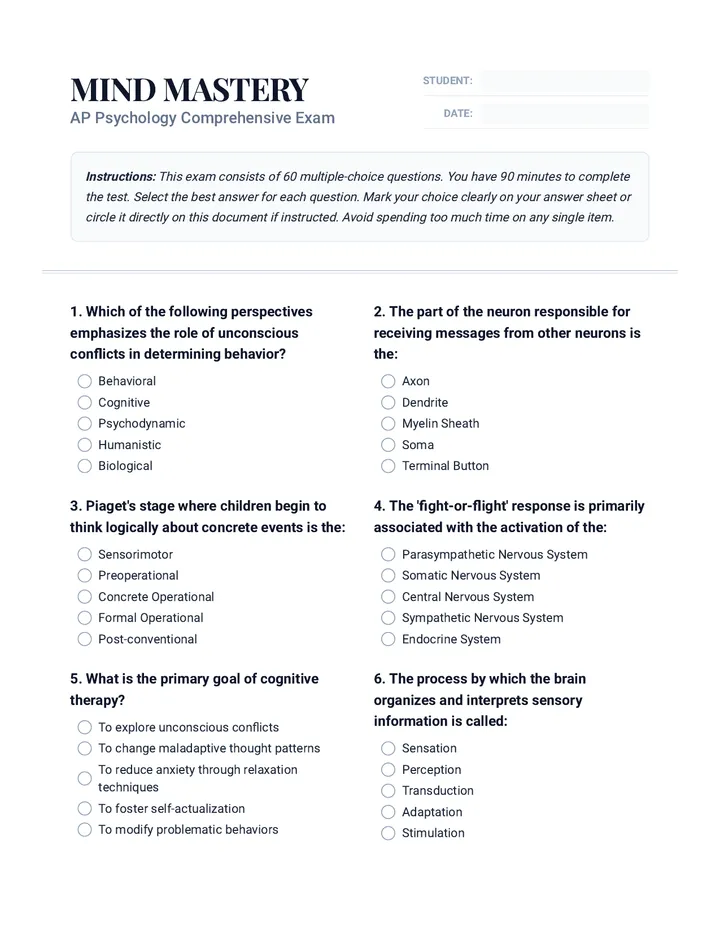
Mind Mastery Exam Test

Mind Mastery Exam

A comprehensive 90-minute assessment covering the breadth of the AP Psychology curriculum, including a 60-question multiple-choice exam, a post-exam reflection, and a detailed study guide for review.

DL

Dr. Lisa Lamb

8
ADHD Paradox Slides

The ADHD Paradox

Students investigate the neurobiology of ADHD through metaphorical frameworks, challenging the traditional 'deficit' model of the disorder and exploring the social model of disability.

4