Lenny.com
Explore
Create
ActivitiesNewMathEnglish Language ArtsScience & EngineeringSocial StudiesGlobal LanguagesHealth & Physical EducationSpecial EducationCounseling & Life SkillsArts & CreativityESL
Lenny.com
Lenny.com
Explore
Create
ActivitiesNewMathEnglish Language ArtsScience & EngineeringSocial StudiesGlobal LanguagesHealth & Physical EducationSpecial EducationCounseling & Life SkillsArts & CreativityESL
Lenny.com
Lenny.com

Solutions

Lenny for EducatorsLenny for SchoolsLenny for Districts

Product

ExploreSign inCreateSupportAbout

Resources

Getting startedMTSS Acceleration Program

© 2026 Lenny Learning Inc.

TermsPrivacyAccessibility
LinkedInInstagramX
Lenny

Free Will vs Determinism

Core arguments surrounding human agency, causality, and moral responsibility. Examines the tension between biological or environmental programming and the capacity for independent choice.

Social StudiesSocial Studies PracticesLocation WordsMapsOrder EventsChronology and CausationEvaluating SourcesHistorical ThinkingGeography, Humans, & the EnvironmentAmerican Symbols and LandmarksCitiesStatesState CapitalsRegions of the United StatesGeographic SkillsPhysical GeographyHuman GeographyRegional GeographyGeography of AfricaGeography of AsiaGeography of EuropeGeography of OceaniaGeography of the AmericasSociety and Environment of EuropeSociety and Environment of AsiaSociety and Environment of The AmericasSociety and Environment of the Middle EastSociety and Environment of AfricaHistoryPrehistoryComparing Ancient River CivilizationsAncient MesopotamiaAncient Egypt and KushAncient South AsiaEarly ChinaGreeceRome and the Byzantine EmpireAncient World HistoryNative Peoples of North AmericaNative Peoples of Mesoamerica and South AmericaAfrican EmpiresMedieval AsiaMedieval EuropeThe Silk RoadMedieval HistoryIslamic EmpiresWorld ReligionsRenaissance PeriodAge of ExplorationThe Thirteen ColoniesThe American RevolutionUS History Early RepublicFounding of the United StatesUS History AntebellumUS Civil WarReconstruction PeriodThe Gilded AgeUS ImperialismWorld ImperialismWorld War IUS History 1920sGreat DepressionWorld War IIThe Cold WarUS History 1950-60sUS History 1960s-70sWorld History 20th CenturyContemporary US HistoryContemporary World HistoryHolidaysCivics and GovernmentCitizenshipGovernment FoundationsThe ConstitutionUS ConstitutionExecutive BranchLegislative BranchJudicial BranchState and LocalPolitical ParticipationPublic PolicyPolitical SystemsPower and AuthoritySocial MovementsDefining DevianceTheories of DevianceCrime and Criminal JusticeEconomicsBasic Economic PrinciplesSupply and DemandWhat is MoneyEconomic FundamentalsMicroeconomicsMacroeconomicsBanking and FinanceEconomic SystemsGlobal EconomicsCorporations and PowerThe Changing WorkplaceUnemployment and LaborClass and InequalitySocial MobilityGlobal InequalityPsychologyHistory of PsychologyPsychology as a ScienceBrain and Nervous SystemNeuroscience and BehaviorGenetics and BehaviorSleep and ConsciousnessSensory ProcessesPerceptual OrganizationClassical ConditioningOperant ConditioningObservational LearningCognitive LearningMemory ProcessesThinking and Problem SolvingLanguage and CognitionTheories of MotivationStress and CopingPrenatal and Infant DevelopmentChildhood DevelopmentAdolescent DevelopmentAdulthood and AgingSelf and IdentitySocial CognitionSocial InfluenceAttraction and RelationshipsGroup BehaviorPrejudice and DiscriminationAnxiety and Mood DisordersClinical PsychologyForensic PsychologyPhilosophy & EthicsIntroduction to PhilosophyMajor Philosophers & IdeasMind and Body ProblemFree Will vs DeterminismEthics & MoralityReligion & PhilosophyPolitical Philosophy

Videos

Post-War Europe: The Welfare State and the Rise of the European Union

Post-War Europe: The Welfare State and the Rise of the European Union

This video provides a comprehensive overview of European history in the immediate aftermath of World War II, specifically focusing on the period from 1945 to the 1970s. It contrasts the divergent paths taken by Western Europe and the Eastern Bloc regarding economic recovery, industrialization, and social organization. Host John Green explores how Western nations developed the "Welfare State" and moved toward economic integration through the European Economic Community (the precursor to the EU), while Eastern nations under Soviet influence pursued rapid industrialization and "Goulash Communism." The video delves into key themes such as the rise of consumer culture, the invention of the "teenager" as a demographic, and the philosophical shift toward Existentialism in response to the horrors of the war. It examines how ordinary life changed through the availability of household appliances and goods like Coca-Cola, symbolizing a new "democratized luxury." Additionally, it addresses the complex social issues of the time, including the changing roles of women, the lingering effects of anti-Semitism, and the incomplete reckoning with Nazi crimes. For educators, this resource serves as an excellent tool for teaching the Cold War not just as a geopolitical conflict, but as a clash of economic systems and lifestyles. It provides concrete examples of how macro-political decisions affected daily life, from the food people ate to the furniture they bought. The video effectively links economic history with cultural and philosophical history, making it valuable for interdisciplinary lessons connecting social studies, economics, and sociology.
CrashCourseCrashCourse

15mins 57s

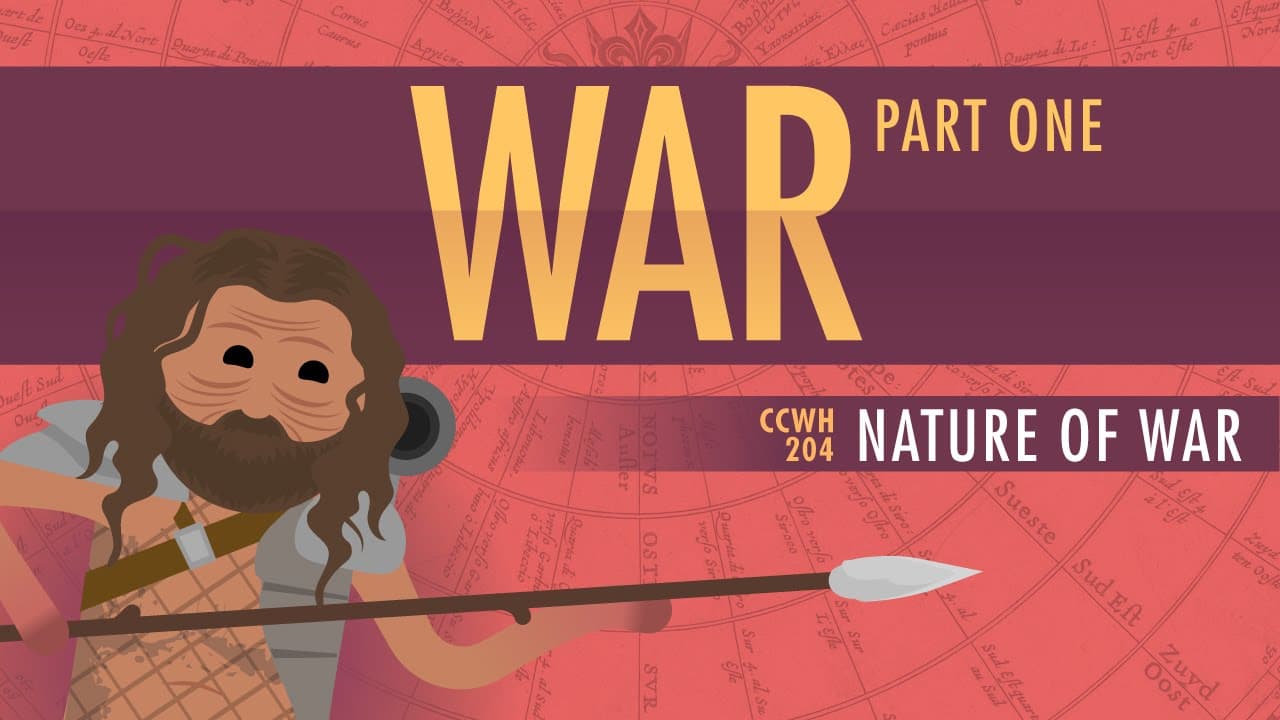
Why Humans Fight: The Evolutionary and Historical Roots of War

Why Humans Fight: The Evolutionary and Historical Roots of War

This video investigates the complex historical and philosophical question of why humans engage in war. Host John Green navigates the debate between two primary schools of thought: Thomas Hobbes's view of early human life as "nasty, brutish, and short," and Jean-Jacques Rousseau's concept of the peaceful "noble savage." The video examines anthropological evidence, archaeological findings, and evolutionary theories to determine if violence is an innate part of human nature or a cultural development. The content explores several key themes, including the distinction between biological imperatives (genes seeking to reproduce) and cultural behaviors. It delves into the role of resource scarcity—specifically food and mates—in driving early human conflict, which typically manifested as raiding rather than organized warfare. The video also touches on the psychology of soldiers, using powerful quotes from Vietnam veteran Karl Marlantes to discuss the "savage joy" and transcendence some find in combat, while balancing this with the concept of free will and the evolution of human institutions. For educators, this resource is a powerful tool to bridge history, biology, and philosophy. It challenges students to think critically about "inevitability" in history and encourages them to analyze how modern institutions have evolved to mitigate biological aggressive tendencies. It provides a nuanced look at the difference between interpersonal violence and state-sponsored war, making it an excellent launchpad for discussions on ethics, psychology, and the future of global conflict.

CrashCourseCrashCourse

10mins 37s

Materials

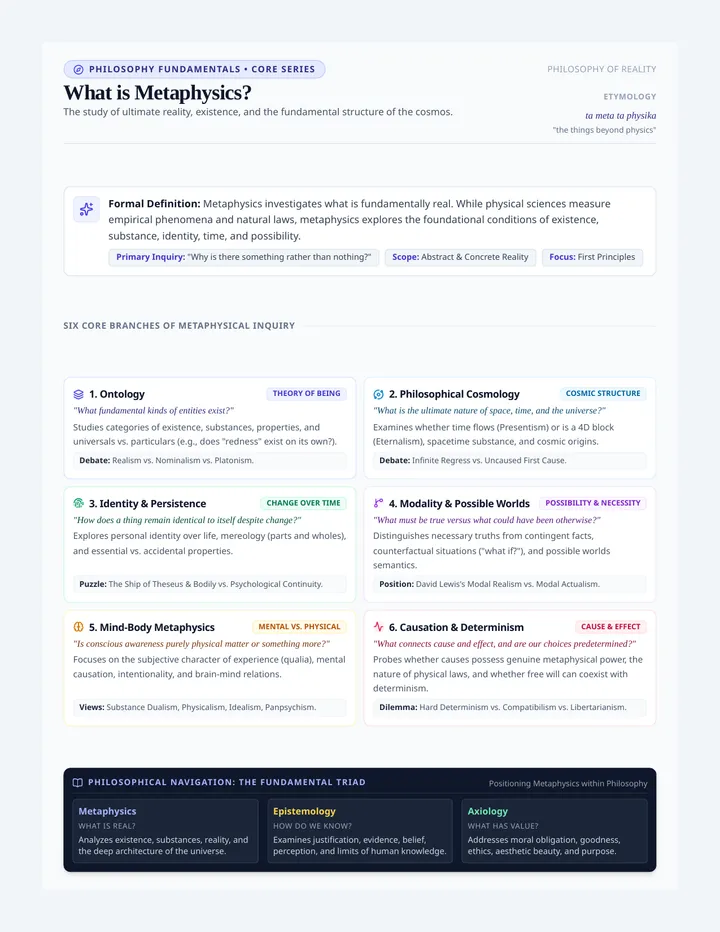
Metaphysics Architecture Reference Sheet

Metaphysics Architecture Reference Sheet

A concise, print-ready reference guide outlining the definition of metaphysics, its etymology, and its six primary branches—Ontology, Cosmology, Identity, Modality, Mind, and Causation—with key debates and philosophical distinctions.

ES

Eslem Serdar

Judgment Call Handout

Judgment Call Handout

A two-page historical fiction handout styled as an aged parchment document. It features a personal account from 'Hans' with a dedicated 'Impression' sidebar and profile icon area, followed by reflective questions regarding moral accountability. This version optimizes the second page layout to ensure all questions fit comfortably within the print margins.

LN

Leah Nickols

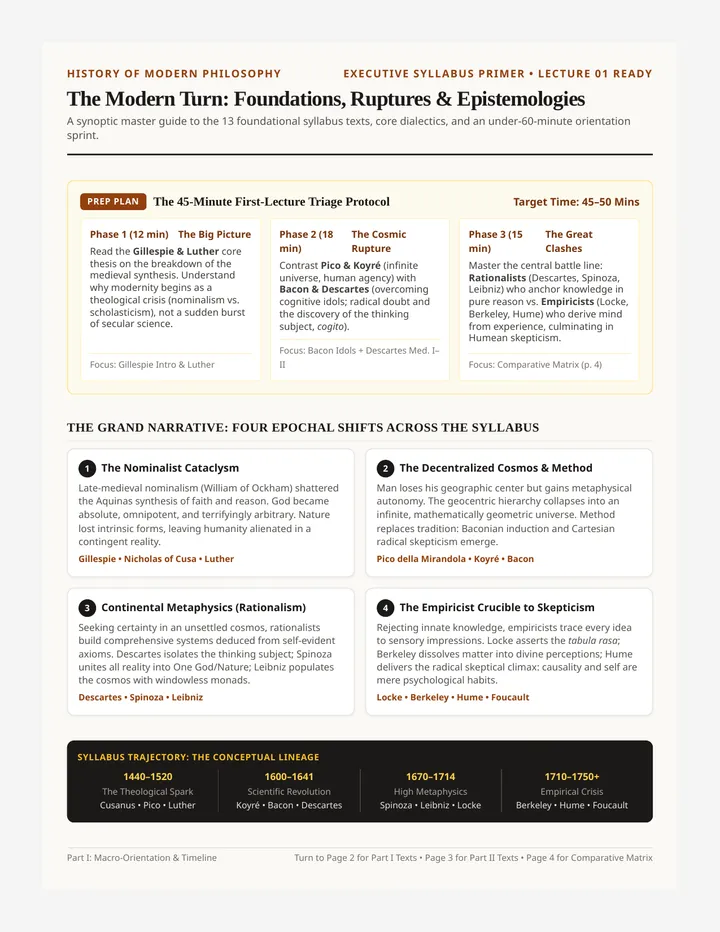
Modern Philosophy Study Guide

Modern Philosophy Study Guide

A comprehensive 4-page reading study guide and under-one-hour preparation sprint for a History of Modern Philosophy course. Covers the entire syllabus trajectory from late-medieval theological origins (Gillespie, Cusanus, Luther) and the scientific revolution (Pico, Koyré, Bacon, Foucault) to the great rationalist-empiricist epistemological debates (Descartes, Spinoza, Leibniz, Locke, Berkeley, Hume), complete with a rapid study schedule, core theses, seminar questions, and a comparative matrix.

ES

Eslem Serdar

Sequences

Grand Plan Révisions Document

Odyssée Philo

Un programme de révision complet couvrant les 17 notions du baccalauréat de philosophie, structuré par grands domaines thématiques pour une compréhension transversale.

NL

Noémie L

2
Broken Bonds Worksheet Slice 1.1

Star Crossed Journey Act I

A comprehensive deep-dive into Shakespeare's Romeo and Juliet, focusing on Act 1. Students will analyze character dynamics, the tension between destiny and choice, and the rich poetic language of the play across individual scenes.

ME

Michelle E Bruno

21
Sartre Instruction Slides

Existentialist Freedom and Meaning

An undergraduate-level introduction to Existentialism and Phenomenology, exploring radical freedom, the absurd, and the construction of meaning in a post-traditional world through the works of Sartre, Camus, Nietzsche, and Heidegger.

11
Behavior Lab Slides

Mechanisms of Behavior Modification

A comprehensive 12th-grade psychology unit exploring B.F. Skinner's operant conditioning. Students investigate the Law of Effect, differentiate between types of reinforcement and punishment, analyze reinforcement schedules, and design ethical behavior modification plans.

12
Mapping the Cradle Slides

Rivers of Power

This sequence investigates how physical geography—specifically river systems—shaped the development, culture, and political structures of the Nile, Tigris-Euphrates, Indus, and Yellow River civilizations. Students evaluate the 'Hydraulic Hypothesis' and the concept of geographic determinism through map analysis, simulations, and primary source comparison.

8
Plan Annuel de Philosophie Document

Odyssée de la Pensée

Un parcours complet pour l'année de Terminale Générale couvrant les 17 notions du programme de philosophie à travers des problématiques transversales, des auteurs clés et des repères conceptuels.

2

Lessons

Senses in Service Slides

Senses in Service

This lesson explores the Gurmat perspective on the five senses, moving from sensory bondage to spiritual mastery through the teachings found in the 'Slave to the Senses' discourse.

SJ

Satvinder Juss

5
Sagesse Slides Revision

Sagesse Flash

Une leçon interactive pour maîtriser huit concepts fondamentaux de la philosophie à travers des révisions visuelles et un quiz d'évaluation.

C

Camille

6
Rebel Beliefs Worksheet

The Great Split Reformation

A comprehensive lesson detailing the systemic causes and key figures of the Protestant Reformation, designed to accompany the 'Great Split' graphic organizer. Students explore the corruption, political tensions, and technological shifts that led Martin Luther and John Calvin to challenge the Catholic Church.

NC

Nicole Charalambous

3
Ogygia Echoes Storyboard

Goddess of Ogygia

An exploration of Book 5 of the Odyssey, focusing on the complex character of Calypso, her divine isolation, and the conflict between mortal desire and immortal will.

KC

Kate Carpenter

2
Boulder Burden Slides

The Absurd Philosophy

A deep dive into Albert Camus' 'The Myth of Sisyphus', exploring the philosophical concepts of the Absurd, revolt, and the search for meaning in a silent universe through a structured Socratic Seminar.

RM

Rory MacPhail

3
Foundry of Meaning Slides

The Meaning Maker

An introductory exploration of existentialist philosophy, focusing on the concepts of radical freedom, existence preceding essence, and the creation of personal meaning in an indifferent universe.

RM

Rory MacPhail

3