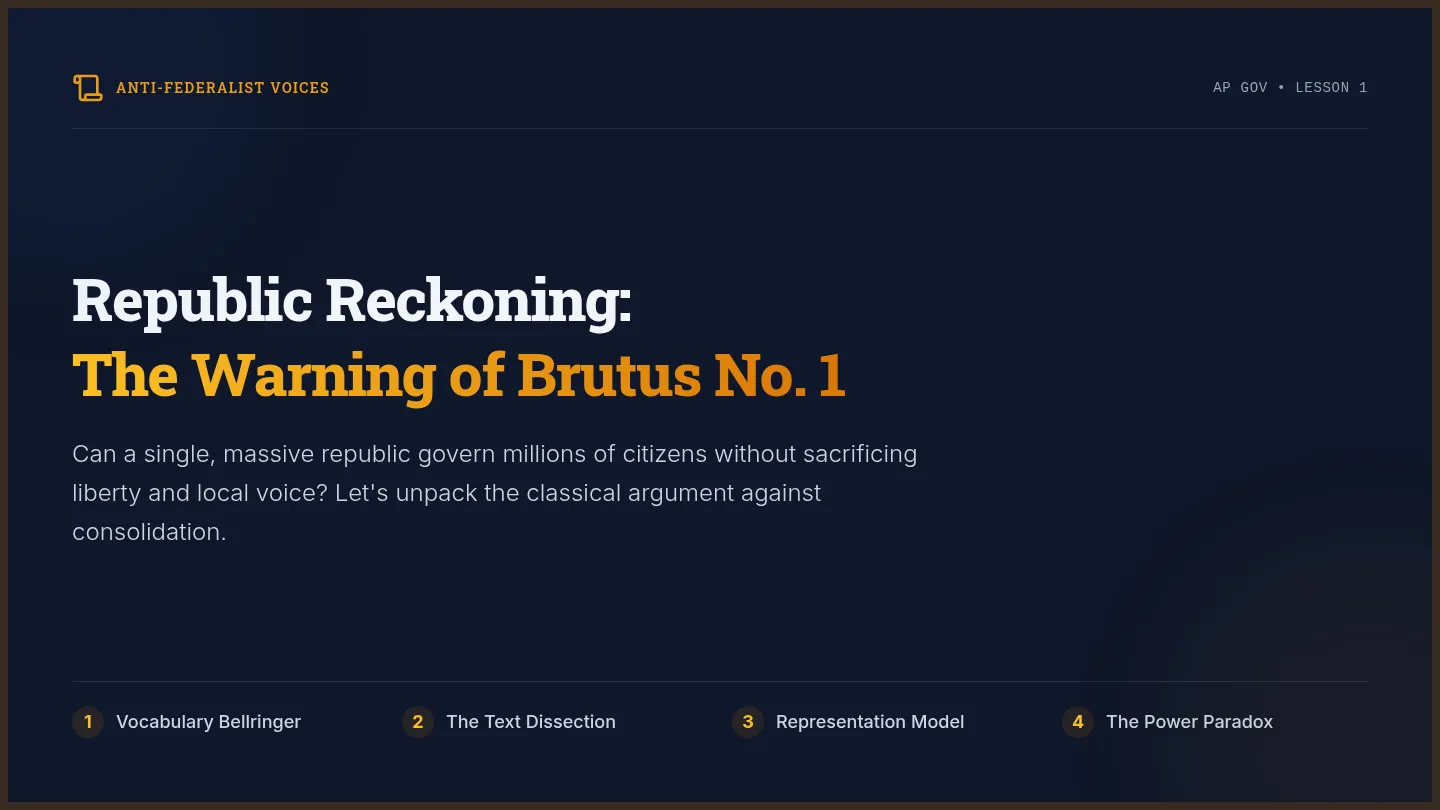
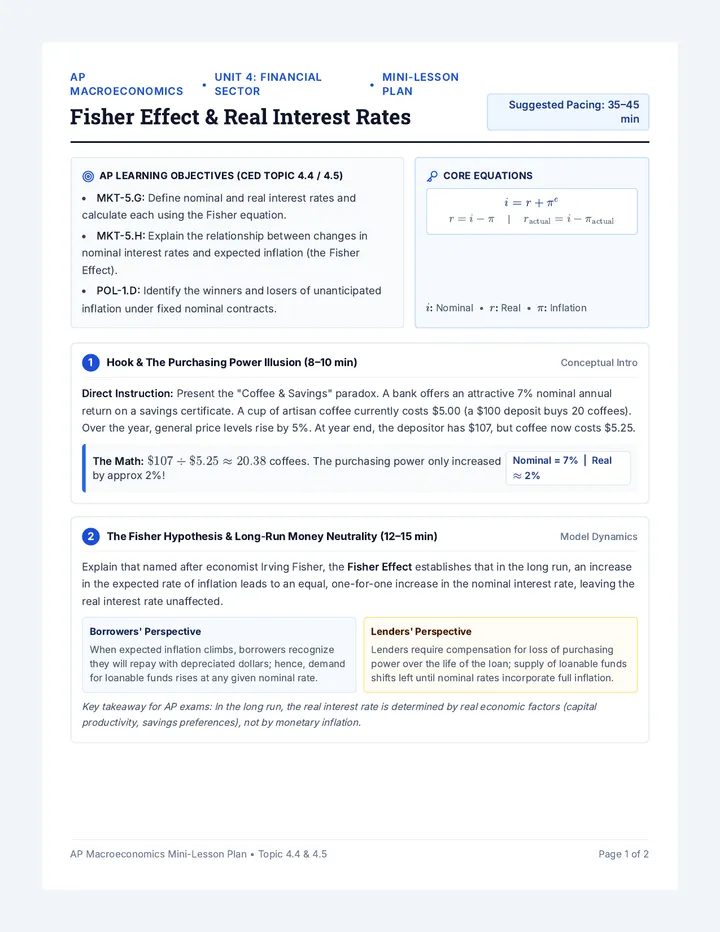
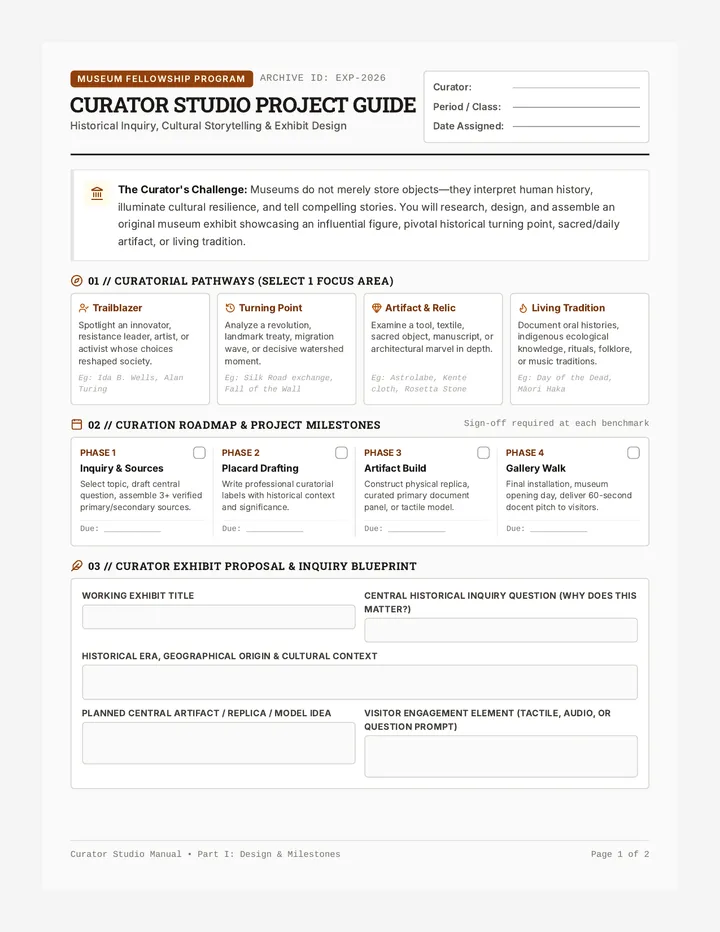
Sartre Instruction Slides Existentialism is a Humanism
Existence Precedes Essence
"Man is condemned to be free." — Jean-Paul Sartre
The Core Maxim
Existence Precedes Essence
For humans, there is no pre-determined "blueprint" or purpose. We appear on the scene, we exist, and only afterwards do we define ourselves.
The Paper Knife Analogy
A knife is made for a purpose (essence). A human is not. We are the creators of our own purpose.
Subjectivity
Man is nothing else but that which he makes of himself. This is the first principle of existentialism.
"Condemned to be Free"
Anguish
The realization of total responsibility for one's choices and their impact on humanity.
Forlornness
The awareness that God does not exist and we must face the consequences of this alone.
Despair
Acting without hope or reliance on anything other than our own will and the probabilities of our actions.
The Dilemma
"One of my students came to me... His father was a collaborator... his mother lived alone with him, very much upset by the half-treason of her husband."
Option A: Stay and help his mother (personal/concrete).
Option B: Go to England and join the Free French Forces (abstract/universal).
Sartre's Answer?
No moral system (Christianity, Kantianism) can provide a definitive answer. They are all too vague.
"You are free, therefore choose—that is to say, invent."
Radical Responsibility
01
When I choose for myself, I am choosing for all of humanity . I am creating an image of man as I believe he ought to be.
02
There is no determinism. "Man is free, man is freedom."
03
To not choose is still a choice. We are responsible for our inaction as much as our action.
Sartre Ethics Workshop Worksheet Radical Freedom Workshop
Introduction to Existentialist Ethics | Jean-Paul Sartre
NAME:
DATE:
PART 1
The Fundamental Principle
"If God does not exist, there is at least one being whose existence comes before its essence, a being which exists before it can be defined by any conception of it. That being is man... Man is nothing else but that which he makes of himself."
— Jean-Paul Sartre, Existentialism is a Humanism
1. Define "Existence precedes Essence" in your own words, using the "Paper Knife" contrast.
2. Why does Sartre claim that being free is a "condemnation"?
PART 2
The Soldier's Dilemma
Sartre describes a student who faces a choice: stay with his mother, who needs him to survive, or leave for England to join the Resistance and fight the Nazis. One is a concrete, individual obligation. The other is an abstract, collective obligation.
System 1: Christian Ethics
"Be charitable, love thy neighbor..."
The Problem:
Does "neighbor" mean the Mother or the French People? Which path is more "charitable"?
System 2: Kantian Ethics
"Never treat people as a means, but as an end..."
The Problem:
Staying uses the Resistance as a means (neglect). Leaving uses the Mother as a means (abandonment).
3. If you were the student, what "signs" or "feelings" would you look for? How would Sartre critique the idea of "trusting your feelings"?
4. Interpretation: What does "inventing" a value mean in this context? Is it different from "making it up"?
PART 3
Choosing for Humanity
Sartre argues: "In choosing myself, I choose man."
Identify a significant choice you have made recently. How does this choice project an "image of man" that you believe should be universal?
Sartre Humanism Teacher Guide Teacher Guide: Existentialism is a Humanism
Lesson 1: Sartre and Radical Freedom
Instructional Intent
This lesson moves students from abstract metaphysical questions to the concrete burden of ethics. The goal is for students to internalize that existentialism is not a philosophy of "quietism" (inaction) but of radical action and responsibility.
Key Terms
Essence: Purpose/BlueprintSubjectivity: The self as starting pointAnguish: Responsibility for allAbandonment: God is dead
Facilitation Notes
01
The Hook: The Decision (10 mins)
Present the soldier's dilemma immediately. Do not give philosophical context yet. Ask students to pick a side and, more importantly, justify it using a "rule."
Common student response: "Follow your heart." Sartre's rebuttal: Your heart is formed by your actions. You don't know your heart until you act.
02
Instructional Input (20 mins)
Use the Sartre Instruction Slides . Focus heavily on the "Paper Knife" vs. "Human" distinction. Undergraduate students often struggle with the idea that lack of purpose is "optimistic."
Discussion Prompt:
"If there is no God to justify our existence, does that make life easier or harder? Why?"
03
Workshop: Text & Application (45 mins)
Distribute the Radical Freedom Workshop Worksheet . Have students work in pairs for Part 2. When they reach Part 3, move to a silent individual reflection to maintain the "subjective" weight of the philosophy.
Common Misconceptions
"Existentialism is Nihilism."
Correction: Existentialism is the antidote to nihilism. While the universe has no meaning, the human creates meaning. It is a philosophy of action.
"Freedom means doing whatever I want."
Correction: Sartre argues freedom is a burden. Every choice carries the weight of universalizing that choice. It is not an excuse for selfishness, but a call to terrifying responsibility.
Differentiation & Extension
For challenge: Ask students to write a response from the perspective of a Kantian philosopher. Where would they disagree with Sartre's "invention" of values?For support: Provide a scaffolded list of "Essences" (blueprints) for common objects vs. the "blank slate" of the human being. Camus Absurd Instructional Slides The Absurd
Albert Camus & The Myth of Sisyphus
The Equation of the Absurd
The Human Longing
Our deep, innate desire for order, meaning, and reason.
The Silent Universe
The chaotic, indifferent, and unreasonable reality of existence.
=
THE ABSURD
"The absurd is born of this confrontation between the human need and the unreasonable silence of the world."
Three Ways to Face the Absurd
Suicide
Physical escape. Camus rejects this: it doesn't solve the absurd; it just ends the seeker.
Philosophical Suicide
"Leap of Faith." Denying reason to embrace a higher meaning. Camus rejects this as intellectual dishonesty.
Rebellion
Living in spite of the absurd. Embracing life with full awareness of its meaninglessness.
The Myth of Sisyphus
Condemned by the gods to roll a rock to the top of a mountain, only for it to roll back down... for eternity.
"One must imagine Sisyphus happy."
The Descent
The moment Sisyphus walks back down to the plain. He is superior to his fate because he is conscious of it.
The Victory
His rock is his thing. His fate belongs to him. The struggle itself is enough to fill a man's heart.
The Absurd Hero
If there is no "Grand Design," every moment becomes precious. The value is not in the goal, but in the living.
Quantity over Quality
Lucidity (Awareness)
Freedom from Hope
Defiant Joy
Rock of Routine Inquiry Worksheet Inquiry Activity
The Rock of Routine
Student: ____________________ Date: ____________________
"The workman of today works every day in his life at the same tasks, and this destiny is no less absurd. But it is tragic only at the rare moments when it becomes conscious." — Albert Camus
Phase 1: Identifying the Rock
List three repetitive, mundane, or seemingly "pointless" tasks you perform daily or weekly (e.g., dishwashing, commuting, data entry, studying for exams you don't care about).
01. __________________________________________________________________________________
02. __________________________________________________________________________________
03. __________________________________________________________________________________
Phase 2: The Conscious Descent
Choose one of the tasks above. Camus argues that tragedy arises when we become conscious of the routine. Describe what it feels like when the "mechanical" nature of this task suddenly strikes you as absurd.
Phase 3: The Sisyphean Smile
Camus concludes that Sisyphus is "happy" because the struggle itself is enough to fill his heart. He doesn't need the rock to stay at the top to find value in the effort.
A. Re-evaluating the Effort
How could you transform your chosen mundane task into a "rebellion"? What would it look like to perform it with conscious joy rather than automated resentment?
B. The "Silent Universe" Critique
Does Camus's solution feel like a "victory" to you, or does it feel like a coping mechanism? Defend your position against Camus.
Nietzsche Death of God Slides The Death of God
Nietzsche and the Challenge of Nihilism
The Parable
"Whither is God? I will tell you. We have killed him—you and I. All of us are his murderers. But how did we do this? How could we drink up the sea? Who gave us the sponge to wipe away the entire horizon?"
What does he mean?
Not a literal death, but the death of a cultural foundation . God as the "ultimate anchor" for morality and meaning is gone.
The "Murderers" are we—through science, secularism, and enlightenment reason.
The horror: "Are we not straying as through an infinite nothing?"
The Shadow of Nihilism
If there is no absolute source of value, then "everything is permitted." We risk falling into a void where nothing matters.
Passive Nihilism
The "Last Man." Seeking only comfort and security. Avoidance of struggle. The end of human greatness.
Active Nihilism
Destruction of old values to clear the way for something new. The "bridge" to the Ubermensch.
The Ubermensch
"Man is something that shall be overcome."
The individual who creates their own values, says "Yes" to life despite suffering, and becomes their own "God."
Self-Mastery
Ruling over one's own instincts and passions to create a work of art from one's life.
Eternal Recurrence
The ultimate test: Would you be willing to live your life exactly as it is, over and over, for eternity?
Amor Fati
Love of one's fate. Accepting reality entirely, including the pain.
The Question for Us
"Is not the greatness of this deed too great for us?"
If we cannot rely on "God," "Nature," or "History" to give us a moral compass, how do we avoid becoming "The Last Man"? How do we justify our own existence?
Madman Parable Source Analysis Handout SOURCE: THE GAY SCIENCE, 125
The Madman
Primary Source Analysis & Parable
"Have you not heard of that madman who lit a lantern in the bright morning hours, ran to the market place, and cried incessantly: 'I seek God! I seek God!'... 'Whither is God?' he cried; 'I will tell you. We have killed him—you and I. All of us are his murderers. But how did we do this? How could we drink up the sea? Who gave us the sponge to wipe away the entire horizon? What were we doing when we unchained this earth from its sun? Whither is it moving now? Whither are we moving? Away from all suns? Are we not plunging continually? Backward, sideward, forward, in all directions? Is there still any up or down? Are we not straying as through an infinite nothing?'"
"'I come too early,' he said then; 'my time is not yet. This tremendous event is still on its way, still wandering; it has not yet reached the ears of men. Lightning and thunder require time; the light of the stars requires time; deeds, though done, still require time to be seen and heard. This deed is still more distant from them than the most distant stars—and yet they have done it themselves. '"
Key Symbol: The Lantern
Why light a lantern in the morning ? It signifies a search for a truth that should be obvious, yet is ignored. It highlights the blindness of the crowd in the marketplace.
Key Metaphor: The Sea
"Drinking up the sea" implies an impossible, monumental task. We have removed the boundary between the human and the infinite, leaving us lost in the "nothing."
The Crowds
The crowd laughs because they are "atheists" who think the death of God is a minor, easy thing. The madman sees the cosmic horror they missed.
Discussion Response
1. Why does Nietzsche claim we are "straying through an infinite nothing"? What specific cultural "compasses" have we lost?
2. If "this deed is still more distant than the stars," how has our modern world (100+ years later) finally "seen" the event?
Bad Faith Authenticity Slides Bad Faith
Mauvaise Foi & The Authentic Life
What is Bad Faith?
A form of self-deception where we pretend we are not free.
"We are flee-ing from our freedom... we treat ourselves as though we were fixed objects."
Facticity
The "givens" of our life (past, body, situation). Bad Faith: "I am only my past."
Transcendence
The ability to go beyond the "givens." Bad Faith: "I can be anything at all (ignoring reality)."
The Famous Waiter
Sartre describes a waiter whose movement is a bit "too precise," a bit "too rapid." He is playing at being a waiter.
"He is playing with his condition in order to realize it."
The Deception
The waiter tries to convince himself and others that he IS a waiter in the same way an inkwell IS an inkwell.
Result:
He denies his freedom to NOT be a waiter.
Social Roles as Masks
The Student
"I have to study because I am a student." (Denying the choice to quit).
The Romantic
"I can't help how I feel." (Treating emotions as fixed objects).
The Professional
"It's just my job." (Absolving personal responsibility for actions).
The Goal: Authenticity
To live authentically is to accept the tension between Facticity (what you are) and Transcendence (what you can become).
"I am not what I am, and I am what I am not."
Bad Faith Reflection Journal Worksheet Confidential
Subjectivity Observation Log
Topic: Mauvaise Foi (Bad Faith) & Self-Deception
REF NO: SARTRE-1943-BF
Case Study: The Careerist
"Marcus is a corporate lawyer. He finds the work of his firm unethical, but he continues to work 80 hours a week. When asked why, he says: 'I have no choice. I'm a lawyer. This is what lawyers do. My mortgage and my family's lifestyle require this income. I am just a cog in the machine.'"
Identify the "Facticity"
(What are the fixed facts Marcus is hiding behind?)
Identify the "Transcendence"
(What freedom is Marcus denying he has?)
Personal Reflection: The Social Mask
Think of a situation where you felt you were "playing a role" (the good child, the perfect student, the tough athlete). Describe a moment when you used that role to avoid a difficult choice.
Begin your reflection here...
The Authentic Pivot
Sartre suggests that to move from Bad Faith to Authenticity, one must acknowledge that they are choosing their situation in every moment.
1
Reframing the Role
Take your personal example above. Rewrite the situation using the phrase: "I chose to act as a ____ because I valued ____ more than ____."
2
The Anxiety of Freedom
Why is it often more comfortable to live in Bad Faith than to be authentic? What does it cost us to be truly free?
Existence Precedes Essence // Authenticity Is Action
Heidegger Dasein Slides Being-in-the-World
Martin Heidegger & The Structure of Dasein
Dasein
"Being-There"
Human beings are not isolated minds looking at a world of objects. We are always already immersed in a world.
Thrownness (Geworfenheit)
We find ourselves "thrown" into a world we didn't choose—a specific time, place, and language.
Projection
Dasein is always "ahead of itself," projecting onto possibilities and future goals.
The World of Tools
Ready-to-Hand
(Zuhandenheit). Tools are invisible when they work. We don't "think" about the hammer; we think about the nail and the project .
Present-at-Hand
(Vorhandenheit). When the tool breaks , it suddenly becomes visible as a mere object. Failure reveals the world's structure.
Anxiety & The "They"
"The 'They' (Das Man) is everyone and no one... it relieves Dasein of its responsibility."
Inauthentic
Doing what "one" does. Living in "idle talk" and curiosity. Avoiding the truth of our own death.
Authentic
Being-towards-death. Facing our finitude reveals that our choices are truly our own.
Final Synthesis
Sartre
Radical Freedom & Choice
Camus
Absurdity & Rebellion
Nietzsche
Nihilism & New Values
Heidegger
Being & Authenticity
"Why is there something rather than nothing?"
Broken Hammer Observation Log Worksheet The Broken Hammer Log
PHENO-LAB-05
Phenomenological Observation Exercise
Ready-to-Hand
"The hammer itself eludes us... the more we hammer with it, the more primordial does our relationship to it become."
Present-at-Hand
"When a tool is damaged... its 'readiness-to-hand' is replaced by a mere 'being-present-at-hand'."
I. Identifying the Invisible
Think of a piece of technology or a physical tool you use so frequently it has become "invisible" to you (e.g., your smartphone, a specific pen, your car's steering wheel, your glasses).
The Object:
The "In-order-to": (What is the project this tool serves?)
II. The Moment of Failure
Recall a time when this tool failed or was missing . Describe how the tool suddenly "appeared" to you as an object.
Psychological Reaction:
(Frustration, confusion, awareness of the physical body?)
World Revelation:
(What other parts of your "world" were revealed because of this failure?)
III. Existence Beyond Tools
Heidegger argues that we spend most of our lives in the "They" (Das Man), living inauthentically through these functional routines. Anxiety is the "ultimate tool failure"—it breaks our relationship with the world's meaning entirely.
If our "world" is defined by our projects and tools, who are we when all our projects fail? What is left of "Dasein"?
// ENTER PHENOMENOLOGICAL REDUCTION HERE...
Unit: Existentialist Themes Martin Heidegger: Being and Time (1927)