Lenny.com
Explore
Create
ActivitiesNewMathEnglish Language ArtsScience & EngineeringSocial StudiesGlobal LanguagesHealth & Physical EducationSpecial EducationCounseling & Life SkillsArts & CreativityESL
Lenny.com
Lenny.com
Explore
Create
ActivitiesNewMathEnglish Language ArtsScience & EngineeringSocial StudiesGlobal LanguagesHealth & Physical EducationSpecial EducationCounseling & Life SkillsArts & CreativityESL
Lenny.com

Class and Inequality

Wealth distribution patterns, socioeconomic stratification, and systemic causes of income disparity. Analyzes the impacts of social mobility and institutional barriers on global and local scales.

Lenny.com

Solutions

Lenny for EducatorsLenny for SchoolsLenny for Districts

Product

ExploreSign inCreateSupportAbout

Resources

Getting startedMTSS Acceleration Program

© 2026 Lenny Learning Inc.

TermsPrivacyAccessibility
LinkedInInstagramX
Lenny
Social StudiesSocial Studies PracticesLocation WordsMapsOrder EventsChronology and CausationEvaluating SourcesHistorical ThinkingGeography, Humans, & the EnvironmentAmerican Symbols and LandmarksCitiesStatesState CapitalsRegions of the United StatesGeographic SkillsPhysical GeographyHuman GeographyRegional GeographyGeography of AfricaGeography of AsiaGeography of EuropeGeography of OceaniaGeography of the AmericasSociety and Environment of EuropeSociety and Environment of AsiaSociety and Environment of The AmericasSociety and Environment of the Middle EastSociety and Environment of AfricaHistoryPrehistoryComparing Ancient River CivilizationsAncient MesopotamiaAncient Egypt and KushAncient South AsiaEarly ChinaGreeceRome and the Byzantine EmpireAncient World HistoryNative Peoples of North AmericaNative Peoples of Mesoamerica and South AmericaAfrican EmpiresMedieval AsiaMedieval EuropeThe Silk RoadMedieval HistoryIslamic EmpiresWorld ReligionsRenaissance PeriodAge of ExplorationThe Thirteen ColoniesThe American RevolutionUS History Early RepublicFounding of the United StatesUS History AntebellumUS Civil WarReconstruction PeriodThe Gilded AgeUS ImperialismWorld ImperialismWorld War IUS History 1920sGreat DepressionWorld War IIThe Cold WarUS History 1950-60sUS History 1960s-70sWorld History 20th CenturyContemporary US HistoryContemporary World HistoryHolidaysCivics and GovernmentCitizenshipGovernment FoundationsThe ConstitutionUS ConstitutionExecutive BranchLegislative BranchJudicial BranchState and LocalPolitical ParticipationPublic PolicyPolitical SystemsPower and AuthoritySocial MovementsDefining DevianceTheories of DevianceCrime and Criminal JusticeEconomicsBasic Economic PrinciplesSupply and DemandWhat is MoneyEconomic FundamentalsMicroeconomicsMacroeconomicsBanking and FinanceEconomic SystemsGlobal EconomicsCorporations and PowerThe Changing WorkplaceUnemployment and LaborClass and InequalitySocial MobilityGlobal InequalityPsychologyHistory of PsychologyPsychology as a ScienceBrain and Nervous SystemNeuroscience and BehaviorGenetics and BehaviorSleep and ConsciousnessSensory ProcessesPerceptual OrganizationClassical ConditioningOperant ConditioningObservational LearningCognitive LearningMemory ProcessesThinking and Problem SolvingLanguage and CognitionTheories of MotivationStress and CopingPrenatal and Infant DevelopmentChildhood DevelopmentAdolescent DevelopmentAdulthood and AgingSelf and IdentitySocial CognitionSocial InfluenceAttraction and RelationshipsGroup BehaviorPrejudice and DiscriminationAnxiety and Mood DisordersClinical PsychologyForensic PsychologyPhilosophy & EthicsIntroduction to PhilosophyMajor Philosophers & IdeasMind and Body ProblemFree Will vs DeterminismEthics & MoralityReligion & PhilosophyPolitical Philosophy

Videos

Urbanization, Labor, and Leisure in Industrial Britain

Urbanization, Labor, and Leisure in Industrial Britain

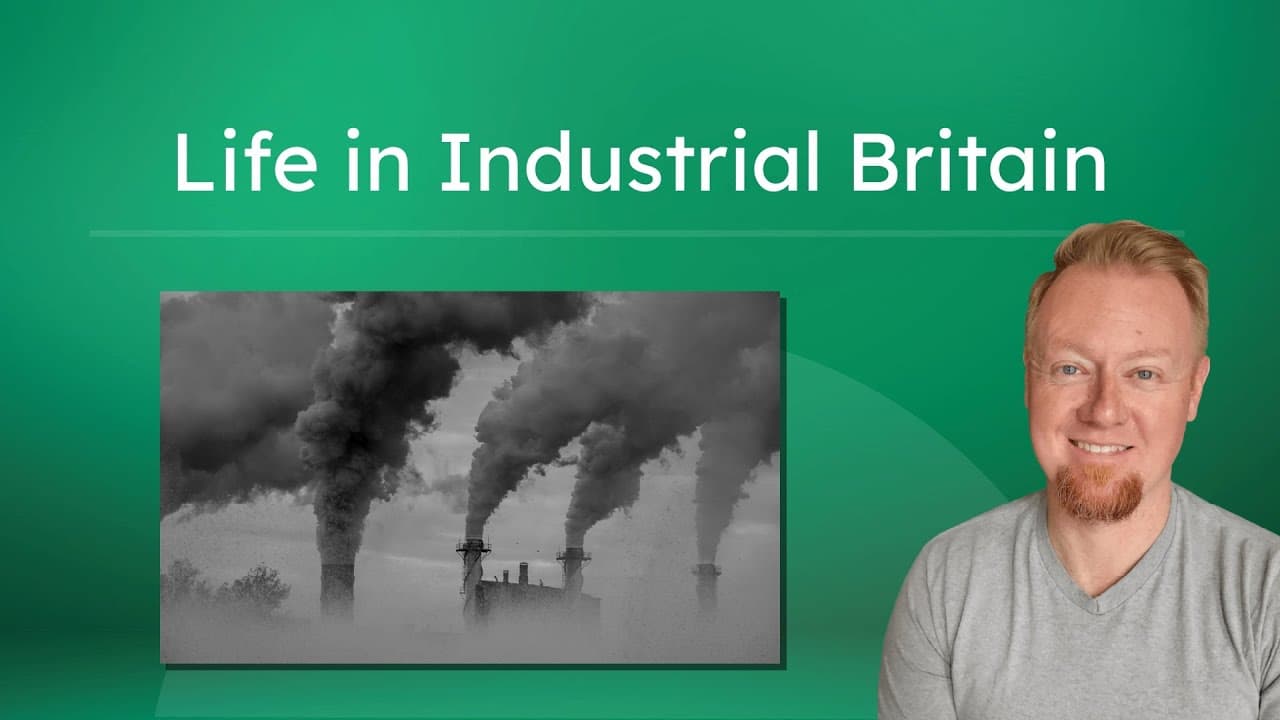
This educational video provides a comprehensive overview of life in Great Britain during the Industrial Revolution and the Victorian Era. It examines the massive demographic shift caused by urbanization as families moved from the countryside to crowded cities like Manchester and London in search of factory work. The content contrasts the brutal realities of working-class life—including dangerous working conditions, child labor, and unsanitary slums plagued by cholera—with the emergence of a middle class and the subsequent "Leisure Revolution." The video explores key themes such as the social and economic consequences of rapid industrialization, the widening wage gap between social classes, and the public health crises that resulted from poor urban planning. It also delves into the cultural shifts of the time, highlighting how different classes spent their free time, from seaside vacations and the Great Exhibition to reading "Penny Dreadfuls" and playing parlor games. For educators, this video serves as an excellent anchor for units on the Industrial Revolution, World History, or Economics. It connects abstract economic concepts like the wage gap and disposable income to tangible historical examples. The video's structured approach, utilizing guiding questions and pauses for reflection, makes it a ready-made classroom tool for stimulating discussion about the human cost of technological progress and the roots of modern urban society.

Miacademy & MiaPrep Learning ChannelMiacademy & MiaPrep Learning Channel

11mins 17s

Why American Politics Has Become So Polarized

Why American Politics Has Become So Polarized

This educational video provides a comprehensive overview of political polarization in the United States, exploring its definition, causes, and potential solutions. Using relatable scenarios like a tense Thanksgiving dinner, the video explains how American politics has shifted from a centrist consensus in the 1990s to the divided ideological extremes of today. It breaks down complex political science concepts into accessible terms, using data and historical context to illustrate the widening gap between political parties and the electorate.

Miacademy & MiaPrep Learning ChannelMiacademy & MiaPrep Learning Channel

11mins 53s

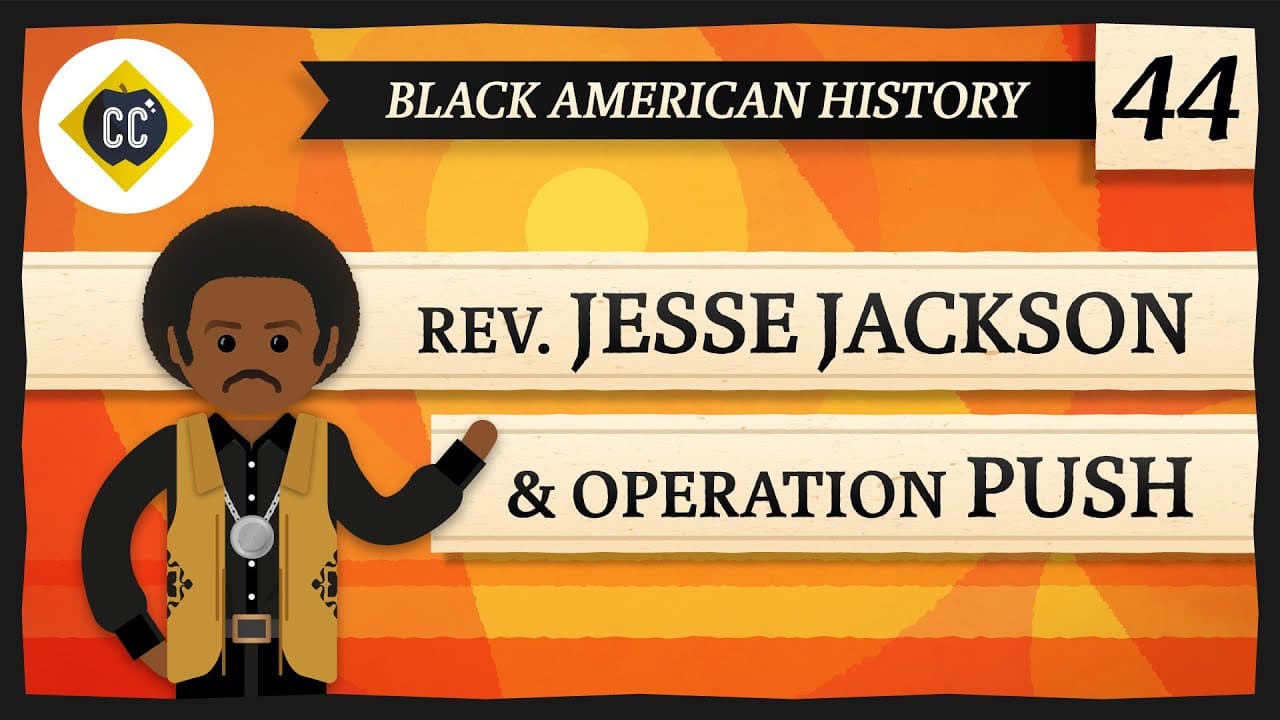
Jesse Jackson and the Rise of Operation PUSH

Jesse Jackson and the Rise of Operation PUSH

This episode of Crash Course Black American History explores the life and legacy of Reverend Jesse Jackson and the organization he founded, Operation PUSH (People United to Save Humanity). Hosted by Clint Smith, the video bridges the gap between the major Civil Rights victories of the 1960s and the economic and political struggles that followed in the 1970s and 80s. It details how the movement shifted from battling legal segregation to addressing economic disparities through grassroots organizing and political coalition building. The content provides a deep dive into the historical context surrounding the founding of PUSH, including the limitations of President Lyndon B. Johnson's "Great Society," the impact of "White Flight" on urban education, and the rise of Reaganomics in the 1980s. It traces Jackson's evolution from a young aide to Dr. Martin Luther King Jr. to a presidential candidate who championed the "Rainbow Coalition," a concept uniting diverse marginalized groups under a common banner of justice. For educators, this video is an invaluable resource for teaching the continuity of the Civil Rights movement beyond the 1960s. It offers clear explanations of complex economic policies, the strategy behind economic boycotts, and the importance of political rhetoric. It serves as an excellent tool for discussing the intersection of race, class, and politics in modern American history, helping students understand the roots of contemporary social activism.

CrashCourseCrashCourse

11mins 31s

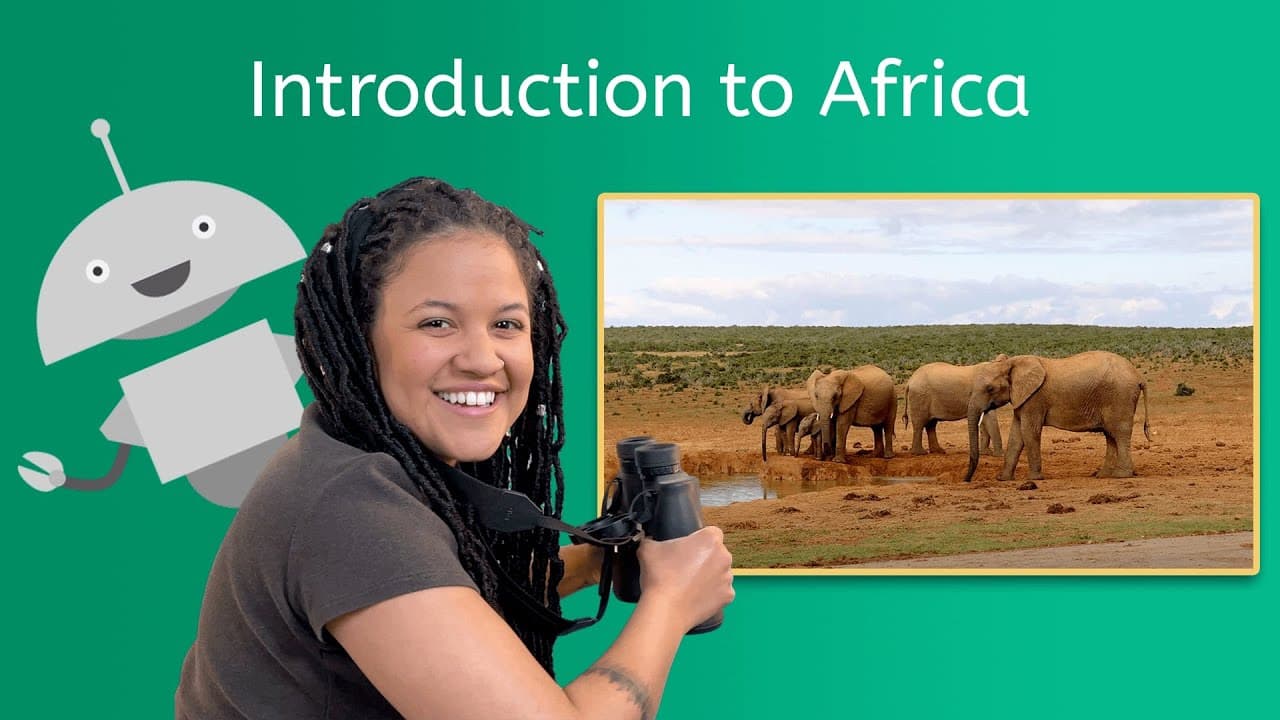
Exploring Africa: Geography, History, and Culture

Exploring Africa: Geography, History, and Culture

This comprehensive educational video provides a detailed overview of the African continent, structured into four main sections: physical characteristics, history, people and culture, and economic structures. Hosted by Taylor, the video begins with an engaging safari skit before diving into a structured lesson that uses maps, images, and statistics to paint a broad picture of the diverse continent. It covers major geographical features like the Sahara, the Nile, and the Great Rift Valley, while also addressing the rich history of civilizations from Ancient Egypt to the Kingdom of Mali. The narrative addresses complex topics such as the origins of humanity, the impact of the transatlantic slave trade, European colonization, and the challenges of modern independence. It connects historical events—like the drawing of colonial borders—to current issues such as political conflict and economic struggles. The video highlights the contrast between Africa's immense natural wealth in resources like gold and diamonds versus its economic challenges, including low GDP per capita and infrastructure issues. Ideally suited for middle and high school social studies classrooms, this resource serves as an excellent introduction to African geography and history. It encourages active learning by prompting students to use a physical map to locate features and engages critical thinking with questions about the legacy of colonialism and future economic prospects. Teachers can use this video to launch units on world geography, discuss the effects of imperialism, or analyze global economic disparities.
Miacademy & MiaPrep Learning ChannelMiacademy & MiaPrep Learning Channel

15mins 37s

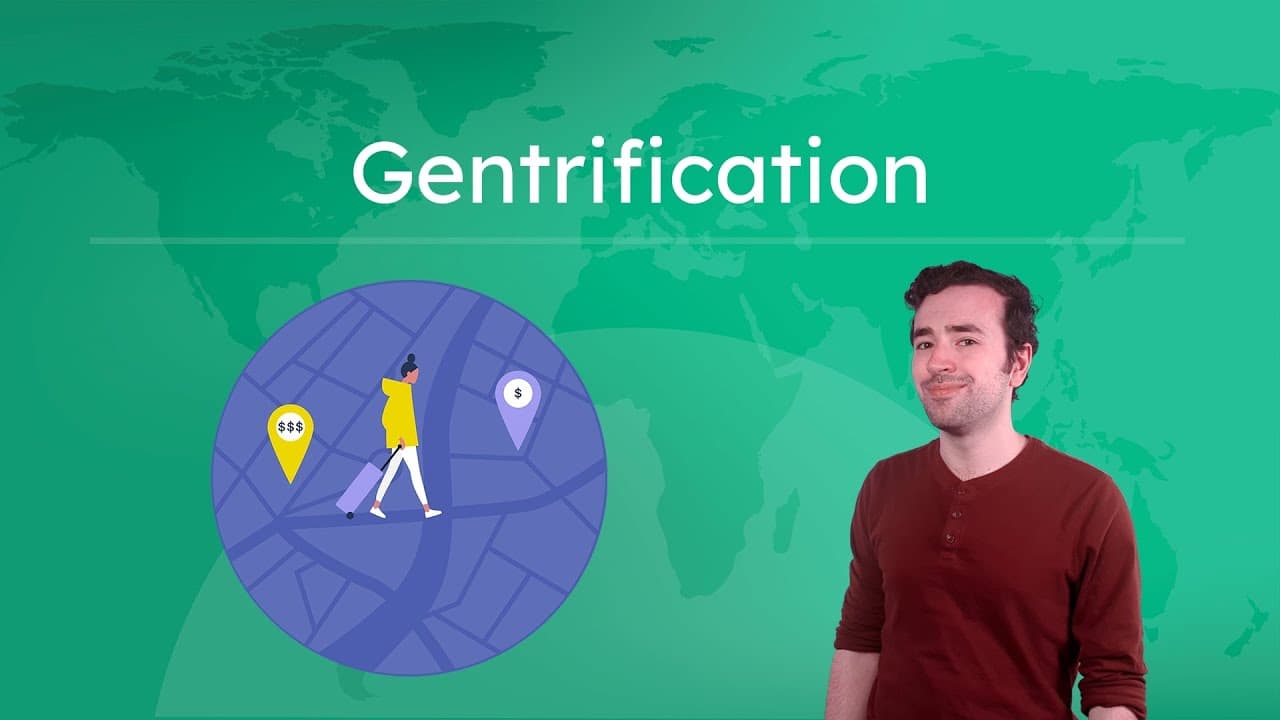
How Gentrification Reshapes Cities: A San Francisco Case Study

How Gentrification Reshapes Cities: A San Francisco Case Study

This educational video explores the complex process of gentrification through the lens of San Francisco's Mission District. Hosted by an "urban planner in training," the video defines key geographic and economic concepts such as urban revitalization, suburban reversal, and tertiary versus quaternary economic activities. It explains the mechanics of how low-income neighborhoods attract investment, leading to renovation and modernization, but also rising costs of living.

Miacademy & MiaPrep Learning ChannelMiacademy & MiaPrep Learning Channel

10mins 53s

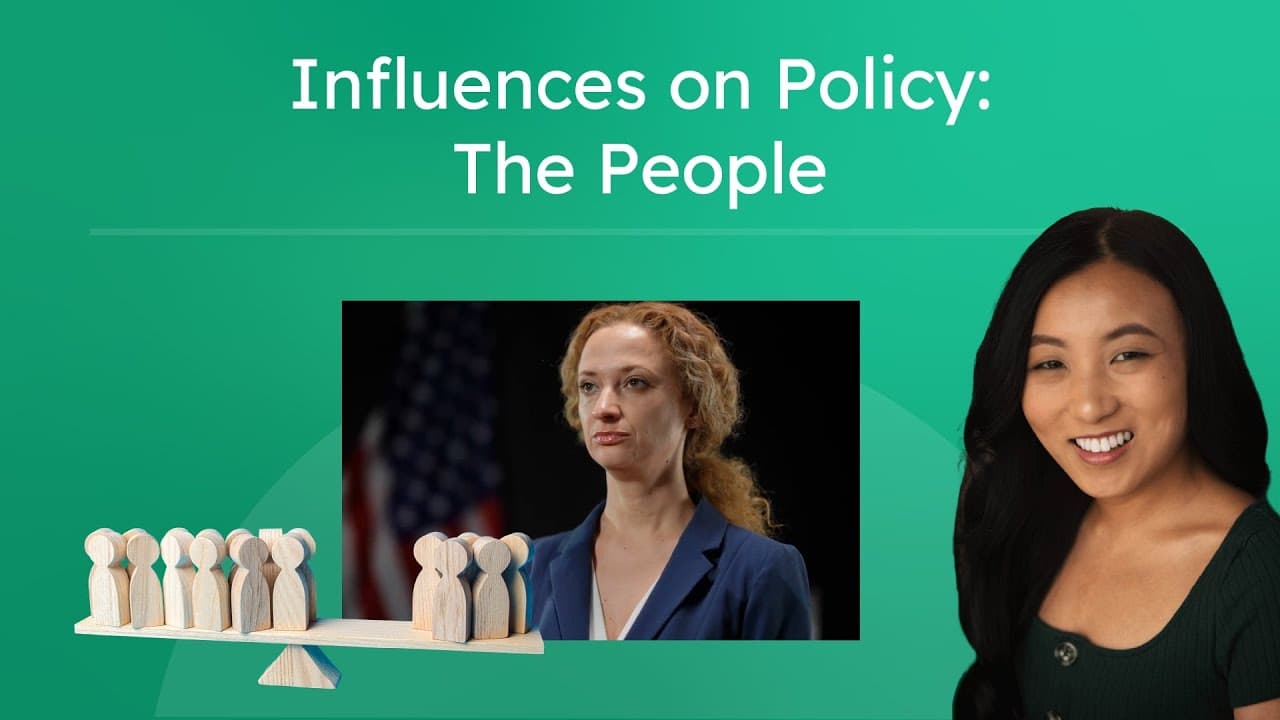
How Wealth and Public Opinion Shape Government Policy

How Wealth and Public Opinion Shape Government Policy

This educational video provides a critical analysis of how public opinion and wealth distribution influence government policy in the United States. It begins by defining public opinion and explaining its theoretical role in a representative democracy—guiding politicians to address the needs of their constituents. The video uses the example of healthcare reform to illustrate how public sentiment can lead to legislative action, while also acknowledging the complex reality of political maneuvering.

Miacademy & MiaPrep Learning ChannelMiacademy & MiaPrep Learning Channel

12mins 16s

Materials

History Inquiry Guided Worksheet

History Inquiry Guided Worksheet

3-page scaffolded student inquiry packet fully aligned to lesson objectives (why learn history, classroom procedures, and historical thinking skills) streamlined for native English students with clear procedural guides, stacked-traits analogies, and IDCV graphic organizers.

SP

Sheridan Pickett

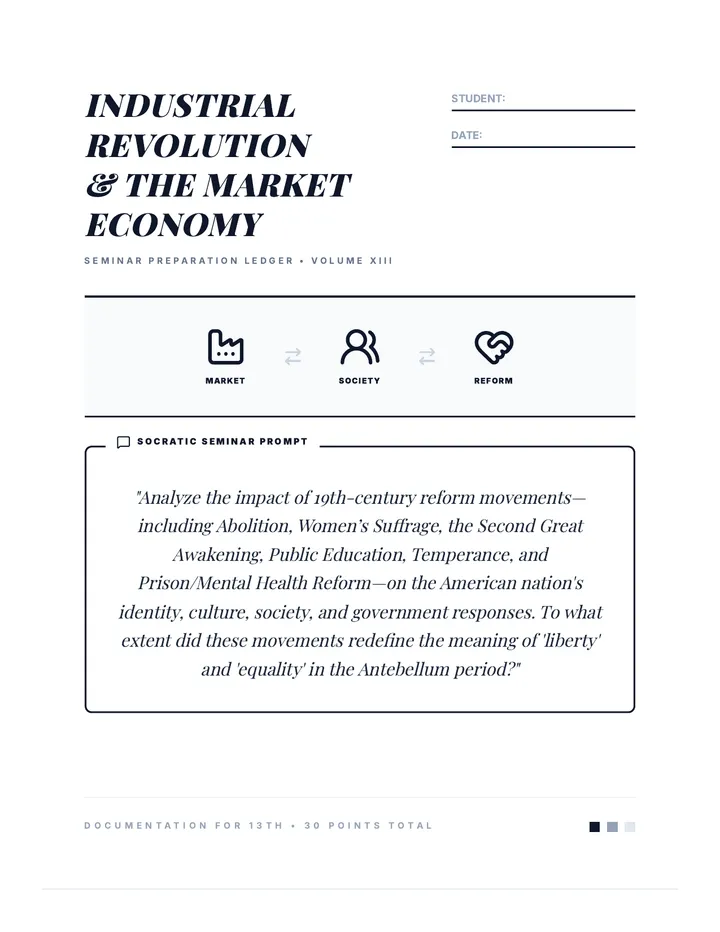
Market Economy Seminar Ledger

Market Economy Seminar Ledger

A detailed 5-page seminar preparation ledger for the Industrial Revolution and Market Economy lesson. Features a dedicated cover page with relevant historical icons and a prominent Socratic prompt, three separate article analysis pages, and a final synthesis evaluation. Writing lines are darkened for optimal print quality.

JG

Joshua Griffith

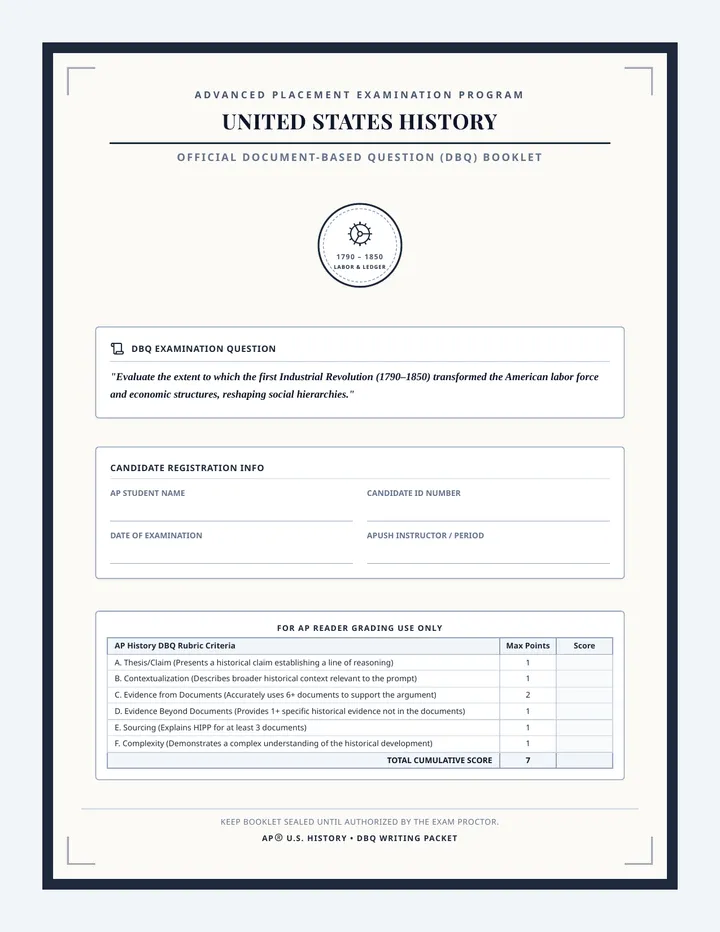
APUSH Blue Book DBQ Essay Booklet

APUSH Blue Book DBQ Essay Booklet

An authentic AP US History Blue Book styled essay booklet featuring a printer-friendly light-colored cover page and 5 pages of college-ruled writing paper for print or digital completion.

JG

Joshua Griffith

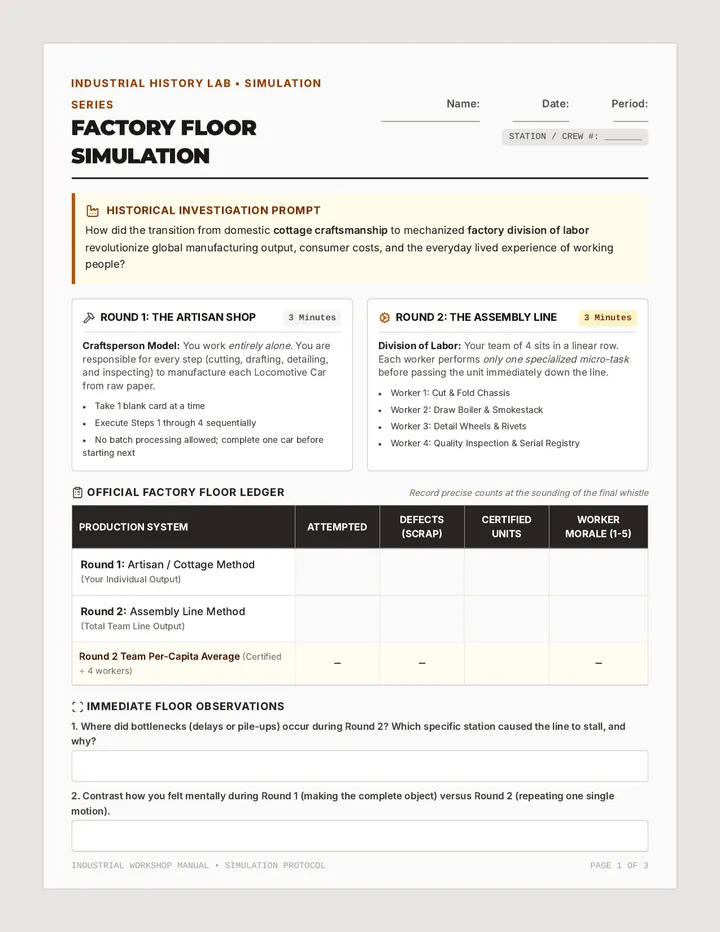
Factory Floor Simulation Activity

Factory Floor Simulation Activity

A comprehensive Industrial Revolution assembly line simulation featuring comparative production ledgers, standardized blueprint manufacturing specs, station role protocols, and historical debrief analysis.

TL

Tricia Lucie

Historical Crossroads Inquiry Worksheet

Historical Crossroads Inquiry Worksheet

A two-page historical inquiry investigation dossier for students exploring a significant local event and its multifaceted community consequences, featuring source evaluation, a consequence matrix, and a modern legacy synthesis.

AV

Andrew Vandenberg

Southern Reconstruction Lecture Slides

Southern Reconstruction Lecture Slides

A comprehensive high school US History lecture slide deck analyzing how the southern economy and society transformed after the Civil War, covering devastation, labor shifts, sharecropping, constitutional amendments, racial backlash, and the Compromise of 1877.

LS

LeVar St Germain

Sequences

Reconstruction Reckoning Worksheet

Modern America

A comprehensive journey through United States history from the aftermath of the Civil War to the contemporary era, exploring the social, political, and economic shifts that shaped the modern nation.

DP

Darren Polamalu

18
Mobilization Intro Slides

Global Conflict WWII

A comprehensive 2-day unit covering World War II for 11th Grade US History, aligned with TEKS. It focuses on the transition from isolationism to total war, the home front experience, major turning points in both the European and Pacific theaters, and the strategic decisions that ended the conflict.

BB

Bridgette Burdick

17
Era of Crisis Study Guide

Superpowers and Scandals

A comprehensive unit covering United States history from 1960 to 1980, focusing on the Cold War, domestic policy, and political scandals.

AH

Ashley Hopf

5
Blueprint Curriculum Syllabus

Social Brain Blueprint

A comprehensive 5-part curriculum exploring social neuroscience through a macro social work lens, focusing on systemic change, practitioner wellbeing, and collective action.

DE

Dr. Erick Clinton Lear

16
Funding Foundation Checklist

Ethics Engine

A 5-week immersive ethics storyline following the evolution of a single nonprofit organization as it navigates a massive corporate grant, data ethics, policy clashes, and eventual sustainability crises.

DE

Dr. Erick Clinton Lear

11
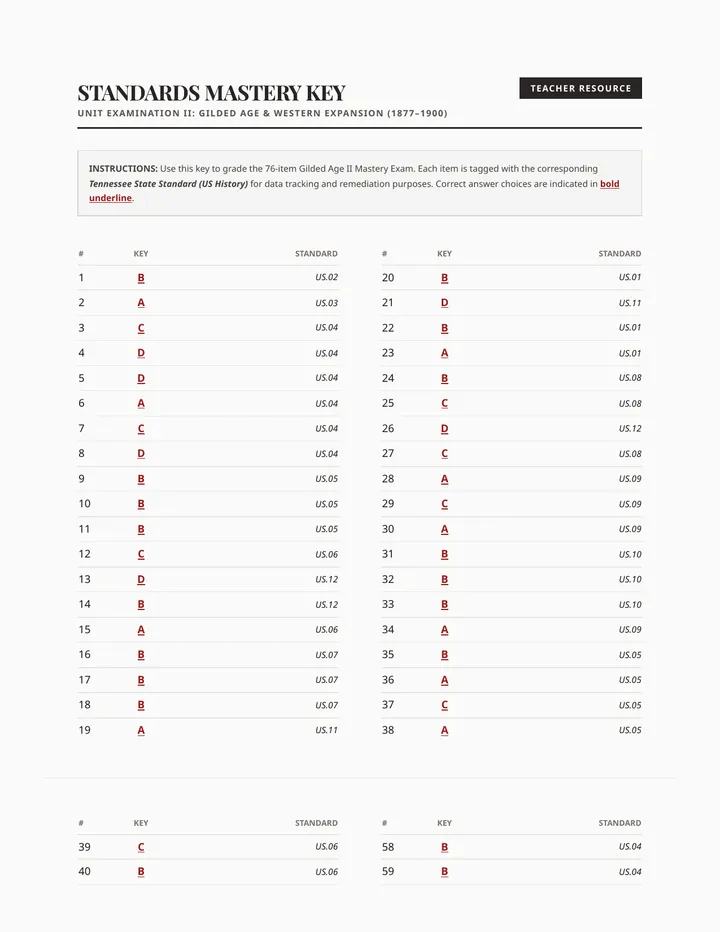
Gilded Age II Standards Key

Modern America Mastery

A comprehensive curriculum sequence covering late 19th and early 20th-century American history, focusing on economic transformation, Western expansion, global imperialism, and the impact of the Great War.

A

Andrew

29

Lessons

History Sprint Pacing Guide

STAAR History Sprint

A comprehensive pacing guide and activity resource designed to cover the remaining 11th Grade US History TEKS before the STAAR test on April 16th. This lesson provides a day-by-day calendar for A/B block schedules and high-engagement activities for each remaining historical era.

BB

Bridgette Burdick

51
Border Lines Activity

Harriet Tubman Escape

A lesson exploring Harriet Tubman's 1850 escape and the significance of the Mason-Dixon Line as a geographical and legal boundary in the pre-Civil War United States.

TL

Tanya Larson

46
Modern Era Reader Part 1

The Modern Ledger

A comprehensive exploration of the 1990s through the modern day, covering technological shifts, political milestones, military conflicts, and cultural evolution in the United States.

CE

Chelsea Elliott

20
Asia Expedition Task Cards Resource

Asia Expedition Stations

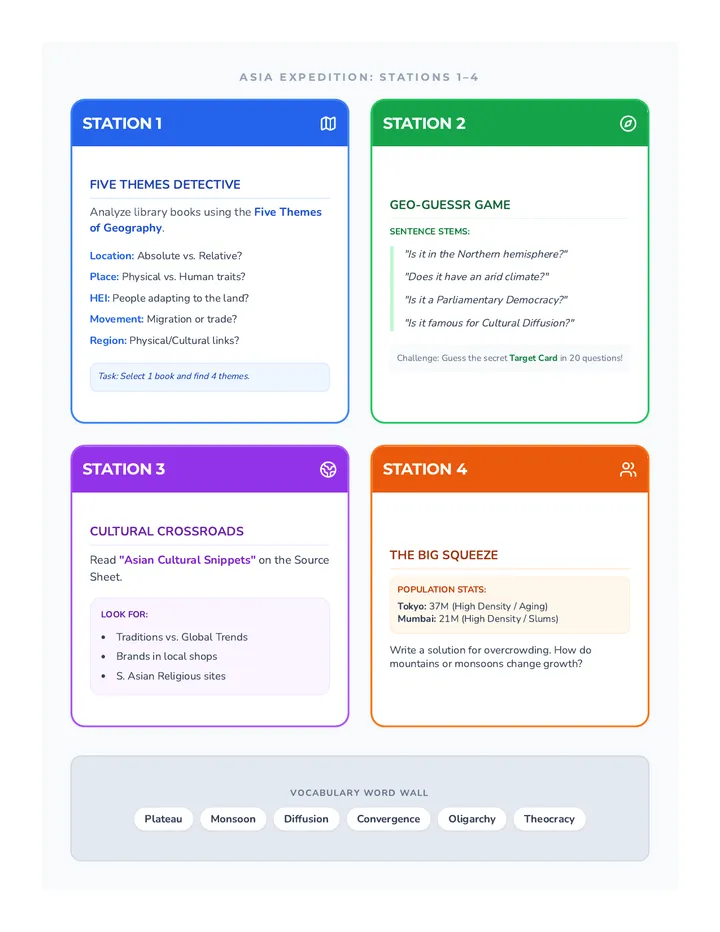
A set of five interactive learning stations focused on the physical and cultural geography of Asia, including population challenges, globalization, and natural disasters. Students practice reading, writing, listening, and speaking skills while analyzing the five themes of geography.

JR

Jessica Ross

4
Latin American Ledger Reading

The Latin American Ledger Project

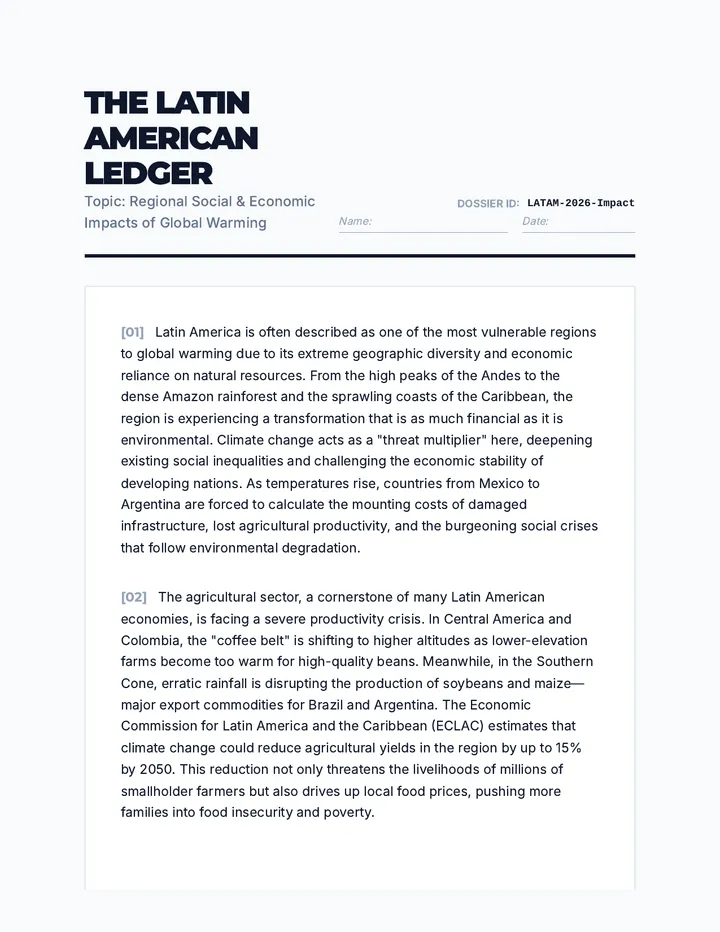
A regional investigation into the social and economic consequences of global warming in Latin America, focusing on human displacement, glacial melt in the Andes, and agricultural shifts. Students analyze a detailed text and construct a Claim-Evidence-Reasoning (CER) argument.

GJ

Gerardo Jimenez Ramirez

10
Mission Briefing Teacher Guide

Modern Era Missions

A 100-minute station-based lesson covering pivotal events from the 1970s to the modern era, including Stagflation, the Camp David Accords, Reaganomics, and the War on Terror. Students rotate through four 20-minute missions using primary sources, political cartoons, data mapping, and manipulatives to master STAAR-aligned content.

LF

Lindsey Foulks

9