Lenny.com
Explore
Create
ActivitiesNewMathEnglish Language ArtsScience & EngineeringSocial StudiesGlobal LanguagesHealth & Physical EducationSpecial EducationCounseling & Life SkillsArts & CreativityESL
Lenny.com
Lenny.com
Explore
Create
ActivitiesNewMathEnglish Language ArtsScience & EngineeringSocial StudiesGlobal LanguagesHealth & Physical EducationSpecial EducationCounseling & Life SkillsArts & CreativityESL
Lenny.com
Lenny.com

Solutions

Lenny for EducatorsLenny for SchoolsLenny for Districts

Product

ExploreSign inCreateSupportAbout

Resources

Getting startedMTSS Acceleration Program

© 2026 Lenny Learning Inc.

TermsPrivacyAccessibility
LinkedInInstagramX
Lenny
Social StudiesSocial Studies PracticesLocation WordsMapsOrder EventsChronology and CausationEvaluating SourcesHistorical ThinkingGeography, Humans, & the EnvironmentAmerican Symbols and LandmarksCitiesStatesState CapitalsRegions of the United StatesGeographic SkillsPhysical GeographyHuman GeographyRegional GeographyGeography of AfricaGeography of AsiaGeography of EuropeGeography of OceaniaGeography of the AmericasSociety and Environment of EuropeSociety and Environment of AsiaSociety and Environment of The AmericasSociety and Environment of the Middle EastSociety and Environment of AfricaHistoryPrehistoryComparing Ancient River CivilizationsAncient MesopotamiaAncient Egypt and KushAncient South AsiaEarly ChinaGreeceRome and the Byzantine EmpireAncient World HistoryNative Peoples of North AmericaNative Peoples of Mesoamerica and South AmericaAfrican EmpiresMedieval AsiaMedieval EuropeThe Silk RoadMedieval HistoryIslamic EmpiresWorld ReligionsRenaissance PeriodAge of ExplorationThe Thirteen ColoniesThe American RevolutionUS History Early RepublicFounding of the United StatesUS History AntebellumUS Civil WarReconstruction PeriodThe Gilded AgeUS ImperialismWorld ImperialismWorld War IUS History 1920sGreat DepressionWorld War IIThe Cold WarUS History 1950-60sUS History 1960s-70sWorld History 20th CenturyContemporary US HistoryContemporary World HistoryHolidaysCivics and GovernmentCitizenshipGovernment FoundationsThe ConstitutionUS ConstitutionExecutive BranchLegislative BranchJudicial BranchState and LocalPolitical ParticipationPublic PolicyPolitical SystemsPower and AuthoritySocial MovementsDefining DevianceTheories of DevianceCrime and Criminal JusticeEconomicsBasic Economic PrinciplesSupply and DemandWhat is MoneyEconomic FundamentalsMicroeconomicsMacroeconomicsBanking and FinanceEconomic SystemsGlobal EconomicsCorporations and PowerThe Changing WorkplaceUnemployment and LaborClass and InequalitySocial MobilityGlobal InequalityPsychologyHistory of PsychologyPsychology as a ScienceBrain and Nervous SystemNeuroscience and BehaviorGenetics and BehaviorSleep and ConsciousnessSensory ProcessesPerceptual OrganizationClassical ConditioningOperant ConditioningObservational LearningCognitive LearningMemory ProcessesThinking and Problem SolvingLanguage and CognitionTheories of MotivationStress and CopingPrenatal and Infant DevelopmentChildhood DevelopmentAdolescent DevelopmentAdulthood and AgingSelf and IdentitySocial CognitionSocial InfluenceAttraction and RelationshipsGroup BehaviorPrejudice and DiscriminationAnxiety and Mood DisordersClinical PsychologyForensic PsychologyPhilosophy & EthicsIntroduction to PhilosophyMajor Philosophers & IdeasMind and Body ProblemFree Will vs DeterminismEthics & MoralityReligion & PhilosophyPolitical Philosophy

Superpowers and Scandals

A comprehensive unit covering United States history from 1960 to 1980, focusing on the Cold War, domestic policy, and political scandals.

AHAshley Hopf
Unit Wrap Up Assessment

The final assessment and preparation materials for the unit on 1960-1980 US History.

Superpowers and Scandals

A comprehensive unit covering United States history from 1960 to 1980, focusing on the Cold War, domestic policy, and political scandals.

AHAshley Hopf

10. Richard Nixon resigned from office before he could be officially impeached by the House.

11. The SALT I treaty focused on reducing trade barriers between the US and China.

Part III: Short Answer (10 pts each)

12. Explain how the Apollo 11 moon landing served as both a scientific achievement and a Cold War victory.

Part IV: Document-Based Questions (20 pts)

Document A: Excerpt from United States v. Nixon (1974)

"The generalized assertion of [executive] privilege must yield to the demonstrated, specific need for evidence in a pending criminal trial... When the ground for asserting privilege as to subpoenaed materials sought for use in a criminal trial is based only on the generalized interest in confidentiality, it cannot prevail over the fundamental demands of due process of law in the fair administration of criminal justice."

13. According to Document A, why did the court rule against President Nixon's claim of executive privilege?

14. How did the decision in United States v. Nixon reinforce the constitutional principle of "Rule of Law"?

15. Analysis: Analyze how the Watergate Scandal impacted the public's trust in the federal government during the 1970s.

THE ENERGY CRISIS (1973): OPEC's oil embargo showed US vulnerability.


The Watergate Scandal

Standard USH.7.9

A break-in at the DNC headquarters led to a massive constitutional crisis.

US v. Nixon (1974)

The Supreme Court ruled that Executive Privilege is NOT absolute. The President must obey the law.

The Outcome

  • Richard Nixon resigns (1974).
  • Public trust at all-time low.
  • War Powers Act (checks).

"Our long national nightmare is over."

— Gerald Ford


Unit Review Map

Cold War

Tension & Détente

Social Change

Great Society & Courts

Tech Power

Moon & Medicine

Political Crisis

Watergate Impact

Nixon claimed Executive ____________________ to keep his oval office tapes secret. SCOTUS ruled that no person is above the ____________________.

Key Result: On August 9, 1974, Richard Nixon became the first US President to ____________________ from office.

VI. Science, Tech, and Society

Space Race

The 1969 ________________ landing proved US technological power during the Cold War.

Medicine

Advancements like the __________________________ significantly changed the social and economic roles of women.

Agent Reflection Task

How did the events of 1960–1980 change the way Americans viewed the power and trustworthiness of the Federal Government?

You might also like

Business Blueprint Slides

Market Makers

A hands-on introductory curriculum that equips students with foundational business acumen and marketing savvy through practical entrepreneurial challenges, financial basics, and campaign design.

D

despinoza

9
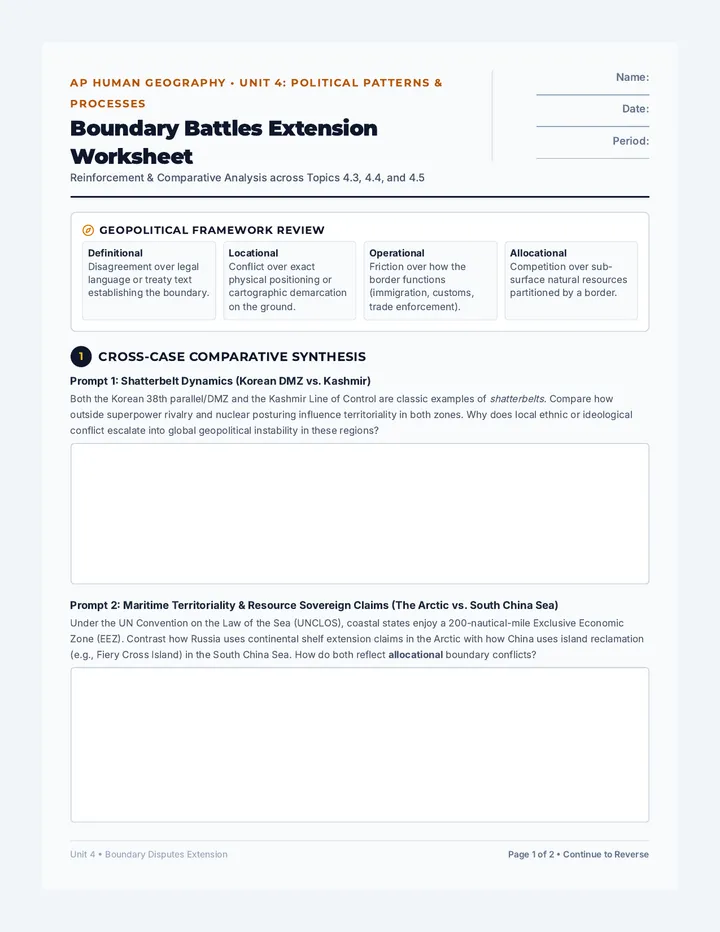
Boundary Battles Extension Worksheet

Border Battles

An advanced AP Human Geography lesson analyzing the nature, functions, and conflicts surrounding international boundaries, territoriality, choke points, and shatterbelts through global case studies.

CM

Casey Moriarty

3
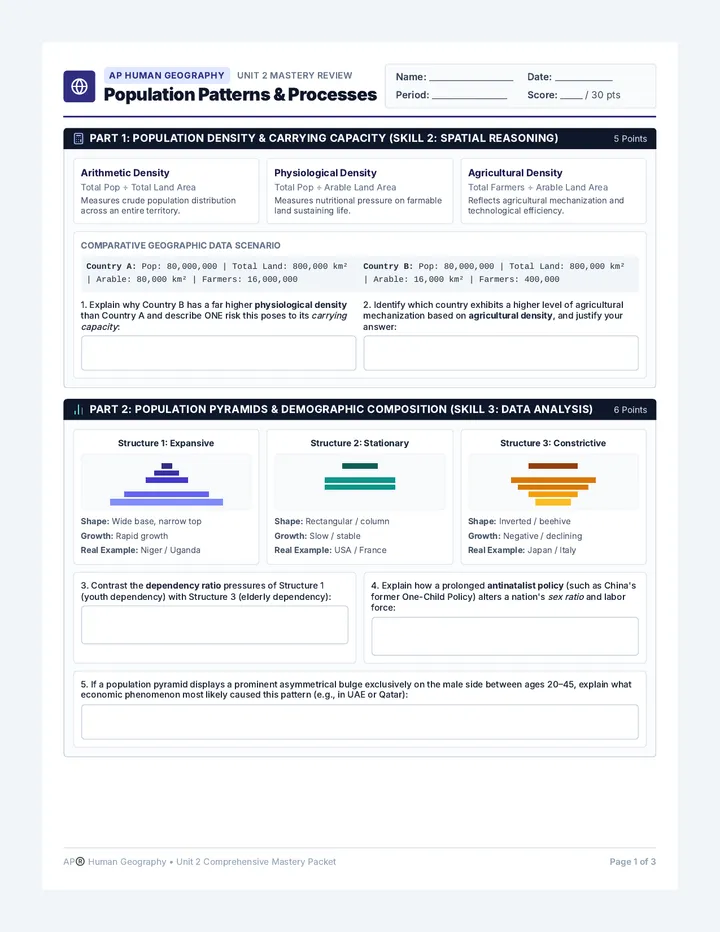
Population Patterns Review Sheet

Population Patterns Review Sheet

A comprehensive 3-page AP Human Geography Unit 2 review practice sheet covering population density metrics, population pyramids, the Demographic and Epidemiologic Transition Models, population theories, migration models, and AP exam-style stimulus data analysis.

AE

Alexander Eichhorn

Store Master Syllabus Guide

Campus Store Launchpad

An eight-week experiential introduction to marketing centered around operating and scaling a campus retail store. Students master brand positioning, assortment strategy, pricing mechanics, visual merchandising, and sales analytics through authentic store management.

D

despinoza

8
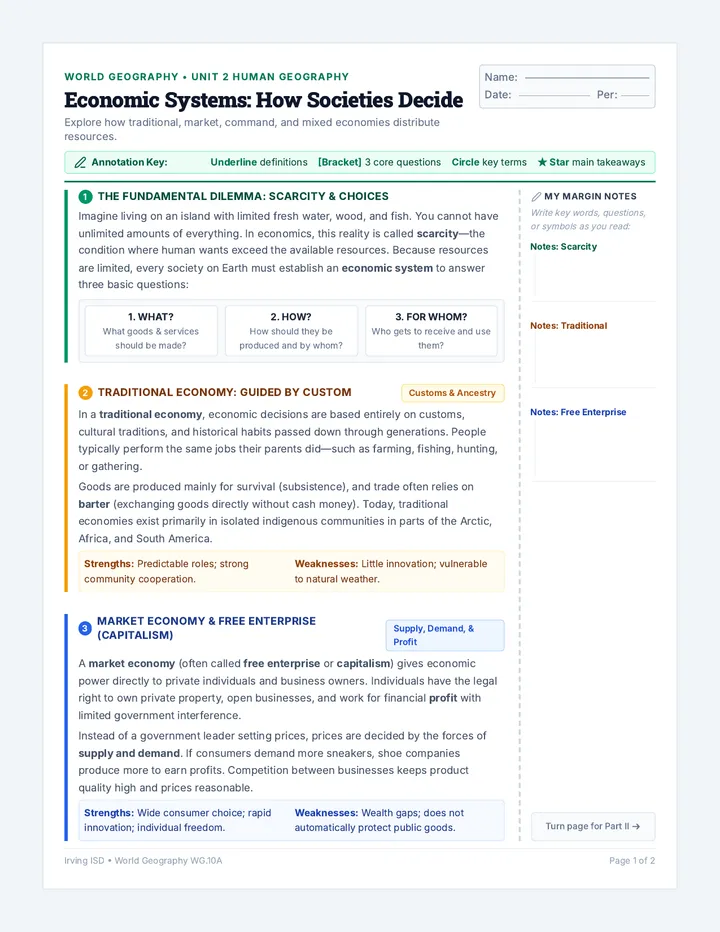
Economic Systems Student Reader

Economic Engines

A comprehensive high school World Geography lesson examining how traditional, market, command, and socialist/communist economic systems distribute goods and services.

JD

Jaiden Dawn Kennedy

4
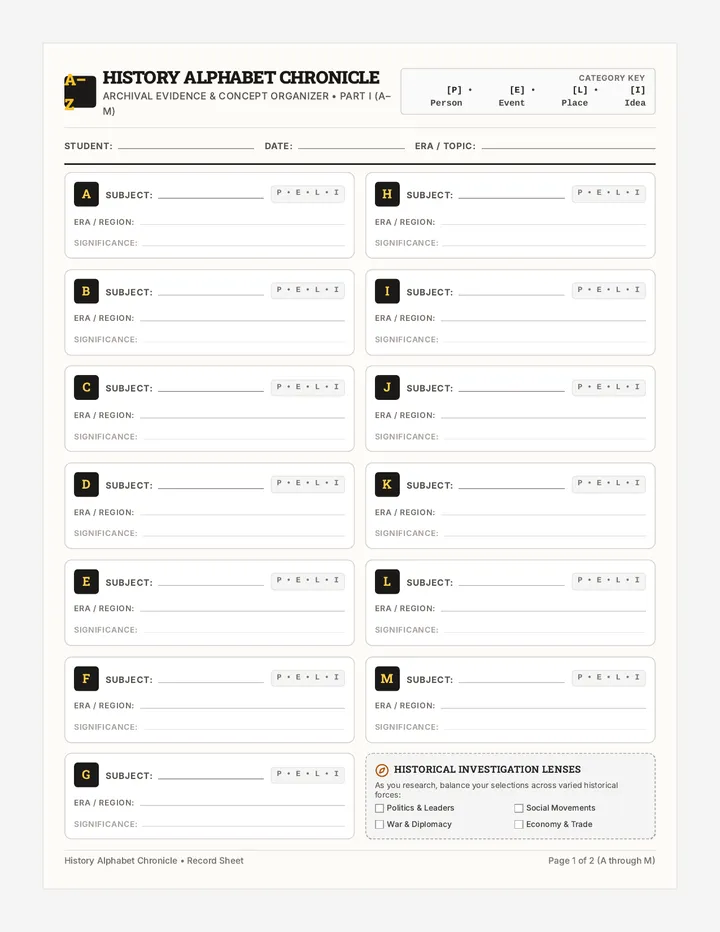
History Alphabet Organizer

History Alphabet Organizer

A comprehensive two-page printable A–Z historical graphic organizer designed for U.S. or World History. Students document historical figures, events, locations, and ideas across every letter of the alphabet, complete with categorization tags, historical context fields, ruled significance lines, and a synthesis challenge.

L

lialiano

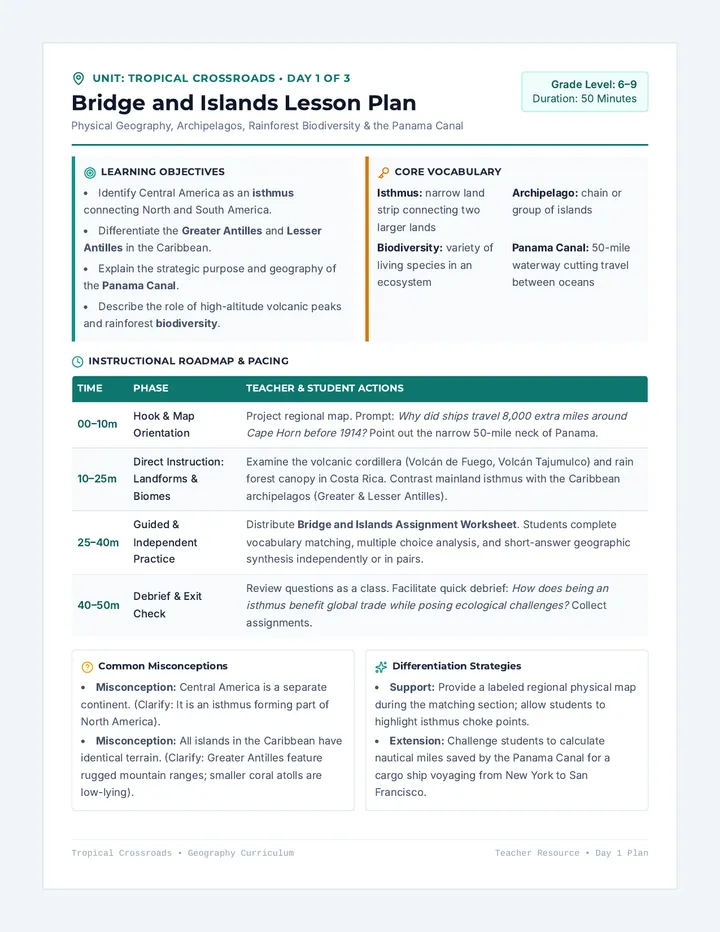
Bridge and Islands Lesson Plan

Tropical Crossroads

A comprehensive 3-day middle/high school geography unit examining Central America and the Caribbean, covering physical geography, natural hazards, and human-environment interactions.

D

dcampbell

9
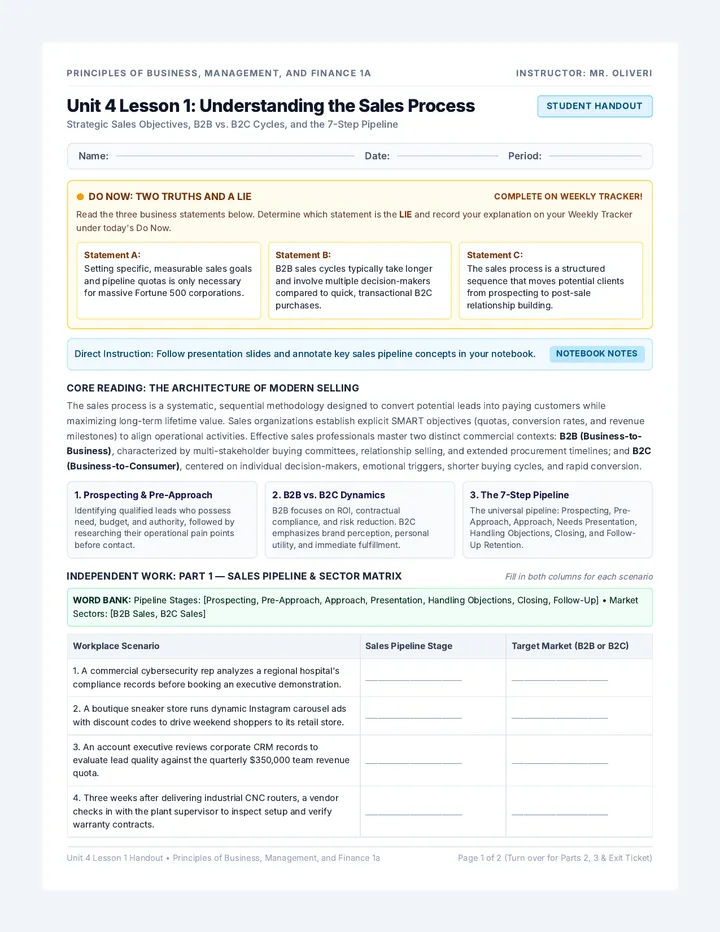
Sales Mechanics Student Packet

Money Mechanics

A five-lesson instructional unit on the mechanics of making money, covering the sales pipeline, customer discovery, objection handling, closing methodologies, and strategic pricing in business management.

TO

Thomas Oliveri

2
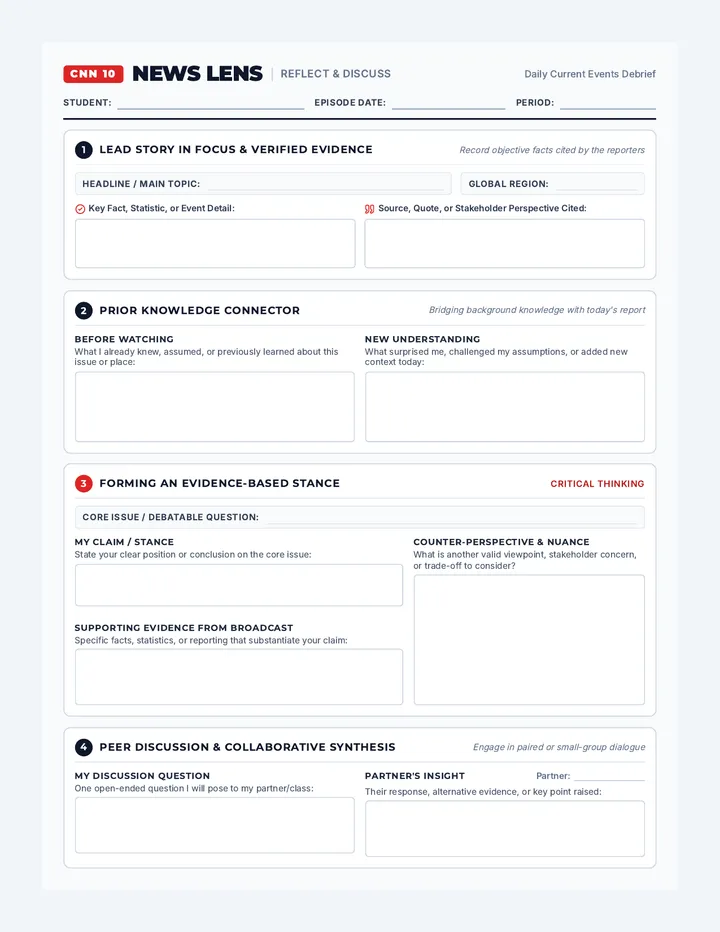
News Lens Graphic Organizer

News Lens Graphic Organizer

A print-ready CNN 10 graphic organizer that guides students to connect daily broadcast stories to their prior knowledge, synthesize reported evidence, articulate an evidence-based opinion, and prepare for peer discussion.

L

lialiano

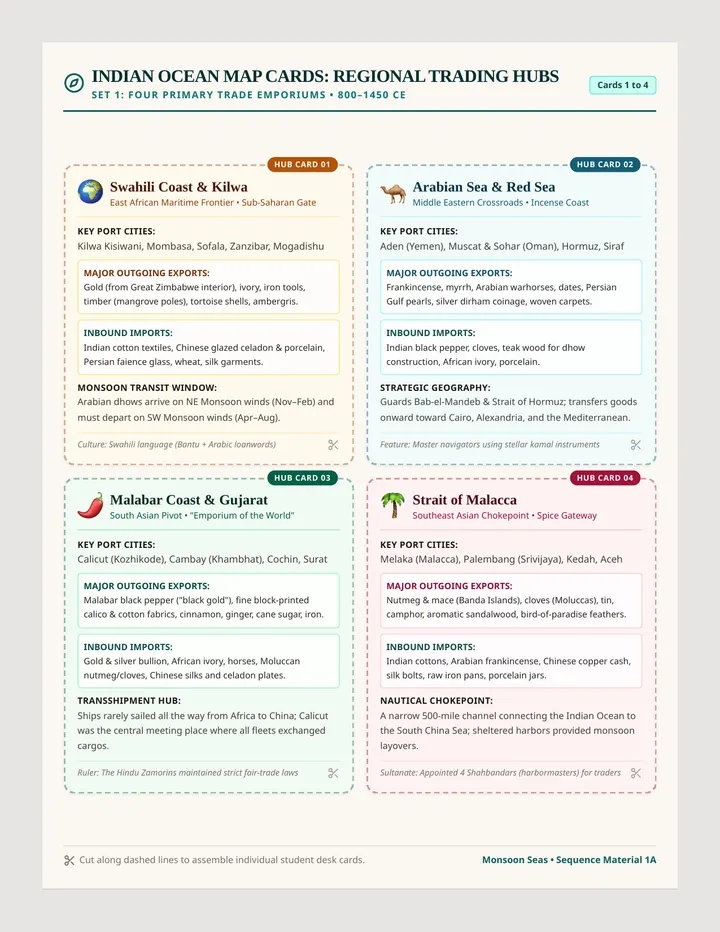
Monsoon Seas Map Cards

Monsoon Seas

A multi-day inquiry sequence investigating the ancient and medieval Indian Ocean maritime trade network linking East Africa, the Arabian Peninsula, India, and Southeast Asia. Students analyze physical geography, seasonal monsoon winds, commercial commodities, and cross-cultural diffusion.

Lenny Avatar
Lenny
4
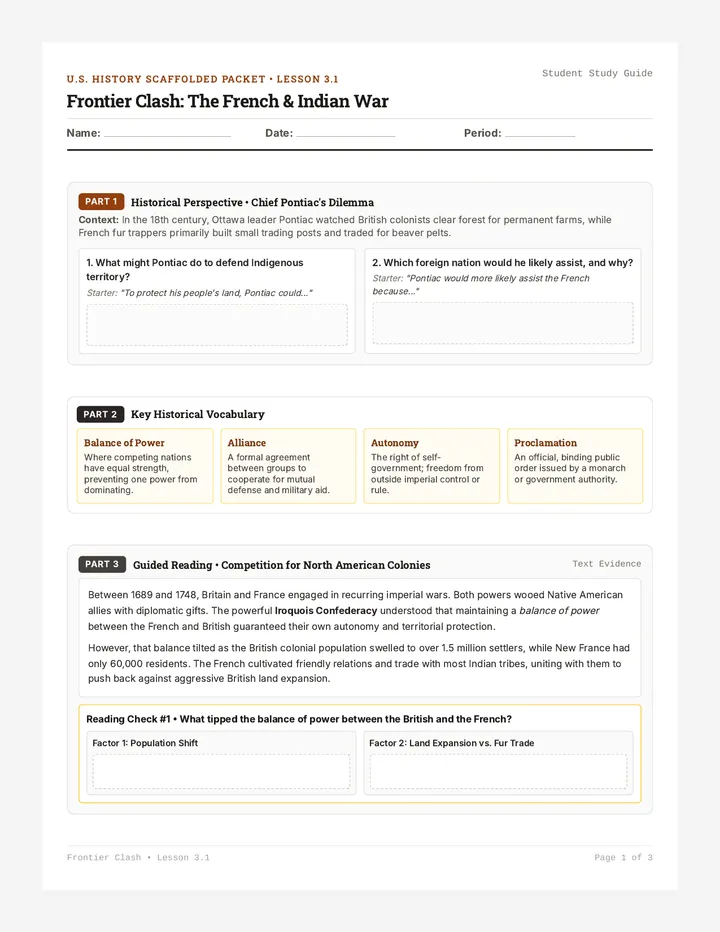
Frontier Clash Scaffolded Worksheet

Frontier Clash

A scaffolded high school history lesson examining the causes, major turning points, and aftermath of the French and Indian War. Students analyze geopolitical rivalries, Native American alliances, Pontiac's Rebellion, and the seeds of colonial tension that followed the Treaty of Paris.

SH

Stacey Hersch

2
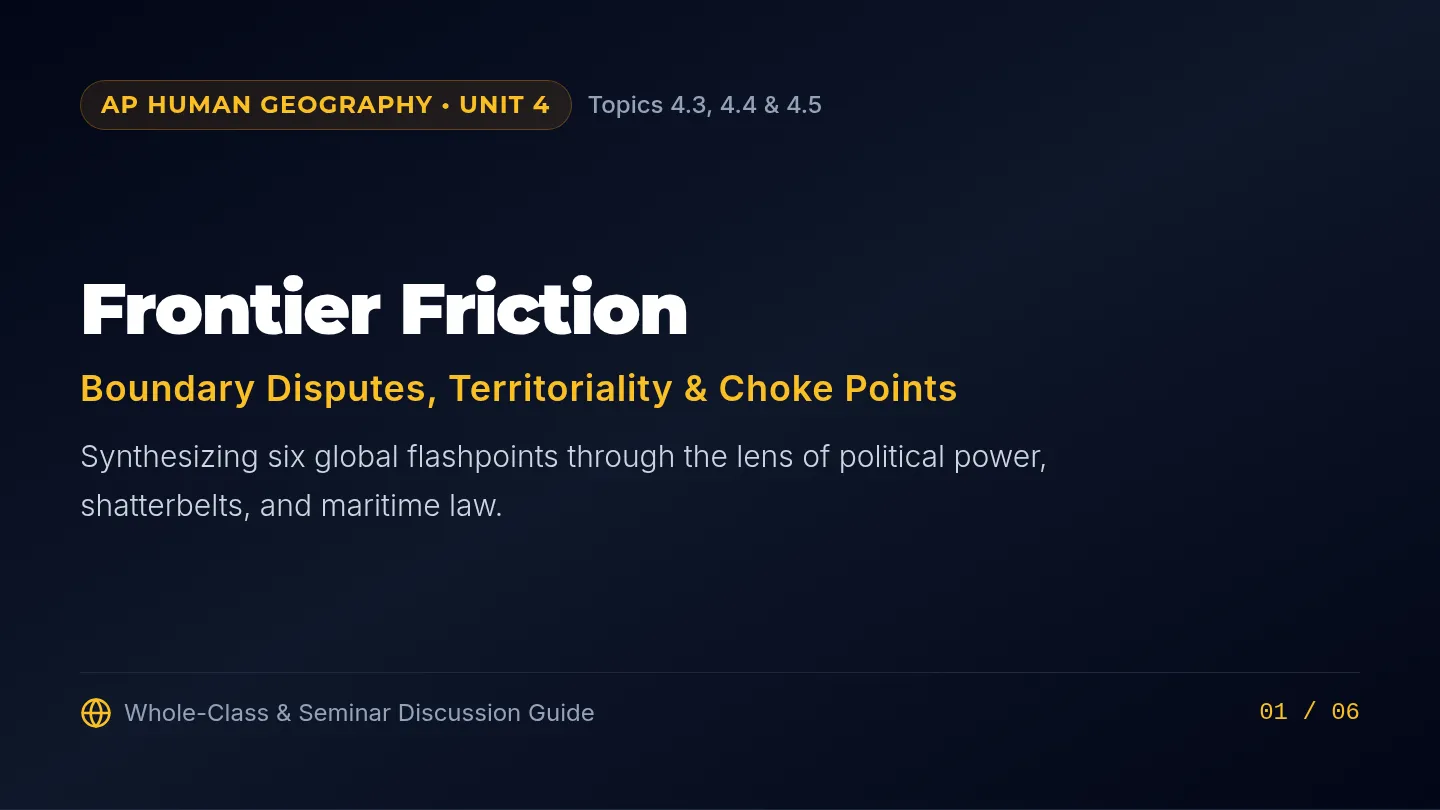
Frontier Friction Discussion Slides

Frontier Friction Discussion Slides

A high-impact six-slide presentation providing visual prompts, inquiry frameworks, and debate questions for whole-class and small-group geopolitical discussions.

CM

Casey Moriarty