Lenny.com
Explore
Create
ActivitiesNewMathEnglish Language ArtsScience & EngineeringSocial StudiesGlobal LanguagesHealth & Physical EducationSpecial EducationCounseling & Life SkillsArts & CreativityESL
Lenny.com
Lenny.com
Explore
Create
ActivitiesNewMathEnglish Language ArtsScience & EngineeringSocial StudiesGlobal LanguagesHealth & Physical EducationSpecial EducationCounseling & Life SkillsArts & CreativityESL
Lenny.com
Lenny.com

Solutions

Lenny for EducatorsLenny for SchoolsLenny for Districts

Product

ExploreSign inCreateSupportAbout

Resources

Getting startedMTSS Acceleration Program

© 2026 Lenny Learning Inc.

TermsPrivacyAccessibility
LinkedInInstagramX
Lenny

Ancient Egypt and Kush

Nile River civilizations, pharaohs, and pyramid construction. Examines the cultural exchange, trade networks, and military conflicts between the Egyptian and Kushite empires.

Social StudiesSocial Studies PracticesLocation WordsMapsOrder EventsChronology and CausationEvaluating SourcesHistorical ThinkingGeography, Humans, & the EnvironmentAmerican Symbols and LandmarksCitiesStatesState CapitalsRegions of the United StatesGeographic SkillsPhysical GeographyHuman GeographyRegional GeographyGeography of AfricaGeography of AsiaGeography of EuropeGeography of OceaniaGeography of the AmericasSociety and Environment of EuropeSociety and Environment of AsiaSociety and Environment of The AmericasSociety and Environment of the Middle EastSociety and Environment of AfricaHistoryPrehistoryComparing Ancient River CivilizationsAncient MesopotamiaAncient Egypt and KushAncient South AsiaEarly ChinaGreeceRome and the Byzantine EmpireAncient World HistoryNative Peoples of North AmericaNative Peoples of Mesoamerica and South AmericaAfrican EmpiresMedieval AsiaMedieval EuropeThe Silk RoadMedieval HistoryIslamic EmpiresWorld ReligionsRenaissance PeriodAge of ExplorationThe Thirteen ColoniesThe American RevolutionUS History Early RepublicFounding of the United StatesUS History AntebellumUS Civil WarReconstruction PeriodThe Gilded AgeUS ImperialismWorld ImperialismWorld War IUS History 1920sGreat DepressionWorld War IIThe Cold WarUS History 1950-60sUS History 1960s-70sWorld History 20th CenturyContemporary US HistoryContemporary World HistoryHolidaysCivics and GovernmentCitizenshipGovernment FoundationsThe ConstitutionUS ConstitutionExecutive BranchLegislative BranchJudicial BranchState and LocalPolitical ParticipationPublic PolicyPolitical SystemsPower and AuthoritySocial MovementsDefining DevianceTheories of DevianceCrime and Criminal JusticeEconomicsBasic Economic PrinciplesSupply and DemandWhat is MoneyEconomic FundamentalsMicroeconomicsMacroeconomicsBanking and FinanceEconomic SystemsGlobal EconomicsCorporations and PowerThe Changing WorkplaceUnemployment and LaborClass and InequalitySocial MobilityGlobal InequalityPsychologyHistory of PsychologyPsychology as a ScienceBrain and Nervous SystemNeuroscience and BehaviorGenetics and BehaviorSleep and ConsciousnessSensory ProcessesPerceptual OrganizationClassical ConditioningOperant ConditioningObservational LearningCognitive LearningMemory ProcessesThinking and Problem SolvingLanguage and CognitionTheories of MotivationStress and CopingPrenatal and Infant DevelopmentChildhood DevelopmentAdolescent DevelopmentAdulthood and AgingSelf and IdentitySocial CognitionSocial InfluenceAttraction and RelationshipsGroup BehaviorPrejudice and DiscriminationAnxiety and Mood DisordersClinical PsychologyForensic PsychologyPhilosophy & EthicsIntroduction to PhilosophyMajor Philosophers & IdeasMind and Body ProblemFree Will vs DeterminismEthics & MoralityReligion & PhilosophyPolitical Philosophy

Videos

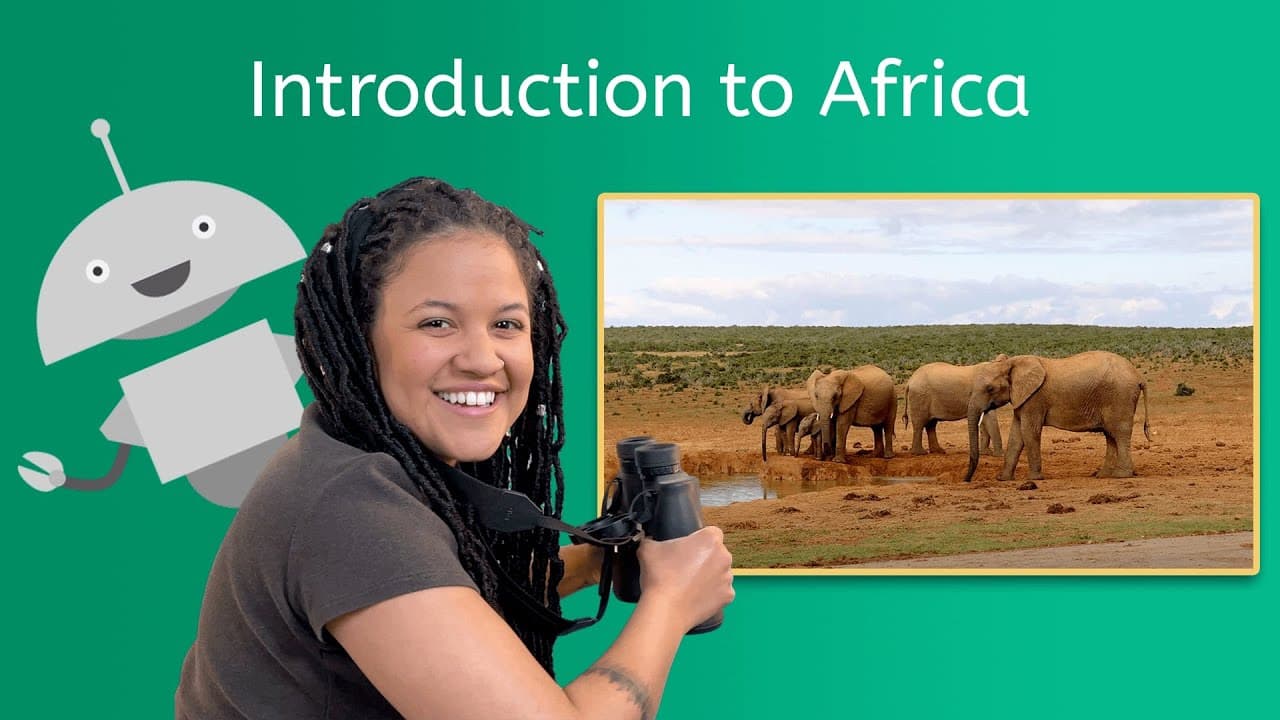
Exploring Africa: Geography, History, and Culture

Exploring Africa: Geography, History, and Culture

This comprehensive educational video provides a detailed overview of the African continent, structured into four main sections: physical characteristics, history, people and culture, and economic structures. Hosted by Taylor, the video begins with an engaging safari skit before diving into a structured lesson that uses maps, images, and statistics to paint a broad picture of the diverse continent. It covers major geographical features like the Sahara, the Nile, and the Great Rift Valley, while also addressing the rich history of civilizations from Ancient Egypt to the Kingdom of Mali. The narrative addresses complex topics such as the origins of humanity, the impact of the transatlantic slave trade, European colonization, and the challenges of modern independence. It connects historical events—like the drawing of colonial borders—to current issues such as political conflict and economic struggles. The video highlights the contrast between Africa's immense natural wealth in resources like gold and diamonds versus its economic challenges, including low GDP per capita and infrastructure issues. Ideally suited for middle and high school social studies classrooms, this resource serves as an excellent introduction to African geography and history. It encourages active learning by prompting students to use a physical map to locate features and engages critical thinking with questions about the legacy of colonialism and future economic prospects. Teachers can use this video to launch units on world geography, discuss the effects of imperialism, or analyze global economic disparities.

Miacademy & MiaPrep Learning ChannelMiacademy & MiaPrep Learning Channel

15mins 37s

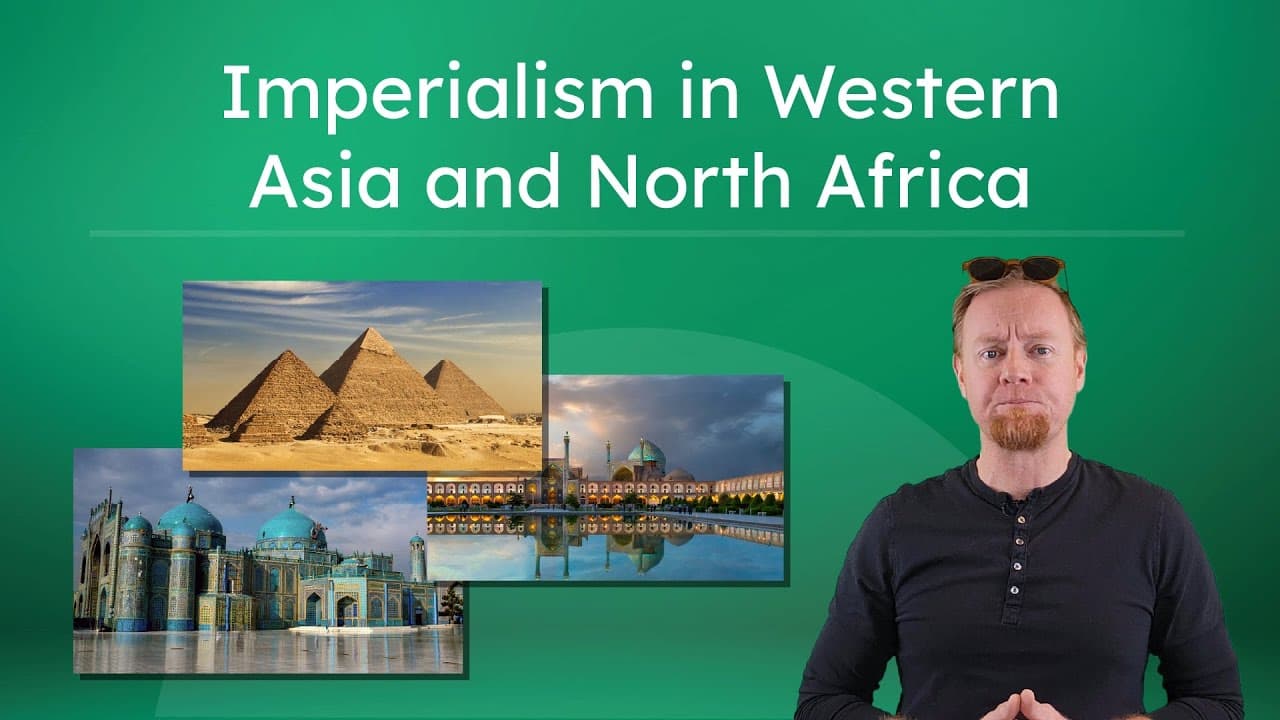
Imperialism in Western Asia and North Africa

Imperialism in Western Asia and North Africa

This educational video explores the history of European imperialism in Western Asia and North Africa during the 19th and early 20th centuries. It provides a detailed look at the decline of the Ottoman Empire and the subsequent power vacuum that led European powers, particularly Great Britain and Russia, to vie for control over strategic territories and resources. The video covers key historical events such as "The Great Game" over Afghanistan, the rise of economic imperialism in Persia (modern-day Iran), and the British occupation of Egypt following the construction of the Suez Canal. A central theme of the video is the distinction between direct military conquest and economic imperialism. It illustrates this through the example of the Anglo-Persian Oil Company and the Tobacco Regie concession in Persia, showing how foreign control of local industries sparked nationalist uprisings like the Persian Tobacco Boycott. The video also examines the modernization efforts in Egypt under Muhammad Ali and how the financial burden of the Suez Canal eventually led to the loss of Egyptian sovereignty. This resource is highly valuable for World History classrooms as it connects 19th-century imperialism to modern geopolitical tensions in the Middle East. By highlighting the long-term consequences of foreign intervention—such as the seeds of anti-Western sentiment and the "scars" of imperialism—it helps students understand current events through a historical lens. The video features clear definitions, maps, and guided questions, making it an effective tool for teaching complex concepts like spheres of influence and geopolitical strategy.

Miacademy & MiaPrep Learning ChannelMiacademy & MiaPrep Learning Channel

10mins 25s

How Ancient Trade Routes Connected the World

How Ancient Trade Routes Connected the World

This video explores the concept of global interconnectedness long before the advent of the internet or modern transportation. Starting with a relatable family dinner scene, the narrator challenges viewers to consider the origins of their food and clothing, using this as a springboard to introduce the historical mechanism of trade. The video defines cultural diffusion and illustrates how ancient trade routes like the Silk Road, Indian Ocean maritime routes, Trans-Saharan network, and Mediterranean Sea served as the "superhighways" of the ancient world, linking distant civilizations. Key themes include the definition and impact of cultural diffusion, the geography of major ancient trade networks, and the specific exchange of goods, ideas, technologies, and religions. The video highlights how the Indian Ocean trade facilitated the spread of Islam, how the Trans-Saharan route moved gold and salt, and how the Mediterranean connected Europe to ancient wisdom. It also details the "Four Great Inventions" of Ancient China—paper, printing, the compass, and gunpowder—and their profound effects on global society. For educators, this video serves as an excellent introduction to units on World History, global trade, or ancient civilizations. It features built-in "pause points" that invite students to check the tags on their own clothes, brainstorm inventions, and reflect on historical impacts, making it highly interactive. By connecting the abstract concept of cultural diffusion to tangible items like spices and clothing, the video helps students visualize how historical economic activities shaped the political, religious, and technological landscape of the modern world.
Miacademy & MiaPrep Learning ChannelMiacademy & MiaPrep Learning Channel

11mins 42s

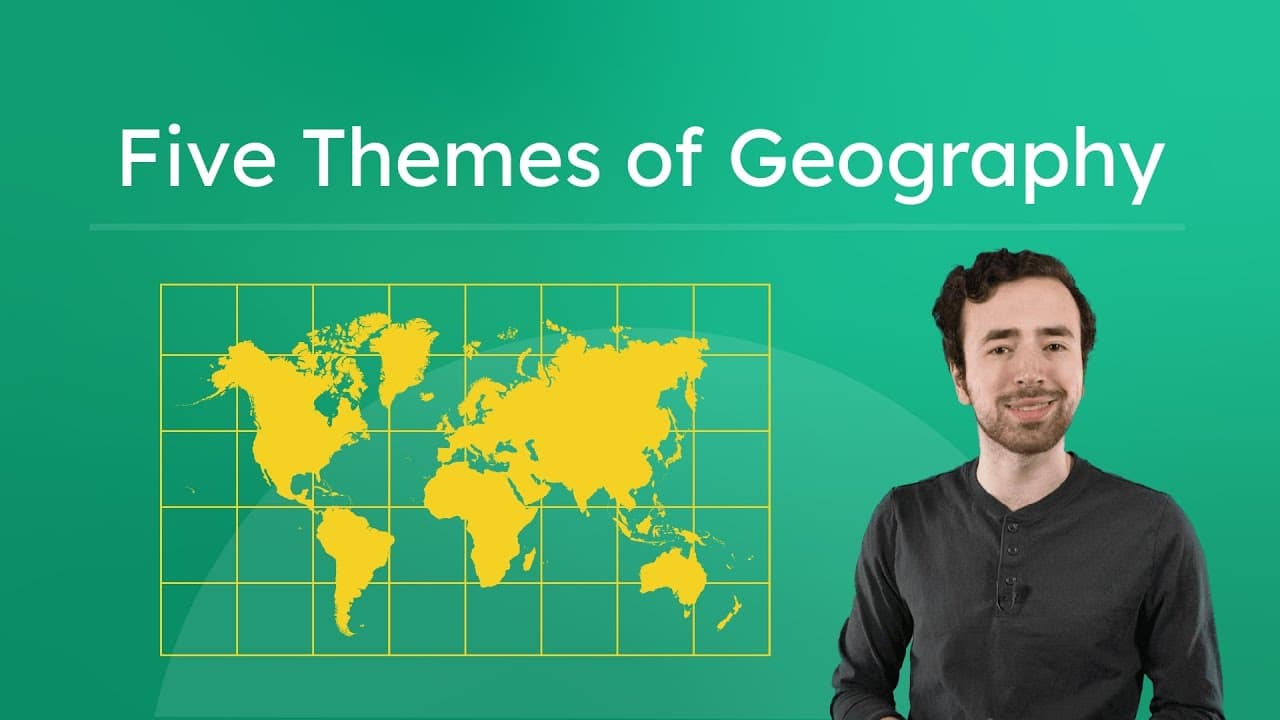
Unlocking History Through the Five Themes of Geography

Unlocking History Through the Five Themes of Geography

This educational video provides a comprehensive introduction to the Five Themes of Geography—Location, Movement, Place, Region, and Human-Environment Interaction—and demonstrates their critical role in shaping human history. The host, Justin, moves beyond simple map-reading to explain geography as the study of the Earth and how humans interact with it. Using water as a central unifying concept, the video illustrates why early civilizations like Mesopotamia and Egypt developed where they did, emphasizing the necessity of fresh water for drinking, irrigation, and transportation. The video explores each theme individually while also highlighting their interconnected nature. It defines concepts such as absolute versus relative location, cultural diffusion through trade and war, and the distinction between adapting to and modifying the environment. Historical examples are woven throughout, including the construction of mud-brick homes in timber-scarce Mesopotamia, the spread of culture from the Olmecs to the Aztecs, and the shifting political boundaries of the Persian Empire and Alexander the Great's territory. Ideal for middle school social studies and geography curricula, this resource helps students transition from viewing geography as just memorizing capitals to understanding it as a dynamic force that drives historical development. It offers clear definitions, visual examples, and interactive pause points that encourage critical thinking about government structures and map analysis, making it a versatile tool for introducing units on ancient civilizations or world geography.

Miacademy & MiaPrep Learning ChannelMiacademy & MiaPrep Learning Channel

11mins 13s

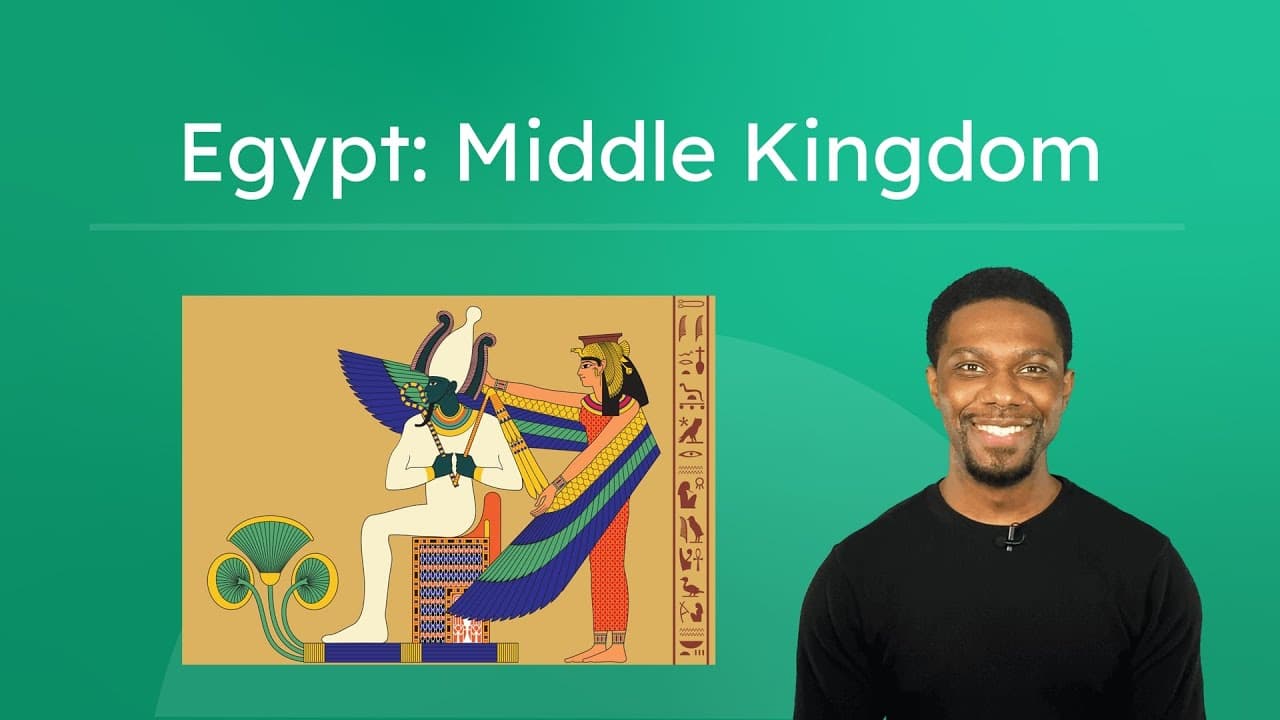
Exploring the Middle Kingdom: Egypt's Age of Unification and Innovation

Exploring the Middle Kingdom: Egypt's Age of Unification and Innovation

This engaging educational video explores the Middle Kingdom of Ancient Egypt, a pivotal period of reunification, cultural flourishing, and technological innovation. Hosted by an energetic narrator, the video begins by contrasting the heaviness of Mesopotamian clay tablets with the Egyptian invention of paper, setting the stage for a lesson on Egyptian advancements. It covers the rise of Mentuhotep II who ended the chaos of the First Intermediate Period, the expansion of trade networks, and the architectural marvels built during this era, including the impressive cliff-side Temple of Mentuhotep.

Miacademy & MiaPrep Learning ChannelMiacademy & MiaPrep Learning Channel

10mins 14s

Touring the Seven Wonders of the World

Touring the Seven Wonders of the World

This educational video takes students on a virtual tour of seven of the most famous architectural and historical landmarks across the globe. Hosted by Kaleigh, the video provides a structured overview of the Roman Colosseum, Chichen Itza, the Pyramids of Giza, the Great Wall of China, Machu Picchu, Petra, and the Taj Mahal. For each location, the video highlights its geographical location on a world map, the dates of its construction, and its original historical purpose.

Miacademy & MiaPrep Learning ChannelMiacademy & MiaPrep Learning Channel

4mins 56s

Materials

Patterns of Survival Worksheet

Patterns of Survival Worksheet

A two-page 7th grade social studies worksheet exploring three enduring issues: Migration and Settlement, Scarcity, and Geography and Environment. Includes bilingual Spanish-English vocabulary supports, an accessible case reading, scaffolded questions with sentence frames, an honors extension, and a formative exit ticket.

AN

Austin Nowak

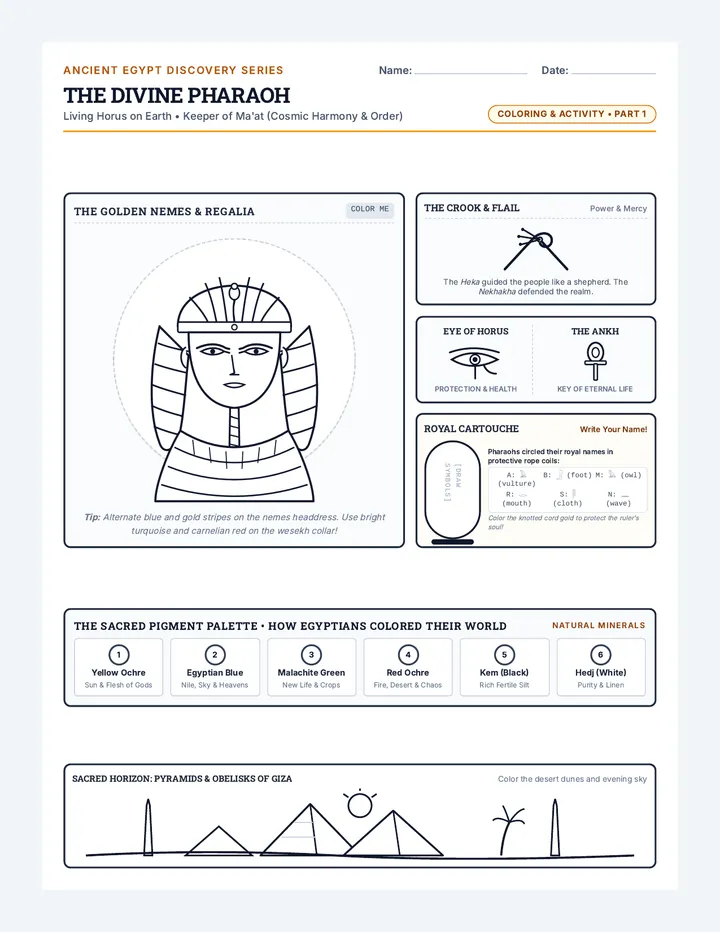
Pharaohs Gods Coloring Sheet

Pharaohs Gods Coloring Sheet

A two-page printable Ancient Egypt coloring and activity sheet exploring royal pharaoh regalia, sacred symbols, and major deities like Ra, Osiris, Anubis, and Isis. Features bold coloring outlines, an ancient pigment guide, a hieroglyphic cartouche activity, and engaging historical facts on religion and temples.

N

natachapaarris@gmail.com

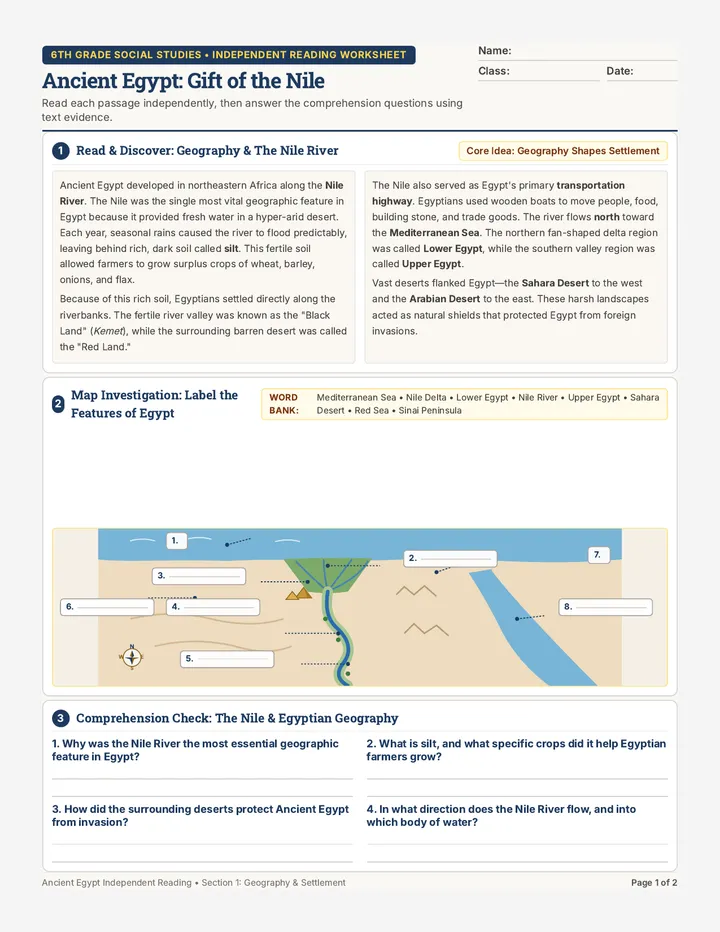
Gift of Nile Worksheet

Gift of Nile Worksheet

A self-contained, two-page independent reading and comprehension worksheet on Ancient Egypt, redesigned with significantly larger, highly legible font sizes, expanded writing spaces, and a maximized layout that fills the page.

M

maryroxanne.abella

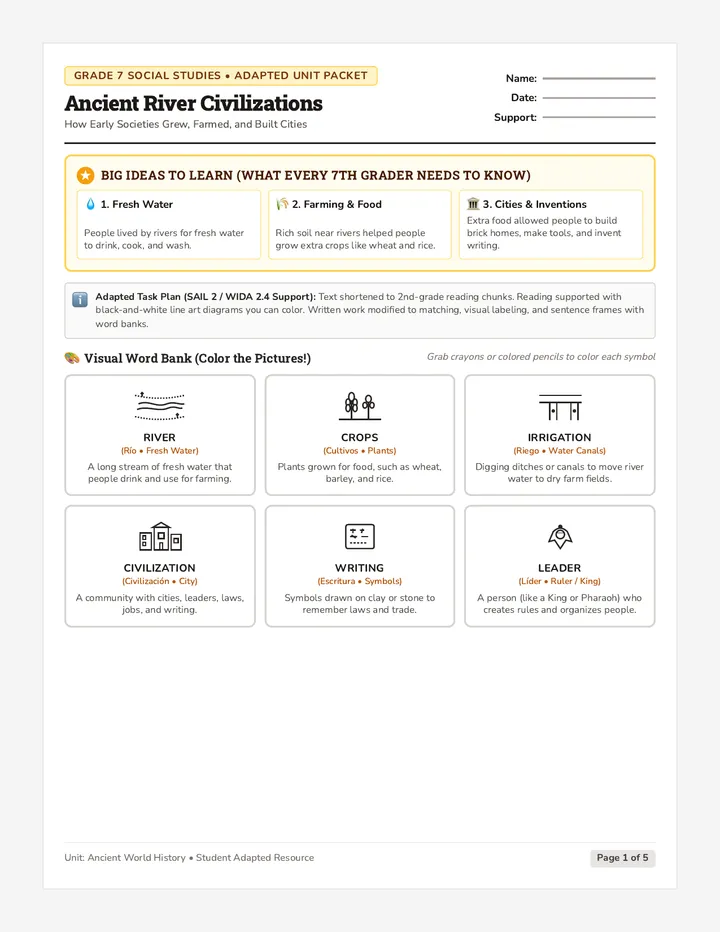
River Civilizations Adapted Packet

River Civilizations Adapted Packet

A 5-page adapted student learning packet on ancient river civilizations tailored for a 7th-grade English learner in a SAIL 2 inclusion model (WIDA 2.4). Features simplified chunked text, black-and-white line art illustrations ready for coloring, visual vocabulary cards, an organizer matrix, sentence frames, and a creative draw-and-label culminating task.

CQ

Colleen Quinn

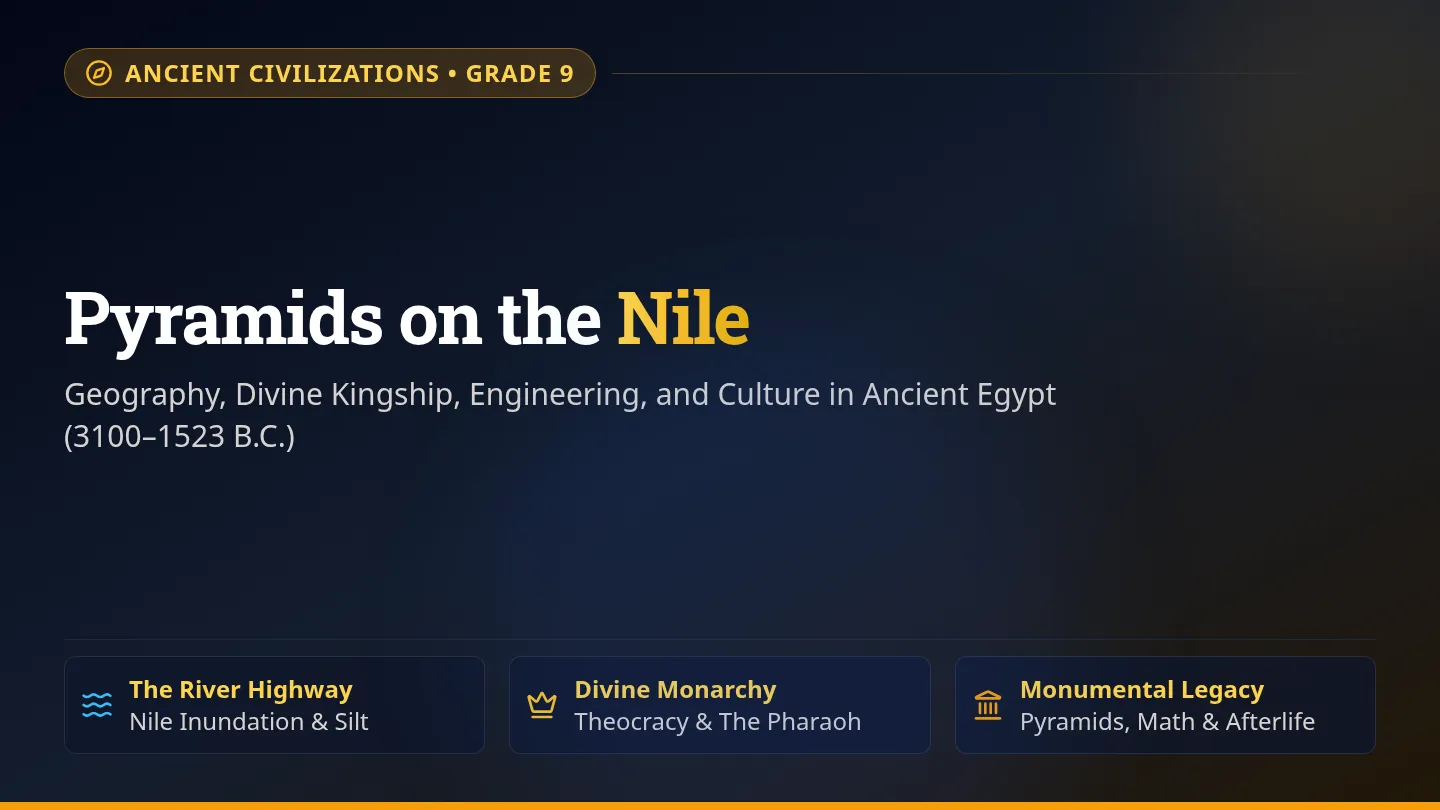
Pyramids Nile Slides

Pyramids Nile Slides

Comprehensive 18-slide instructional presentation for 9th-grade Ancient Civilizations on Ancient Egypt and the Nile River. Includes interactive classroom review quiz slides and answer key covering geography, theocracy, pyramids, hieroglyphics, math, columns, and science.

E

ebakke

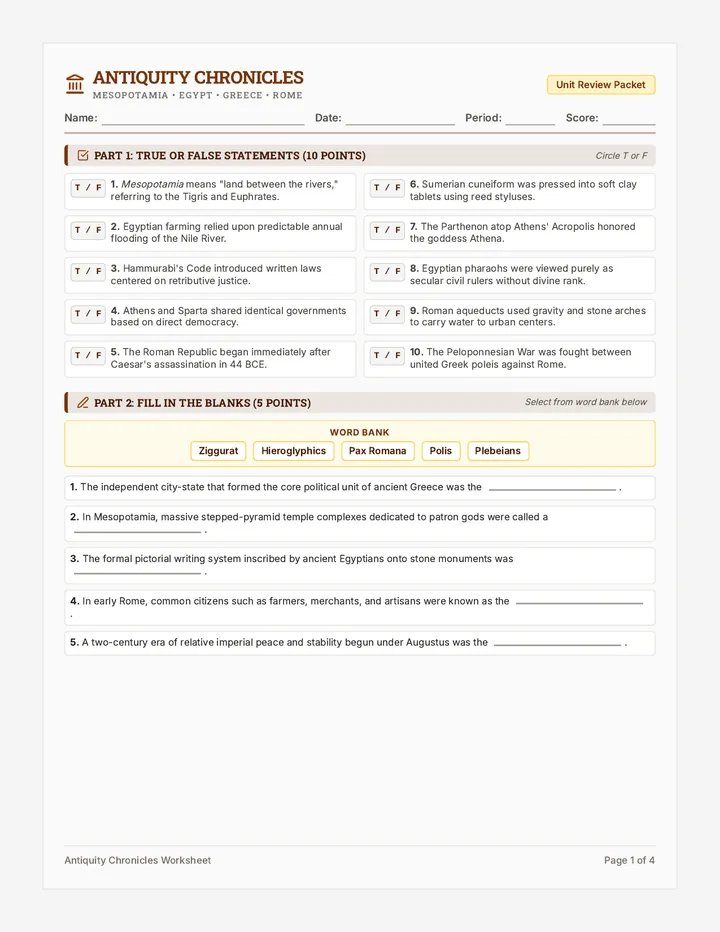
Antiquity Chronicles Worksheet

Antiquity Chronicles Worksheet

A comprehensive four-page print-ready worksheet on ancient civilizations covering Mesopotamia, Egypt, Greece, and Rome. Includes 10 True/False, 10 Multiple Choice, 5 Fill-in-the-Blank, 2 Open Response questions, a 12x12 Word Search, and an interconnected Crossword Puzzle.

WM

Wilberto Mejias

Sequences

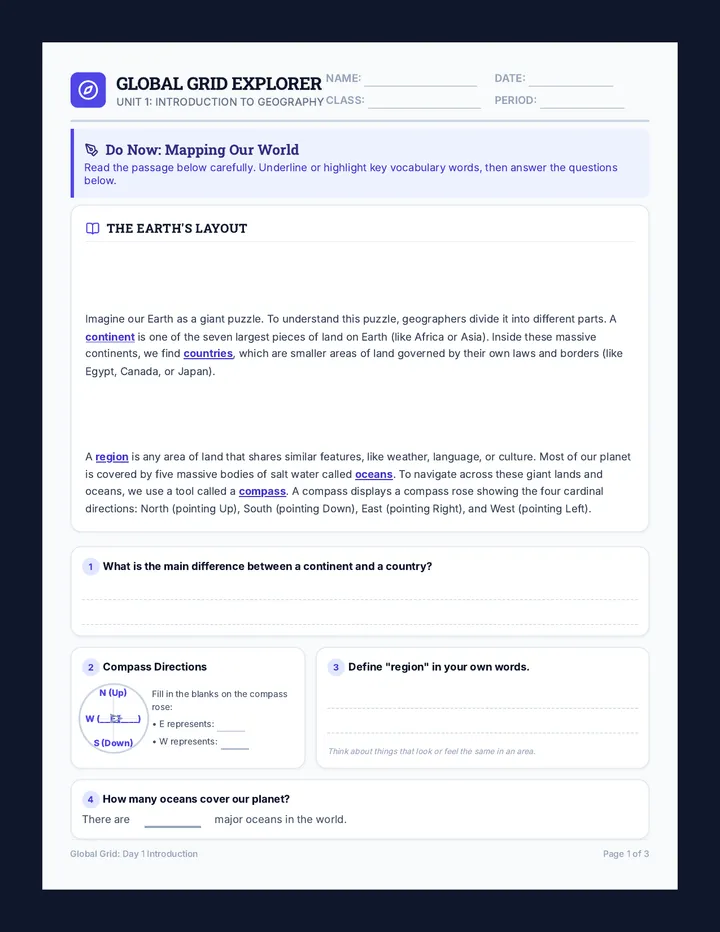
Global Grid Student Handbook

Power of Position

A 4-day introductory world history sequence exploring how geographic location, natural barriers, and famous trade routes shaped the rise, wealth, and power of global empires.

AG

Amina Gueye

14
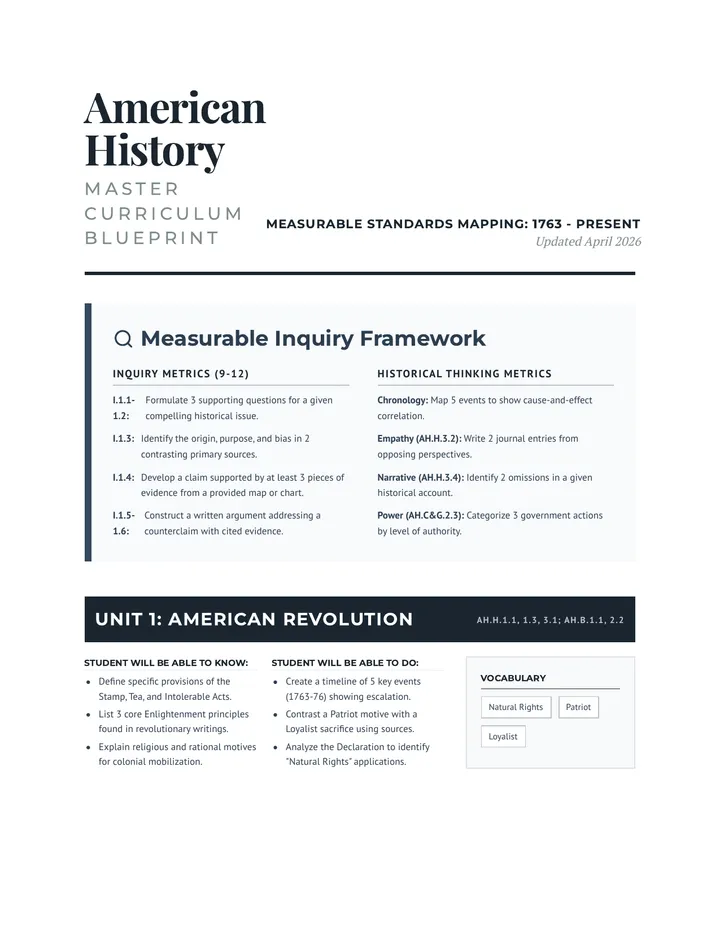
Curriculum Blueprint Document v2

History Horizon Sequence

A comprehensive high school curriculum plan for American History, covering 13 units from the American Revolution to the modern era, aligned with North Carolina Social Studies standards.

AK

Amity Kea

21
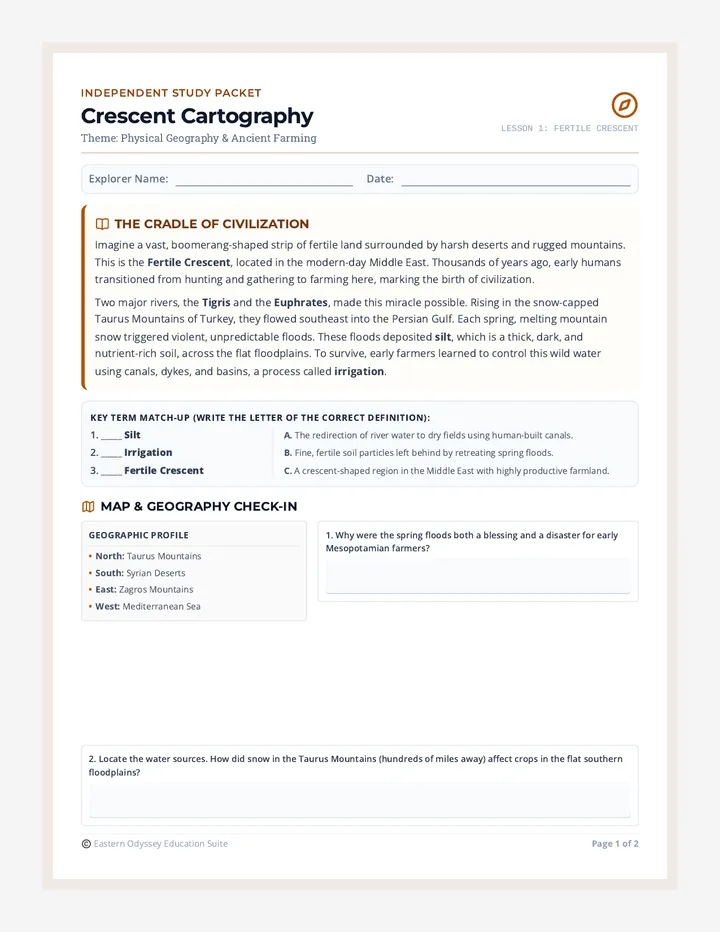
Crescent Cartography Student Packet

Eastern Odyssey Sub Packets

A sequence of 5 highly engaging, self-guided emergency sub plans for 6th-grade Eastern Hemisphere Social Studies, focusing on Ancient Egypt, Mesopotamia, the Fertile Crescent, Monsoon Asia, and Japan's island geography. Each sub plan includes a student packet and a teacher guide.

T

tpayne

10
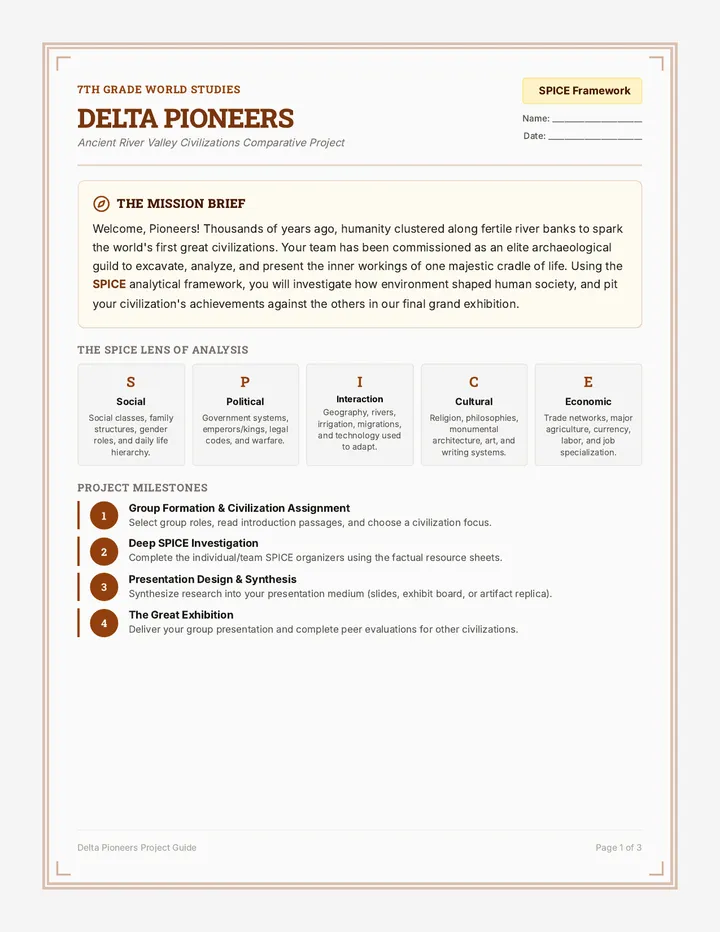
Pioneer Portfolio Project Guide

River Kingdoms

An immersive historical sequence guiding 7th-grade students through the excavation, comparison, and long-term legacy of the world's four primary river valley civilizations using the SPICE framework.

NE

Nicole Elder

9
Mapping the Sand Slides

Desert Discoveries

A differentiated social studies unit covering the geography, cultures, and empires of the Middle East and North Africa, adapted for 3rd-grade readability based on the DESE Investigating History Grade 6 curriculum.

JS

Janette Sullivan

43
Philip II Teacher Guide

Hellenistic Diffusion Sequence

This project-based sequence explores the Hellenistic period, focusing on the conquests of Alexander the Great and the resulting cultural diffusion across Greece, Persia, Egypt, and India. Students investigate military innovations, artistic shifts toward realism, and scientific breakthroughs, culminating in a curated museum exhibit on Hellenistic syncretism.

15

Lessons

Explorer Epochs Wall Chart

Early World Explorers

A comprehensive lesson on early world exploration from 300 BCE to 1500 CE, focusing on the geographical, cultural, and religious impacts of key explorers across different continents.

J

jcasey

14
Time Cartographers Slides

Time Cartographers

An 80-minute sixth-grade lesson on understanding, building, and interpreting historical timelines, teaching BCE/CE, BC/AD, Circa, and Chronological Order, focusing on Mesopotamia, Egypt, the Indus Valley, and global history.

AA

Adam Amster

4
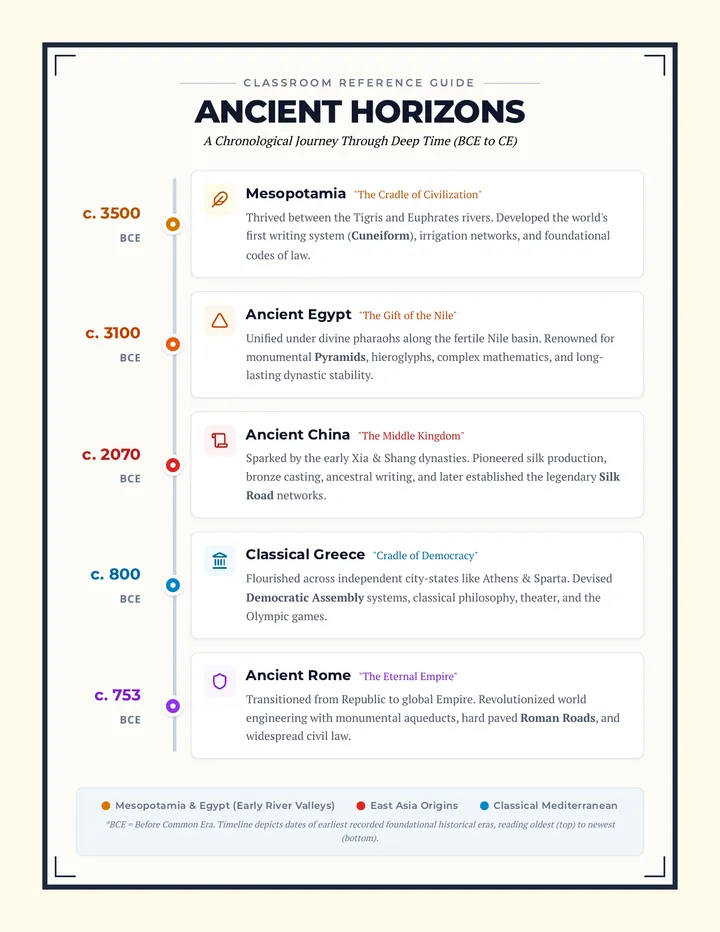
Ancient Horizons Timeline Poster

Ancient Civilizations Timeline

A lesson package designed to introduce the chronology of five fundamental ancient civilizations. It includes a high-impact master reference poster and printable large-scale timeline cards for classroom display.

SZ

Sandra Zoerhoff

2
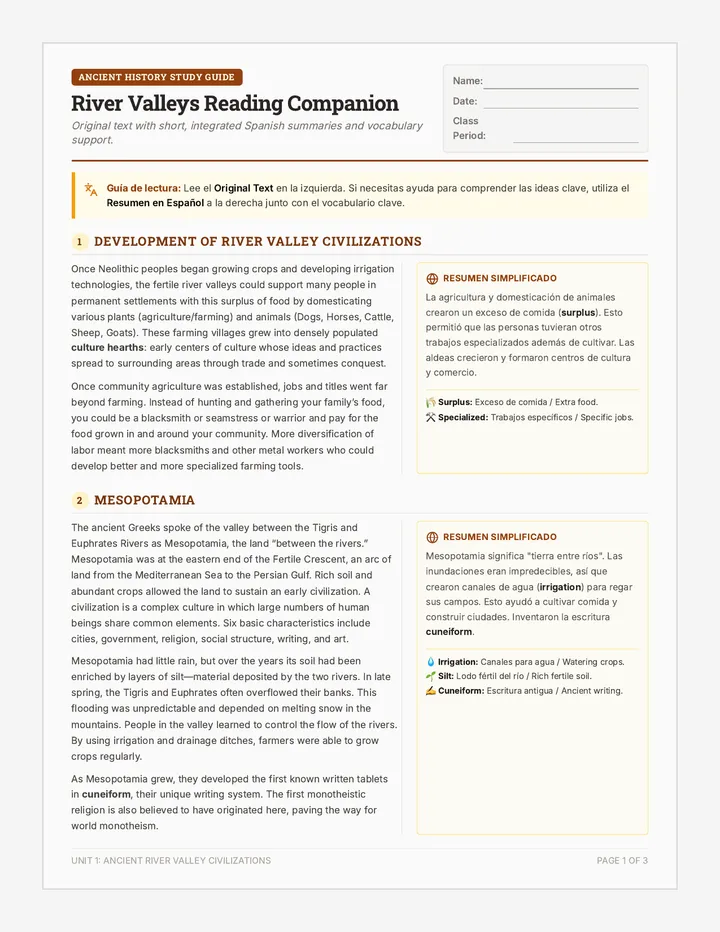
Civilizations Reading Companion

River Valley Civilizations

A comprehensive history lesson focusing on the development of the four major ancient river valley civilizations, featuring differentiated text and scaffolded reading supports for ESL students.

JO

Jacob Obannon

1
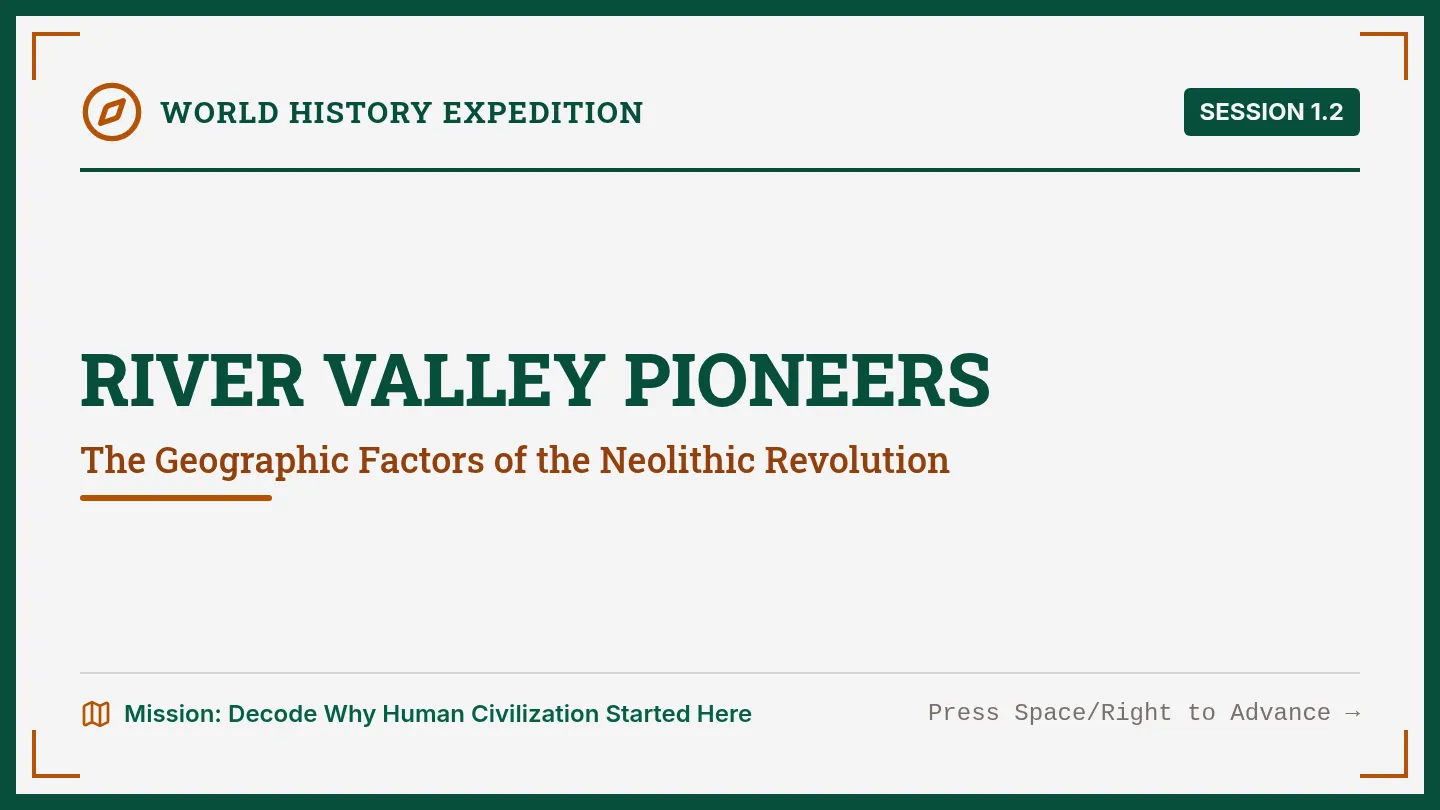
River Valley Pioneers Slides

River Valley Pioneers

A high school world history lesson focusing on the geographic factors of the Neolithic Revolution. Students participate in a station rotation activity, analyzing maps, data, and geographical details of four major river valleys (Nile, Tigris-Euphrates, Indus, and Yellow Rivers) to determine why agriculture began in these specific regions.

AH

Ashley Hopf

4
Carrot Mummies Lesson Plan

Carrot Mummies Salty Secret

A 30-minute hands-on lesson for 7th-grade students exploring the science of mummification and dehydration through a carrot model. Students learn about ancient Egyptian preservation techniques and the role of natron in preventing decay.

GC

Grace Cook

5