Pyramids Nile Slides
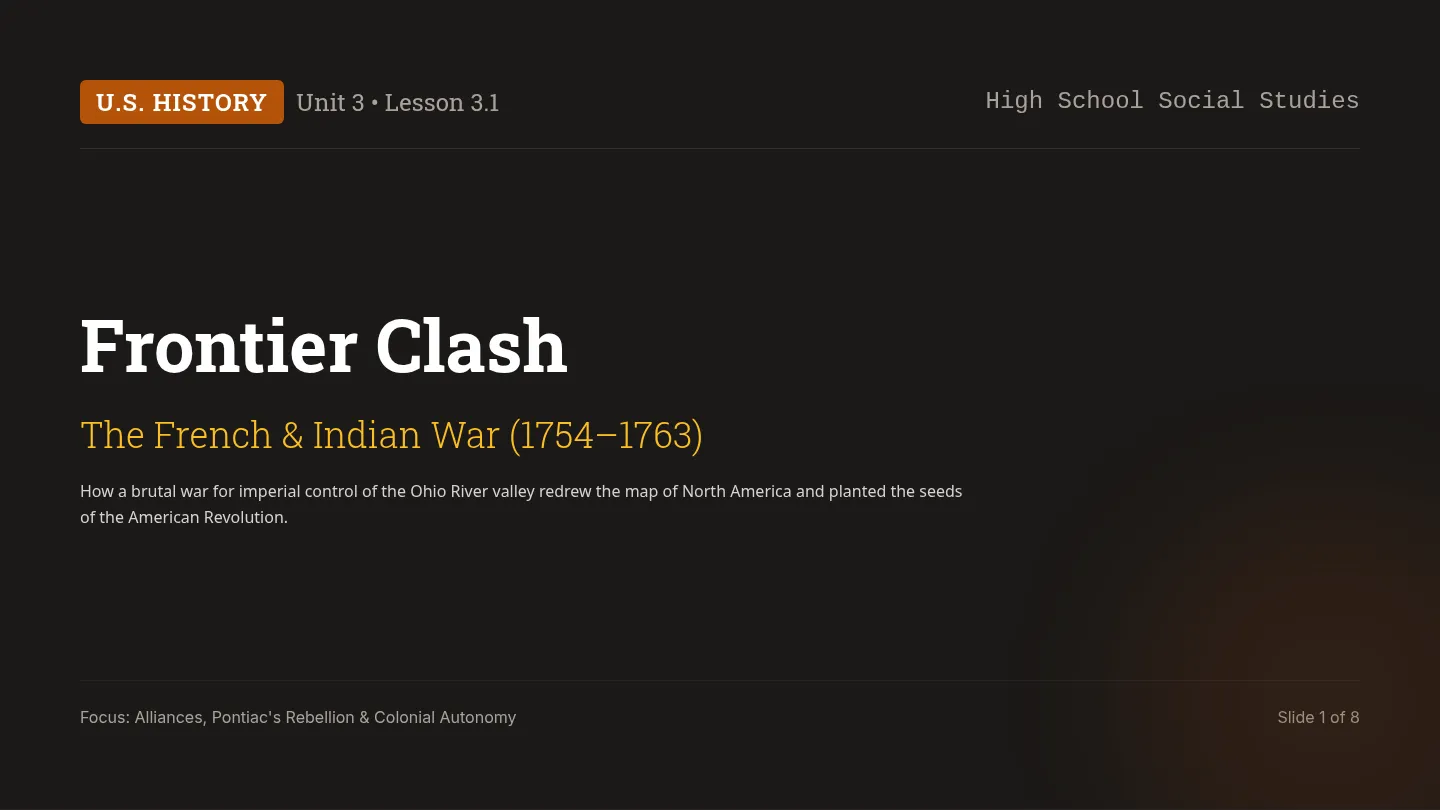
Ancient Civilizations • Grade 9
Pyramids on the Nile
Geography, Divine Kingship, Engineering, and Culture in Ancient Egypt (3100–1523 B.C.)
The River Highway
Nile Inundation & Silt
Divine Monarchy
Theocracy & The Pharaoh
Monumental Legacy
Pyramids, Math & Afterlife
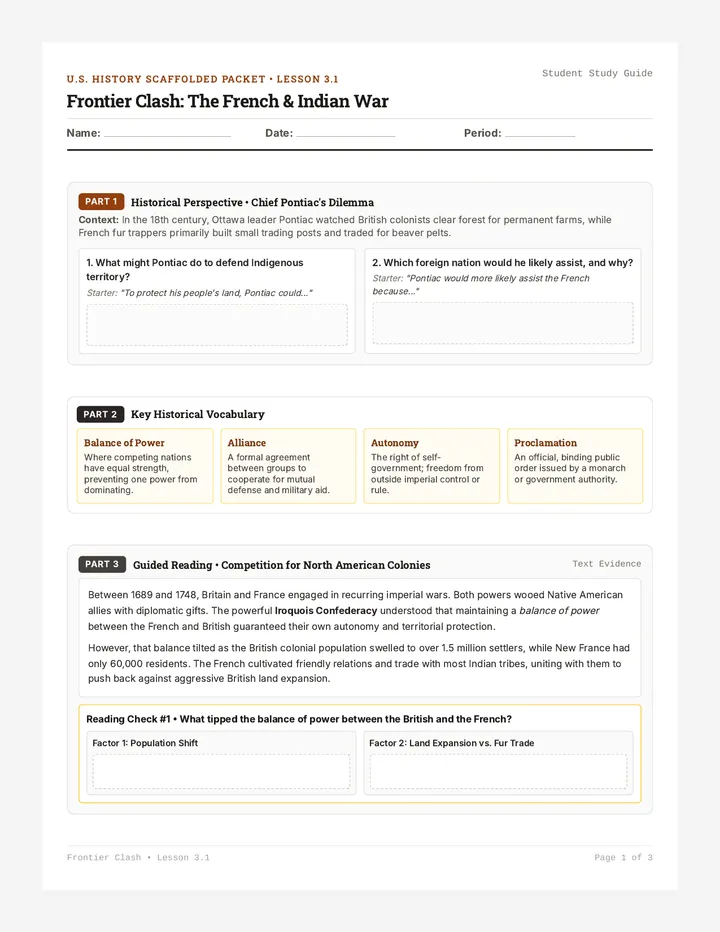
Lesson Objectives
Chapter 2 • Section 2
1
Geographic Impact
Summarize the vital role of the Nile River and desert barriers in shaping Egyptian agriculture, trade, and worldview.
2
Kingdom Unification
Explain how King Narmer united Upper and Lower Egypt into the world's first centralized territorial state.
3
Religion & Innovation
Describe theocracy, pyramid construction, mummification, social mobility, hieroglyphics, and practical sciences.
4
Continuity & Crisis
Examine the decline of the Old Kingdom, public improvements in the Middle Kingdom, and the Hyksos invasion.
Essential Question: How did geographic advantages allow Egypt to forge 3,000 years of unified cultural continuity?
Part 1 • Environmental Foundations
The "Gift of the Nile"
4,100+ Miles Northward
Predictable Floods
Every July, rains and snowmelt swelled the Nile. In October, it receded, leaving rich black mud called silt for wheat and barley.
"As regular as clockwork"
Black Land vs Red Land
Black Land (Kemet): Narrow fertile riverbank strip watered by irrigation.
Red Land (Deshret): Scorching, barren desert on both sides.
Contrast: stand with one foot in each!
Worshiped as a Deity
Because abundance depended directly on the river, Egyptians worshiped the Nile as a benevolent life-giving god who rarely turned against them.
"Egypt was the gift of the Nile." — Herodotus
Flows northward from East African highlands (Burundi, Ethiopia) to empty into the Mediterranean Sea.
Geography Skillbuilder
Two Distinct Regions & Desert Barriers
Elevation Controls Direction
Upper vs. Lower Egypt
Upper Egypt (South): Higher elevation upstream; narrow river strip from the First Cataract (churning boulder rapids) north to where the river fans out.
Lower Egypt (North): Low elevation downstream; includes the marshy triangular Nile Delta (100 miles before the sea).
Watery Highway: Northbound boats floated with current; southbound hoisted sails with prevailing north winds.
Barriers & Environmental Risks
Desert Barriers: Vast forbidding deserts shut out foreign invaders, sparing Egypt the constant warfare of Mesopotamia.
Floods Too Low: Just a few feet lower meant reduced silt and water; thousands starved.
Floods Too High: Destroyed mudbrick homes, granaries, and precious seed stocks.
Key Advantage: Predictable floods + natural protection allowed 3,000 years of remarkable stability.
Cross-Civilization Comparison
Mesopotamia vs. Ancient Egypt
River Valley Analysis
Feature
Mesopotamia (Tigris & Euphrates)
Ancient Egypt (The Nile)
River Flooding
Unpredictable, violent flash floods
Predictable annual flooding ("clockwork")
Defenses
Open plains; constantly invaded
Deserts & cataracts provided natural shields
Politics
Fractured, warring city-states (Ur, Babylon)
Unified kingdom under a central pharaoh
Worldview
Bleak, fearful of gods; gloomy afterlife
Optimistic, confident; joyous Other World
Discussion: Why did environmental security make Egyptians view their gods with optimism instead of dread?
Part 2 • Political Unification
Narmer & Unification (~3000 B.C.)
31 Dynasties • 2,600 Years
Phase 01
Two Separate Kingdoms
Lower Egypt: Red Crown (Deshret) worn in the northern delta.
Upper Egypt: Tall White Crown (Hedjet) worn in the south.
Each had distinct rituals and chieftains before 3000 B.C.
Phase 02
The Narmer Palette
Carved slate slab shows King Narmer (or Scorpion) uniting the two lands around 3000 B.C.
Created the Double Crown, combining red and white crowns into one.
Symbolized eternal unity under one ruler.
Phase 03
Capital at Memphis
Narmer shrewdly placed his capital at Memphis, right where Upper and Lower Egypt meet.
Established the 1st Egyptian dynasty and set patterns for the Old Kingdom (2660–2180 B.C.).
Centralized control over river trade and taxes.
Unlike Mesopotamian city-states, Egypt was united into a single, cohesive territorial kingdom.
Part 3 • Political & Spiritual Authority
Pharaohs Rule as Living Gods
Theocracy
Not Representatives, but True Gods
In Mesopotamia, kings were considered mortal representatives of gods. In Egypt, the pharaoh was a god living on Earth.
Theocracy:
A government in which supreme political and military rule is based on religious authority.
Pharaoh stood at the absolute center of religion, government, and the army.
Cosmic Responsibilities
Natural Harmony: Believed to cause the sun to rise, the Nile to flood, and crops to grow.
Ma'at: Duty to uphold truth, justice, order, and universal balance.
The Ka (Life Force): The pharaoh's eternal spirit governed Egypt even after death.
Inference: Why were pharaohs so powerful? Disobeying the pharaoh was not just treason—it threatened the cosmic balance of the universe.
Part 4 • Old Kingdom Monuments
Engineering Eternity: The Pyramids
Old Kingdom (2660–2180 B.C.)
Tombs for the Ka
Because kings expected to rule forever, their tombs were more important than palaces.
Stored clothing, food, furniture, and riches needed by the ka in the afterlife.
Immense stone resting places for eternity.
Great Pyramid of Giza
• 2+ Million cut stone blocks
• Weighed 2.5 to 15 tons each
• Height of 481 feet across 13 acres
• Built without wheels or pulleys
Limestone floated across Nile during floods.
Civilization Strength
Pyramids demonstrated colossal economic power, advanced math, and total government coordination.
Mobilized thousands of skilled workers and peasants during annual flood seasons.
Enduring symbol of royal supremacy.
Built primarily by peasant farmers during annual flood months when fields could not be worked.
Part 5 • Belief Systems
Polytheism & The Afterlife
2,000+ Deities
Major Deities
Re (Ra): The sun god; brought life and warmth to Egypt.
Osiris: God of the dead and judge of the underworld.
Isis: Goddess representing the ideal mother and devoted wife.
Anubis: Jackal-headed guide of the underworld and embalming.
Weighing of the Heart
Anubis weighed each dead person's heart against the feather of truth.
Heart lighter than feather: Pure soul entered the eternal paradise of the Other World.
Heart heavy with sin: The ferocious Devourer of Souls gobble it up!
People of all social classes prepared for their burial to reach the Other World safely. Contrast: Mesopotamians viewed death as dark and bleak.
Primary Source Investigation
Mummification & The Book of the Dead
70-Day Ritual
Herodotus, Histories (5th Century B.C.)
"First, they draw out the brains through the nostrils with an iron hook... Then make an incision in the side and take out all the bowels... Then they steep it in natron [mineral salt] for 70 days... At the end, they wash the corpse and wrap the whole body in bandages of waxen cloth."
Demonstrates advanced anatomical and surgical technique.
Preserving Body & Spirit
Why Mummify? The eternal soul (ka) needed to recognize its original body to inhabit it in the afterlife.
Natron Mineral Salt: Dried and preserved bodily tissues against decay.
The Book of the Dead: Papyrus scrolls with prayers, hymns, and magic spells to guide the soul through the underworld.
Analysis: What does mummification reveal about the Egyptians' sophisticated practical knowledge of human biology?
Part 6 • Social Order
Egyptian Social Hierarchy & Rights
Social Mobility
The Social Pyramid
1. Pharaoh & Royal Family (Living Gods)
2. Upper Class: Priests, Viziers, Landowners, Generals
3. Middle Class: Merchants, Artisans, Scribes
4. Lower Class (Largest): Peasant Farmers & Laborers
5. Enslaved Captives: Foreign prisoners in mines/homes
Mobility & Legal Equality
Literacy Enabled Mobility: Egyptians were not locked in social classes. Reading and writing allowed commoners to become scribes, treasury officials, or army officers.
Remarkable Rights for Women:
• Could own, buy, sell, and trade property
• Could propose marriage or seek a divorce
• Entitled to 1/3 of joint property upon divorce
Comparative Note: Both Sumerian and Egyptian women held significant legal and property rights.
Part 7 • Communication & Scripts
Hieroglyphics & The Rosetta Stone
"Sacred Carvings"
Hieroglyphics
Greek hieros (sacred) + gluph (carving).
• Started as pictographs (picture = idea)
• Evolved to phonetic symbols (e.g. owl stood for /m/ sound)
Carved on monuments, stone tombs, and temples.
Papyrus Invention
Harvested marsh reeds from the Nile Delta.
Strips placed crosswise in two layers, dampened, and pressed; sap acted as glue.
Lightweight, portable paper for records & texts.
The Rosetta Stone
Found in 1799 with one text written in 3 scripts:
1. Hieroglyphics
2. Demotic (Cursive Egyptian)
3. Ancient Greek (Known)
Deciphered in 1822 by Jean-François Champollion!
Egyptian scribes could record literature, religious spells, business transactions, and tax receipts.
Part 8 • Practical Innovations
Science, Technology & Mathematics
Practical Needs Drive Tech
365-Day Calendar
Tracked the Dog Star (Sirius), which rose right before annual floods.
• 12 months of 30 days = 360
• Added 5 feast days = 365
• Short of solar year by only 6 hours!
Math & Columns
Floods washed away markers, requiring geometry to resurvey field borders.
• Counting numbers for taxes
• Precision engineering for pyramids
• First to engineer stone columns
Advanced Medicine
Egyptian doctors were famous throughout the ancient Mediterranean world.
• Checked heart rate via pulse
• Set broken bones with splints
• Performed surgical treatments
Practical needs (flooding, taxation, monument building, health) catalyzed scientific breakthroughs.
Part 9 • Historical Transitions
Middle Kingdom & The Hyksos Invasion
2180 B.C. – 1523 B.C.
2040–1640 B.C.
The Middle Kingdom
After Old Kingdom decline (~2180 B.C.), strong pharaohs restored unity and funded public works:
Canal to Red Sea: Boosted international trade and maritime transport.
Irrigation Dikes: Trapped and channeled Nile waters for crops.
Draining Swamps: Created thousands of acres of new farmland in Lower Egypt.
1630–1523 B.C.
Invasion of the Hyksos
Invaders from Palestine crossed the Isthmus of Suez: the Hyksos ("foreign rulers"):
Military Tech: Conquered using bronze weapons and horse-drawn chariots.
Mesopotamian Parallel: Like Akkadians and Amorites, outsiders took over an established civilization.
Paved Way for Empire: Expelling the Hyksos ushered in the New Kingdom.
Key Difference: Middle Kingdom pharaohs invested in public welfare rather than colossal royal tombs.
Classroom Check
Review Quiz • Questions 1 & 2
Round 1: Geography & Power
1 Geography & Worldview
How did the annual flooding of the Nile shape Egyptian culture compared to Mesopotamia?
A. Violent unpredictable floods created fear and a gloomy underworld
B. Regular floods fostered agricultural security, optimism, and stability
C. Constant flash floods forced Egyptians to live as nomadic herders
D. Severe floods prevented the construction of permanent stone monuments
2 Divine Monarchy
Why were Egyptian pharaohs uniquely powerful compared to Mesopotamian kings?
A. Pharaohs commanded larger chariot armies during the Old Kingdom
B. Pharaohs ruled as living gods responsible for cosmic order and nature
C. Pharaohs were democratically elected each year by the priesthood
D. Mesopotamian kings had no authority over irrigation or tax collection
Discuss your reasoning with a shoulder partner before revealing answers! Next: Writing & Practical Sciences
Classroom Check
Review Quiz • Questions 3 & 4
Round 2: Writing & Science
3 Hieroglyphics & Rosetta Stone
Which statement accurately describes Egyptian writing and its modern decipherment?
A. Hieroglyphs remained simple pictures and never represented sounds
B. Writing was done only on clay tablets until the Middle Kingdom
C. Symbols represented sounds and ideas, unlocked by the Rosetta Stone
D. Only the pharaoh was legally permitted to read or write hieroglyphs
4 Practical Sciences & Math
What practical need directly led Egyptians to develop geometry and stone columns?
A. Resurveying flood-washed field boundaries and engineering monuments
B. Calculating long-distance navigation routes across the Indian Ocean
C. Measuring chemical proportions of natron salt for mummification
D. Drafting legal contracts for foreign merchants in the Nile Delta
Ready to check your answers? The next slide reveals the historical explanations. Answers Ahead
Answer Key & Rationale
Review Quiz Explanations
Instructor Rationale
Question 1: Geographic Impact Correct: B
The Nile flooded with dependable regularity each July, providing rich silt. This stability fostered confidence in nature and an optimistic view of the afterlife.
Question 2: Divine Monarchy Correct: B
Unlike Mesopotamian kings who were only mortal servants of deities, the pharaoh was believed to be an actual god who maintained Ma'at (cosmic order).
Question 3: Hieroglyphs & Rosetta Correct: C
Hieroglyphs combined pictographs with phonetic sound signs. The Rosetta Stone's trilingual inscription in Greek, Demotic, and hieroglyphs unlocked the script in 1822.
Question 4: Math & Architecture Correct: A
Annual floodwaters erased property boundaries, forcing scribes to invent geometry for taxation. Engineers applied this math to erect stone columns and pyramids.
Core Concept: Practical survival needs drove Egyptian science, writing, engineering, and state governance.
Check for Understanding
Synthesis & Exit Ticket
Active Recall
1
Geographic Impact
Why was the Nile's predictable flood cycle so critical to Egyptian political unity and optimistic religious beliefs compared to Mesopotamia?
Focus: Silt, desert shields, and worldview.
2
Theocratic Power
How did the pharaoh's identity as a living god justify both complete political authority and the construction of monumental pyramids?
Focus: Theocracy, Ka, and cosmic order (Ma'at).
3
Egyptian Society
What two major features distinguished Egyptian society from many other ancient cultures?
Focus: Upward mobility via literacy & women's property rights.
Tomorrow's Topic: The New Kingdom, Hatshepsut, Ramses II, and Egyptian Empire Building!