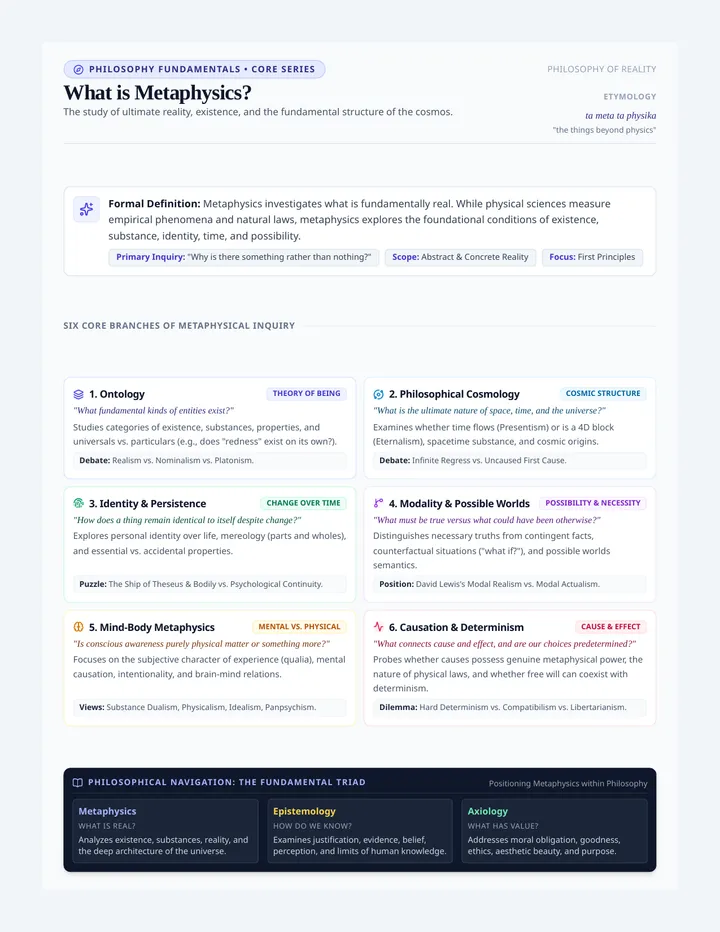
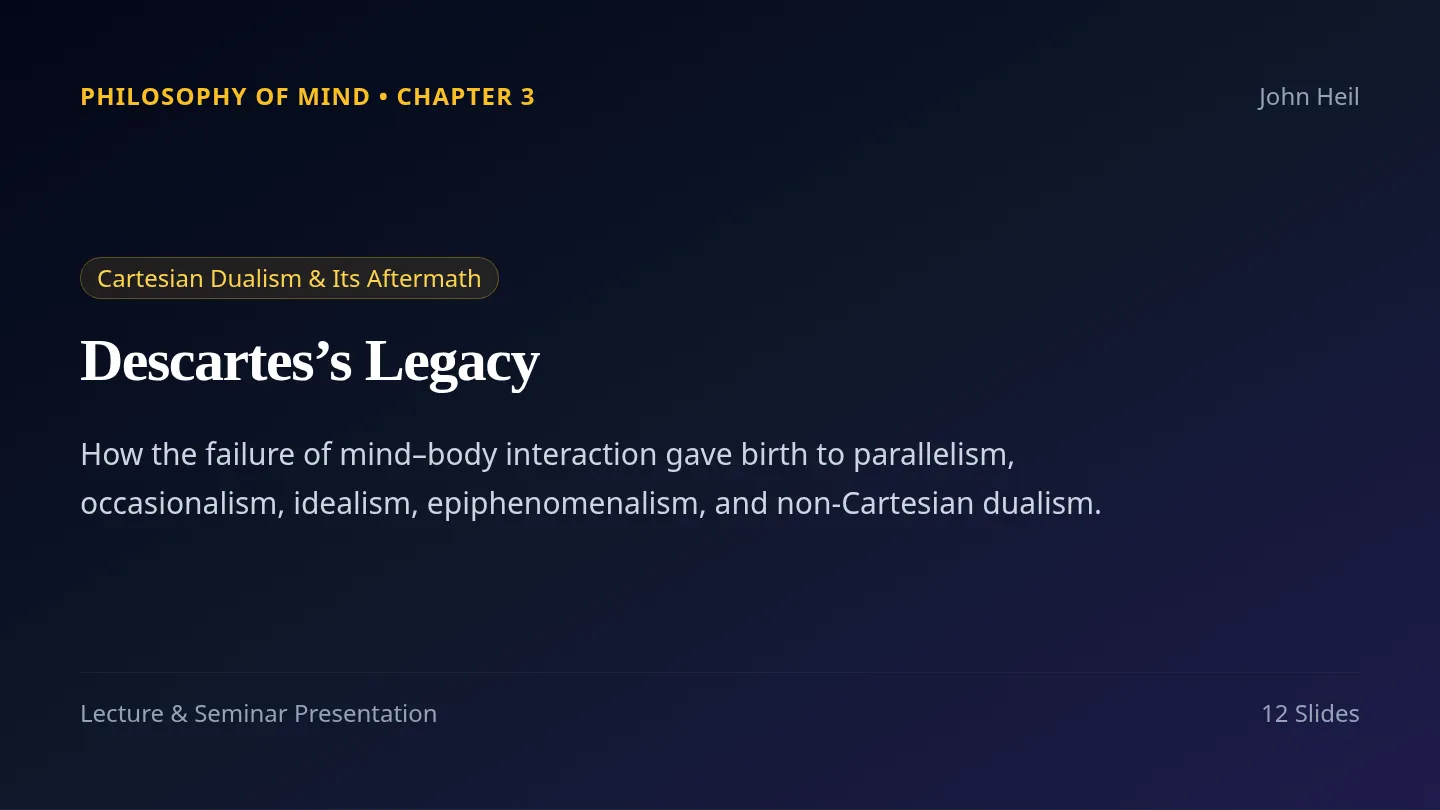
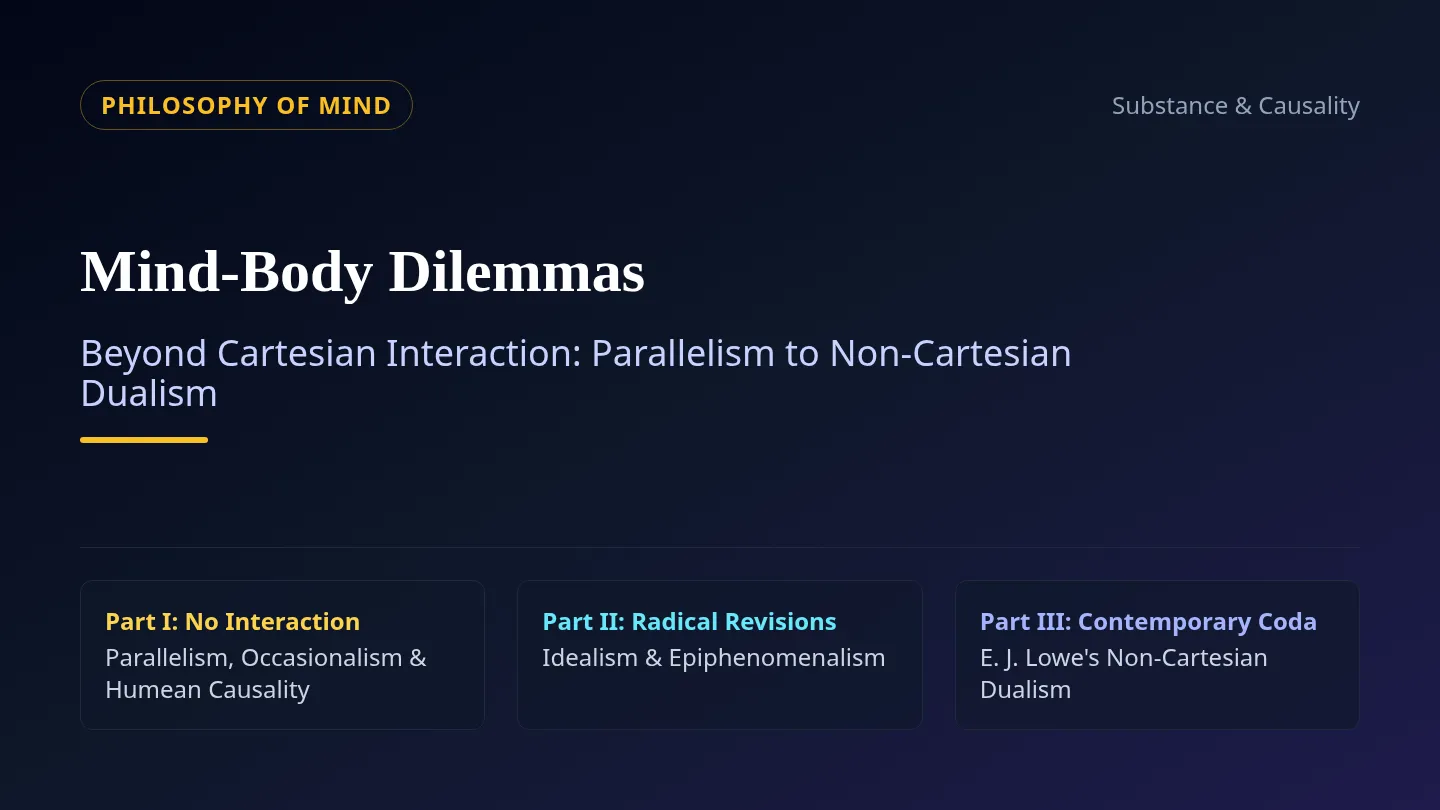
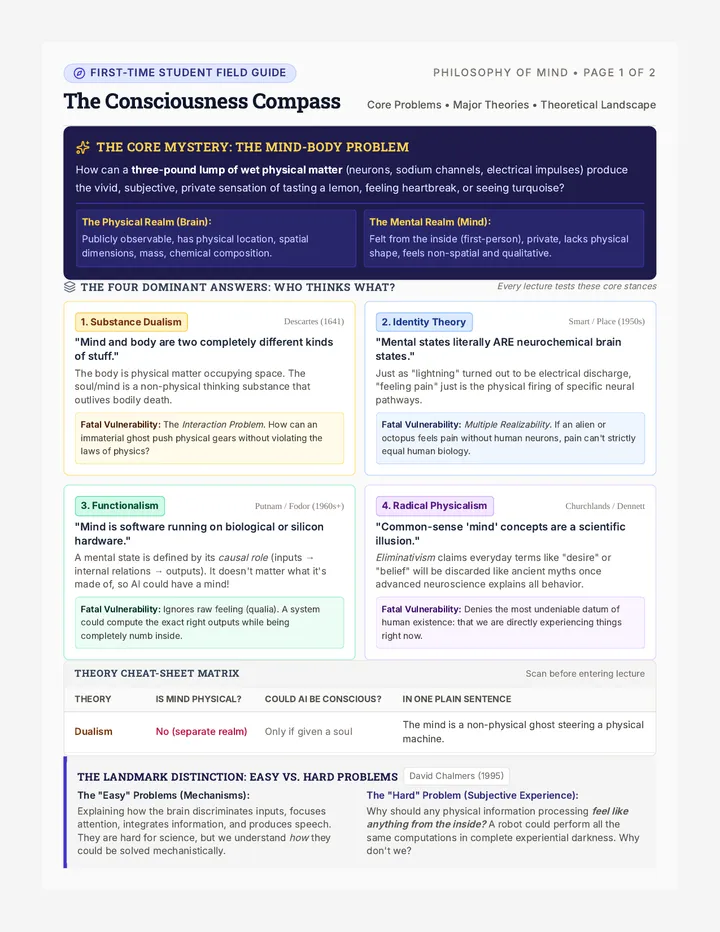
Examining foundational arguments from major thinkers alongside contemporary debates on morality, governance, and the nature of existence. Addresses core concepts like political structures, consciousness, and the conflict between agency and fate.
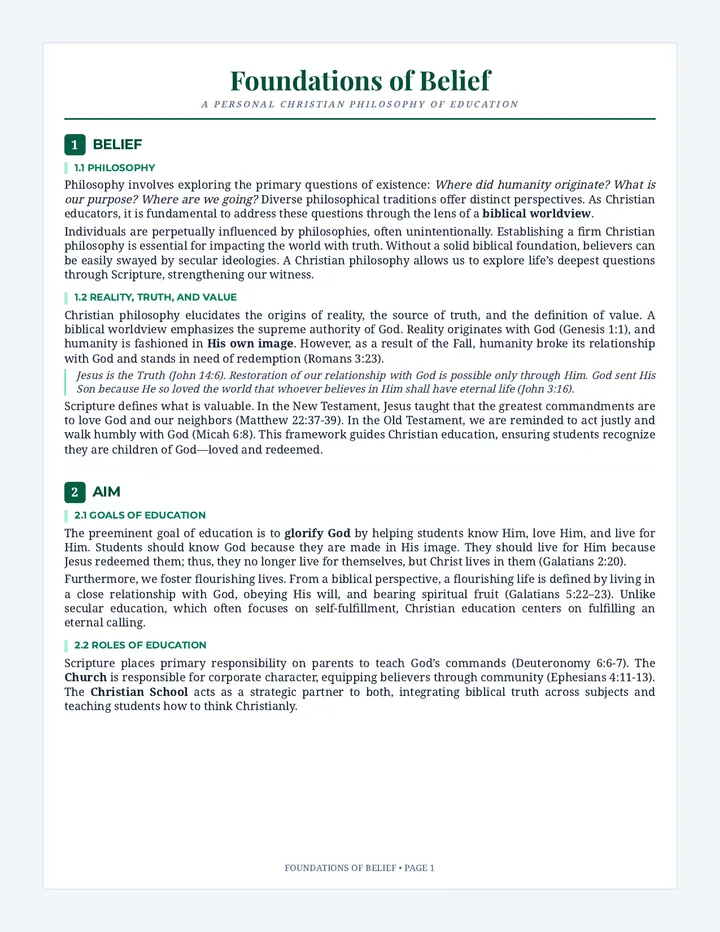
A professionally proofread and formatted 2-page Christian Philosophy of Education titled "Foundations of Belief." This version uses a 13px font size and optimized spacing to fit all content, including teacher responsibilities and a personal commitment, perfectly onto two pages. It features an academic tone suitable for colleagues.
An updated Tier 2 Scope and Sequence for 11th Grade U.S. History, now including specific scaffolding tips for each unit alongside power skills and academic vocabulary. The layout is optimized for teacher reference with instructional strategies tailored for targeted support.
A vibrant, colorful, and highly cheerful 2-page Arabic weekly worship tracker for kids. It features bright playful pastel colors, friendly mascots, beautiful cloud borders, and interactive badges designed to excite and motivate children.
An ultra-modern, clean single-page guide focused strictly on the virtues (فضلها), timing (وقتها), and abandoned Sunnahs (السنن المهجورة) of the Witr prayer, specifically eliminating the prayer method steps. Beautifully tailored for the 'Diya' (ضياء) channel using elegant modern fonts and a soft sage and gold palette.
A refined, minimalist one-page speaker vetting checklist for K-12 Christian school administration, optimized with precise sizing and high readability.
A polished 15-point fill-in-the-blank quiz for the Morning Offering prayer with numbered answer blanks, a word bank, and a Sacred Heart visual theme.
A four-part series for middle schoolers on Aristotelian logic and philosophy, focusing on categorization, reasoning, and ethics, with a historical tie-in to Alexander the Great.
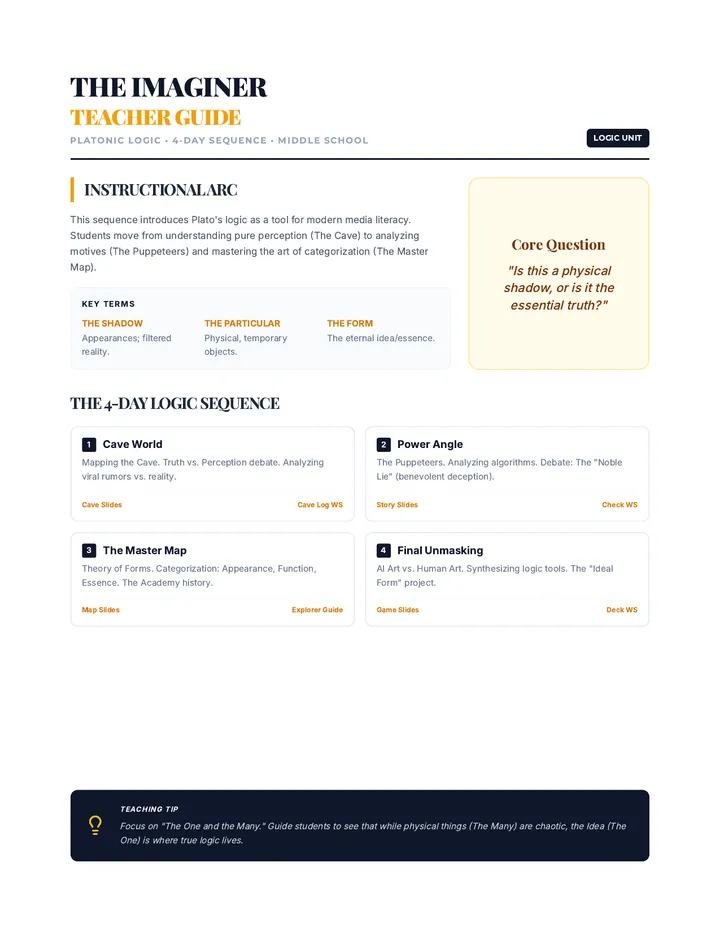
A four-day introductory logic and philosophy sequence for middle schoolers focusing on Plato's 'Thinking Style.' Students explore the Allegory of the Cave, perception vs. reality, and the Theory of Forms through the lens of 'The Imaginer,' culminating in a visual analysis game.
A comprehensive 6-lesson Black History Month curriculum for 5th-8th graders, exploring historical excellence, emotional expression, and community through the lens of five core values: Virtus, Kenkyo, Sankofa, Ubuntu, and Ganas. Inspired by a century of resilience and brilliance.
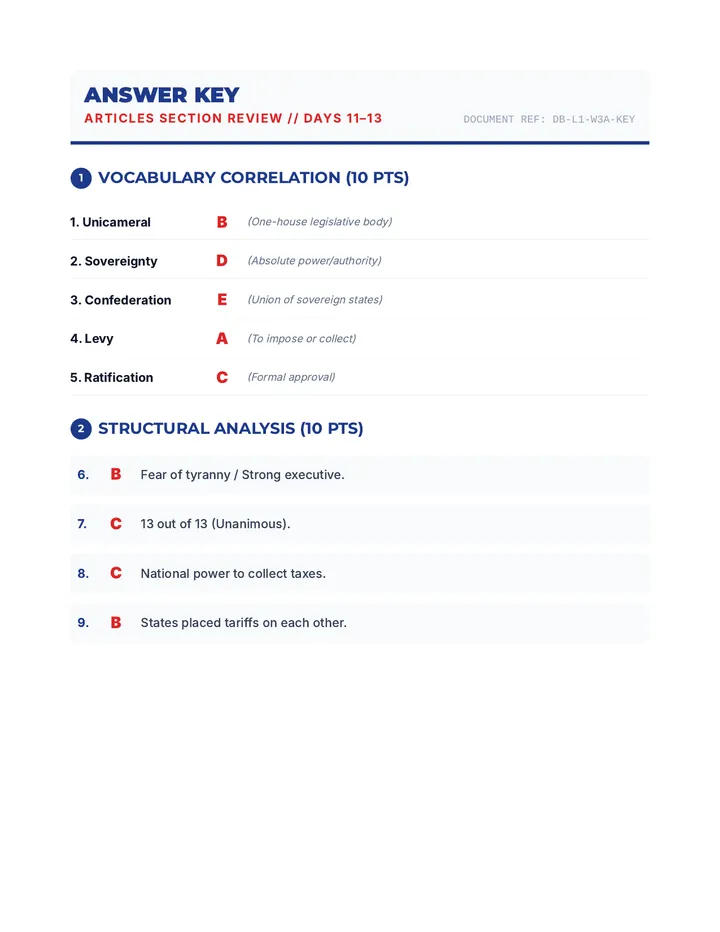
A series of lessons exploring the foundational documents and processes of the United States government, from the birth of the nation to the creation of modern laws.
A 5-week immersive ethics storyline following the evolution of a single nonprofit organization as it navigates a massive corporate grant, data ethics, policy clashes, and eventual sustainability crises.
A comprehensive 90-day independent study program for high school government, covering everything from philosophical foundations to modern policy and civic participation.
A journey into the world of medieval knights and castles, exploring the training, ethics, engineering, and symbolism of the Middle Ages. Students learn about the life of a knight, the construction of fortresses, and the code of chivalry through hands-on activities and historical analysis.
A comprehensive unit for 6th-grade students on the methods and ethics of archaeology. Students move from understanding basic observation to conducting a mock excavation and debating the ownership of historical artifacts.
This sequence explores the development of feudalism in Japan, contrasting the theoretical power of the Emperor with the actual power of the Shogunate. Students will analyze the social hierarchy, the code of Bushido, the chaos of the Sengoku period, and the eventual stability of Tokugawa isolationism.
This sequence explores the constitutional revolution of the Warren Court during the 1950s and 60s. Students analyze landmark cases involving rights of the accused, free speech, and privacy, culminating in an examination of the resulting political realignment and a moot court simulation.
A comprehensive exploration of the American adversarial system and criminal procedure. Students engage with the mechanics of a criminal trial, from pre-trial motions and jury selection to rules of evidence and the ethical implications of plea bargaining.
This sequence explores the intellectual transformation of Europe from the Middle Ages to the Renaissance, focusing on the emergence of humanism and its impact on culture, education, and religion. Students analyze primary sources from Petrarch, Erasmus, and Castiglione to understand how shifting views on human potential reshaped society.
A 7-day comprehensive remediation sequence focused on the philosophical, historical, and individual foundations of American government. Designed for students needing mastery of TEKS 1 and 12B, the unit features structured readers, skill-building worksheets, and a cumulative assessment.
A 5-lesson unit for 7th-grade Social Studies exploring the transition from Heian culture to the Shogunate, the rigid feudal hierarchy, the Bushido code, and Japan's eventual isolation under the Tokugawa. Students use simulations, primary source analysis, and comparative studies to understand the impact of rigid social structures.
A 7th-grade history sequence exploring the transition from medieval religious scholasticism to Renaissance humanism, focusing on the revival of classical texts, the rise of individualism, and the development of the 'Renaissance Man' ideal.
This sequence explores the intellectual shift from medieval scholasticism to Renaissance Humanism. Students investigate the rediscovery of classical texts, define Humanism, examine the 'Renaissance Man' ideal, and analyze Humanist themes in literature, concluding with a reflection on Humanism's legacy in modern education.
This lesson explores the Gurmat perspective on the five senses, moving from sensory bondage to spiritual mastery through the teachings found in the 'Slave to the Senses' discourse.
A 45-minute lesson for adult Sunday School focusing on Exodus 7-17. It explores Pharaoh's pride, the Passover as a type of Christ, and the concept of daily spiritual bread through the miracle of manna.
Une leçon interactive pour maîtriser huit concepts fondamentaux de la philosophie à travers des révisions visuelles et un quiz d'évaluation.
A comprehensive lesson detailing the systemic causes and key figures of the Protestant Reformation, designed to accompany the 'Great Split' graphic organizer. Students explore the corruption, political tensions, and technological shifts that led Martin Luther and John Calvin to challenge the Catholic Church.
An adult Vacation Bible School (VBS) lesson focusing on discerning and aligning with God's will. Through Romans 12:2 and Matthew 18:10-14, adults will define God's will (Sovereign vs. Revealed), understand His design that none should be lost, and discover practical paths to daily discernment and evangelism.
An exploration of Book 5 of the Odyssey, focusing on the complex character of Calypso, her divine isolation, and the conflict between mortal desire and immortal will.
A deep dive into Albert Camus' 'The Myth of Sisyphus', exploring the philosophical concepts of the Absurd, revolt, and the search for meaning in a silent universe through a structured Socratic Seminar.
An introductory exploration of existentialist philosophy, focusing on the concepts of radical freedom, existence preceding essence, and the creation of personal meaning in an indifferent universe.
Une ressource complète pour évaluer et consolider les connaissances des élèves de Terminale sur les notions clés du programme de philosophie en vue du Baccalauréat.
A comprehensive set of resources designed to help Year 11 Studies of Religion students structure their 'Nature of Religions' ancient religion presentation. The lesson provides a clear slide-by-slide blueprint that maps research checkpoints directly to the marking criteria, ensuring students move beyond description into sophisticated analysis.
Students explore the intersection of biology and law through the lens of 'decision fatigue' in judicial rulings, culminating in a Socratic seminar and policy proposal for systemic reform.
A comparative study of Ancient Egypt and Mesopotamia, exploring how the predictable flooding of the Nile versus the chaotic Tigris and Euphrates shaped diverging worldviews, religions, and social structures.
A lesson exploring how Enlightenment philosophers like Locke, Montesquieu, and Voltaire influenced the founding documents and structure of the United States government.
A comprehensive review and assessment package covering World History from the Enlightenment through the Cold War, aligned with state standards.
A deep dive into the social psychology of power, exploring how leadership styles, social influence, and ethical frameworks shape historical and modern societies. Students analyze case studies of authority and resistance to understand the mechanics of influence.
A deep dive into the search for meaning through the lenses of Plato and C.S. Lewis, exploring how beauty, nature, and universal design challenge existentialist perspectives. Students will analyze primary source excerpts to understand the relationship between objective reality and human longing.
A high school social studies lesson exploring the origins, evolution, and effectiveness of the Olympic Truce from ancient Greece to the modern United Nations era. Students analyze how this institution addresses societal and political challenges through international cooperation.
A comprehensive 10th-grade history lesson comparing the French and American Revolutions, focusing on Enlightenment ideals, leadership, and long-term global impact through slides, primary sources, and structured comparison.
A middle school American History and Ethics lesson where students use 'Would You Rather' scenarios to practice logical and emotional appeals. Students work individually to form arguments before engaging in group debates to reach a consensus.
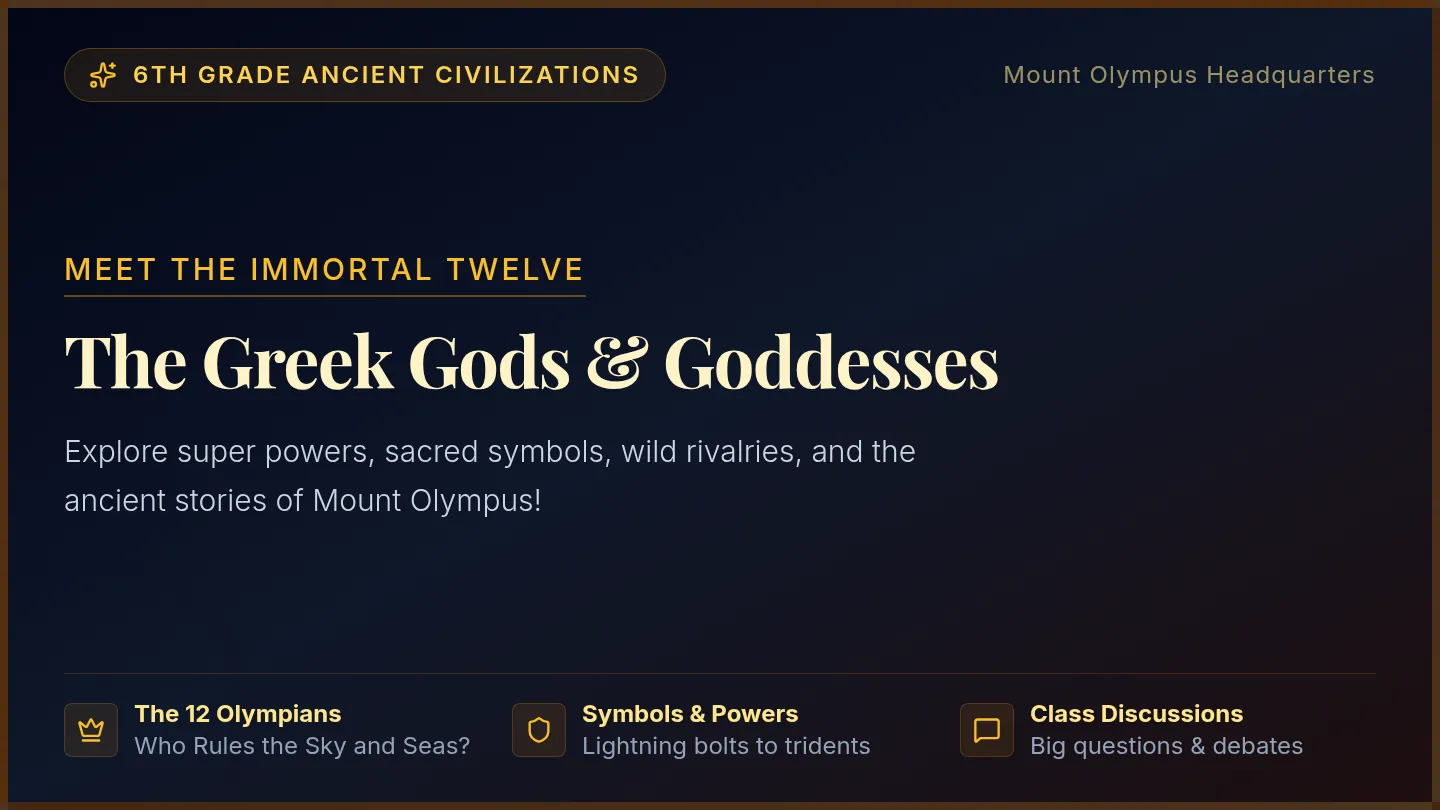
An introductory lesson to Ancient Greek Mythology, focusing on the Olympian gods, their unique powers, and the complex family tree that connects them.
This lesson explores the historical and philosophical interaction between Buddhism and Christianity in Japan. Students will examine core beliefs, the history of Jesuit missions and the 'Hidden Christians,' and how these faiths have uniquely blended into modern Japanese cultural practices.
An introductory lesson on Ancient Rome covering its founding, social structure, daily life, engineering feats, and the transition from Republic to Empire. Students explore Roman law through the Twelve Tables and analyze the factors that led to Rome's rise.
A comprehensive jigsaw activity where students analyze 10 primary sources to understand the diverse and often conflicting perspectives surrounding the American Revolution, including Loyalist, Patriot, British, and marginalized voices.
A comprehensive lesson for high school students exploring the nature of impeachment through the lens of Bill Clinton's 1998 proceedings. Students analyze political bias, the 'Culture Wars' of the 1990s, and compare historical impeachment cases to determine if such actions are based on moral defense or political strategy.
A comprehensive lesson on the Civil Rights Movement featuring gallery stations and a guided investigation worksheet. Students analyze institutional obstacles, legal strategies, non-violent and militant tactics, and the expansion of the movement to other marginalized groups.
A lesson exploring the 1787 Constitutional Convention, the roles of key Framers like James Madison, and the fundamental principles of American government including federalism, republicanism, and separation of powers.
A 40-minute introductory lesson exploring the geopolitical, military, and economic motivations behind the US involvement in the Panama Canal's construction and Panamanian independence.
A deep dive into Steven Spielberg's 'Lincoln', focusing on the political maneuvers behind the 13th Amendment and the historical figures involved.
A comparison of the fundamental principles, economic structures, and social impacts of Communism and Capitalism.
A geography and mapping lesson to visualize the spread of ideas and power in 18th-century Europe, focusing on Enlightened Absolutism and the influence of geography on governance.