Lenny.com
Explore
Create
ActivitiesNewMathEnglish Language ArtsScience & EngineeringSocial StudiesGlobal LanguagesHealth & Physical EducationSpecial EducationCounseling & Life SkillsArts & CreativityESL
Lenny.com
Lenny.com
Explore
Create
ActivitiesNewMathEnglish Language ArtsScience & EngineeringSocial StudiesGlobal LanguagesHealth & Physical EducationSpecial EducationCounseling & Life SkillsArts & CreativityESL
Lenny.com
Lenny.com

Solutions

Lenny for EducatorsLenny for SchoolsLenny for Districts

Product

ExploreSign inCreateSupportAbout

Resources

Getting startedMTSS Acceleration Program

© 2026 Lenny Learning Inc.

TermsPrivacyAccessibility
LinkedInInstagramX
Lenny

US History 1920s

Economic prosperity, social tensions, and cultural shifts defining the Roaring Twenties. Examines the Harlem Renaissance, Prohibition, the suffrage movement, and the impact of mass production on American life.

Social StudiesSocial Studies PracticesLocation WordsMapsOrder EventsChronology and CausationEvaluating SourcesHistorical ThinkingGeography, Humans, & the EnvironmentAmerican Symbols and LandmarksCitiesStatesState CapitalsRegions of the United StatesGeographic SkillsPhysical GeographyHuman GeographyRegional GeographyGeography of AfricaGeography of AsiaGeography of EuropeGeography of OceaniaGeography of the AmericasSociety and Environment of EuropeSociety and Environment of AsiaSociety and Environment of The AmericasSociety and Environment of the Middle EastSociety and Environment of AfricaHistoryPrehistoryComparing Ancient River CivilizationsAncient MesopotamiaAncient Egypt and KushAncient South AsiaEarly ChinaGreeceRome and the Byzantine EmpireAncient World HistoryNative Peoples of North AmericaNative Peoples of Mesoamerica and South AmericaAfrican EmpiresMedieval AsiaMedieval EuropeThe Silk RoadMedieval HistoryIslamic EmpiresWorld ReligionsRenaissance PeriodAge of ExplorationThe Thirteen ColoniesThe American RevolutionUS History Early RepublicFounding of the United StatesUS History AntebellumUS Civil WarReconstruction PeriodThe Gilded AgeUS ImperialismWorld ImperialismWorld War IUS History 1920sGreat DepressionWorld War IIThe Cold WarUS History 1950-60sUS History 1960s-70sWorld History 20th CenturyContemporary US HistoryContemporary World HistoryHolidaysCivics and GovernmentCitizenshipGovernment FoundationsThe ConstitutionUS ConstitutionExecutive BranchLegislative BranchJudicial BranchState and LocalPolitical ParticipationPublic PolicyPolitical SystemsPower and AuthoritySocial MovementsDefining DevianceTheories of DevianceCrime and Criminal JusticeEconomicsBasic Economic PrinciplesSupply and DemandWhat is MoneyEconomic FundamentalsMicroeconomicsMacroeconomicsBanking and FinanceEconomic SystemsGlobal EconomicsCorporations and PowerThe Changing WorkplaceUnemployment and LaborClass and InequalitySocial MobilityGlobal InequalityPsychologyHistory of PsychologyPsychology as a ScienceBrain and Nervous SystemNeuroscience and BehaviorGenetics and BehaviorSleep and ConsciousnessSensory ProcessesPerceptual OrganizationClassical ConditioningOperant ConditioningObservational LearningCognitive LearningMemory ProcessesThinking and Problem SolvingLanguage and CognitionTheories of MotivationStress and CopingPrenatal and Infant DevelopmentChildhood DevelopmentAdolescent DevelopmentAdulthood and AgingSelf and IdentitySocial CognitionSocial InfluenceAttraction and RelationshipsGroup BehaviorPrejudice and DiscriminationAnxiety and Mood DisordersClinical PsychologyForensic PsychologyPhilosophy & EthicsIntroduction to PhilosophyMajor Philosophers & IdeasMind and Body ProblemFree Will vs DeterminismEthics & MoralityReligion & PhilosophyPolitical Philosophy

Videos

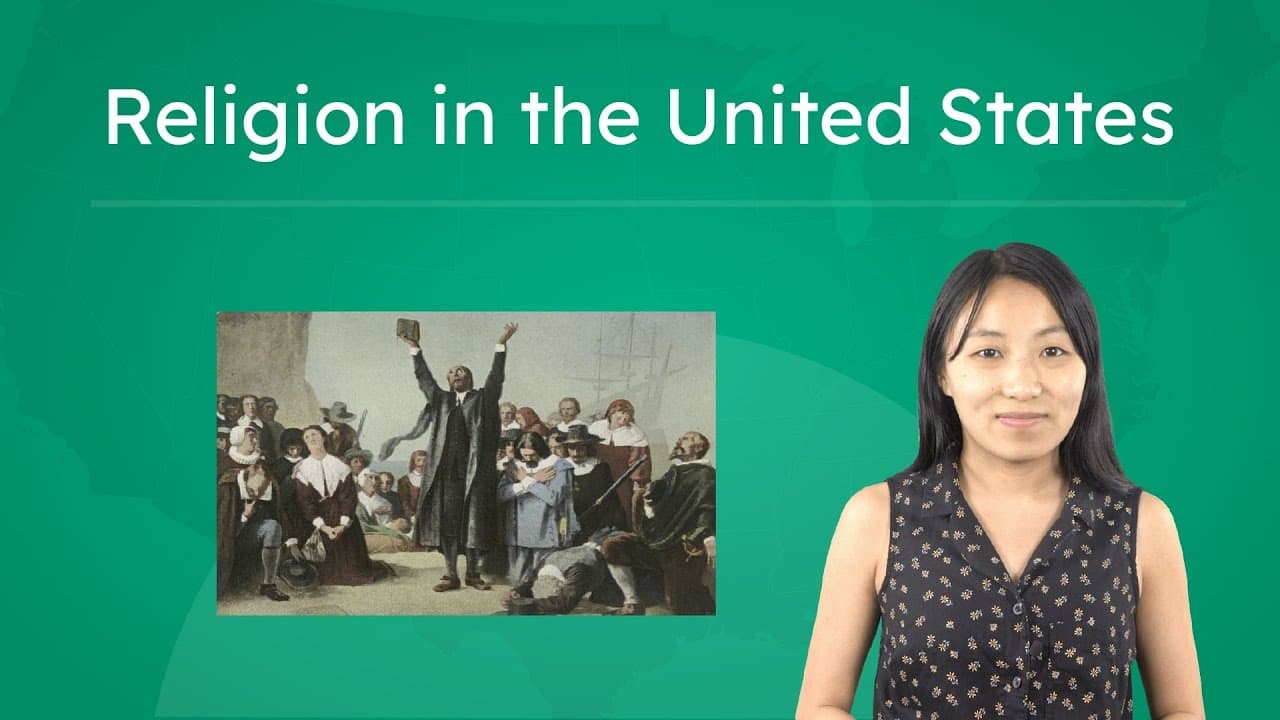
How Religion in America Evolved Through History

How Religion in America Evolved Through History

This educational video provides a comprehensive overview of the evolution of the religious landscape in the United States, tracing its roots from a predominantly Protestant colonial society to a diverse modern nation. The narrator uses relatable analogies to explain complex social dynamics before diving into key historical periods, specifically focusing on how the Great Awakening reinforced early Christian dominance and how subsequent waves of immigration introduced Catholicism, Judaism, and Eastern philosophies to the American cultural fabric. Key themes explored include the tension between the constitutional promise of religious freedom (the Free Exercise Clause) and the historical reality of discrimination faced by minority groups. The video presents case studies on Jewish immigrants fleeing antisemitism and Chinese immigrants arriving during the Gold Rush, highlighting both their contributions and the systemic barriers they encountered, such as the Immigration Act of 1924. It defines important concepts like "religious revival," "secularism," and "antisemitism" within their historical contexts. For educators, this video serves as an excellent resource for U.S. History and Civics units. It connects abstract constitutional rights to concrete historical events, allowing students to analyze demographic shifts and discuss the social impacts of immigration. The video features built-in pause points for document analysis activities, making it a ready-to-use tool for teaching about the First Amendment, the history of immigration policy, and the value of cultural diversity.

Miacademy & MiaPrep Learning ChannelMiacademy & MiaPrep Learning Channel

11mins 56s

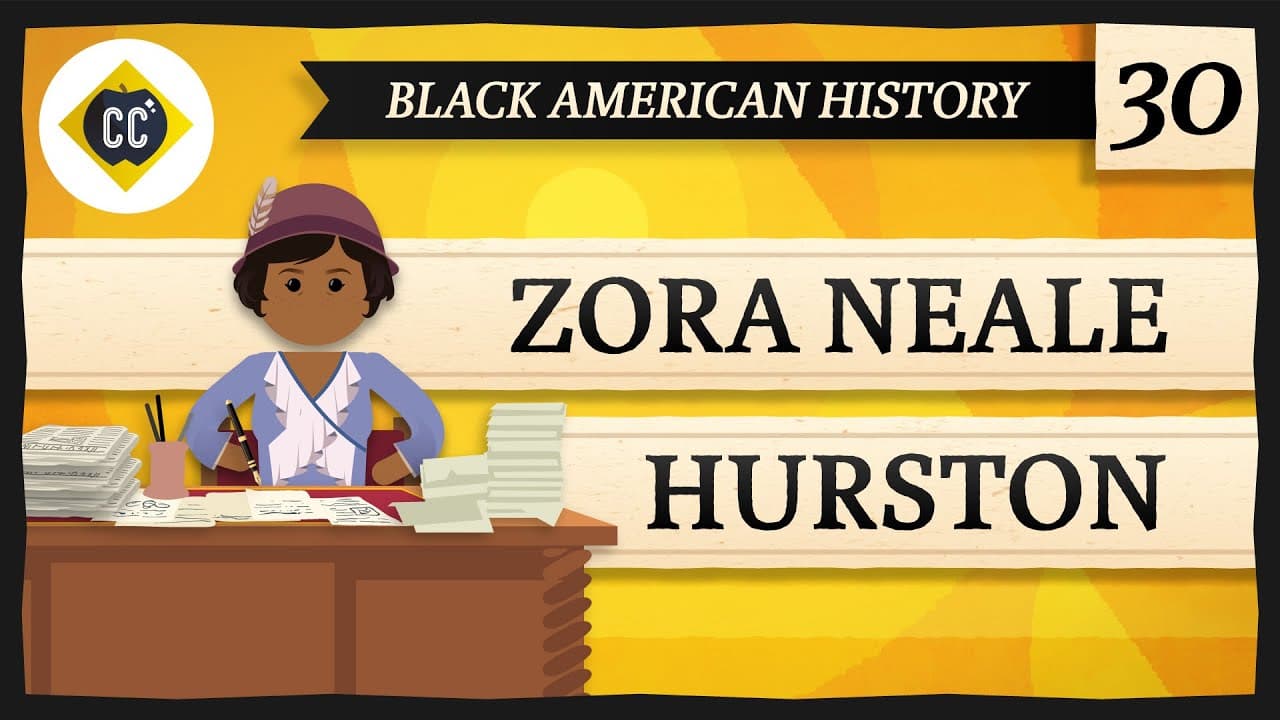
Exploring the Life and Legacy of Zora Neale Hurston

Exploring the Life and Legacy of Zora Neale Hurston

This installment of Crash Course Black American History explores the life, work, and enduring legacy of Zora Neale Hurston, a central figure of the Harlem Renaissance who broke literary barriers. Hosted by Clint Smith, the video traces Hurston's journey from her childhood in the all-Black town of Eatonville, Florida, through her education at Howard and Columbia Universities, to her rise as a uniquely anthropological storyteller. It examines how she utilized her training under Franz Boas to document Black Southern life and folklore with dignity and complexity, rather than using her characters merely as political symbols.

CrashCourseCrashCourse

10mins 4s

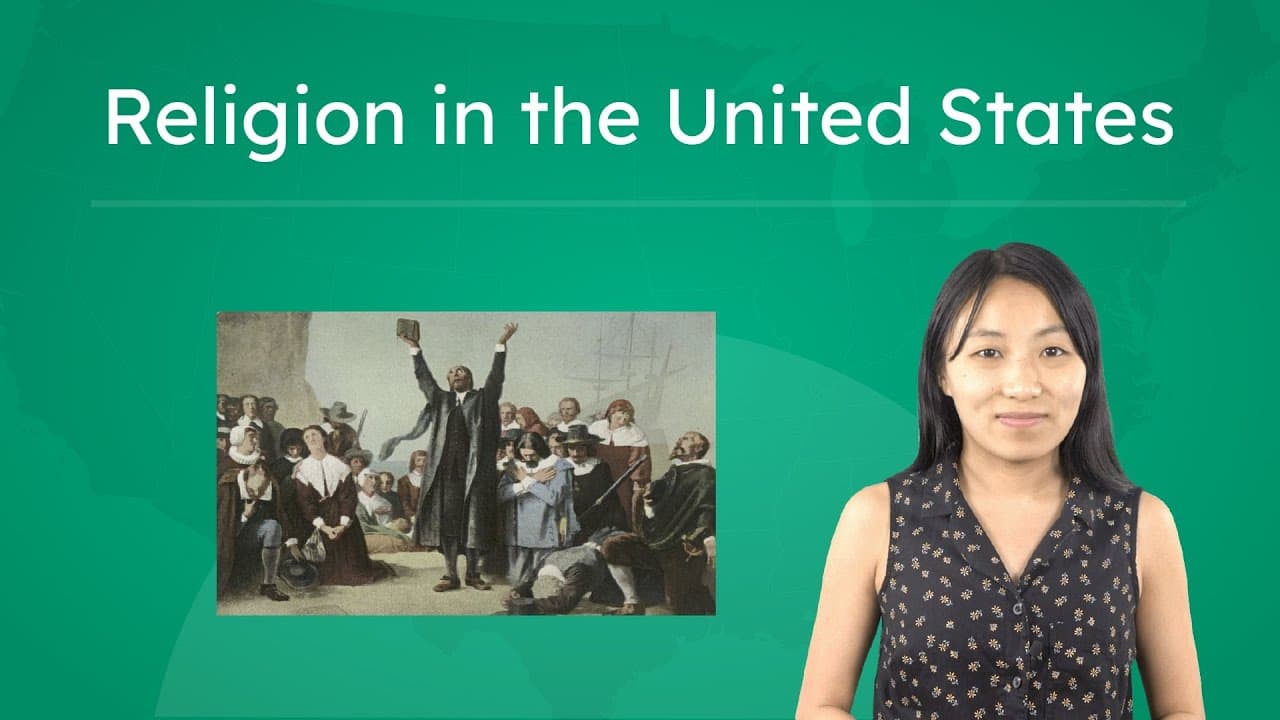
The History of Religion and Diversity in America

The History of Religion and Diversity in America

This educational video explores the evolution of the religious landscape in the United States, tracing the journey from a predominantly Protestant nation to a diverse "kaleidoscope" of faiths. The narrator guides students through three major historical phases: the dominance of Protestant Christianity reinforced by the Great Awakening, the diversification brought about by waves of immigration, and the challenges of discrimination faced by minority religious groups. Through clear definitions and historical examples, the video connects these past events to the modern cultural fabric of America. Key themes include the tension between religious freedom and societal discrimination, the impact of immigration on cultural demographics, and the role of religious revivals in American history. The video specifically highlights the Great Awakening's effect on Protestantism, the influx of Catholic and non-Christian immigrants in the 19th century, and a detailed case study on the antisemitism faced by Jewish immigrants. It emphasizes how legal protections like the First Amendment often conflicted with social realities. This resource is highly valuable for U.S. History and Civics classrooms. It provides a structured framework for understanding how American society became religiously diverse. Teachers can use the built-in pause points to facilitate analysis of primary sources (like Jonathan Edwards' sermons) or discuss the gap between constitutional ideals and historical practices. The video encourages critical thinking about tolerance, diversity, and the immigrant experience.

Miacademy & MiaPrep Learning ChannelMiacademy & MiaPrep Learning Channel

11mins 56s

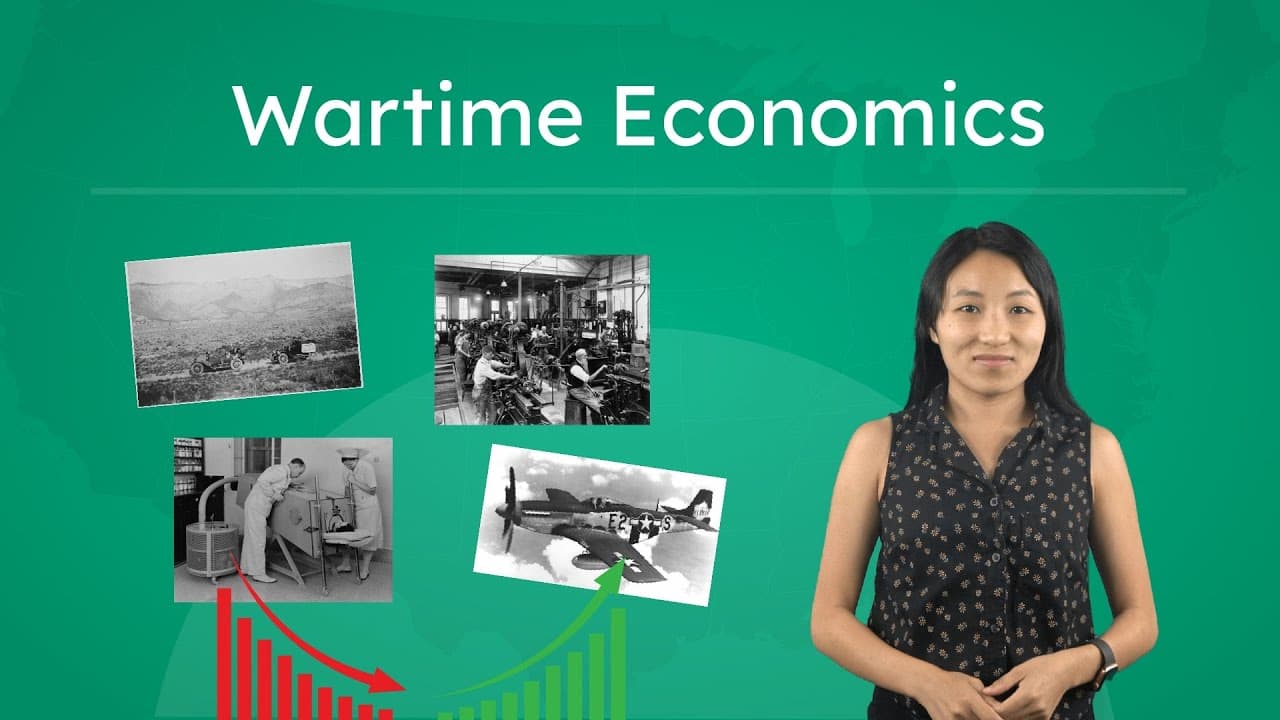
How Conflict and Crisis Built the Modern American Economy

How Conflict and Crisis Built the Modern American Economy

This educational video provides a comprehensive overview of how three major global events—World War I, the Great Depression, and World War II—transformed the United States from a regional power into a global economic superpower. The narrative begins by contrasting daily life in 1915 versus 1945, highlighting the dramatic shifts in technology, education, and labor that occurred in just thirty years. It then systematically analyzes how wartime demands and economic crises forced the federal government to expand its role in the domestic economy, shifting from a laissez-faire approach to becoming a major employer, regulator, and consumer. The video explores key economic themes such as Gross Domestic Product (GDP), unemployment rates, and federal debt. It uses clear animated charts to visualize how government spending surged during wartime and the New Deal, effectively reducing unemployment and driving industrial growth. The content explains complex concepts like the military-industrial complex (without using the term explicitly, but describing the mechanism) and the connection between government funding for war research and modern consumer technologies like the internet and commercial aviation. For educators, this resource serves as an excellent bridge between units on military history and economics. It moves beyond just dates and battles to explain the structural changes in American society. The video includes built-in pause points with guiding questions, making it ready-to-use for checking understanding. It is particularly useful for explaining the origins of the modern American middle class, the concept of the "teenager," and the lasting impact of the New Deal and WWII on the federal government's size and scope.
Miacademy & MiaPrep Learning ChannelMiacademy & MiaPrep Learning Channel

13mins 35s

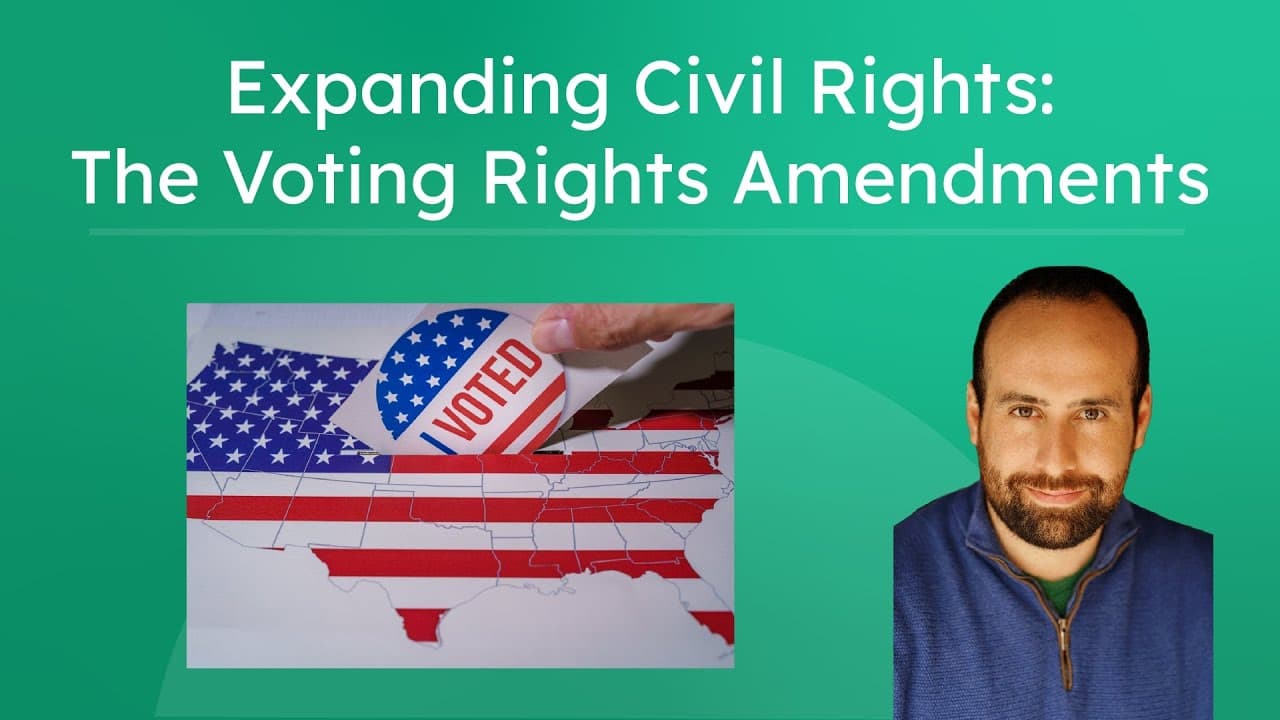
How Voting Rights Expanded in America

How Voting Rights Expanded in America

This video explores the history of expanding civil rights in the United States through the lens of voting rights amendments. It details the specific constitutional amendments (15th, 19th, 23rd, 24th, and 26th) that have broadened the electorate, moving the nation from exclusivity to inclusivity. The narrator, Juan, explains the concept of suffrage and how marginalized groups, particularly African Americans and women, have organized and fought to participate in democracy despite significant barriers like Jim Crow laws. Key themes include the definition of civil rights, the tension between state and federal powers regarding election management, and the philosophical views of Alexis de Tocqueville on the self-perpetuating nature of democratic expansion. It highlights the Voting Rights Act of 1965, specifically the concept of preclearance, and the 24th Amendment's ban on poll taxes. The video emphasizes the "revolutionary tradition"—the gap between American ideals and social reality—as a driving force for change. This resource is excellent for High School US History and Civics classes. It provides a clear timeline of voting rights legislation and explains complex political science concepts like disenfranchisement and federalism in an accessible way. Teachers can use this video to anchor discussions on the evolution of democracy, the importance of civic participation, and the specific legal mechanisms used to suppress or expand voting access throughout American history.

Miacademy & MiaPrep Learning ChannelMiacademy & MiaPrep Learning Channel

10mins 34s

Evaluating the Justification of Violence and Rebellion in U.S. History

Evaluating the Justification of Violence and Rebellion in U.S. History

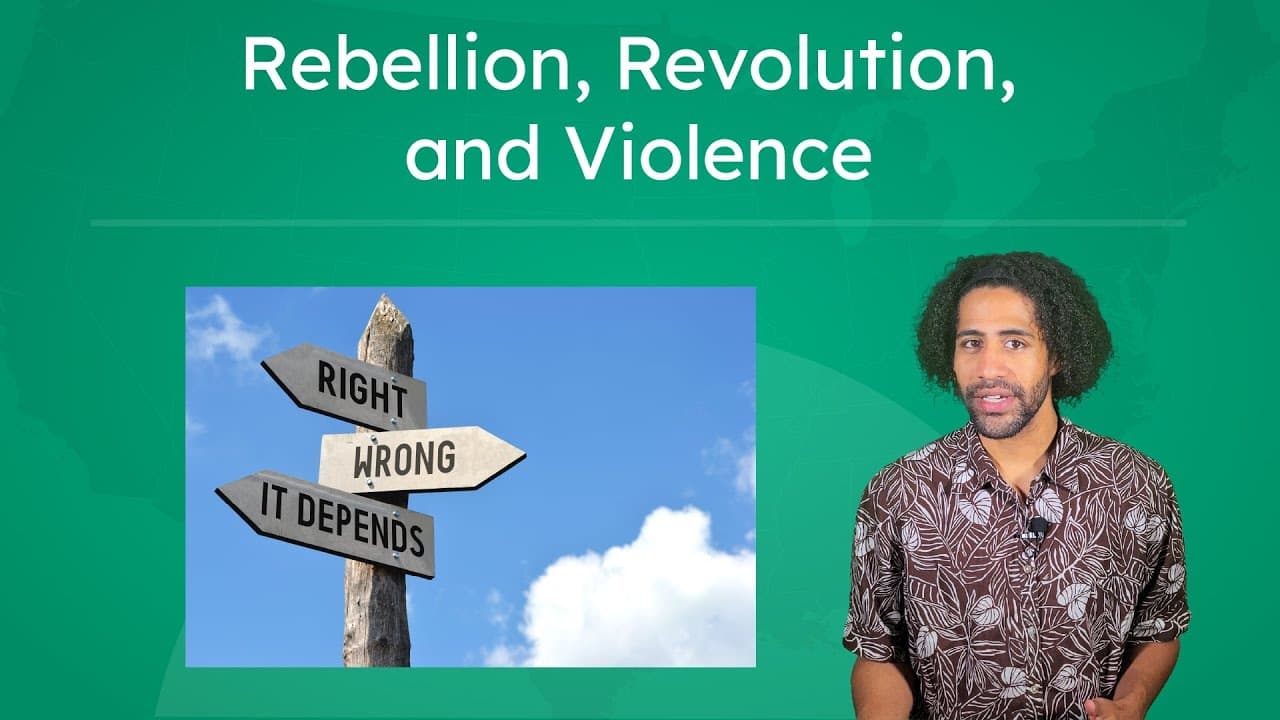
This educational video explores the complex ethical question of whether violence and property destruction can ever be justified during protests, rebellions, or revolutions. Through the philosophical lens of "moral relativism," it examines how historical context, cultural values, and personal perspectives shape the judgment of violent acts. The lesson uses an introductory animated scenario of a modern protest to hook viewers before pivoting to a structured analysis of three pivotal case studies from United States history. The content covers three significant events in detail: Bacon's Rebellion (1676), the raid on Harpers Ferry (1859), and the Tulsa Race Massacre (1921). For each event, the narrator details the motivations of the perpetrators, the violent methods employed, and the drastically different public reactions at the time and in hindsight. Special attention is paid to the historical consequences of these events, such as Bacon's Rebellion leading to a hardening of racial slavery laws to divide the working class, and John Brown's raid accelerating the onset of the Civil War. For educators, this resource serves as an excellent tool for fostering critical thinking and historical analysis in high school social studies classrooms. It moves beyond rote memorization to ask students to evaluate the morality of historical figures and the long-term legacy of their actions. By connecting abstract ethical concepts to concrete historical examples, the video helps students understand why different groups may view the same event as either a heroic struggle for justice or a criminal act of terrorism.

Miacademy & MiaPrep Learning ChannelMiacademy & MiaPrep Learning Channel

12mins 27s

Materials

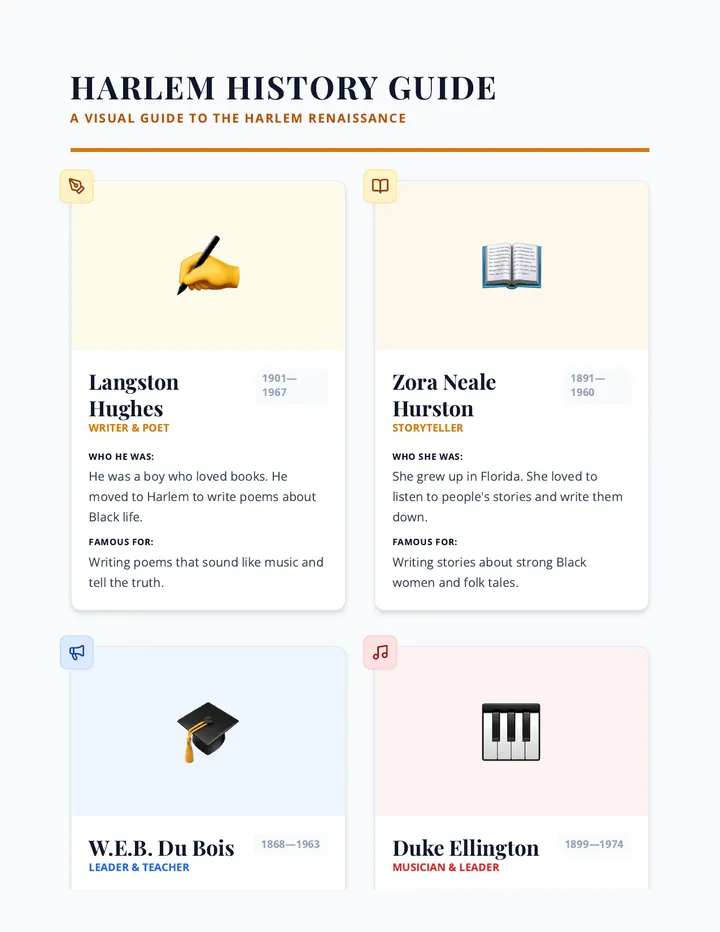
Harlem History Guide Document

Harlem History Guide Document

Updated Harlem History Guide by removing Grade/Level references and replacing historical photographs with representative emojis for a more stylized, illustrative look.

CG

Connor Green

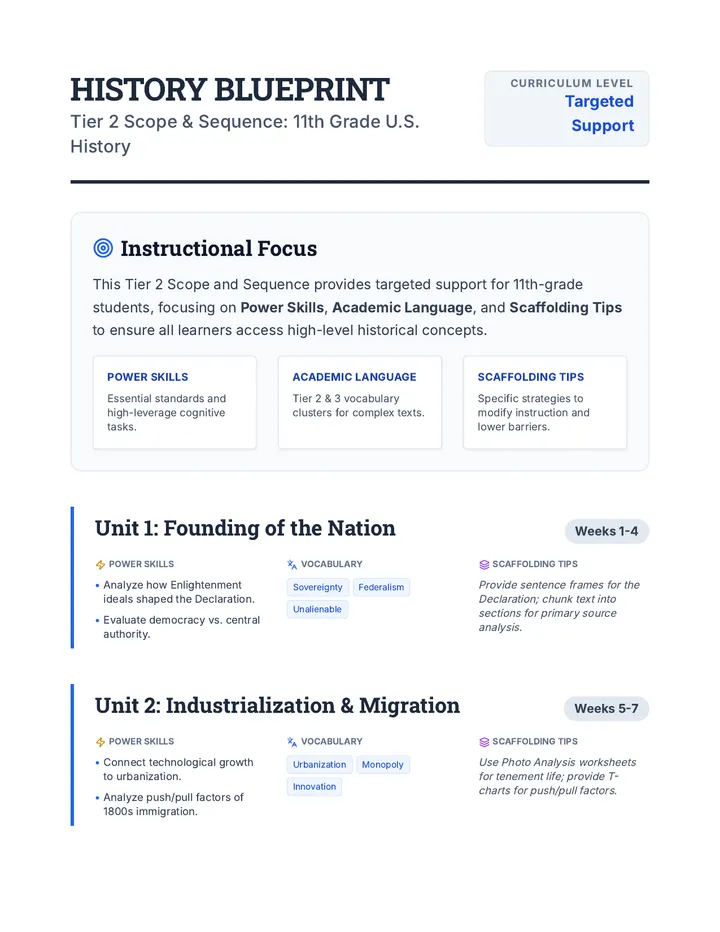
History Blueprint Scope and Sequence

History Blueprint Scope and Sequence

An updated Tier 2 Scope and Sequence for 11th Grade U.S. History, now including specific scaffolding tips for each unit alongside power skills and academic vocabulary. The layout is optimized for teacher reference with instructional strategies tailored for targeted support.

D

dfleisch

Suffrage Champion Profile

Suffrage Champion Profile

A vintage Progressive Era suffragist collectible trading card and biographical dossier featuring an archival-styled portrait, historical statistics, activist achievements, primary source quote, and movement analysis questions.

PN

Pamila Nicholas

Harlem Words Pretest Revised

Harlem Words Pretest Revised

Updated vocabulary pre-assessment for the Harlem Renaissance unit, featuring the exact response wording requested ("I know this!", "I've heard it before...", "I've never heard..."). Designed for middle school students with 2nd-grade reading levels in a self-contained setting.

CG

Connor Green

Sequences

Mobilization Intro Slides

Global Conflict WWII

A comprehensive 2-day unit covering World War II for 11th Grade US History, aligned with TEKS. It focuses on the transition from isolationism to total war, the home front experience, major turning points in both the European and Pacific theaters, and the strategic decisions that ended the conflict.

BB

Bridgette Burdick

17
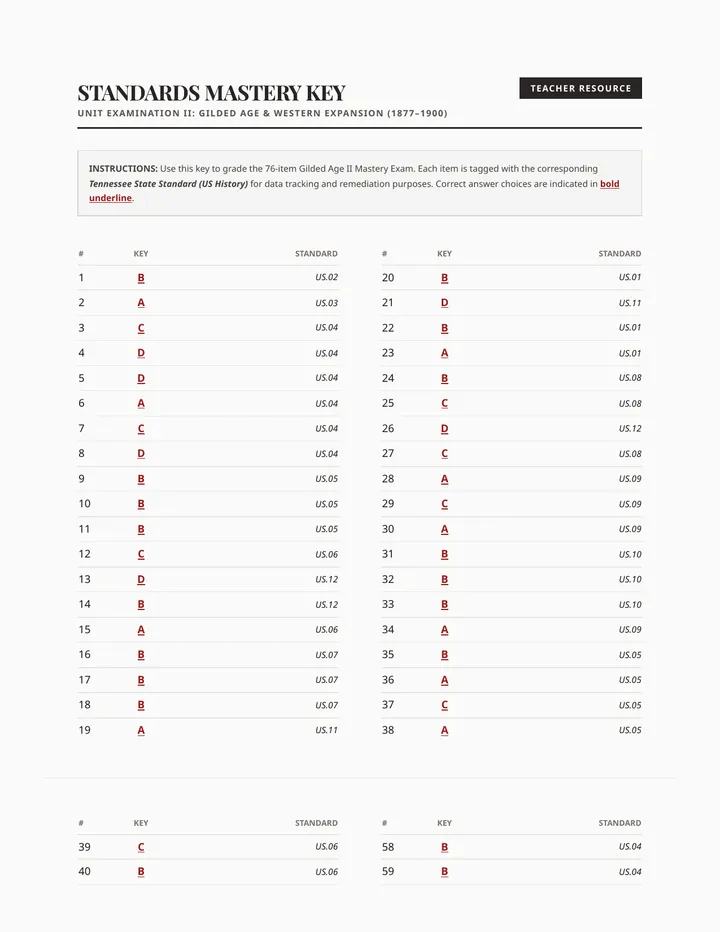
Gilded Age II Standards Key

Modern America Mastery

A comprehensive curriculum sequence covering late 19th and early 20th-century American history, focusing on economic transformation, Western expansion, global imperialism, and the impact of the Great War.

A

Andrew

29
Curriculum Blueprint Document v2

History Horizon Sequence

A comprehensive high school curriculum plan for American History, covering 13 units from the American Revolution to the modern era, aligned with North Carolina Social Studies standards.

AK

Amity Kea

21
Depression and New Deal Mastery Test Document v2

Depression and New Deal Era

A comprehensive unit covering the economic boom of the 1920s, the Great Depression, and the New Deal. Includes lessons on the Prosperity Paradox, the Stock Market Collapse, the Dust Bowl, and government responses.

A

Andrew

18
G5 Ubuntu Joy Slides

Centennial Soul Sequence

A 6-lesson sequence divided by grade level (5th, 6th, and 7th), celebrating 100 years of Black history through school values. Each grade explores two distinct lessons focusing on community joy, personal excellence, and mental health advocacy.

JS

Joleen Shillingford

15
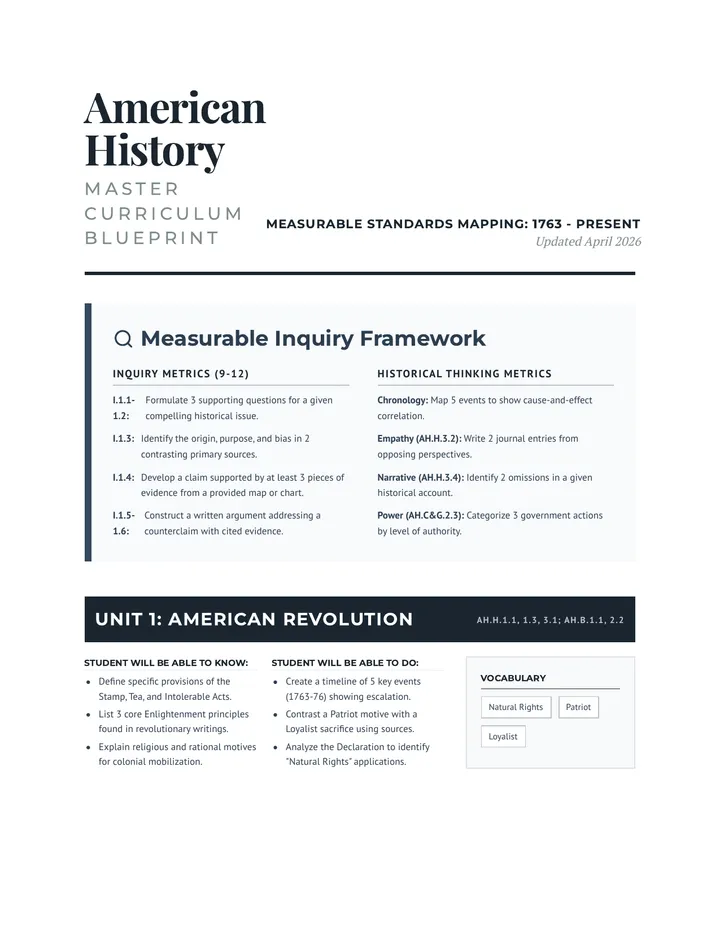
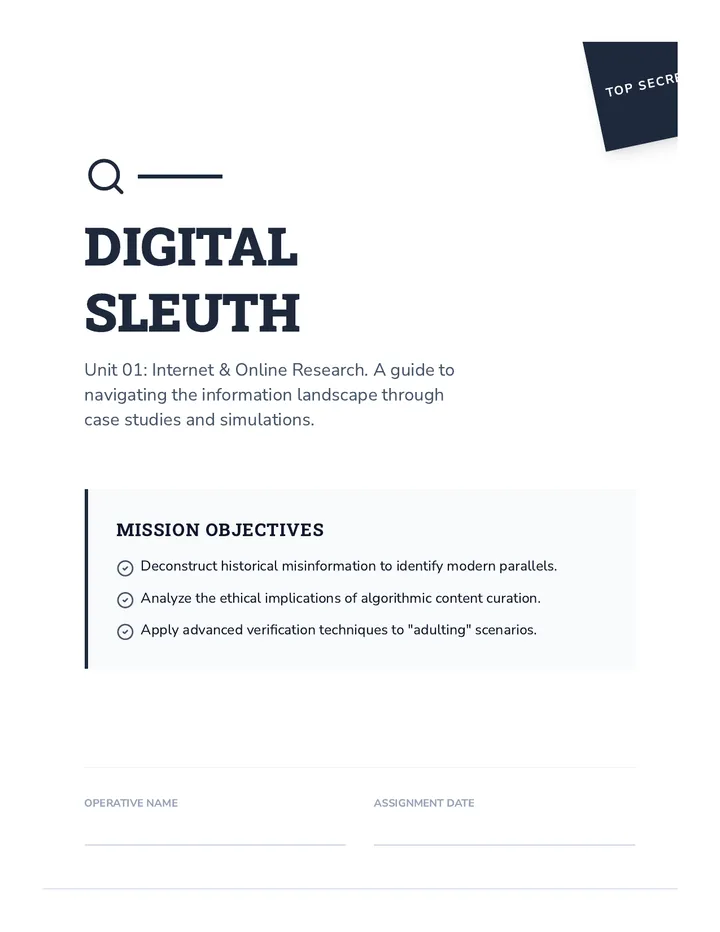
Digital Sleuth Workbook

The Citizen Dossier

A comprehensive curriculum covering financial literacy, economic principles, and civic systems through historical case studies, ethical dilemmas, and real-world simulations.

CM

carley Martin

10

Lessons

History Sprint Pacing Guide

STAAR History Sprint

A comprehensive pacing guide and activity resource designed to cover the remaining 11th Grade US History TEKS before the STAAR test on April 16th. This lesson provides a day-by-day calendar for A/B block schedules and high-engagement activities for each remaining historical era.

BB

Bridgette Burdick

51
Black History Scavenger Hunt Lesson Plan

Black History Scavenger Hunt

A game-based lesson where students solve clues to discover significant figures and events in Black history, promoting cultural awareness and teamwork.

JH

Jade Hodge

5
Your Vote Your Voice Lesson Plan

Your Vote Your Voice

This lesson empowers 11th-grade students to understand the impact of voting on their lives and communities, covering historical struggles for voting rights and the responsibilities of informed citizenship.

K

kylene.smith

6
Era Review Challenge Practice Sheet

Era Review Challenge

A quick review lesson designed to prepare students for US History STAAR assessments, focusing on four key eras: Imperialism, the Roaring 20s, the Great Depression, and WWII.

BB

Bridgette Burdick

14
Broken Bank Slides

Economic Collapse

An in-depth look at the multi-faceted causes of the Great Depression, including the Stock Market Crash of 1929, bank failures, and agricultural overproduction. Students will analyze primary sources to understand the human impact of these economic shifts.

S

styrken

6
Freedom Milestones Crossword Worksheet

Freedom Milestones

A lesson focused on pivotal moments in Black history through engaging vocabulary activities, designed to reinforce key terms and historical events.

MK

Marlyce Kemp

7