Lenny.com
Explore
Create
ActivitiesNewMathEnglish Language ArtsScience & EngineeringSocial StudiesGlobal LanguagesHealth & Physical EducationSpecial EducationCounseling & Life SkillsArts & CreativityESL
Lenny.com
Lenny.com
Explore
Create
ActivitiesNewMathEnglish Language ArtsScience & EngineeringSocial StudiesGlobal LanguagesHealth & Physical EducationSpecial EducationCounseling & Life SkillsArts & CreativityESL
Lenny.com
Lenny.com

Solutions

Lenny for EducatorsLenny for SchoolsLenny for Districts

Product

ExploreSign inCreateSupportAbout

Resources

Getting startedMTSS Acceleration Program

© 2026 Lenny Learning Inc.

TermsPrivacyAccessibility
LinkedInInstagramX
Lenny

Global Economics

Analyzes international trade dynamics, currency fluctuations, and global market interdependencies. Addresses the roles of international organizations like the IMF and World Trade Organization in regulating global commerce.

Social StudiesSocial Studies PracticesLocation WordsMapsOrder EventsChronology and CausationEvaluating SourcesHistorical ThinkingGeography, Humans, & the EnvironmentAmerican Symbols and LandmarksCitiesStatesState CapitalsRegions of the United StatesGeographic SkillsPhysical GeographyHuman GeographyRegional GeographyGeography of AfricaGeography of AsiaGeography of EuropeGeography of OceaniaGeography of the AmericasSociety and Environment of EuropeSociety and Environment of AsiaSociety and Environment of The AmericasSociety and Environment of the Middle EastSociety and Environment of AfricaHistoryPrehistoryComparing Ancient River CivilizationsAncient MesopotamiaAncient Egypt and KushAncient South AsiaEarly ChinaGreeceRome and the Byzantine EmpireAncient World HistoryNative Peoples of North AmericaNative Peoples of Mesoamerica and South AmericaAfrican EmpiresMedieval AsiaMedieval EuropeThe Silk RoadMedieval HistoryIslamic EmpiresWorld ReligionsRenaissance PeriodAge of ExplorationThe Thirteen ColoniesThe American RevolutionUS History Early RepublicFounding of the United StatesUS History AntebellumUS Civil WarReconstruction PeriodThe Gilded AgeUS ImperialismWorld ImperialismWorld War IUS History 1920sGreat DepressionWorld War IIThe Cold WarUS History 1950-60sUS History 1960s-70sWorld History 20th CenturyContemporary US HistoryContemporary World HistoryHolidaysCivics and GovernmentCitizenshipGovernment FoundationsThe ConstitutionUS ConstitutionExecutive BranchLegislative BranchJudicial BranchState and LocalPolitical ParticipationPublic PolicyPolitical SystemsPower and AuthoritySocial MovementsDefining DevianceTheories of DevianceCrime and Criminal JusticeEconomicsBasic Economic PrinciplesSupply and DemandWhat is MoneyEconomic FundamentalsMicroeconomicsMacroeconomicsBanking and FinanceEconomic SystemsGlobal EconomicsCorporations and PowerThe Changing WorkplaceUnemployment and LaborClass and InequalitySocial MobilityGlobal InequalityPsychologyHistory of PsychologyPsychology as a ScienceBrain and Nervous SystemNeuroscience and BehaviorGenetics and BehaviorSleep and ConsciousnessSensory ProcessesPerceptual OrganizationClassical ConditioningOperant ConditioningObservational LearningCognitive LearningMemory ProcessesThinking and Problem SolvingLanguage and CognitionTheories of MotivationStress and CopingPrenatal and Infant DevelopmentChildhood DevelopmentAdolescent DevelopmentAdulthood and AgingSelf and IdentitySocial CognitionSocial InfluenceAttraction and RelationshipsGroup BehaviorPrejudice and DiscriminationAnxiety and Mood DisordersClinical PsychologyForensic PsychologyPhilosophy & EthicsIntroduction to PhilosophyMajor Philosophers & IdeasMind and Body ProblemFree Will vs DeterminismEthics & MoralityReligion & PhilosophyPolitical Philosophy

Videos

How Your T-Shirt Explains the Global Economy

How Your T-Shirt Explains the Global Economy

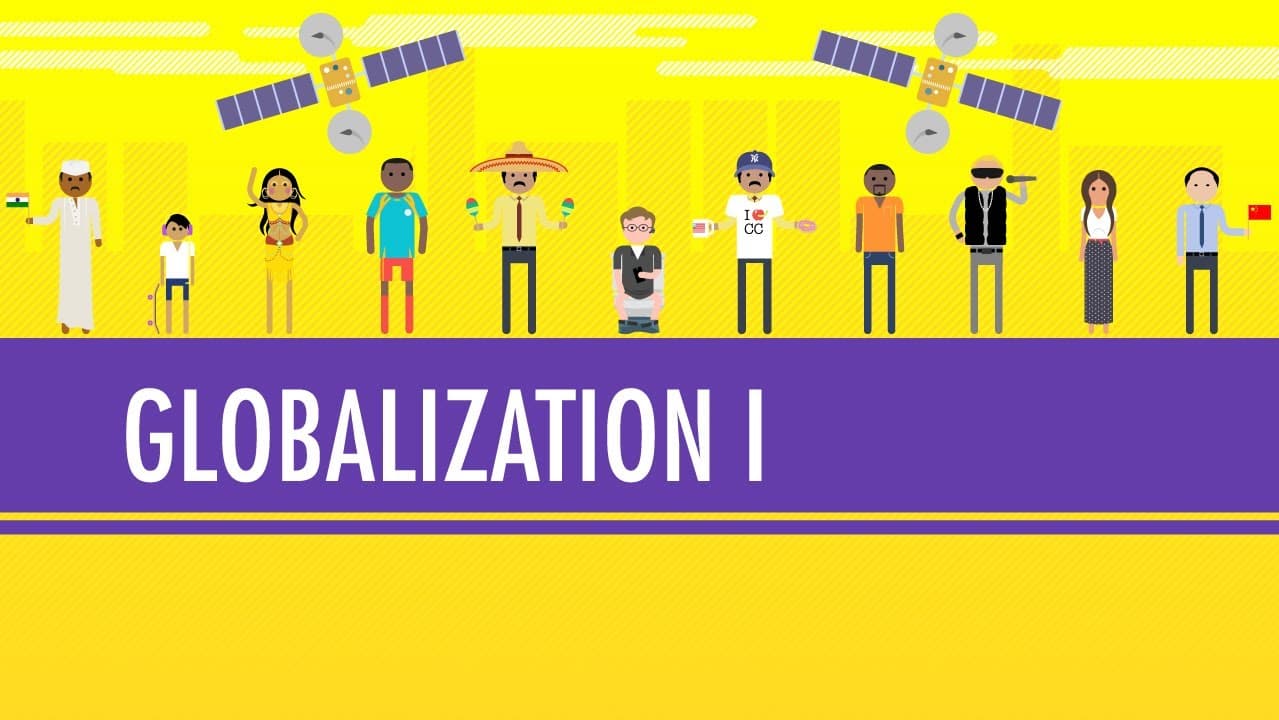
In this energetic installment of Crash Course World History, John Green tackles the complex subject of globalization by focusing primarily on international trade and cultural exchange. Using the lifecycle of a simple cotton t-shirt as a central case study, the video illustrates how economic interdependence connects farmers in the US, textile workers in low-wage countries, and consumers worldwide. It breaks down the drivers of modern globalization, including multinational corporations, cheap shipping, and reduced government regulations. The video explores both the benefits and drawbacks of this interconnected system. It highlights how globalization has lifted hundreds of millions out of poverty in developing nations through manufacturing jobs, while simultaneously disrupting industries in developed nations and raising questions about environmental sustainability and labor conditions. The narrative also touches on cultural globalization, discussing migration, remittances, and the blending of global cultures through food, media, and sports. For educators, this video serves as an excellent primer for units on modern economics, human geography, or contemporary history. It provides concrete examples that make abstract economic concepts tangible for students. The "Journey of a T-Shirt" segment offers a perfect launchpad for classroom activities involving supply chain mapping, while the discussion on cultural homogenization versus diversification provides rich material for debates and essays.

CrashCourseCrashCourse

11mins 51s

From the Wheel to the Web: How Technology Drives Globalization

From the Wheel to the Web: How Technology Drives Globalization

This video provides an engaging historical overview of how technology has driven globalization from ancient times to the present day. Hosted by an energetic narrator, the lesson breaks down technological progress into three main eras: early tools of connection like the wheel and compass, the "Age of Acceleration" featuring the telephone and airplane, and the modern Digital Web. Through these stages, the video illustrates how inventions have progressively shrunk the world, facilitating the rapid exchange of goods, people, and ideas. Key themes include the concept of globalization, cultural diffusion, and the societal impact of mass communication. The video uses specific historical examples—such as the Protestant Reformation fueled by the printing press and the Arab Spring organized via social media—to show how technology doesn't just change how we communicate, but fundamental aspects of culture, politics, and daily life. It also touches on modern concepts like global supply chains and the digital divide. For educators, this video is an excellent tool for Social Studies, Geography, and History classrooms. It effectively bridges the gap between ancient history and students' digital lives, making abstract concepts like "cultural diffusion" concrete through relatable examples like sushi and K-pop. The clear segmentation of the video allows teachers to pause and focus on specific technologies, while the built-in discussion questions provide ready-made opportunities for checking understanding and critical thinking.

Miacademy & MiaPrep Learning ChannelMiacademy & MiaPrep Learning Channel

11mins 12s

Why the Bronze Age Civilizations Collapsed

Why the Bronze Age Civilizations Collapsed

In this episode of Crash Course World History, John Green explores the mysterious collapse of the Bronze Age civilizations in the Eastern Mediterranean around 1200 BCE. The video challenges the traditional narrative of separate, isolated civilizations by demonstrating how Egypt, the Hittites, the Mycenaeans, and others formed a highly interconnected international system defined by trade, diplomacy, and war. It examines the evidence for this interdependence, including the famous Uluburun shipwreck and the Amarna Letters.

CrashCourseCrashCourse

12mins 58s

How the Cold War Began: From Allies to Enemies

How the Cold War Began: From Allies to Enemies

This educational video from Crash Course European History explores the origins and early years of the Cold War, detailing the transition from the uneasy alliance of World War II to a bipolar world divided between the United States and the Soviet Union. Host John Green explains how diplomatic conferences at Yalta and Potsdam set the stage for post-war tensions, leading to the division of Germany and the erecting of the "Iron Curtain." The video covers the ideological, economic, and military escalations that defined the era, including the Marshall Plan, the Berlin Airlift, and the nuclear arms race. The content delves into key themes such as the geopolitical restructuring of Europe, the role of propaganda and fear in daily life, and the globalization of the conflict through proxy wars like the Korean War. It examines the contrasting post-war realities of a wealthy United States versus a devastated Soviet Union and how these disparities influenced international relations. The video also highlights cultural impacts, referencing literature like George Orwell's *1984* and the rise of spy fiction, illustrating how the Cold War permeated popular culture and individual psychology. For educators, this video serves as an excellent primer for units on 20th-century history, international relations, or government. It helps students understand complex concepts like containment, spheres of influence, and mutual assured destruction without getting bogged down in military tactics. The Thought Bubble segment offers a valuable comparison of daily life in the East and West, providing a springboard for discussions on media literacy, propaganda, and the human cost of ideological conflict.
CrashCourseCrashCourse

14mins 46s

Imperialism in Western Asia and North Africa

Imperialism in Western Asia and North Africa

This educational video explores the history of European imperialism in Western Asia and North Africa during the 19th and early 20th centuries. It provides a detailed look at the decline of the Ottoman Empire and the subsequent power vacuum that led European powers, particularly Great Britain and Russia, to vie for control over strategic territories and resources. The video covers key historical events such as "The Great Game" over Afghanistan, the rise of economic imperialism in Persia (modern-day Iran), and the British occupation of Egypt following the construction of the Suez Canal. A central theme of the video is the distinction between direct military conquest and economic imperialism. It illustrates this through the example of the Anglo-Persian Oil Company and the Tobacco Regie concession in Persia, showing how foreign control of local industries sparked nationalist uprisings like the Persian Tobacco Boycott. The video also examines the modernization efforts in Egypt under Muhammad Ali and how the financial burden of the Suez Canal eventually led to the loss of Egyptian sovereignty. This resource is highly valuable for World History classrooms as it connects 19th-century imperialism to modern geopolitical tensions in the Middle East. By highlighting the long-term consequences of foreign intervention—such as the seeds of anti-Western sentiment and the "scars" of imperialism—it helps students understand current events through a historical lens. The video features clear definitions, maps, and guided questions, making it an effective tool for teaching complex concepts like spheres of influence and geopolitical strategy.

Miacademy & MiaPrep Learning ChannelMiacademy & MiaPrep Learning Channel

10mins 25s

How International Organizations Protect the Environment

How International Organizations Protect the Environment

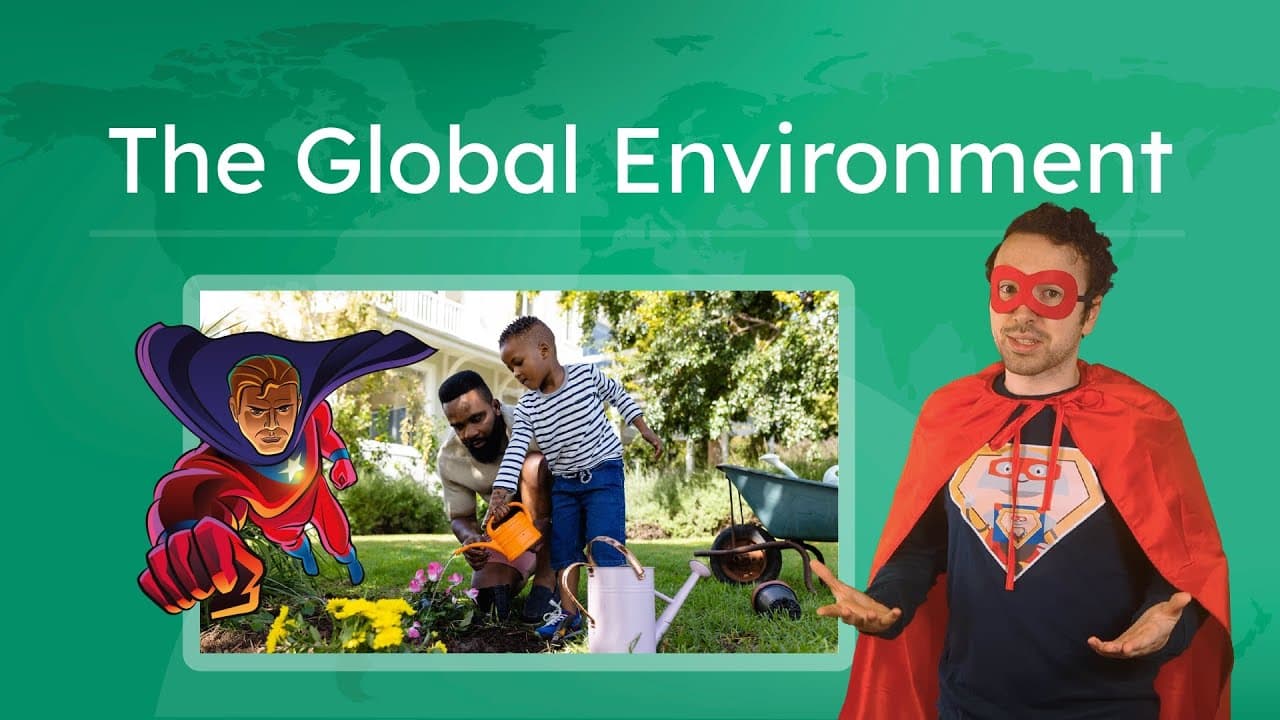
This educational video uses a superhero theme to introduce students to the concept of international environmental cooperation. It explains that while individual actions matter, global challenges like climate change and pollution require global solutions coordinated by international organizations. The video specifically highlights the United Nations Environment Programme (UNEP) and its role in fostering cooperation among nations to tackle environmental threats.

Miacademy & MiaPrep Learning ChannelMiacademy & MiaPrep Learning Channel

10mins 39s

Materials

Energy Crisis Rubric

Energy Crisis Rubric

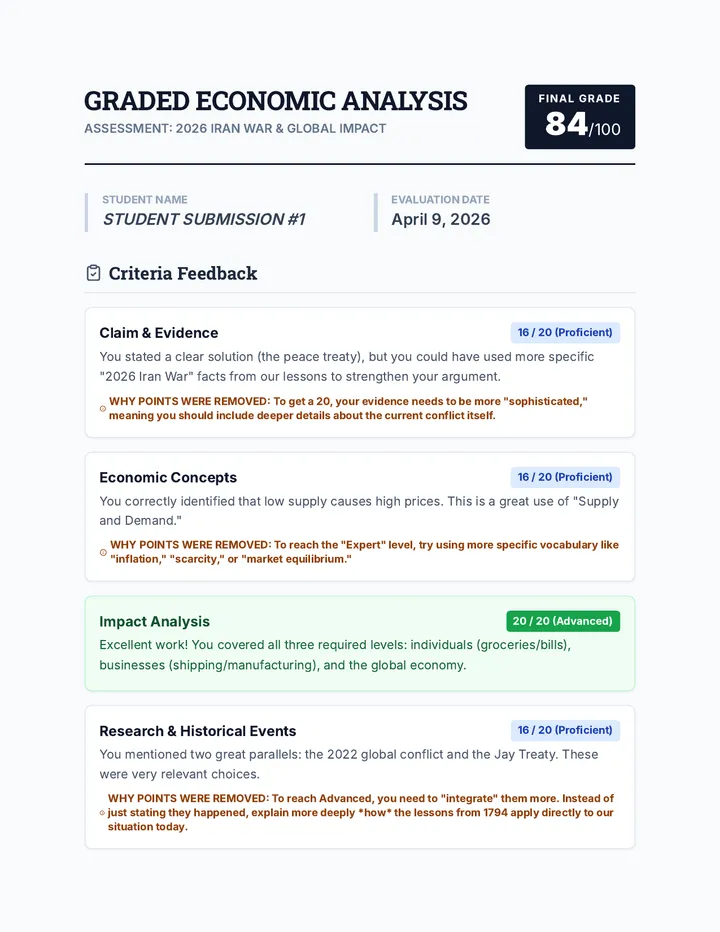
A professional 5-point rubric for evaluating an essay on the economic impacts of the 2026 Iran War oil shortage. It breaks down 100 total points across six categories including claim quality, economic concepts, impact analysis, research, organization, and mechanics.

SB

Shanna Brady

Liberty Ledger Assignment

Liberty Ledger Assignment

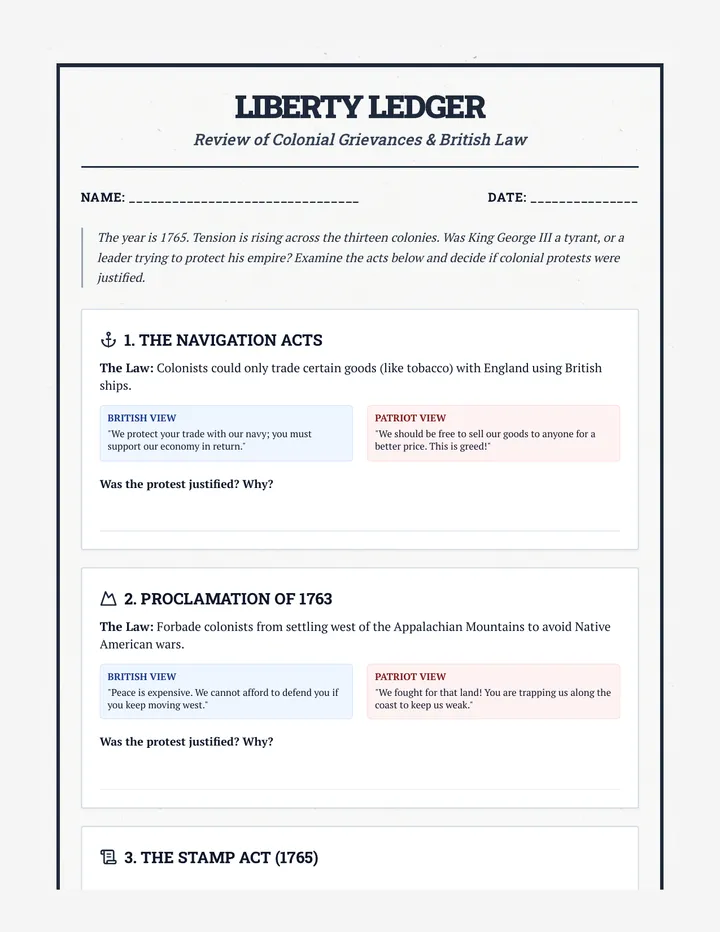
A two-sided homework assignment reviewing the Navigation Acts, Proclamation of 1763, and the Stamp Act. It prompts students to evaluate both British and Patriot perspectives to determine if colonial protests were justified. Margins have been significantly reduced for better print utilization on standard paper.

EK

Emily Kemnitz

Treize Colonies Carte Économique

Treize Colonies Carte Économique

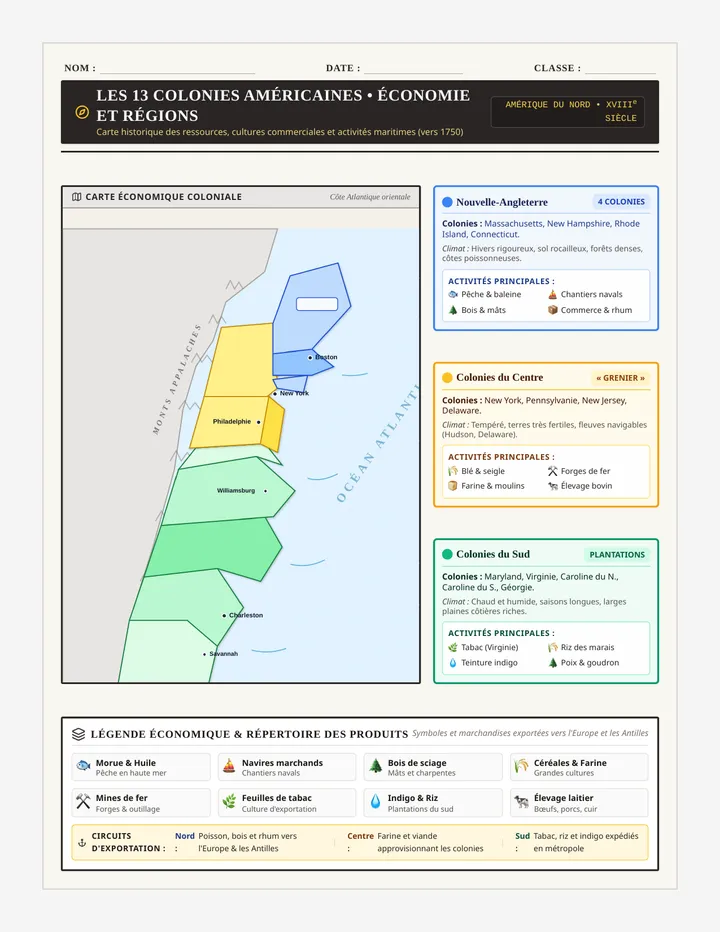
Carte économique imprimable des treize colonies américaines avec les trois régions coloniales, leurs productions clés et les ressources majeures en français.

CS

Carlos Santos

History Blueprint Scope and Sequence

History Blueprint Scope and Sequence

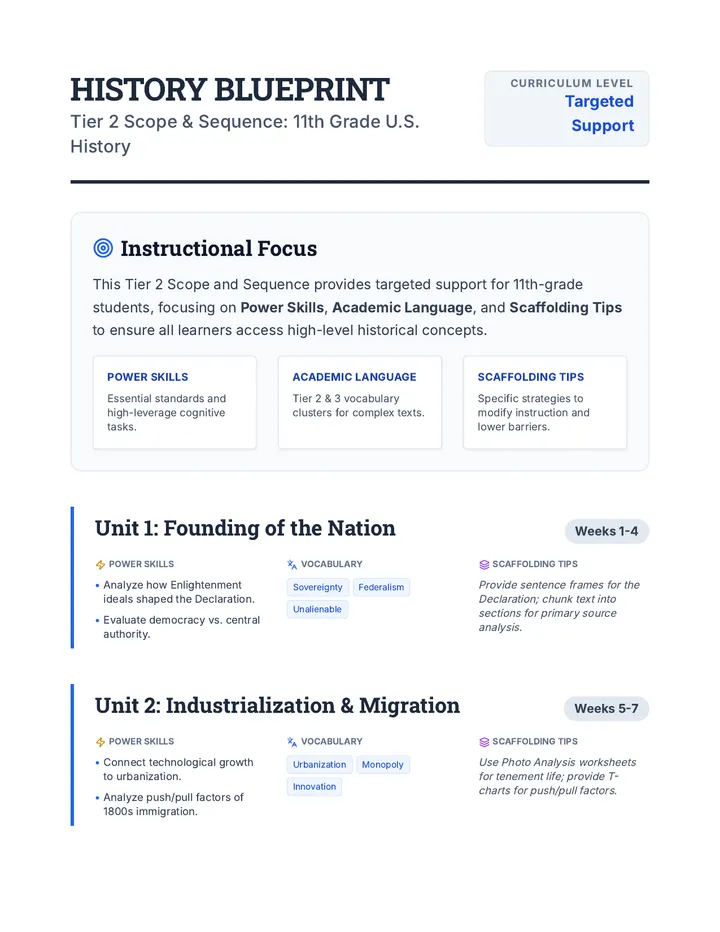
An updated Tier 2 Scope and Sequence for 11th Grade U.S. History, now including specific scaffolding tips for each unit alongside power skills and academic vocabulary. The layout is optimized for teacher reference with instructional strategies tailored for targeted support.

D

dfleisch

Graded Energy Analysis Report

Graded Energy Analysis Report

A detailed feedback report for a student's essay on the 2026 energy crisis, featuring a clear points breakdown, specific reasons for score deductions, and encouraging instructor notes based on a provided rubric.

SB

Shanna Brady

Crisis Analysis Grade Report

Crisis Analysis Grade Report

A detailed grade report based on the Energy Crisis Rubric, featuring a breakdown of scores and clear, constructive feedback for the student's essay.

SB

Shanna Brady

Sequences

Economics Essentials Facilitation Guide

Economics Essentials Packet

A 7-day remediation packet for 12th-grade economics focusing on fundamental concepts like scarcity, supply and demand, economic systems, and international trade, scaffolded for accessibility.

CE

Chelsea Elliott

29
Unity Roadmap Teacher Guide

Unity and Growth

A modified Modern US History curriculum (Founding to Present) for Tier 2 and 3 special education students, based on Grade 11 Social Studies standards. Focuses on government, industrialization, world wars, and civil rights.

D

dfleisch

26
Global Grid Student Handbook

Power of Position

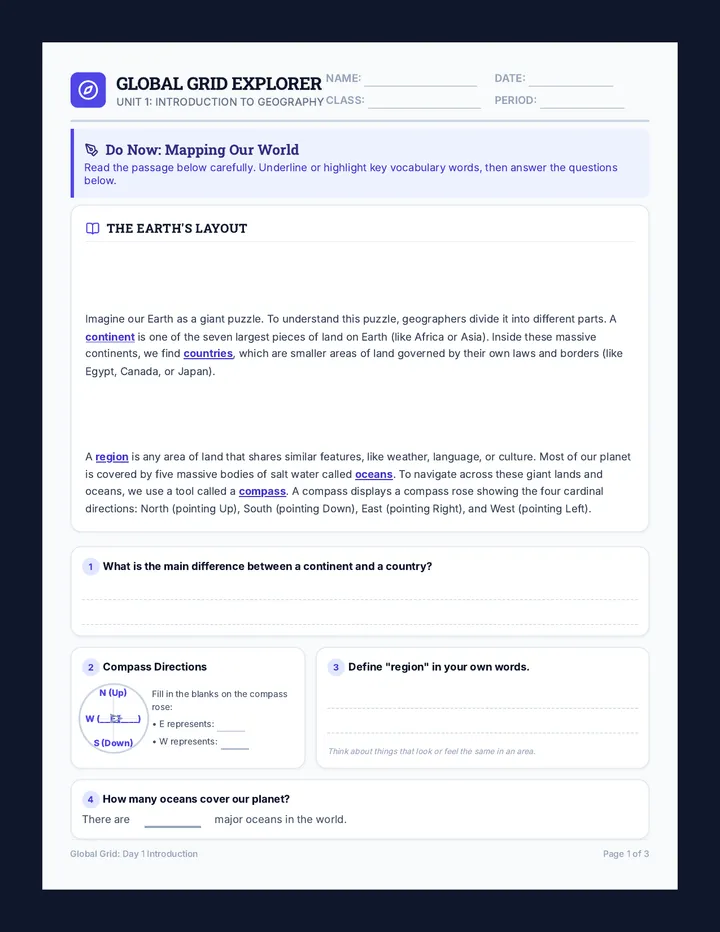
A 4-day introductory world history sequence exploring how geographic location, natural barriers, and famous trade routes shaped the rise, wealth, and power of global empires.

AG

Amina Gueye

14
Reconstruction Reckoning Worksheet

Modern America

A comprehensive journey through United States history from the aftermath of the Civil War to the contemporary era, exploring the social, political, and economic shifts that shaped the modern nation.

DP

Darren Polamalu

18
Mobilization Intro Slides

Global Conflict WWII

A comprehensive 2-day unit covering World War II for 11th Grade US History, aligned with TEKS. It focuses on the transition from isolationism to total war, the home front experience, major turning points in both the European and Pacific theaters, and the strategic decisions that ended the conflict.

BB

Bridgette Burdick

17
Era of Crisis Study Guide

Superpowers and Scandals

A comprehensive unit covering United States history from 1960 to 1980, focusing on the Cold War, domestic policy, and political scandals.

AH

Ashley Hopf

5

Lessons

History Sprint Pacing Guide

STAAR History Sprint

A comprehensive pacing guide and activity resource designed to cover the remaining 11th Grade US History TEKS before the STAAR test on April 16th. This lesson provides a day-by-day calendar for A/B block schedules and high-engagement activities for each remaining historical era.

BB

Bridgette Burdick

51
Modern Era Reader Part 1

The Modern Ledger

A comprehensive exploration of the 1990s through the modern day, covering technological shifts, political milestones, military conflicts, and cultural evolution in the United States.

CE

Chelsea Elliott

20
Jersey Creator Activity

World Stage Kickoff

A 45-minute lesson for 10th-grade ELL students exploring the history and global impact of the FIFA World Cup through reading, narrative analysis, and creative design.

KB

Kathleen Basoco

5
Asia Expedition Task Cards Resource

Asia Expedition Stations

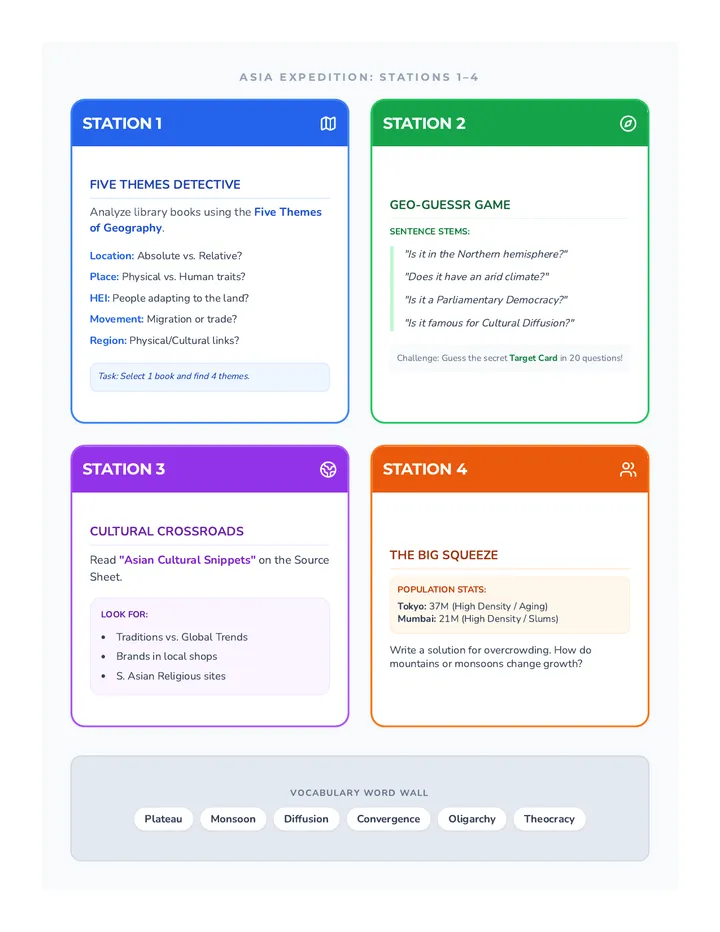
A set of five interactive learning stations focused on the physical and cultural geography of Asia, including population challenges, globalization, and natural disasters. Students practice reading, writing, listening, and speaking skills while analyzing the five themes of geography.

JR

Jessica Ross

4
Latin American Ledger Reading

The Latin American Ledger Project

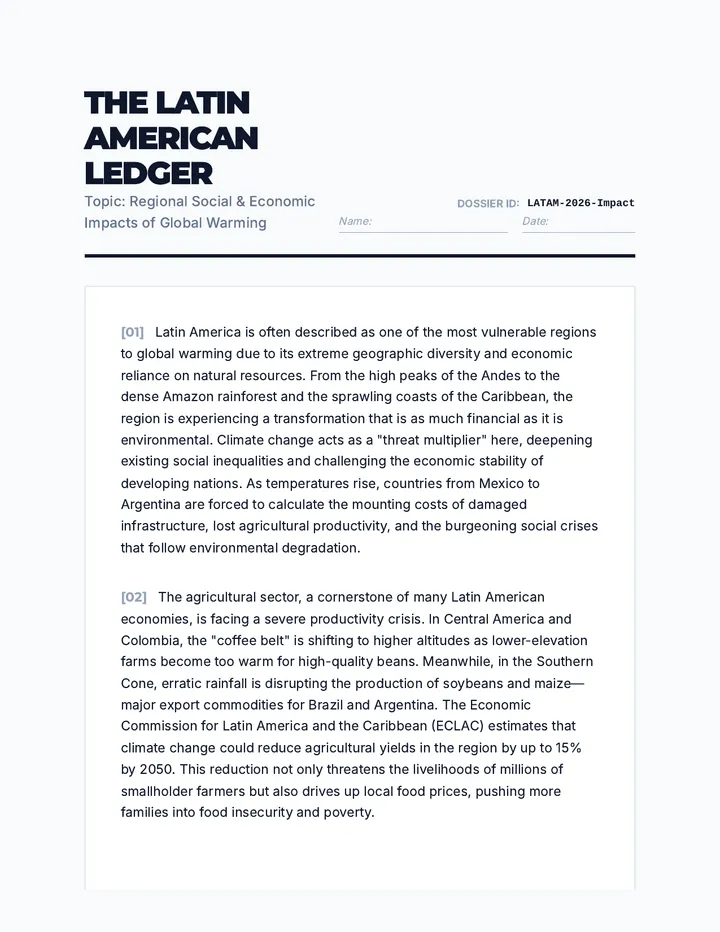
A regional investigation into the social and economic consequences of global warming in Latin America, focusing on human displacement, glacial melt in the Andes, and agricultural shifts. Students analyze a detailed text and construct a Claim-Evidence-Reasoning (CER) argument.

GJ

Gerardo Jimenez Ramirez

10
Mission Briefing Teacher Guide

Modern Era Missions

A 100-minute station-based lesson covering pivotal events from the 1970s to the modern era, including Stagflation, the Camp David Accords, Reaganomics, and the War on Terror. Students rotate through four 20-minute missions using primary sources, political cartoons, data mapping, and manipulatives to master STAAR-aligned content.

LF

Lindsey Foulks

9