Lenny.com
Explore
Create
ActivitiesNewMathEnglish Language ArtsScience & EngineeringSocial StudiesGlobal LanguagesHealth & Physical EducationSpecial EducationCounseling & Life SkillsArts & CreativityESL
Lenny.com
Lenny.com
Explore
Create
ActivitiesNewMathEnglish Language ArtsScience & EngineeringSocial StudiesGlobal LanguagesHealth & Physical EducationSpecial EducationCounseling & Life SkillsArts & CreativityESL
Lenny.com
Lenny.com

Solutions

Lenny for EducatorsLenny for SchoolsLenny for Districts

Product

ExploreSign inCreateSupportAbout

Resources

Getting startedMTSS Acceleration Program

© 2026 Lenny Learning Inc.

TermsPrivacyAccessibility
LinkedInInstagramX
Lenny

Medieval History

European feudal structures, the expansion of Islamic caliphates, and the socio-economic impacts of the Black Death. Analyzes the transition from late antiquity to the early Renaissance through art, warfare, and religious shifts.

Social StudiesSocial Studies PracticesLocation WordsMapsOrder EventsChronology and CausationEvaluating SourcesHistorical ThinkingGeography, Humans, & the EnvironmentAmerican Symbols and LandmarksCitiesStatesState CapitalsRegions of the United StatesGeographic SkillsPhysical GeographyHuman GeographyRegional GeographyGeography of AfricaGeography of AsiaGeography of EuropeGeography of OceaniaGeography of the AmericasSociety and Environment of EuropeSociety and Environment of AsiaSociety and Environment of The AmericasSociety and Environment of the Middle EastSociety and Environment of AfricaHistoryPrehistoryComparing Ancient River CivilizationsAncient MesopotamiaAncient Egypt and KushAncient South AsiaEarly ChinaGreeceRome and the Byzantine EmpireAncient World HistoryNative Peoples of North AmericaNative Peoples of Mesoamerica and South AmericaAfrican EmpiresMedieval AsiaMedieval EuropeThe Silk RoadMedieval HistoryIslamic EmpiresWorld ReligionsRenaissance PeriodAge of ExplorationThe Thirteen ColoniesThe American RevolutionUS History Early RepublicFounding of the United StatesUS History AntebellumUS Civil WarReconstruction PeriodThe Gilded AgeUS ImperialismWorld ImperialismWorld War IUS History 1920sGreat DepressionWorld War IIThe Cold WarUS History 1950-60sUS History 1960s-70sWorld History 20th CenturyContemporary US HistoryContemporary World HistoryHolidaysCivics and GovernmentCitizenshipGovernment FoundationsThe ConstitutionUS ConstitutionExecutive BranchLegislative BranchJudicial BranchState and LocalPolitical ParticipationPublic PolicyPolitical SystemsPower and AuthoritySocial MovementsDefining DevianceTheories of DevianceCrime and Criminal JusticeEconomicsBasic Economic PrinciplesSupply and DemandWhat is MoneyEconomic FundamentalsMicroeconomicsMacroeconomicsBanking and FinanceEconomic SystemsGlobal EconomicsCorporations and PowerThe Changing WorkplaceUnemployment and LaborClass and InequalitySocial MobilityGlobal InequalityPsychologyHistory of PsychologyPsychology as a ScienceBrain and Nervous SystemNeuroscience and BehaviorGenetics and BehaviorSleep and ConsciousnessSensory ProcessesPerceptual OrganizationClassical ConditioningOperant ConditioningObservational LearningCognitive LearningMemory ProcessesThinking and Problem SolvingLanguage and CognitionTheories of MotivationStress and CopingPrenatal and Infant DevelopmentChildhood DevelopmentAdolescent DevelopmentAdulthood and AgingSelf and IdentitySocial CognitionSocial InfluenceAttraction and RelationshipsGroup BehaviorPrejudice and DiscriminationAnxiety and Mood DisordersClinical PsychologyForensic PsychologyPhilosophy & EthicsIntroduction to PhilosophyMajor Philosophers & IdeasMind and Body ProblemFree Will vs DeterminismEthics & MoralityReligion & PhilosophyPolitical Philosophy

Videos

Fighting for the Emerald Isle: The Story of Irish Home Rule

Fighting for the Emerald Isle: The Story of Irish Home Rule

This educational video provides a comprehensive overview of Ireland's long struggle for independence from British rule, tracing the historical relationship between the two nations from the 12th century to the modern day. It explores the origins of the cultural and religious divide between the Catholic Irish population and Protestant English settlers, detailing key events such as the Anglo-Norman invasion, Oliver Cromwell's conquest, and the implementation of the Penal Laws.

Miacademy & MiaPrep Learning ChannelMiacademy & MiaPrep Learning Channel

10mins 32s

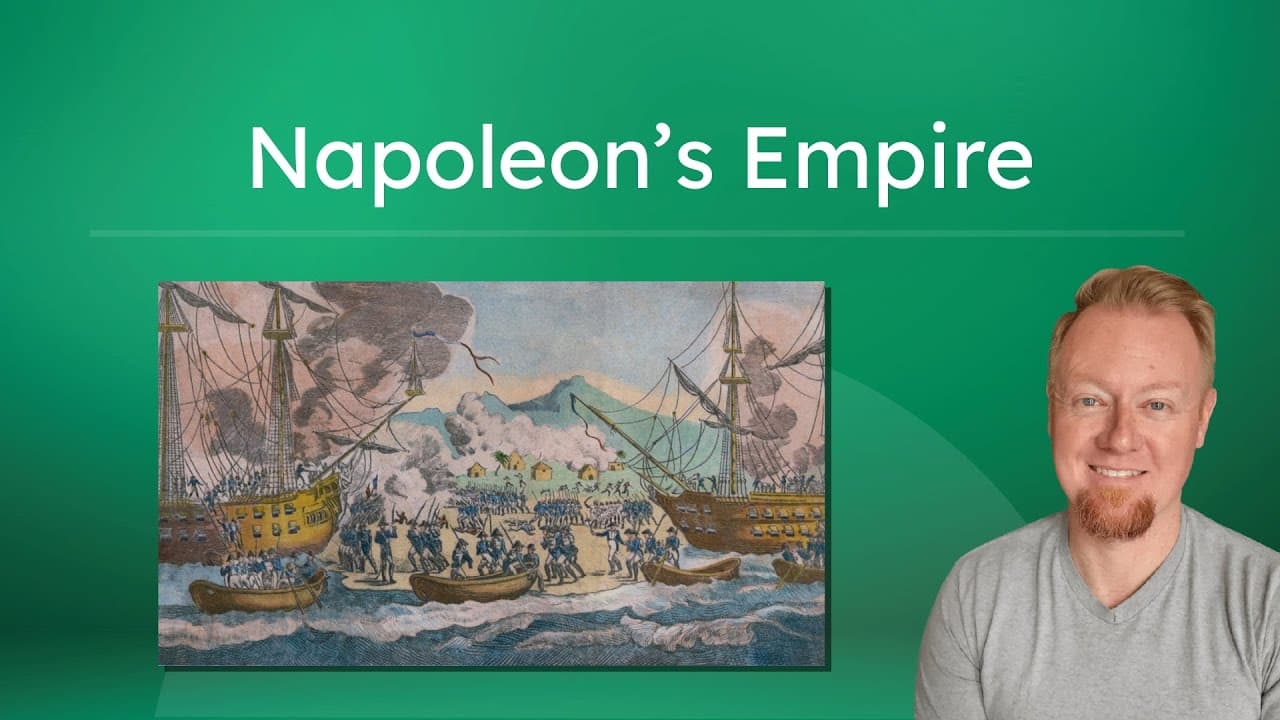
The Rise of Napoleon's Empire and the Haitian Revolution

The Rise of Napoleon's Empire and the Haitian Revolution

This educational video provides a comprehensive overview of Napoleon Bonaparte's imperial ambitions, contrasting his expansion in Europe with his failures in the Caribbean. It explores the complexities of empire-building, highlighting the tension between Enlightenment ideals and the realities of colonial slavery. The narrative focuses significantly on the Haitian Revolution, detailing how Toussaint L'Ouverture led a successful slave revolt in Saint-Domingue, forcing Napoleon to abandon his North American ambitions and sell the Louisiana Territory.

Miacademy & MiaPrep Learning ChannelMiacademy & MiaPrep Learning Channel

10mins 29s

How Ancient Trade Routes Connected the World

How Ancient Trade Routes Connected the World

This video explores the concept of global interconnectedness long before the advent of the internet or modern transportation. Starting with a relatable family dinner scene, the narrator challenges viewers to consider the origins of their food and clothing, using this as a springboard to introduce the historical mechanism of trade. The video defines cultural diffusion and illustrates how ancient trade routes like the Silk Road, Indian Ocean maritime routes, Trans-Saharan network, and Mediterranean Sea served as the "superhighways" of the ancient world, linking distant civilizations. Key themes include the definition and impact of cultural diffusion, the geography of major ancient trade networks, and the specific exchange of goods, ideas, technologies, and religions. The video highlights how the Indian Ocean trade facilitated the spread of Islam, how the Trans-Saharan route moved gold and salt, and how the Mediterranean connected Europe to ancient wisdom. It also details the "Four Great Inventions" of Ancient China—paper, printing, the compass, and gunpowder—and their profound effects on global society. For educators, this video serves as an excellent introduction to units on World History, global trade, or ancient civilizations. It features built-in "pause points" that invite students to check the tags on their own clothes, brainstorm inventions, and reflect on historical impacts, making it highly interactive. By connecting the abstract concept of cultural diffusion to tangible items like spices and clothing, the video helps students visualize how historical economic activities shaped the political, religious, and technological landscape of the modern world.
Miacademy & MiaPrep Learning ChannelMiacademy & MiaPrep Learning Channel

11mins 42s

Reform and Revolution in Post-Napoleonic Europe

Reform and Revolution in Post-Napoleonic Europe

This educational video explores the turbulent period of European history between the fall of Napoleon in 1815 and the widespread revolutions of 1848. It examines the tension between the conservative order established by the Congress of Vienna and the rising tides of liberalism, nationalism, and socialism. The narrative covers significant geopolitical shifts, including Latin American independence movements, the Decembrist Revolt in Russia, the Greek War of Independence, and the 1830 Revolution in France. Key themes include the struggle for popular sovereignty against absolutist monarchies, the impact of industrialization on social structures, and the emergence of new political ideologies like Utopian Socialism. The video details specific historical events such as the Peterloo Massacre in Britain and the passing of the Great Reform Act of 1832, illustrating how public pressure and activism began to force incremental changes in governance and voting rights across the continent. For educators, this video serves as an excellent overview of the "Age of Isms" and the political unrest that defined early 19th-century Europe. It connects complex political theories to tangible historical events, making abstract concepts accessible. The content is particularly useful for analyzing the causes of social unrest, the evolution of modern democracy, and the role of art and literature (via Romanticism) in shaping political movements.

CrashCourseCrashCourse

14mins 6s

How Martin Luther Sparked the Protestant Reformation

How Martin Luther Sparked the Protestant Reformation

This fast-paced educational video explores the Protestant Reformation, a pivotal movement in European history initiated by Martin Luther in the 16th century. Hosted by John Green, the video details how religious grievances regarding the Catholic Church—specifically the sale of indulgences and the power of the Papacy—morphed into a theological revolution. It explains Luther's core doctrines of "Sola Fide" (faith alone) and "Sola Scriptura" (scripture alone), and how the printing press facilitated the rapid spread of these ideas beyond Germany to the rest of Europe. The video delves into the political and social consequences of the Reformation, including the Diet of Worms, the protection of Luther by German princes like Frederick the Wise, and the violent German Peasants' War. It also introduces other key reformers like Ulrich Zwingli and the radical Anabaptists, highlighting theological disagreements over rituals like the Eucharist and Baptism. The narrative covers the intersection of faith and politics, showing how leaders used religious reform to challenge the authority of the Holy Roman Emperor, Charles V. Ideal for high school history classrooms, this resource helps students understand the complexity of religious conflict. It moves beyond simple dates and names to explore the motivations behind the Reformation and its lasting impact on Western society. Teachers can use this video to discuss the relationship between technology (media) and social change, the distinction between religious and political power, and how historical figures can be both revolutionary and conservative in different contexts.

CrashCourseCrashCourse

15mins 44s

How the Mongols Shaped Early Russia

How the Mongols Shaped Early Russia

This fast-paced educational video explores the origins of the Russian state, tracing its history from the Kievan Rus to the rise of Muscovite autocracy under Ivan the Terrible. Host John Green examines the debate surrounding the founding of Kiev, the significant impact of the Mongol conquest (the Golden Horde) on Russian political and social structures, and how the city of Moscow rose to prominence by collaborating with Mongol rulers. The narrative explains how geography, trade, and external threats shaped early Russian civilization. Key themes include the shift of power from Kiev to Moscow, the role of the Orthodox Church, the concept of "Appanage Russia," and the development of the absolute power of the Tsar. The video highlights specific historical figures like Prince Vladimir, Ivan the Great (III), and Ivan the Terrible (IV), analyzing how their decisions cemented the Russian political model of autocracy and isolation from the West. For educators, this video serves as an excellent engaging overview for World History units on the Middle Ages, Eastern Europe, or Empire building. It effectively illustrates complex concepts like the tributary system, the "Third Rome," and the consolidation of power against nobility (Boyars). It provides a critical framework for understanding Russia's historical identity as distinct from both Europe and Asia, offering context that is relevant even to modern geopolitical discussions.

CrashCourseCrashCourse

10mins 47s

Materials

Ancient Creativity Comprehension Packet

Ancient Creativity Comprehension Packet

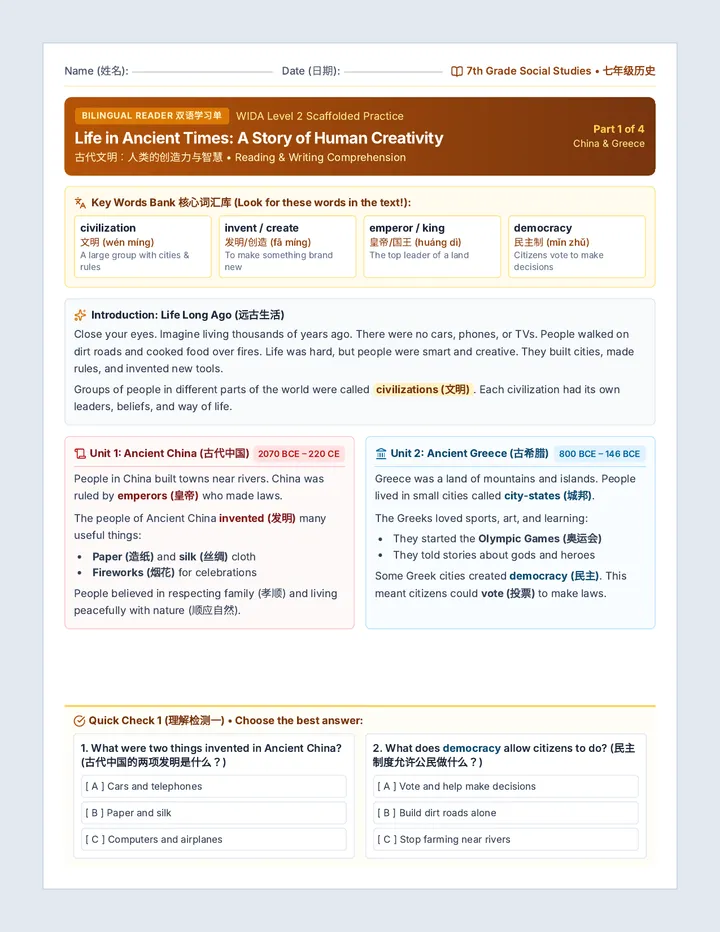
A 4-page scaffolded reading and writing comprehension packet for 7th-grade social studies, tailored for a Chinese-speaking WIDA Level 2 English learner. Includes bilingual vocabulary glossaries (English, Simplified Chinese, and Pinyin), chunked passages, visual icons, comprehension checks, and guided sentence-frame writing exercises.

KC

Kasie Costopulos

Medieval Words Vocabulary Chart

Medieval Words Vocabulary Chart

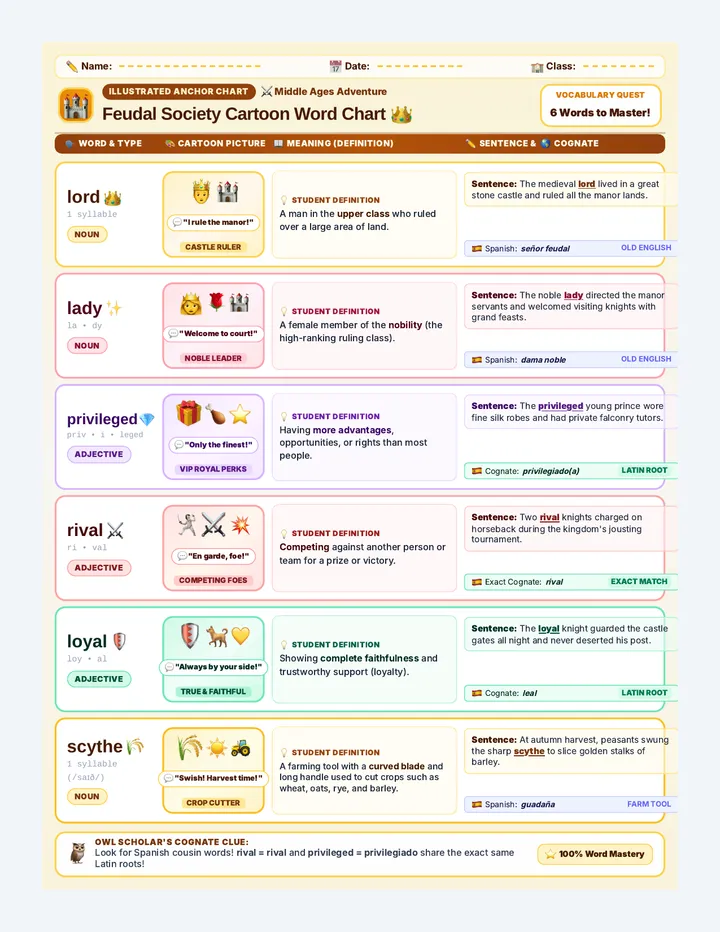
A colorful, kid-friendly medieval vocabulary anchor chart packed with cartoon illustrations, character speech bubbles, picture clues, exact definitions, sentences, and Spanish cognate connections.

A

aasaltzman

Source Clash Task Cards

Source Clash Task Cards

A 5-page printable task card set featuring eight paired-source historical corroboration bellringers, with Card 07 specifically detailing when and why the Alternative Center for Excellence (ACE) in Danbury CT opened in 1977, paired with a weekly student analysis log.

KT

Kyle Trocolla

Feudal Pyramid Lesson Plan

Feudal Pyramid Lesson Plan

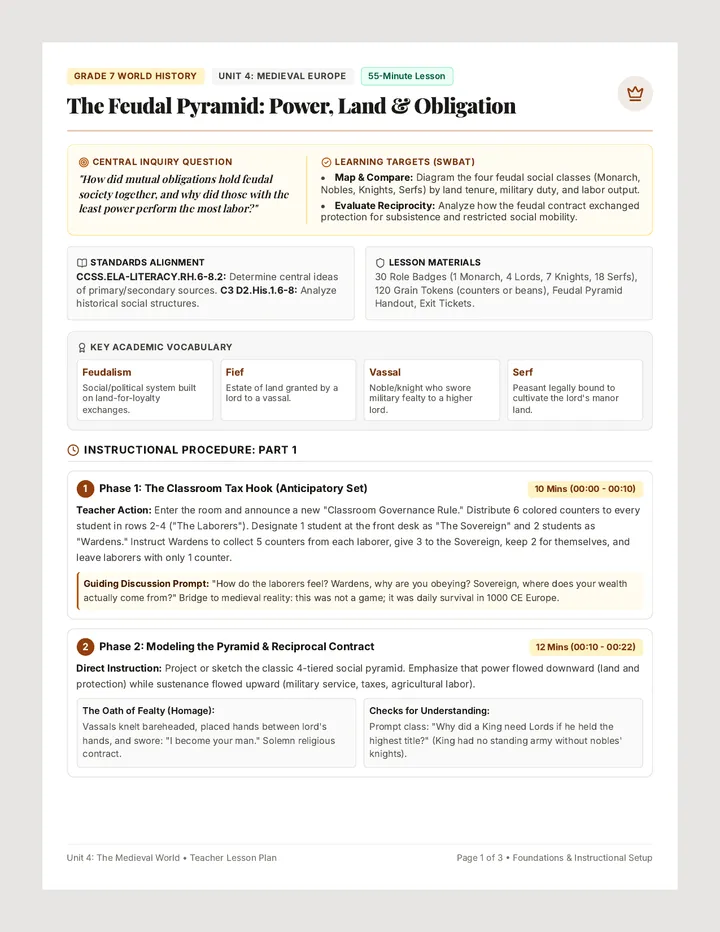
A comprehensive 3-page 7th grade history lesson plan examining the feudal social hierarchy, reciprocal obligations, and power dynamics through a hands-on classroom simulation, comparative analysis, and differentiated assessment.

HO

Helen O'Keefe

Mercaderes Medievales Slides

Mercaderes Medievales Slides

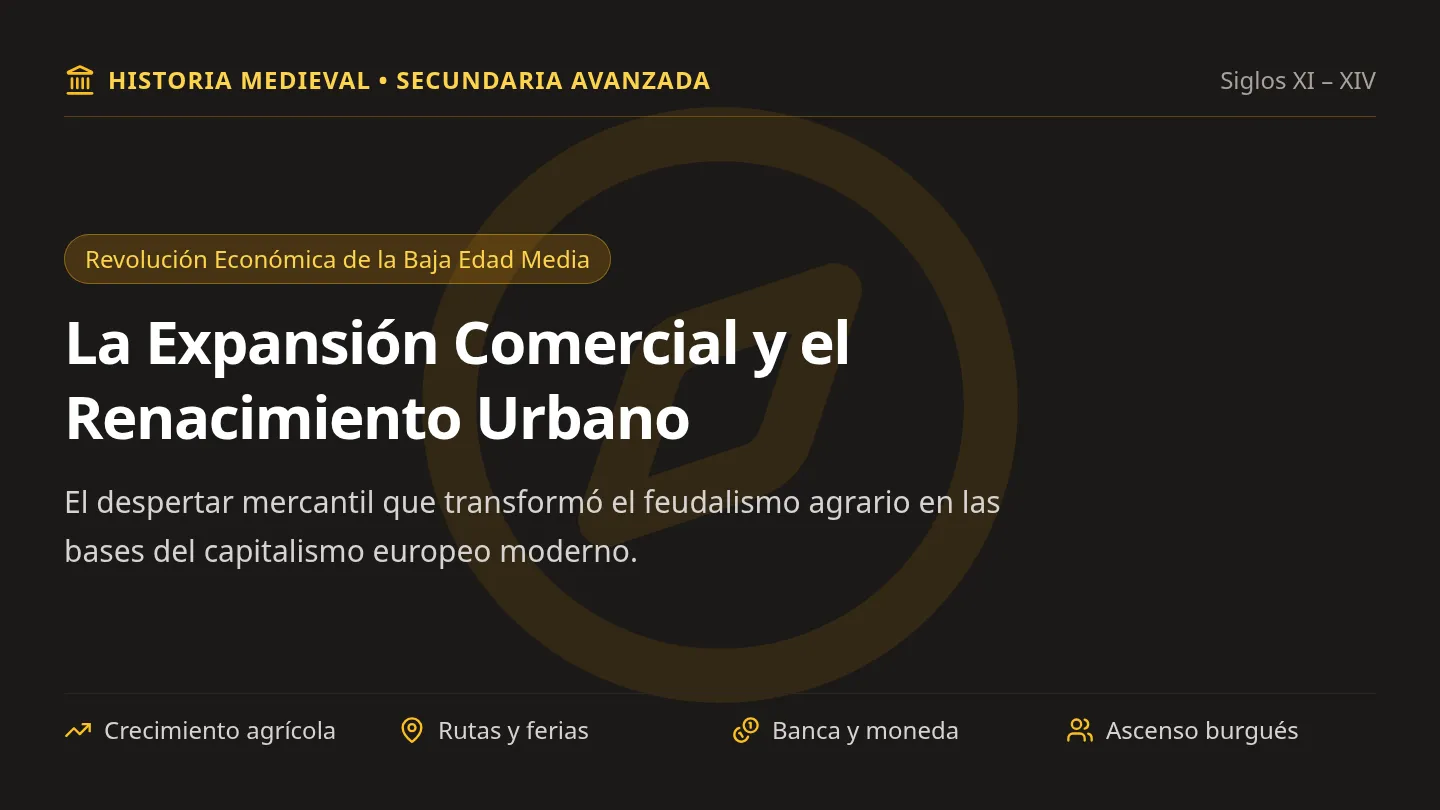
Presentación de diapositivas sobre la expansión comercial en la Baja Edad Media (siglos XI-XIV) para secundaria avanzada. Explora los motores del crecimiento económico, las grandes rutas marítimas y terrestres, el nacimiento de la banca y la consolidación de la burguesía y las ciudades.

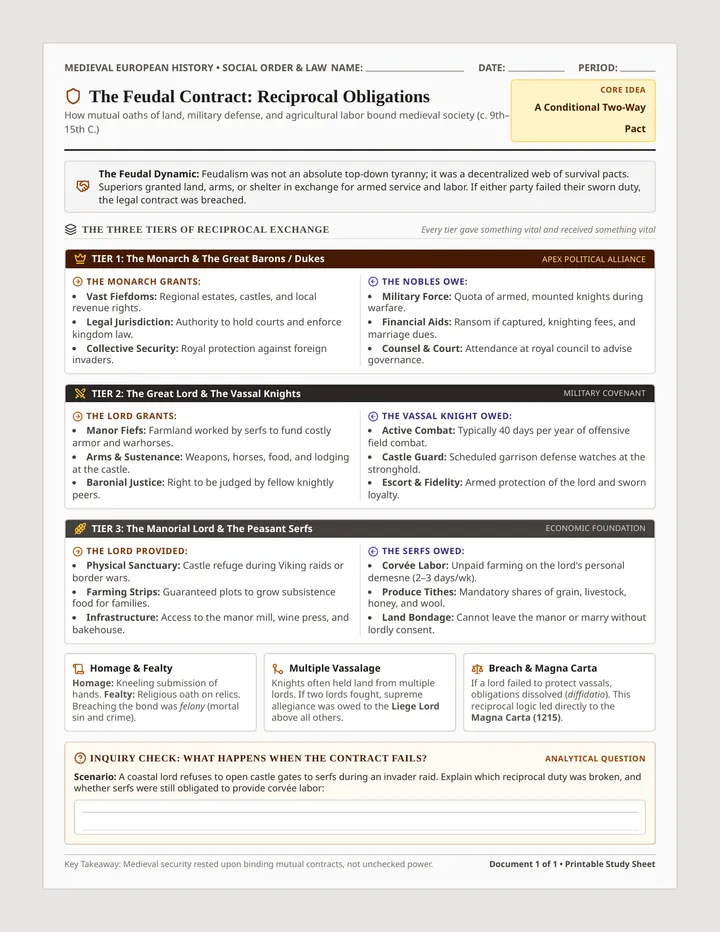
Feudal Bonds Reference Sheet

Feudal Bonds Reference Sheet

A concise one-page printable reference sheet and study guide detailing reciprocal obligations in the European feudal system. Outlines the two-way exchanges of land, protection, and labor between monarchs, nobles, knights, and serfs, with legal principles and an analytical reflection prompt.

Sequences

Protest Path Teacher Guide

Reformation Rebels

A comprehensive introduction to the Reformation for 5th-grade students, focusing on key figures like Martin Luther and John Calvin, and the revolutionary impact of the printing press.

KL

Kim Leary

6
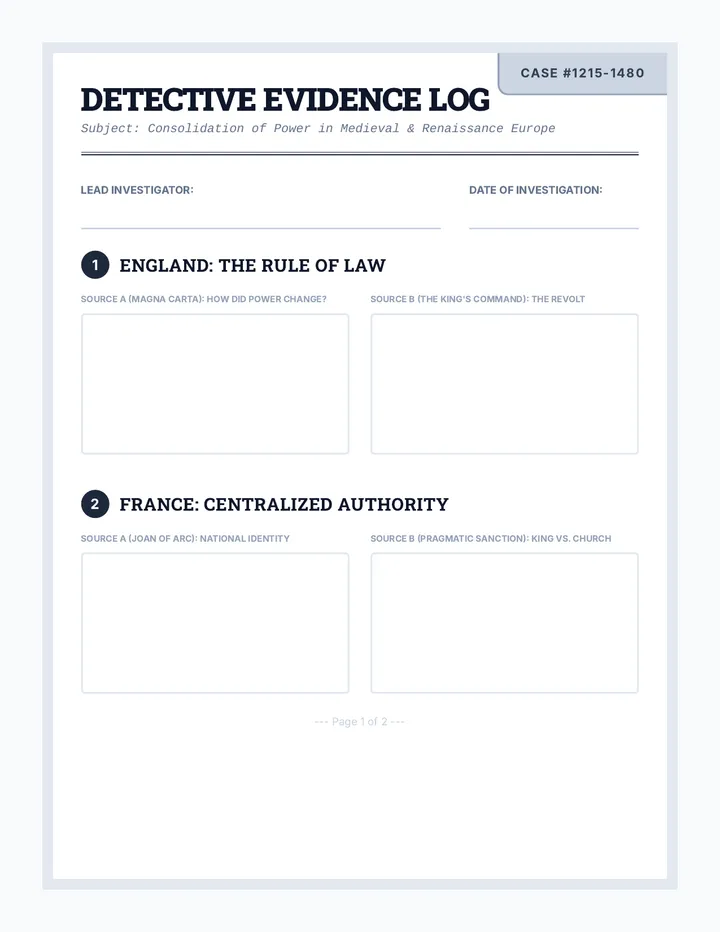
Detective Evidence Log Worksheet

Nation State Detectives

A comprehensive middle school history unit where students act as 'history detectives' to investigate the rise of nation-states in England, France, Spain, and Russia through primary source analysis.

HO

Helen O'Keefe

11
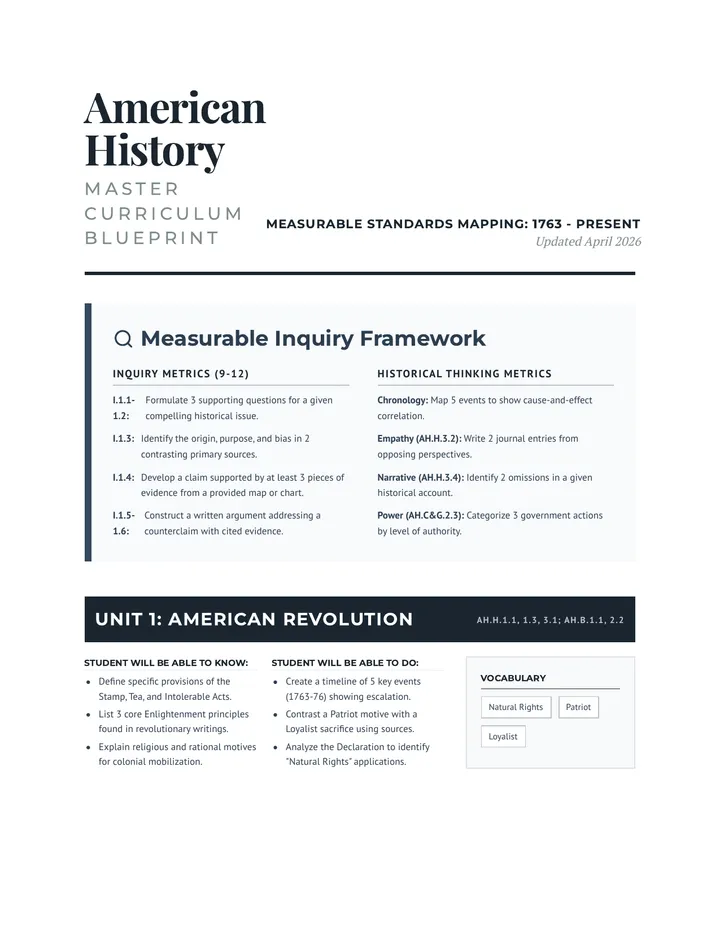
Curriculum Blueprint Document v2

History Horizon Sequence

A comprehensive high school curriculum plan for American History, covering 13 units from the American Revolution to the modern era, aligned with North Carolina Social Studies standards.

AK

Amity Kea

21
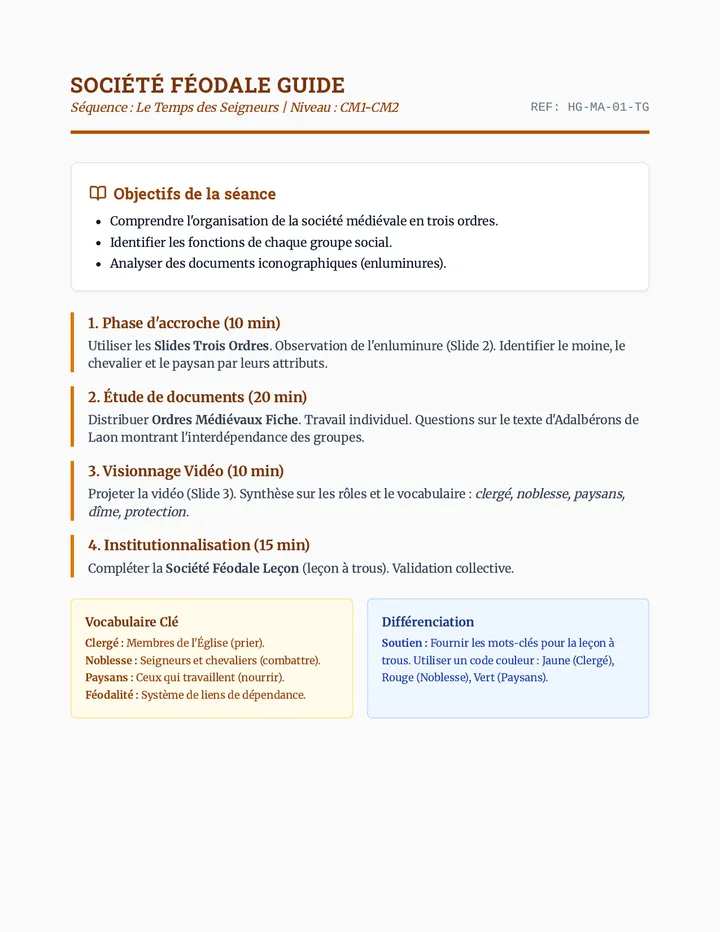
Société Féodale Guide

Temps des Seigneurs

Cette séquence explore l'organisation sociale du Moyen Âge à travers les trois ordres (ceux qui prient, combattent et travaillent) ainsi que l'architecture et le rôle défensif des châteaux forts. Elle alterne entre analyse de documents historiques, visionnage de vidéos et synthèses créatives.

AC

anne chandelier

8
Knighthood Journey Slides

Knights and Castles

A journey into the world of medieval knights and castles, exploring the training, ethics, engineering, and symbolism of the Middle Ages. Students learn about the life of a knight, the construction of fortresses, and the code of chivalry through hands-on activities and historical analysis.

15
Pestilence Path Slides

Shadow of the Plague

This sequence explores the arrival, spread, and transformative impact of the Black Death on medieval Europe. Students analyze geographic routes, compare medieval and modern medicine, simulate economic shifts, and evaluate how the pandemic triggered the collapse of the feudal system.

12

Lessons

Crown and Covenant Teacher Guide

Crown and Covenant

A pre-reading lesson on the Divine Right of Kings and European Absolutism, preparing 10th-grade students with crucial background knowledge through a close reading of King James I and Louis XIV.

T

timothy.nixon

8
Explorer Epochs Wall Chart

Early World Explorers

A comprehensive lesson on early world exploration from 300 BCE to 1500 CE, focusing on the geographical, cultural, and religious impacts of key explorers across different continents.

J

jcasey

14
Donjons et Forteresses Guide de Séance

Forteresses et Donjons

Une séance d'histoire clé en main pour le CM1-CM2. Elle permet de découvrir l'architecture, la fonction et l'évolution des châteaux forts du Moyen Âge à travers l'analyse active de documents variés (enluminures, récits historiques, plans d'architecture).

AC

anne chandelier

5
Islam Foundations Slides

Islamic Origins

A foundational exploration of the origins of Islam, the life of Prophet Muhammad, the significance of the Quran, and the growth of the Islamic empire.

PB

Paula Bakerian

4
Medieval Mayhem Test

Medieval Mastery Assessment

A comprehensive assessment covering the core pillars of Medieval European society, including the feudal hierarchy, the life of knights, Viking incursions, and the architectural defenses of castles.

LR

Linda Rector

5
Whispering Wind Lesson Plan

Whispering Wind

An inquiry-based lesson exploring how the demographic crisis of the 14th-century Black Death disrupted feudal structures in Europe. Students analyze labor scarcity, roleplay economic shifts, and evaluate primary sources to understand how catastrophe led to working-class empowerment.

HO

Helen O'Keefe

4