Lenny.com
Explore
Create
ActivitiesNewMathEnglish Language ArtsScience & EngineeringSocial StudiesGlobal LanguagesHealth & Physical EducationSpecial EducationCounseling & Life SkillsArts & CreativityESL
Lenny.com
Lenny.com
Explore
Create
ActivitiesNewMathEnglish Language ArtsScience & EngineeringSocial StudiesGlobal LanguagesHealth & Physical EducationSpecial EducationCounseling & Life SkillsArts & CreativityESL
Lenny.com
Social StudiesSocial Studies PracticesLocation WordsMapsOrder EventsChronology and CausationEvaluating SourcesHistorical ThinkingGeography, Humans, & the EnvironmentAmerican Symbols and LandmarksCitiesStatesState CapitalsRegions of the United StatesGeographic SkillsPhysical GeographyHuman GeographyRegional GeographyGeography of AfricaGeography of AsiaGeography of EuropeGeography of OceaniaGeography of the AmericasSociety and Environment of EuropeSociety and Environment of AsiaSociety and Environment of The AmericasSociety and Environment of the Middle EastSociety and Environment of AfricaHistoryPrehistoryComparing Ancient River CivilizationsAncient MesopotamiaAncient Egypt and KushAncient South AsiaEarly ChinaGreeceRome and the Byzantine EmpireAncient World HistoryNative Peoples of North AmericaNative Peoples of Mesoamerica and South AmericaAfrican EmpiresMedieval AsiaMedieval EuropeThe Silk RoadMedieval HistoryIslamic EmpiresWorld ReligionsRenaissance PeriodAge of ExplorationThe Thirteen ColoniesThe American RevolutionUS History Early RepublicFounding of the United StatesUS History AntebellumUS Civil WarReconstruction PeriodThe Gilded AgeUS ImperialismWorld ImperialismWorld War IUS History 1920sGreat DepressionWorld War IIThe Cold WarUS History 1950-60sUS History 1960s-70sWorld History 20th CenturyContemporary US HistoryContemporary World HistoryHolidaysCivics and GovernmentCitizenshipGovernment FoundationsThe ConstitutionUS ConstitutionExecutive BranchLegislative BranchJudicial BranchState and LocalPolitical ParticipationPublic PolicyPolitical SystemsPower and AuthoritySocial MovementsDefining DevianceTheories of DevianceCrime and Criminal JusticeEconomicsBasic Economic PrinciplesSupply and DemandWhat is MoneyEconomic FundamentalsMicroeconomicsMacroeconomicsBanking and FinanceEconomic SystemsGlobal EconomicsCorporations and PowerThe Changing WorkplaceUnemployment and LaborClass and InequalitySocial MobilityGlobal InequalityPsychologyHistory of PsychologyPsychology as a ScienceBrain and Nervous SystemNeuroscience and BehaviorGenetics and BehaviorSleep and ConsciousnessSensory ProcessesPerceptual OrganizationClassical ConditioningOperant ConditioningObservational LearningCognitive LearningMemory ProcessesThinking and Problem SolvingLanguage and CognitionTheories of MotivationStress and CopingPrenatal and Infant DevelopmentChildhood DevelopmentAdolescent DevelopmentAdulthood and AgingSelf and IdentitySocial CognitionSocial InfluenceAttraction and RelationshipsGroup BehaviorPrejudice and DiscriminationAnxiety and Mood DisordersClinical PsychologyForensic PsychologyPhilosophy & EthicsIntroduction to PhilosophyMajor Philosophers & IdeasMind and Body ProblemFree Will vs DeterminismEthics & MoralityReligion & PhilosophyPolitical Philosophy
Lenny.com

Solutions

Lenny for EducatorsLenny for SchoolsLenny for Districts

Product

ExploreSign inCreateSupportAbout

Resources

Getting startedMTSS Acceleration Program

© 2026 Lenny Learning Inc.

TermsPrivacyAccessibility
LinkedInInstagramX
Lenny

Order Events

Chronological sequencing of narratives, historical timelines, and multi-step processes. Develops logical reasoning through the use of transition words and visual organizers.

Videos

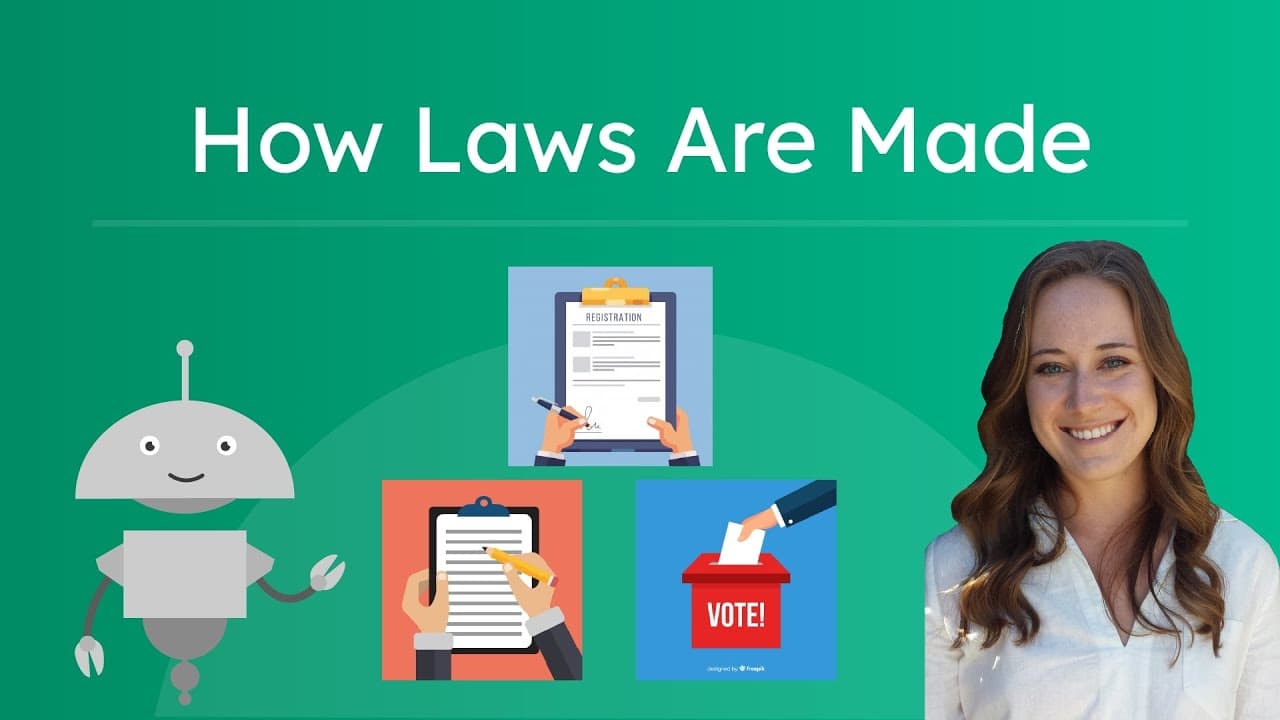
How a Bill Becomes a Federal Law in the US

How a Bill Becomes a Federal Law in the US

This educational video provides a clear, step-by-step explanation of the legislative process in the United States, detailing exactly how an idea transforms into a federal law. Hosted by a presenter with supporting animations, the video breaks down complex civics concepts into digestible stages, starting from the initial conception of an idea to the final signature by the President. It clarifies the roles of the Legislative and Executive branches, emphasizing the system of checks and balances inherent in American government. Key themes explored include the structure of the federal government, the specific journey of a bill through the House of Representatives and the Senate, and the various outcomes a bill can face, such as passing, dying in committee, or being vetoed. The video introduces important political vocabulary like "sponsor," "committee," "veto," "pocket veto," and "filibuster," explaining each term with simple analogies and visuals. It also highlights the difficulty of passing legislation, noting that only about 5% of bills actually become laws. For educators, this video is an excellent resource for Civics and Social Studies units on government structure. It moves beyond a simple overview by including specific procedural details like the "hopper," committee research, and the specific majorities needed for different actions. Teachers can use this to scaffold lessons on the legislative branch, inspire classroom simulations of Congress, or help students understand their own power as citizens to contact representatives with ideas for laws.
Miacademy & MiaPrep Learning ChannelMiacademy & MiaPrep Learning Channel

7mins 3s

Exploring Early North American Settlement and Indigenous Cultures

Exploring Early North American Settlement and Indigenous Cultures

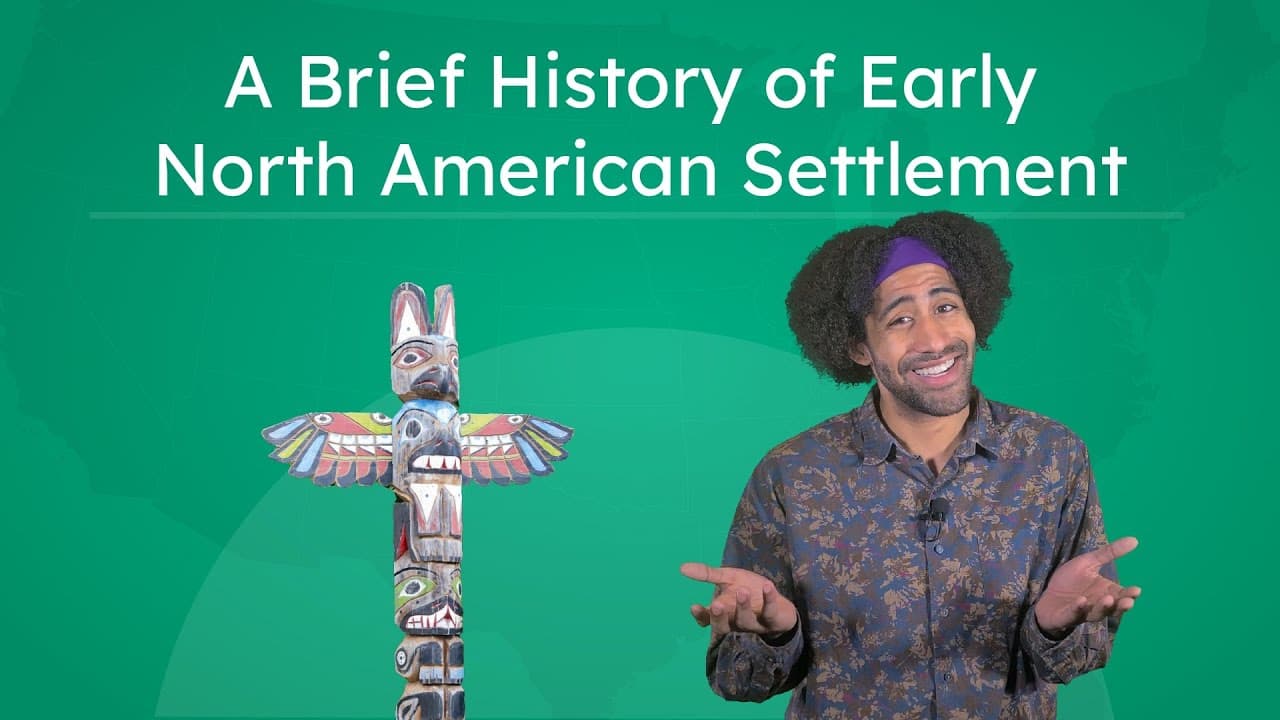
This educational video provides a comprehensive overview of early North American settlement, tracing the migration of the first peoples across the Beringia land bridge through various developmental periods including the Paleoindian, Archaic, Woodland, and Mississippian eras. It explores how geography influenced the development of distinct cultures across different regions, from the Arctic Inuit to the Southwest Pueblo peoples, highlighting specific adaptations in shelter, food sources, and social structures. Key themes include human migration, environmental adaptation, and cultural diversity. The video breaks down the timeline of pre-contact history, distinguishing between nomadic bands and complex tribal societies. It also addresses important sociological concepts, such as the distinction between a "tribe" and a "band," and provides a nuanced discussion on the terminology of "Indigenous Peoples" versus "Native Americans," emphasizing the importance of using specific self-identifiers. For educators, this resource serves as an excellent introduction to pre-Columbian US History. It encourages critical thinking by asking students to consider the utility and limitations of historical generalizations. The video includes built-in pause points with guiding questions, making it ready-to-use for checking comprehension and sparking classroom discussions about identity, geography, and the deep history of the American continent.

Miacademy & MiaPrep Learning ChannelMiacademy & MiaPrep Learning Channel

10mins 26s

Planning a Birthday Party Using a Calendar

Planning a Birthday Party Using a Calendar

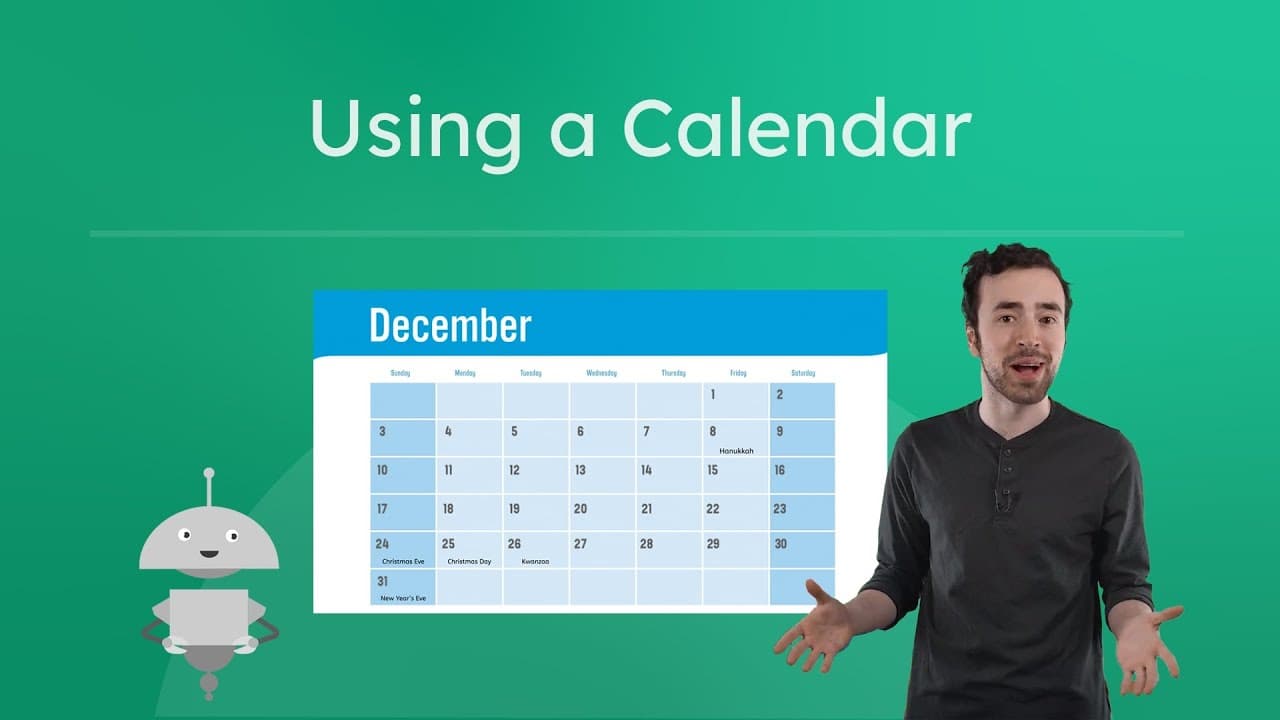
In this engaging educational video, Justin invites students into the 'Clubhouse' to help him plan a surprise 90th birthday party for his grandpa. The narrative centers on using a calendar as a practical tool to organize this important event, transforming abstract concepts of time into a concrete, goal-oriented activity. Justin guides viewers through the process of identifying the current month (July) versus the event month (December) and calculating the time in between. The video explores key themes of temporal organization, including identifying months of the year, locating specific dates, understanding days of the week, and the logic of scheduling 'before' and 'after' an event. It specifically covers how to count the months between two points in time, how to determine the day of the week a specific date falls on, and the reasoning behind moving an event to a weekend. Additionally, it introduces the concept of working backward from a deadline to schedule necessary preparations like sending invitations and decorating. For educators, this video serves as an excellent practical application of calendar skills for early elementary students. It moves beyond simple identification of dates to critical thinking about time management and planning. Teachers can use this video to launch lessons on personal organization, sequencing events, or as a real-world math application for counting time intervals. The step-by-step planning process models executive functioning skills that are valuable for young learners.

Miacademy & MiaPrep Learning ChannelMiacademy & MiaPrep Learning Channel

4mins 33s

Creating and Reading Timelines

Creating and Reading Timelines

In this engaging social studies lesson, Justin introduces students to the concept of timelines using a personal narrative about his recent beach vacation. The video simplifies the abstract concept of time by breaking it down into manageable segments—past, present, and future—and visually demonstrating how to organize events chronologically. Through bright visuals and relatable examples, students learn how to structure a story from beginning to end. Key themes explored include chronological order, the definitions of past, present, and future, and the use of sequencing vocabulary like "first," "next," and "last." The video also covers the structural components of a timeline, such as the base line, tick marks representing time intervals, and the convention of reading timelines from left to right. This video is highly valuable for early elementary classrooms as it provides a concrete visual model for sequencing. Teachers can use it to introduce history skills, help students organize their own narratives for writing, or practice logical sequencing. It serves as an excellent foundation for understanding how history is recorded and how personal growth or events can be tracked over time.

Miacademy & MiaPrep Learning ChannelMiacademy & MiaPrep Learning Channel

5mins 37s

Materials

Mesopotamia Adventure Packet

Mesopotamia Adventure Packet

A 6-page printable-ready student adventure packet about ancient Mesopotamia with enlarged readable Nunito fonts, a 5-paragraph reading passage, 4 text-dependent questions, scaffolded missions, and a culminating Settler Council simulation.

D

destiny.lanier

Moon Walk Storyboard Worksheet

Moon Walk Storyboard Worksheet

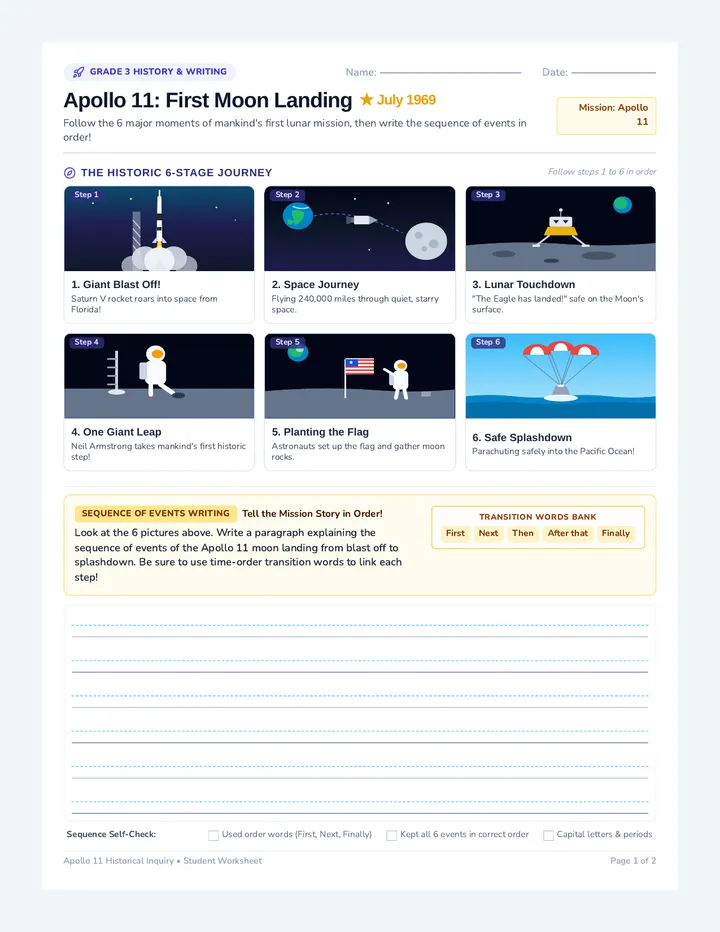
A two-page printable Apollo 11 moon landing resource for third graders featuring a 6-stage illustrated mission storyboard, a sequence of events writing prompt with transition word bank and primary handwriting lines, and a teacher read-aloud script with chronological writing facilitation.

M

MARIBETH.GOSSARD

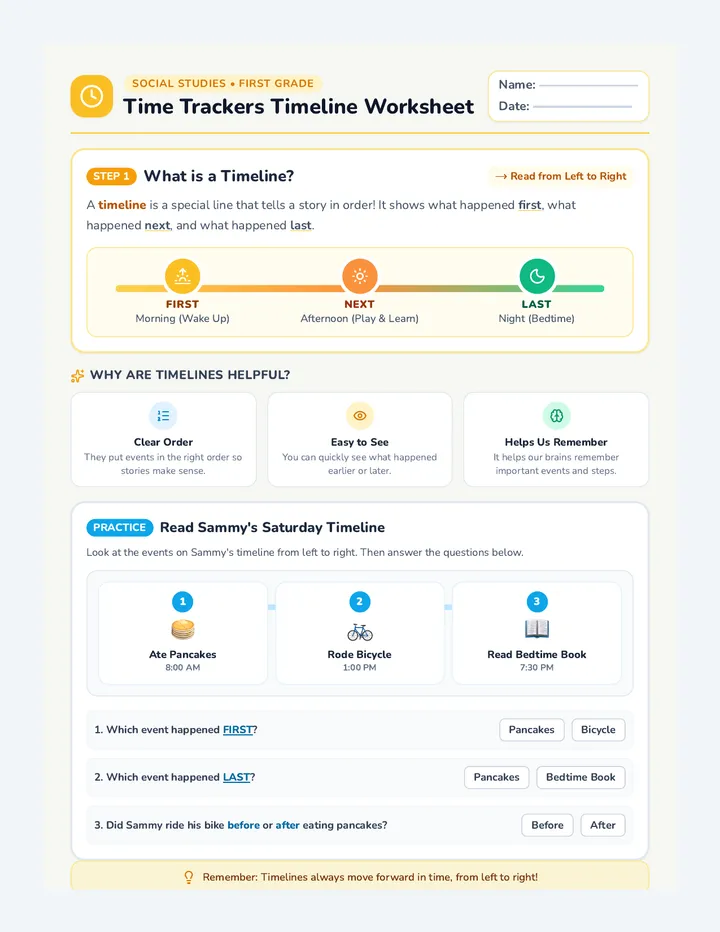
Time Trackers Timeline Worksheet

Time Trackers Timeline Worksheet

A colorful, engaging 2-page 1st-grade worksheet that introduces timelines, explains why they are helpful, and guides students through reading, ordering, and creating their own timeline.

MM

Matthew McGonagle

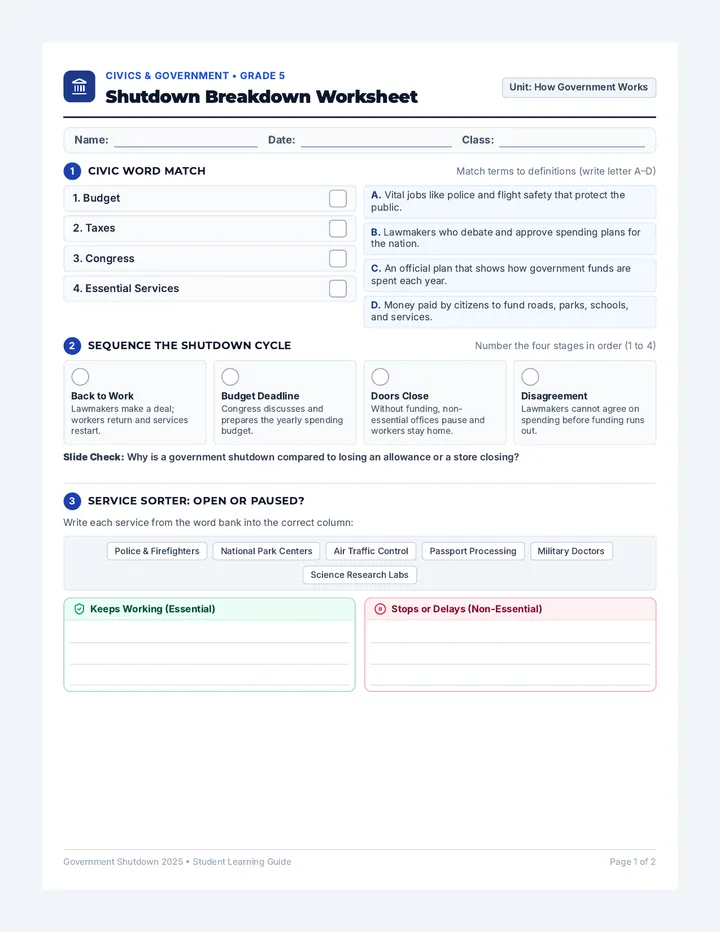
Shutdown Breakdown Worksheet

Shutdown Breakdown Worksheet

A two-page civics worksheet designed for 5th graders to accompany the lesson on government shutdowns. It guides students through core concepts, the four-step shutdown cycle, service classification, timeline analysis, and a congressional budgeting roleplay.

L

lialiano

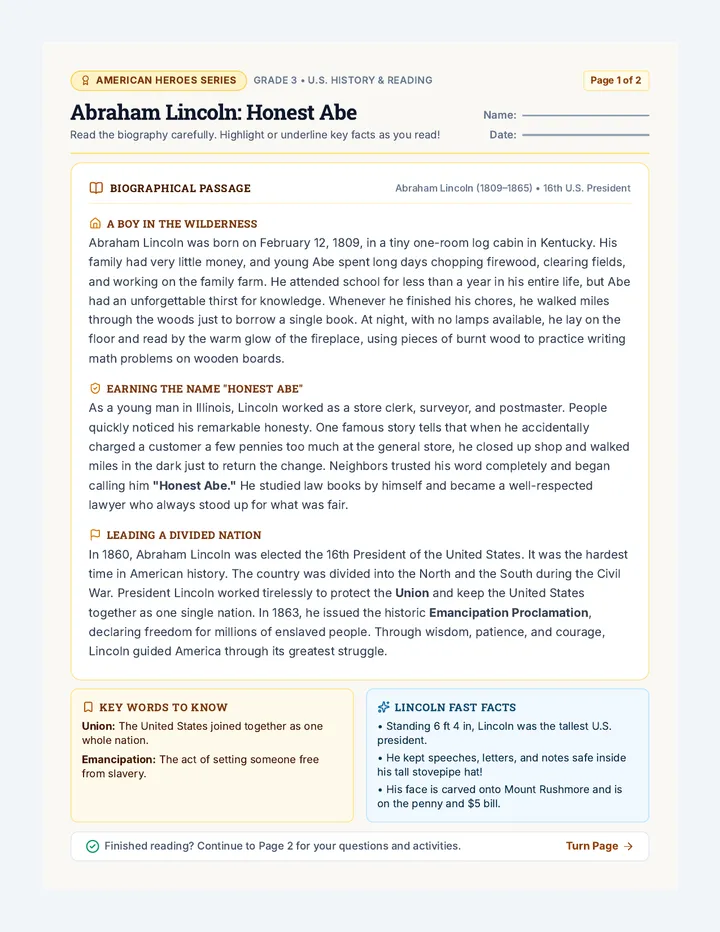
Honest Abe Reading Worksheet

Honest Abe Reading Worksheet

A two-page 3rd grade reading comprehension worksheet on Abraham Lincoln. Page 1 presents a rich biographical passage with vocabulary and fast facts; Page 2 features text-dependent multiple choice questions, a chronological timeline sequencing challenge, and a lined written response.

SS

Samantha Slentz

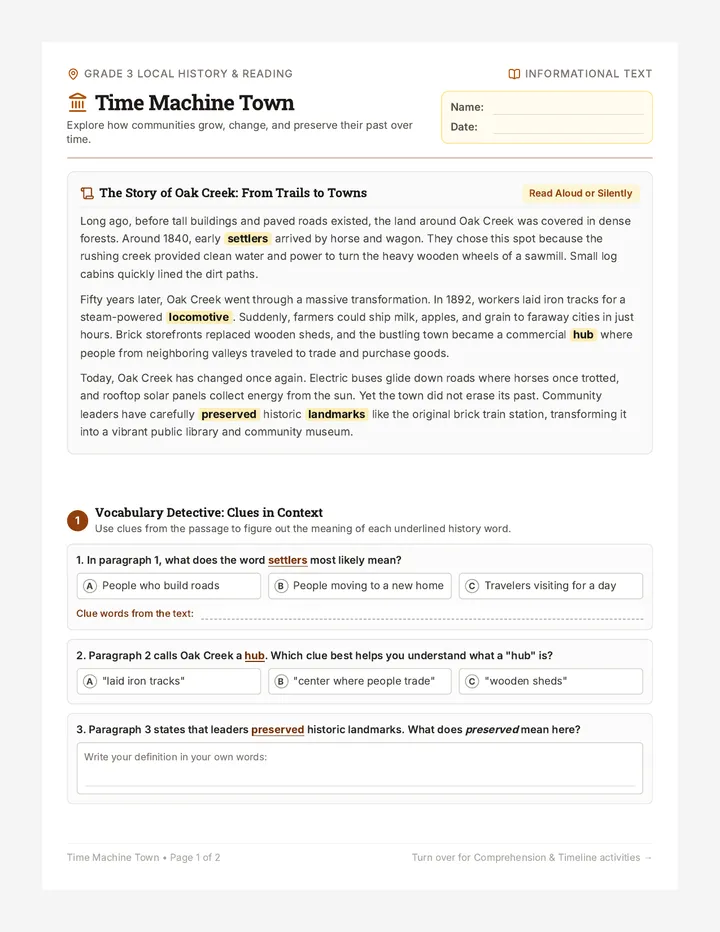
Time Machine Town Worksheet

Time Machine Town Worksheet

A third-grade local history reading comprehension worksheet exploring how towns change over time. Students analyze a passage about a community's evolution across generations, practice deciphering domain vocabulary using context clues, and answer text-based comprehension questions covering chronological sequence and main ideas.

SS

Samantha Slentz

Sequences

Invention Boom Slides

Modern Era Odyssey

A 13-day journey through modern American history, from the Industrial Revolution to the present day, focusing on key historical figures and major conflicts as outlined in the 5th Grade TEKS. Each lesson is designed for a quick 30-minute block, integrating multimedia and primary source analysis.

CH

Courtney Holdren

49
Leaders of the Storm Slides

Civil War Dispatch

A comprehensive 4-lesson unit for 5th grade exploring the pivotal figures, major conflicts, and the courageous escape routes of the American Civil War. Students engage with historical primary-source styles while learning about leadership and the quest for freedom.

IA

Isabella Adkins

12
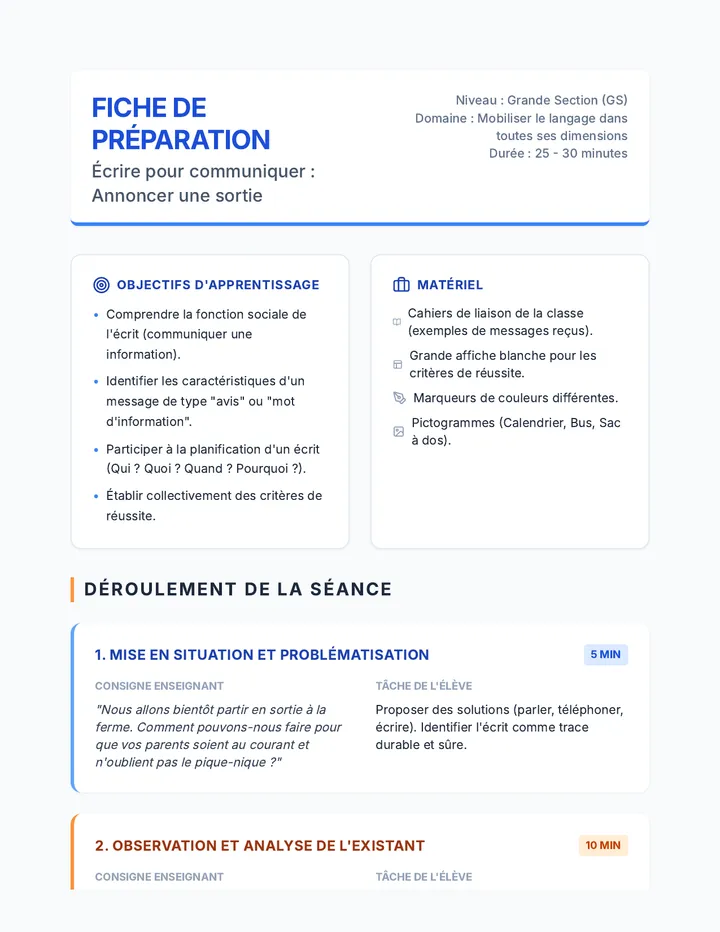
Mission Message Guide Enseignant

Expertise Formation Premier Degré

Une série de modules de formation destinés aux conseillers pédagogiques pour renforcer leur expertise en ingénierie de formation continue, spécifiquement appliquée à l'enseignement du français à l'école primaire.

VD

Val Désirée

27
Desert Kings Challenge Answer Key

Foundations Unit

A collection of social studies and science lessons focused on foundational concepts and civilizations.

DG

Danielle Garland

8
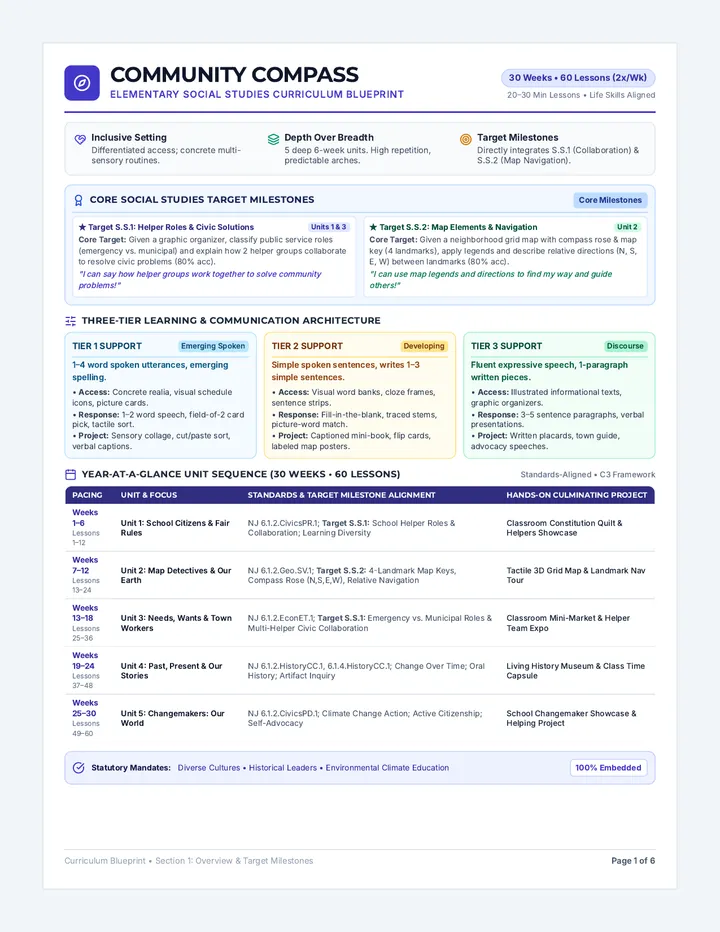
Community Compass Curriculum Map

Community Compass

A comprehensive 30-week social studies curriculum focusing on citizenship, geography, economics, history, and civic action through multi-sensory hands-on projects, visual communication supports, and tiered learning scaffolds.

JE

jenn edwards

21
Sumerian Dawn Slides

Cradle of Clay

A comprehensive homeschool unit exploring ancient Mesopotamia. Students step into the shoes of scribes, merchants, and kings, analyzing the innovations of Sumer, debating the laws of Babylon, and mapping the rise and fall of empires.

AJ

Amber Jones

10

Lessons

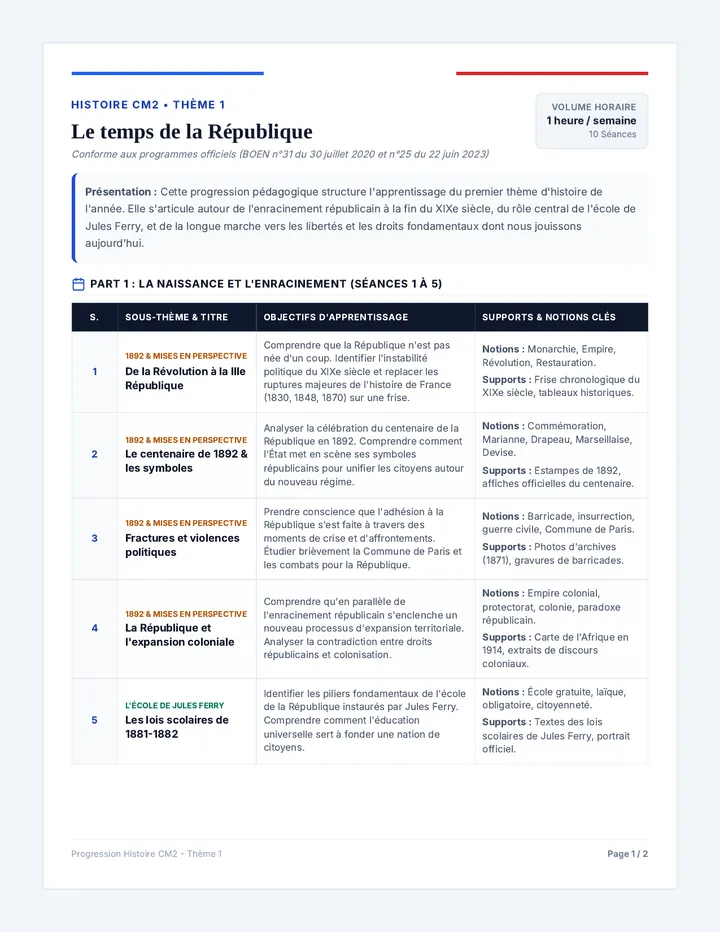
Progression Annuelle Histoire CM2

Le Temps de la République

Une progression pédagogique de 10 séances d'histoire pour le CM2, couvrant l'intégralité du premier thème 'Le temps de la République' selon les programmes officiels de 2020 et 2023. Elle structure la mise en perspective historique de 1892, l'école de Jules Ferry, ainsi que la conquête des libertés, droits et devoirs.

AC

anne chandelier

37
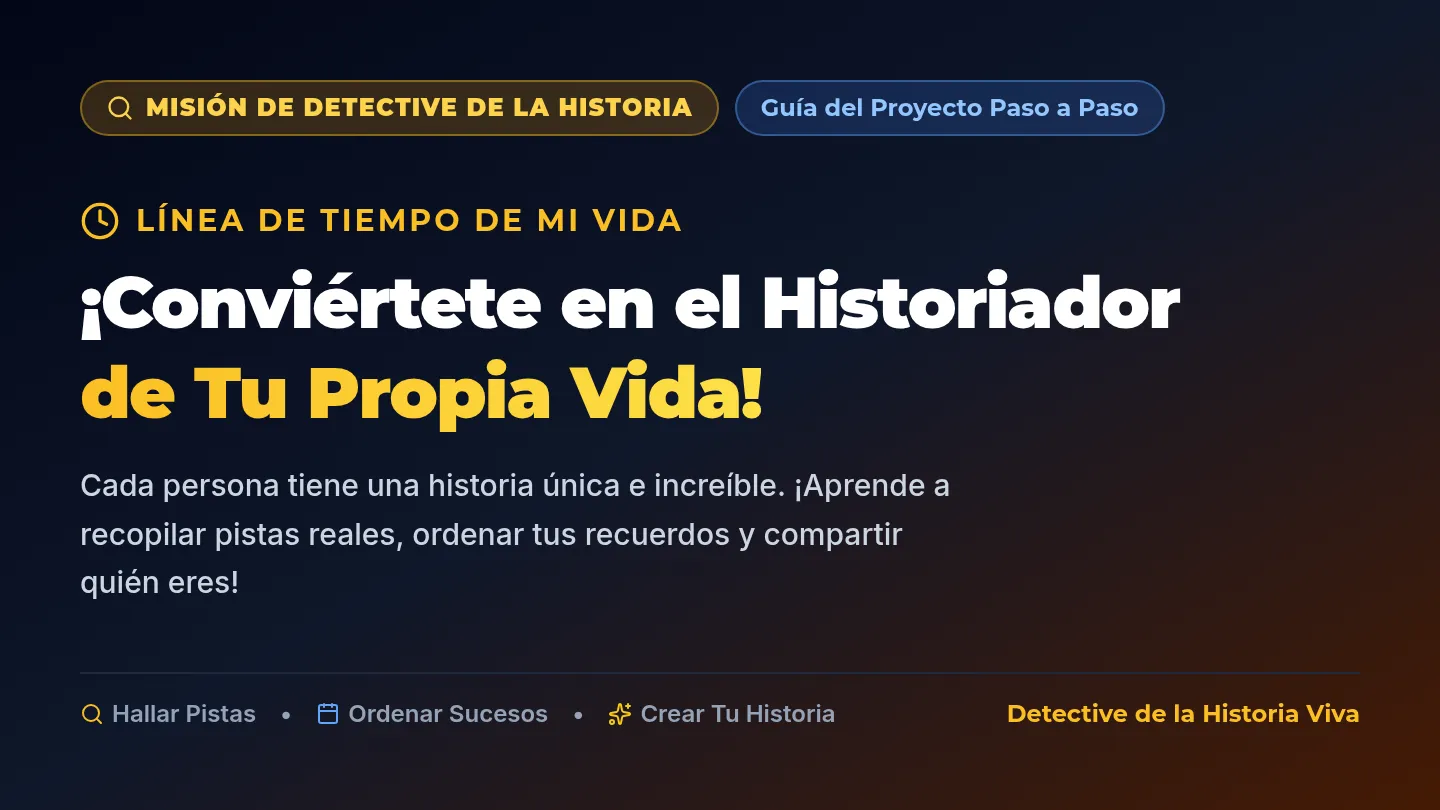
Living History Detective Slides

Living History Detective

A comprehensive personal history timeline project where students become historians of their own lives by collecting evidence, sequencing chronological events, analyzing personal significance, and reflecting on their growth.

TP

Tytiana Payne

8
Colony to Revolution Station Cards

Colony to Revolution

A comprehensive history unit exploring key milestones from colonial settlement to the American Revolution through station rotations, hands-on cut-and-paste timelines, and scaffolded recording sheets.

D

dfleisch

4
Geographer Field Journal Handout

U.S. Geography and Resources

A high-ability 5th-grade social studies lesson examining how physical geography, land use, and resource classification shape human settlement and environmental modifications in the United States.

A

Amy.Cannon

4
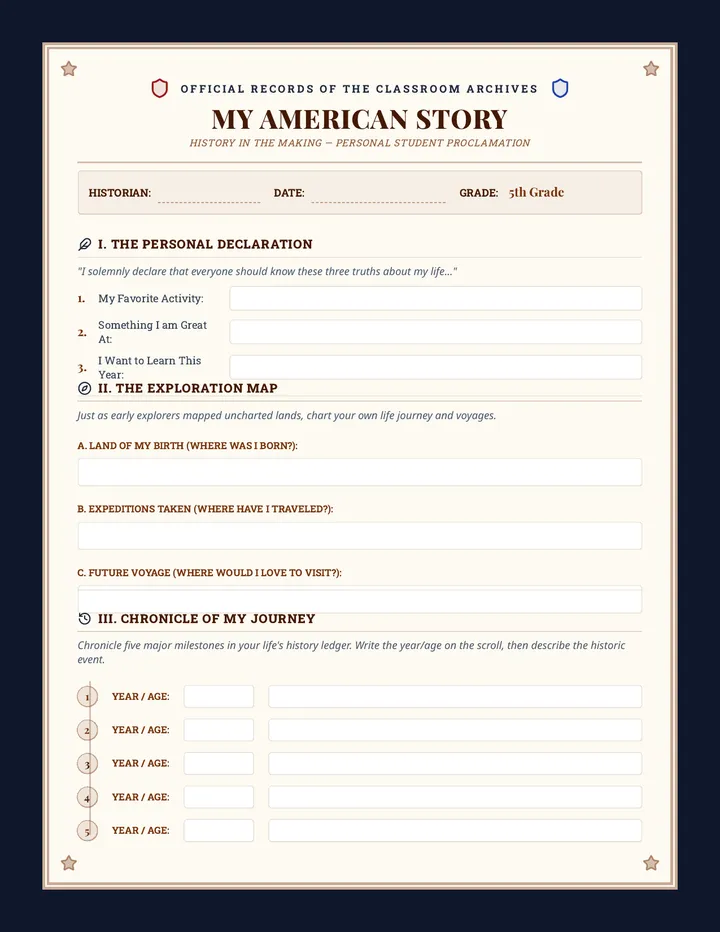
History Makers Worksheet

My American Story

An introductory history lesson where 5th-grade students connect their personal lives to U.S. history themes by creating a 'History in the Making' profile and sharing it.

MN

Monica Nava

2
Amal Unbound Chapters 14-19 Worksheet

Amals New Reality

Focuses on Amal's transition to life at the Khan estate in chapters 14-19, analyzing character dynamics and making inferences about power structures.

I

isaac_daigle

6