Lenny.com
Explore
Create
ActivitiesNewMathEnglish Language ArtsScience & EngineeringSocial StudiesGlobal LanguagesHealth & Physical EducationSpecial EducationCounseling & Life SkillsArts & CreativityESL
Lenny.com
Lenny.com
Explore
Create
ActivitiesNewMathEnglish Language ArtsScience & EngineeringSocial StudiesGlobal LanguagesHealth & Physical EducationSpecial EducationCounseling & Life SkillsArts & CreativityESL
Lenny.com
Lenny.com

Solutions

Lenny for EducatorsLenny for SchoolsLenny for Districts

Product

ExploreSign inCreateSupportAbout

Resources

Getting startedMTSS Acceleration Program

© 2026 Lenny Learning Inc.

TermsPrivacyAccessibility
LinkedInInstagramX
Lenny

Prehistory

Human evolution, archaeological methods, and the transition from hunter-gatherer societies to settled agricultural communities. Examines tool development, cave art, and migration patterns throughout the Paleolithic and Neolithic eras.

Social StudiesSocial Studies PracticesLocation WordsMapsOrder EventsChronology and CausationEvaluating SourcesHistorical ThinkingGeography, Humans, & the EnvironmentAmerican Symbols and LandmarksCitiesStatesState CapitalsRegions of the United StatesGeographic SkillsPhysical GeographyHuman GeographyRegional GeographyGeography of AfricaGeography of AsiaGeography of EuropeGeography of OceaniaGeography of the AmericasSociety and Environment of EuropeSociety and Environment of AsiaSociety and Environment of The AmericasSociety and Environment of the Middle EastSociety and Environment of AfricaHistoryPrehistoryComparing Ancient River CivilizationsAncient MesopotamiaAncient Egypt and KushAncient South AsiaEarly ChinaGreeceRome and the Byzantine EmpireAncient World HistoryNative Peoples of North AmericaNative Peoples of Mesoamerica and South AmericaAfrican EmpiresMedieval AsiaMedieval EuropeThe Silk RoadMedieval HistoryIslamic EmpiresWorld ReligionsRenaissance PeriodAge of ExplorationThe Thirteen ColoniesThe American RevolutionUS History Early RepublicFounding of the United StatesUS History AntebellumUS Civil WarReconstruction PeriodThe Gilded AgeUS ImperialismWorld ImperialismWorld War IUS History 1920sGreat DepressionWorld War IIThe Cold WarUS History 1950-60sUS History 1960s-70sWorld History 20th CenturyContemporary US HistoryContemporary World HistoryHolidaysCivics and GovernmentCitizenshipGovernment FoundationsThe ConstitutionUS ConstitutionExecutive BranchLegislative BranchJudicial BranchState and LocalPolitical ParticipationPublic PolicyPolitical SystemsPower and AuthoritySocial MovementsDefining DevianceTheories of DevianceCrime and Criminal JusticeEconomicsBasic Economic PrinciplesSupply and DemandWhat is MoneyEconomic FundamentalsMicroeconomicsMacroeconomicsBanking and FinanceEconomic SystemsGlobal EconomicsCorporations and PowerThe Changing WorkplaceUnemployment and LaborClass and InequalitySocial MobilityGlobal InequalityPsychologyHistory of PsychologyPsychology as a ScienceBrain and Nervous SystemNeuroscience and BehaviorGenetics and BehaviorSleep and ConsciousnessSensory ProcessesPerceptual OrganizationClassical ConditioningOperant ConditioningObservational LearningCognitive LearningMemory ProcessesThinking and Problem SolvingLanguage and CognitionTheories of MotivationStress and CopingPrenatal and Infant DevelopmentChildhood DevelopmentAdolescent DevelopmentAdulthood and AgingSelf and IdentitySocial CognitionSocial InfluenceAttraction and RelationshipsGroup BehaviorPrejudice and DiscriminationAnxiety and Mood DisordersClinical PsychologyForensic PsychologyPhilosophy & EthicsIntroduction to PhilosophyMajor Philosophers & IdeasMind and Body ProblemFree Will vs DeterminismEthics & MoralityReligion & PhilosophyPolitical Philosophy

Videos

Exploring the People and Settlement of Latin America

Exploring the People and Settlement of Latin America

This educational video provides a comprehensive overview of the human geography of Latin America, focusing on the diverse origins of its people and their unique settlement patterns. The narrator breaks down the population into three primary historical groups: Native peoples who migrated across Beringia, European colonizers (primarily Spanish and Portuguese), and Africans brought via the slave trade. It further explores how these groups mixed over centuries to create distinct cultural identities like Mestizo and Mulatto, explaining the historical context and modern implications of these terms. The second half of the video shifts to settlement geography, analyzing where people live and why. It highlights the traditional preference for coastal living due to trade and transportation, but also examines the unique high-altitude settlements of the Andes, such as La Paz and La Rinconada. A significant portion is dedicated to the concept of a "forward capital," using Brasília as a case study for how governments attempt to shift population density and economic opportunity inland from the coast. For educators, this video serves as an excellent resource for World Geography, Social Studies, and Latin American History units. It connects historical events (colonization, slavery) directly to modern demographics and urban planning. The content covers essential geography concepts like urbanization, migration push/pull factors, and human-environment interaction, making it a versatile tool for teaching how history shapes the physical distribution of people today.

Miacademy & MiaPrep Learning ChannelMiacademy & MiaPrep Learning Channel

8mins 55s

Voyaging to Oceania and the Secrets of Antarctica

Voyaging to Oceania and the Secrets of Antarctica

This engaging video takes students on a geographic and historical journey through Oceania and Antarctica. It contrasts modern travel preparations with the incredible feats of ancient Austronesian navigators who used the stars and ocean currents to traverse thousands of miles of open ocean. The video highlights the settlement of diverse islands from Madagascar to Rapa Nui, emphasizing the skill and bravery of these early explorers. Key themes include the migration of Austronesian peoples, the unique biodiversity of Australia (Terra Australis Incognita), and the history of Antarctic exploration. The video specifically challenges traditional Eurocentric narratives by introducing Ui-Te-Rangiora, a Maori chieftain who likely encountered Antarctic waters centuries before European explorers. It also touches on modern scientific research in Antarctica. For educators, this video serves as an excellent launchpad for units on world geography, exploration history, or indigenous cultures. It is structured with built-in pause points that ask students to predict, hypothesize, and reflect, making it an interactive tool rather than a passive viewing experience. It effectively bridges geography, biology, and critical history skills.

Miacademy & MiaPrep Learning ChannelMiacademy & MiaPrep Learning Channel

6mins 40s

How the First People Migrated to the Americas

How the First People Migrated to the Americas

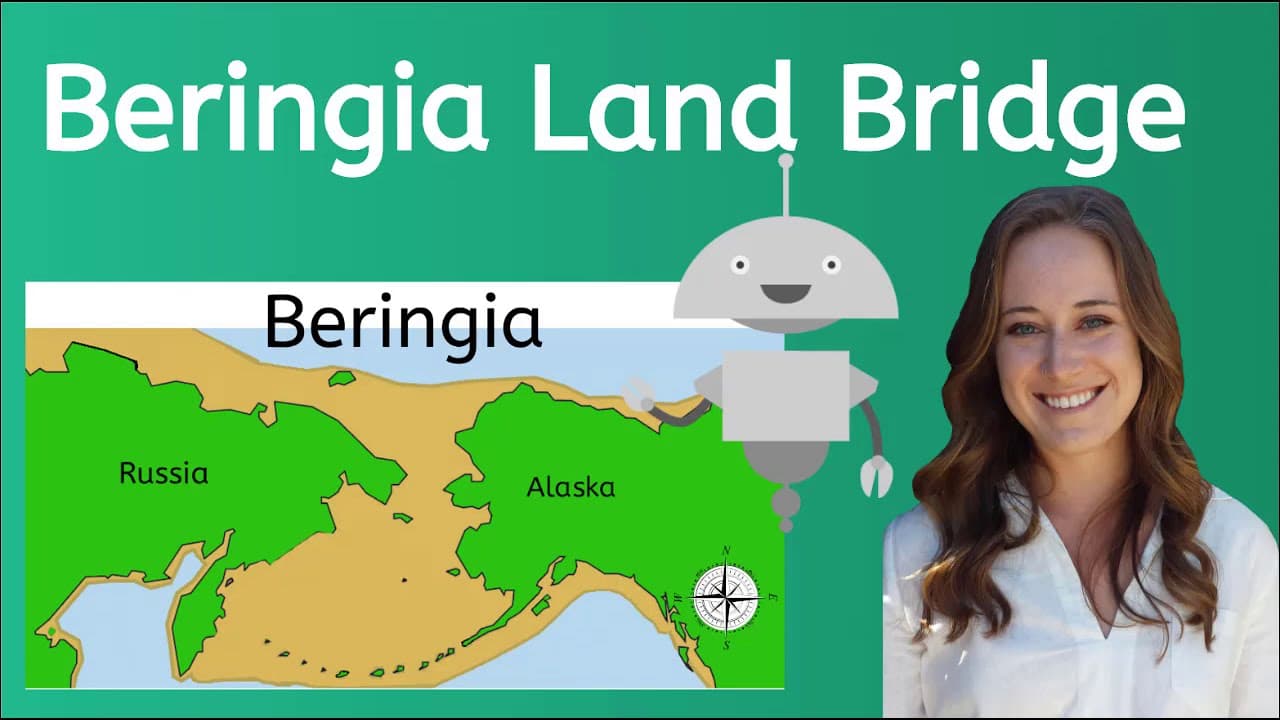
This educational video explores the scientific theory of how the first humans migrated to the Americas via the Beringia Land Bridge. It explains the geographical and climatic conditions of the Ice Age that lowered sea levels, exposing a land connection between present-day Russia and Alaska. The video details the migration routes taken by these early people as they moved through North America down to South America. The content covers key interdisciplinary concepts including geography, earth science, and anthropology. It defines important terms like "migration" and explains the push factors that cause populations to move, such as the search for food, resources, or safety. The video also introduces students to how scientists use evidence to reconstruct the past, specifically looking at how anthropologists use DNA analysis and how archaeologists use artifacts like bronze tools and jade masks to trace human origins. This resource is highly valuable for social studies and history classrooms studying early human civilizations or Native American history. It provides a clear visual representation of complex concepts like changing coastlines and migration patterns. Teachers can use this video to illustrate the intersection of geography and history, demonstrating how physical landscapes shape human movement and settlement patterns.

Miacademy & MiaPrep Learning ChannelMiacademy & MiaPrep Learning Channel

4mins 50s

Exploring the Geography and Cultures of Melanesia and Micronesia

Exploring the Geography and Cultures of Melanesia and Micronesia

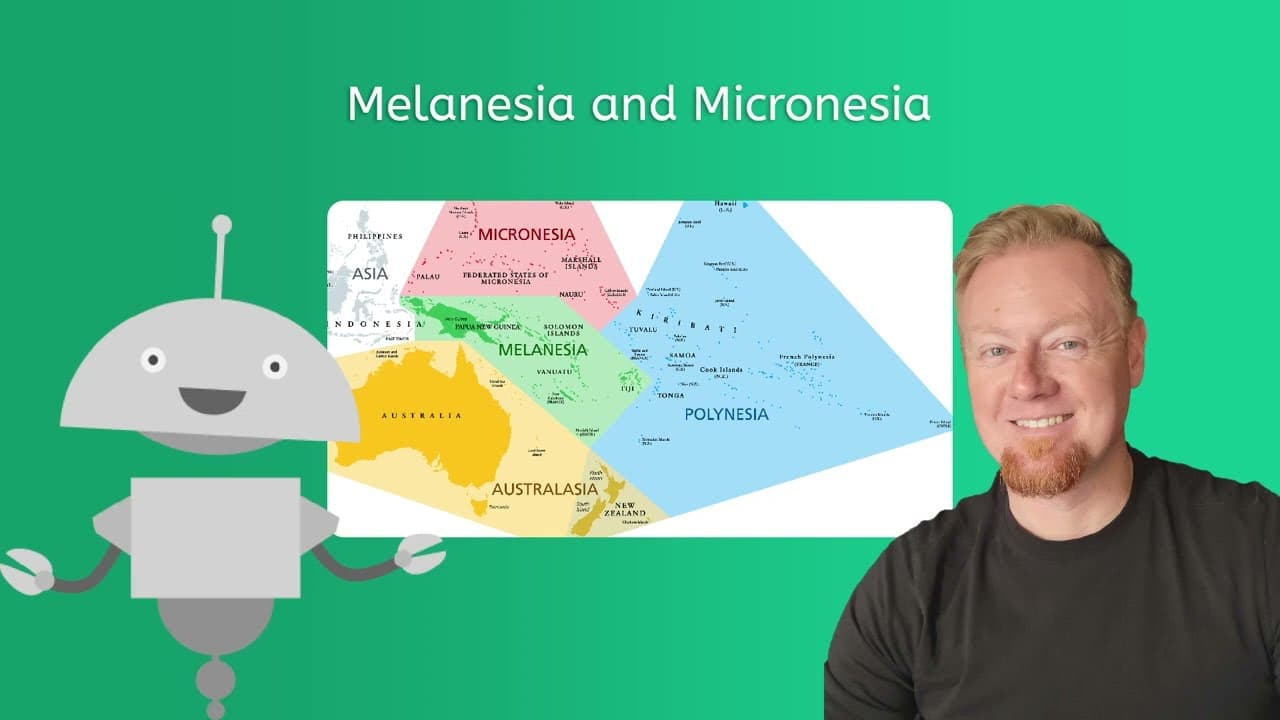
This educational video provides a comprehensive geographical and cultural tour of two major subregions of Oceania: Melanesia and Micronesia. Hosted by "Brian from Oceania Explorers," the video uses maps, historical context, and cultural facts to distinguish these regions from one another and from Polynesia. It covers the etymology of the region names, their geological history (Sahul), and the specific island nations contained within each, including Fiji, Papua New Guinea, the Solomon Islands, Vanuatu, the Federated States of Micronesia, Kiribati, the Marshall Islands, Nauru, and Palau. Key themes include the interplay between physical geography and human history, specifically how vast ocean distances influence culture and governance. The video delves into the genetic and linguistic origins of the indigenous populations, differentiating Melanesians (Papuan/Austronesian mix) from Micronesians (Austronesian/Taiwanese origins). It also addresses complex historical topics such as the "Cannibal Isles" stereotype of Fiji, the impact of colonialism, WWII battles like Guadalcanal, and the modern geopolitical significance of US territories and military bases in the region. For educators, this video is a valuable tool for World Geography and Social Studies classrooms. It moves beyond simple map identification to explore concepts like "perceptual vs. formal regions," "Exclusive Economic Zones" (EEZ), and matriarchal societies. The video includes built-in pause points with reflection questions, making it ready-to-use for structured lessons on Pacific history, indigenous migration theories, and the challenges of island governance.

Miacademy & MiaPrep Learning ChannelMiacademy & MiaPrep Learning Channel

10mins 23s

Uncovering the Past: Sources, Artifacts, and Timelines

Uncovering the Past: Sources, Artifacts, and Timelines

This engaging educational video introduces students to the foundational methods historians use to study the past. Using a playful "breaking news" scenario involving a robot named Mia, the host clearly distinguishes between primary sources (first-hand accounts) and secondary sources (interpretations by others). The video explains how historians rely on these sources to construct accurate narratives of ancient civilizations.

Miacademy & MiaPrep Learning ChannelMiacademy & MiaPrep Learning Channel

12mins 37s

How Humans Harnessed Energy to Build Civilization

How Humans Harnessed Energy to Build Civilization

Hosted by Stan Muller, this episode of Crash Course World History explores the fundamental history of human energy consumption based on Alfred Crosby's book "Children of the Sun." The video traces humanity's journey from relying solely on muscle power to mastering fire, domesticating plants and animals, and eventually unlocking the massive energy stores within fossil fuels. It explains how these advancements allowed for civilization building, from the pyramids to modern metropolises, while emphasizing that almost all energy sources ultimately originate from the sun. The video covers key historical turning points including the Agricultural Revolution, the Industrial Revolution, and the modern reliance on electricity and the internal combustion engine. It provides a balanced look at different fuel sources—wood, coal, oil, and nuclear power—analyzing their efficiency, historical impact, and downsides. Significant attention is given to the exponential increase in energy usage since 1850 and the geopolitical and environmental consequences of this shift. For educators, this resource bridges the gap between science and history, demonstrating how physical laws (thermodynamics) shape human progress. It is an excellent tool for discussing the Anthropocene, the trade-offs of technological advancement, and the complex challenge of sustainability. The video sets up discussions on climate change, resource management, and the future of energy, making it highly relevant for both social studies and environmental science curriculums.

CrashCourseCrashCourse

7mins 21s

Materials

Neolithic Shift Worksheet

Neolithic Shift Worksheet

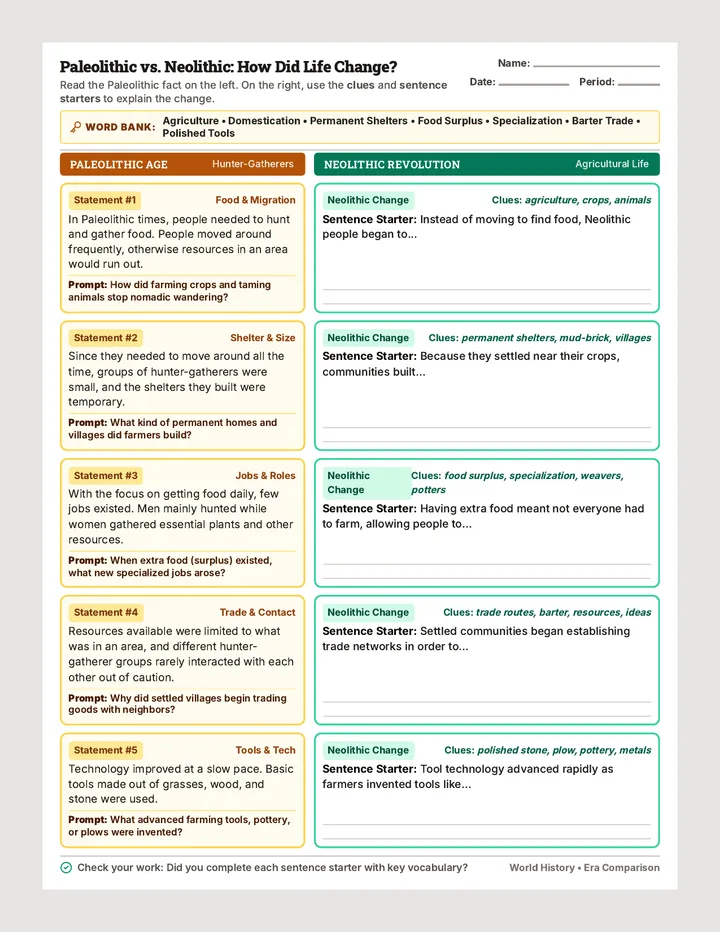
A single-page, large-font comparison worksheet analyzing Paleolithic and Neolithic changes, with bold typography, sentence starters, thinking prompts, and clear handwriting lines.

MJ

Meg Jones

Nomad Survival Bell Ringer Slides

Nomad Survival Bell Ringer Slides

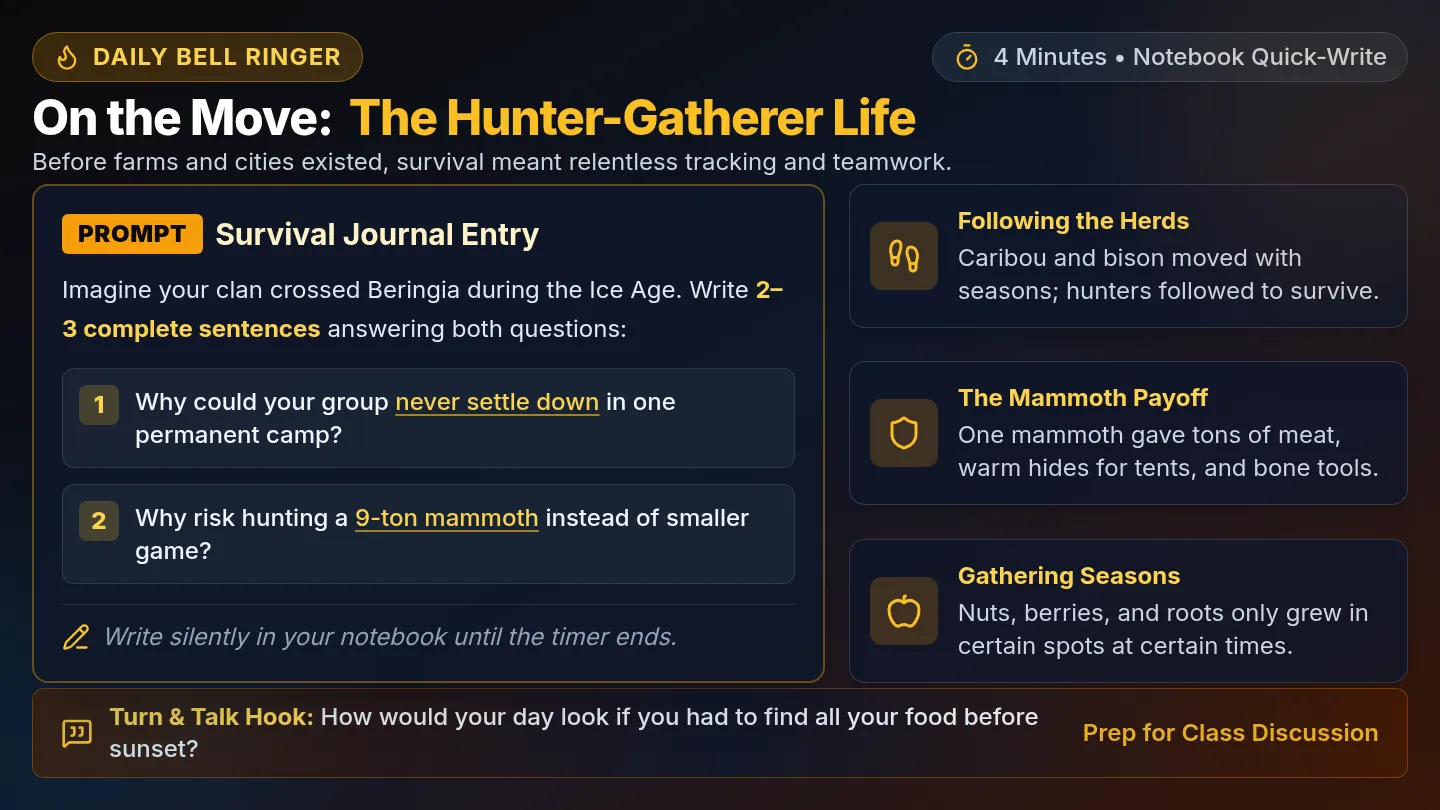
A 2-slide introductory deck for early American history featuring a nomadic survival bell ringer and a structured 'What We Will Learn' roadmap covering migration, megafauna hunting, and the agricultural revolution.

MA

Maria Avery

Artifact Detective Worksheet

Artifact Detective Worksheet

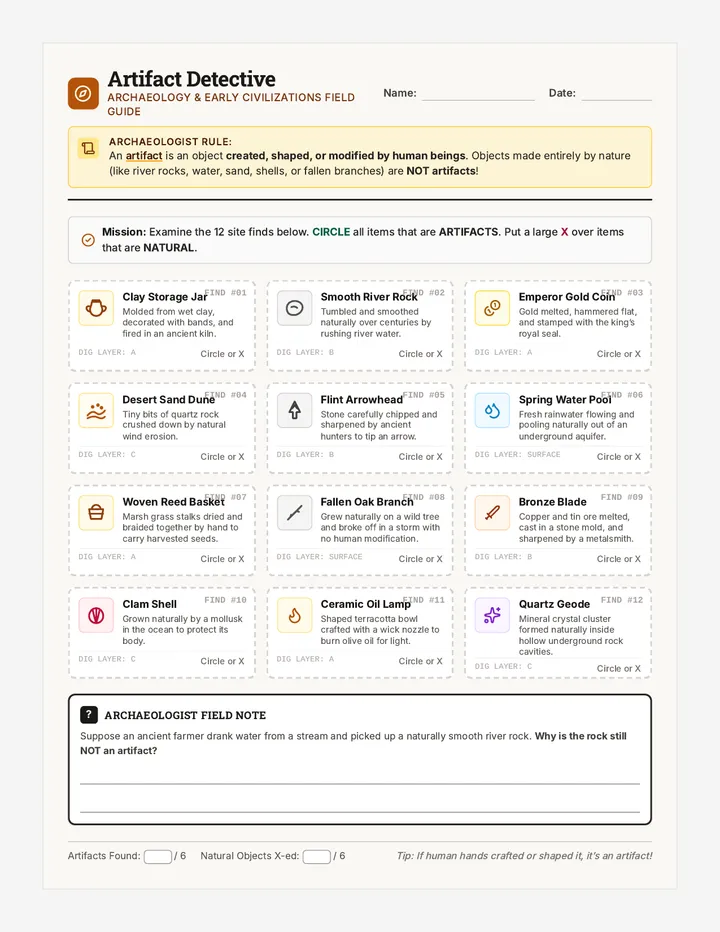
An archaeology worksheet where students differentiate between human-made ancient artifacts and natural non-artifacts. Students inspect illustrated field discoveries, circling true artifacts and crossing out natural objects.

KM

Kristina Martin

Stone Age Trail Study Guide

Stone Age Trail Study Guide

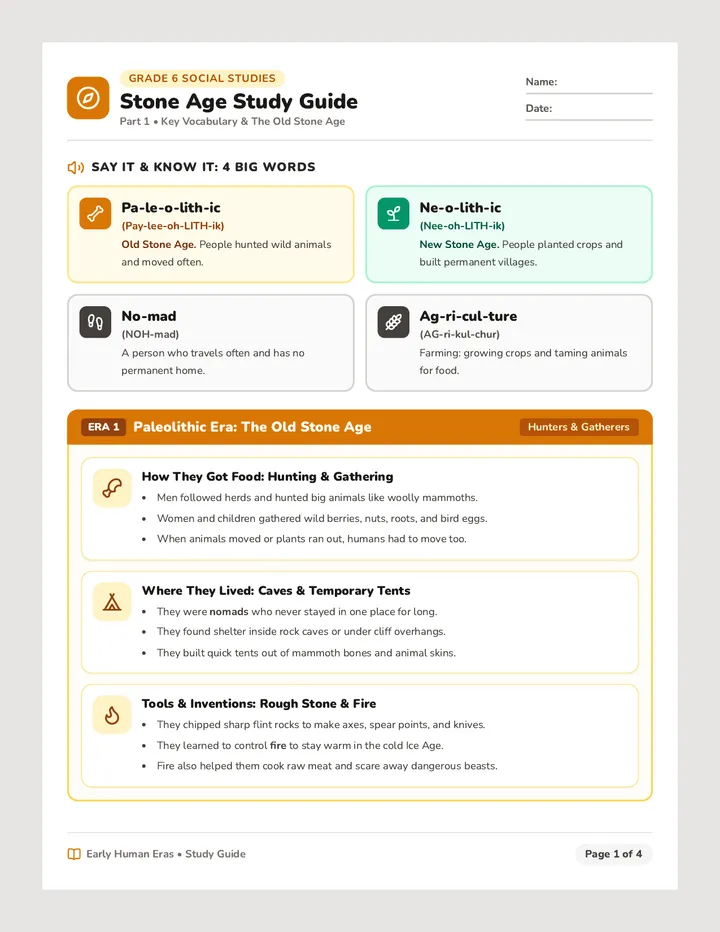
A 4-page accessible Stone Age study guide spread evenly with enlarged fonts, syllable sound-out decoders, spacious Paleolithic and Neolithic breakdowns, a large-print comparison table, memory hacks, and high-readability test practice for 6th graders with K-2 decoding skills.

MJ

Meg Jones

Early Humans Word Search Worksheet

Early Humans Word Search Worksheet

A 2-page differentiated vocabulary word search for 6th-grade students with executive functioning deficits covering early human history. It chunks the 20-word bank into two manageable 10-word thematic sections with restricted directions (only across and down), high-contrast numbered grids, bold first-letter cues, directional hints, and concise definition anchors.

MJ

Meg Jones

Source 4: Seeds of Inequality Reading

Source 4: Seeds of Inequality Reading

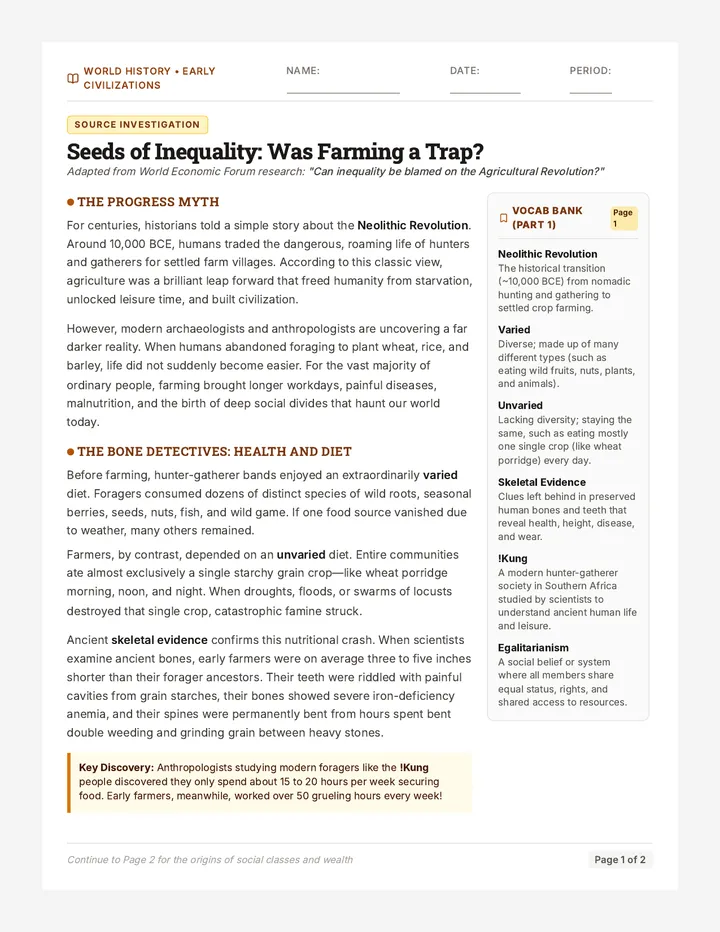
A two-page 6th-grade historical reading passage adapted from World Economic Forum research examining the hidden downsides of the Neolithic Revolution, complete with side-column vocabulary definitions, archaeological evidence, and critical thinking questions.

AA

Adam Amster

Sequences

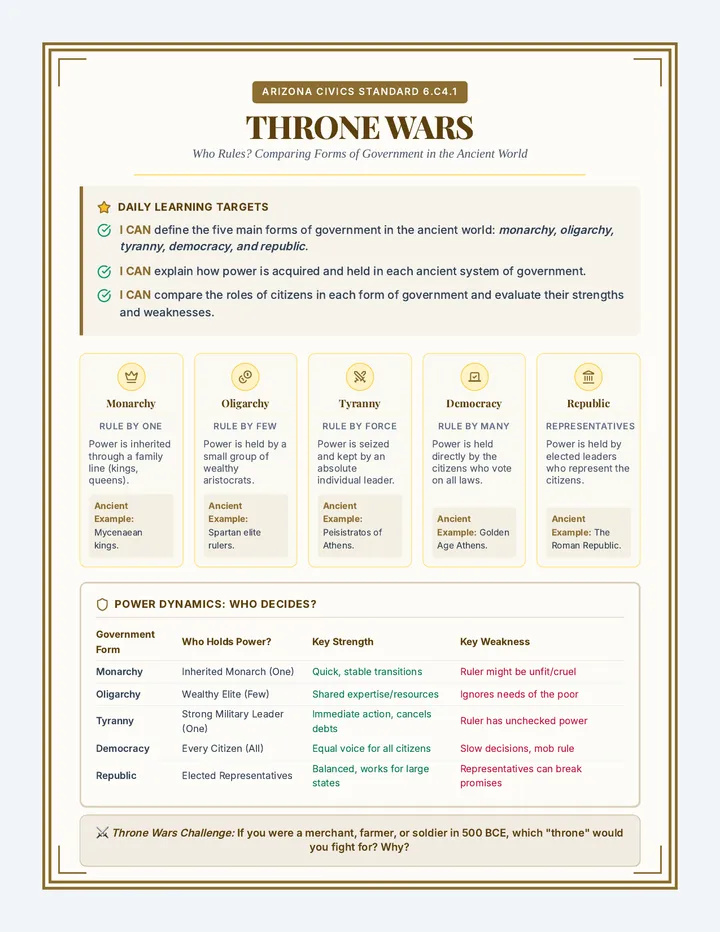
Throne Wars Anchor Chart

Rise of Civilization

A comprehensive 6th-grade social studies unit exploring the trajectory of human history, from nomadic hunter-gatherers and the cognitive evolution of early humans, to the agricultural revolution, and finally the development of structured ancient governments.

SZ

Sandy Zoerhoff

10
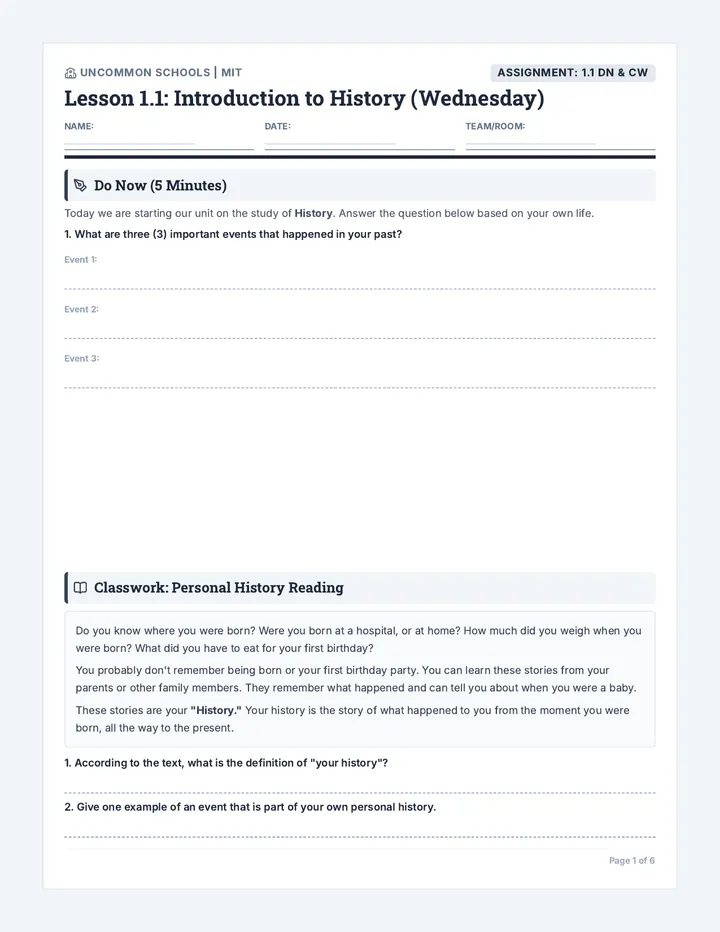
History Basics Student Packet Tier A

What is History Unit

Unit 1: What is History? is an introductory history sequence designed for a Special Education replacement history classroom (supporting students with Autism, SLD, CI, and ADHD). It covers the basics of history, hunter-gatherer communities, challenges of early human life, and natural resources, culminating in a unit quiz.

KL

Kyle Lu

15
Africa Geography and Trade Worksheet

Ancient Empires and Innovations

A weekly unit sequence exploring the physical geography of Africa, the trans-Saharan gold-salt trade, and the major technological and cultural innovations of ancient Sumer. Tailored with high-support, high-rigor scaffolds designed for SPED students.

AG

Amina Gueye

5
Vocab Vault Activity

Indiana Ancestors Unit

A comprehensive 10-day exploration of Indiana's early indigenous cultures, from the Paleo-Indians to the arrival of Europeans, using an archaeological field journal theme. Students investigate the Adena, Hopewell, and Mississippian cultures through primary-source style readings and hands-on synthesis activities.

MG

Matthew Gaudin

23
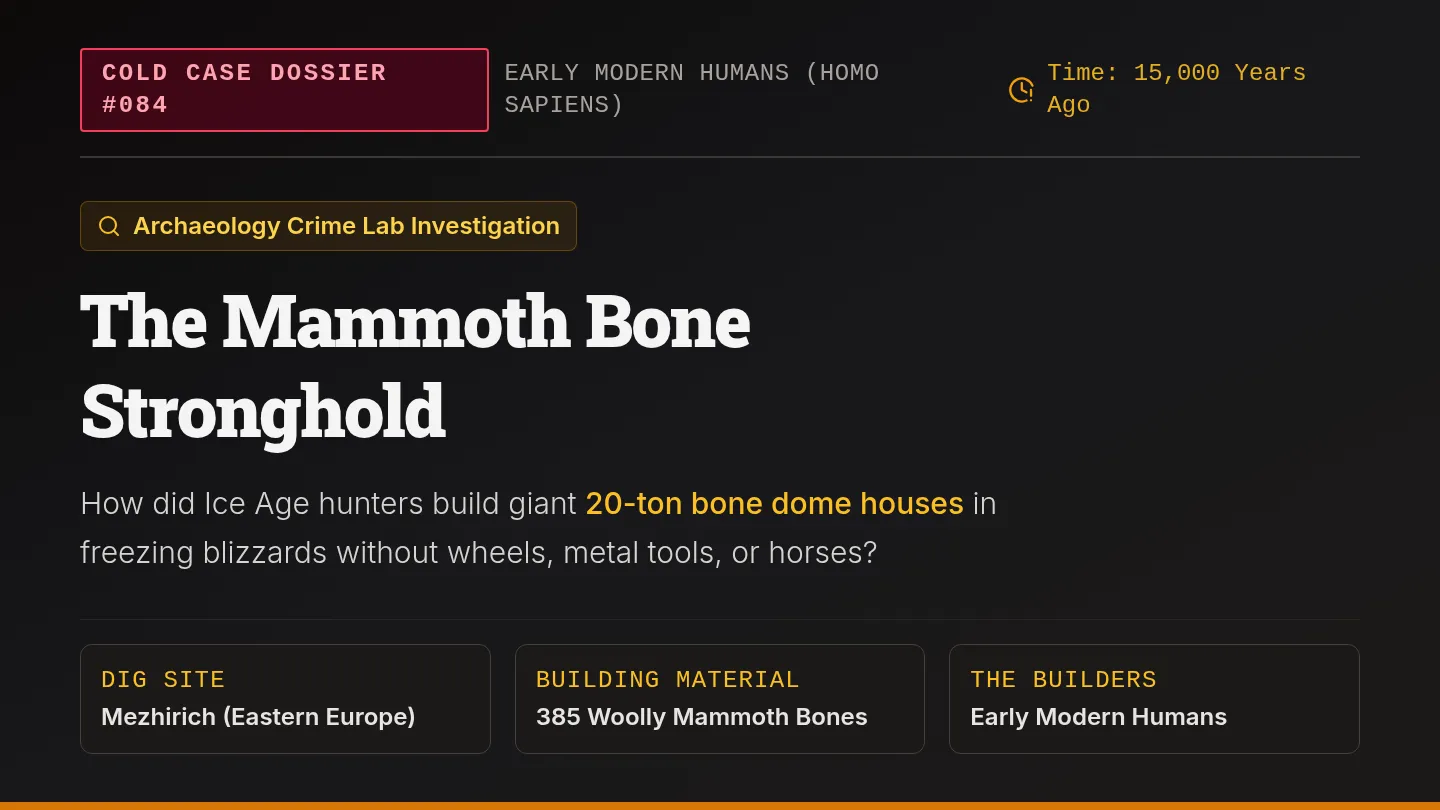
Bone Fortress Investigation Slides

Cold Case Ancient Builders

A cold-case archaeological investigative unit where 6th-grade students act as historical forensic detectives. Across prehistoric case sites, students evaluate clues, structural physics, and logistical challenges to solve how ancient humans constructed monumental architecture without modern technology.

AA

Adam Amster

4
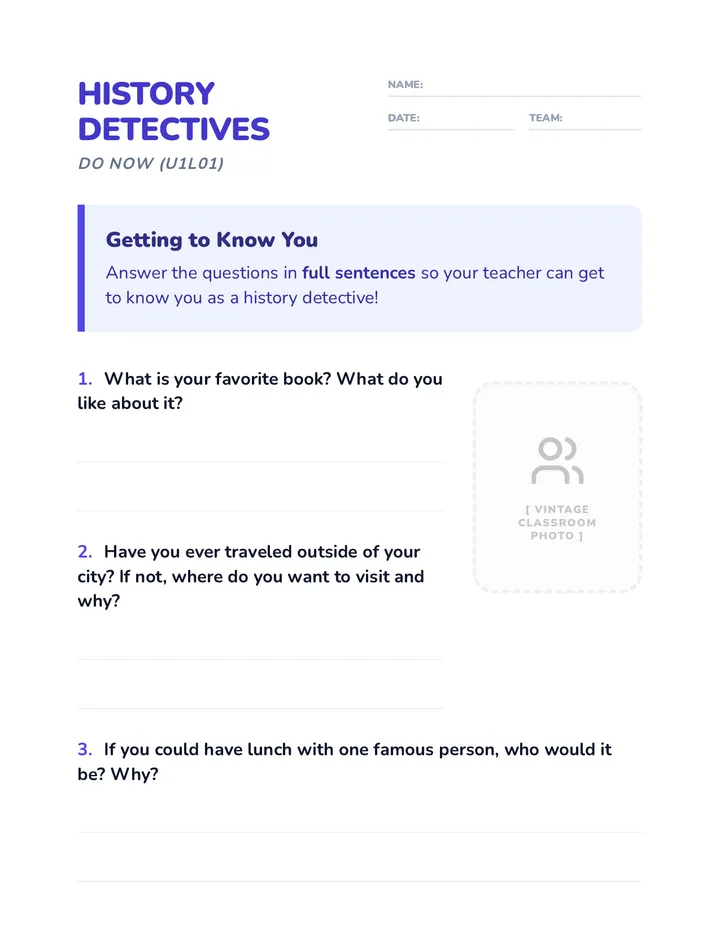
History Detectives Workbook

First Footsteps

A 4-lesson unit exploring the first human migrations to the Americas. Students investigate the Bering Land Bridge and Coastal Route theories using maps and archaeological evidence, tracing the journey from Asia down to South America between 25,000 and 14,000 years ago.

CS

Carly Staples

10

Lessons

Anthropology Stations Signs

Four Subfields of Anthropology Inquiry

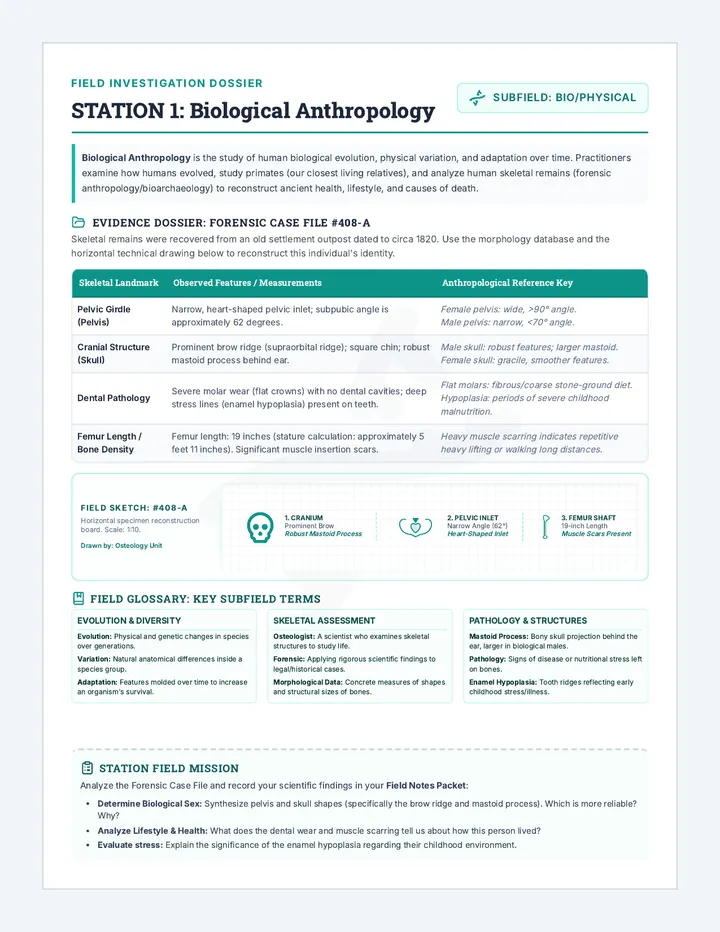
An immersive, station-based inquiry activity that introduces students to the four classic subfields of anthropology: Biological, Cultural, Linguistic, and Archaeology. Through interactive, evidence-driven tasks, students analyze forensics, ethnographies, language structures, and soil stratigraphy.

KT

Kyle Trocolla

6
Explorer Epochs Wall Chart

Early World Explorers

A comprehensive lesson on early world exploration from 300 BCE to 1500 CE, focusing on the geographical, cultural, and religious impacts of key explorers across different continents.

J

jcasey

14
Stone Age Survival Slides

Stone Age Survival

An inquiry-based global history lesson exploring human survival, nomadic hunter-gatherer communities, and tool technologies during the Old Stone Age. Students examine archaeological artifacts and evaluate daily survival strategies to describe life in the Paleolithic Era.

JM

Justin Montalvo

3
Stone Age Walkers Slides

Early Human Explorers

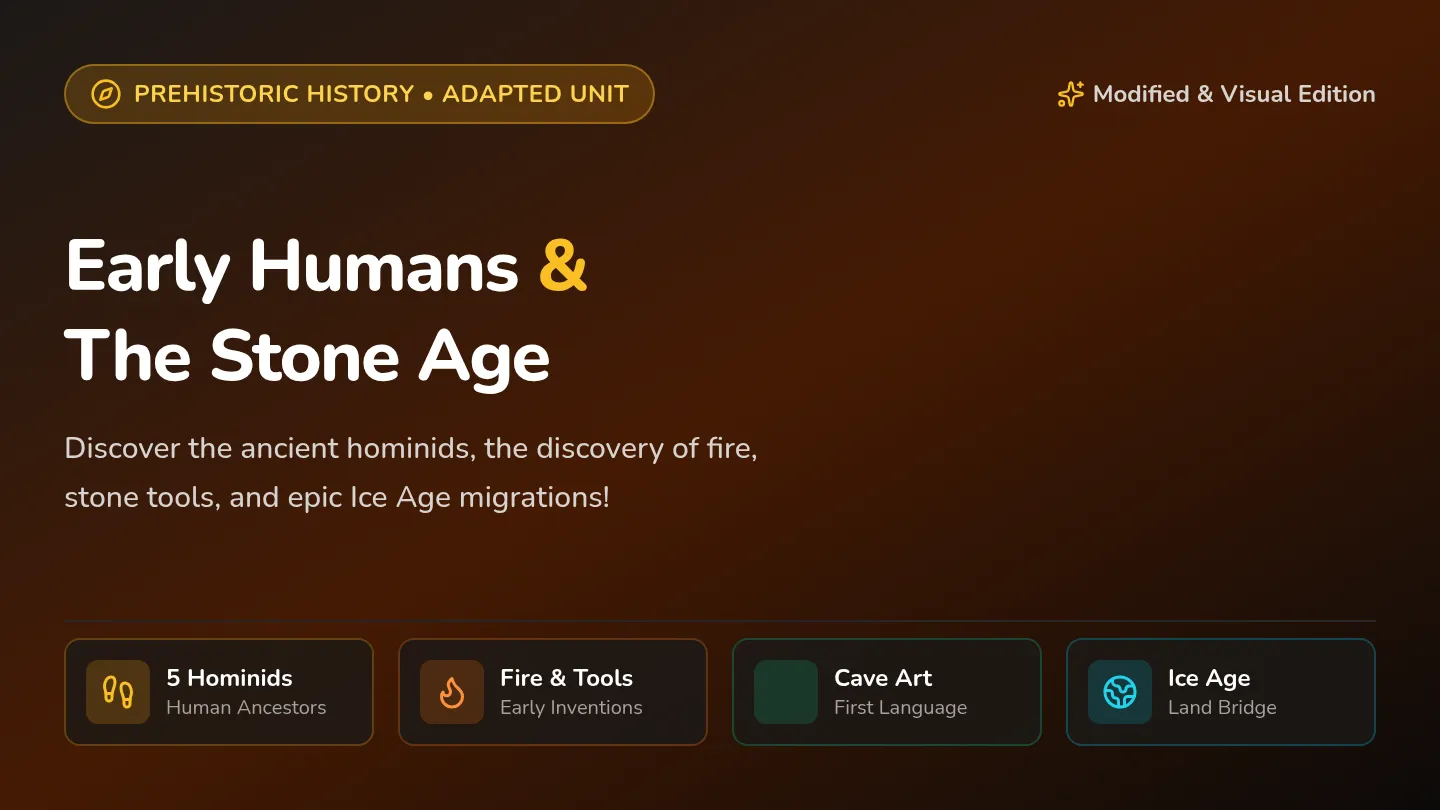
A modified, highly visual special education lesson exploring early human hominids, prehistoric tools, fire, and Ice Age migration. Features adapted slides, large-print guided notes, tactile matching cards, creative cave-art activities, and an educator answer key.

KF

Kara Francis

5
River Valley Pioneers Slides

River Valley Pioneers

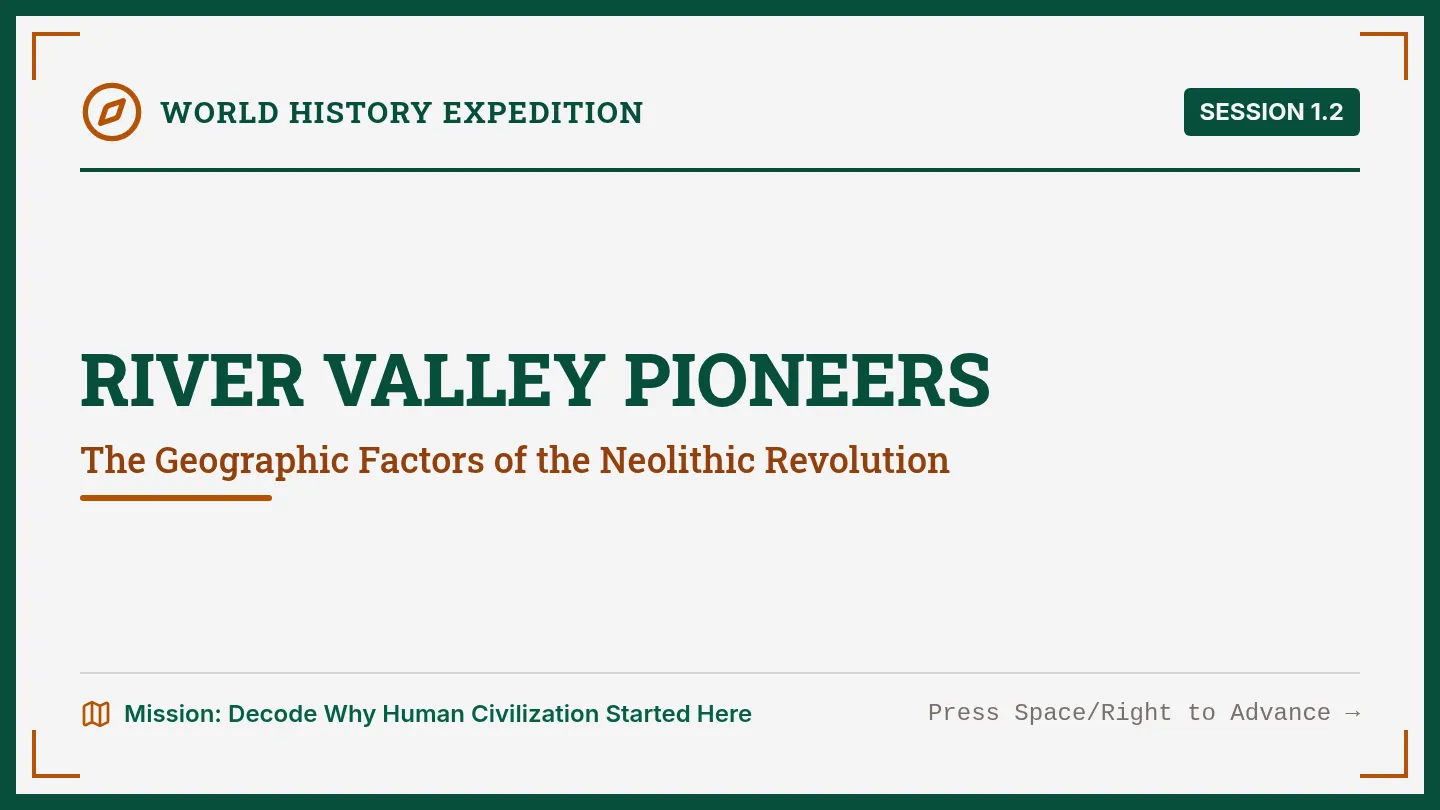
A high school world history lesson focusing on the geographic factors of the Neolithic Revolution. Students participate in a station rotation activity, analyzing maps, data, and geographical details of four major river valleys (Nile, Tigris-Euphrates, Indus, and Yellow Rivers) to determine why agriculture began in these specific regions.

AH

Ashley Hopf

4
Civilization Discovery Lesson Plan

Ancient Civilizations Explorer

A 30-minute, one-on-one Tier 3 literacy lesson for 9th graders focusing on reading comprehension, vocabulary, and critical analysis of ancient civilizations.

AB

Alex Bryant

7