Imperial Shift Briefing Handout Declassified
Department of History Briefing
Subject: The Spanish-American War & The Shift Toward Empire (1898–1900)
Part I: A "Splendid Little War"
The Spanish-American War officially began on April 25, 1898. Before the U.S. entered, Cuban rebels were already fighting Spain. Once the U.S. intervened, the conflict ended swiftly on August 12.
Secretary John Hay called it a "splendid little war" due to the quick victory. However, disease was deadlier: nearly 3,500 soldiers died from yellow fever and typhoid, while battle deaths totaled only 385.
Statistical Note: Disease caused nearly 10x more fatalities than combat in this conflict.
The Rise of Theodore Roosevelt
The war created a national hero: Theodore Roosevelt. Resigning from the Navy Department, he organized the "Rough Riders." Their charge up San Juan Hill on July 1, 1898, remains an iconic moment in history.
Roosevelt's fame propelled him to the Vice Presidency. The 1900 election victory signaled that Americans had embraced Imperialism—expanding national power through overseas acquisition.
Part II: The Treaty of Paris (1898)
Cuba
Spain surrendered its claim. Per the Teller Amendment, the U.S. did not annex Cuba, but maintained influence.
Philippines
The U.S. paid $20 million to Spain for the islands after Dewey's victory at Manila Bay.
Guam & Puerto Rico
Both ceded to the U.S. The Foraker Act (1900) set up a civil government in Puerto Rico.
Frontier
Acquisitions extended the frontier into the Pacific to boost prestige and secure trade routes.
Part III: The Great Debate
Imperialist View
"The ocean joins us." — Senator Beveridge. Supporters believed expansion was a national duty to "civilize" new territories.
Anti-Imperialist View
The Anti-Imperialist League argued that ruling without consent violated democratic ideals.
Briefing Notes & Reflections: Folleto del Giro Imperial ES Desclasificado
Informe del Departamento de Historia
Asunto: La Guerra Hispano-Estadounidense y el Giro hacia el Imperio (1898–1900)
Parte I: Una "Pequeña Guerra Espléndida"
La Guerra Hispano-Estadounidense comenzó el 25 de abril de 1898. Antes de la intervención de EE. UU., los rebeldes cubanos ya luchaban. Una vez que EE. UU. intervino, el conflicto terminó rápido el 12 de agosto.
El Secretario John Hay la llamó una "pequeña guerra espléndida". Sin embargo, las enfermedades fueron más mortales: casi 3,500 soldados murieron de fiebre amarilla y tifoidea, frente a 385 bajas de combate.
Nota Estadística: Las enfermedades causaron casi 10 veces más muertes que el combate real.
El Ascenso de Theodore Roosevelt
La guerra creó un héroe: Theodore Roosevelt. Tras renunciar a su cargo naval, organizó a los "Rough Riders". Su carga en la Colina de San Juan el 1 de julio de 1898 se volvió legendaria.
Su fama lo impulsó a la Vicepresidencia. La victoria de 1900 señaló que el público había aceptado el Imperialismo: la política de adquirir territorios.
Parte II: El Tratado de París (1898)
Cuba
España renunció a su reclamo. Mediante la Enmienda Teller, EE. UU. no anexó Cuba, pero mantuvo influencia.
Filipinas
EE. UU. pagó $20 millones a España por las islas tras la victoria de Dewey en Manila.
Guam y PR
Cedidos a EE. UU. La Ley Foraker (1900) estableció un gobierno civil limitado en Puerto Rico.
Expansión
Las adquisiciones extendieron la frontera hacia el Pacífico para aumentar el prestigio nacional.
Parte III: El Gran Debate
Visión Imperialista
"El océano nos une". — Senador Beveridge. Los defensores creían que era un deber nacional "civilizar".
Visión Anti-Imperialista
La Liga Anti-Imperialista argumentó que gobernar sin consentimiento violaba los ideales democráticos.
Notas y Reflexiones: Empire Builder Presentation Slides U.S. History Briefing
A Splendid Little War
From Isolationism to Empire: The Spanish-American War & The Treaty of Paris
1898: Rapid Victory
Start & End
Begins April 25. Ends August 12. Only four months of conflict.
The Casualties
385 Battle Deaths
3,500+ Disease Deaths (Yellow Fever/Typhoid)
"A splendid little war; begun with the highest motives, carried on with magnificent intelligence and spirit."
— John Hay, Secretary of State
Hero of San Juan Hill
The Rough Riders: A volunteer cavalry of cowboys, miners, and college athletes led by Roosevelt.
July 1, 1898
Roosevelt leads the charge up San Juan Hill, capturing the high ground overlooking Santiago harbor and forcing the Spanish fleet out.
This victory made Roosevelt a national superstar, leading to the NY Governorship and the Vice Presidency.
National Icon
The war proved that the American public supported Imperialism.
The Treaty of Paris (1898)
Philippines
U.S. pays Spain $20 Million to acquire the islands.
Cuba
Spain surrenders claim. U.S. repays $400M debt. Teller Amendment prevents annexation.
Guam & PR
Ceded to U.S. Foraker Act establishes limited self-rule in Puerto Rico.
Shift in Foreign Policy: Imperialism (Expansion) officially replaces Isolationism (Staying at home).
The Annexation Debate
Imperialists
"Uplift and Christianize" (McKinley)
New Frontiers for Mining & Resources
Boosting National Superiority & Navy
Opposition
"Hostile to Liberty" (Carnegie/Twain)
Violates Self-Determination
Racist fears of nonwhite immigration
Critical Inquiry
Was the "Splendid Little War" worth the cost? Did the Treaty of Paris uphold or violate American ideals of democracy and liberty?
Get ready for your writing prompt.
Treaty and Territory Worksheet Treaty & Territory Analysis
Unit: American Imperialism (1898–1900)
Name:
Date:
1 Key Term Identification
Draw a line to match each term with its correct description based on the briefing handout.
Treaty of Paris (1898)
Teller Amendment
Foraker Act
Rough Riders
Ensured the U.S. would not take control of Cuba after the war.
A diverse group of volunteer cavalry led by Theodore Roosevelt.
Officially ended the war and gave the U.S. the Philippines for $20M.
Established limited self-government for Puerto Rico.
2 Statistical Analysis
Review the casualty numbers from the Spanish-American War:
385 Battle Deaths
3,500+ Disease Deaths
Why might John Hay call this a "splendid little war" despite the high number of disease-related deaths?
3 Territorial Outcomes
Territory What was the final status of this region? The Philippines Cuba Puerto Rico
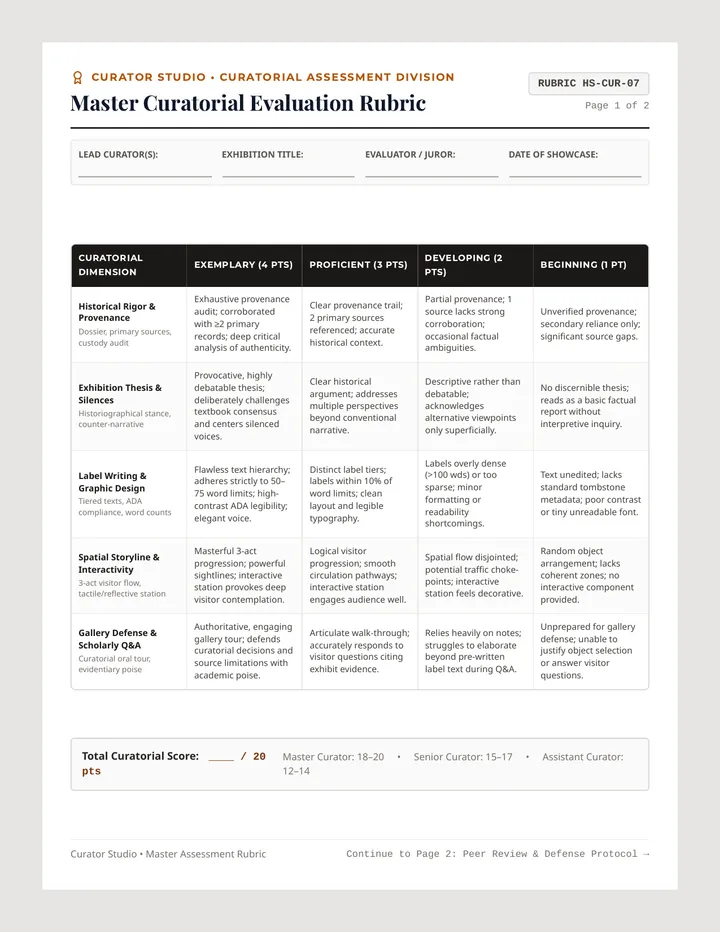
Empire Writing Rubric Empire Assessment Rubric
Task: "Empire or Democracy?" Summative Writing
Score: _____ / 16
Criteria 4 - Exemplary 3 - Proficient 2 - Developing 1 - Beginning Claim Nuanced claim that fully addresses the prompt. Clear claim with a definitive stance. Claim is present but vague or weak. Missing or irrelevant claim. Evidence Integrates 3+ accurate historical facts. Includes at least 2 specific historical facts. General references with few details. Little to no historical evidence. Analysis Deeply connects evidence to claim logically. Explains how evidence supports claim well. Basic reasoning; connection is weak. Lacks reasoning or logic is flawed. Writing Exceptional organization and grammar. Logical flow; meets word count (150-250). Disorganized or slightly short of length. Highly disorganized or too short.
Facilitator Feedback & Notes:
Strengths & Insights:
Next Steps for Improvement:
Empire Claims Writing Prompt Summative Writing Task
Empire or Democracy?
Following the Spanish-American War, the acquisition of new territories through the Treaty of Paris signaled a shift from isolationism toward global imperialism.
Was the annexation of territories like the Philippines consistent with American values, or did it represent a betrayal of democracy?
Instructions:
Write a clear claim (your stance).
Use evidence from the Briefing Handout (e.g., Roosevelt, Anti-Imperialist League).
Explain how this evidence supports your claim.
Claim:
Evidence & Reasoning:
Ref: Treaty of Paris • Roosevelt's Rough Riders • Anti-Imperialist League
Goal: 150-250 Words
Rúbrica de Escritura Imperio ES Rúbrica de Evaluación: Imperio
Tarea: "¿Imperio o Democracia?" - Escritura Sumativa
Puntaje: _____ / 16
Criterios 4 - Ejemplar 3 - Proficiente 2 - Desarrollo 1 - Inicial Afirmación Postura clara y sofisticada que aborda la pregunta. Postura clara con una tesis definitiva. Tesis vaga o carece de una postura clara. Falta de afirmación o es irrelevante. Evidencia Integra con precisión 3+ hechos históricos. Incluye al menos 2 hechos históricos específicos. Menciones generales con pocos detalles. Poca o ninguna evidencia histórica. Análisis Conecta profundamente la evidencia con la postura. Explica bien cómo la evidencia apoya la postura. Razonamiento básico; conexión débil. Carece de razonamiento o lógica errónea. Escritura Organización excepcional y gramática perfecta. Flujo lógico; meta de 150-250 palabras. Desorganizado o corto de extensión. Muy desorganizado o demasiado corto.
Comentarios y Notas del Facilitador:
Fortalezas y Observaciones:
Áreas para Mejorar:
Lesson Facilitator Guide Lesson Facilitator Guide
Splendid Little War: The Dawn of American Empire
Pacing (40 Minutes)
0-5: Hook & Introduction (Slide 1)
5-15: Instruction & Context (Slides 2-4)
15-25: Handout Reading & Worksheet (Sec 1-3)
25-30: The Great Debate Discussion (Slide 5)
30-40: Summative Writing Prompt
Objectives
Analyze the outcomes of the Treaty of Paris.
Identify the role of Theodore Roosevelt in shifting public opinion.
Evaluate the arguments for and against the annexation of the Philippines.
Worksheet Answer Key
1. Key Terms Matching
Treaty of Paris: Ended war, gave Philippines ($20M).
Teller Amendment: U.S. won't control Cuba.
Foraker Act: Limited PR self-government.
Rough Riders: Roosevelt's volunteer cavalry.
2. Statistical Analysis
"Hay called it 'splendid' because the battle casualties were very low (385) and the war was won in only four months, even though 3,500+ died of disease."
3. Territorial Outcomes
<table class="w-full text-xs mt-2 border border-slate-200"><tbody><tr class="bg-slate-50"><td class="p-2 font-bold w-1/4">Philippines</td><td class="p-2 italic">Acquired by U.S. for $20 million; debate over annexation followed.</td></tr><tr><td class="p-2 font-bold">Cuba</td><td class="p-2 italic">Granted independence (Spanish claim surrendered); debt repaid by U.S.; Teller Amendment in effect.</td></tr><tr class="bg-slate-50"><td class="p-2 font-bold">Puerto Rico</td><td class="p-2 italic">Ceded to U.S.; Foraker Act established limited self-rule with U.S.-appointed governor.</td></tr><tr><td class="p-2 font-bold">Guam</td><td class="p-2 italic">Ceded to the United States.</td></tr></tbody></table>
4. The Annexation Debate
McKinley: Duty to "uplift/Christianize" or answer the "Frontier Thesis" (need for resources/expansion).
League: Annexation is "hostile to liberty" or violates "self-determination."
Discussion Facilitation
Question 1: Roosevelt was a hero for the Battle of San Juan Hill. How does a war hero's popularity help a government push policies like imperialism?
Question 2: McKinley claimed annexation was about "uplifting" others. Was this a genuine motive, or a justification for economic gain? How can we tell?
Crucial Insight: Remind students that many anti-imperialists weren't just motivated by liberty; some were motivated by racism (fearing nonwhite immigration). This adds complexity to the "hero vs. villain" narrative.
Diapositivas Constructor Imperio ES Informe de Historia de EE. UU.
Una Pequeña Guerra Espléndida
Del Aislacionismo al Imperio: La Guerra Hispano-Estadounidense y el Tratado de París
1898: Victoria Rápida
Inicio y Fin
Comienza el 25 de abril. Termina el 12 de agosto. Solo cuatro meses de conflicto.
Las Bajas
385 Muertes en combate
3,500+ Muertes por enfermedades (Fiebre amarilla/Tifoidea)
"Una pequeña guerra espléndida; comenzada con los más altos motivos, llevada a cabo con magnífica inteligencia y espíritu."
— John Hay, Secretario de Estado
Héroe de San Juan Hill
Los Rough Riders: Caballería voluntaria de vaqueros, mineros y atletas liderada por Roosevelt.
1 de julio de 1898
Roosevelt lidera la carga en San Juan Hill, capturando las colinas sobre Santiago y forzando la salida de la flota española.
Ícono Nacional
La guerra demostró que el público apoyaba el Imperialismo.
Tratado de París (1898)
Filipinas
EE. UU. paga a España $20 Millones por las islas.
Cuba
España renuncia al reclamo. Enmienda Teller evita la anexión por EE. UU.
Guam y PR
Cedidos a EE. UU. La Ley Foraker establece gobierno limitado en Puerto Rico.
Giro en Política Exterior: El Imperialismo reemplaza al Aislacionismo.
El Debate de la Anexación
Imperialistas
"Elevar y cristianizar" (McKinley)
Nuevas fronteras para recursos
Aumentar superioridad naval
Oposición
"Hostil a la libertad" (Carnegie)
Viola la autodeterminación
Temores racistas de inmigración
Hoja de Trabajo Tratados ES Análisis de Tratados y Territorios
Unidad: Imperialismo Estadounidense (1898–1900)
Nombre:
Fecha:
1 Identificación de Términos Clave
Dibuja una línea para emparejar cada término con su descripción correcta.
Tratado de París (1898)
Enmienda Teller
Ley Foraker
Rough Riders
Aseguró que EE. UU. no tomaría el control de Cuba después de la guerra.
Un grupo diverso de caballería voluntaria liderado por Roosevelt.
Terminó la guerra y dio las Filipinas a EE. UU. por $20M.
Estableció un autogobierno limitado para Puerto Rico.
2 Análisis Estadístico
Revisa las cifras de bajas:
385 Muertes en Combate
3,500+ Muertes por Enfermedad
¿Por qué John Hay llamaría a esto una "pequeña guerra espléndida" a pesar de las muertes por enfermedad?
3 Resultados Territoriales
Territorio ¿Cuál fue el estatus final de esta región? Filipinas Cuba Puerto Rico
Pregunta de Escritura Imperio ES Tarea de Escritura Sumativa
¿Imperio o Democracia?
Tras la Guerra Hispano-Estadounidense, la adquisición de nuevos territorios a través del Tratado de París señaló un giro del aislacionismo hacia el imperialismo global.
¿Fue la anexión de territorios como las Filipinas consistente con los valores estadounidenses, o representó una traición a la democracia?
Afirmación clara Evidencia del texto Razonamiento
Afirmación (Tesis):
Escribe aquí tu postura principal...
Evidencia y Razonamiento:
Ref: Tratado de París • Liga Antiimperialista • Roosevelt
Meta: 150-250 palabras
Guía Facilitador Lección ES Guía del Facilitador de la Lección
Guerra Espléndida: El Amanecer del Imperio Estadounidense
Ritmo (40 Minutos)
0-5: Introducción y Gancho
5-15: Instrucción y Diapositivas
15-25: Lectura del Folleto y Hoja de Trabajo
25-30: Discusión del Gran Debate
30-40: Tarea de Escritura (Afirmación y Evidencia)
Objetivos
Analizar los resultados territoriales del Tratado de París.
Identificar el impacto de Theodore Roosevelt en la política exterior.
Evaluar las motivaciones detrás de la anexión de las Filipinas.
Clave de Respuestas Detallada
1. Identificación y Resultados
Filipinas: Cedida por España tras el pago de $20 millones; se convirtió en foco del debate imperialista.
Cuba: Independencia formal de España bajo la Enmienda Teller, evitando la anexión directa por EE. UU.
Puerto Rico: Cedido a EE. UU.; la Ley Foraker estableció una estructura de gobierno civil limitada.
2. Análisis de "Guerra Espléndida"
La frase de John Hay se refiere a la victoria rápida y decisiva en solo 4 meses con bajas de combate mínimas (385). Ignora los 3,500+ muertos por enfermedad para enfatizar el éxito militar y la expansión estratégica.
3. Modelo de Afirmación y Evidencia
Afirmación: La anexión de Filipinas representó una traición a la democracia estadounidense.
Evidencia: La Liga Antiimperialista argumentó que controlar a otros pueblos era "hostil a la libertad" y violaba el principio de autodeterminación del país.
Facilitación de Discusión
Pregunta: ¿Era inevitable el giro hacia el imperialismo después de que la frontera occidental se "cerrara"?
Fomente que los estudiantes conecten la fama de Roosevelt con la validación de estas nuevas políticas expansionistas por parte del público.