Lenny.com
Explore
Create
ActivitiesNewMathEnglish Language ArtsScience & EngineeringSocial StudiesGlobal LanguagesHealth & Physical EducationSpecial EducationCounseling & Life SkillsArts & CreativityESL
Lenny.com
Lenny.com
Explore
Create
ActivitiesNewMathEnglish Language ArtsScience & EngineeringSocial StudiesGlobal LanguagesHealth & Physical EducationSpecial EducationCounseling & Life SkillsArts & CreativityESL
Lenny.com
Lenny.com

Solutions

Lenny for EducatorsLenny for SchoolsLenny for Districts

Product

ExploreSign inCreateSupportAbout

Resources

Getting startedMTSS Acceleration Program

Newsletters

School Funding Newsletter

© 2026 Lenny Learning Inc.

TermsPrivacyAccessibility
LinkedInInstagramX
Lenny
Social StudiesSocial Studies PracticesLocation WordsMapsOrder EventsChronology and CausationEvaluating SourcesHistorical ThinkingGeography, Humans, & the EnvironmentAmerican Symbols and LandmarksCitiesStatesState CapitalsRegions of the United StatesGeographic SkillsPhysical GeographyHuman GeographyRegional GeographyGeography of AfricaGeography of AsiaGeography of EuropeGeography of OceaniaGeography of the AmericasSociety and Environment of EuropeSociety and Environment of AsiaSociety and Environment of The AmericasSociety and Environment of the Middle EastSociety and Environment of AfricaHistoryPrehistoryComparing Ancient River CivilizationsAncient MesopotamiaAncient Egypt and KushAncient South AsiaEarly ChinaGreeceRome and the Byzantine EmpireAncient World HistoryNative Peoples of North AmericaNative Peoples of Mesoamerica and South AmericaAfrican EmpiresMedieval AsiaMedieval EuropeThe Silk RoadMedieval HistoryIslamic EmpiresWorld ReligionsRenaissance PeriodAge of ExplorationThe Thirteen ColoniesThe American RevolutionUS History Early RepublicFounding of the United StatesUS History AntebellumUS Civil WarReconstruction PeriodThe Gilded AgeUS ImperialismWorld ImperialismWorld War IUS History 1920sGreat DepressionWorld War IIThe Cold WarUS History 1950-60sUS History 1960s-70sWorld History 20th CenturyContemporary US HistoryContemporary World HistoryHolidaysCivics and GovernmentCitizenshipGovernment FoundationsThe ConstitutionUS ConstitutionExecutive BranchLegislative BranchJudicial BranchState and LocalPolitical ParticipationPublic PolicyPolitical SystemsPower and AuthoritySocial MovementsDefining DevianceTheories of DevianceCrime and Criminal JusticeEconomicsBasic Economic PrinciplesSupply and DemandWhat is MoneyEconomic FundamentalsMicroeconomicsMacroeconomicsBanking and FinanceEconomic SystemsGlobal EconomicsCorporations and PowerThe Changing WorkplaceUnemployment and LaborClass and InequalitySocial MobilityGlobal InequalityPsychologyHistory of PsychologyPsychology as a ScienceBrain and Nervous SystemNeuroscience and BehaviorGenetics and BehaviorSleep and ConsciousnessSensory ProcessesPerceptual OrganizationClassical ConditioningOperant ConditioningObservational LearningCognitive LearningMemory ProcessesThinking and Problem SolvingLanguage and CognitionTheories of MotivationStress and CopingPrenatal and Infant DevelopmentChildhood DevelopmentAdolescent DevelopmentAdulthood and AgingSelf and IdentitySocial CognitionSocial InfluenceAttraction and RelationshipsGroup BehaviorPrejudice and DiscriminationAnxiety and Mood DisordersClinical PsychologyForensic PsychologyPhilosophy & EthicsIntroduction to PhilosophyMajor Philosophers & IdeasMind and Body ProblemFree Will vs DeterminismEthics & MoralityReligion & PhilosophyPolitical Philosophy

Map Explorers

A foundational 1st-grade geography lesson introducing map distances, near versus far concepts, grid counting, and basic map scale using counting blocks and steps. Students learn that maps shrink the big real world into tiny drawings they can measure.

EBEmily Brown

Map Explorers

A foundational 1st-grade geography lesson introducing map distances, near versus far concepts, grid counting, and basic map scale using counting blocks and steps. Students learn that maps shrink the big real world into tiny drawings they can measure.

EBEmily Brown

"Explorers, look at this map of the United States. I'm placing my ruler between our school and California. It measures exactly 1 stick long! So I packed my sunglasses, and I'm going to walk 1 stick right now. Ready? One step! (Look around in surprise) Wait a second... why aren't there any palm trees or beaches? Why am I still next to the whiteboard? (Allow students to respond: because the map is tiny and the real world is huge!) Exactly! Maps shrink the real world down so it fits in our hands!"

Map Explorers Teacher Guide Page 1 of 2

Hands-On Extension & Differentiation Map Explorers Lesson

Classroom Floor Map & Support Guide

Interactive Floor Map Setup (Optional 10-Min Kinetic Activity)

To make map scale visceral for 1st graders, create a 4x4 floor grid on your rug using painter's tape or foam floor tiles.

1. Mark Landmarks Place pictures of a School, Library, and Playground in different grid squares.

2. Physical Stepping Have a student stand on "School" and physically step square-by-square to "Playground" while the class counts aloud.

3. Connect to Paper Show students that each floor tile is just like one counting square on their paper worksheet!

Common 1st Grade Misconceptions & Quick Fixes

❌ Misconception: Counting the Starting Square

Students often count the square they are standing in as "1", ending with 1 extra step.

✅ Say: "You haven't moved yet! Put your finger down and whisper 'Zero'. Only count when you step into the next square!"

❌ Misconception: Diagonal Skipping

Students may jump diagonally across boxes instead of following the straight grid streets.

✅ Say: "Stay on the walking sidewalks! You can walk left, right, up, or down—no cutting through corners!"

Tiered Differentiation Strategies

Support (Struggling Learners)

  • Provide physical snap cubes to place directly onto grid squares.
  • Use highlighter pens to trace paths before counting.
  • Work with 1-to-5 step distances only.

On-Level (Core Practice)

  • Complete the 3-page Tiny Map Quest Activity Packet independently.
  • Compare two different routes (e.g., 4 steps vs. 7 steps) and state which is shorter.

Extension (Early Finishers)

  • Draw a secret treasure obstacle (lake or mountain) that forces a longer route.
  • Write a 2-step clue for a partner: "Start at the bench. Walk 3 steps East and 2 steps North!"

Activity Packet Answer Key Summary

Page 1 (Near vs. Far):

1. Slide is CLOSER (2 blocks vs 5 blocks)

2. Tree trail: 4 steps

Page 2 (Treasure Quest):

1. Ship to Palm Tree = 3 steps

2. Palm Tree to Skull Rock = 4 steps

3. Total Hunt = 7 steps

Page 3 (Park Builder):

Path A (Pond) = 3 steps (Shortest)

Path B (Swings) = 6 steps (Longest)

Map Explorers Teacher Guide Page 2 of 2

·

·

·

·

·

·

·

·

·

💎 Chest

·

Treasure Quest Log: Count Your Steps

1 Clue 1: Ship ⛵ to Palm 🌴

Walk straight to Palm Tree.

Distance:

steps

2 Clue 2: Palm 🌴 to Skull 💀

Walk down 2 and left 2.

Distance:

steps

🏆 Grand Explorer Question: Is Ship ⛵ closer or farther from Chest 💎 than Skull Rock 💀?

Tiny Map Quest • Grade 1 Activity Packet Page 2 of 3

✂️ Tiny Map Quest • Part 3

Cut, Paste & Color

Park Builder & Route Measuring!

Name:

Directions: Cut out the 4 park tokens at the bottom. Glue them onto the map spaces. Then color the routes and measure which path is shortest!

🌳 MY SUNNY PARK GRID MAP Map Scale: 1 Block = 1 Step

🚪 Gate

1

2

Glue 1 🦆

·

·

·

Glue 2 🛝

·

Glue 3 🌸

·

Glue 4 🧺

·

·

·

🎨 Color & Measure Your Park Routes:

Blue Route: Gate to Pond 🦆

Color 3 squares blue. Distance = steps.

Red Route: Gate to Flowers 🌸

Color 5 squares red. Distance = steps.

Which route is SHORTEST (closest)?

Blue Route (Pond) Red Route (Flowers)

Cut-Out Park Tokens (Cut along dashed lines) Snip & paste onto the map above

🦆 Duck Pond

🛝 Swings

🌸 Flower Bed

🧺 Picnic Table

Tiny Map Quest • Grade 1 Activity Packet Page 3 of 3
You might also like

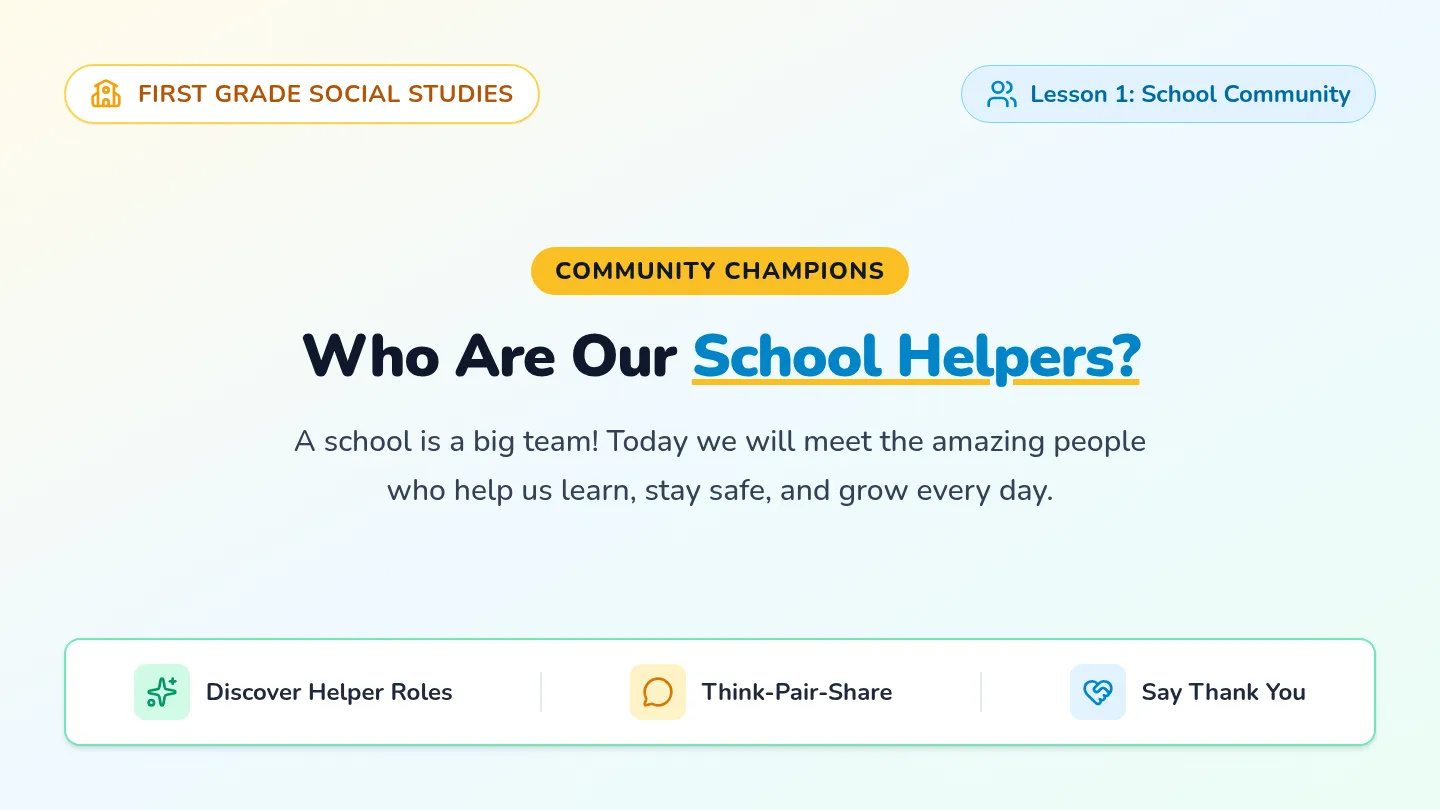
Helper Heroes Slides

School Community Champions

A four-lesson first grade social studies sequence exploring school community roles, safety rules, teamwork, and everyday kindness to build responsible school citizens.

C

ccurry

8
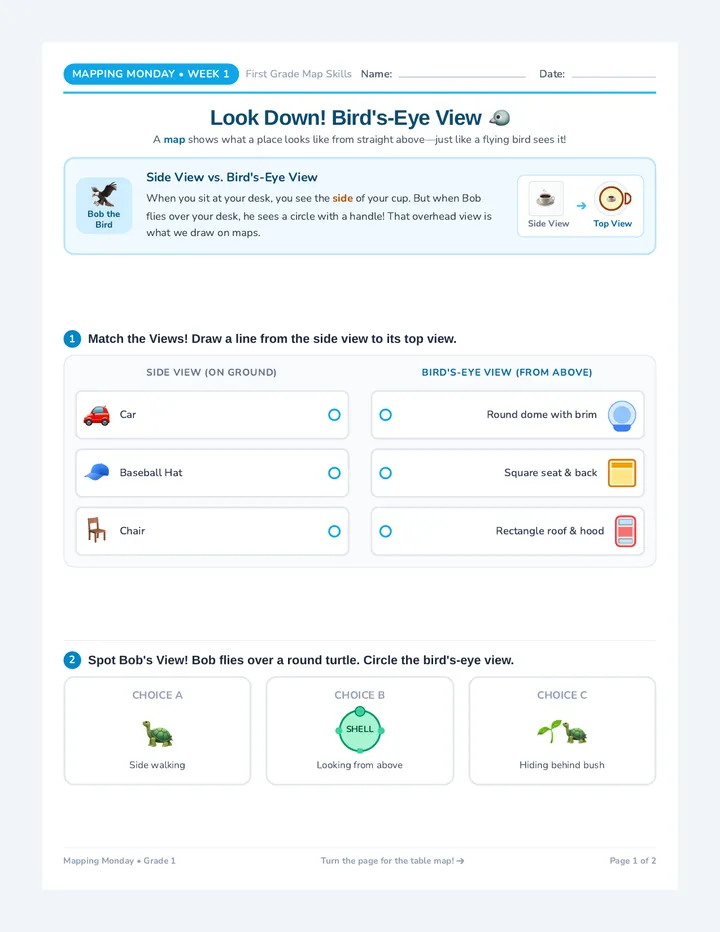
Bird Eye View Worksheet

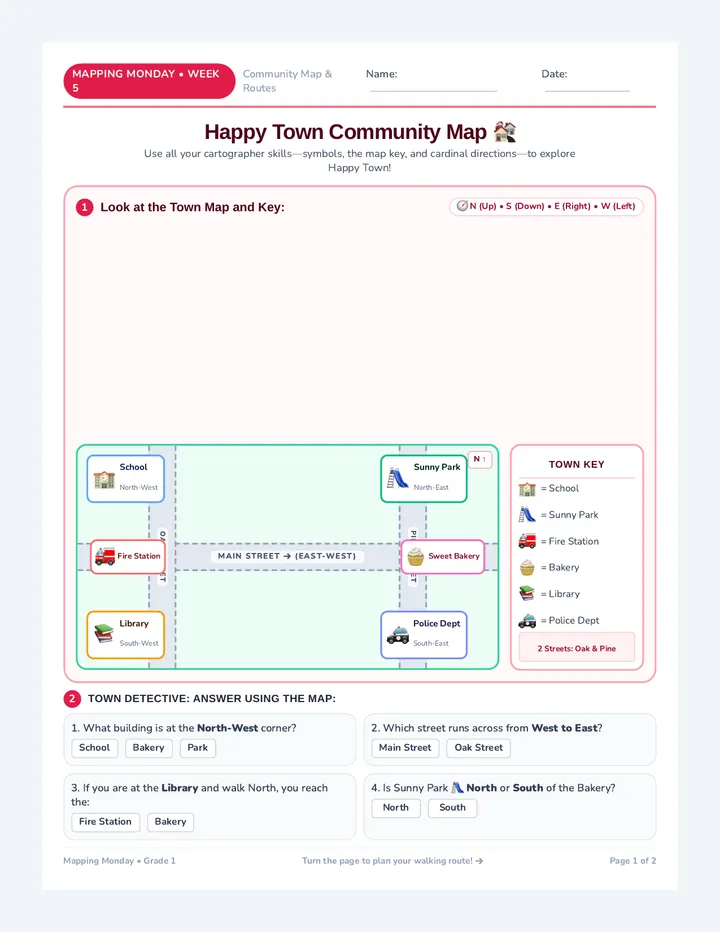
Mapping Monday Explorers

A 5-week foundational map skills unit designed for first grade 'Mapping Monday' routines, covering bird's-eye view, map keys, cardinal directions, coordinate grids, and community route reading.

MM

Matthew McGonagle

5
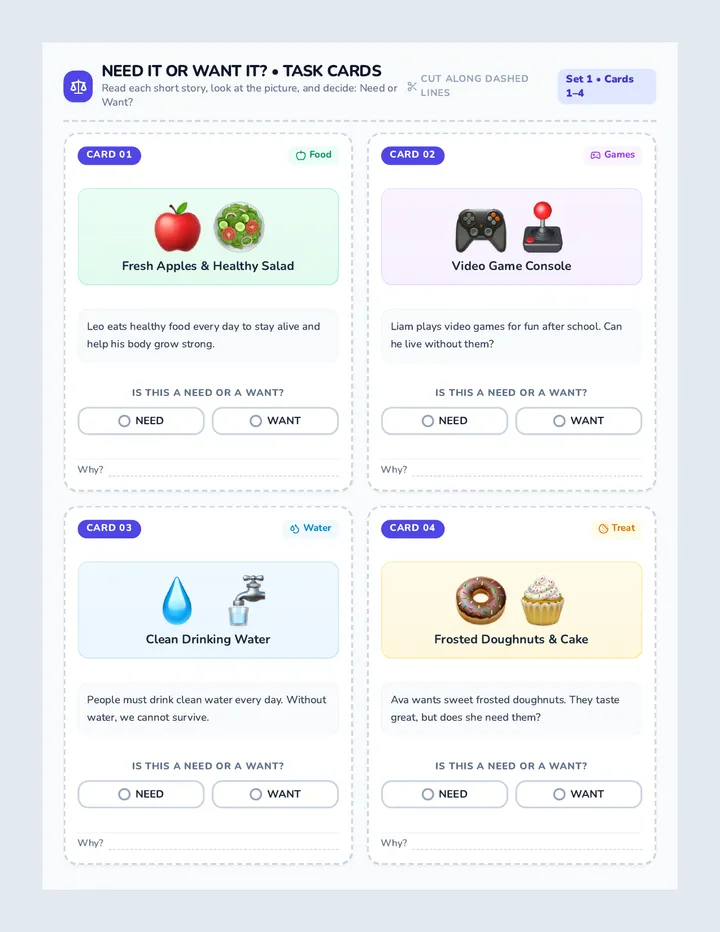
Need It Want It Task Cards

Need It Want It Task Cards

An expanded 22-card printable task card set (plus 2 student create-your-own bonus cards) featuring simplified scenarios, colorful visual illustrations, and reasoning prompts to distinguish needs from wants.

J

jhopkins

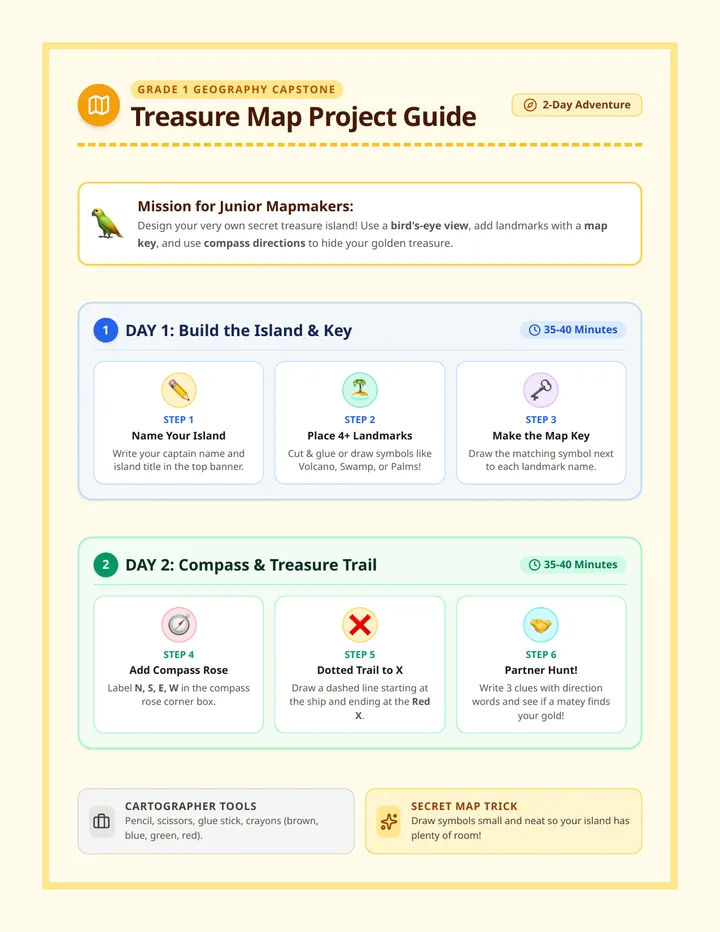
Treasure Map Project Guide

Treasure Island Explorers

A hands-on two-day geography capstone project where first-grade cartographers build their own illustrated treasure island maps, construct legends, and plot secret trails using cardinal directions.

EB

Emily Brown

7
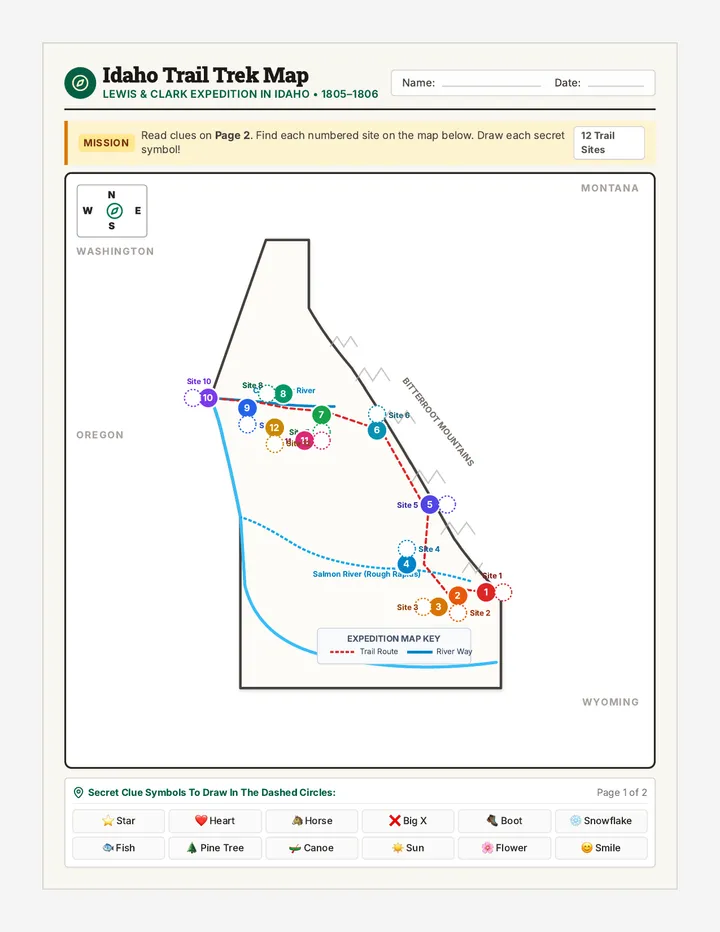
Idaho Trail Trek Map Activity

Idaho Trail Trek

An interactive historical geography lesson introducing 2nd-grade students to the Lewis and Clark expedition in Idaho through decodable map reading and spatial clues. Students trace historical landmarks, practice beginner map skills, and decode short factual clues.

AR

Alexander Rhea

2
Neighborhood Route Worksheet

Neighborhood Route Worksheet

A two-page culminating first-grade worksheet integrating all map skills through community street map reading, directional route planning, and designing a neighborhood building.

MM

Matthew McGonagle

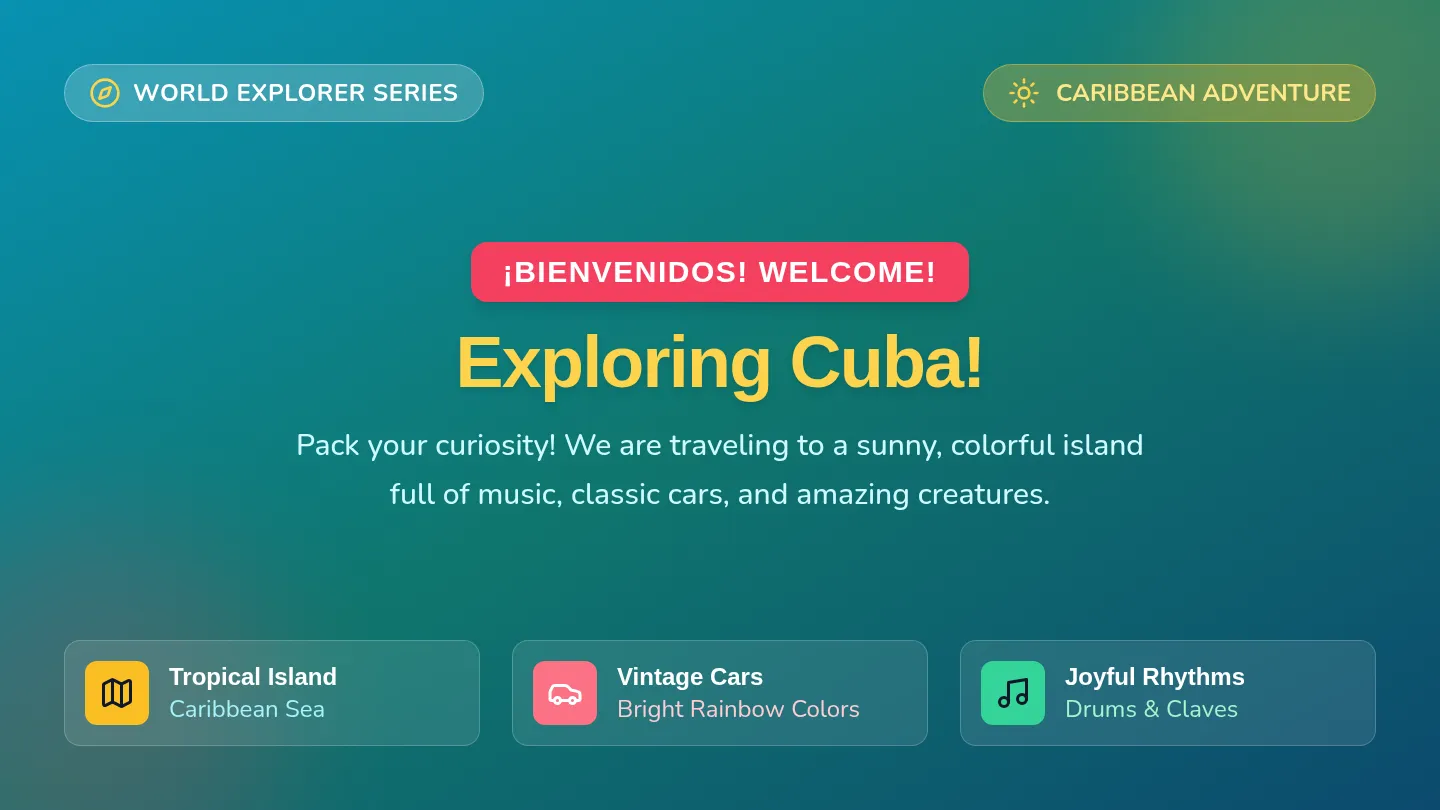
Cuba Explorer Slides

Passport Explorers

An engaging early elementary cultural geography sequence where young learners travel the globe with their explorer passports. Each lesson introduces a country through vibrant geography, wildlife wonders, festive music, traditional arts, and delicious foods.

Lenny Avatar
Lenny
12
Curriculum Match Slides

Standards Alignment Lab

A comprehensive lesson guiding educators and students through analyzing Junior Achievement curriculum alignment between Kindergarten and 1st Grade, utilizing diagnostic case studies and scaffolded writing frames.

Lenny Avatar
Lenny
2
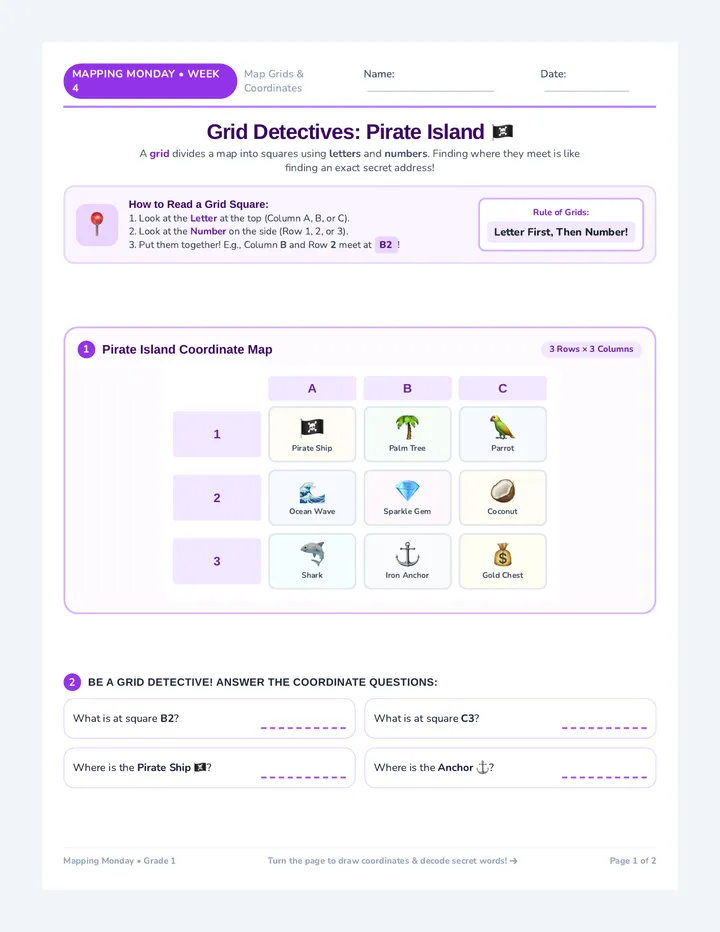
Treasure Grid Worksheet

Treasure Grid Worksheet

A two-page first-grade worksheet introducing coordinate grid maps using letters and numbers, featuring a Pirate Island grid reading activity, coordinate drawing challenge, and mystery word decoder.

MM

Matthew McGonagle

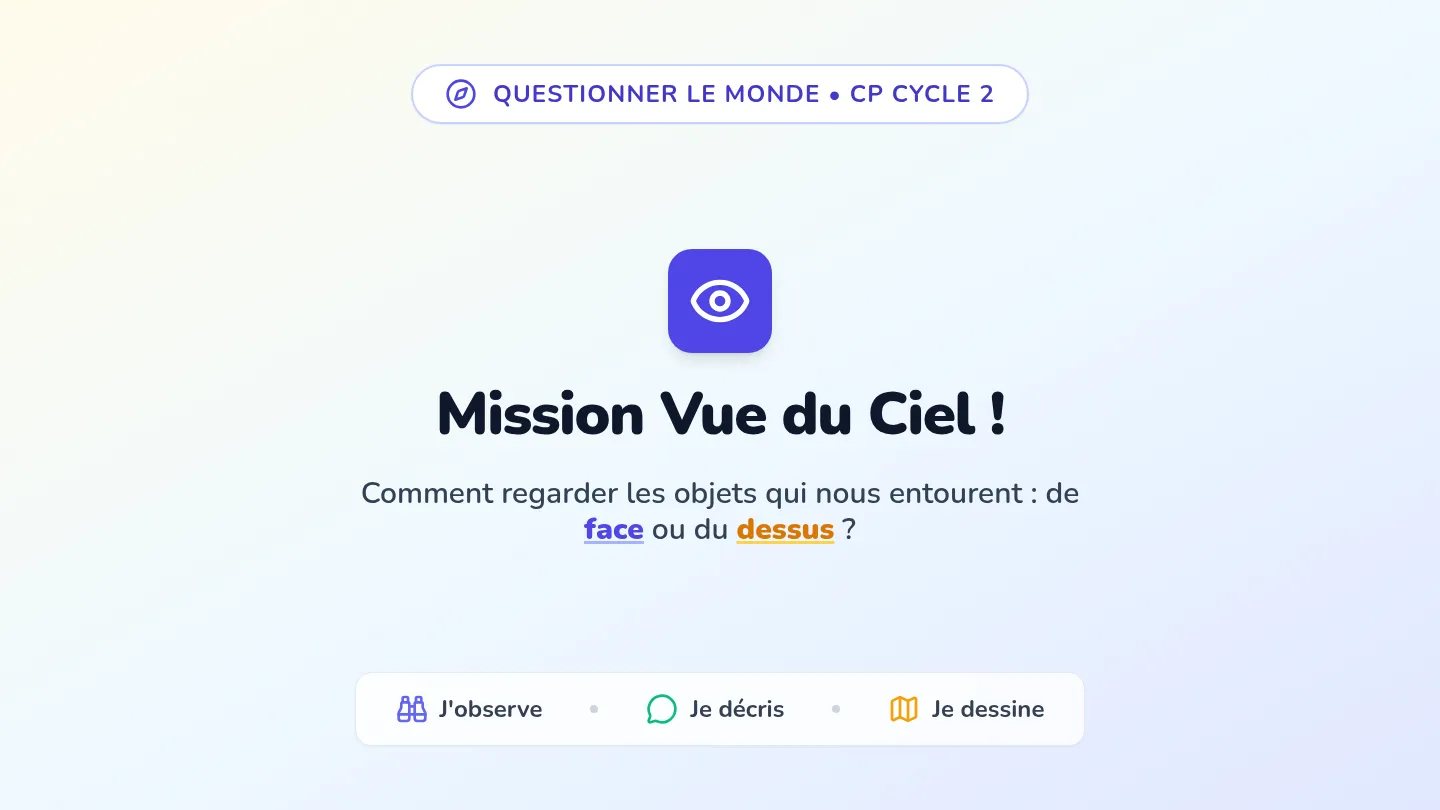
Face ou Dessus Slides

Mission Vue du Ciel

Une séquence progressive de géographie pour le CP permettant d'explorer et maîtriser les différents angles de vue (face et dessus) jusqu'à la première approche du plan. Les élèves manipulent, découpent, colorient et complètent des fiches ludiques inspirées des repères du cycle 2.

F

fab

6
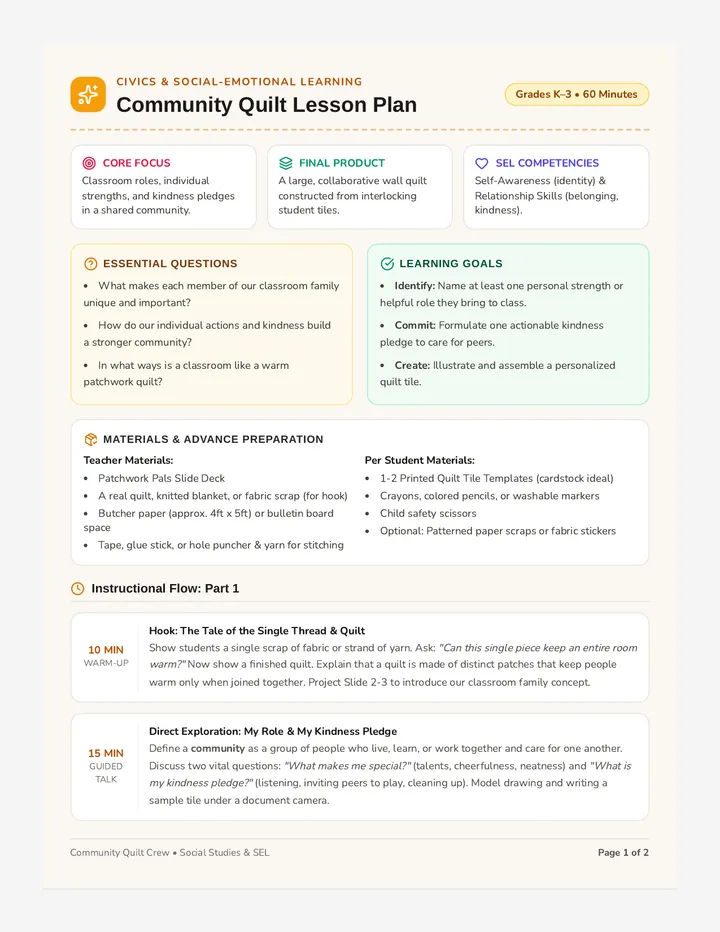
Community Quilt Lesson Plan

Community Quilt Crew

A comprehensive primary social studies and social-emotional learning lesson where students explore civic responsibility, personal uniqueness, and community bonds by designing individual paper quilt tiles that assemble into a collective classroom masterpiece.

EM

Erika Marquez

4
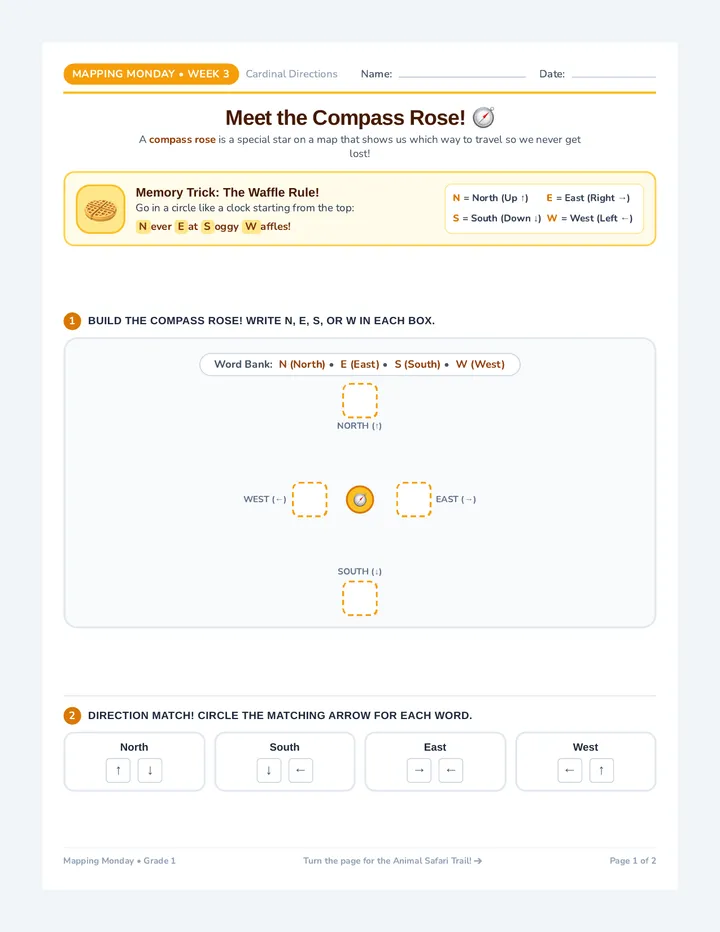
Compass Rose Worksheet

Compass Rose Worksheet

A two-page first-grade worksheet teaching cardinal directions (North, South, East, West) and the compass rose using the 'Never Eat Soggy Waffles' mnemonic and a safari animal map.

MM

Matthew McGonagle