Courtly Clouds Slides Courtly Clouds
Rising Swords
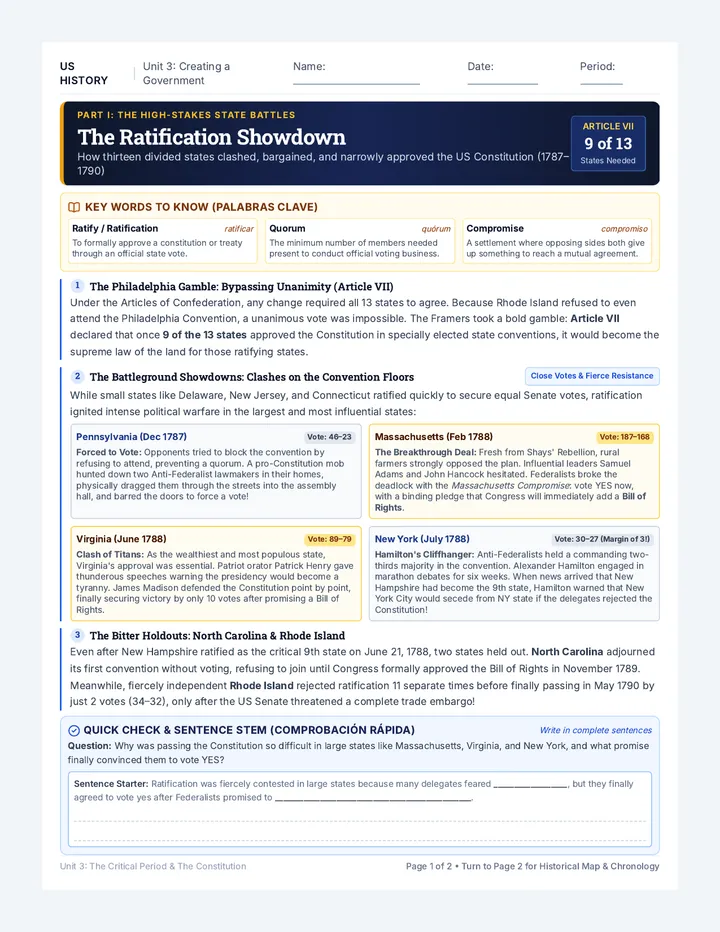
The Transition from Heian Elegance to Shogunate Power
The Imperial Disconnect
"While the Emperor was writing poetry about cherry blossoms, who was actually running the country?"
A Tale of Two Japans
The Heian Court (Kyoto)
Obsessed with etiquette, beauty, poetry, and "miyabi" (refinement).
The Provinces (The Frontier)
Violent, lawless, and governed by powerful military families (Bushi).
The "Cloud People"
The aristocrats lived in a "World of the Shining Prince" (The Tale of Genji).
Daily Life in Kyoto:
Complex perfume-blending contests
Exchanging 31-syllable waka poems
Layers of silk robes (up to 12 at once!)
Complete disdain for "vulgar" manual labor
Detail from a Heian Scroll
The Vacuum of Power
As the court focused on art, they neglected the countryside. Powerful clans like the Taira and Minamoto filled the void.
Tax collection failed
Piracy and bandits increased
Landowners hired private guards (Samurai)
"Power resides where men believe it resides."
The Warrior replaces the Poet
The Great Shift: Genpei War
1180 — 1185
The Conflict
A massive civil war between the Taira and Minamoto clans for control of Japan.
The Result
The Minamoto clan wins. Minamoto no Yoritomo establishes the first Shogunate in Kamakura.
The Change
The Emperor remains a figurehead. The Shogun becomes the actual military dictator.
The Shogun: "General who subdues barbarians."
Think and Discuss
Why did the Heian aristocrats lose touch with the reality of their country?
If you were a provincial landowner, would you trust the Emperor or a nearby Samurai clan for protection?
How does "aesthetic culture" differ from "military culture"? Can a society have both?
Courtly Contrast Worksheet Court vs. Camp
Historical Comparison: Heian vs. Kamakura Era
Name: ________________________________
Date: _________________________________
Literary Mirrors
Refinement: Heian Court
"The air was heavy with the scent of plum blossoms and expensive incense. Genji sat behind the screen, his silk robes rustling as he carefully brushed a poem to his lady. A single misplaced syllable would be a social disaster."
Analysis:
Reality: The Warrior Camp
"The sound of the Gion Shoja bells echoes the impermanence of all things... The proud do not endure, they are like a dream on a spring night. The mighty fall at last, they are as dust before the wind."
Analysis:
The Great Disconnect
Explain how the following factors led to the rise of the military class (Bushi) over the Imperial Court.
Tax Exemptions (Shoen):
Rich nobles and temples stopped paying taxes to the central government.
The "Miyabi" Obsession:
Courtiers spent all their time on art and etiquette instead of governing provinces.
Private Armies:
Landowners hired warriors for protection since the government couldn't provide it.
The New Order
In 1185, Minamoto no Yoritomo established the Kamakura Shogunate. He took the title Shogun . Complete the comparison below:
The Emperor
Theoretical Power
Role & Responsibilities:
The Shogun
Actual Power
Role & Responsibilities:
Reflection Question:
Why was it important for the Shogun to keep the Emperor as a figurehead rather than simply killing him and taking the throne?
Courtly Clouds Teacher Guide Heian to Shogunate
Teacher Facilitation Guide
Lesson
01
Essential Question
How did aesthetic isolation contribute to the collapse of centralized imperial power?
Learning Objectives
Contrast Heian "miyabi" culture with Bushi military culture.
Analyze the economic factors (Shoen) leading to decentralization.
Identify the roles of Emperor (figurehead) vs. Shogun (dictator).
Instructional Sequence
15m
Hook
The "Cloud People" Simulation
Start the class by asking students to write a 5-line poem about the color of a colleague's sleeve. While they write, walk around and "tax" them by taking their pens/pencils. This illustrates the court's focus vs. the reality of resource loss in the provinces.
25m
Direct
Visual Lecture: Court vs. Camp
Use the Courtly Clouds Slides . Emphasize the disconnect between Kyoto (culture) and Kamakura (power). Key concept: Shoen (tax-free estates) as the primary engine of imperial decline.
40m
Activity
Courtly Contrast Worksheet
Students work with excerpts from Tale of Genji and Tale of the Heike . Facilitate by asking: "Which text focuses on beauty? Which focuses on loss and battle?"
Key Discussion Prompts
On Legitimacy:
"If the Shogun has the swords, why does he still need the Emperor's blessing?"
(Target: Continuity, religious authority of the Emperor, avoiding the label of 'traitor').
On Cultural Shift:
"What happens to a culture when the people who lead it value strength over beauty?"
(Target: Shift toward Zen, simplicity, functional aesthetics like the katana).
Common Misconceptions
Misconception: The Emperor was deposed.
Misconception: The Samurai appeared out of nowhere.
Feudal Workshop Worksheet The Feudal Workshop
Mapping Loyalty and Obligation in Medieval Japan
Name: ________________________________
Date: _________________________________
The Hierarchy of Power
Place the following roles in their correct position on the pyramid: Emperor, Shogun, Daimyo, Samurai, Peasants/Artisans/Merchants.
The Reciprocal Deal
Feudalism is a system of exchanges . For each pair below, identify what each person gives to the other.
SHOGUN
Gives what?
Gives what?
DAIMYO
DAIMYO
Gives what?
Gives what?
SAMURAI
SAMURAI
Gives what?
Gives what?
PEASANTS
The Unmentionables
Beneath the four-tier system (Samurai, Farmers, Artisans, Merchants) lived the Eta and Hinin . Research or discuss: Why were these groups considered "impure" and how did they serve society?
Critical Thinking:
In this system, power is decentralized . How does this hierarchy keep a country stable even if the central government (the Emperor) has no army?
Shogun vs King Handout East meets West
Comparing Japanese and European Feudalism
Structural Comparison
Japan
Shogun as military leader
Bushido: Zen & Stoicism
Peasants valued (food producers)
Suicide for honor (Seppuku)
Land granted, but not hereditary by law
Europe
King as supreme ruler (theoretically)
Chivalry: Christian Ethics
Peasants as serfs (lowest class)
Religious taboo against suicide
Strict hereditary land ownership
Shared Traits
Decentralized power
Land for loyalty
Warrior elite class
Rigid social structure
Codes of conduct
The Role Matcher
Japanese Role Equivalent European Role Primary Duty Emperor Pope / God (Divine) Ceremonial & Spiritual Head Shogun King National Military/Political Ruler Daimyo Lords / Barons Regional Landowners Samurai Knights Military Service & Protection Peasants Serfs Production of Food & Goods
Essential Synthesis
"Both systems arose because central governments were too weak to protect the people. In the absence of a strong national army, security became a local matter based on personal relationships and blood oaths."
Feudal Workshop Key Answer Key: Feudal Workshop
TEACHER USE ONLY
1. The Hierarchy (Top to Bottom)
Emperor: Figurehead, religious leader, highest status but no real political power.Shogun: Supreme military commander, actual ruler of Japan.Daimyo: Great landowners, local lords who owed loyalty to the Shogun.Samurai: Warriors who served the Daimyo in exchange for land or rice.Peasants/Artisans/Merchants: The producing classes. Peasants had higher status than merchants because they produced food.
2. The Reciprocal Deal
Shogun ↔ Daimyo
Shogun gives: Land grants (fiefs), protection, legal recognition.Daimyo gives: Military service (troops), absolute loyalty, administrative help.
Daimyo ↔ Samurai
Daimyo gives: Salary (rice stipends), housing, status, protection for family.Samurai gives: Military service, life-long loyalty, administrative work.
Samurai ↔ Peasants
Samurai gives: Protection from bandits and other clans, local justice.Peasants gives: Taxes (usually in the form of rice), labor, food.
3. The Unmentionables (Eta/Hinin)
These groups were considered "impure" due to Buddhist and Shinto beliefs regarding death and blood.
Eta: "Great filth." Handled "unclean" tasks: butchering, leatherwork, burying the dead.Hinin: "Non-human." Included beggars, street performers, and ex-convicts.
Note: Despite being outcasts, they performed essential societal functions that the higher classes were religiously or socially forbidden from doing.
4. Critical Thinking Answer Guidance
"The hierarchy maintains stability through overlapping loyalties . Each level of the pyramid is responsible for the level below it. If the center is weak, the local lords (Daimyo) still maintain order in their own domains because their power depends on the social structure being intact. It is a system built on interdependence rather than centralized law."
Way of the Warrior Slides Bushido
The Way of the Warrior
Ethical Codes of the Samurai Class
The Unwritten Law
Bushido ("The Way of the Warrior") was not a written code of laws, but a shared set of values that governed every aspect of a Samurai's life.
Influences: Zen Buddhism, Shintoism, and Confucianism.
Zen
Stoicism & Fearlessness
Confucianism
Loyalty & Duty
Shinto
Ancestor Worship
Bushido
The Synthesis
The Seven Virtues
Gi
Integrity
Be honest in your dealings with all people. Only one justice exists.
Rei
Respect
Samurai have no reason to be cruel. They do not need to prove their strength.
Yu
Heroic Courage
Rise above the masses. Replacing fear with respect and caution.
Meiyo
Honor
Decisions you make and how these decisions are carried out are a reflection of who you are.
Jin
Compassion
Intense training makes the samurai quick and strong. Use that power for the good of all.
Makoto
Honesty
Speaking and doing are the same action. A samurai does not need to "give his word."
Chuugi
Duty & Loyalty
To those a samurai is responsible for, they remain fiercely true. In the code of Bushido, loyalty to one's lord is the highest virtue.
Seppuku
When honor was lost through failure or disgrace, the only way to restore it was through ritual suicide.
Voluntary or as a death sentence
A highly choreographed ceremony
Designed to demonstrate self-control even in extreme pain
Crucial Concept
"The Way of the Samurai is found in death."
— Hagakure
Mirror Codes
Bushido (Japan)
Stoicism / Zen focus
Absolute loyalty to Lord
No religious afterlife focus
Honorable suicide (Seppuku)
Chivalry (Europe)
Religious / Christian focus
Protection of the weak / ladies
Focus on Heaven / Salvation
Suicide as a mortal sin
The Weight of Honor
Samurai Mind Worksheet The Samurai Mind
Primary Source Analysis: Hagakure & Bushido
Name: ________________________________
Date: _________________________________
Source Context: The Hagakure (meaning "Hidden by Leaves") was compiled in the early 1700s by Yamamoto Tsunetomo. It serves as a spiritual and practical guide for a warrior. Though written during a time of peace, it reflects the intense ideals of the Samurai class from the preceding warring periods.
Passage One: On Death
"The Way of the Samurai is found in death. When it comes to either/or, there is only the quick choice of death. It is not particularly difficult. Be determined and advance. To say that dying without reaching one’s aim is a dog’s death is the frivolous way of the sophisticated. When pressed with the choice, one does not need to achieve one’s aim."
1. Interpret:
What does Tsunetomo mean by "one does not need to achieve one’s aim"? Why is the intent more important than the result ?
2. Connect:
How does this mindset make a Samurai a more dangerous or effective soldier?
Passage Two: On Service
"Being a retainer is nothing other than being a supporter of one’s lord... If there are a hundred retainers, there are a hundred retainers who are careful about their own lives and who wish to be prudent. But if there is one person who is completely involved with his lord, he is the one who will be of use... A samurai is a person who will immediately take action when something happens."
3. Analyze:
According to the text, what is the difference between a "prudent" retainer and a "useful" one?
4. Contextualize:
Why would a Daimyo (Lord) prefer the "useful" retainer over the "prudent" one during a civil war?
The Ethical Dilemma
Scenario:
"A Samurai's lord has ordered him to execute an innocent villager to set an example and prevent a rebellion. According to Bushido, the Samurai owes absolute loyalty to his lord (Chuugi), but he must also possess integrity (Gi) and compassion (Jin)."
Argument for Obedience (Loyalty):
Argument for Disobedience (Integrity):
Your Verdict:
What would a "True Samurai" do, and what would be the consequence for their choice?
Way of the Warrior Key Answer Key: The Samurai Mind
TEACHER USE ONLY
Passage One: On Death
1. Why is intent more important than the result?
The focus is on stoicism and commitment . By letting go of the need for success, a samurai removes the fear of failure. The goal is to act with total conviction and purity of spirit. Succeeding is a matter of luck/fate; dying with honor is a matter of will.
2. How does this mindset make them more effective?
A soldier who has already "accepted death" does not hesitate in battle. Hesitation leads to being killed. This psychological state (mushin - no mind) allows for maximum aggression and focus, which often leads to victory even if the odds are against them.
Passage Two: On Service
3. Prudent vs. Useful Retainer:
A prudent retainer is careful about his own life and makes "wise" decisions to survive. A useful retainer is "completely involved" with his lord, meaning his own survival is secondary to the lord's objectives.
4. Why the preference for "Useful"?
In the chaos of civil war (Sengoku/Kamakura), a Daimyo needs absolute certainty that his subordinates won't betray him to save themselves or retreat when a battle looks lost. "Prudence" looks like cowardice or disloyalty in a feudal military context.
The Ethical Dilemma Verdict
There is no single "correct" answer in Western terms, but from a Bushido perspective:
The Likely Resolution:
"A samurai might obey the lord to fulfill his duty of loyalty (Chuugi), but then commit ritual suicide (Seppuku) immediately afterward to protest the immorality of the act and restore his personal integrity (Gi). This demonstrates that he is both a loyal servant and a man of conscience. In Bushido, death is often the only way to resolve conflicting virtues."
Sengoku Showdown Rules Sengoku Showdown
Strategic Simulation: Unifying Japan
Objective
Seize Kyoto
The Premise
It is the year 1560. Japan is fractured into dozens of competing domains. As a Daimyo , you must navigate a web of alliances, manage your Samurai army, and capture the capital of Kyoto to be declared Shogun. But remember: today's ally is tomorrow's assassin.
Resources
Rice (Koku) — Food & Wealth
Honor — Influence & Loyalty
Troops — Conquest
Rules of Engagement
1
Alliance Phase: You have 5 minutes to negotiate with other clans. You may sign "Oaths of Friendship." These are not legally binding, but breaking one costs 10 Honor points.
2
Deployment Phase: Decide where to send your troops: Defend your castle, Attack a neighbor, or March toward Kyoto.
3
Resolution Phase: Higher troop numbers win battles. Tie-breakers go to the clan with higher Honor.
Daimyo's Warning
"Trust but verify. A ninja's blade is swifter than a diplomat's scroll."
Event Cards (Teacher's Deck):
• Bad Harvest (Lose 50% Rice)
• Port Arrival (Gain Firearms - +2 Attack)
• Tea Ceremony (Gain +5 Honor)
• Betrayal! (One ally switches sides)
Clan Identity Cards
Oda Clan
Location: Central Japan
Rice: 100
Honor: 30
Troops: 50
Special: "Unification by Force" — +5 to Attack when moving toward Kyoto.
Takeda Clan
Location: Mountainous East
Rice: 80
Honor: 50
Troops: 60
Special: "Cavalry Master" — +5 to Defense when defending home territory.
Mori Clan
Location: Western Coast
Rice: 120
Honor: 40
Troops: 40
Special: "Merchant Lords" — Gain 10 Rice extra every turn.
Uesugi Clan
Location: Northern Frontier
Rice: 90
Honor: 70
Troops: 45
Warring States Map Activity The Shattered Land
Sengoku Geography & Strategy
Clan: _____________________
Name: _____________________
Topographical Strategy
Draw or label the four major islands of Japan: Honshu, Kyushu, Shikoku, Hokkaido .Kyoto .
Alliances & Intelligence
Primary Ally:
Primary Rival:
Diplomatic Strategy (How will you gain support?):
Logistics & Warfare
Resource Management:
How will you ensure your Samurai are fed (Rice) during a long winter campaign?
Invasion Route:
Which provinces must you pass through to reach Kyoto? What terrain (mountains, coast) will you face?
Post-Simulation Debrief
1. The Cost of Chaos:
What was the hardest part about maintaining an alliance during the simulation?
2. The Need for Order:
Why might a common peasant actually *prefer* a single Shogun ruling everyone over dozens of competing Daimyos?
Shogun Strategy Guide Shogun's Strategy Guide
Facilitator's Handbook: Sengoku Showdown
Lesson
04
Educational Goal
"The goal of this simulation is for students to experience the instability of decentralized power . They should realize that without a central authority, alliances are fleeting and war is the default state. This provides the historical rationale for the Tokugawa unification."
Simulation Setup
Groups: Divide class into 4-6 groups (clans). Assign each a Clan Card from the Sengoku Unification Simulation material.
Territory: Designate areas of the classroom as provinces. Kyoto should be a central, highly-contested desk or table.
Tokens: Use pennies or poker chips for Rice/Troops, or simply have students track on the worksheet.
Running the Game
The Hook (5m)
Briefly explain the fall of the Ashikaga Shogunate. Set the scene: "The center cannot hold. Any man with a sword and a castle can now claim to be Shogun."
Rounds 1-3 (30m)
Follow the 3-phase cycle (Alliance, Deployment, Resolution). After each round, announce a Teacher Event Card (see rules) to disrupt their plans.
End Game (10m)
Declare a winner if a clan holds Kyoto for one full round OR has the most territory by the end of class.
Tips for Success
Encourage Betrayal: If a group is getting too powerful, remind their allies that they can't *all* be Shogun. Only one person wins.Manage Honor: Be strict with the Honor penalty for breaking an oath. If they drop to 0 Honor, they can no longer form alliances.Focus on Logistics: Remind them that troops cannot move without Rice. A starvation event is a great way to humble a large army.
The Pivot to Next Lesson
End the simulation by discussing: "Why did this period of history last nearly 150 years? Why was it so hard to stop the fighting?" Lead them to the idea that unification requires a ruler so powerful that no one dares to challenge them—enter Tokugawa Ieyasu.
Sakoku Debate Worksheet The Sakoku Debate
Evaluating Tokugawa Isolationism (1633–1853)
Name: ________________________________
Date: _________________________________
The Debate Topic:
"Resolved: The Sakoku policy was a necessary and successful measure to preserve Japanese sovereignty and social order."
Case for Isolation (Stability)
Argument 1: Cultural Preservation
How did isolation protect Japanese traditions from foreign influence?
Argument 2: National Security
How did Sakoku prevent colonization or religious civil wars (Christianity)?
Argument 3: Internal Peace
How did closing the borders help the Shogun control the Daimyos?
Case for Opening (Progress)
Argument 1: Technological Lag
What happens to a country's military and science when they stop trading ideas?
Argument 2: Economic Stagnation
How did the limit on foreign trade hurt the merchant class and the economy?
Argument 3: Future Vulnerability
Was Japan prepared for the industrial power of the West when the doors were eventually forced open?
Cross-Examination & Rebuttal
Predict the other side's strongest argument and write a one-sentence rebuttal to it.
Their likely argument:
My counter-argument:
Isolation Exit Ticket Exit Ticket: The Closed Door
Name: _____________________
Date: _____________________
1. What was the primary goal of the "Sankin Kotai" (Alternate Attendance) system?
To allow Daimyos to vacation in the capital.
To bankrupt and monitor the Daimyos to prevent rebellion.
To encourage trade between Kyoto and Edo.
To train Samurai in urban warfare techniques.
2. How did the Sakoku policy impact the Samurai class?
(Think about their role in a country with no more wars to fight.)
3. The Big Idea:
Based on what we've learned, explain how the Tokugawa Shogunate solved the Essential Question of this unit: How do rigid social hierarchies maintain order during periods of political fragmentation?
Self-Reflection
Struggling
Got it
Expert
The Closed Country Slides Pax Tokugawa
The Great Peace & The Closed Door
1603 — 1868
The Three Unifiers
"Oda Nobunaga kneaded the dough, Toyotomi Hideyoshi baked the cake, and Tokugawa Ieyasu ate it."
1600: Battle of Sekigahara
The definitive victory that ended the Sengoku period and placed the Tokugawa clan in absolute power.
Sankin Kotai (Alternate Attendance)
How do you stop 250 Daimyo from rebelling? You force them to live in the capital of Edo (Tokyo) every other year.
Family as Hostages: When the Daimyo returns to his land, his family stays in Edo as "guests."
Economic Drain: Traveling back and forth with a huge entourage was so expensive that Daimyos couldn't afford to build armies.
"Political control through mandatory domestic travel."
Sakoku Policy
To maintain stability, the Shogun cut Japan off from the world for over 200 years.
No Japanese could travel abroad (penalty: death).
Foreign books (especially Christian ones) were banned.
European traders expelled (except the Dutch at Dejima).
The Sakoku Balance Sheet
Stability
End of civil war
Boom in arts (Kabuki, Haiku)
Protection of unique culture
Internal trade flourished
Stagnation
Falling behind in technology
Samurai became bureaucrats
Merchant class frustration
Vulnerability to later threats
The Ultimate Trade-off
"Is a 200-year peace worth the price of total isolation?"
Team Stability
Team Progress