Happy Faces Slides Happy Faces
How do we feel when we are happy?
Mirror, Mirror!
"Look in your mirror. What does your happy face look like?"
1 Big, wide smile
2 Bright, sparkly eyes
3 Wiggle your eyebrows!
Happy Bodies
Wiggly Hands
Can you shake your hands with joy?
Happy Feet
Can you do a happy dance?
Warm Heart
Does your chest feel warm and cozy?
The Happy Story
"Listen to the music. If it sounds happy , point to your smile! If it sounds sad , show a sad face."
Happy
Sad
Your Turn!
What is one thing that makes you feel SUPER happy?
Smiles and Giggles Guide Smiles and Giggles
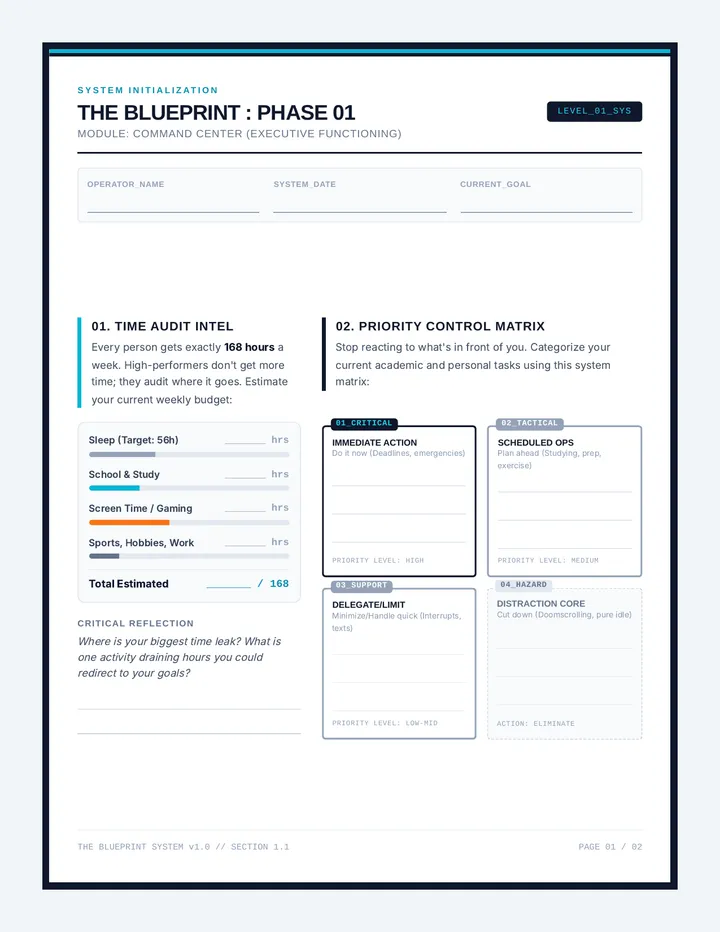
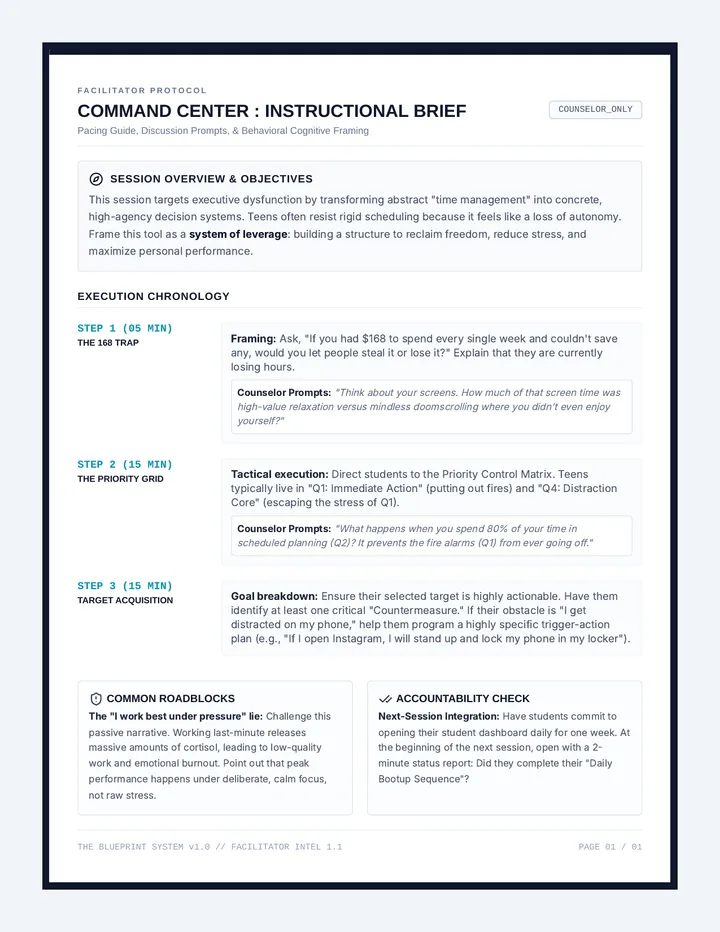
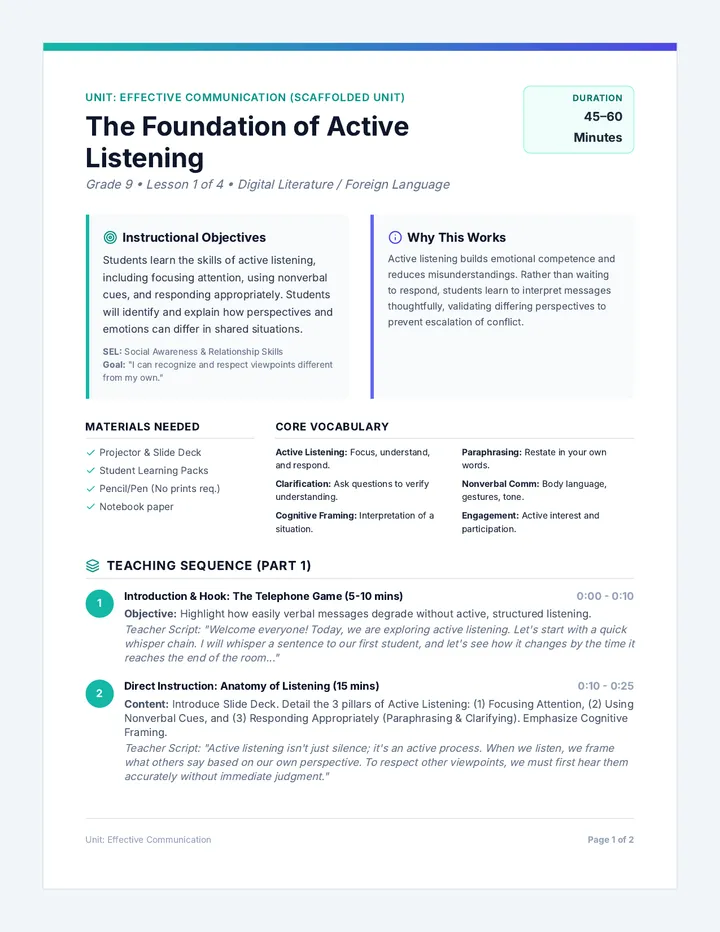
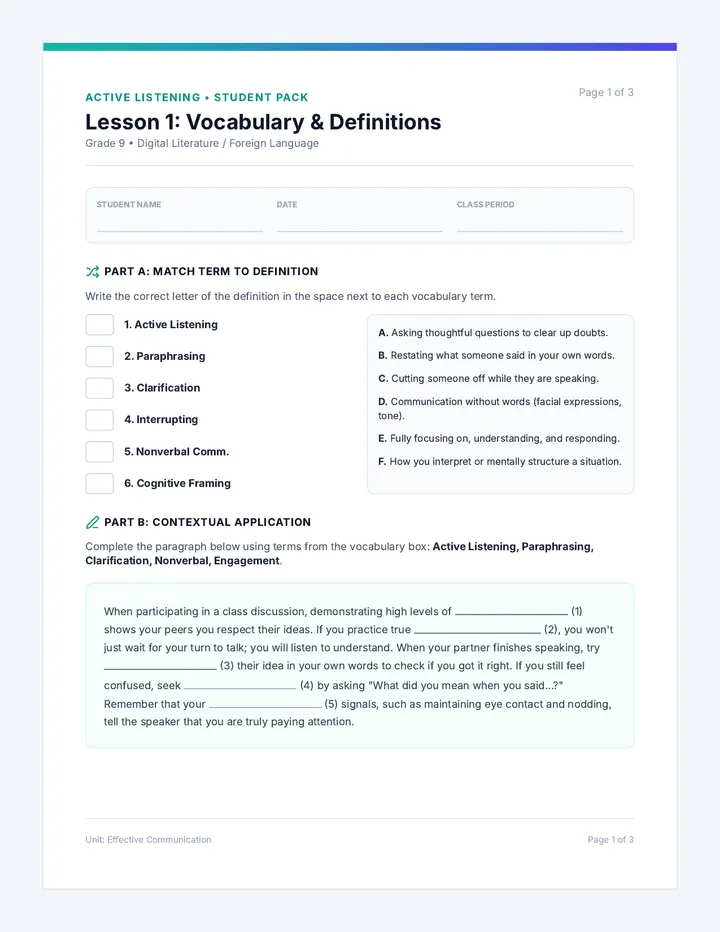
Teacher Facilitation Guide
Sequence: Joyful Discoveries
Lesson 1: Recognizing Happy Feelings
Lesson Purpose
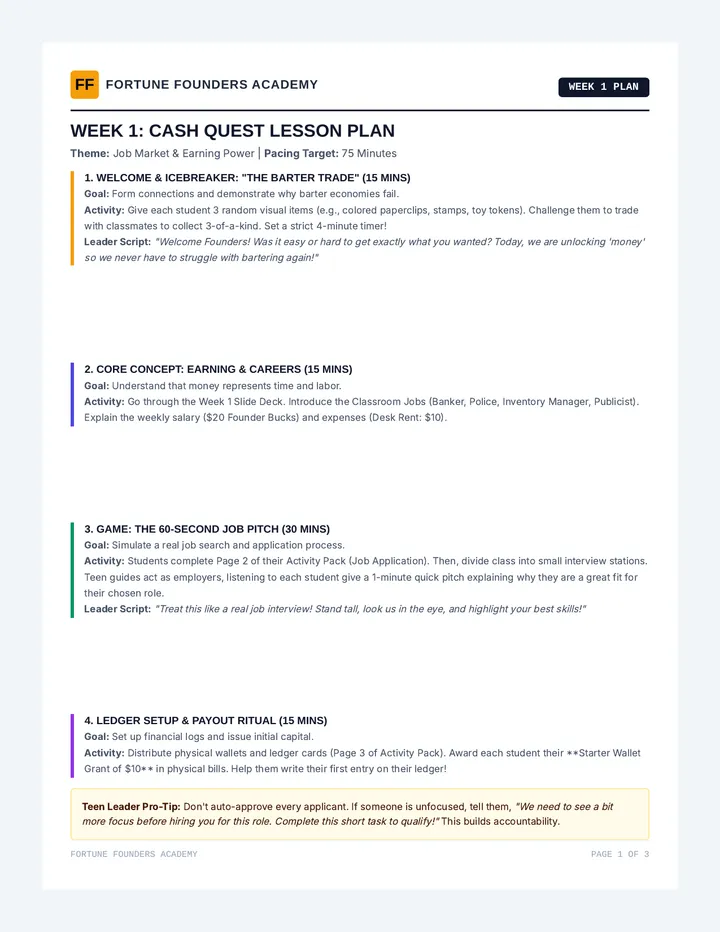
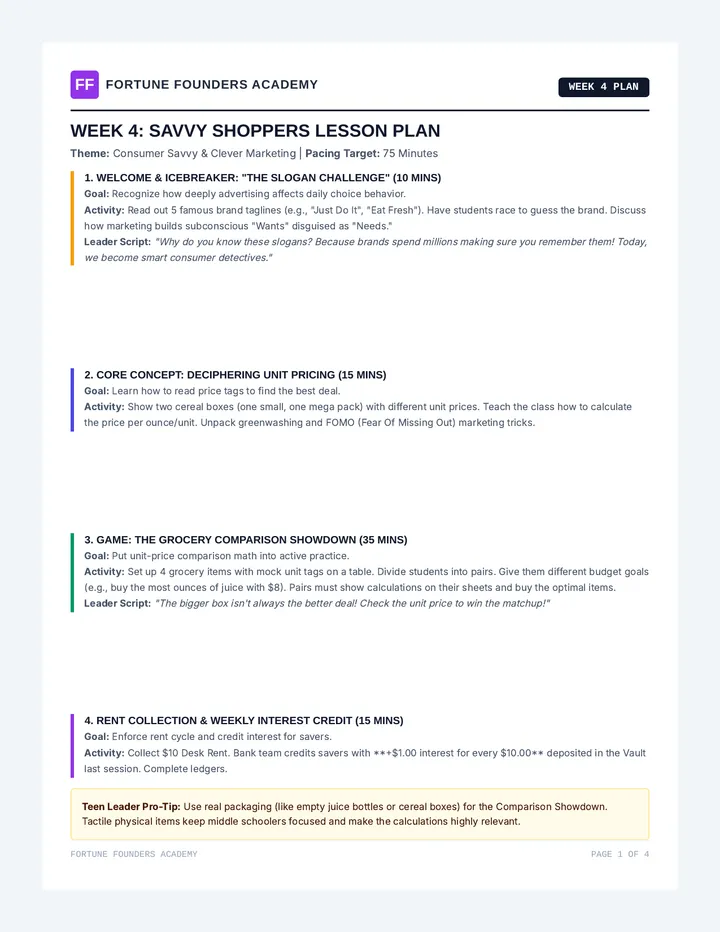
This introductory lesson helps Pre-K students connect the internal emotion of happiness to external physical cues. By observing their own faces and bodies, students build the foundational self-awareness needed to later identify specific activities that trigger these positive states.
Key Vocabulary
• Happy / Joy
• Mirror
• Expression
• Feeling
Instructional Steps
1
The Hook: Musical Mirrors (10 mins)
Give each student a handheld mirror. Play short clips of "happy" (fast, upbeat) and "sad" (slow, minor key) music. Ask students to make the face they think matches the sound.
Prompt: "When the music sounds like sunshine, what do your eyes do? Do they get big? Show me!"
2
Guided Exploration: Happy Bodies (15 mins)
Use the Happy Faces Slides to walk through physical indicators of joy. Encourage movement: jumping, wiggling, and "sparkly" fingers.
"Can happiness stay still? Or does it want to move? Let's try to do a 'slow happy dance' versus a 'fast happy dance'."
3
Independent Practice: Mirror Drawing (15 mins)
Distribute the My Happy Face Worksheet . Students use their mirrors to observe their own smiles and draw them onto the template.
Teaching Tips
Observation Focus:
Notice students who may struggle to identify facial expressions. Use exaggerated expressions yourself to model the cues (mouth corners up, cheeks raised).
Extension:
Take photos of each student's "Happy Face" to print and use for Lesson 5's collage project.
My Happy Face Worksheet My Happy Face
Draw yourself feeling JOY!
Name
Date
Look in your mirror! Draw your eyes , your nose , and your biggest smile inside the face.
Colors of Happiness
Color the stars to show how you feel today:
Playful Choices Slides Playful Choices
What toys make you smile?
What's Inside?
When we pull out a toy, tell us what you think!
I love it!
It's just okay.
?
Everyone is Different
Sam likes building with blocks . It makes him happy!
Maya likes painting . It makes her happy!
What do YOU like?
Choosing Joy
Today we are going to explore our classroom and find the one toy that makes us feel the happiest !
Toy Time Guide Toy Time Guide
Teacher Facilitation Guide
Sequence: Joyful Discoveries
Lesson 2: Joyful Toys and Games
Objective
Students will practice making independent choices by identifying classroom materials that bring them personal joy. The goal is to move beyond social mimicry and focus on internal preferences.
Materials Needed
• A decorated "Mystery Box"
• Variety of classroom toys
• Toy Joy Sort worksheets
• Glue and scissors (child-safe)
1
The Mystery Box (10 mins)
Place 4-5 diverse toys (a truck, a doll, a block, a book, a paintbrush) in the box. Pull them out one by one. Ask the students to respond with a Thumbs Up for 'Super Fun' or Thumbs to the Side for 'Just Okay.'
"Is it okay if I like the truck but you like the book? Yes! We both found our joy."
2
Classroom Safari (15 mins)
Allow students 5 minutes to walk around the room and find ONE toy they truly enjoy. They don't have to play with it, just point to it or bring it to the circle.
Discussion Point: Ask 2-3 students *why* that toy makes them feel happy. (e.g., "It's soft," "I like the wheels.")
3
Sorting Our Joys (15 mins)
Use the Toy Joy Sort worksheet. Students will cut out pictures of common classroom activities and glue them into the "Happiest Heart" or the "Okay Box."
Scaffolding
For students overwhelmed by choice, offer a simple A/B choice (e.g., "Which makes you happier: the red car or the blue blocks?").
Self-Regulation Link
Explain that knowing what toys we like helps us know what to play with when we feel sad or bored.
Toy Joy Sort Toy Joy Sort
Choosing my favorites!
Student Name
Cut out the toys below. Glue the ones you LOVE in the Heart. Glue the others in the Box.
My Favorites
Other Toys
Cut along the dotted lines
Blocks
Painting
Books
Cars
Puzzles
Dolls
Balls
Music
Move and Groove Slides Move and Groove
Can moving your body make you happy?
Wiggle Jiggle!
"Shake your hands, shake your legs, and shake your sillies out!"
Does it make you giggle?
Our Mission
Jumping
Spinning
Running
Which one makes your heart feel best?
Fast or Slow?
FAST
Zooming like a rocket!
SLOW
Stretching like a cat...
Let's go outside! Active Joy Guide Active Joy Guide
Teacher Facilitation Guide
Sequence: Joyful Discoveries
Lesson 3: Outdoor and Physical Joys
Movement & Mood
This lesson shifts focus from objects to the body. Students will experiment with various gross motor activities to identify which movements generate positive energy (high joy) versus which are just "work."
Setting
Outdoor Playground or Large Open Indoor Space (Gym/Multipurpose Room).
1
The Wiggle Jiggle (5 mins)
Before heading outside, use the slides to lead a "Wiggle Jiggle" session. Have students shake every part of their body.
Question: "Does your brain feel 'sleepy' or 'awake' after shaking? How does your tummy feel when you giggle?"
2
Movement Mission (20 mins)
Transition to the open space. Call out different movements for students to try for 30-60 seconds each:
• Hop like a bunny
• Run to the fence and back
• Spin in a circle
• Crawl like a bear
Encourage students to pay attention to their "heartbeat" and their "smile meter."
3
Reflective Checklist (10 mins)
Sit in a circle. Hand out the Movement Mission Checklist . Students color the happy face for movements they loved and the straight face for movements that were "just okay."
Self-Awareness Note
Remind students that some people LOVE running, while others LOVE stretching. There is no right or wrong movement—only what feels good to their body.
Movement Mission Checklist Movement Mission
How does your body feel?
Student Name
Try each movement! Then, color the face that shows how it made you feel.
Running Fast
Zoom! Zoom!
Jumping High
Boing! Boing!
Spinning Around
Whirl! Whirl!
Big Stretching
Reach! Reach!
My Favorite Move
Draw your favorite here!
Calm and Cozy Slides Calm and Cozy
Finding happiness in quiet ways.
Two Kinds of Happy
BIG HAPPY
Jumping and Shouting!
QUIET HAPPY
Hugging and Resting...
The Touch-Walk
Soft
Like a fuzzy blanket
Cold
Like a smooth stone
Bumpy
Like a dry leaf
How does it feel?
Ooh, Nice!
No, Thanks!
Let's be Detectives
Close your eyes. Can you hear a quiet sound that makes you feel happy?
Quiet Joy Guide Quiet Joy Guide
Teacher Facilitation Guide
Sequence: Joyful Discoveries
Lesson 4: Sensory Sources of Comfort
Sensory Awareness
Students explore the sensory world to identify textures, sounds, and smells that provide comfort and "calm joy." This lesson is critical for building self-soothing skills and emotional regulation through sensory preference.
Setup
Create 4 sensory stations: 1. Soft (Cotton balls/fur) 2. Smooth (Stones/Plastic) 3. Rough (Sandpaper/Bark) 4. Scented (Cinnamon sticks/Lavender)
1
Defining Quiet Joy (10 mins)
Use the Calm and Cozy Slides to distinguish between "Big Happy" (high arousal) and "Quiet Happy" (low arousal).
Prompt: "How do you feel when you're getting a big hug? That's Quiet Happy."
2
Sensory Detective Walk (20 mins)
Guide students through the sensory stations. At each station, they should use the "Ooh Nice" or "No Thanks" language to describe their reaction.
Encourage students to close their eyes while touching items.
Model the "Ooh Nice" response with a deep breath and a relaxed face.
3
Search Sheet Checkpoint (10 mins)
Hand out the Senses Search Sheet . Students use markers to circle their absolute favorite sensory experience from the day.
Teacher Note
For students with sensory sensitivities, emphasize that "No Thanks" is a powerful and correct answer. Knowing what we *don't* like is just as important as knowing what we do like for self-regulation.
Senses Search Sheet Senses Search
Finding my quiet joy!
Student Name
Visit the stations! Color the heart if you LOVED the feeling.
Something Soft
How does it feel?
Something Smooth
How does it feel?
Something Yummy
How does it smell?
Something Rough
How does it feel?
The Winner!
What was the best thing you touched today?
Draw it here!
Happy Heart Slides My Happy Heart
Bringing all our joys together!
What did we find?
Faces
Our big smiles!
Toys
Our favorite games!
Moves
Running & jumping!
Calm
Soft & cozy feelings!
Making the Heart
1
Find pictures of things you LOVE.
2
Cut them out carefully.
3
Glue them inside your Heart!
Your Happy List
When you feel sad , angry , or bored ...
LOOK AT YOUR HEART!
It reminds you of all the things that make you feel better.
Let's Create!
You are a Joyful Discoverer!
Collage Creation Guide Collage Creation Guide
Teacher Facilitation Guide
Sequence: Joyful Discoveries
Lesson 5: Creating My Happiness Collage
Culminating Project
Students integrate everything they have learned over the last four lessons into a single visual artifact. This "Happy Heart" serves as a personalized emotional regulation tool they can use in the classroom or at home.
Resources
• Old magazines/catalogs
• Stickers (Stars, Smiles)
• Printed photos from Lesson 1
• Glue sticks & Scissors
1
Joyful Review (10 mins)
Use the Happy Heart Slides to briefly recap: Faces, Toys, Movements, and Senses. Ask students to share one thing from each category that they remember liking.
2
The Hunt (20 mins)
Provide students with a variety of visual materials. Help them look for items that match their personal list.
Tip: Pre-cut some common "joy" images (dogs, ice cream, playground, sun) for students who may struggle with fine motor skills or browsing magazines.
3
Creation & Gallery Walk (20 mins)
Students glue their selected images onto the My Happy Heart Poster . Once finished, display the posters at eye-level around the room. Lead a "Gallery Walk" where students point to one thing they see on a friend's heart that also makes *them* happy.
Using the Artifact
Encourage parents to hang this at home in a "calm down corner" or near the child's bed.
In the classroom, if a child is having a difficult moment, gently suggest: "Let's go look at your Happy Heart and see what might help you feel better."
My Happy Heart Poster My Happy Heart
A Map of things I love!
Joyful Discoverer
Fill this heart with pictures and stickers of everything that makes you SMILE !
TOYS
MOVE
SENSES
PEOPLE