Stop-and-think strategies, impulse management, and SMART goal setting for personal growth. Develops internal motivation, stress reduction techniques, and resilience through proactive planning and monitoring.
A comprehensive two-part unit for Secondary 1 and 2 students focusing on developing impulse control. Students learn to navigate immediate urges using the 'Pause, Think, Act' and 'Pause, Process, Proceed' frameworks through interactive activities, real-world scenarios, and personal planning.
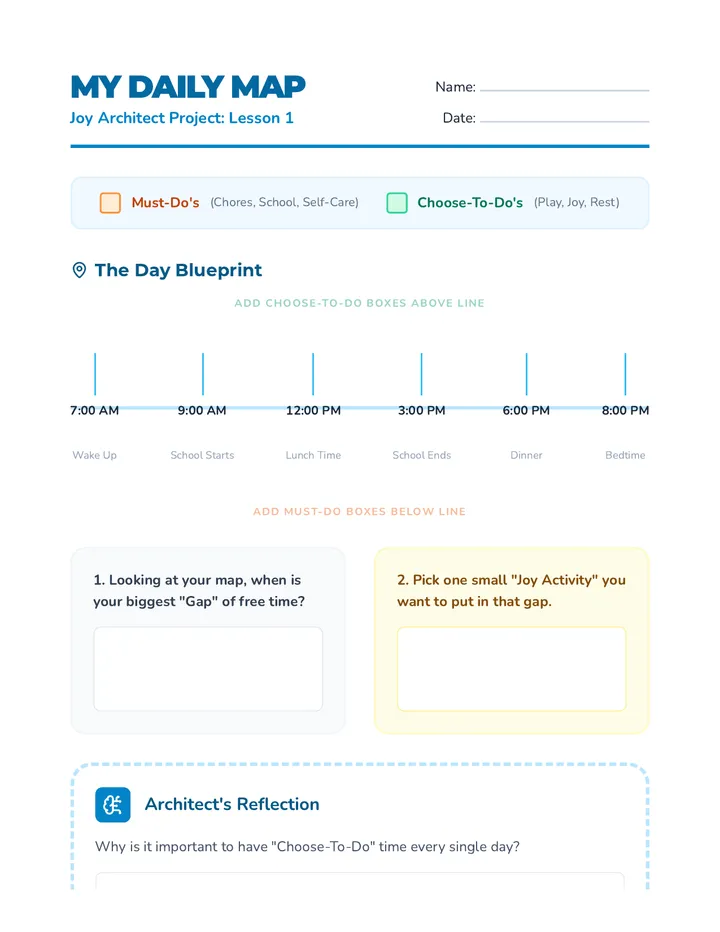
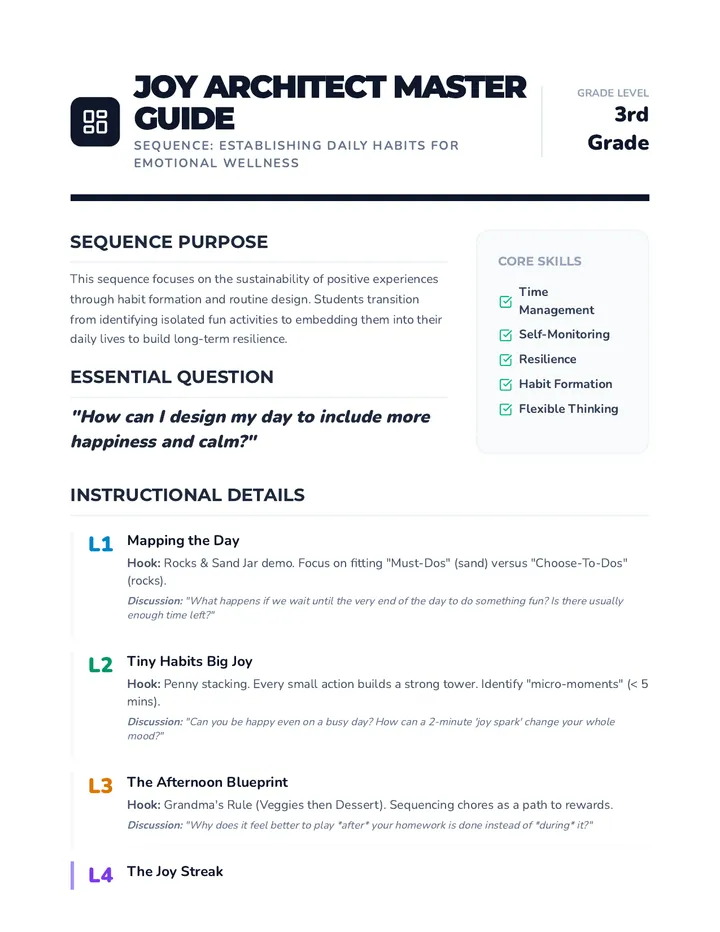
A 5-lesson unit for 3rd graders focused on building emotional resilience through habit formation. Students learn to audit their time, identify small 'micro-moments' of joy, and design balanced daily schedules that prioritize positive experiences.
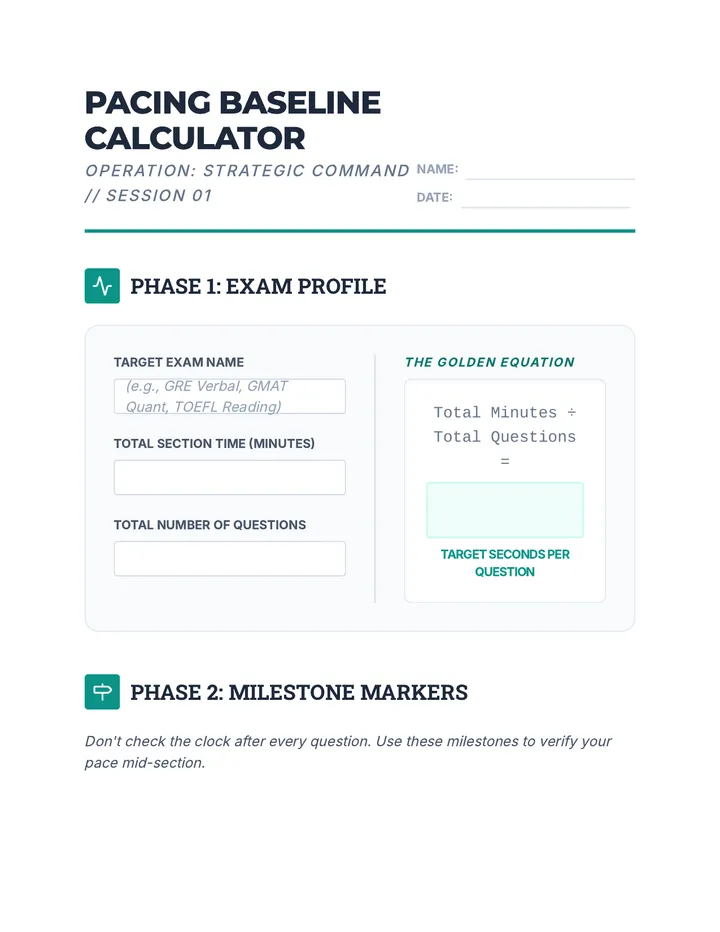
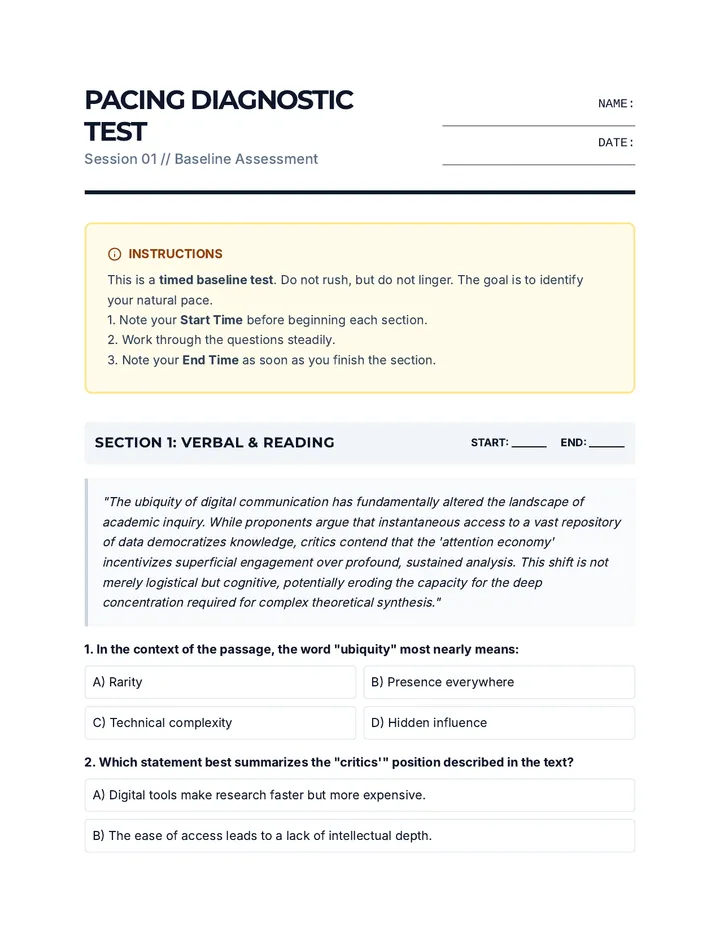
A comprehensive graduate-level sequence focused on the psychological and logistical aspects of high-stakes testing, including time management, anxiety reduction, and strategic decision-making.
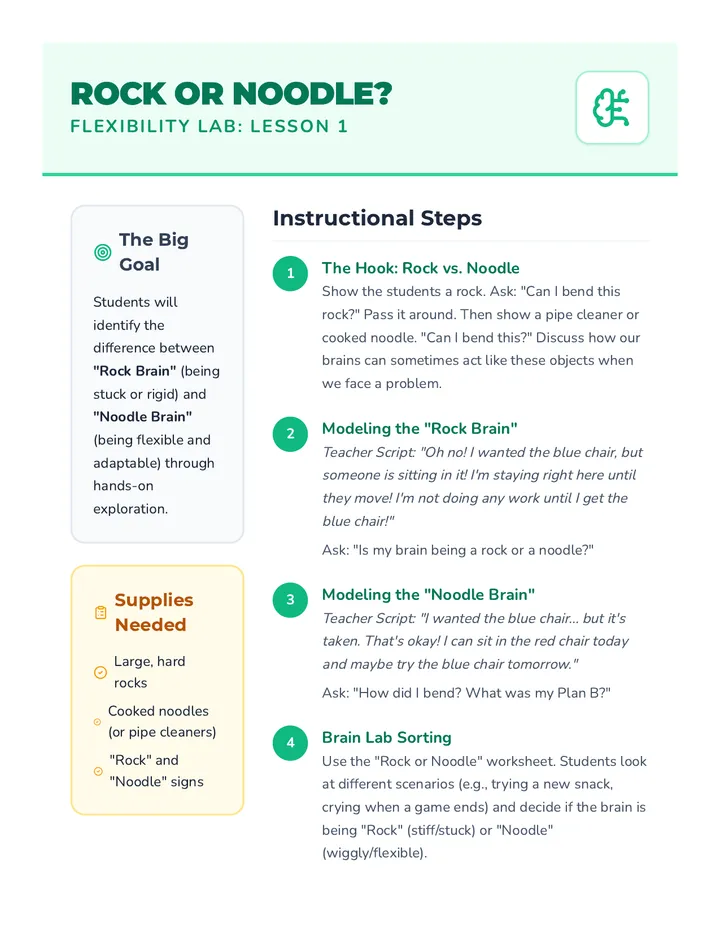
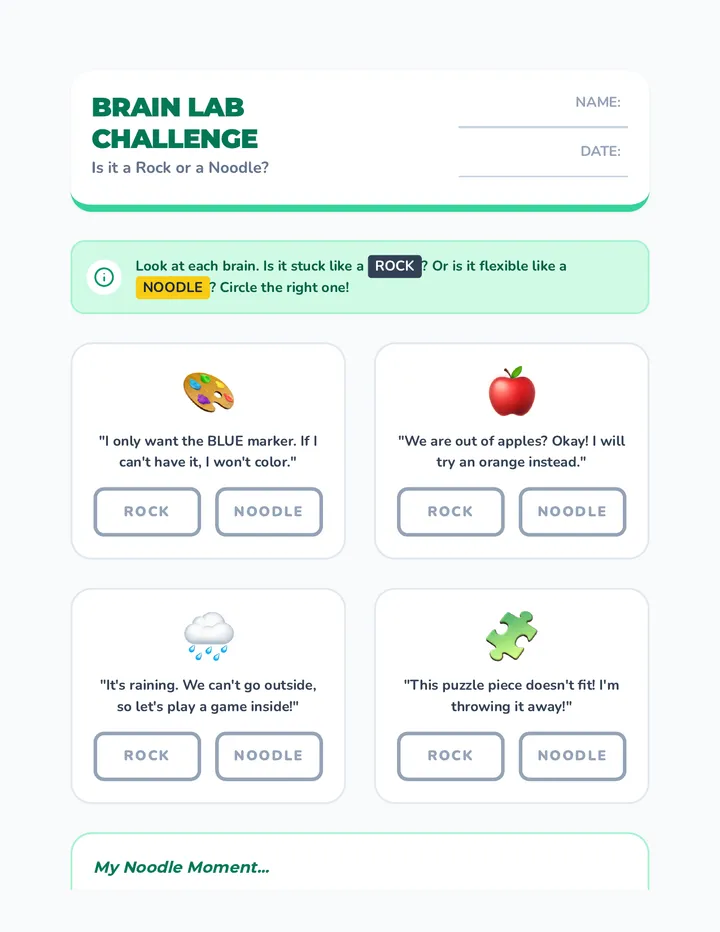
A 5-lesson unit for 1st-grade students focusing on cognitive flexibility. Students learn to navigate obstacles, tool breakage, schedule changes, and unavailability using the 'Rock Brain' vs. 'Noodle Brain' metaphor and the 'Plan B' framework.
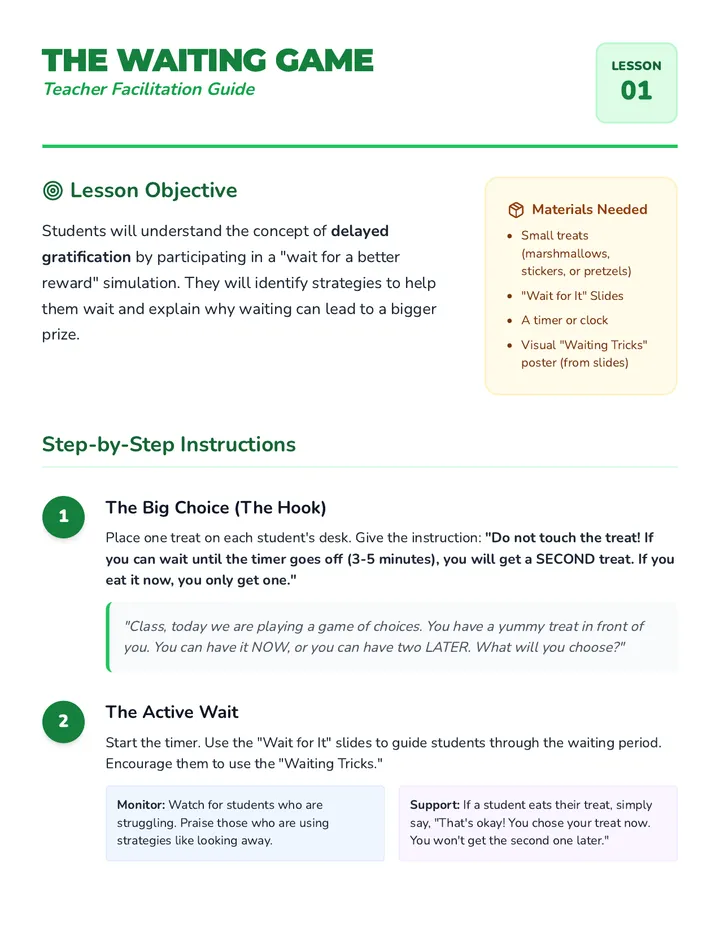
This sequence explores the psychological and neurological mechanisms of delayed gratification, moving beyond willpower to evidence-based strategies like commitment devices and environmental architecture. Students will analyze hyperbolic discounting, fMRI brain studies, and implementation intentions to build a personalized framework for long-term goal achievement.
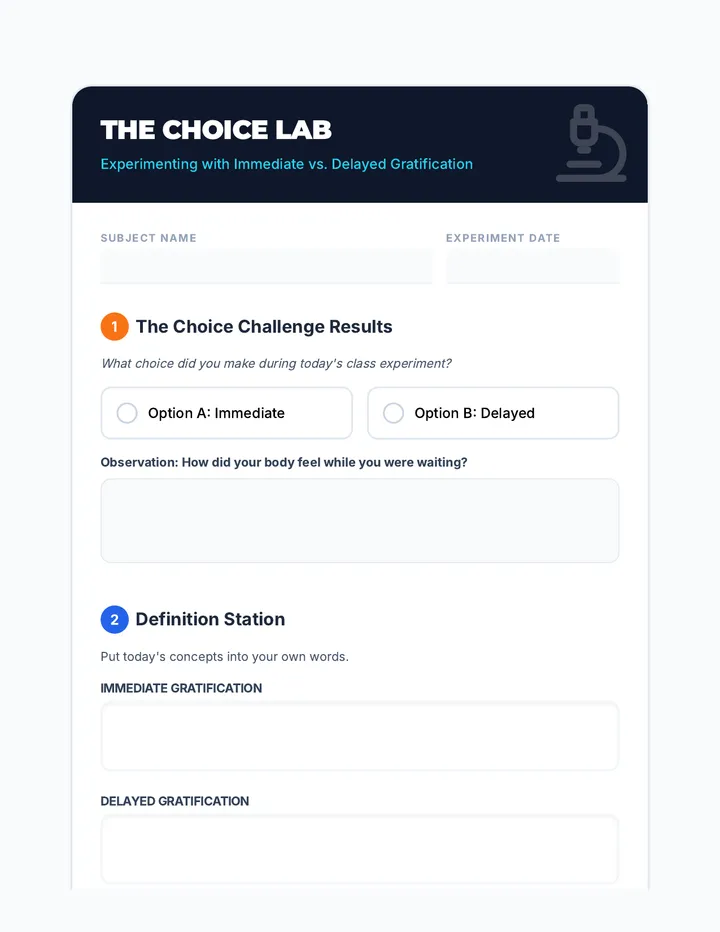
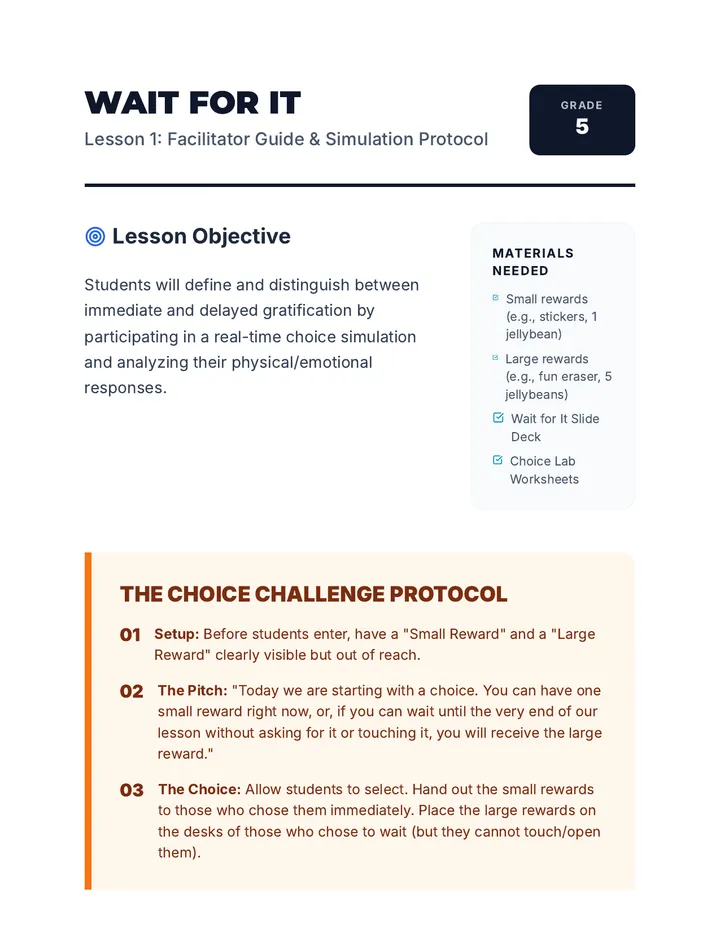
A comprehensive 5-lesson sequence designed to help 5th-grade students understand, identify, and manage impulses through cognitive strategies. Students progress from defining immediate versus delayed gratification to applying advanced distraction and reframing techniques in complex social situations.
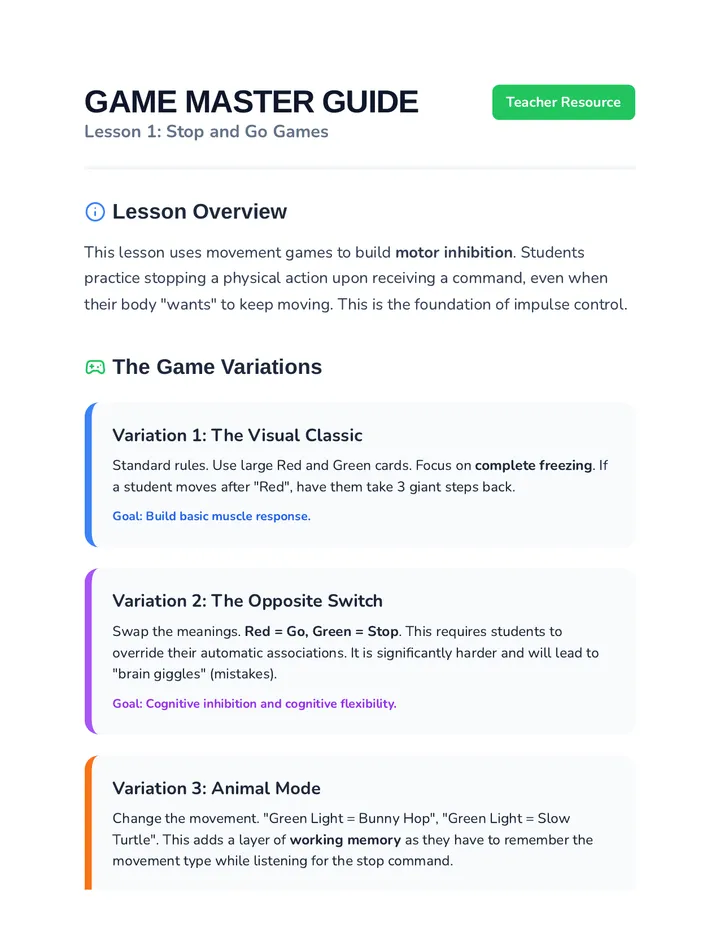
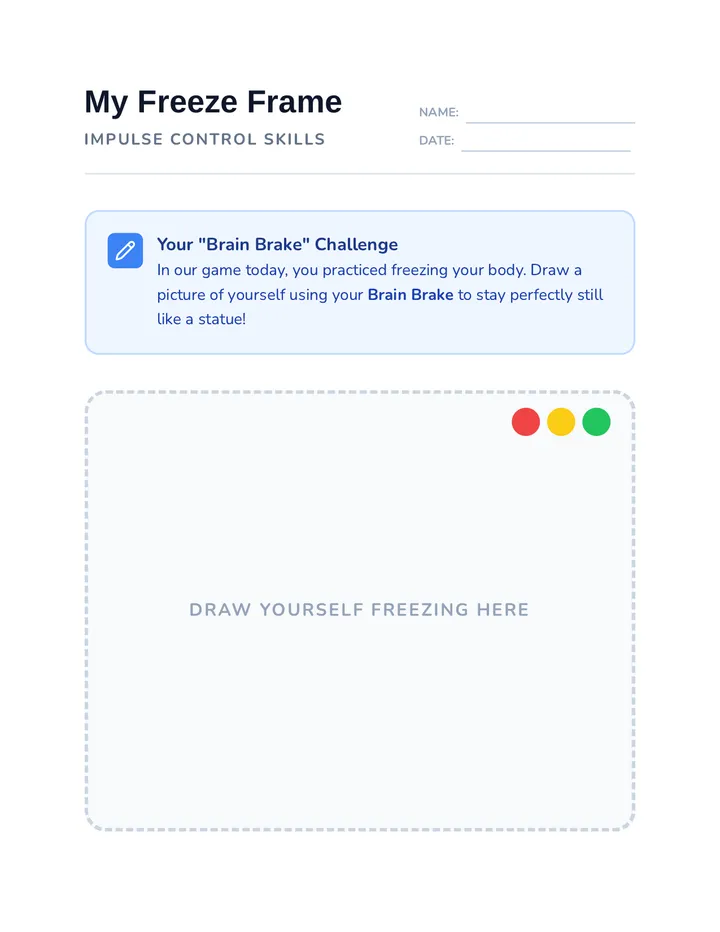
A 5-lesson unit for 1st-grade students focused on building impulse control and executive function through active games and cognitive strategies. Students progress from physical motor inhibition to more complex decision-making models using the 'Stop, Think, Go' framework.
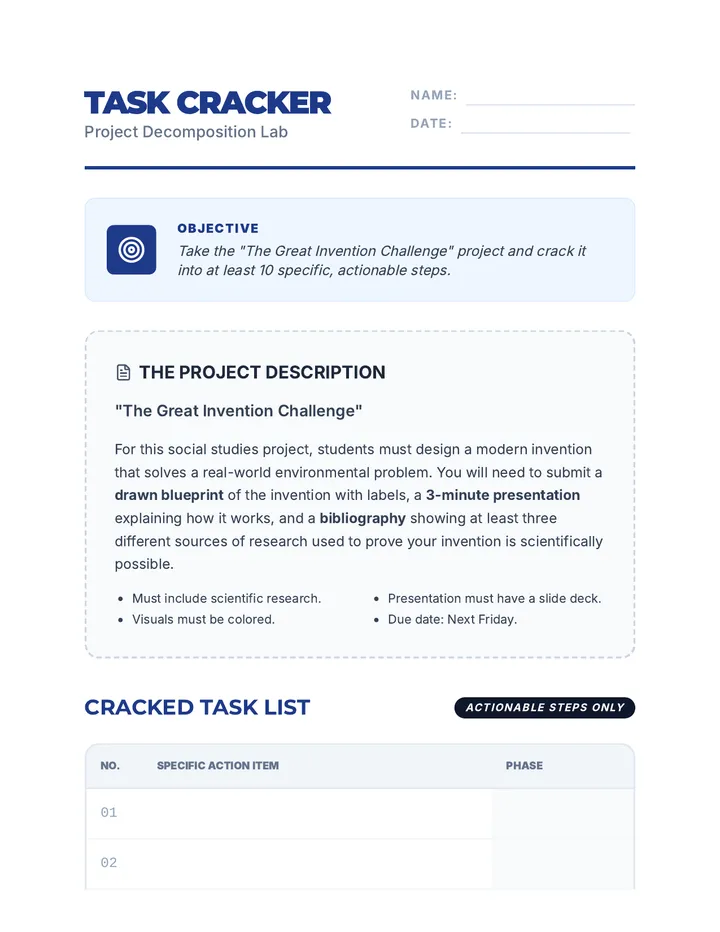
A project-based sequence for 7th-grade students to master 'Backwards Planning' by breaking down complex projects into manageable milestones, estimating time accurately, and developing accountability strategies to overcome procrastination.
A Kindergarten sequence focused on building task persistence and management through visual supports, routines, and incremental stamina building. Students learn to use timers, First/Then boards, and self-monitoring tools to sustain attention.
A Kindergarten sequence focused on introducing financial literacy through the lens of delayed gratification, goal setting, and visual progress tracking. Students learn that waiting and saving can lead to greater rewards through hands-on simulations and visual tools.
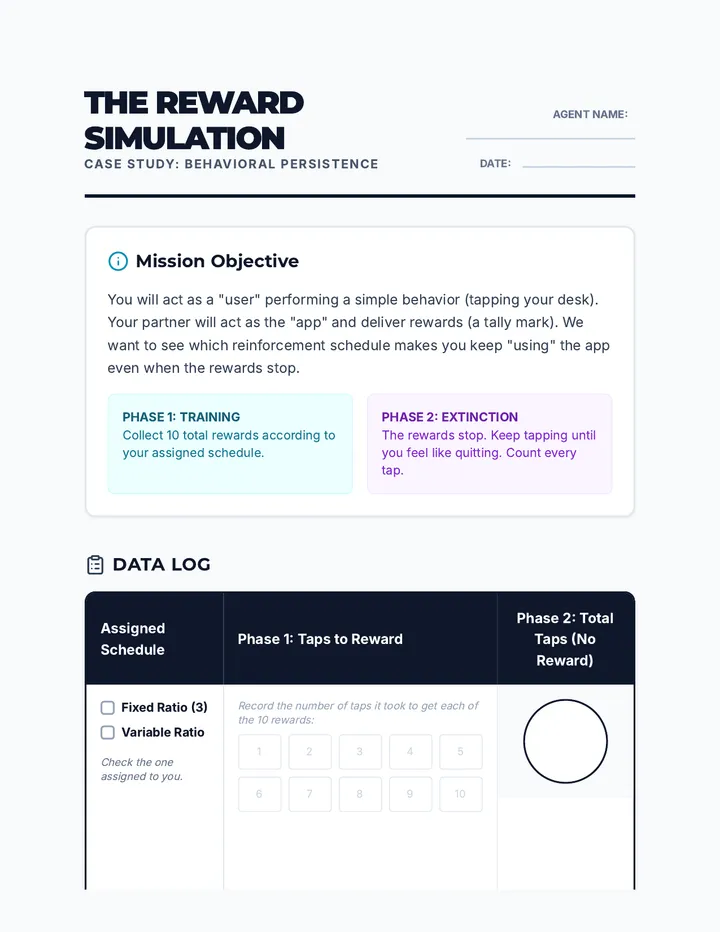
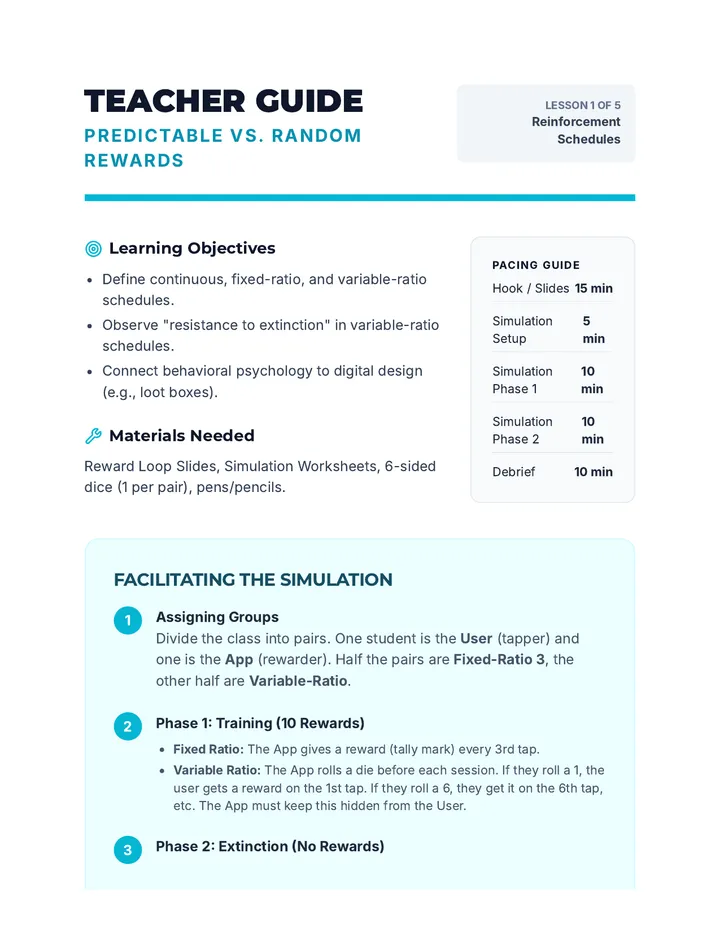
A 5-lesson sequence exploring how technology uses schedules of reinforcement (fixed and variable) to drive engagement. Students analyze gamification, social media mechanics, and ethical design to build digital literacy.
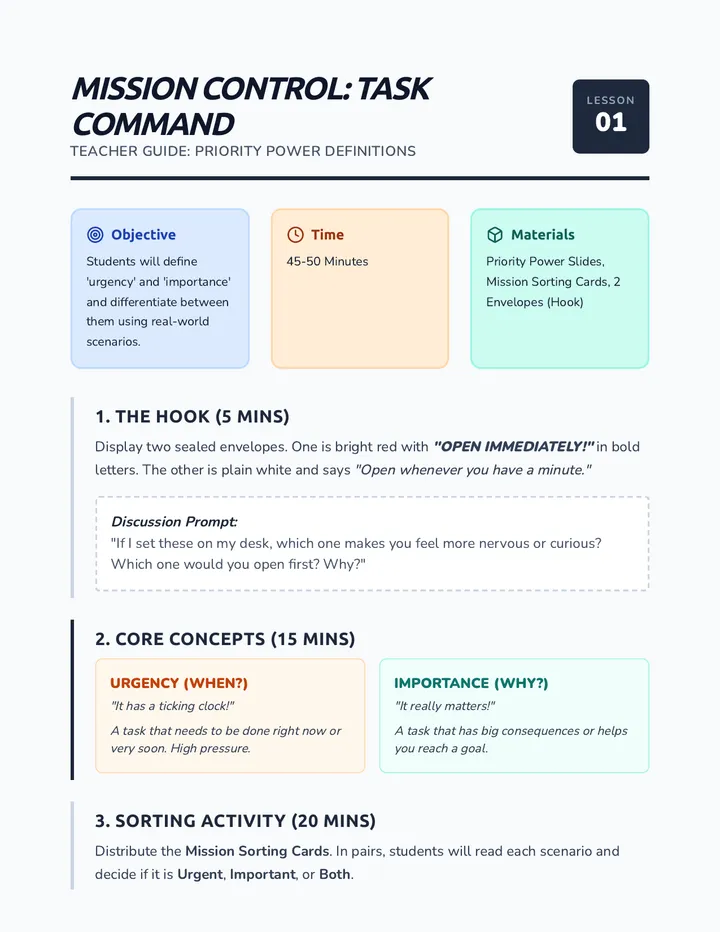
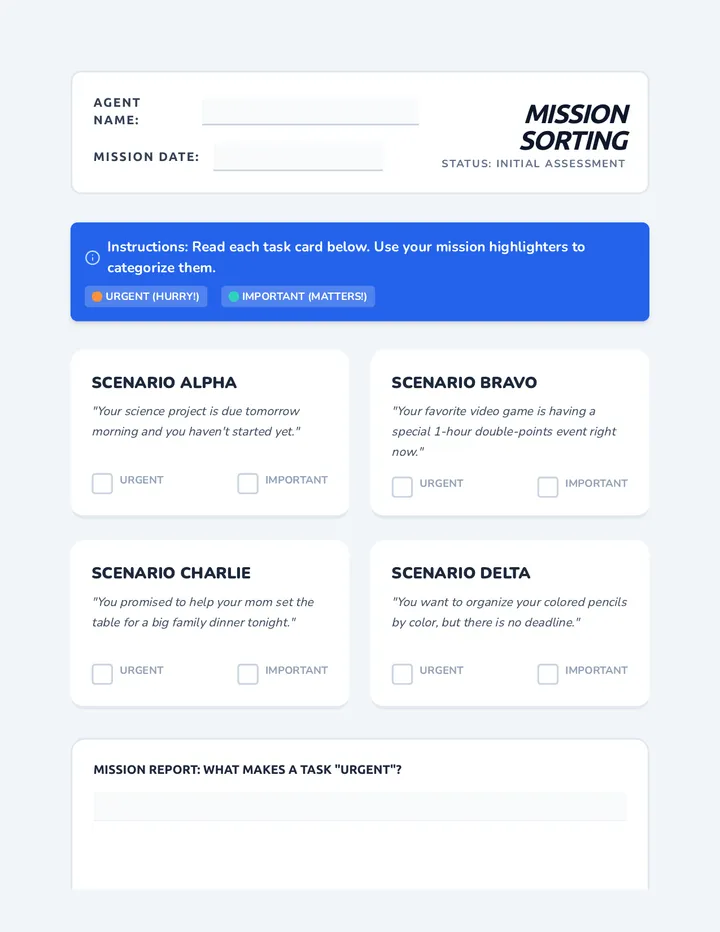
A 5-lesson sequence designed to help 4th-grade students master task prioritization using visual matrices and executive functioning strategies. Students progress from defining urgency and importance to applying a 2x2 priority matrix to their own real-world schedules.
A 6-week social-emotional learning program for 6th-grade girls focused on building healthy friendships, resolving conflicts, practicing empathy, and setting boundaries.
A 6-week empowerment program for 7th-grade students focused on developing self-esteem, resilience, and a positive self-image through interactive lessons and reflection.
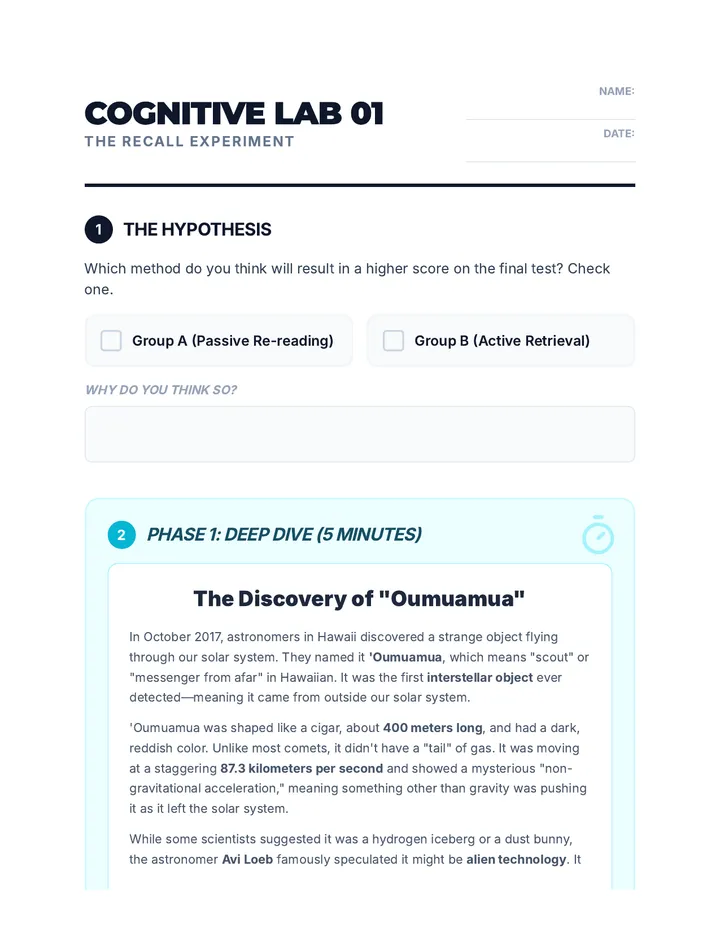
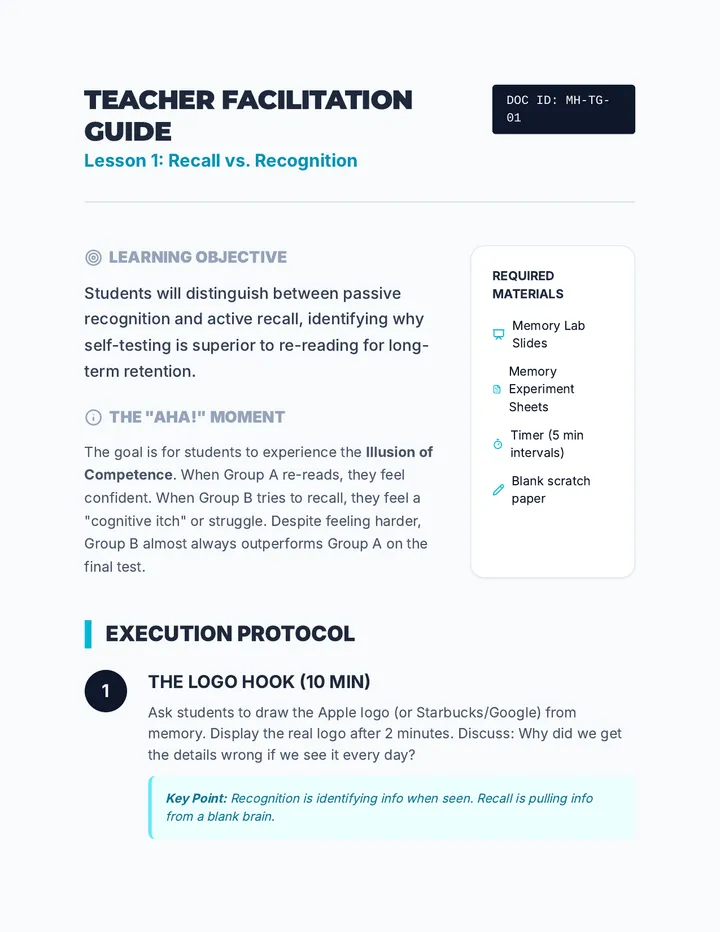
This sequence shifts focus from the design of the study guide to its utility, emphasizing active recall and self-testing strategies to help students distinguish between familiarity and actual mastery of material.
A 1st-grade counseling sequence that uses game-based mechanics and metaphors to teach behavioral activation, emotional resilience, and the importance of daily positive routines.
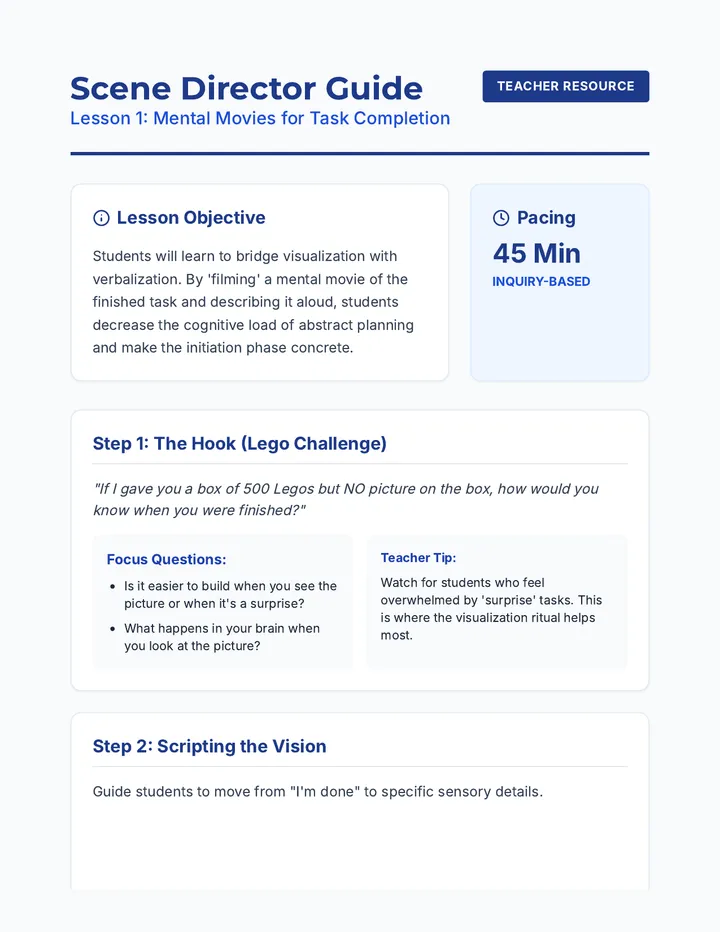
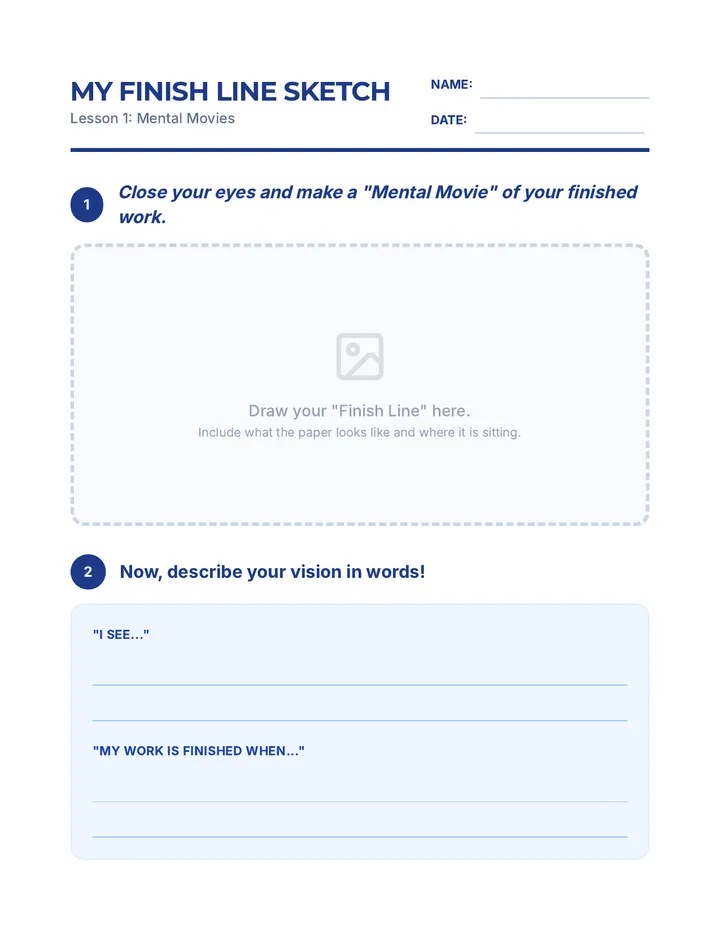
This sequence helps students overcome task initiation hurdles by combining visualization and verbal self-talk. Students learn to 'see' the finished product, reverse engineer the steps, estimate time accurately, and use micro-goals to take the first step.
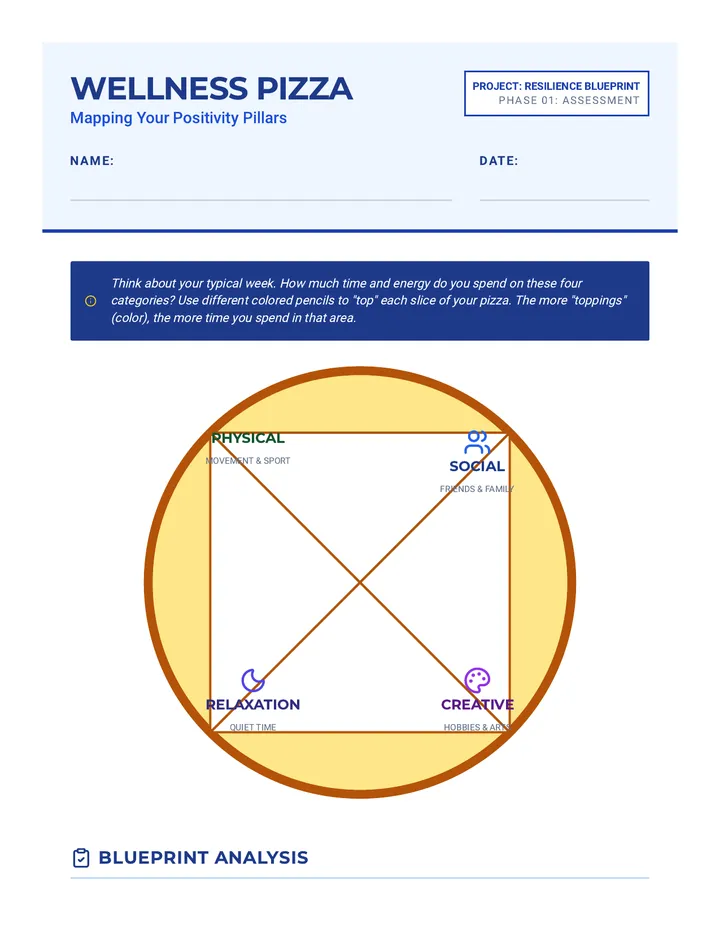
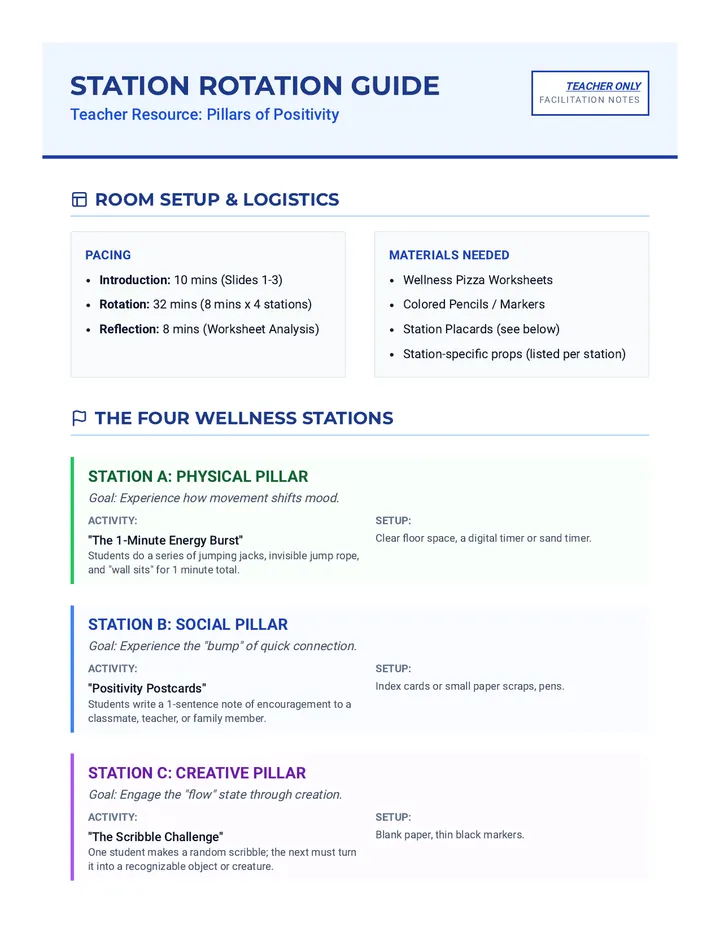
A 5-lesson project-based sequence for 5th graders focusing on building positive experiences through routine design and habit formation. Students learn to categorize wellness activities, overcome barriers like inertia, use habit-stacking techniques, and create a sustainable weekly wellness schedule to build emotional resilience.
A comprehensive sequence designed for 6th-grade students to master executive function skills. Students will learn to audit their time, effectively use planners, prioritize tasks using the 'Big Rocks' method, break down large projects through backward planning, and optimize their study environments for focus.
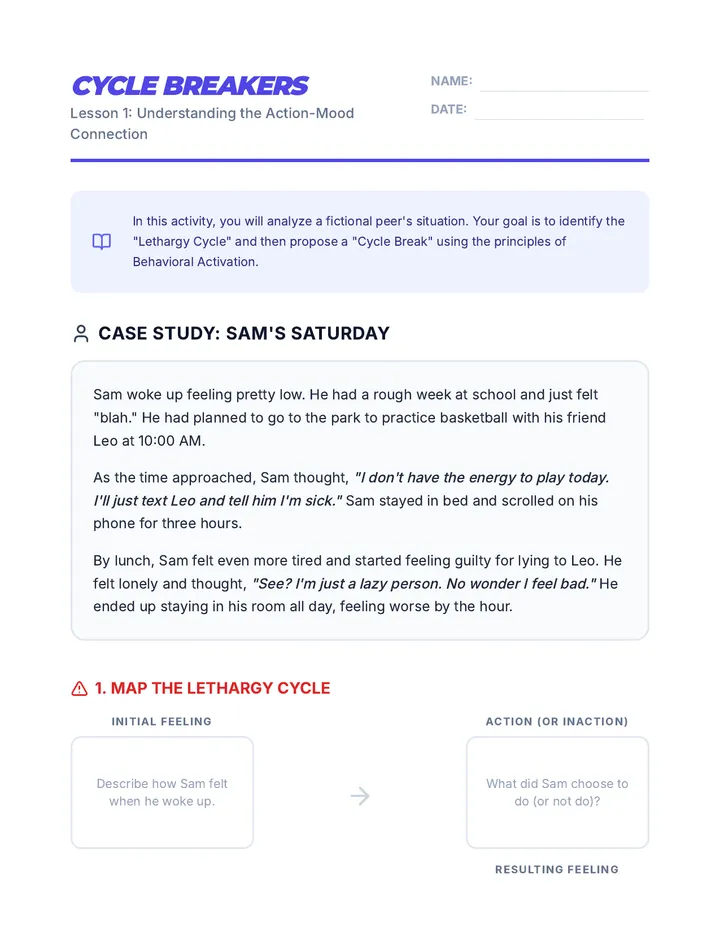
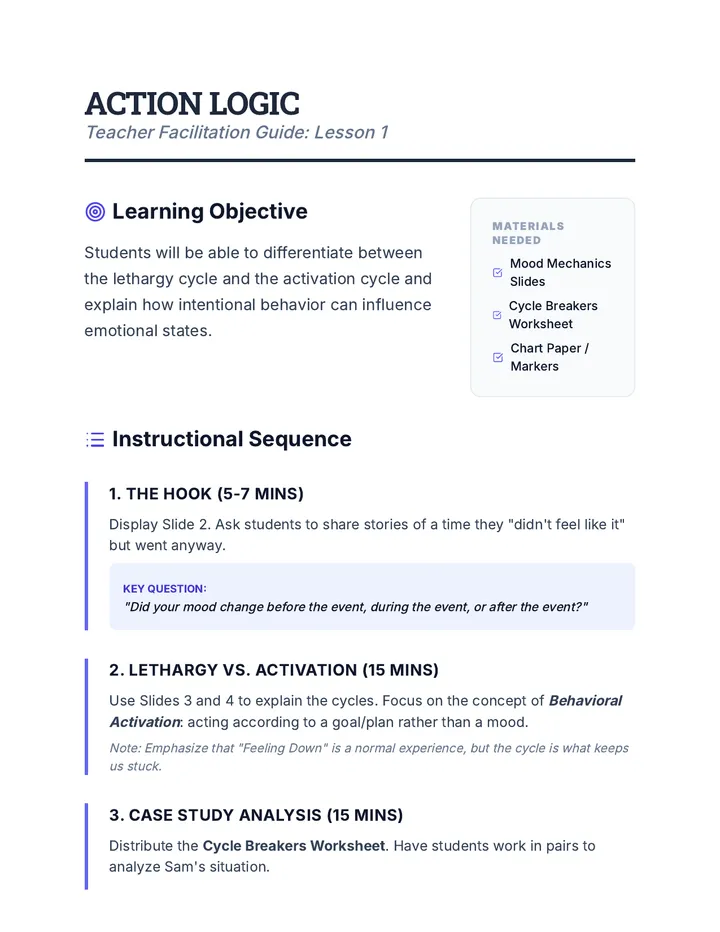
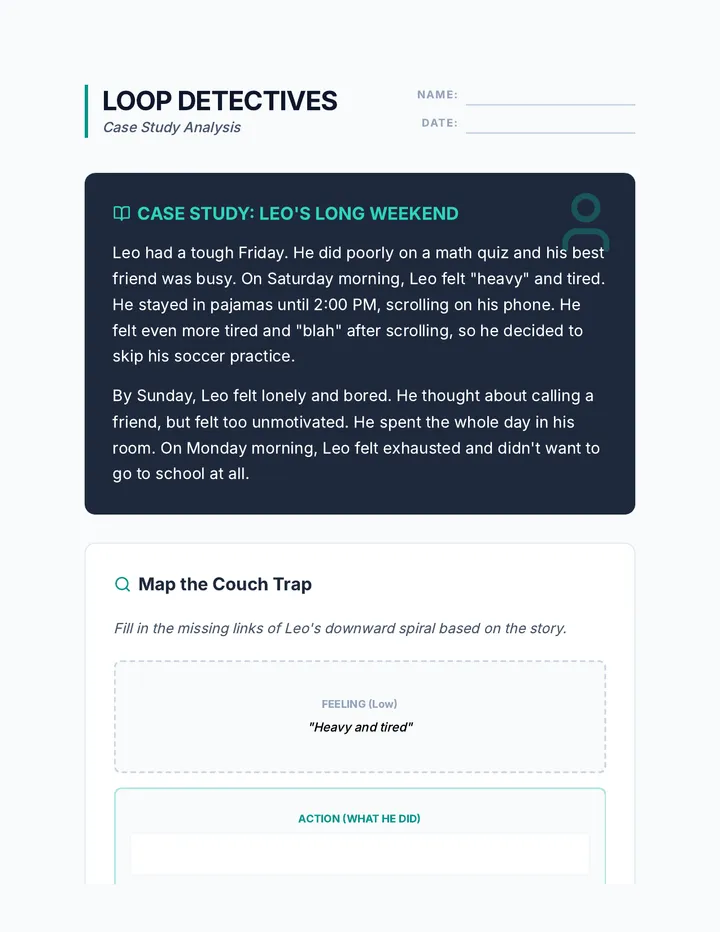
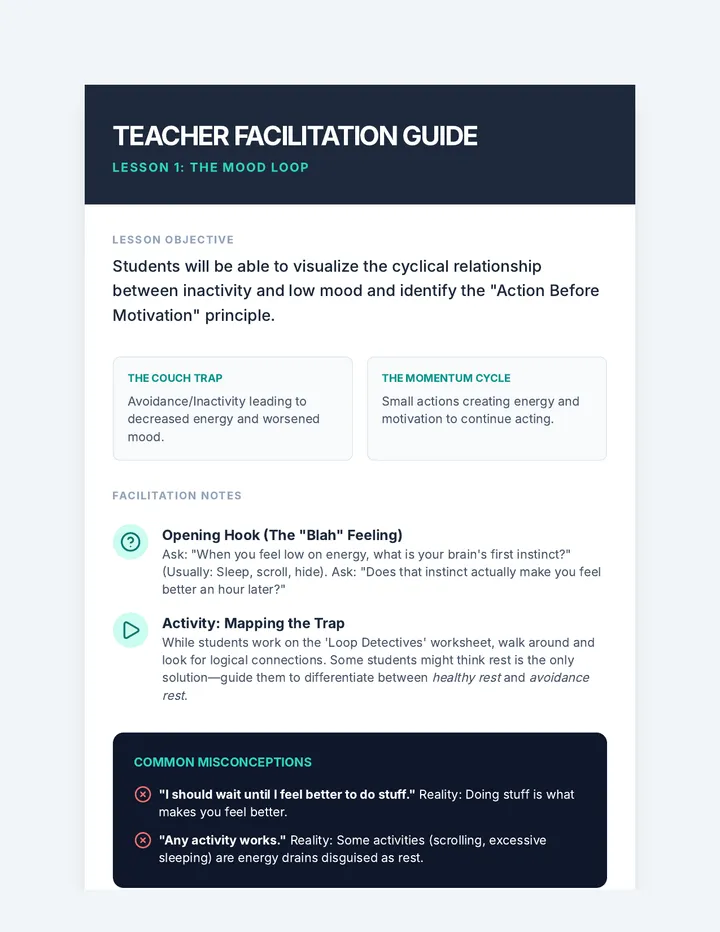
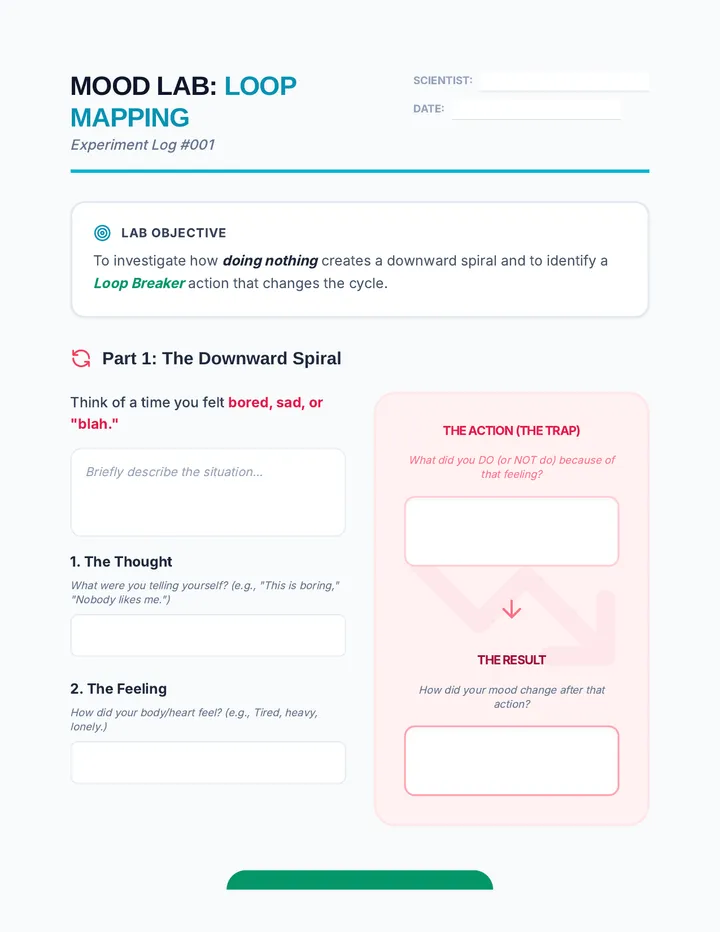
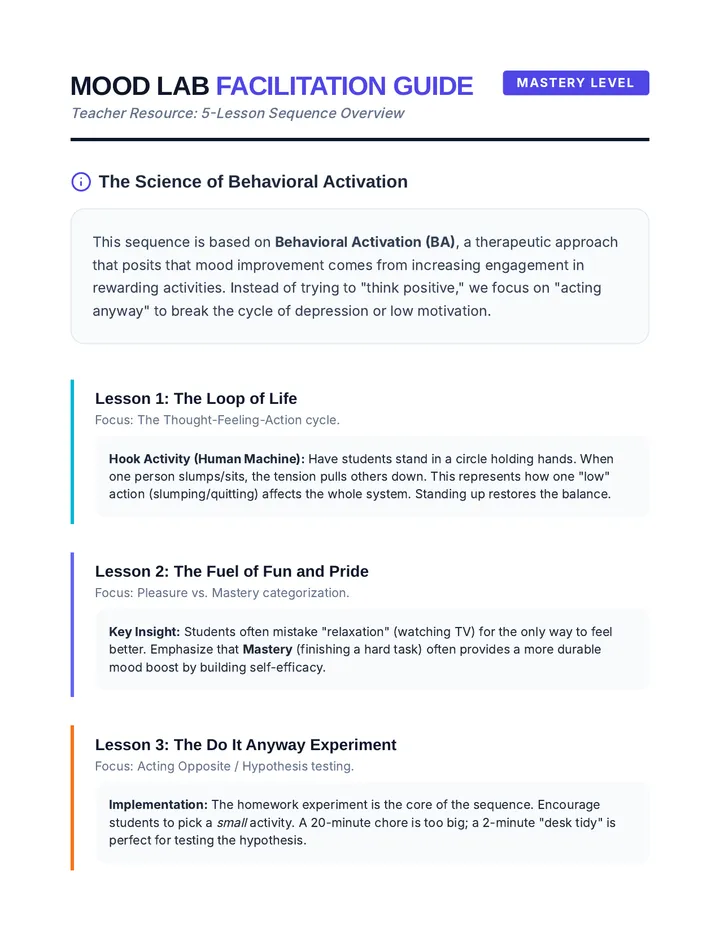
This 7th-grade sequence teaches the principles of behavioral activation, helping students understand how their actions influence their moods. Through self-monitoring, activity categorization, and strategic planning, students develop a toolkit for proactively managing their mental well-being.
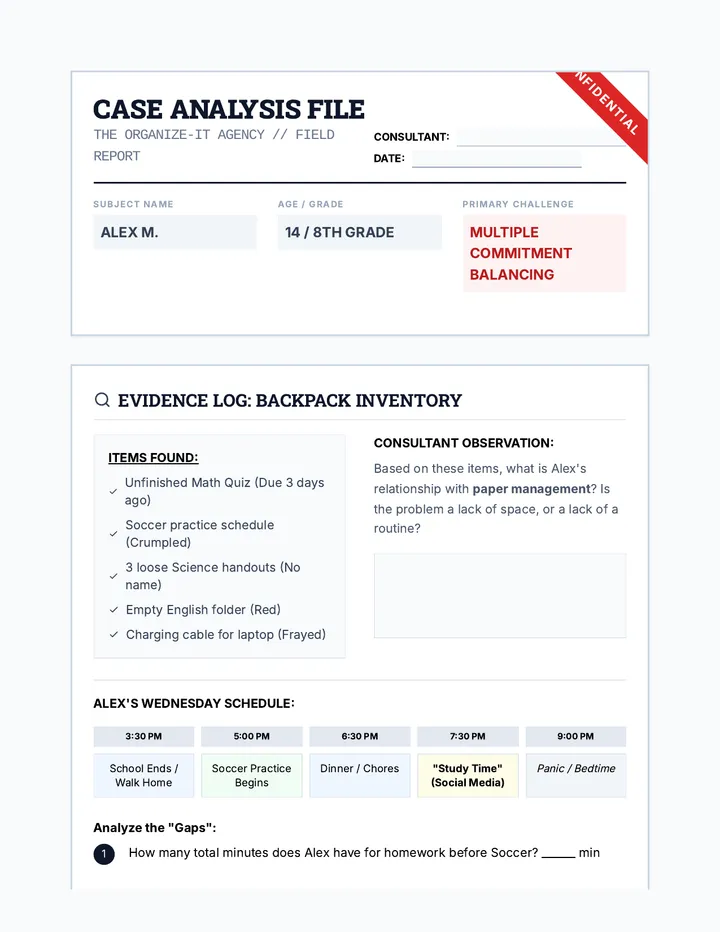
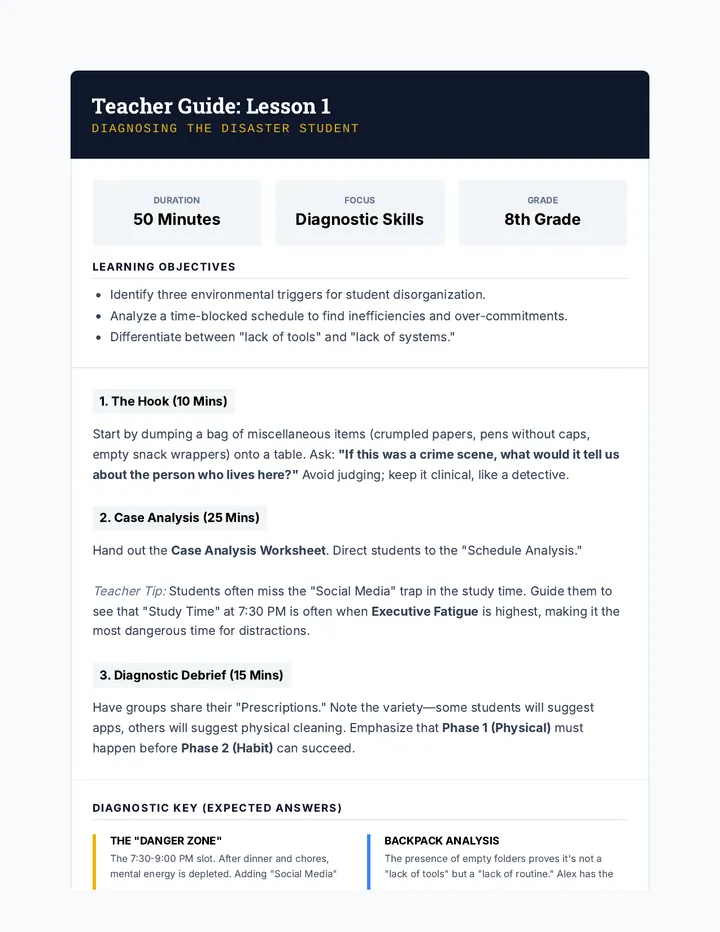
A comprehensive sequence where 8th-grade students act as 'organizational consultants' to diagnose and solve scheduling conflicts and executive functioning challenges through case studies. Students learn root cause analysis, professional self-advocacy, emotional regulation strategies for procrastination, and tool evaluation before creating a final consultancy report.
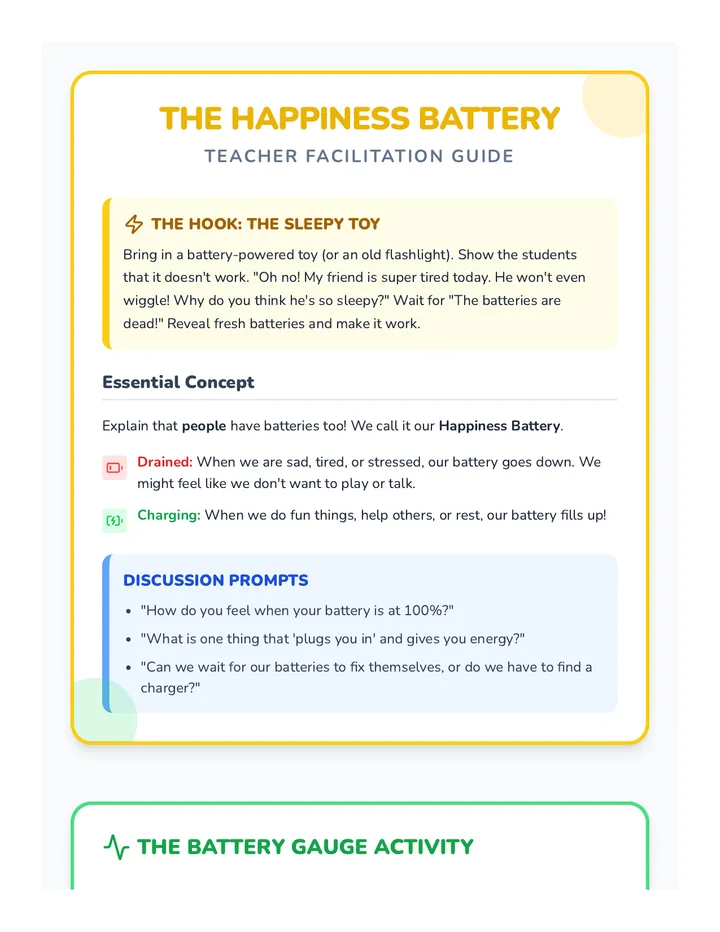
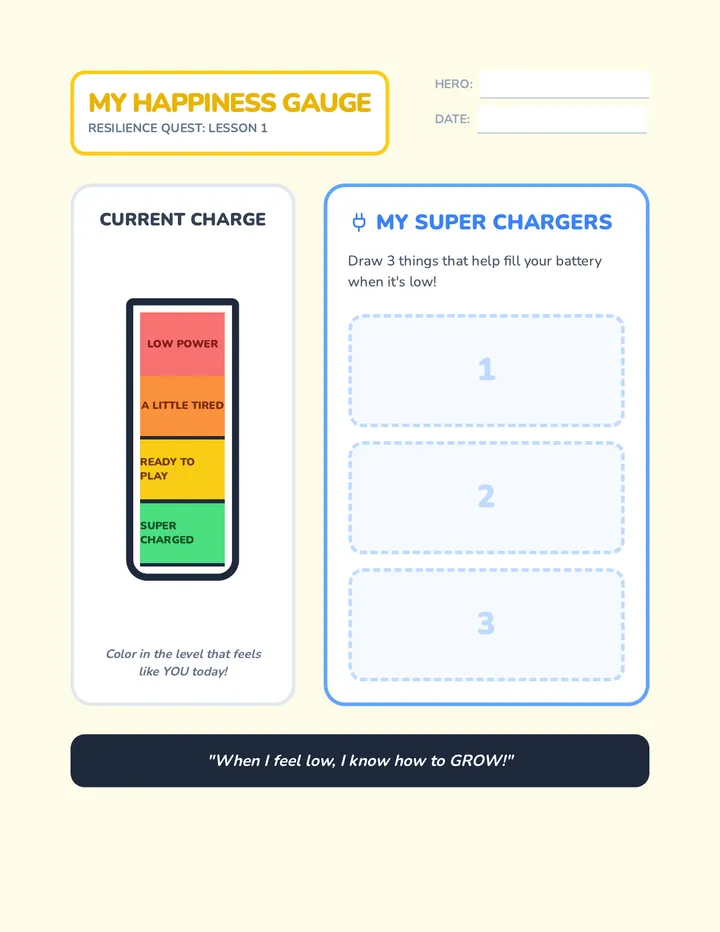
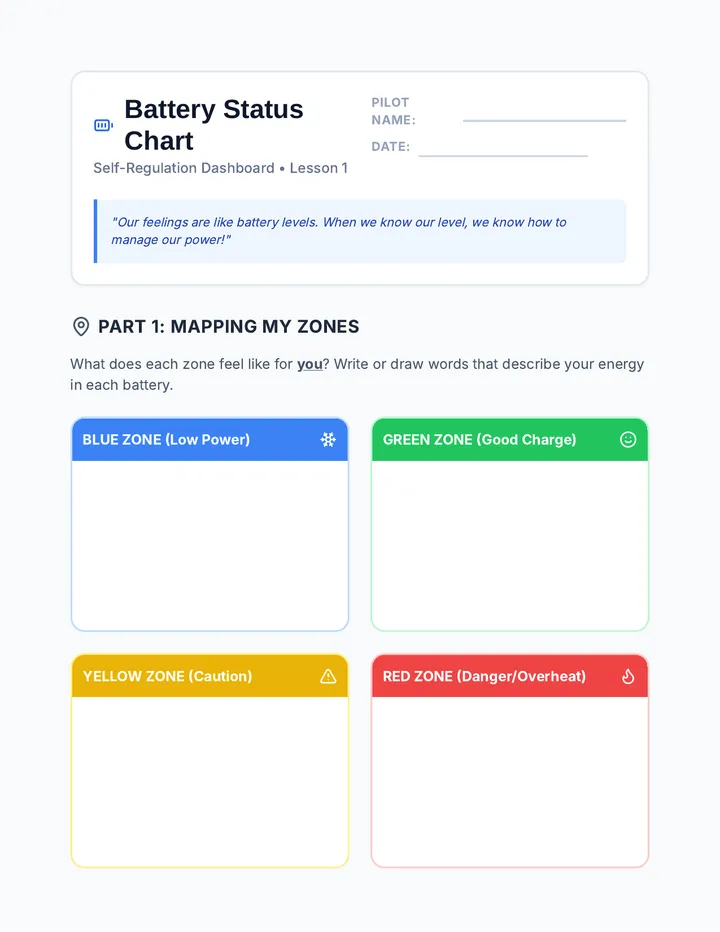
A comprehensive 5-lesson sequence designed to teach 4th-grade students self-regulation through daily emotional check-ins, goal setting, and non-verbal communication. Students learn to identify their internal state using a battery metaphor and connect it to their readiness for learning.
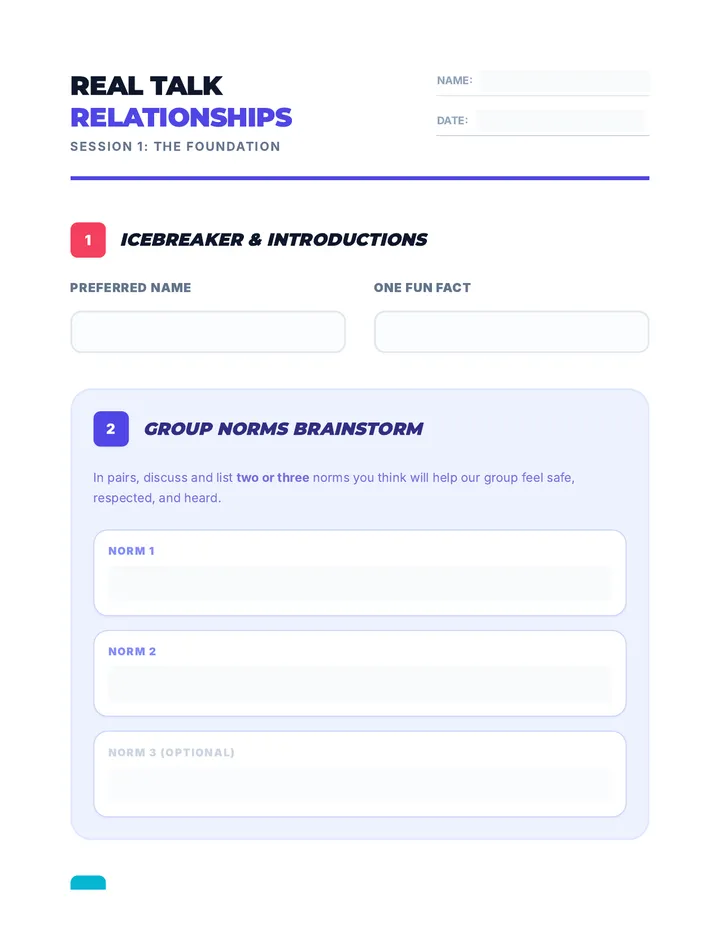
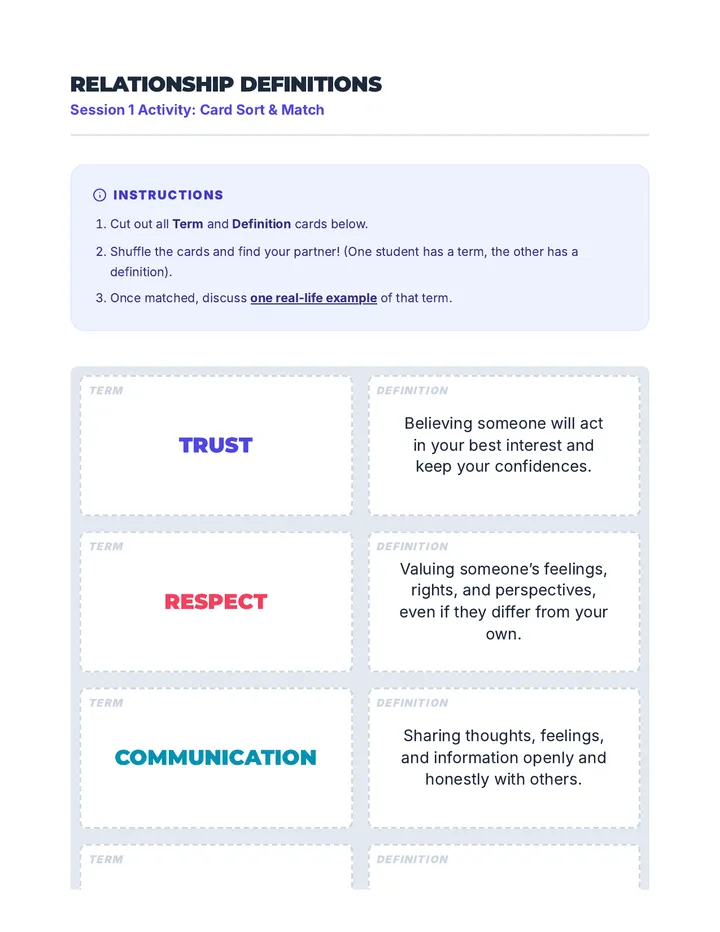
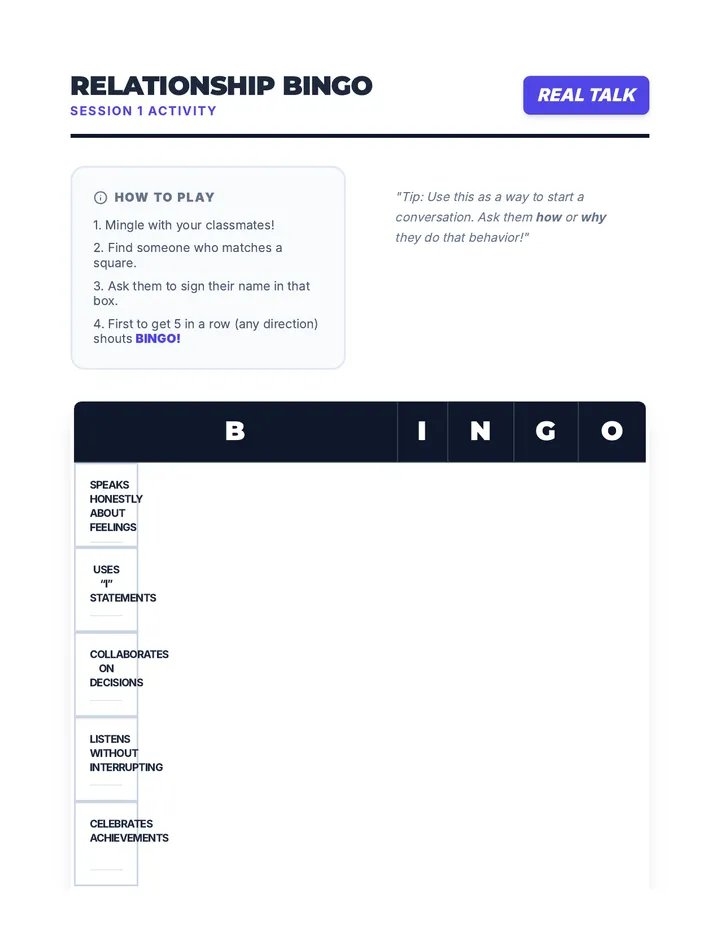
A 10-session course for high school students focused on developing healthy communication, boundaries, and empathy across romantic, platonic, and digital relationships. Students engage in interactive role-plays, games, and reflections to build practical social-emotional skills.
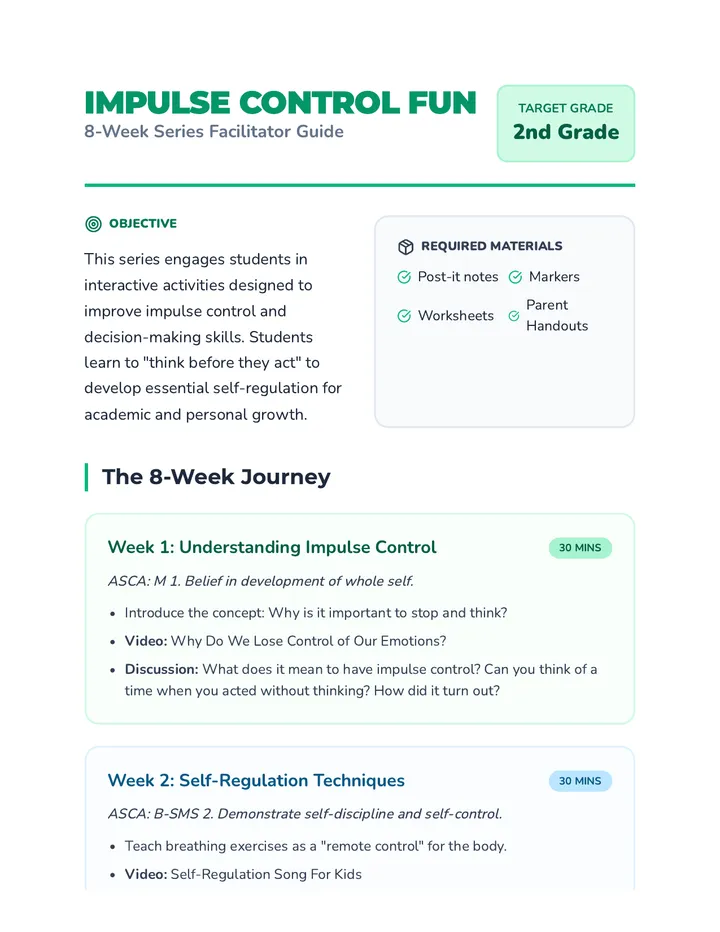
An 8-week series for 2nd graders to develop impulse control, self-regulation, and decision-making skills through interactive activities and reflection.
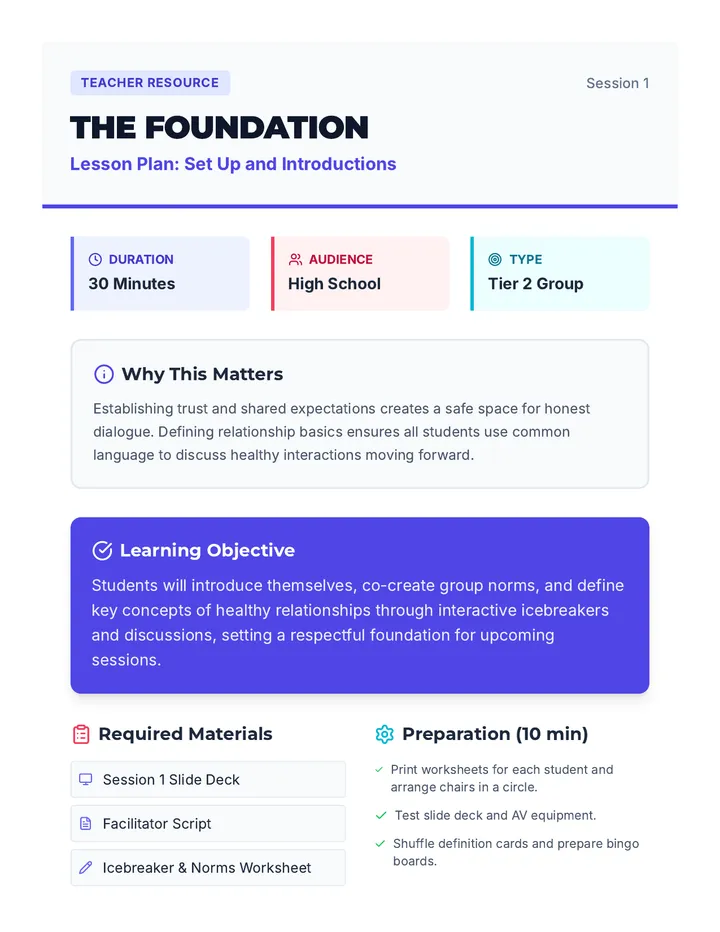
A 10-week series of 30-minute group lessons for high school students exploring Cognitive Behavioral Therapy. Each session builds practical skills in identifying and reframing thoughts, managing emotions, and engaging in healthy behaviors through interactive activities. This Tier 2 program develops resilience and mental wellness.
A 6-week Tier 3 intervention sequence designed for a student with an IEP, focusing on identifying triggers, developing coping strategies, and practicing self-regulation to manage anger and anxiety.
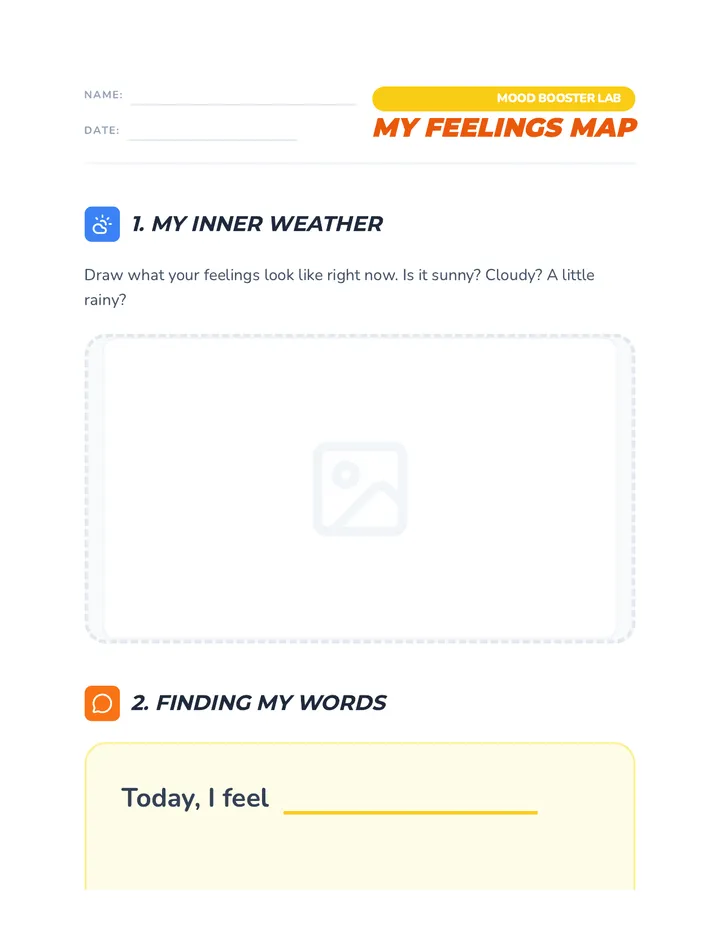
This sequence introduces first-grade students to the fundamental connection between their actions and their emotions, serving as a foundational introduction to behavioral activation. Students explore how specific activities can shift their mood and create a personalized action plan for emotional regulation.
A comprehensive sequence for 6th graders to understand and apply behavioral activation. Students learn how their actions impact their emotions, track their energy levels, brainstorm nourishing activities, and create a sustainable weekly schedule to improve their mental well-being.
In this inquiry-driven sequence, students explore behavioral activation, investigating how their actions influence their emotions. They learn to distinguish between pleasure and mastery activities, conduct personal experiments to track mood changes, and create a personalized evidence-based plan for mood regulation.
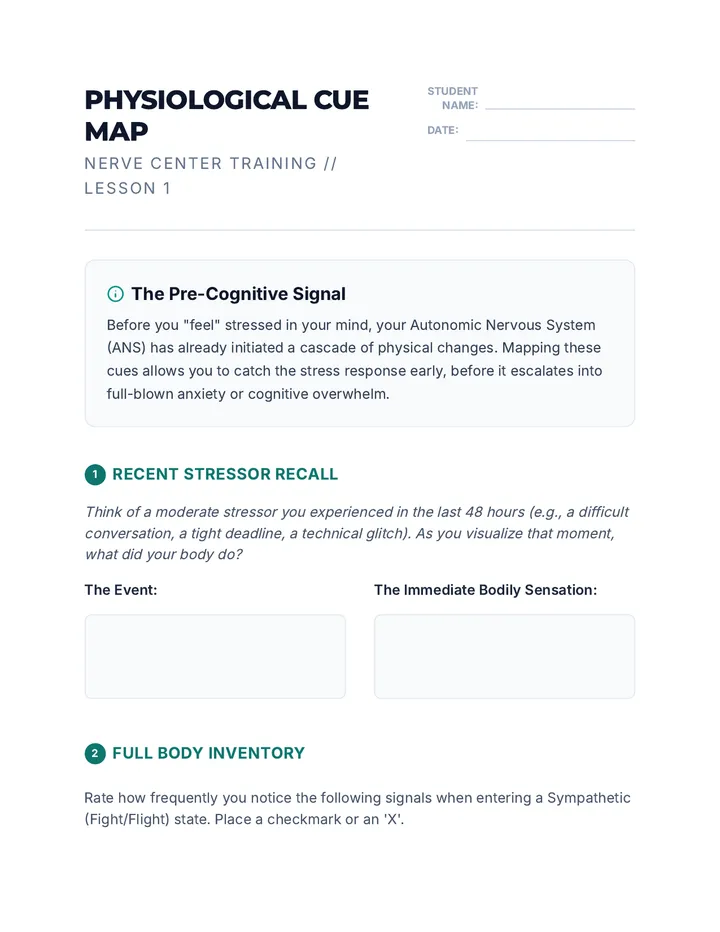
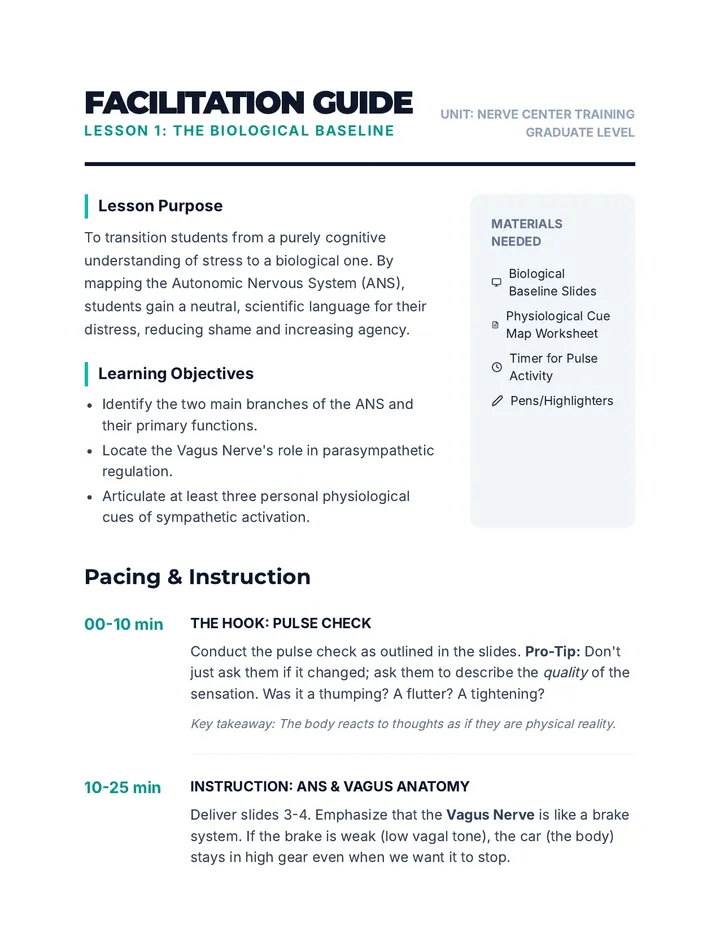
A graduate-level exploration of the biological underpinnings of stress. Students move from theoretical understanding of the autonomic nervous system and Polyvagal Theory to practical application of somatic regulation and interoceptive awareness, culminating in a personalized physiological safety plan.
Students design and create a personalized 'Coping Kit' (mental or physical) containing tools for managing crisis moments. This project-based sequence guides 3rd graders through self-reflection, visualization techniques, tool selection, and the creation of a comprehensive safety plan.
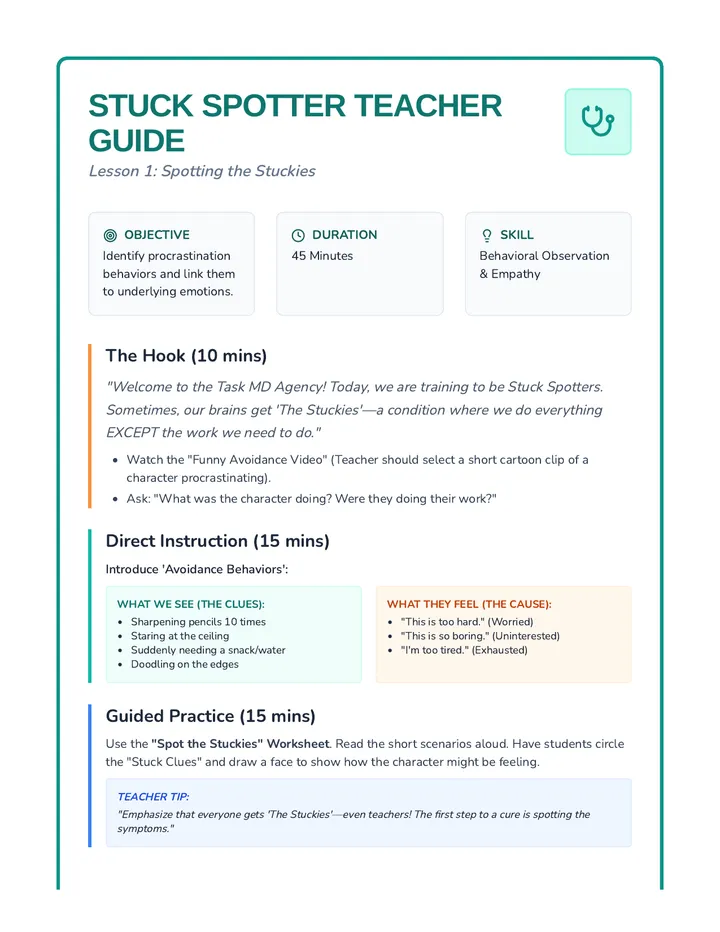
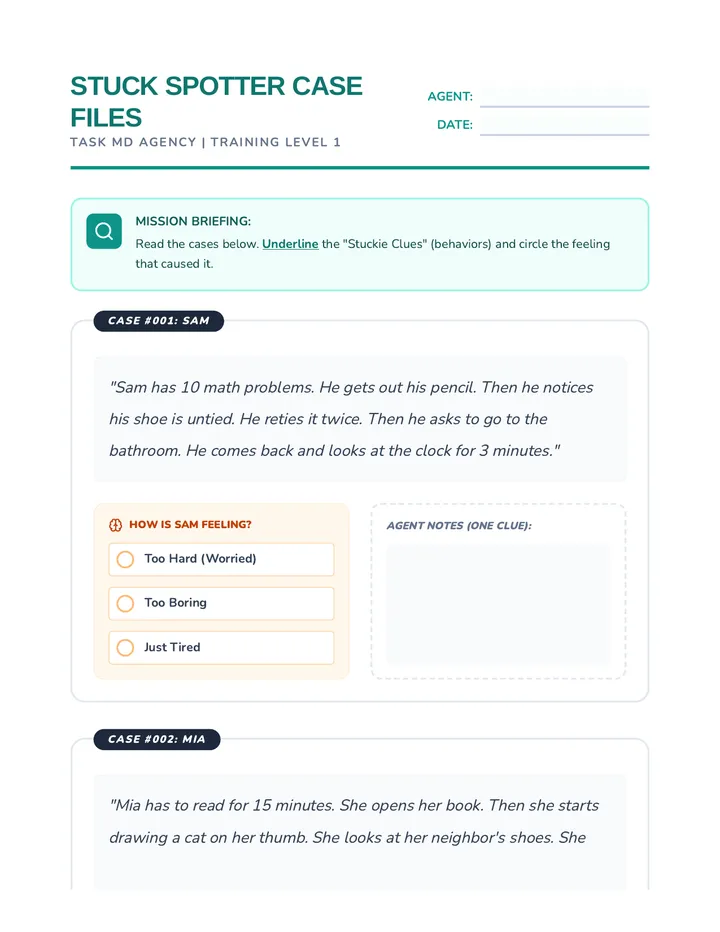
A sequence focused on helping students overcome emotional barriers to task initiation using a 'Task Doctor' theme. Students learn to identify avoidance behaviors, diagnose the root cause of being 'stuck', and prescribe effective self-talk solutions through role-play and reflection.
A 45-minute lesson for 9th-grade students to master the Eisenhower Matrix, learning to distinguish between urgent and important tasks to boost efficiency and reduce stress.
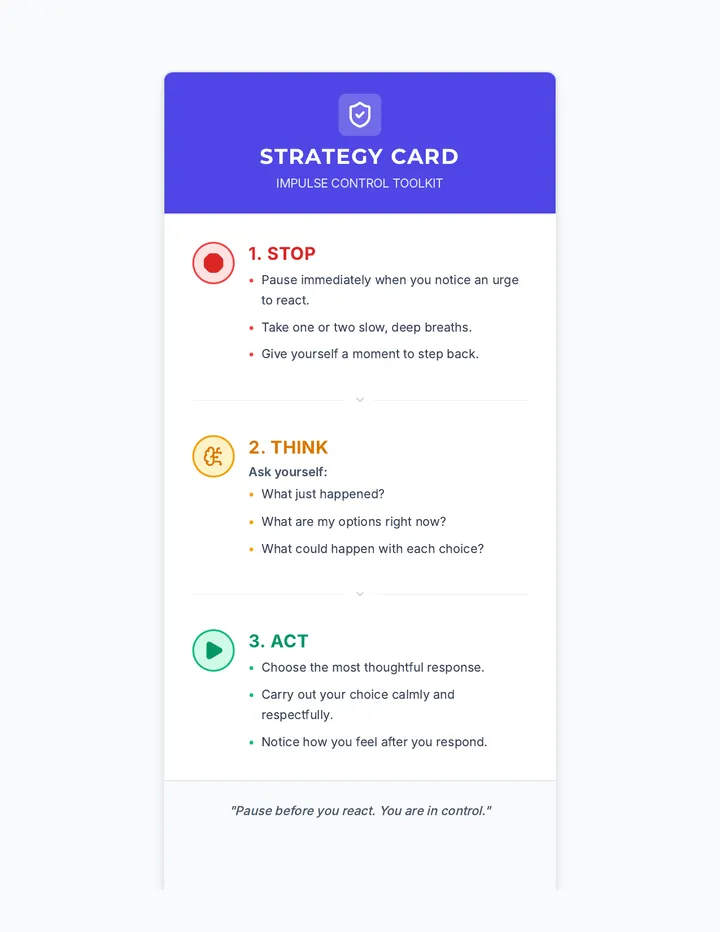
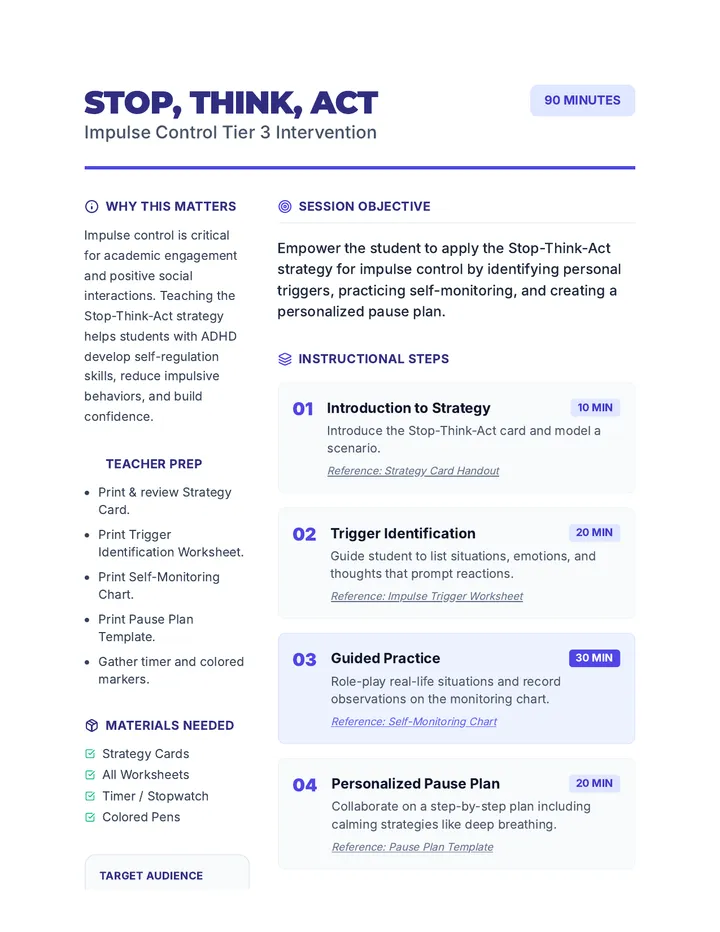
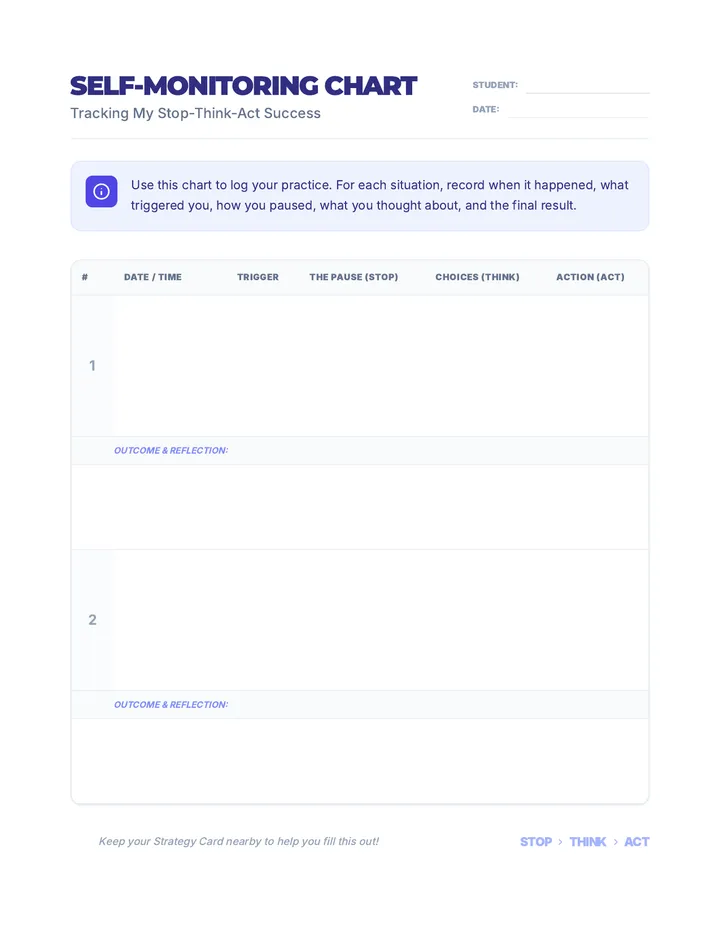
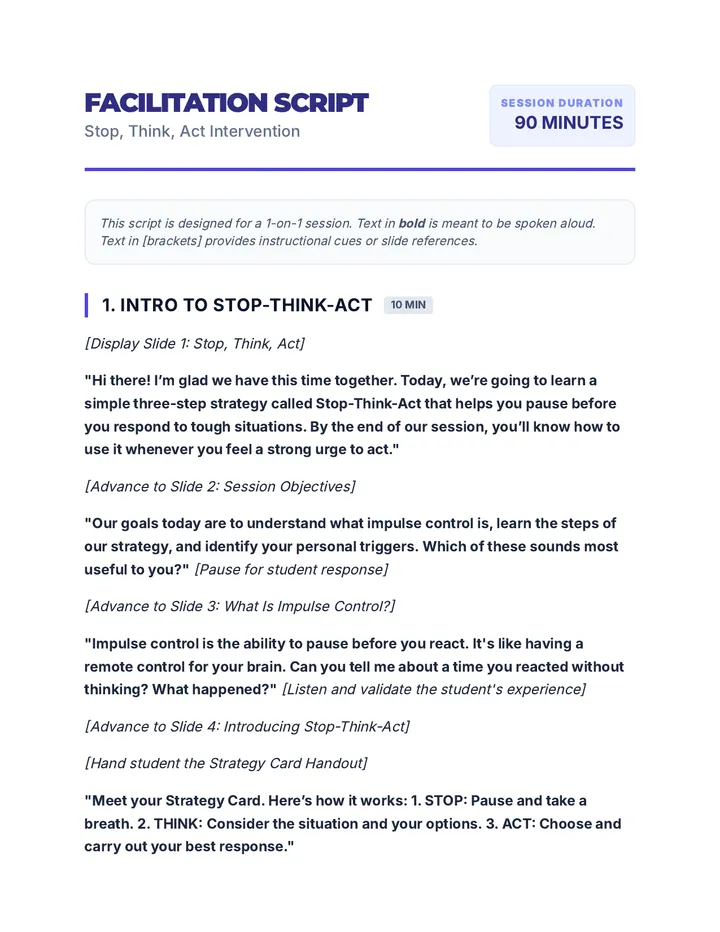
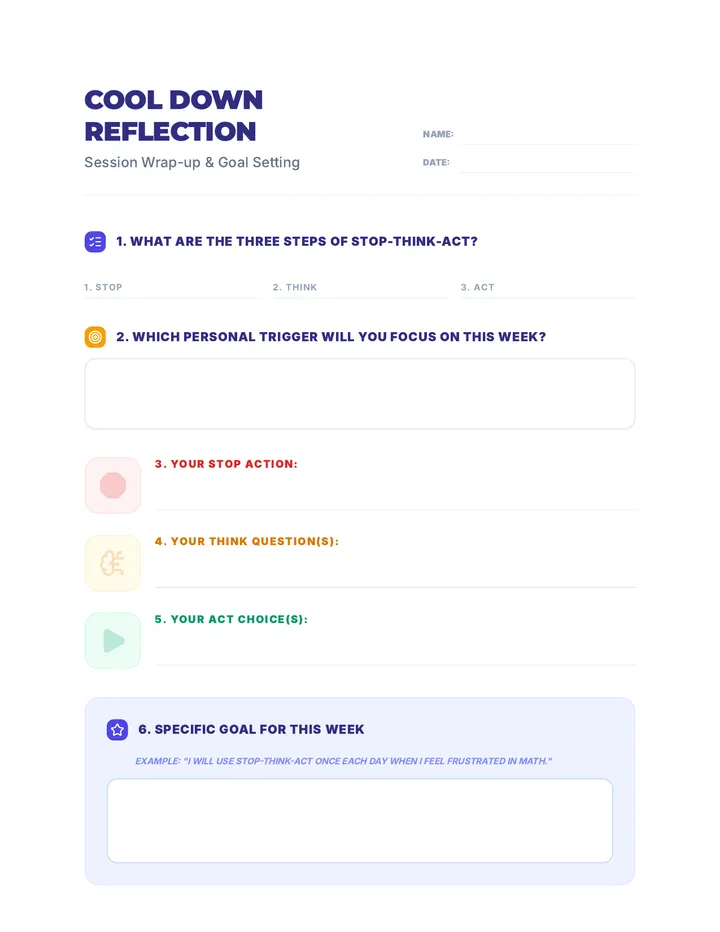
A 90-minute intensive Tier 3 intervention for 7th grade students with ADHD, focusing on the Stop-Think-Act strategy to build impulse control and self-regulation skills.
A 45-minute lesson for 6th graders on executive functioning and study skills, using the 'Inner CEO' metaphor to help students master organization, planning, and task management.
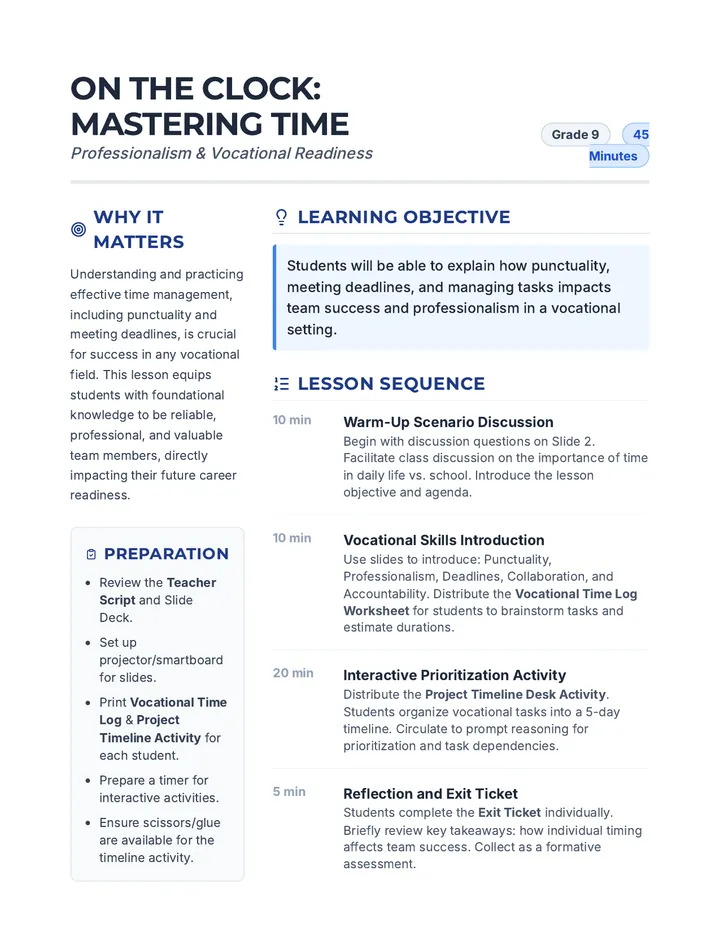
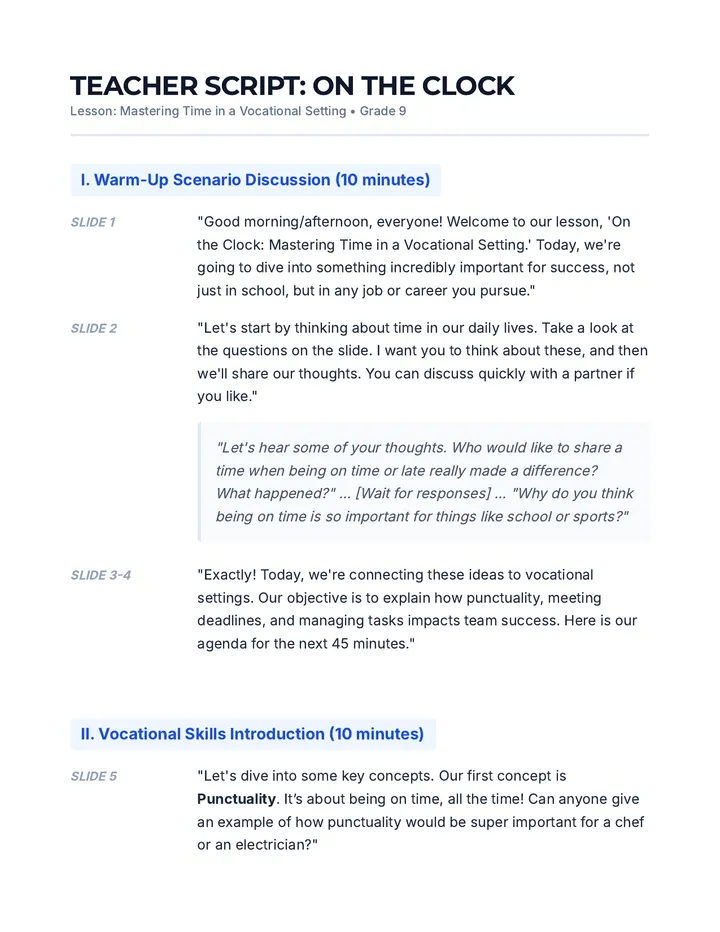
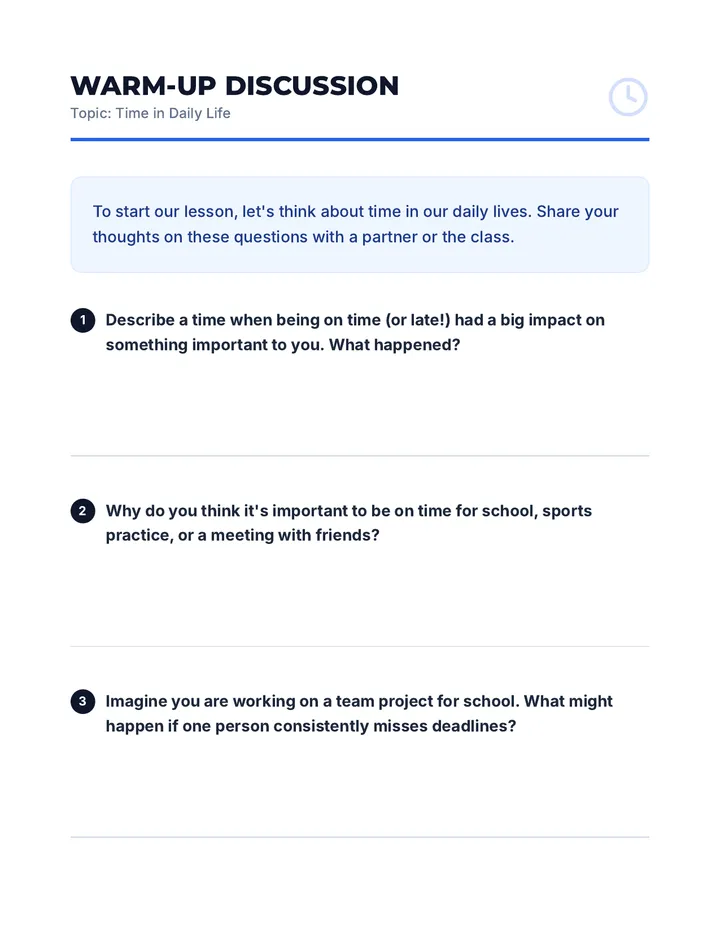
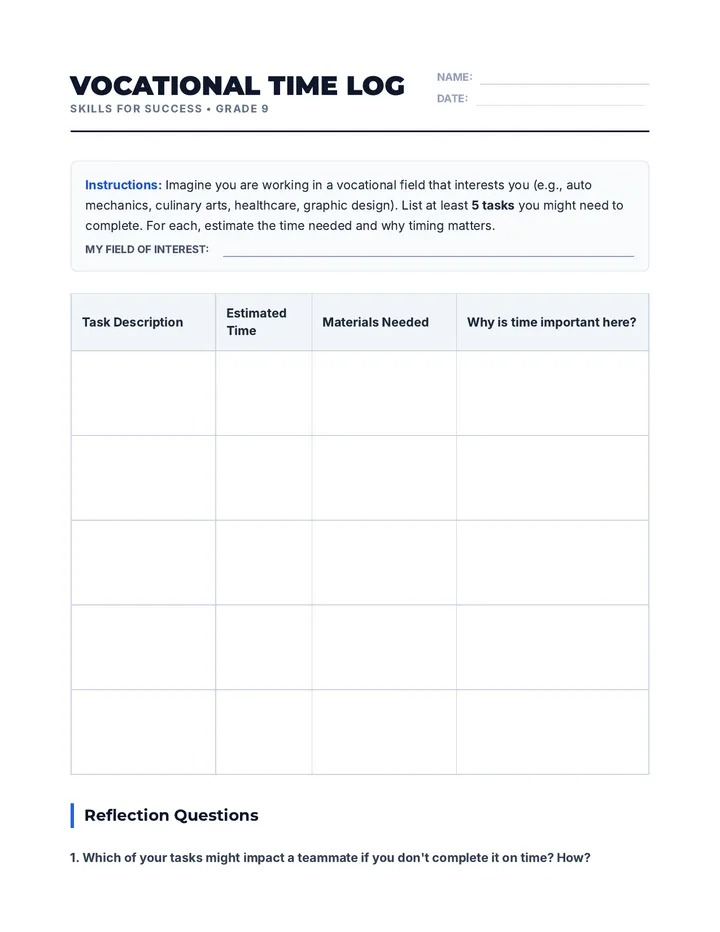
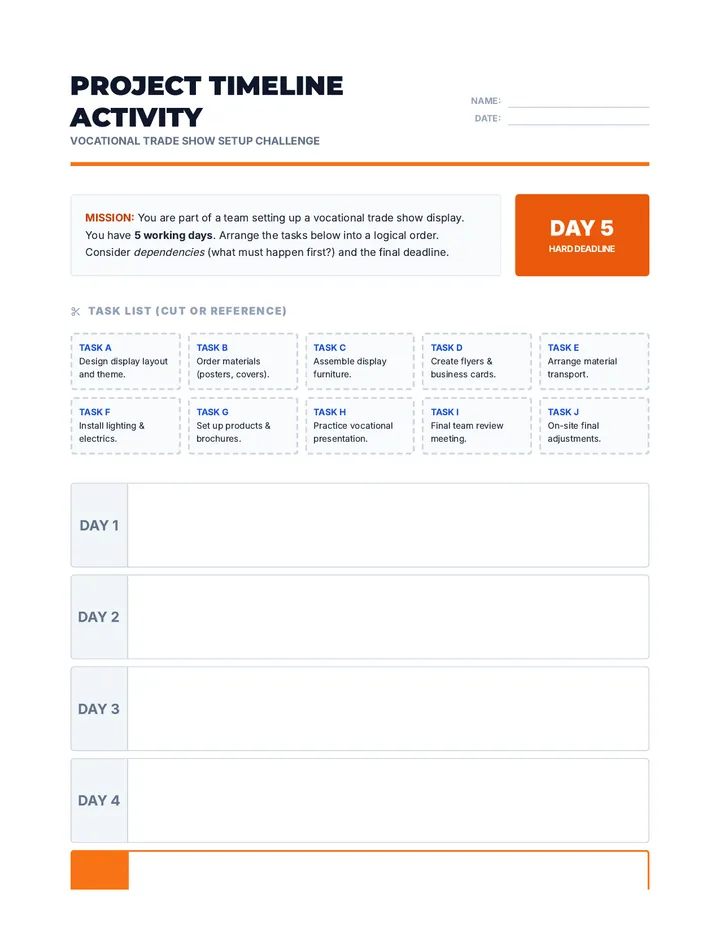
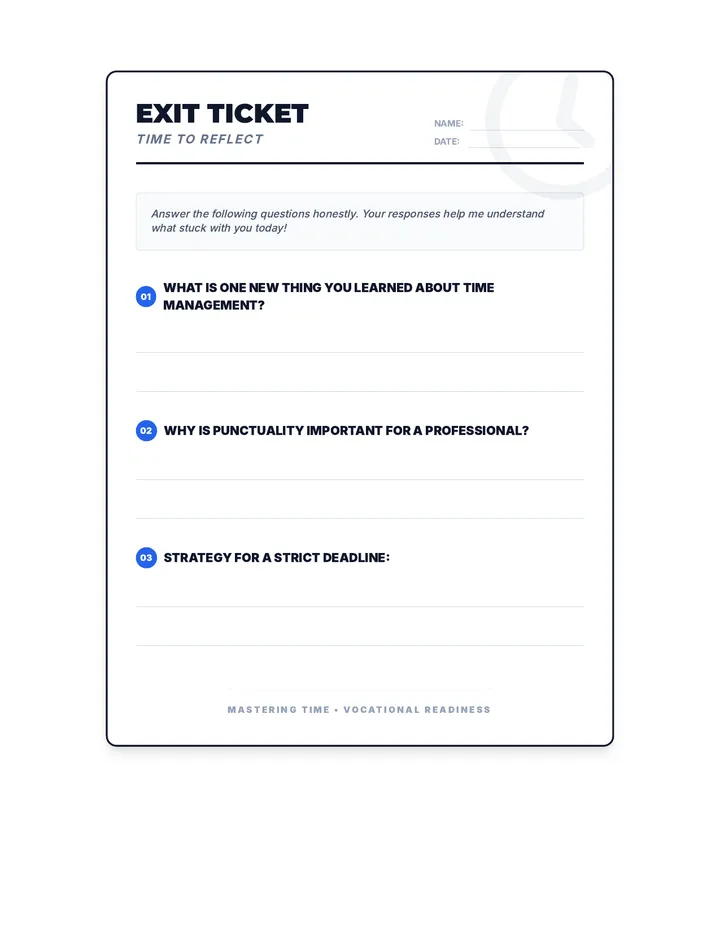
A 45-minute lesson for 9th-grade students on the importance of punctuality, meeting deadlines, and effective task management in vocational careers. Students explore key concepts of professionalism and collaboration through interactive activities like creating a project timeline for a trade show.
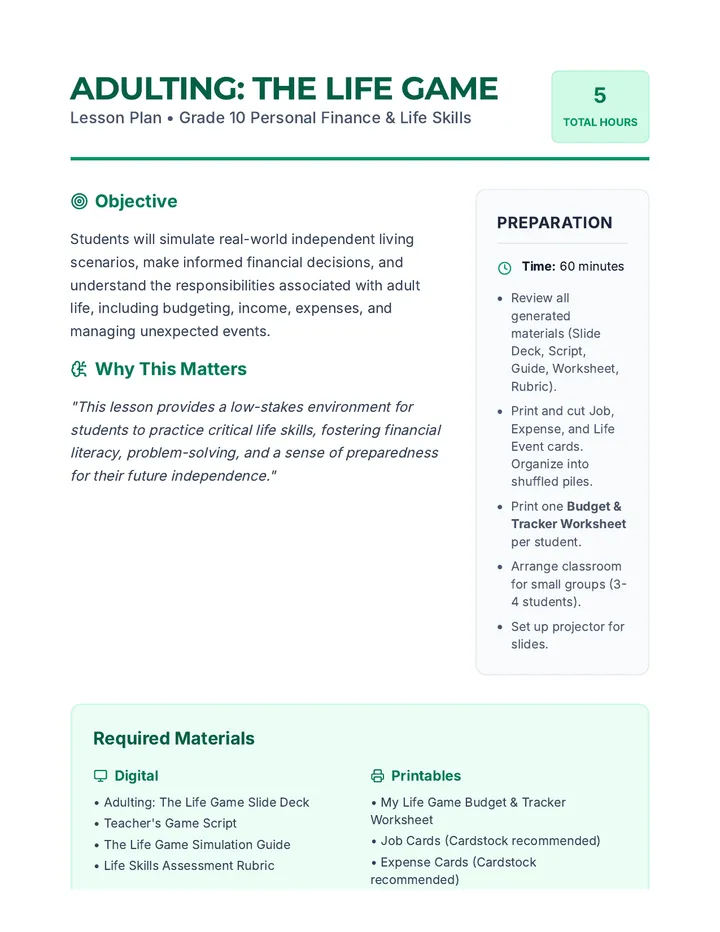
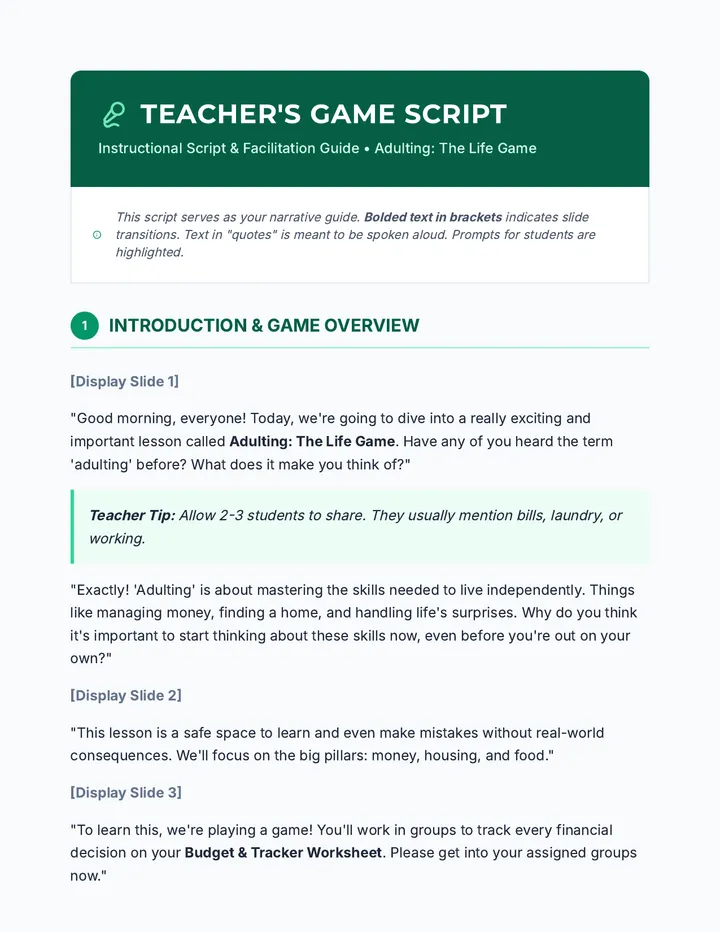
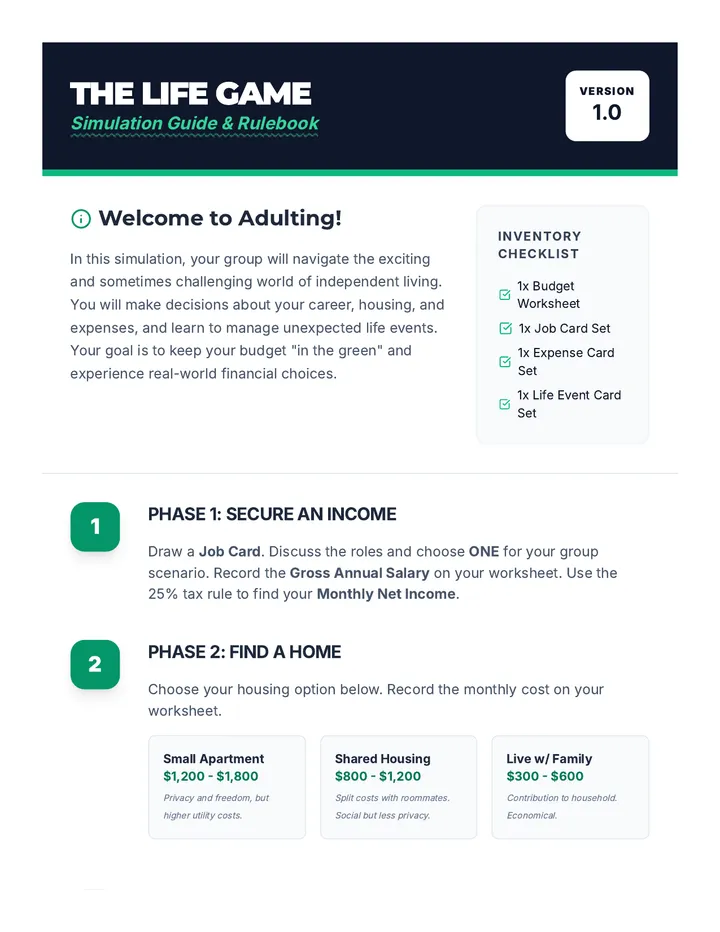
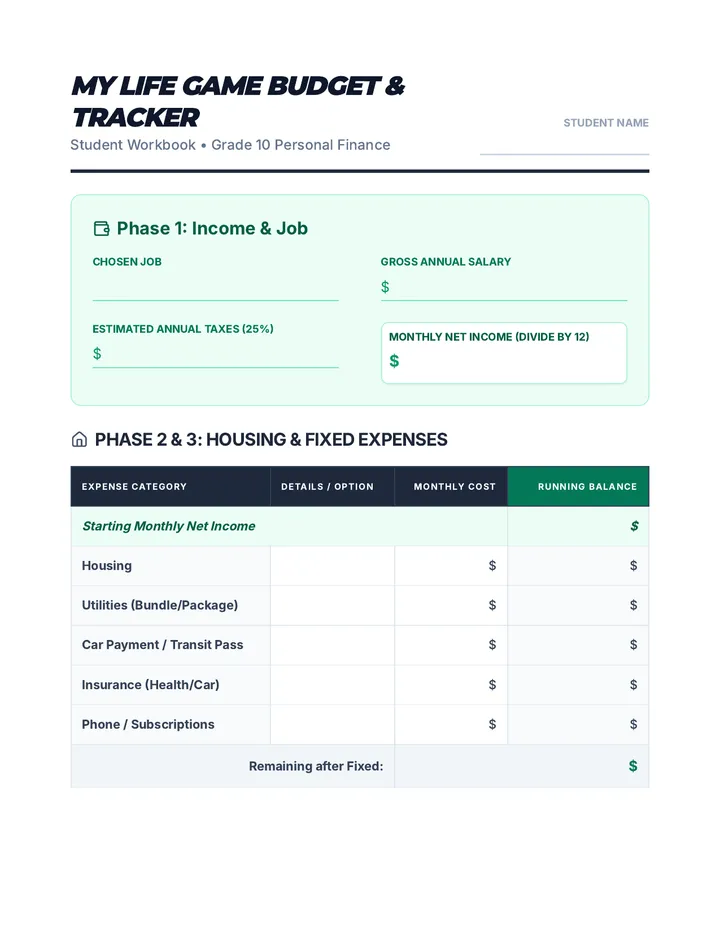
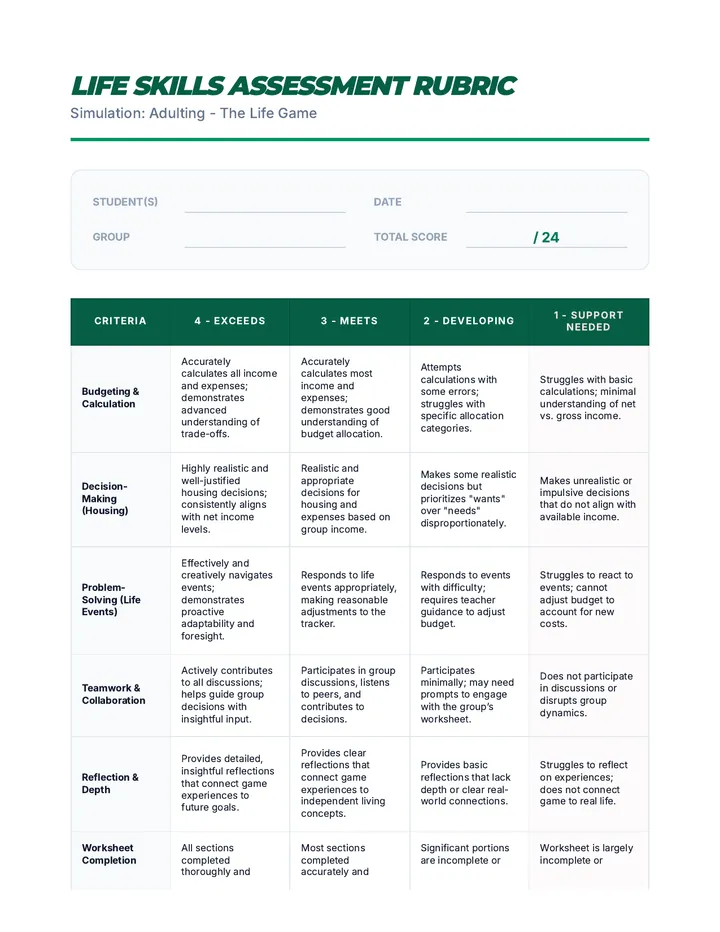
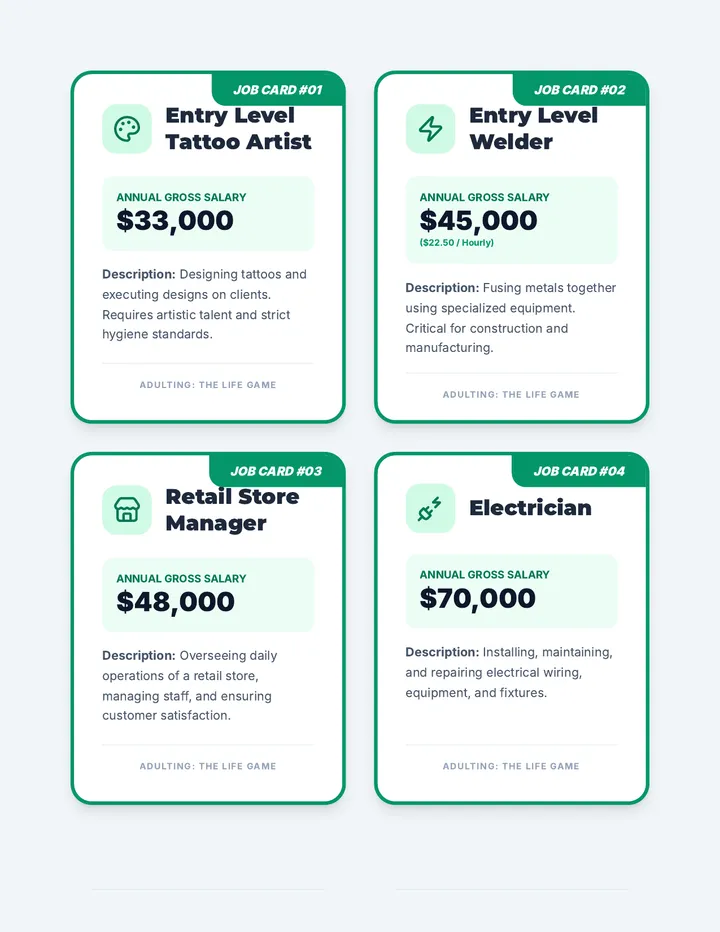
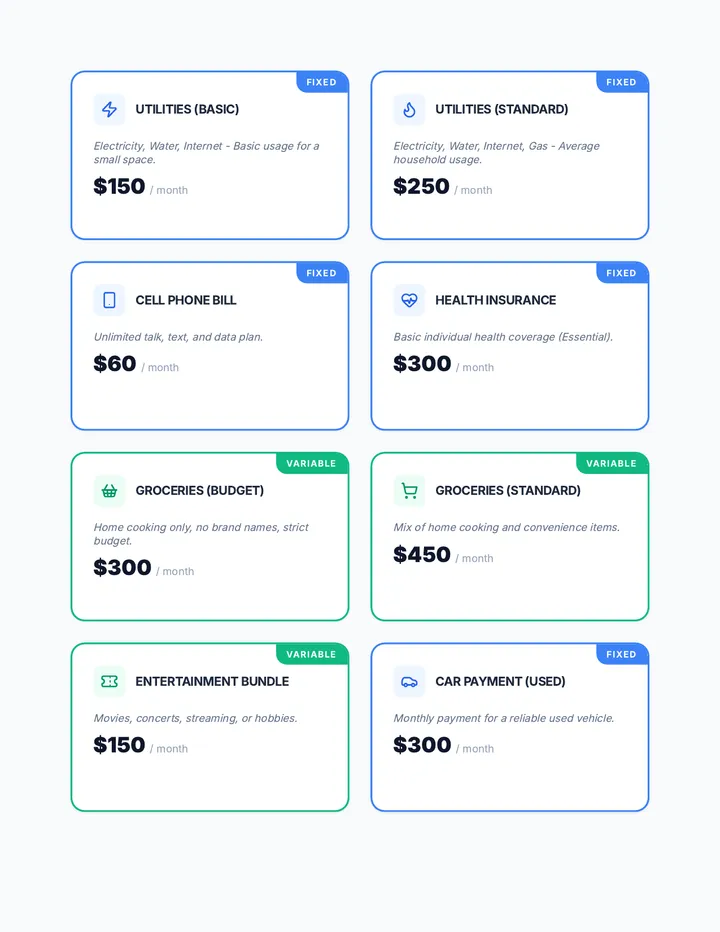
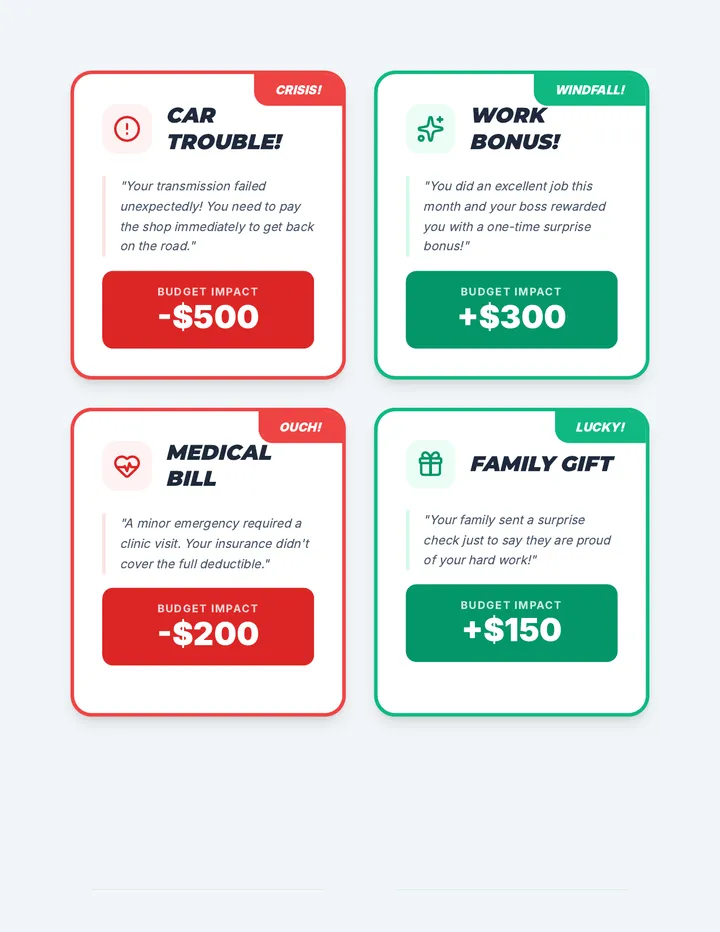
A comprehensive simulation-based lesson for 10th-grade students to practice essential adulting skills, including budgeting, career selection, and managing unexpected life events.
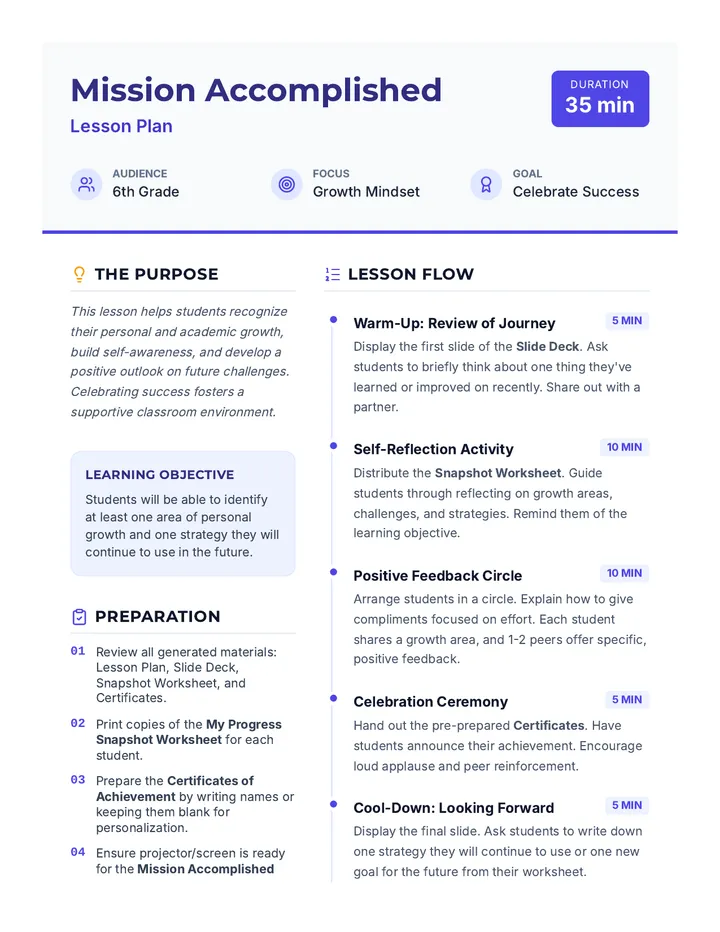
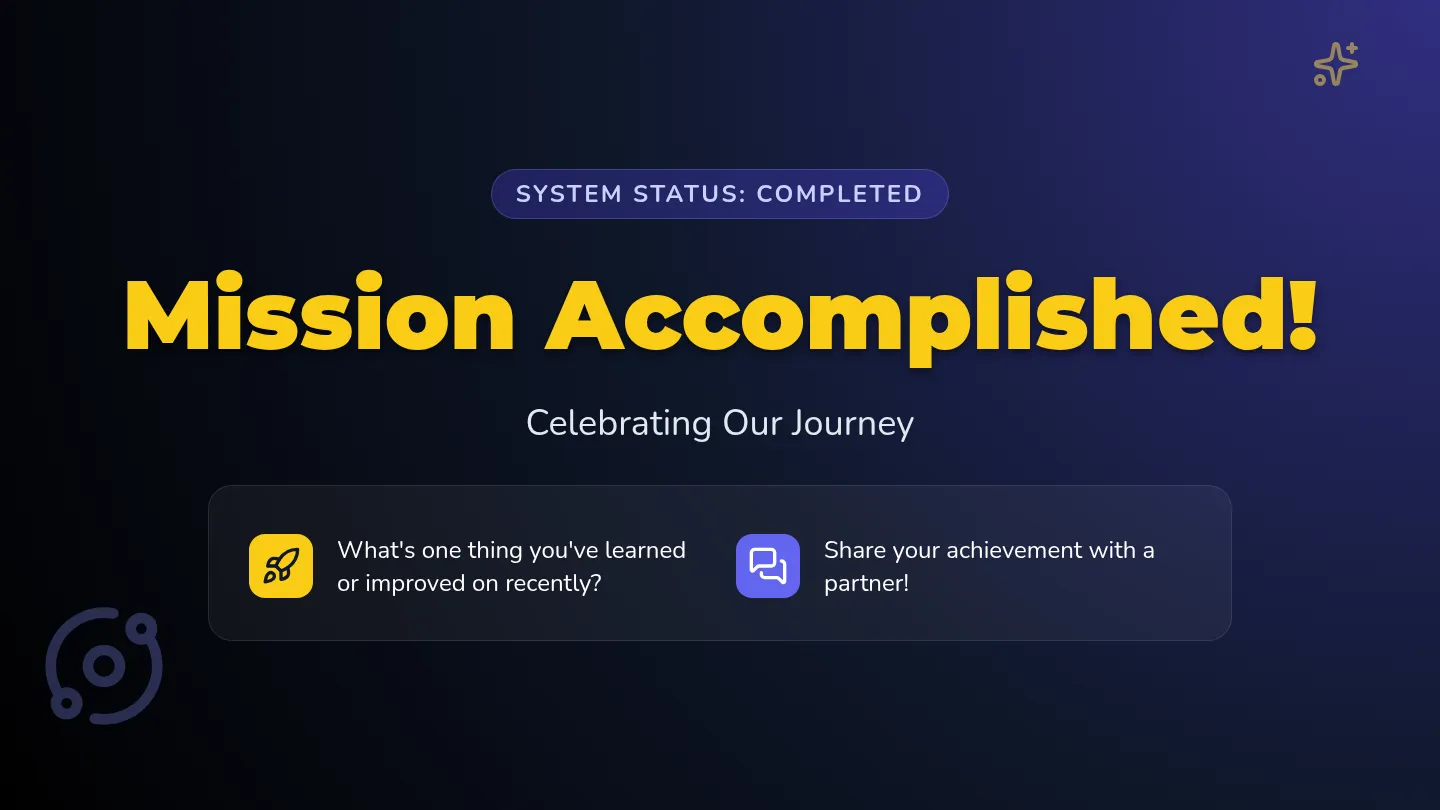
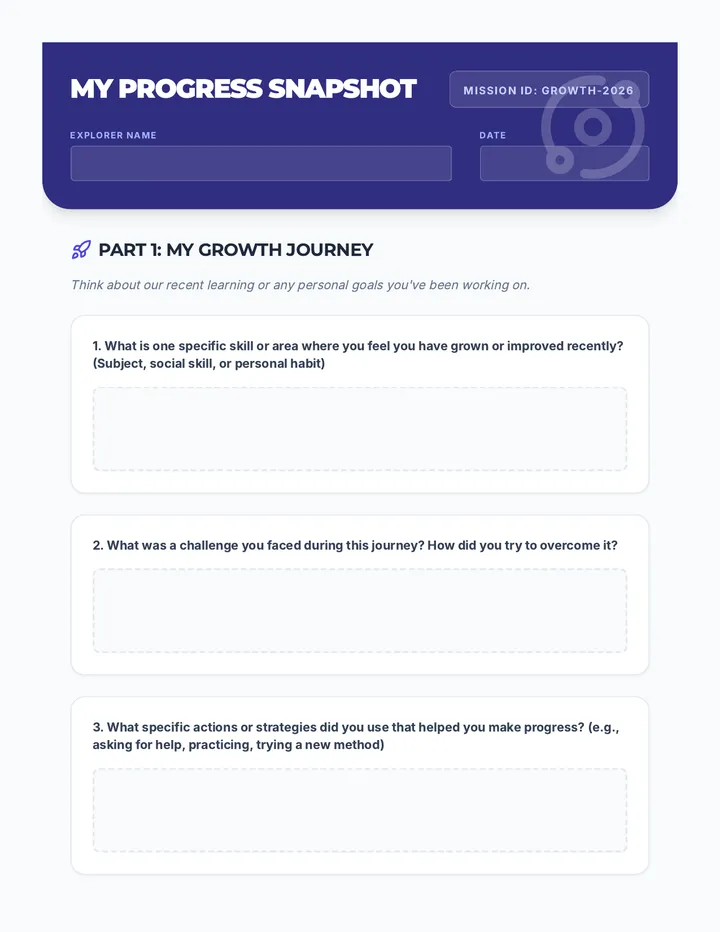
A 35-minute lesson for 6th graders to celebrate personal growth, reflect on learning journeys, and foster a positive classroom community through guided reflection and a celebration ceremony.
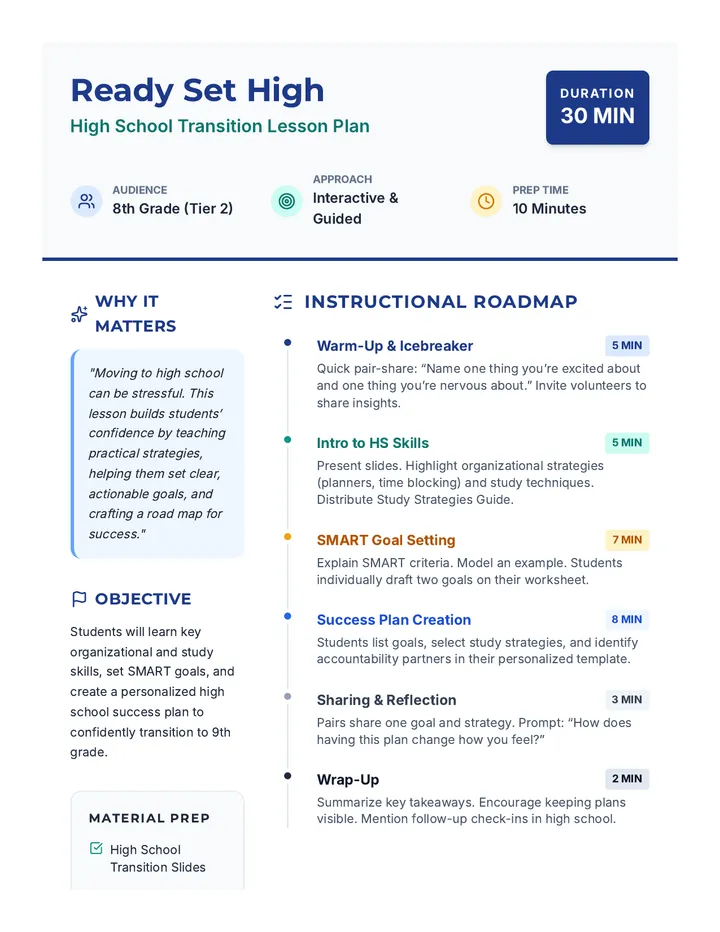
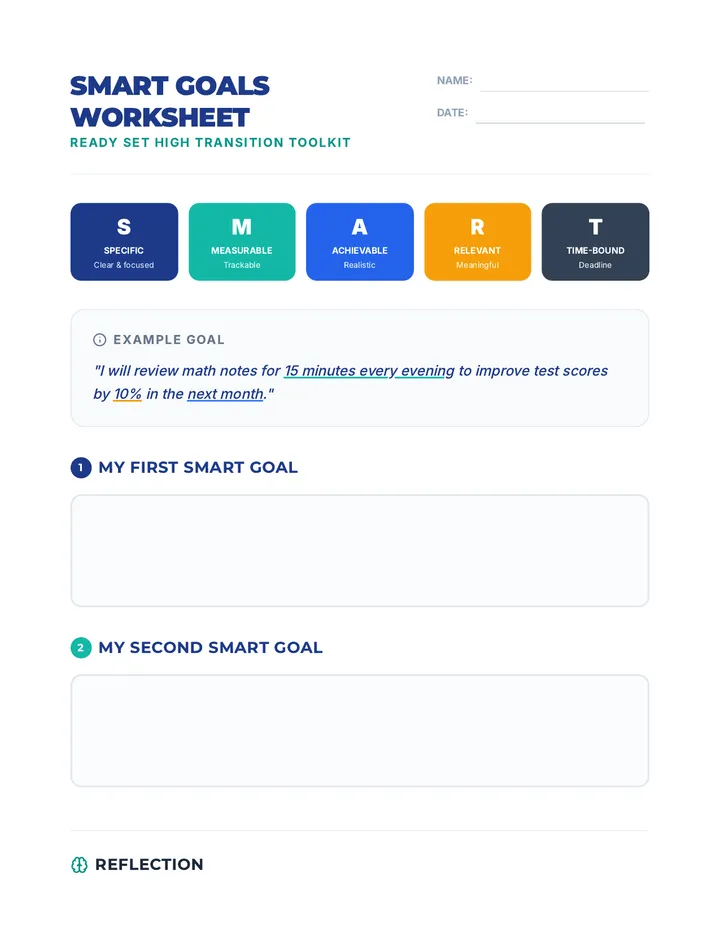
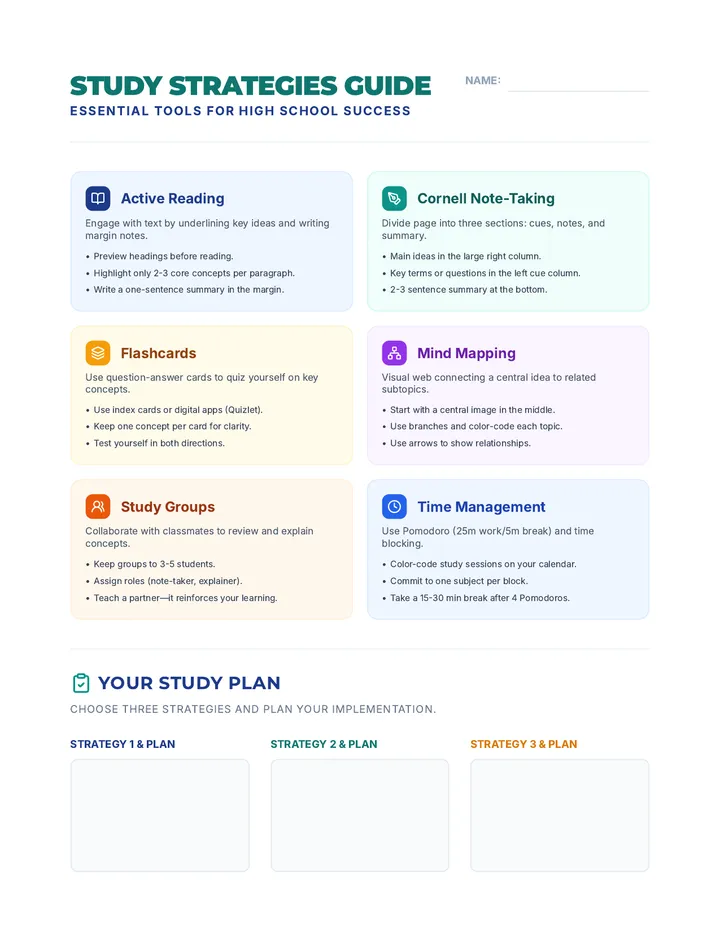
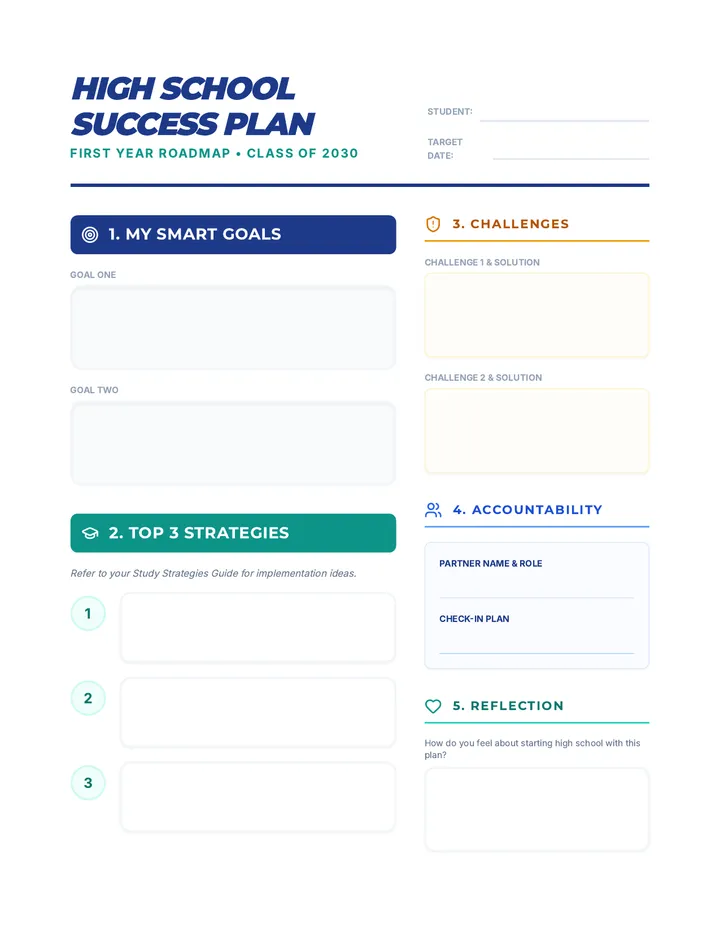
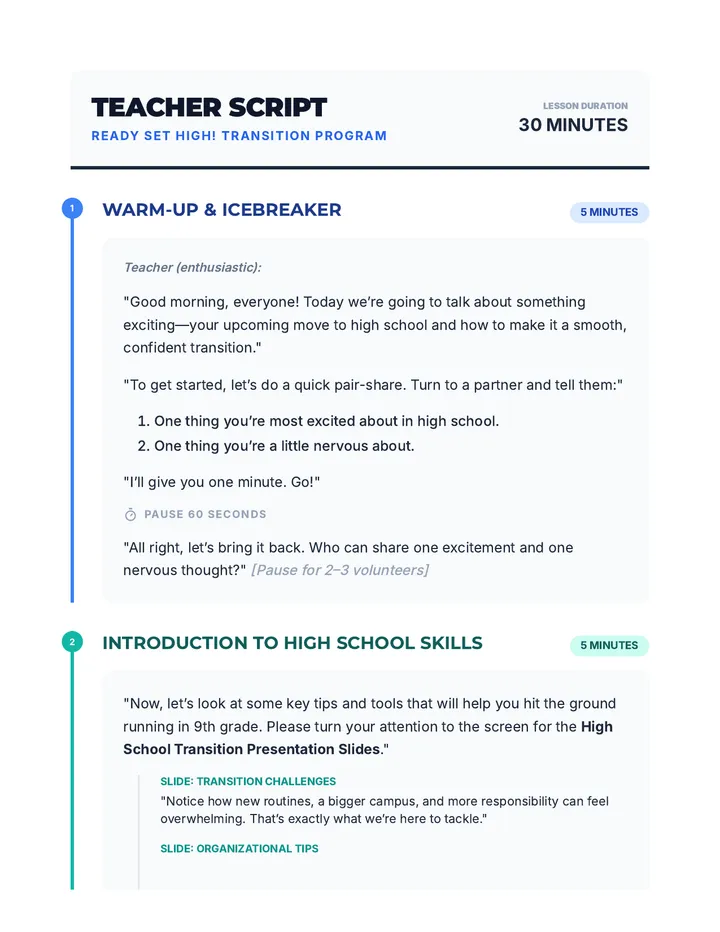
A 30-minute Tier 2 lesson for 8th graders transitioning to high school, focusing on organizational skills, study strategies, and SMART goal setting to build confidence and reduce transition anxiety.
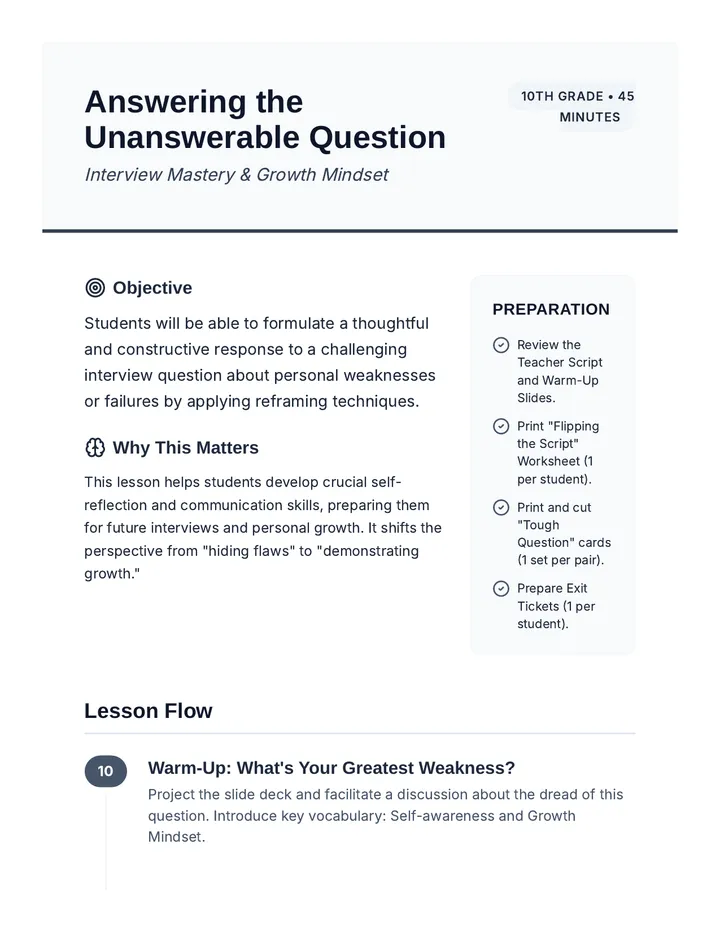
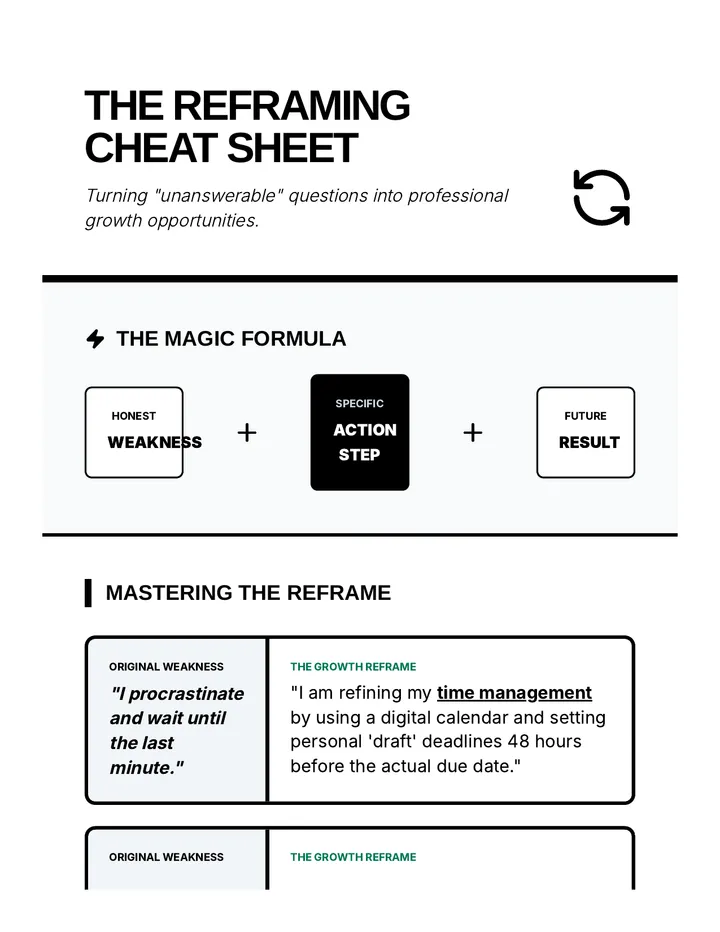
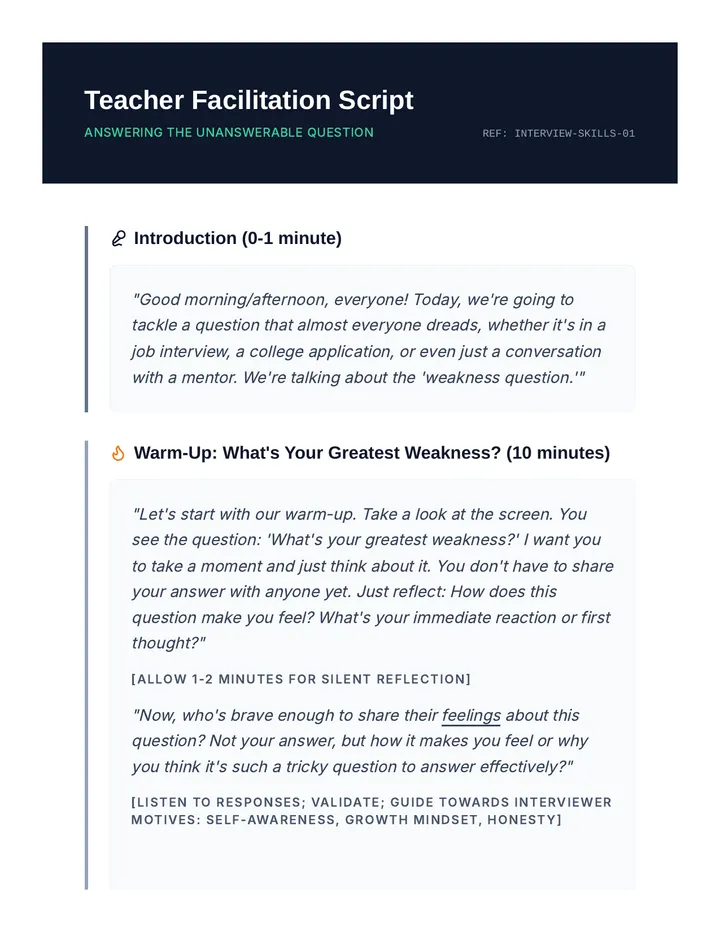
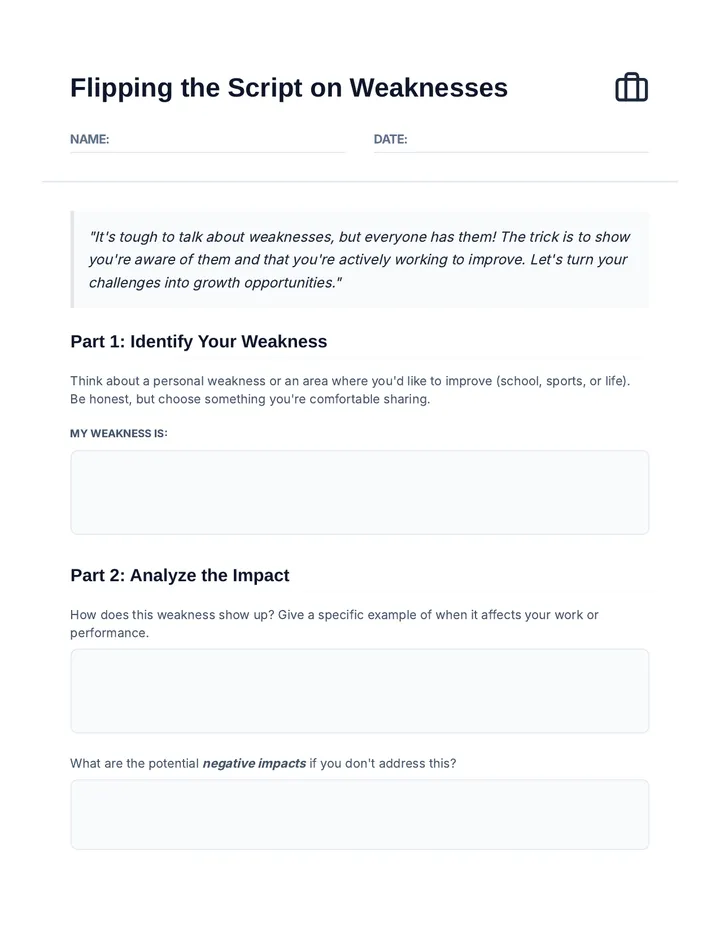
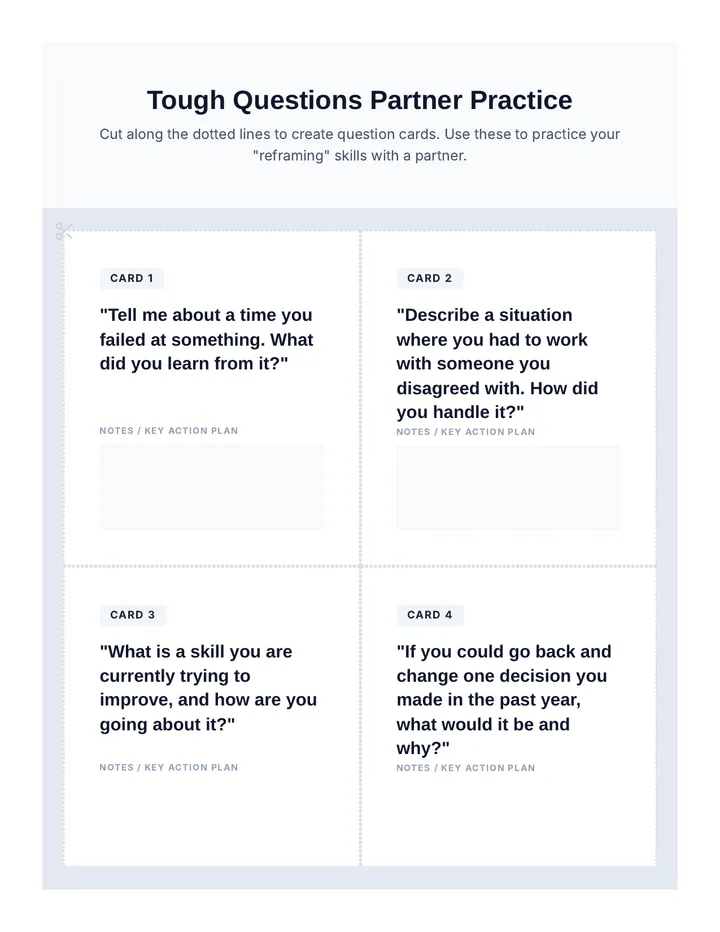
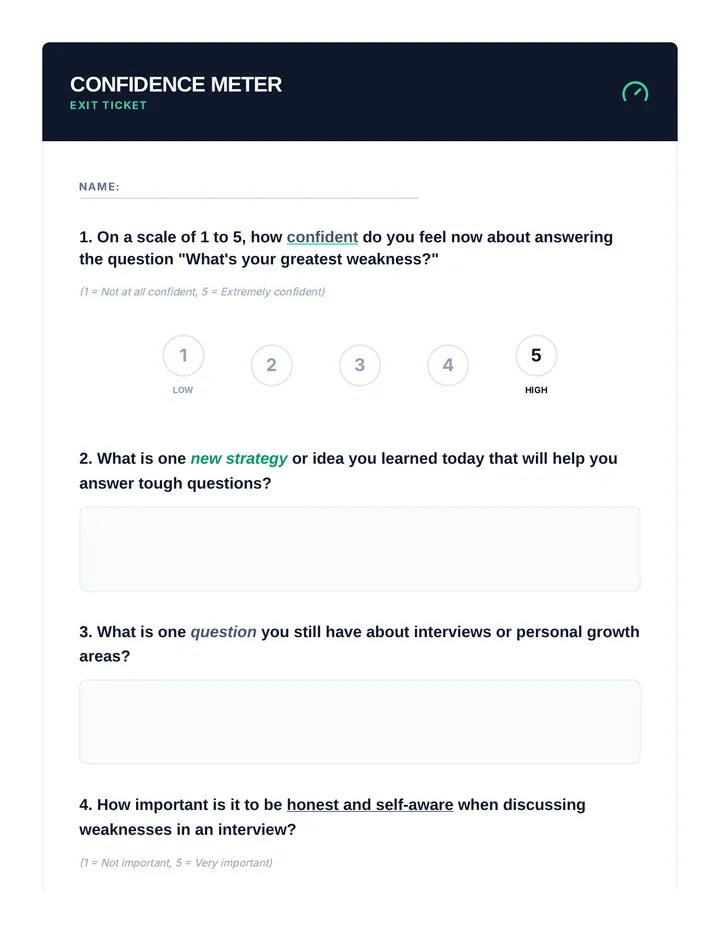
This lesson equips 10th-grade students with strategies to confidently and constructively answer challenging interview questions about personal weaknesses or failures by focusing on a growth mindset.
This lesson focuses on enhancing students' ability to manage their time effectively by accurately assessing how long tasks will take and planning accordingly. Through experiential learning and game-based activities, students will challenge their perception of time and improve their planning skills.
This lesson empowers high school seniors with essential independent living skills, covering practical aspects like personal finance, time management, and basic home care. It helps students transition confidently into adulthood, preparing them for success beyond high school.
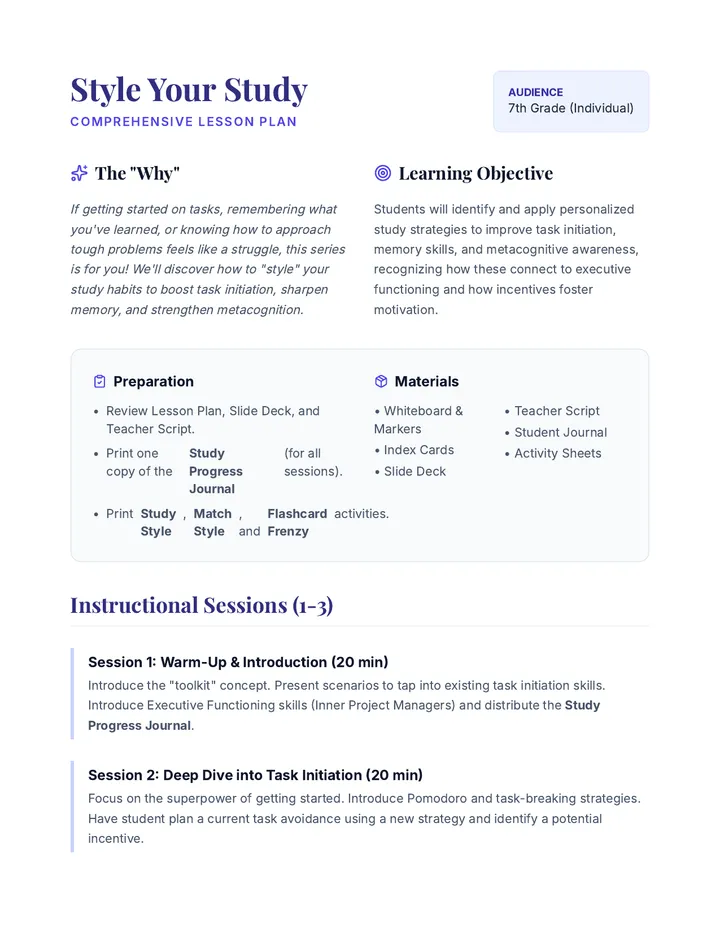
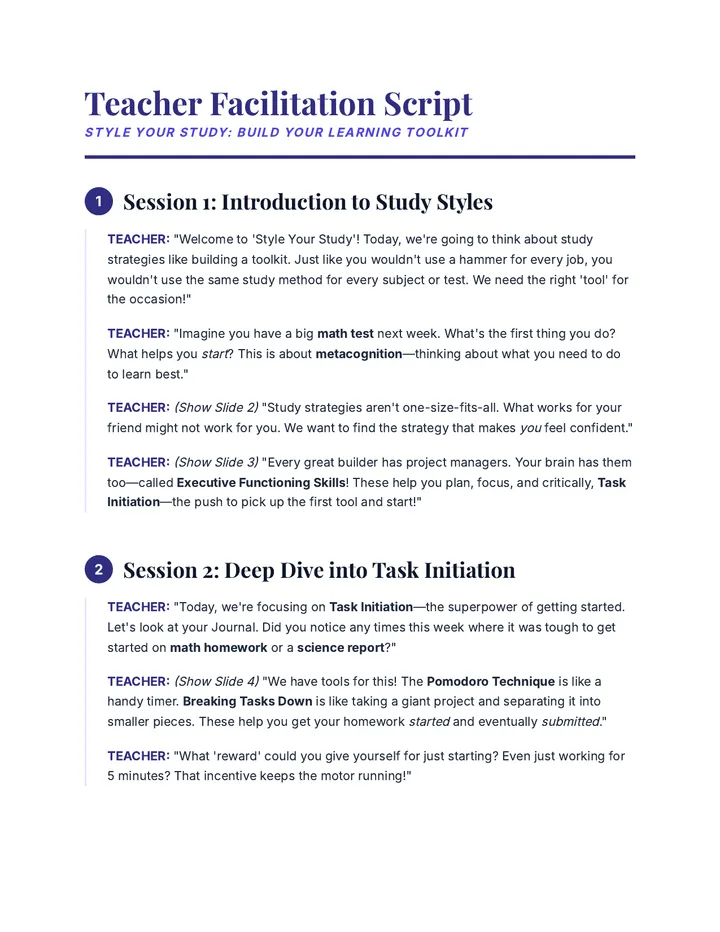
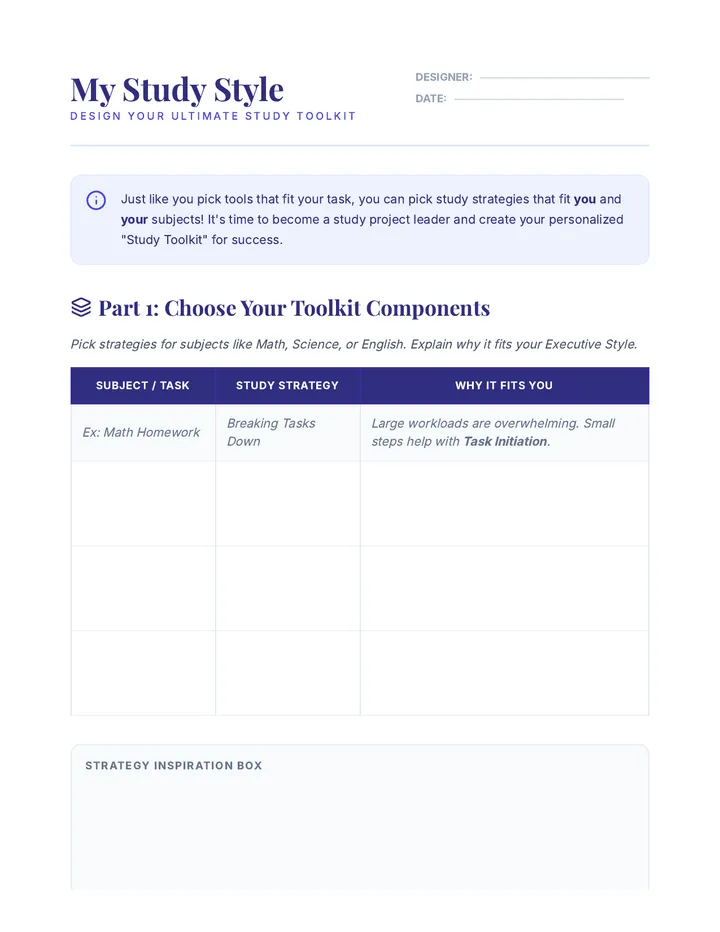
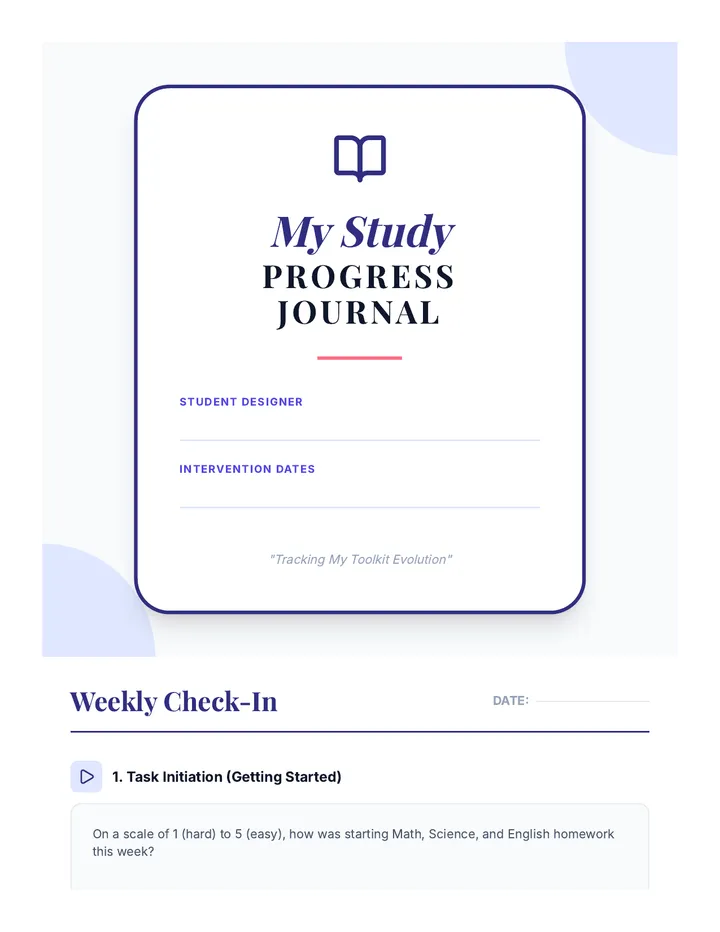
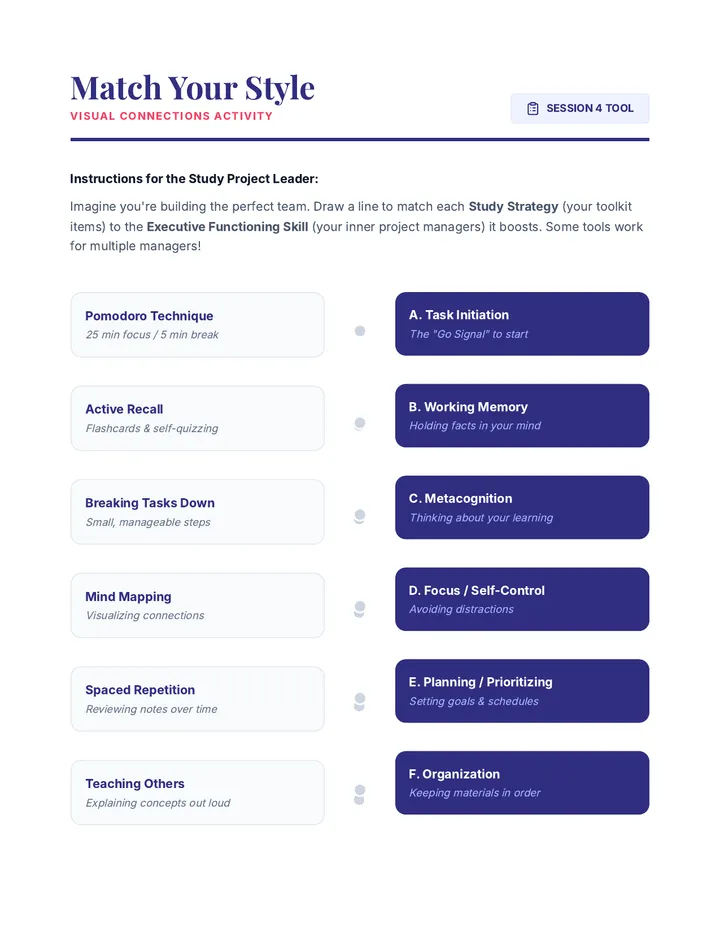
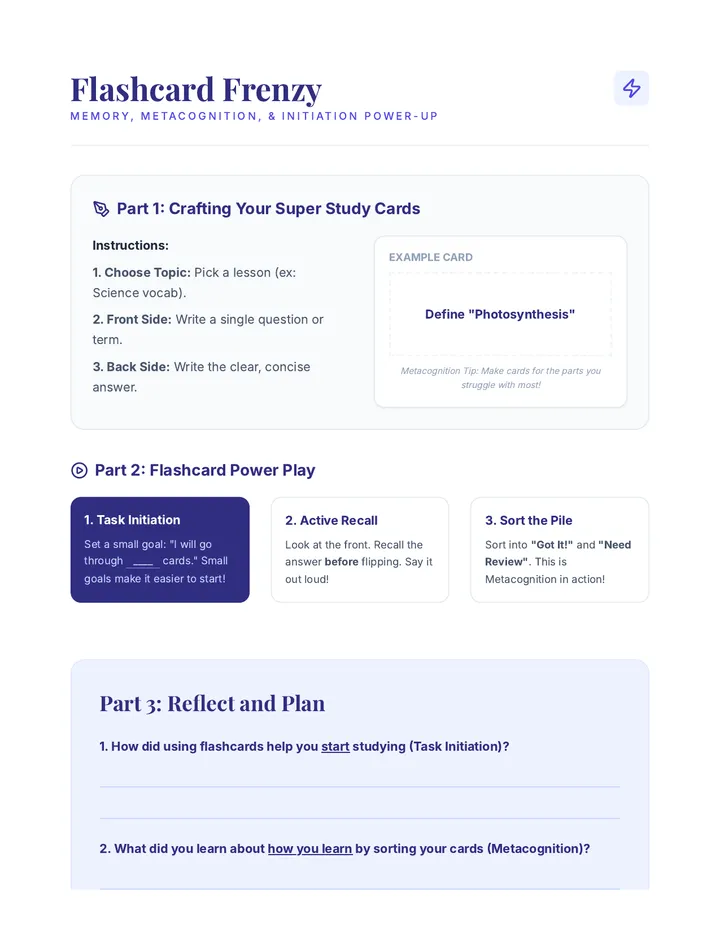
A comprehensive Tier 3 intervention for 7th-grade students to develop personalized study habits using a fashion and toolkit theme. Over 6 sessions, students explore executive functioning skills like task initiation, memory, and metacognition while tracking progress in a personalized journal.
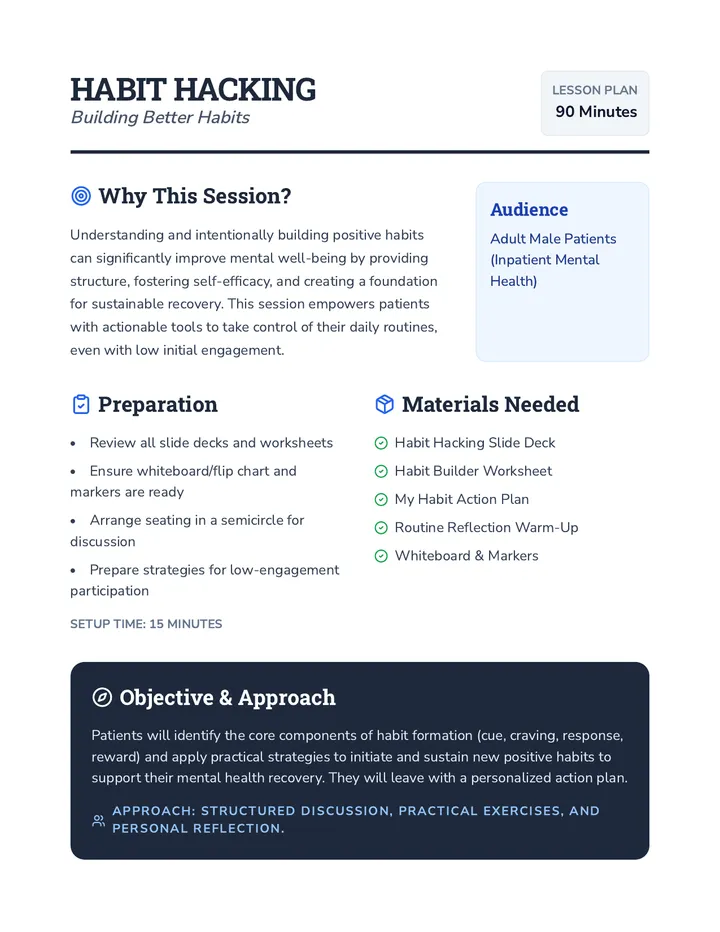
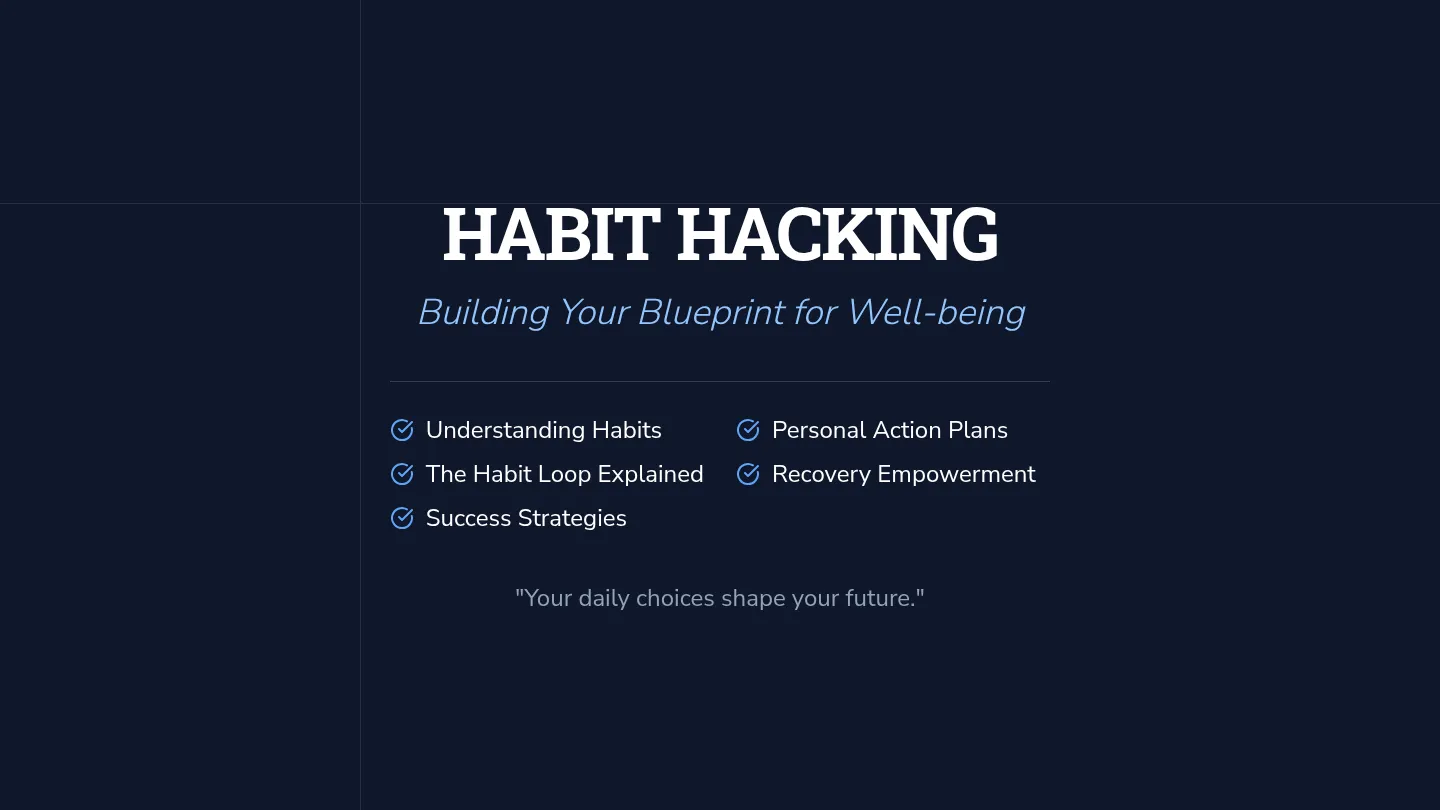
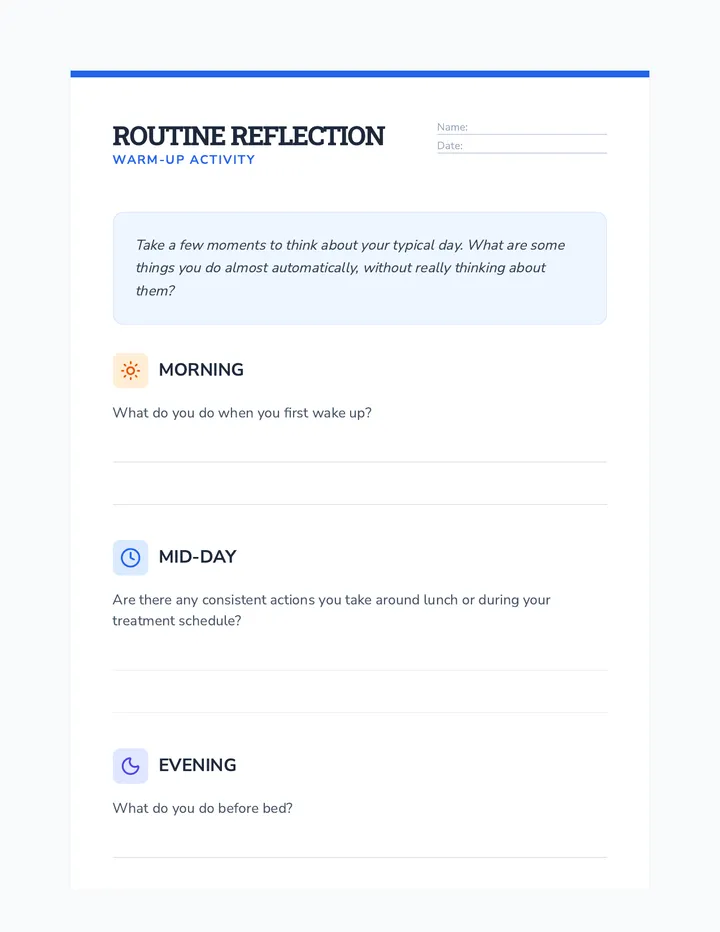
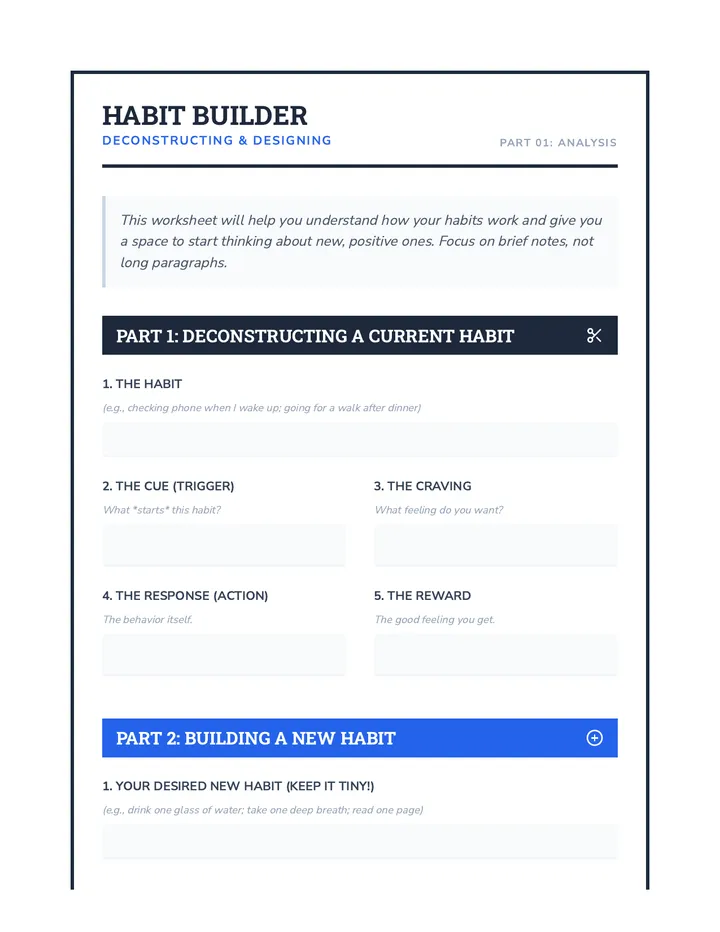
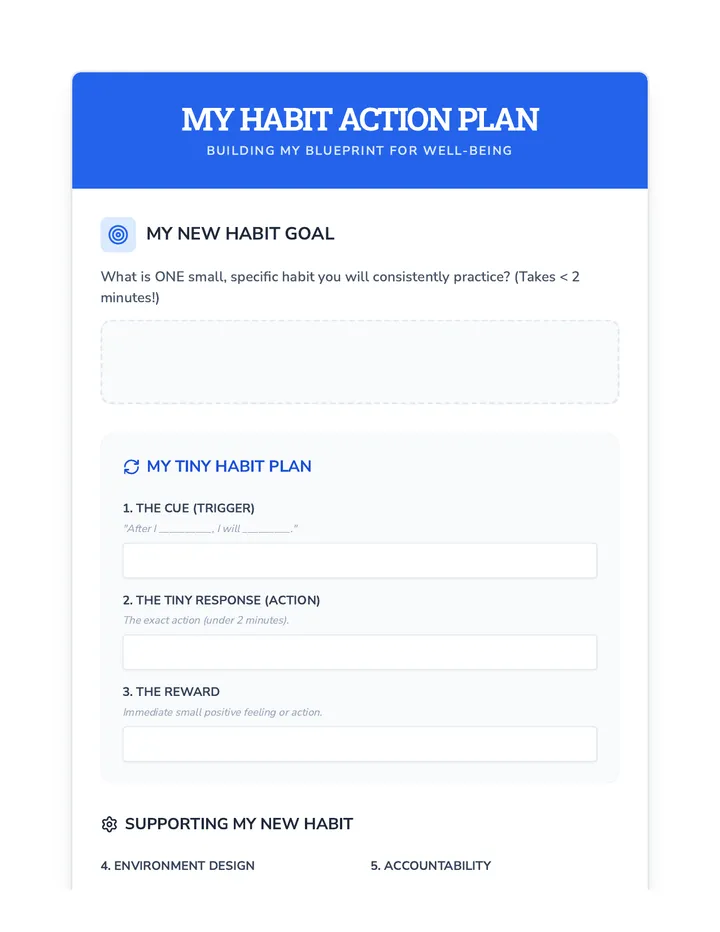
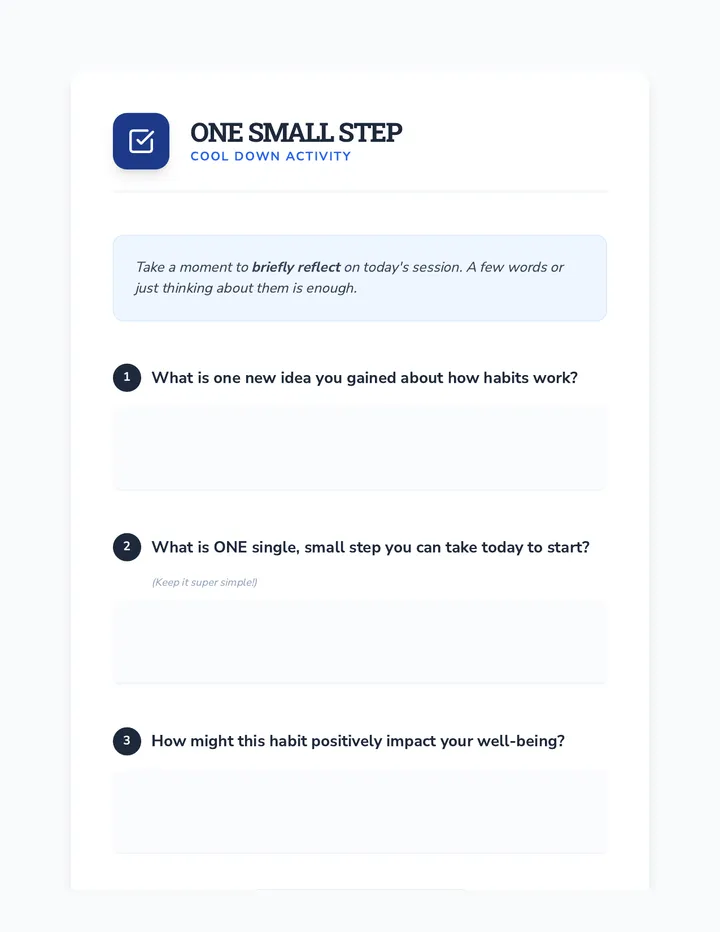
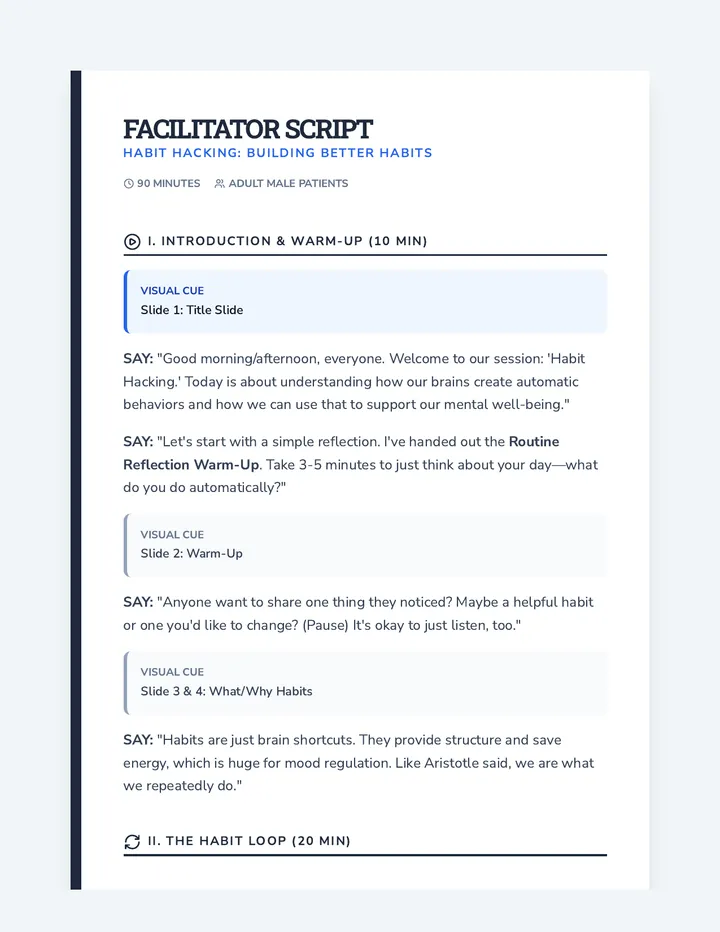
A 90-minute psychoeducation session for adult male patients in inpatient mental health, focusing on the science of habit formation and practical strategies for building positive routines to support recovery.
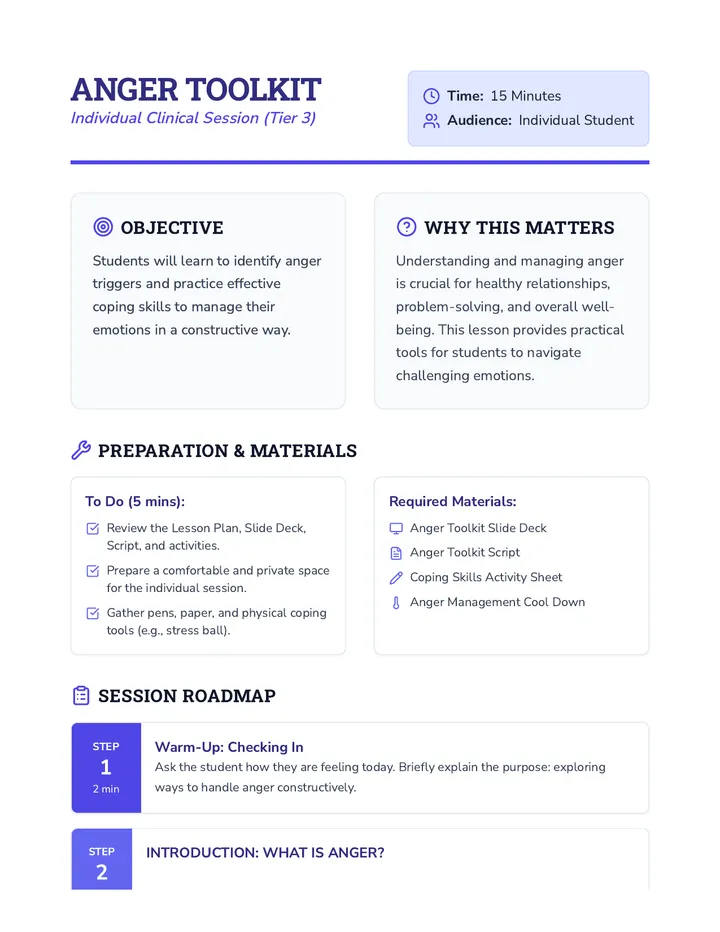
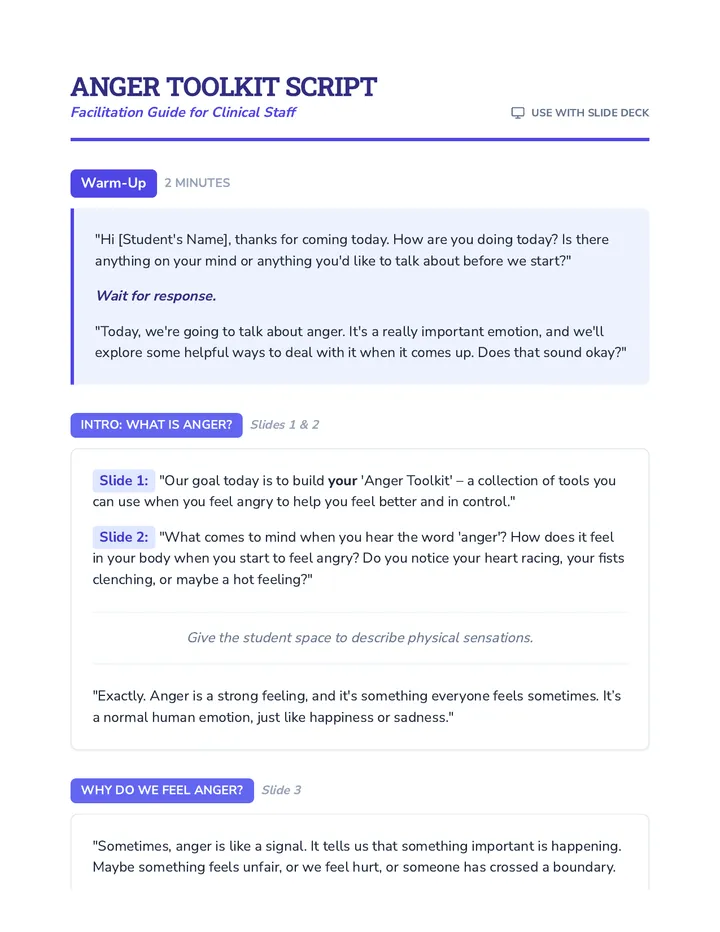
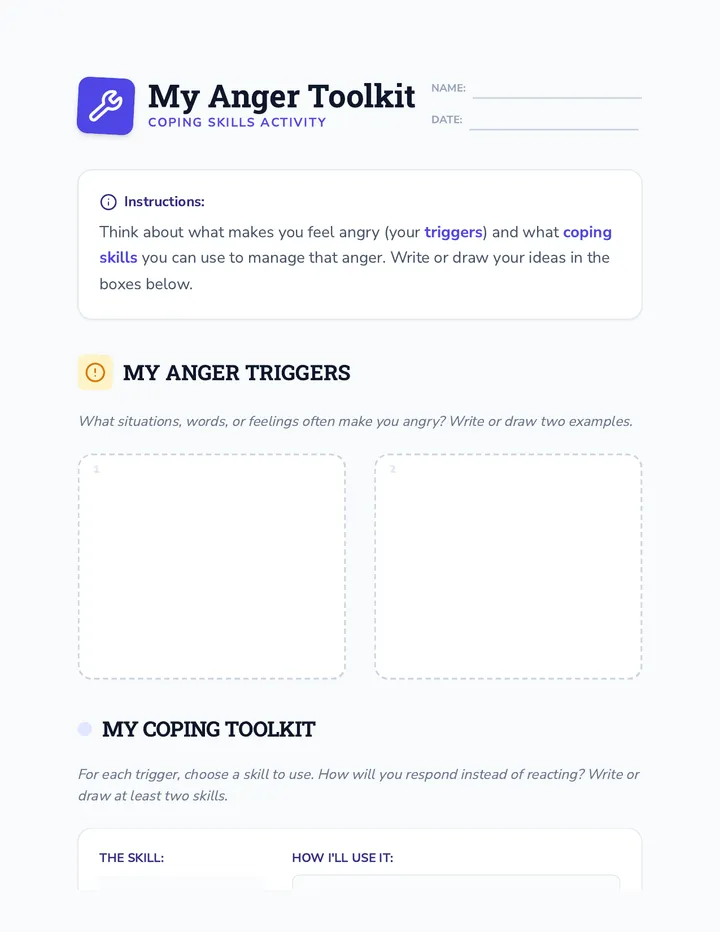
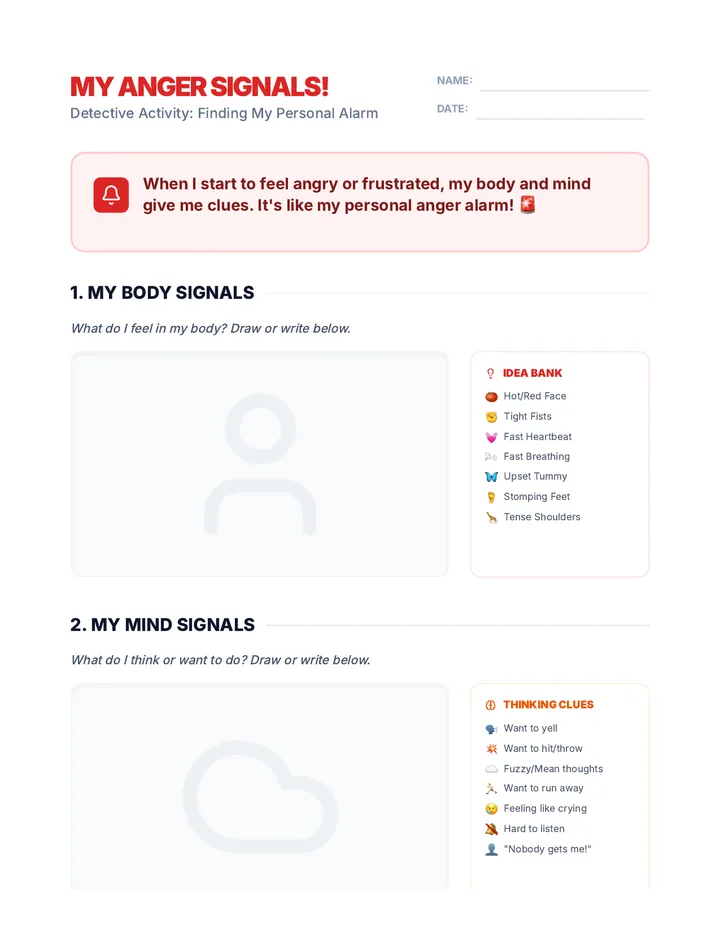
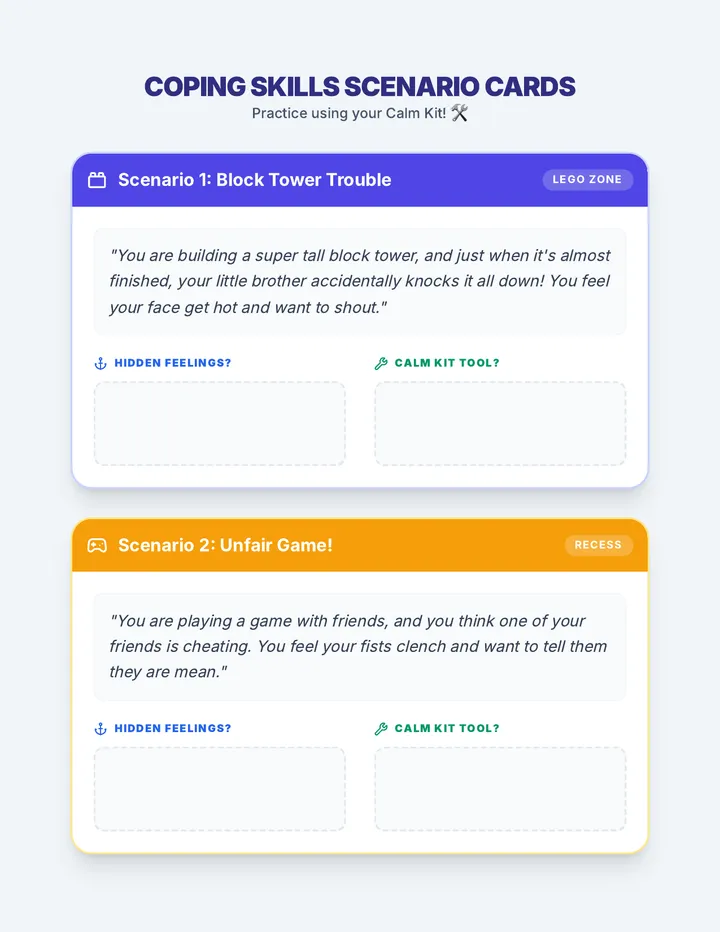
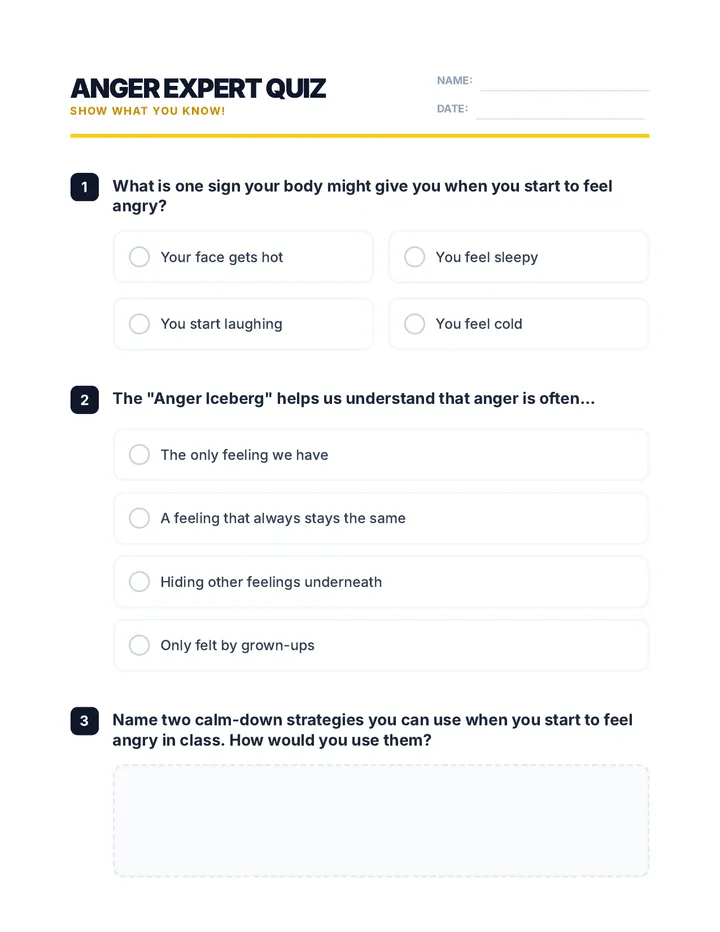
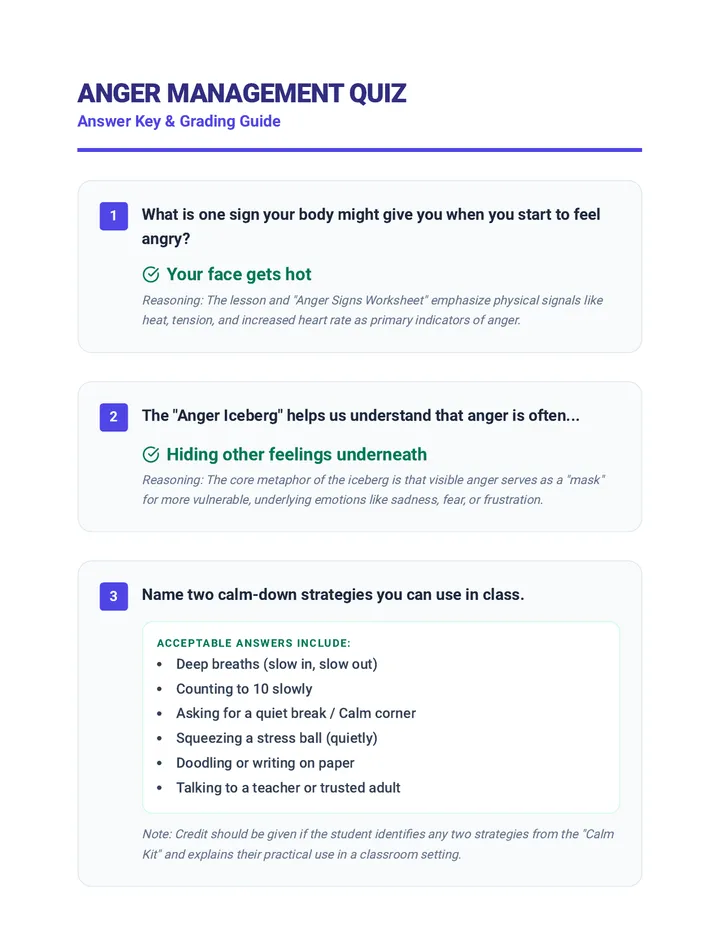
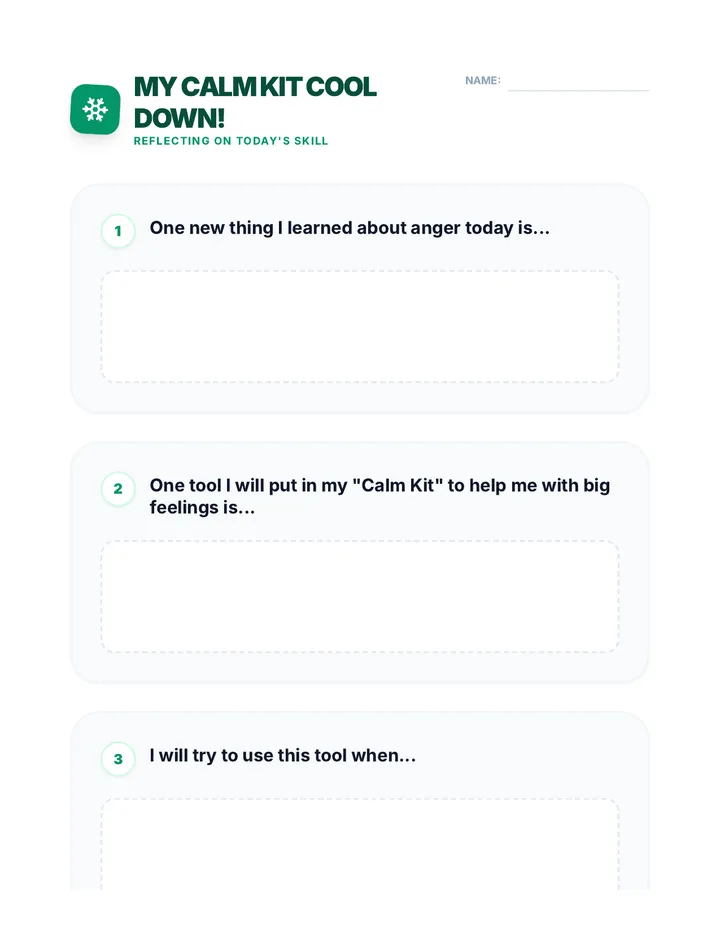
A 15-minute Tier 3 clinical lesson designed to equip individual students with practical anger coping strategies, trigger identification, and emotional regulation tools.
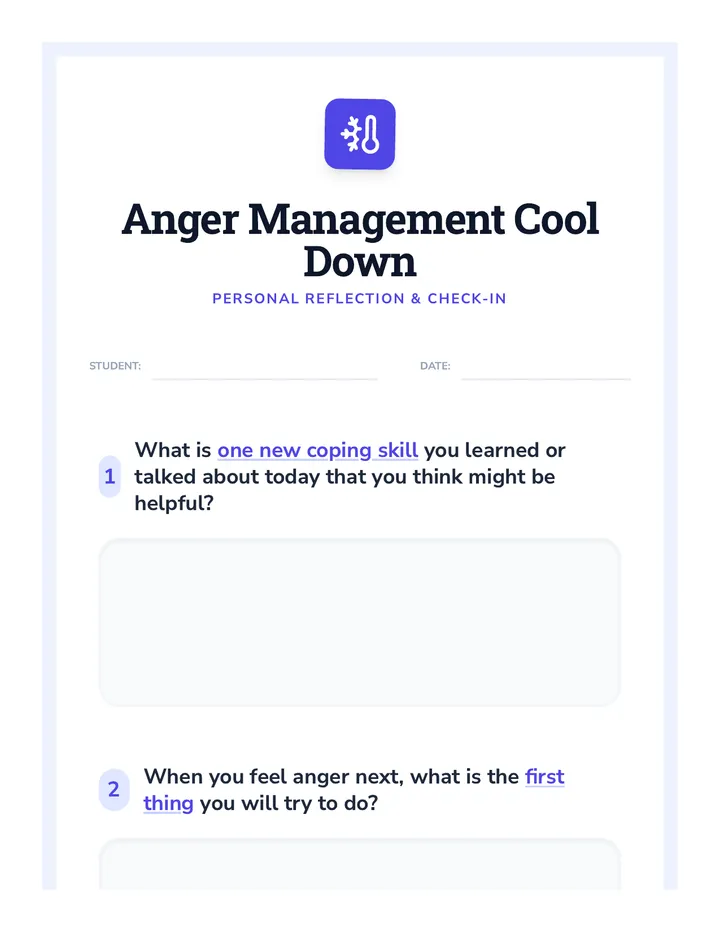
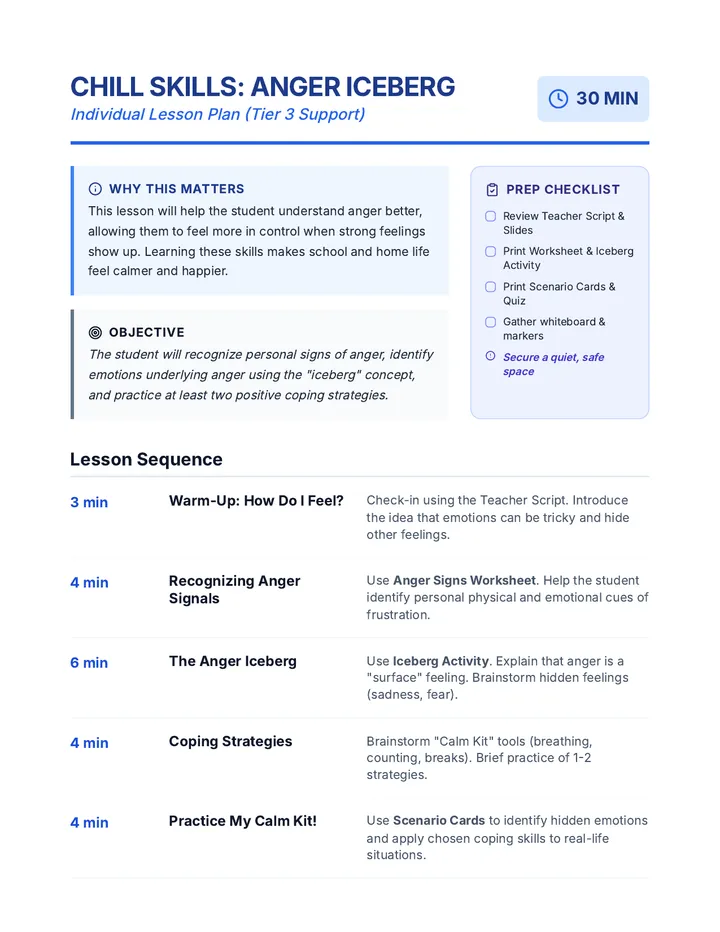
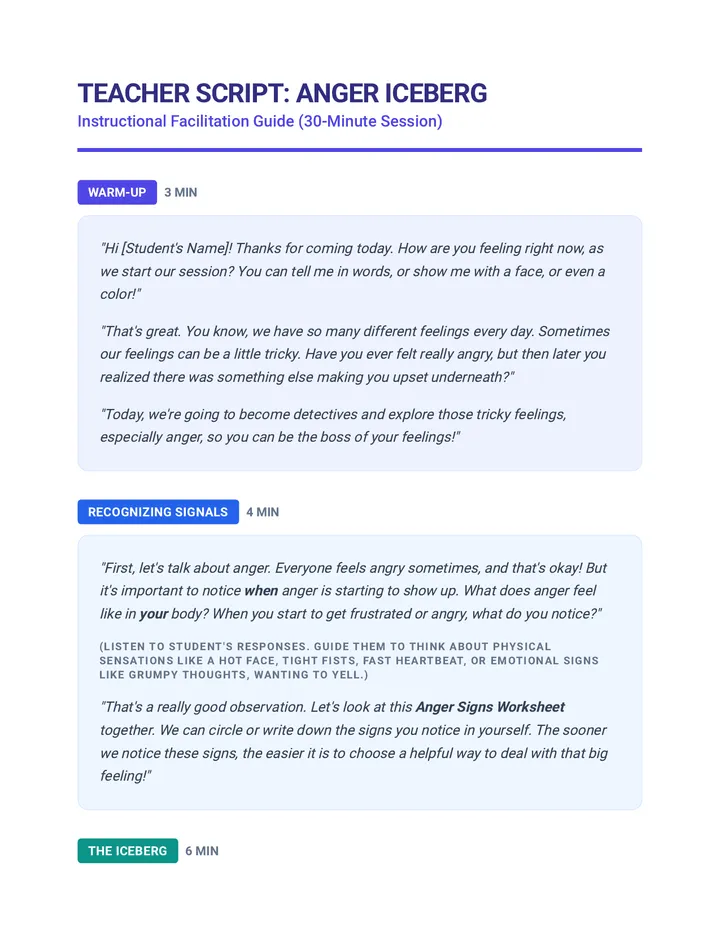
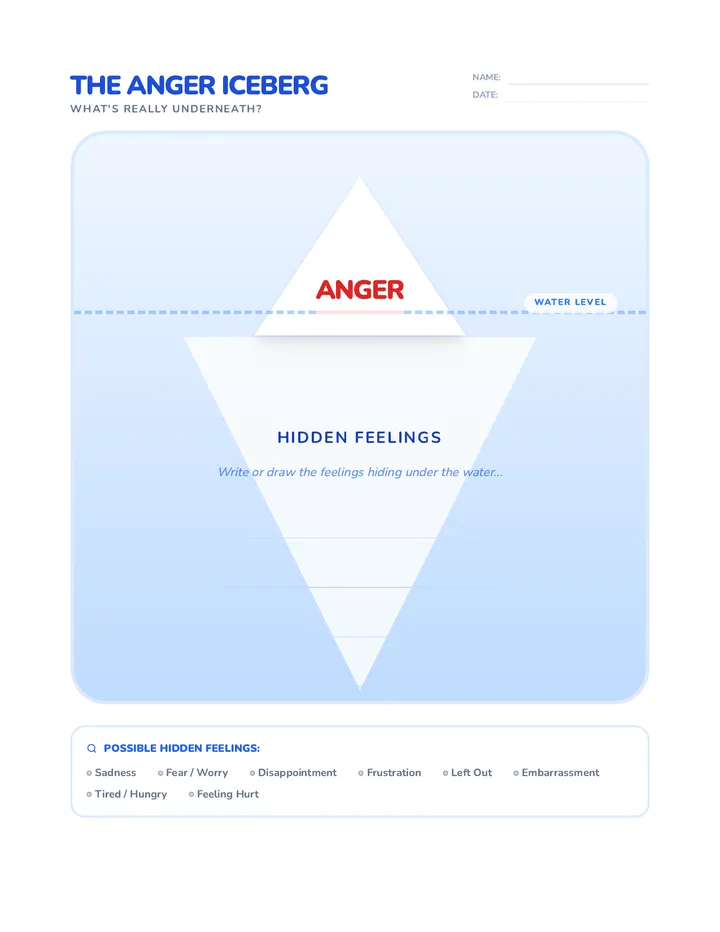
A 30-minute individual Tier 3 lesson for 3rd-grade students focused on identifying anger signals, understanding underlying emotions through the anger iceberg concept, and practicing coping strategies.
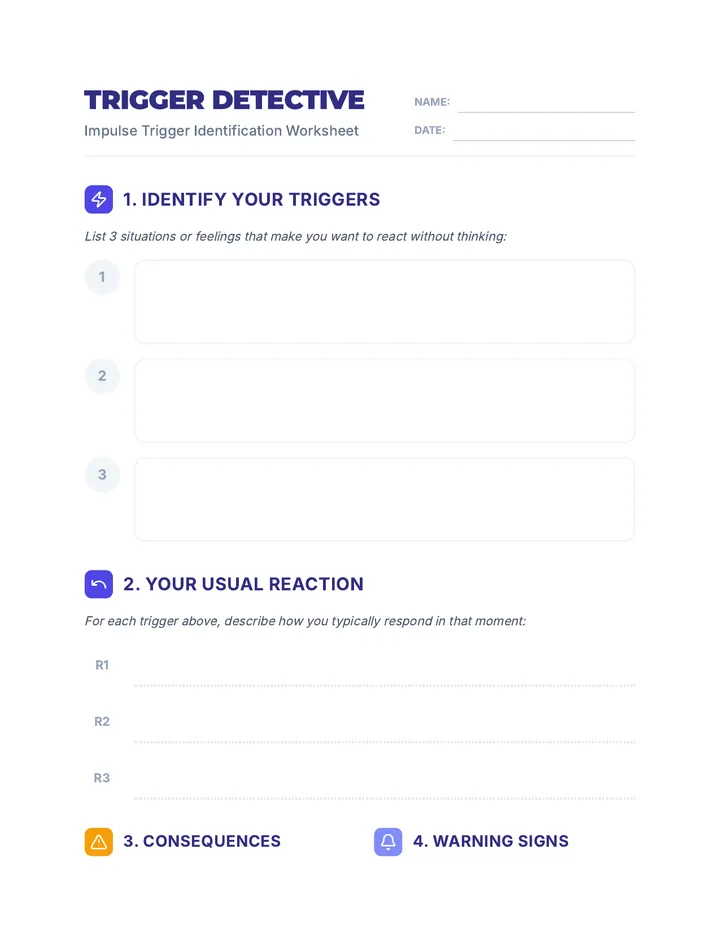
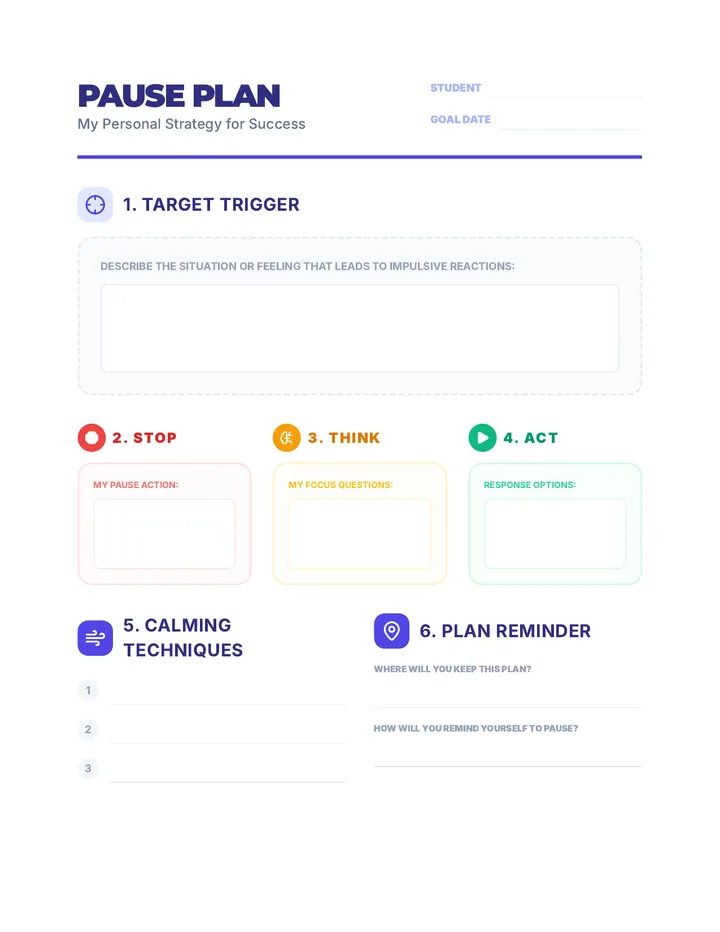
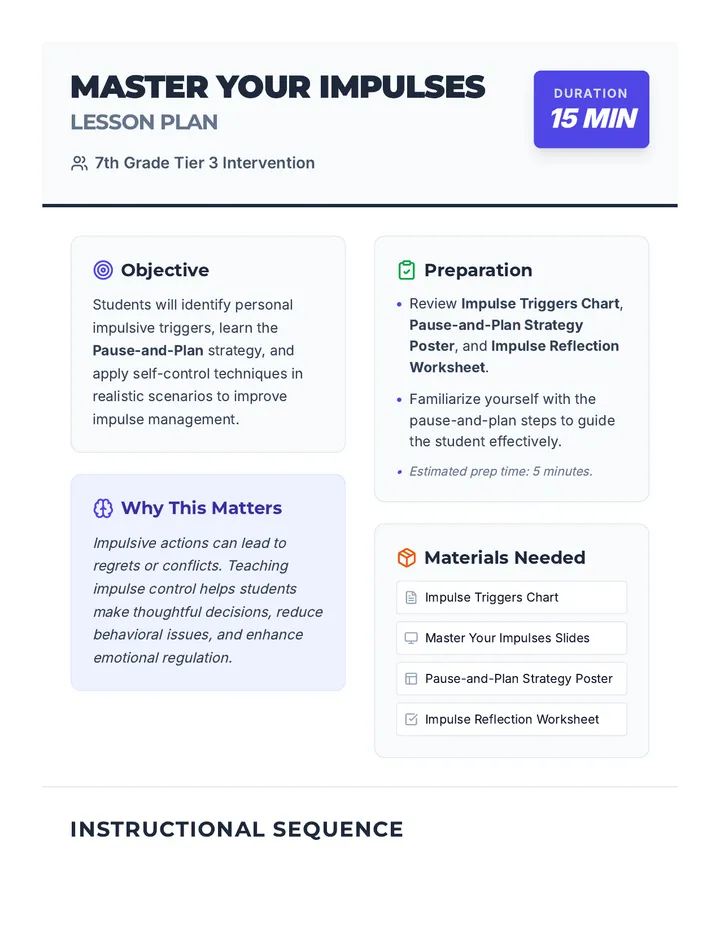
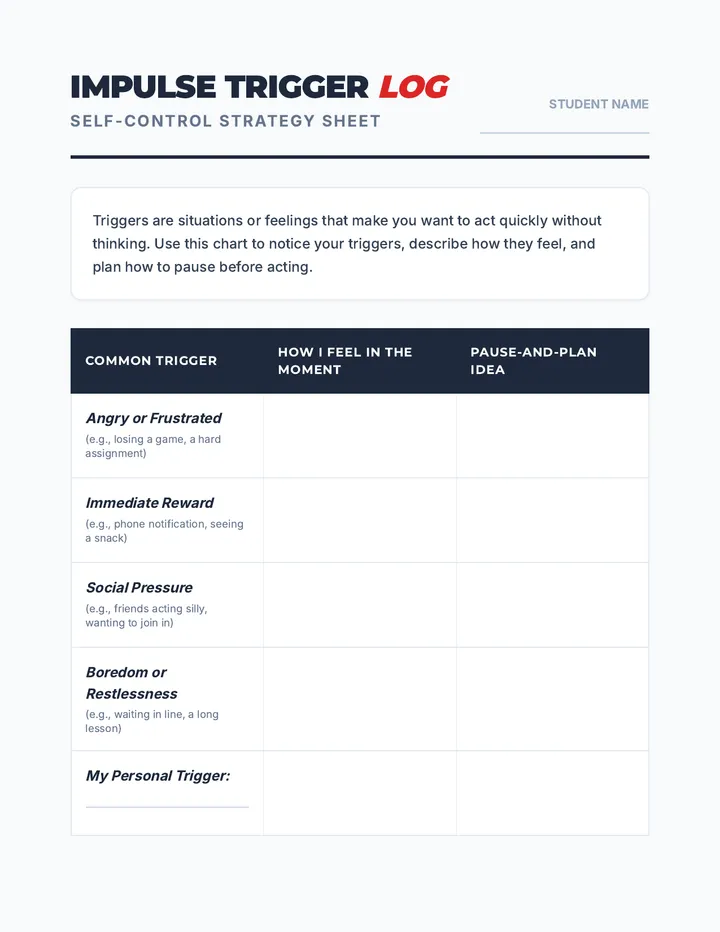
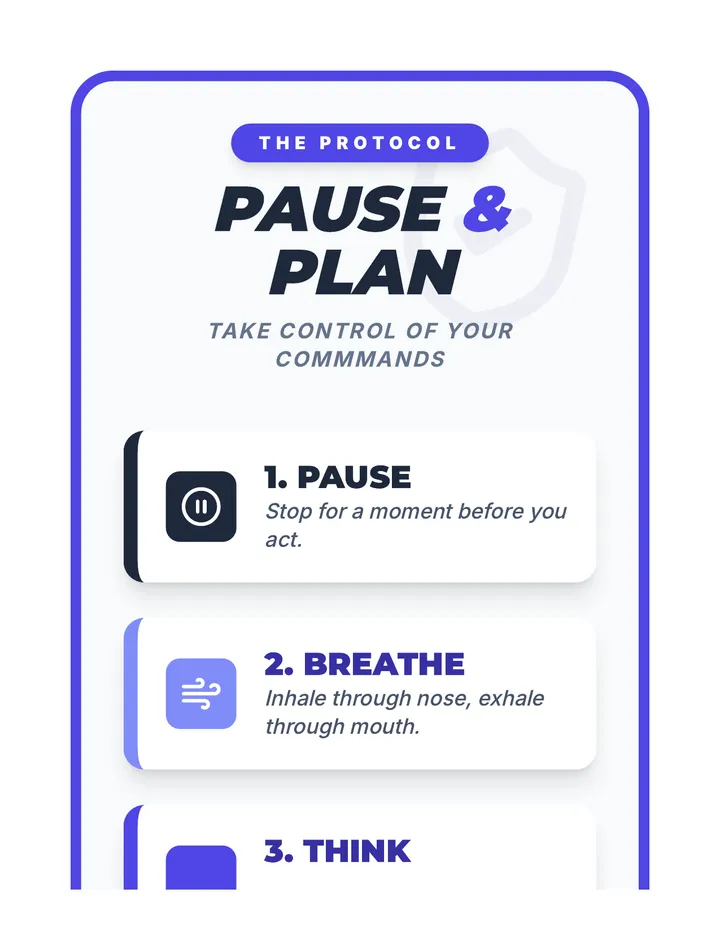
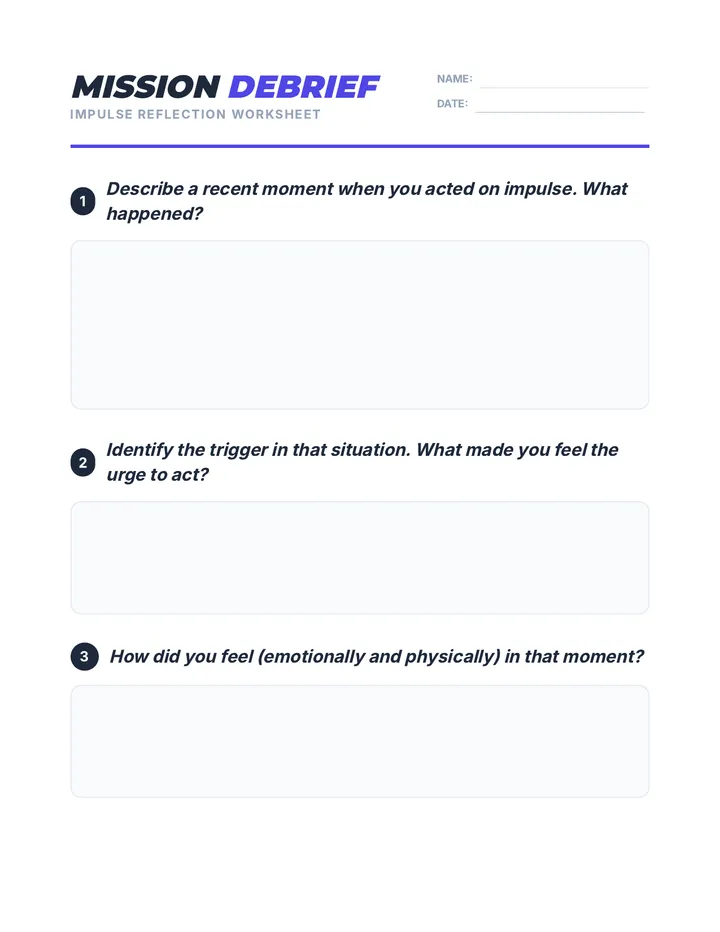
A focused 15-minute Tier 3 intervention for 7th graders to identify impulse triggers and master the Pause-and-Plan strategy for better self-regulation.
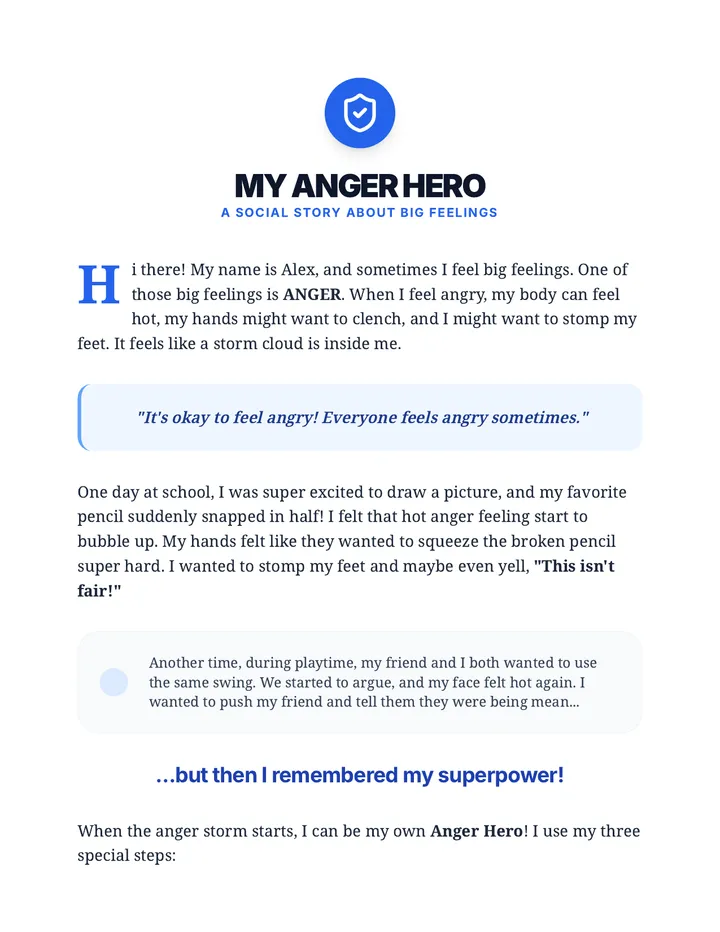
A comprehensive lesson for 2nd graders to identify, understand, and manage anger through reading, discussion, role-play, and reflective activities.
A 30-minute counseling session for 4th and 5th graders to introduce the Zones of Regulation framework and help students identify and understand their 'big feelings.' Students will learn to categorize emotions into four color-coded zones to improve emotional literacy and self-regulation.
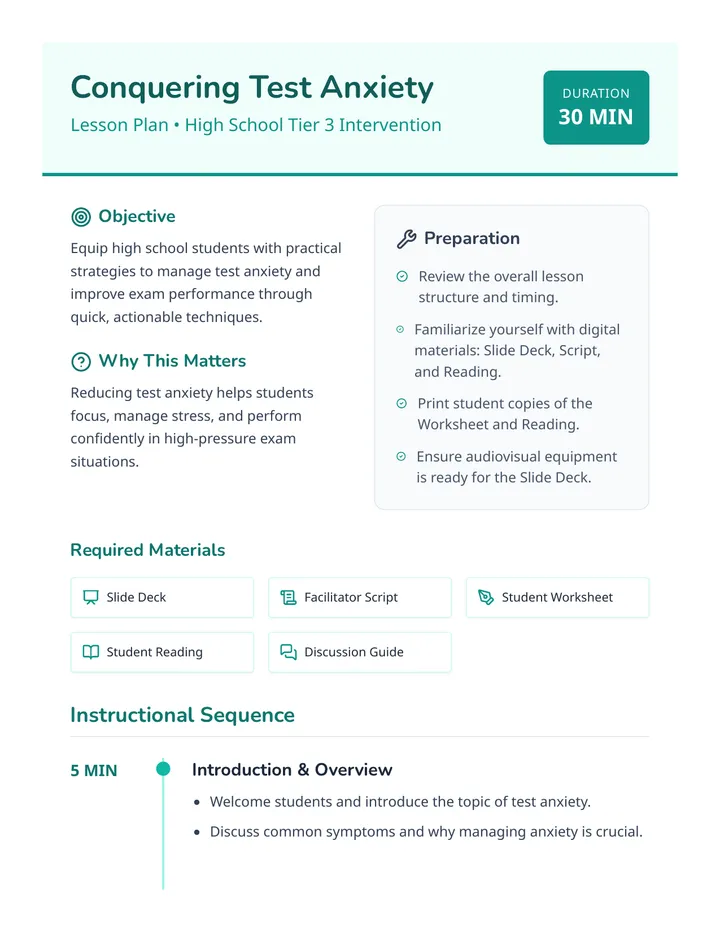
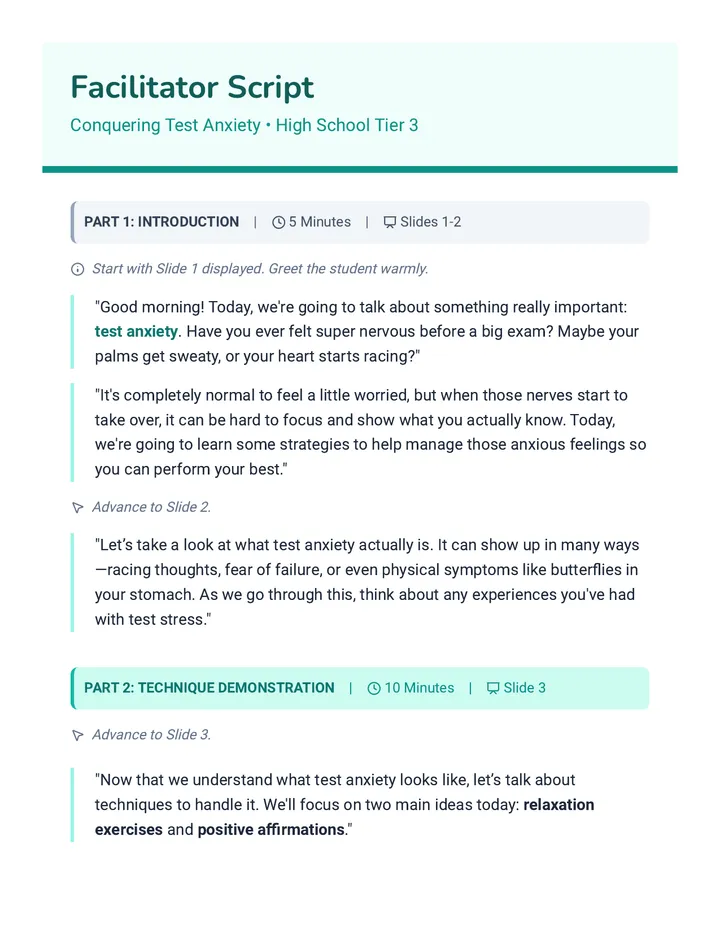
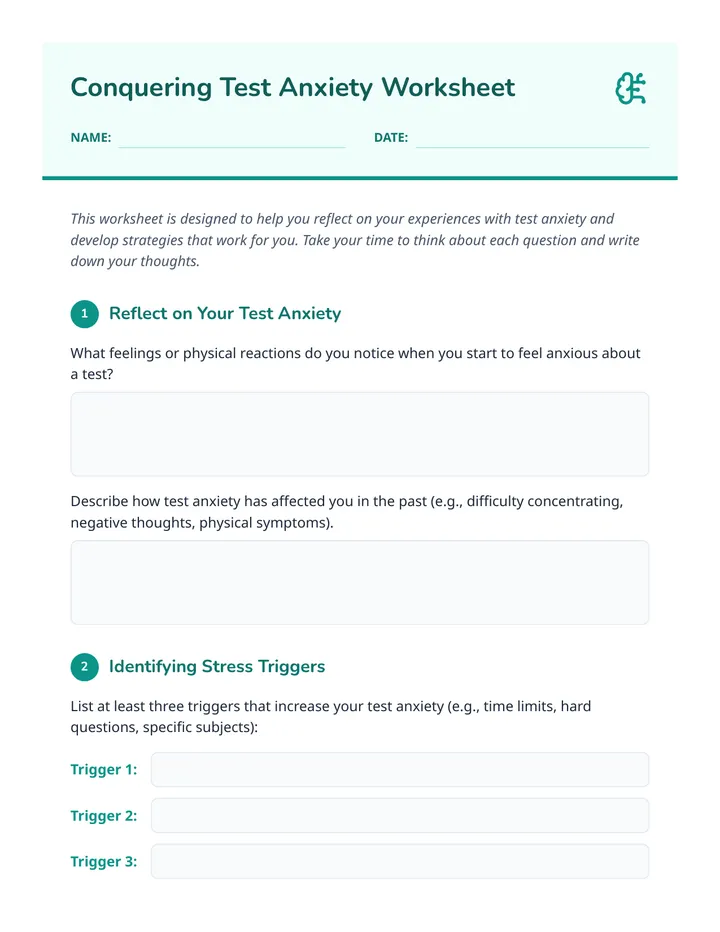
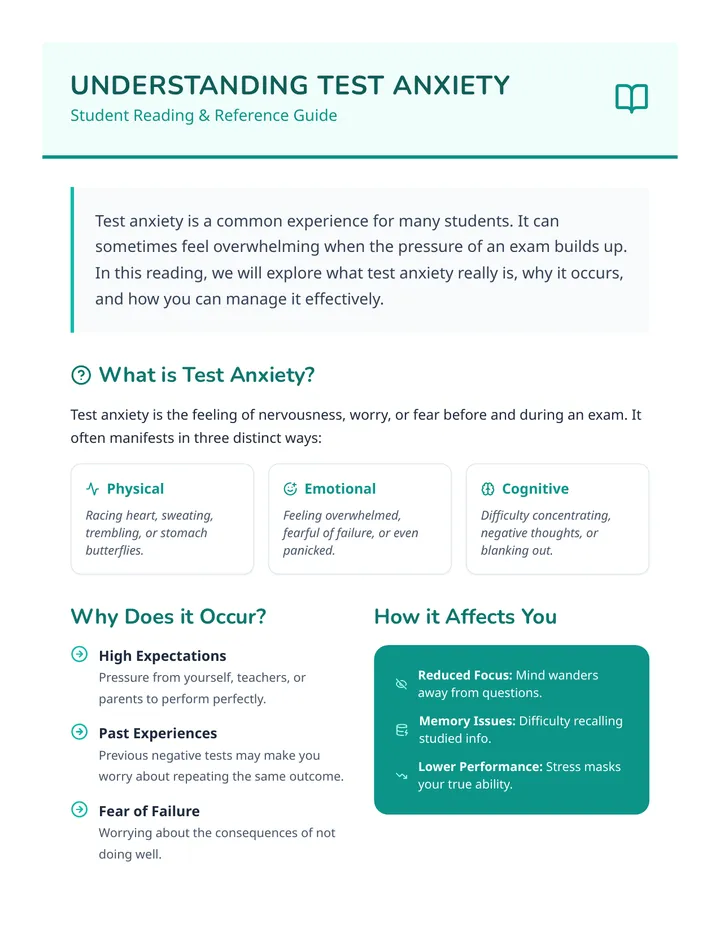
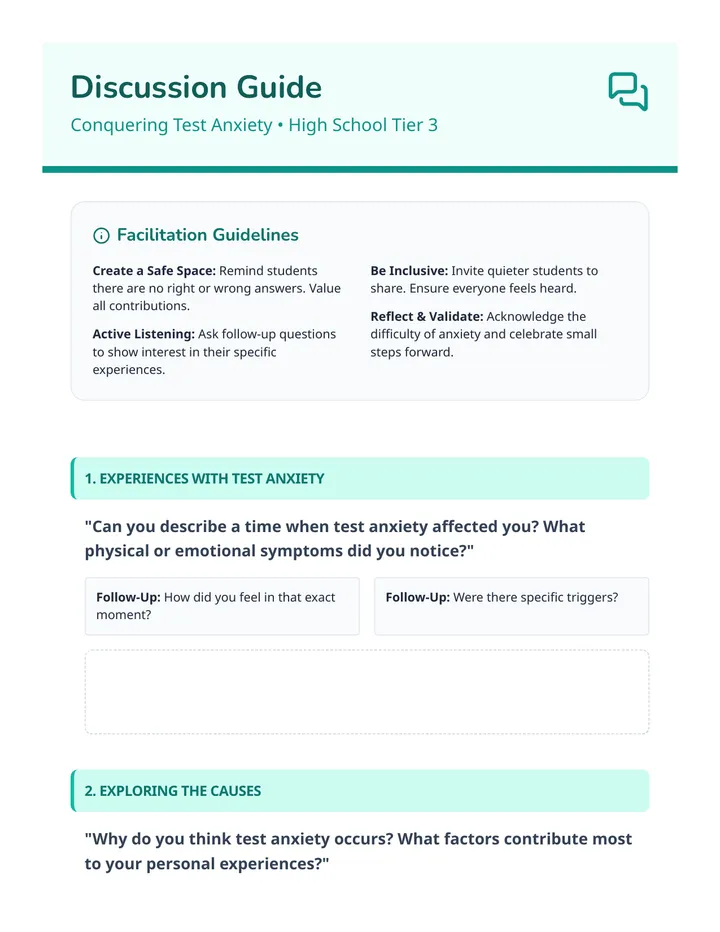
A 30-minute Tier 3 intervention lesson for high school students to manage and overcome test anxiety using relaxation techniques, positive affirmations, and practical test-taking strategies.
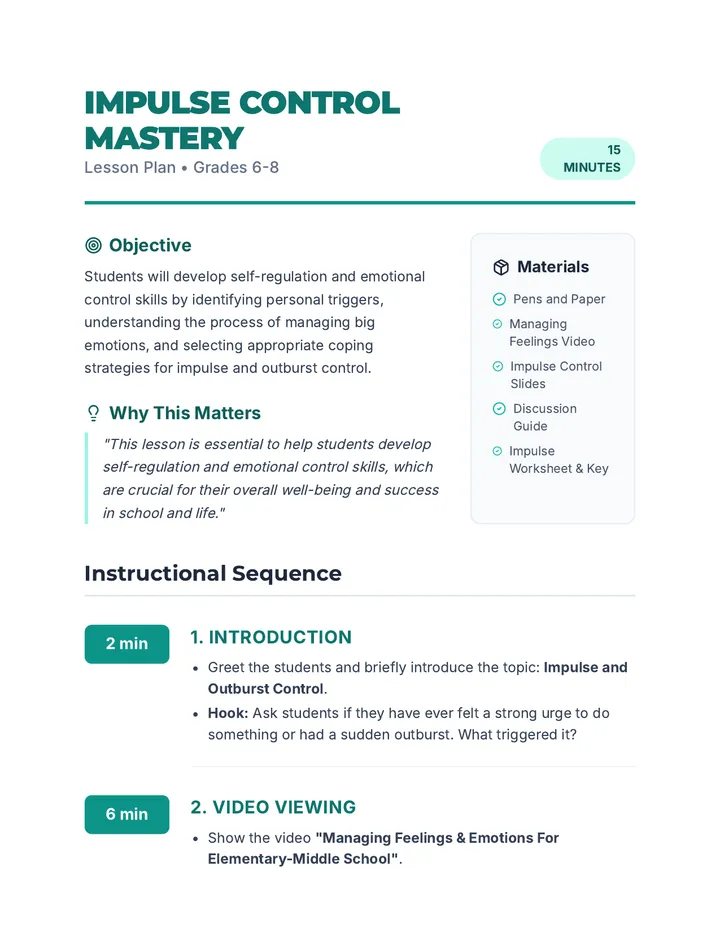
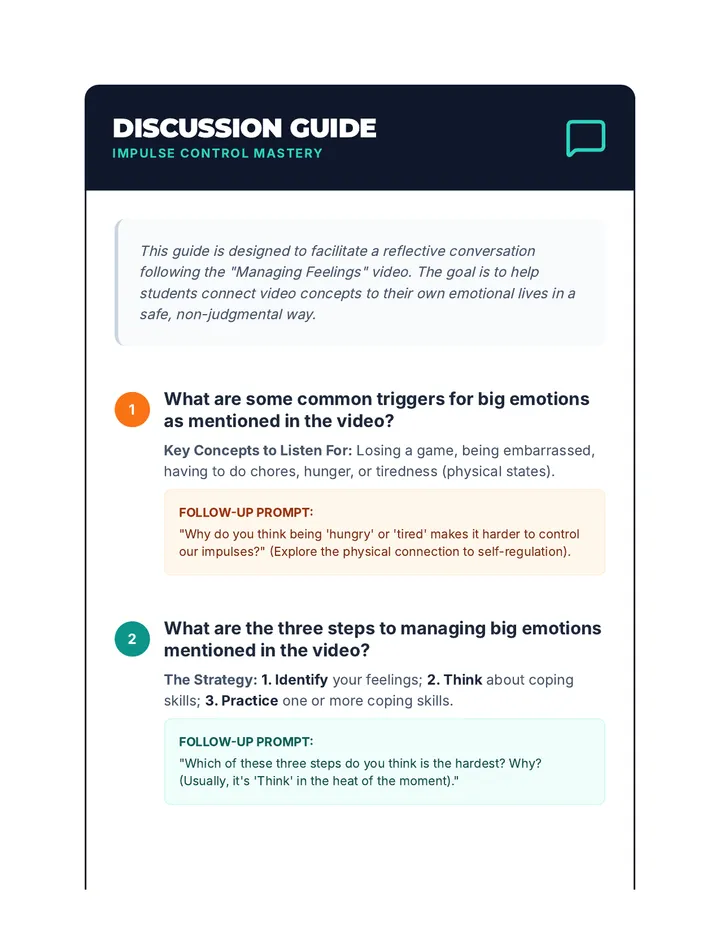
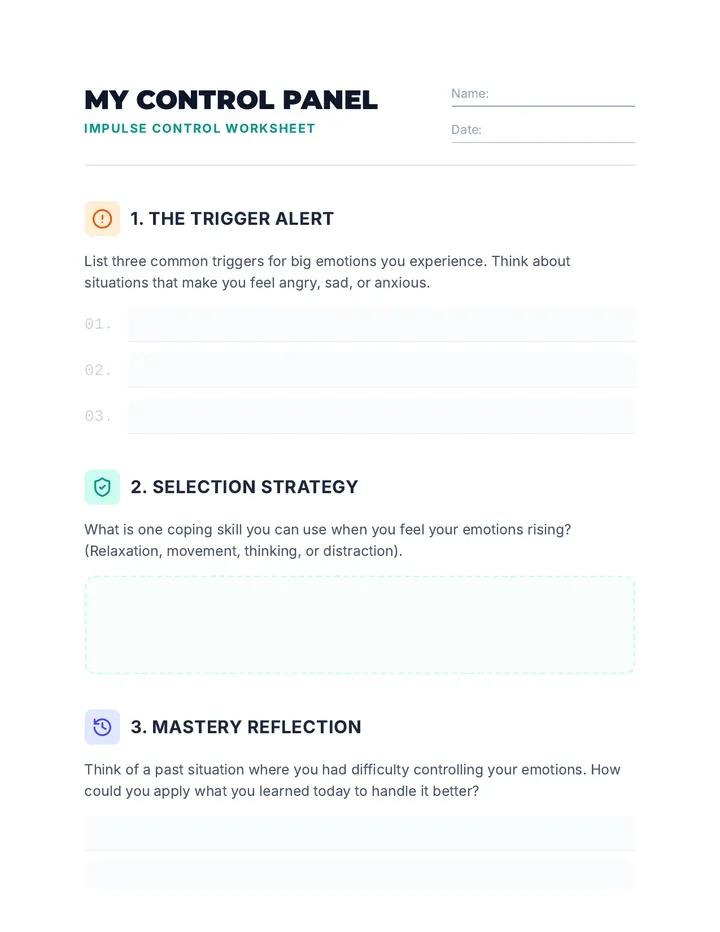
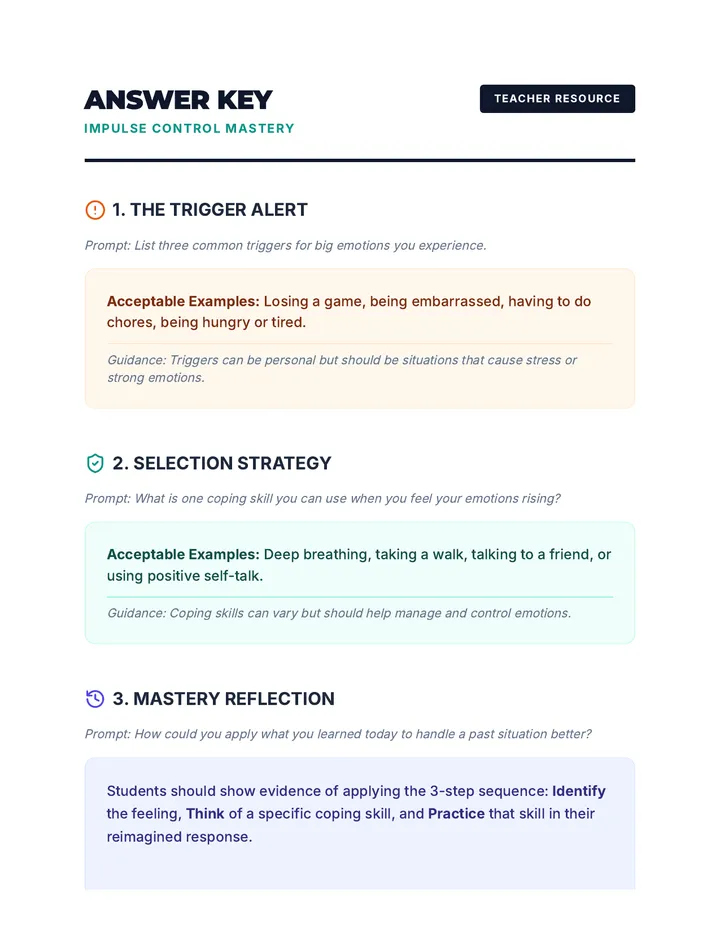
A comprehensive lesson designed for middle school students to master impulse control. Students will identify personal triggers, learn specific coping strategies, and practice managing outbursts through interactive discussion and individual reflection.
A 6-week Tier 3 intervention for 4th-grade students focusing on self-regulation, anger management, and active listening. Students learn to identify triggers like personal space invasion and verbal threats, while practicing mindful breathing and calm communication.
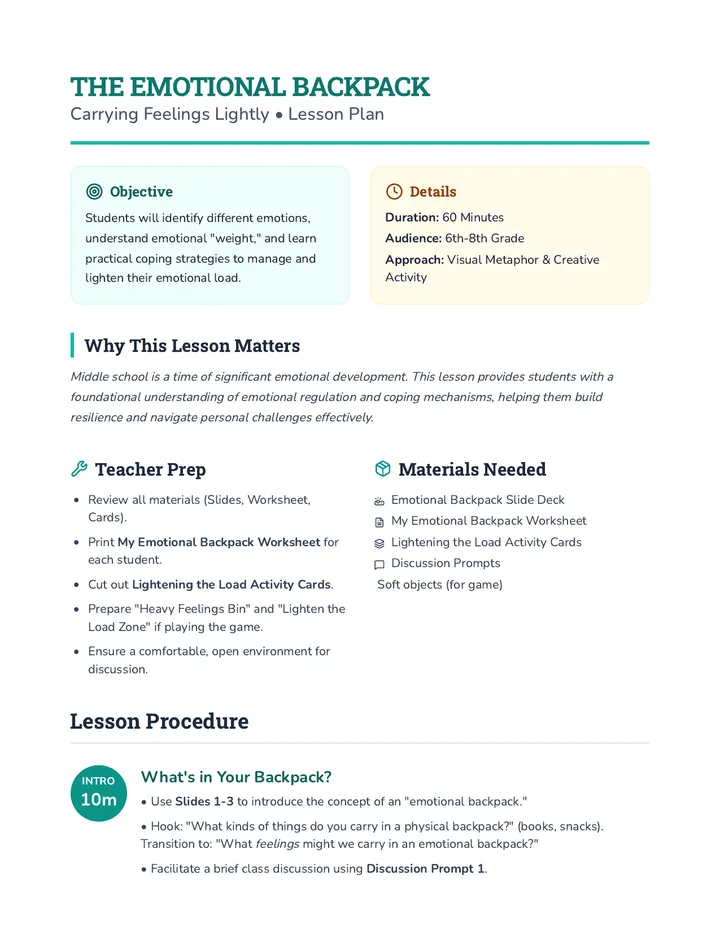
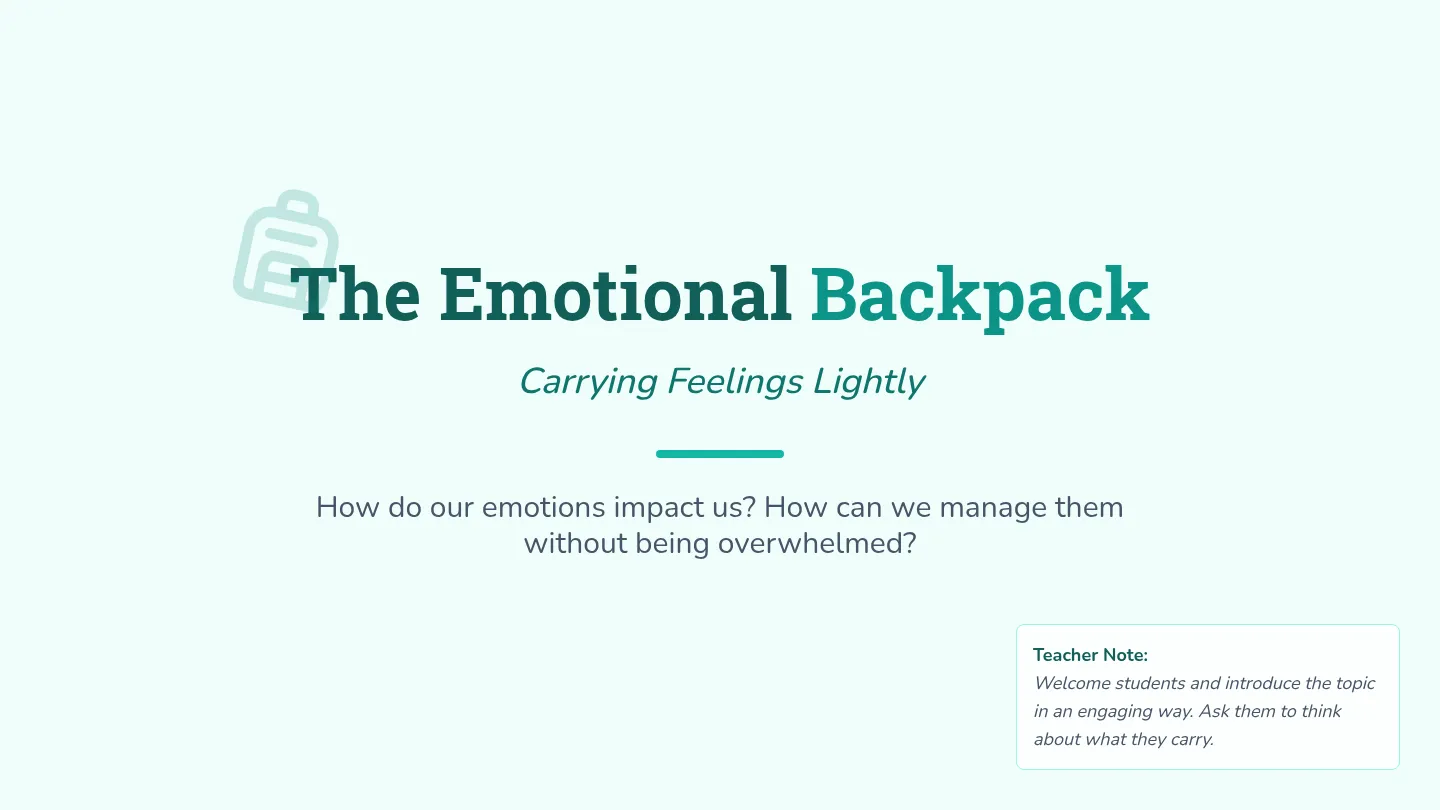
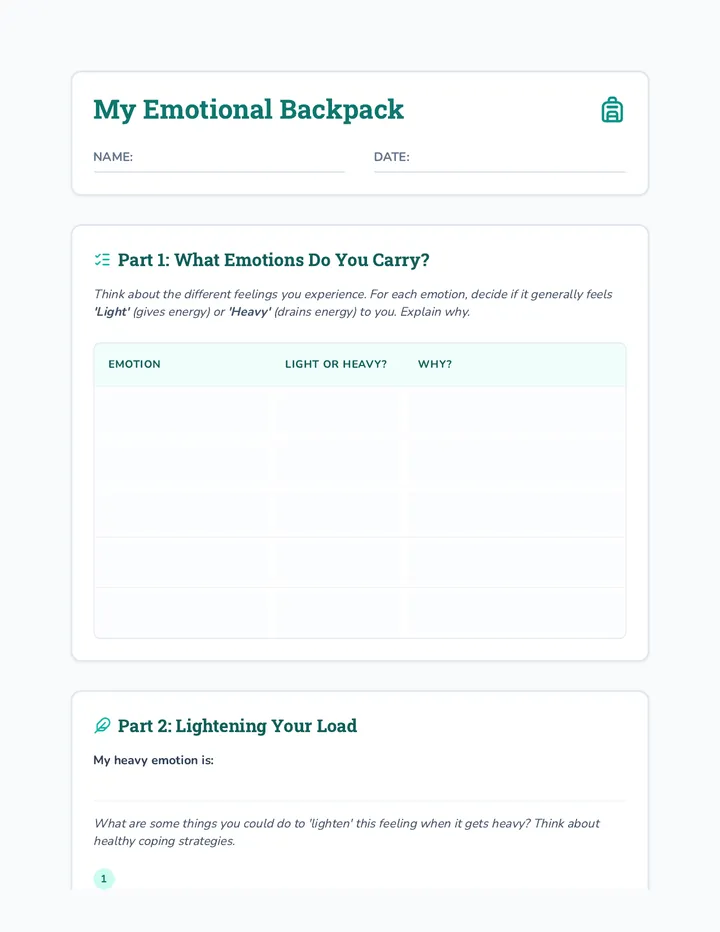
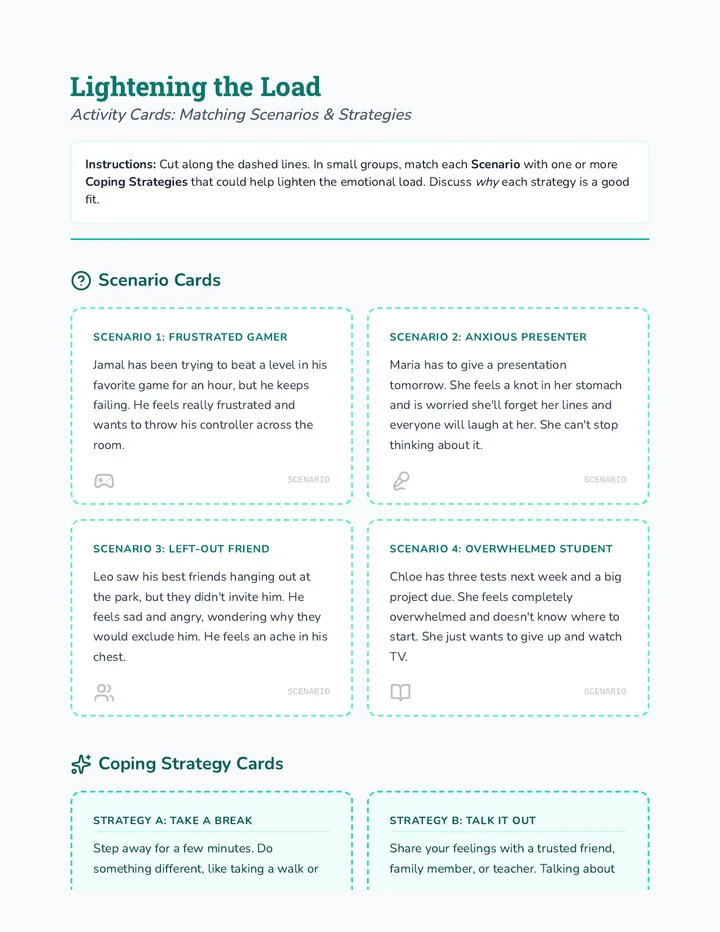
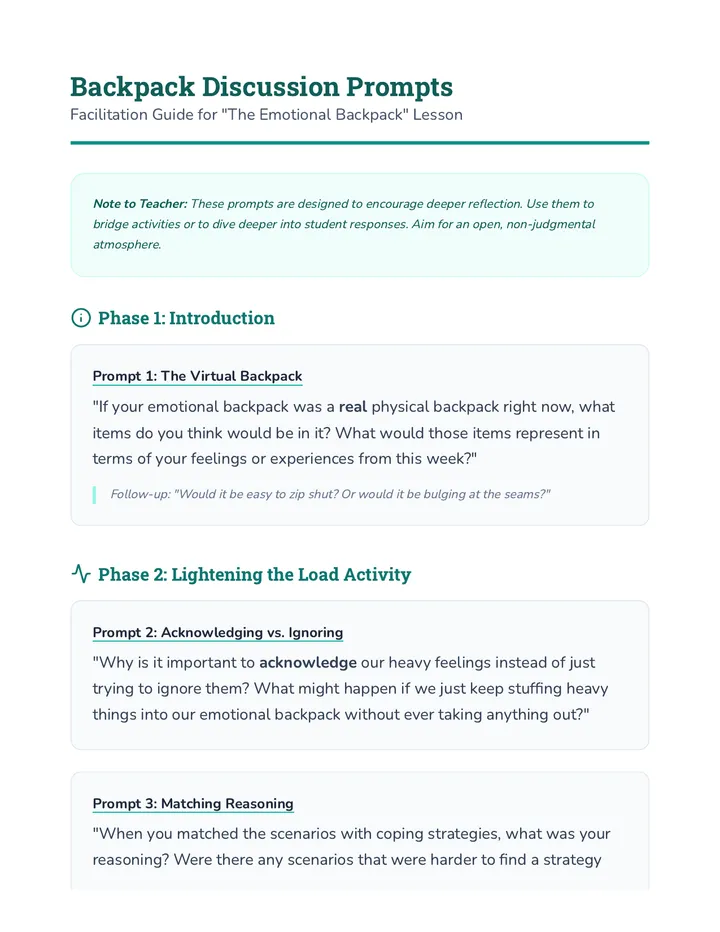
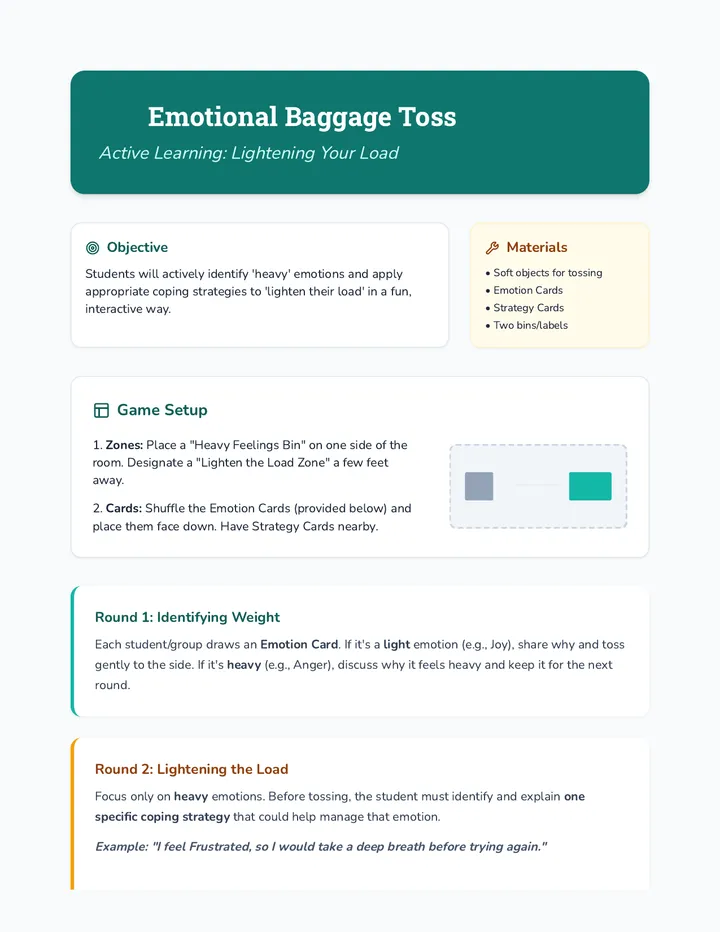
A 60-minute lesson for middle schoolers that uses the metaphor of a backpack to help students identify emotional weight and practice healthy coping strategies.
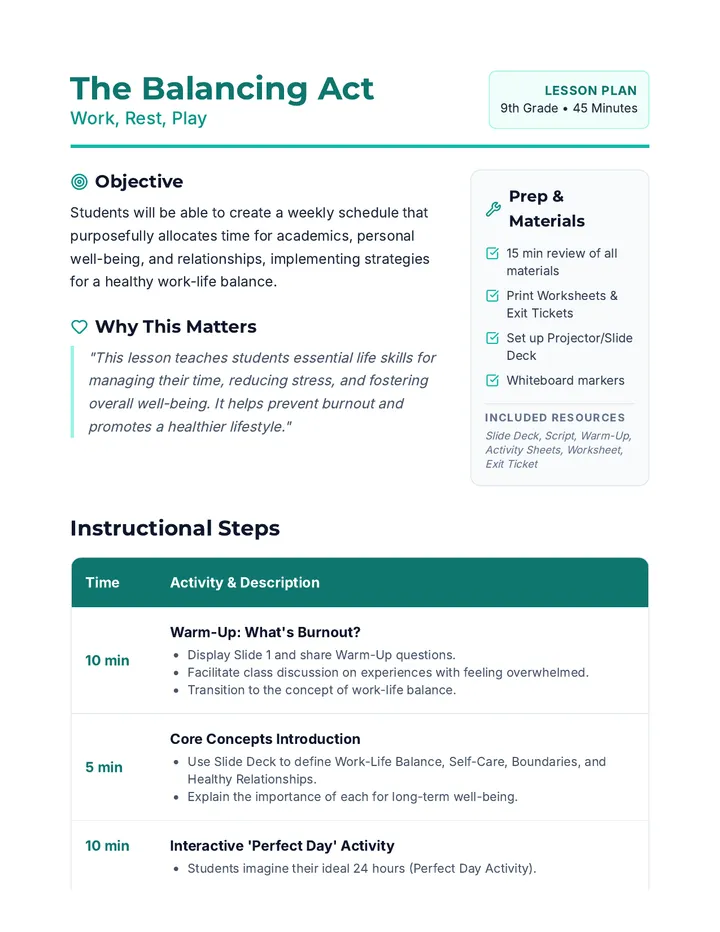
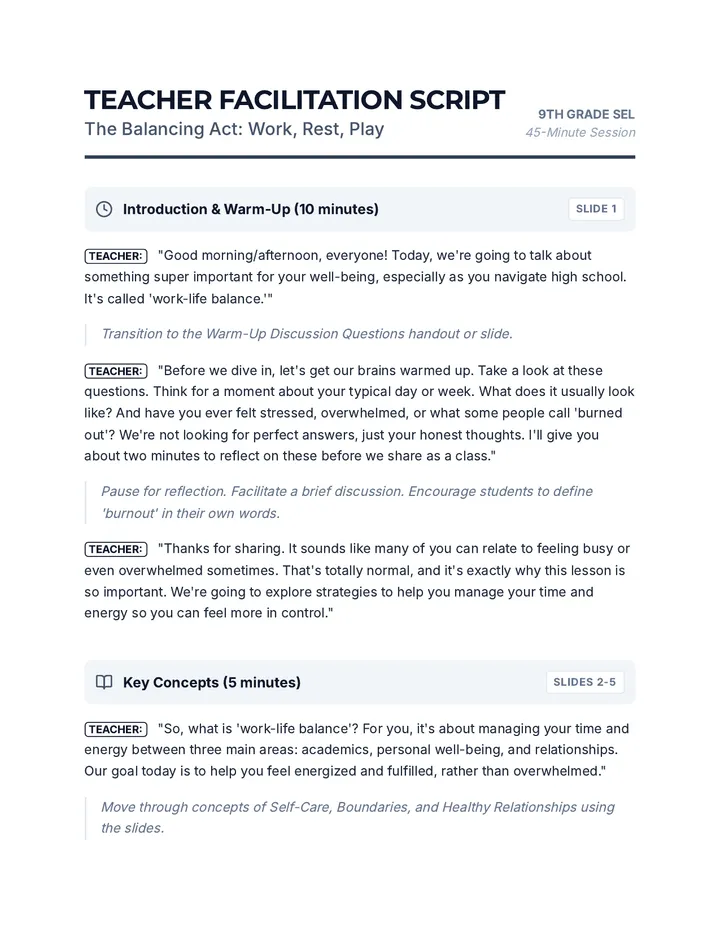
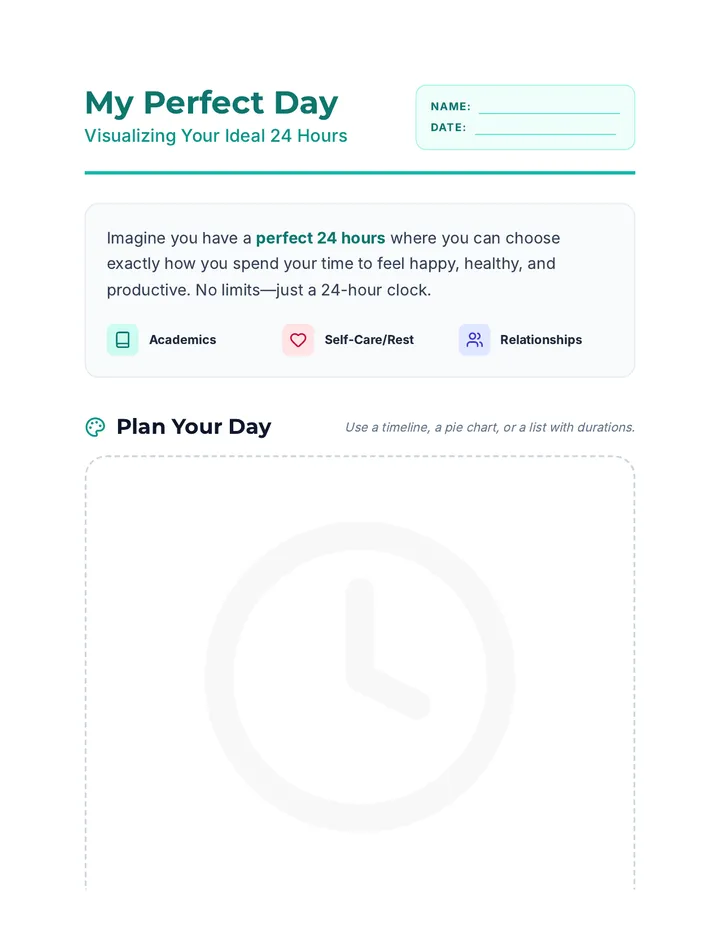
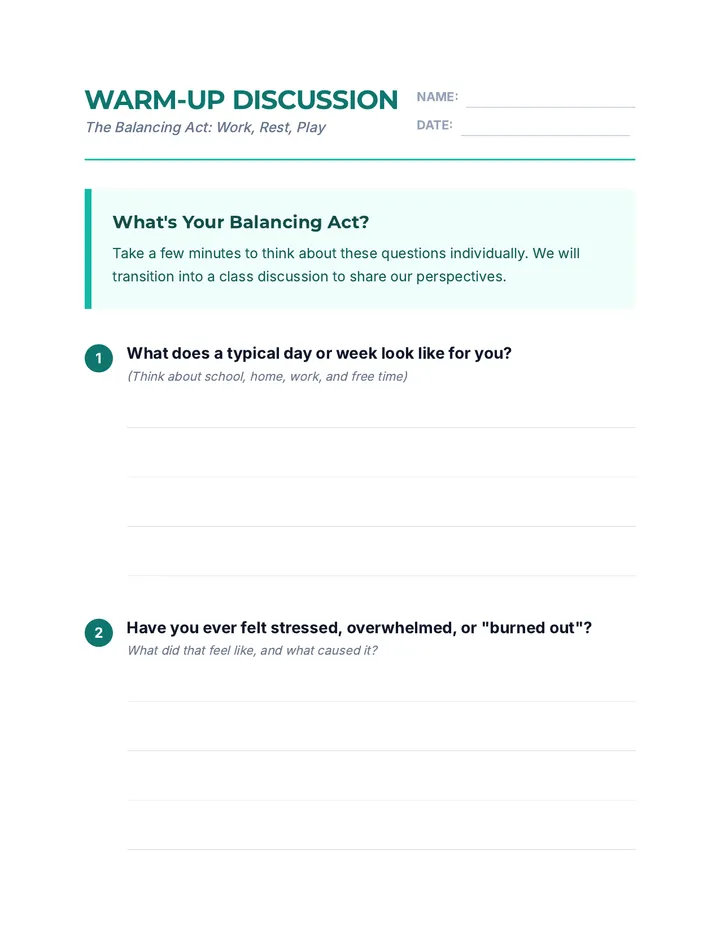
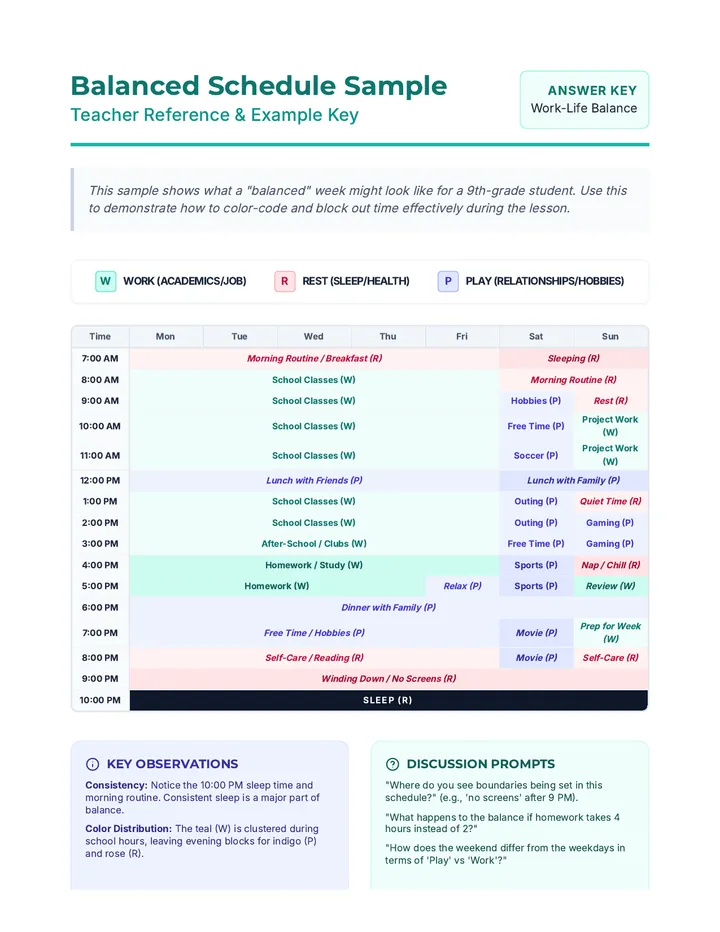
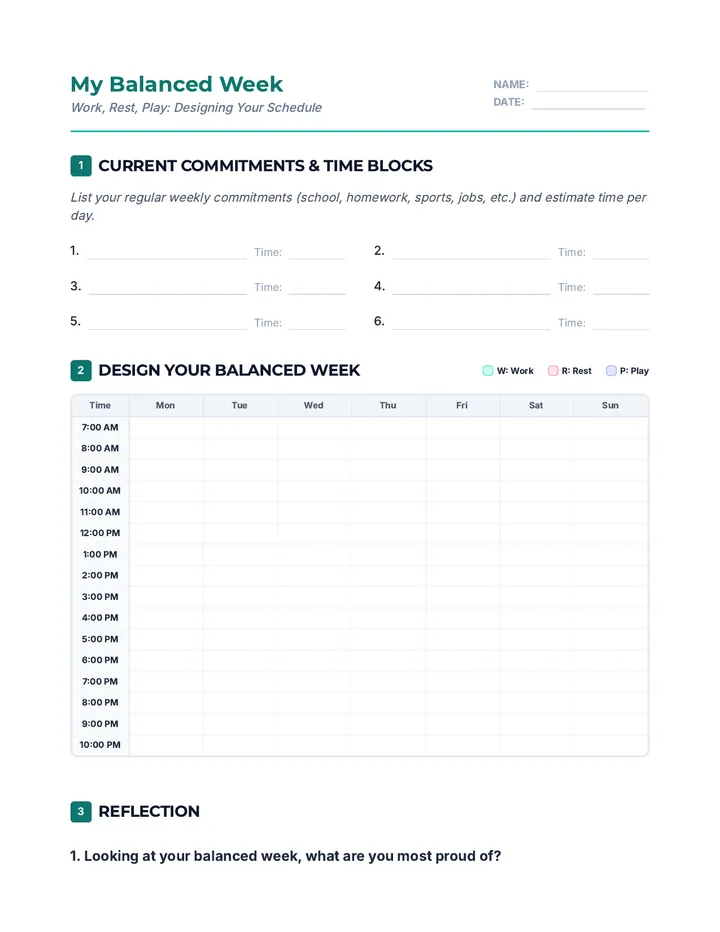
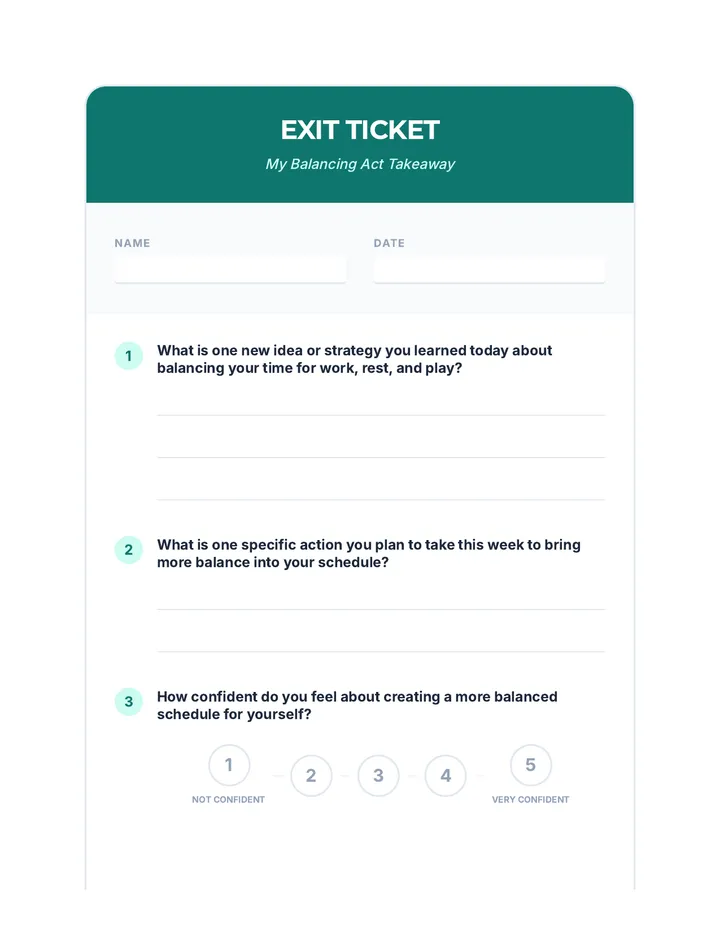
A 45-minute lesson for 9th-grade students to explore work-life balance, self-care, and boundaries through interactive scheduling activities. Students will create a realistic weekly plan that prioritizes academics, personal well-being, and relationships.
A 20-30 minute lesson for high school students to manage perfectionistic tendencies through deep breathing, positive self-talk, and time management strategies.
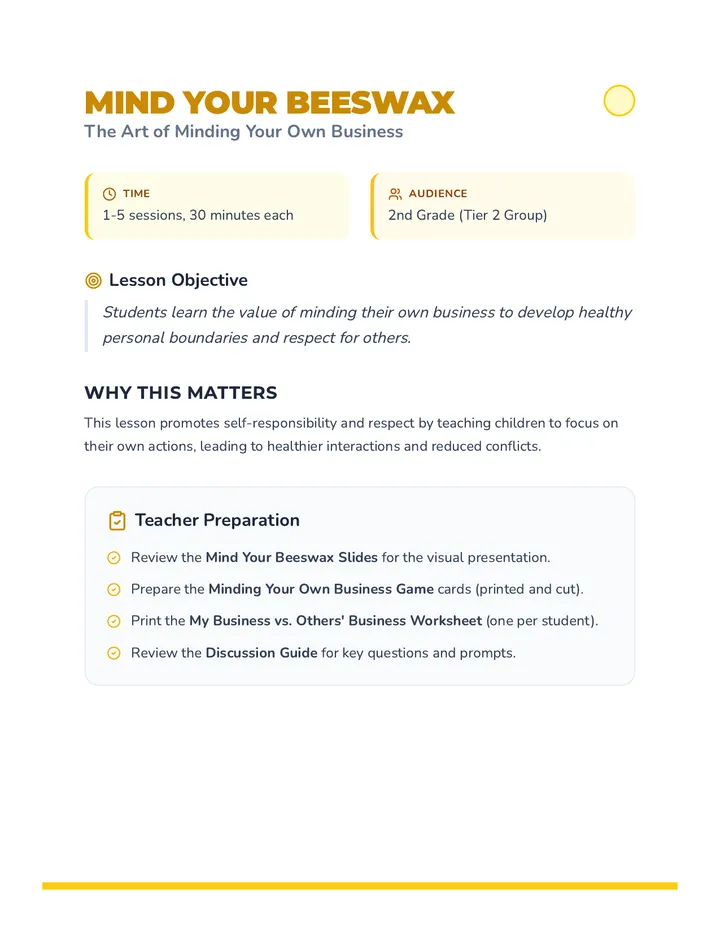
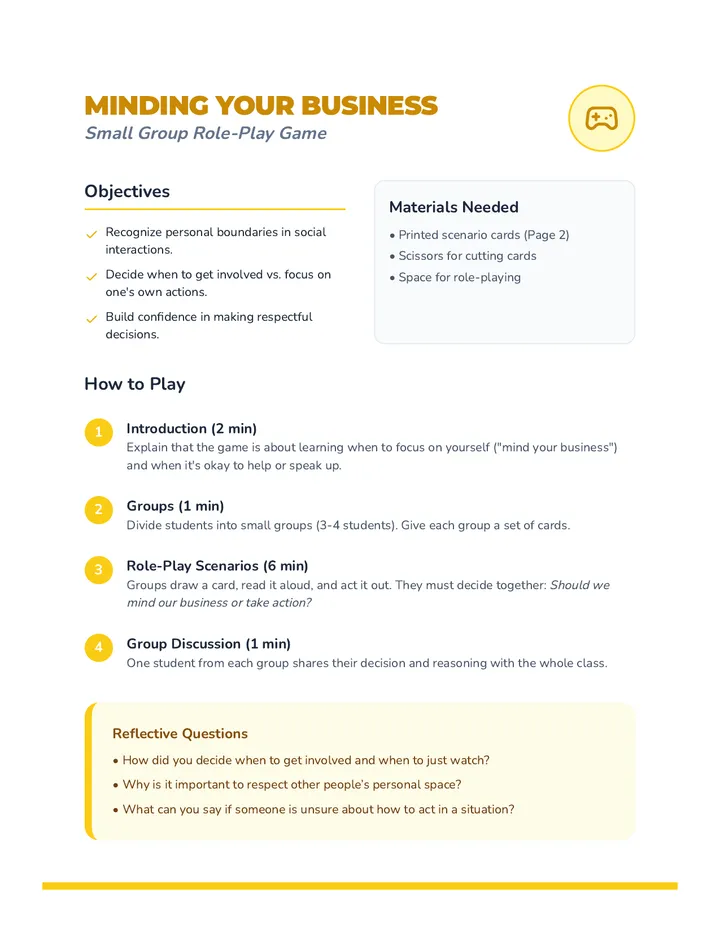
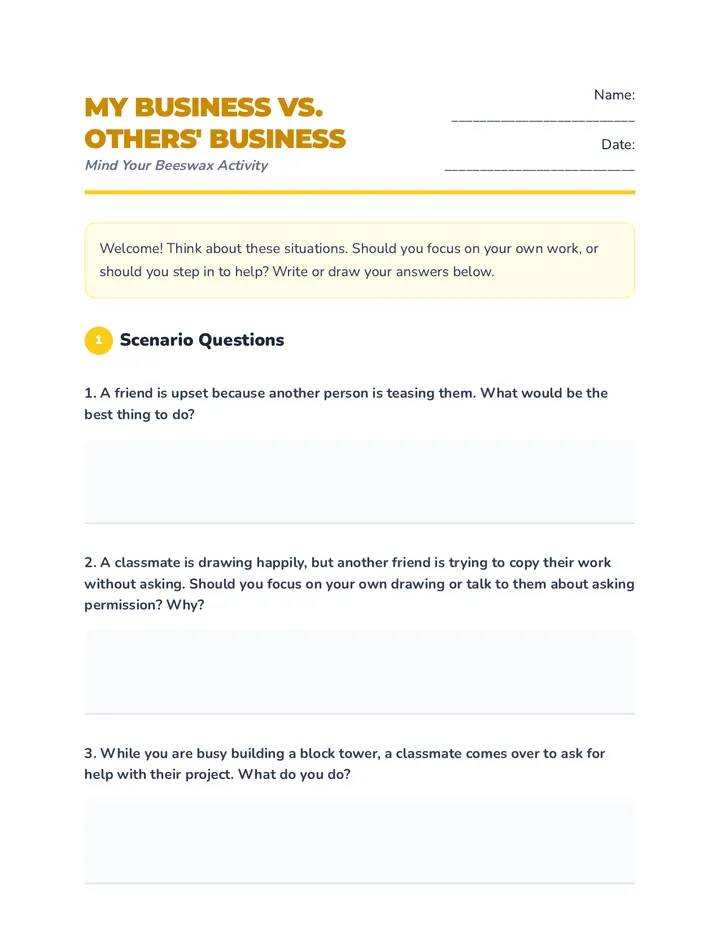
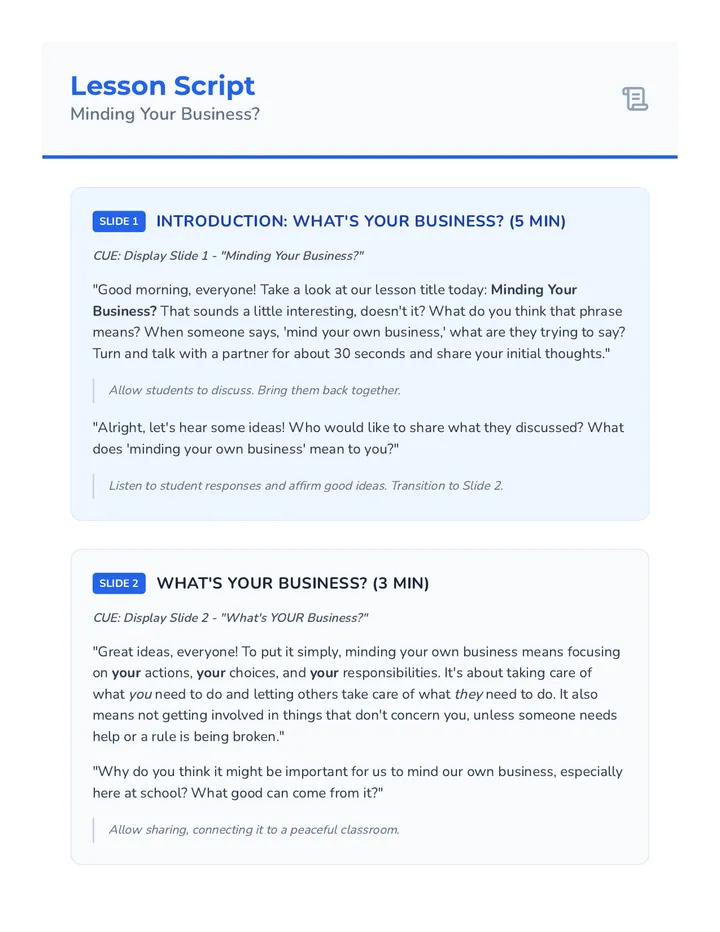
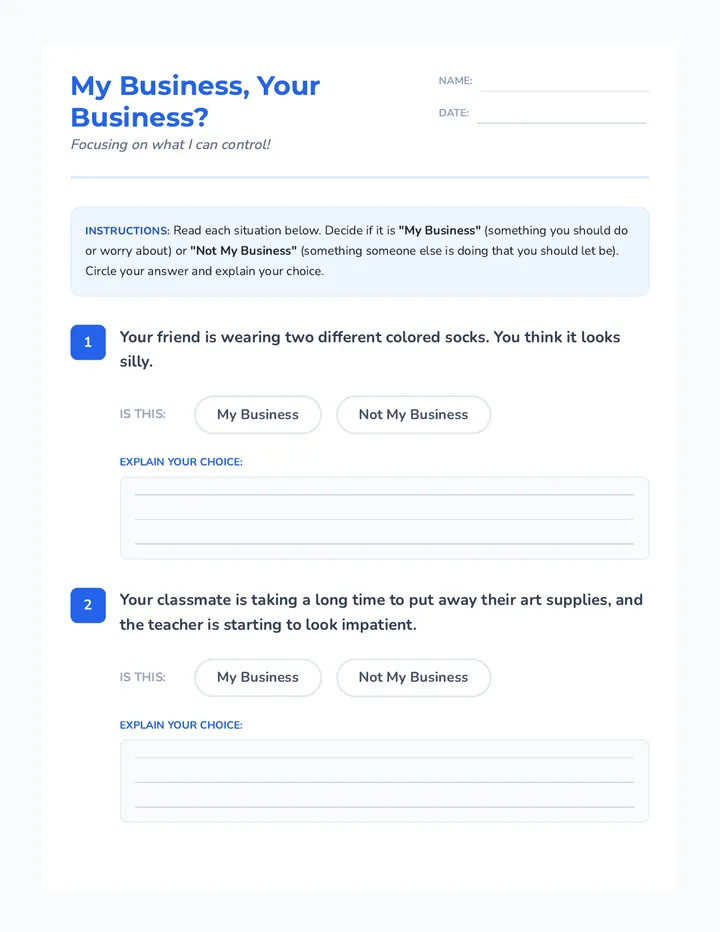
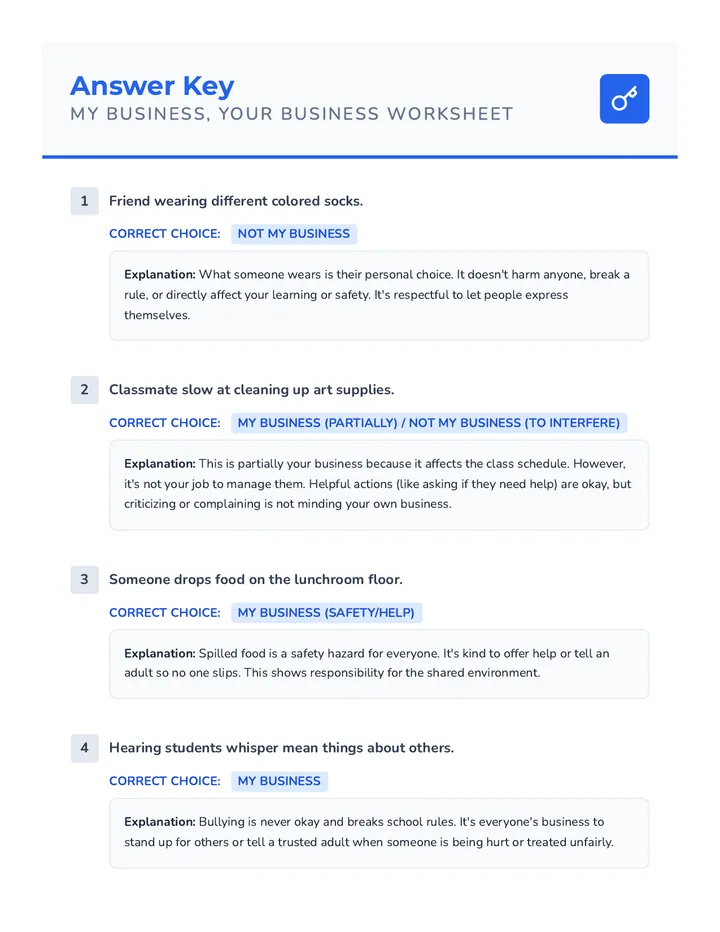
A social skills lesson for 2nd graders focusing on understanding personal boundaries and learning when to focus on one's own tasks versus when to intervene in others' business.
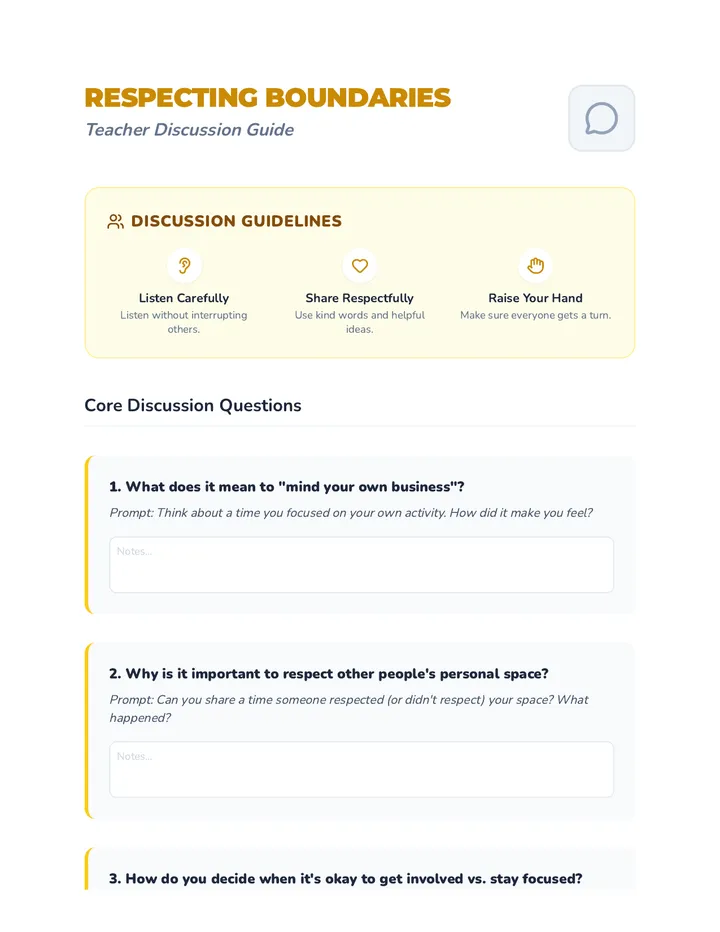
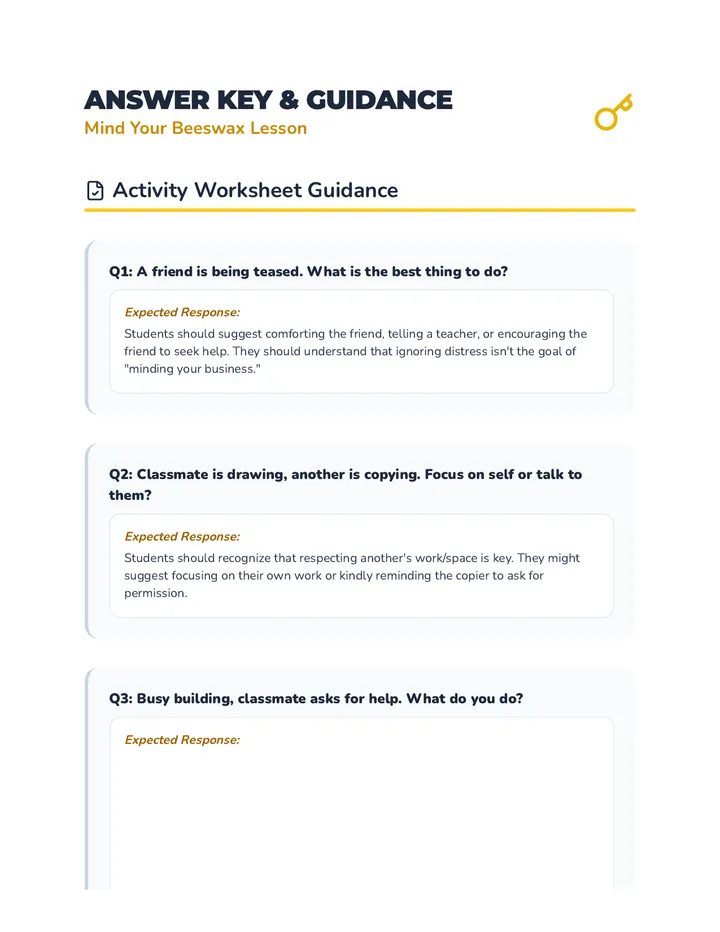
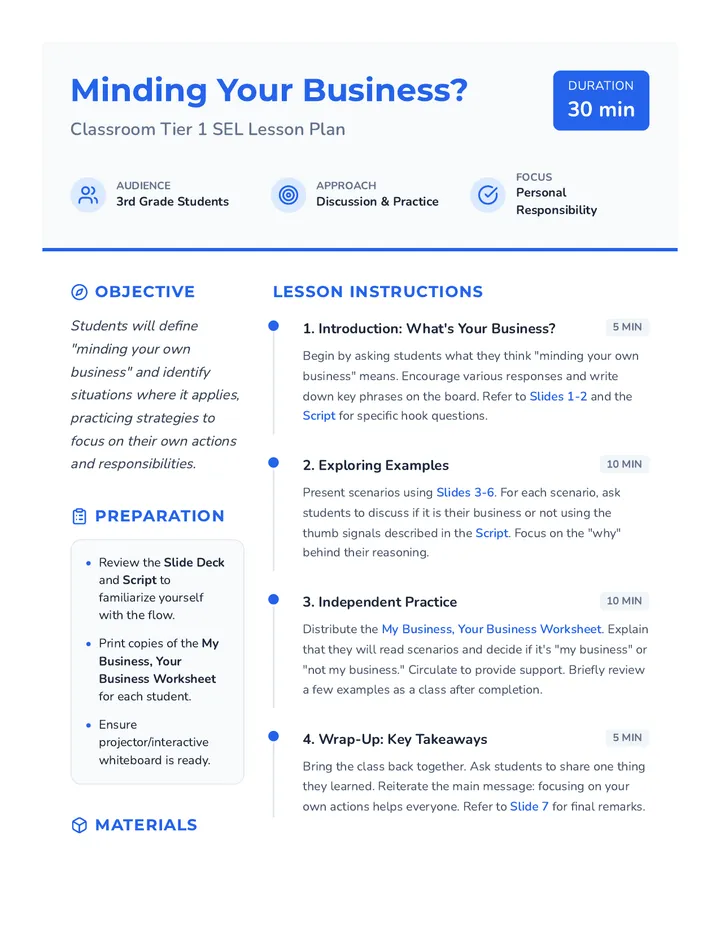
A 30-minute social-emotional learning lesson for 3rd graders that teaches the difference between personal responsibility and interfering in others' affairs through scenarios and discussion.
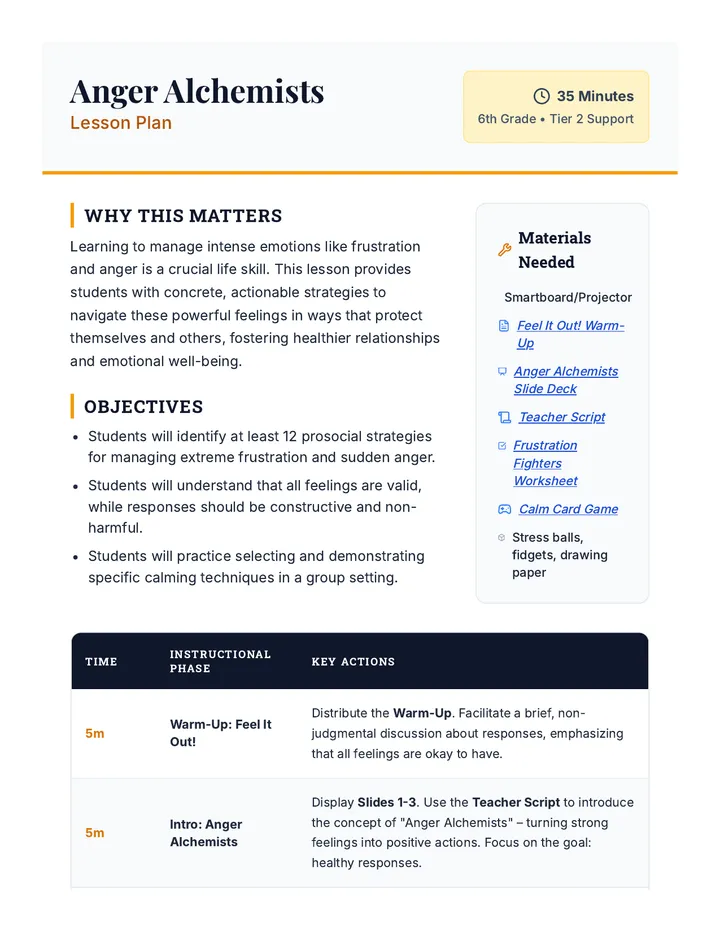
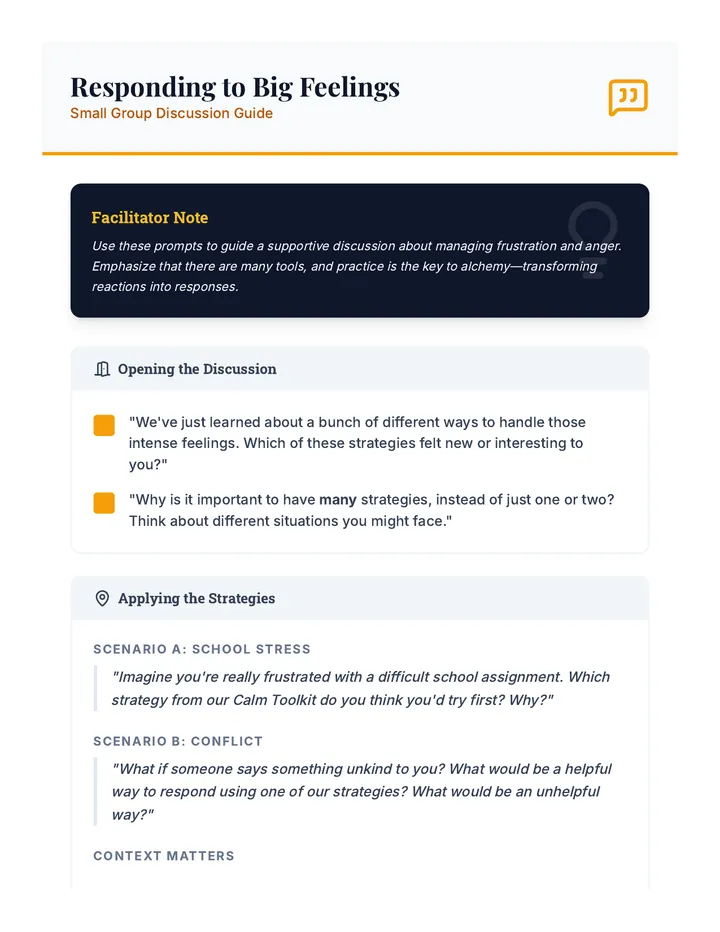
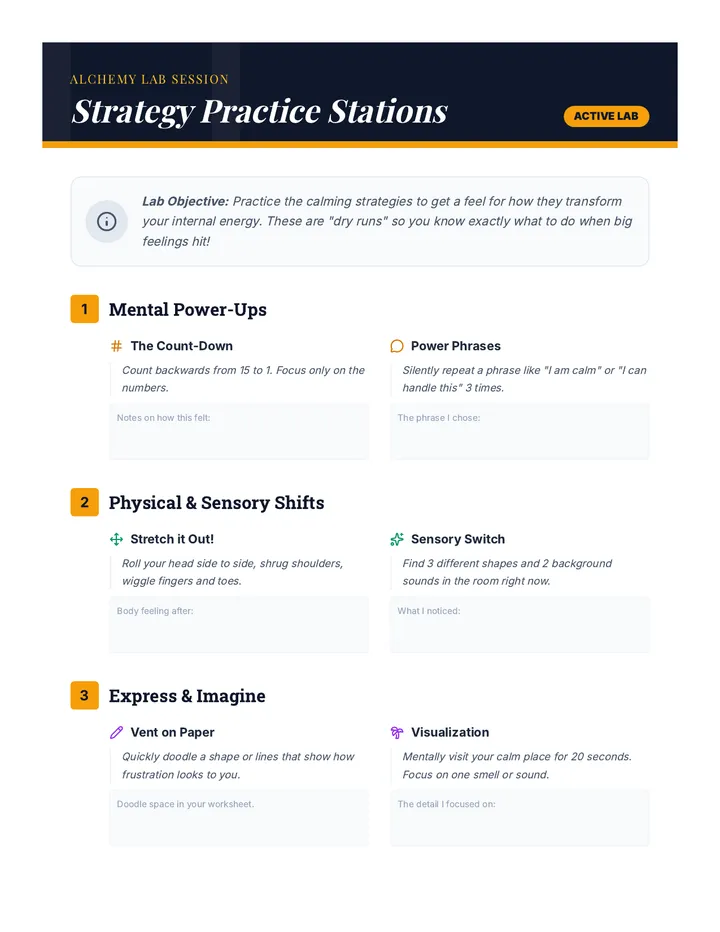
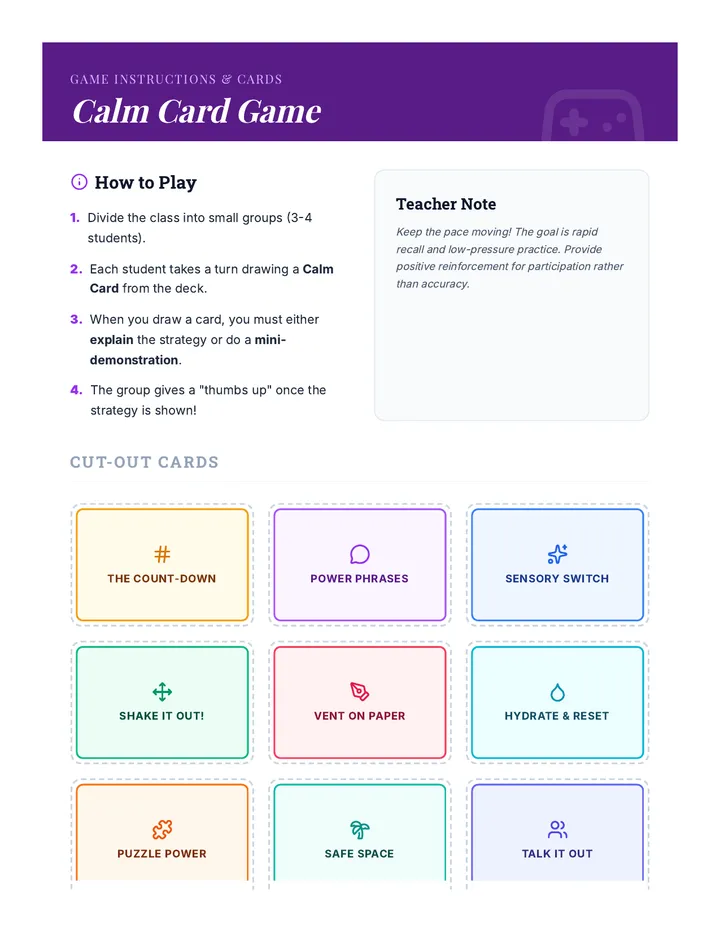
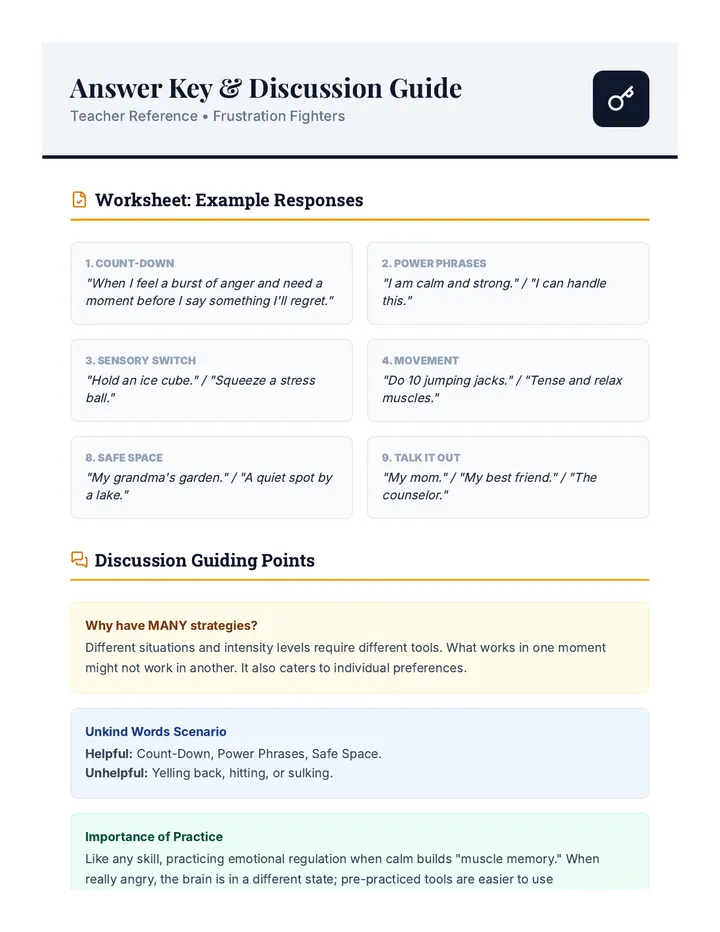
A 35-minute Tier 2 lesson for 6th-grade students to learn over 12 prosocial strategies for transforming intense frustration and anger into constructive responses.
In this engaging 30-minute Tier 1 lesson, 2nd graders will explore the concept of respect by reading 'A Little Respectful Spot,' participating in a hands-on sorting activity, and engaging in a meaningful class discussion. This lesson builds social-emotional skills, fosters a positive classroom environment, and helps students recognize respectful behaviors in everyday life.
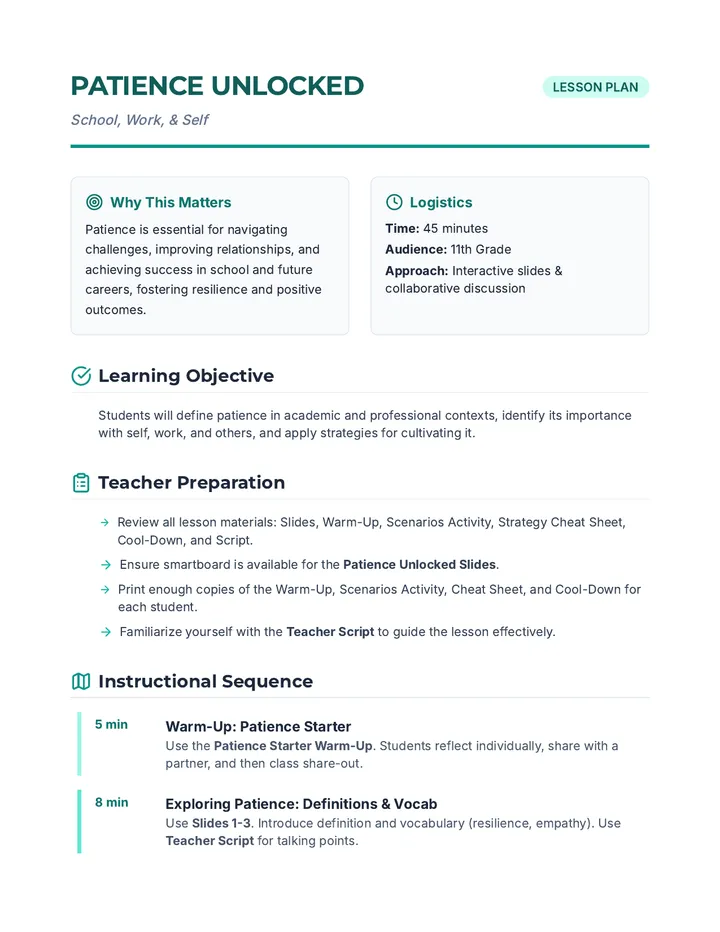
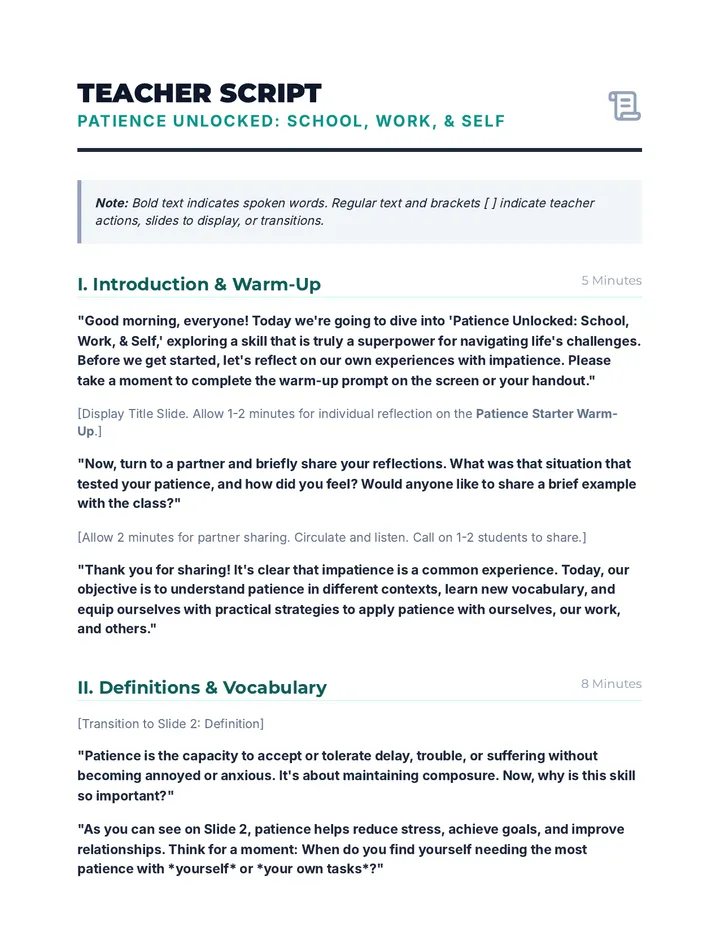
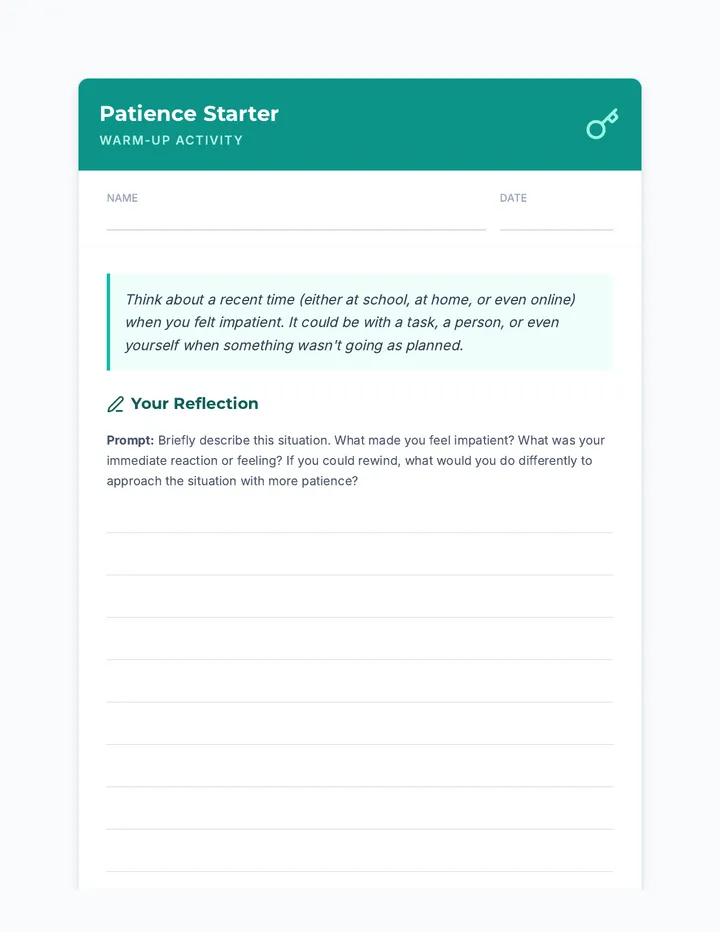
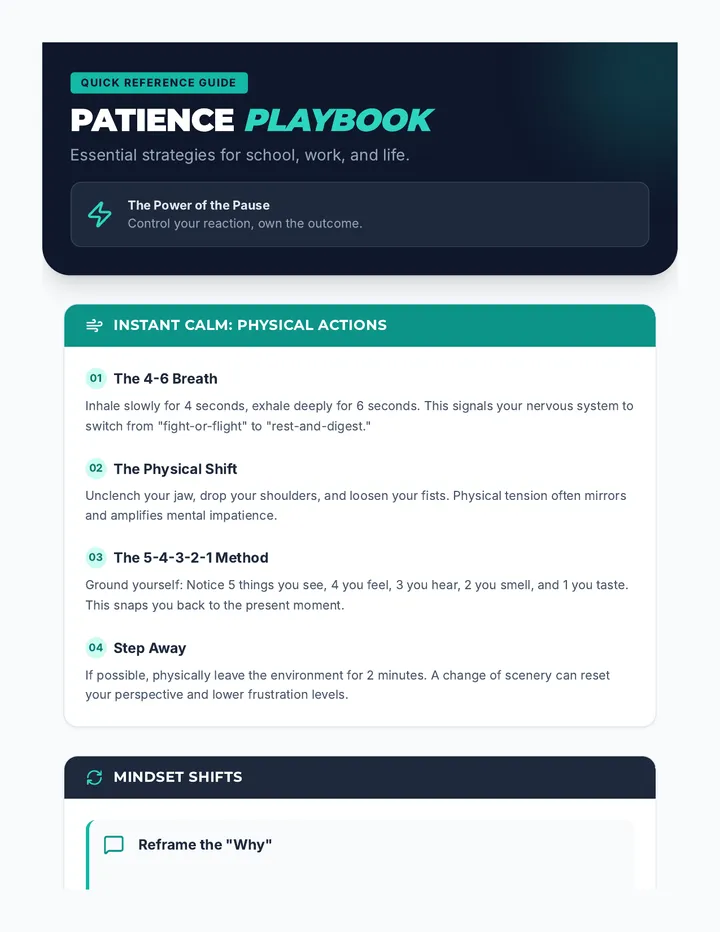
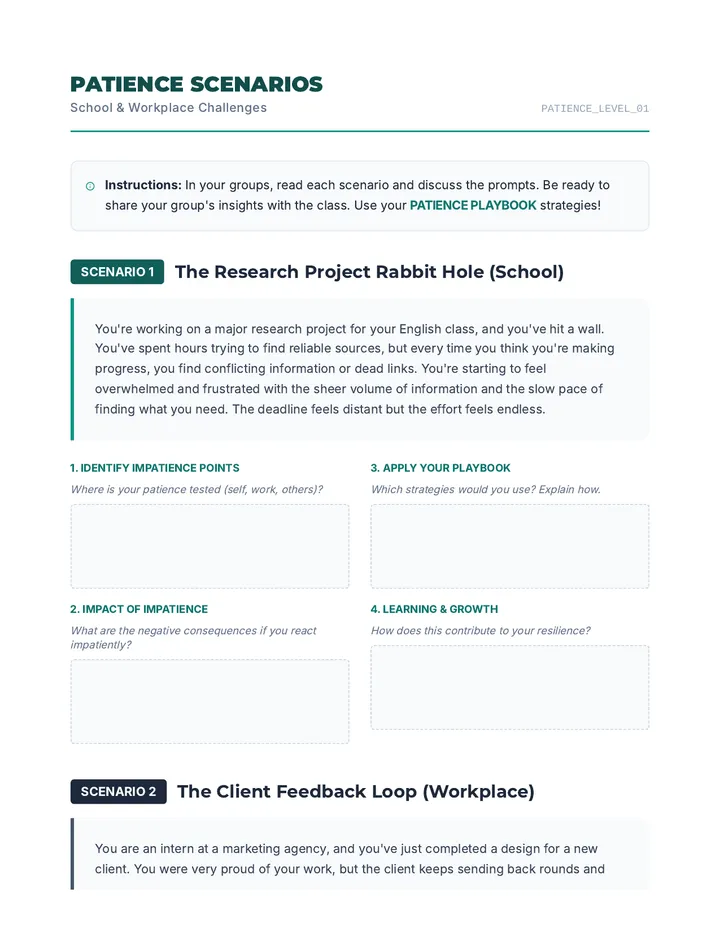
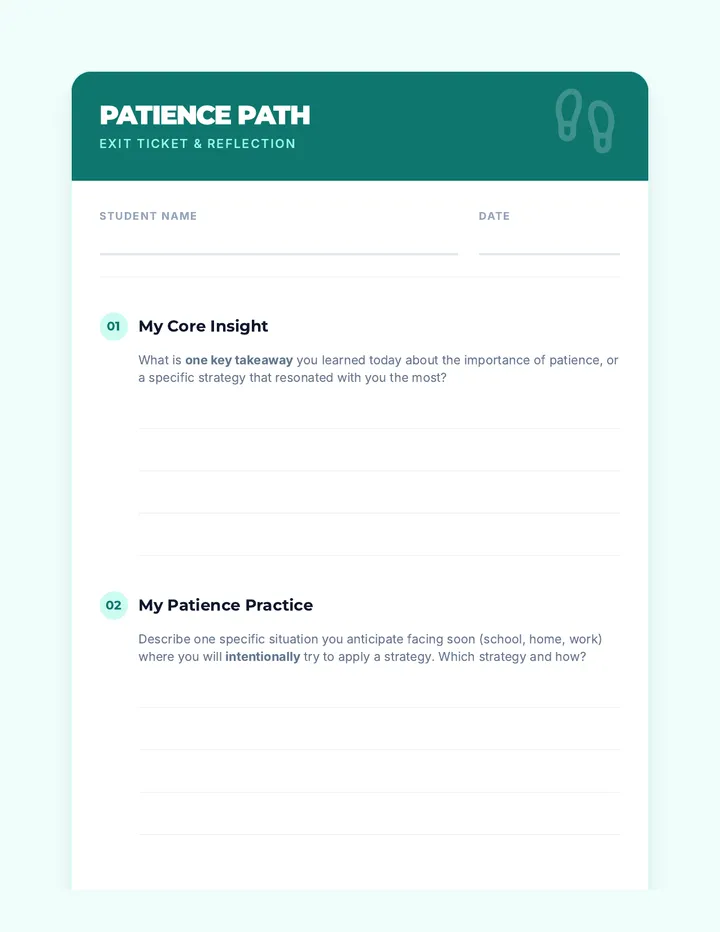
This lesson empowers 11th-grade students to cultivate patience as a critical skill in academic and professional settings. Students will explore strategies for managing impatience with themselves, their work, and others, fostering resilience and positive relationships.
A 30-minute Tier 1 lesson for 4th graders focused on defining accountability and practicing taking responsibility for actions through scenario analysis and personal reflection.
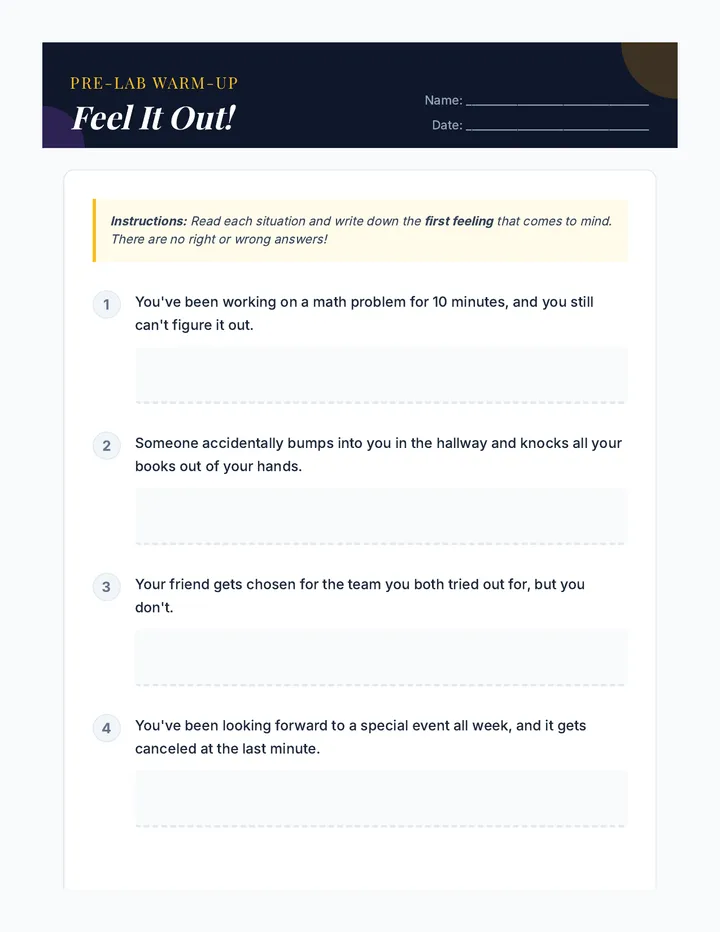
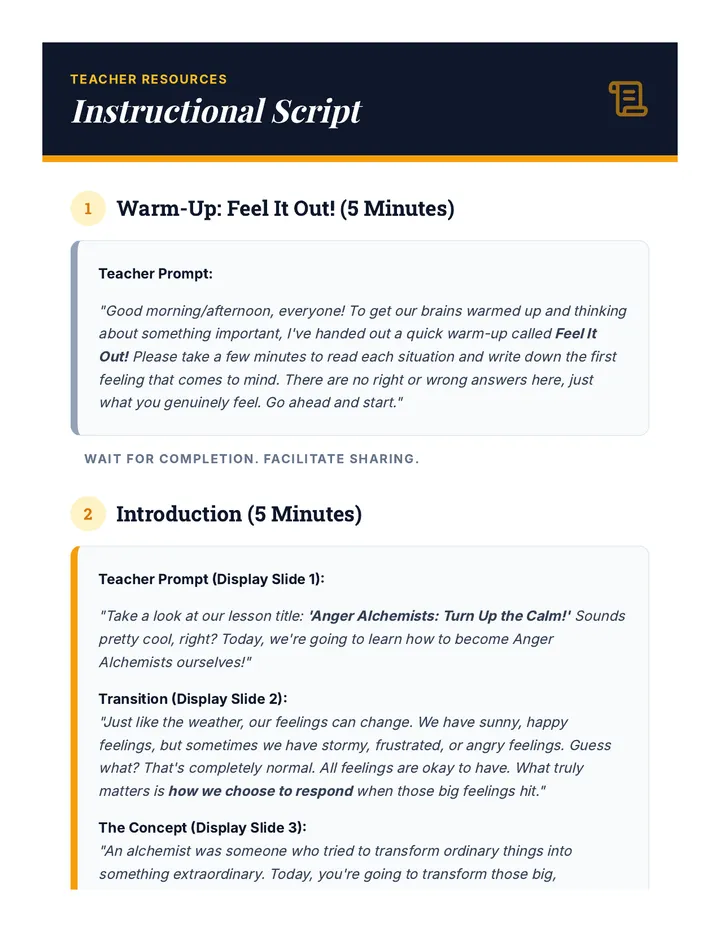
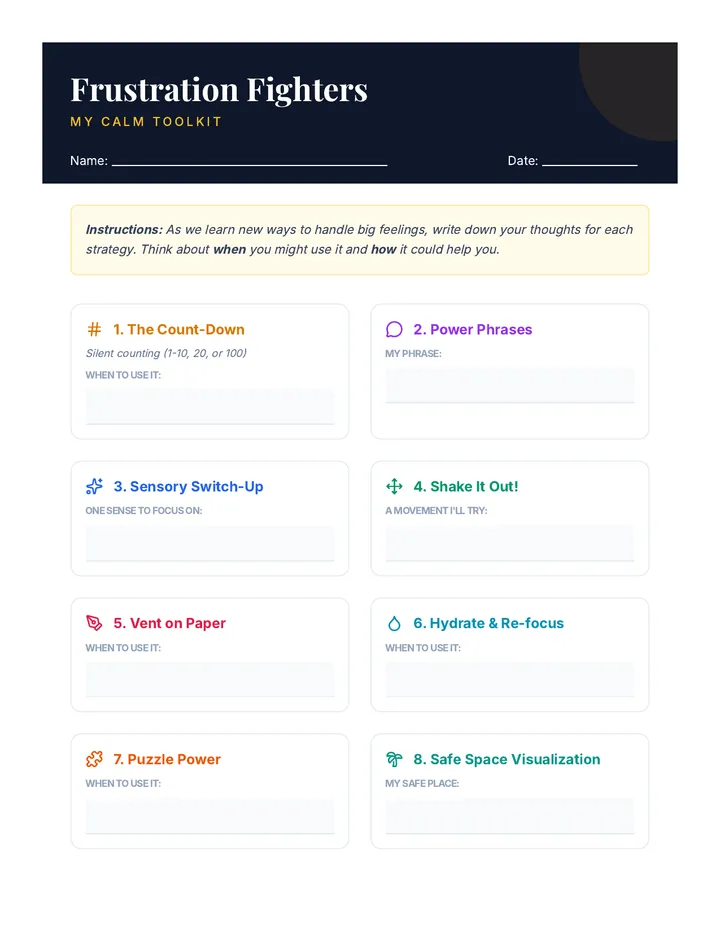
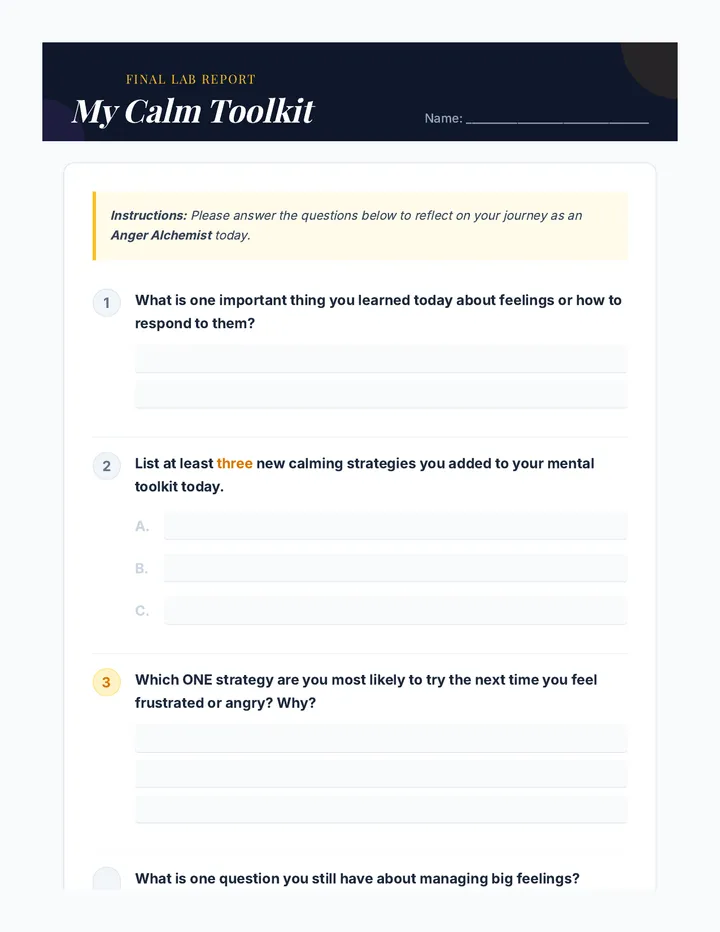
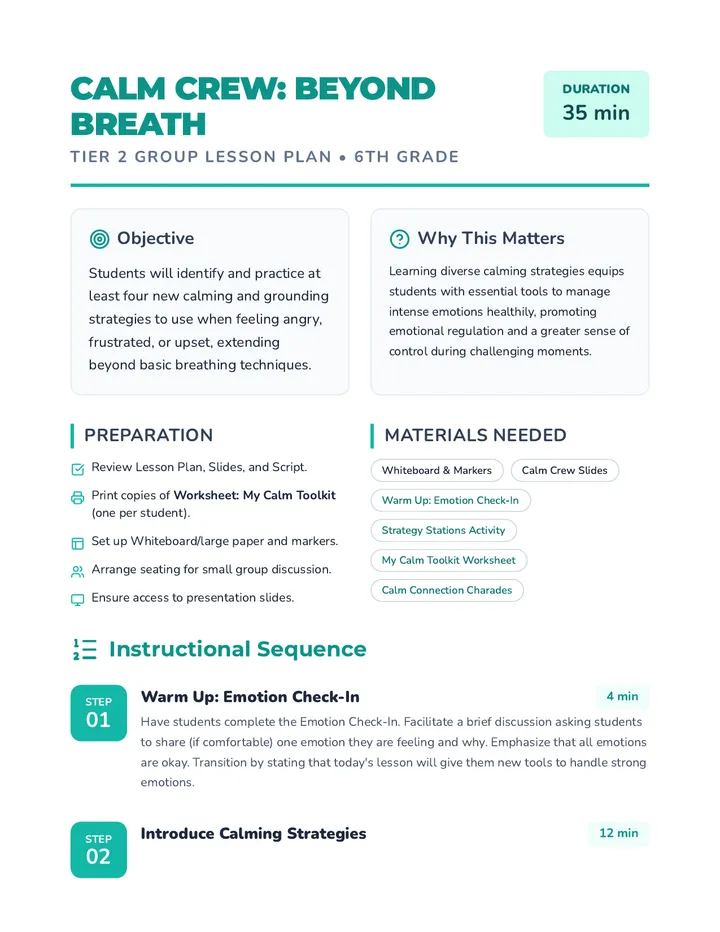
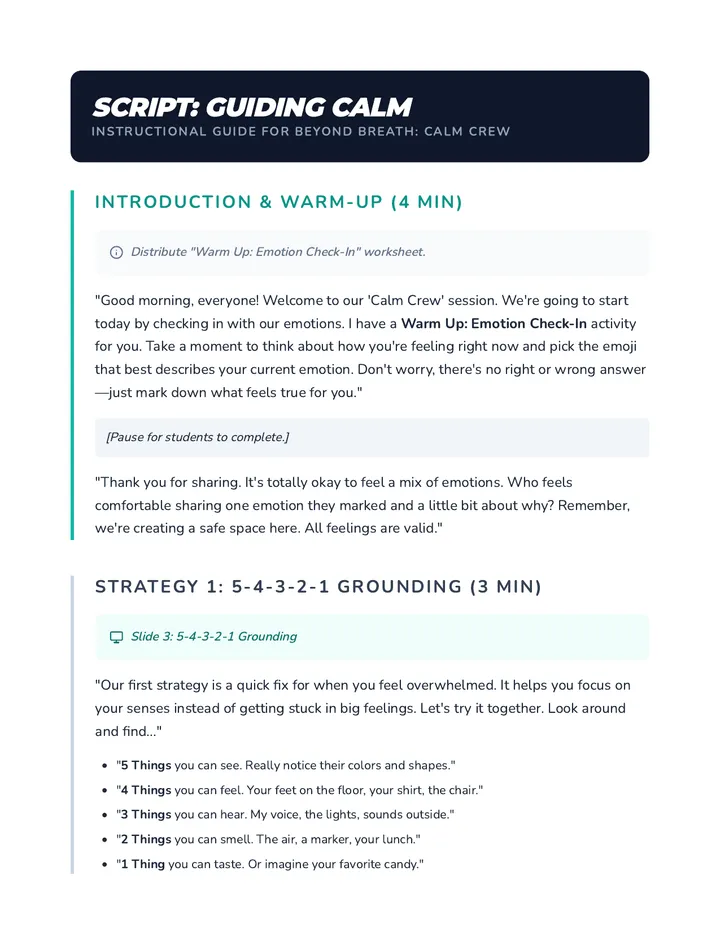
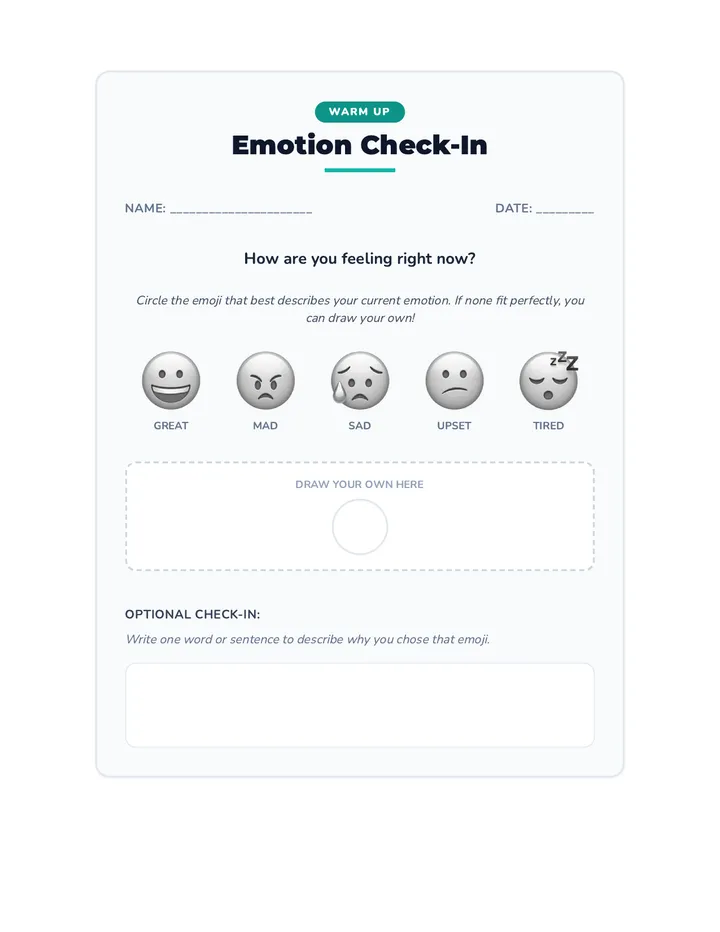
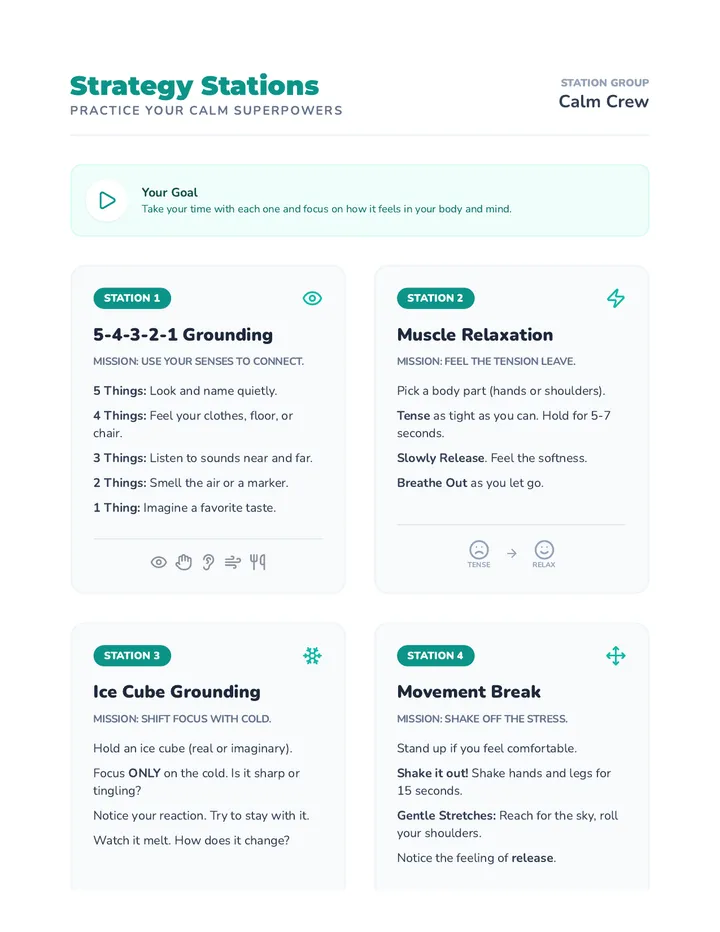
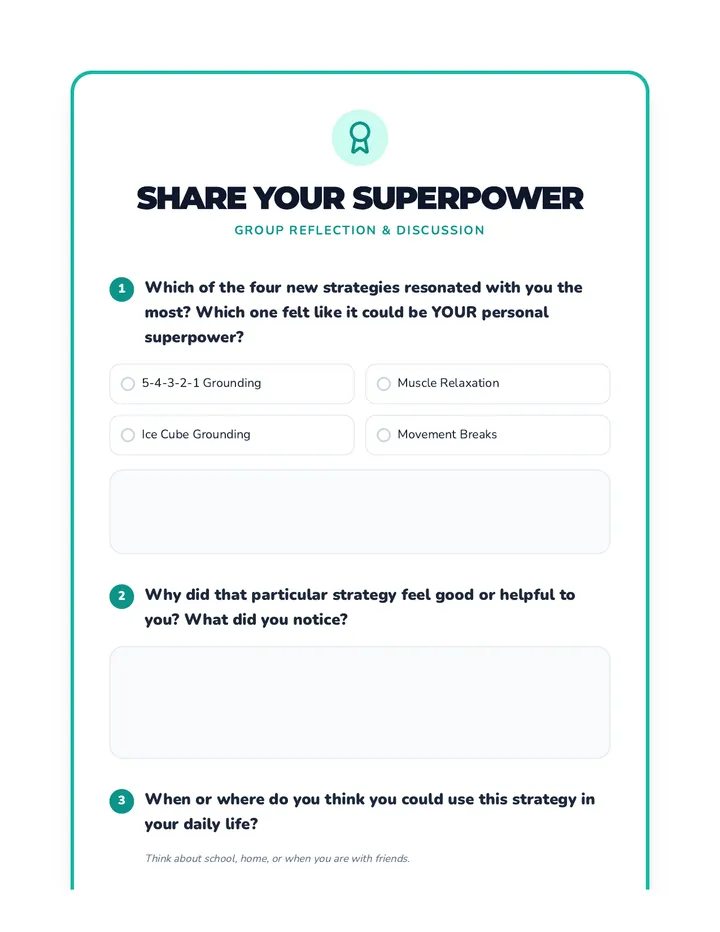
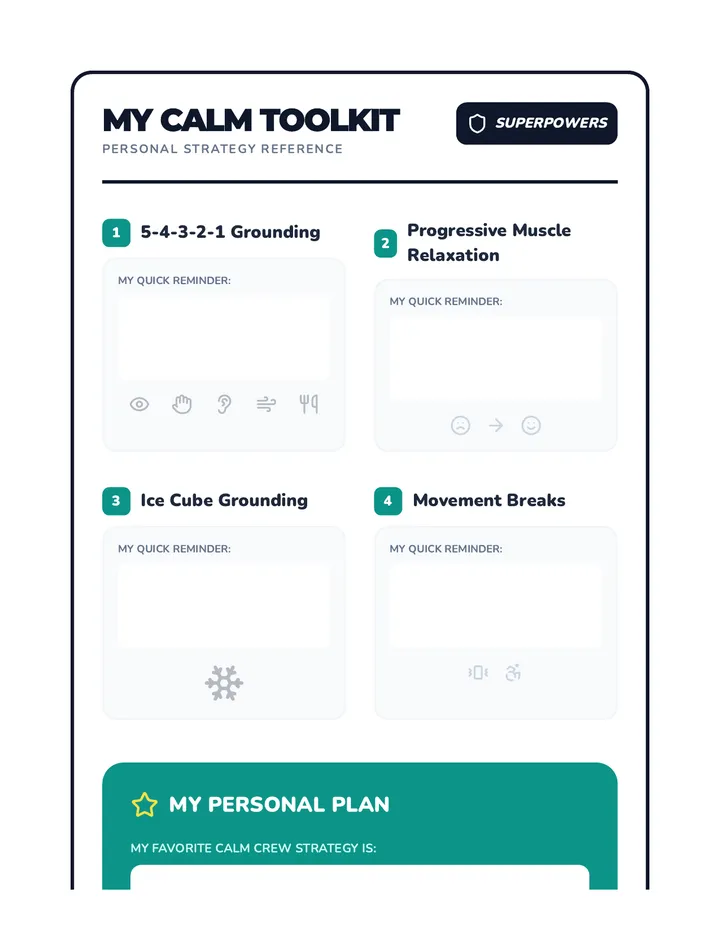
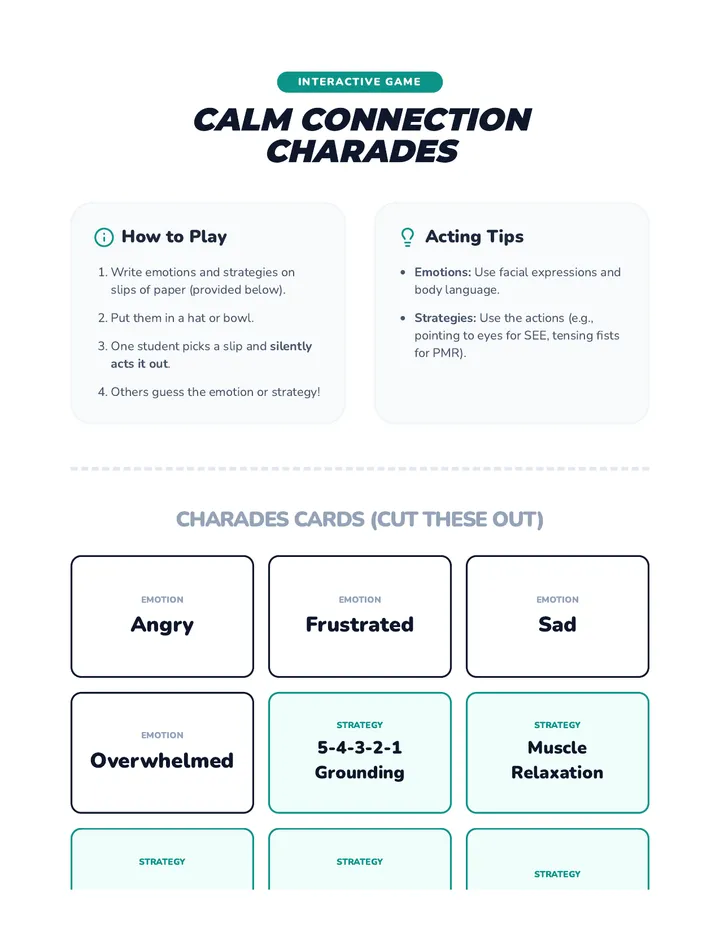
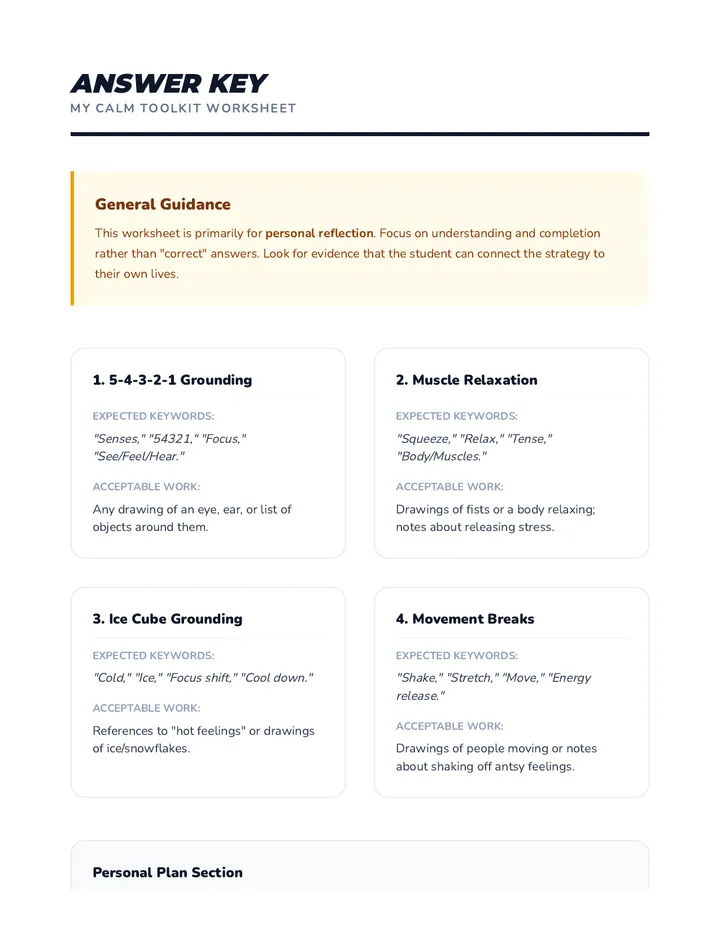
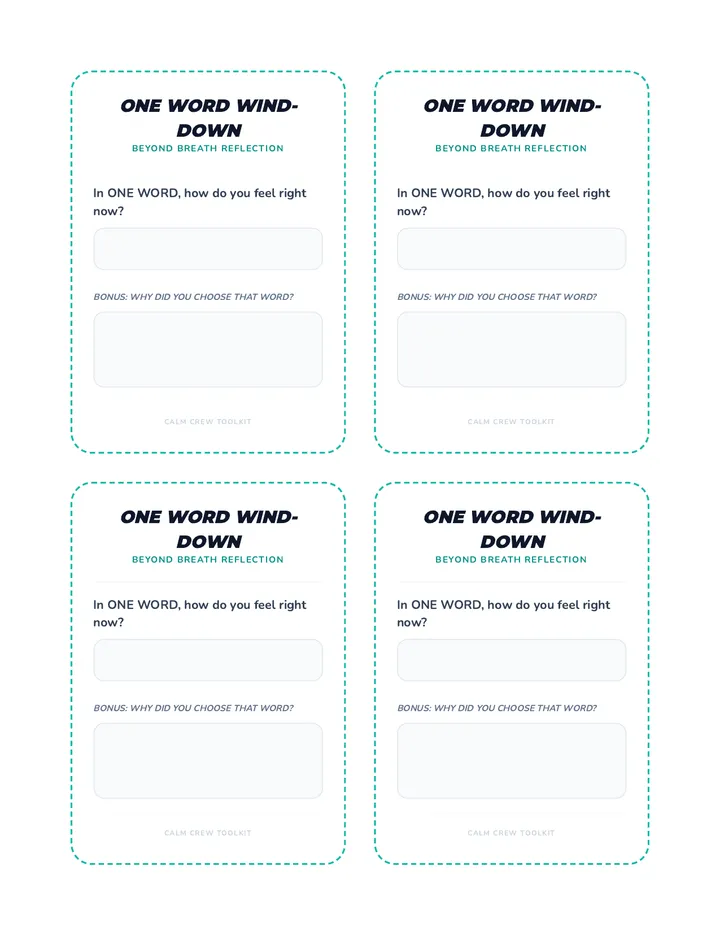
A 35-minute Tier 2 group lesson for 6th graders that introduces and practices various calming and grounding strategies beyond basic breathing, providing students with a toolkit to manage anger, frustration, and upset feelings.
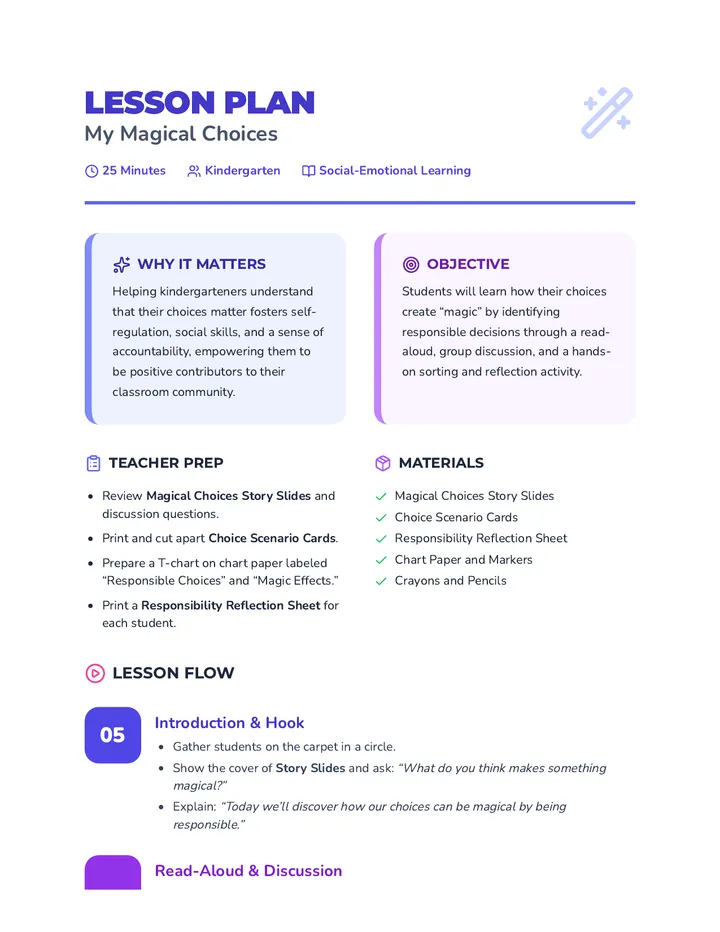
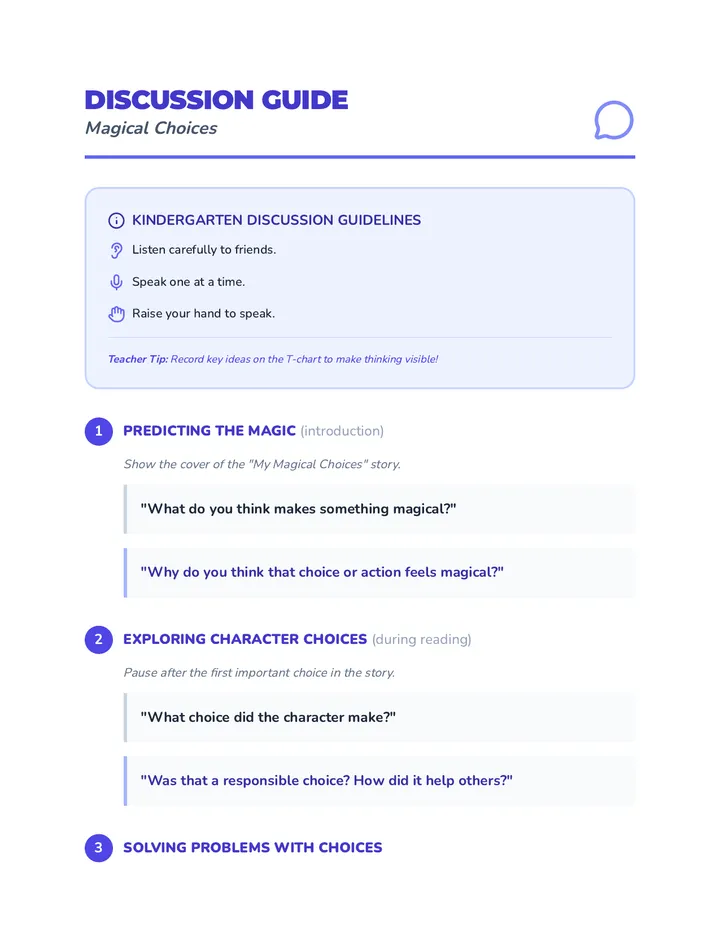
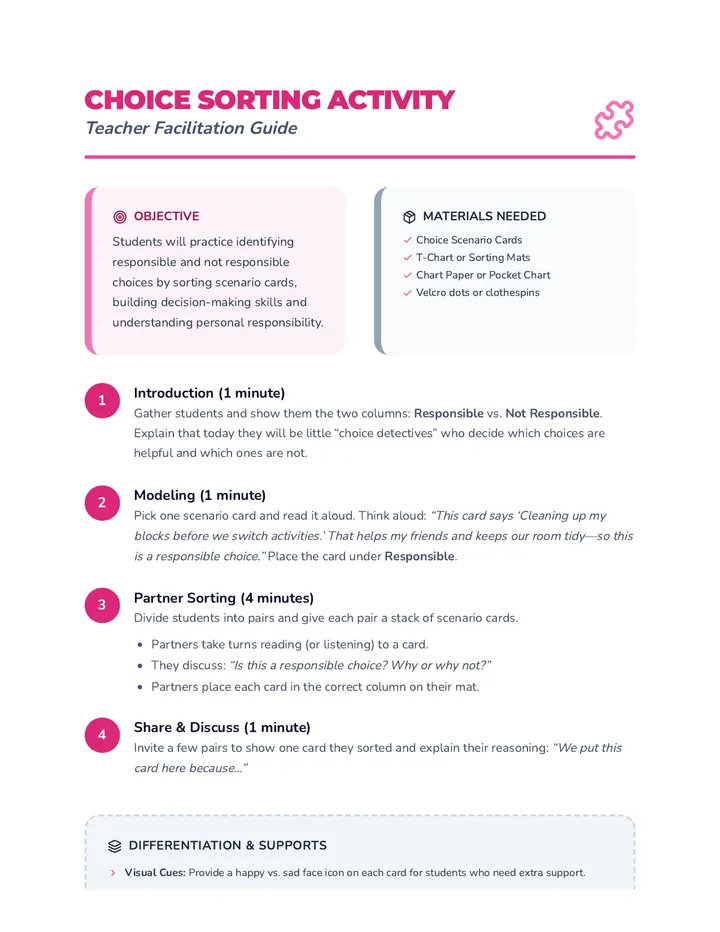
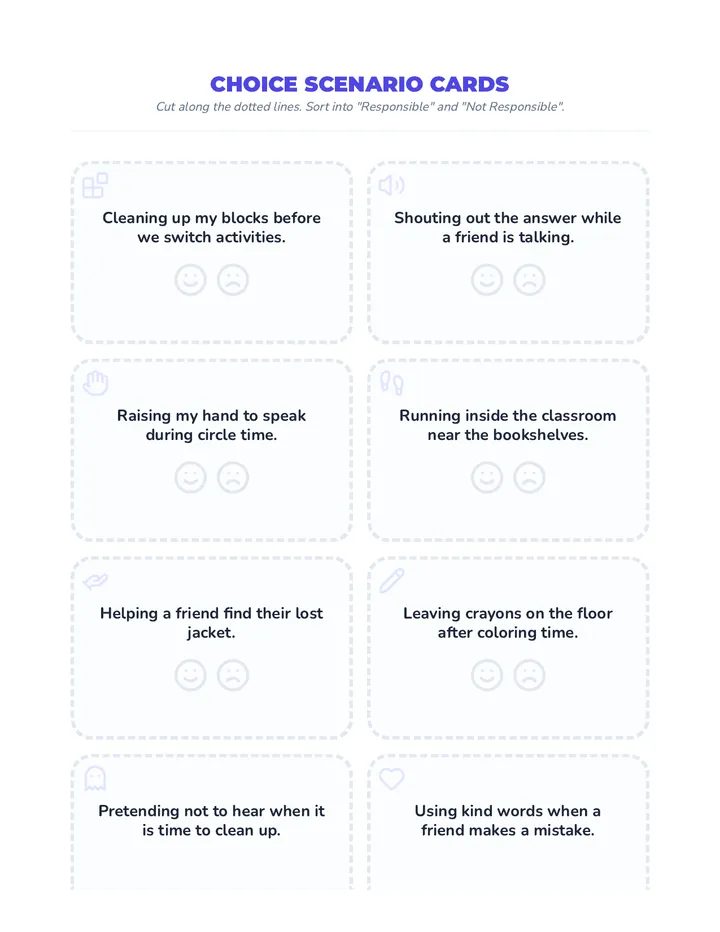
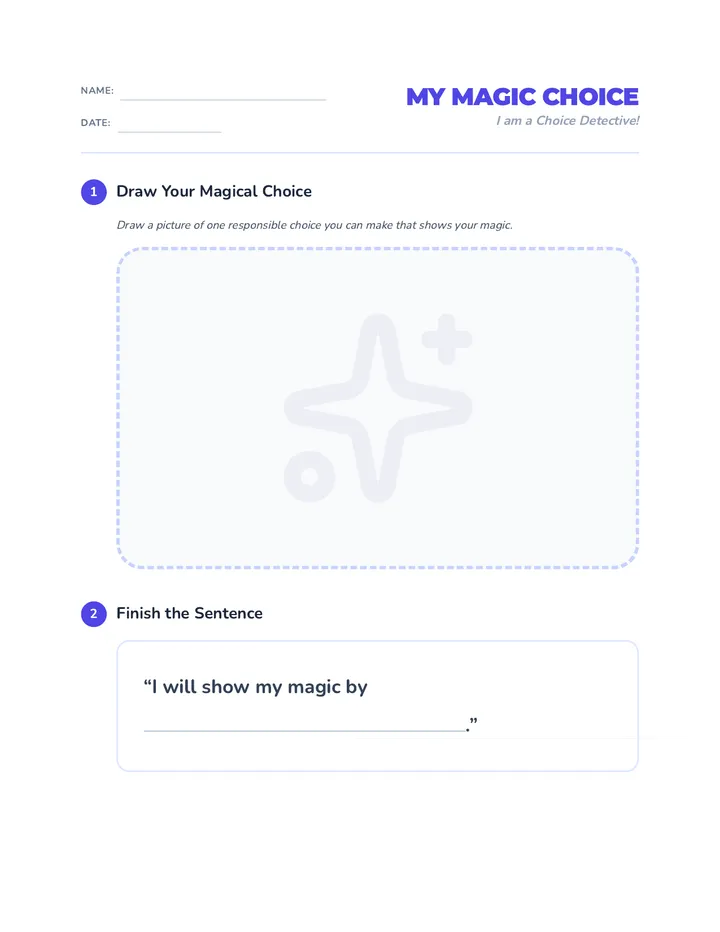
In this engaging kindergarten lesson, students explore how their choices make them responsible citizens through a fun read-aloud and hands-on activity. This 25-minute lesson builds decision-making skills and personal responsibility while celebrating each child’s unique 'magic.'