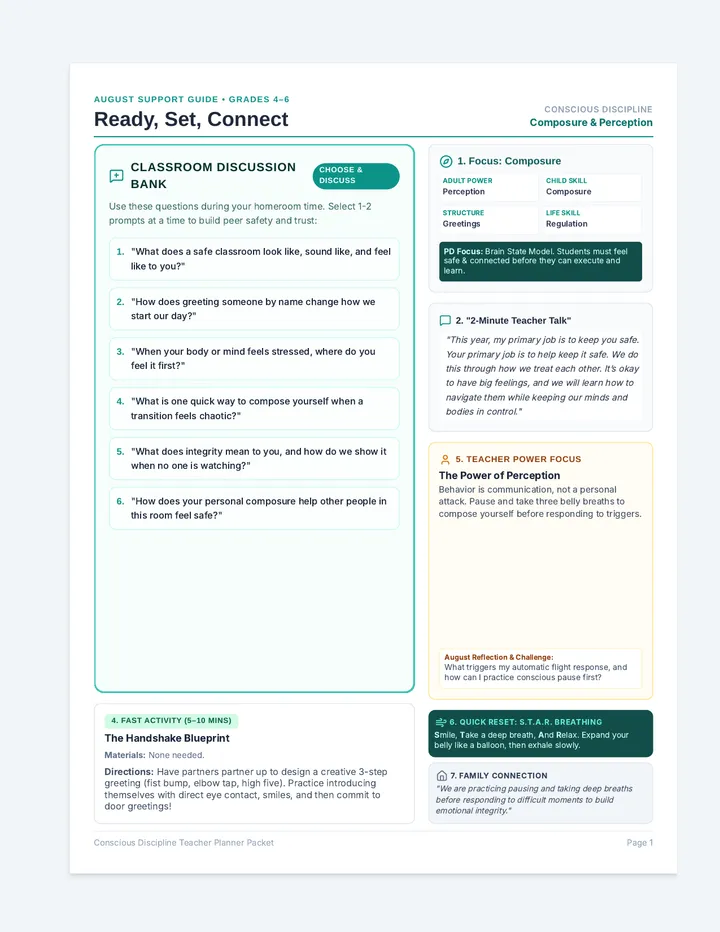
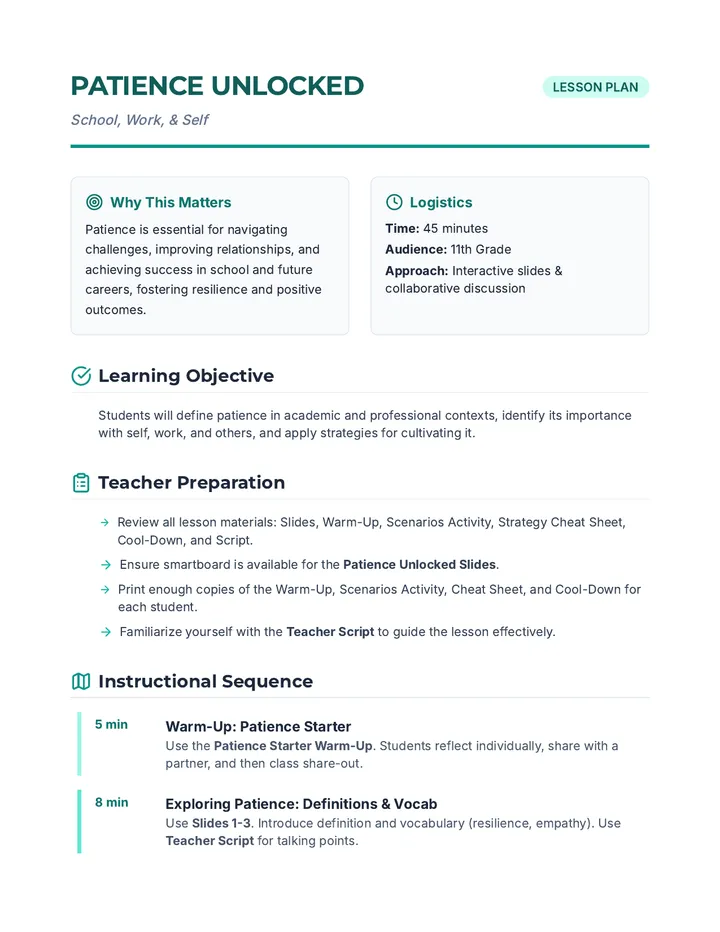
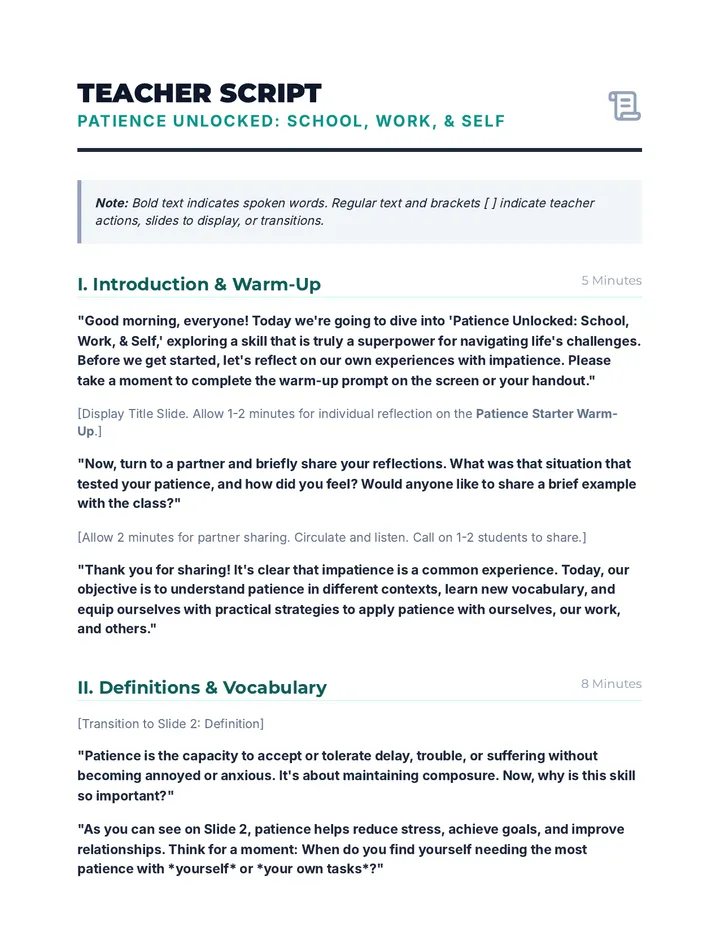
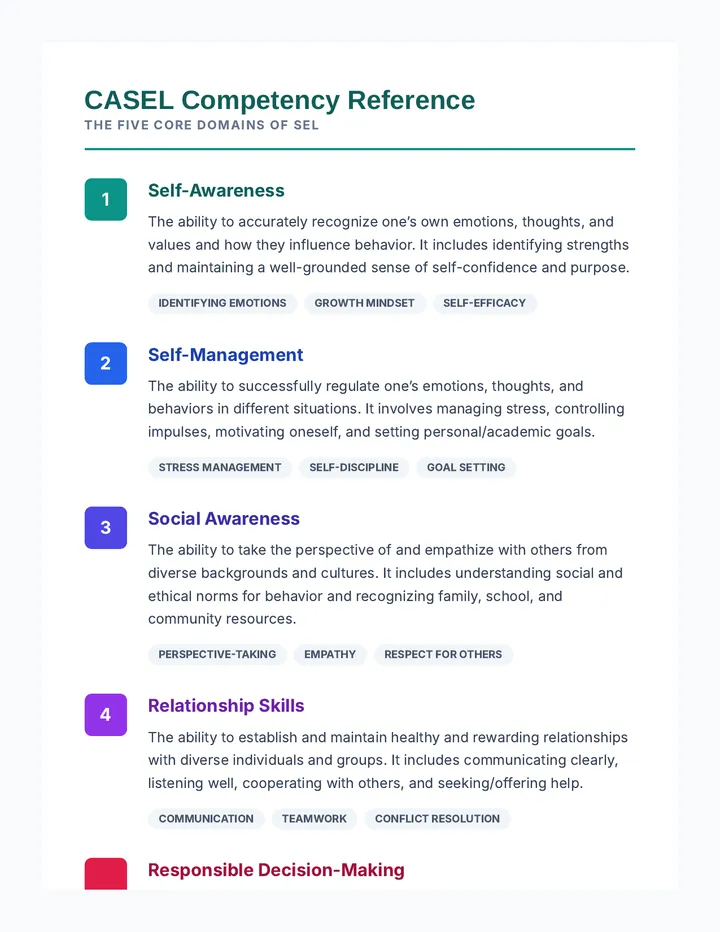
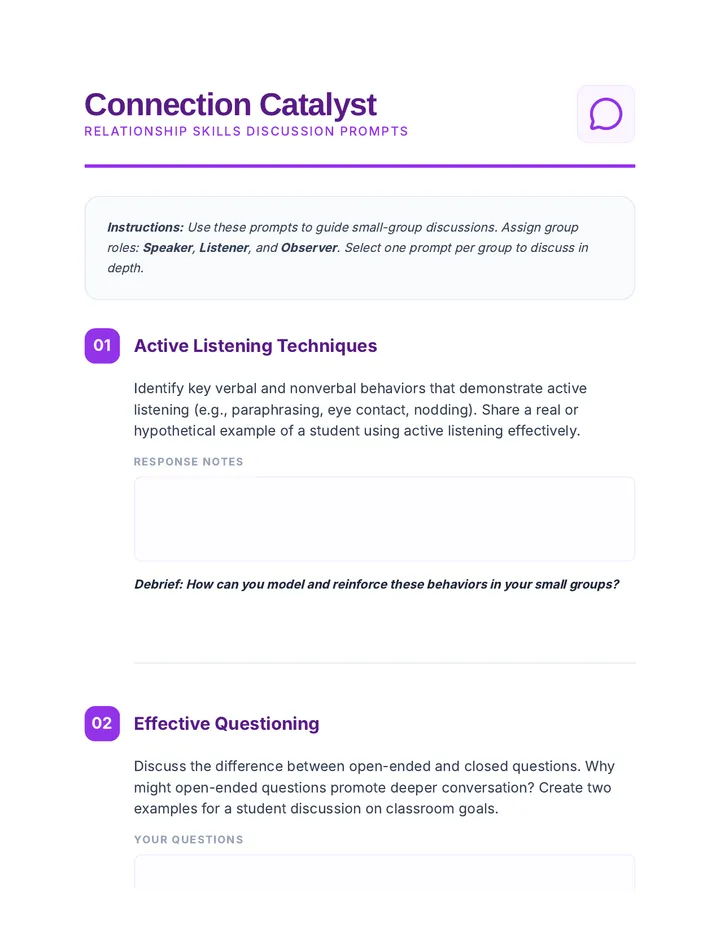
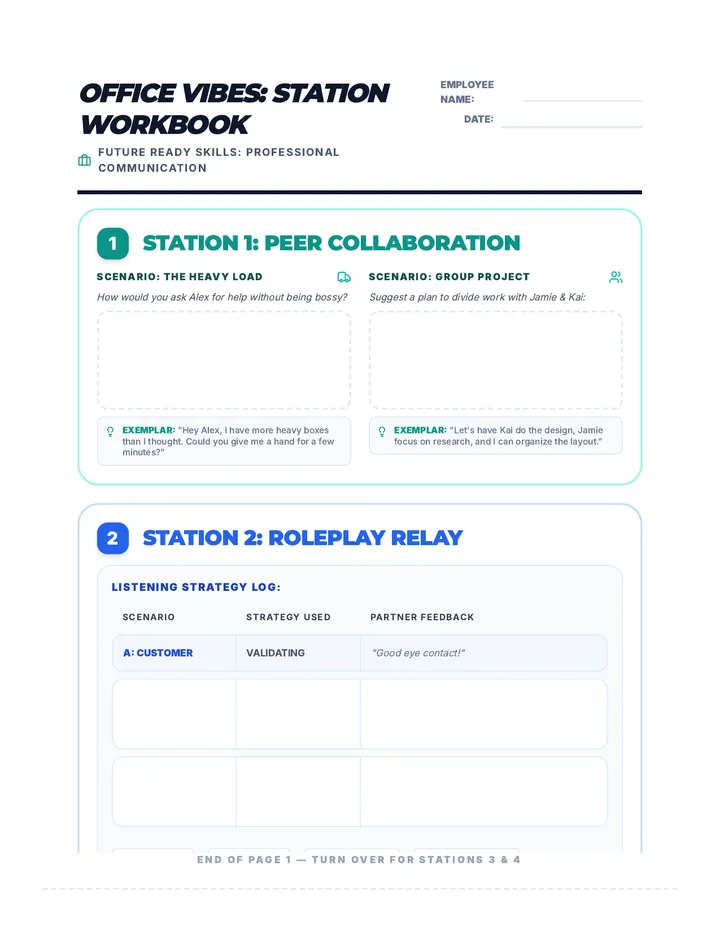
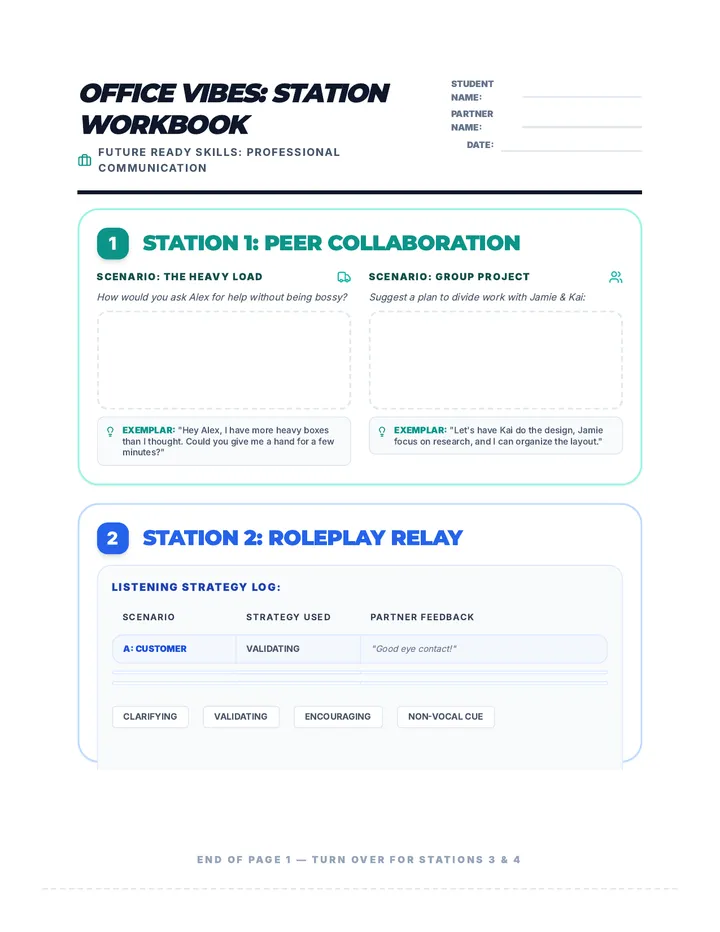
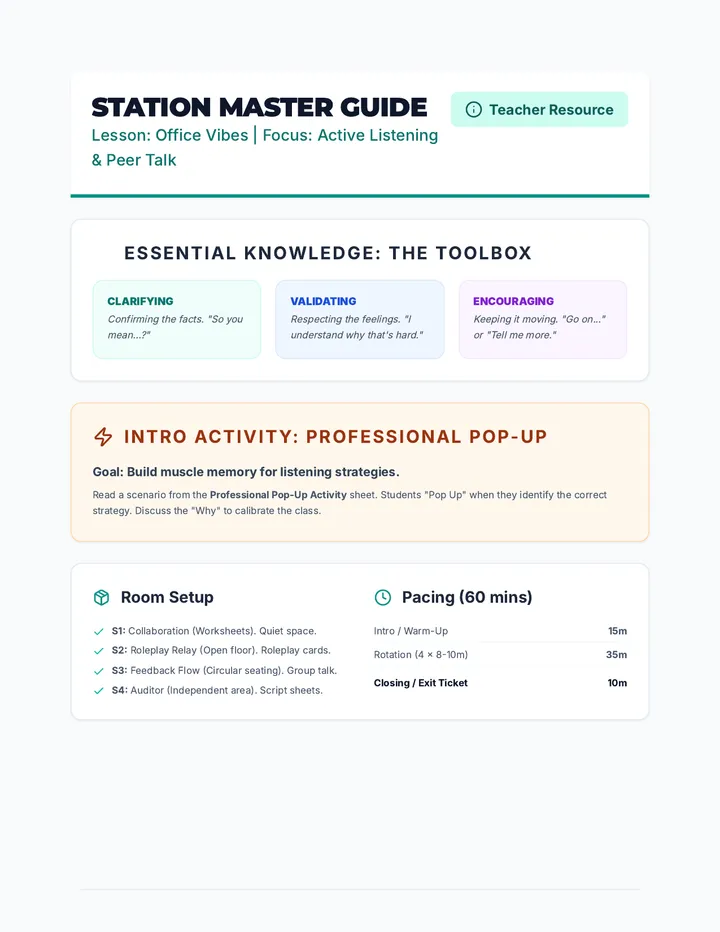
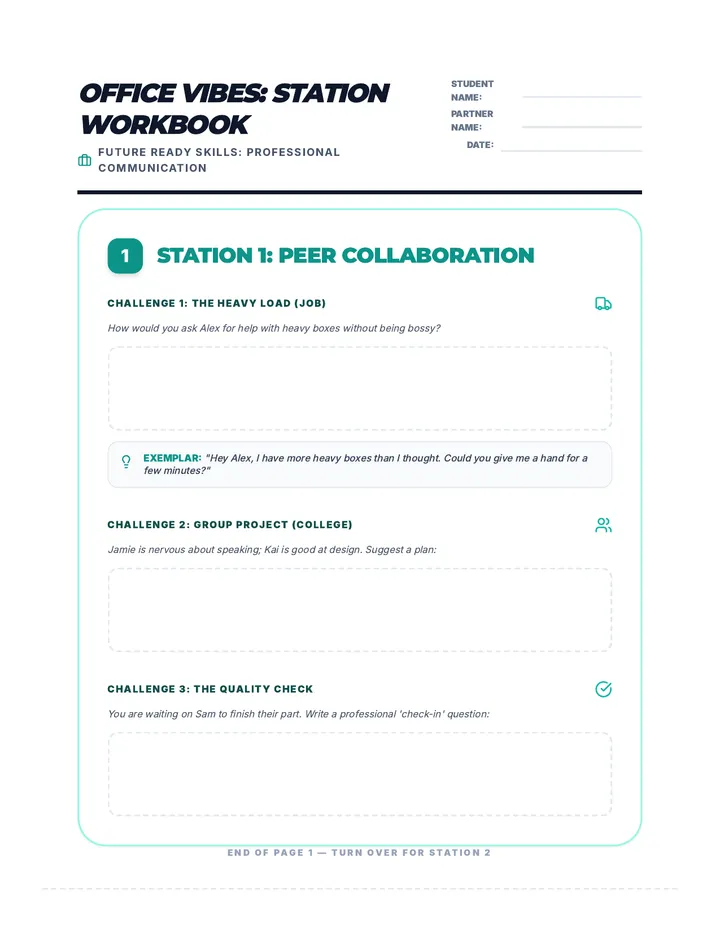
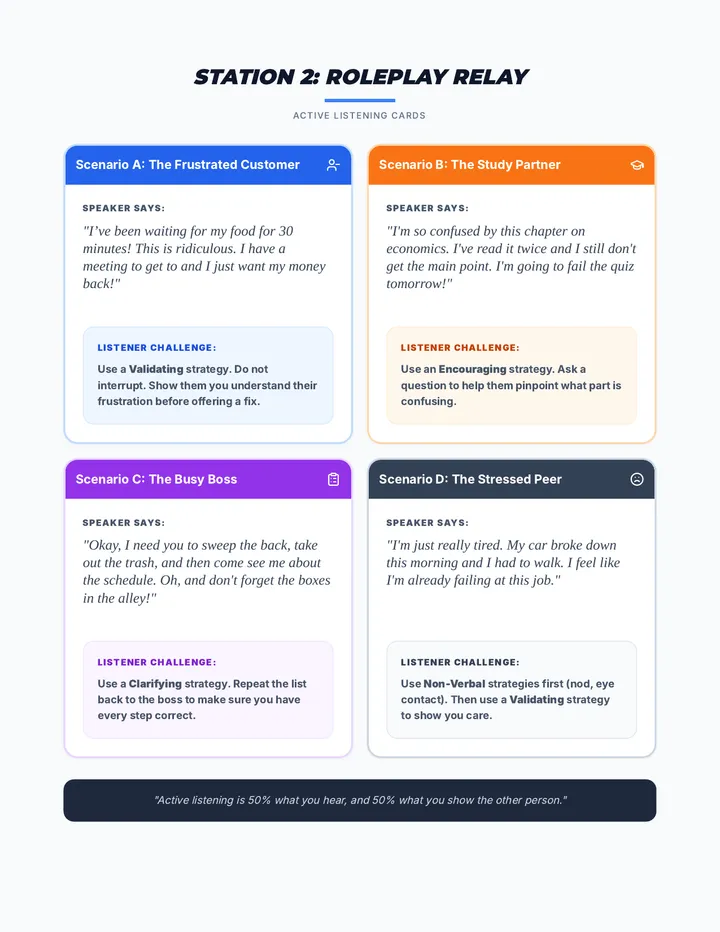
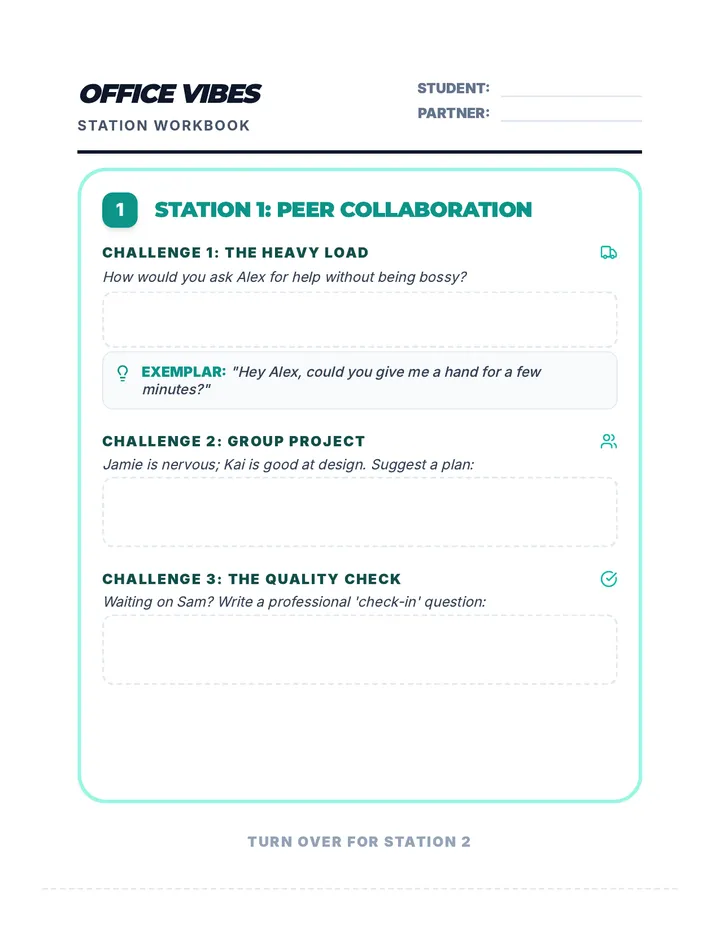
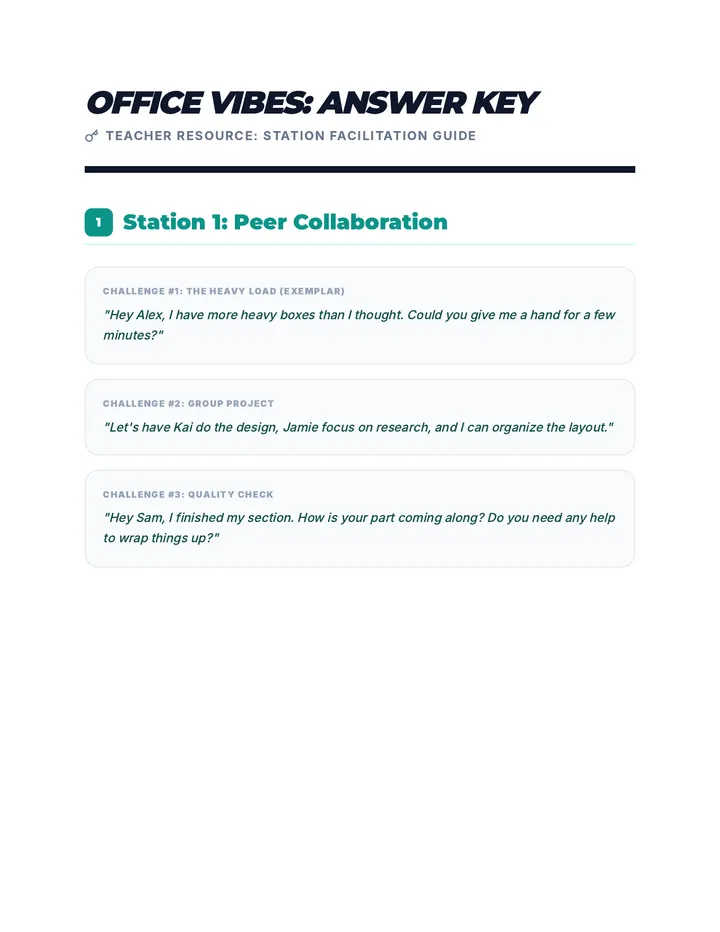
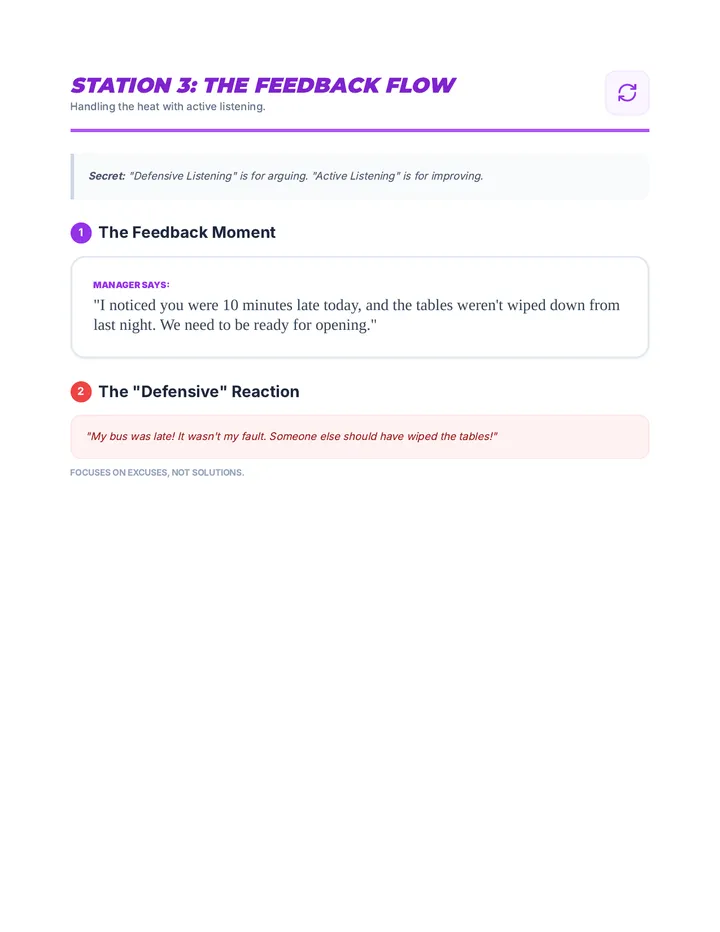
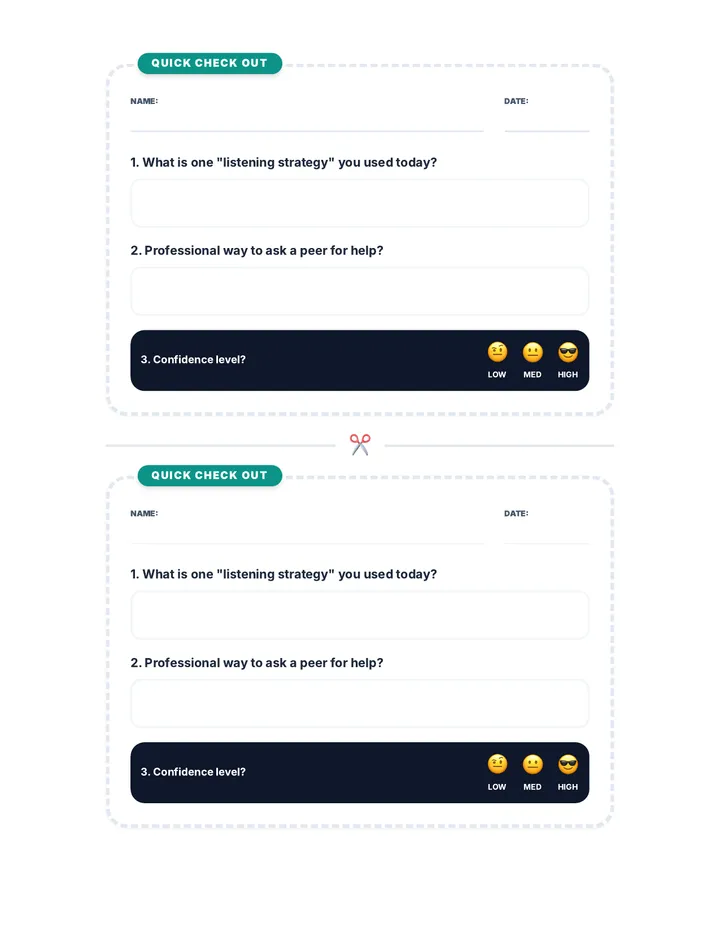
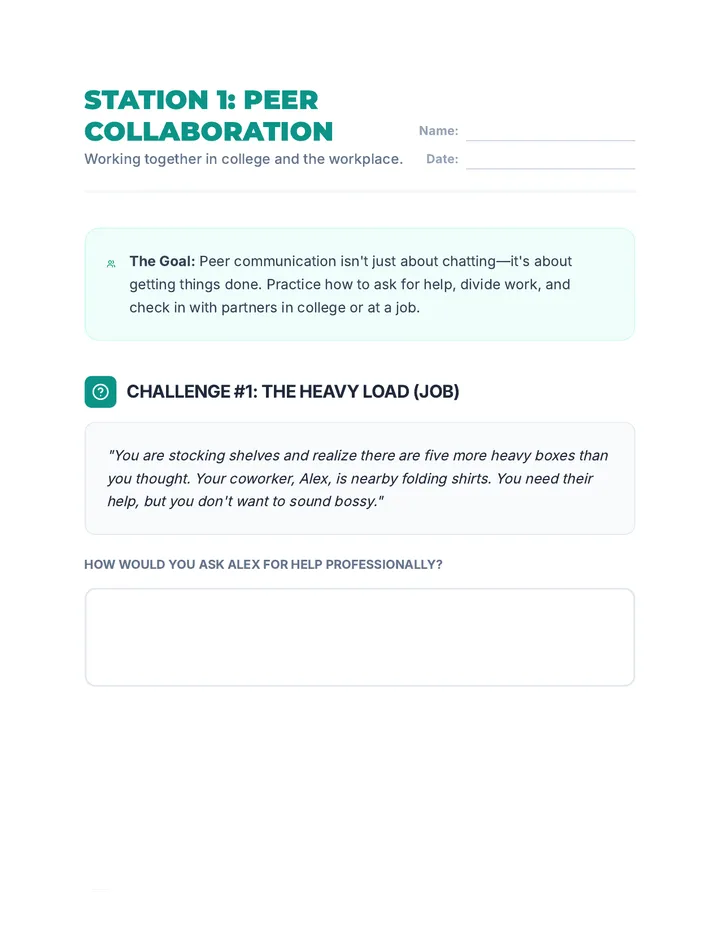
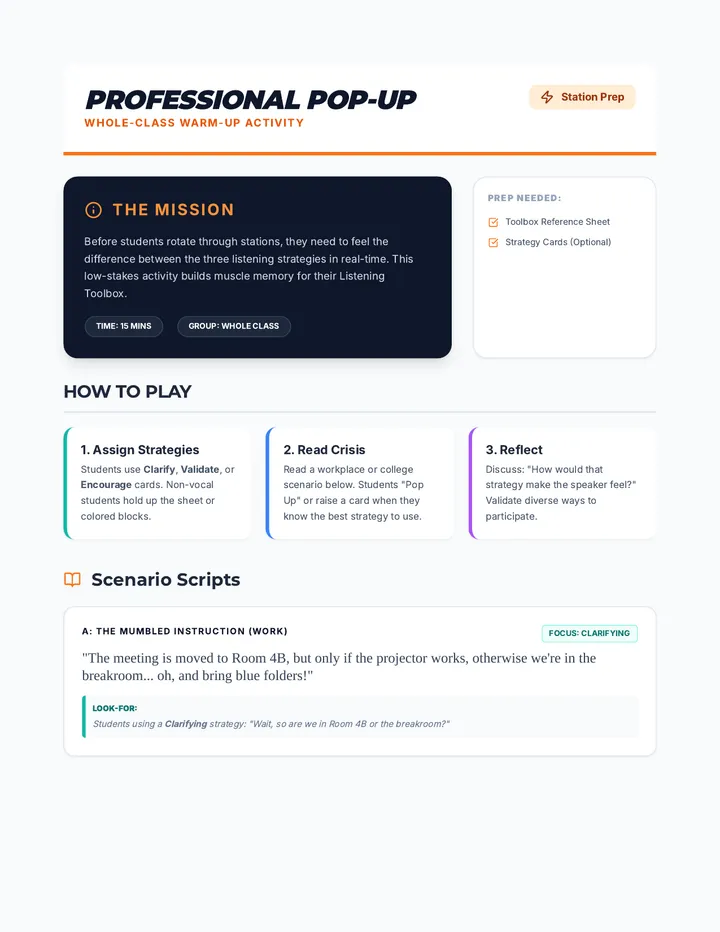
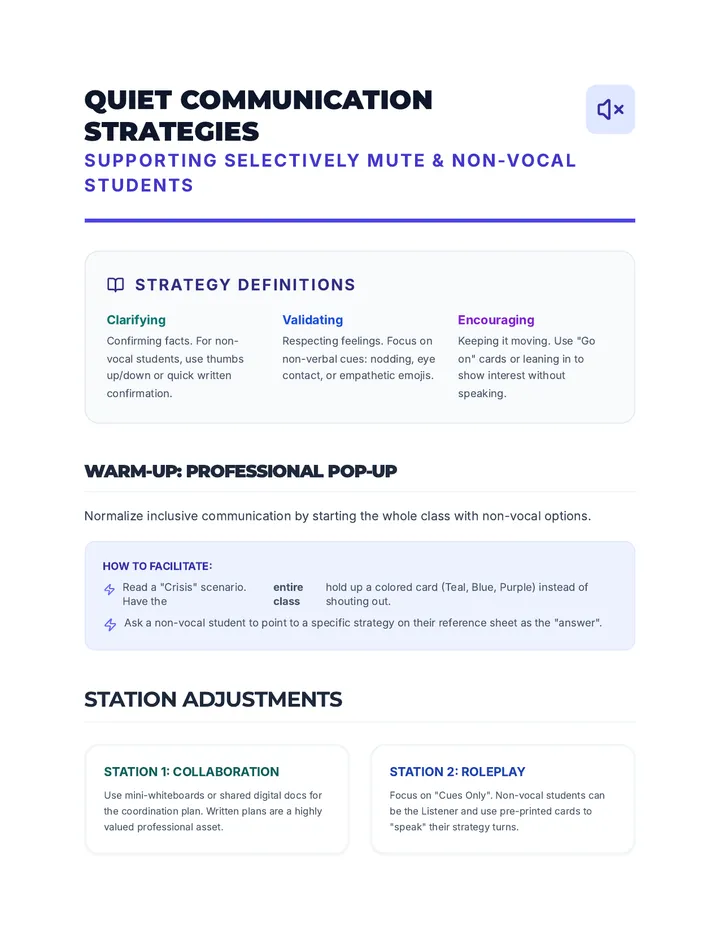
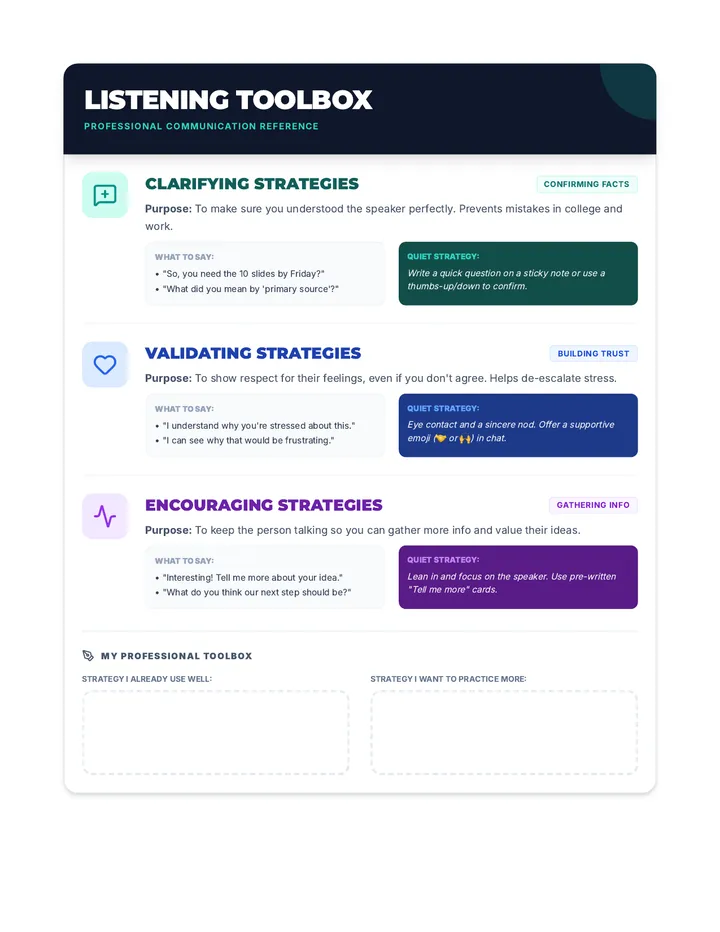
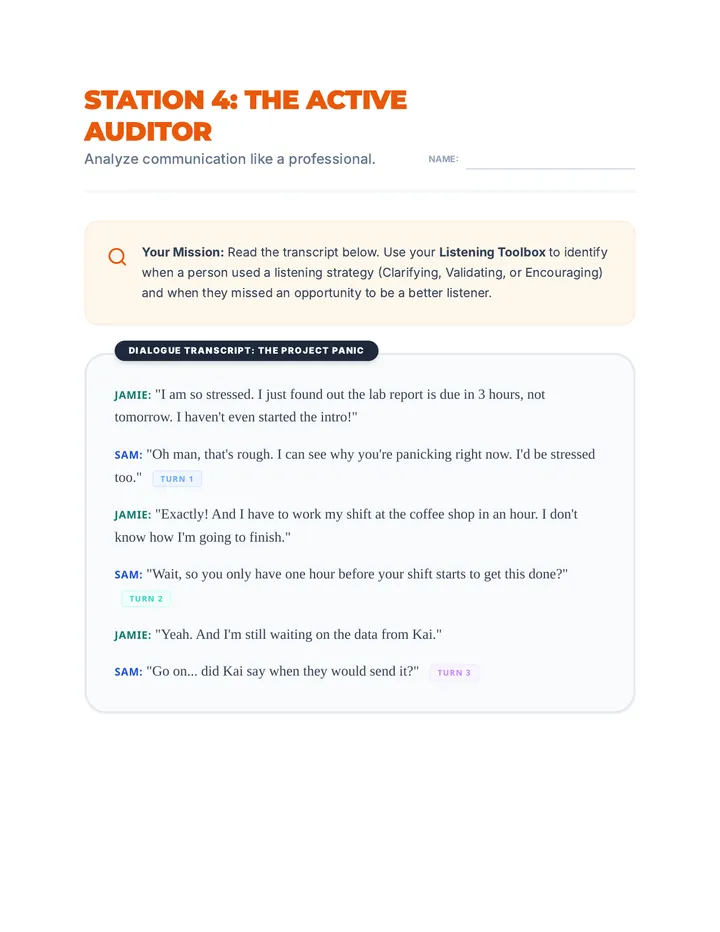
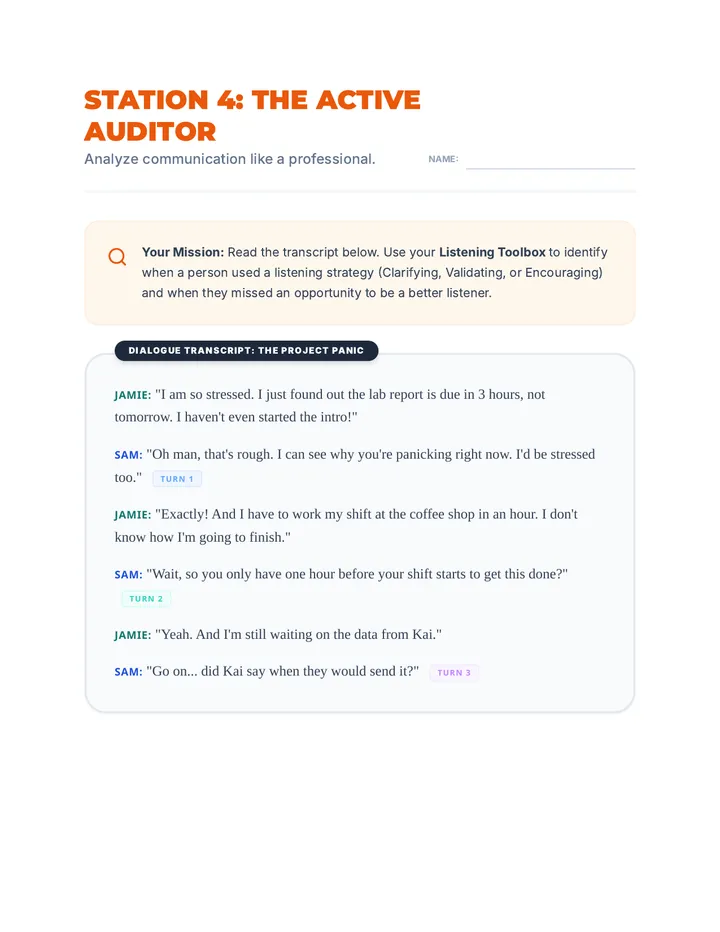
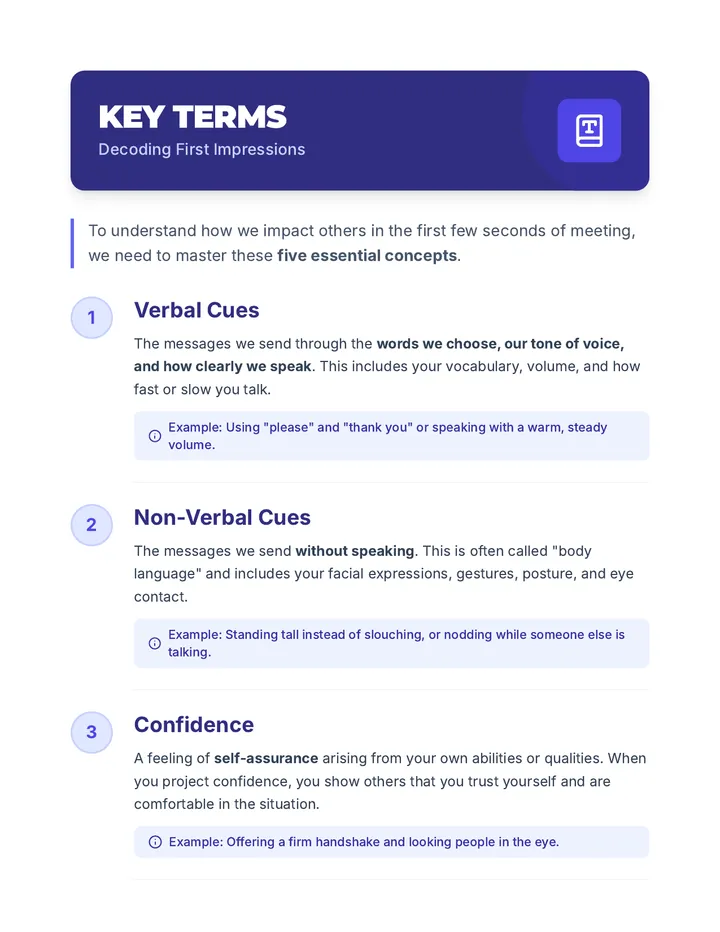
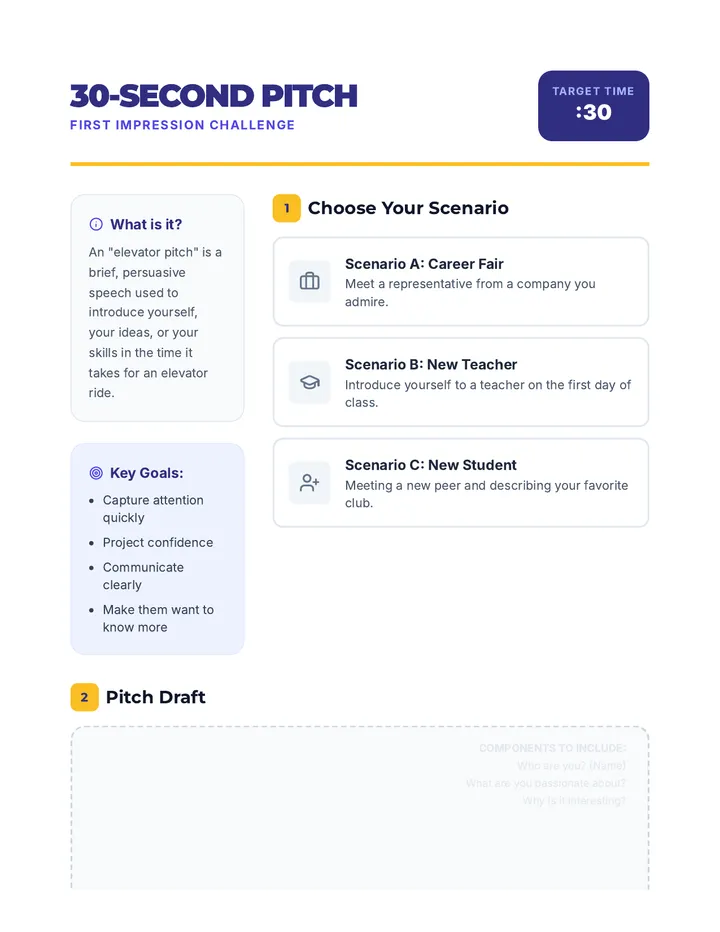
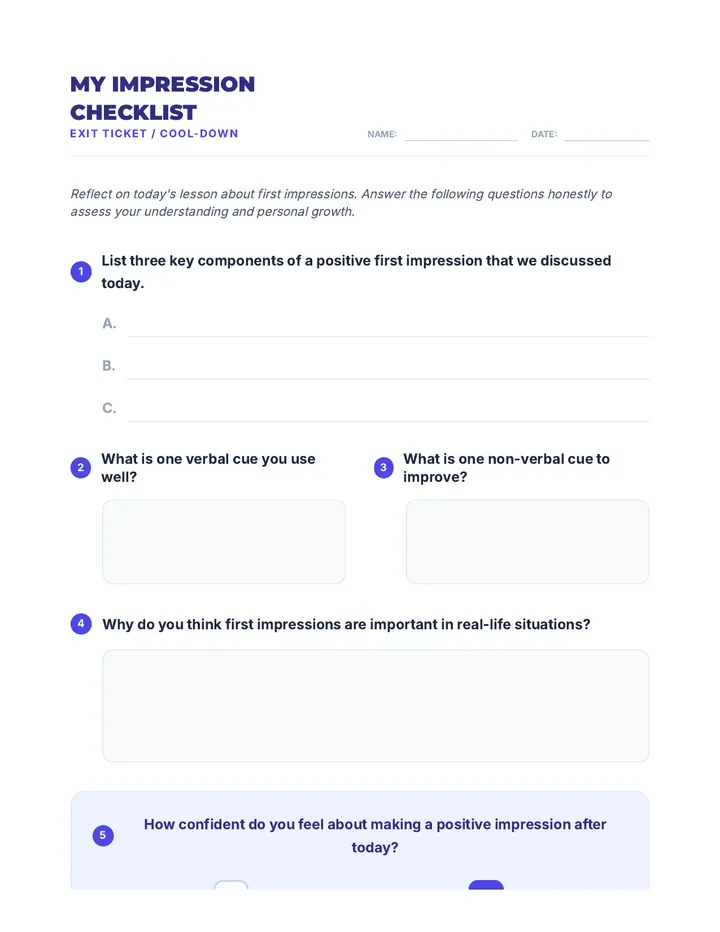
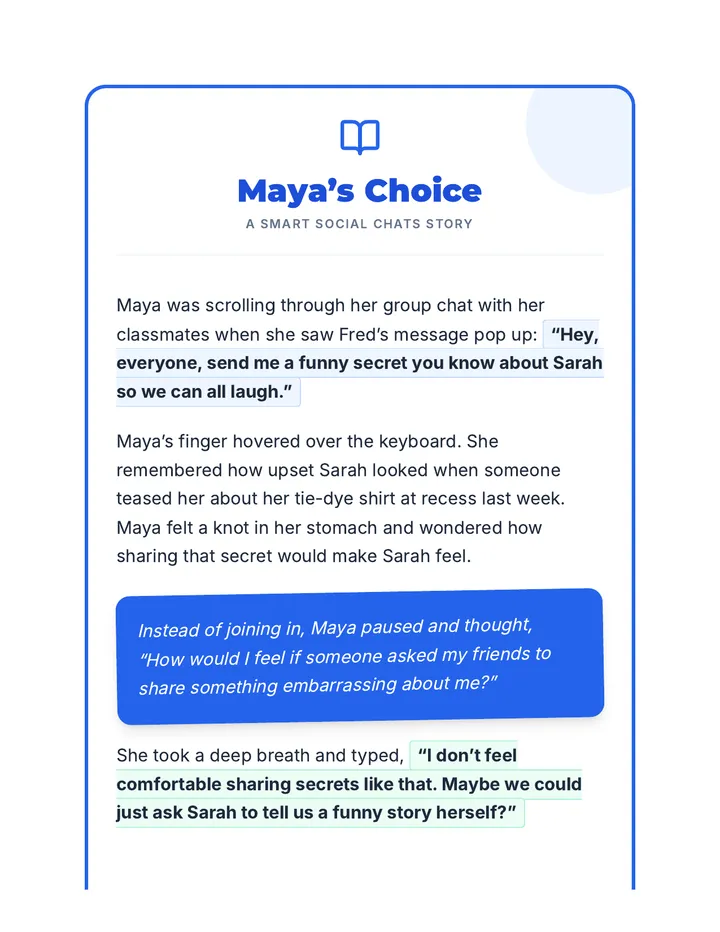
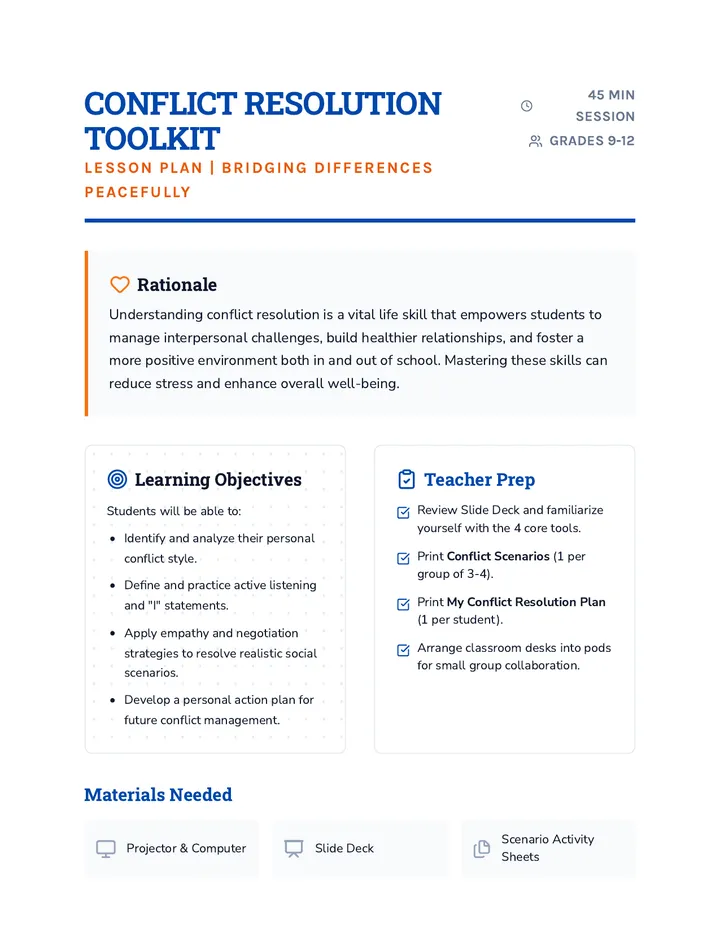
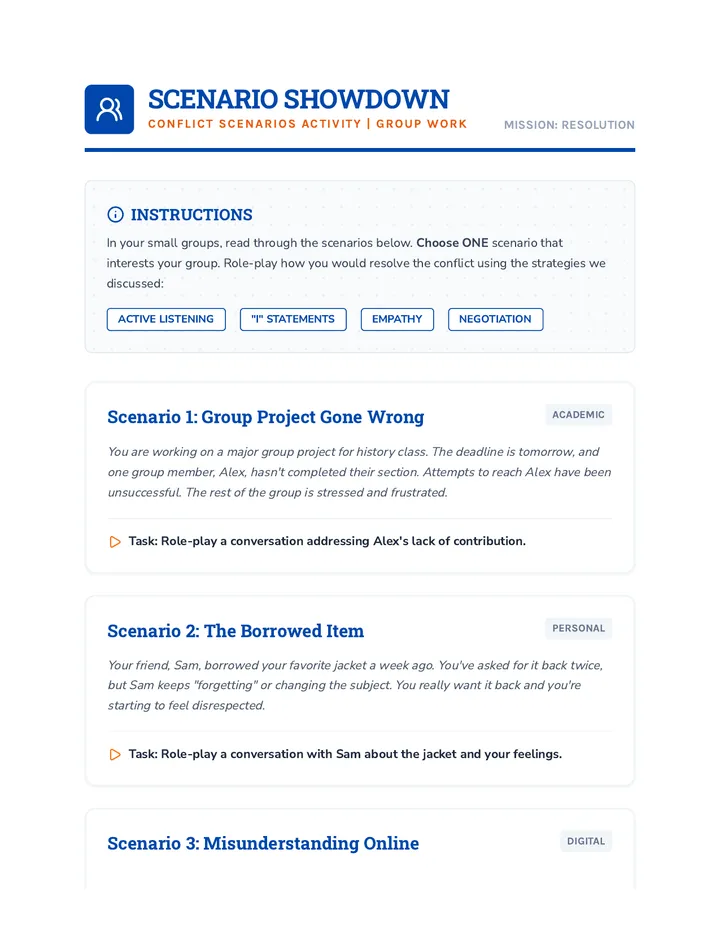
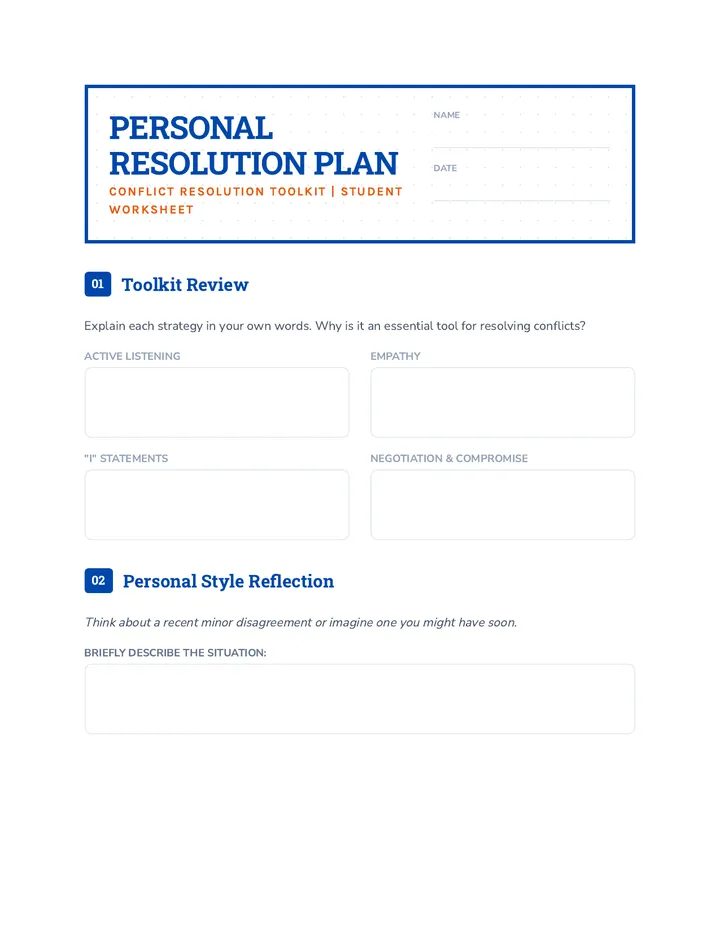
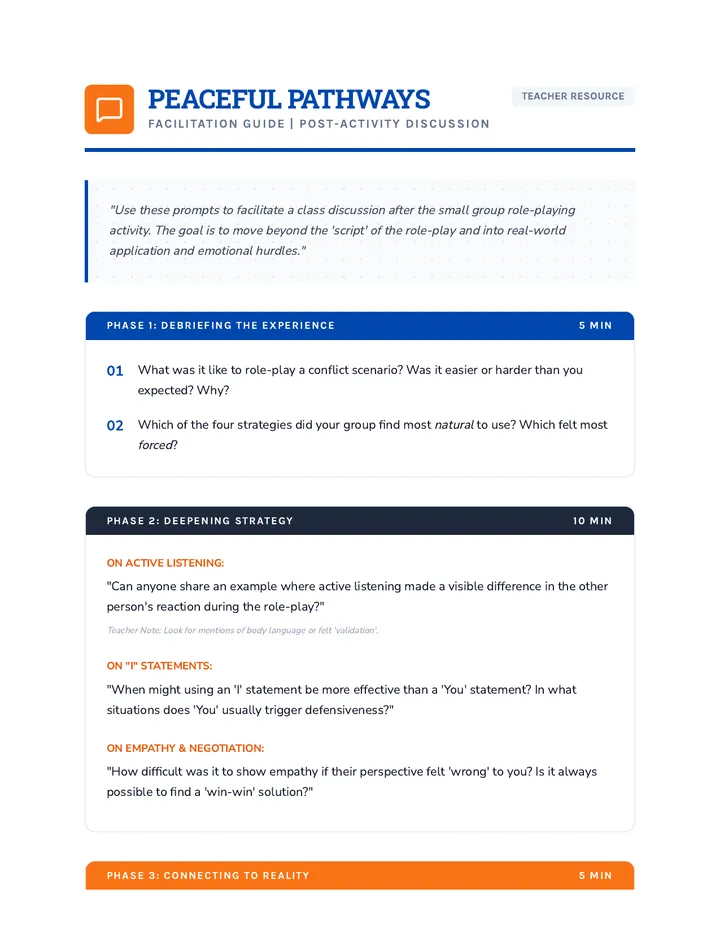
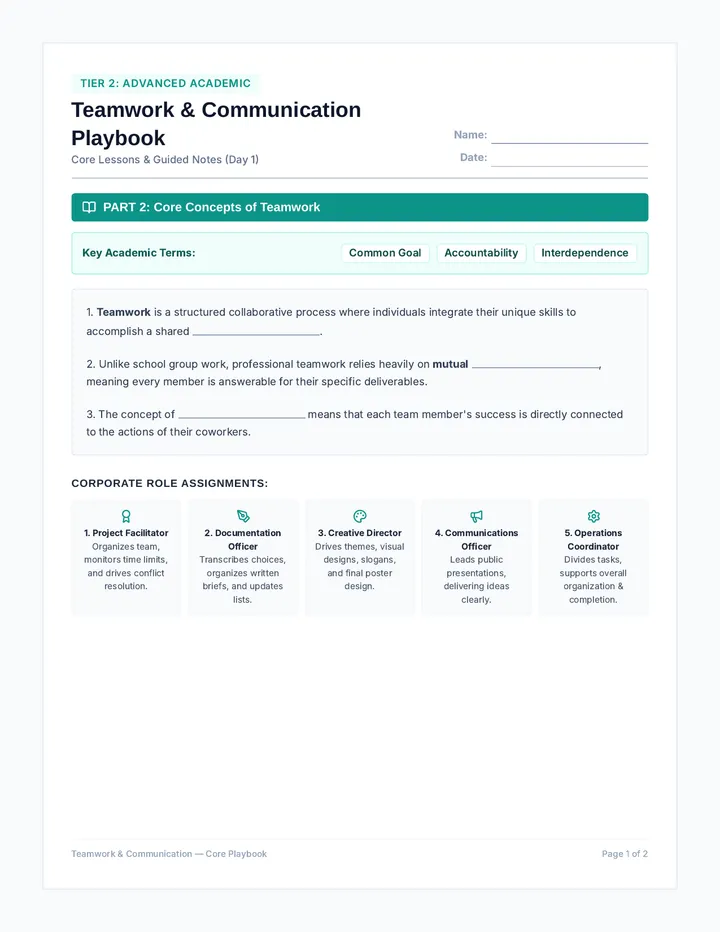
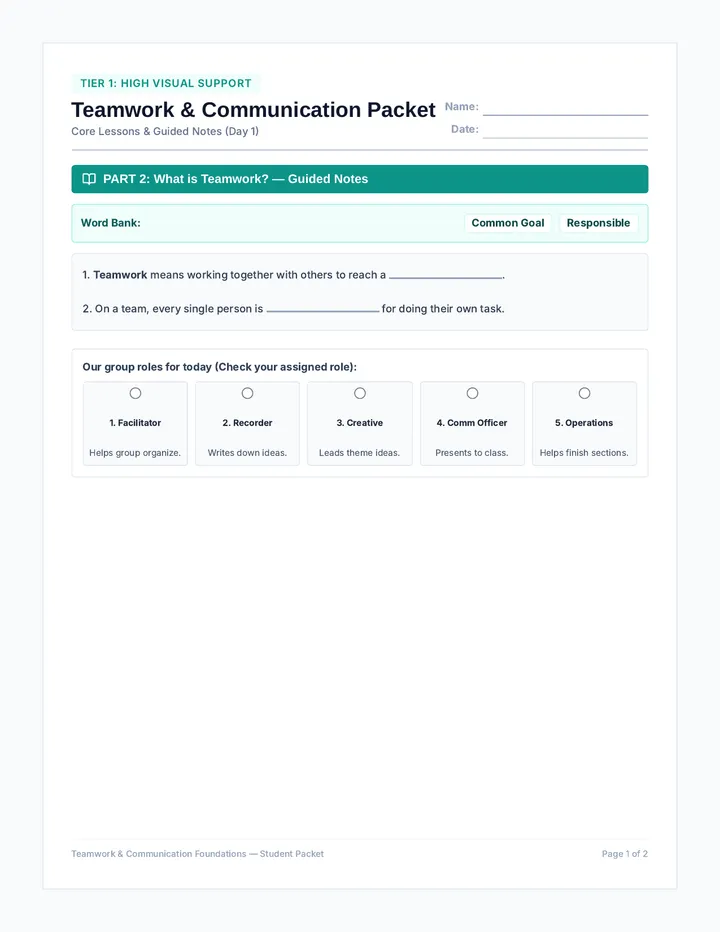
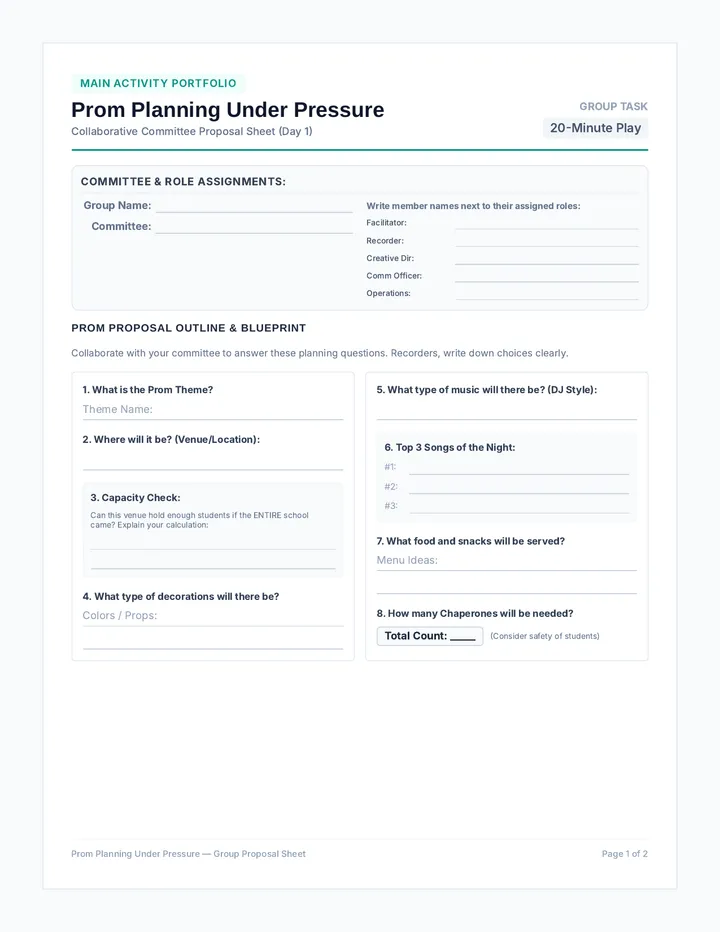
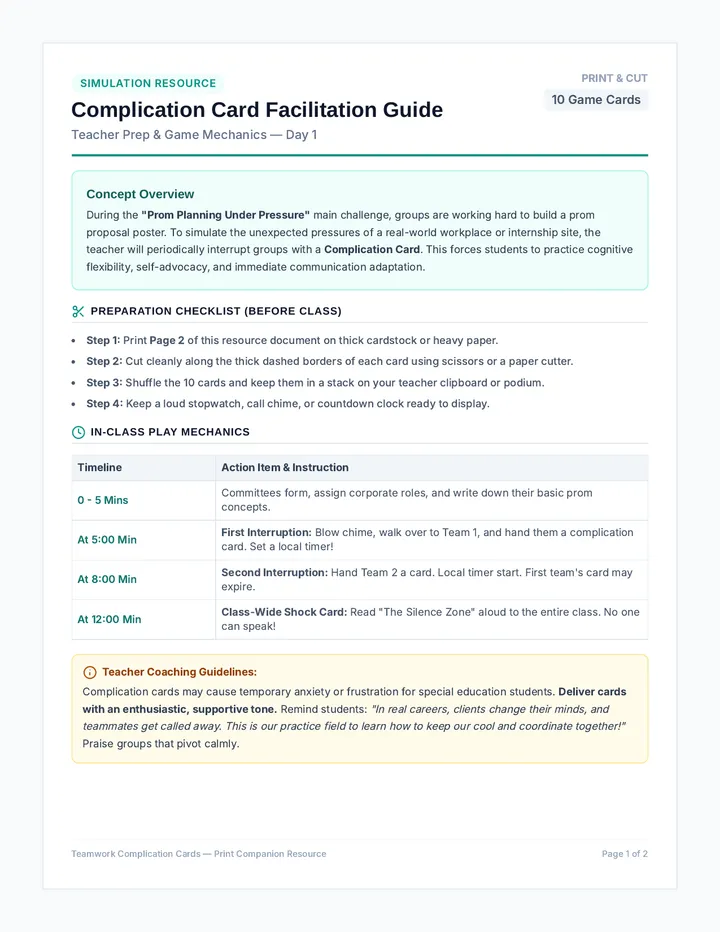
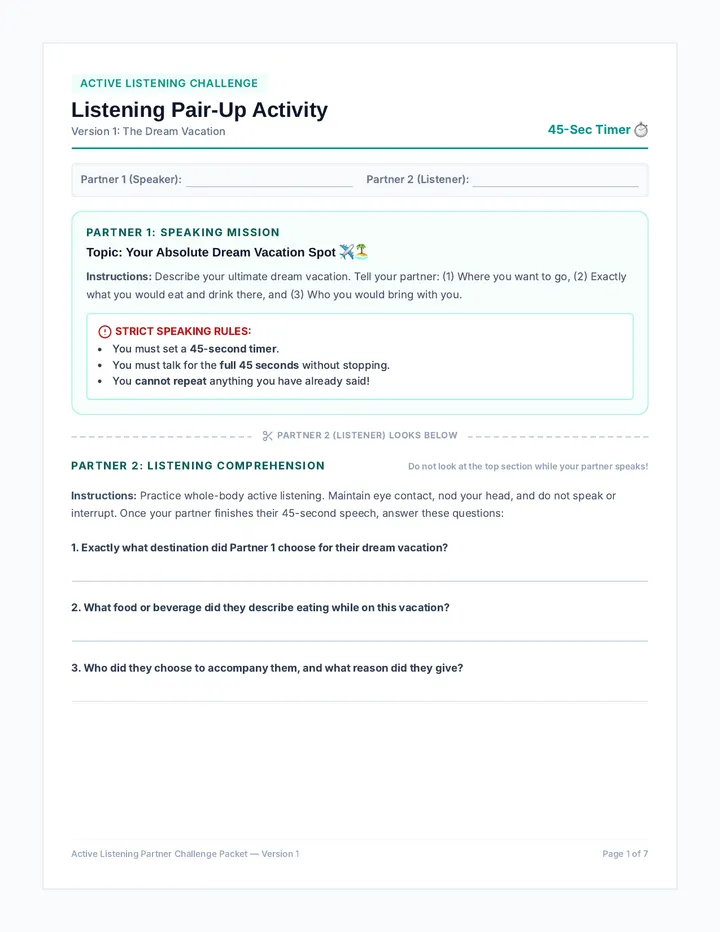
Active listening, assertive expression, and boundary-setting strategies for interpersonal success. Develops proficiency in conflict mediation, cooperative teamwork, and the cultivation of healthy romantic and platonic connections.
An advanced five-part professional development series for 11th graders focusing on the psychology of conflict, high-stakes communication, and strategic diplomacy. Students prepare for adult environments by mastering emotional intelligence, interest-based negotiation, and professional digital protocols.
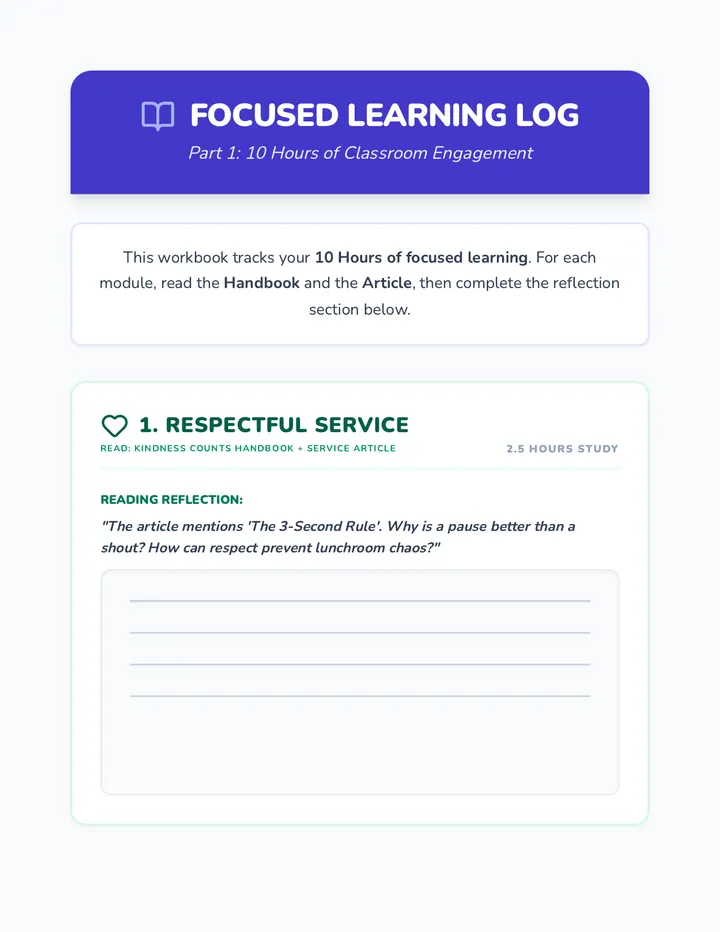
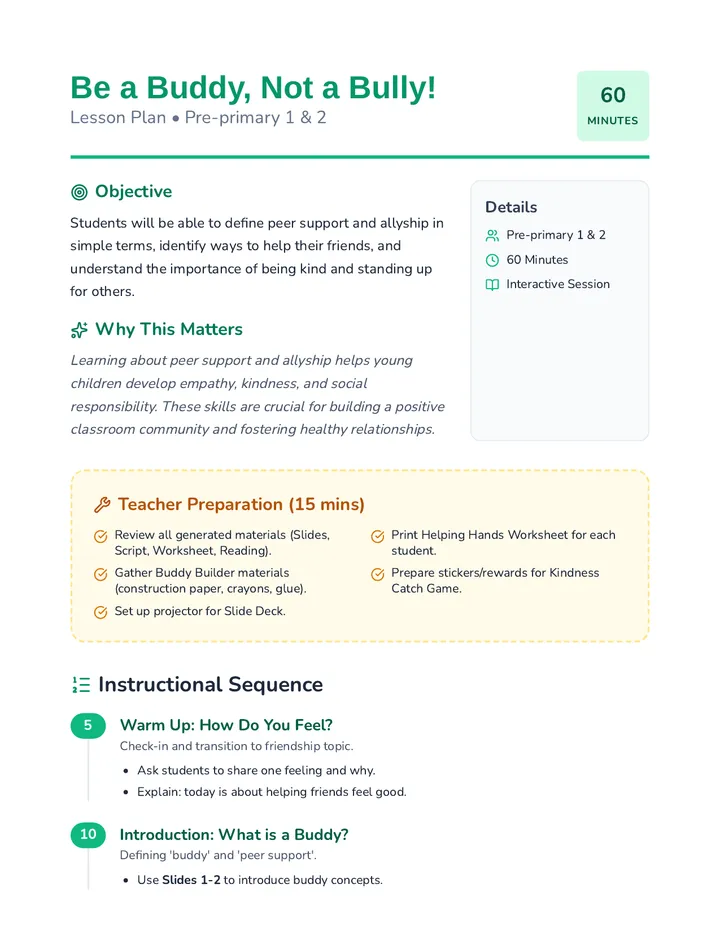
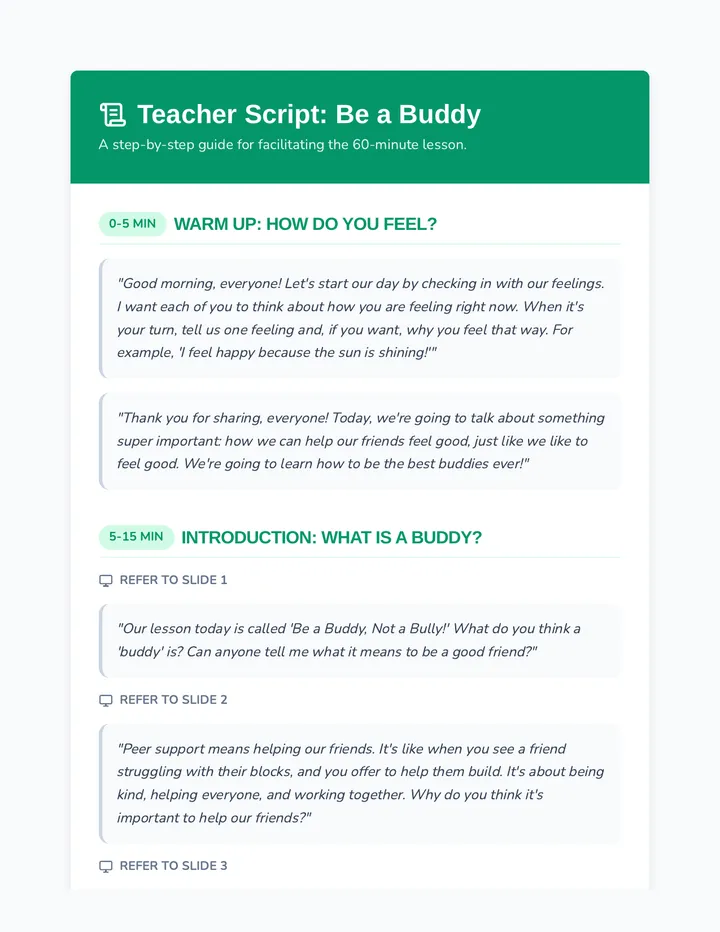
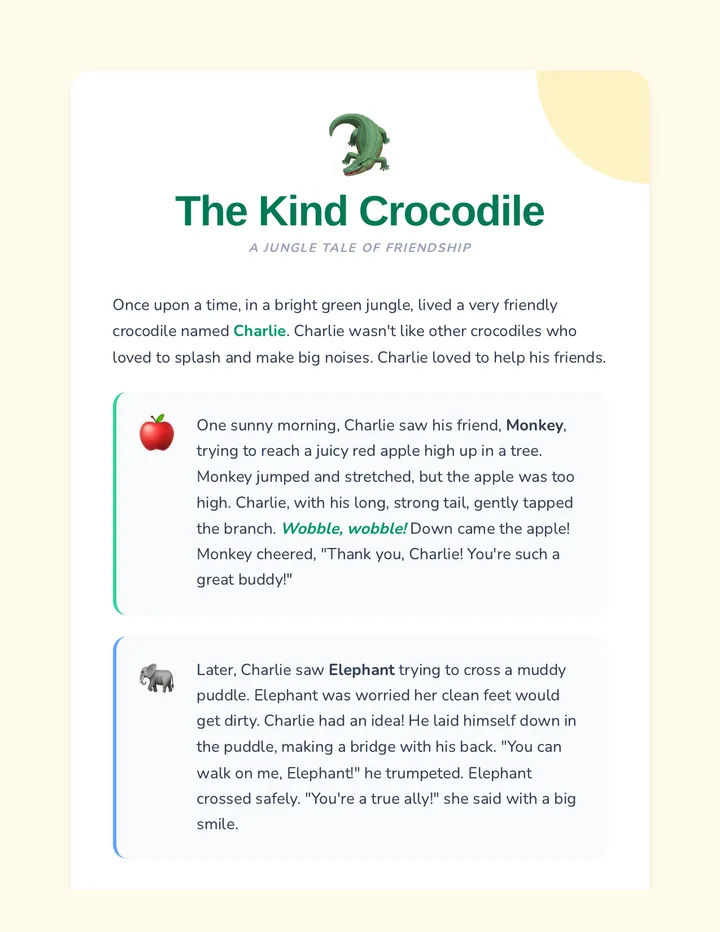
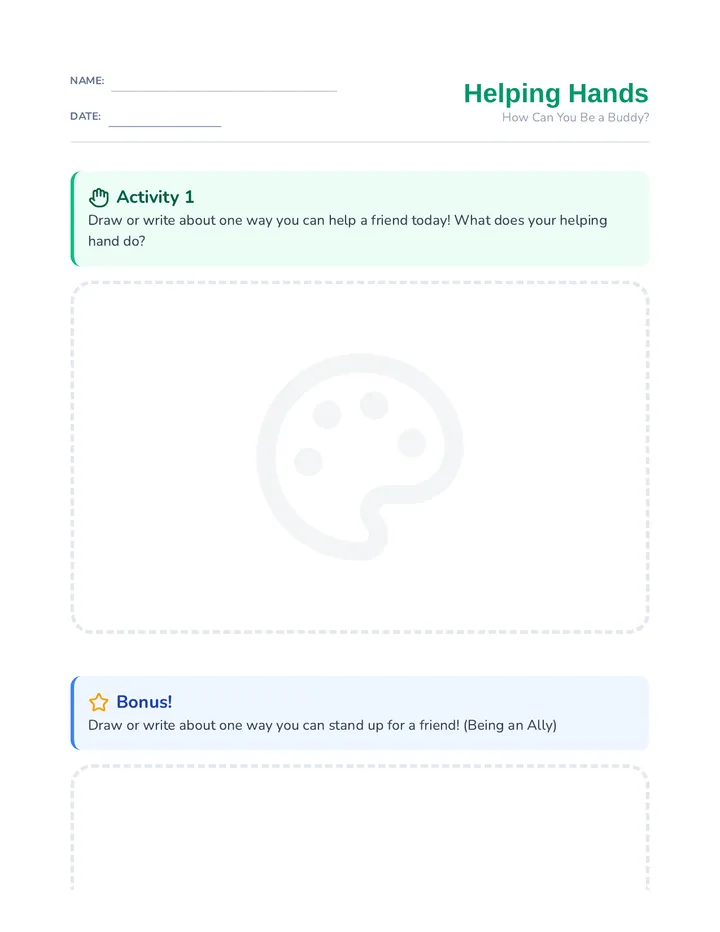
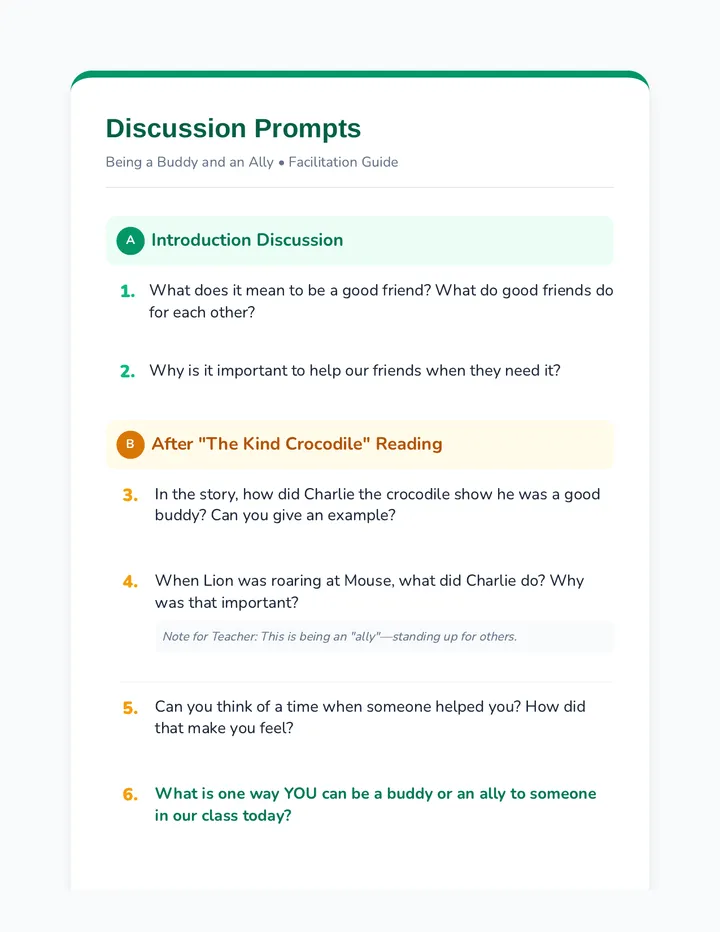
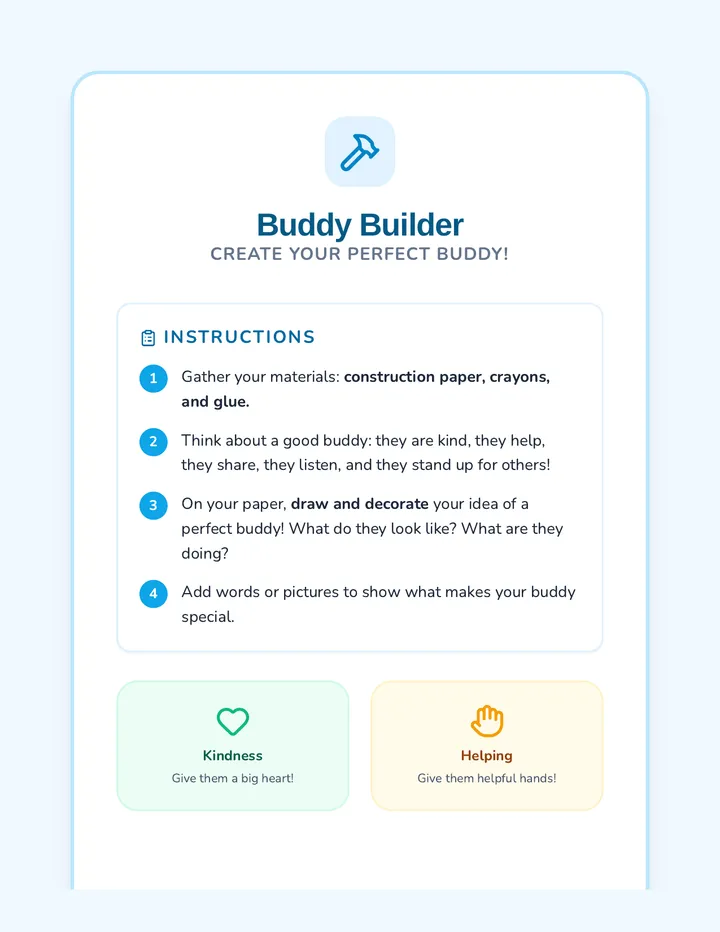
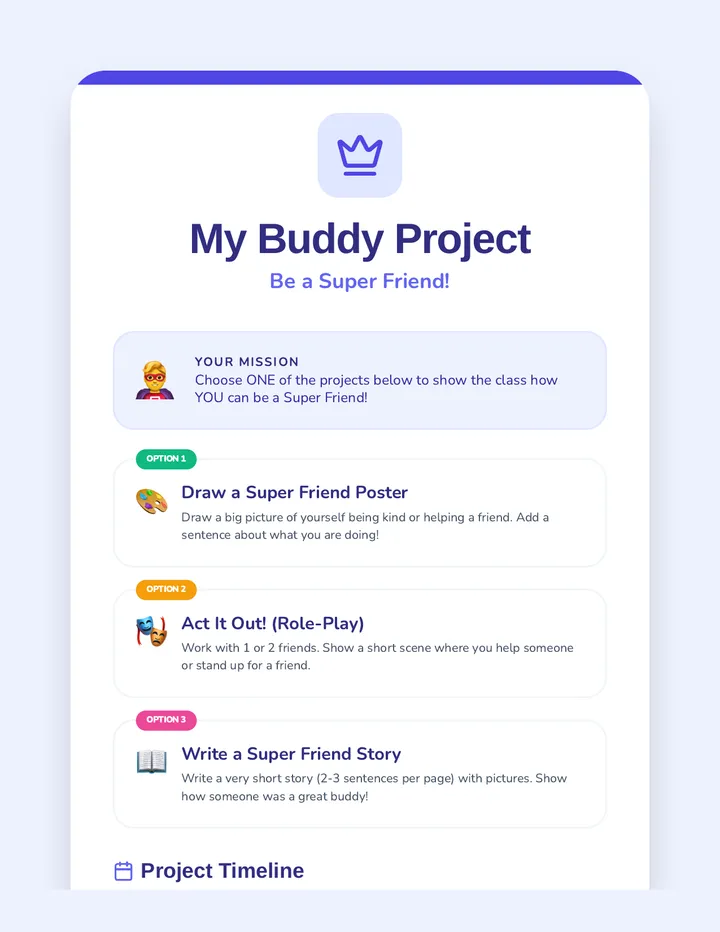
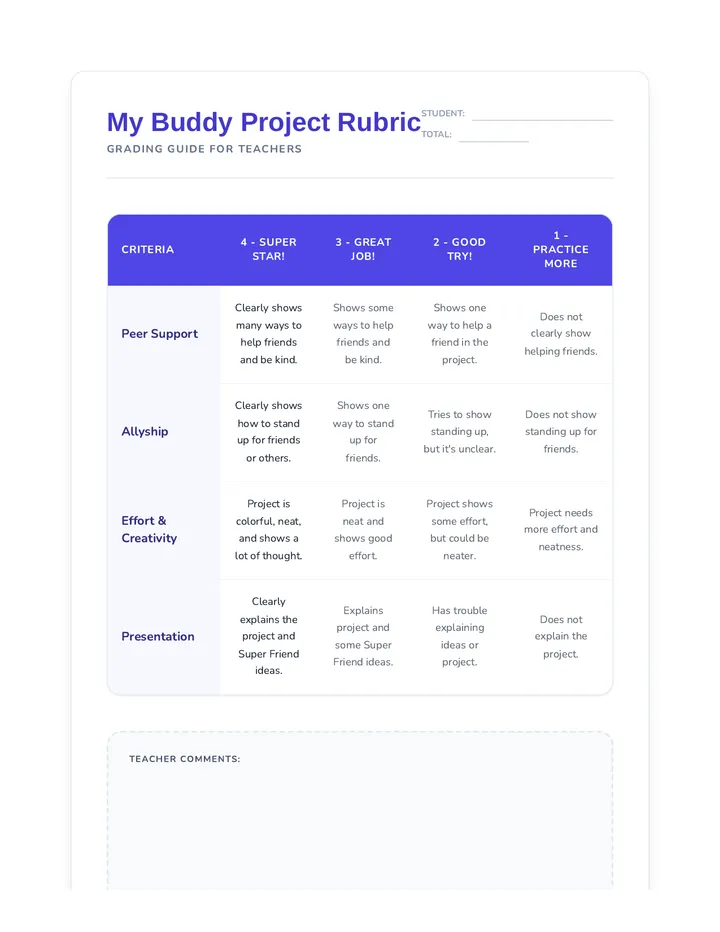
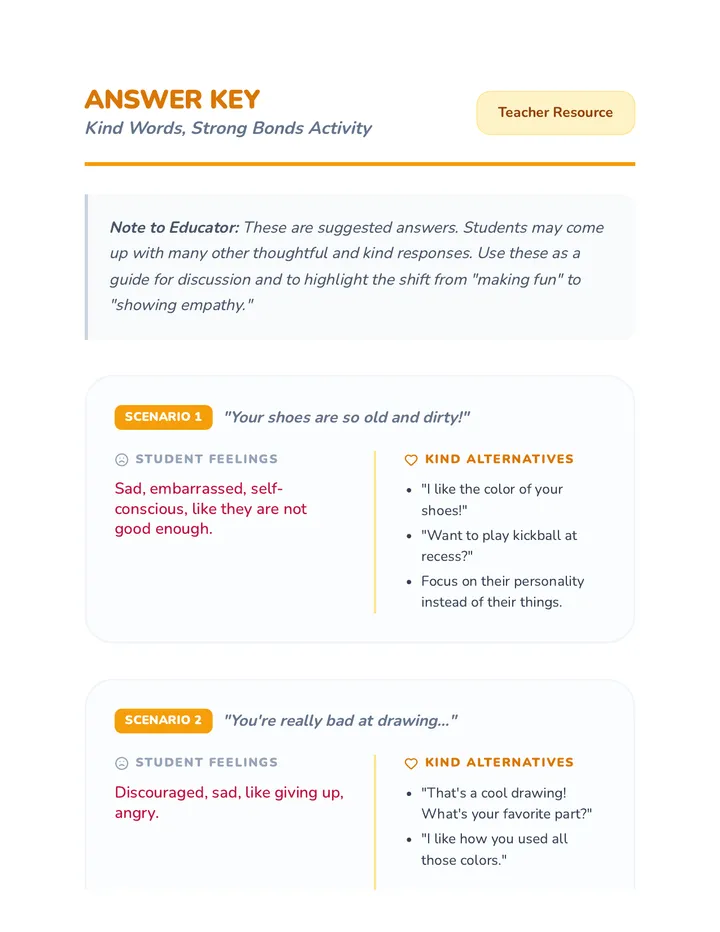
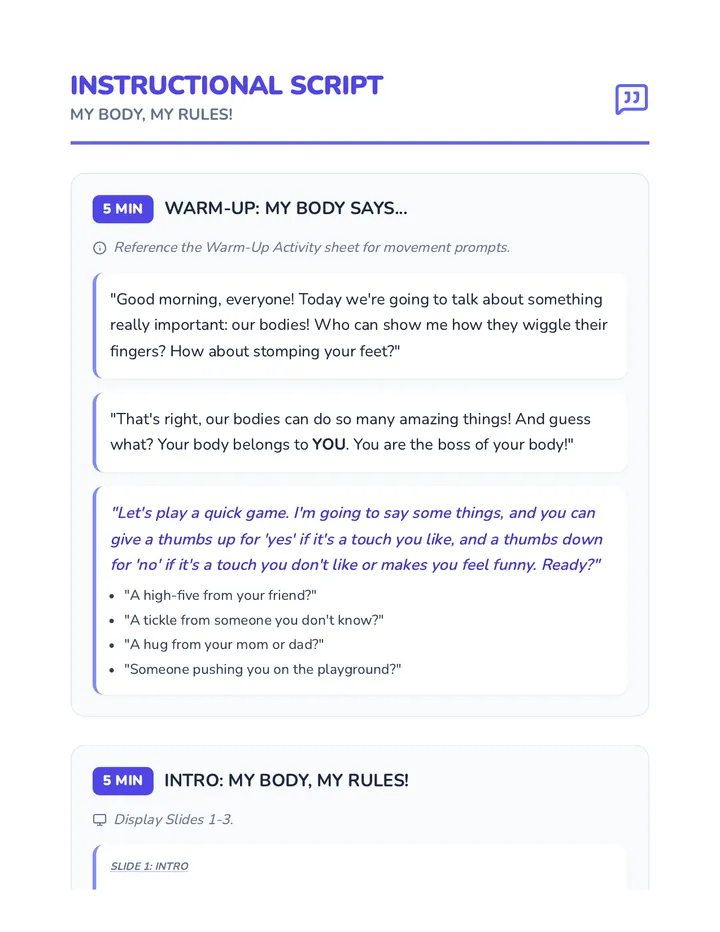
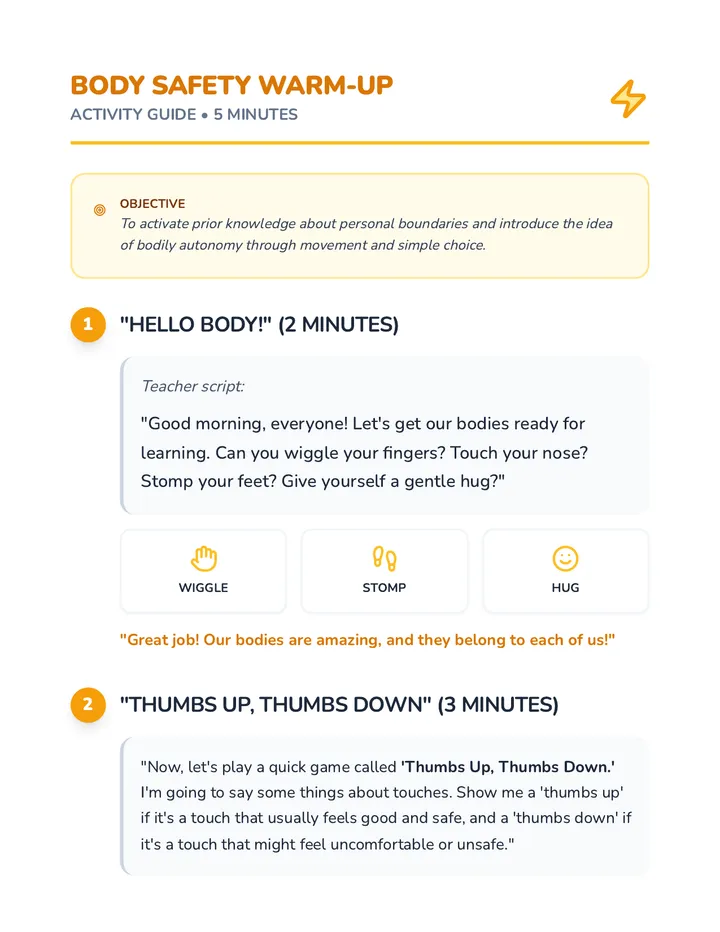
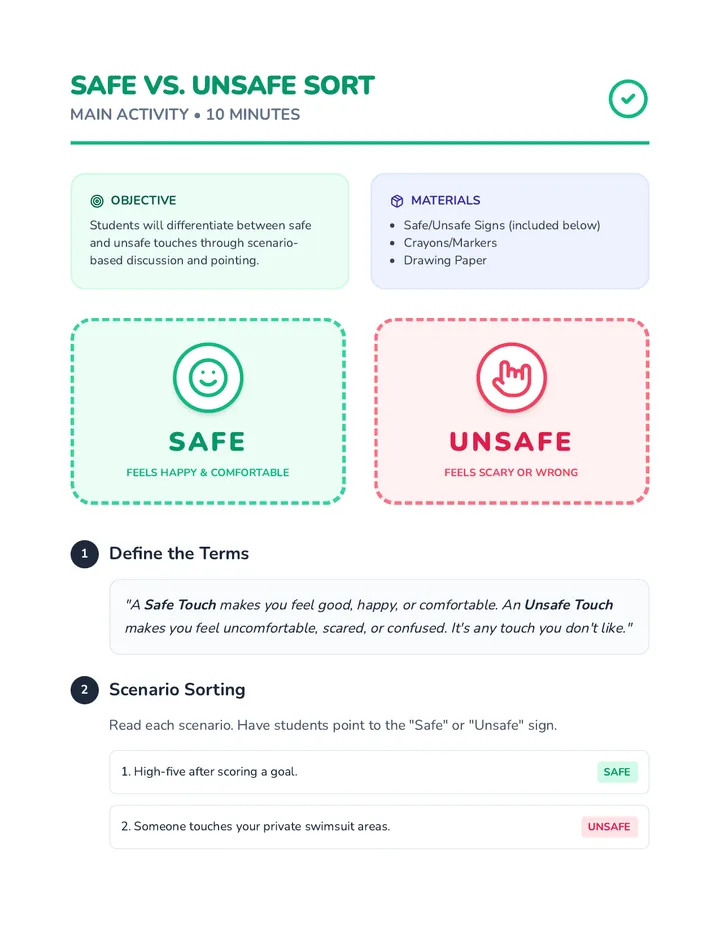
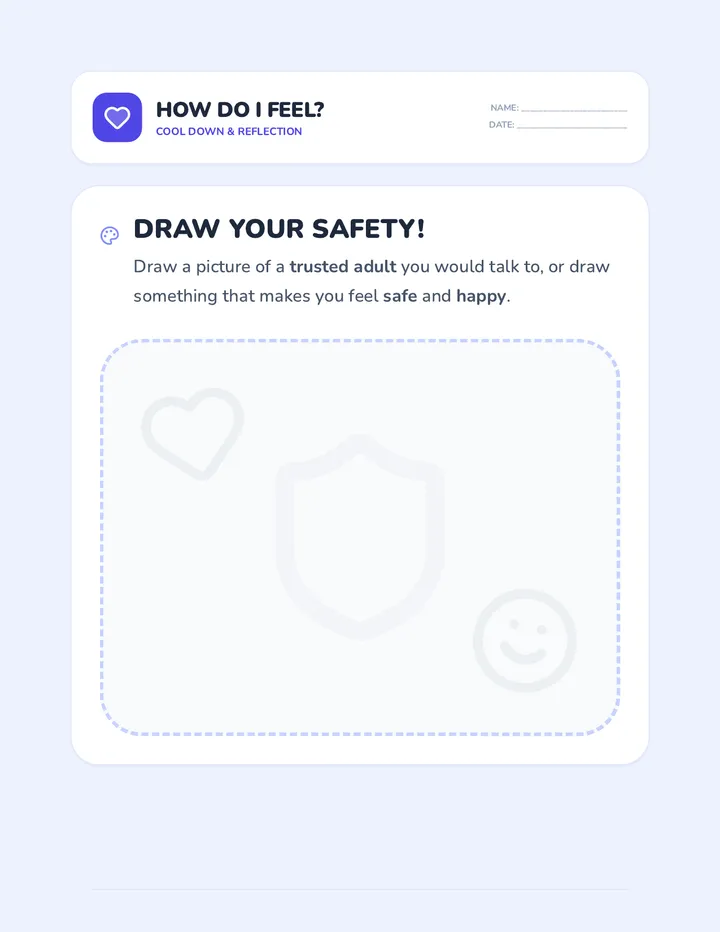
A pair of 10-minute assembly lessons focused on friendship, safety, and community respect for K-2 and 3-5 students, addressing physical and verbal behavior.
A specialized workshop sequence designed for high school parents to help them navigate the emotional complexities of their children's post-secondary transitions. The sequence focuses on moving from a 'pressure-based' approach to a 'support-based' framework using nautical metaphors.
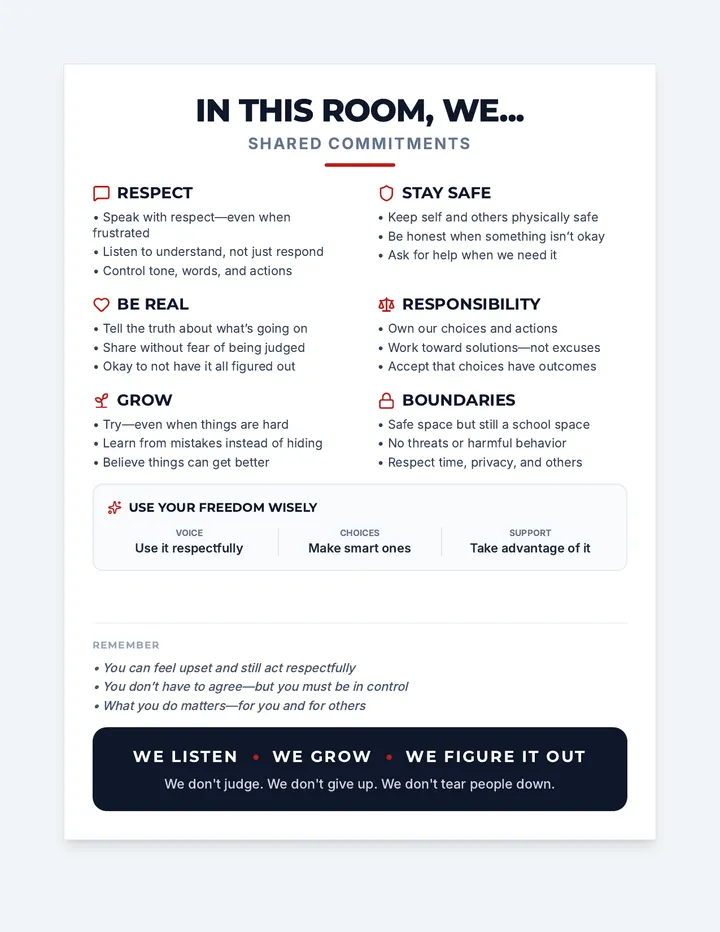
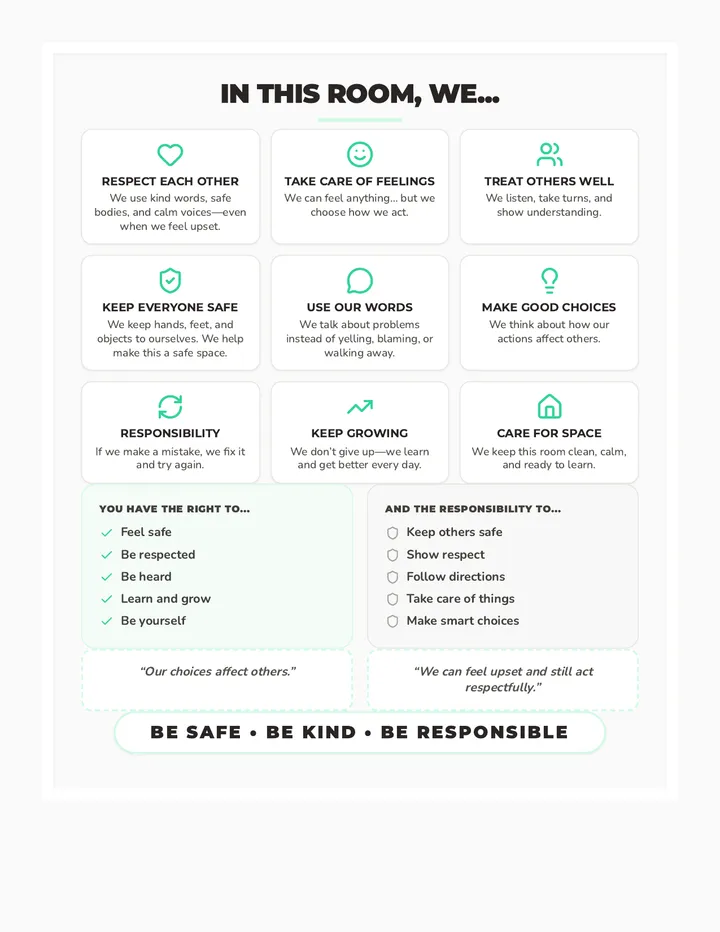
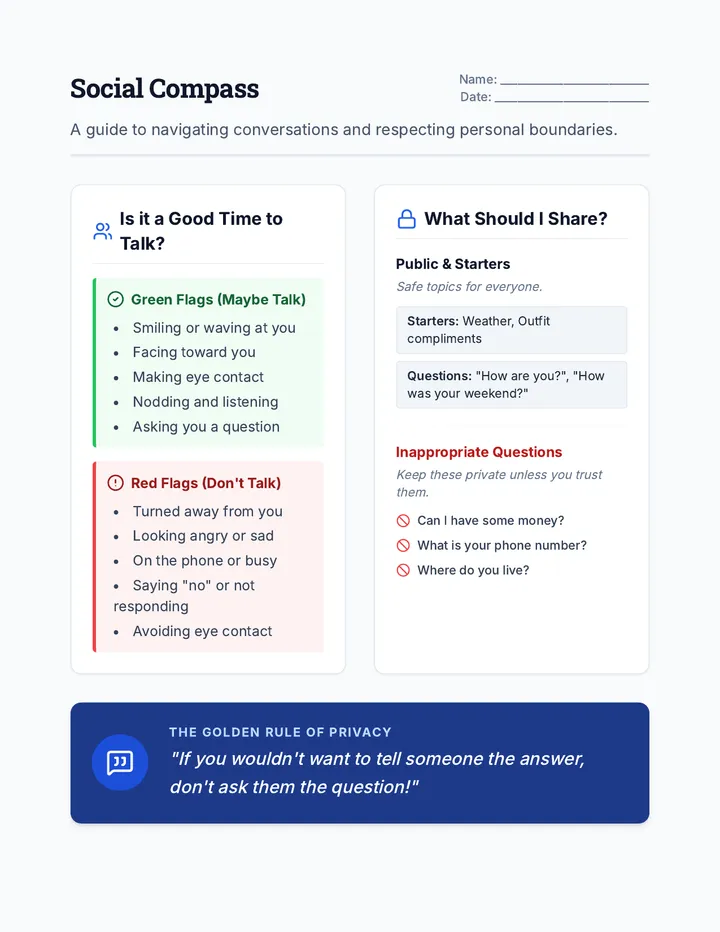
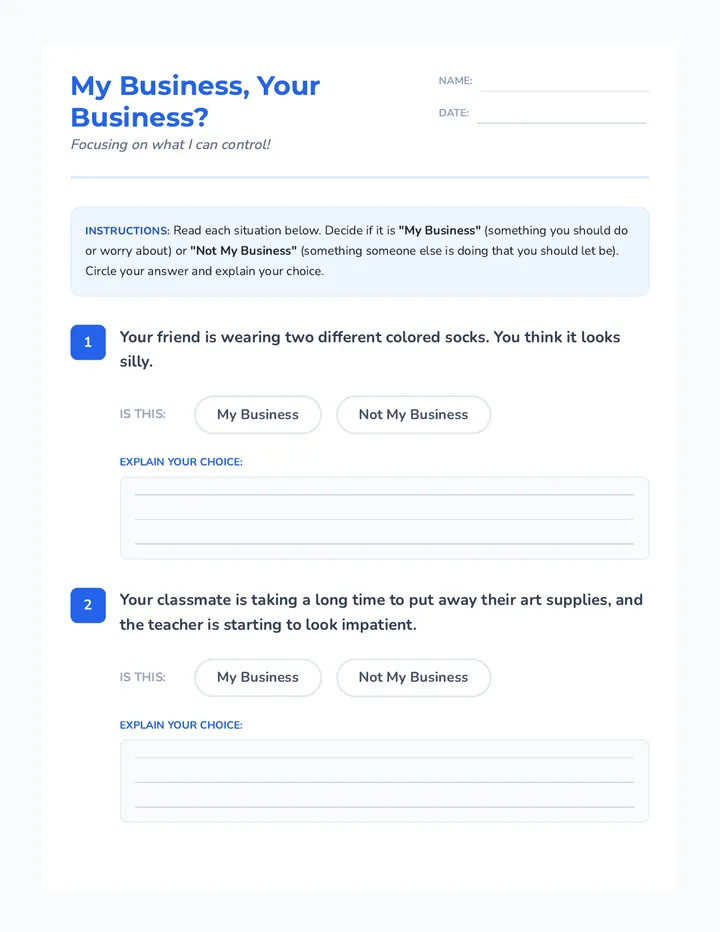
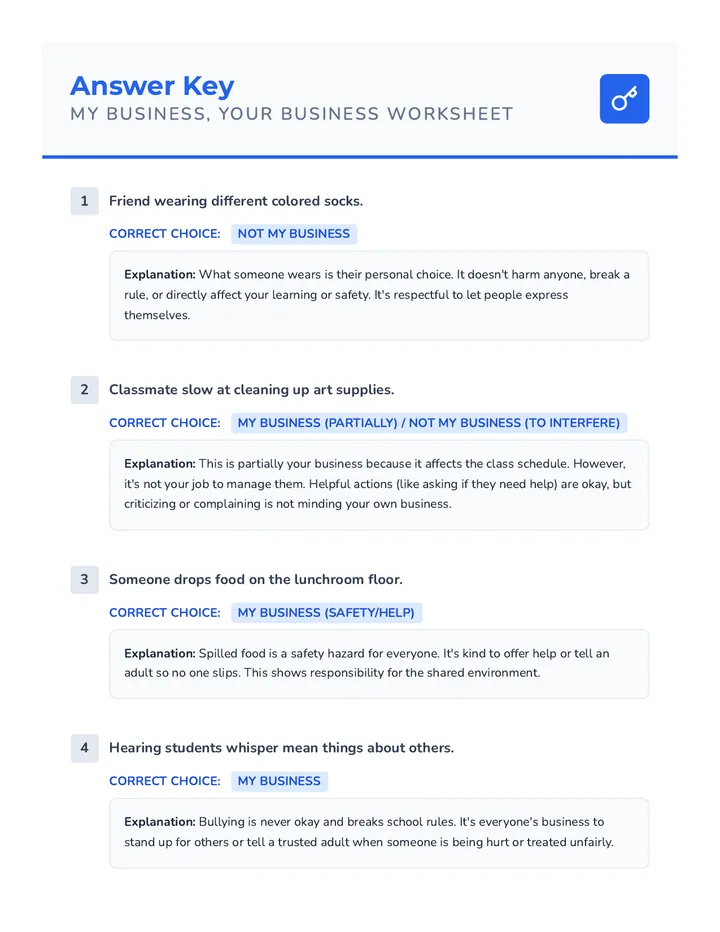
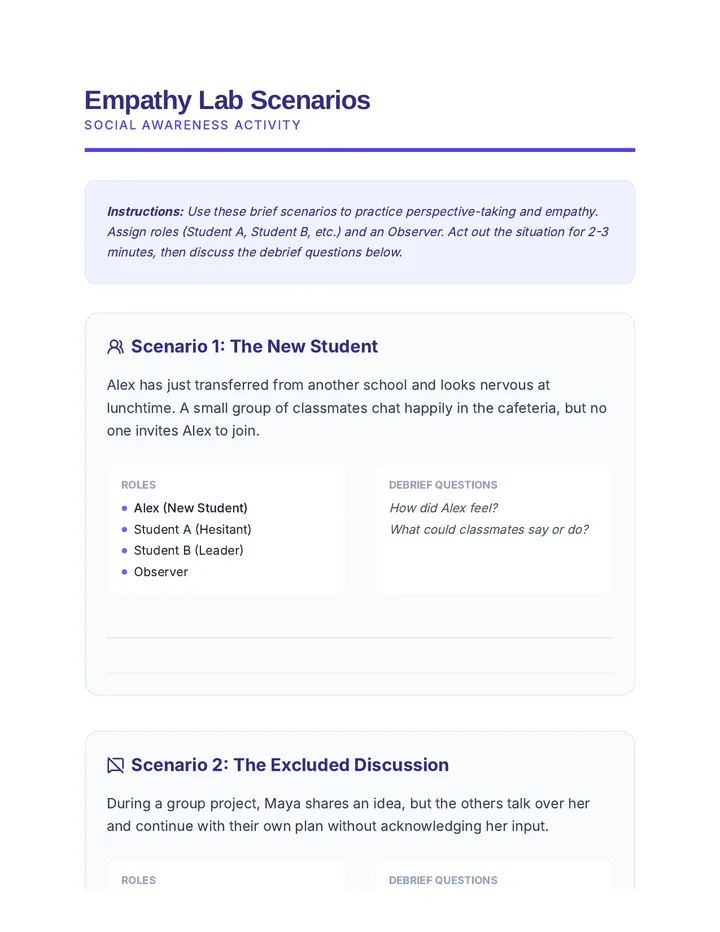
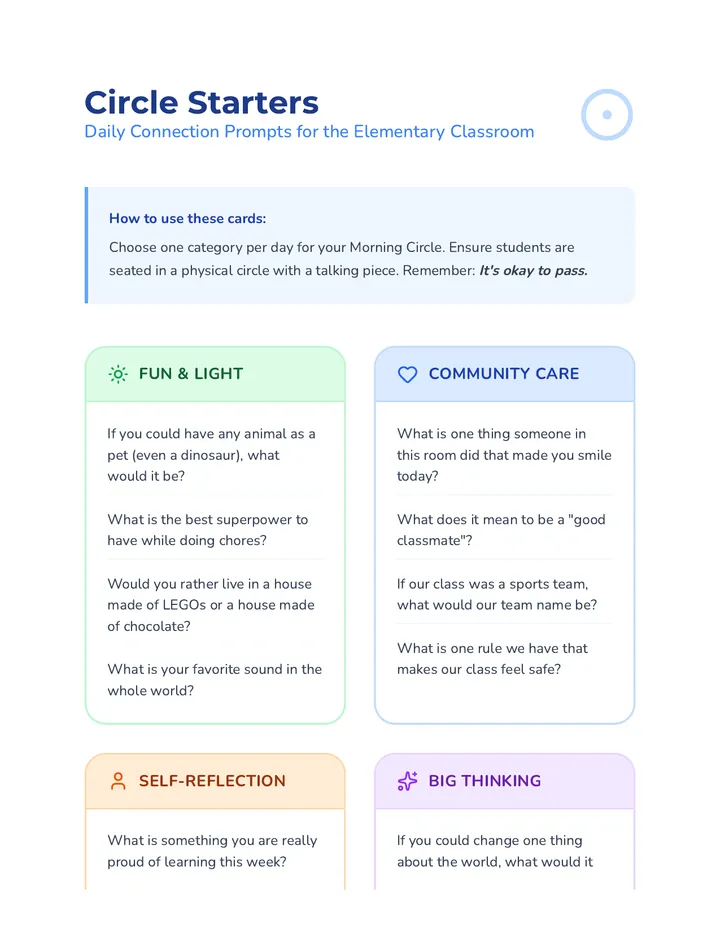
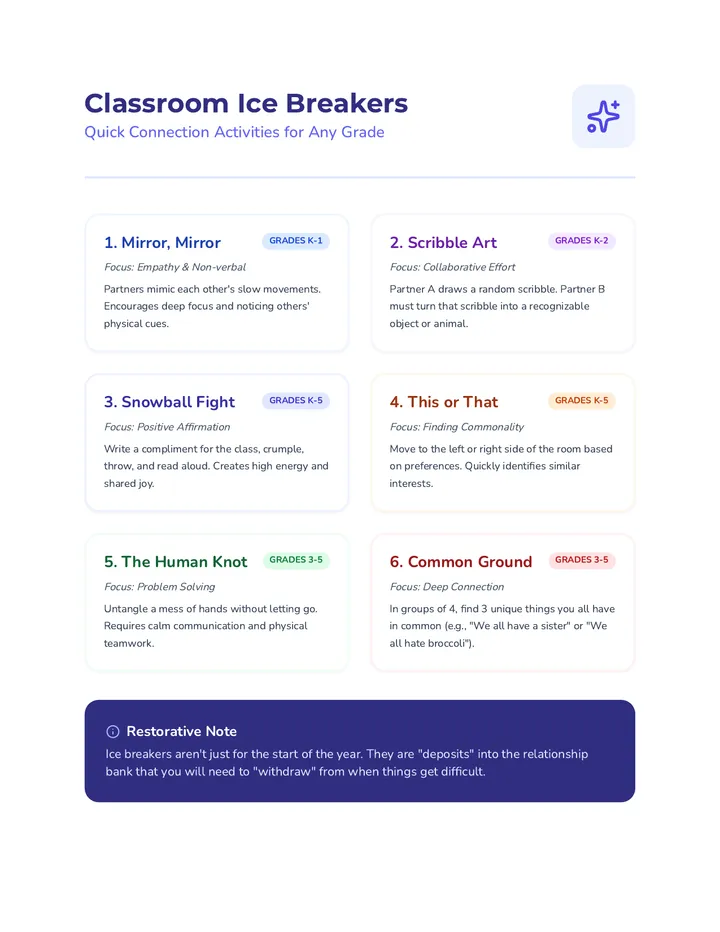
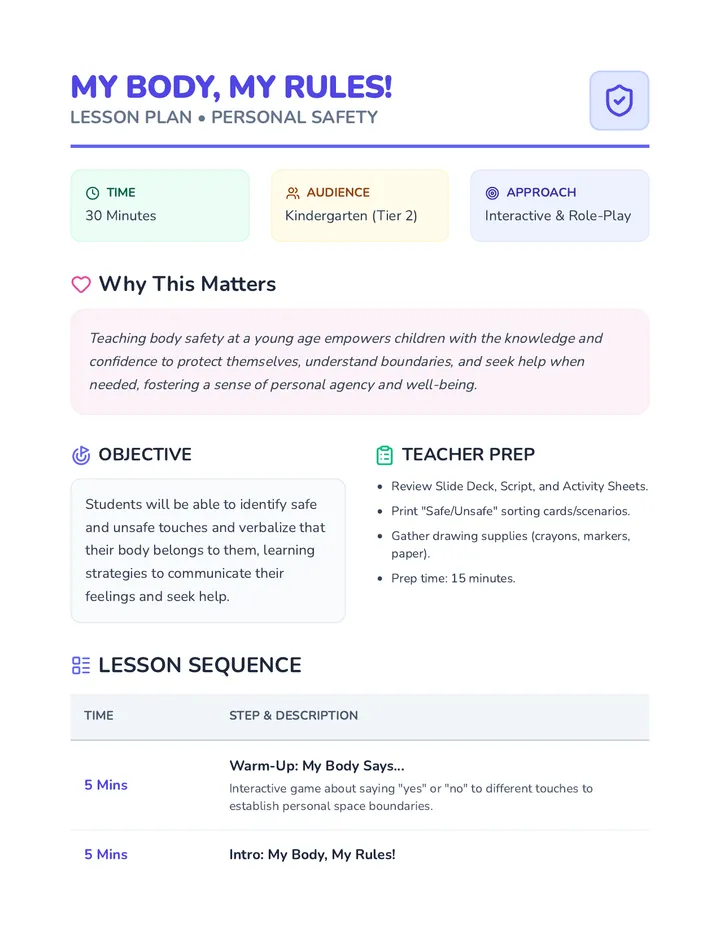
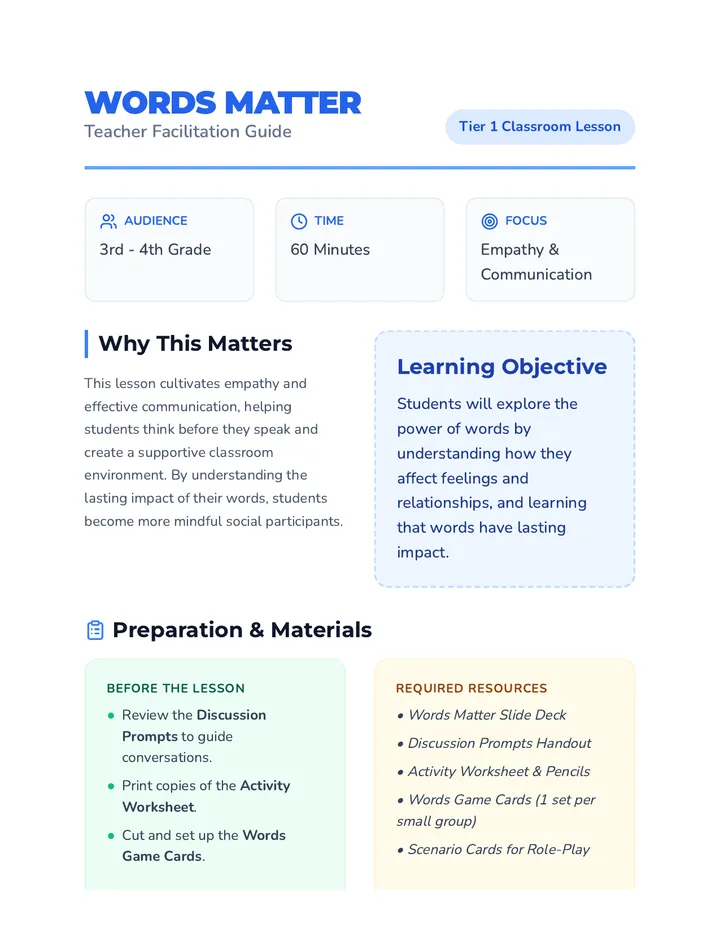
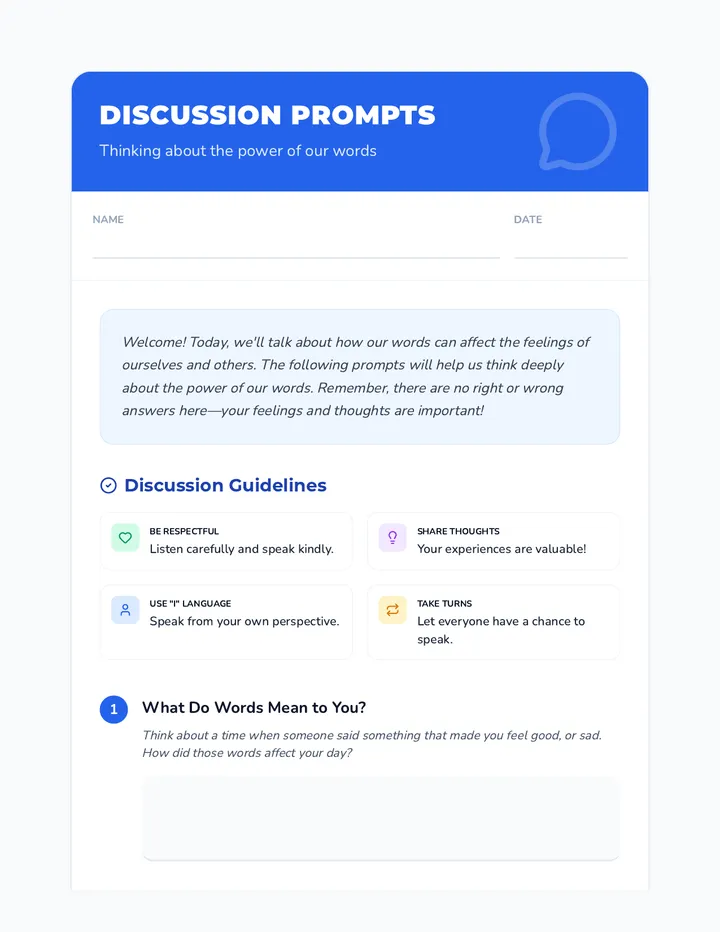
A series of activities focused on building a respectful classroom community through understanding personal boundaries, communication, and shared expectations.
A sequence focused on developing interpersonal communication skills, conflict resolution strategies, and healthy relationship boundaries for middle school students.
A comprehensive unit exploring the psychological and social impacts of cyberbullying, focusing on the lack of boundaries and the permanent nature of digital footprints. Students analyze the transition from traditional bullying to the 24/7 digital cycle.
A middle school lesson sequence focused on the distinction between verbal bullying and physical/criminal safety threats, emphasizing resilience for the former and adult intervention for the latter.
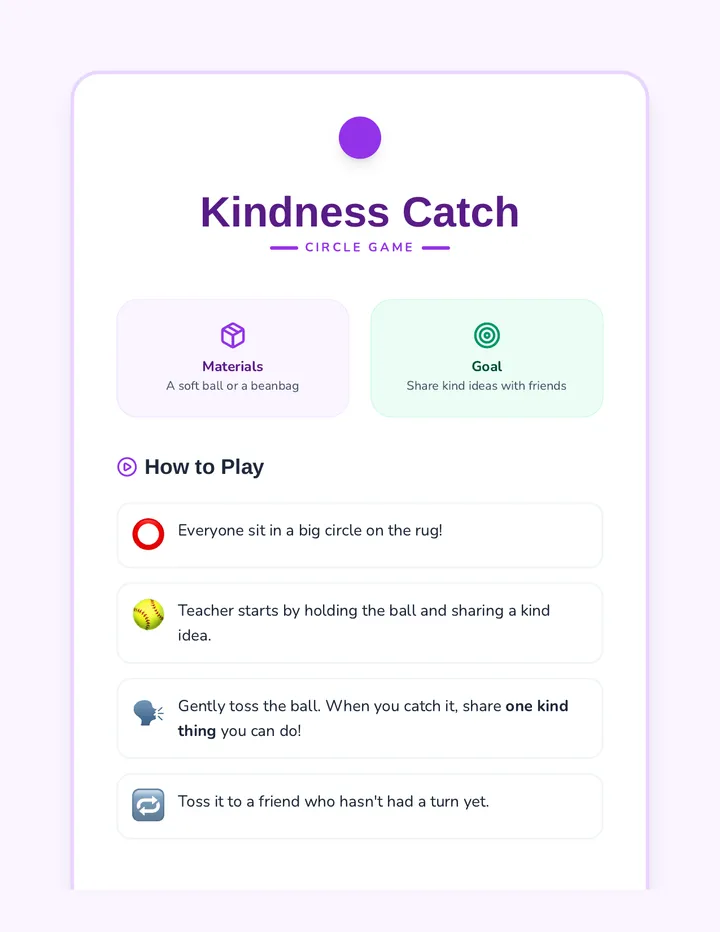
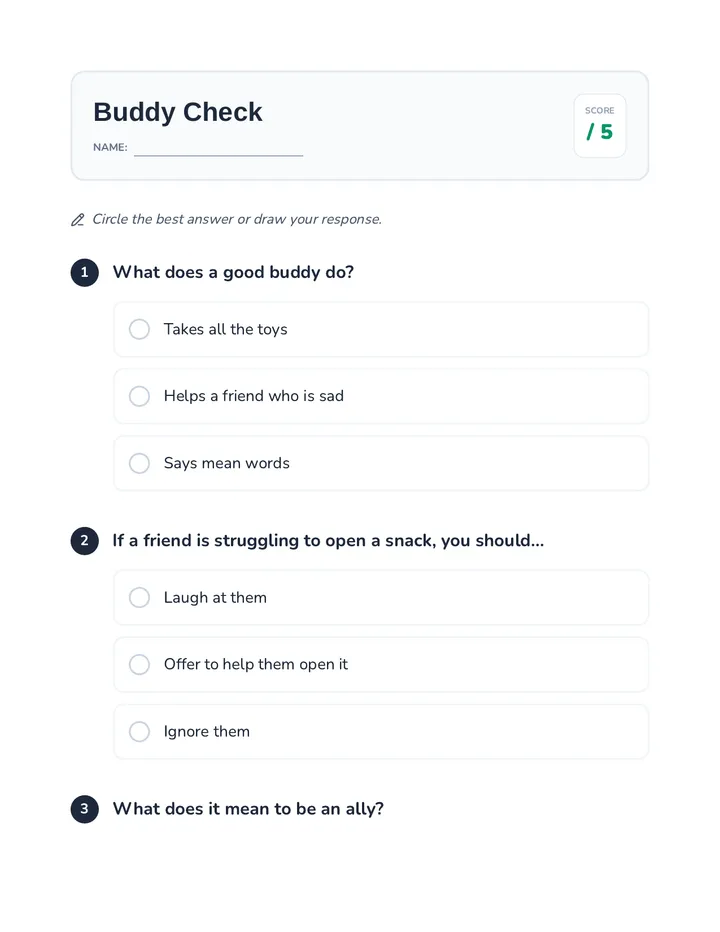
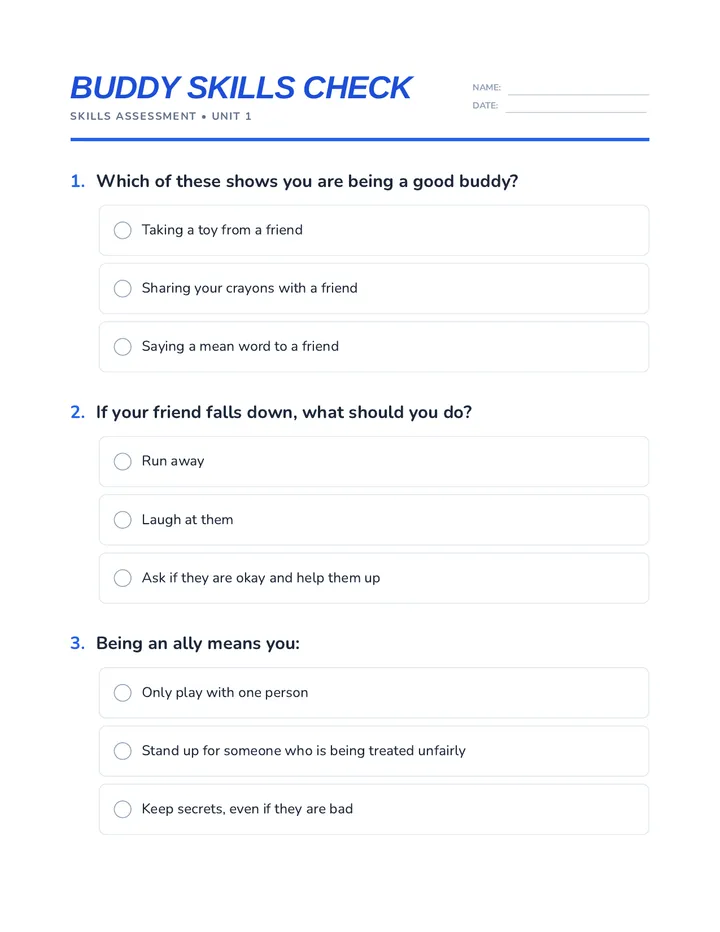
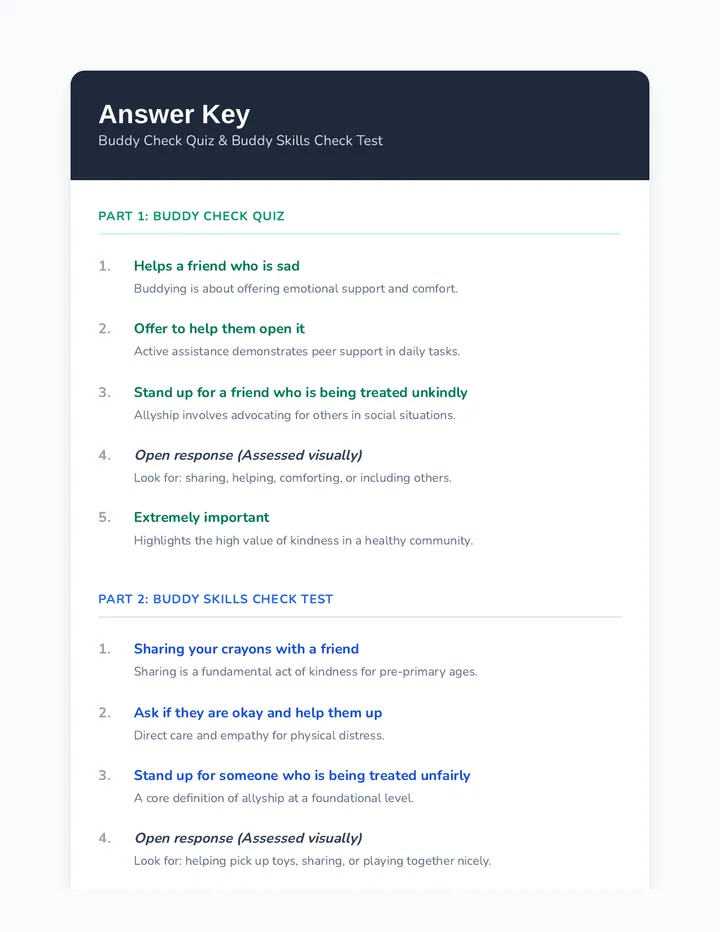
A series of three 10-minute lessons for preschool and kindergarten students on how to identify and respond to unkind behavior and bullying using simple, empowering strategies.
A 6-week school-based counseling program designed for adolescent girls to improve family relationships through communication skills, boundary setting, and conflict resolution. The program uses a 'Bridge Builder' theme to frame relationship work as architectural construction and repair.
A comprehensive 6-week small group curriculum designed for female-identifying high school seniors. The program focuses on identity, boundaries, practical life skills, wellness, safety, and goal-setting to ensure a confident transition to college life.
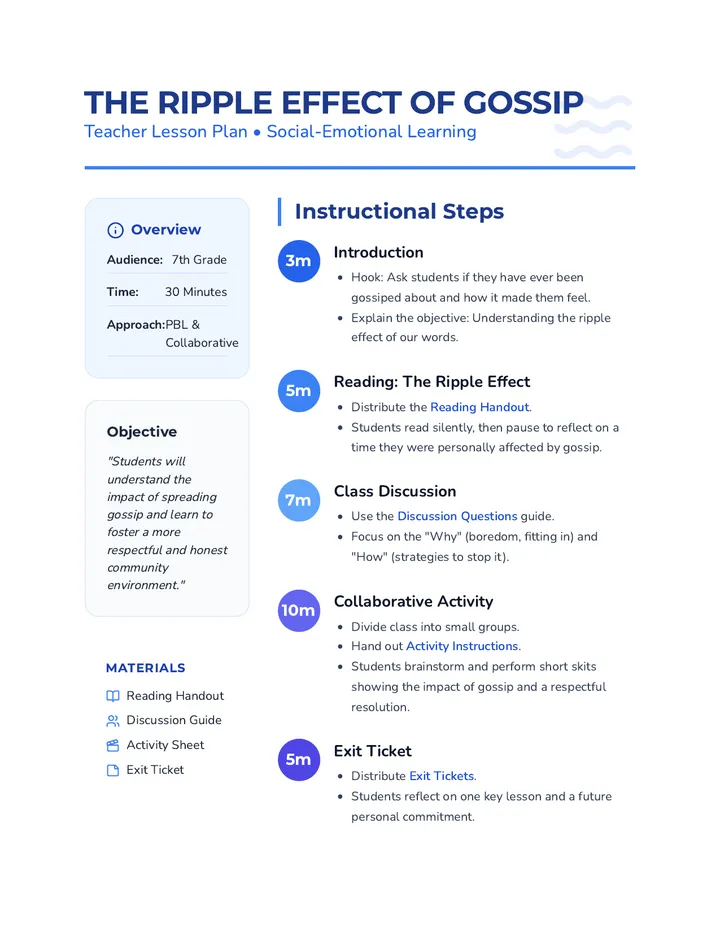
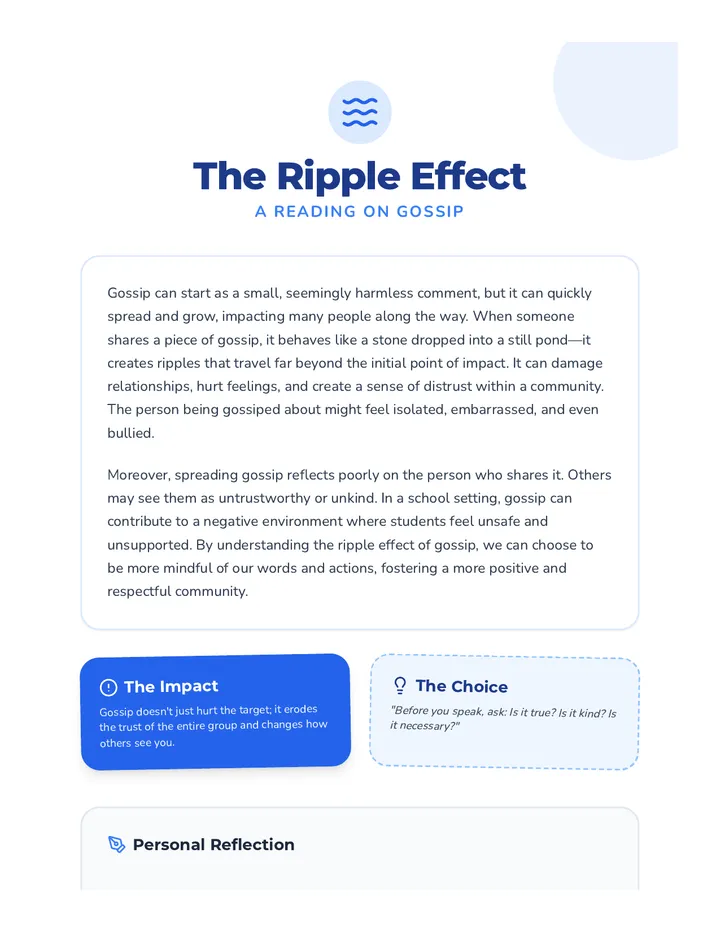
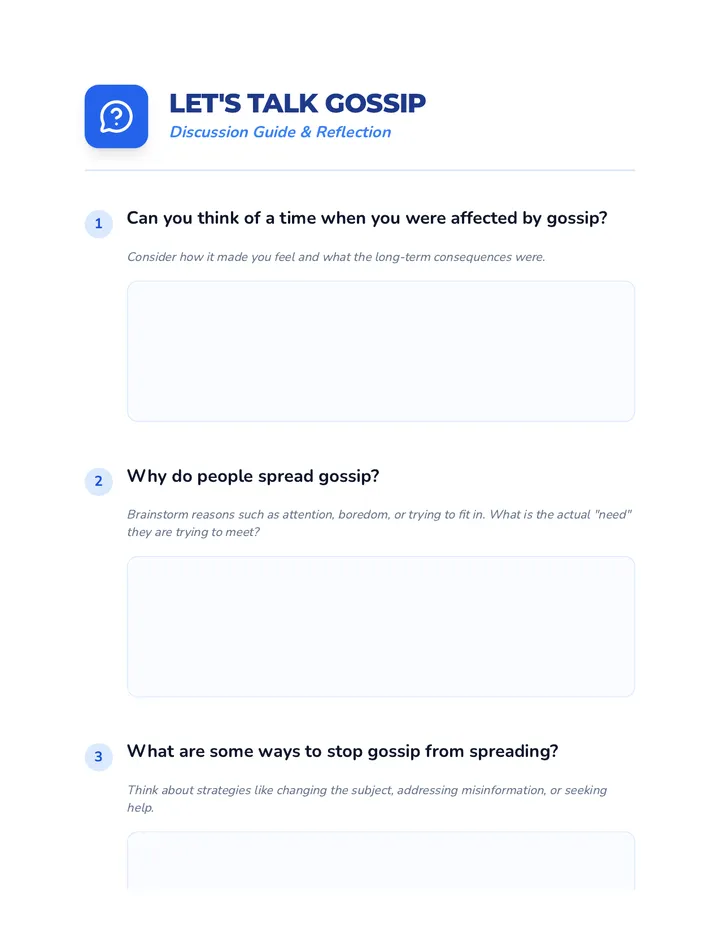
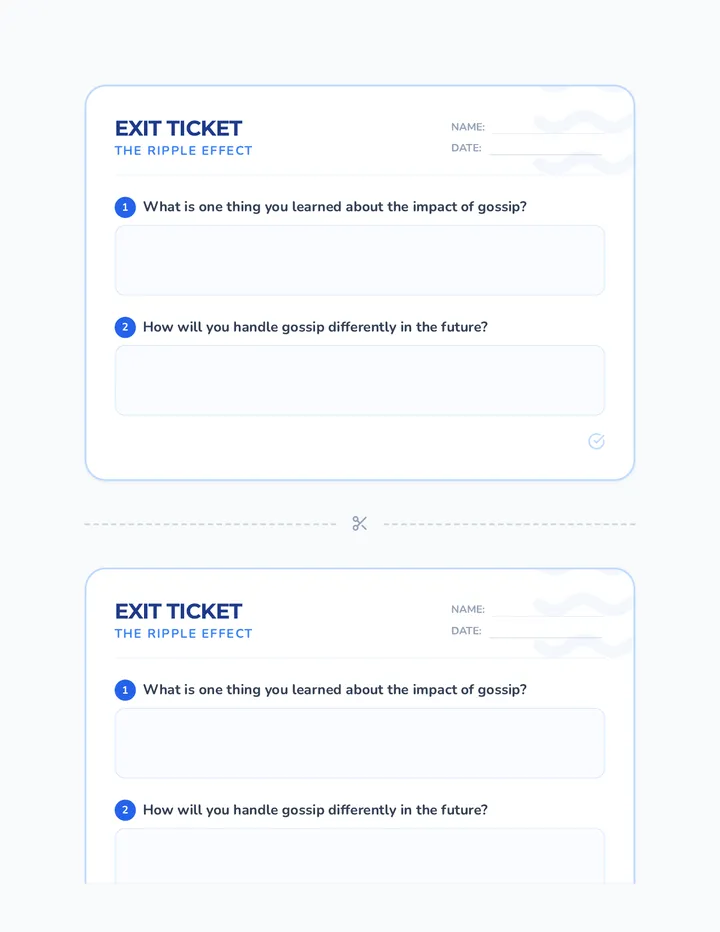
A 6-week Tier 2 SEL small group program for middle school girls focused on navigating social dynamics, reducing gossip, and building healthy conflict resolution skills. The program uses a modern 'High-Resolution' theme to help students focus on clear communication and empathy.
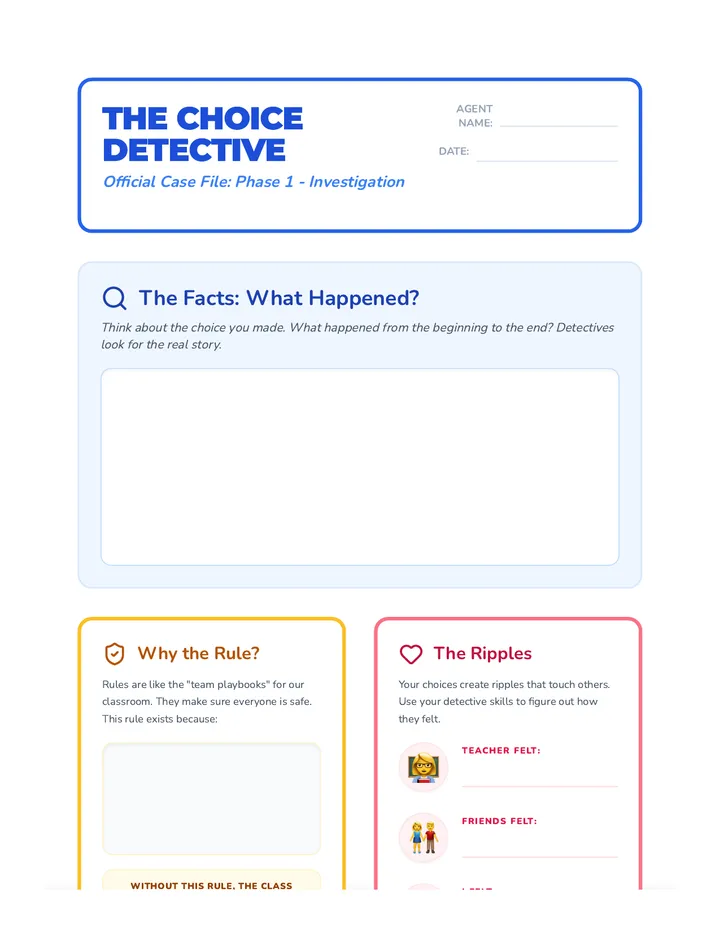
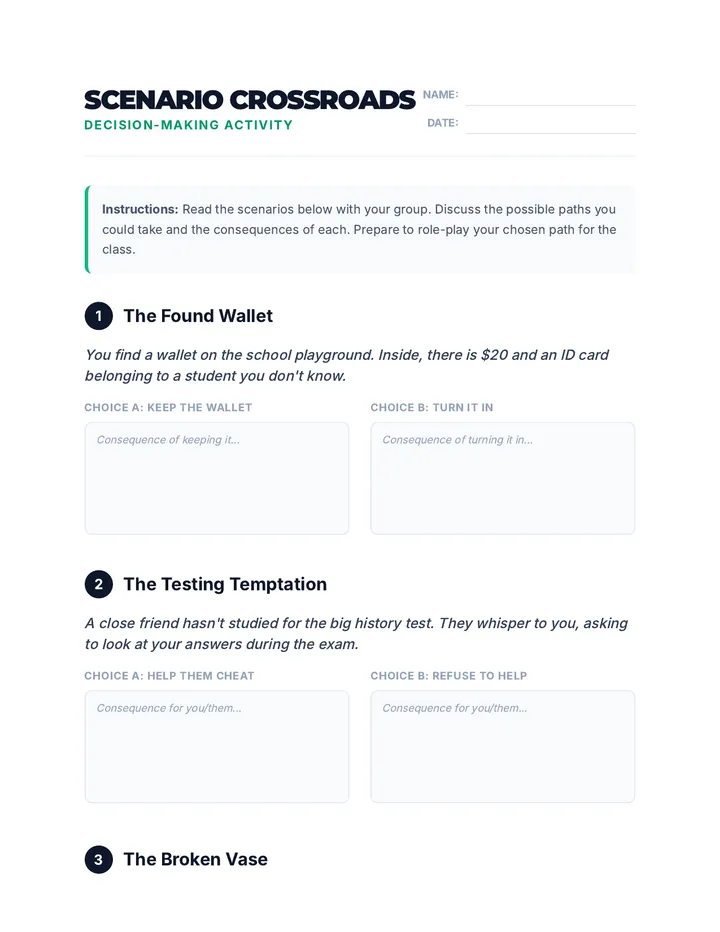
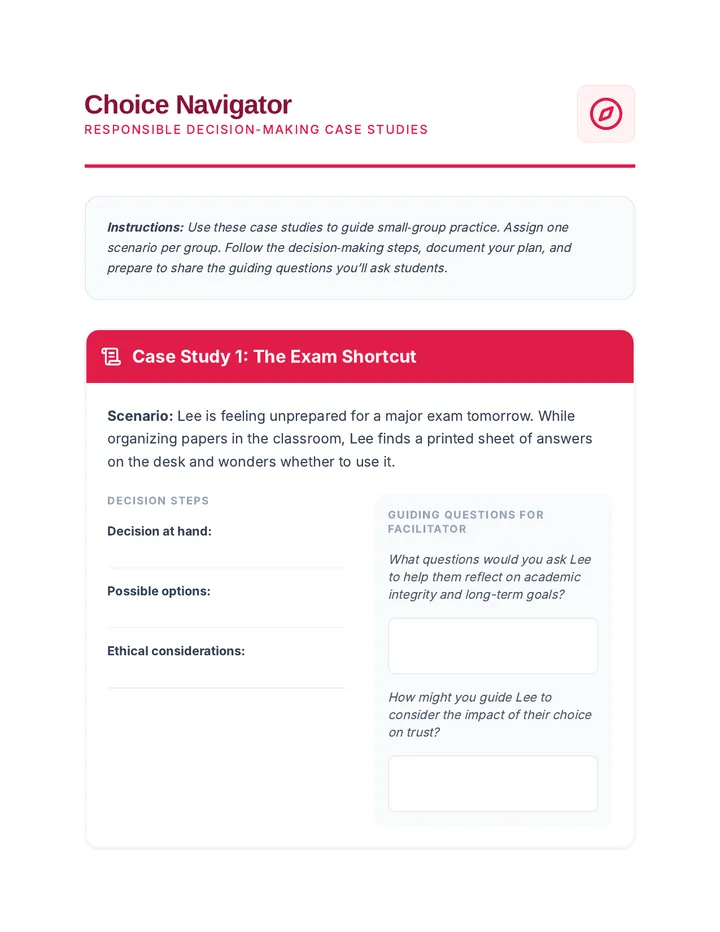
A 3-lesson SEL unit for Grades 3-5 focused on honesty, understanding the impact of stealing, and developing strategies to resist temptation. Students act as 'Integrity Investigators' to solve cases involving social-emotional dilemmas.
A workshop series designed for parents to understand the intersection of high academic achievement and mental health, focusing on identifying high-functioning anxiety and fostering healthy communication.
A professional development series for school leaders focused on applying David Rock's SCARF model to navigate high-stakes social interactions, feedback cycles, and organizational change.
A three-part group counseling series designed for middle school students with autism, focusing on decoding digital communication through emojis, slang, and online safety protocols.
A comprehensive social skills curriculum designed to help students navigate school and community interactions with confidence. Students learn to read social cues, join groups, and communicate effectively through a superhero-themed framework.
An 8-week social-emotional learning curriculum for 3rd-grade Tier 2 groups, focused on building healthy boundaries and positive friendship skills using a nature-themed 'Field Guide' aesthetic.
A comprehensive suite of resources designed to empower students with the habits, strategies, and tools needed for successful supported study sessions. This sequence covers organization, reading and math strategies, and self-advocacy skills.
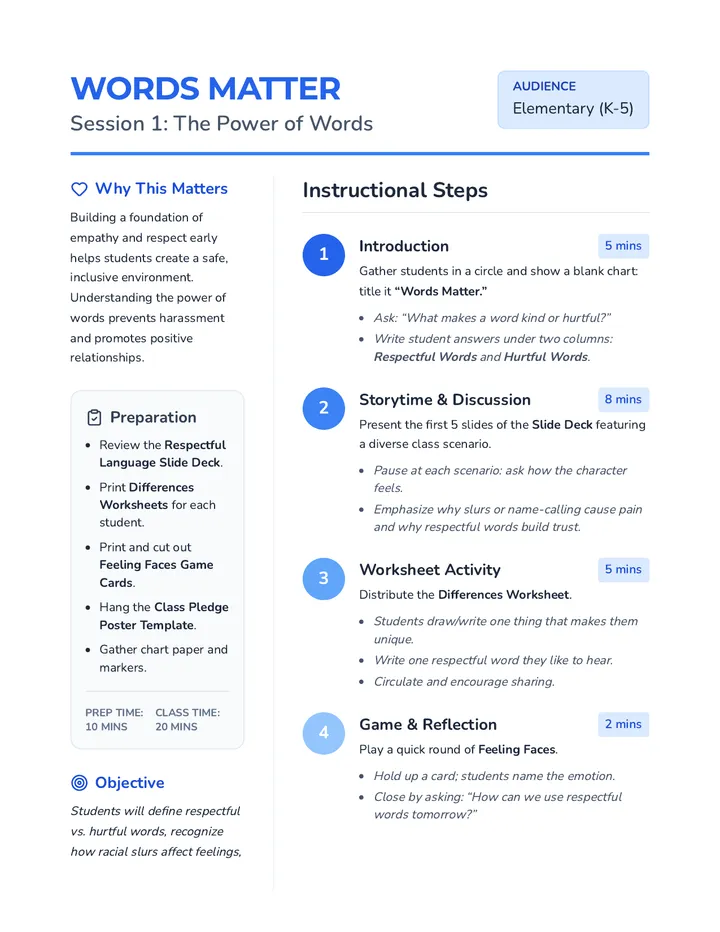
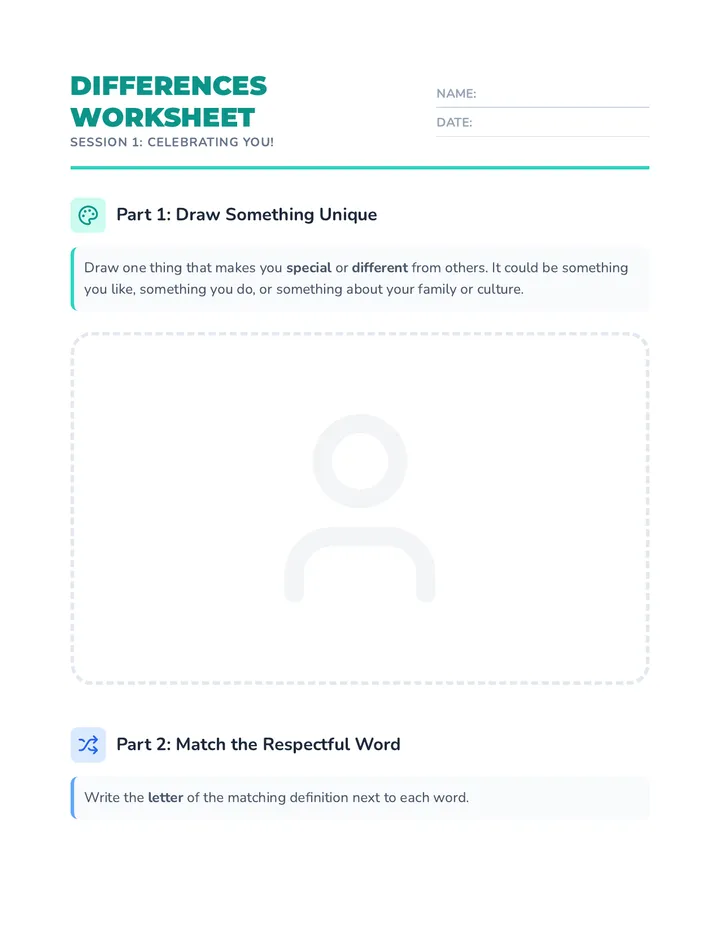
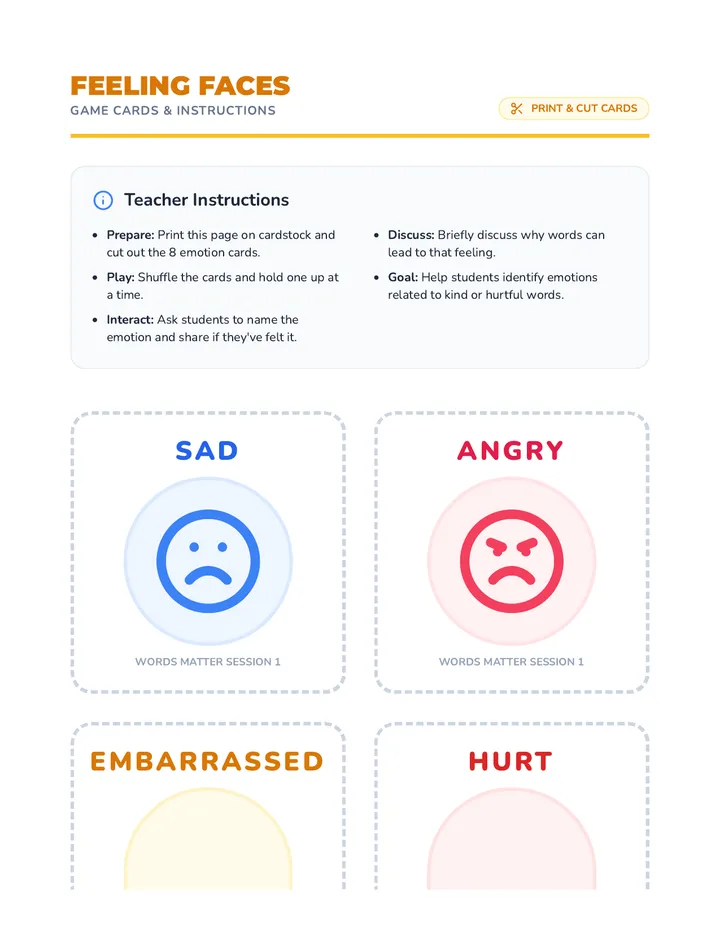
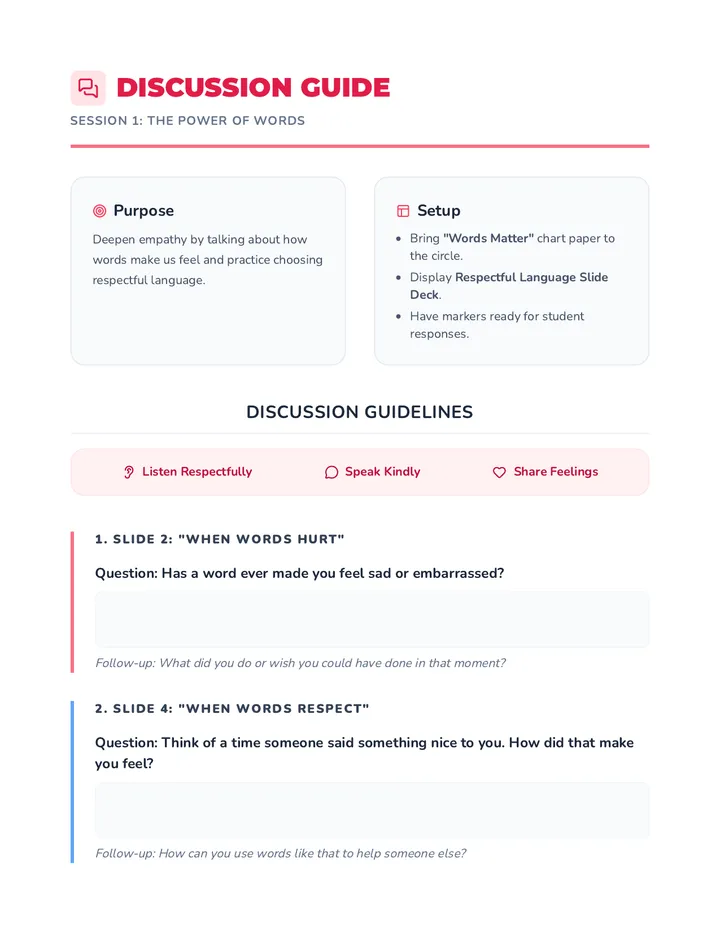
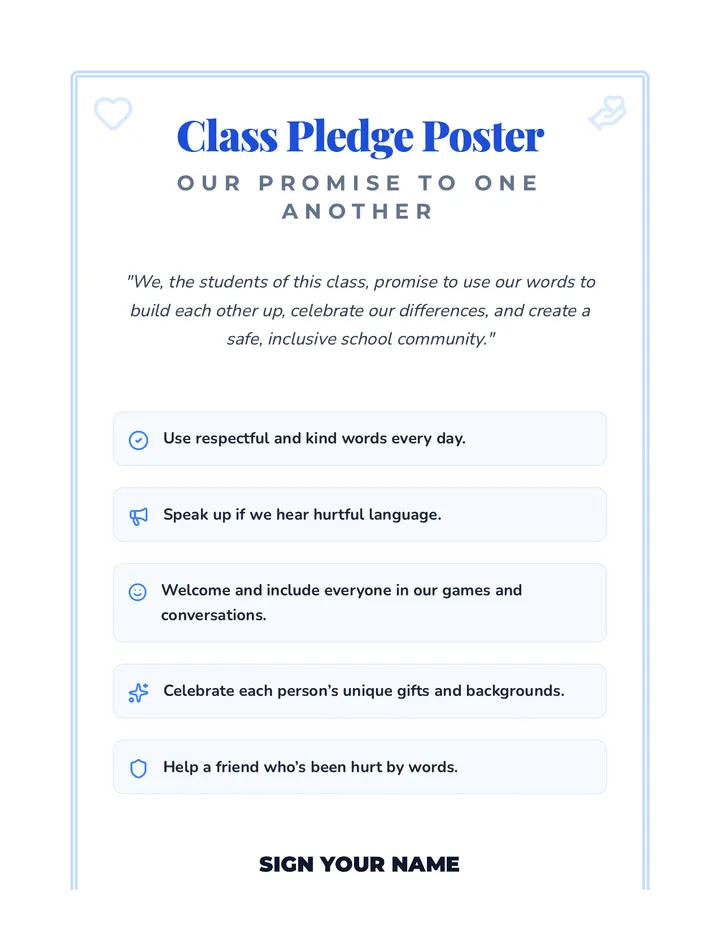
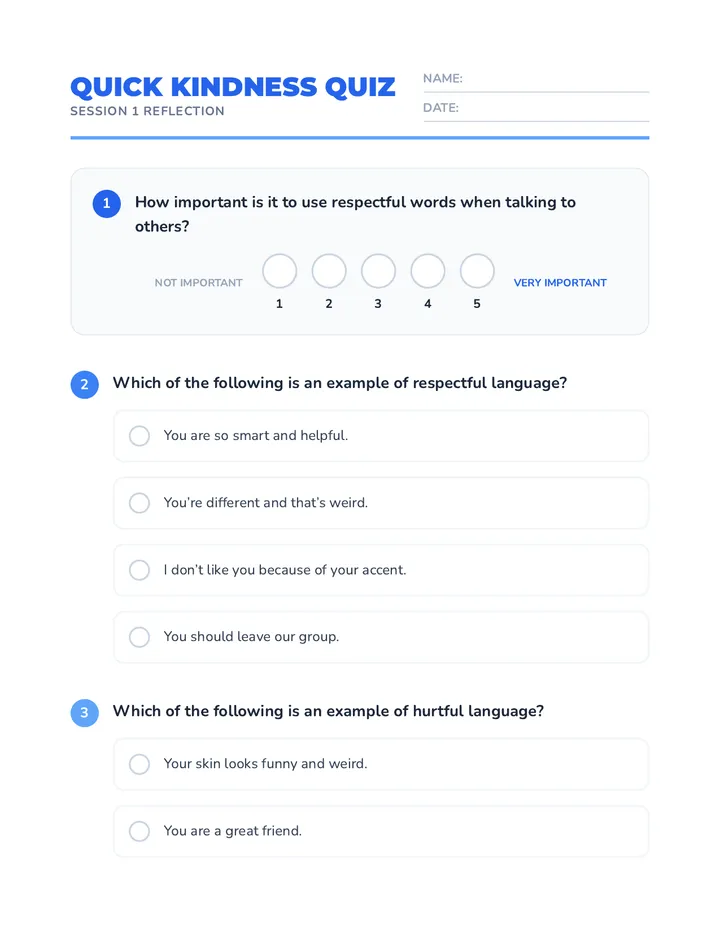
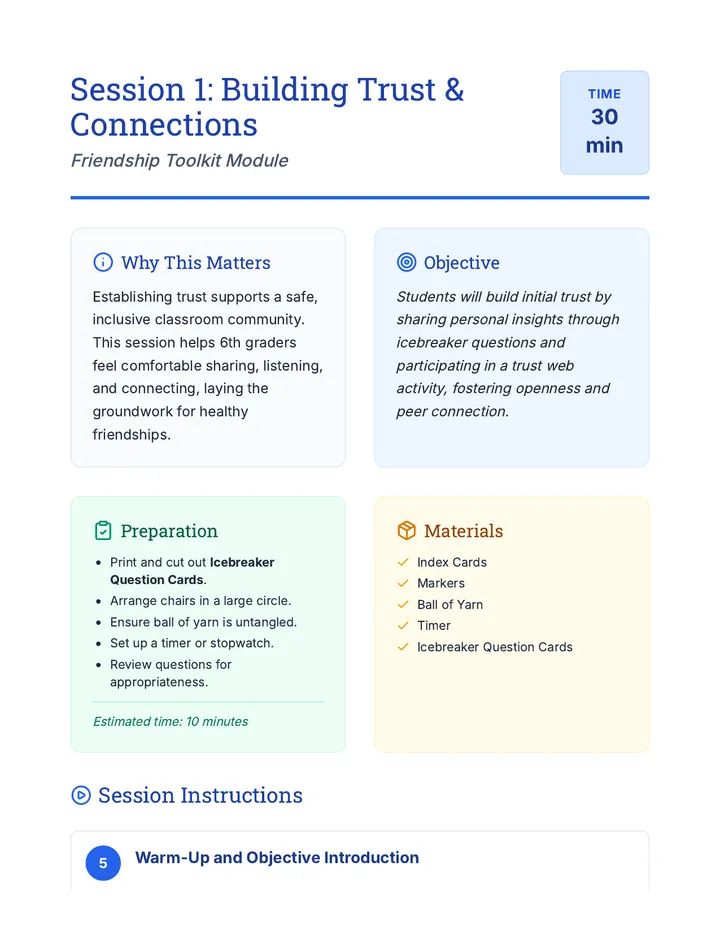
A 4-session small group series designed to help students understand the impact of harmful language, develop empathy, and practice upstander strategies to build an inclusive environment. The series uses the 'Echo Effect' metaphor to illustrate how words ripple through a community.
A comprehensive set of resources designed to help 3rd-grade students navigate classroom distractions, build self-advocacy, and practice mindfulness.
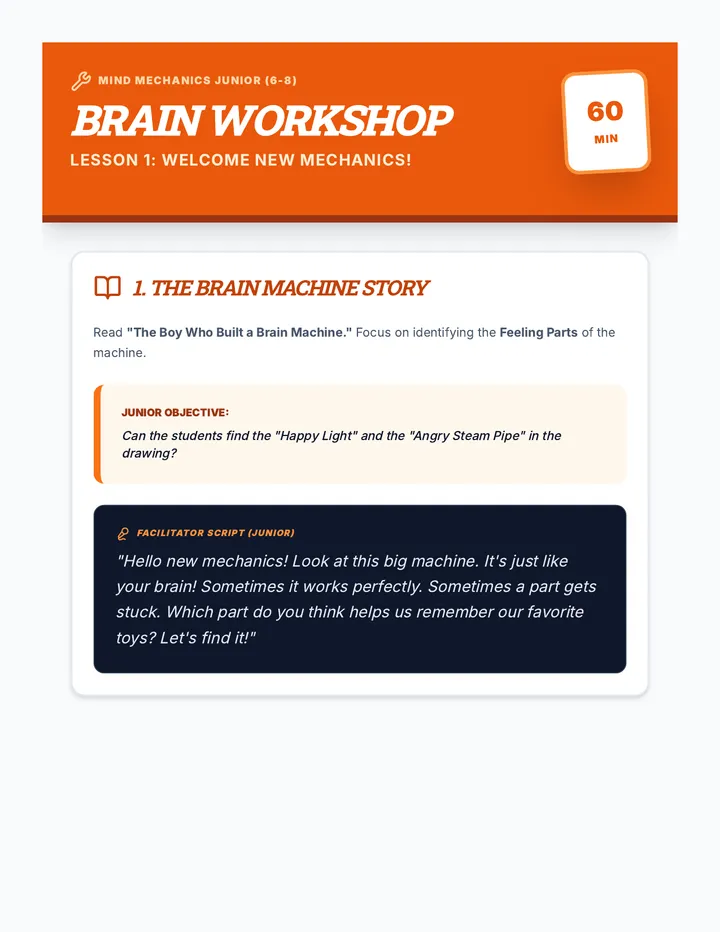
A sequence designed for first graders to master essential school behaviors, focusing on classroom rules and the art of following directions through engaging ranger-themed activities and scenarios.
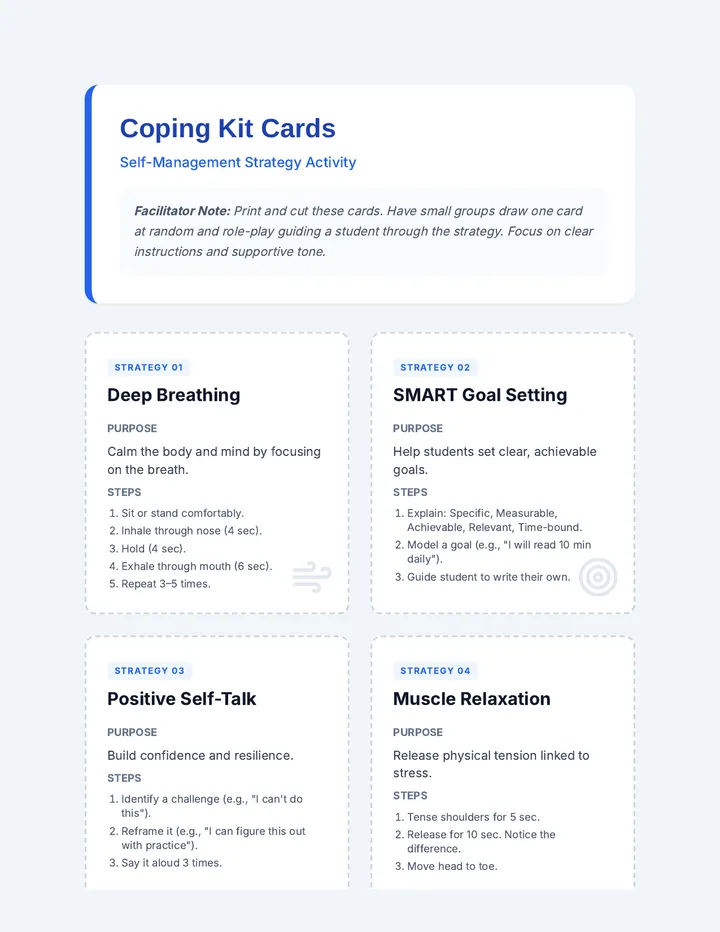
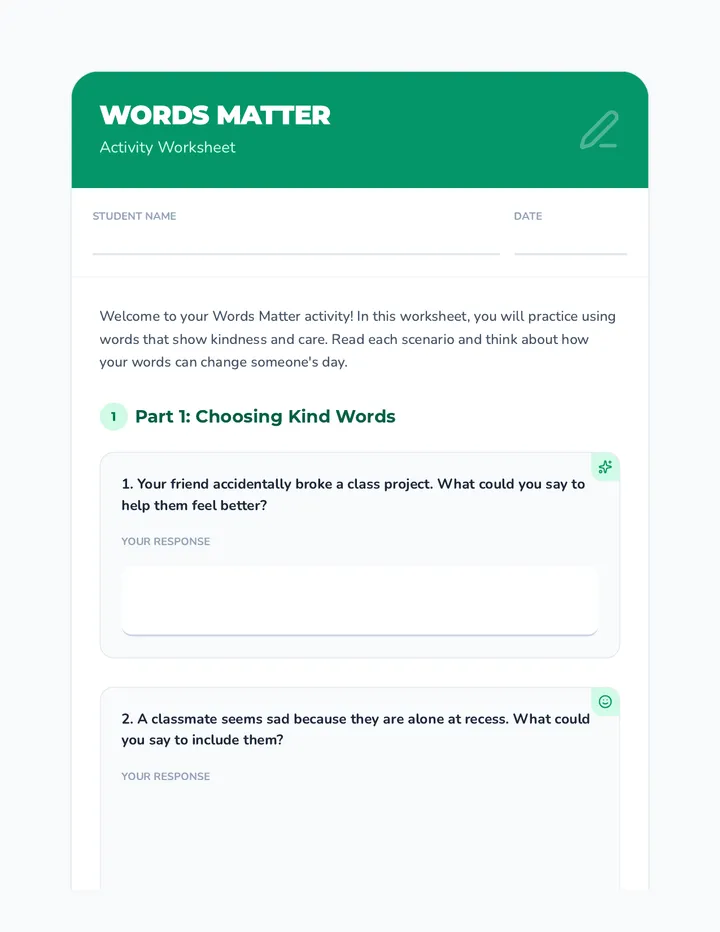
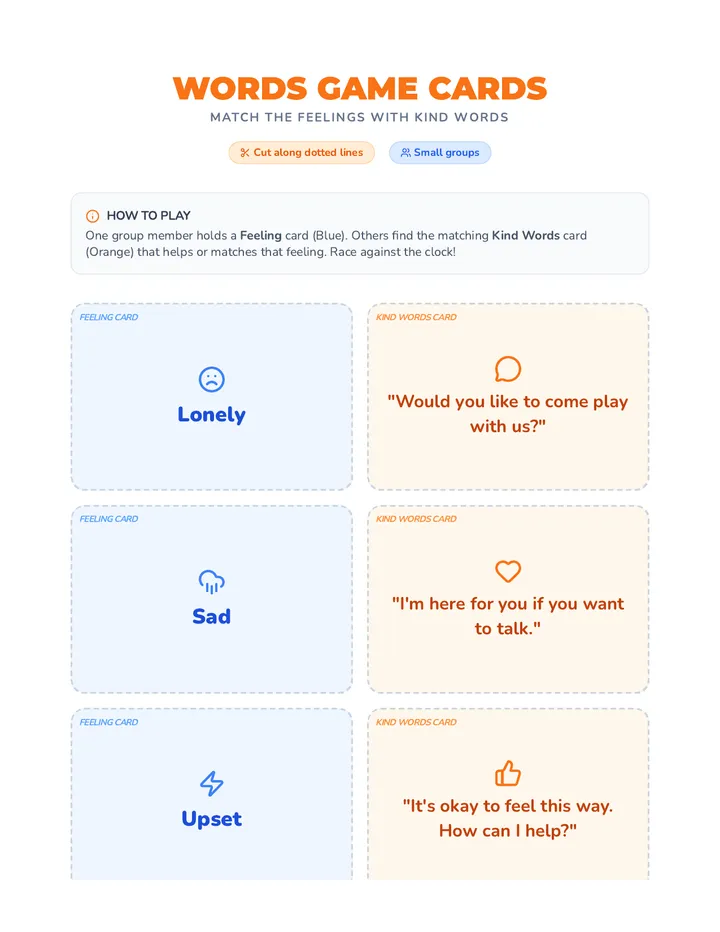
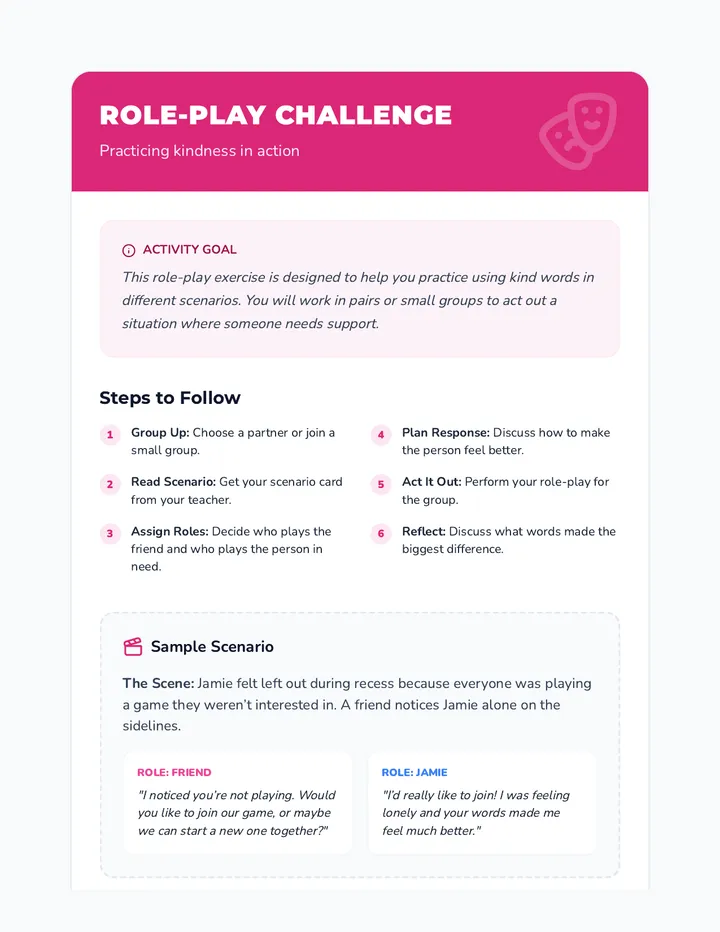
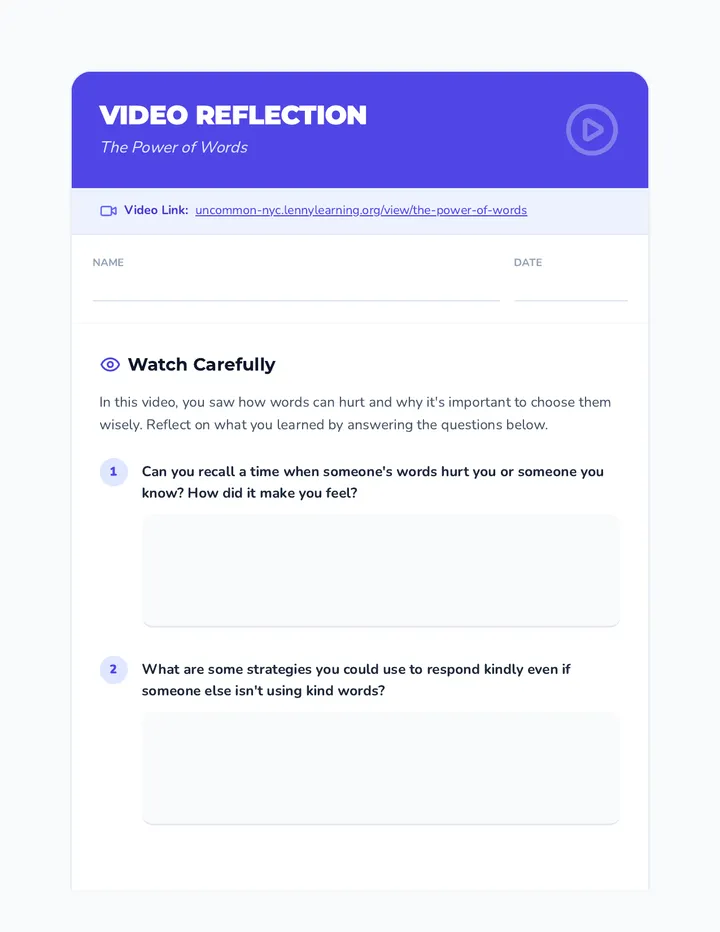
A series of lessons designed to develop social-emotional health, focusing on interpersonal kindness and personal coping strategies for elementary students.
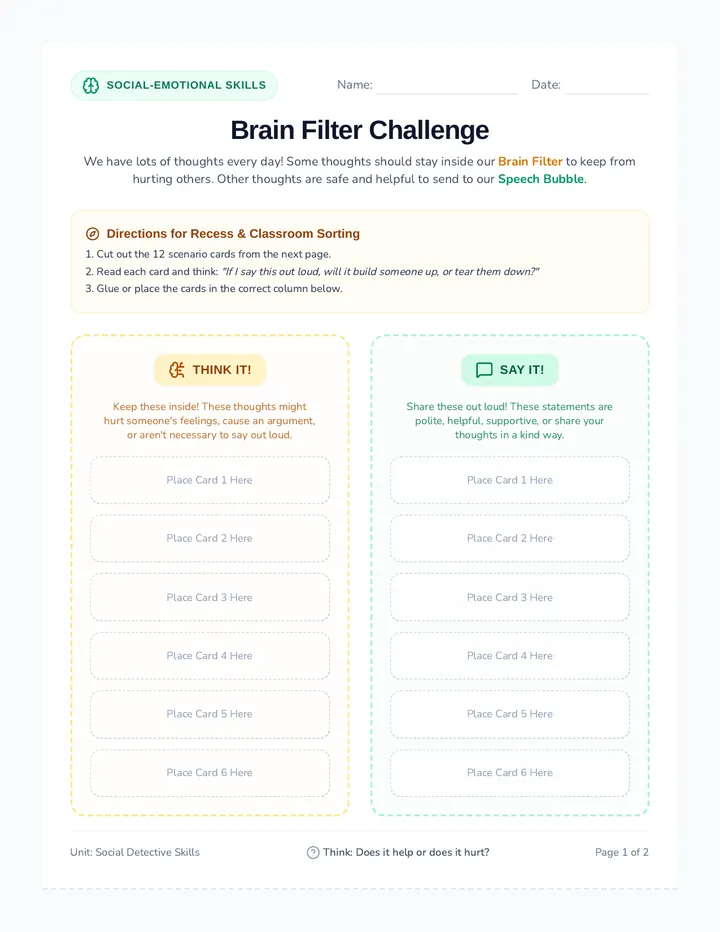
A three-session series for eighth graders on impulse control, the impact of speech, and taking accountability for one's social footprint. The curriculum moves from understanding impact to practicing filtering and ends with a framework for restorative accountability.
A 6-week small group curriculum designed for middle school students to navigate the complexities of grief, identify healthy coping mechanisms, and build long-term emotional resilience through a nautical navigation theme.
A 5-day communication and emotional intelligence unit for 8th graders. Using the metaphor of radio signals, students learn to identify emotional "static," regulate their "frequency," and broadcast "clear signals" in collaborative environments.
A comprehensive 5-day curriculum for 4th graders focused on kindness, conflict resolution, and bullying prevention. Using the 'Donut vs. Munchkin' and 'BUSTER' frameworks, students learn to build a supportive classroom community through interactive lessons and activities.
A comprehensive 3-hour one-on-one employment readiness curriculum designed for adults with disabilities. The sequence focuses on self-discovery, workplace etiquette, and practical application skills through engaging, accessible worksheets.
A mental health and communication lesson for high schoolers focusing on 'deflection' as a social reflex. Students analyze Jake Tyler's 'I'm Fine' TEDx talk, explore the 'masks' they wear in social interactions, and practice authentic listening skills.
A parent-focused sequence designed to help caregivers differentiate between normal adolescent moodiness and clinical depressive disorders, providing tools for identification and pathways to support.
A mental health awareness sequence for middle school students focusing on the importance of early treatment, normalization of seeking help, and building a personal wellness toolkit.
A lesson sequence focused on building digital empathy and understanding the 'invisible audience' in online spaces, centered around the STOP strategy for handling cyberbullying.
A comprehensive lesson sequence for 4th-6th graders on cyberbullying, focusing on the transition from a passive bystander to an active upstander through video analysis, role-play, and strategic reporting.
A transformative workshop for parents focused on identifying early signs of body image issues in children and fostering a home environment of body neutrality and positive self-talk. Through the lens of a classic Full House scene, parents explore the impact of diet culture and learn to use vulnerability as a parenting tool.
A short, focused sequence on social-emotional and metacognitive learning strategies based on 'The Good Learner' song. This lesson focuses specifically on the 'Think Out Loud' strategy to improve problem-solving and collaboration.
A series of lessons focused on self-motivation, goal setting, and kindness using the 'Heart Hero' metaphor, tailored for early elementary grades.
A comprehensive 8-session Tier 2 small group curriculum designed to help students develop social awareness ('Reading the Room') and master positive attention-seeking strategies through role-play, reflection, and direct instruction.
A comprehensive 2-hour lesson sequence focused on career exploration, starting with O*NET interest profiling and transitioning into an in-depth study of hard and soft skills. Students will explore skill definitions, transferability, and development through reading, role-play, and interactive activities.
A four-part series for 1st graders focused on mastering classroom rules through listening and following directions, using a fun 'Rule Rangers' scout theme.
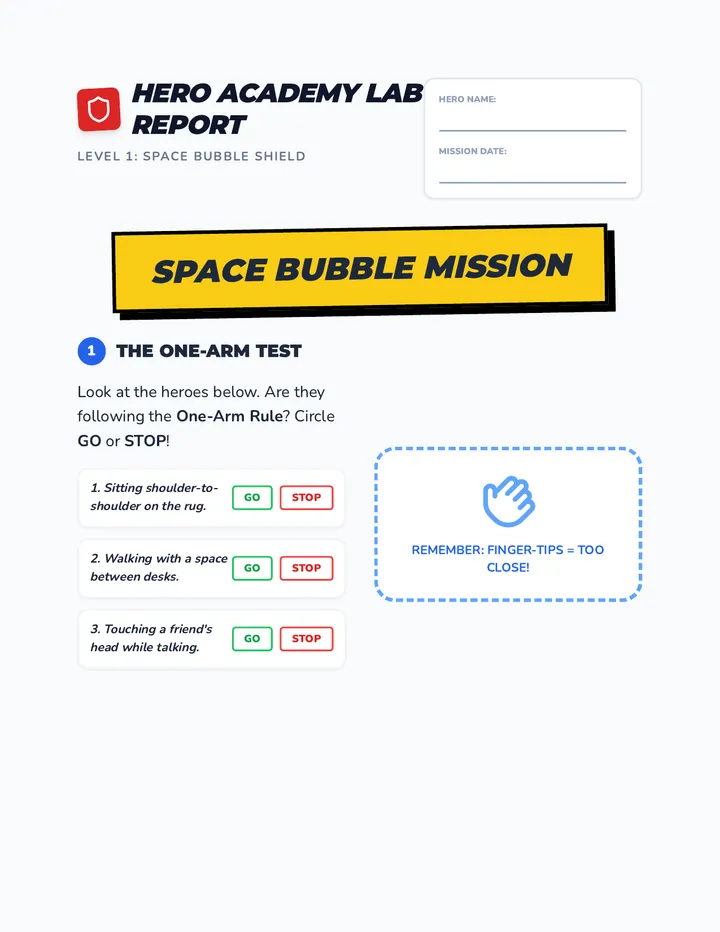
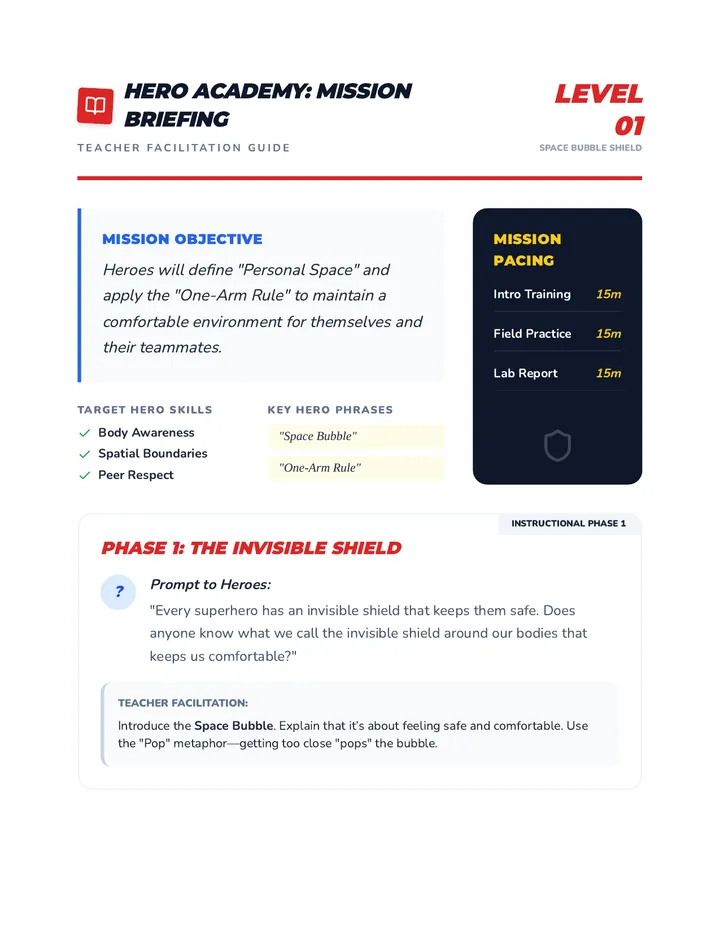
A 7-day social-emotional learning series that uses a 'Bubble Squad' space-themed metaphor to teach kindergarteners about personal space, boundary maintenance, safe transitions, playground play, classroom collaboration, and respectful social interaction.
A three-part social-emotional learning series designed for 6th-grade girls to build self-esteem, navigate friendship dynamics, and manage social media challenges through self-awareness and mindful reactions.
A series of lessons focused on fundamental social skills for early learners, emphasizing self-regulation, cooperative play, and effective communication.
A comprehensive unit for middle schoolers focused on developing respect, understanding boundaries, and practicing active listening to foster an inclusive school culture.
A 4-week friendship and social-emotional learning program designed for 1st grade girls, focusing on boundaries, personal space, kindness, and problem-solving through play and art.
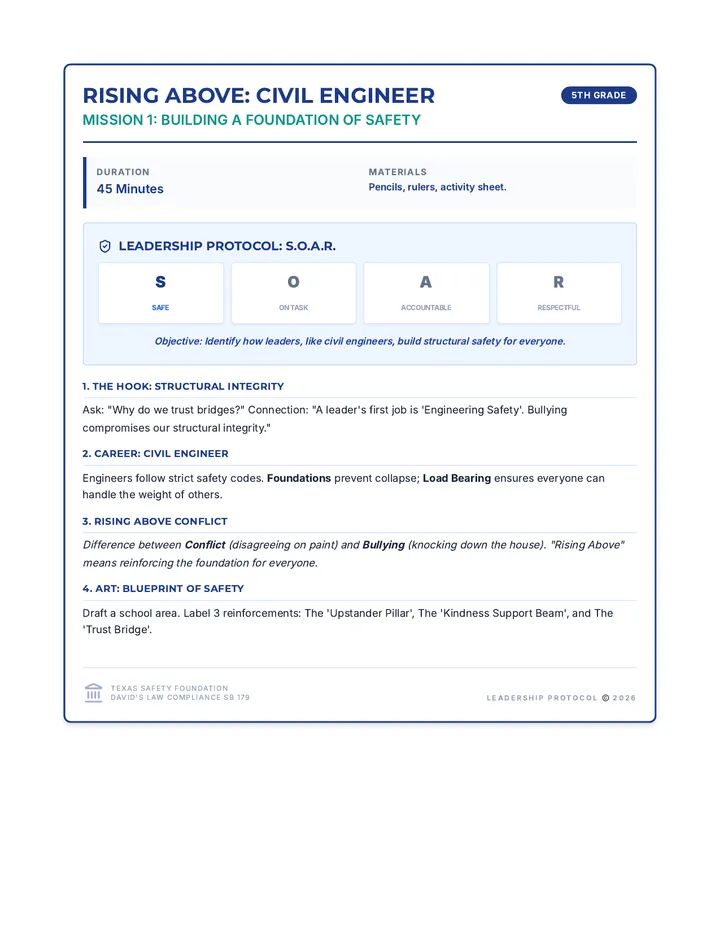
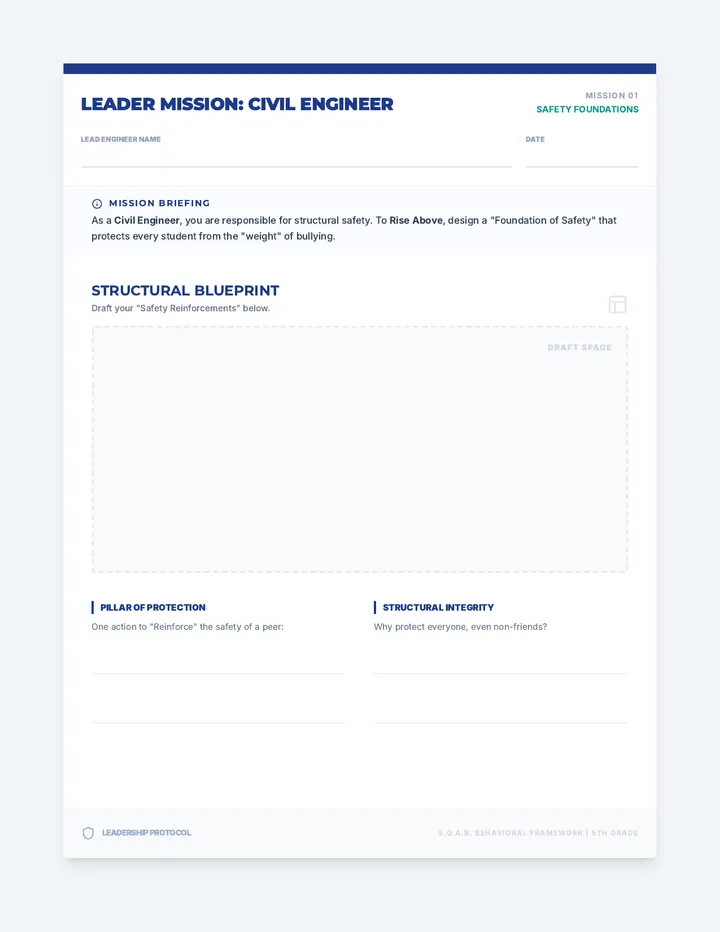
A 5-session SEL curriculum for 5th grade boys and girls focused on building healthy friendships, respecting personal boundaries, and developing self-confidence through the metaphor of 'Social Architects'. Students learn to design, build, and maintain positive social structures.
A comprehensive sequence designed for 9th and 10th graders to develop self-awareness, emotional regulation, and self-advocacy skills through visual tools and structured practice.
A six-week small group curriculum for 5th graders focused on developing healthy friendships, empathy, and conflict resolution skills. Students will explore active listening, perspective-taking, and boundary setting through hands-on activities.
A comprehensive suite of professional resources for social work students and practitioners, covering ethical decision-making, crisis management, grant acquisition, trauma-informed practices, and community evaluation.
An 8-week small group curriculum for 5th-grade girls focused on building healthy friendships, mastering communication, and navigating conflict through discussion, crafts, and reflection.
A collection of lessons focused on essential classroom and life skills, using high-engagement themes like "Scouts" and "Superheroes" to teach focus and safety.
A graduate-level training sequence on facilitating peer support systems to mitigate stress and anxiety. Students learn the science of social support, micro-skills for active listening, boundary setting to prevent burnout, and group facilitation techniques to create sustainable communities of care.
A comprehensive sequence for undergraduate students exploring the social psychology of stress and the practical skills needed to build resilient peer support networks. Students move from theoretical understanding to practical facilitation and community planning.
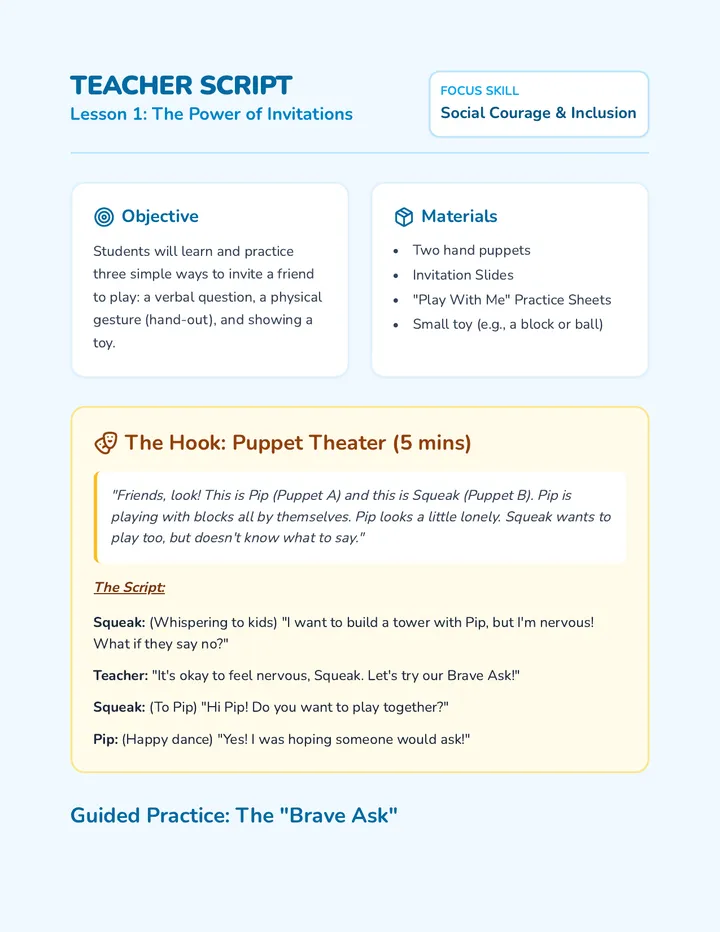
A Pre-K sequence focused on moving from individual joy to shared happiness through social connection, invitations, collaboration, and celebration. Students learn how community and play amplify positive emotions and build resilience.
A sequence for Pre-K students focused on building emotional resilience through predictable, positive daily routines. Students explore greetings, reframing chores, managing transitions, finding peace in quiet time, and practicing daily gratitude.
A Kindergarten sequence focused on shared positive experiences to boost mood and build social connections through invitations, cooperation, laughter, altruism, and gratitude.
A therapeutic and self-discovery sequence for 2nd graders to identify personal sources of joy. Students explore the physical sensations of happiness, categorize their interests, and create a personalized 'Joy Menu' to use as a coping strategy for emotional regulation.
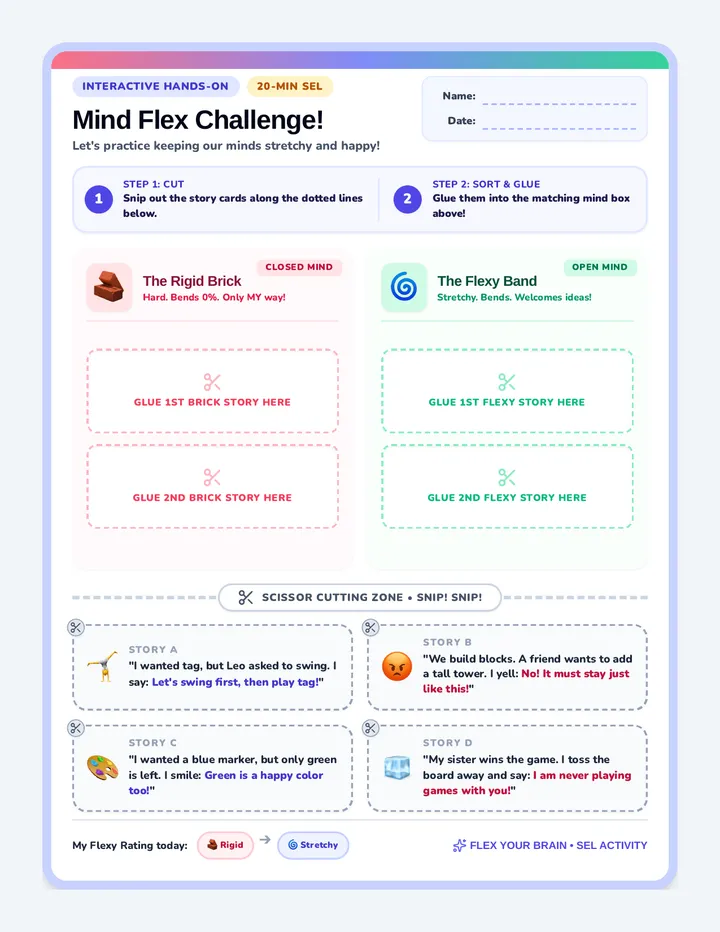
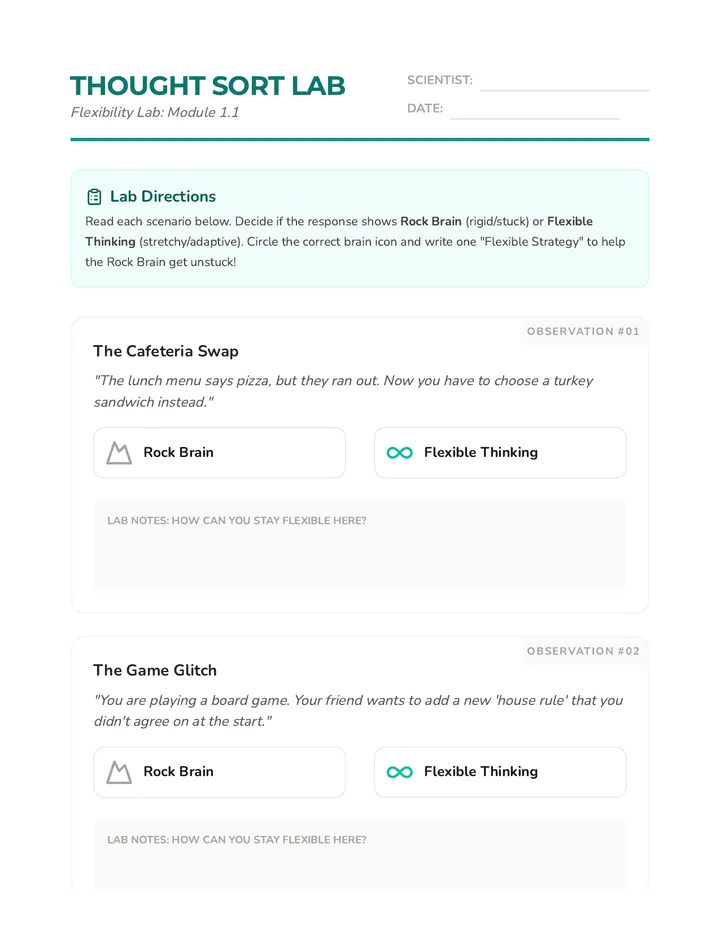
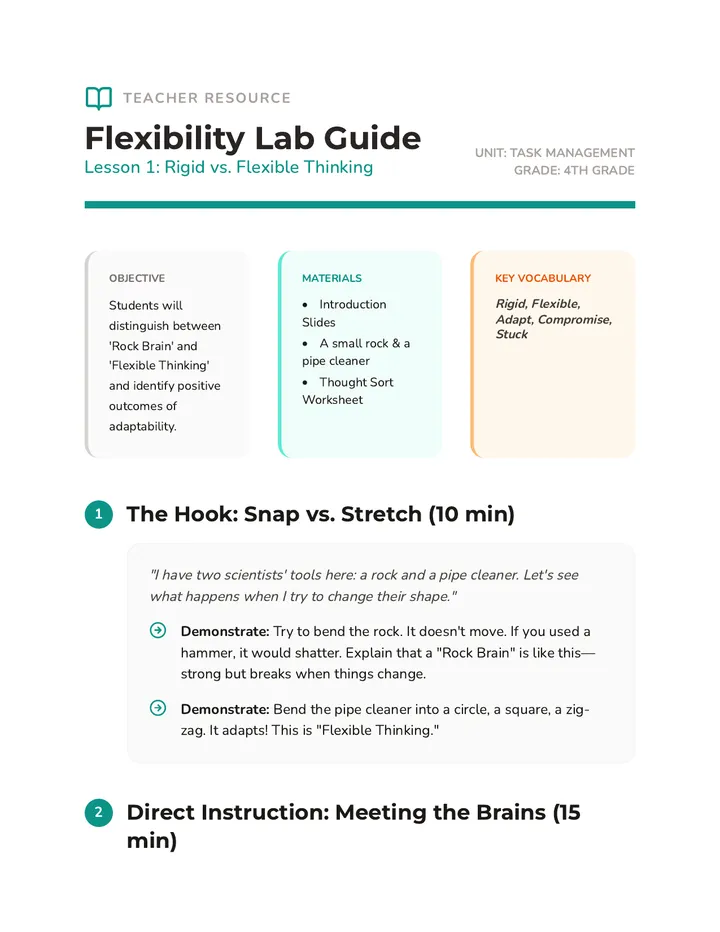
A 5-lesson sequence for Kindergarten students focusing on cognitive flexibility. Students learn to transition from rigid thinking ('Rock Brain') to flexible thinking ('Rubber Band Brain') through structured play, creative problem-solving, and social role-playing.
A 2nd-grade sequence on digital literacy focusing on file naming, folder organization, search retrieval, cloud storage, and digital collaboration. Students learn to maintain a clean digital workspace through a 'Cyber Space Station' theme.
This sequence empowers 2nd-grade students with self-advocacy skills to navigate obstacles. It moves from recognizing when help is needed to choosing the right helper and using specific, actionable language or non-verbal signals.
A 5-lesson sequence for 3rd-grade students focused on cognitive flexibility and independent problem-solving for classroom obstacles. Students move from understanding 'flexible thinking' to using a toolkit of strategies for material issues, forgotten instructions, and unexpected changes.
A project-based sequence where 4th graders act as event planners, mastering cloud storage, spreadsheets, document design, and presentation tools to organize a class celebration.
This sequence trains 9th-grade students in bystander intervention techniques and active allyship within a workplace context. Students explore the psychological barriers to action (the bystander effect) and master the '4 Ds'—Direct, Distract, Delegate, and Delay—to safely interrupt harassment and support colleagues.
A 5-lesson sequence for 5th-grade students focused on working memory and the importance of single-step directions. Students learn to analyze, reconstruct, and advocate for clear communication through case studies, games, and collaborative challenges.
This sequence focuses on auditory processing and the cognitive strategy of verbal rehearsal (self-talk) to hold information in working memory. Students learn to 'catch' a verbal instruction, repeat it to themselves or a peer, and then execute it.
A sequence focused on helping students overcome emotional barriers to task initiation using a 'Task Doctor' theme. Students learn to identify avoidance behaviors, diagnose the root cause of being 'stuck', and prescribe effective self-talk solutions through role-play and reflection.
This sequence teaches Kindergarten students the cognitive strategy of 'verbal rehearsal' to support working memory. Students progress from basic auditory mimicry to internalizing actionable instructions through a structured 'Listen, Say, Do' protocol.
A task management sequence for 10th-grade students focusing on self-talk as a tool for independent work initiation. Students analyze performance psychology, simulate peer coaching, and develop personalized 'Launch Codes' to overcome procrastination and academic paralysis.
This sequence teaches 7th-grade students how to move beyond simple compromise to collaborative negotiation. Students learn to separate people from problems, brainstorm creative 'win-win' options, use objective criteria for fairness, and develop a BATNA (Best Alternative to a Negotiated Agreement) to handle complex conflicts effectively while preserving relationships.
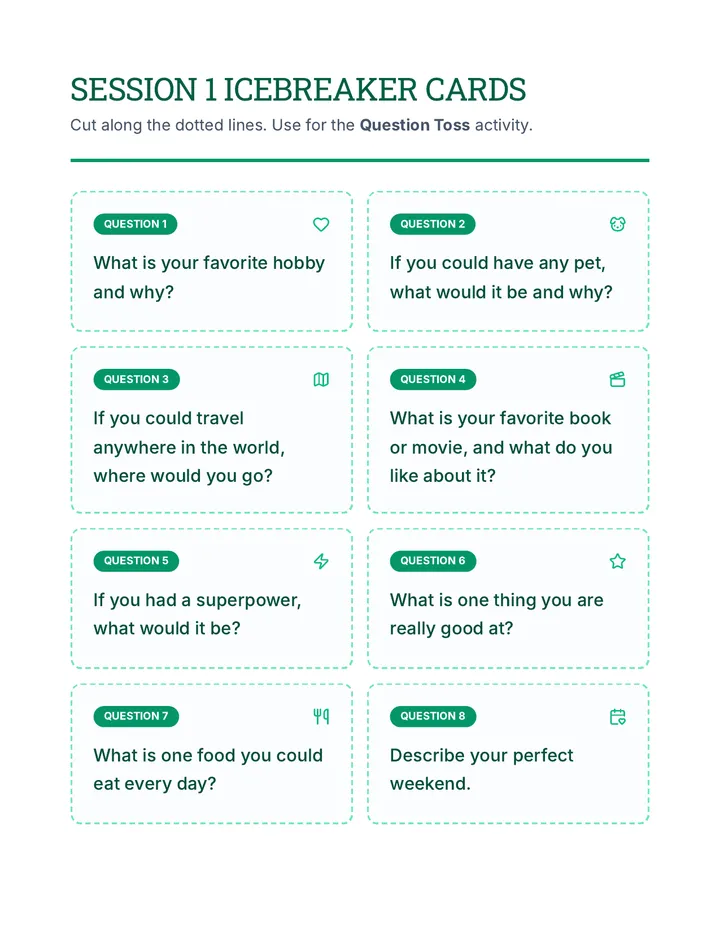
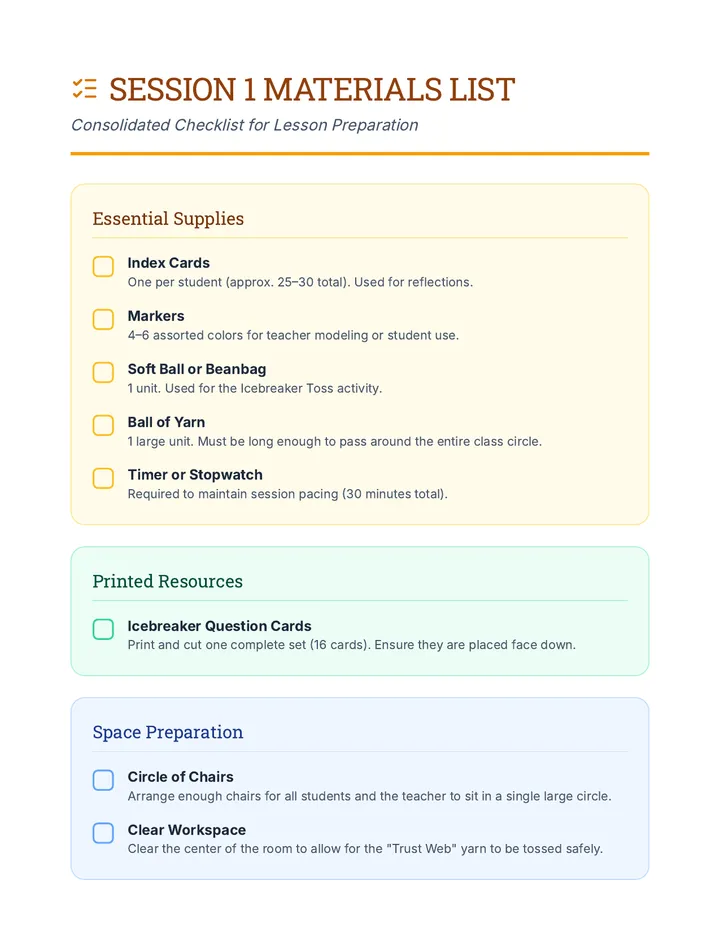
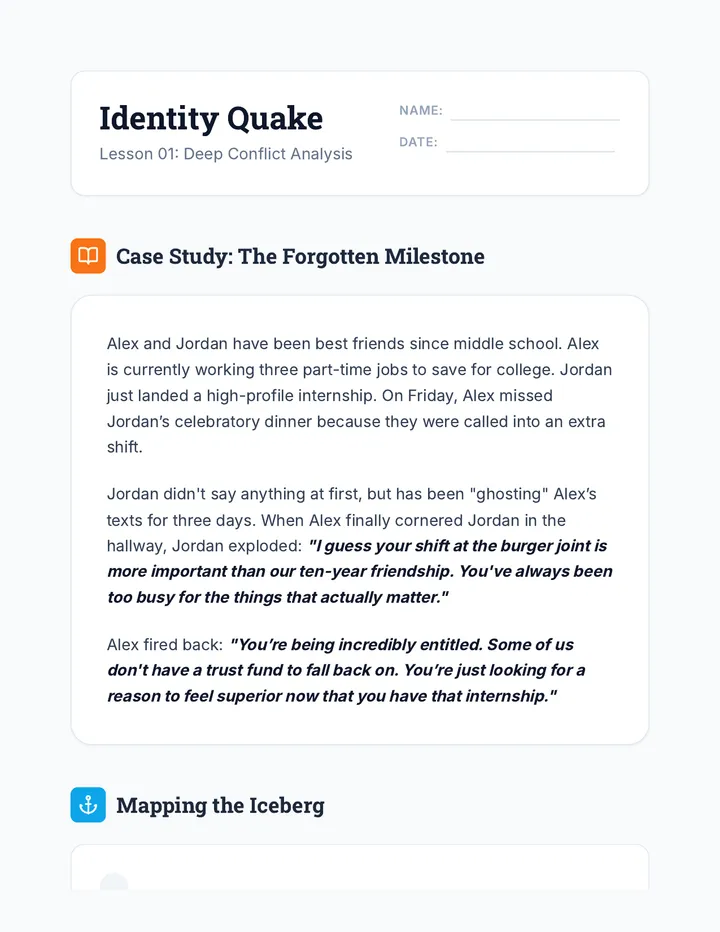
This sequence teaches 7th-grade students to navigate complex conflicts using the Iceberg Model. Students learn to look beneath surface-level arguments ('positions') to identify underlying human needs ('interests') through techniques like the Five Whys, core needs analysis, and multi-party mapping.
A 5-lesson sequence for 6th graders focusing on Interests-Based Negotiation. Students move from rigid positions to understanding underlying needs, brainstorming creative solutions, and evaluating fairness, culminating in a complex negotiation simulation.
A counseling sequence for a 4th-grade student focusing on impulse control, empathy, and social awareness through the metaphor of being a 'Pulse Pilot' who navigates their own actions.
A therapeutic curriculum for middle-grade students focused on self-regulation, decision-making, and personal accountability through a witty nautical exploration theme.
A small group intervention sequence designed for school counselors to help students normalize their experiences with bullying, identify coping mechanisms, and build self-esteem using the 'Stand Out' method.
A social-emotional learning sequence focused on developing empathy, body positivity, and active bystander skills in middle school students.
A foundational series of lessons for K-2 students focusing on academic soft skills like collaboration, perseverance, problem-solving, and reflection through music, movement, and play.
A series of mindset-shifting activities designed to help older elementary and middle school students develop resilience and long-term planning skills.
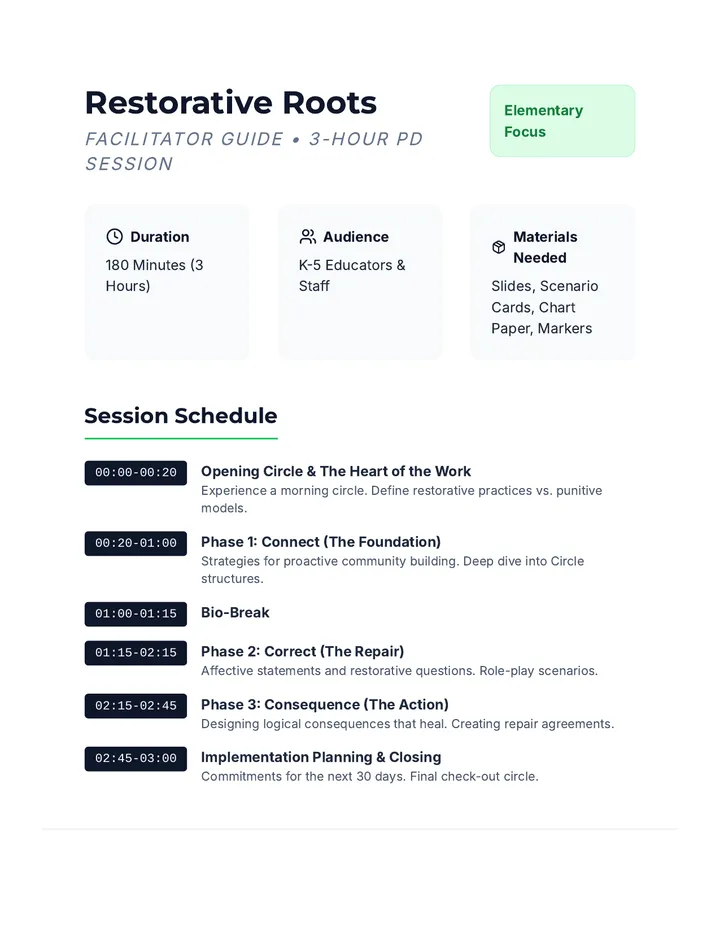
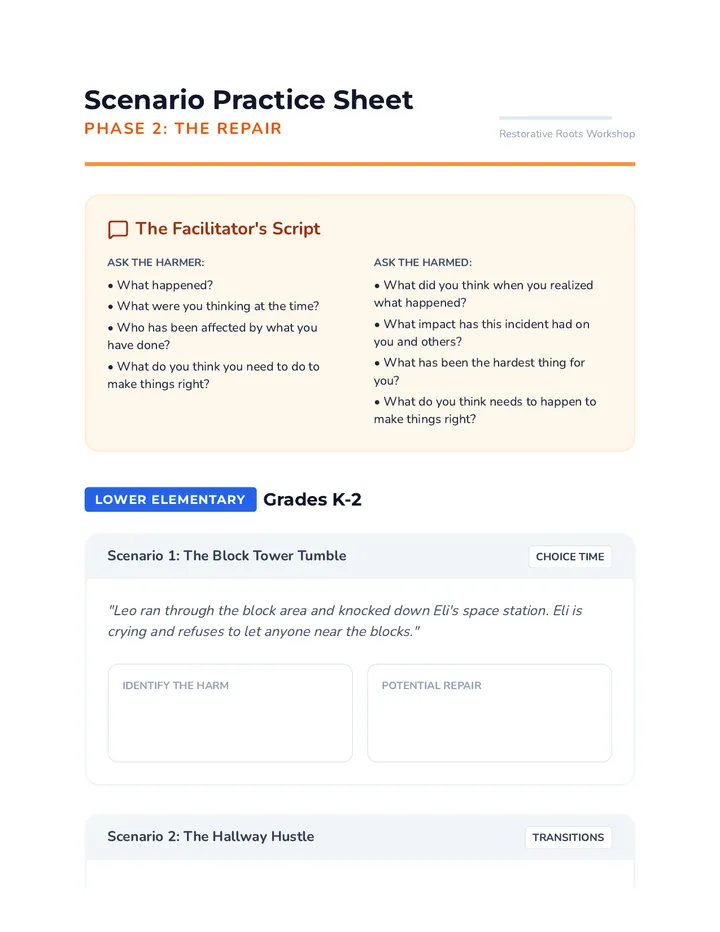
A 4-week restorative intervention program designed for 5th-grade students returning from suspension. The sequence uses a 'Building' metaphor to explore impulse control, healthy relationships, conflict resolution, and self-agency through discussion and structured reflection.
A series of workshops designed for student council and youth leaders to develop community-focused initiatives and positive school culture.
A 6-week small group program designed for middle school girls to build math confidence through growth mindset exercises, positive self-talk, and collaborative puzzles. Each 30-minute session focuses on shifting attitudes toward mathematics and fostering a supportive community.
A 5-lesson series designed for a kindergarten student to understand the importance of school attendance, healthy habits, asking for help, and home routines. The sequence uses visual support and engaging activities to build school readiness.
A series of six 20-minute small group lessons for Kindergarteners focused on the importance of school attendance. Students explore how showing up daily supports teamwork, learning, friendship, and future goals through interactive play and discussion.
A three-part exploration of gratitude and generosity through interactive small group activities, focusing on building community and social-emotional skills.
A 6-week social-emotional learning program for kindergarten students, focusing on building foundational friendship skills, empathy, and communication through a weekly journal and group activities.
A 2-day SEL unit for 4th graders focused on teamwork and cooperation, themed as a space mission where students must work together to succeed.
A series of seasonal and social-emotional learning activities designed to build professional soft skills, teamwork, and functional independence for adults with IDD.
A comprehensive 6-lesson Black History Month curriculum for 5th-8th graders, exploring historical excellence, emotional expression, and community through the lens of five core values: Virtus, Kenkyo, Sankofa, Ubuntu, and Ganas. Inspired by a century of resilience and brilliance.
A systemic approach to stress and burnout prevention for graduate students, reframing personal well-being as a design challenge. Students develop a personalized 'resilience architecture' through structural changes in time management, sleep hygiene, and boundary setting.
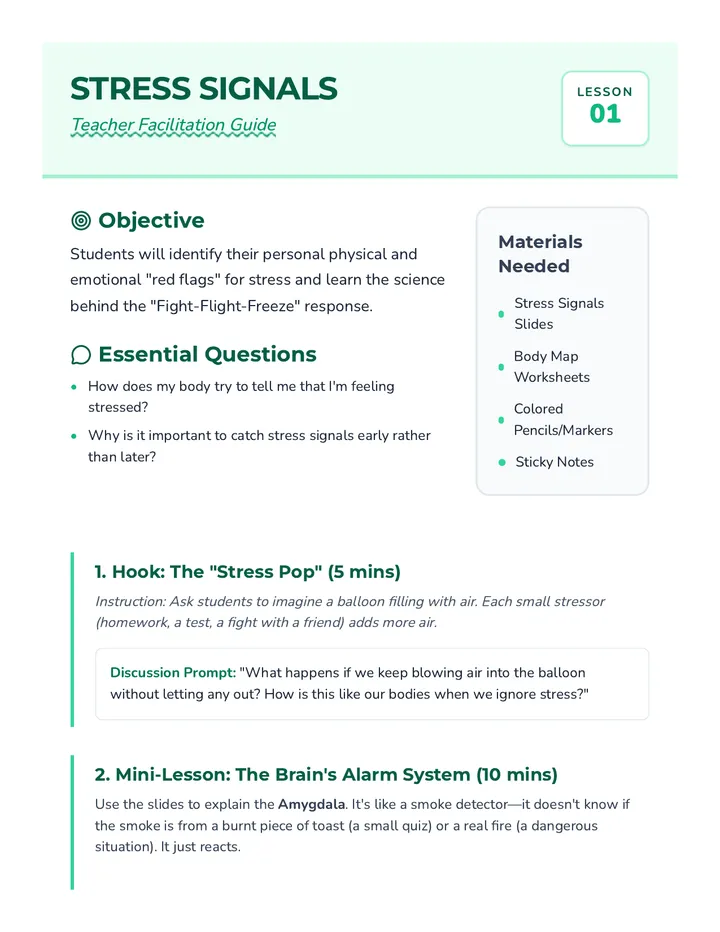
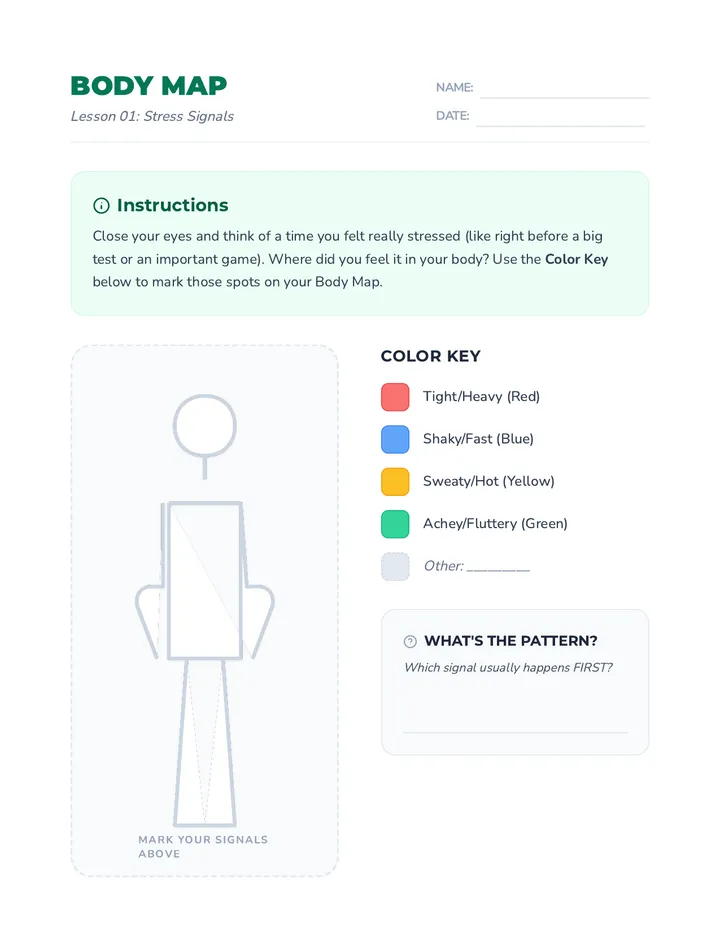
A comprehensive sequence for 9th-grade students focusing on self-advocacy, communication skills, and boundary setting to manage schedule conflicts and prevent burnout. Students learn to recognize stress signals, draft professional requests, negotiate deadlines, and prioritize tasks during crises.
A 5-lesson unit for 7th-grade students focusing on the interpersonal skills required for time management: setting boundaries, communicating overload, and advocating for a balanced schedule. Students progress from identifying burnout to drafting a personal accountability contract.
A high-stakes simulation for 12th graders transitioning to professional environments, focusing on prioritizing competing demands, managing interruptions, and professional communication in a special education caseload context.
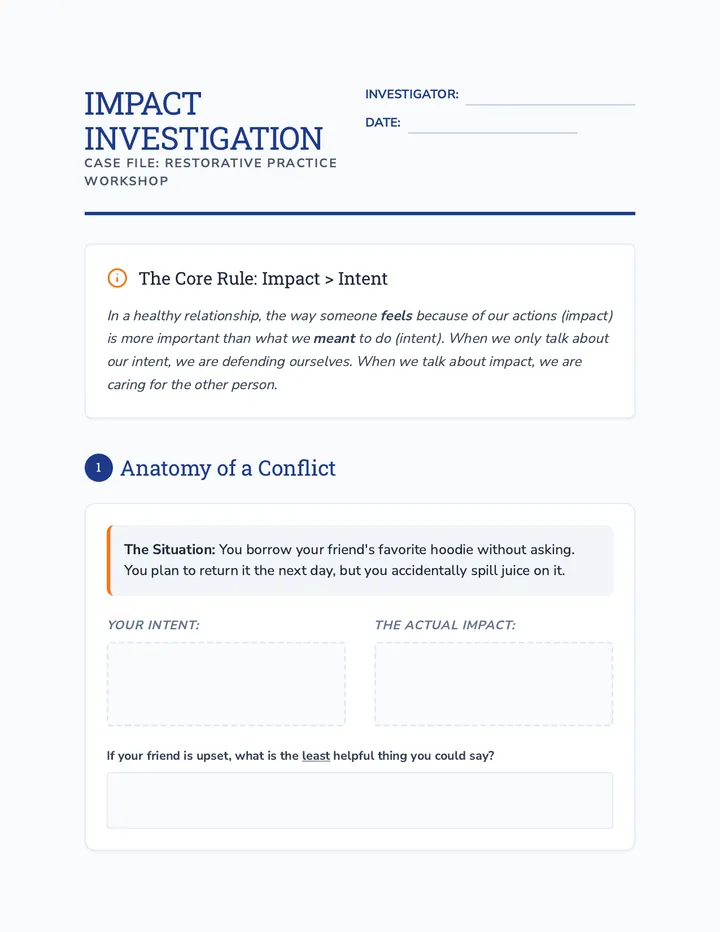
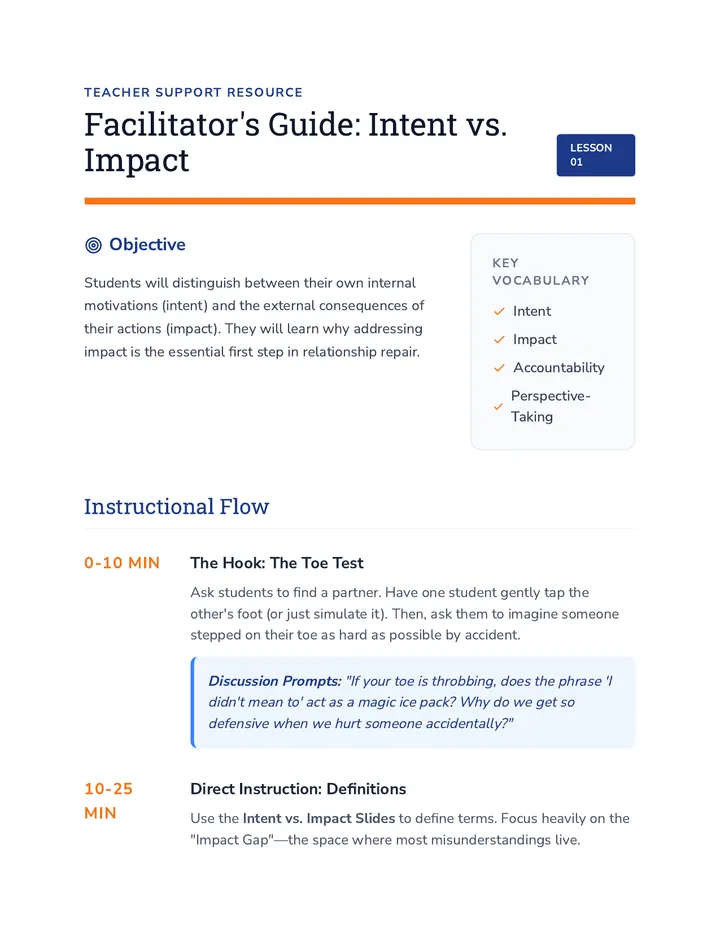
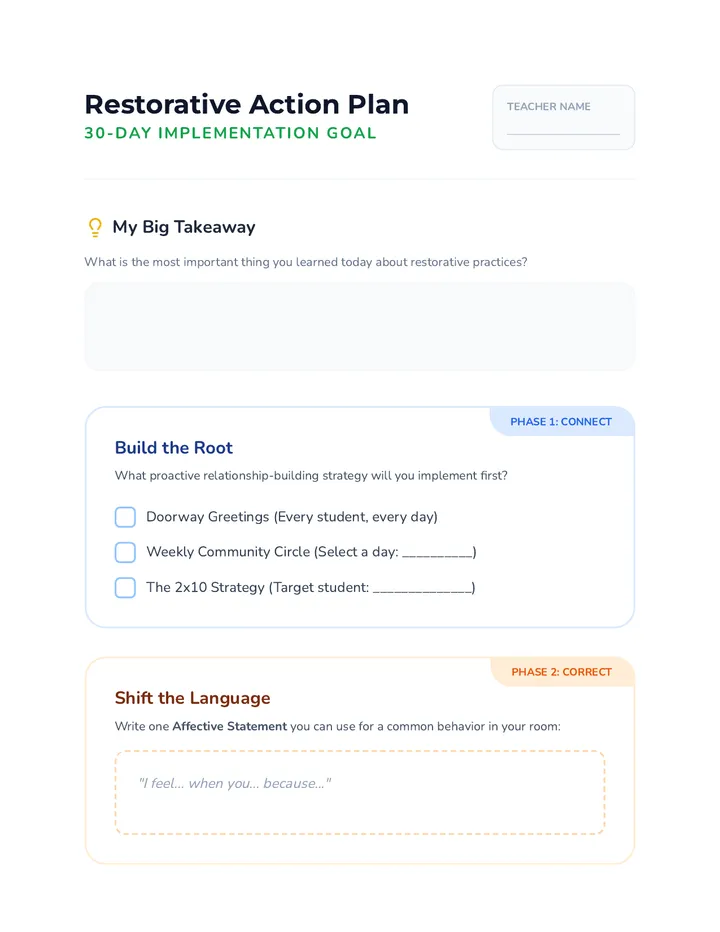
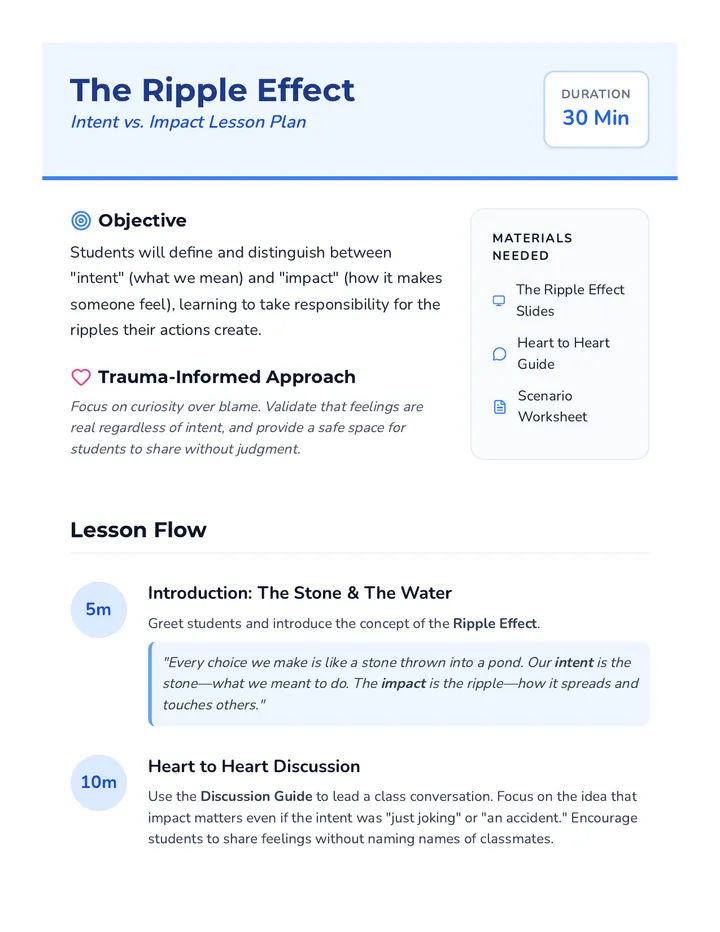
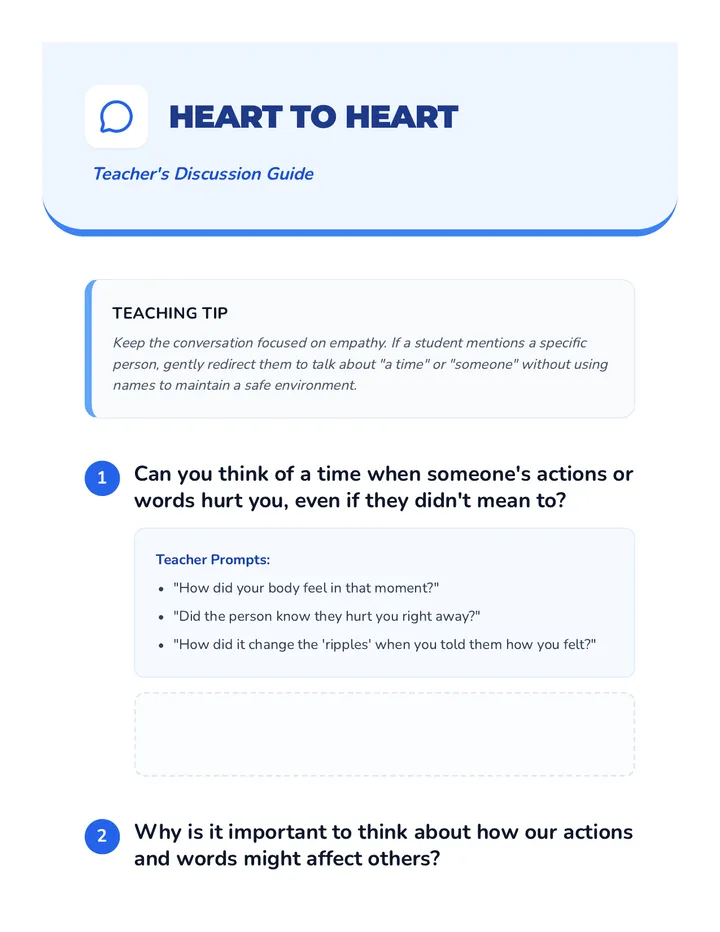
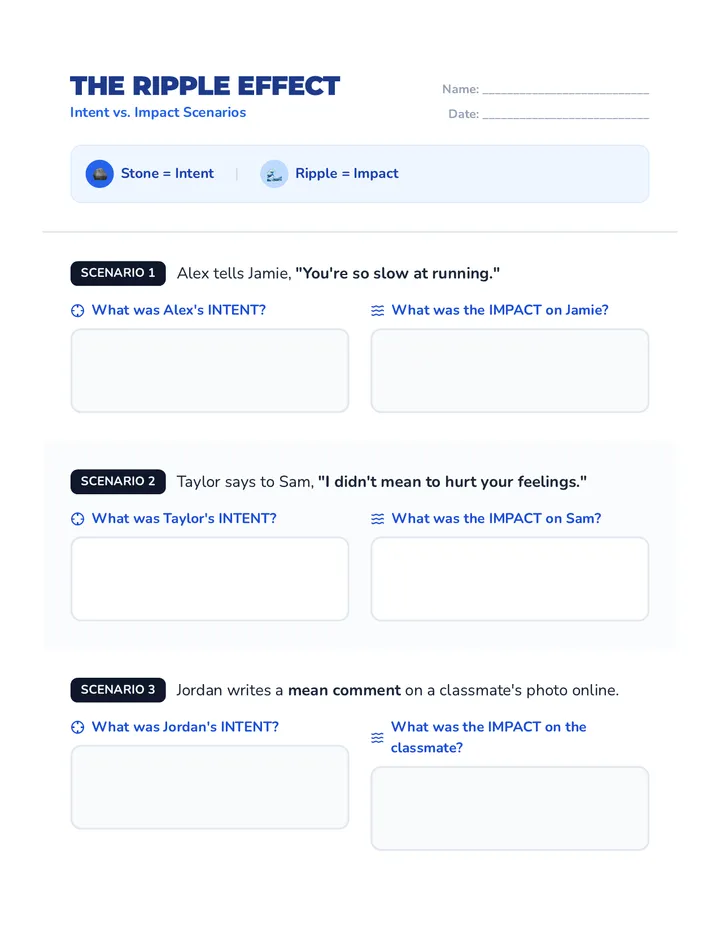
A 5-lesson sequence for 7th grade students focusing on restorative practices, the difference between intent and impact, crafting genuine apologies, and the long-term process of rebuilding trust after conflict.
A 5-lesson unit for 7th graders on the formal structure of peer mediation. Students transition from observers to facilitators, learning to maintain neutrality, set ground rules, reframe toxic language, and guide parties toward mutually agreed-upon solutions.
This sequence explores the physiological and psychological aspects of high-conflict situations, providing 7th-grade students with tools for self-regulation, verbal de-escalation, and constructive re-engagement.
This sequence trains 9th-grade students to facilitate peer mediation. It covers the ethics of neutrality, the structural stages of a mediation session, summarizing complex issues into actionable agendas, and drafting sustainable, SMART agreements, culminating in a mock mediation certification.
A comprehensive 9th-grade sequence on de-escalation, active listening, and assertive communication to navigate complex conflicts effectively. Students move from understanding non-verbal cues to mastering the 'XYZ' formula and reframing toxic language.
This sequence empowers students to act as third-party neutrals, introducing the specific structure and skills of Peer Mediation. Students learn the distinct phases of a mediation session, the importance of neutrality, and how to facilitate dialogue without taking sides.
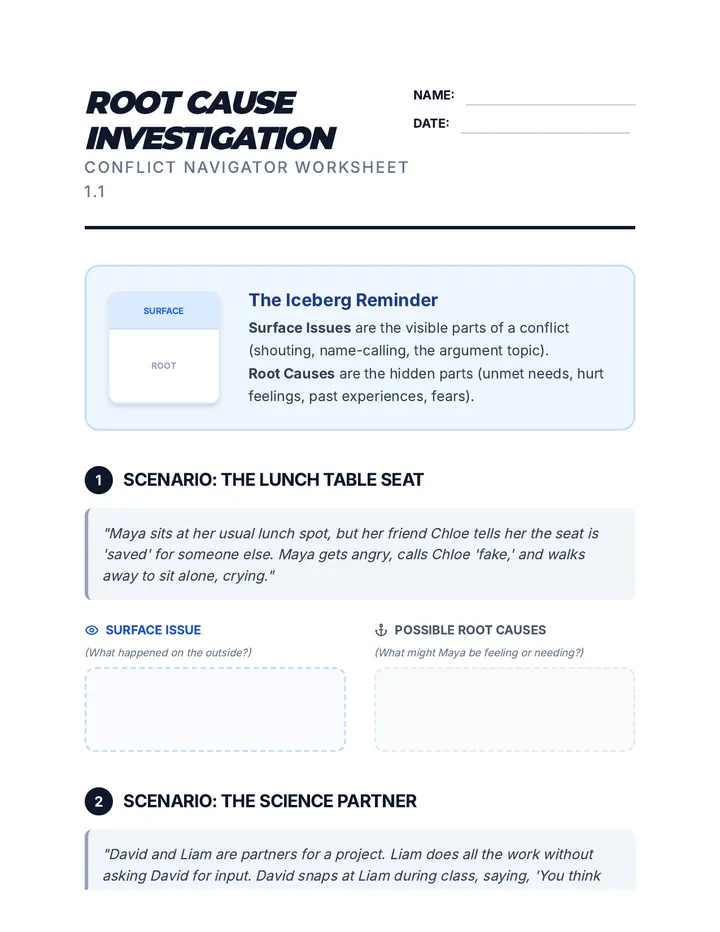
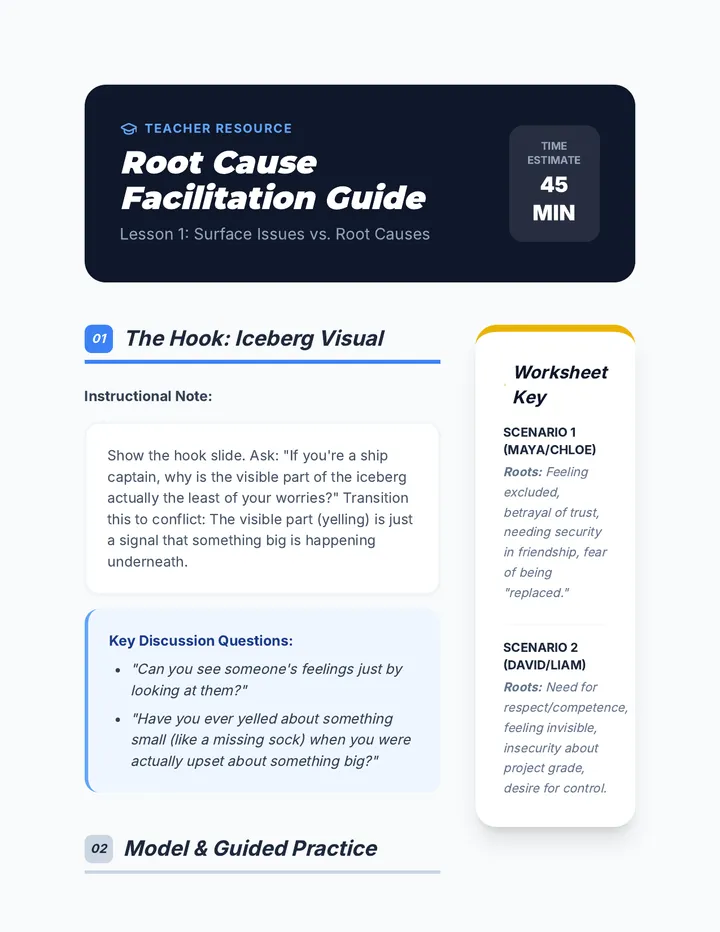
A comprehensive 9th-grade sequence exploring the psychological and biological roots of conflict. Students learn to distinguish visible behaviors from hidden needs, understand the neuroscience of emotional escalation, and develop practical self-regulation strategies to navigate complex interpersonal disputes.
A 5-lesson sequence for 6th graders focusing on the aftermath of conflict: restoration, genuine apologies, sustainable agreements, and rebuilding trust. Students move beyond just 'stopping a fight' to actively repairing relationships and creating long-term peace.
A comprehensive 6th-grade sequence on conflict navigation, teaching students to identify root causes, recognize personal conflict styles, practice perspective-taking, understand escalation, and diagnose complex disputes.
A game-based sequence teaching 8th-grade students the mechanics of principled negotiation. Students learn to move from competitive 'win-lose' mindsets to collaborative 'win-win' solutions by identifying interests, generating options, using objective criteria, and understanding their BATNA.
This simulation-heavy sequence trains 8th-grade students to act as neutral peer mediators. Students move from establishing ground rules and neutrality to mastering advanced communication skills like reframing and open-ended questioning, culminating in a full mock mediation of complex social conflicts.
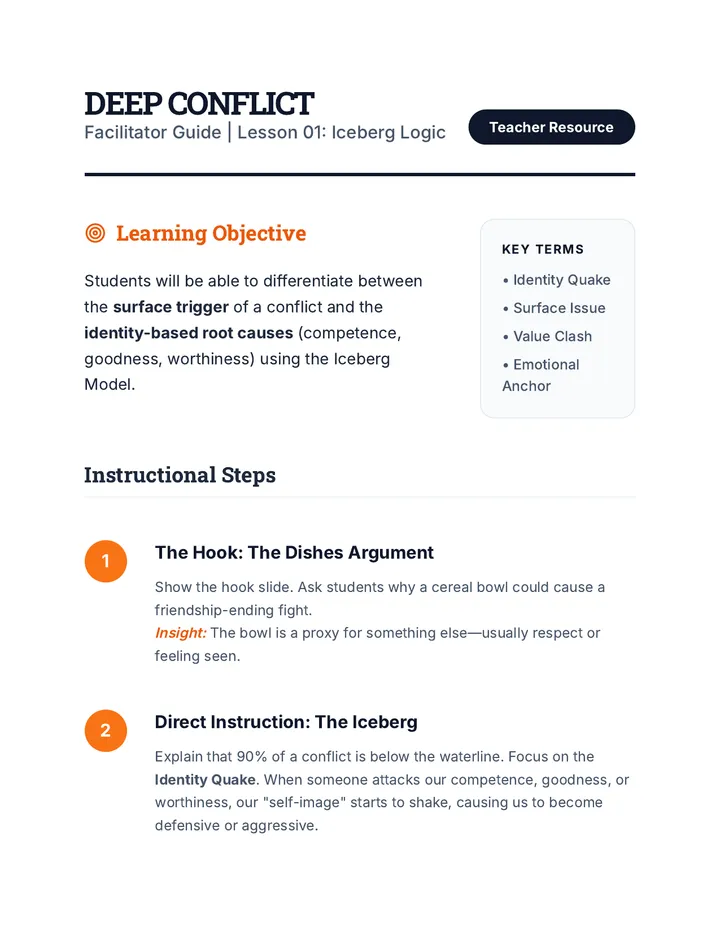
An 8th-grade counseling sequence focused on identifying the psychological root causes of conflict and managing high-arousal emotions using the Conflict Iceberg model and neuroscience-based de-escalation.
This sequence explores complex conflict navigation for 12th graders, moving from the psychological roots of identity-based conflict to the practical application of restorative circles and sustainable resolution design.
A comprehensive high school unit on interest-based negotiation and formal mediation. Students move from understanding individual interests to facilitating multi-party resolutions using the Harvard Negotiation Project framework and professional mediation stages.
This sequence equips high school seniors with professional-grade negotiation and mediation skills. It moves from understanding conflict styles to mastering interest-based negotiation, BATNA/ZOPA calculations, and emotional regulation, culminating in a complex multi-party corporate simulation.
A comprehensive 5-lesson sequence on the psychological and interpersonal mechanics of managing high-conflict situations. Students explore the neuroscience of anger, practice verbal and non-verbal de-escalation, use the Iceberg Model to find root causes, and master assertive communication through simulations.
This sequence immerses undergraduate students in the theoretical and practical application of advanced conflict resolution, moving beyond basic interpersonal skills to systemic mediation strategies. Students will master interest-based negotiation, emotional regulation, reframing, and power analysis through simulations and case studies.
A graduate-level exploration of the ethical and legal complexities surrounding the use of crisis hotlines in clinical practice, focusing on HIPAA, state-specific mandates, and the balance between client autonomy and the duty to protect.
An advanced clinical training sequence for graduate students to master the DBT DEAR MAN communication protocol, focusing on theoretical depth, precise scripting, and high-fidelity simulation.
A comprehensive workshop sequence for undergraduate students to master the mechanics of strategic inquiry, moving from individual question syntax to complex lines of questioning designed to force logical concessions.
An advanced course for graduate students exploring the intersection of neurobiology, psychological theory, and organizational leadership. Students develop high-level social and emotional competencies to navigate complex professional environments and foster psychological safety.
A 5-lesson series for graduate students focused on navigating the systemic stressors of academia, setting professional boundaries, and preventing burnout through neurobiological understanding and assertive communication.
A Pre-K sequence focused on building self-esteem and positive experiences through mastery, growth mindset, and persistence. Students learn to navigate challenges and celebrate their own progress.
A Pre-K sequence introducing behavioral activation concepts by helping a puppet character navigate low moods through small, physical actions and kindness. Students learn that 'doing' can change 'feeling' in a developmentally appropriate, narrative-driven way.
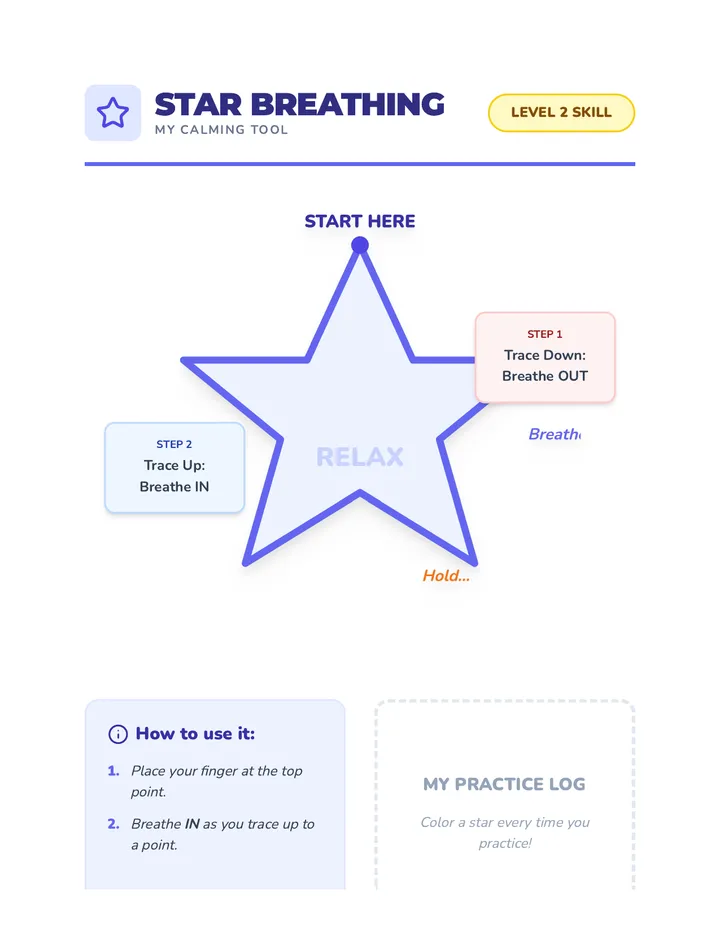
A Kindergarten sequence focused on teaching emotional regulation through positive actions. Students learn to use activities like physical movement, deep breathing, and creative expression to 'switch the channel' from negative to positive emotions, building a toolkit of coping strategies.
A Kindergarten sequence focused on helping students identify personal interests and the link between activities and emotions through sensory exploration and creative mapping.
A project-based sequence for 1st graders focused on emotional regulation through the creation of a 'Sunshine Kit'. Students explore sensory, physical, and social activities to build a personalized toolkit of positive experiences for use during challenging moments.
A Kindergarten sequence focused on making digital footprints concrete through physical analogies, promoting online kindness, and establishing safety protocols for young internet users.
A social-emotional learning sequence for 1st graders focused on empathy, perspective-taking, and challenging exclusion. Students experience simulations, role-play, and creative projects to build an inclusive classroom community.
This 5-lesson sequence for 1st-grade students explores social awareness through the lens of challenging stereotypes and bias. Students move from understanding basic assumptions via object lessons to identifying and debunking gender-based and role-based stereotypes in play and careers, ultimately celebrating individual uniqueness.
A comprehensive sequence for 6th graders to understand and apply behavioral activation. Students learn how their actions impact their emotions, track their energy levels, brainstorm nourishing activities, and create a sustainable weekly schedule to improve their mental well-being.
A high-intensity, simulation-based sequence for undergraduate students to master DBT's FAST skills (Fair, Apologies-free, Stick-to-values, Truthful) for interpersonal effectiveness and self-respect.
A 5-lesson sequence for 6th-grade students using a detective-themed case study approach to learn FAST skills for self-respect. Students analyze characters, forensics transcripts, and historical figures to master the art of standing up for themselves with integrity.
This sequence introduces 3rd-grade students to identifying personal sources of joy and satisfaction. It guides them through recognizing physical emotional shifts, inventorying interests, exploring sensory joy, categorizing activities by energy levels, and creating a personalized 'menu' of coping strategies for emotional regulation.
An applied sequence for undergraduate students to master self-regulation and de-escalation techniques in high-pressure academic and interpersonal contexts. Students move from identifying personal physiological triggers to practicing real-time regulation during active conflict and performance.
A game-based simulation sequence for 8th-grade students to master time and energy management. Students treat time as a finite currency, navigate trade-offs through opportunity cost simulations, and design a sustainable weekly schedule.
A 5-lesson sequence for 1st Grade students on identifying classroom helpers, getting attention appropriately, phrasing requests, and managing wait time. This program empowers students to advocate for their needs independently and politely.
A comprehensive 9-week curriculum designed to equip young adults with essential skills for personal well-being, effective communication, and healthy relationships. This course uses a 'blueprint' theme to help students architect their own futures through goal-setting, stress management, and interpersonal growth.
A four-week workshop series for high school students focused on building supportive relationships, identifying healthy behaviors, and fostering self-respect.
A comprehensive mini-unit for high school Life Skills students on personal boundaries, specifically focusing on the difference between friendships and romantic relationships, and how to respect the word 'No'.
A 6-week curriculum for 11th and 12th graders focused on practical conflict resolution strategies with peers, teachers, parents, and romantic partners.
A multi-part group curriculum for 8th-grade girls designed to build self-confidence, identify relationship red flags, and master the art of setting healthy boundaries.
This sequence addresses the interpersonal dynamics of trafficking, focusing on healthy boundaries and the specific 'Romeo' or 'Boyfriend' coercion tactics often used against teens. Students will engage in workshops to practice assertiveness and recognize the difference between affection and control.
An advanced clinical sequence for graduate students focusing on the assessment of romantic relationship dynamics through attachment theory, neurobiology, and evidence-based frameworks. It bridges theory with clinical application, focusing on adult attachment, power dynamics, and conflict styles.
An advanced workshop-style sequence for graduate students focusing on communication architectures, differentiation of self, and the practical mastery of healthy relationship dynamics. Students will move from theoretical frameworks (Bowen Family Systems, NVC) to high-stakes practical simulations.
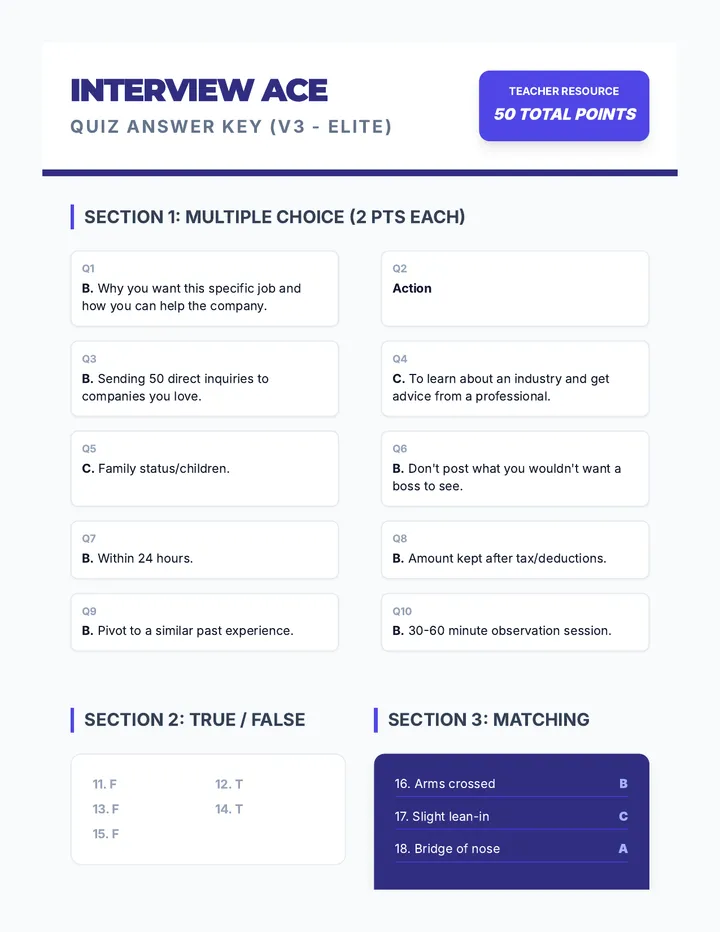
A 10-session course for high school students focused on building and maintaining healthy romantic, platonic, and digital relationships through communication, boundaries, and empathy.
A 10-session comprehensive course for high school students focused on building healthy romantic, platonic, and digital relationships through communication, boundaries, and empathy.
A 10-session course for high school students focused on building and maintaining healthy relationships through communication, boundaries, and empathy.
A 10-session course for high school students focused on developing healthy communication, boundaries, and empathy across romantic, platonic, and digital relationships. Students engage in interactive role-plays, games, and reflections to build practical social-emotional skills.
This project-based sequence explores emotional safety and decision-making in relationships. Students learn to balance friendships with romantic interests, trust their intuition, build resilience through rejection, and advocate for equality in their connections, culminating in a personal 'Relationship Rights' zine.
A comprehensive 6th-grade sequence focused on developing healthy communication and conflict resolution skills in early romantic relationships. Students learn to identify conflict styles, use 'I' statements, de-escalate drama, practice active listening, and deliver meaningful apologies.
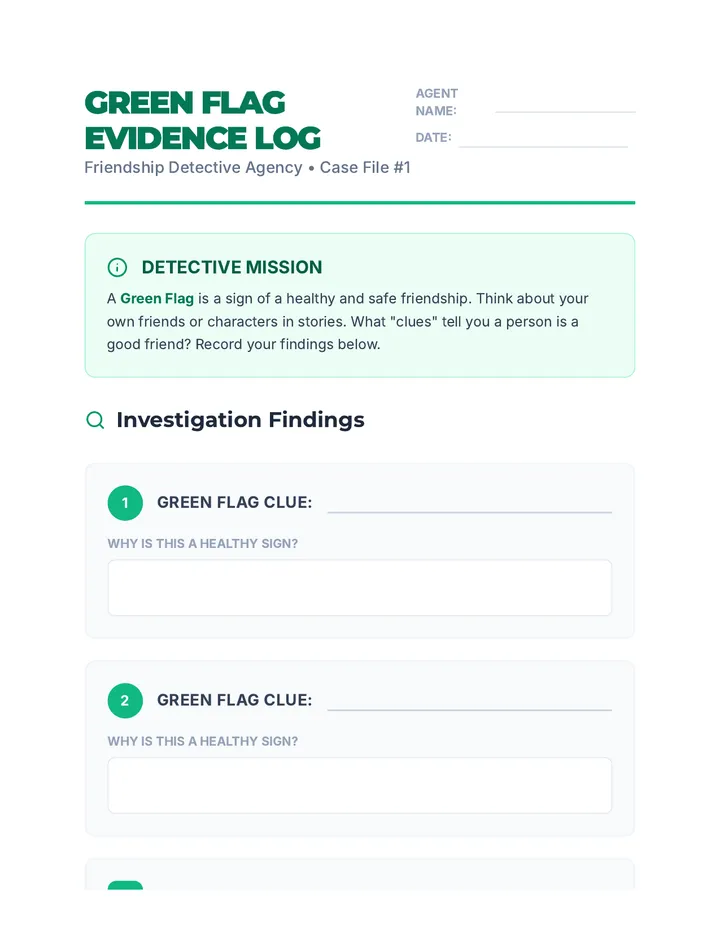
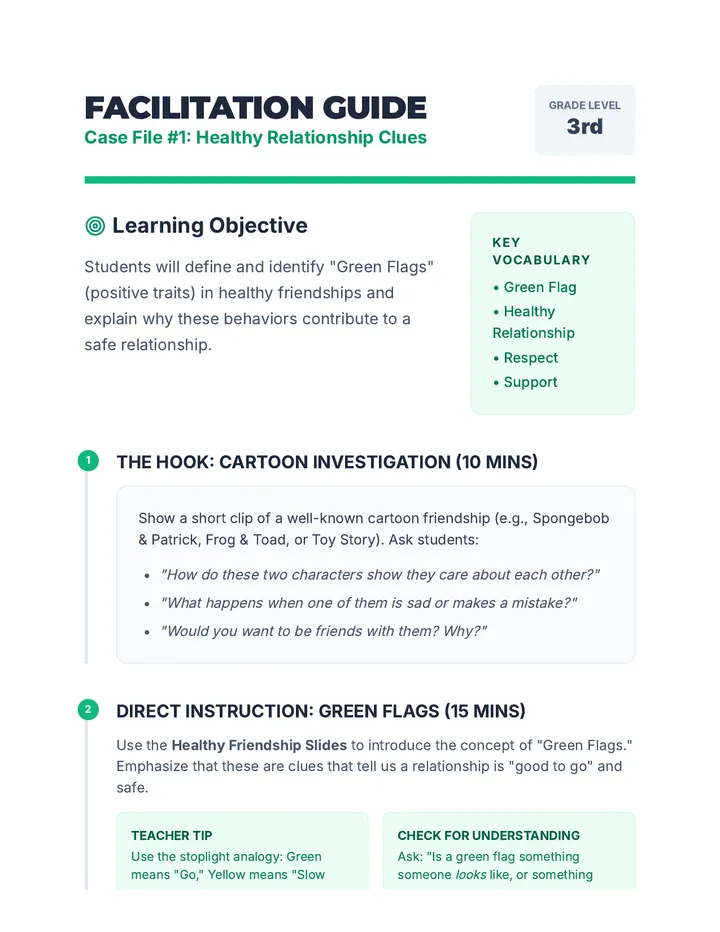
A 5-lesson sequence for 6th graders to identify and cultivate healthy relationship dynamics by distinguishing between 'green flags' (positive indicators) and 'red flags' (warning signs). Students move from defining respect to analyzing media and creating their own relationship health guides.
This sequence equips 7th-grade students with the tools to navigate the inevitable conflicts and endings of romantic relationships. Students will learn conflict styles, de-escalation techniques, how to recognize unhealthy patterns, and respectful ways to end a relationship while maintaining emotional safety and dignity.
A comprehensive unit for 7th-grade students to identify healthy vs. unhealthy romantic relationship indicators, core values, and personal boundaries. Students will develop a 'Relationship Radar' to navigate social dynamics with emotional safety and autonomy.
A comprehensive 5-lesson unit for 12th graders focused on DBT-inspired GIVE skills (Gentle, Interested, Validating, Easy manner). Students transition from theoretical analysis of adult relationship conflicts to high-stakes simulations involving roommates, workplaces, and intimate partnerships.
A project-based sequence where 10th-grade students explore the neuroscience of validation and translate DBT GIVE skills into accessible peer-education resources. Students synthesize scientific principles of social connection with practical relationship strategies to create a 'GIVE Toolkit' for their community.
A social-emotional learning unit focused on building self-esteem, identifying personal strengths, and developing strategies to combat bullying and negative self-talk.