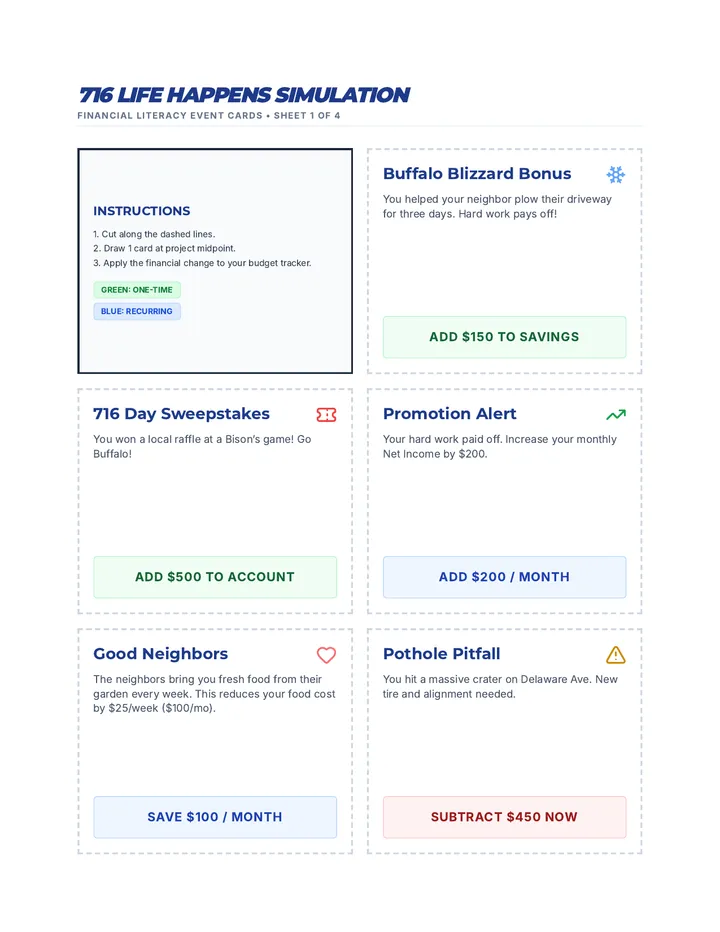
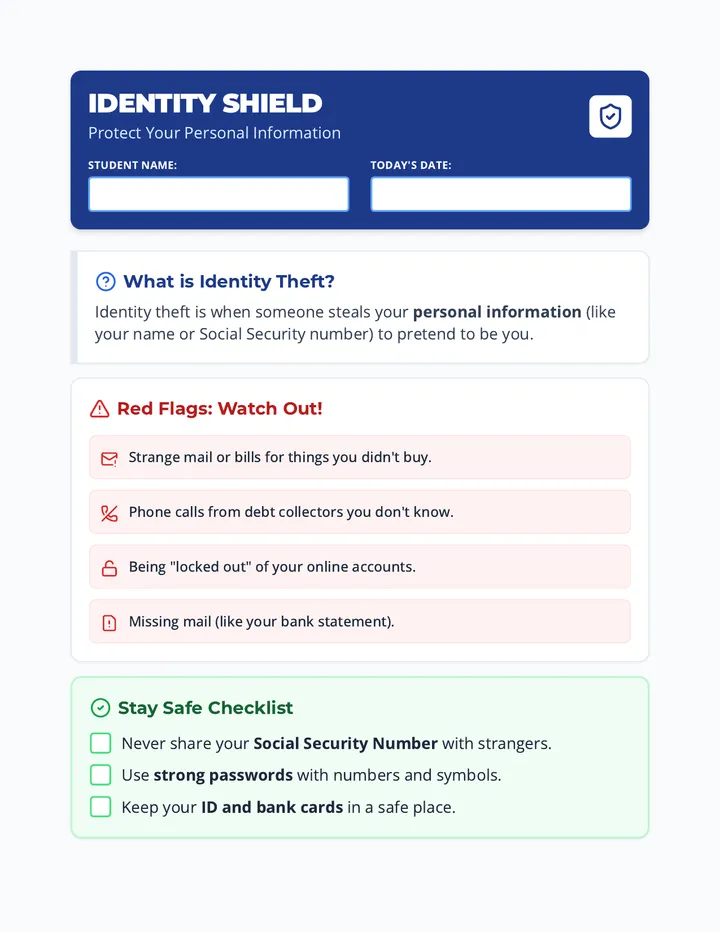
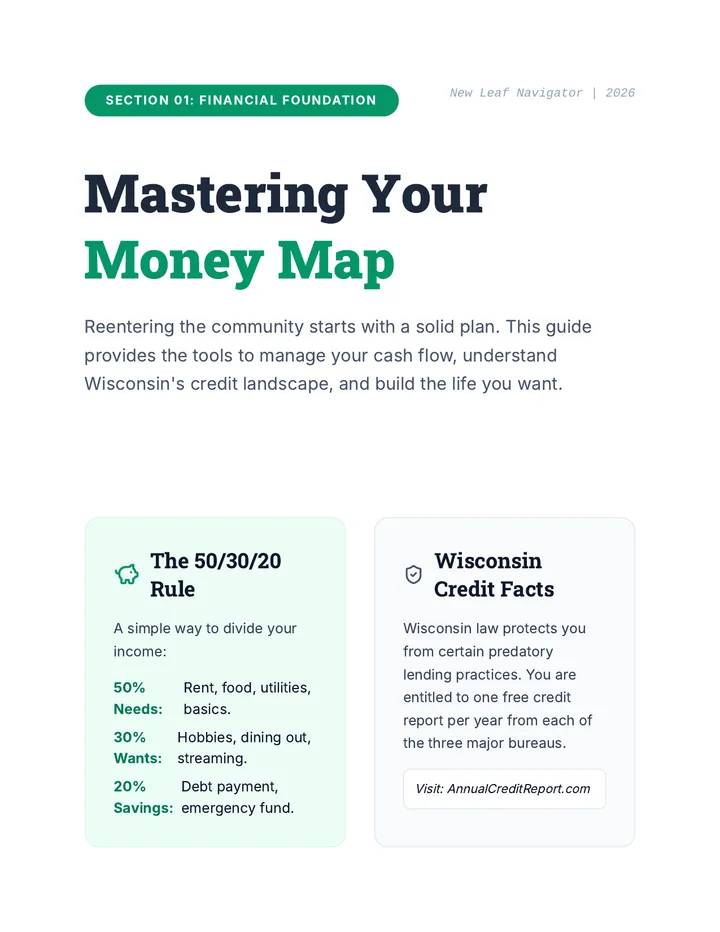
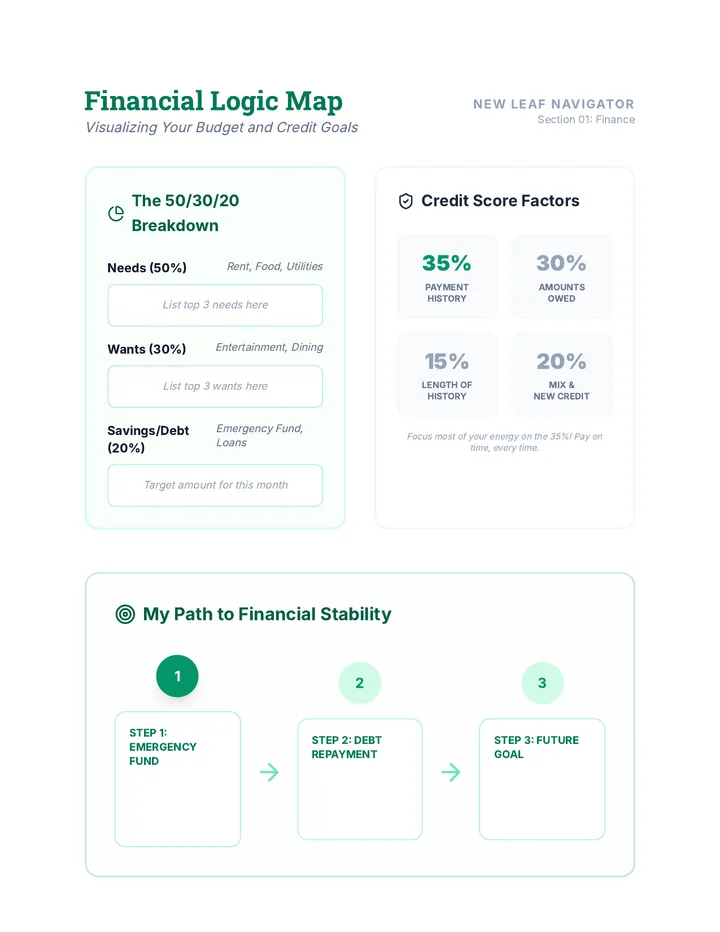
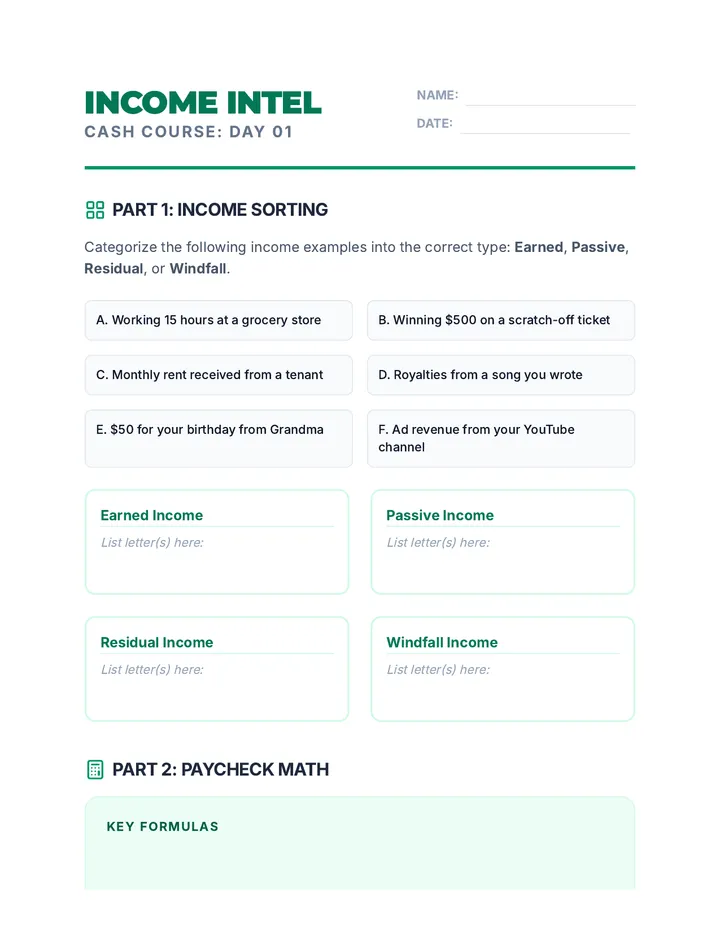
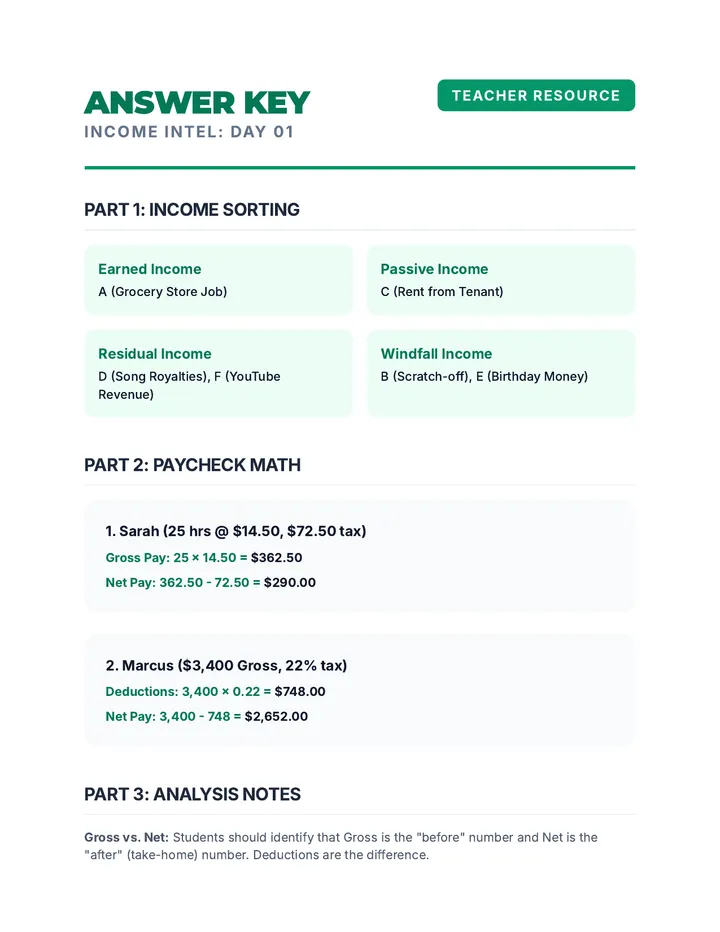
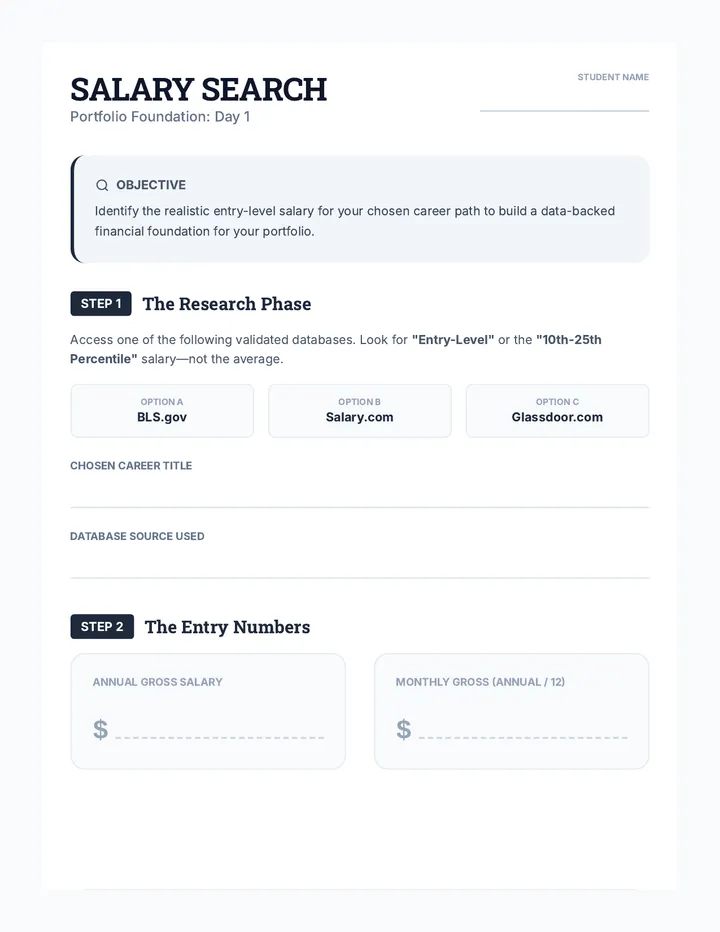
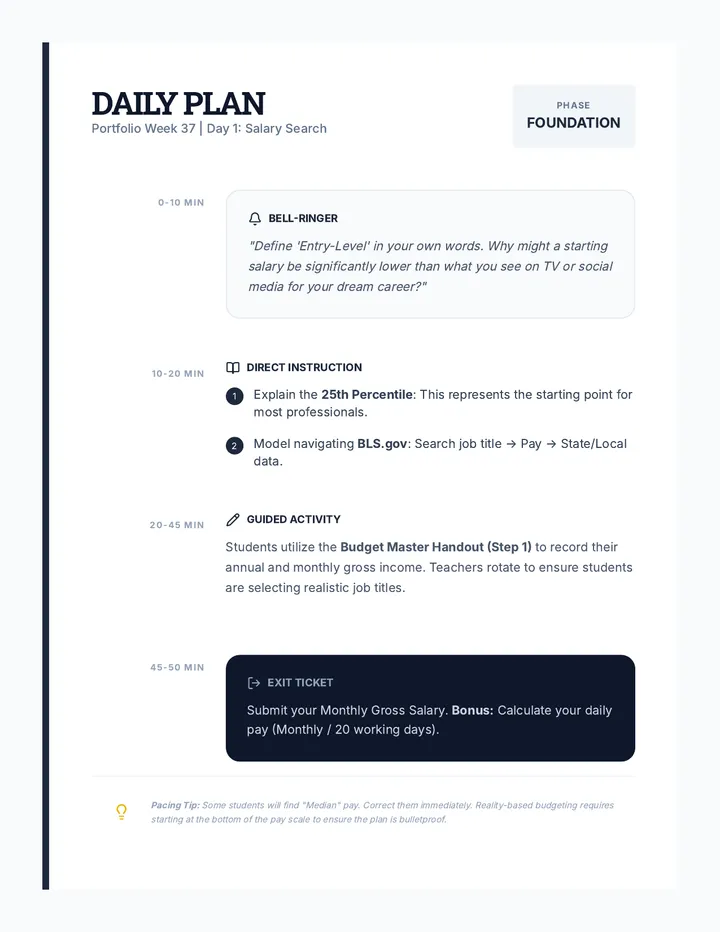
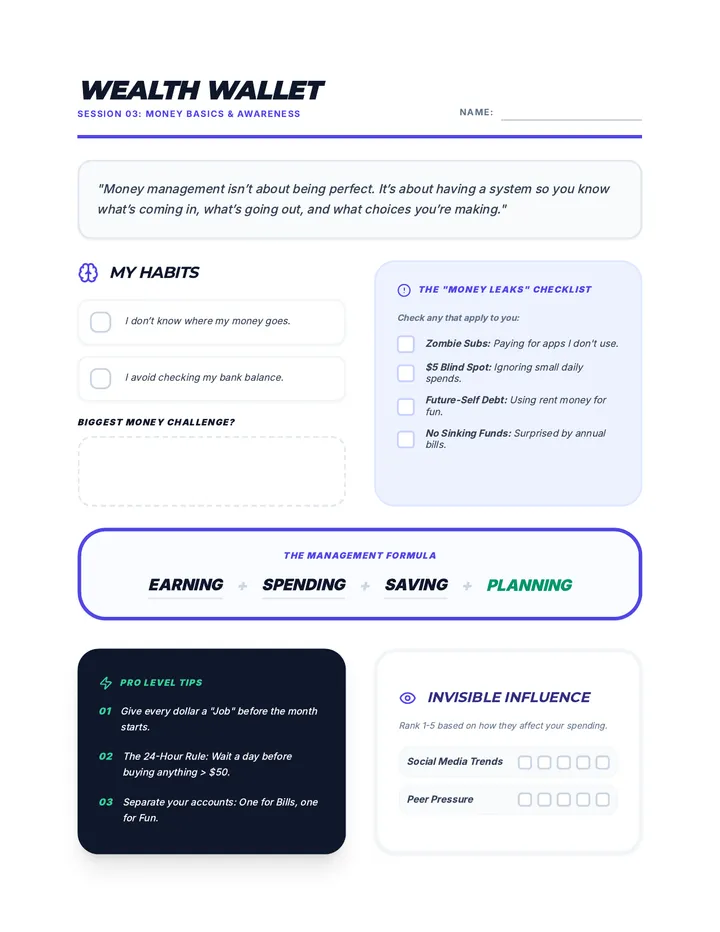
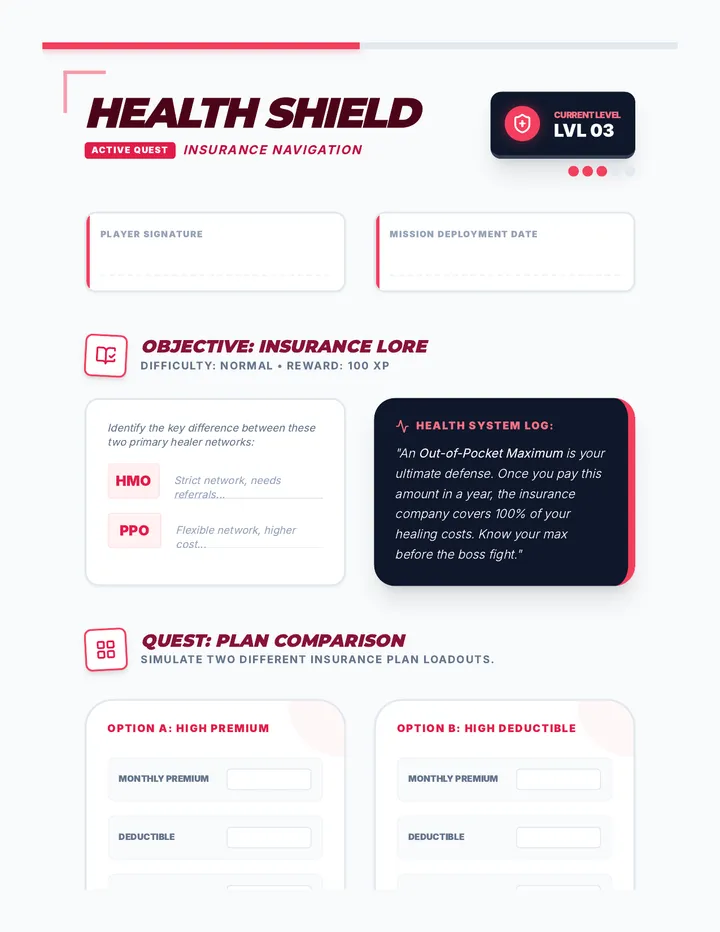
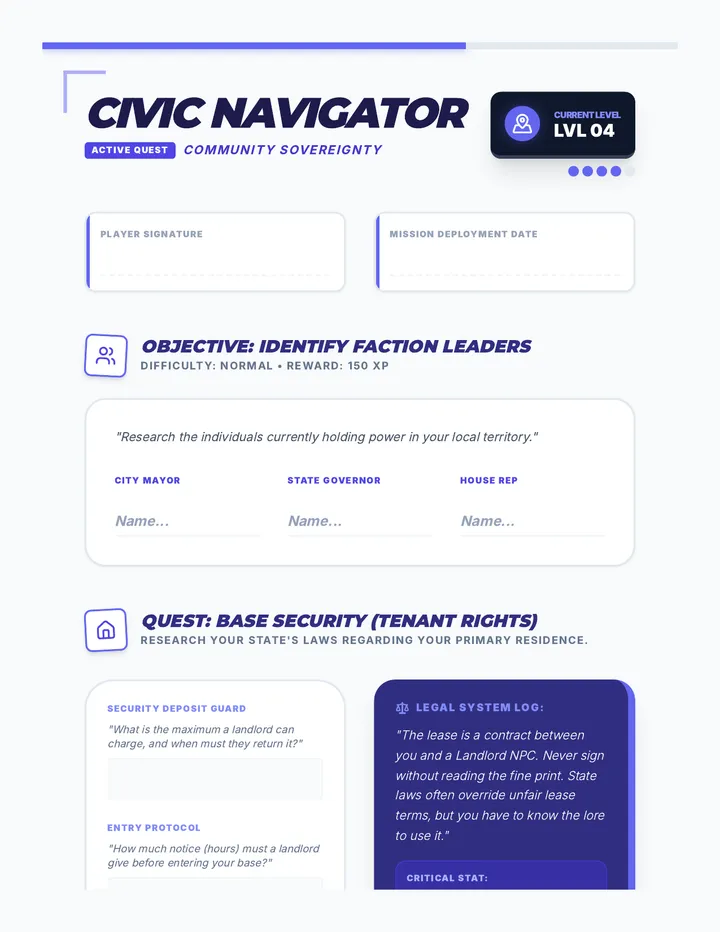
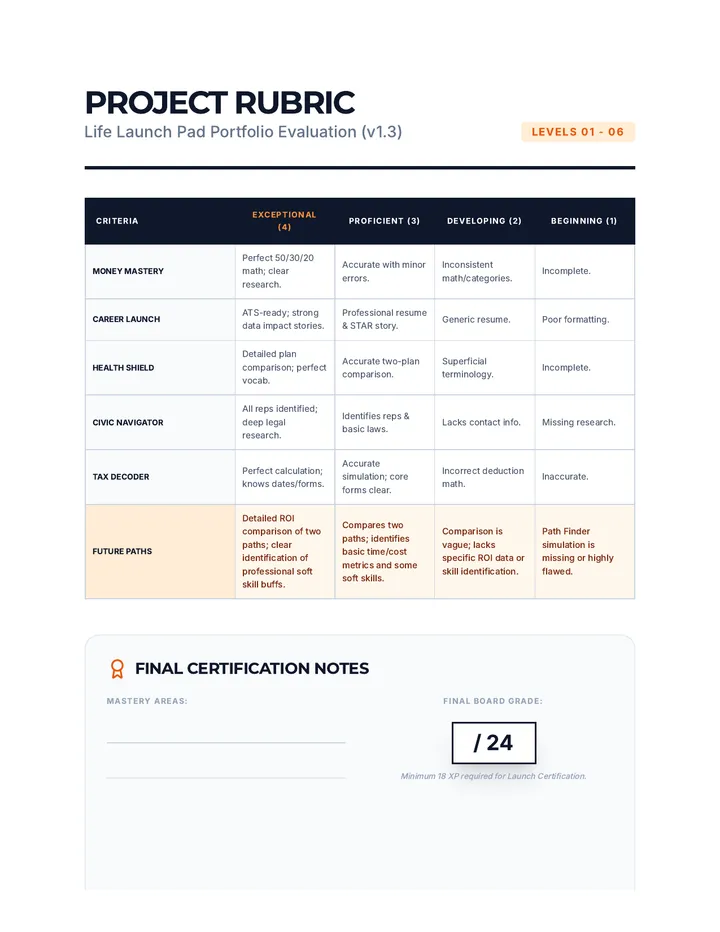
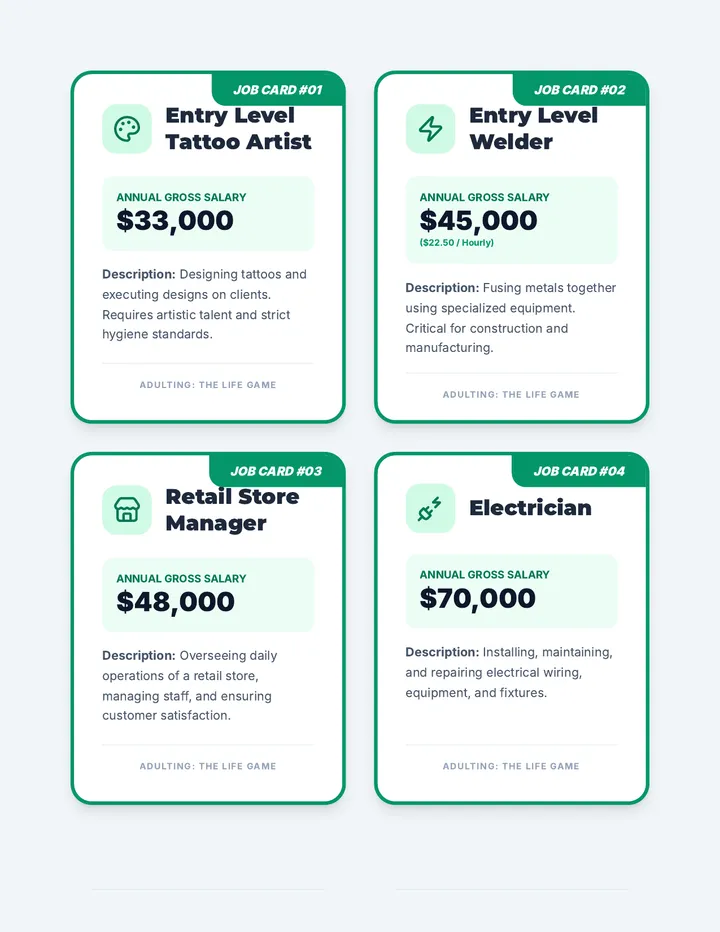
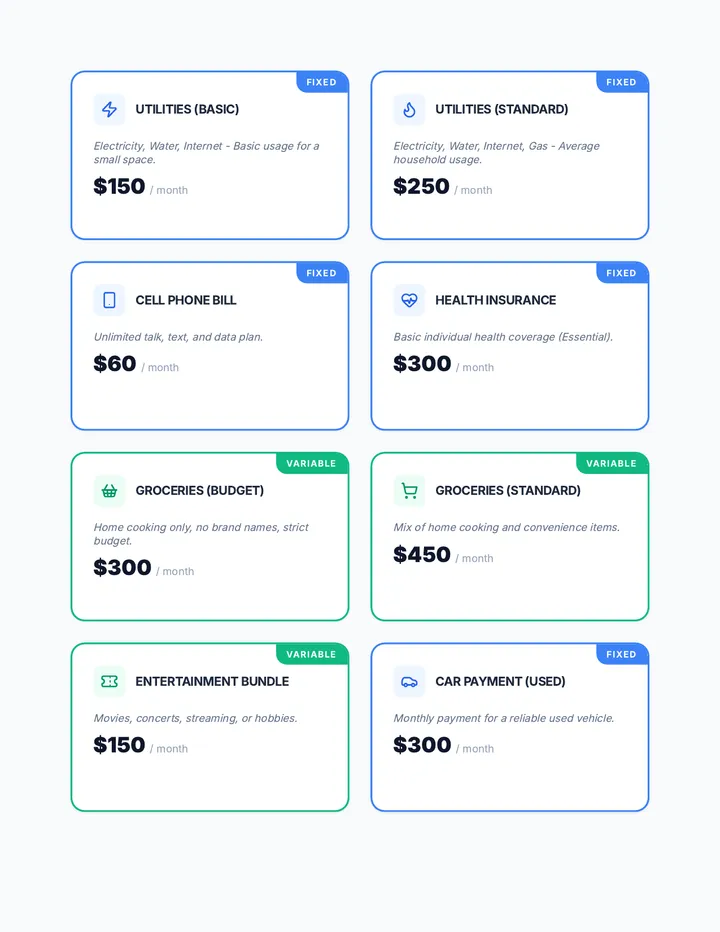
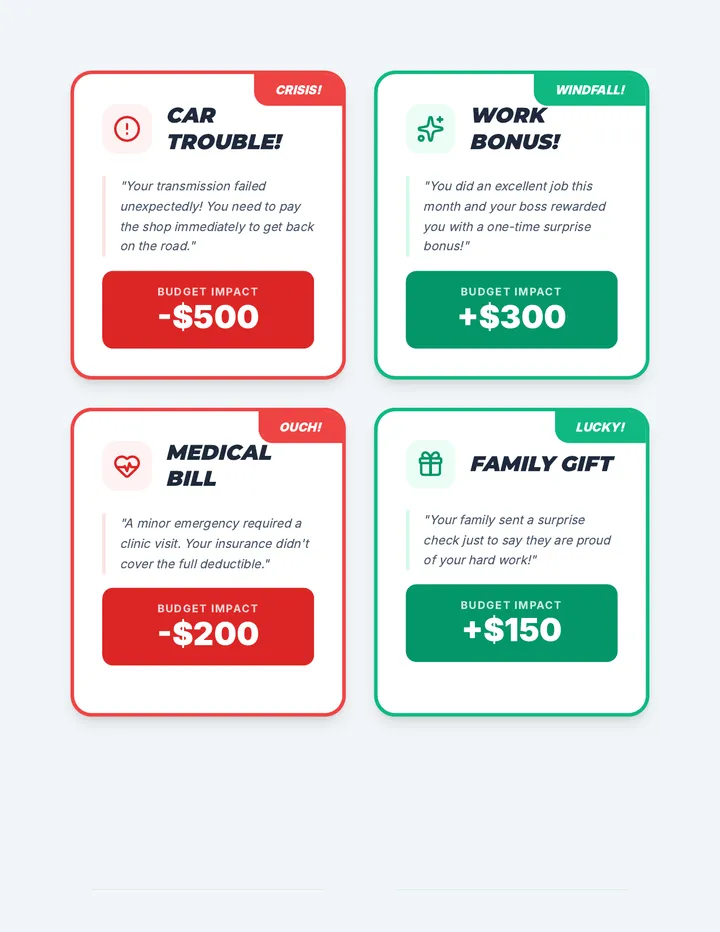
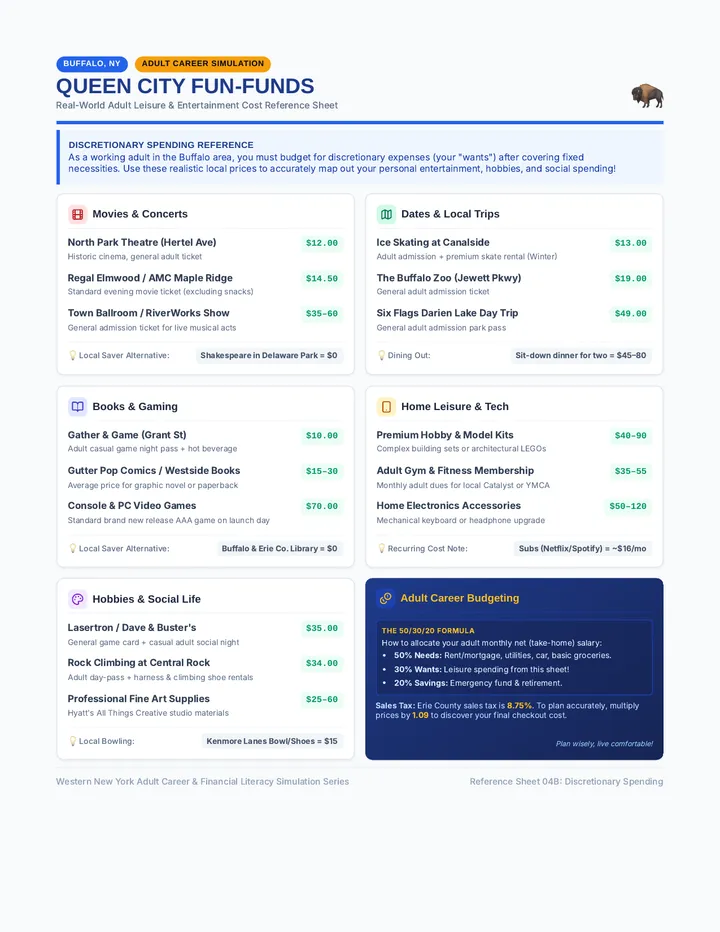
Budgeting, saving, and investment strategies alongside practical skills for managing credit, taxes, and banking. Addresses insurance needs, employment income, and major purchase decisions to support comprehensive long-term financial planning.
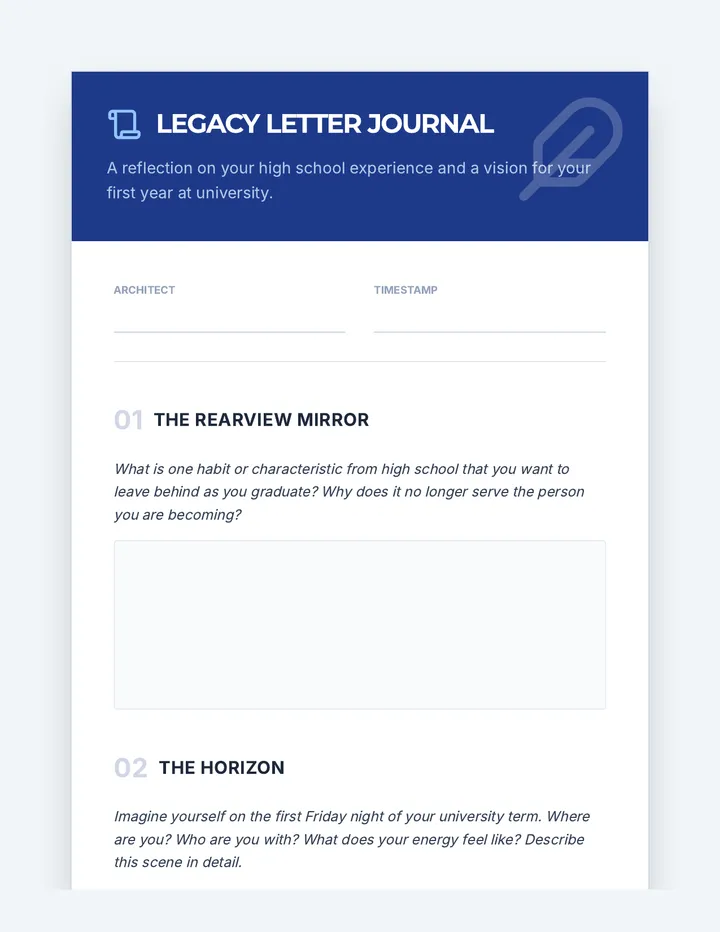
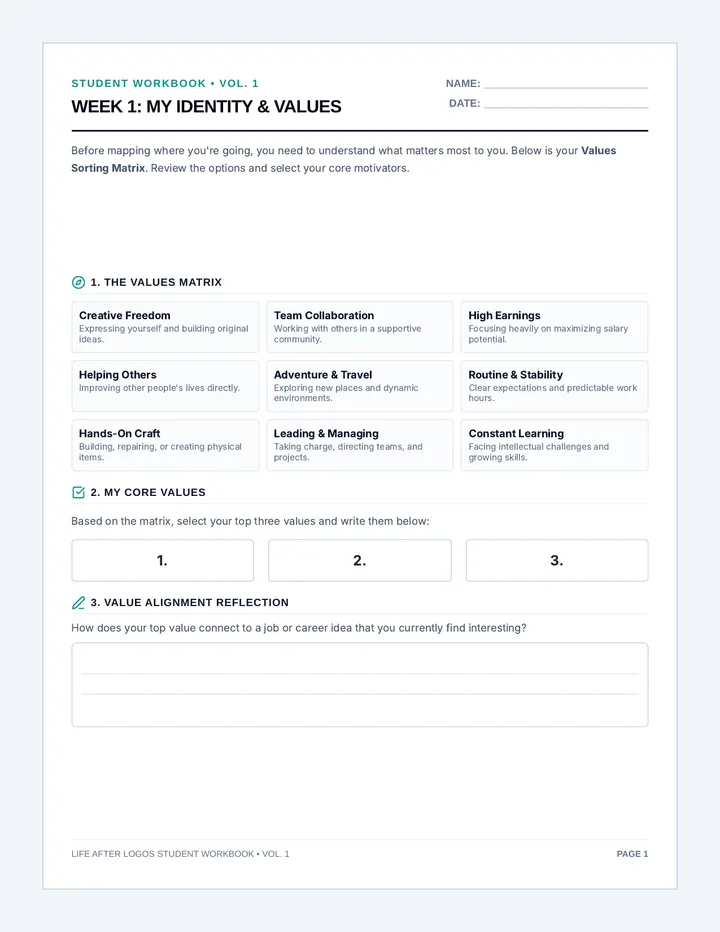
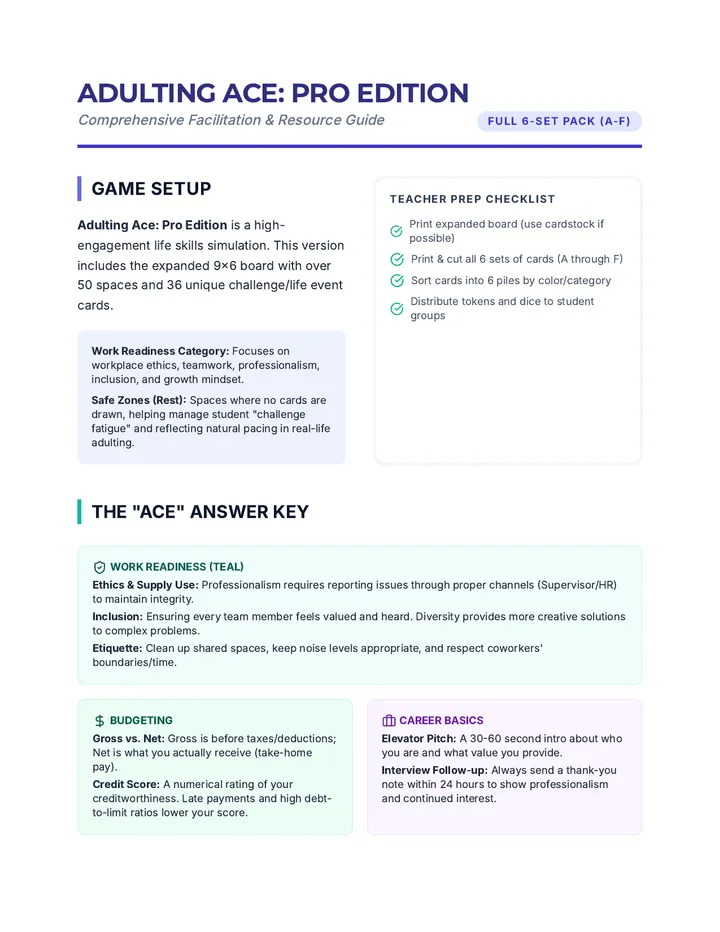
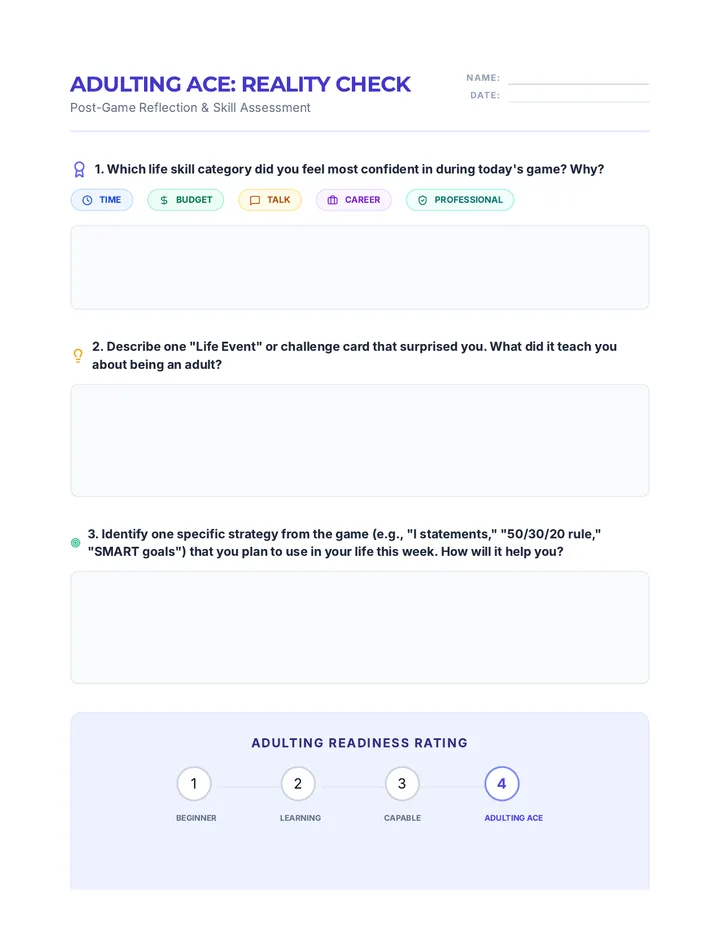
A comprehensive 6-week small group curriculum designed for female-identifying high school seniors. The program focuses on identity, boundaries, practical life skills, wellness, safety, and goal-setting to ensure a confident transition to college life.
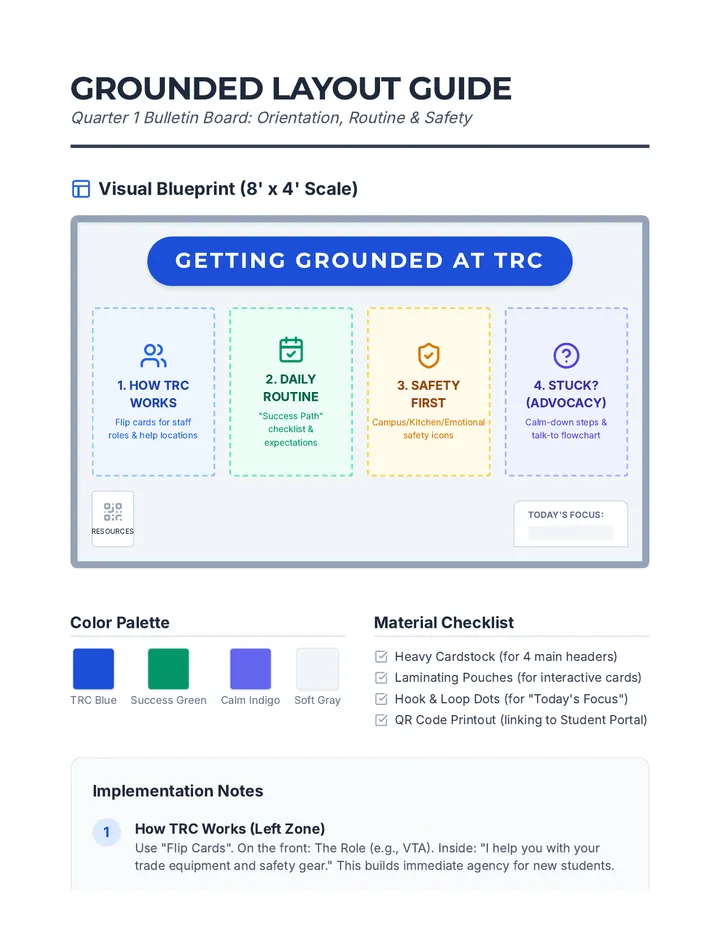
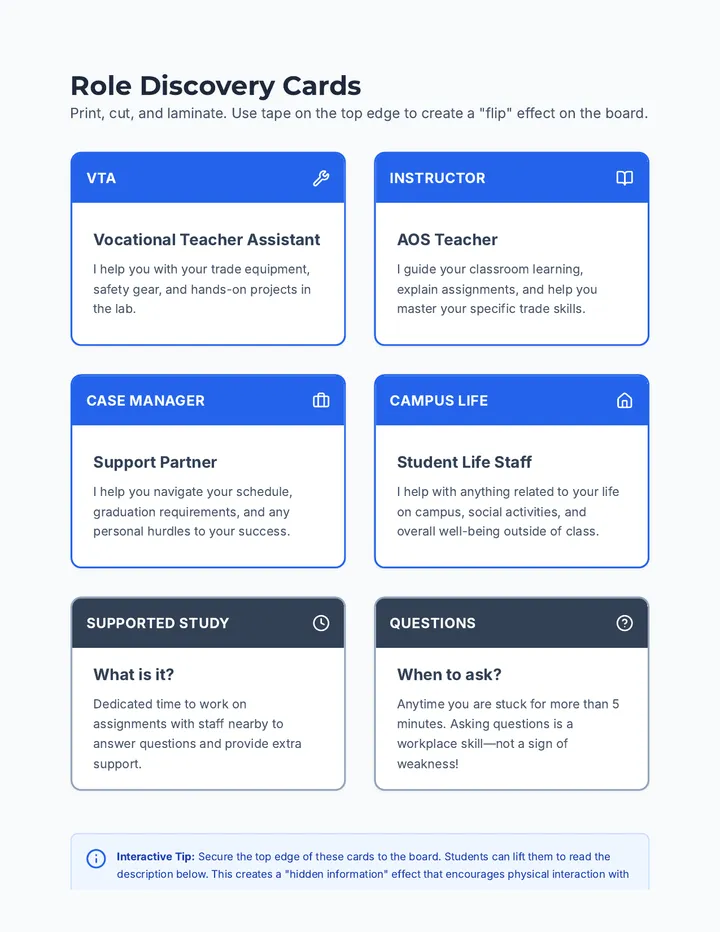
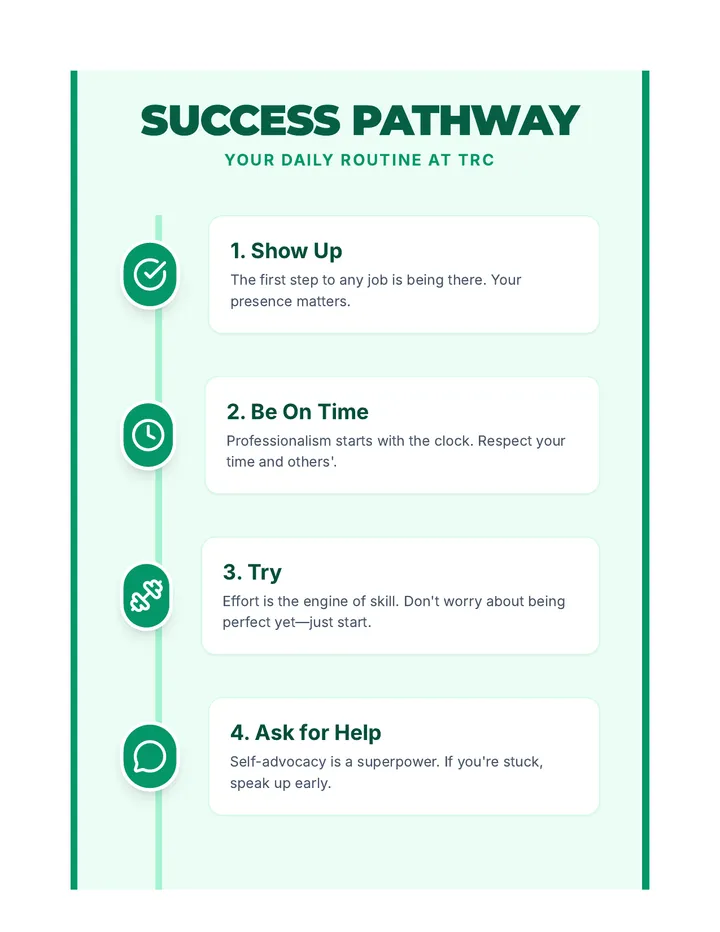
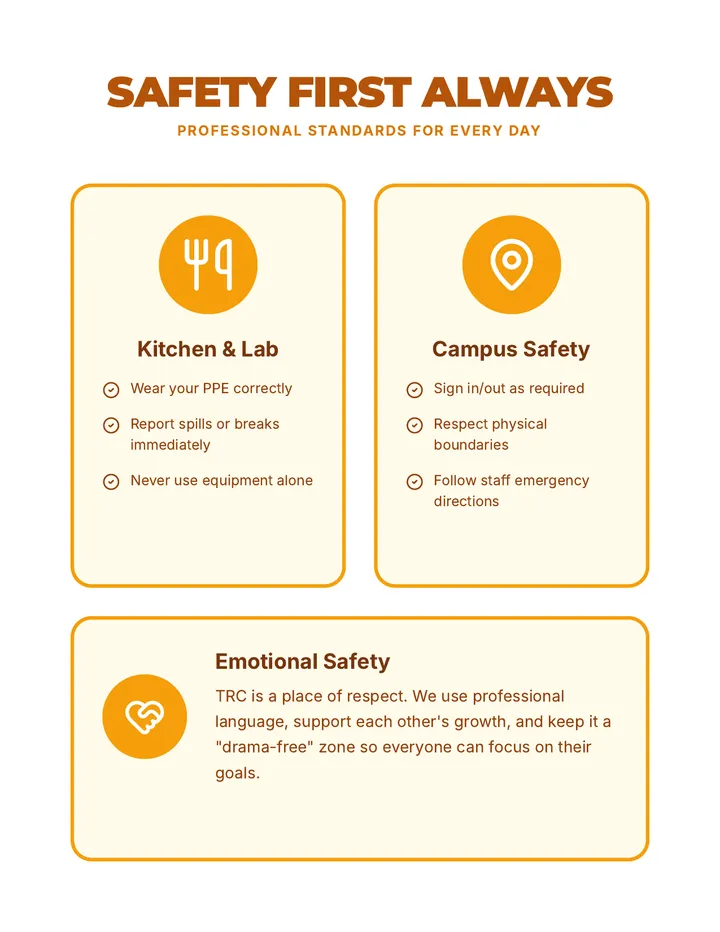
A collection of quarterly bulletin board designs for TRC, providing visual blueprints and printable components to help students navigate orientation, skill-building, and transition planning.
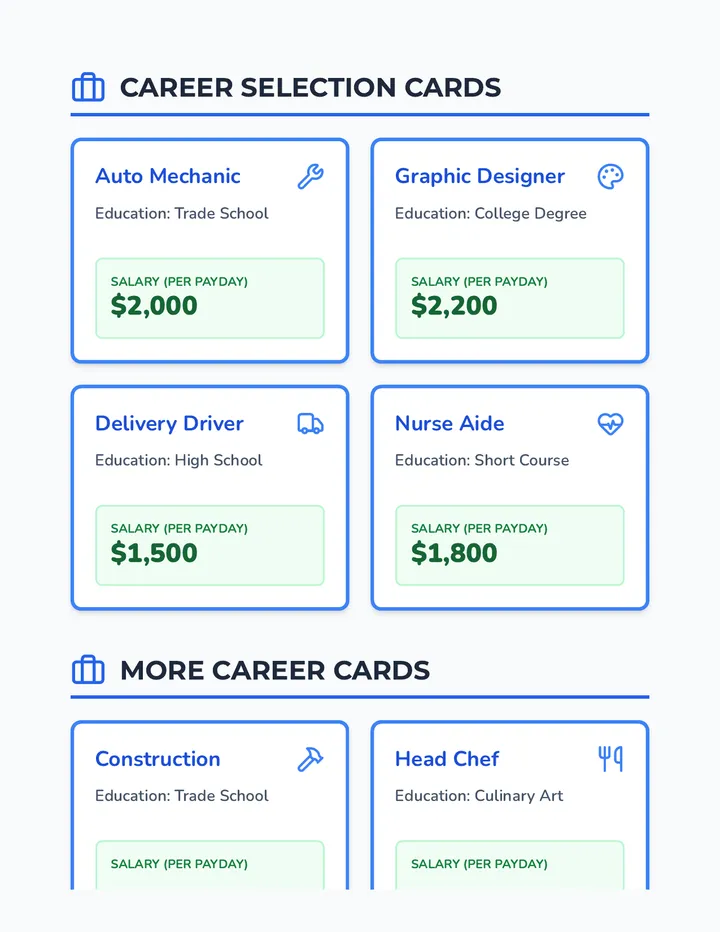
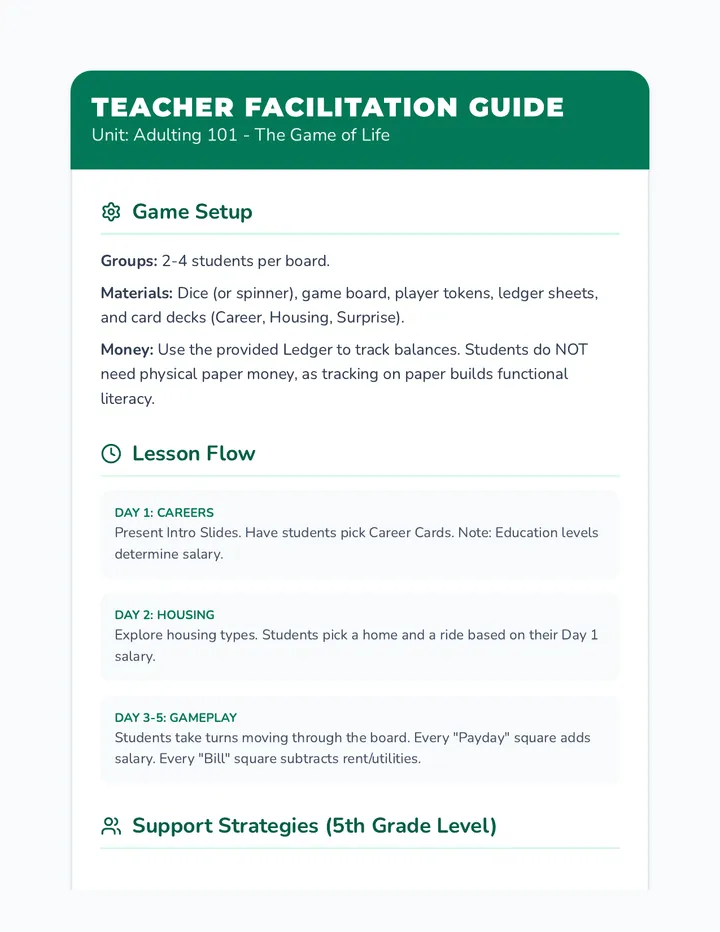
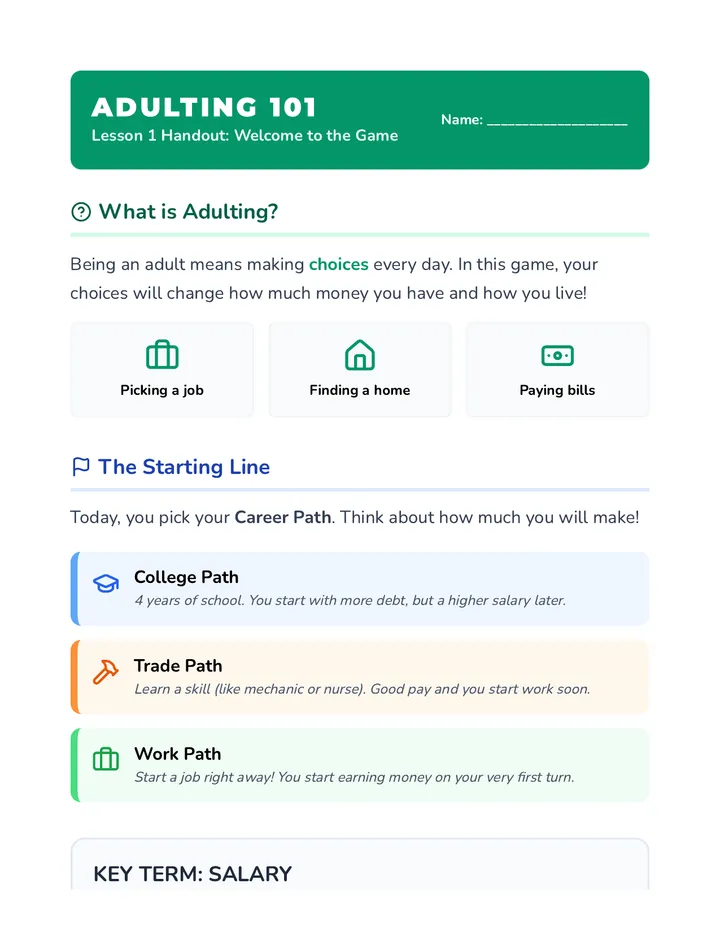
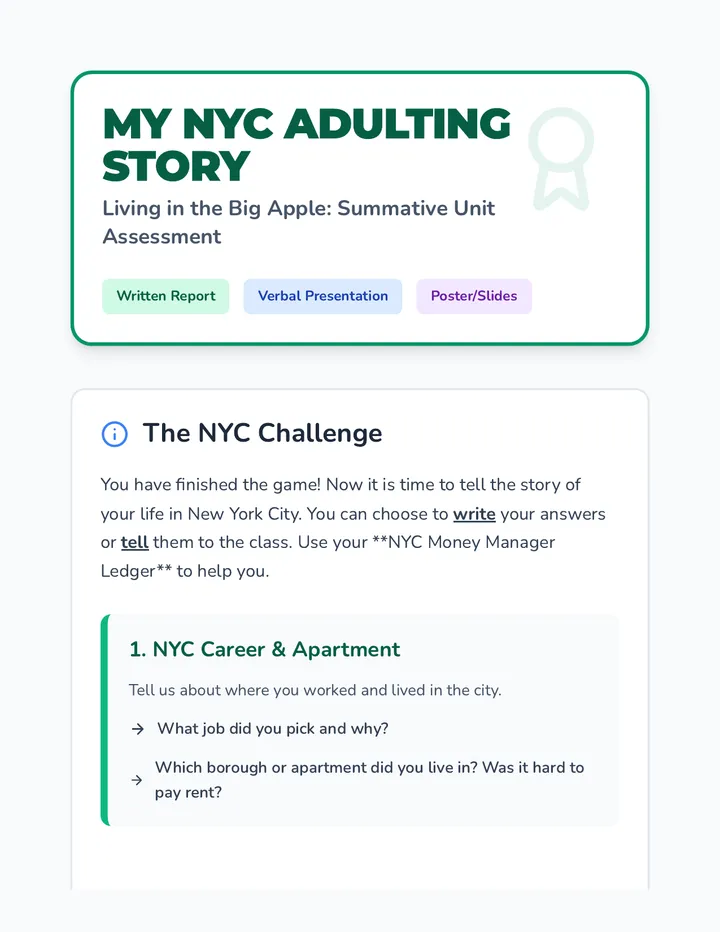
A comprehensive financial literacy unit designed to prepare students for the realities of living independently. This sequence covers everything from initial employment paperwork and credit management to the major life milestones of buying a car and a home.
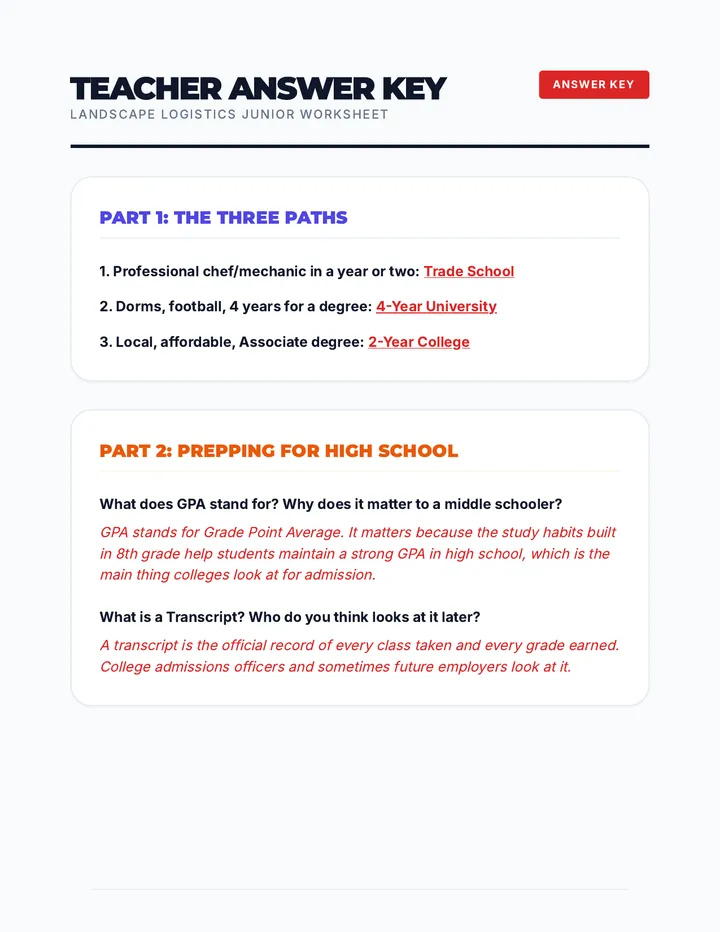
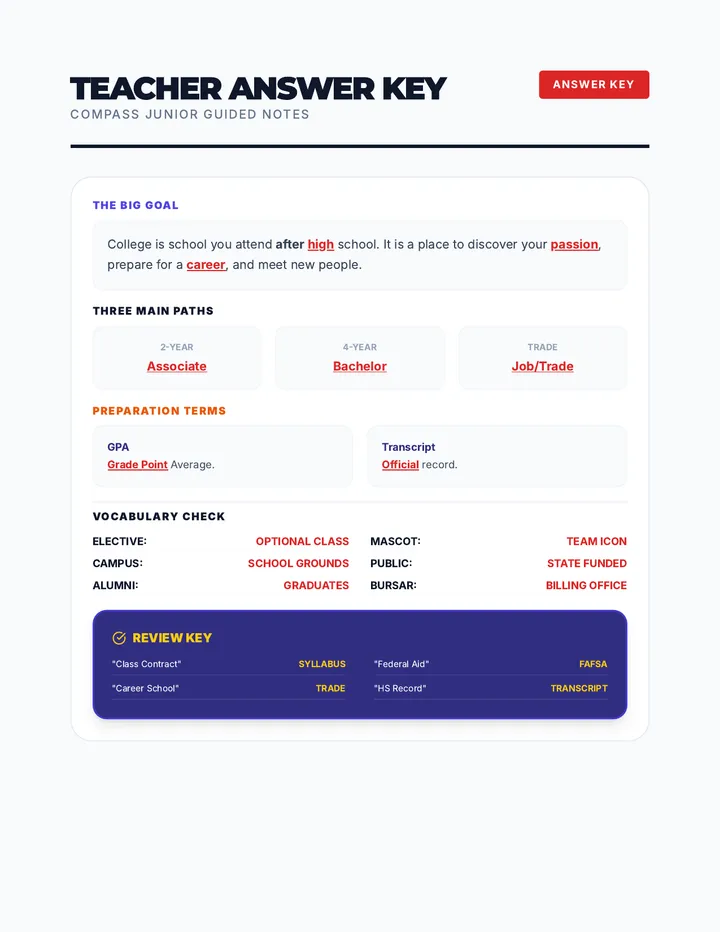
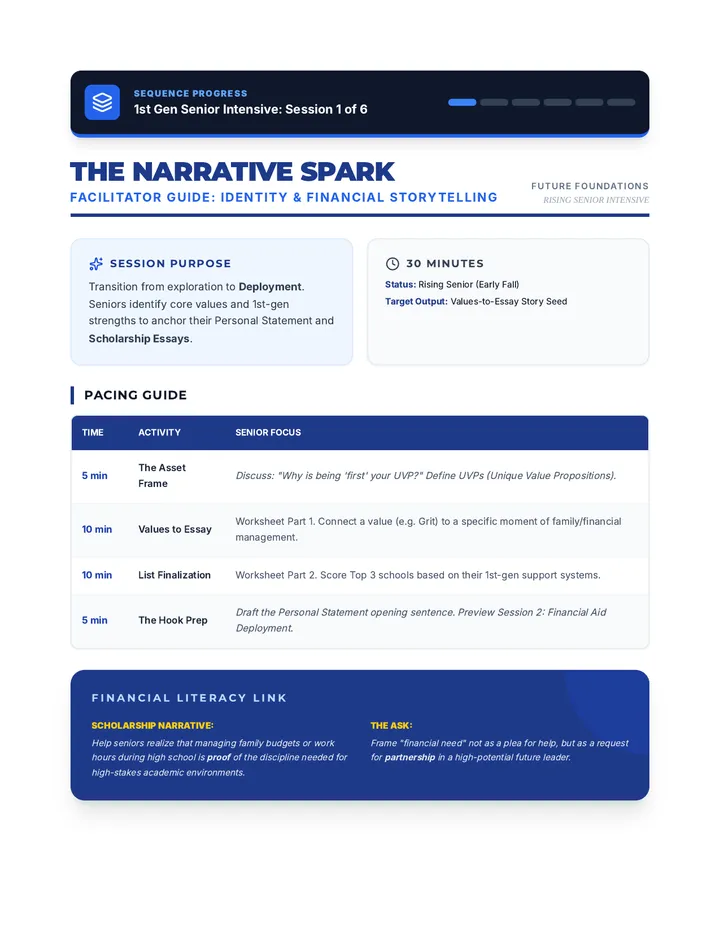
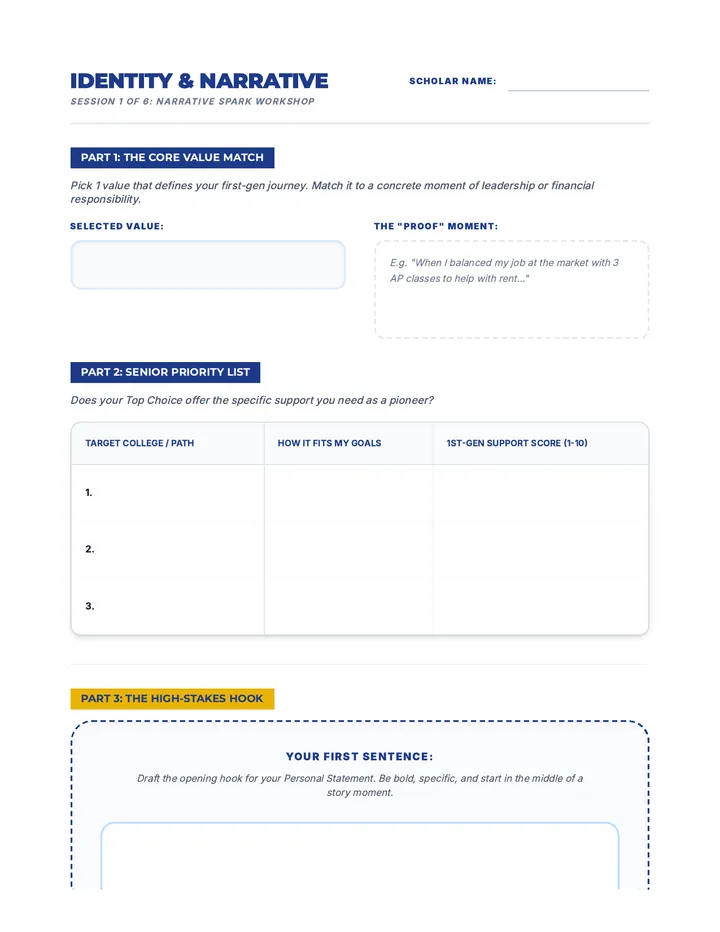
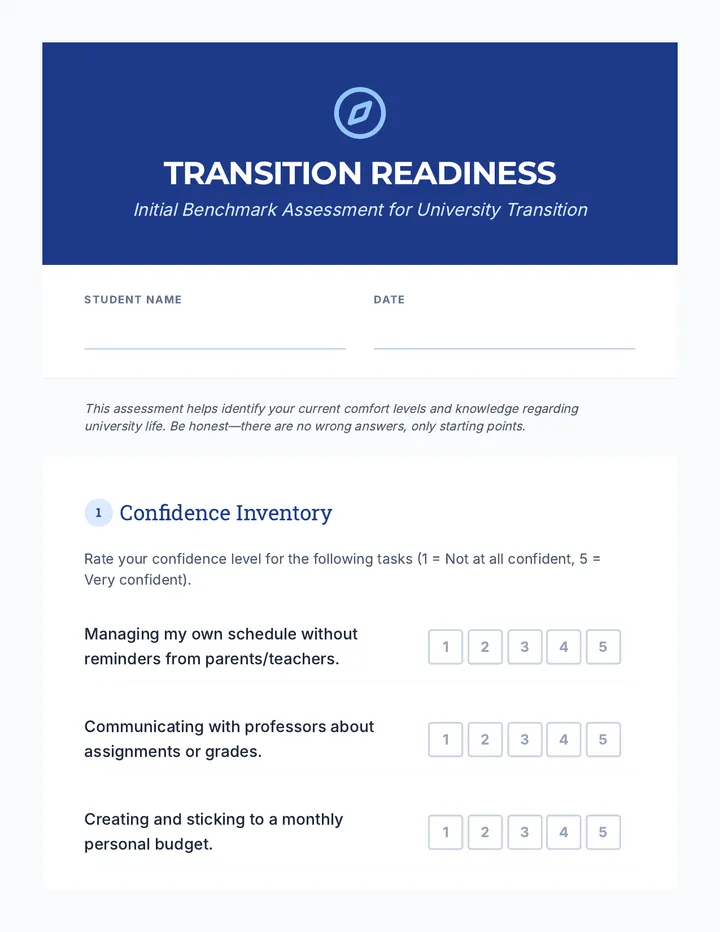
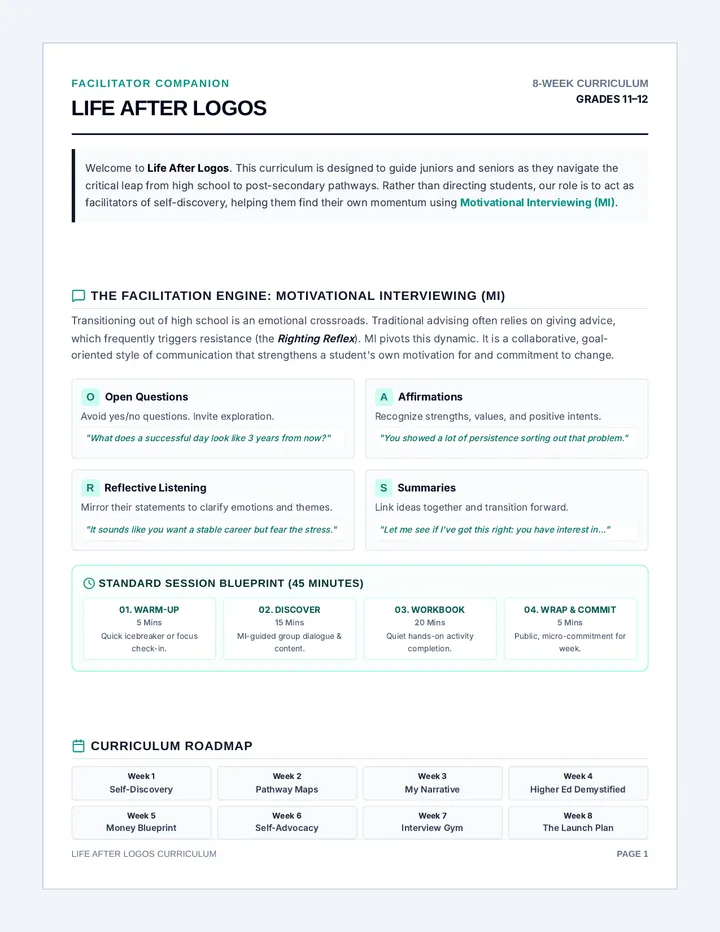
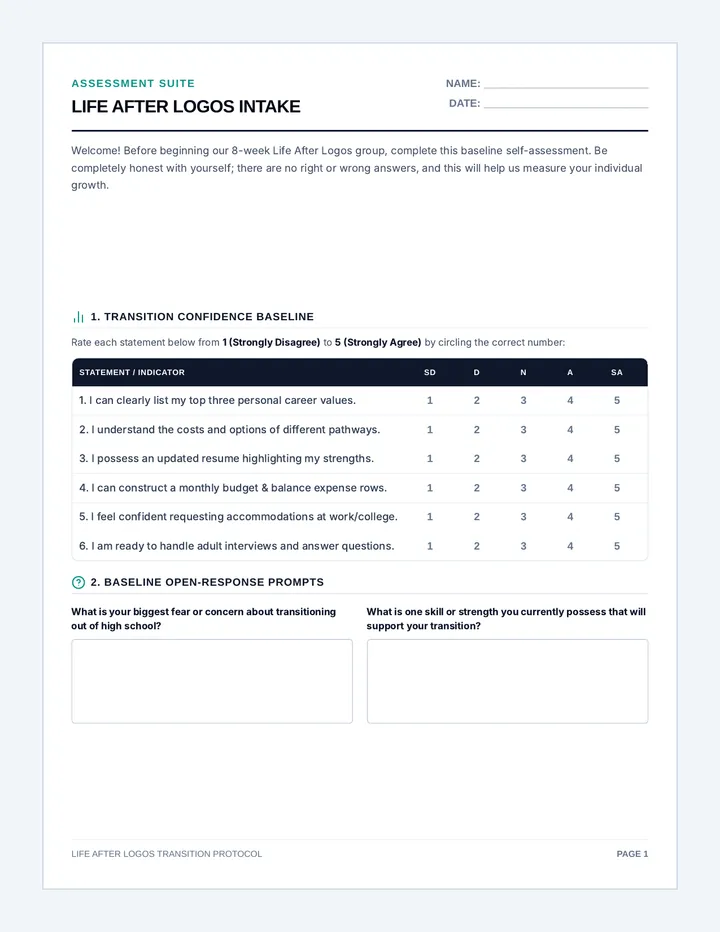
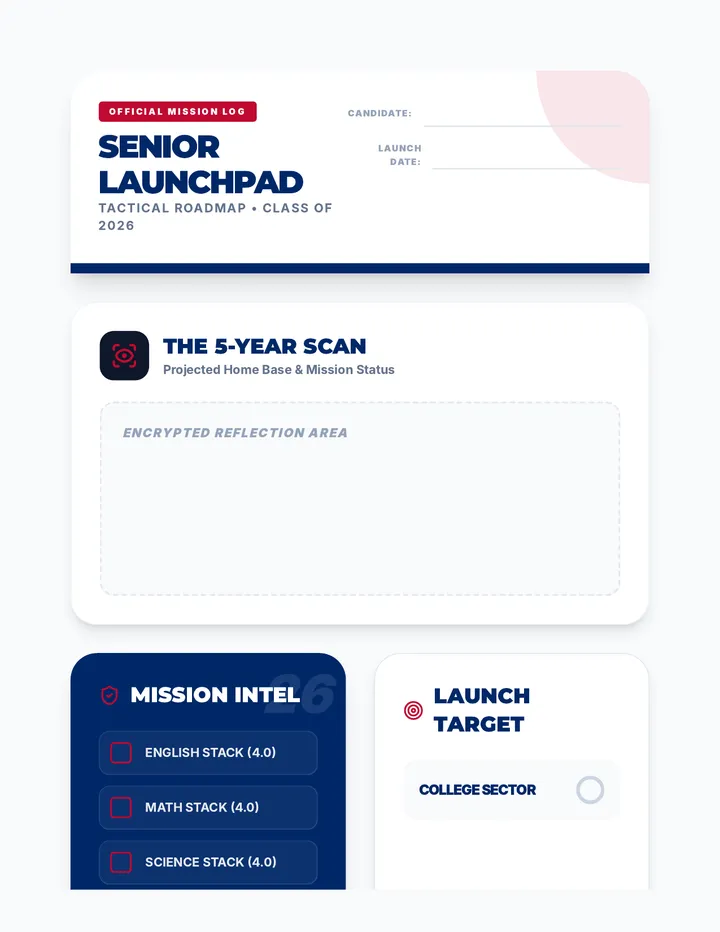
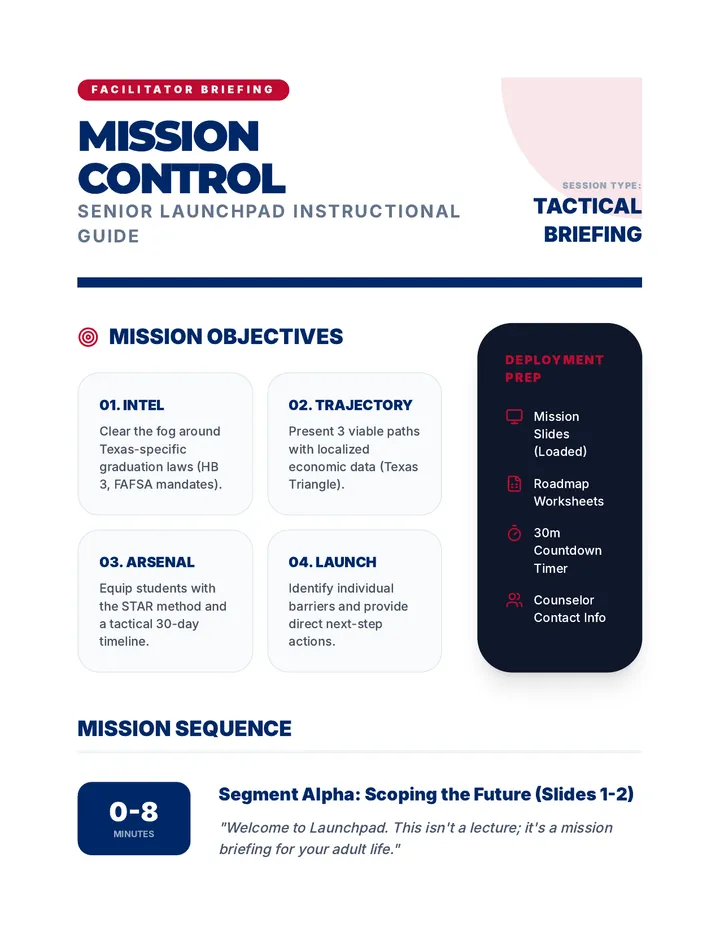
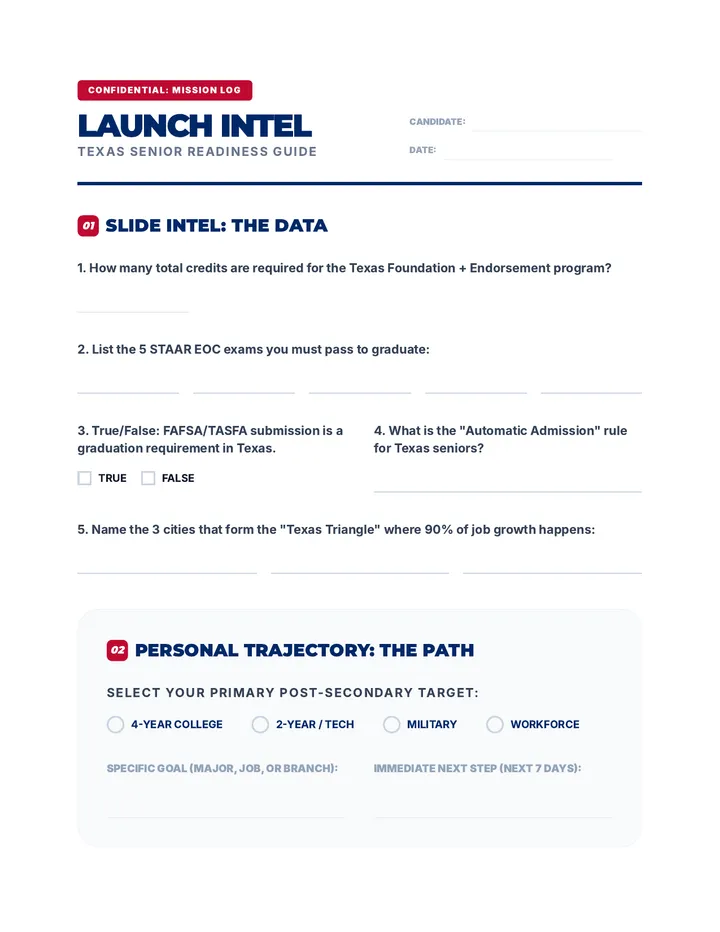
A comprehensive guide to help students navigate the transition from high school to post-secondary life, covering career exploration, college applications, financial aid, and essential life skills.
A comprehensive high school sequence focused on essential independent living skills, covering financial literacy, household management, and basic culinary independence.
This project-based sequence prepares 12th graders for independent living by applying the PLEASE skills to future scenarios. Students identify potential disruptions to their physical and emotional health during major life transitions and develop a 'Transition Survival Guide' to maintain emotional stability.
A comprehensive guide for undergraduate students to systematically search for, evaluate, and manage scholarship applications. The sequence covers self-auditing, database navigation, ROI analysis, project management, and donor mission alignment.
A comprehensive 12th-grade sequence focused on evaluating and selecting assistive technology, specifically speech recognition and dictation, for post-secondary transition. Students act as technology analysts to compare solutions, assess hardware, and build a personalized advocacy plan for college and the workplace.
A comprehensive sequence for 10th-grade students focusing on the financial realities of student loan repayment, the impact of debt-to-income ratios, and evaluating the long-term ROI of post-secondary education choices. Students progress from basic math to strategic advisory, culminating in a complex case study analysis.
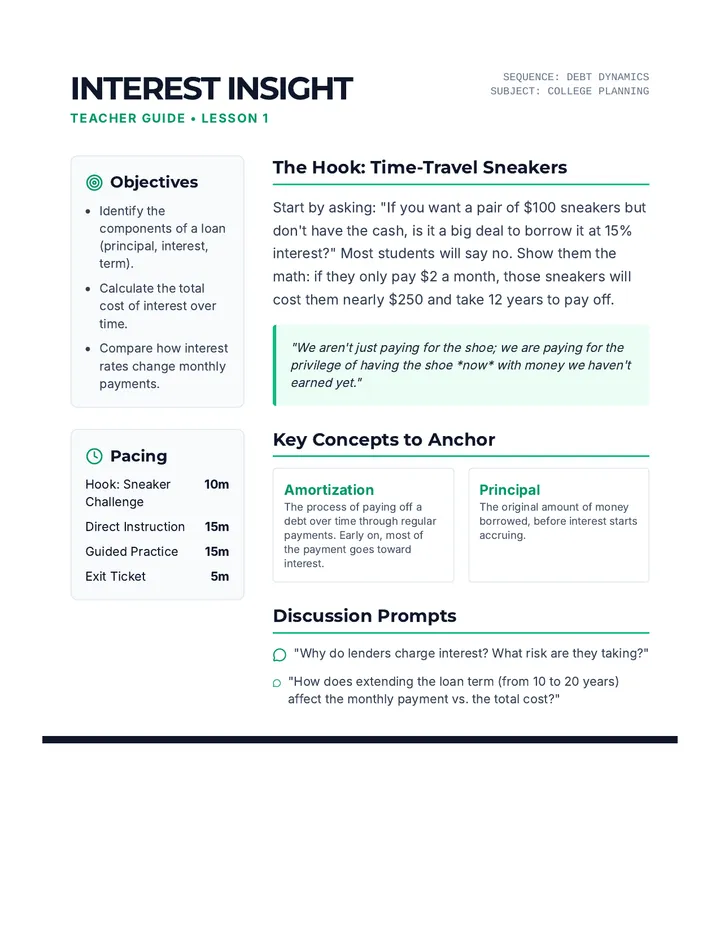
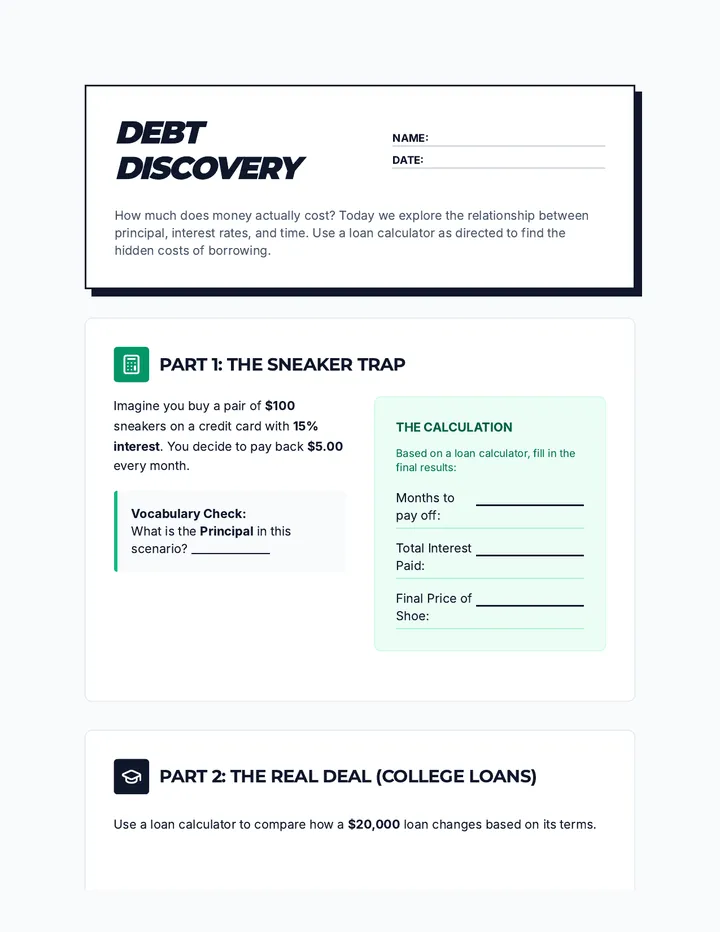
This sequence immerses students in the mechanics of borrowing money, focusing specifically on the distinctions between federal and private lending. Students begin by understanding the fundamental concepts of principal, interest, and capitalization before diving into the specific terms of Subsidized and Unsubsidized Direct Loans.
This sequence explores the long-term financial implications of student loans, focusing on repayment plans, budgeting, and return on investment (ROI). Students transition from understanding borrowing mechanics to simulating the real-world impact of debt on lifestyle and career choices.
A comprehensive unit for 9th-grade students exploring the differences between federal and private student loans. Students learn to navigate financial aid terminology, calculate interest accrual, and evaluate the long-term impact of borrowing decisions.
An immersive simulation where students navigate the onboarding process of a new job, making critical decisions about taxes, benefits, and workplace rights to understand their impact on a final paycheck.
A 5-lesson unit for 9th graders exploring total compensation, including health insurance, paid time off, and retirement benefits, culminating in a comparative analysis of job offers.
A comprehensive sequence for 12th-grade students on evaluating and negotiating employment offers. Students move from basic financial literacy (calculating total compensation) to critical analysis of benefits, culminating in a professional negotiation simulation.
This sequence guides 12th-grade students through the essentials of long-term financial planning, focusing on retirement accounts, employer matching, tax strategies, and vesting schedules to maximize future wealth.
This sequence guides 12th-grade students through the complexities of payroll earnings, deductions, and tax forms. Students act as 'Paycheck Detectives' to uncover the reasons behind the difference between gross and net income, master the W-4 form, and learn to audit financial documents for errors.
A comprehensive unit for seniors to navigate the complexities of employer-sponsored health and insurance benefits, moving from basic vocabulary to full-scale benefit selection simulations.
A comprehensive unit for undergraduate students to master the financial and legal aspects of job offers, focusing on total compensation analysis, cost-of-living adjustments, and professional negotiation skills.
A comprehensive sequence for undergraduate students on retirement vehicles, employer incentives, and wealth accumulation strategies. Students will master the time value of money, evaluate employer-sponsored plans, and design personalized contribution strategies.
A comprehensive project-based unit exploring how strategic payroll deductions like FSAs, HSAs, and retirement contributions build long-term wealth and manage risk. Students move from basic tax calculations to designing a 'Payroll Strategy Guide' for a career-ready future.
This sequence equips undergraduate students with the analytical tools to evaluate employer-sponsored health and wellness benefits. Students will move from basic terminology to complex scenario planning, choosing between HMOs, PPOs, and HDHPs, while also exploring tax-advantaged accounts like HSAs/FSAs and legal protections like FMLA.
A comprehensive 11th-grade sequence on workplace rights and compensation, covering market research, labor laws, benefit analysis, and negotiation strategies. Students progress from baseline research to active advocacy and contract finalization.
This sequence explores workplace benefits beyond salary, focusing on health insurance, retirement matching, and paid leave to help students calculate the true total compensation of a job offer.
This sequence guides 10th-grade students through the complex world of employee benefits, shifting focus from hourly wages to total compensation. Students learn to value health insurance, retirement matches, and paid leave to make informed career decisions.
A 5-lesson unit for 4th graders on employee benefits and total compensation. Students learn to evaluate job offers based on perks like health insurance, PTO, and retirement, moving beyond just looking at the salary.
This 5th-grade sequence introduces students to the concept of total compensation by exploring employee benefits beyond just salary. Students learn to evaluate health insurance, paid time off, and retirement contributions through games, simulations, and comparative case studies, ultimately designing their own balanced compensation packages.
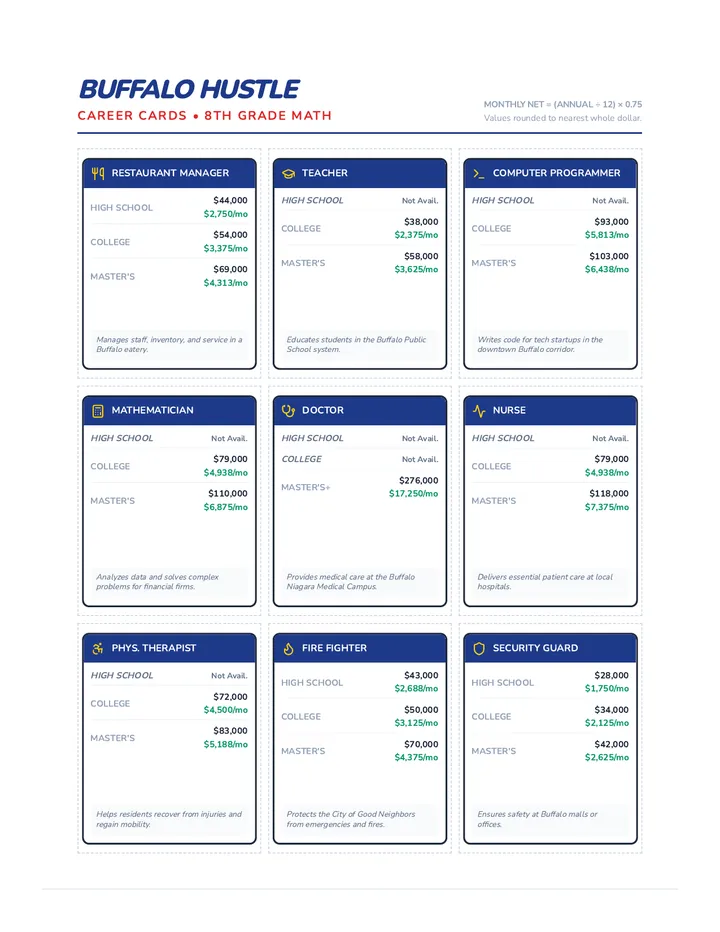
A comprehensive 8th-grade unit on employment income, guiding students from calculating gross pay to understanding tax withholdings, analyzing employee benefits, and auditing pay stubs for accuracy.
A comprehensive unit for 3rd-grade students exploring the concepts of gross pay, deductions, taxes, and net income. Through simulations, games, and real-world analysis, students learn how money is earned and how it contributes to community services.
A comprehensive 9th-grade financial literacy unit focused on insurance as a strategic tool for financial stability. Students explore budgeting for premiums, income protection, life insurance types, the ethics of fraud, and participate in a life-stage simulation to manage evolving risks.
A comprehensive sequence on property insurance, focusing on renters insurance, personal property inventories, valuation methods (ACV vs. Replacement Cost), and liability protection for 9th-grade students.
A comprehensive unit on health insurance for 9th-grade students, covering essential terminology, provider networks, document literacy, and strategic plan selection. Students learn to navigate the financial complexities of the US healthcare system to make informed choices.
Students analyze the components of an auto policy, investigate factors influencing rates for teen drivers, and practice filing mock claims using real-world case studies. The sequence concludes with a comparative project to select optimal coverage for a first car.
A comprehensive 9th-grade sequence on insurance fundamentals, covering risk management, probability, risk pooling, and the financial mechanics of premiums and deductibles. Students move from abstract probability games to real-world claims calculations.
A comprehensive financial literacy unit for 7th graders focusing on the practical steps of the insurance claims process. Students learn safety protocols, documentation techniques, claim filing, interview skills, and advocacy strategies.
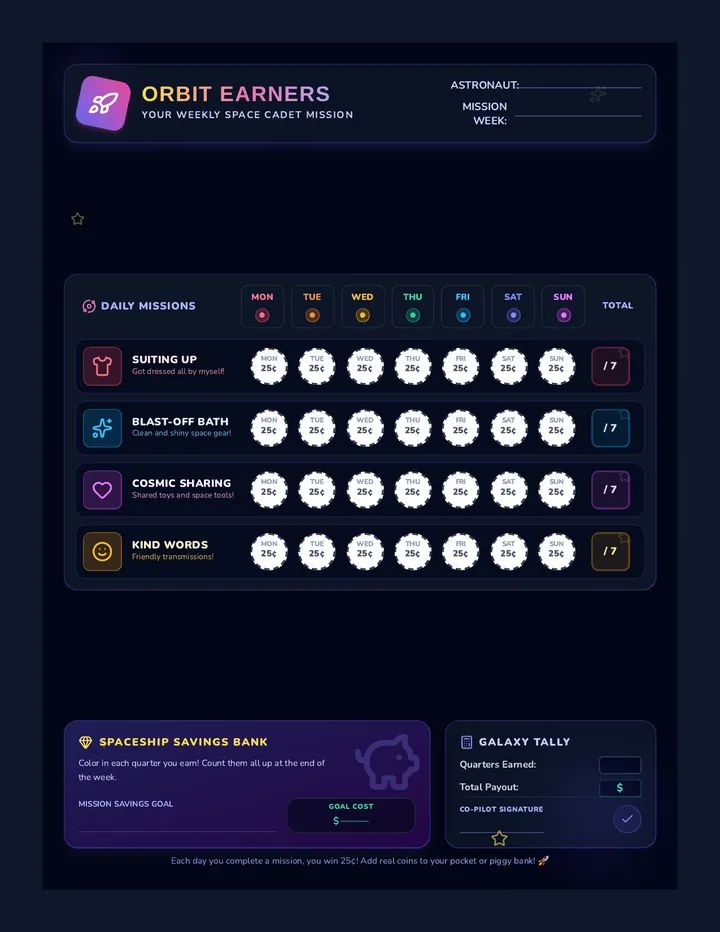
A Kindergarten sequence focused on introducing financial literacy through the lens of delayed gratification, goal setting, and visual progress tracking. Students learn that waiting and saving can lead to greater rewards through hands-on simulations and visual tools.
A Kindergarten sequence focused on building foundational financial literacy through the concepts of saving and delayed gratification. Students learn to manage resources, set goals, and experience the rewards of patience through a cohesive forest-themed 'Acorn Bank' narrative.
This sequence teaches 1st Grade students the fundamentals of financial goal setting, delayed gratification, and tracking savings. Students learn that patience and planning lead to greater rewards through hands-on activities, visual tracking, and reflective role-play.
This advanced sequence transitions graduate students from basic compliance to strategic tax planning. It covers progressive taxation, W-2 vs. 1099 employment, deductions/credits, and investment tax implications, culminating in a complex tax scenario simulation.
A comprehensive 5-lesson unit for 6th graders focused on the differences between checking and savings accounts, the institutions that provide them, and the mathematical growth and costs associated with banking. Students learn to evaluate account features, calculate interest, and avoid fees through inquiry and simulation.
This project-based sequence shifts focus to the growth potential of money through savings accounts and the modern interface of online banking. Students investigate the concept of simple interest, visualizing how money can 'work' for them over time. The learning arc moves from understanding interest rates to navigating digital banking interfaces securely.
This sequence focuses on the financial implications of banking choices and the modern tools used to manage them. Students investigate the mathematics of interest, analyze fee structures, navigate digital banking platforms, and master the skill of account reconciliation.
This sequence equips graduate students with the quantitative tools and financial literacy needed to assess the true ROI of pursuing further advanced education. Students will model opportunity costs, analyze funding strategies, and forecast break-even points to create a comprehensive financial feasibility study.
A graduate-level exploration of the intersection between mathematical probability and behavioral psychology. This sequence covers Prospect Theory, cognitive heuristics, fat-tail distributions, and the design of psychologically resilient risk management frameworks.
A 2nd-grade introduction to economics focusing on borrowing, lending, and investment through hands-on simulations and classroom metaphors. Students learn the responsibility of credit and the value of investing in tools to create products.
This sequence introduces 4th-grade students to personal finance, banking security, the concept of interest, and the mechanics of budgeting. Students progress from distinguishing needs and wants to applying financial advice in real-world scenarios.
A comprehensive guide to understanding payroll mechanics, tax liabilities, and paycheck optimization for undergraduate students transitioning into the professional world.
A foundational financial literacy sequence for Kindergarten students focusing on distinguishing between essential needs and discretionary wants through games, stories, and creative projects.
A foundational sequence for Kindergarteners exploring scarcity, trade-offs, and opportunity cost through play-based simulations and hands-on budgeting activities. Students learn that resources are limited and making a choice means giving something else up.
A comprehensive exploration of tax systems, marginal rates, and financial decision-making for 7th-grade students. This sequence moves from identifying types of taxes to mastering the math of tax brackets and evaluating the impact of tax policy on individuals and society.
A comprehensive sequence designed to equip 11th-grade students with the mindset and tools for lifelong career adaptability. Through trend analysis, resource exploration, and simulation games, students learn to navigate the shifting landscape of work, automation, and continuous education.
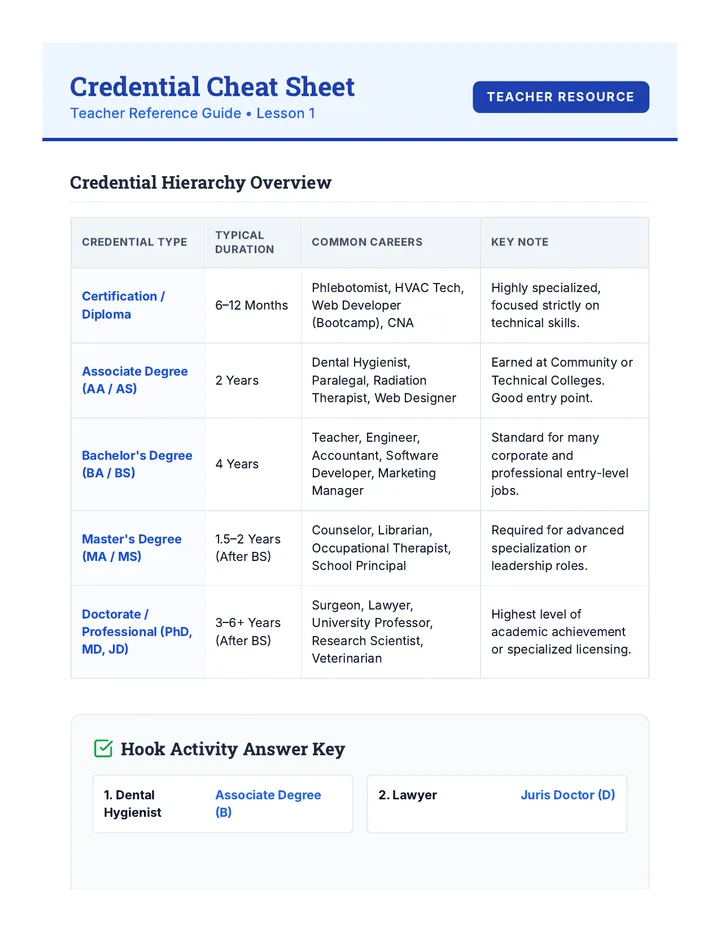
Students analyze the financial viability of post-secondary education by calculating total costs, exploring financial aid, and projecting return on investment based on career earnings. The sequence culminates in a strategic financial plan for a chosen educational path.
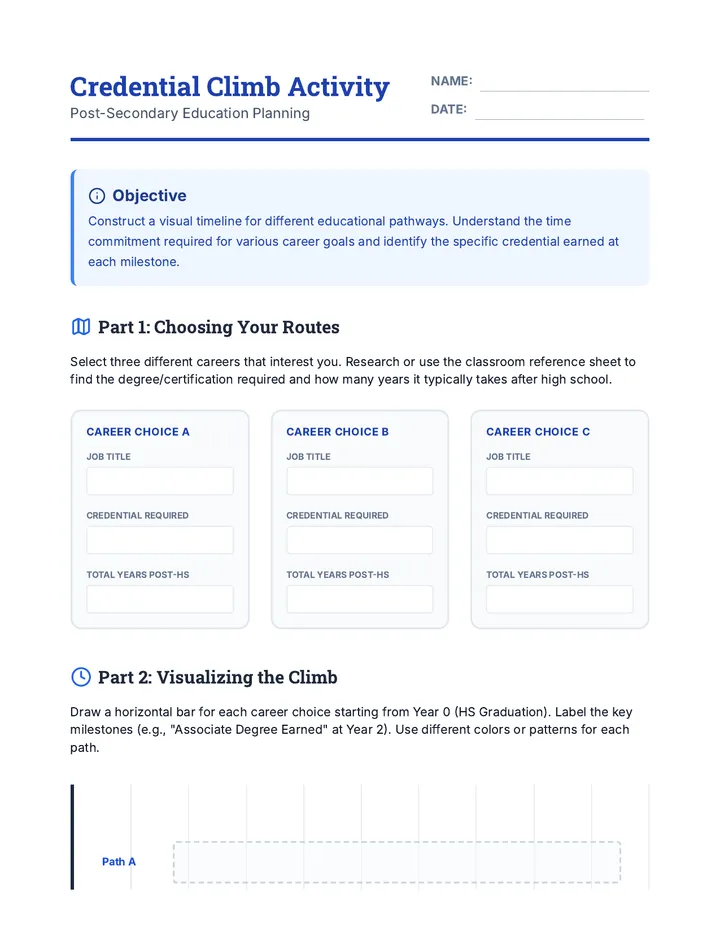
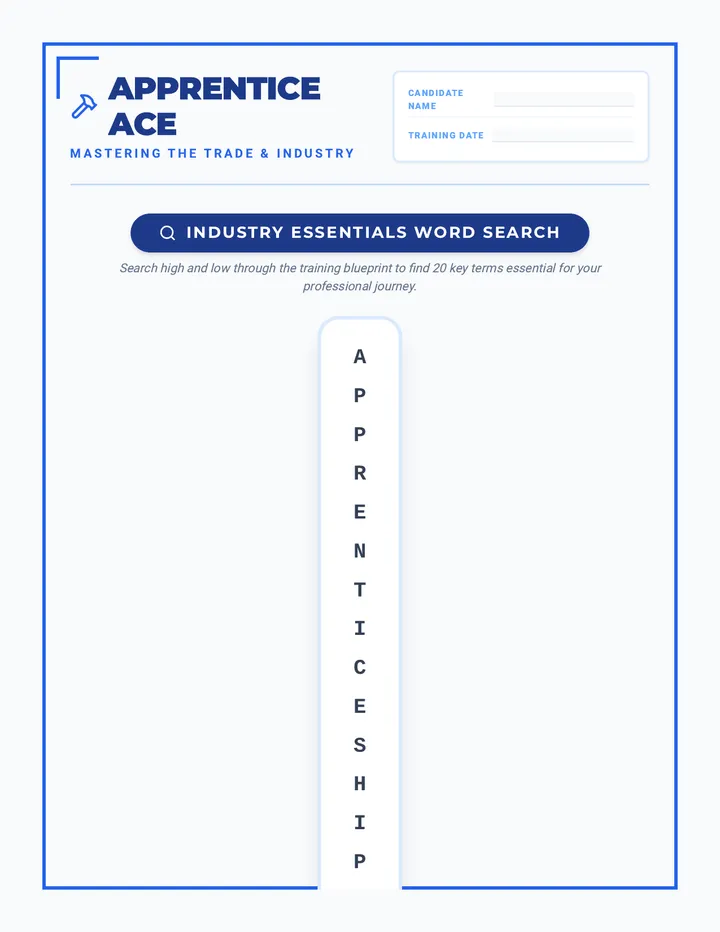
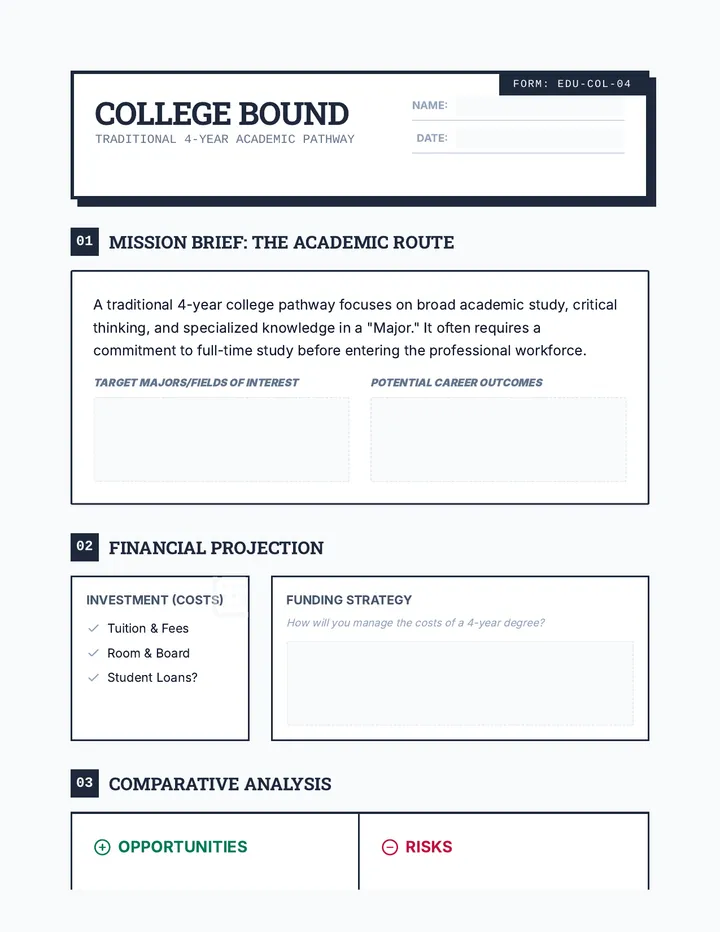
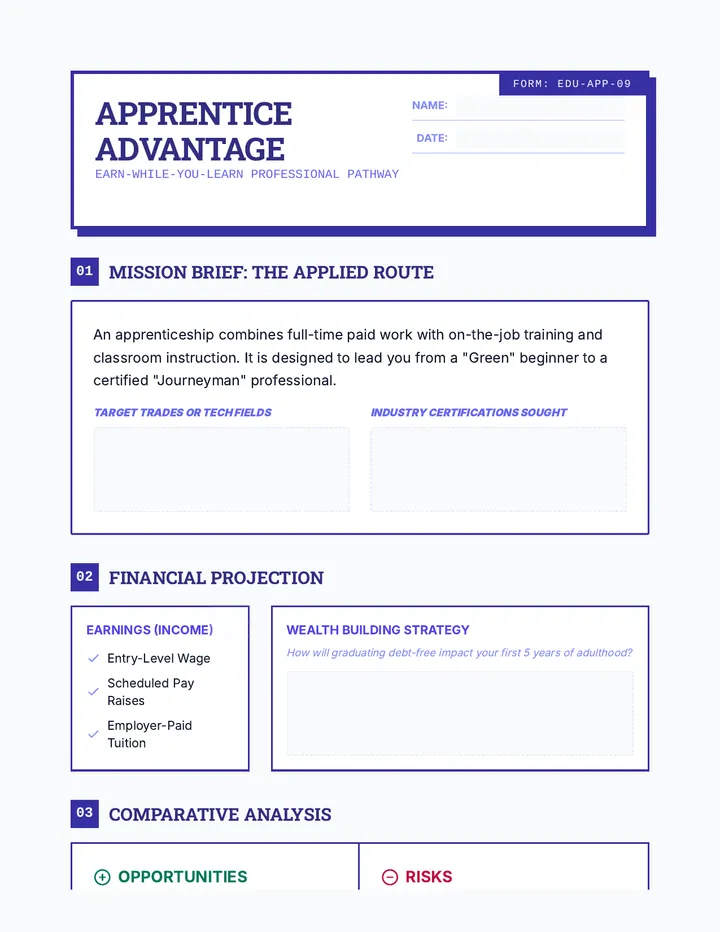
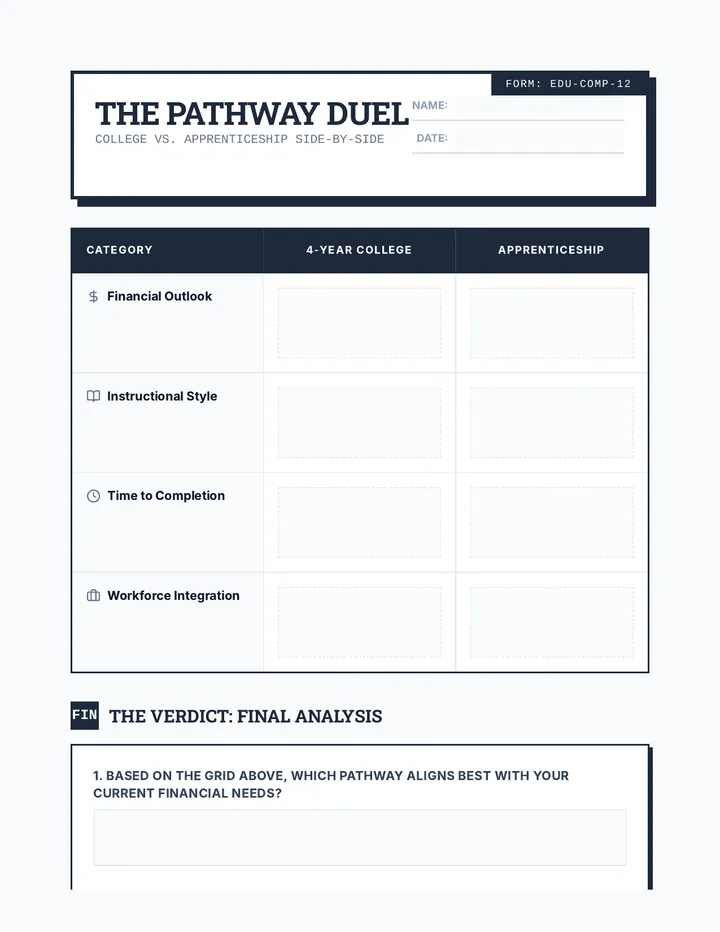
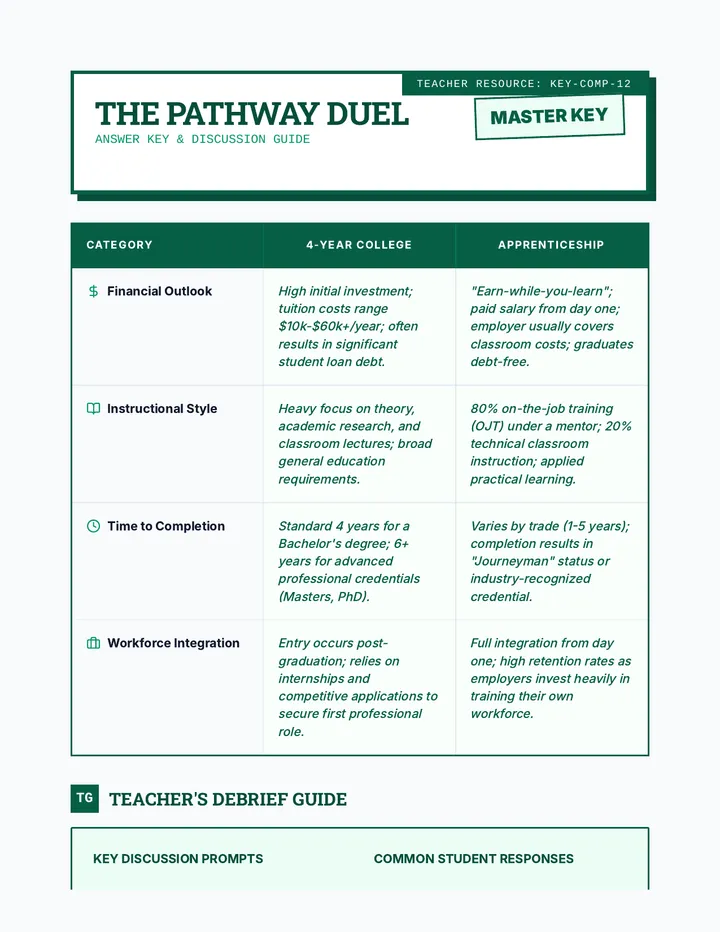
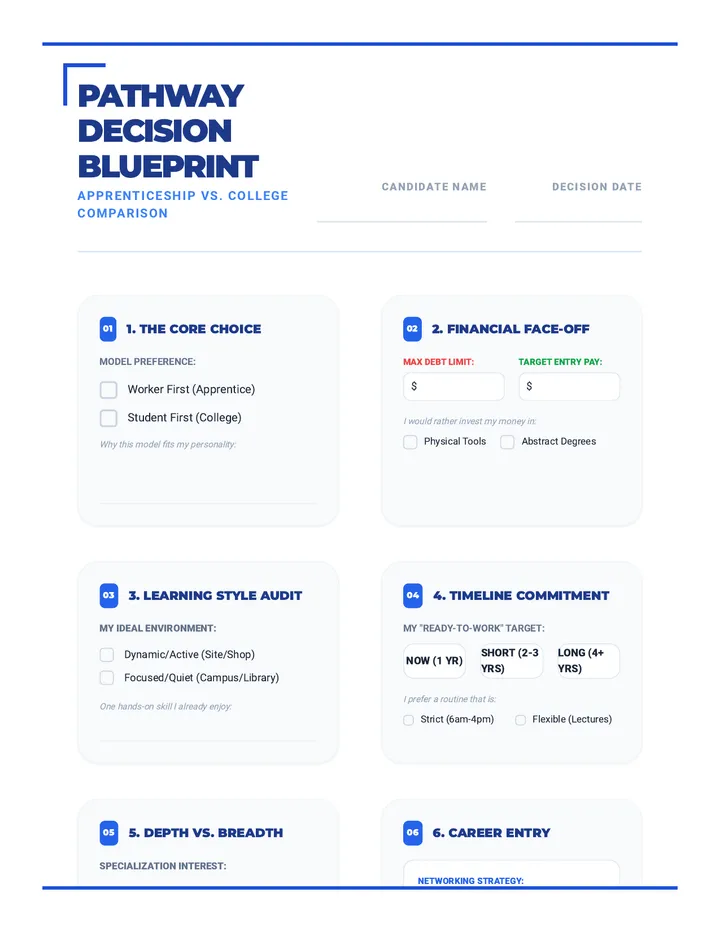
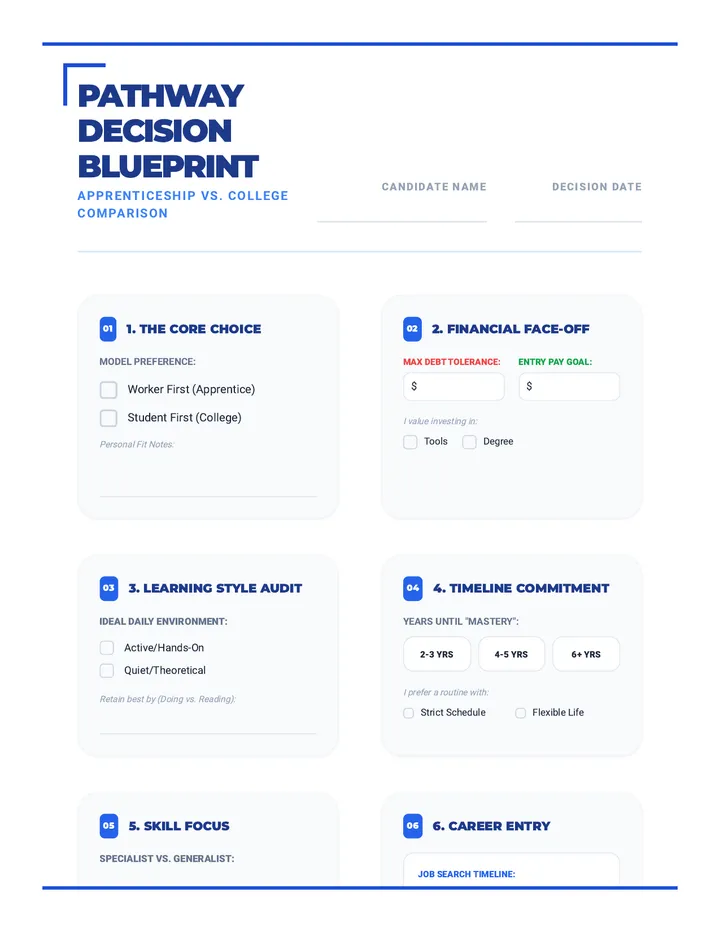
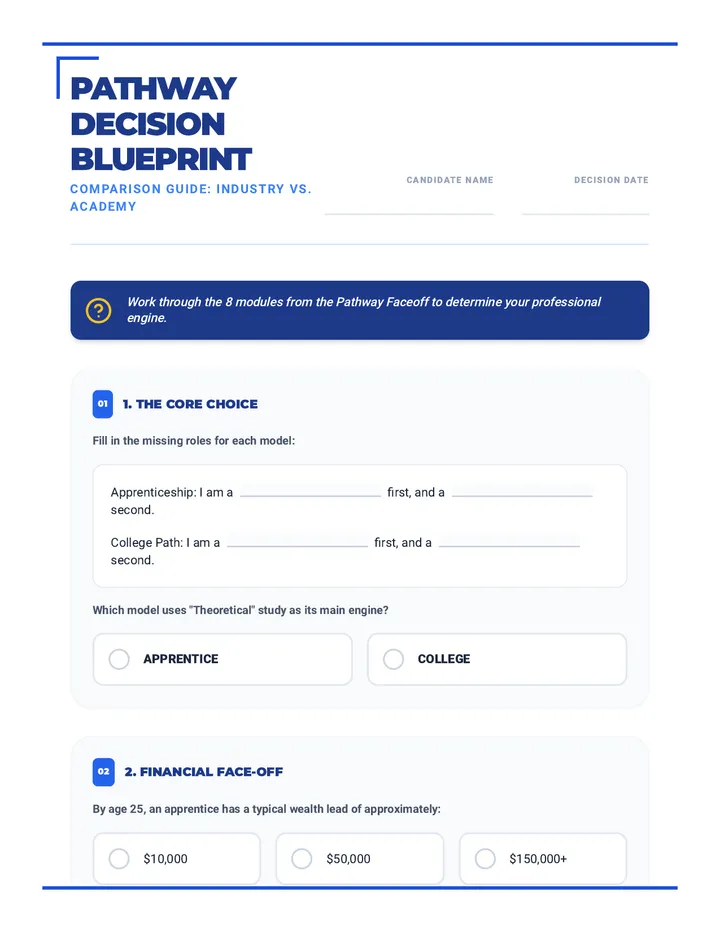
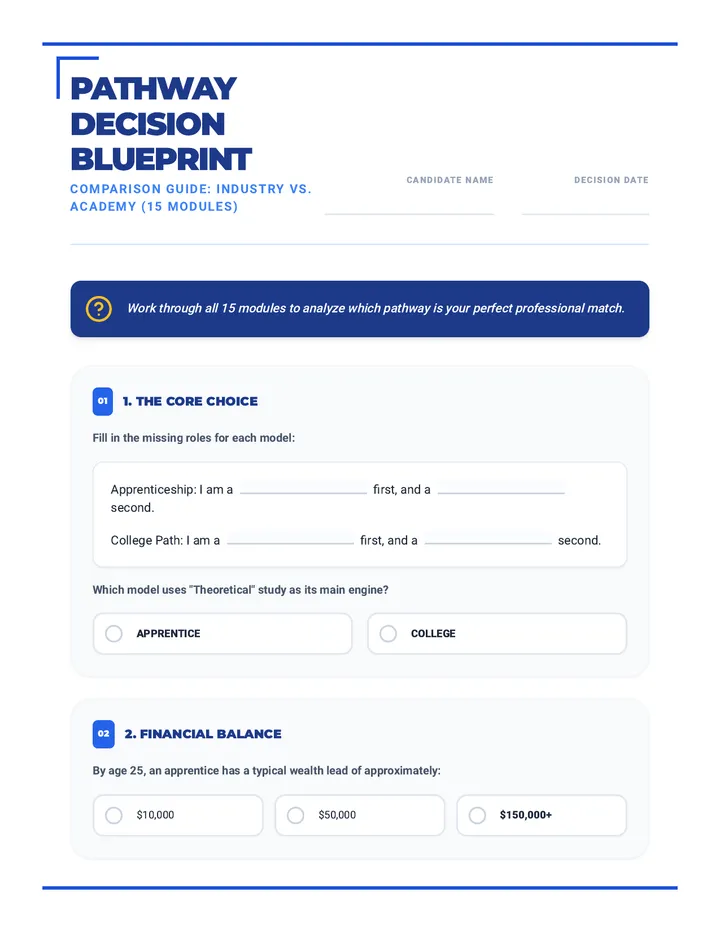
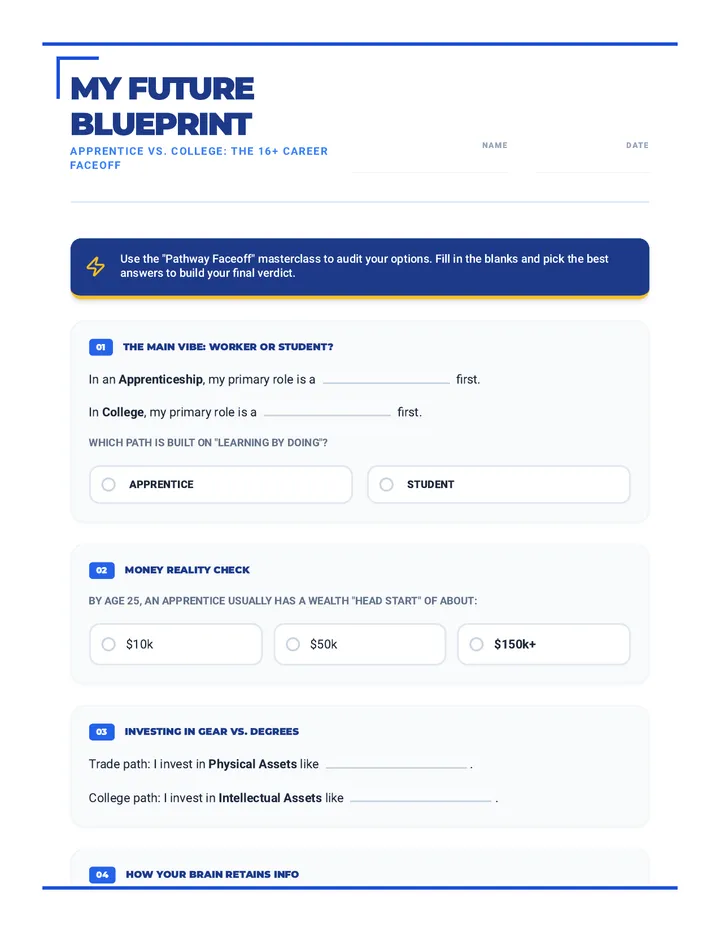
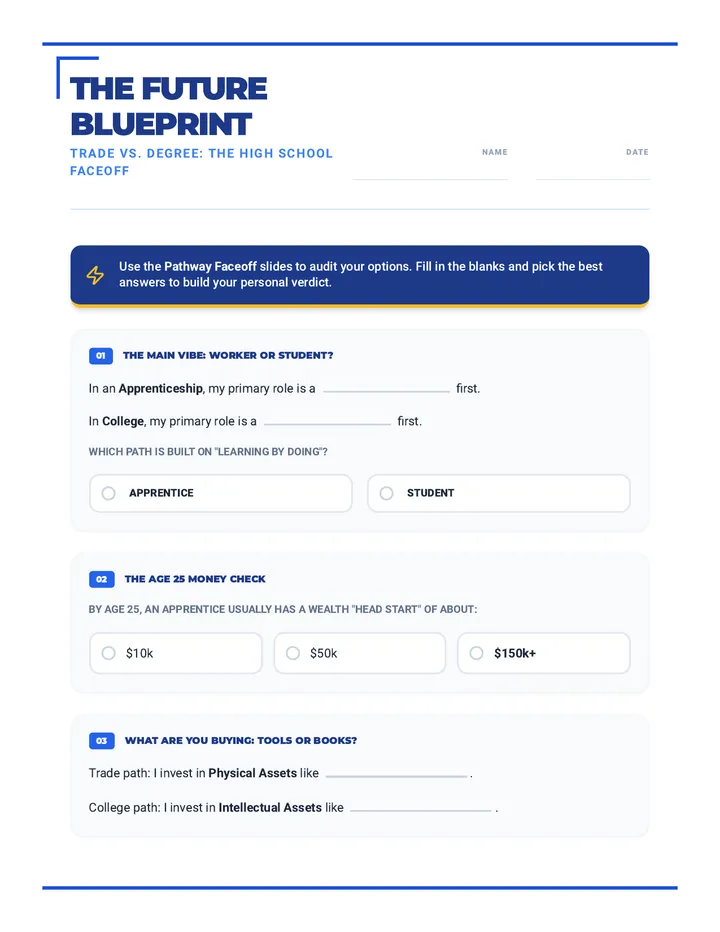
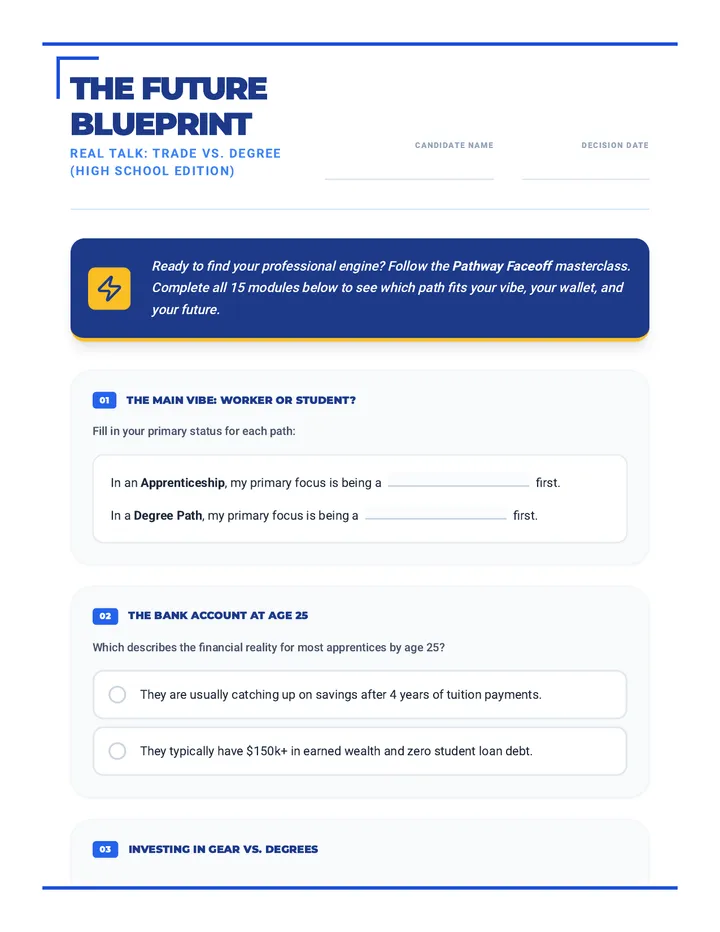
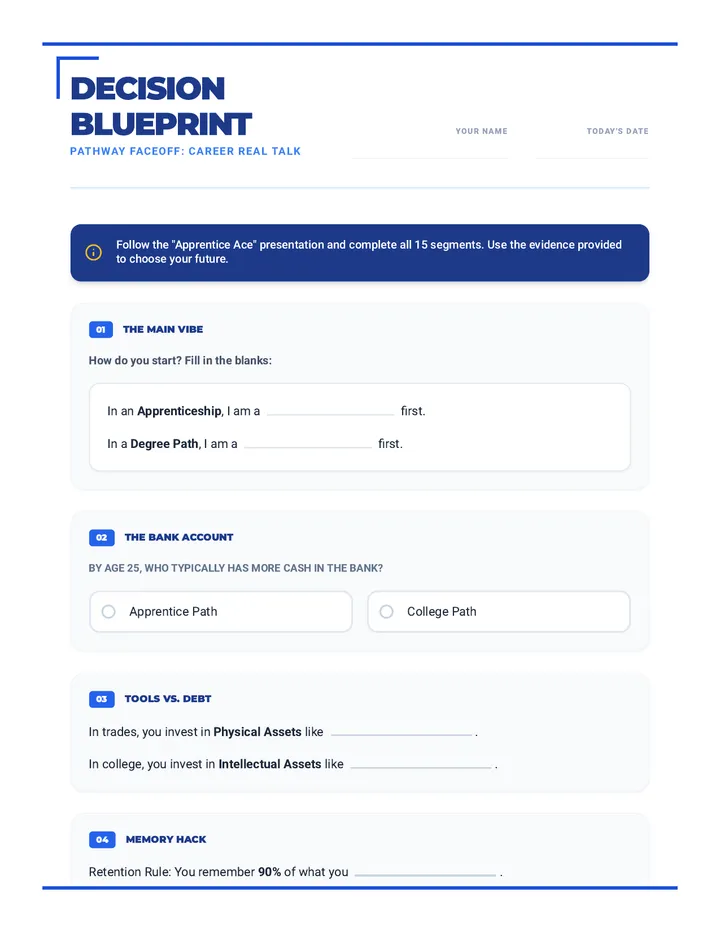
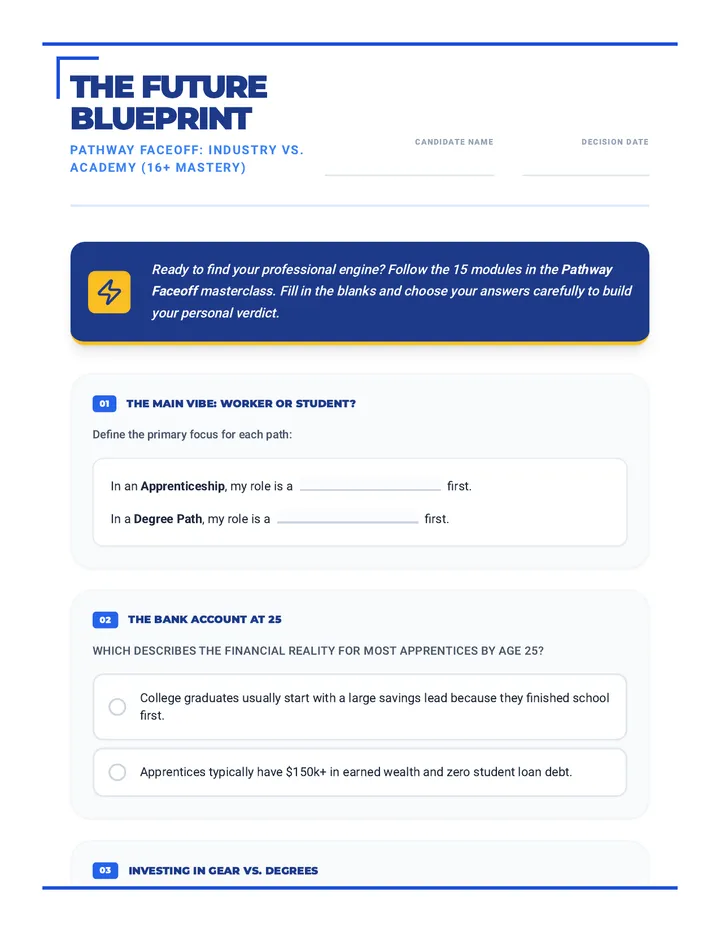
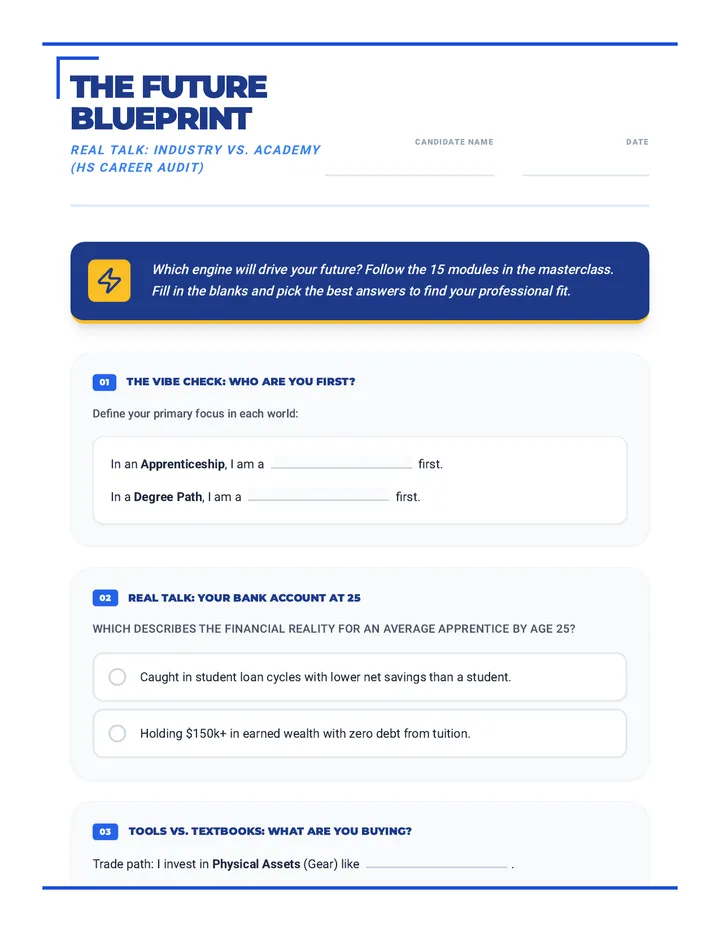
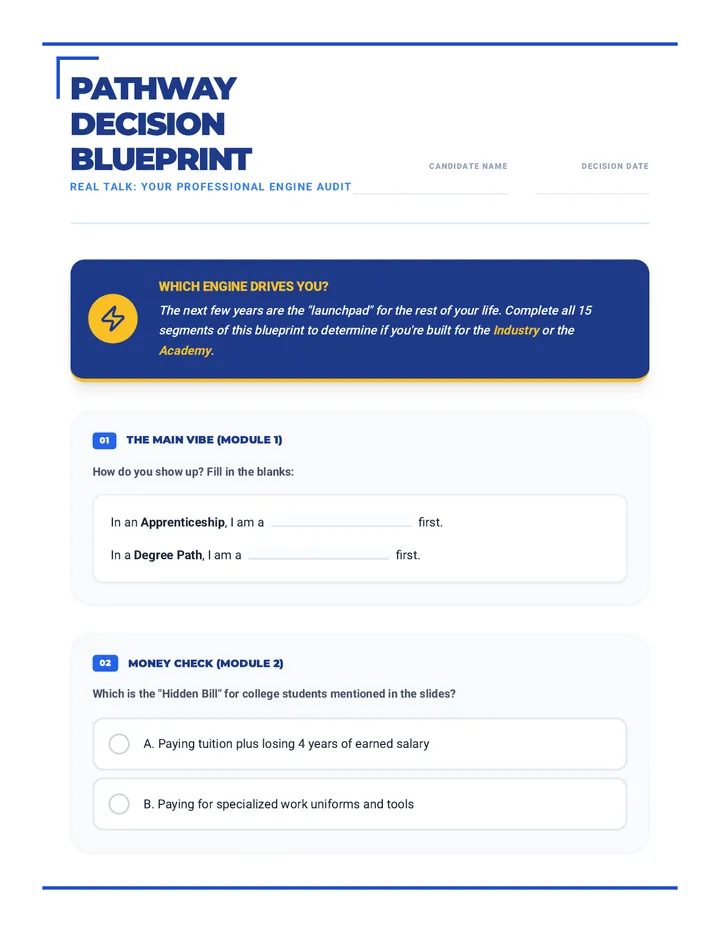
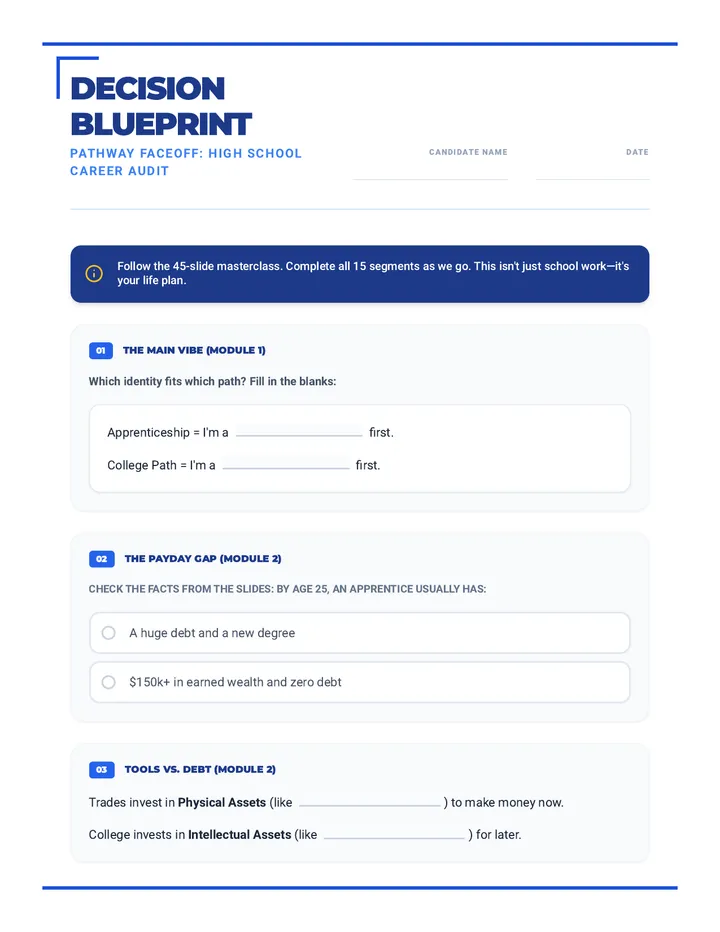
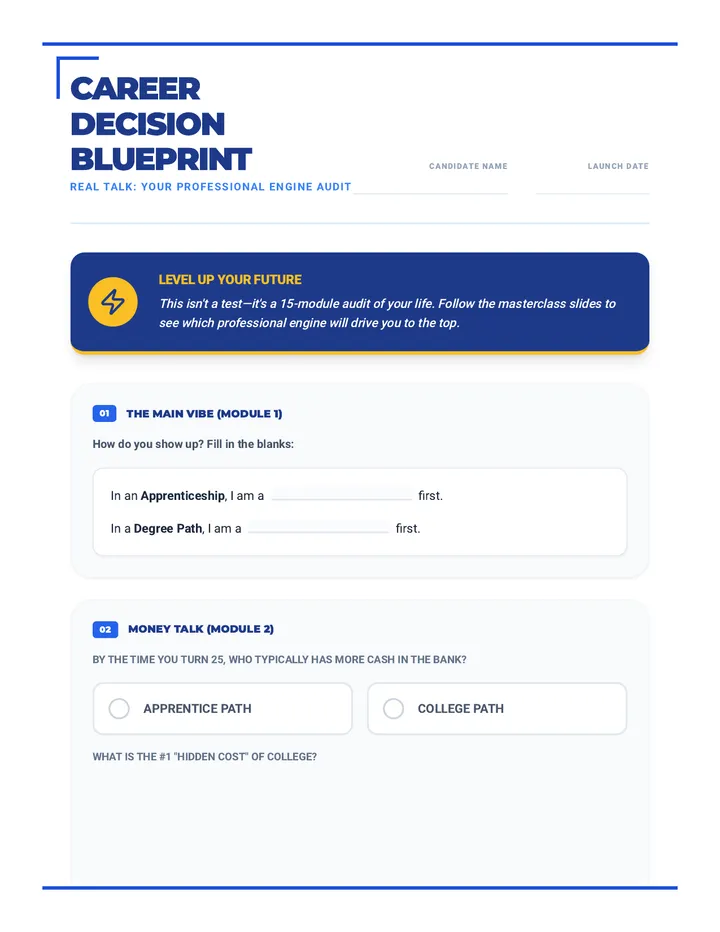
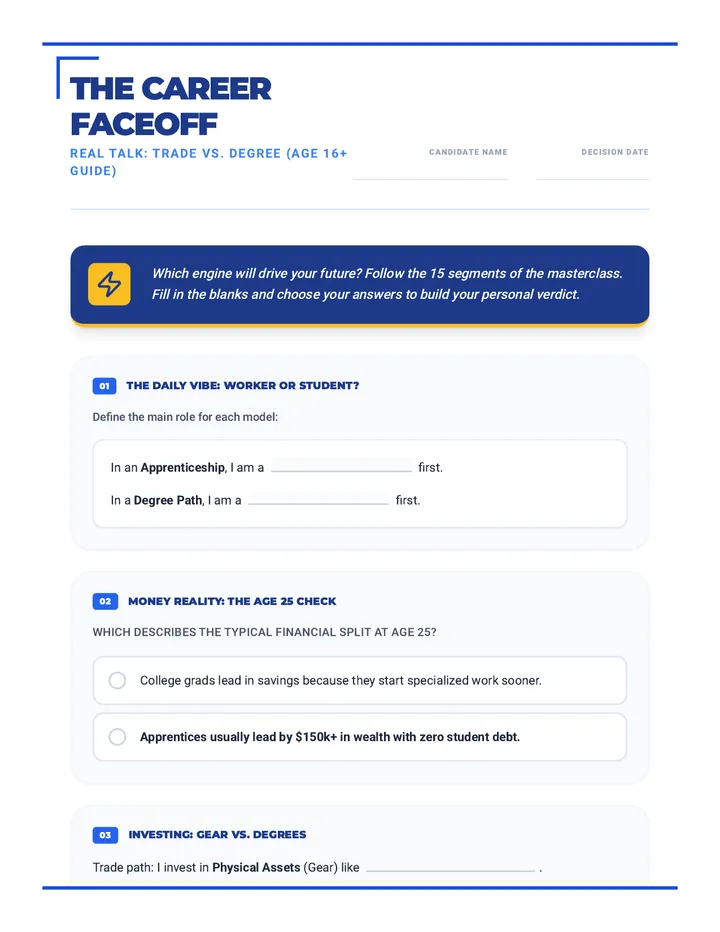
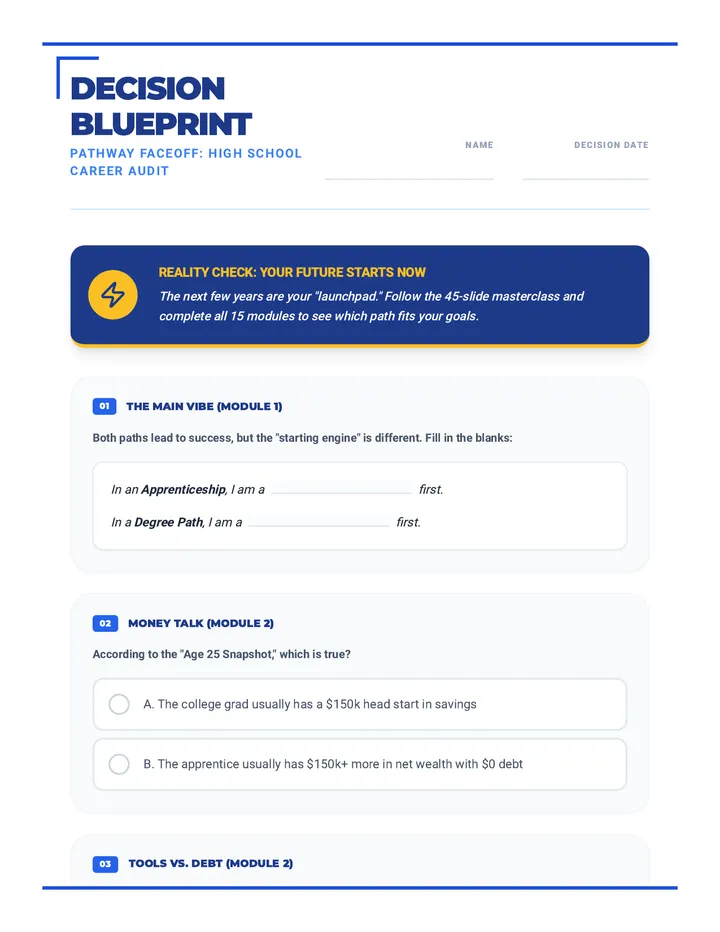
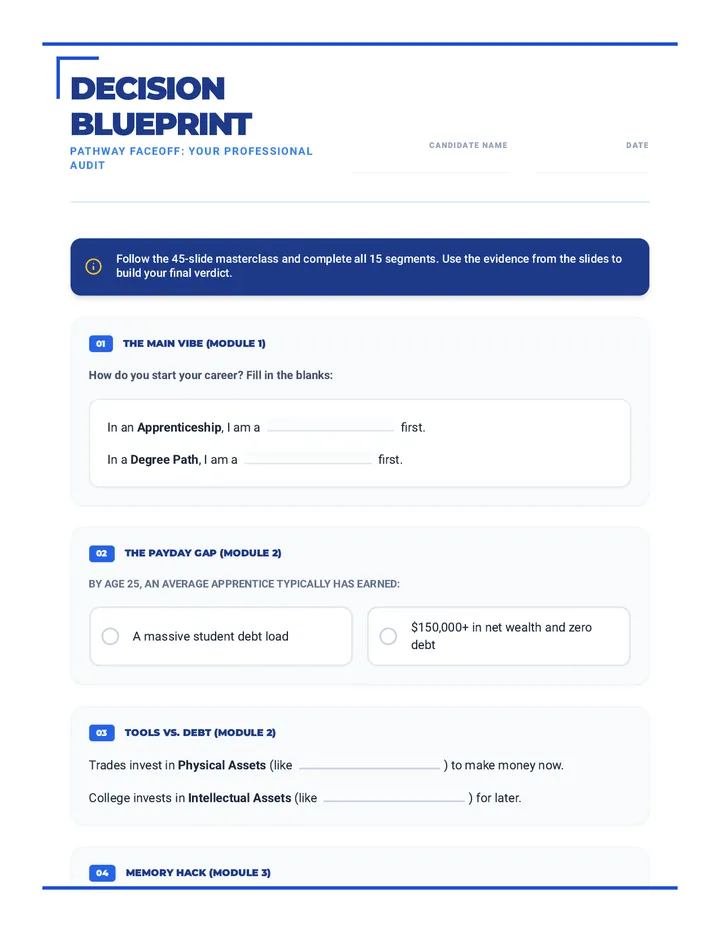
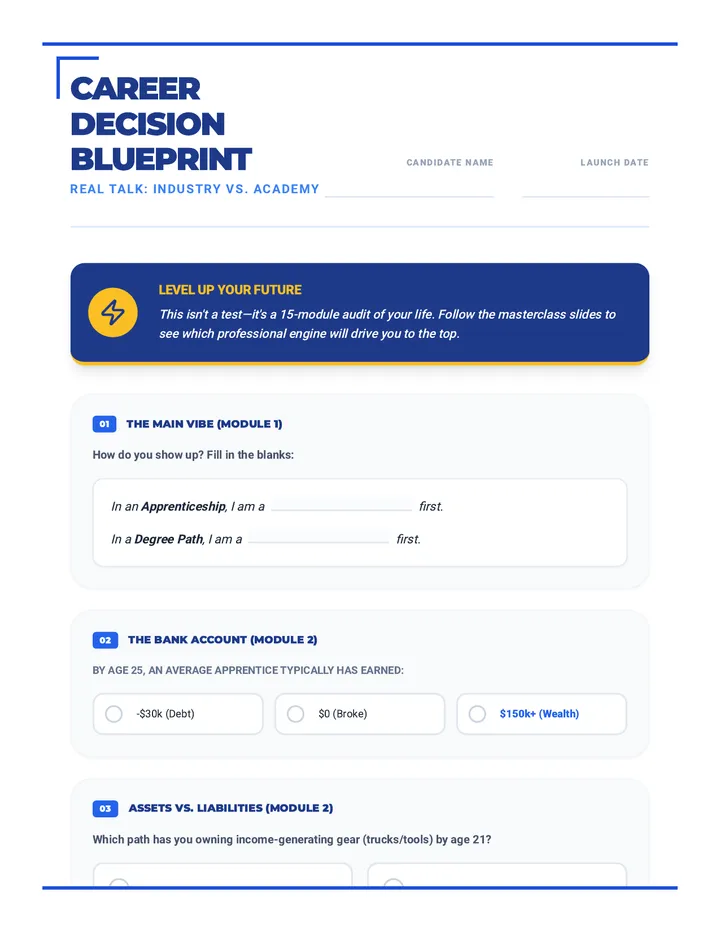
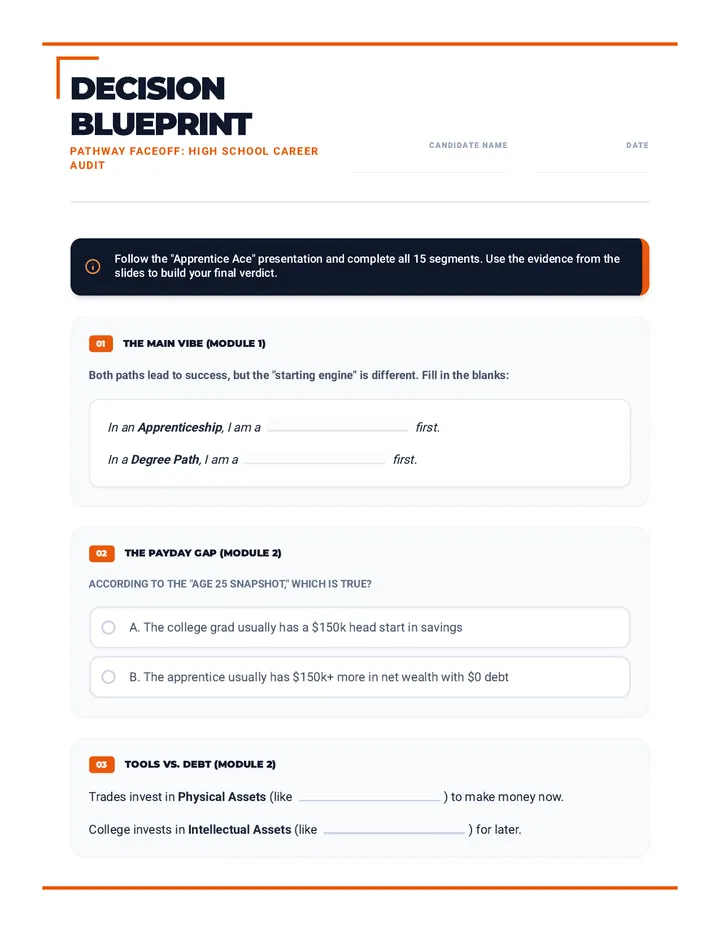
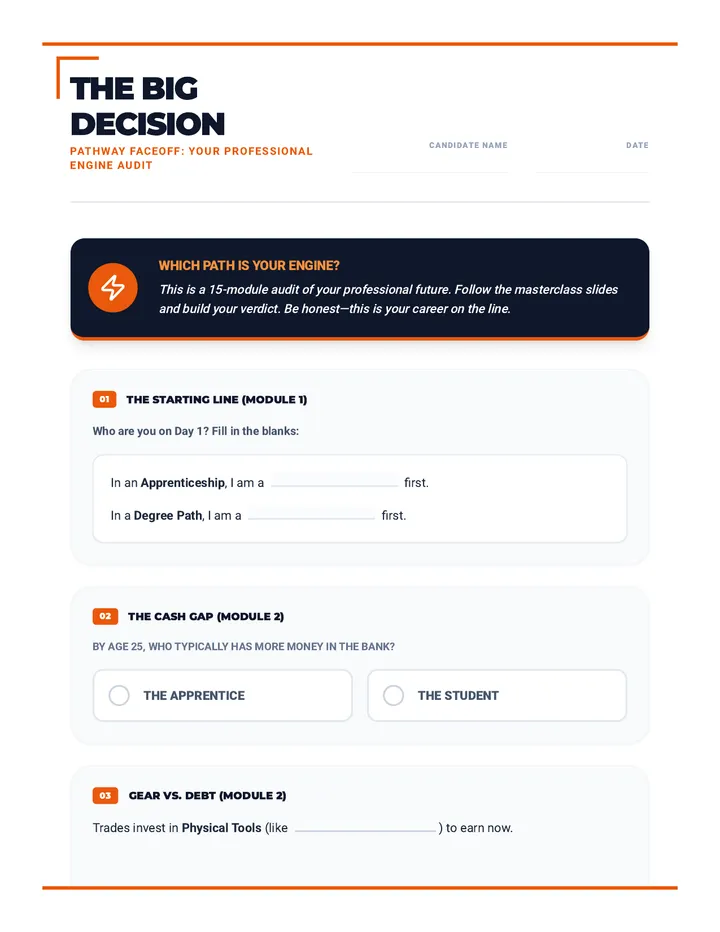
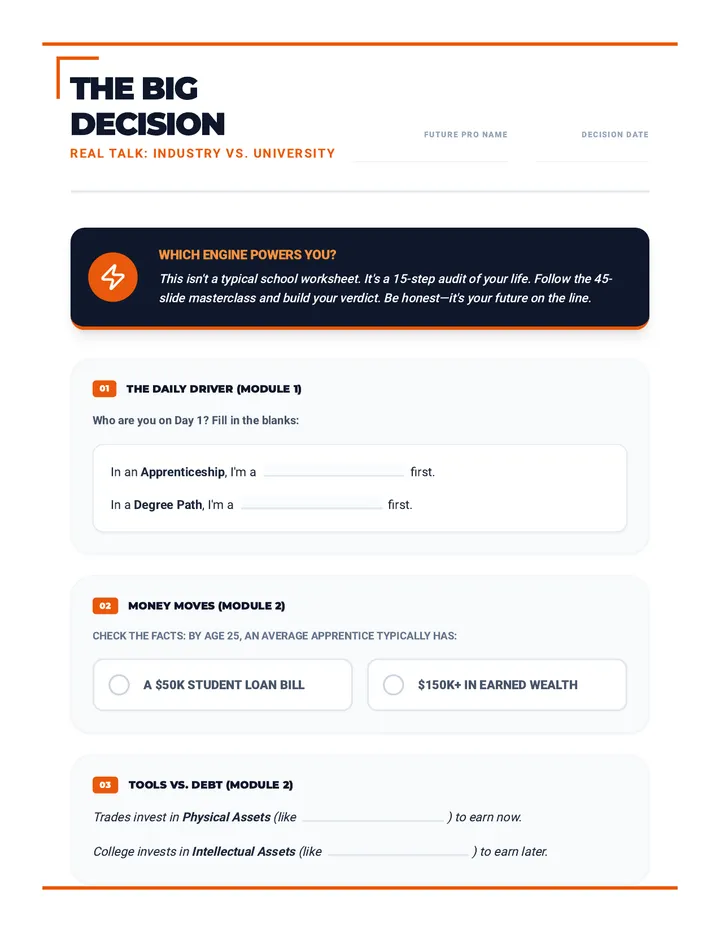
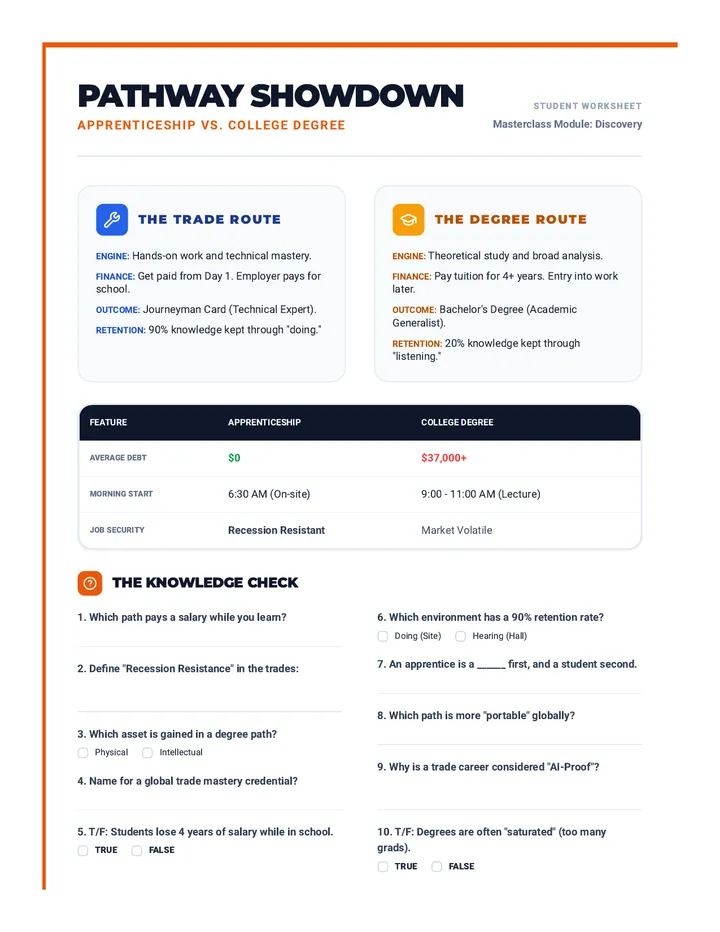
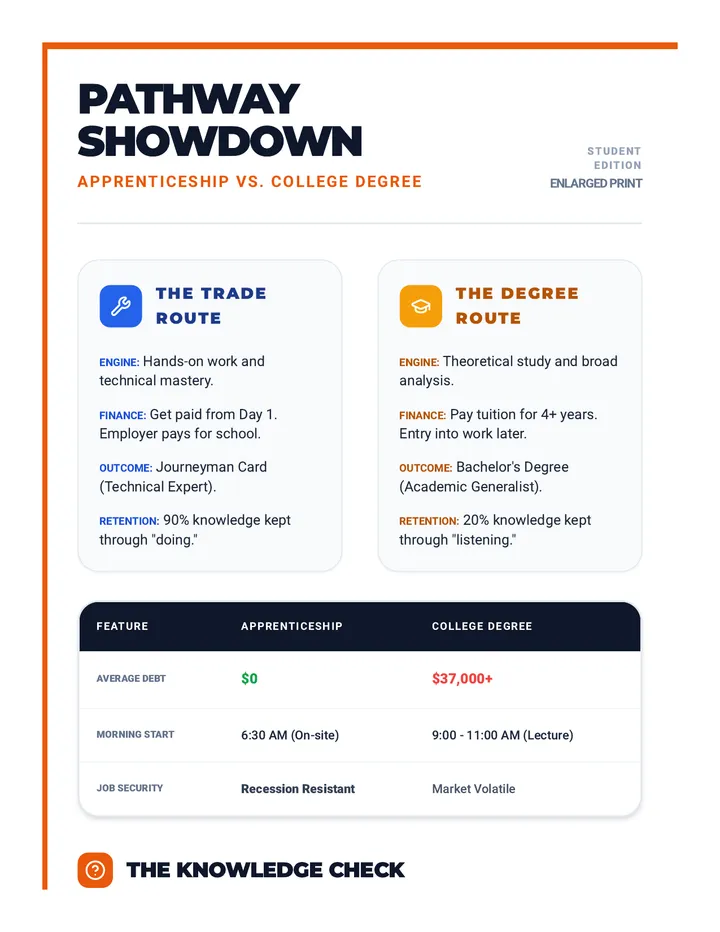
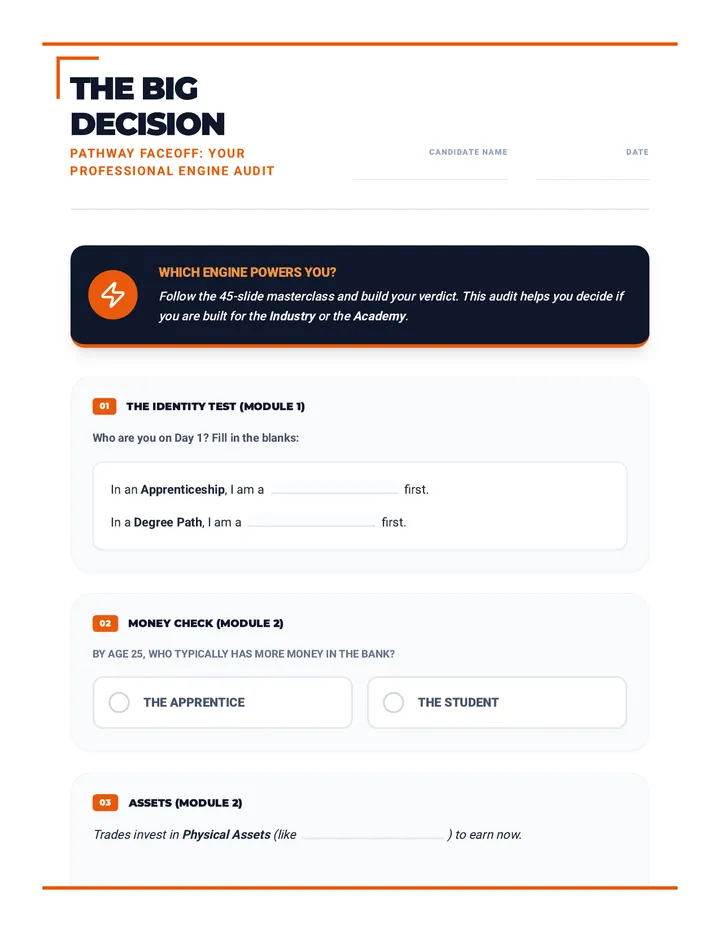
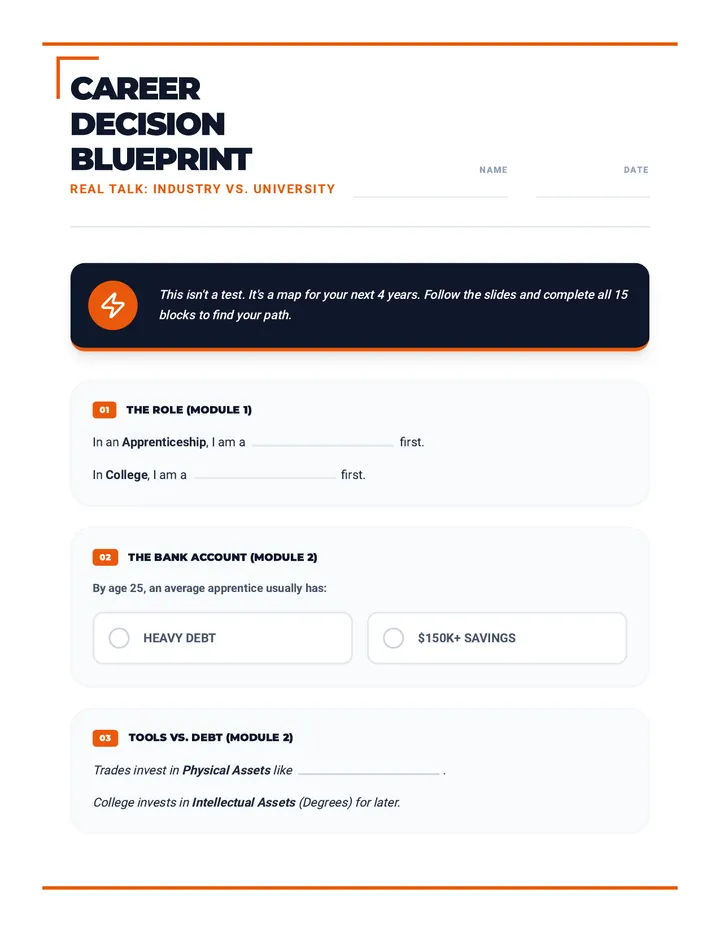
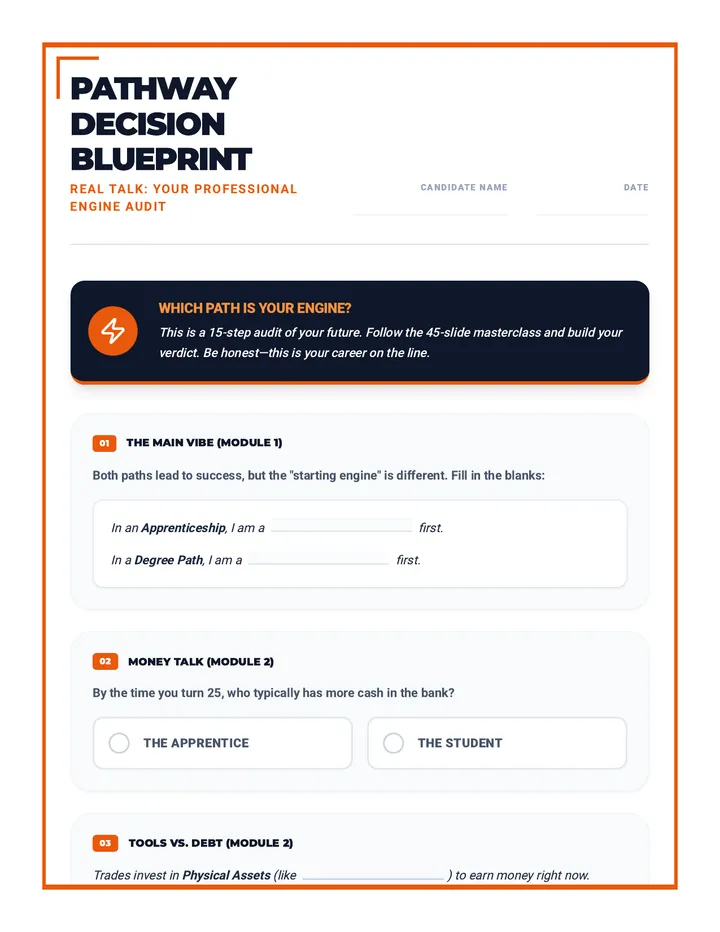
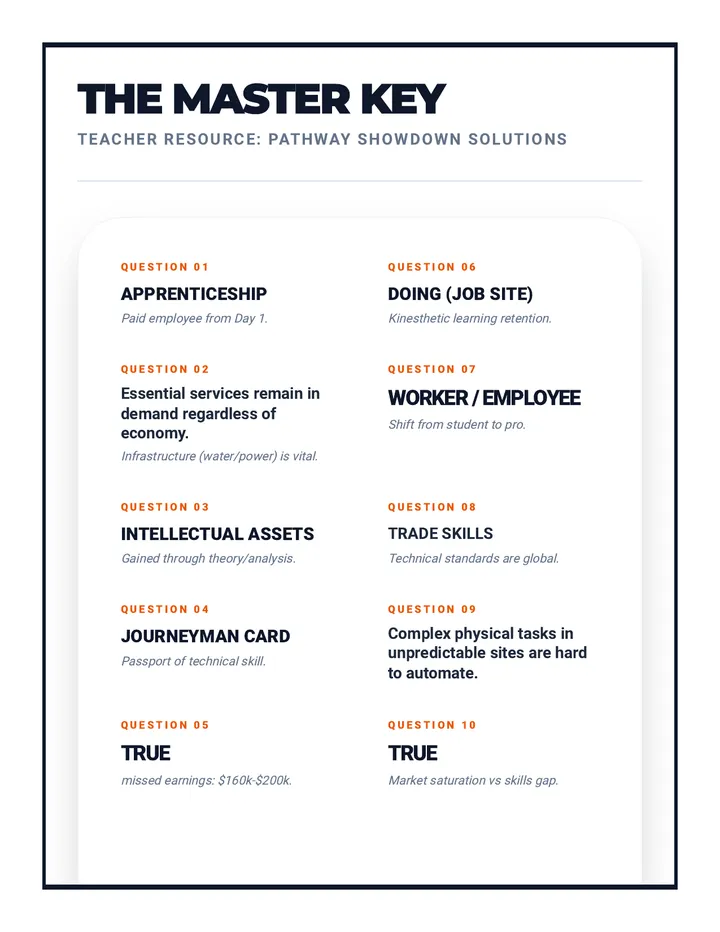
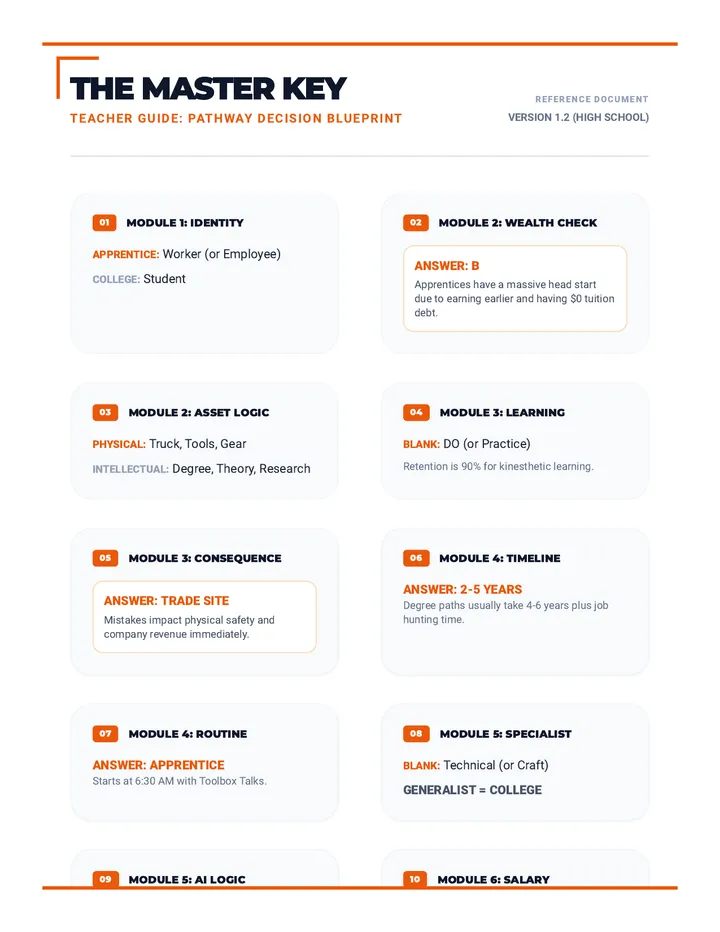
This sequence explores post-secondary education options beyond the traditional four-year degree, including trade schools, apprenticeships, coding bootcamps, and certificate programs. Students learn to evaluate the legitimacy of various programs and compare different career pathways based on cost, duration, and outcomes.
A comprehensive series on evaluating post-secondary education through a financial lens, focusing on ROI, funding mechanisms, opportunity costs, and long-term financial planning for undergraduate students.
A comprehensive guide for 12th-grade students to navigate the financial complexities of post-secondary education. Students analyze total cost of ownership, debt structures, and Return on Investment (ROI) to create a sustainable financial roadmap for their future.
A graduate-level sequence exploring the professional, economic, and collaborative landscapes of contemporary printmaking. Students transition from studio practice to professional engagement through market analysis, collaborative simulations, and grant writing.
A high school English Language Arts sequence focused on the practical application of Latin and French terminology in professional, legal, and political contexts. Students explore how these terms define power, liability, and obligation through case studies, simulations, and analysis of real-world documents.
A Kindergarten sequence focused on classroom economy, teaching the purpose of money through simulation, needs vs. wants, goods vs. services, and basic budgeting. Students learn through a practical classroom store simulation to understand value and exchange.
This financial literacy sequence for 5th graders focuses on essential consumer skills, including differentiating needs from wants, calculating unit prices, analyzing product reviews, and understanding consumer rights. Through simulations and mathematical application, students develop the critical thinking needed to make smart, value-driven purchasing decisions.
A comprehensive sequence for 9th-grade students focused on early scholarship planning, database navigation, scam prevention, and organizational tracking systems.
This 10th-grade sequence equips students with the skills to find and manage scholarships. Students learn to navigate databases, decode eligibility, avoid scams, and build a digital tracking system to prepare for post-secondary funding.
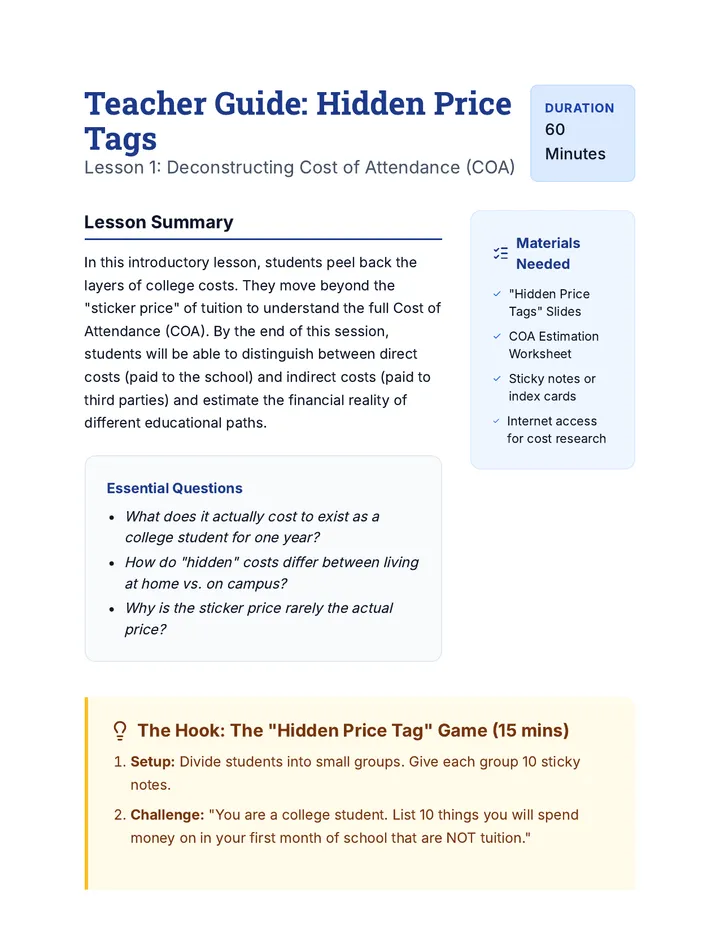
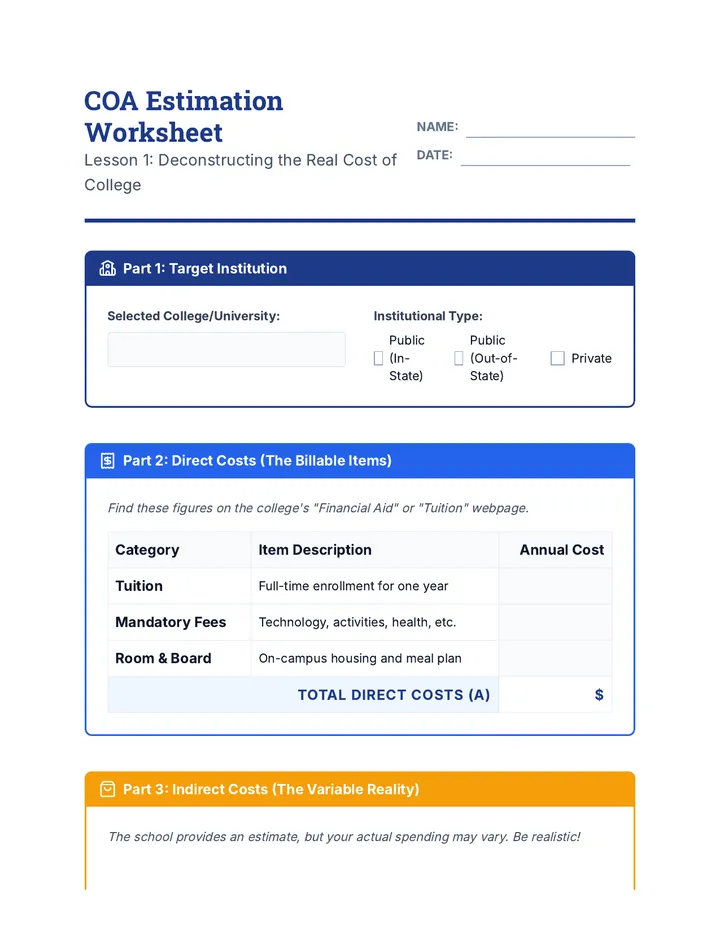
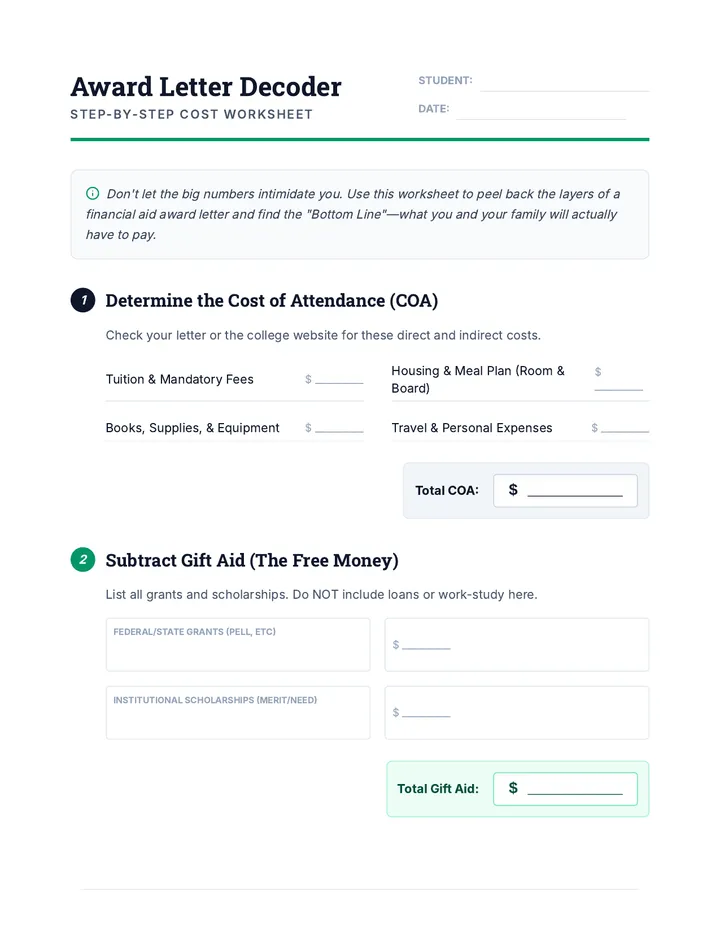
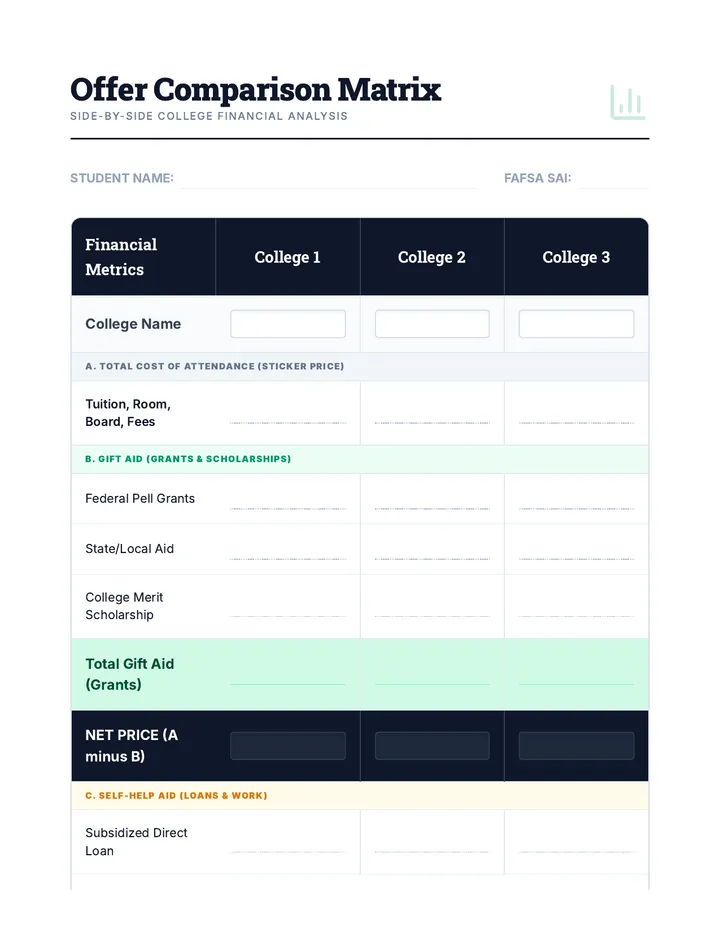
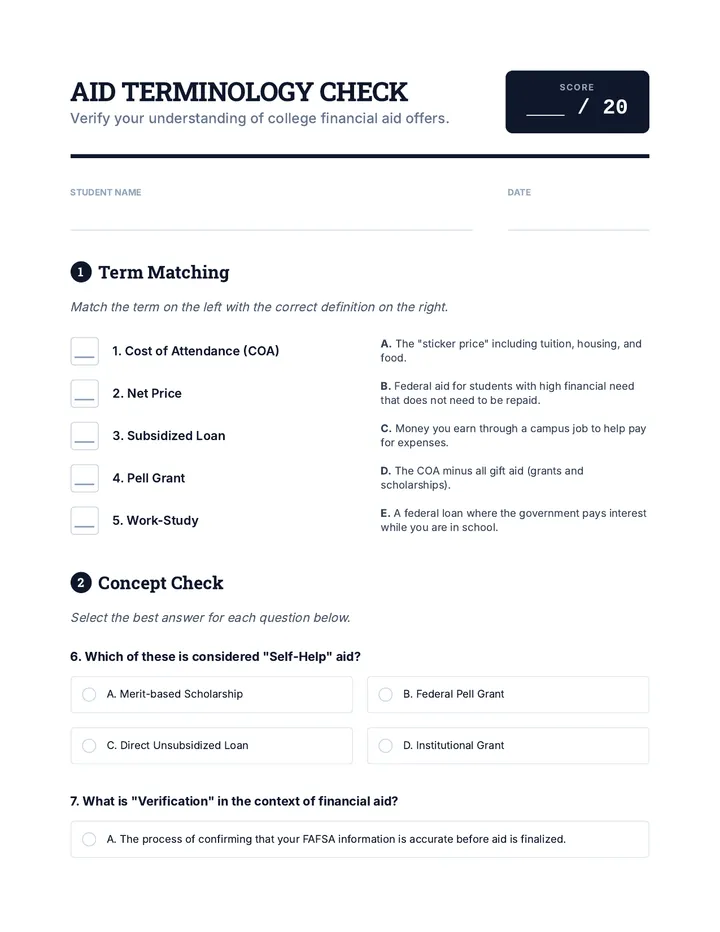
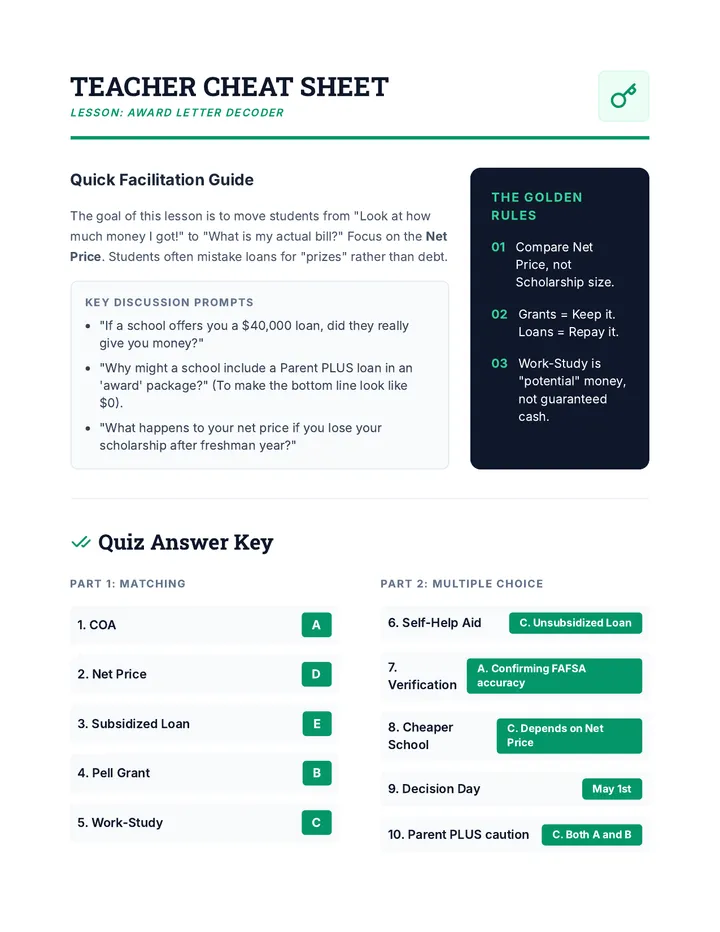
A project-based sequence for 10th-grade students to master the complexities of college funding. Students will learn to deconstruct costs, prioritize non-repayable aid, interpret confusing financial aid letters, and design a sustainable borrowing strategy to minimize long-term debt.
This sequence guides 11th-grade students through the complexities of student loans, from distinguishing loan types to calculating long-term interest and simulating repayment strategies based on career goals.
A comprehensive introduction to banking for 8th graders, covering account types, opening procedures, transaction mechanics, ledger maintenance, and statement analysis. Students gain practical financial literacy skills through simulations and hands-on practice.
This sequence guides 7th-grade students through the mechanics of credit and debt, covering principal and interest, credit scores, debt-to-income ratios, and repayment strategies. Students learn how borrowing decisions impact long-term financial stability through simulations and real-world case studies.
A comprehensive unit for 6th graders on the mechanics and responsibilities of credit and debt. Students learn about interest, credit scores, payment methods, and the long-term impact of debt on personal budgeting and financial freedom.
A 4th-grade economics simulation exploring the mechanics of borrowing, lending, and credit. Students transition from savers to lenders and borrowers, learning about interest rates, creditworthiness, and the responsibilities of financial agreements.
A comprehensive 5th-grade unit on credit, debt, interest rates, and financial responsibility, culminating in a loan officer simulation.
A comprehensive 7-week curriculum designed to prepare high school students for the college transition, covering admission strategies, financial aid, and major-to-career pathways.
A specialized keyboard-only spreadsheet curriculum for 12th-grade students, focusing on assistive technology skills and workplace readiness. Students progress from basic grid navigation to complex budget management using only keyboard shortcuts.
A comprehensive sequence designed to guide 9th-grade students through the process of crafting persuasive personal statements for scholarships. Students move from self-reflection and inventorying their strengths to analyzing mentor texts, mastering the 'Show, Don't Tell' technique, and refining their drafts through peer review.
A higher-education and career-readiness sequence for 12th-grade students focused on using matrices to synthesize complex, conflicting, and multi-variable information. Students move from basic data organization to high-level comparative analysis and source evaluation.
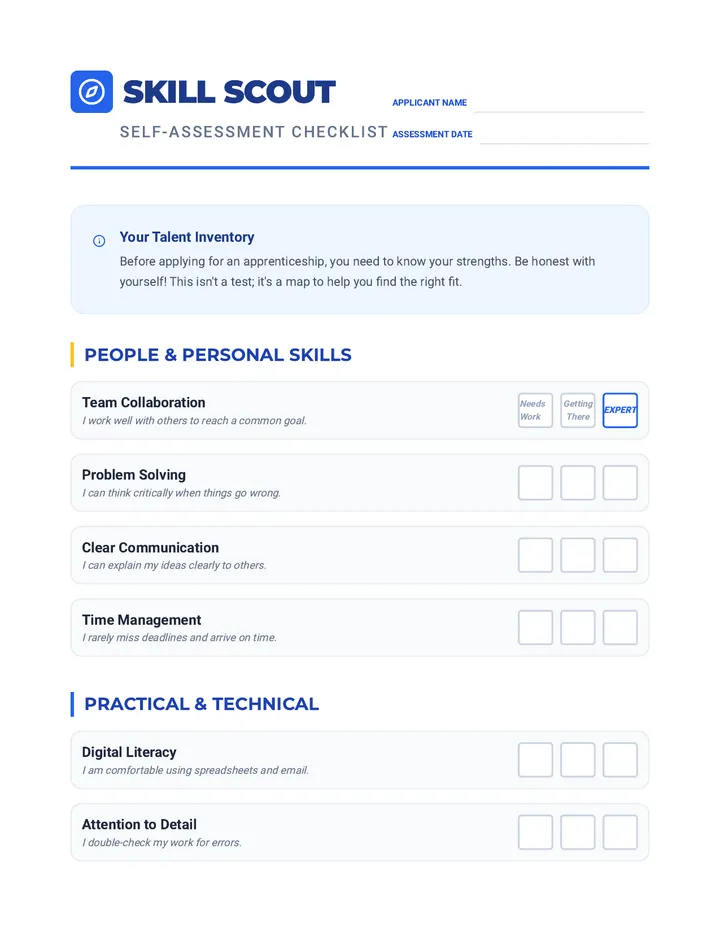
A 5-lesson sequence for 11th graders on professional certifications, micro-credentials, and stackable pathways as a viable alternative or supplement to traditional higher education. Students research industry standards, navigate licensure logistics, and design a 5-year credentialing roadmap.
A comprehensive sequence for graduate students to navigate the non-degree credential landscape, evaluate market value, and develop a strategic professional development roadmap.
This sequence empowers 12th-grade students to evaluate post-secondary program quality. Students explore accreditation systems, analyze outcome data, compare non-profit vs. for-profit models, and identify predatory marketing to make informed educational investments.
A comprehensive 12th-grade unit exploring post-secondary success through non-degree pathways, including apprenticeships, technical bootcamps, and stackable credentials. Students analyze program rigor, industry demand, and cost-benefit ratios to build viable alternatives to traditional 4-year degrees.
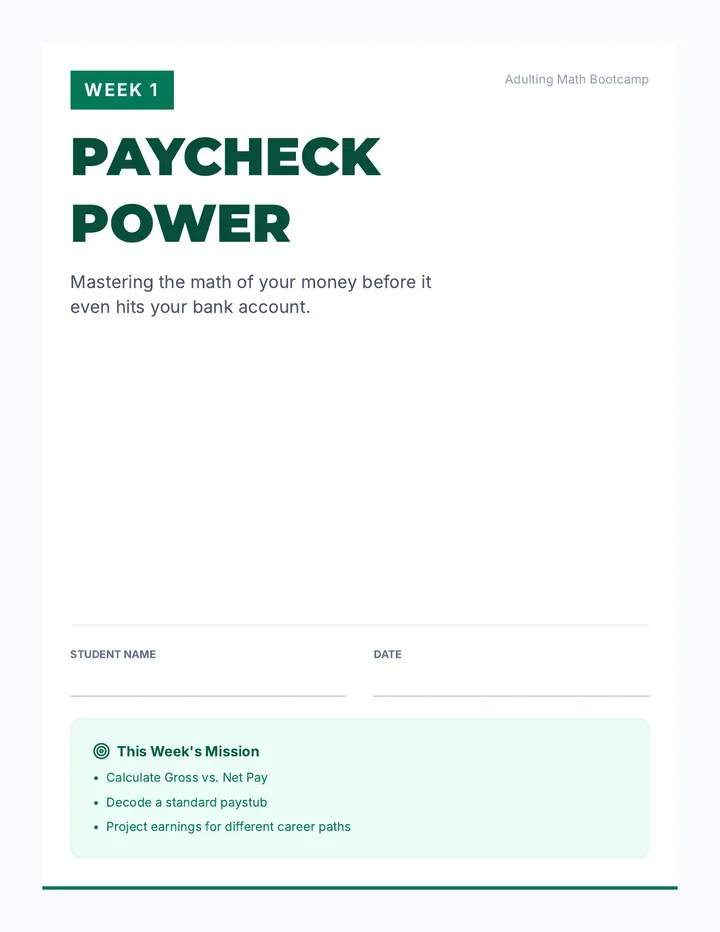
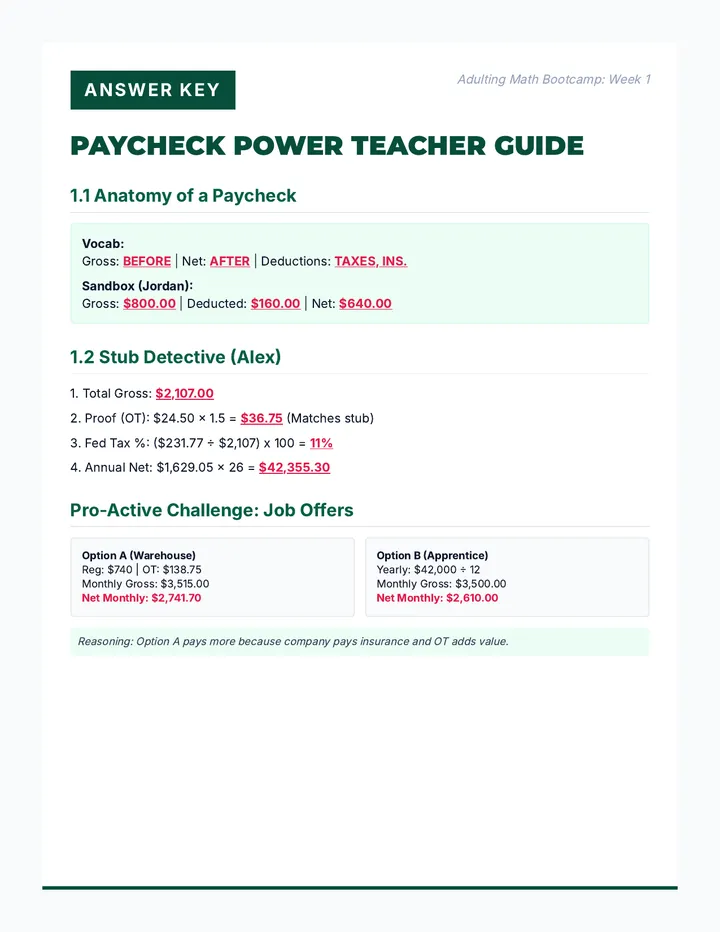
This unit demystifies the transition from gross salary to net take-home pay, helping students understand earnings, mandatory taxes, and deductions. Students will learn to calculate gross pay, interpret tax forms, and audit their own paystubs for accuracy.
A comprehensive sequence for 6th-grade students on managing bank accounts, covering deposit/withdrawal mechanics, transaction registers, digital banking, and the reconciliation process to ensure financial accuracy and security.
Students enter a simulated classroom economy to learn the mechanics of maintaining a bank account, including checking and savings distinctions, ledger maintenance, understanding fees, and account reconciliation.
A comprehensive 5-lesson sequence where 7th-grade students master the fundamentals of banking, from account selection and manual transaction tracking to reconciling bank statements and navigating digital security.
A comprehensive 5th-grade unit on the mechanics of retail banking, focusing on the difference between account types, the mathematical calculation of simple and compound interest, and the importance of financial security. Students engage in simulations to understand how banks protect and grow money.
A comprehensive 6-session financial literacy course for adult ESL learners based on FDIC resources. This sequence covers banking basics, budgeting, saving, credit, loans, and fraud prevention to empower learners with real-world money skills.
A comprehensive 6-session financial literacy course for adult ESL learners. Utilizing FDIC-based resources, this sequence covers banking basics, budgeting, saving, credit, loans, and fraud prevention to empower students with real-life money management skills.
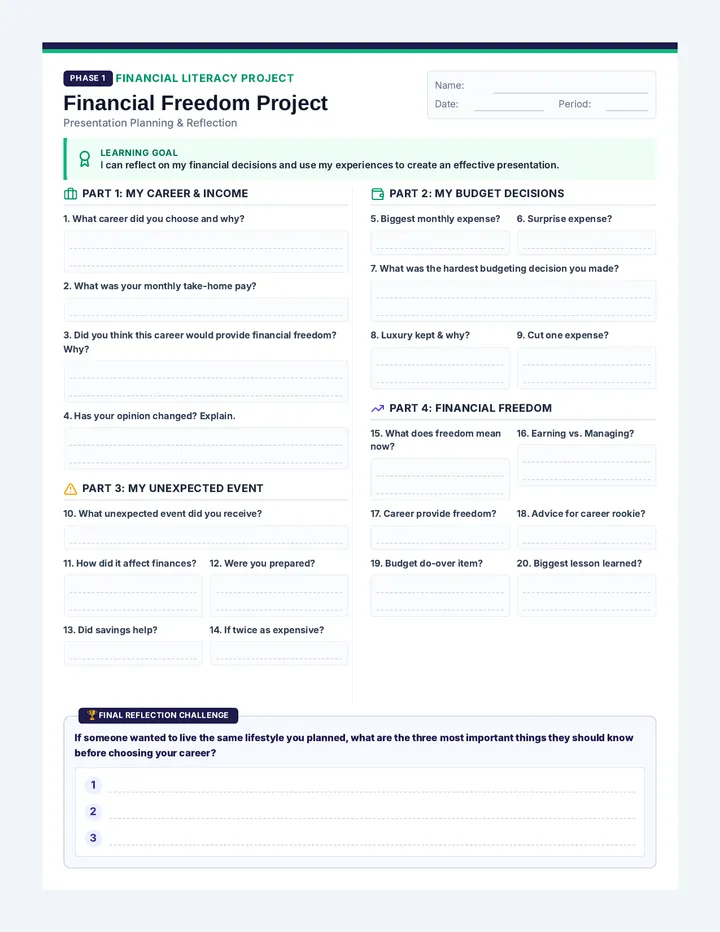
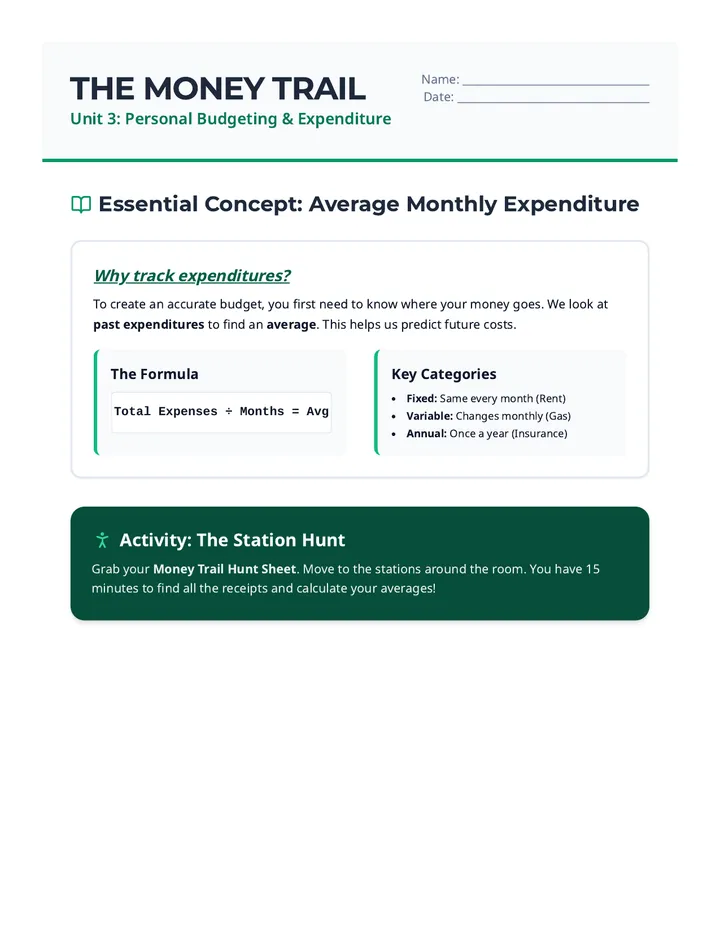
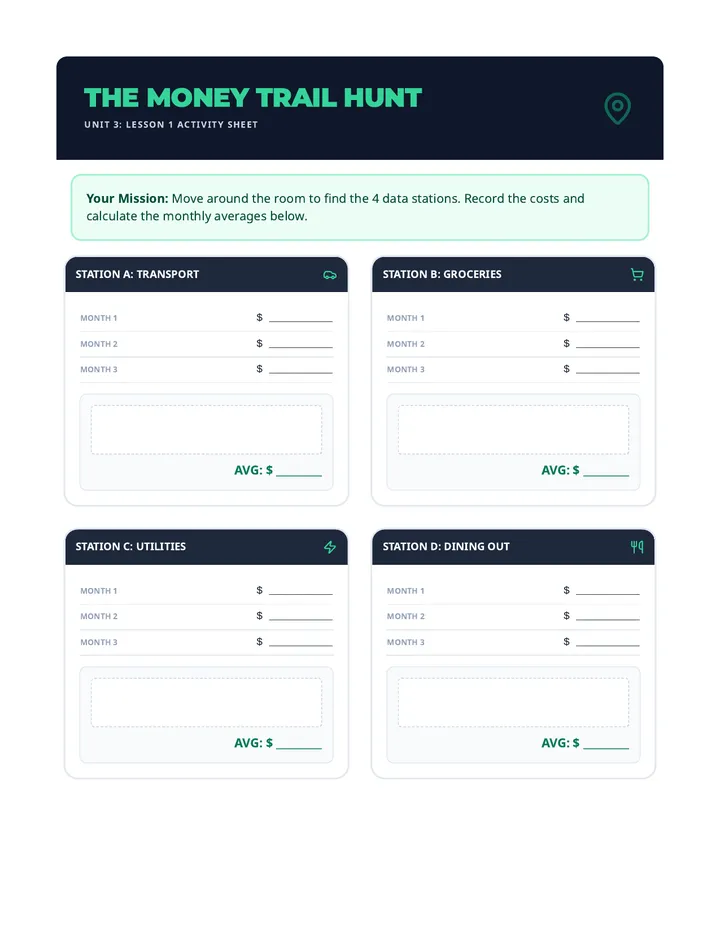
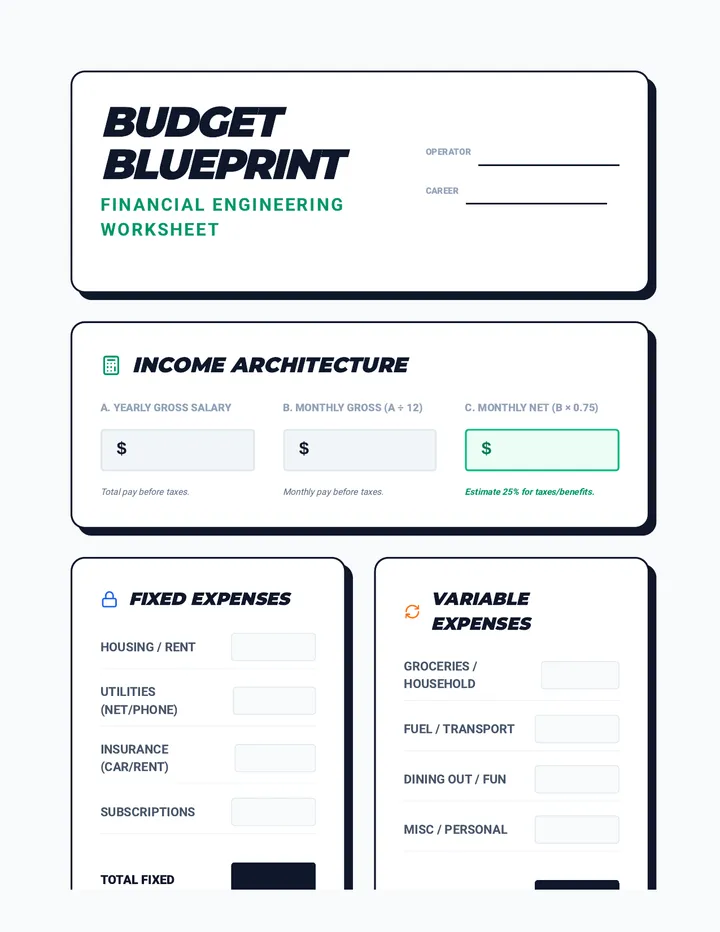
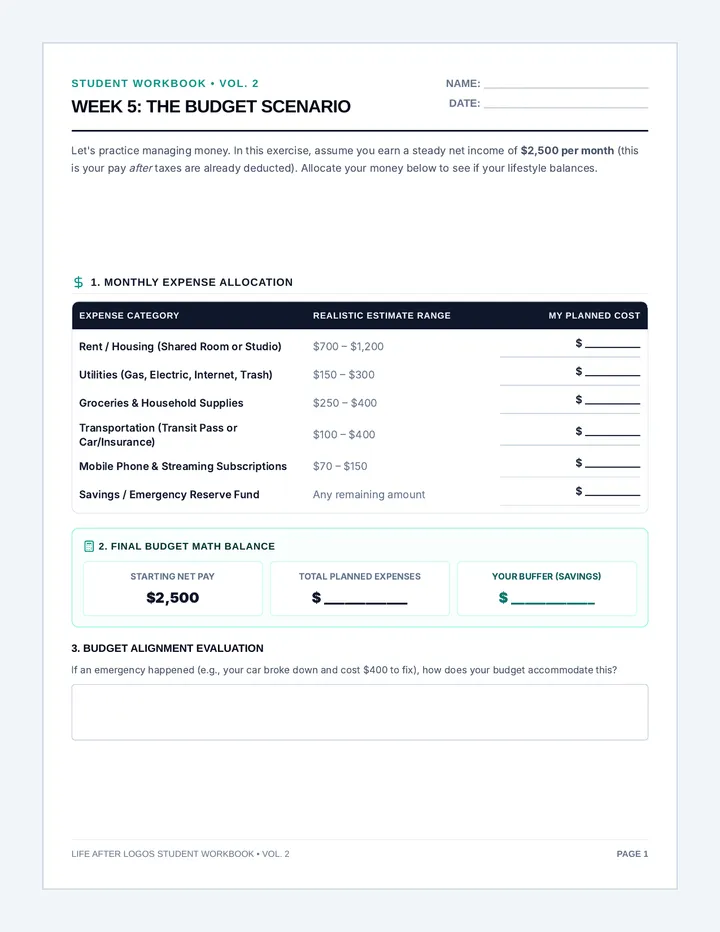
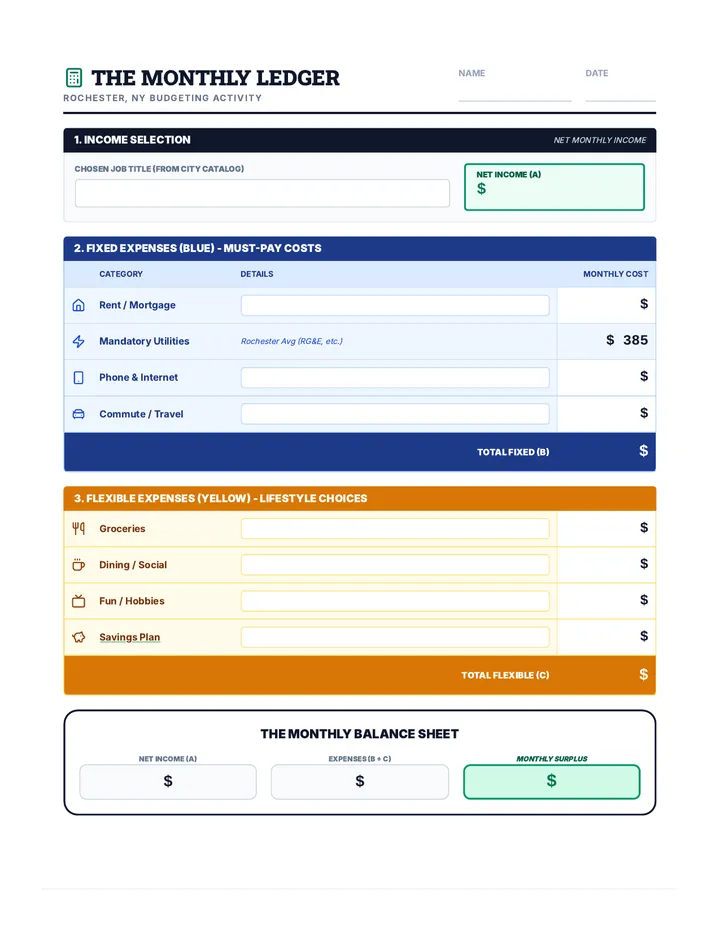
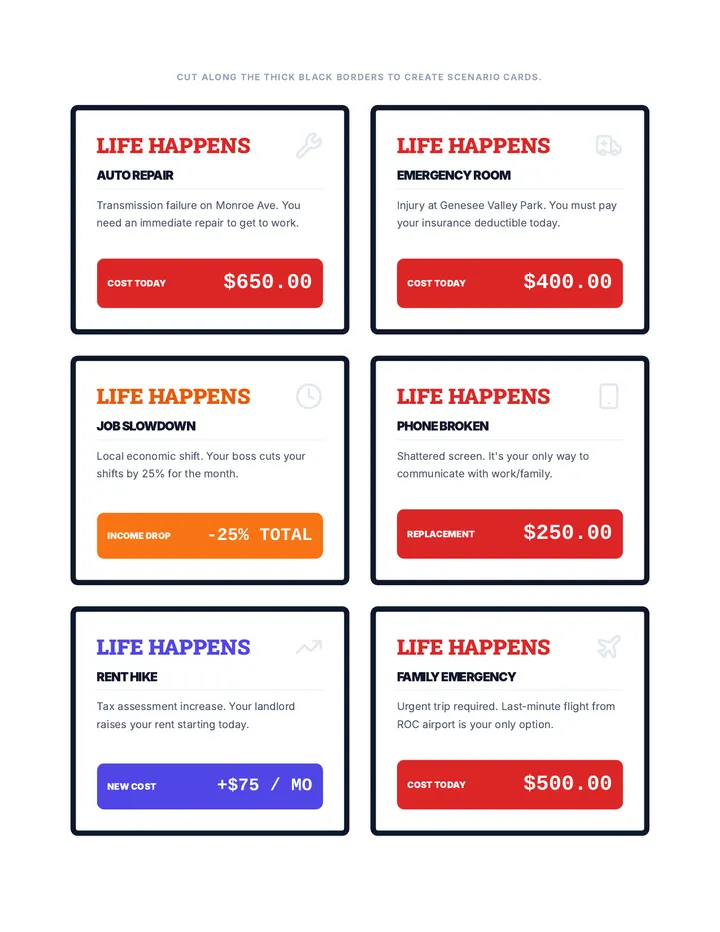
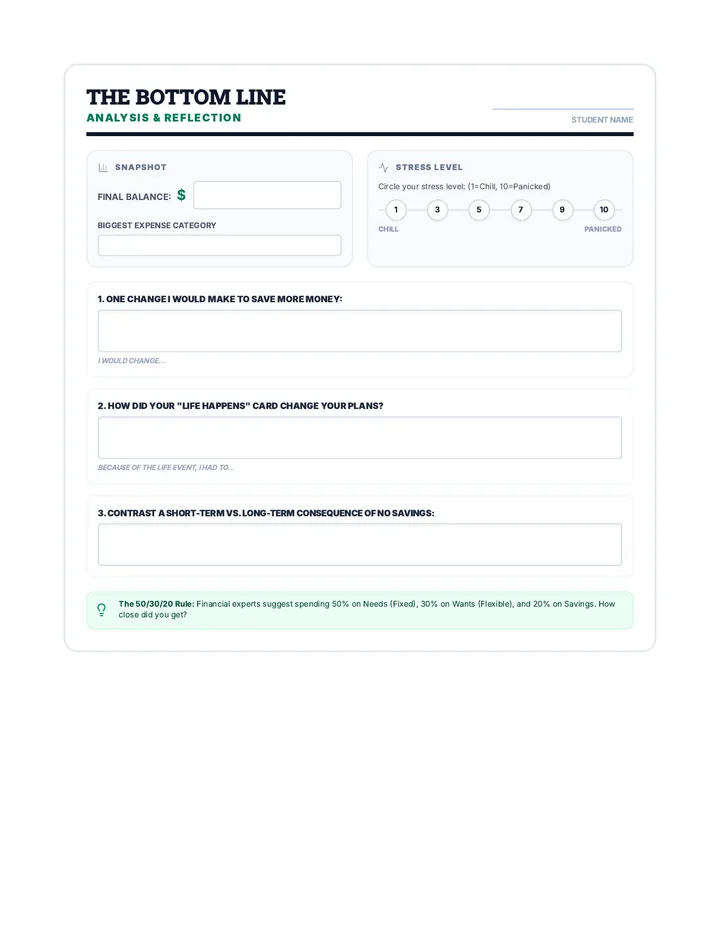
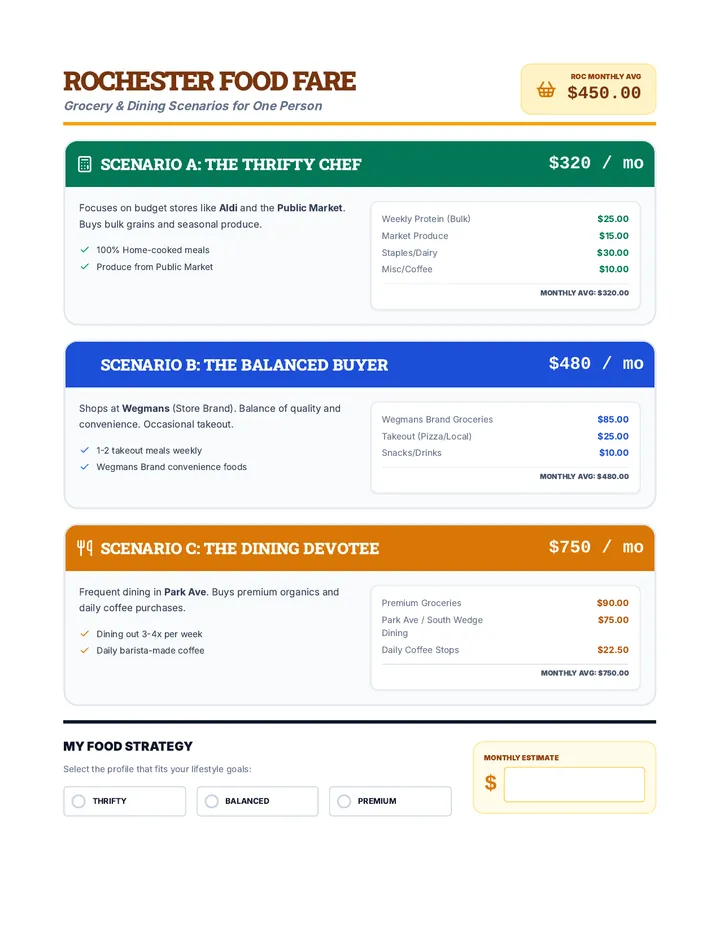
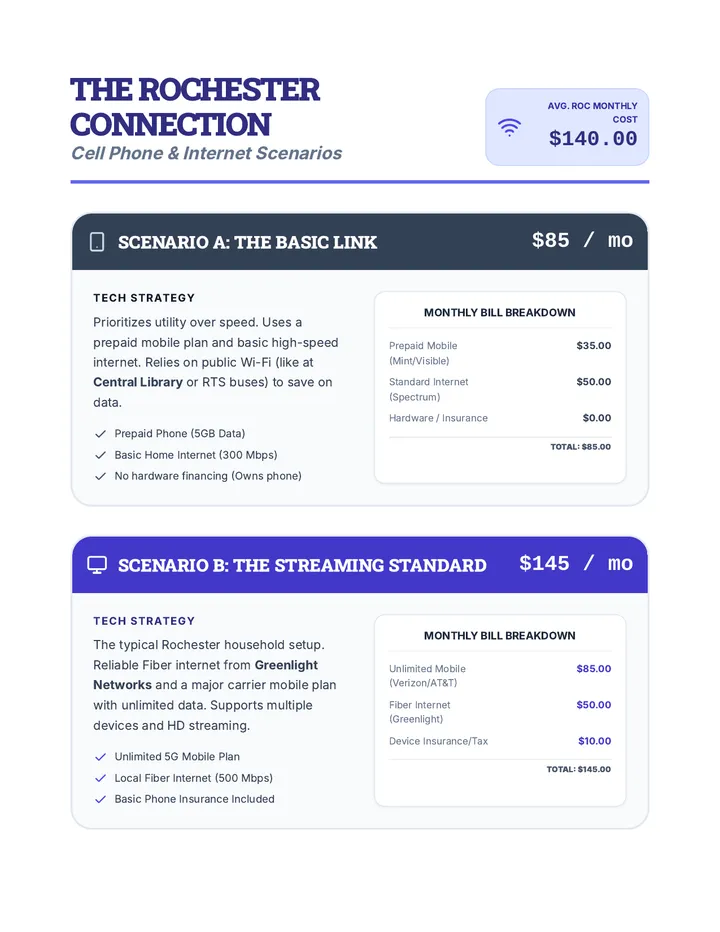
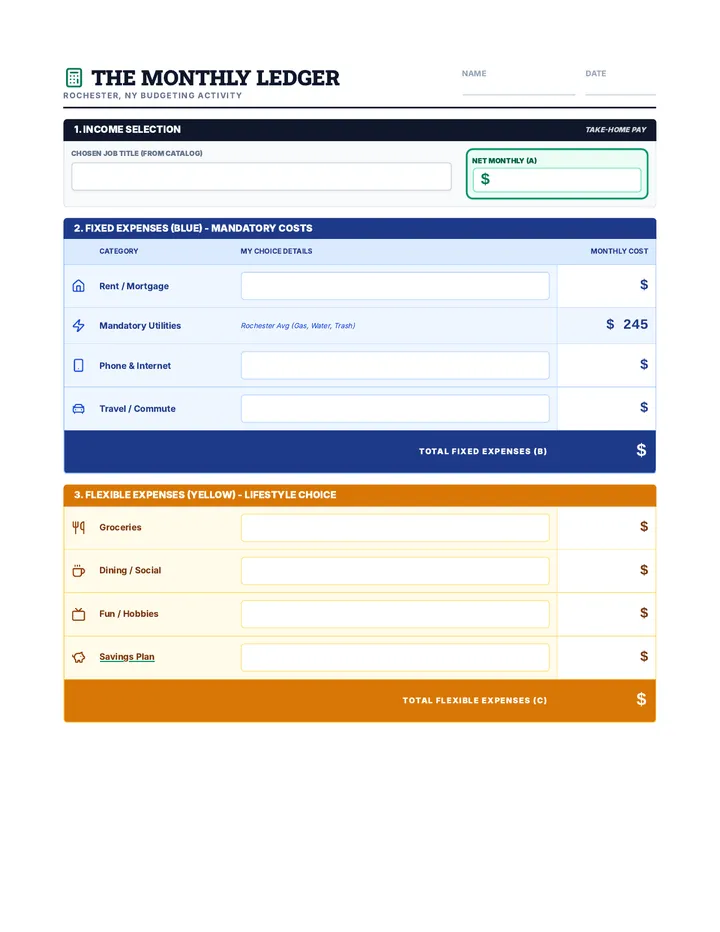
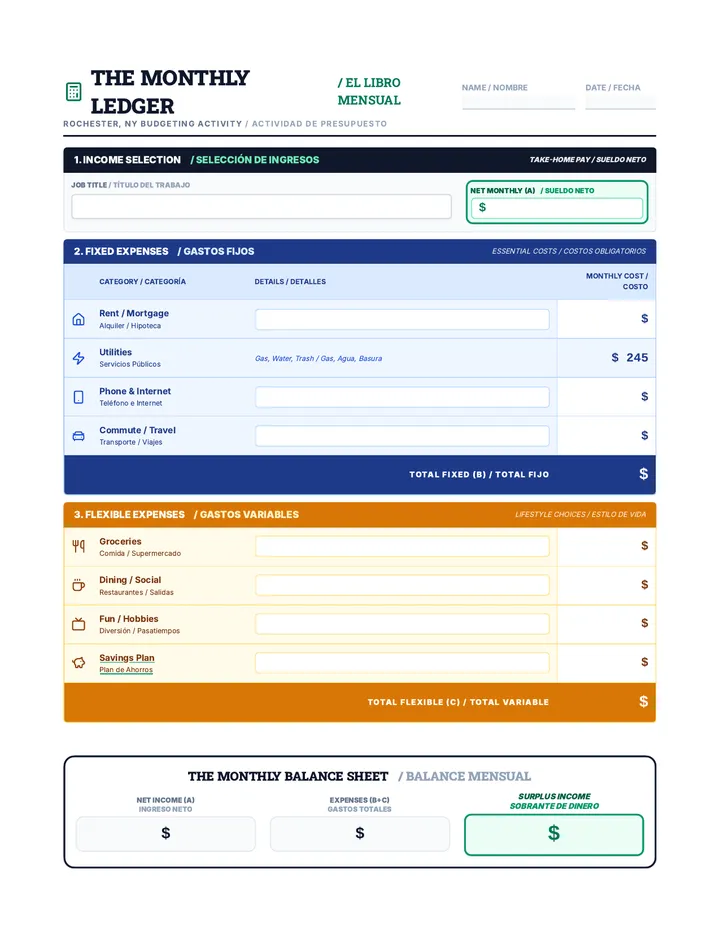
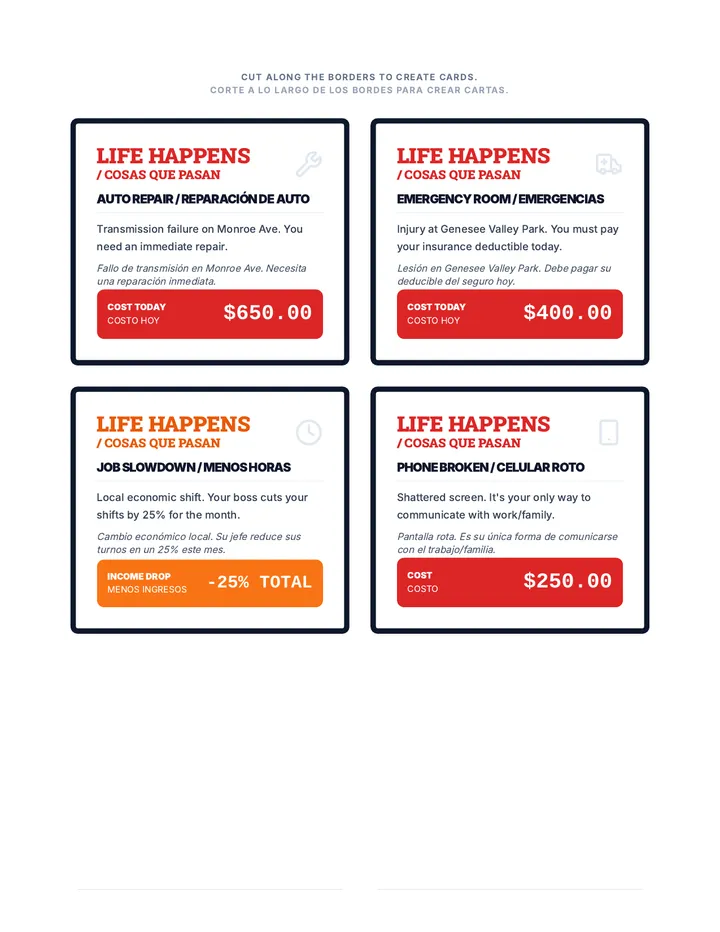
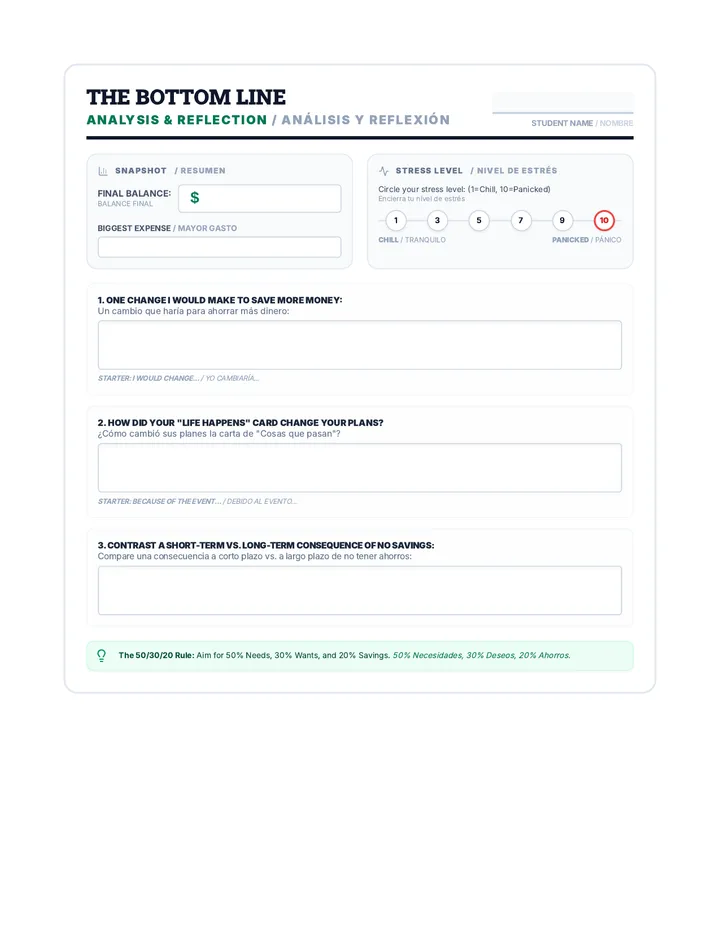
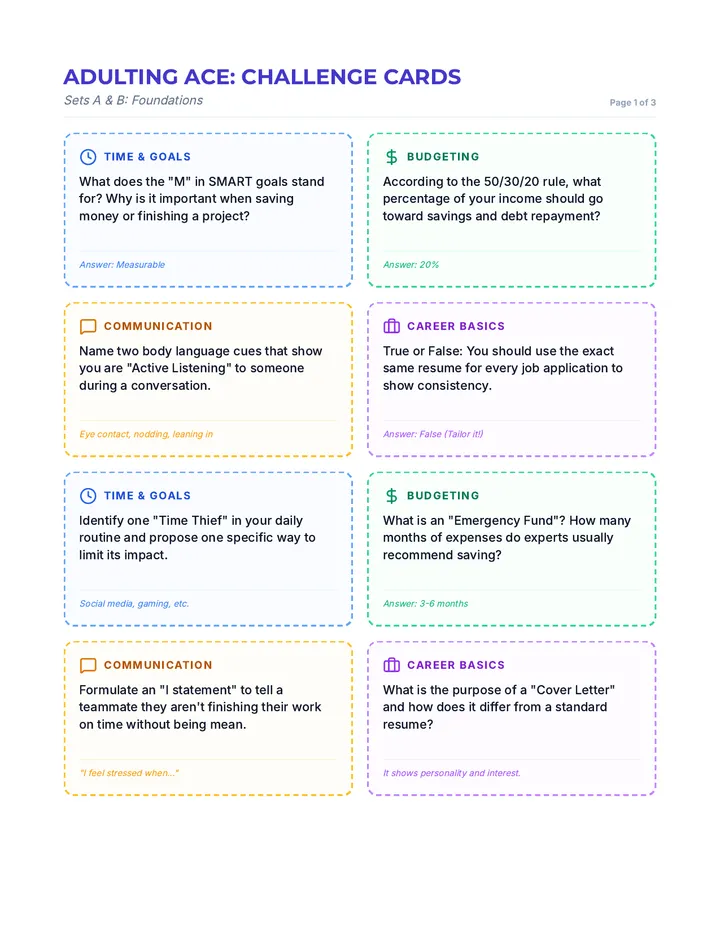
A comprehensive 5-lesson unit designed for 10th-grade students in transition planning. This sequence covers the fundamentals of financial independence, including income analysis, budgeting, banking, and emergency planning through a simulated 'real world' month of living.
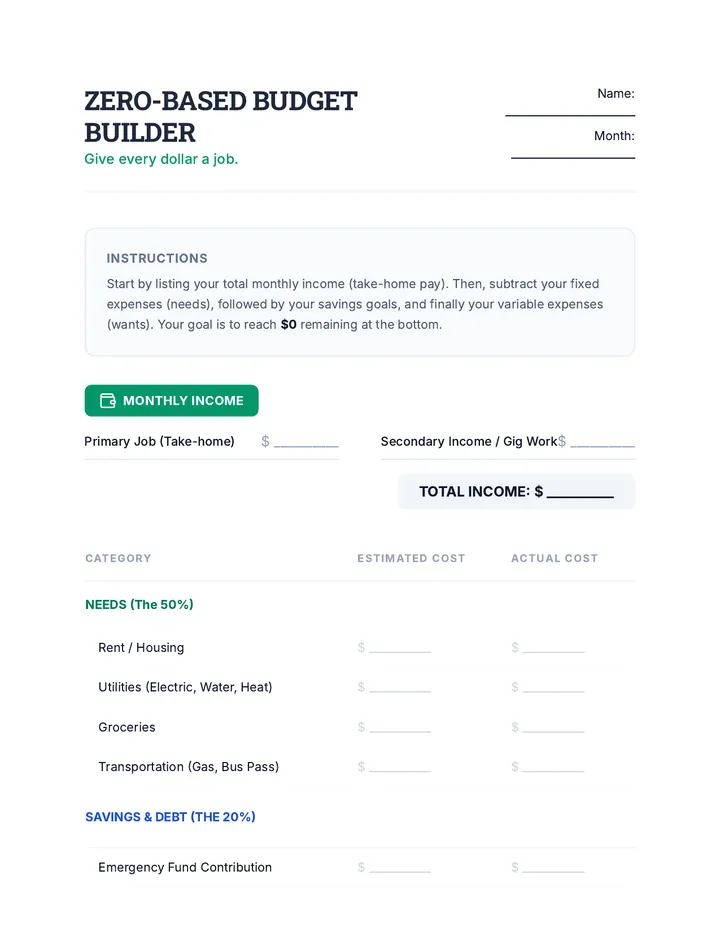
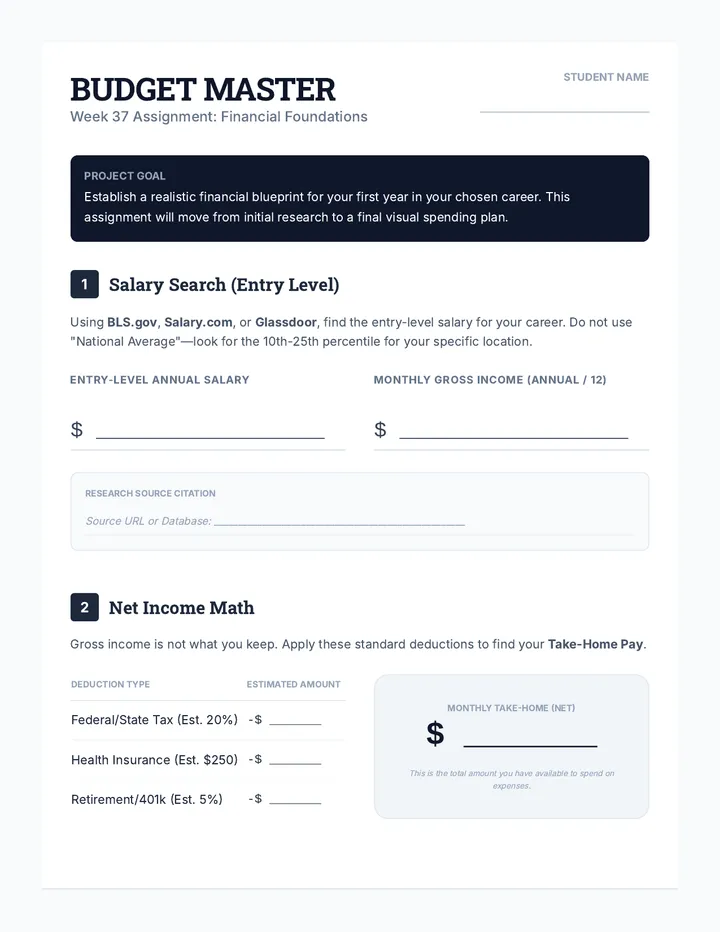
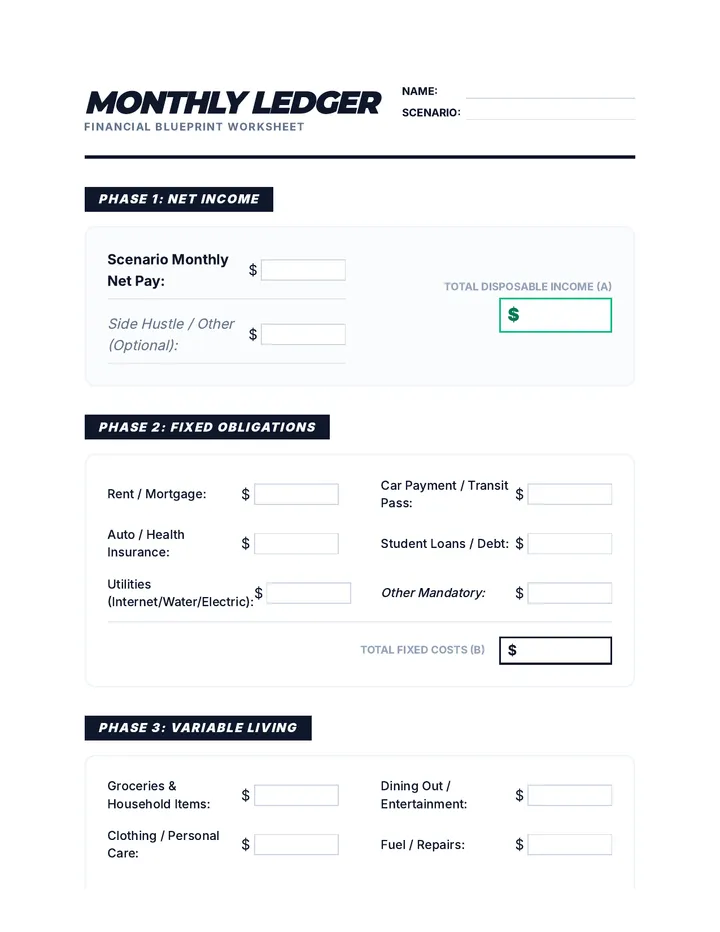
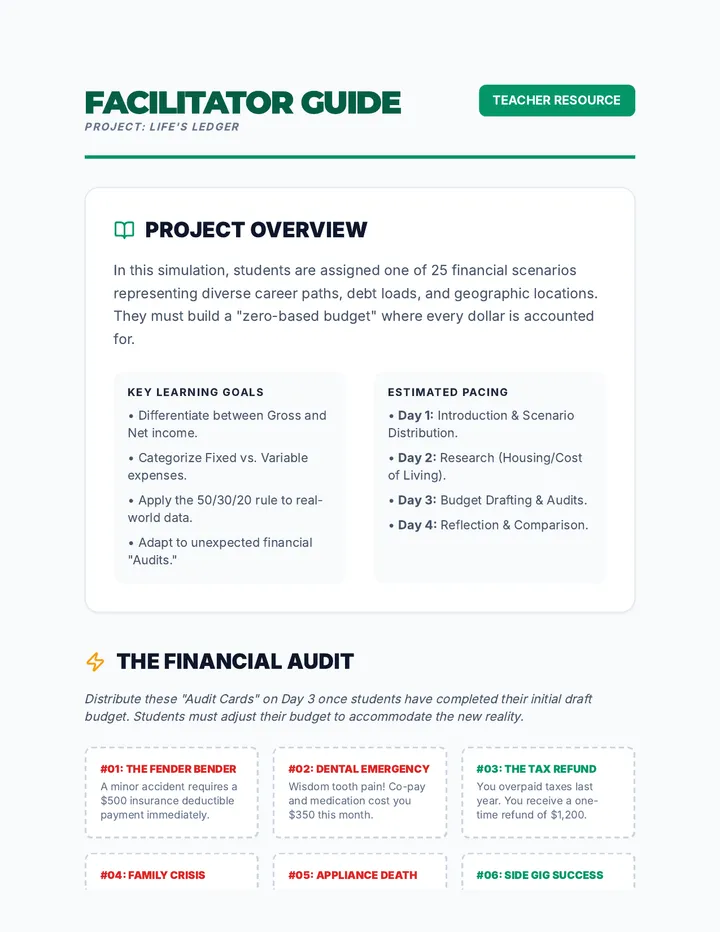
A comprehensive semester-long simulation designed for undergraduate students to master independent living finances. Students progress from understanding income and taxes to building zero-based budgets, navigating digital banking, and managing unexpected financial emergencies.
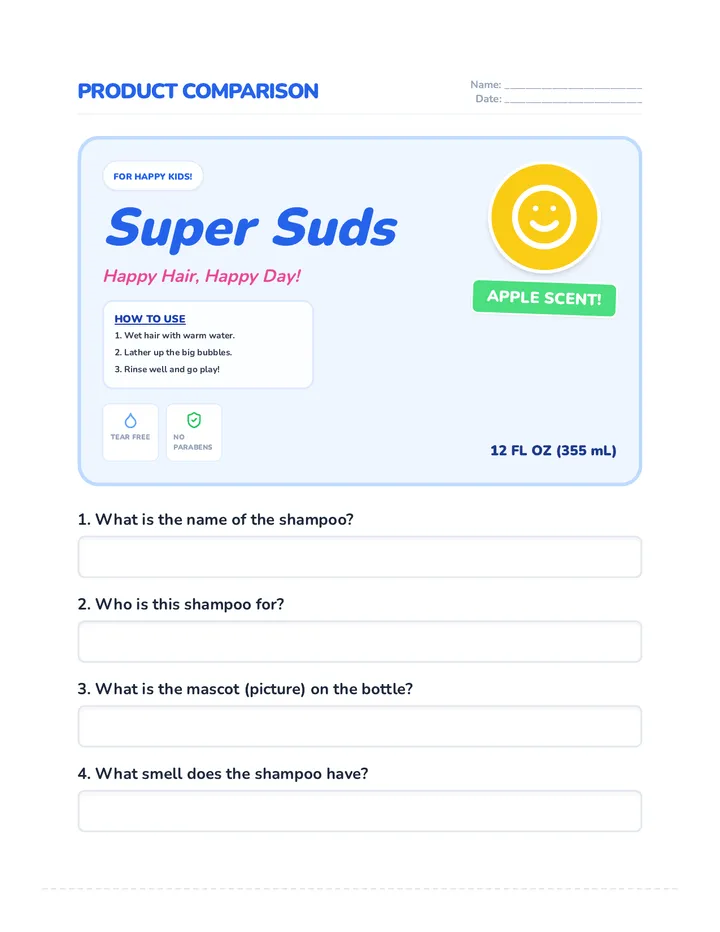
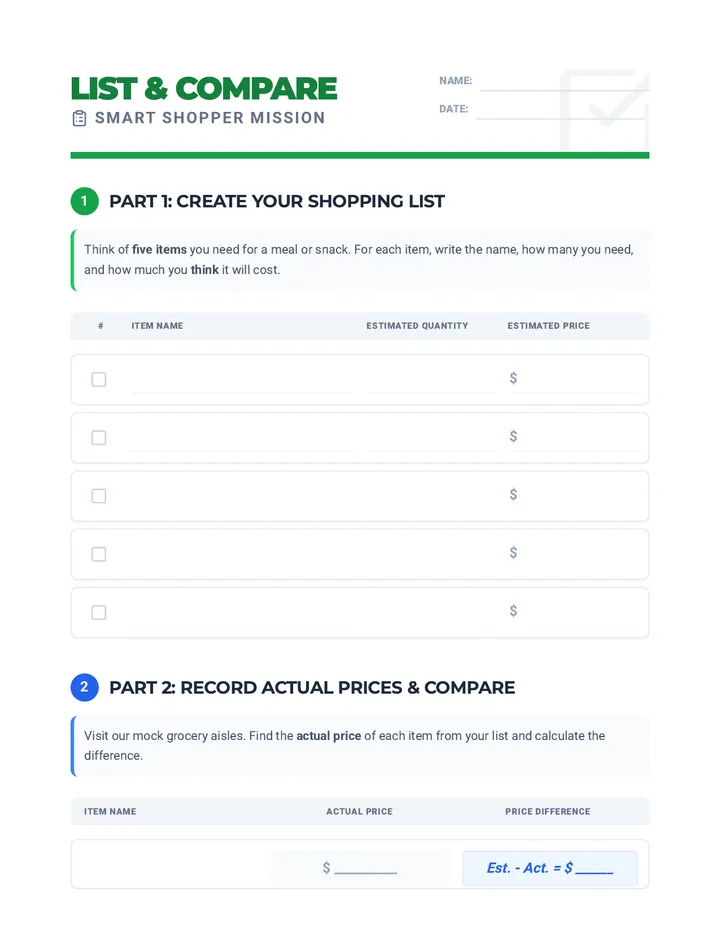
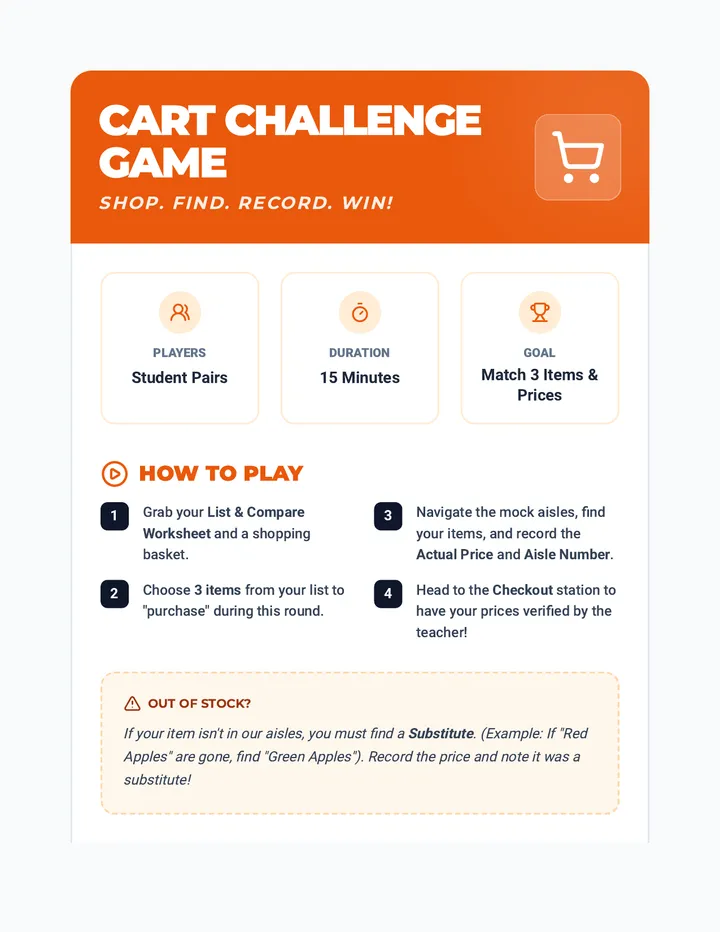
A Kindergarten sequence focused on teaching students how to compare attributes, prices, and quality to make smart financial decisions. Through hands-on 'lab' activities and simulations, students learn to justify their spending choices based on value rather than just impulse.
A 5-lesson unit for 1st graders focused on critical consumer skills, covering price comparison, quality assessment, social influences, and advertising awareness, culminating in a classroom market simulation.
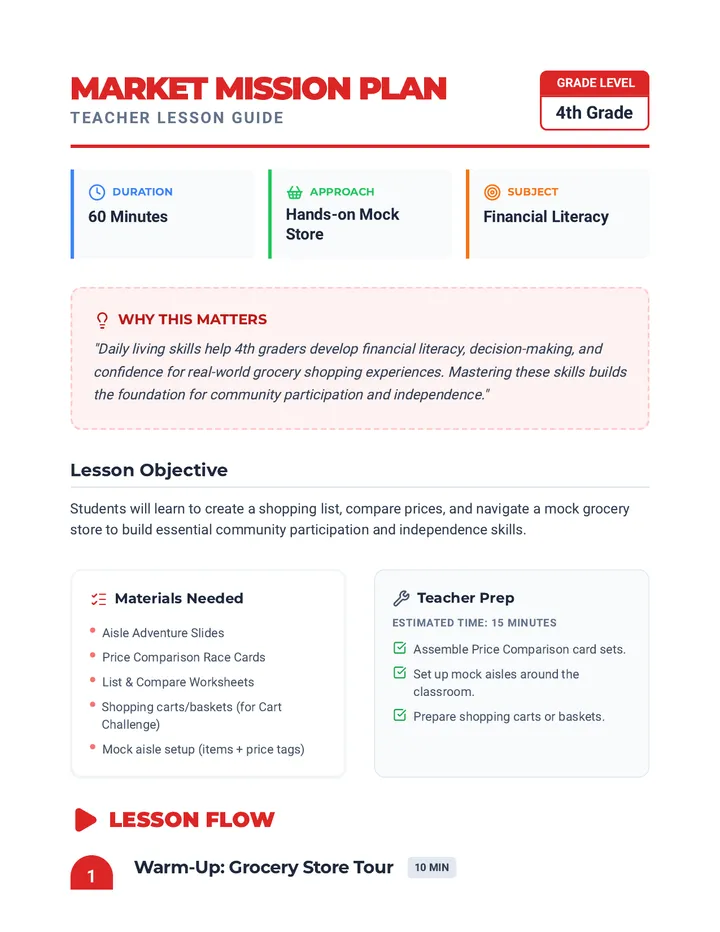
This sequence teaches 3rd-grade students how to make smart consumer choices by distinguishing needs from wants, comparing prices and quality, and identifying potential scams. Through hands-on simulations and critical thinking exercises, students develop the skills to manage a budget effectively and protect themselves in a digital marketplace.
A comprehensive 5-lesson unit that transforms 4th-grade students into critical consumers. Students learn to distinguish needs from wants, deconstruct advertising tricks, use math to find the best value, spot marketplace scams, and create a justified spending plan.
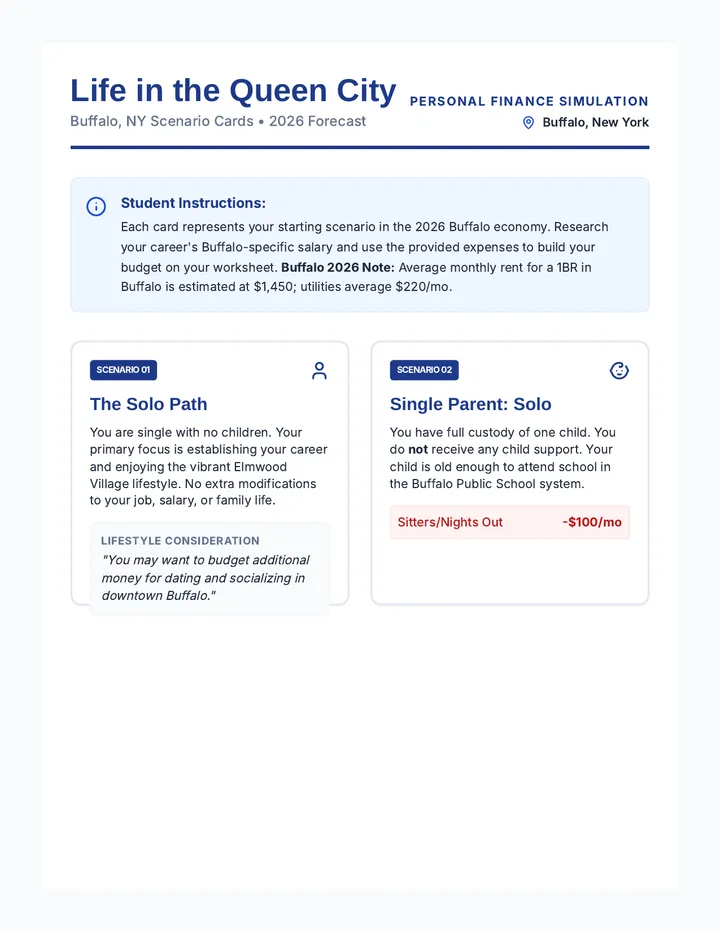
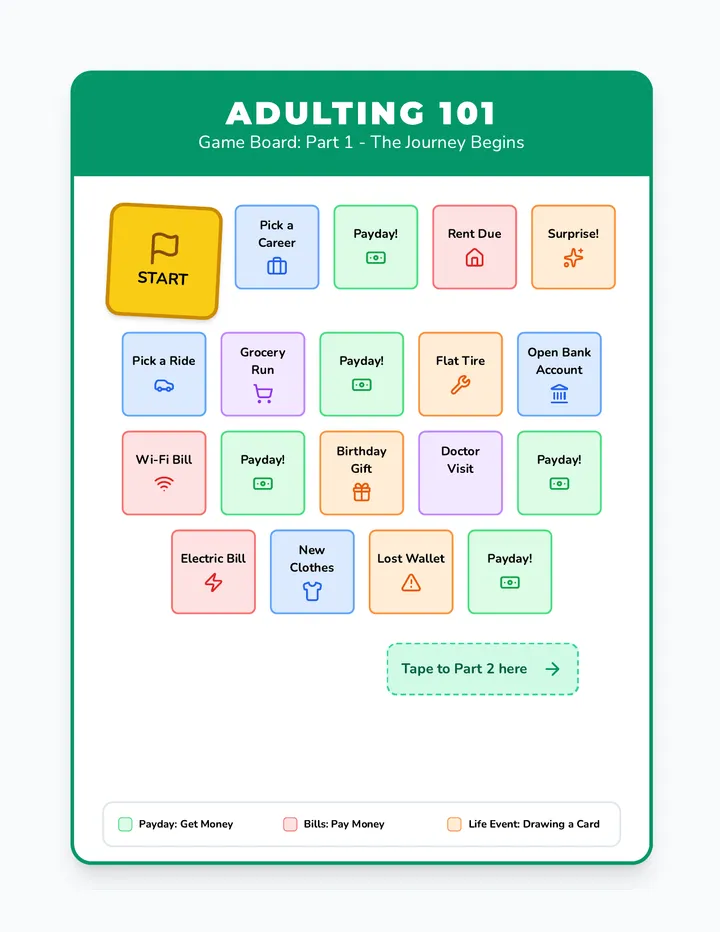
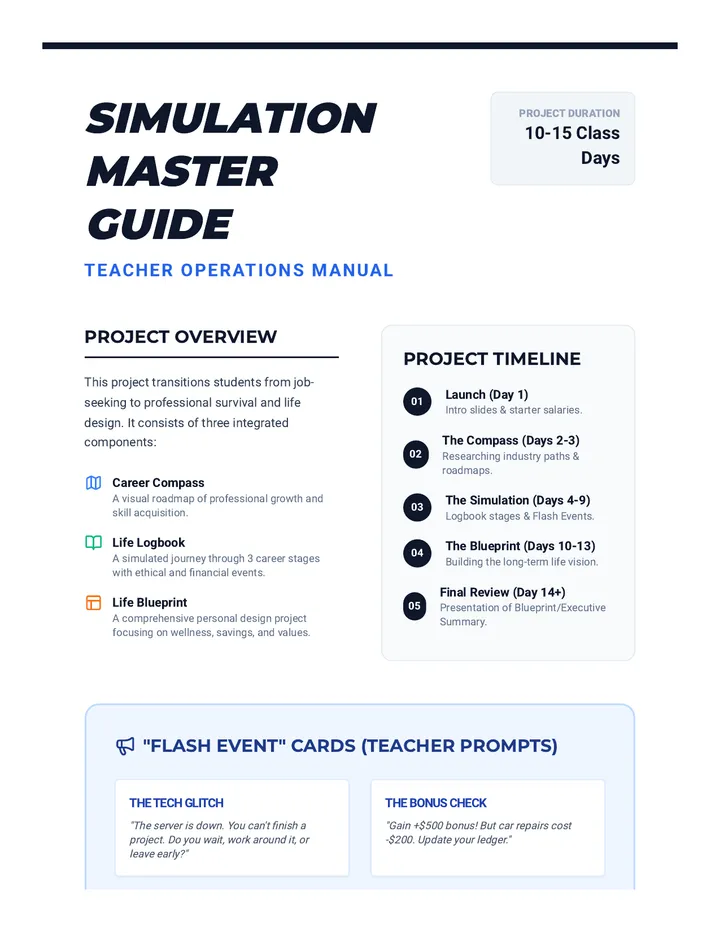
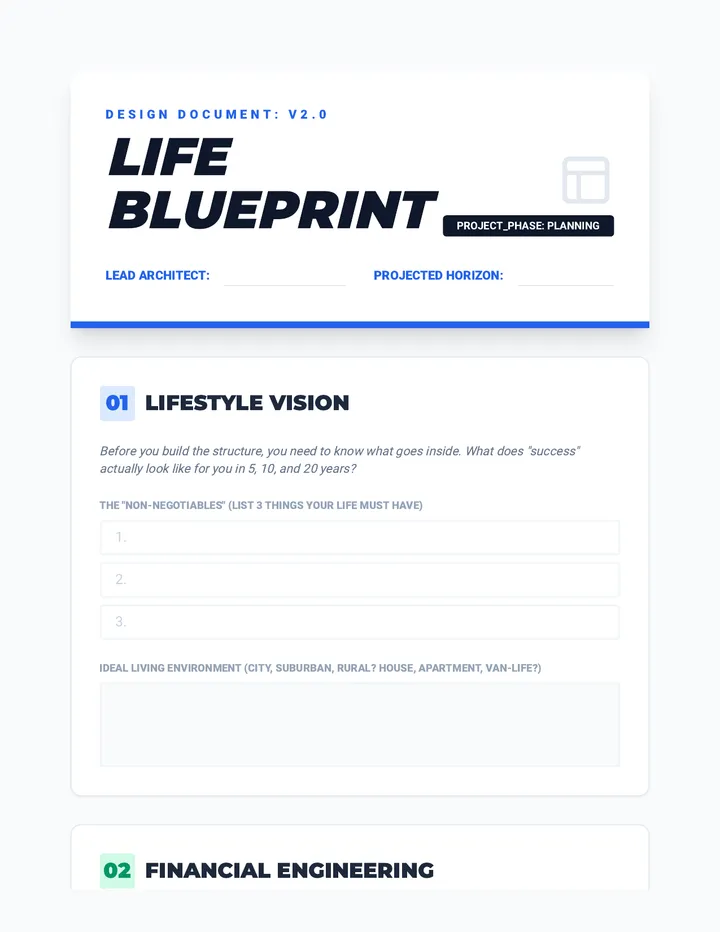
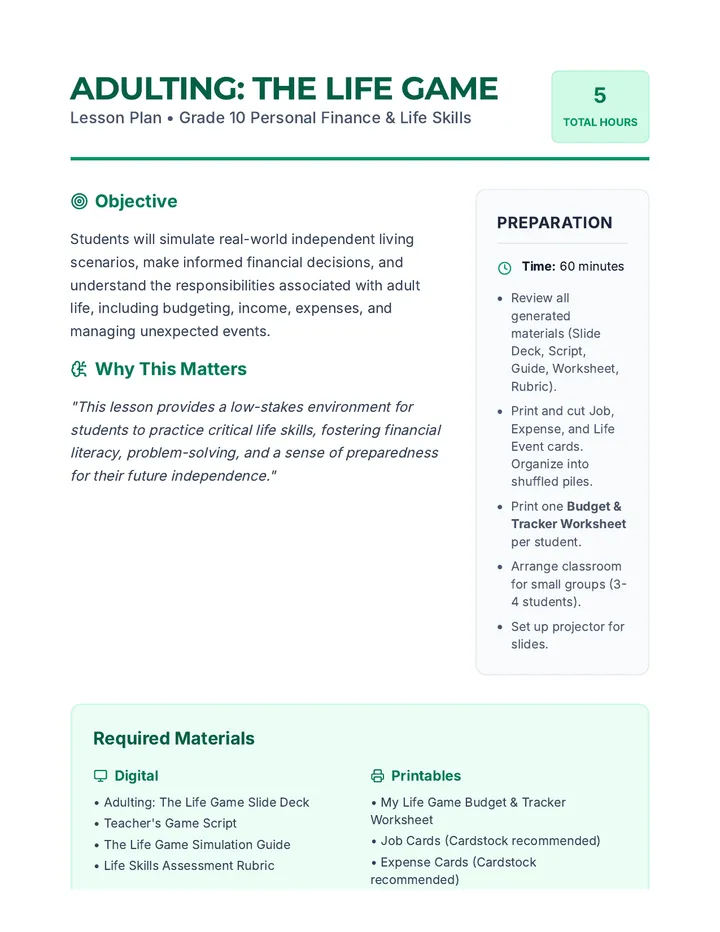
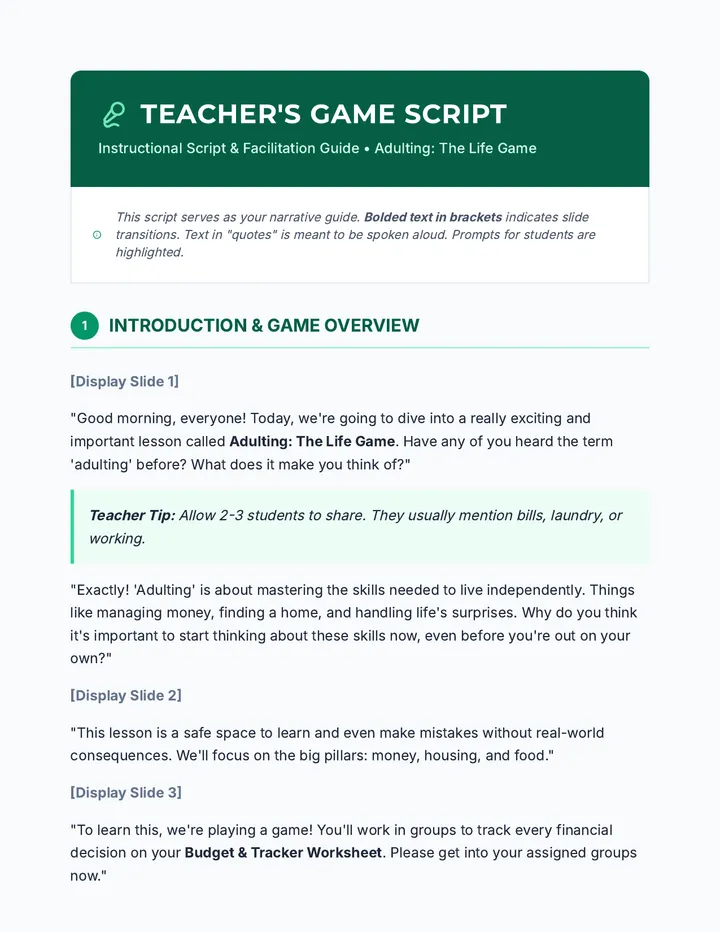
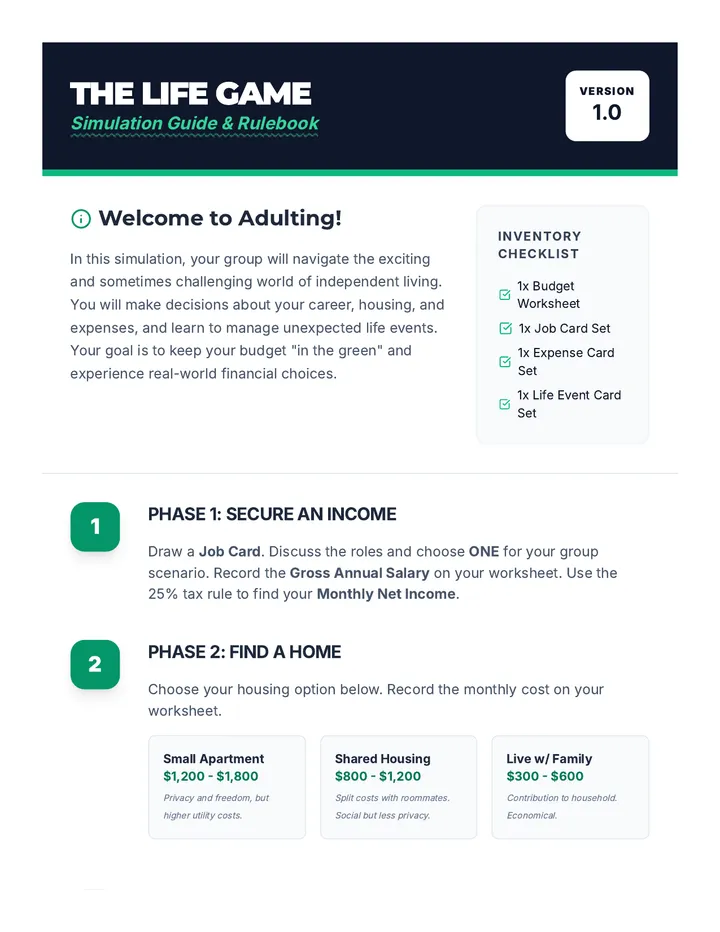
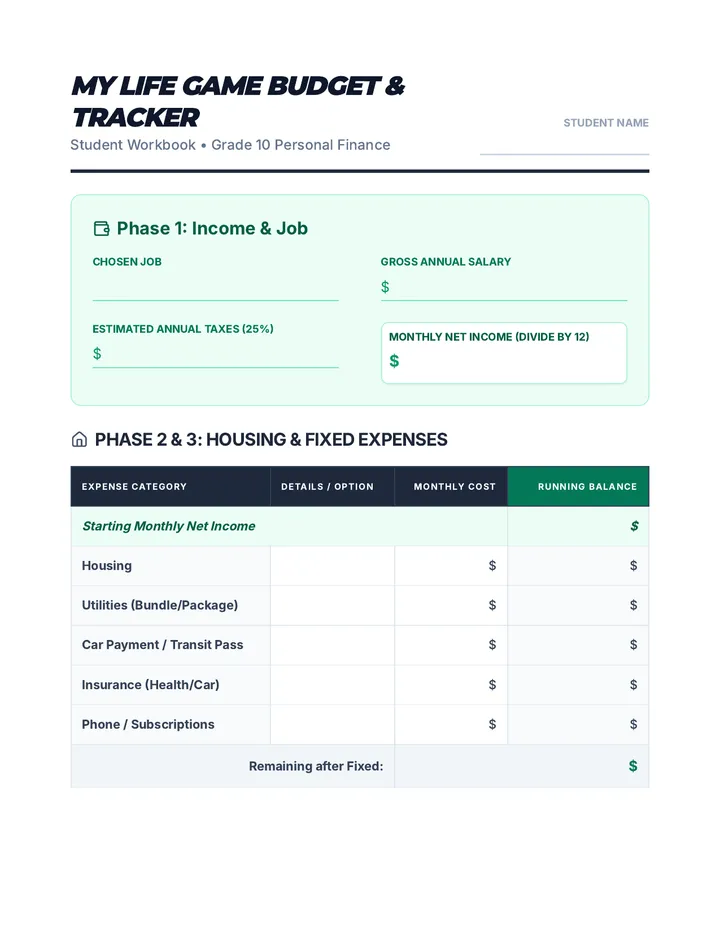
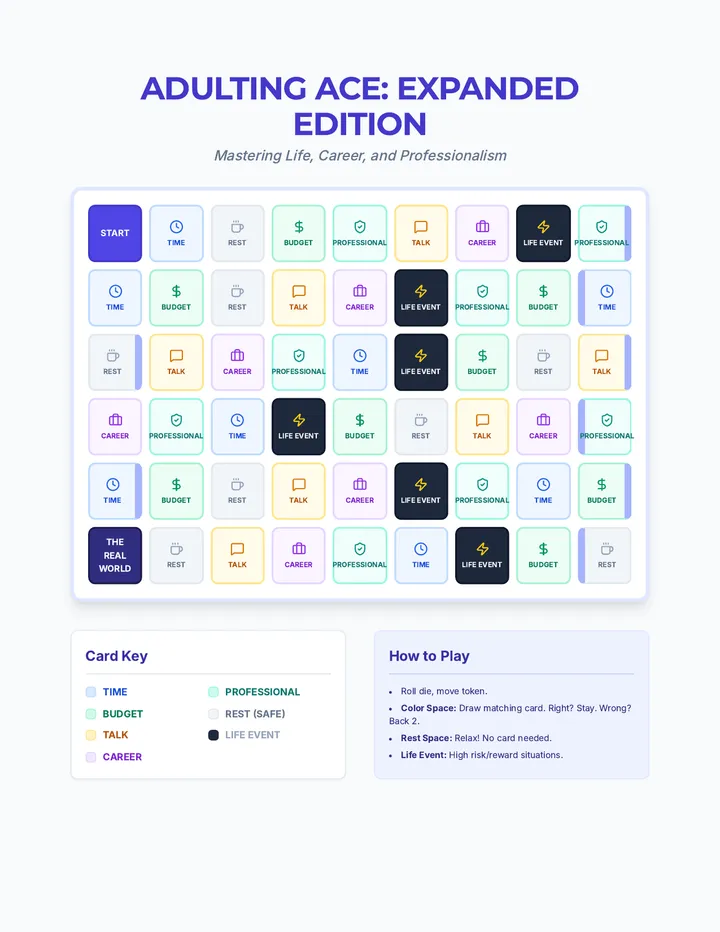
This simulation-based sequence helps students develop the financial and logistical skills necessary for independent living. Students move through a 'Real World' simulation where they must secure housing, manage a monthly budget, and plan for daily needs.
This sequence guides undergraduate students through the essential skills of nutritional planning, grocery shopping, kitchen safety, and basic meal preparation. It emphasizes executive functioning, budget management, and health-conscious decision-making for independent living.
A comprehensive 12th-grade transition planning sequence focused on independent living skills. Students master the mechanics of personal finance, from interpreting pay stubs and categorizing expenses to managing bank accounts and responding to financial emergencies.
A comprehensive sequence for 11th-grade students exploring the mechanics of payroll, including gross vs. net income, tax withholdings, FICA contributions, and W-4 completion. Students develop the financial literacy skills needed to audit their own paystubs and understand the gap between earnings and take-home pay.
This sequence immerses 10th-grade students in the mechanics of workplace compensation, tracking the journey from gross salary to take-home pay. Students master tax form completion, calculate mandatory and voluntary deductions, and learn to audit paystubs for accuracy, equipping them with essential technical financial literacy for their future careers.
A comprehensive 5-lesson unit for 6th graders that demystifies the annual tax filing process through hands-on simulations, document analysis, and gamified scenarios. Students move from understanding the tax calendar to filing a simplified 1040 form and analyzing tax outcomes.
A comprehensive unit for 6th-grade students to understand the three primary types of taxes in the US: income, sales, and property tax. Students explore how these taxes fund community services and how they are calculated, concluding with a project-based infographic.
This sequence introduces 6th-grade students to the practical reality of taxes and payroll withholdings. Students learn to distinguish between gross and net pay, decode pay stubs, understand FICA contributions, and calculate proportional taxes to better understand their take-home pay.
A comprehensive guide for 9th-grade students to master the basics of tax filing. Students progress from identifying key tax documents to completing a full 1040 simulation, understanding deductions, and learning filing logistics.
This sequence introduces 9th-grade students to the tax implications of the gig economy. It covers the differences between W-2 and 1099 work, the self-employment tax rate, expense tracking, and quarterly estimated payments, culminating in a tax strategy project.