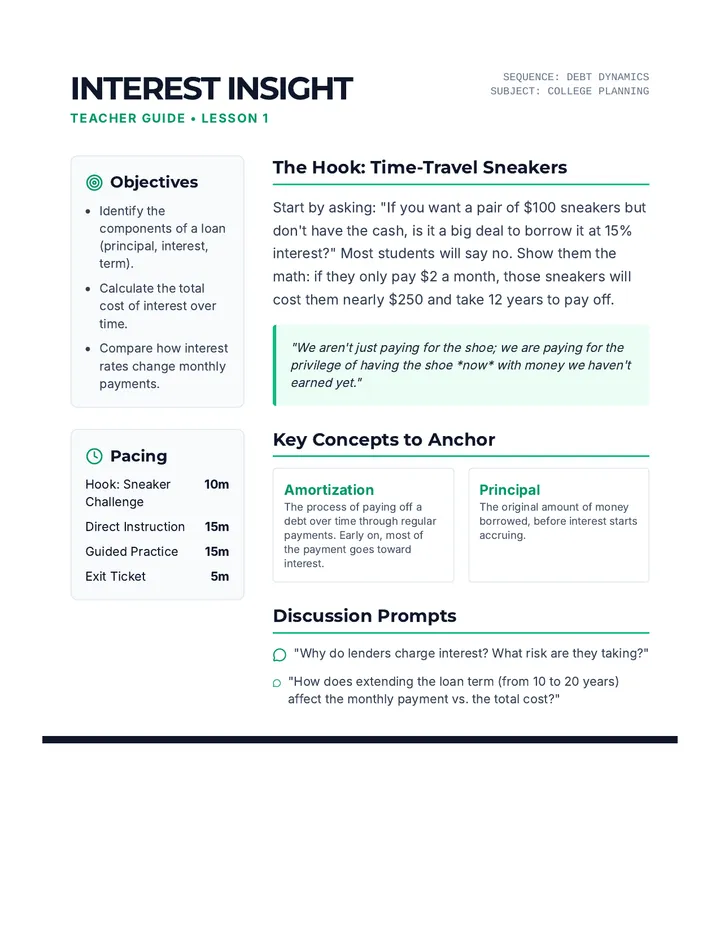
Financial analysis of high-cost acquisitions including vehicles, real estate, and higher education. Addresses interest rate calculations, loan terms, credit impacts, and total cost of ownership.
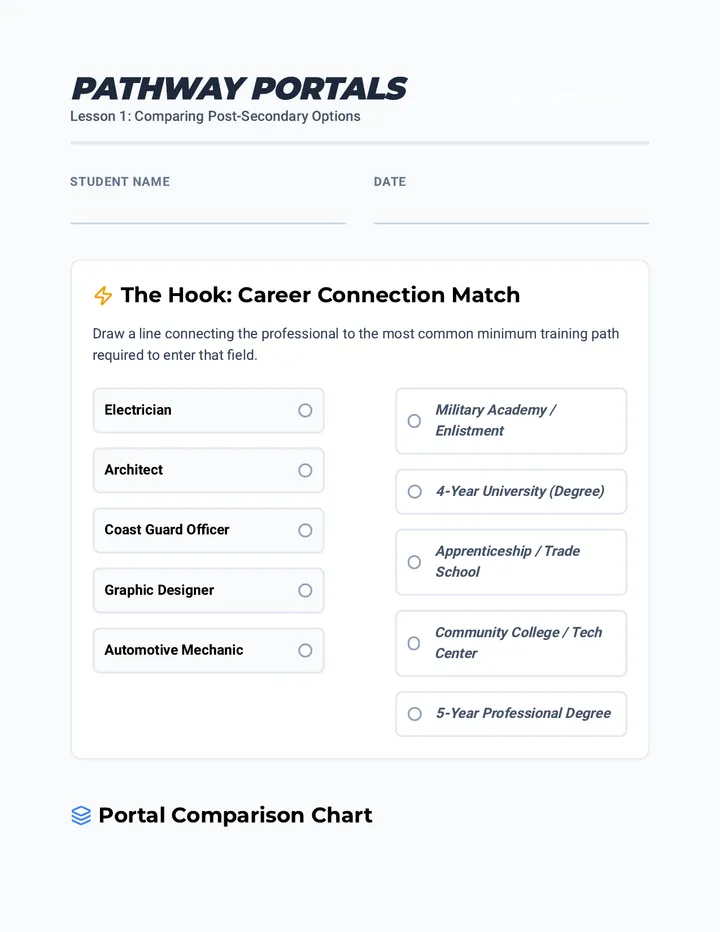
Students explore diverse post-secondary options, comparing vocational training, military service, apprenticeships, and college degrees through the lens of 'Return on Investment' (ROI). The sequence guides students from understanding basic credentials to mapping out a strategic backwards plan for their chosen career path.
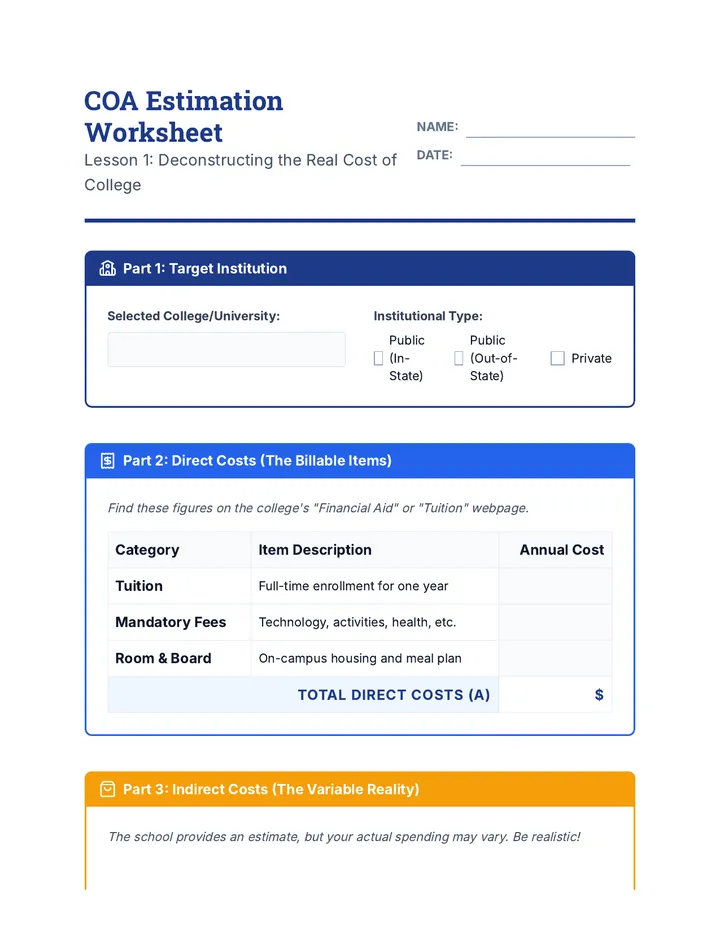
A project-based sequence for 10th-grade students to master the complexities of college funding. Students will learn to deconstruct costs, prioritize non-repayable aid, interpret confusing financial aid letters, and design a sustainable borrowing strategy to minimize long-term debt.
A comprehensive 7th-grade career exploration unit that guides students through post-secondary education options, labor market trends, financial budgeting, and backward-design career mapping. Students move from broad understanding to specific, actionable life planning.
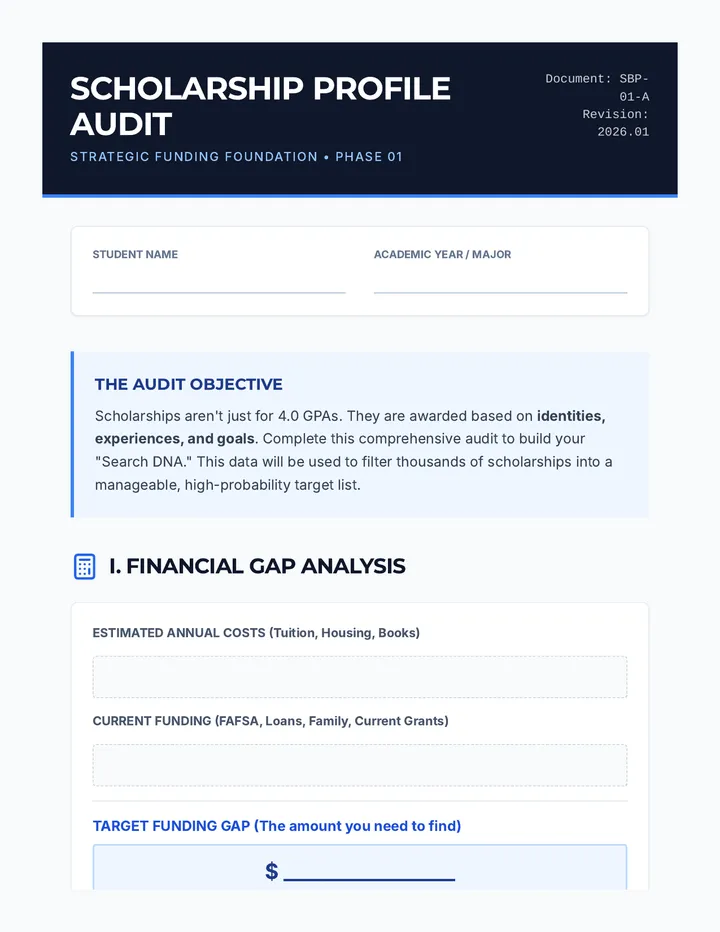
A comprehensive guide for undergraduate students to systematically search for, evaluate, and manage scholarship applications. The sequence covers self-auditing, database navigation, ROI analysis, project management, and donor mission alignment.
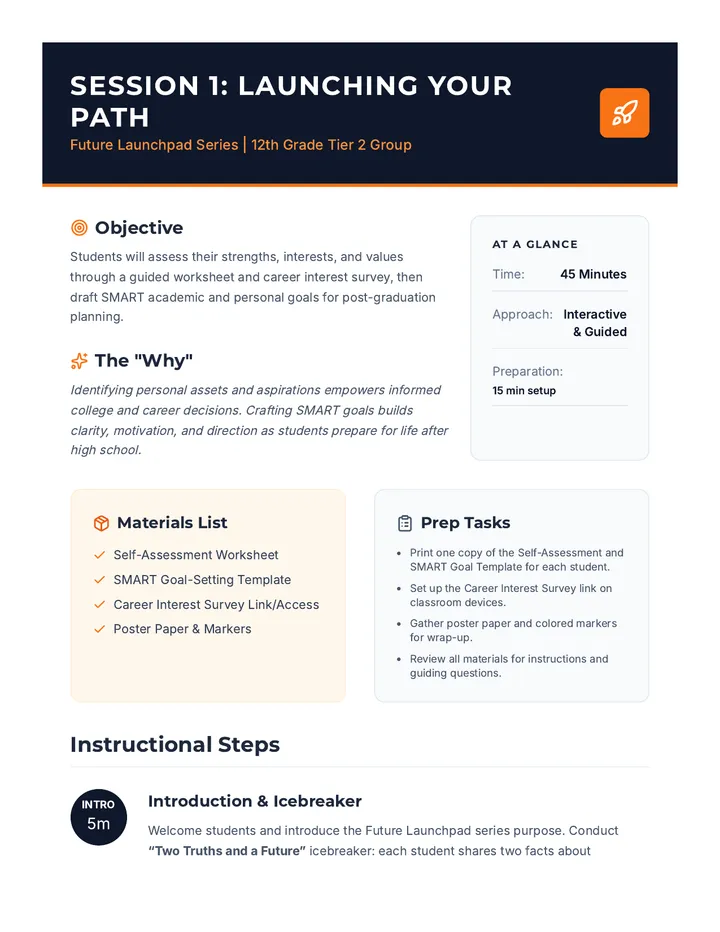
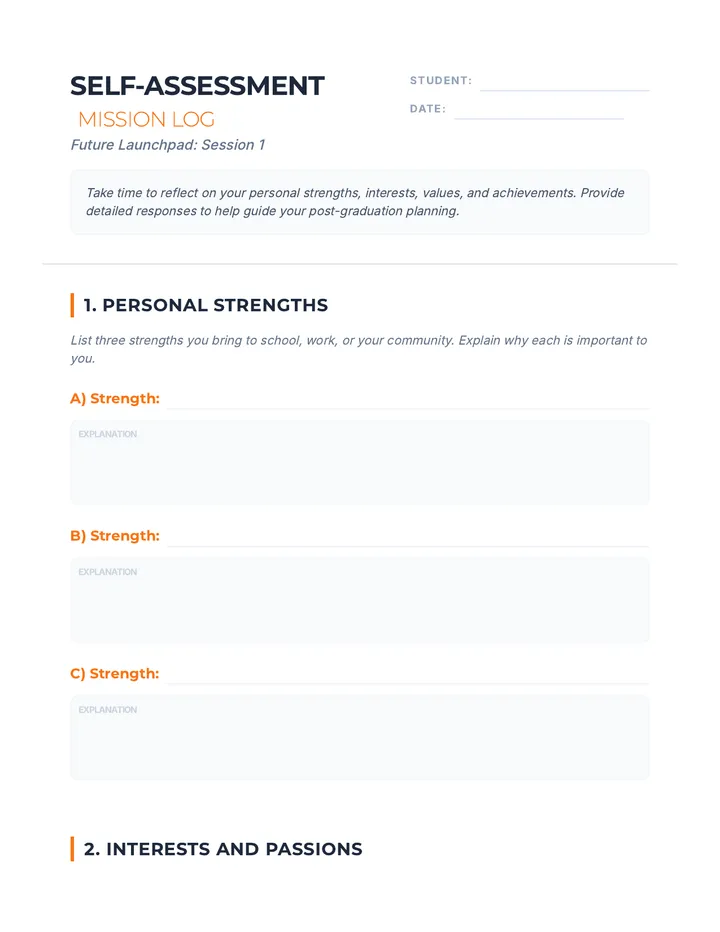
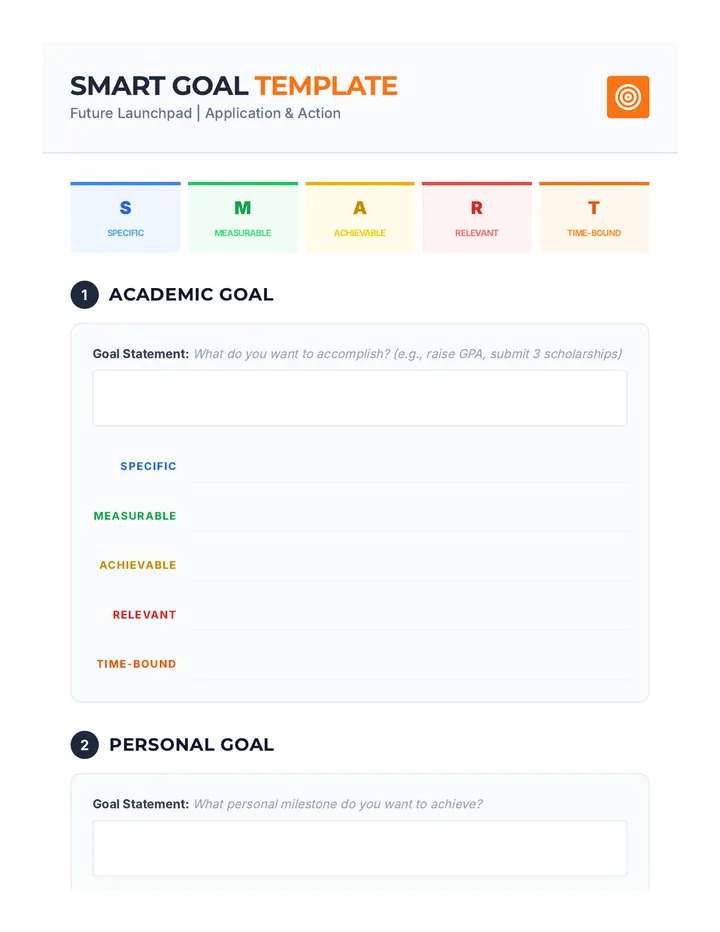
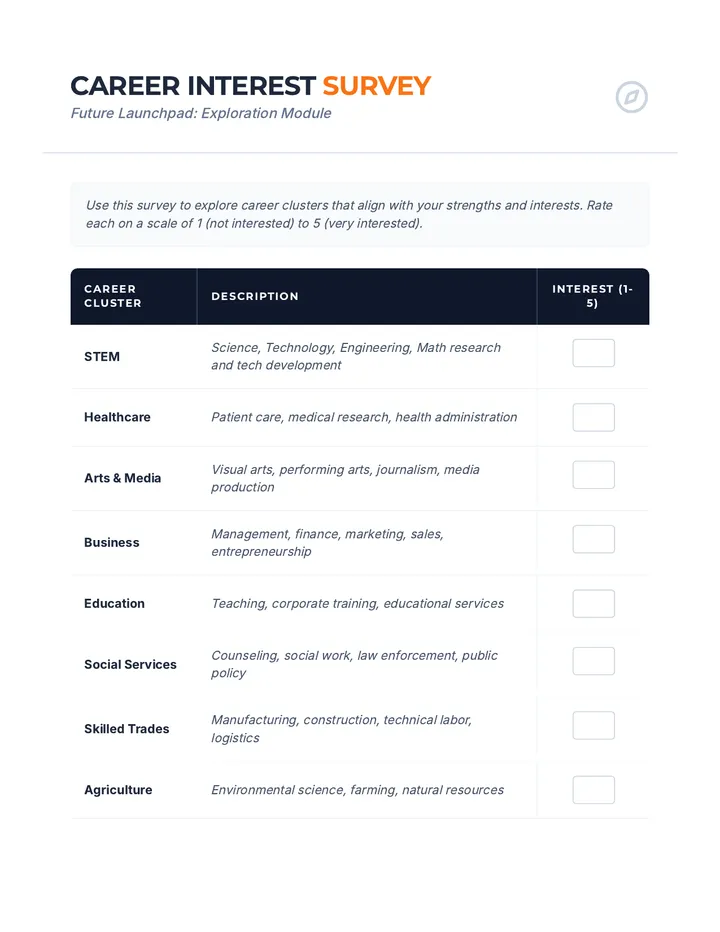
A 6-session Tier 2 group series for 12th-grade students to explore college and career pathways, develop application skills, and create a personalized post-graduation plan.
This sequence introduces 6th-grade students to the variety of post-secondary pathways available after high school. It covers universities, community colleges, trade schools, apprenticeships, and military service, emphasizing that different careers require different training routes and focusing on financial awareness and goal setting.
This sequence explores the long-term financial implications of student loans, focusing on repayment plans, budgeting, and return on investment (ROI). Students transition from understanding borrowing mechanics to simulating the real-world impact of debt on lifestyle and career choices.
Students analyze the financial viability of post-secondary education by calculating total costs, exploring financial aid, and projecting return on investment based on career earnings. The sequence culminates in a strategic financial plan for a chosen educational path.
This project-based sequence guides graduate students through FAFSA completion by framing it as a strategic business decision. Students will audit institutional costs, build realistic budgets, calculate precise borrowing needs, and learn to navigate professional judgment appeals to minimize long-term debt.
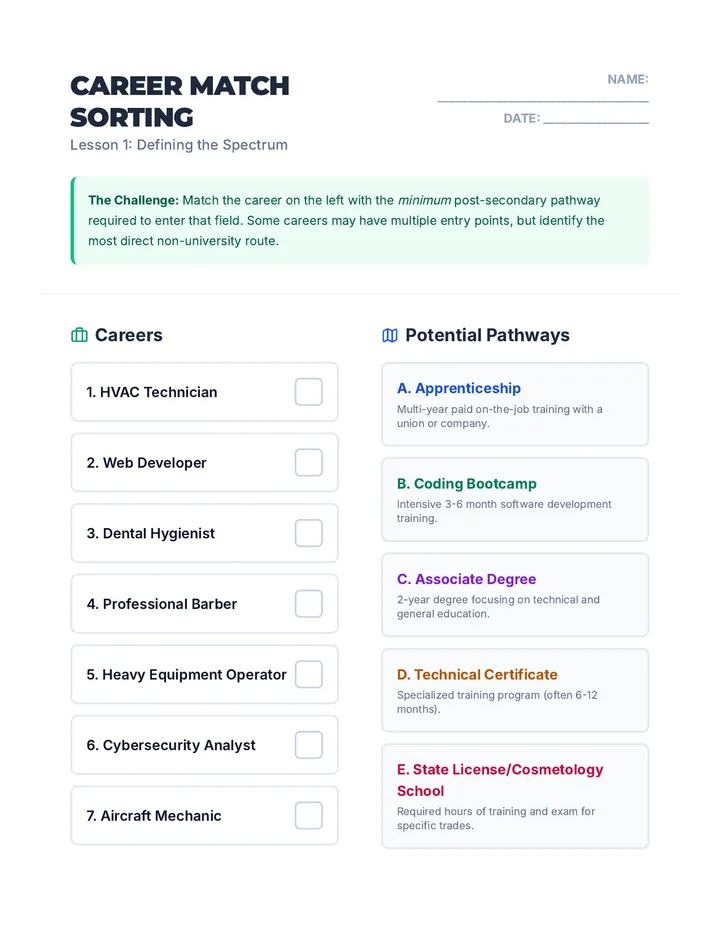
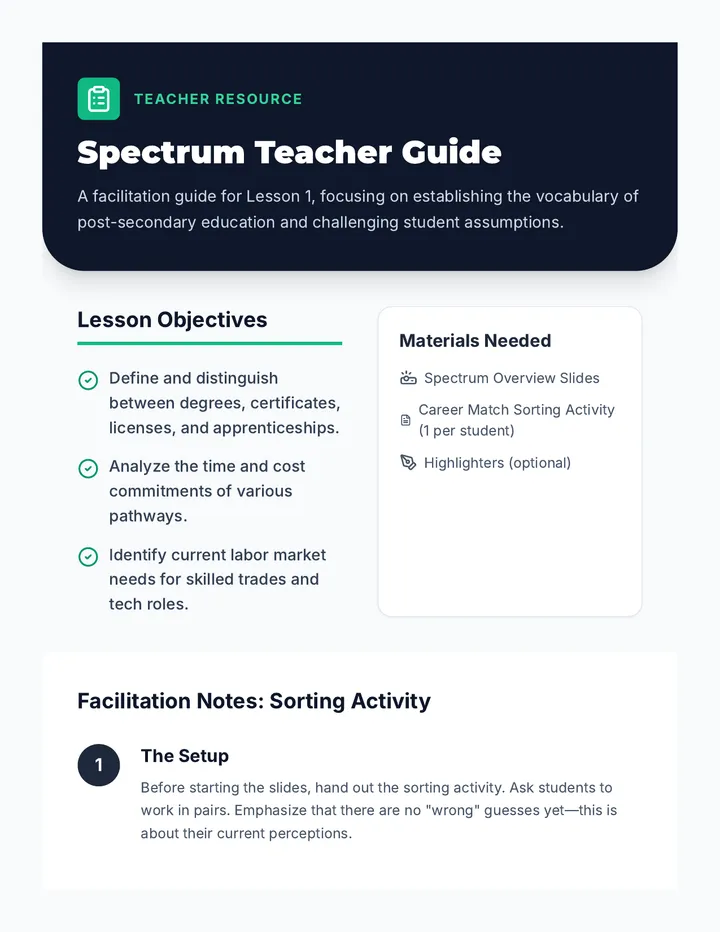
This sequence explores post-secondary education options beyond the traditional four-year degree, including trade schools, apprenticeships, coding bootcamps, and certificate programs. Students learn to evaluate the legitimacy of various programs and compare different career pathways based on cost, duration, and outcomes.
A 5-lesson sequence for 9th graders introducing college affordability, financial aid types, and budgeting through gamified activities and real-world comparisons.
This simulation-based sequence helps students develop the financial and logistical skills necessary for independent living. Students move through a 'Real World' simulation where they must secure housing, manage a monthly budget, and plan for daily needs.
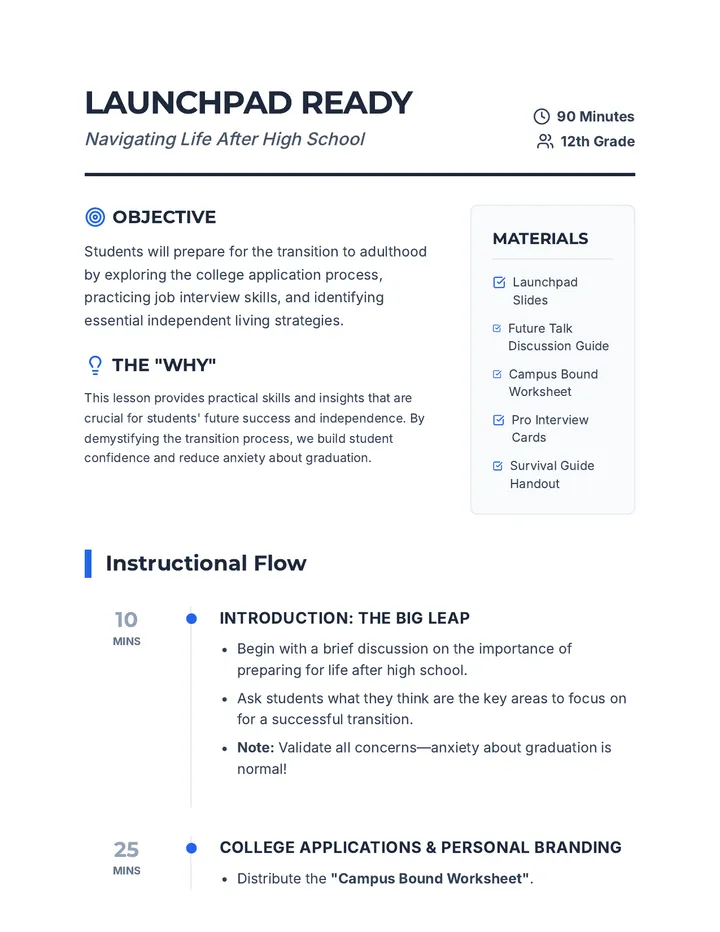
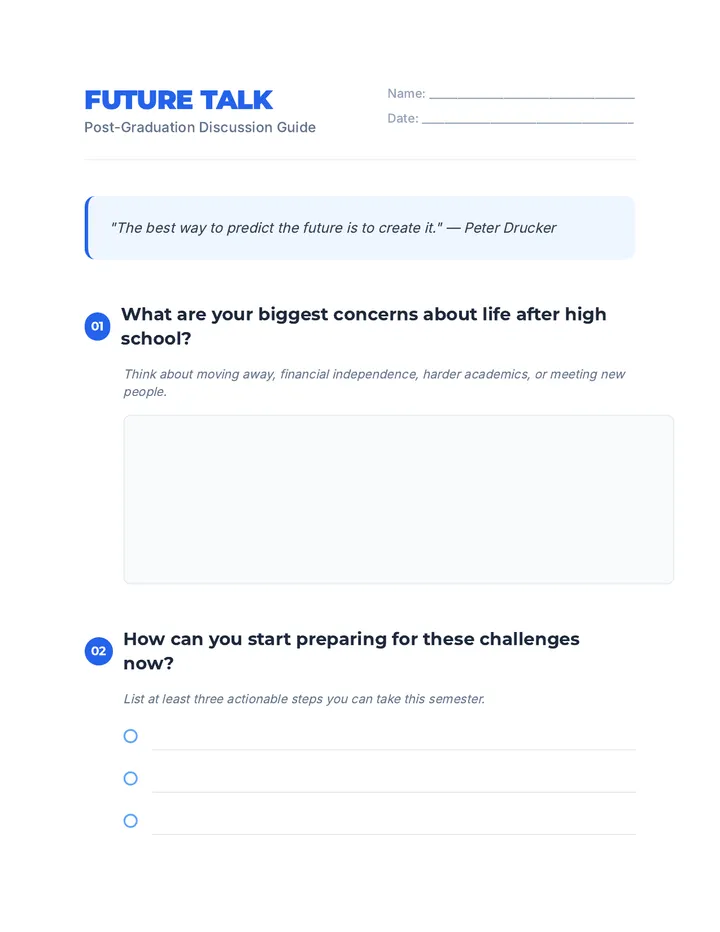
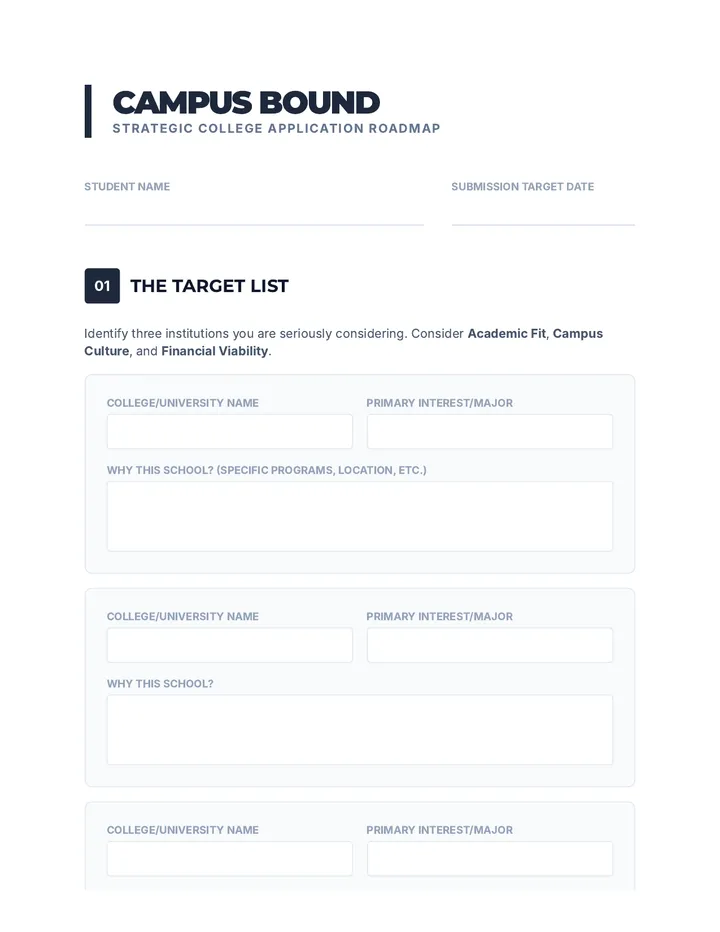
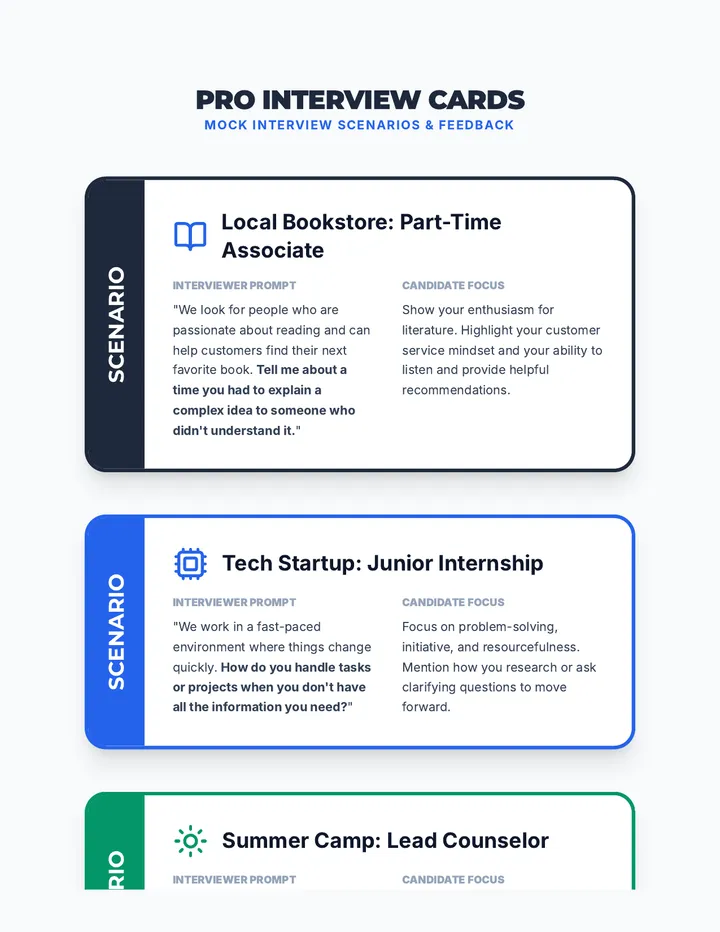
This lesson helps 12th-grade students prepare for the transition to adulthood by exploring college applications, job interviews, and independent living skills. It aims to equip students with the knowledge and confidence to succeed after graduation.
A comprehensive 30-minute lesson for 11th graders to navigate the early steps of college planning, including academic prep, extracurriculars, and financial aid.
A comprehensive 40-minute small-group lesson for high school juniors and seniors to navigate the post-secondary enrollment process, covering research, applications, and financial aid.
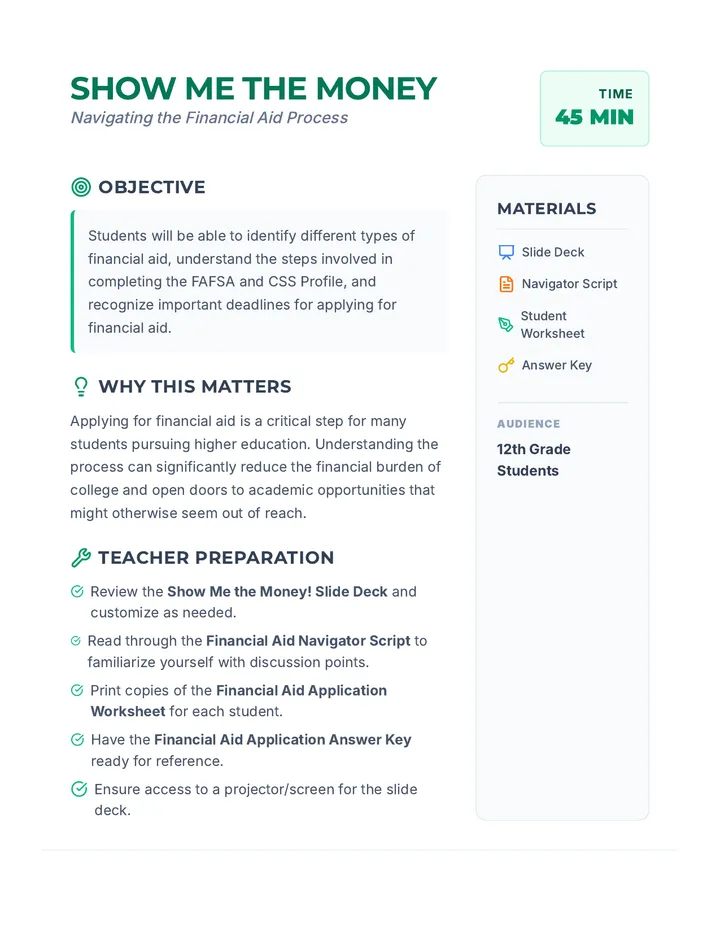
This interactive lesson guides 12th-grade students through the complexities of the financial aid process, covering grants, scholarships, loans, and work-study, while providing practical steps for completing the FAFSA and CSS Profile.
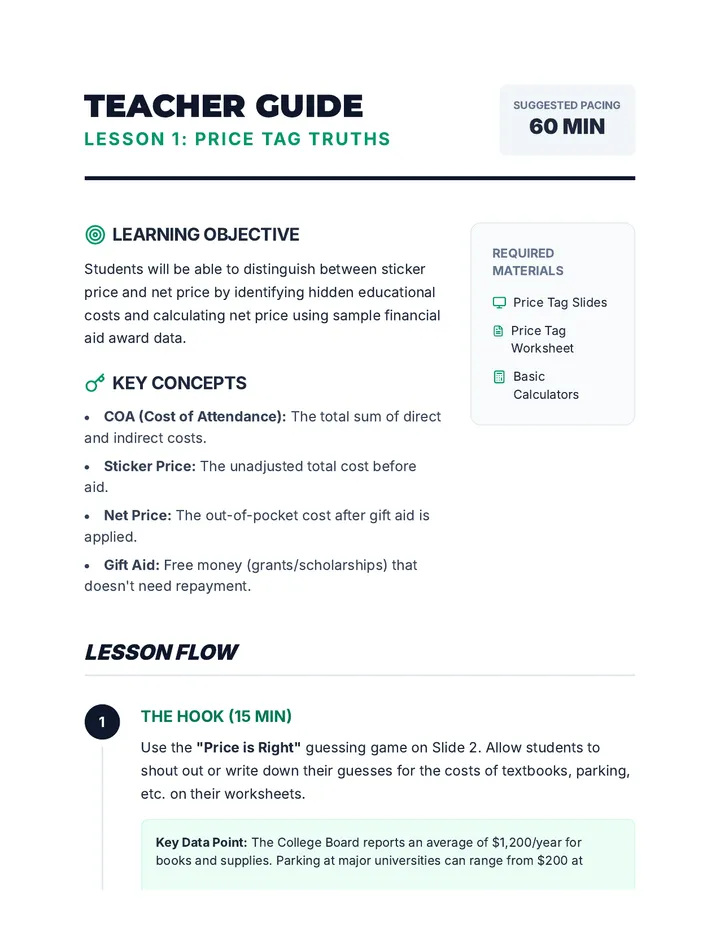
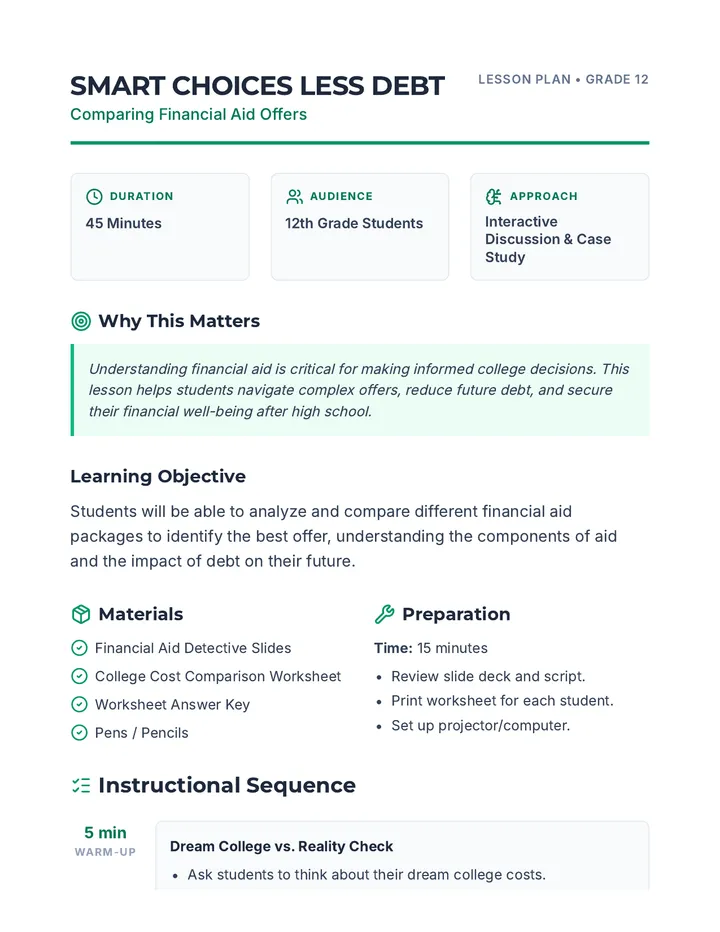
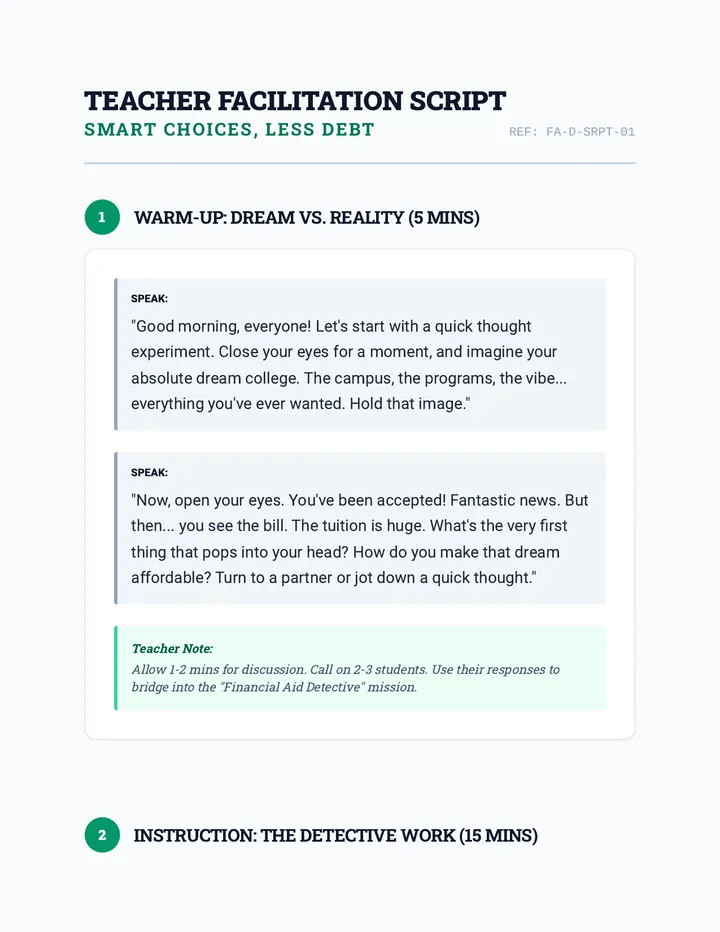
A 45-minute lesson for 12th graders to critically evaluate and compare financial aid offers from colleges, focusing on net price and minimizing student debt.
A small-group (Tier 2) lesson for 12th graders focused on identifying scholarship types, mastering search strategies, and crafting winning applications.
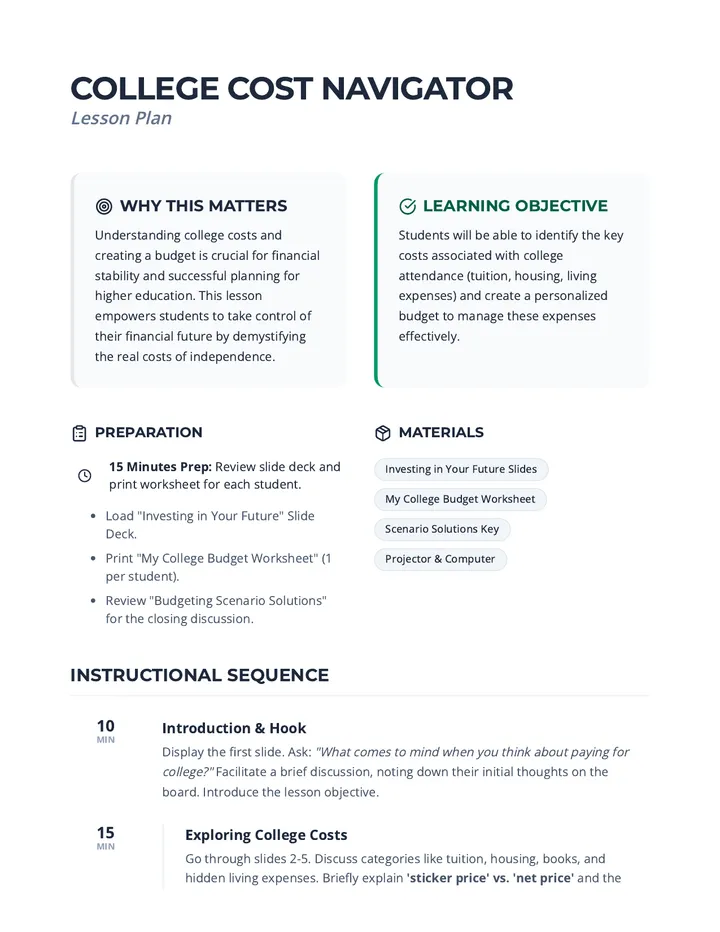
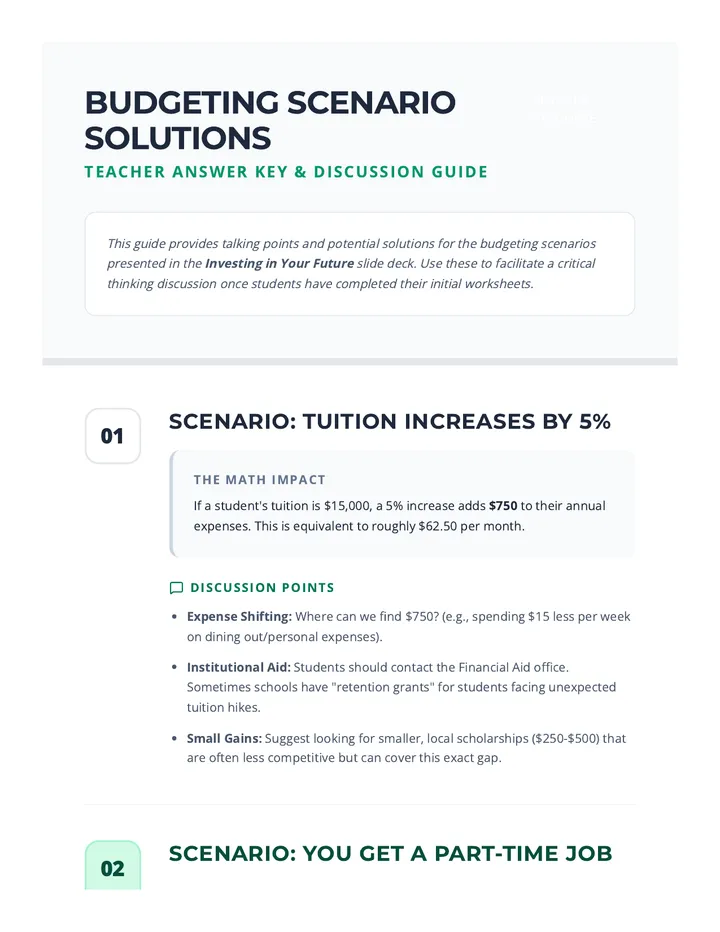
A comprehensive 60-minute lesson designed for high school students to explore the financial realities of college life, including tuition, housing, and living expenses, through interactive discussion and personalized budgeting.
A high-energy, interactive lesson where high school students solve financial puzzles to 'escape' the debt trap. Students learn about different types of debt, interest rates, and budgeting strategies through collaborative gameplay.
Students simulate real-life scenarios using a board game to explore financial literacy and the consequences of everyday life choices. Designed for 6th grade, this lesson connects decision-making with future financial outcomes through interactive play and guided reflection.
A Tier 2 small group session for 12th graders focused on navigating the scholarship application process, understanding scholarship types, and application strategies.
A Tier 2 small group lesson designed to demystify the college and technical school enrollment process for high school juniors and seniors, breaking it down into five manageable steps.
A comprehensive 30-minute lesson for 11th-grade students to navigate early college application steps, including academic preparation, extracurriculars, and financial aid.