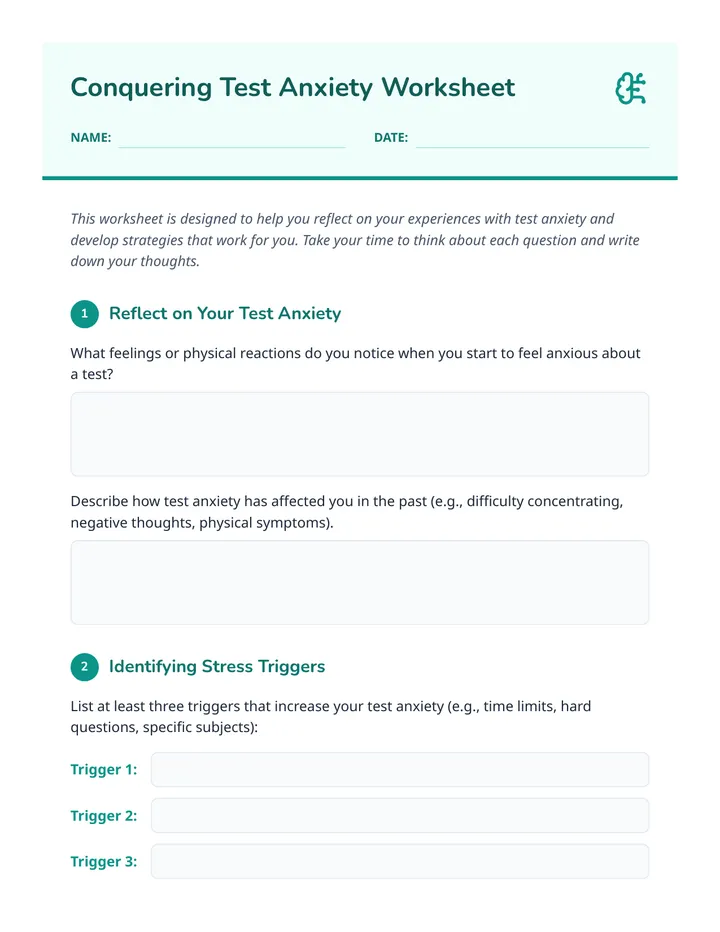
Techniques for recognizing physical, emotional, and environmental stressors. Builds self-awareness through tracking patterns of tension and identifying personal pressure points.
A 5-week individual lesson series for 8th-grade students with social-emotional disabilities, introducing core DBT modules: Mindfulness, Distress Tolerance, Emotion Regulation, Interpersonal Effectiveness, and Walking the Middle Path.
A comprehensive 5-session sequence for 6th-grade girls to manage anxiety through grounding, body awareness, cognitive reframing, support systems, and sensory mindfulness. Each 30-minute session provides practical 'chill skills' in a supportive small-group environment.
A 10-week series of 30-minute group lessons for high school students exploring Cognitive Behavioral Therapy. Each session builds practical skills in identifying and reframing thoughts, managing emotions, and engaging in healthy behaviors through interactive activities. This Tier 2 program develops resilience and mental wellness.
A 6-week Tier 3 intervention sequence designed for a student with an IEP, focusing on identifying triggers, developing coping strategies, and practicing self-regulation to manage anger and anxiety.
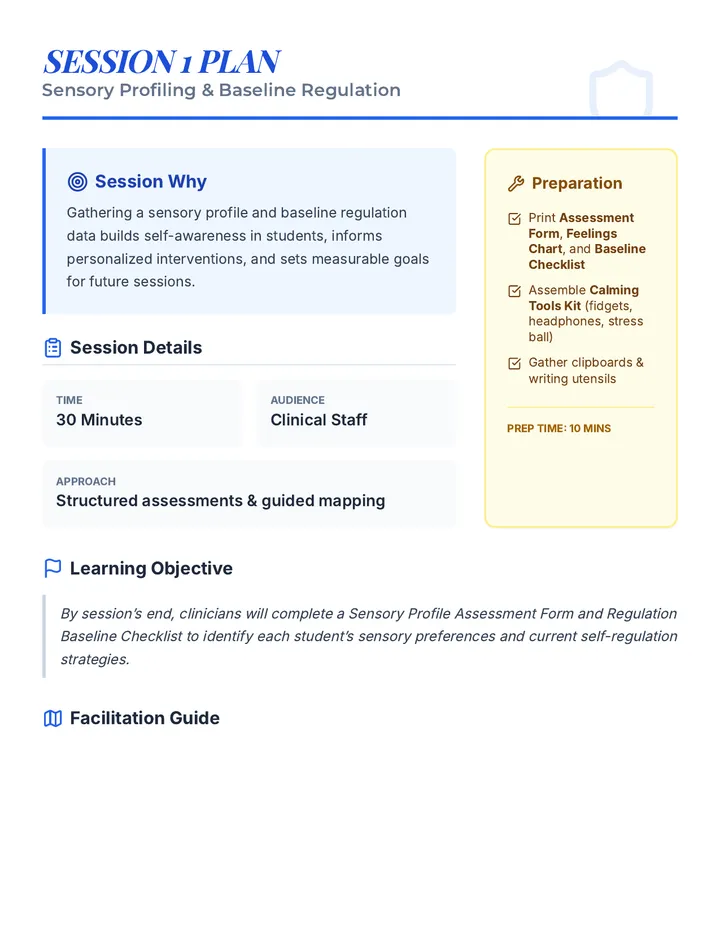
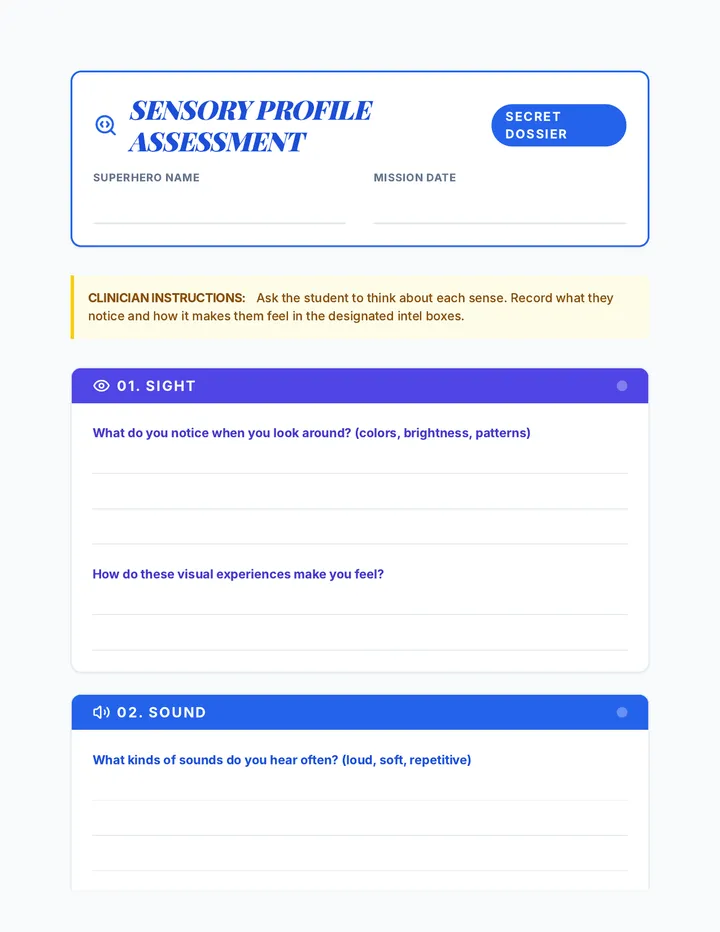
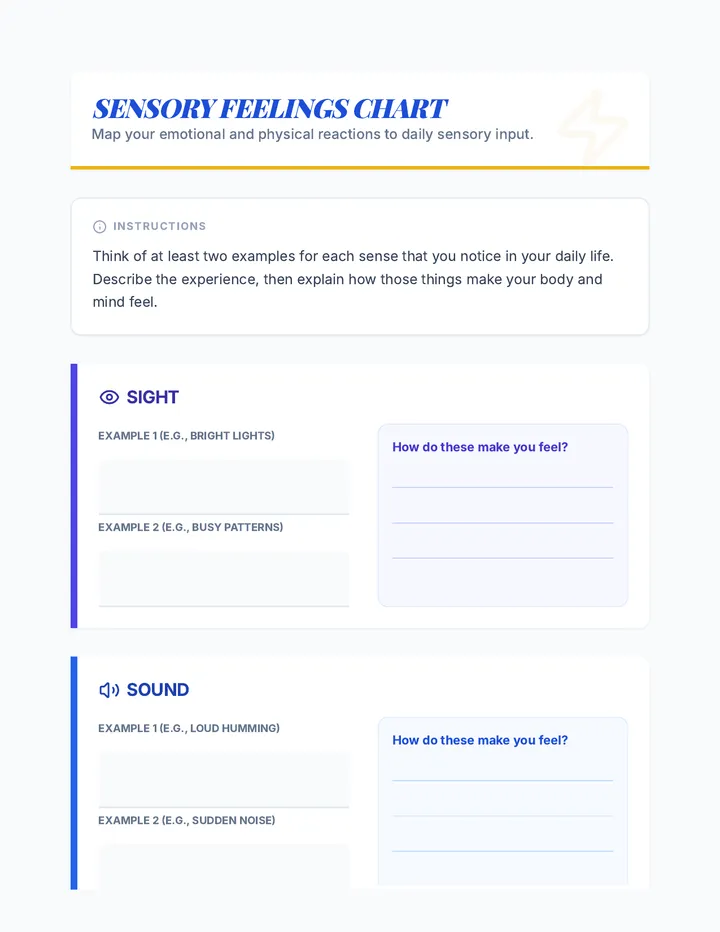
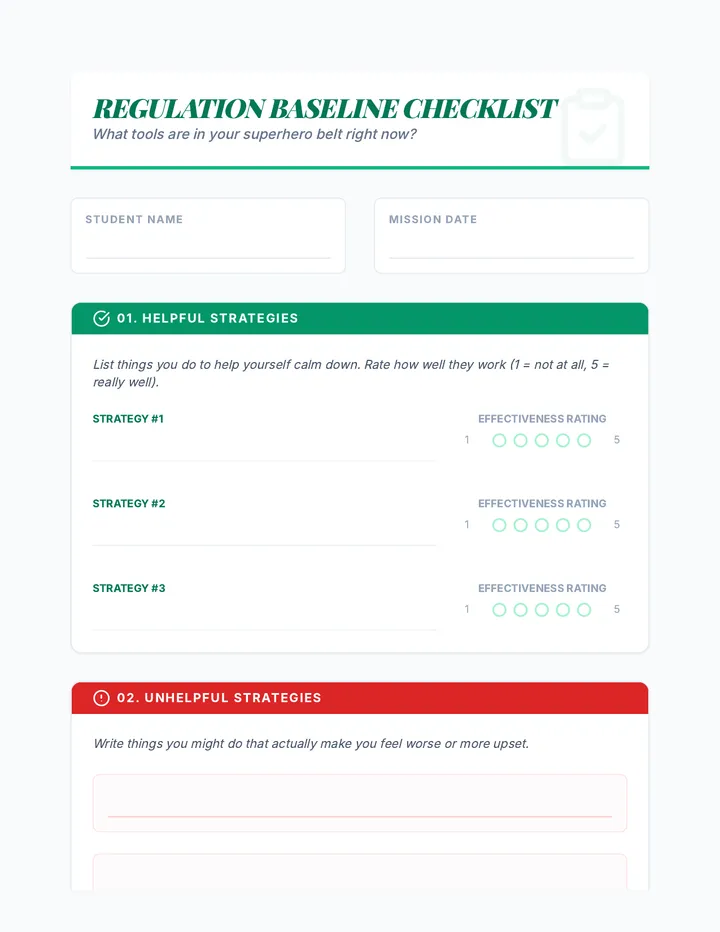
A 6-session individual counseling curriculum designed to help students develop sensory awareness and self-regulation skills through a 'Superhero' framework. The sequence covers profiling, strategy exploration, plan development, practice, advocacy, and graduation.
A 10-session Tier 3 social-emotional learning unit for students with ASD, focusing on identifying emotions, recognizing dysregulation, and applying self-regulation strategies through a space-themed journey.
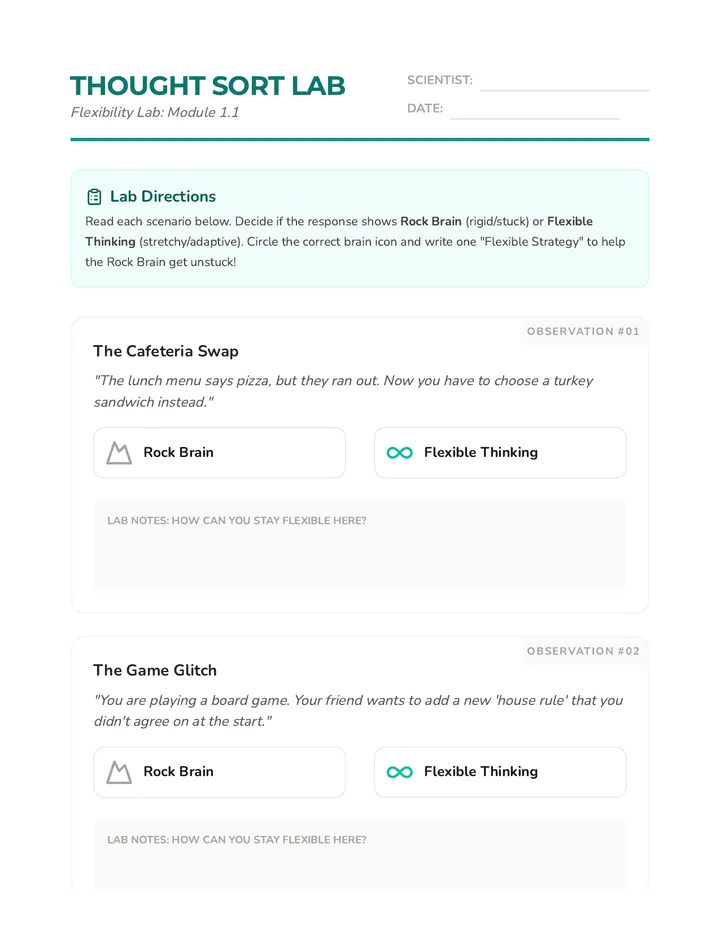
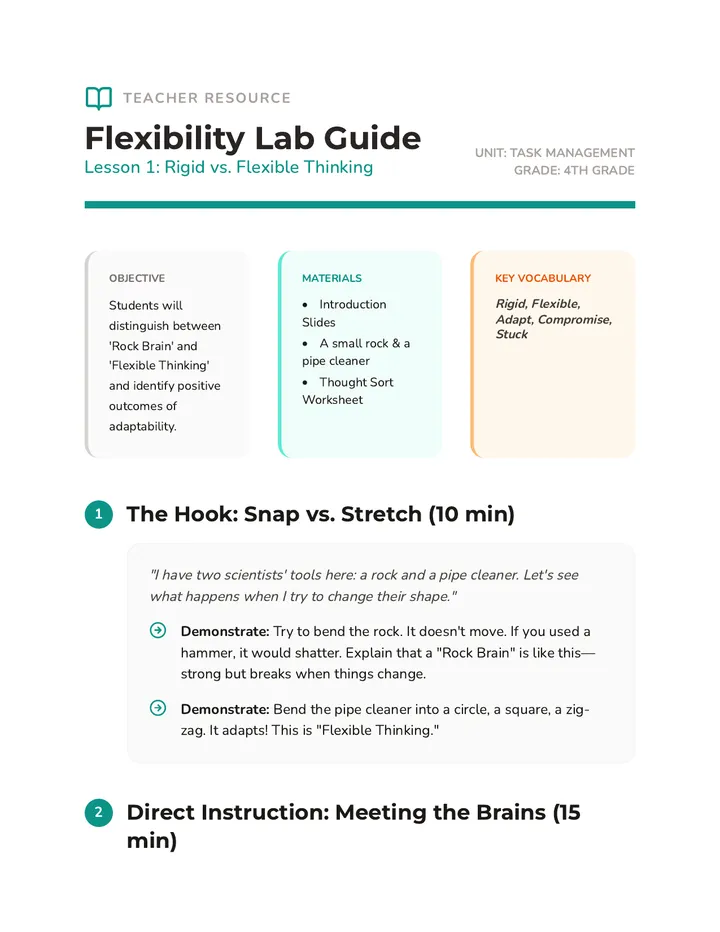
A 5-lesson sequence designed for 4th-grade students to build cognitive flexibility. Students learn to identify rigid versus flexible thinking, recognize physical stress responses to change, practice rapid task-switching, and apply emotional regulation strategies through role-play and a final 'flexibility obstacle course'.
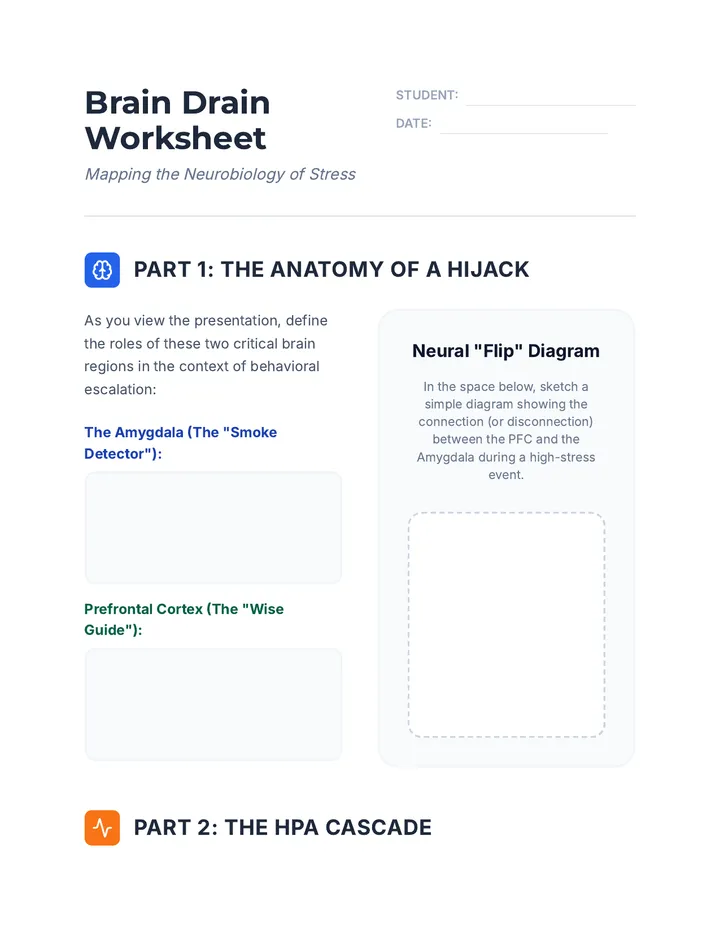
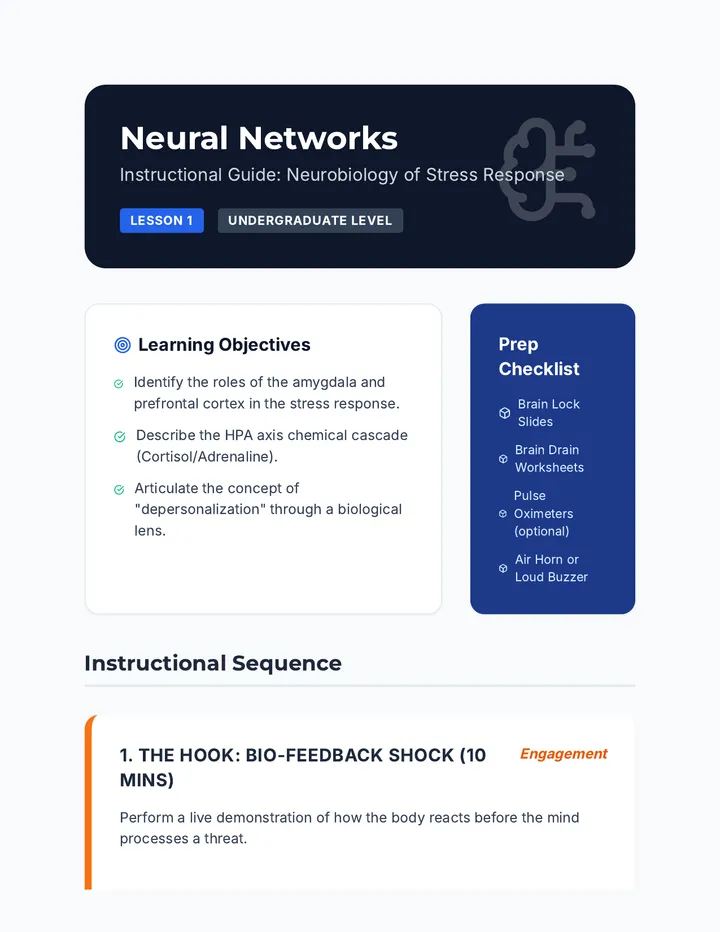
This sequence explores the neurobiological foundations of student escalation, connecting internal physiological stress responses (the 'amygdala hijack') to observable external warning signs. Students will learn to depersonalize behavior by understanding it as a biological survival mechanism, training them to recognize subtle somatic, respiratory, and muscular cues before a full behavioral outburst occurs.
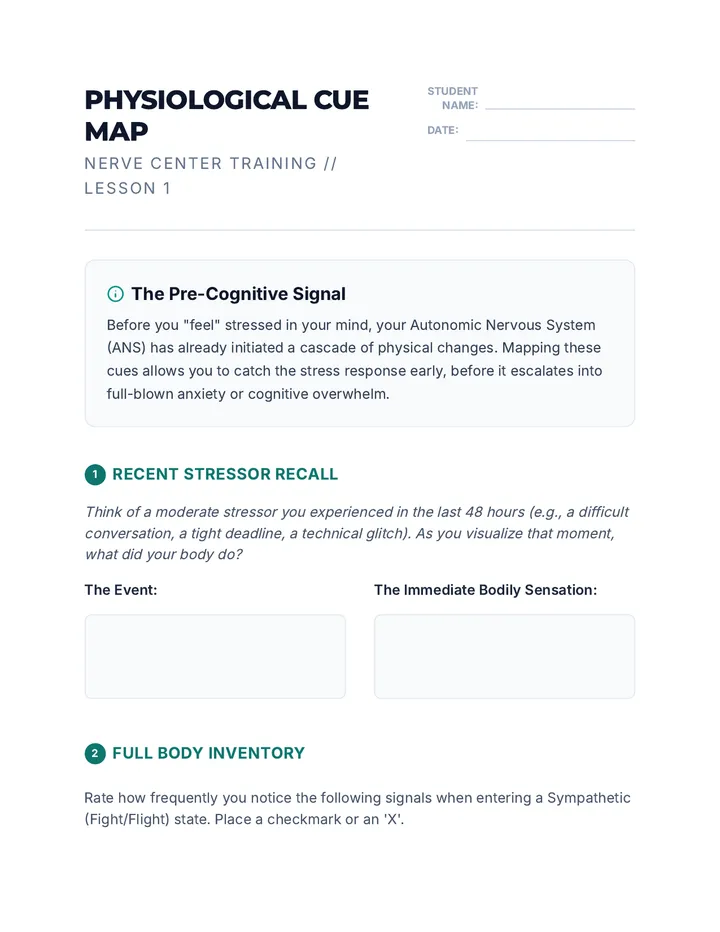
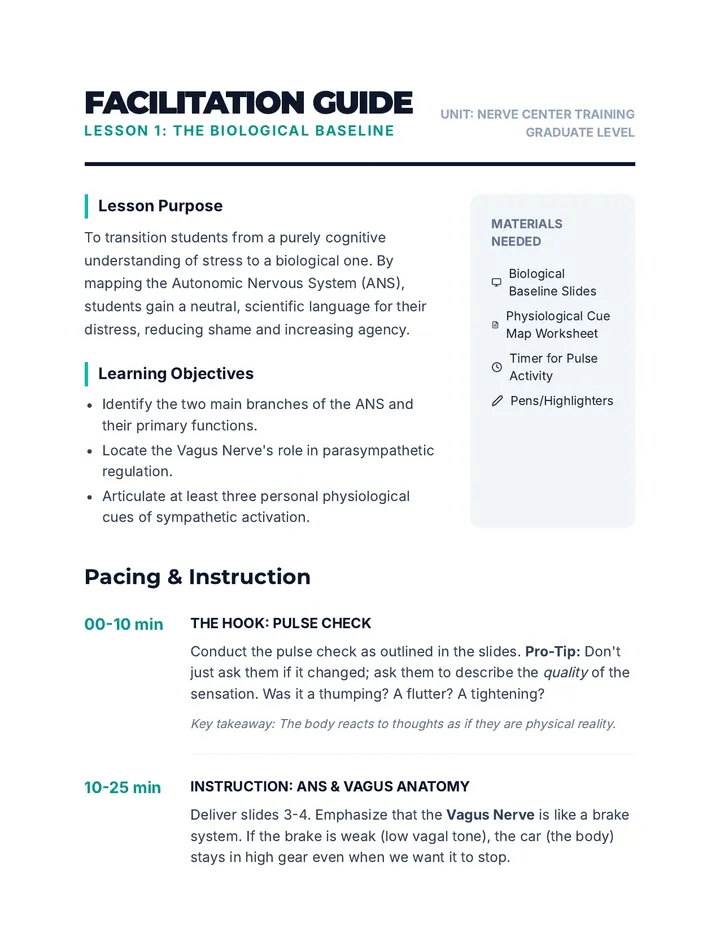
A graduate-level exploration of the biological underpinnings of stress. Students move from theoretical understanding of the autonomic nervous system and Polyvagal Theory to practical application of somatic regulation and interoceptive awareness, culminating in a personalized physiological safety plan.
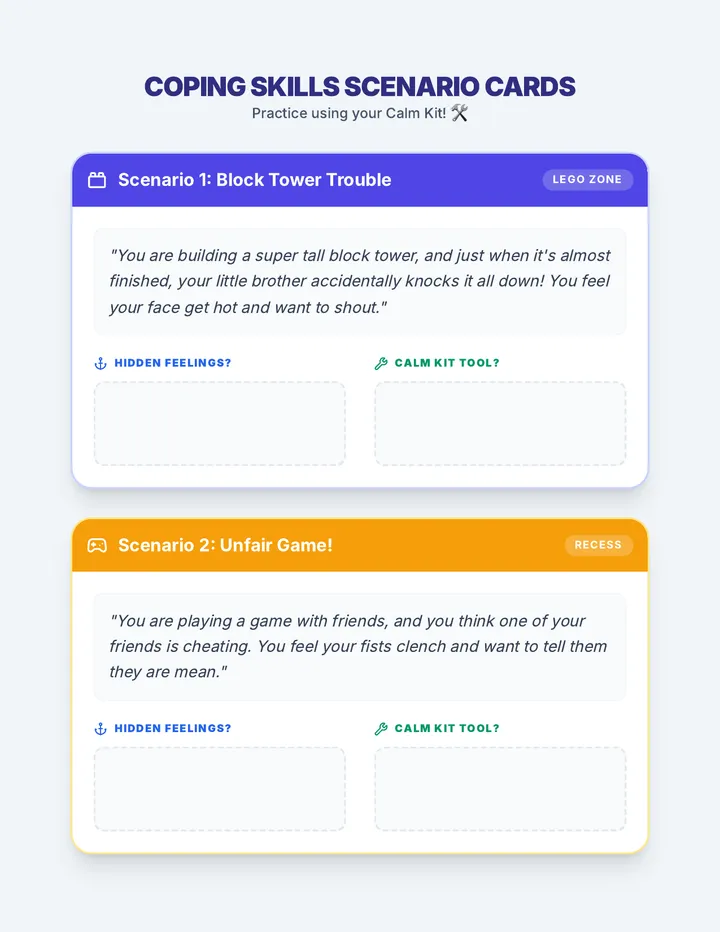
Students design and create a personalized 'Coping Kit' (mental or physical) containing tools for managing crisis moments. This project-based sequence guides 3rd graders through self-reflection, visualization techniques, tool selection, and the creation of a comprehensive safety plan.
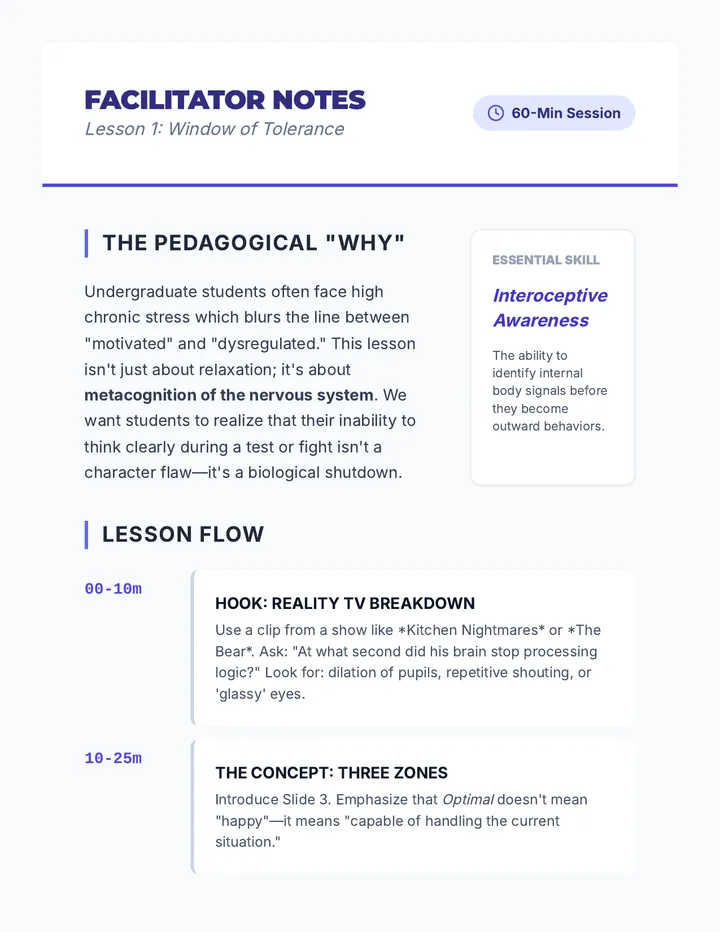
An applied sequence for undergraduate students to master self-regulation and de-escalation techniques in high-pressure academic and interpersonal contexts. Students move from identifying personal physiological triggers to practicing real-time regulation during active conflict and performance.
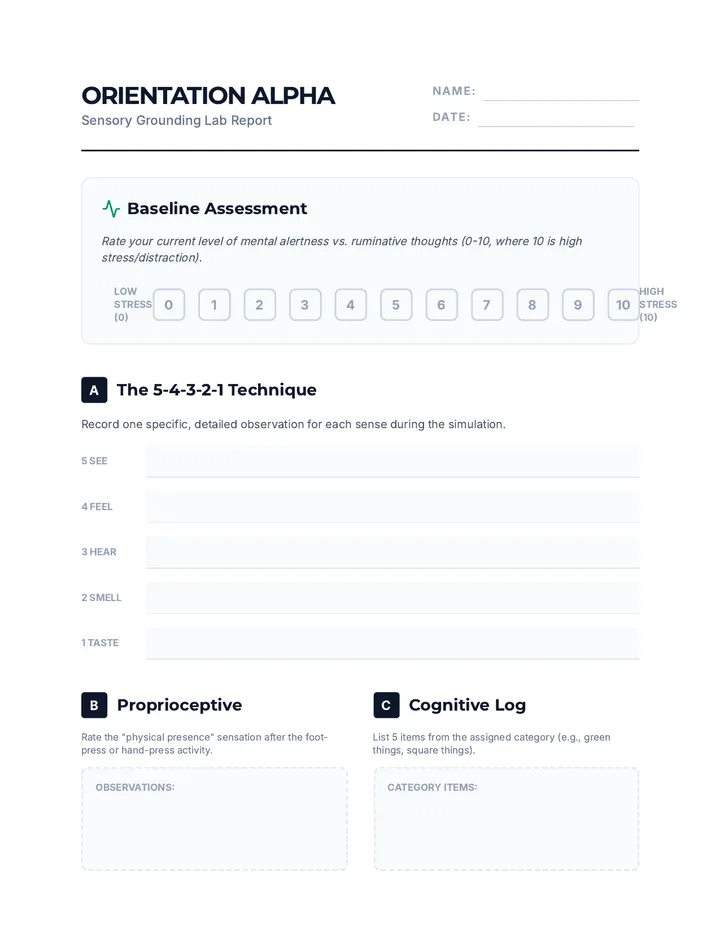
A technical and mastery-based sequence for undergraduate students to develop actionable emotional regulation and grounding strategies. Students move from physiological understanding to real-time application in high-pressure simulations.
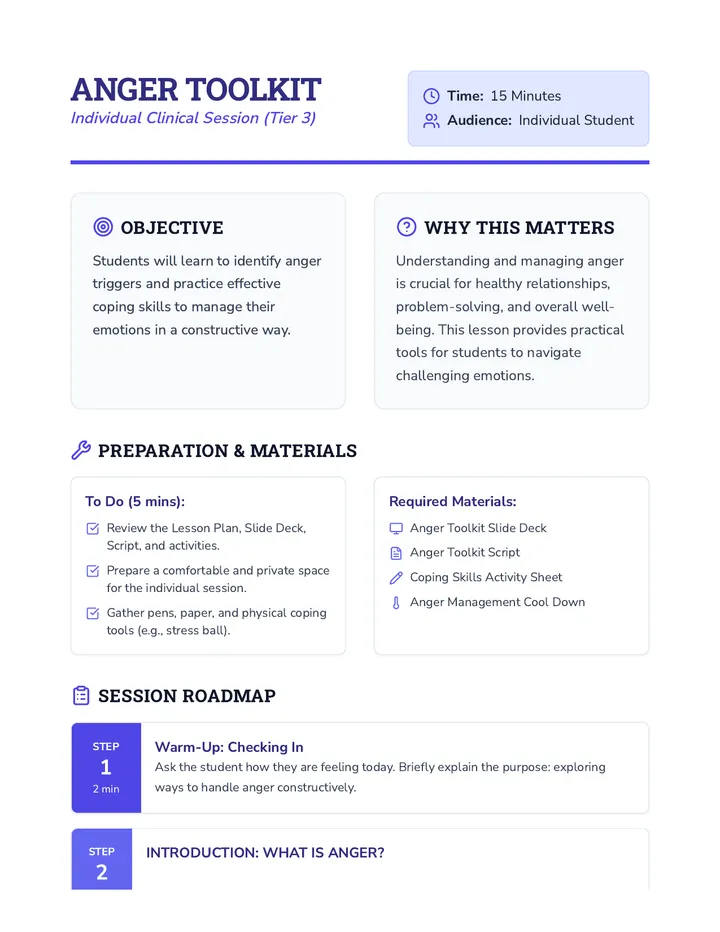
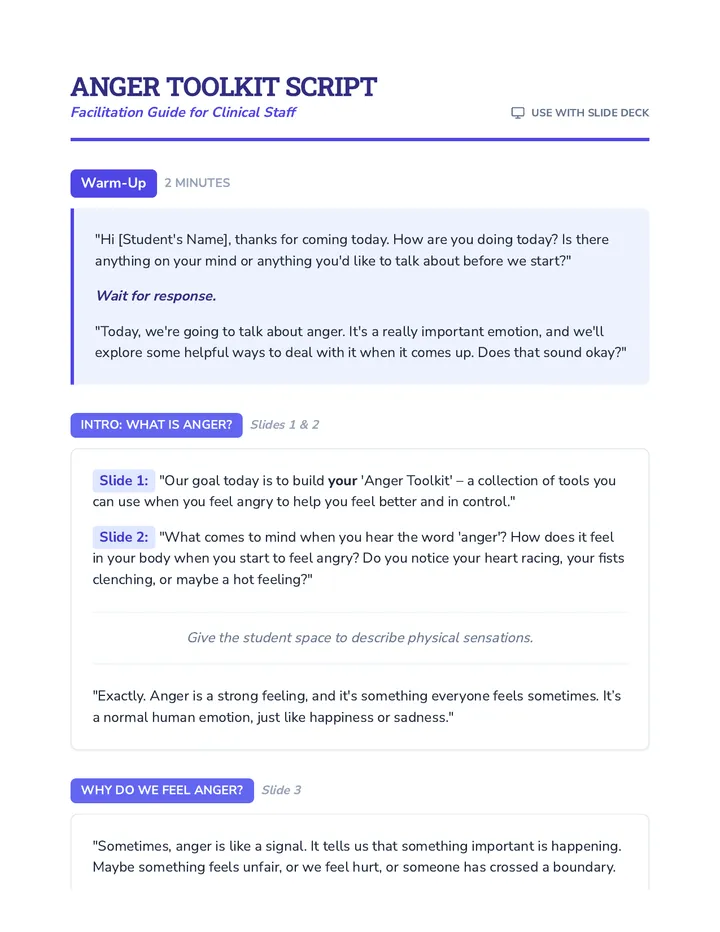
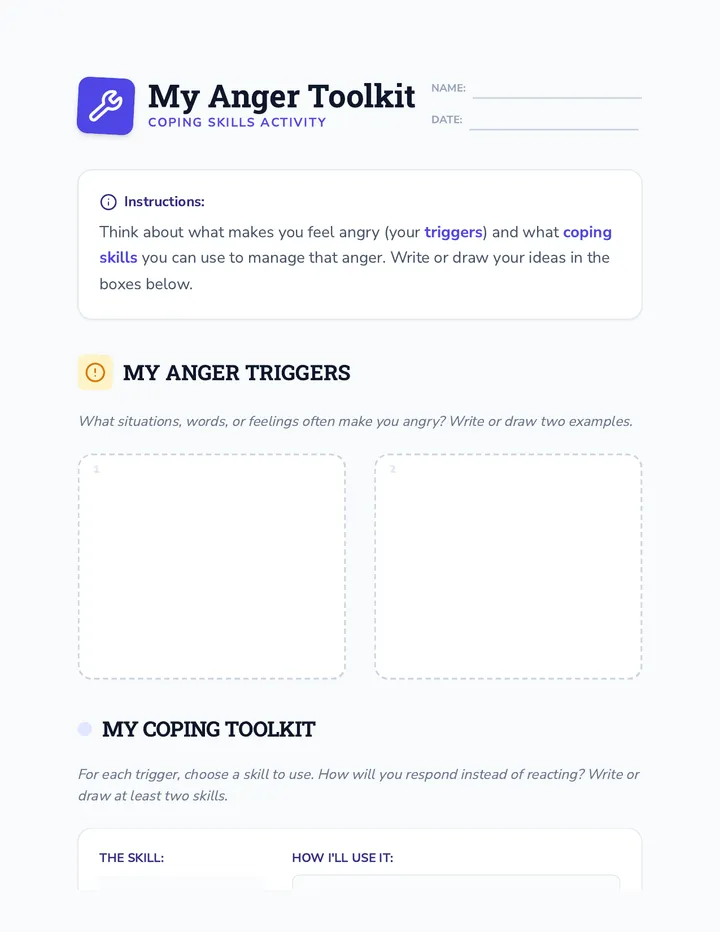
A 15-minute Tier 3 clinical lesson designed to equip individual students with practical anger coping strategies, trigger identification, and emotional regulation tools.
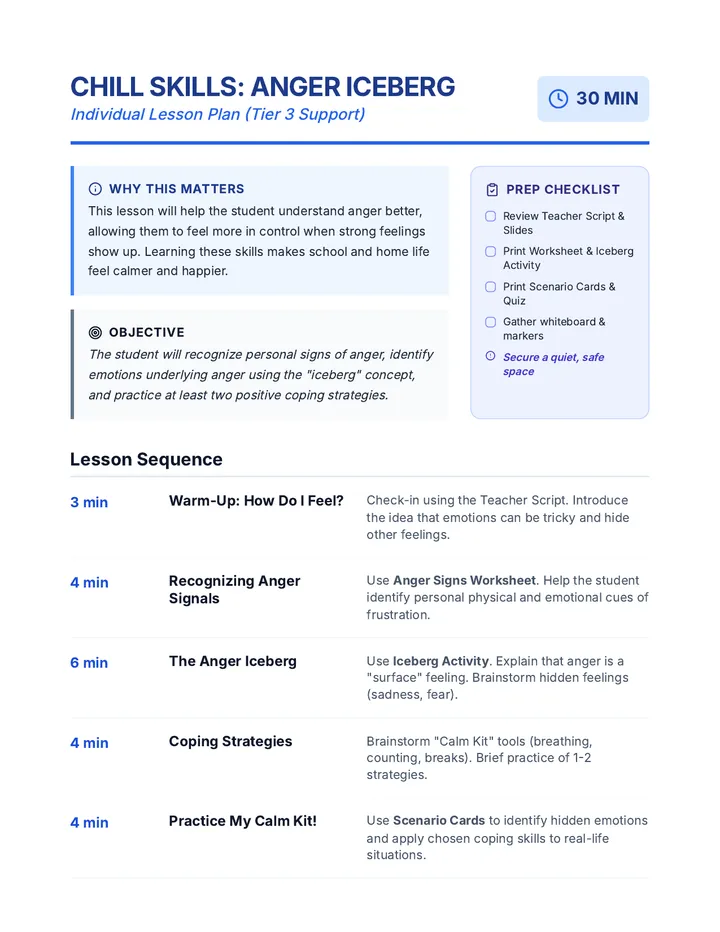
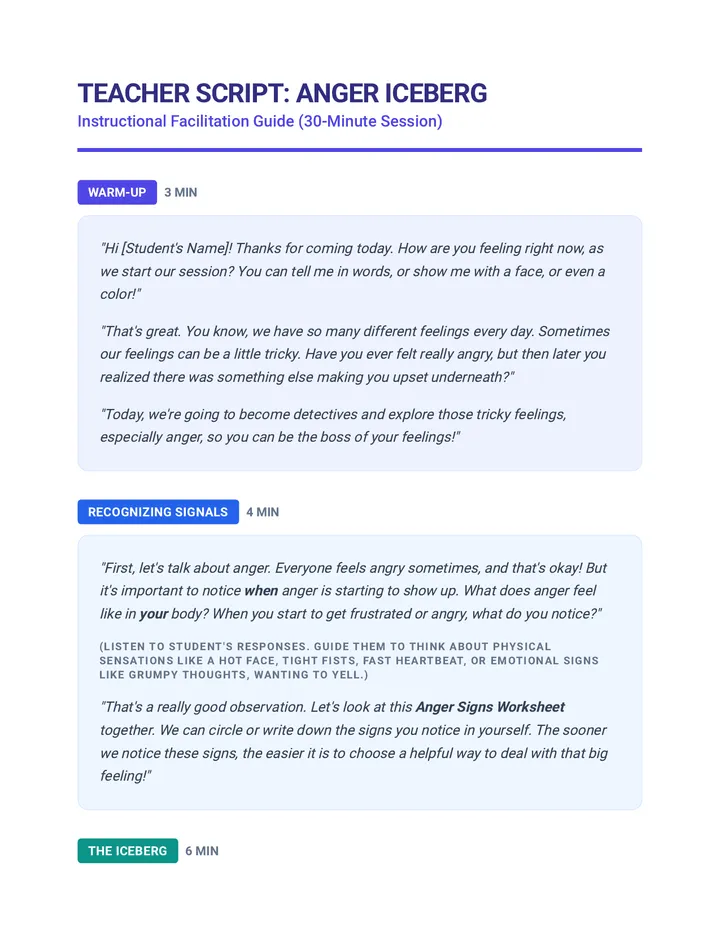
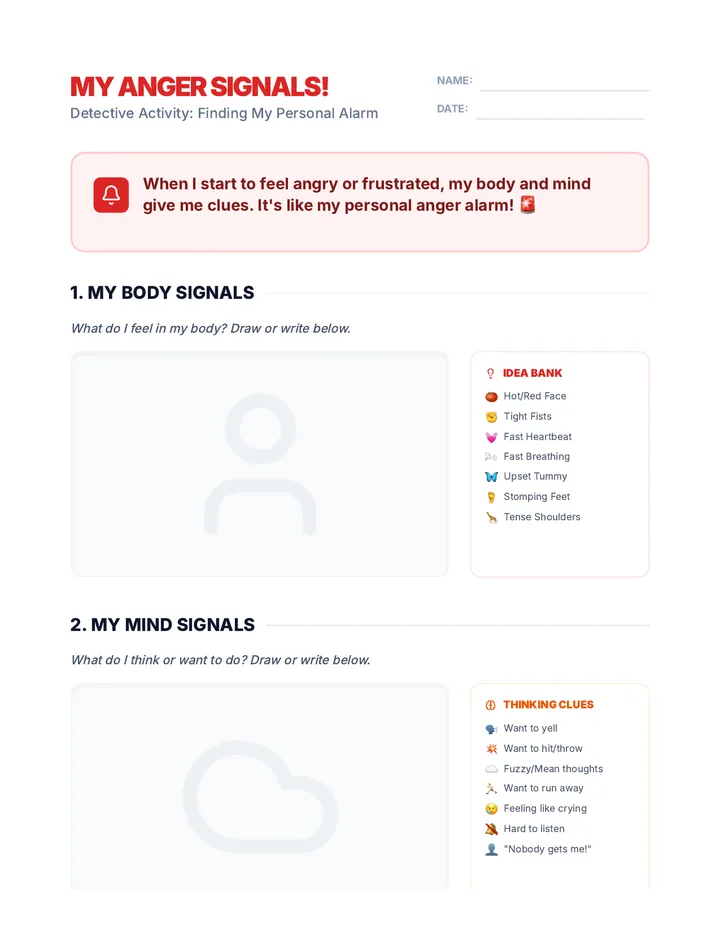
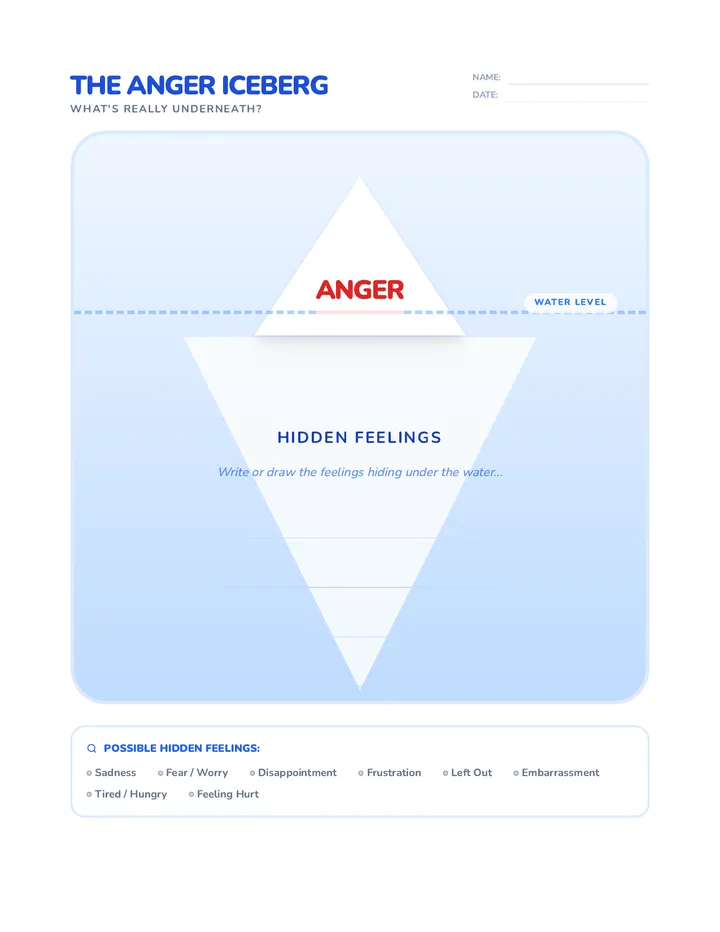
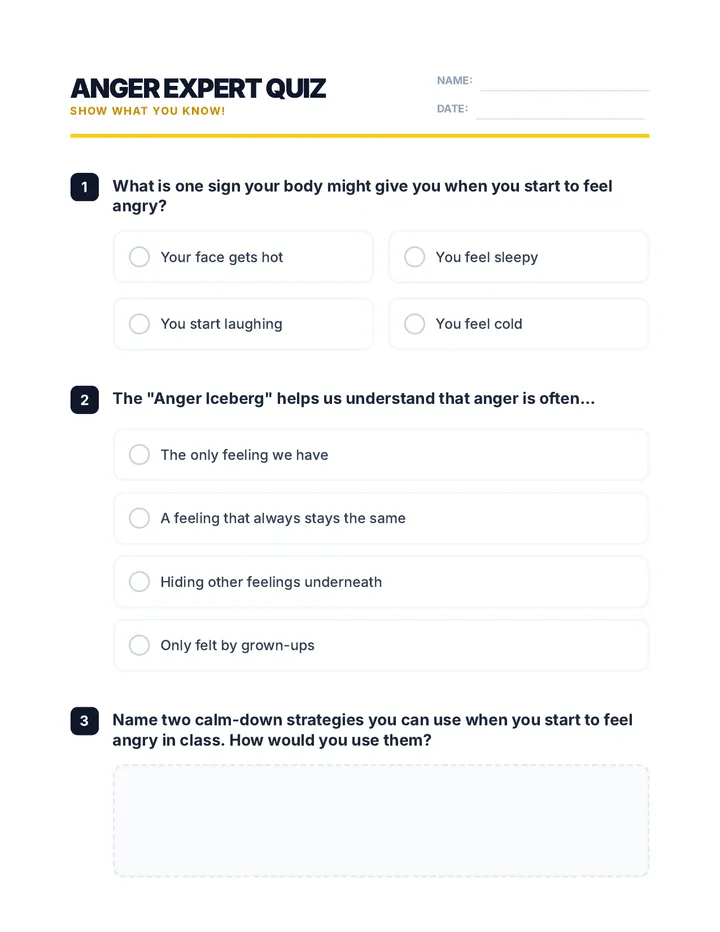
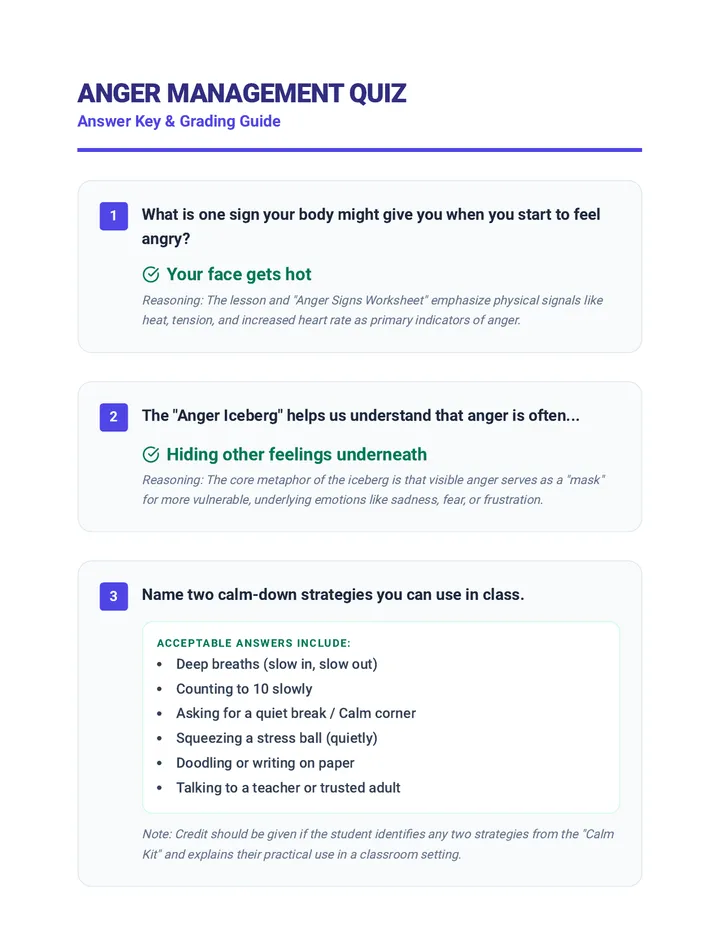
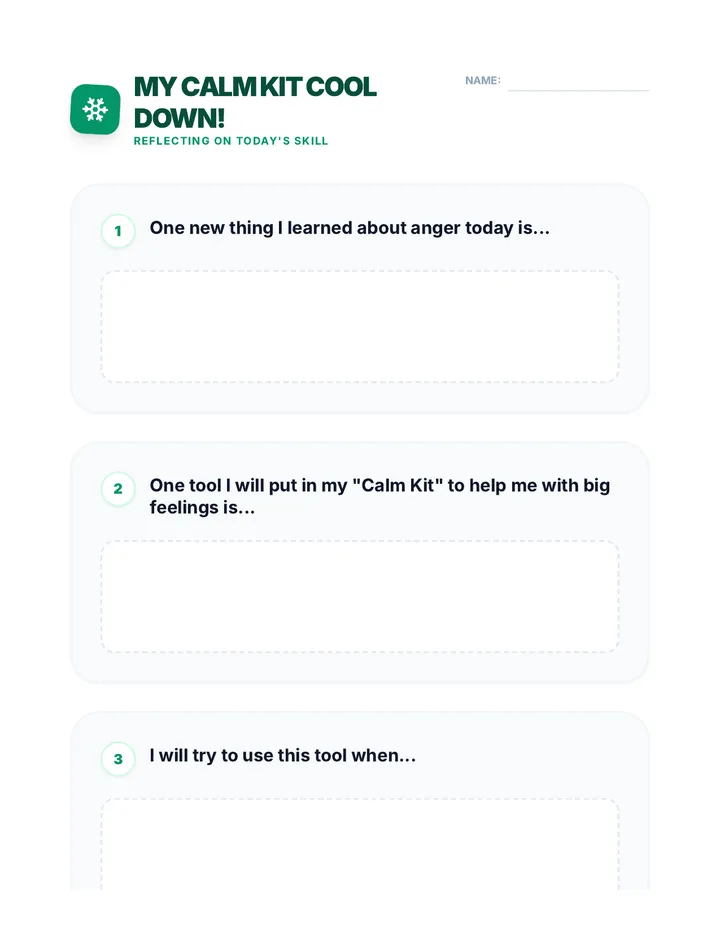
A 30-minute individual Tier 3 lesson for 3rd-grade students focused on identifying anger signals, understanding underlying emotions through the anger iceberg concept, and practicing coping strategies.
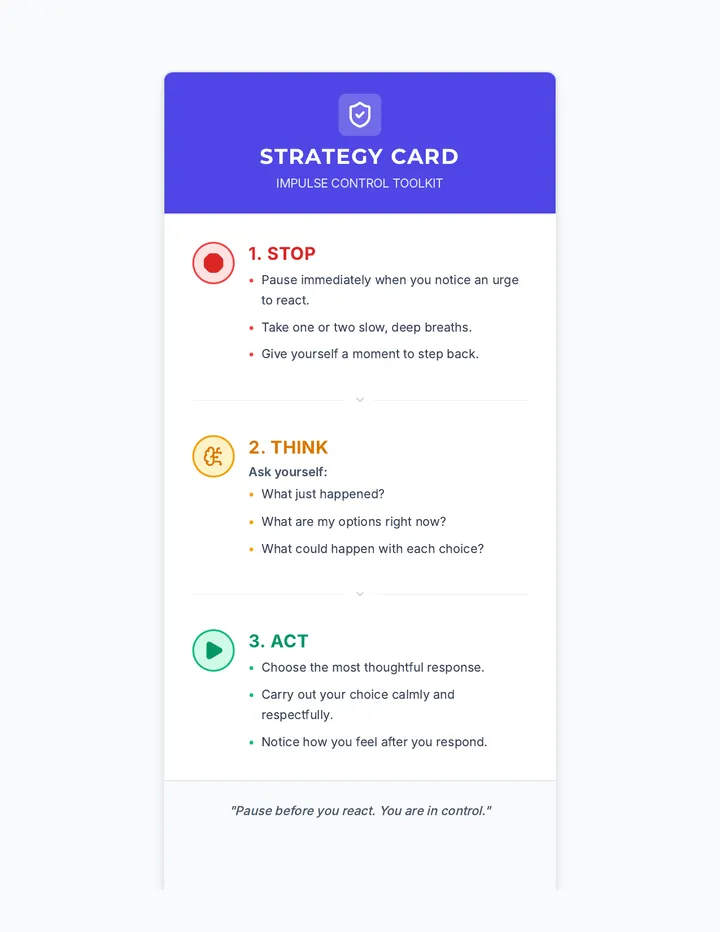
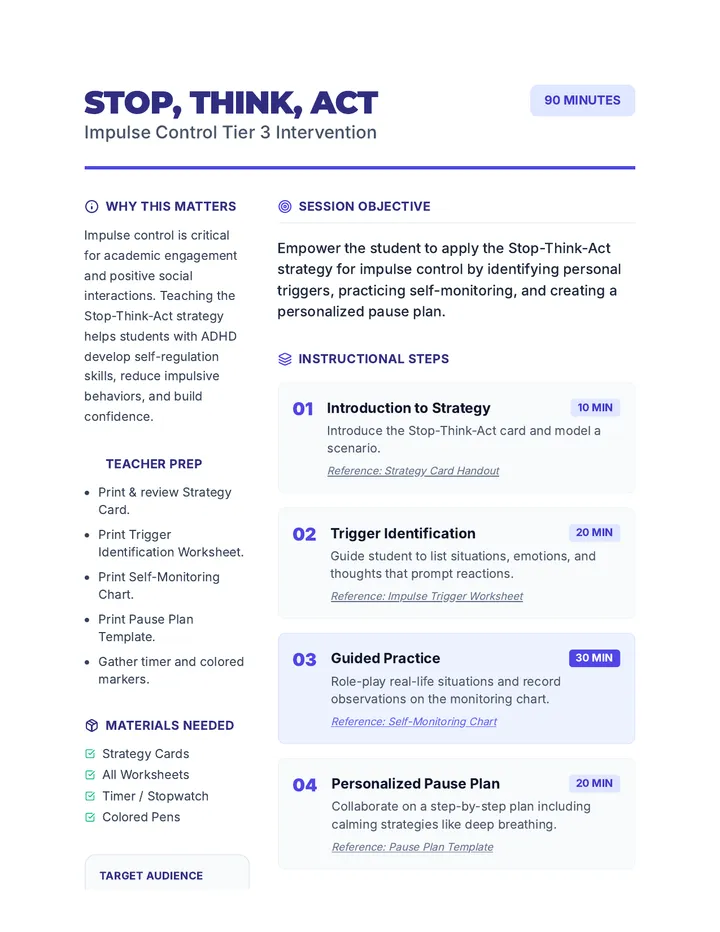
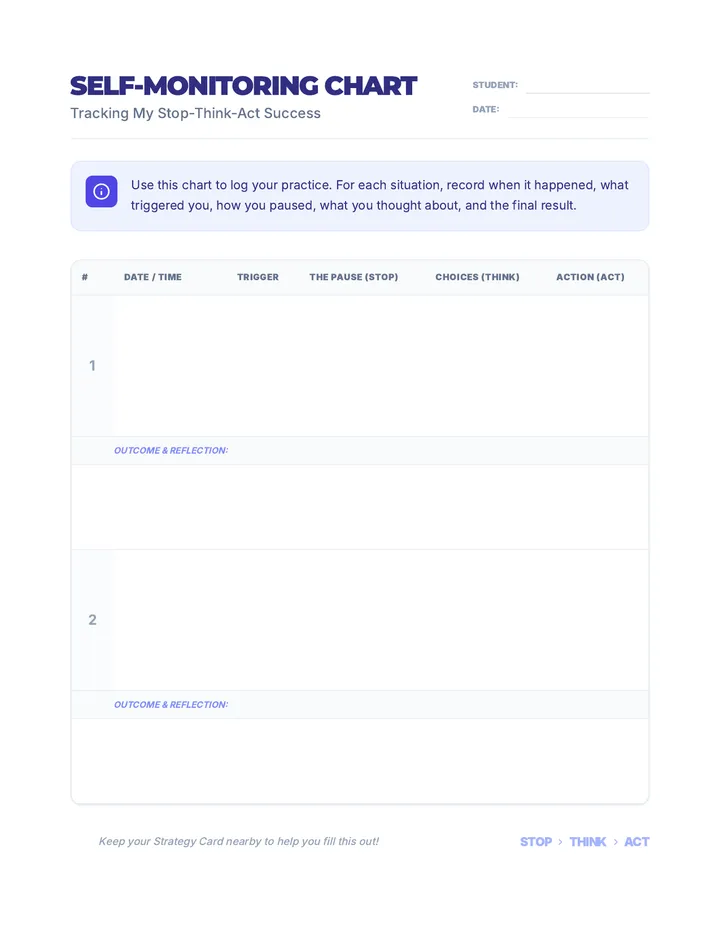
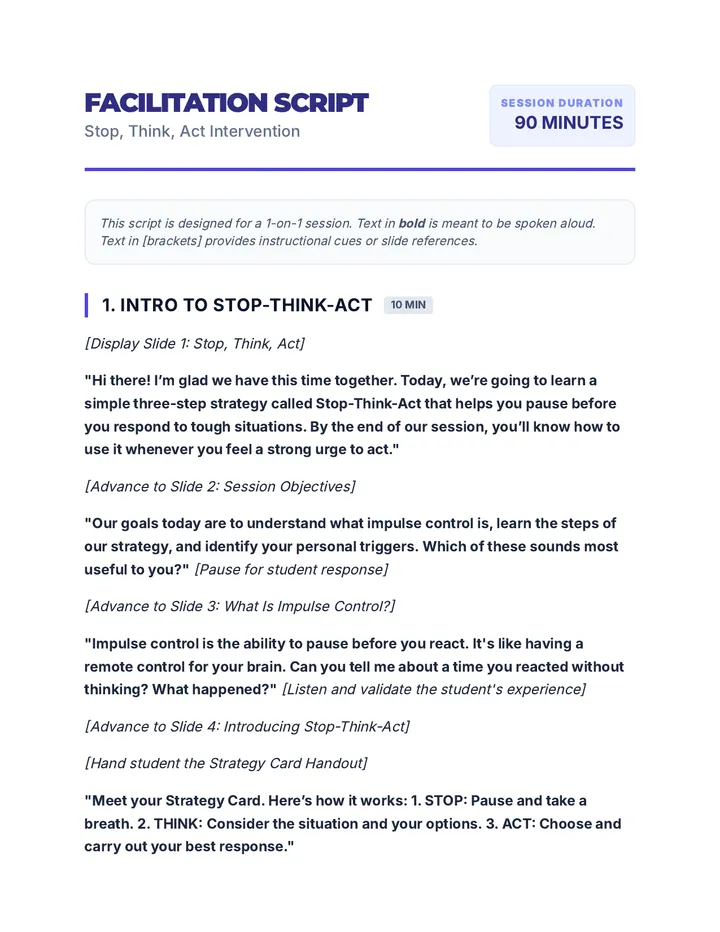
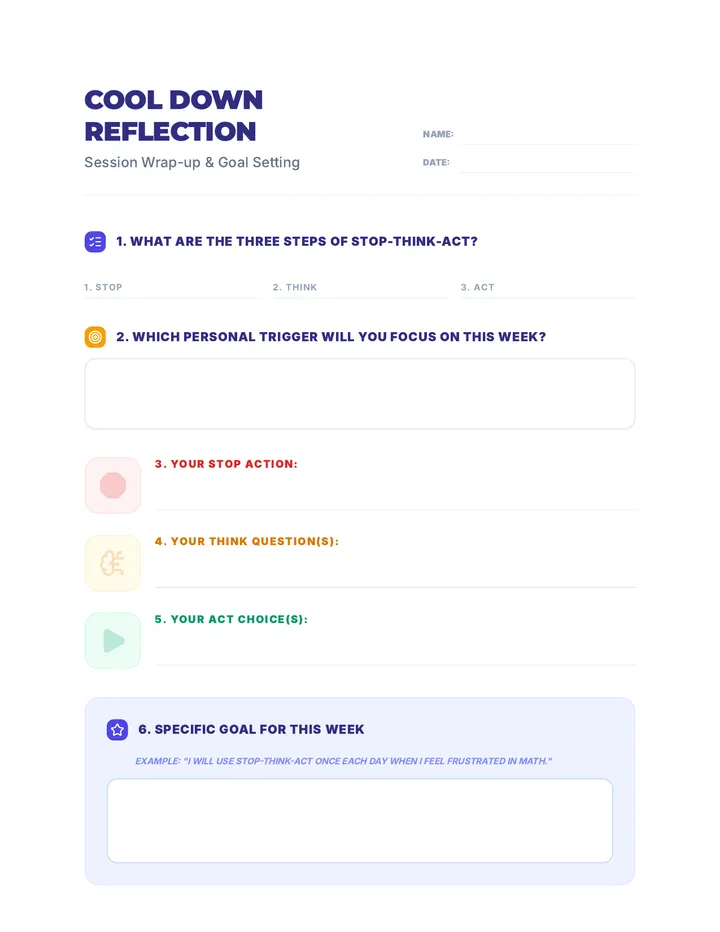
A 90-minute intensive Tier 3 intervention for 7th grade students with ADHD, focusing on the Stop-Think-Act strategy to build impulse control and self-regulation skills.
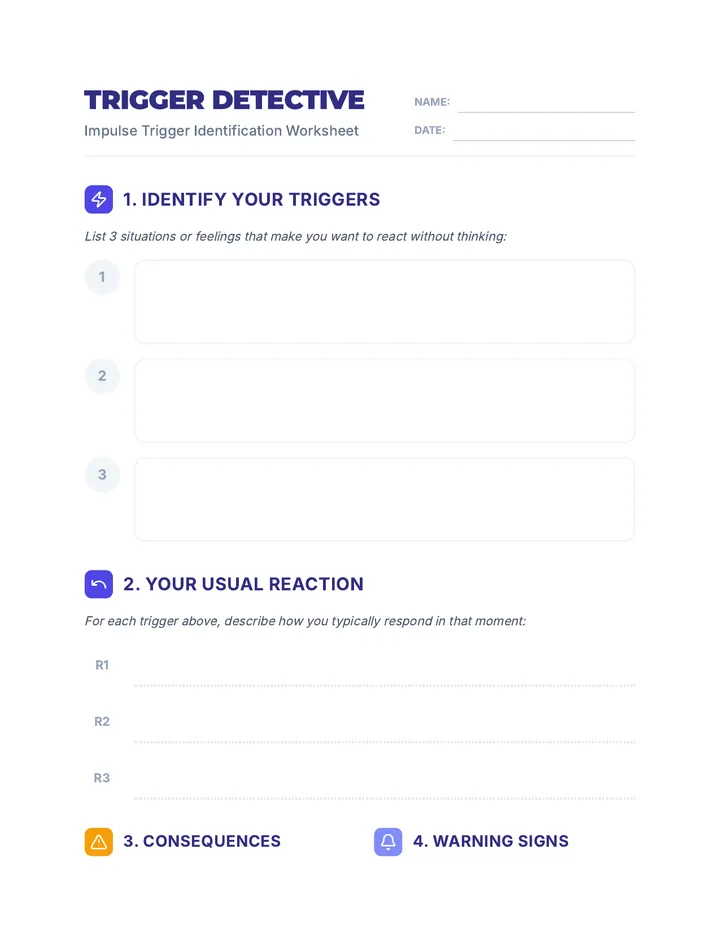
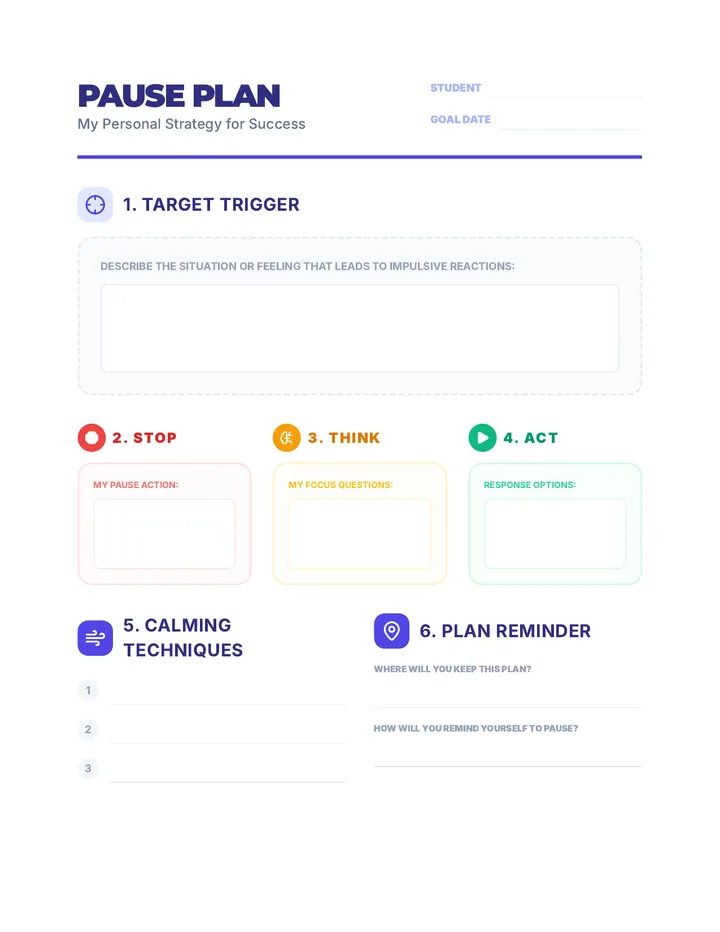
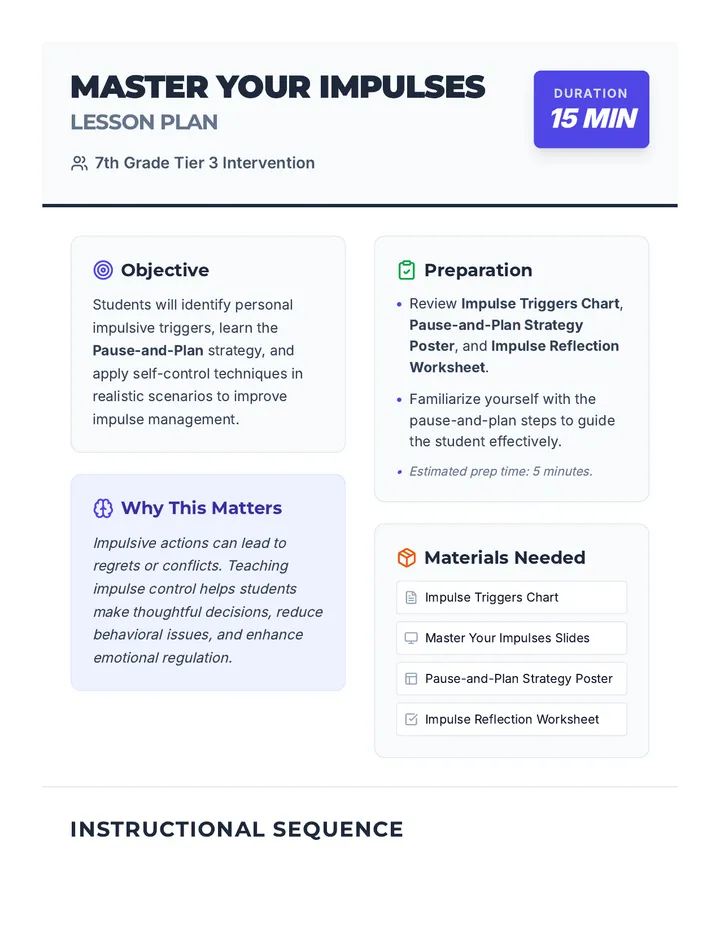
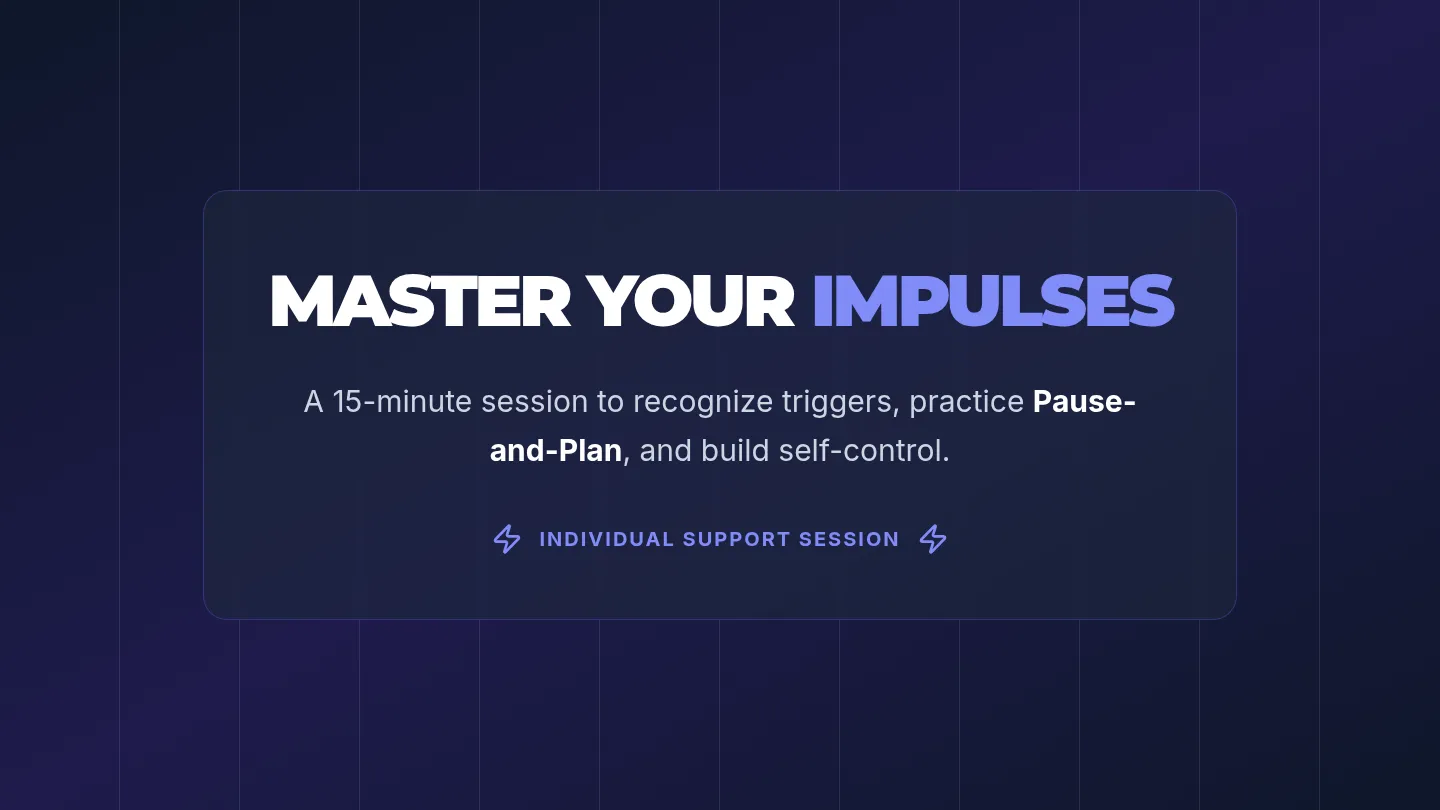
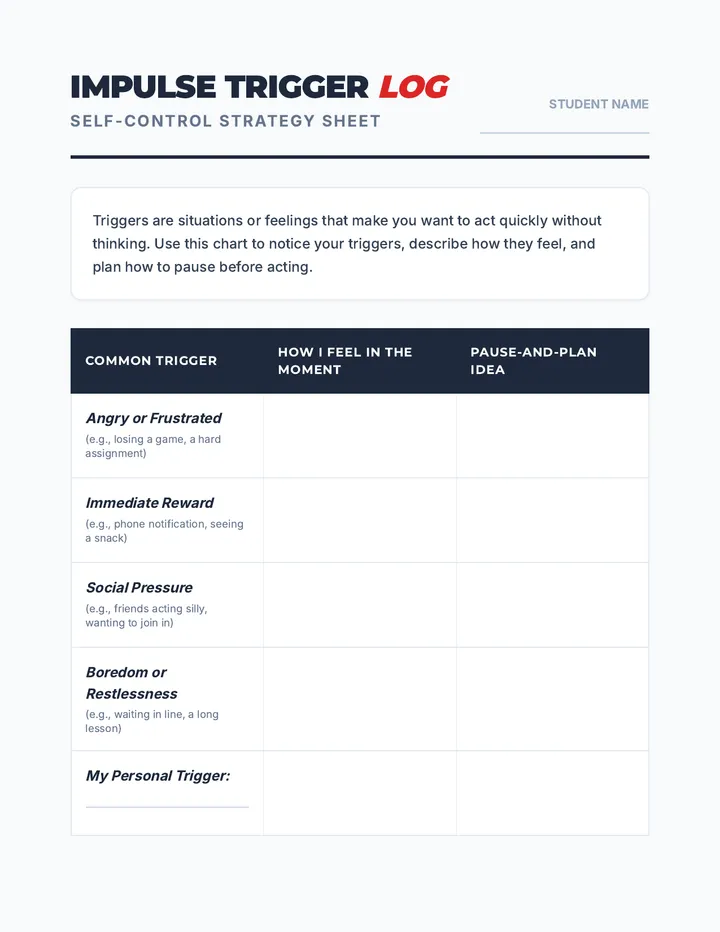
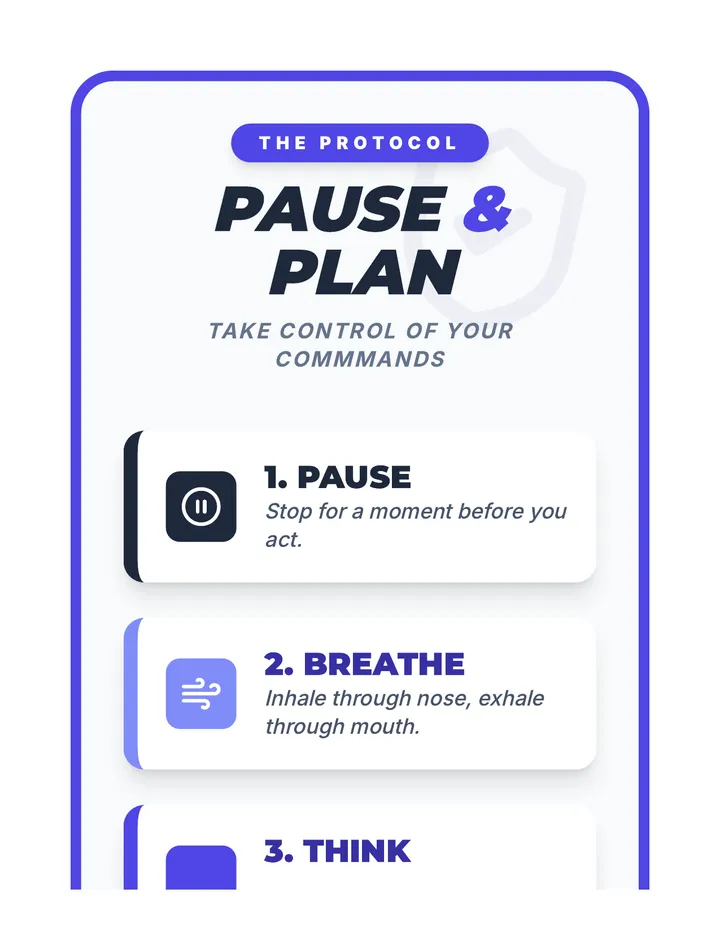
A focused 15-minute Tier 3 intervention for 7th graders to identify impulse triggers and master the Pause-and-Plan strategy for better self-regulation.
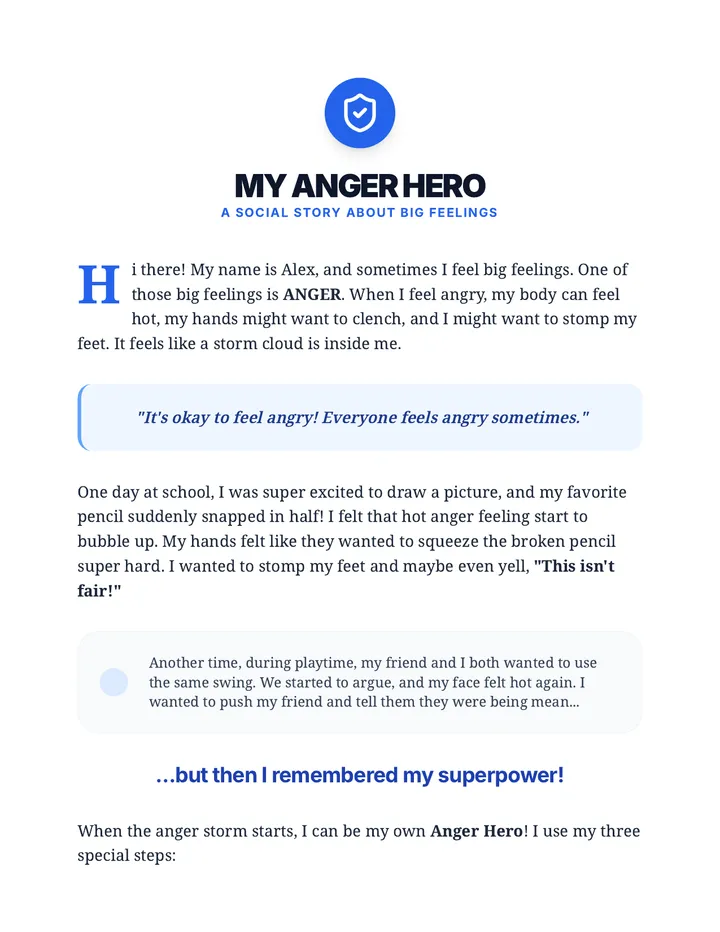
A comprehensive lesson for 2nd graders to identify, understand, and manage anger through reading, discussion, role-play, and reflective activities.
A 30-minute counseling session for 4th and 5th graders to introduce the Zones of Regulation framework and help students identify and understand their 'big feelings.' Students will learn to categorize emotions into four color-coded zones to improve emotional literacy and self-regulation.
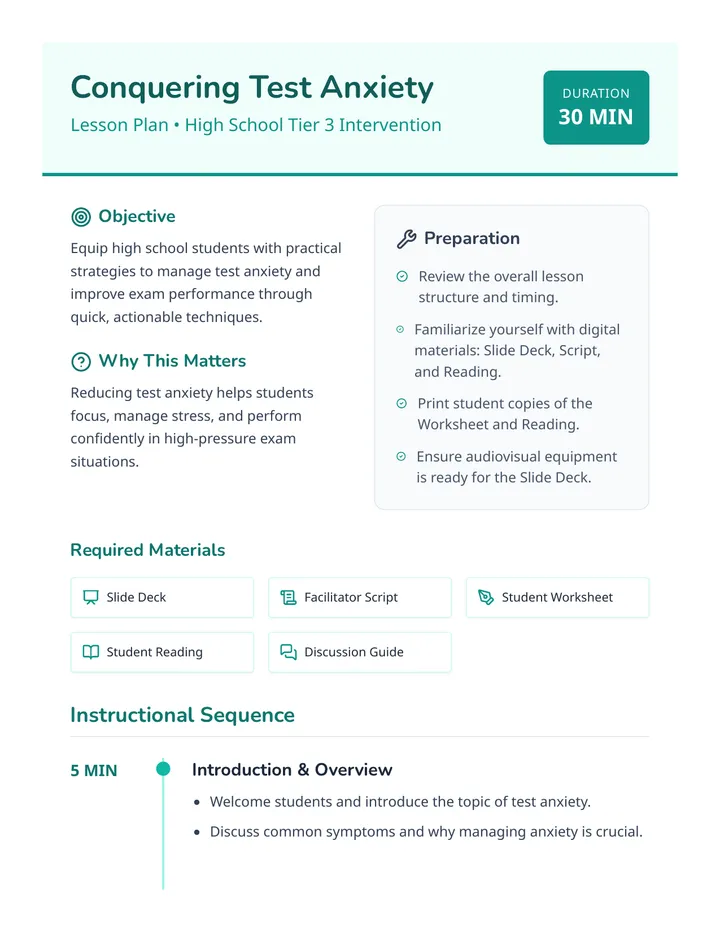
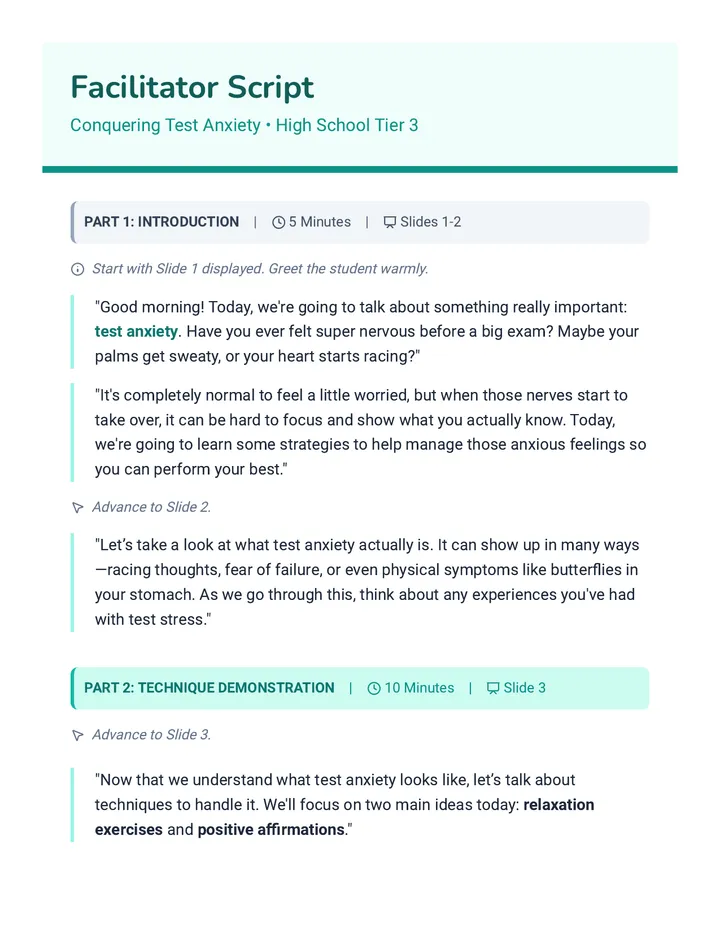
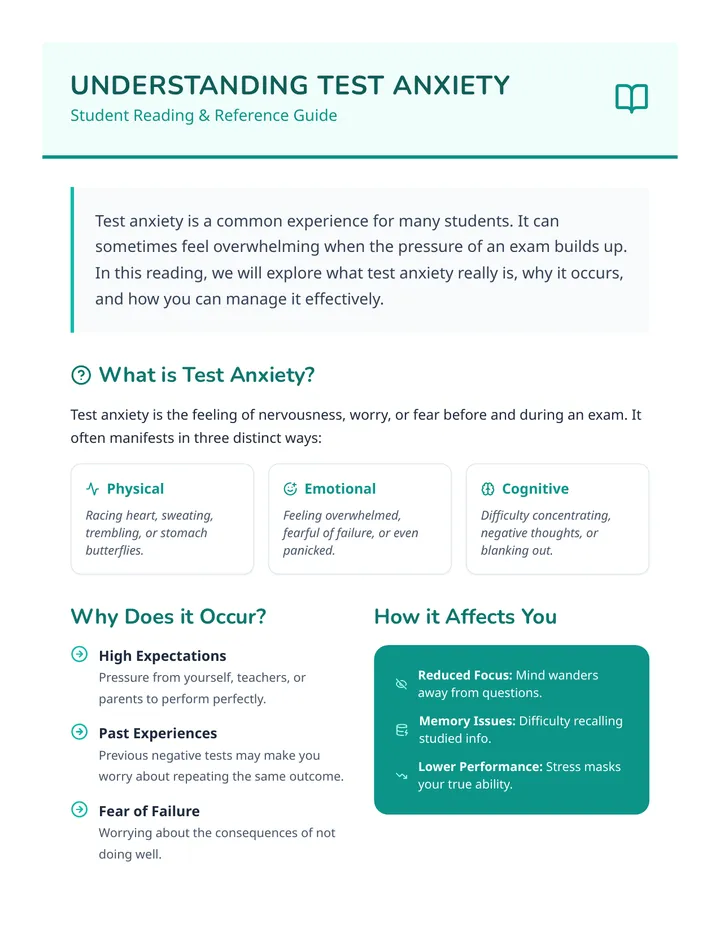
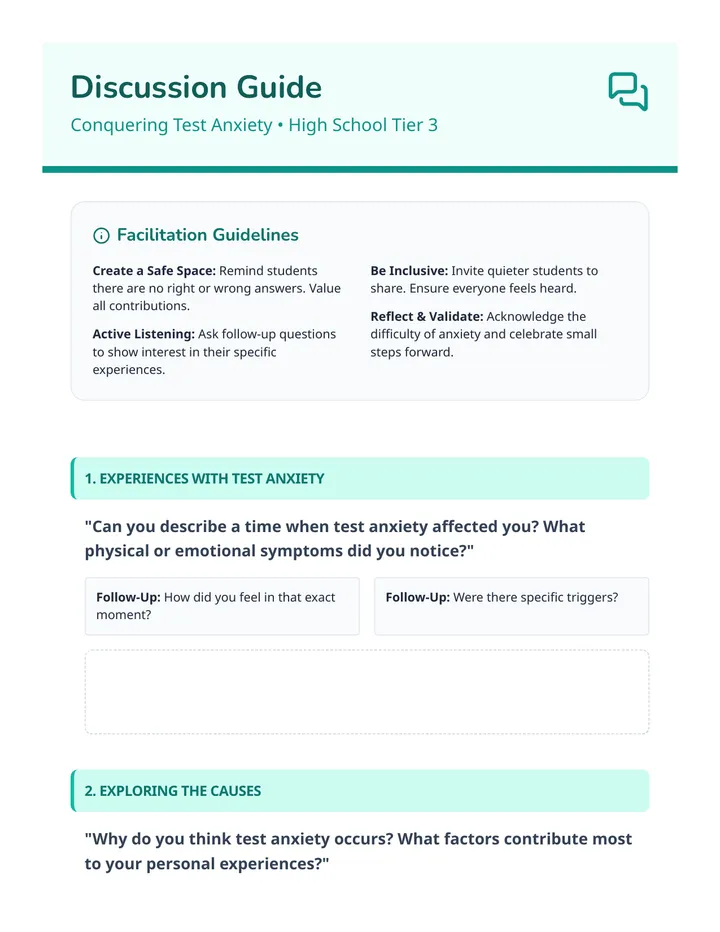
A 30-minute Tier 3 intervention lesson for high school students to manage and overcome test anxiety using relaxation techniques, positive affirmations, and practical test-taking strategies.
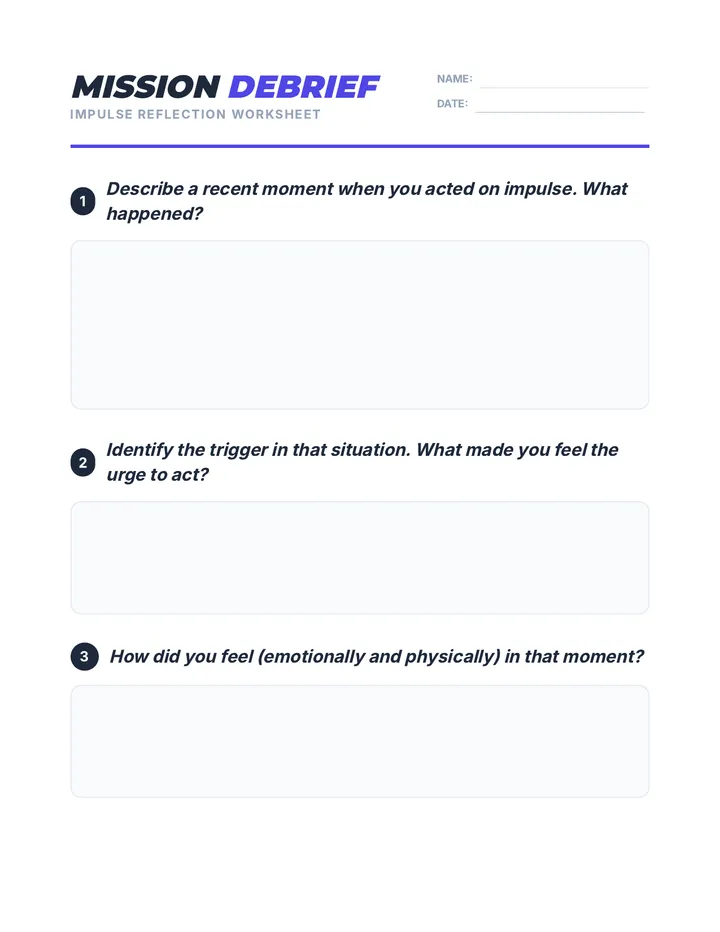
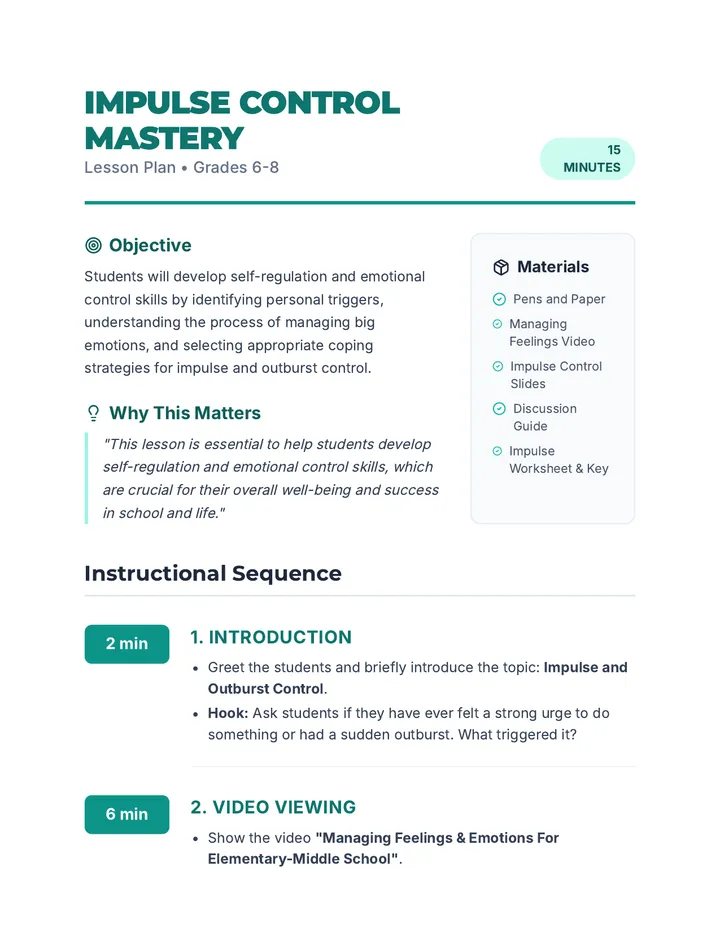
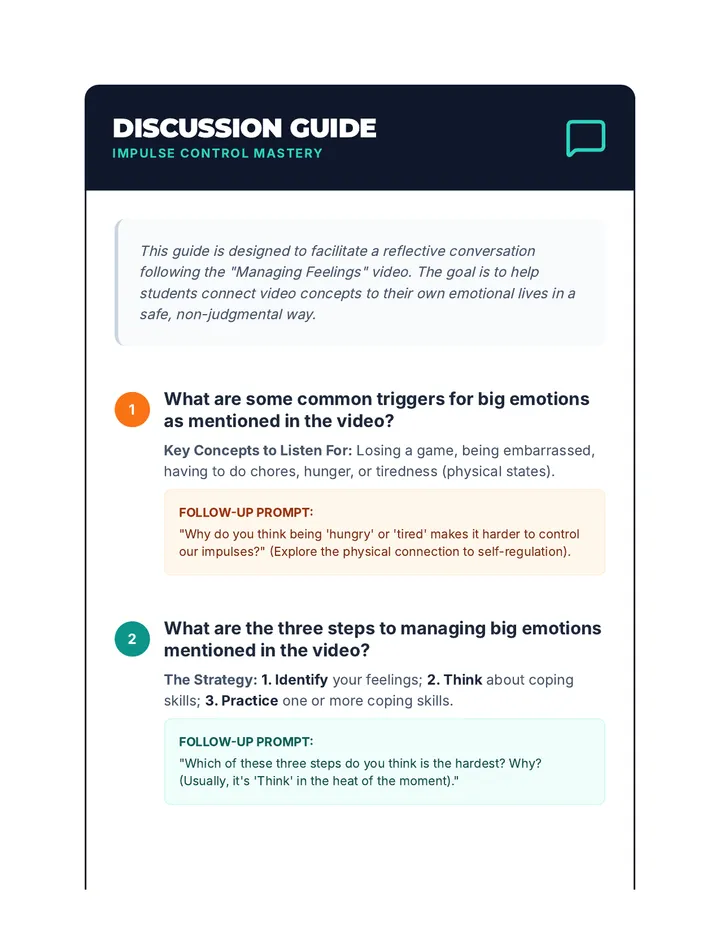
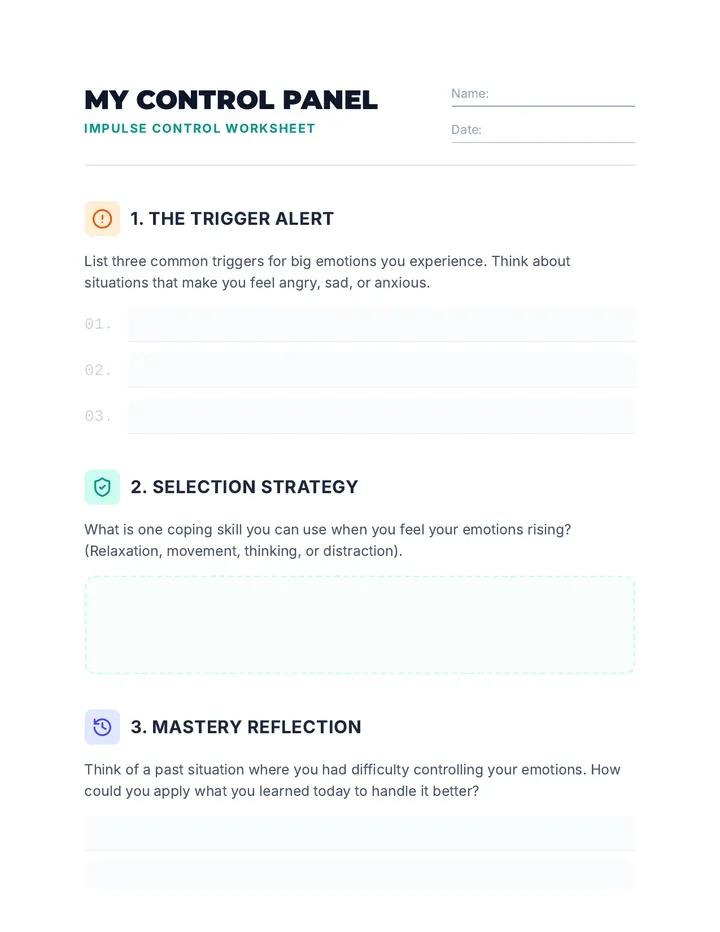
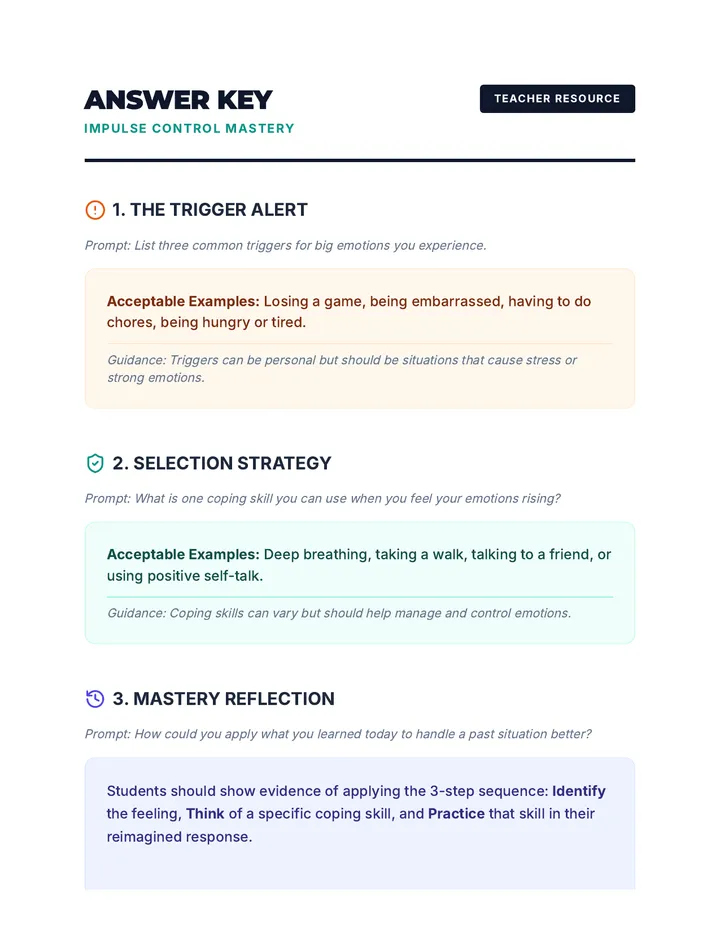
A comprehensive lesson designed for middle school students to master impulse control. Students will identify personal triggers, learn specific coping strategies, and practice managing outbursts through interactive discussion and individual reflection.
A 6-week Tier 3 intervention for 4th-grade students focusing on self-regulation, anger management, and active listening. Students learn to identify triggers like personal space invasion and verbal threats, while practicing mindful breathing and calm communication.
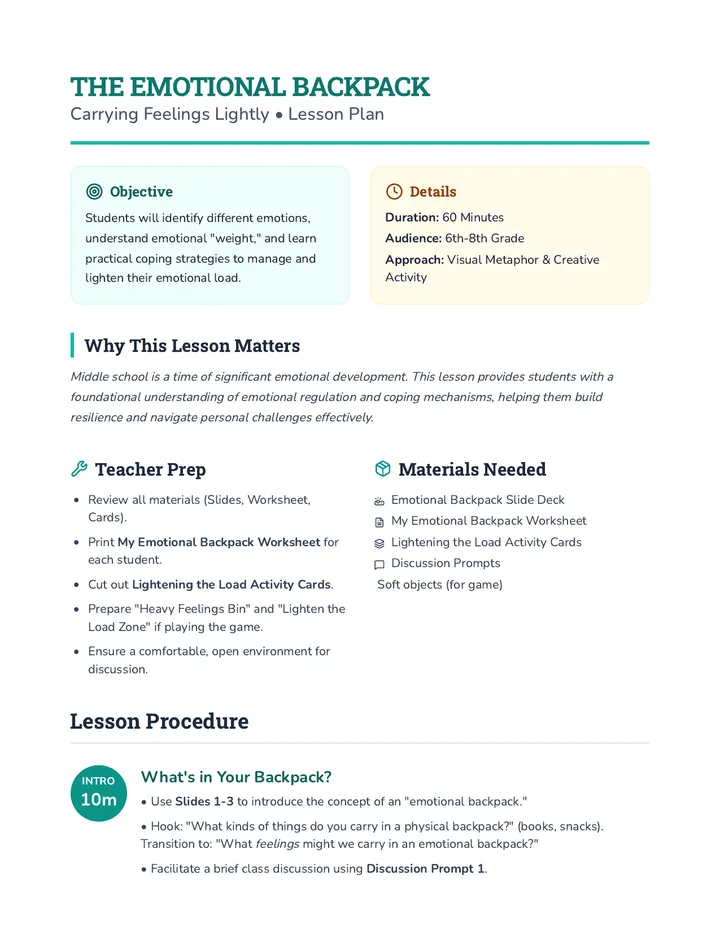
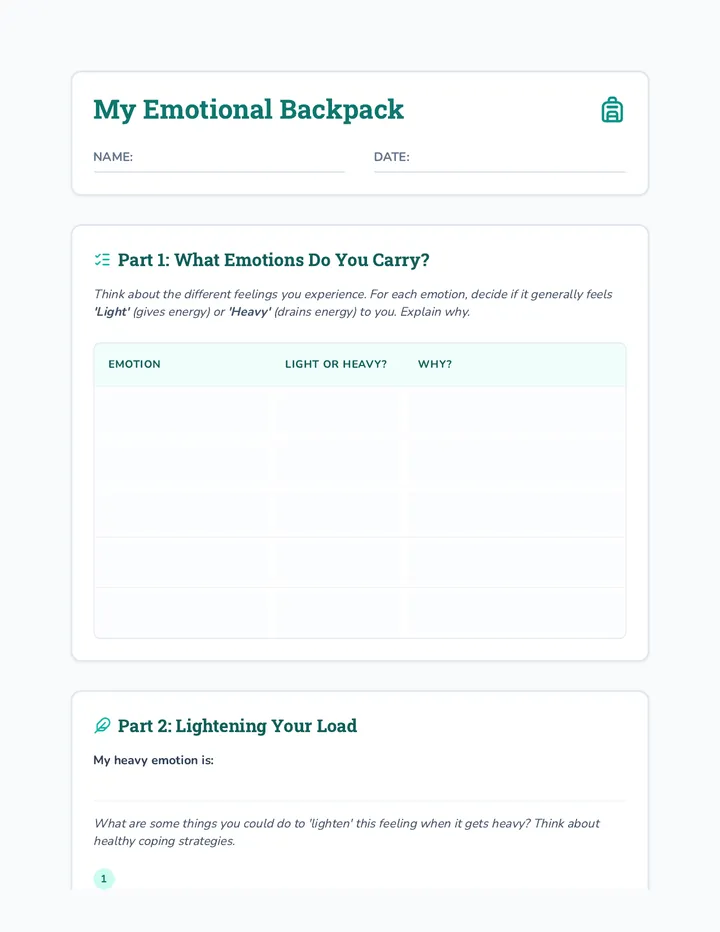
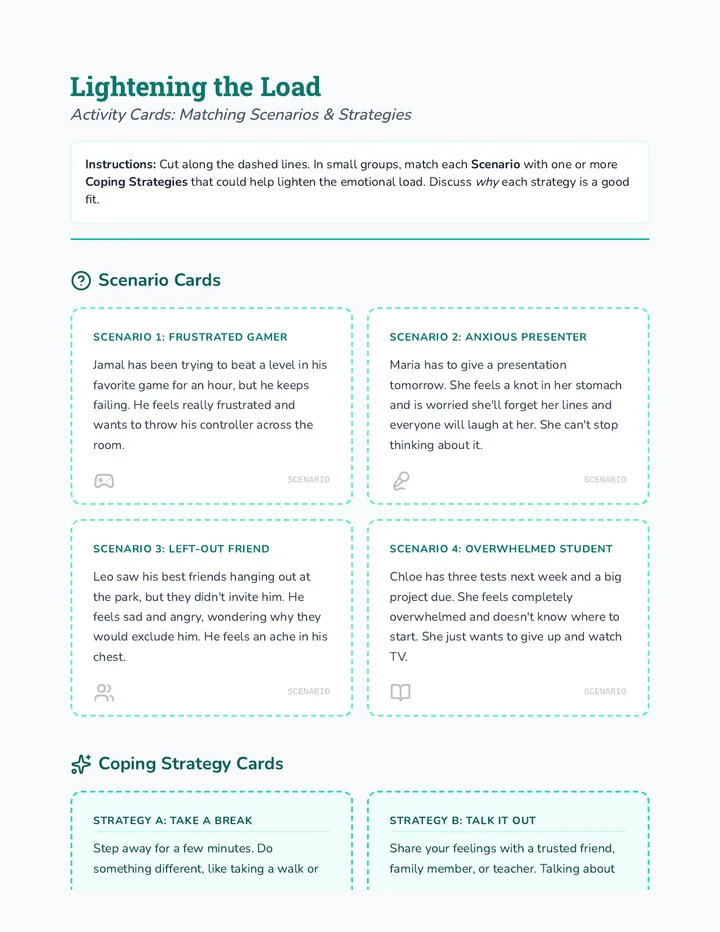
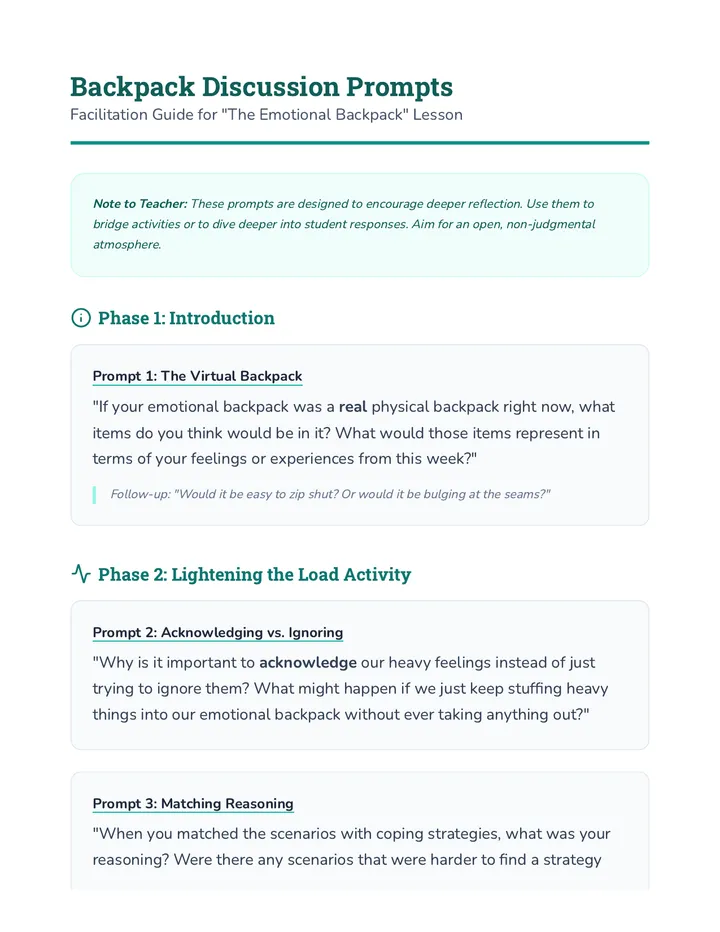
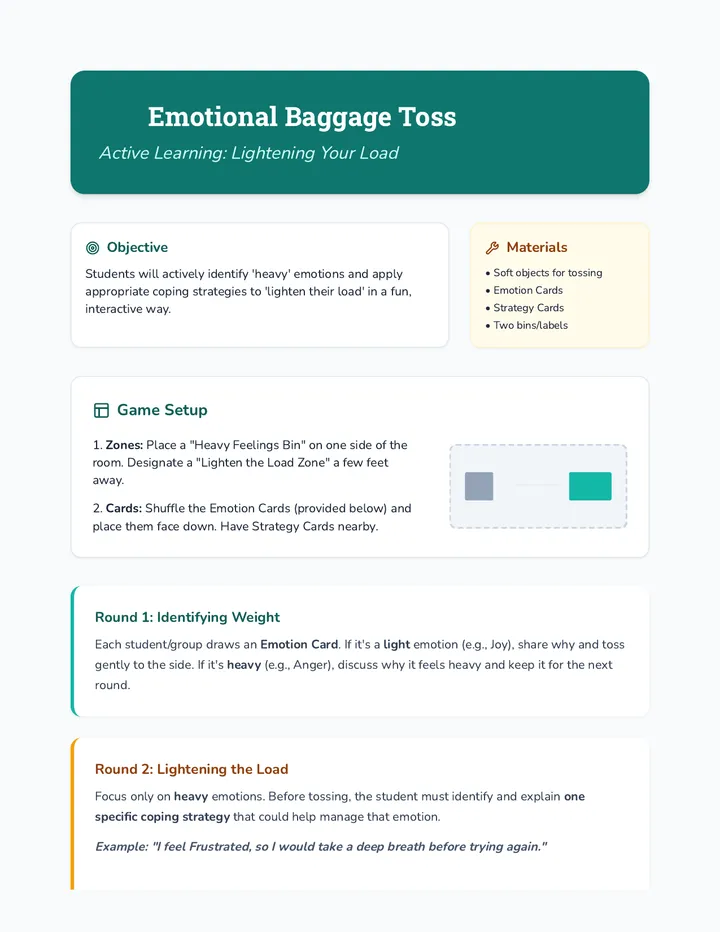
A 60-minute lesson for middle schoolers that uses the metaphor of a backpack to help students identify emotional weight and practice healthy coping strategies.
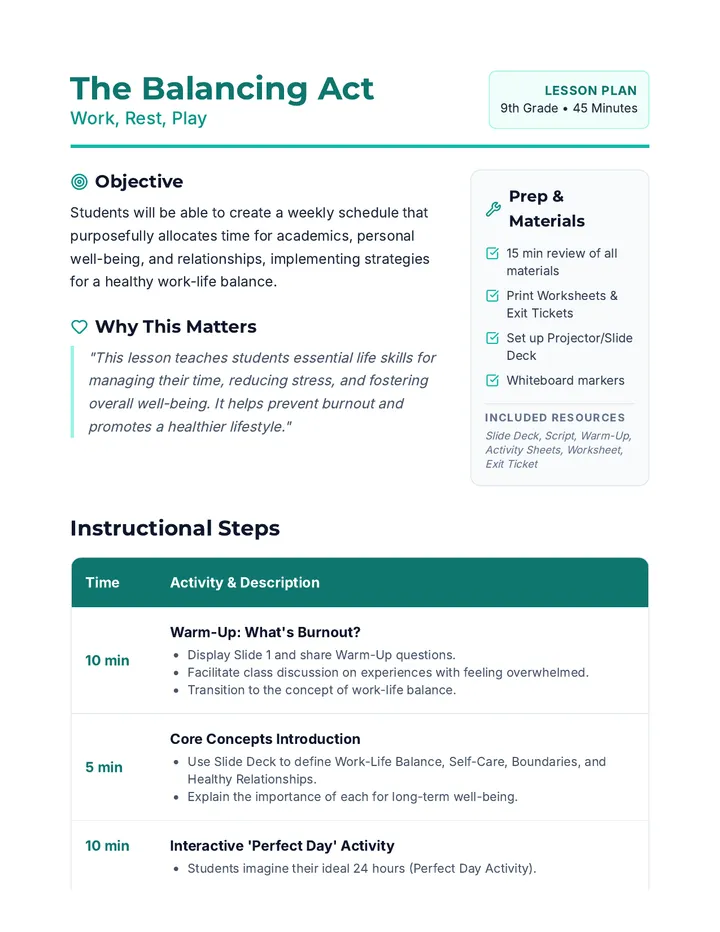
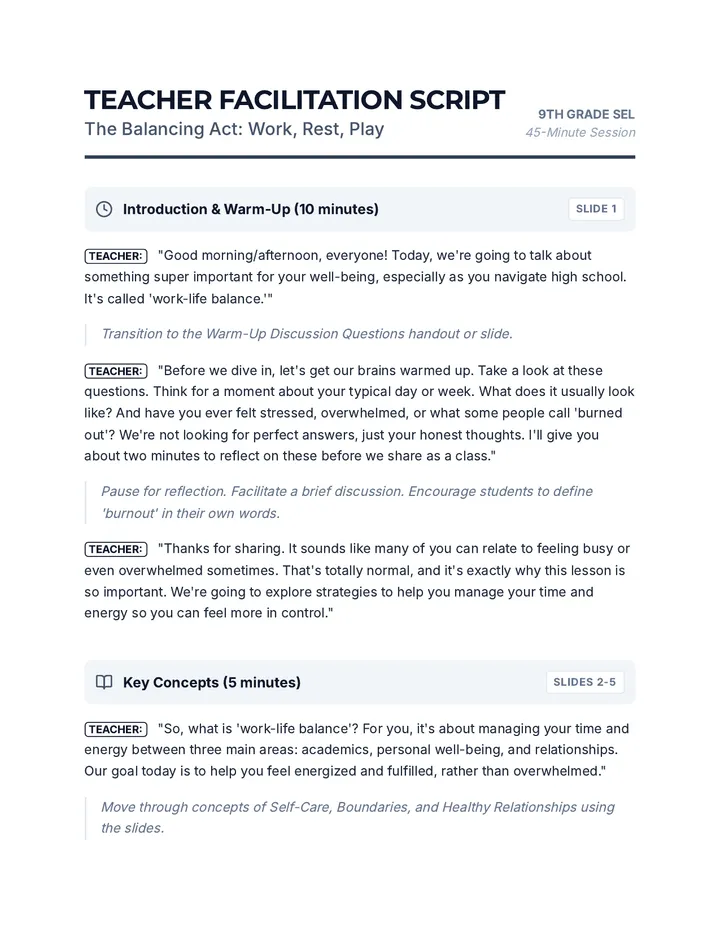
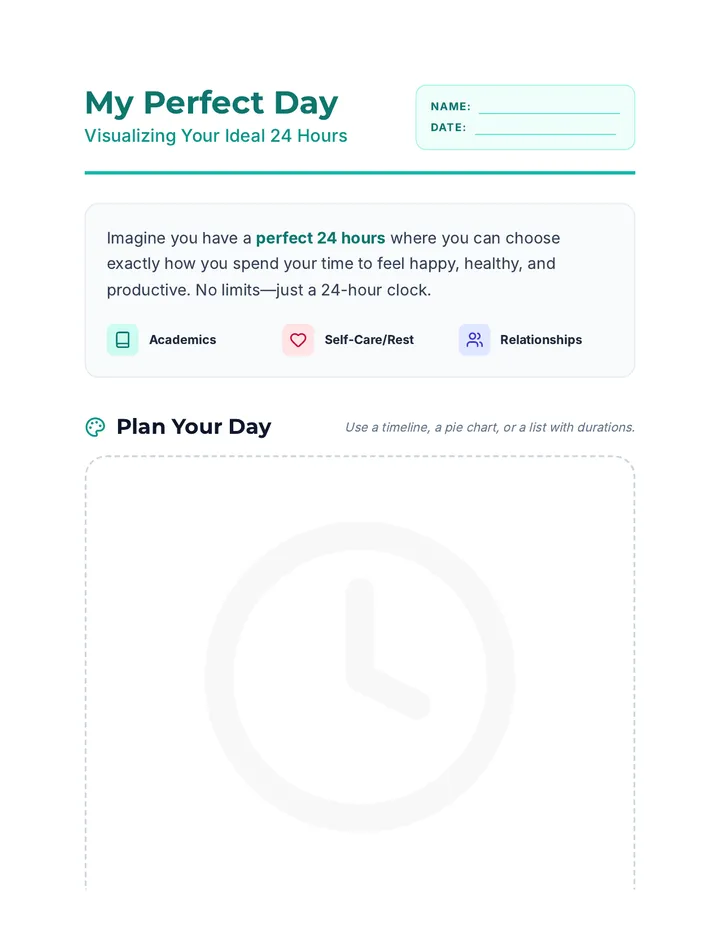
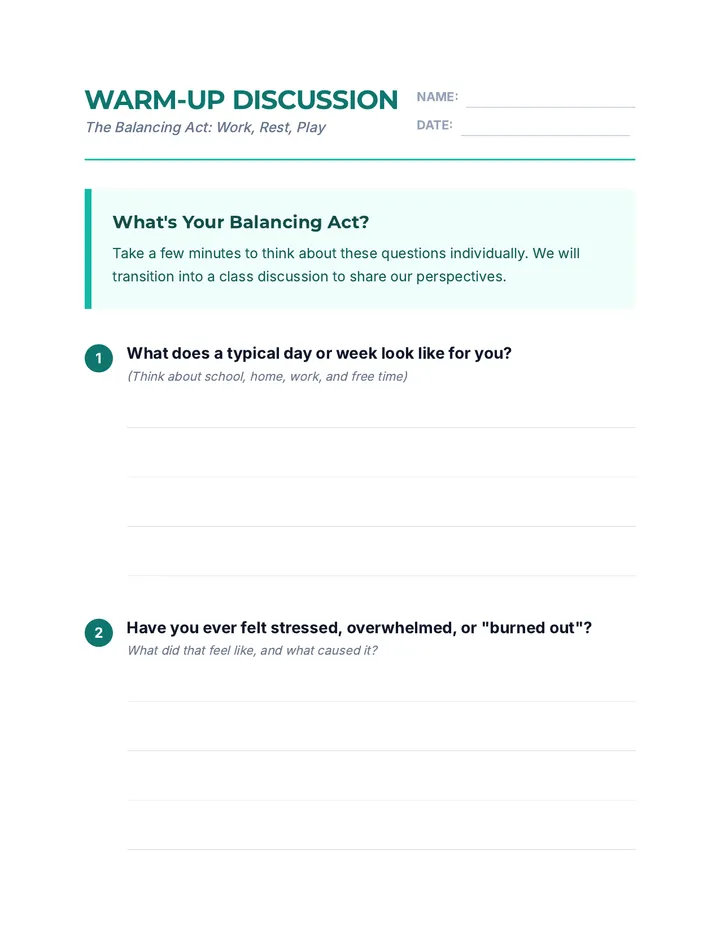
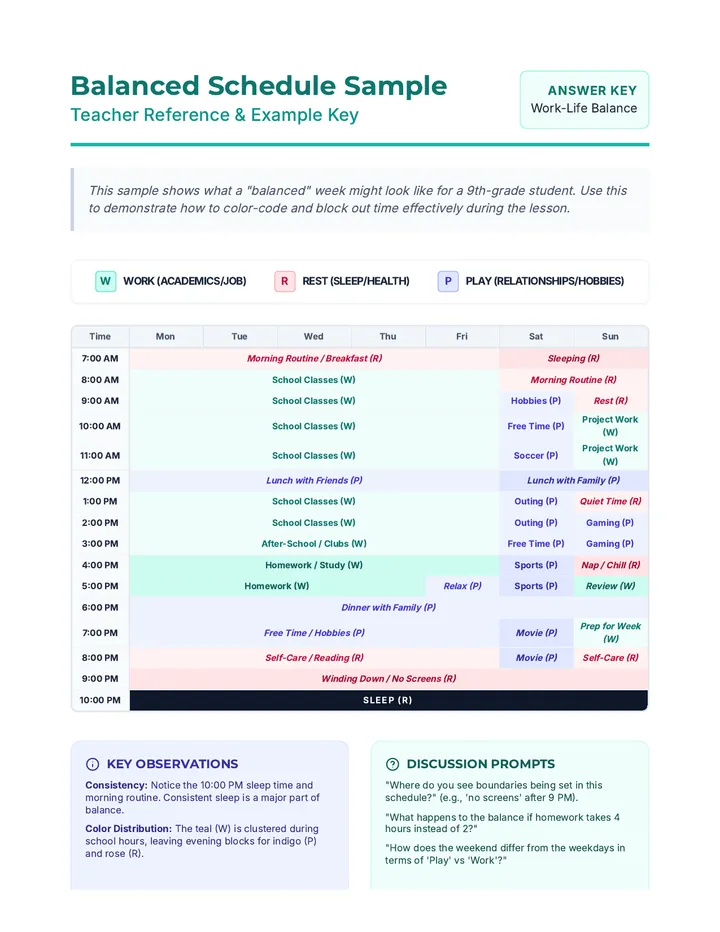
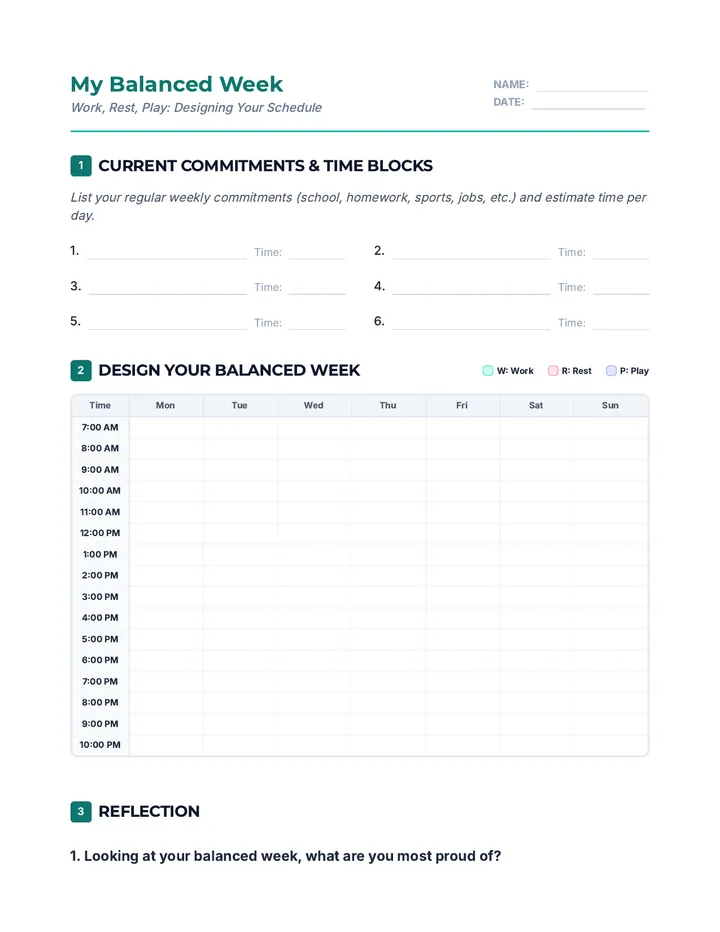
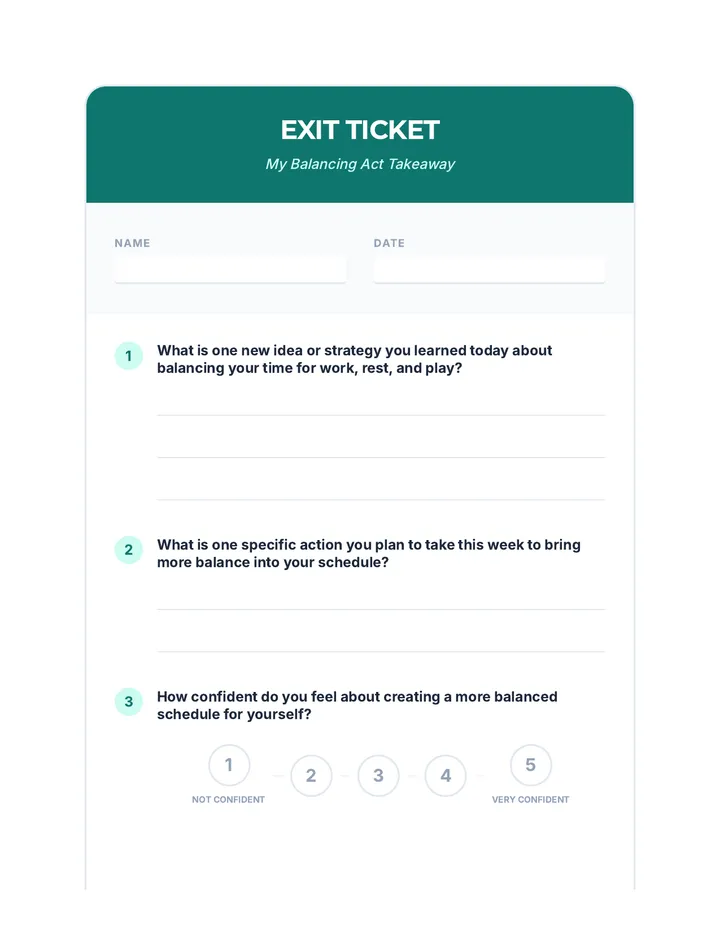
A 45-minute lesson for 9th-grade students to explore work-life balance, self-care, and boundaries through interactive scheduling activities. Students will create a realistic weekly plan that prioritizes academics, personal well-being, and relationships.
A 20-30 minute lesson for high school students to manage perfectionistic tendencies through deep breathing, positive self-talk, and time management strategies.