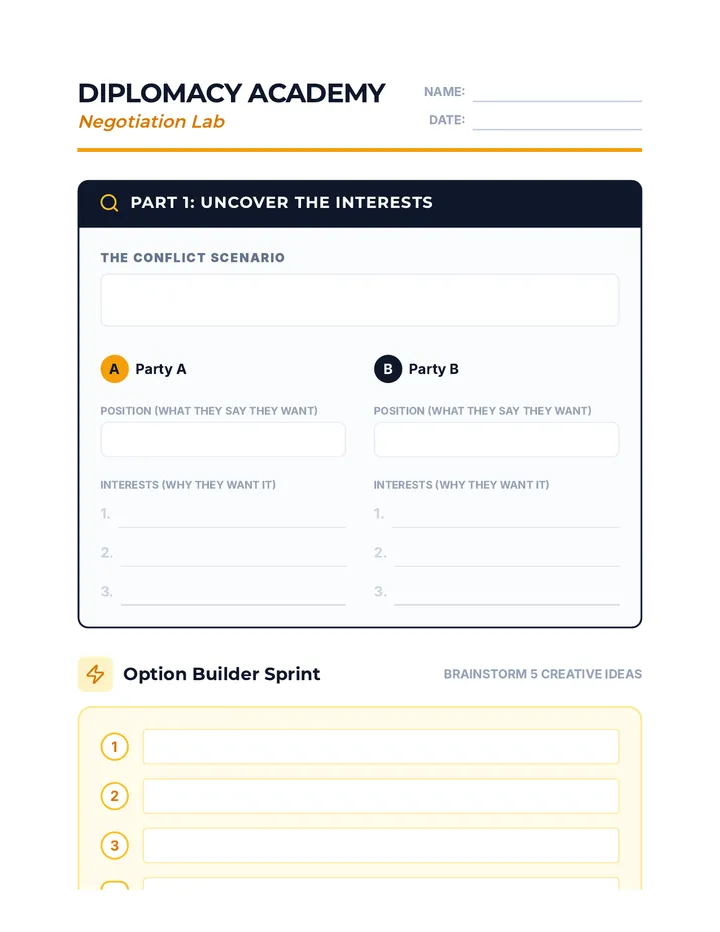
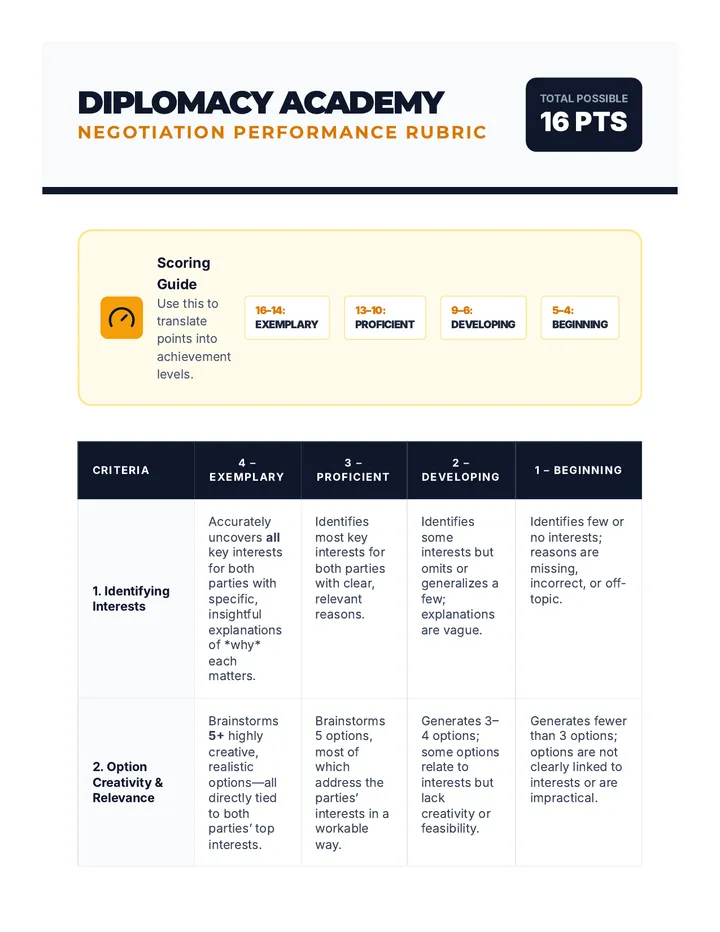
Techniques for neutral conflict resolution and interest-based bargaining. Strengthens active listening, de-escalation, and collaborative problem-solving to reach mutual agreements.
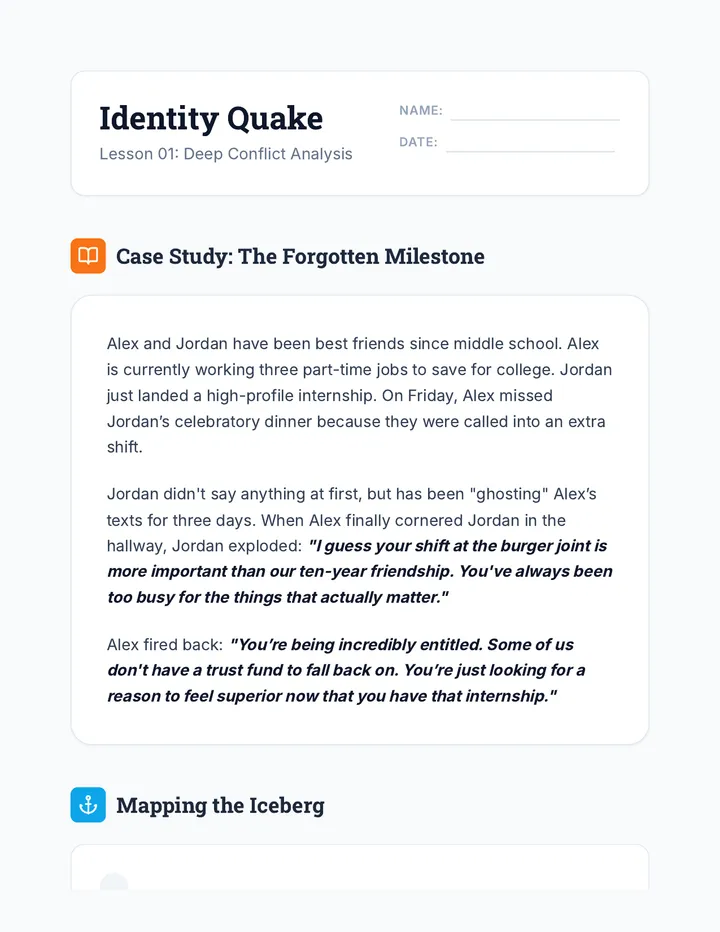
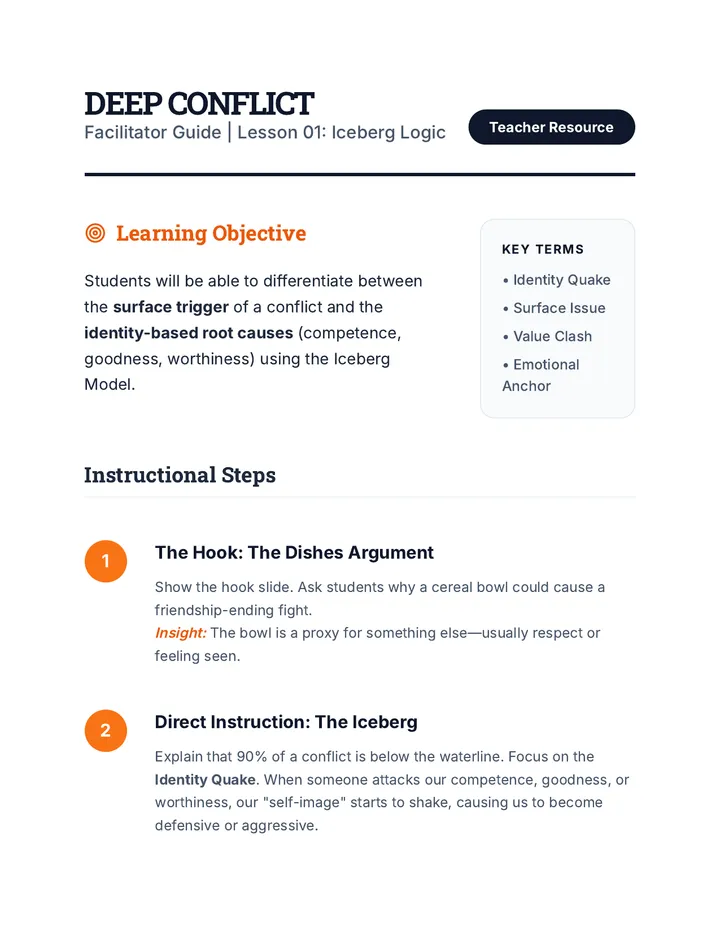
This sequence explores complex conflict navigation for 12th graders, moving from the psychological roots of identity-based conflict to the practical application of restorative circles and sustainable resolution design.
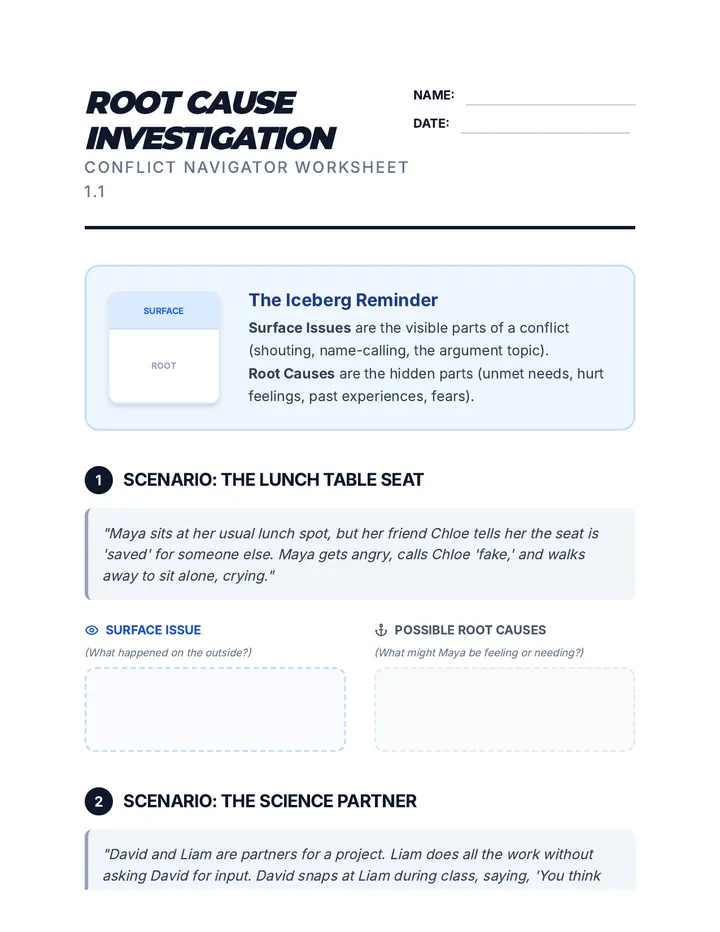
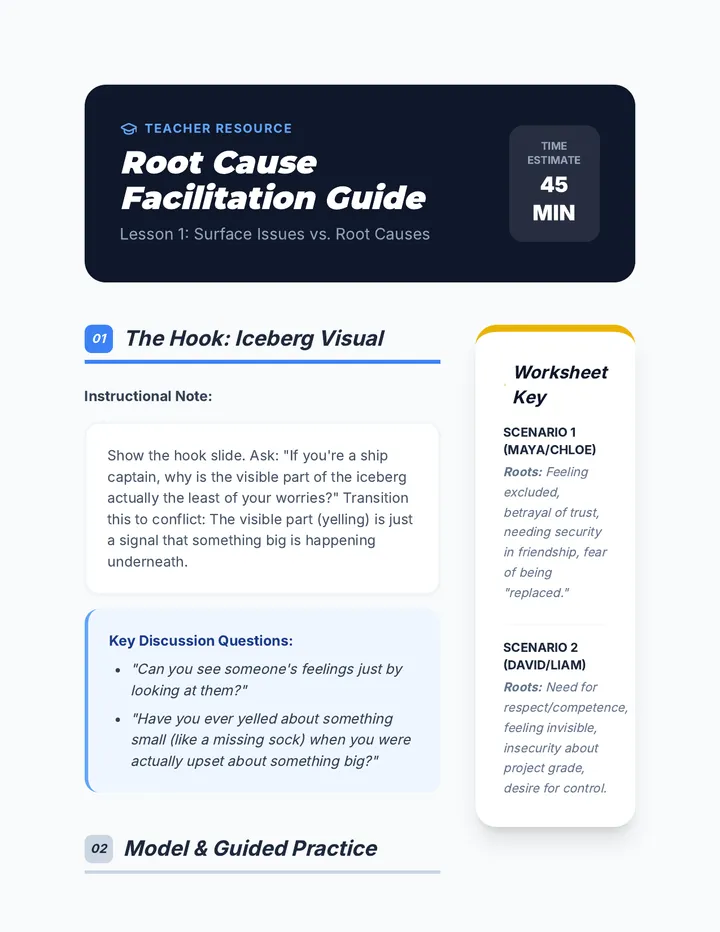
A comprehensive 6th-grade sequence on conflict navigation, teaching students to identify root causes, recognize personal conflict styles, practice perspective-taking, understand escalation, and diagnose complex disputes.
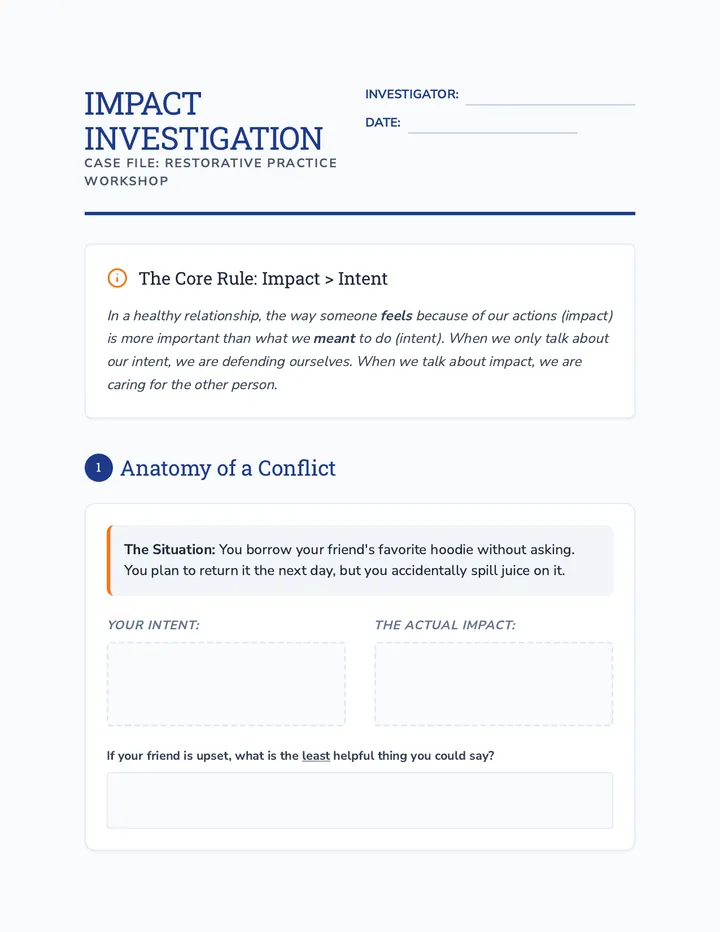
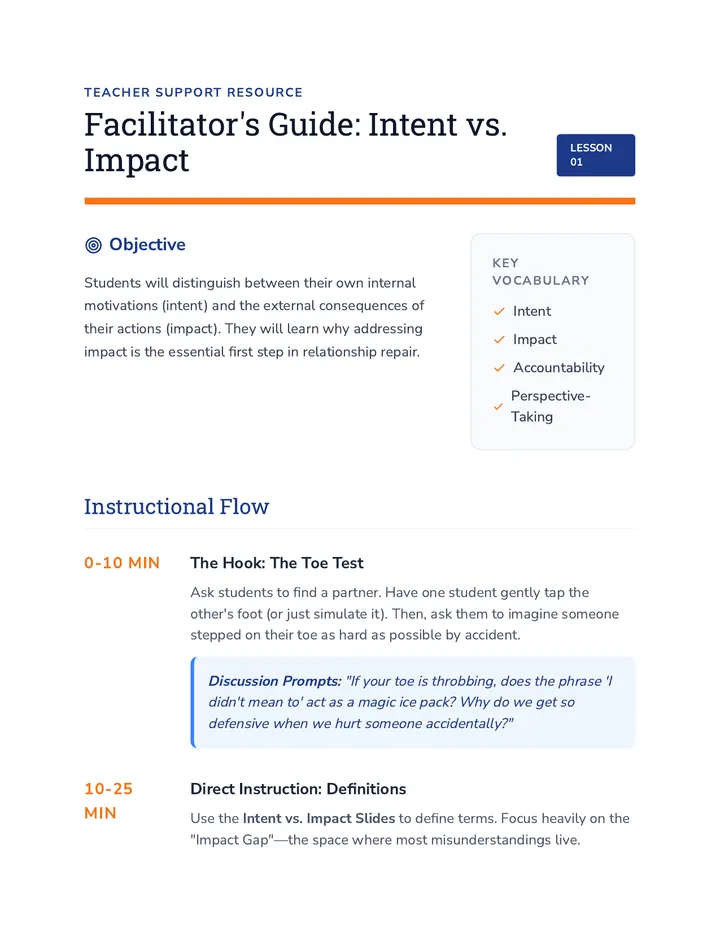
A 5-lesson sequence for 7th grade students focusing on restorative practices, the difference between intent and impact, crafting genuine apologies, and the long-term process of rebuilding trust after conflict.
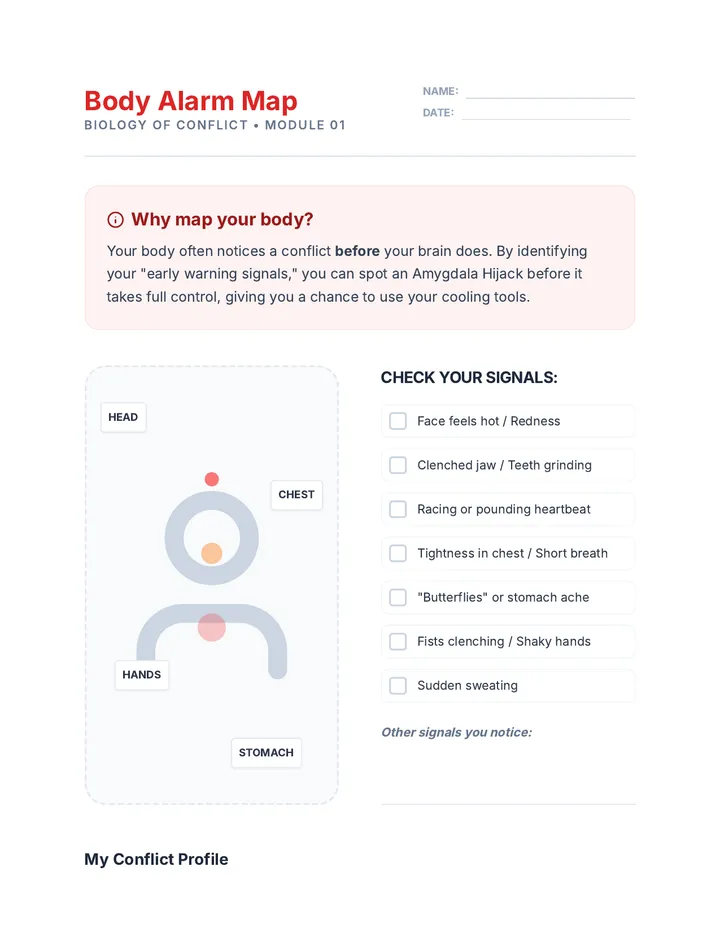
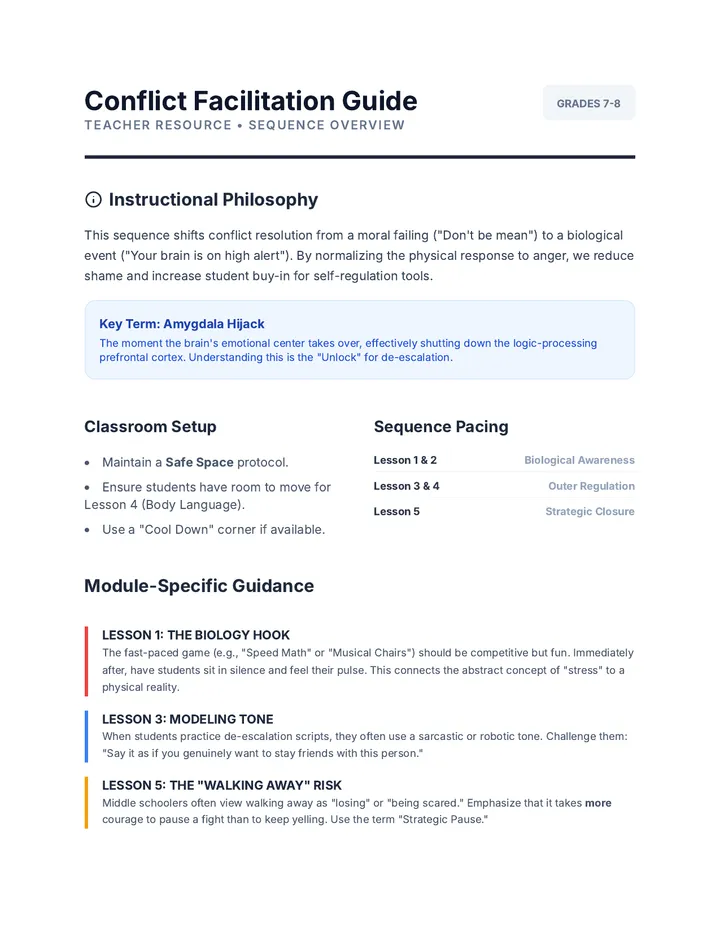
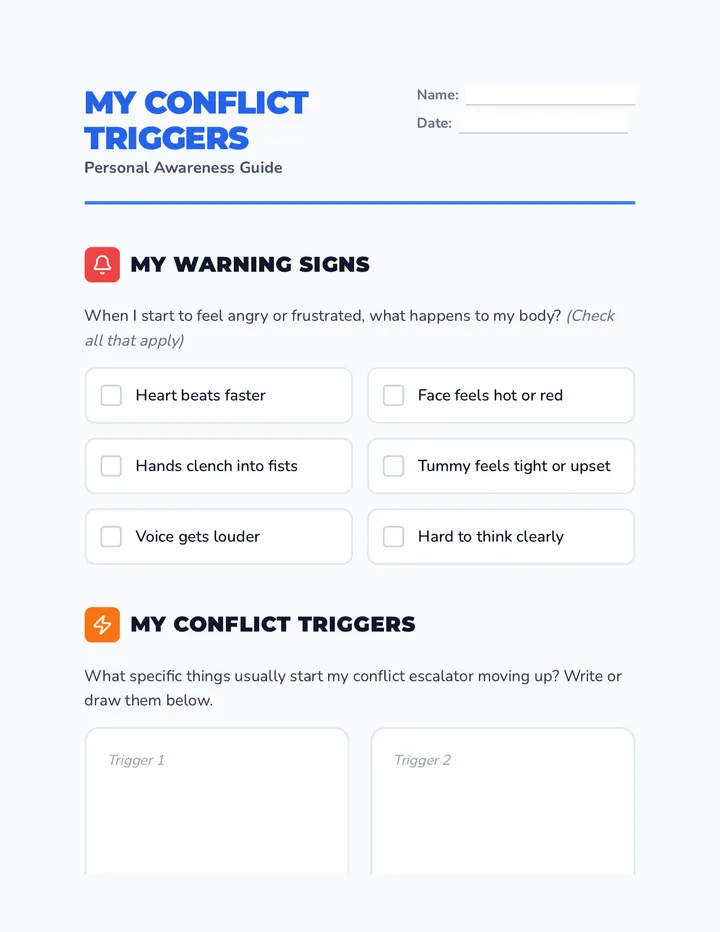
This sequence explores the physiological and psychological aspects of high-conflict situations, providing 7th-grade students with tools for self-regulation, verbal de-escalation, and constructive re-engagement.
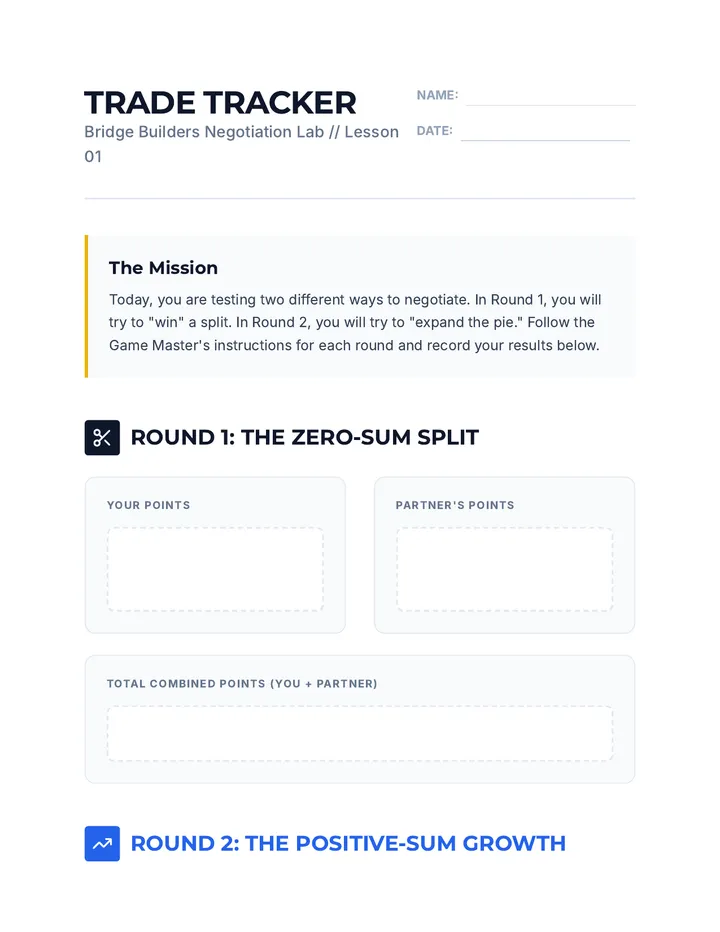
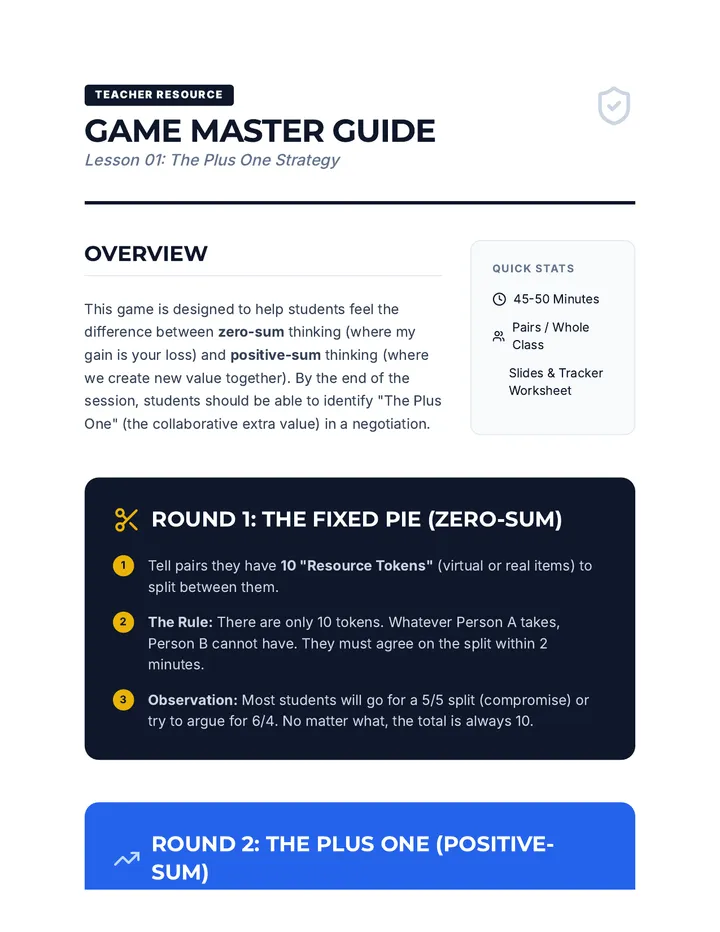
This sequence teaches 7th-grade students how to move beyond simple compromise to collaborative negotiation. Students learn to separate people from problems, brainstorm creative 'win-win' options, use objective criteria for fairness, and develop a BATNA (Best Alternative to a Negotiated Agreement) to handle complex conflicts effectively while preserving relationships.
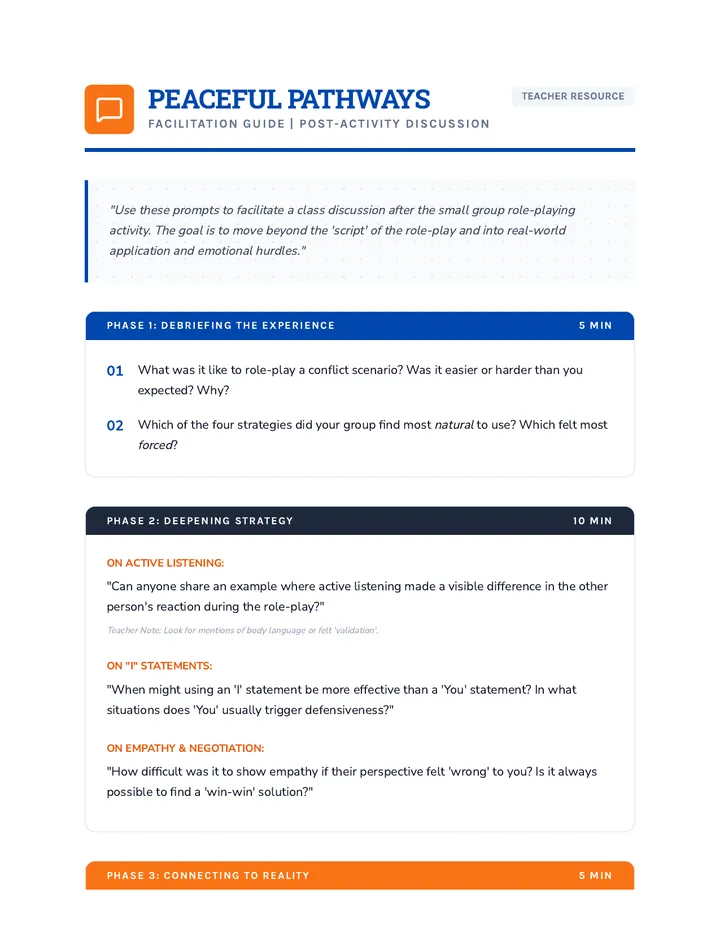
Students develop practical social-emotional skills to manage and resolve interpersonal conflicts effectively through identifying escalation, practicing active listening, using 'I' statements, and negotiating win-win solutions.
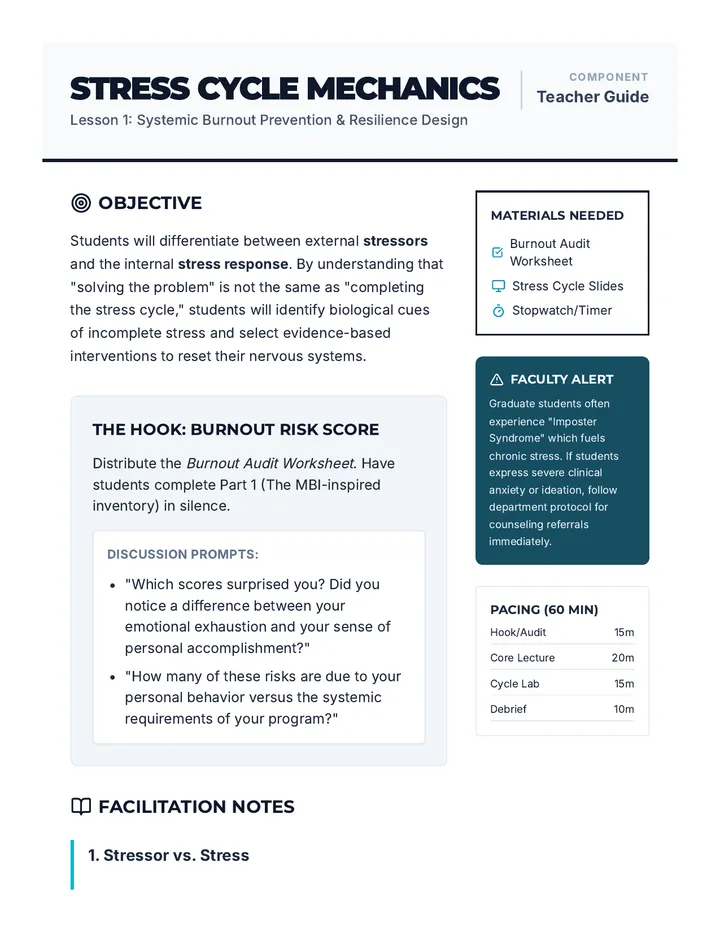
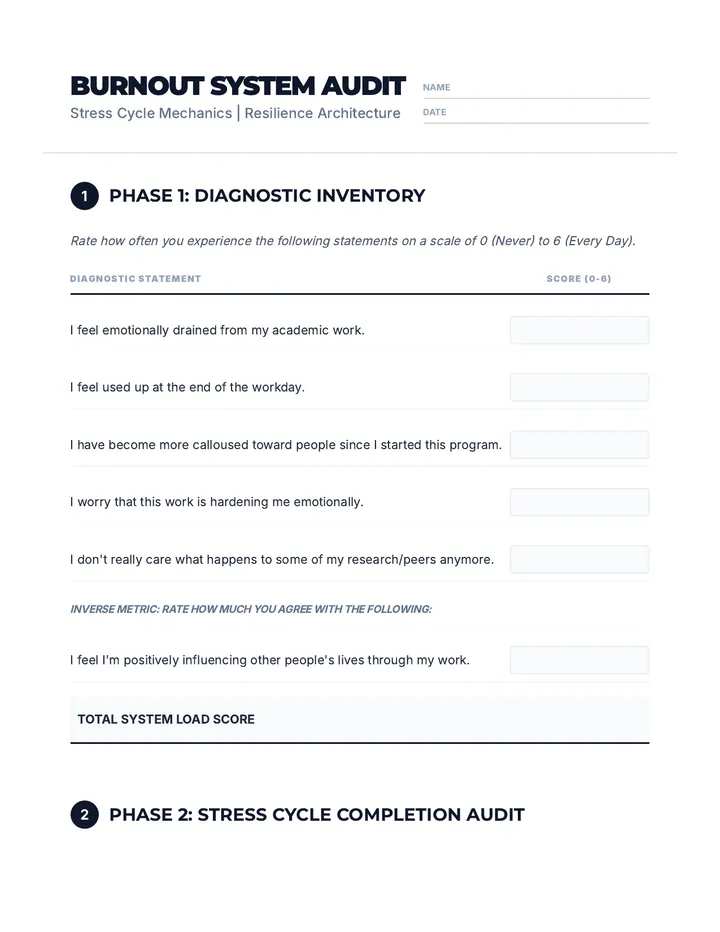
A systemic approach to stress and burnout prevention for graduate students, reframing personal well-being as a design challenge. Students develop a personalized 'resilience architecture' through structural changes in time management, sleep hygiene, and boundary setting.
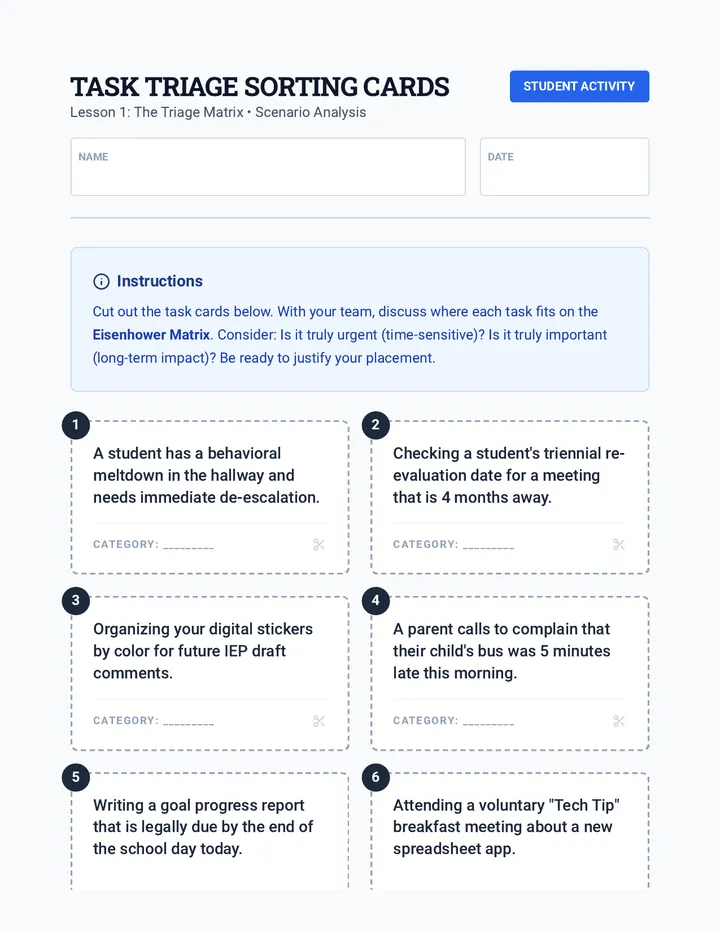
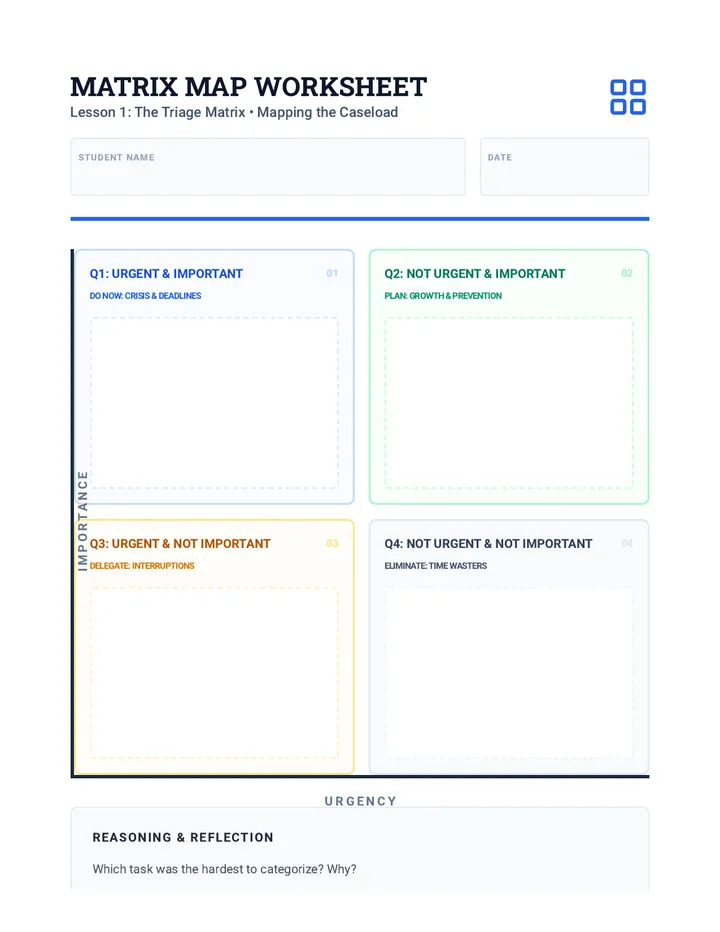
A high-stakes simulation for 12th graders transitioning to professional environments, focusing on prioritizing competing demands, managing interruptions, and professional communication in a special education caseload context.
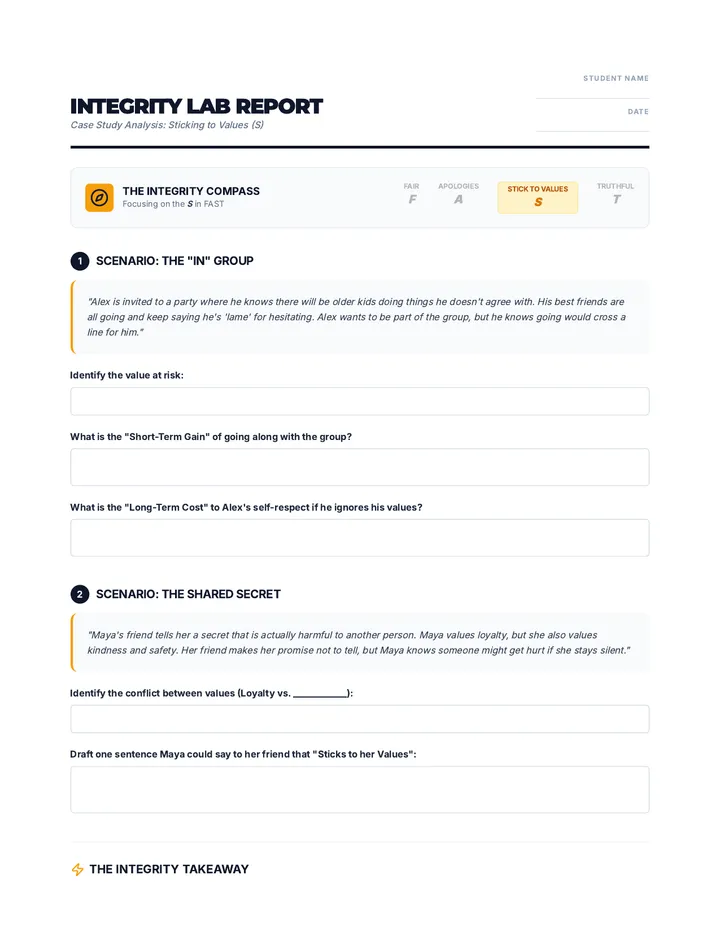
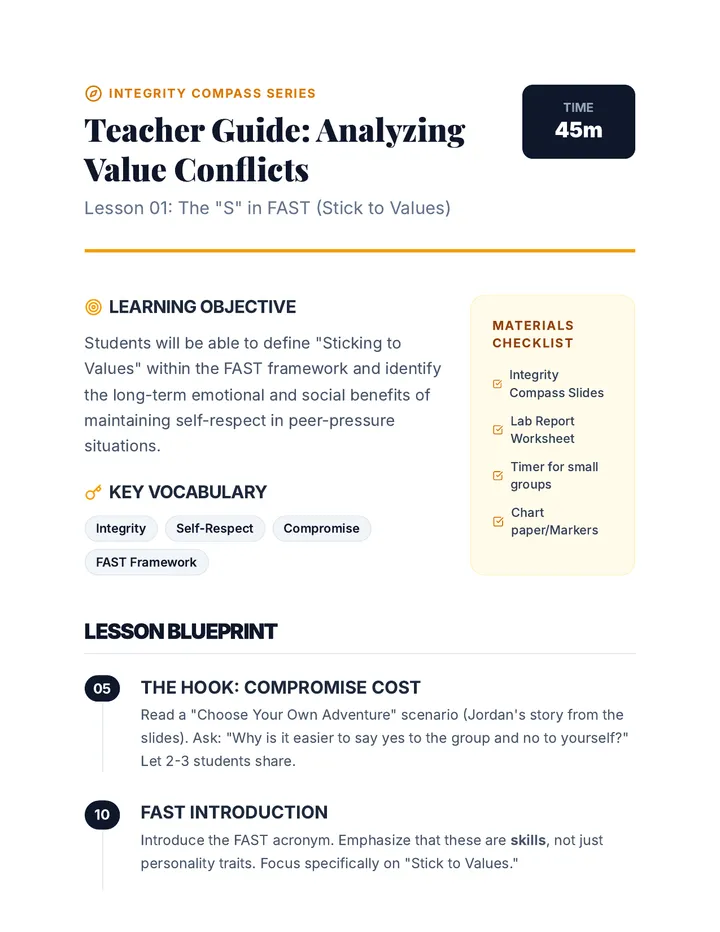
A counseling and life skills sequence for 7th graders focusing on the FAST acronym (Fair, No Apologies, Stick to Values, Truthful) to build self-respect and navigate social dilemmas with integrity.
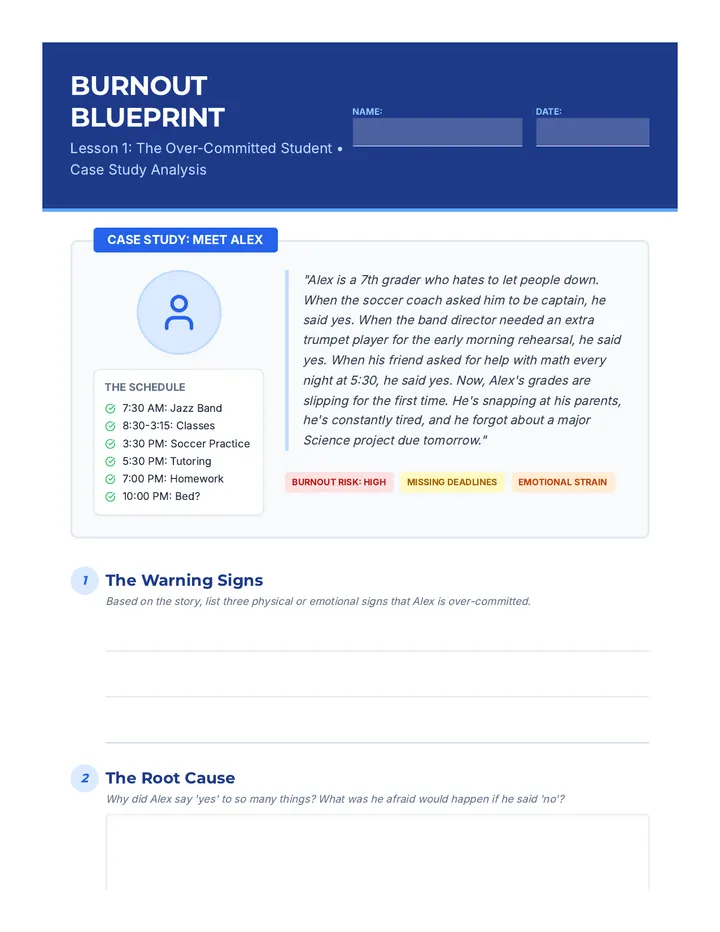
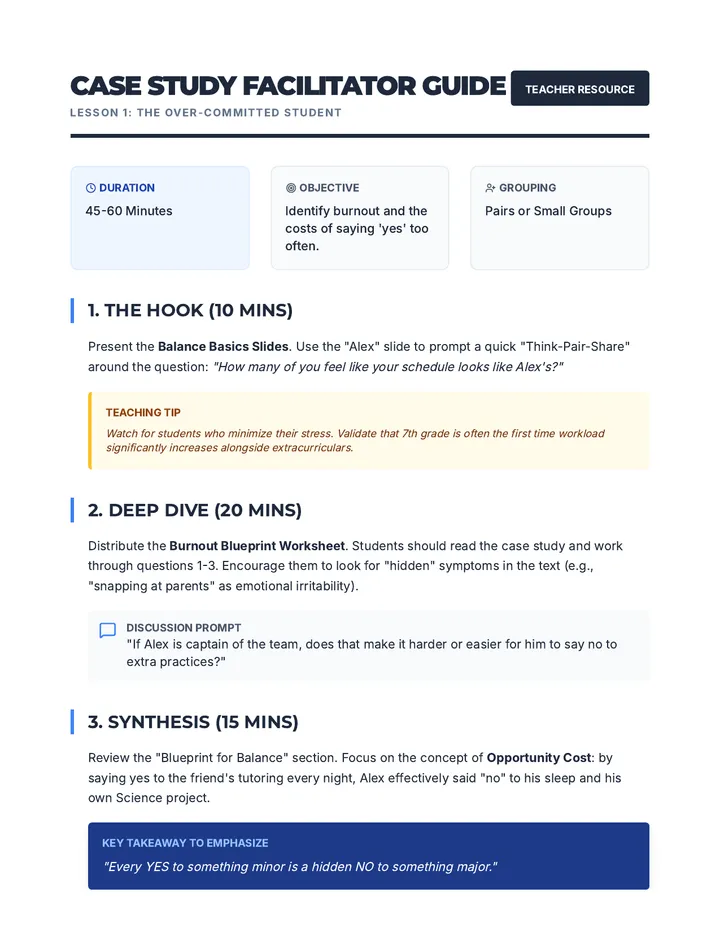
A 5-lesson unit for 7th-grade students focusing on the interpersonal skills required for time management: setting boundaries, communicating overload, and advocating for a balanced schedule. Students progress from identifying burnout to drafting a personal accountability contract.
A six-session unit for 6th graders focusing on empathy, diversity, and restorative practices following incidents of bullying. Students learn to recognize bias, practice healthy communication, and build inclusive communities through a culminating restorative project.
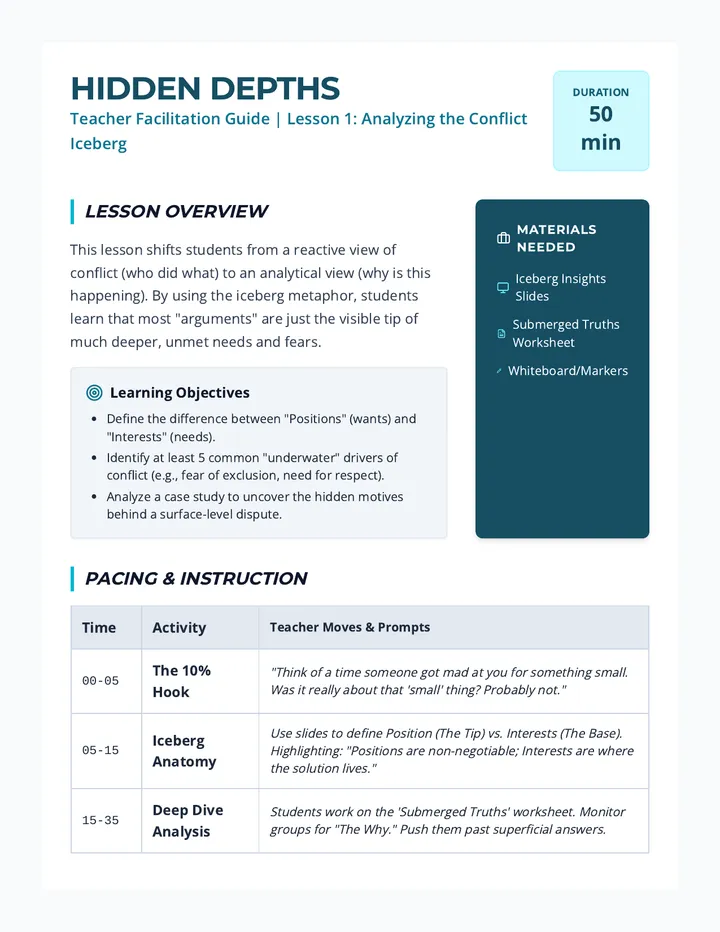
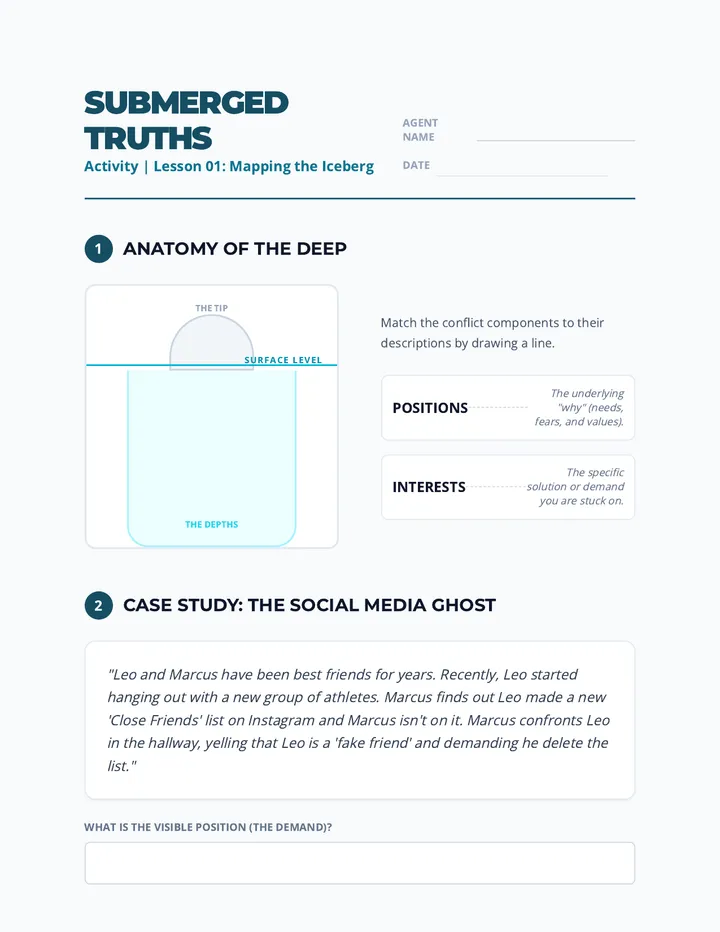
A comprehensive 9th-grade sequence exploring the psychological and biological roots of conflict. Students learn to distinguish visible behaviors from hidden needs, understand the neuroscience of emotional escalation, and develop practical self-regulation strategies to navigate complex interpersonal disputes.
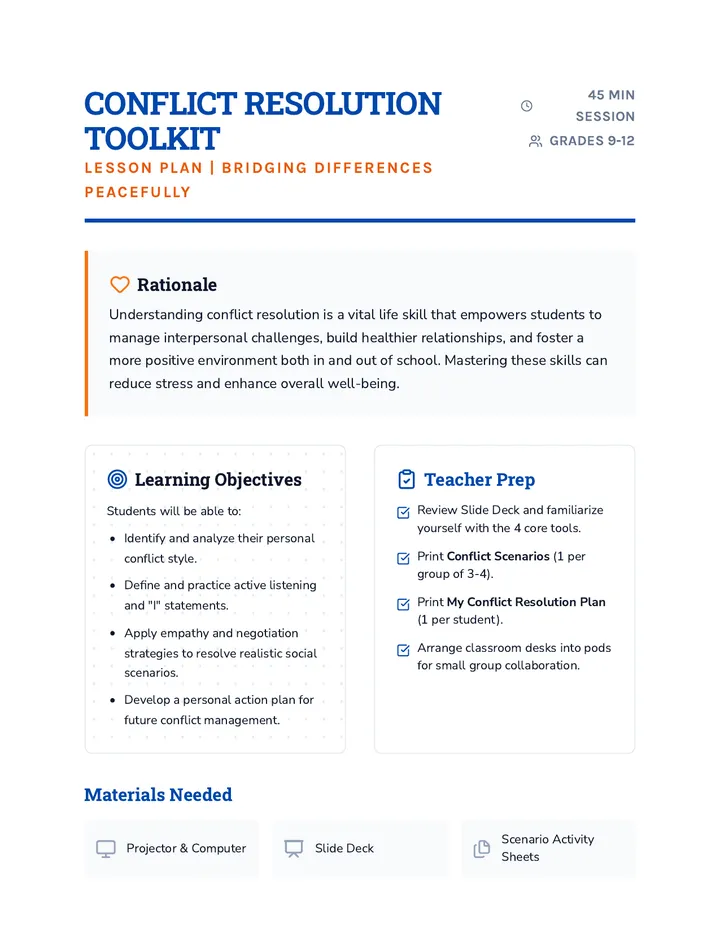
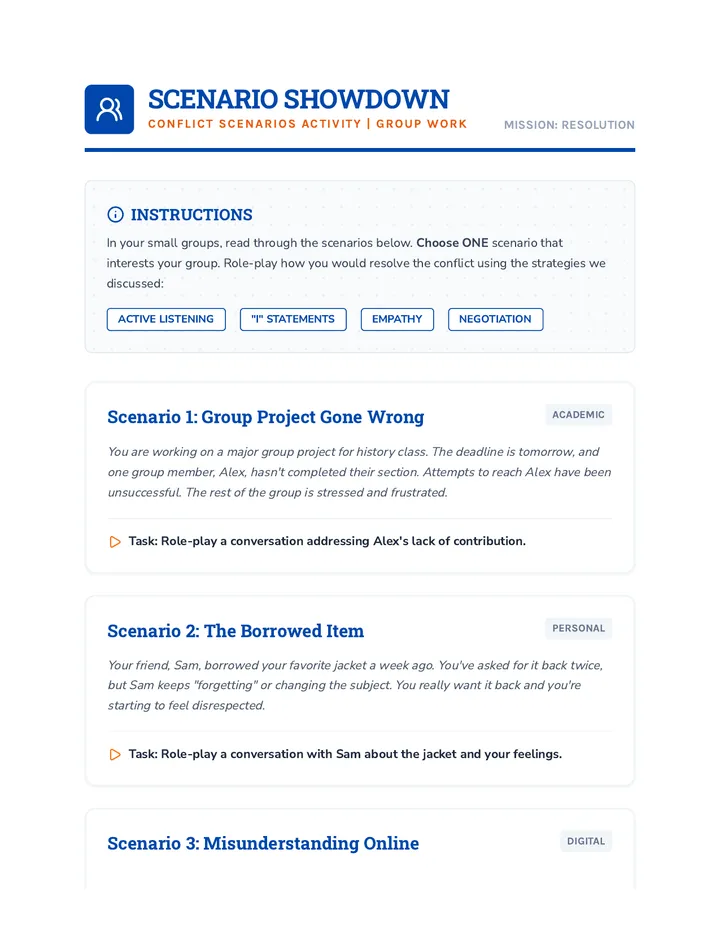
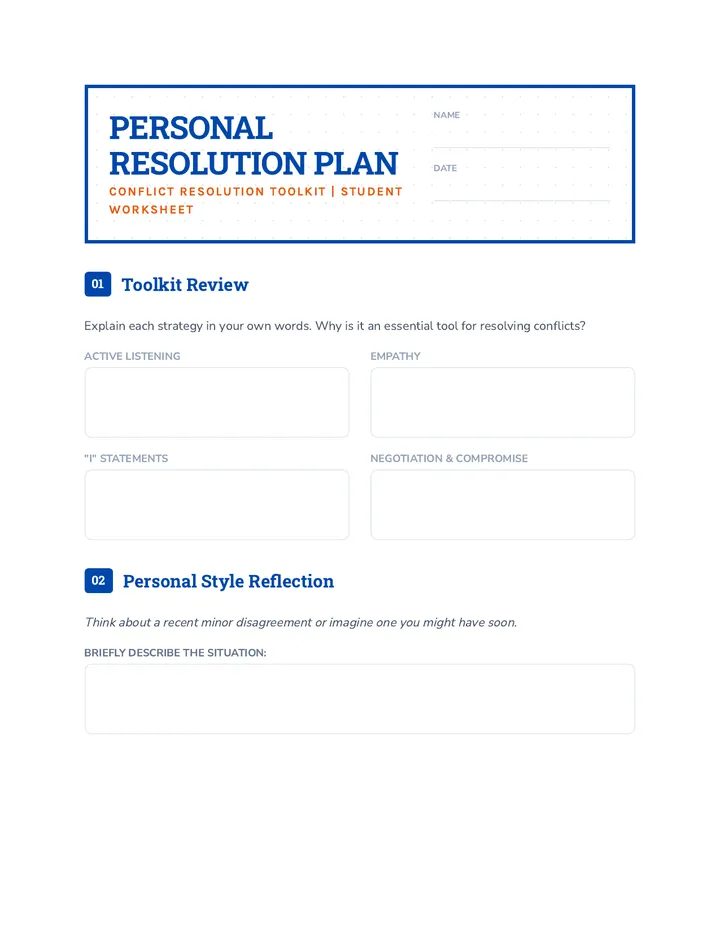
A 45-minute lesson for high school students focusing on active listening, 'I' statements, empathy, and negotiation to resolve conflicts constructively.
An interactive lesson for 11th-grade students focused on developing empathy and perspective-taking skills to foster ethical relationships and resolve conflicts. Students engage in discussions, scenario analysis, and personal reflection to understand the impact of empathy on social interactions.
This lesson equips students with practical strategies to communicate effectively with unsatisfied or angry customers, emphasizing empathy, active listening, and problem-solving to maintain loyalty.
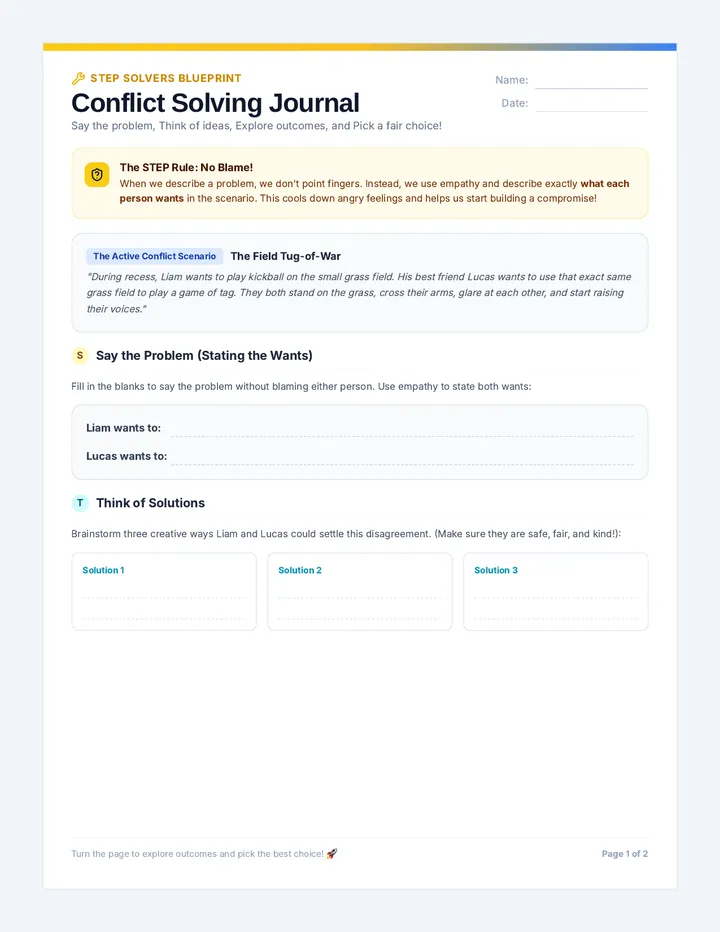
A third-grade conflict-resolution lesson teaching students to apply emotion management, communication, and empathy to solve interpersonal problems. Students learn the STEP method (Say, Think, Explore, Pick) to resolve peer conflicts fairly.
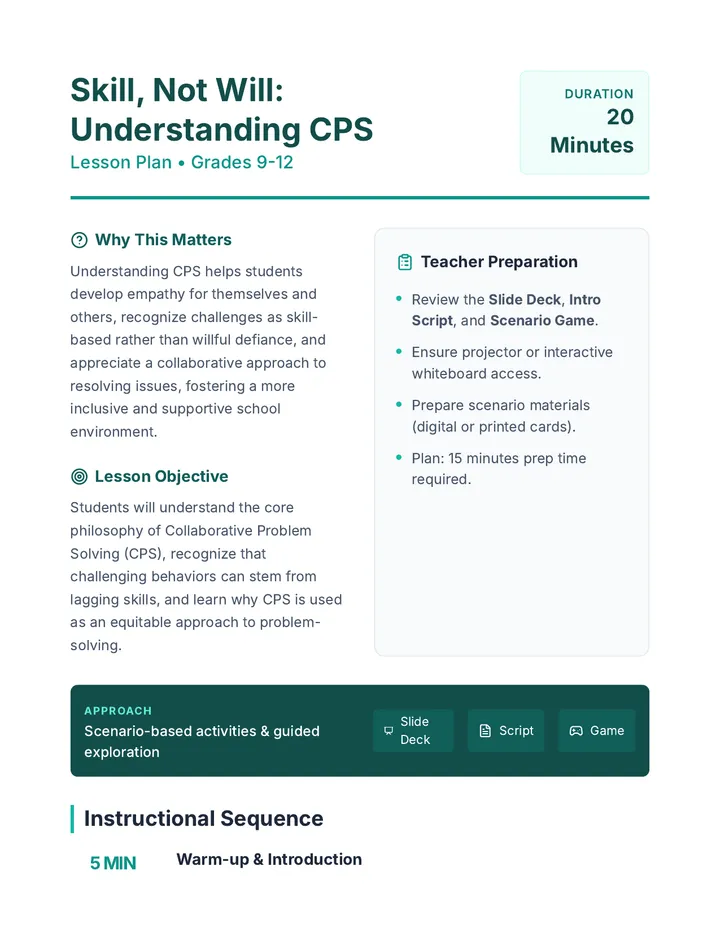
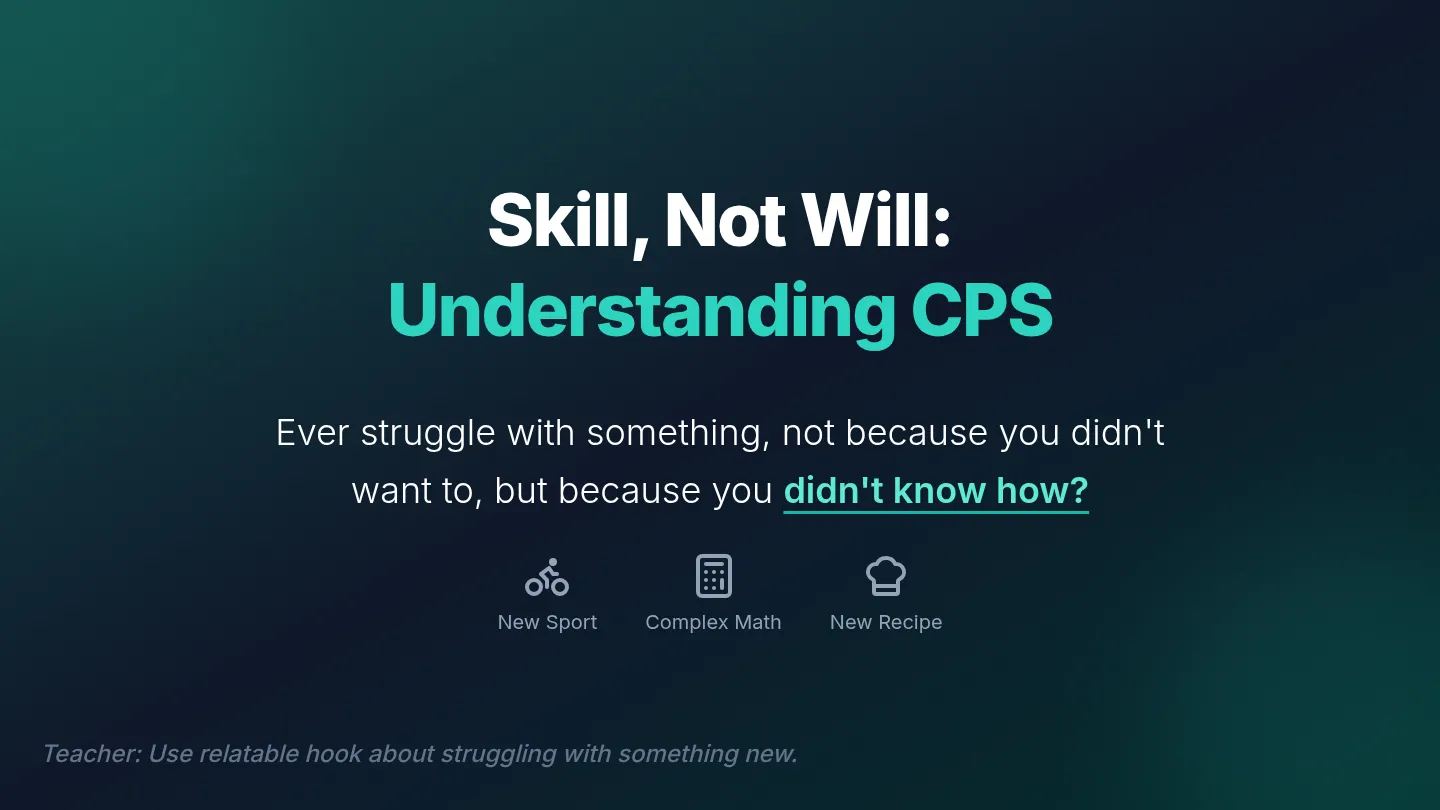
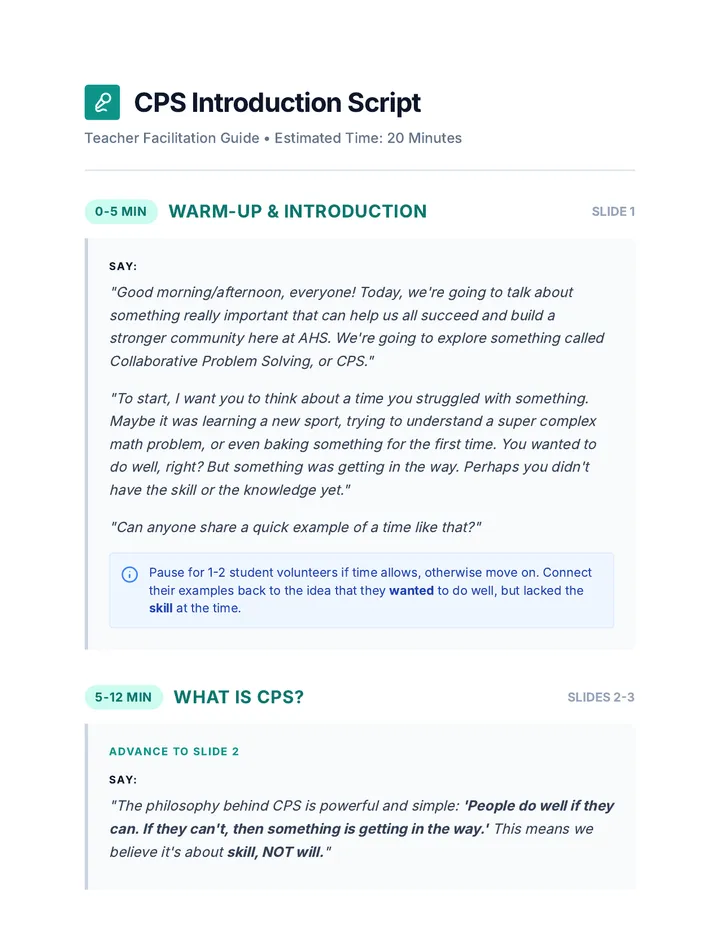
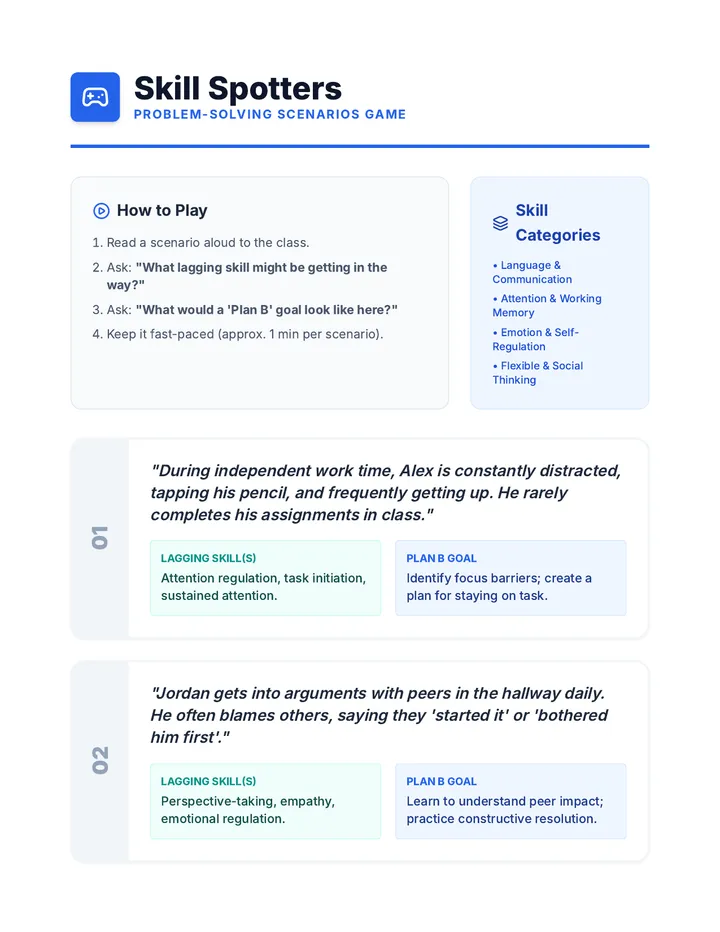
This lesson introduces high school students to Collaborative Problem Solving (CPS), emphasizing that behavioral challenges stem from a lack of skill rather than a lack of will. Students will explore lagging skills, the 'Plan B' conversation, and how this approach fosters equity and inclusion at their school.
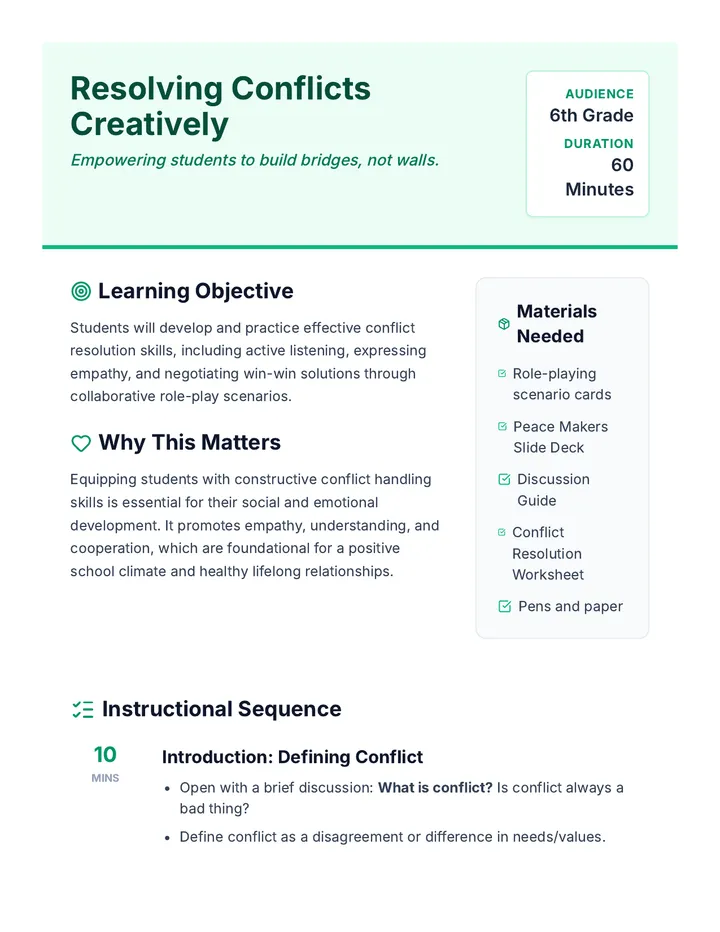
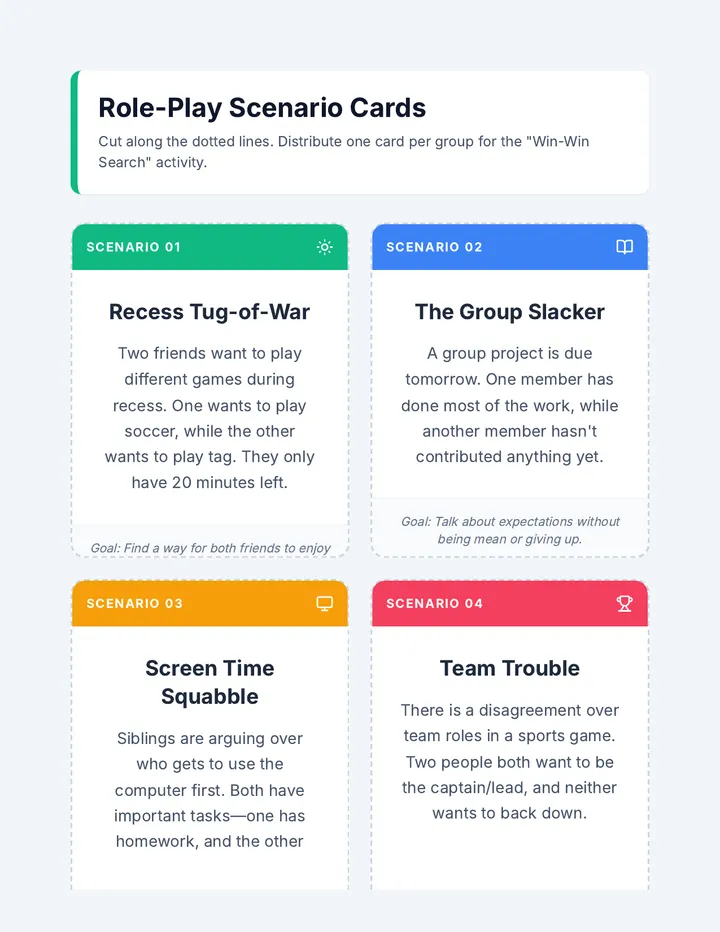
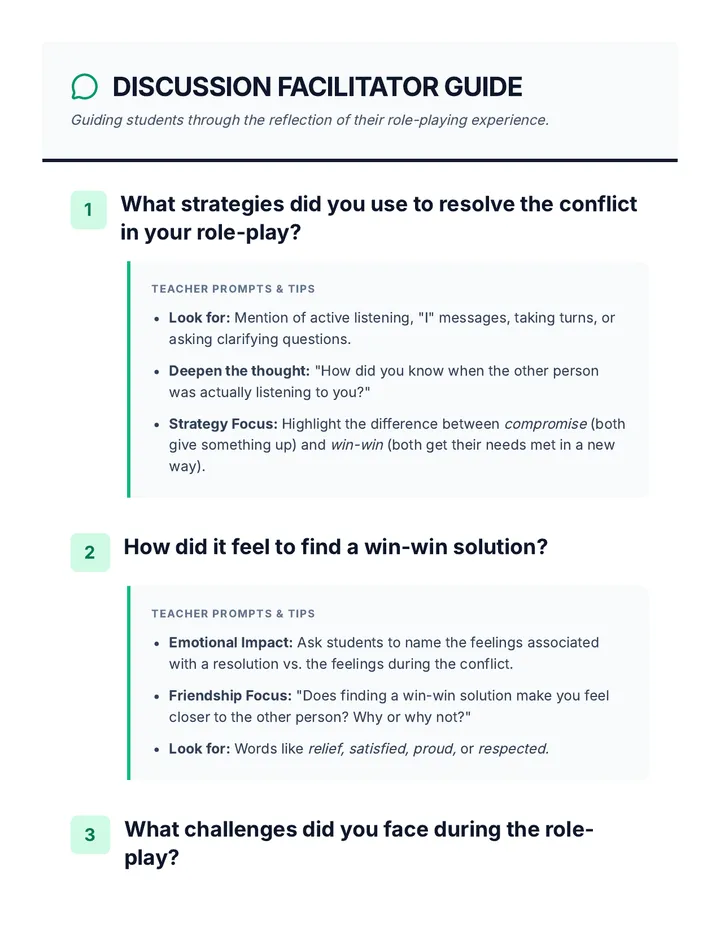
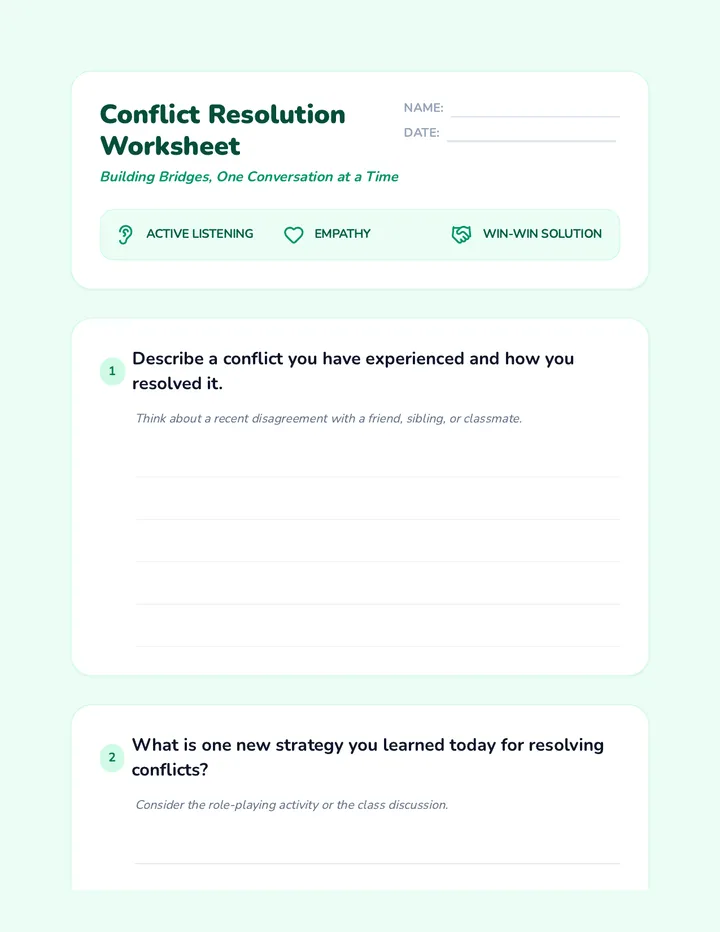
A 6th-grade lesson focused on teaching effective conflict resolution through active listening, empathy, and finding win-win solutions using role-play and guided reflection.
This lesson helps 10th-grade students understand the key differences between conflict and bullying, providing them with practical strategies to address both effectively. It fosters a safer, more respectful school environment.
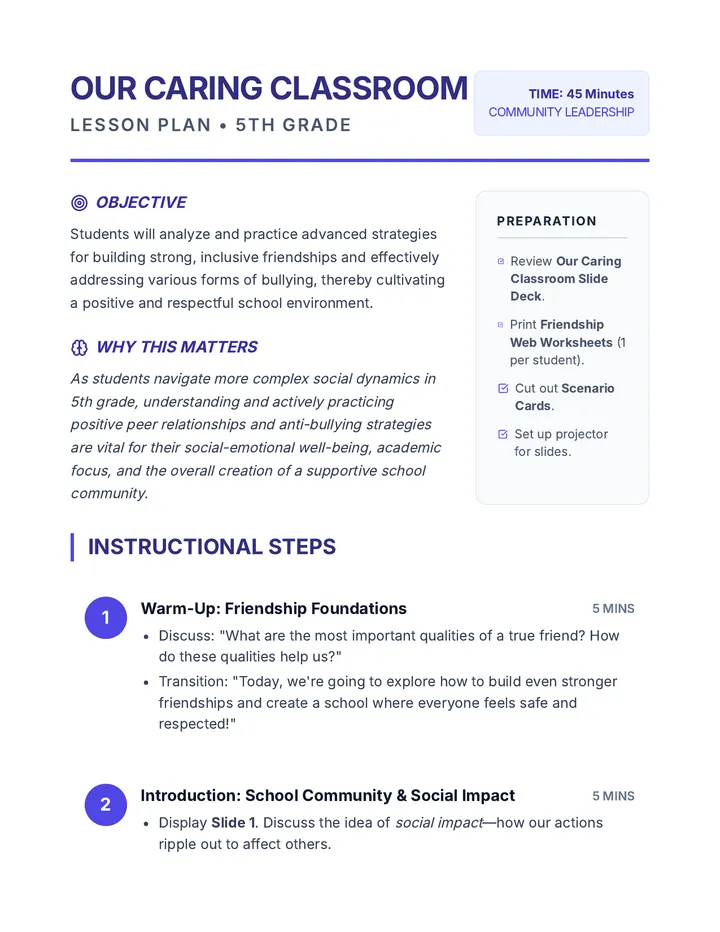
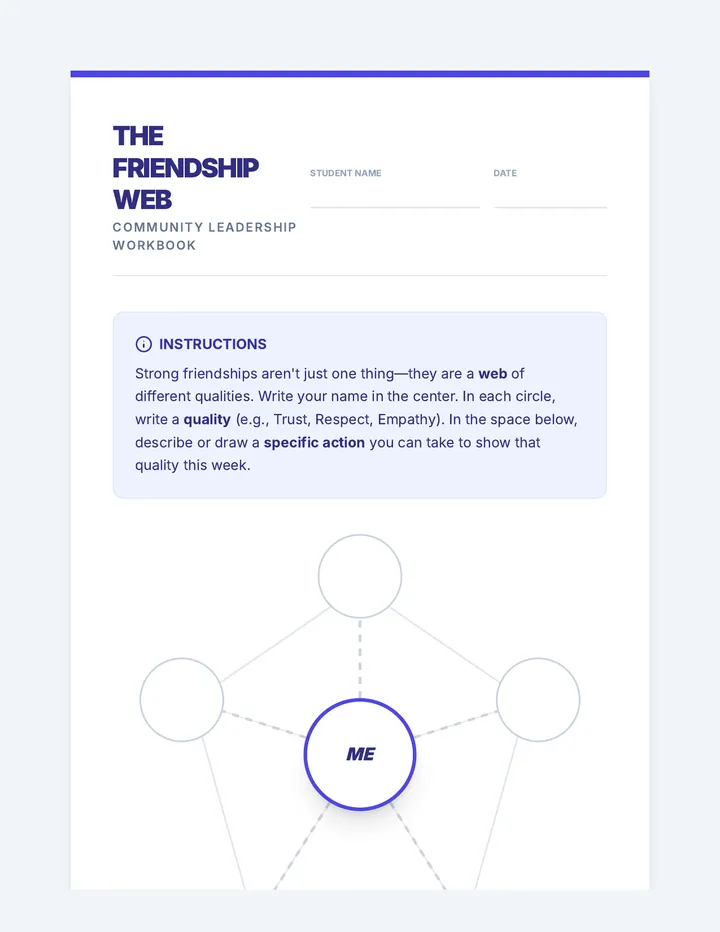
A 45-minute lesson for 5th graders focused on building a positive school community through authentic friendships, upstander behavior, and leadership. Students analyze the impact of their actions and develop strategies to prevent bullying, including cyberbullying.
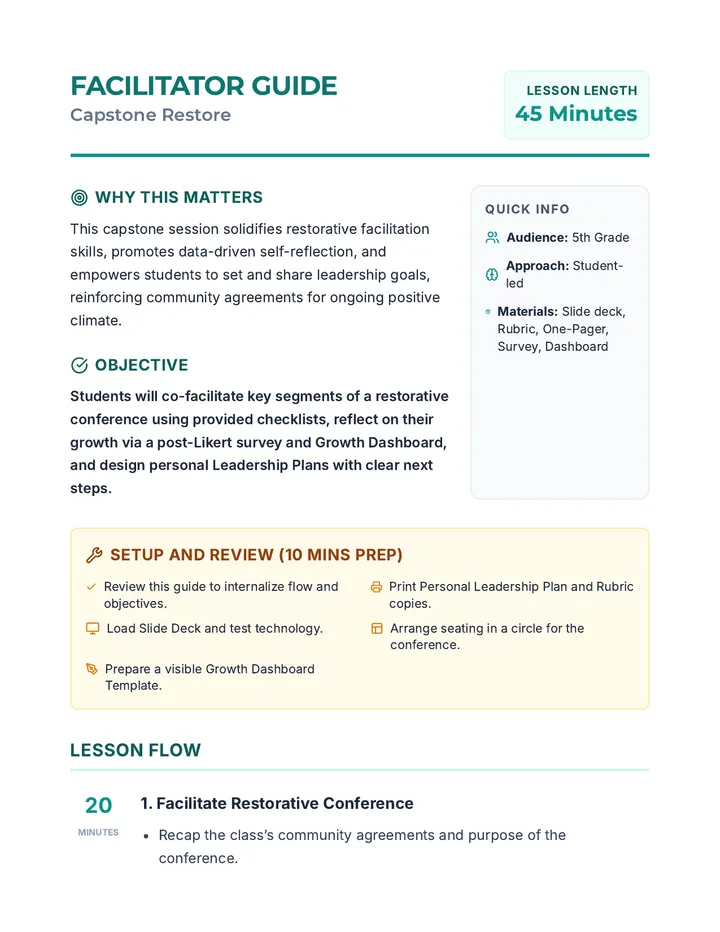
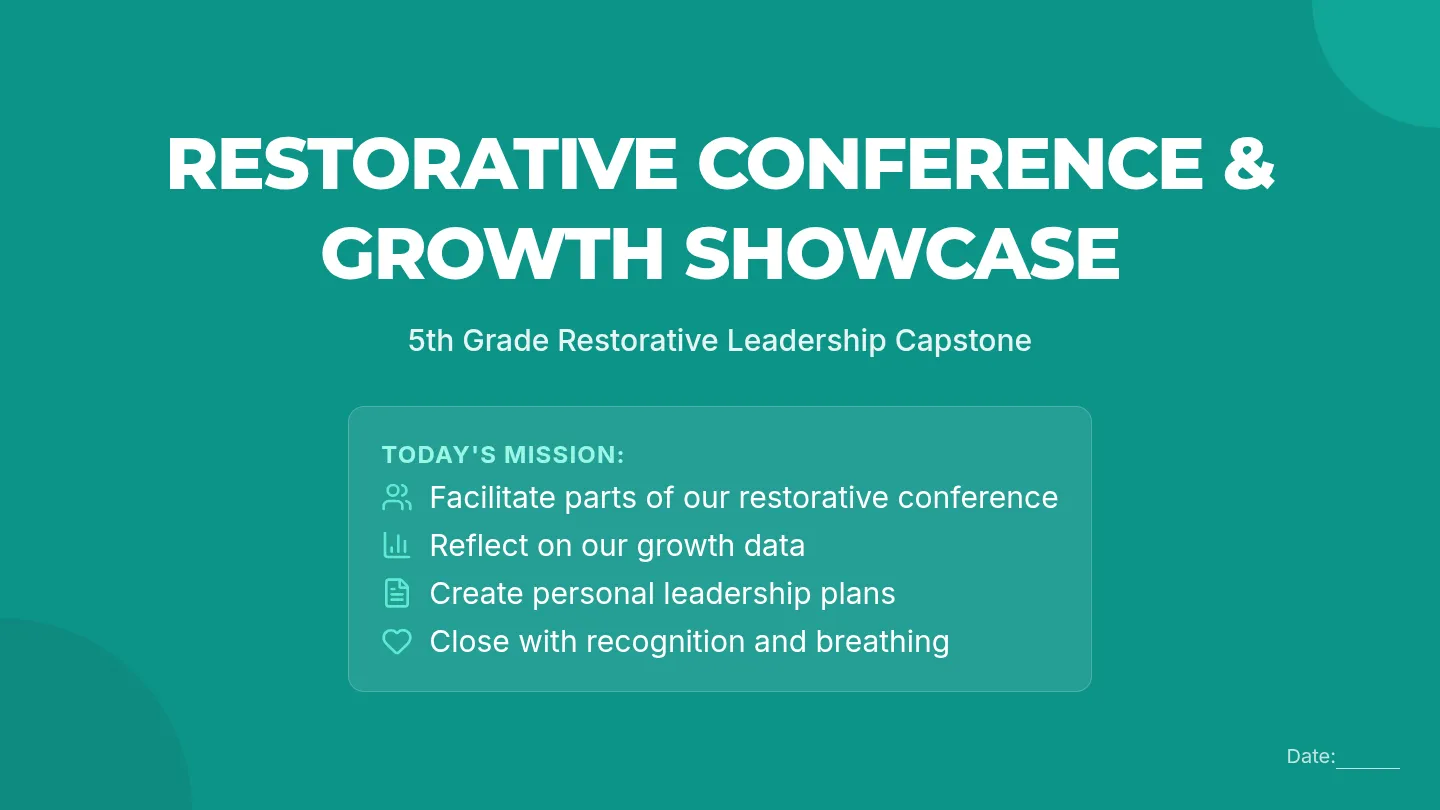
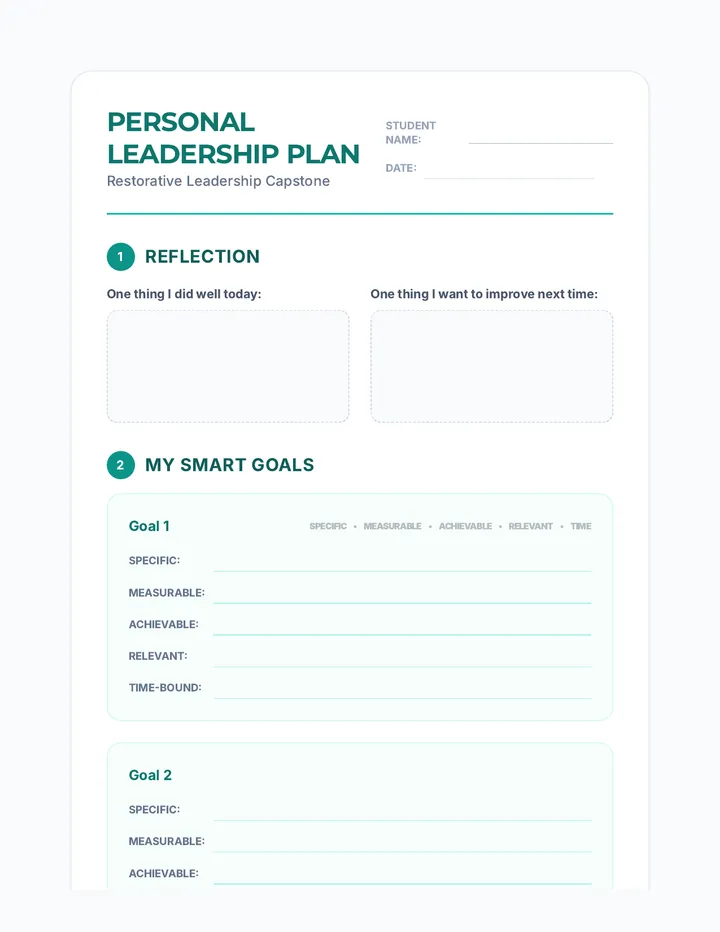
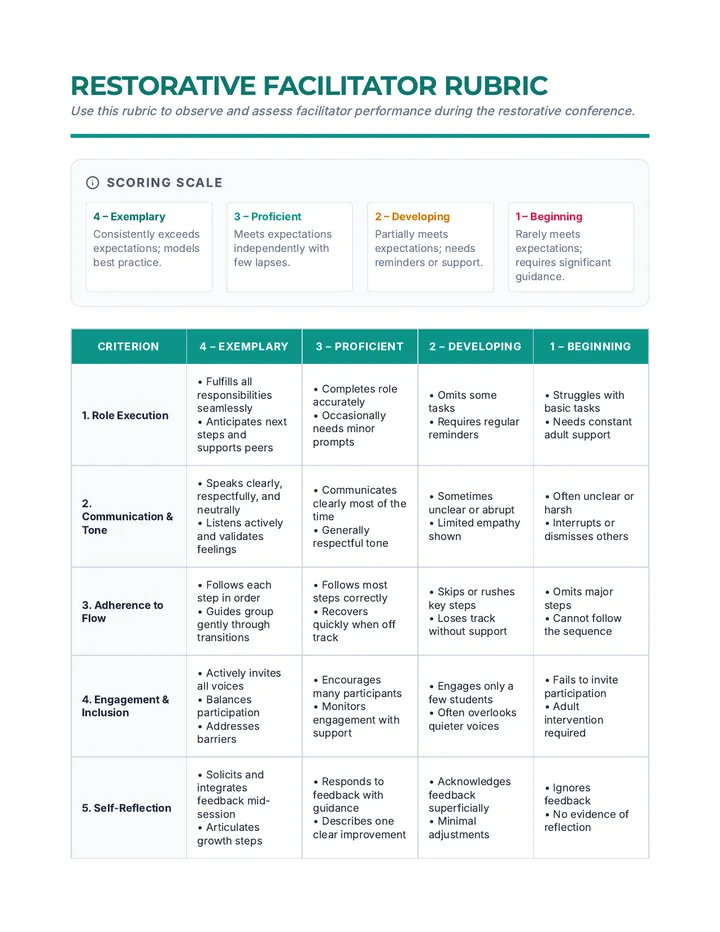
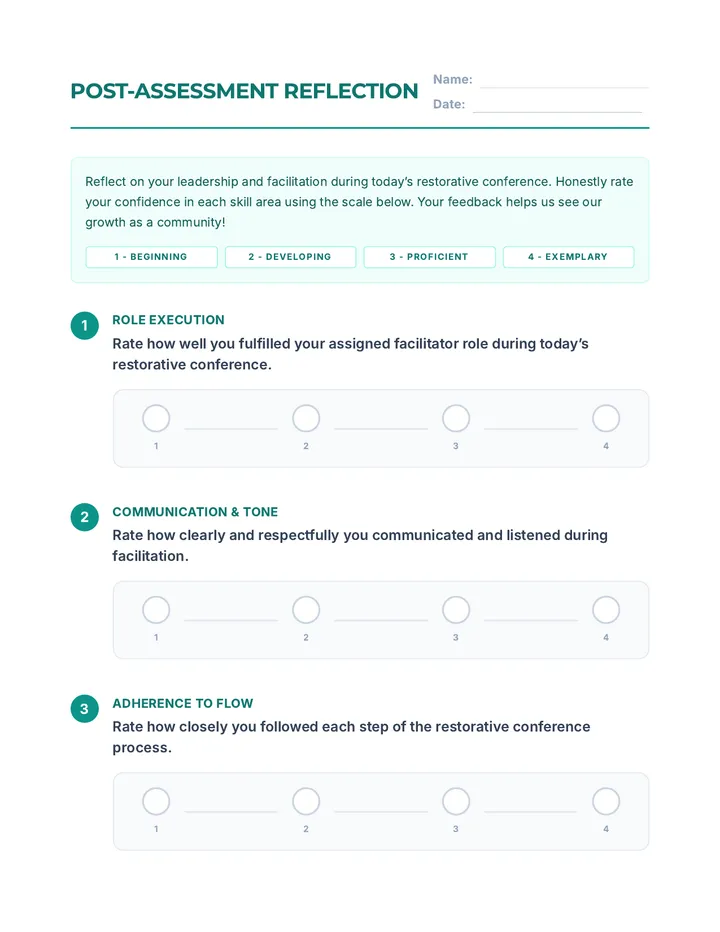
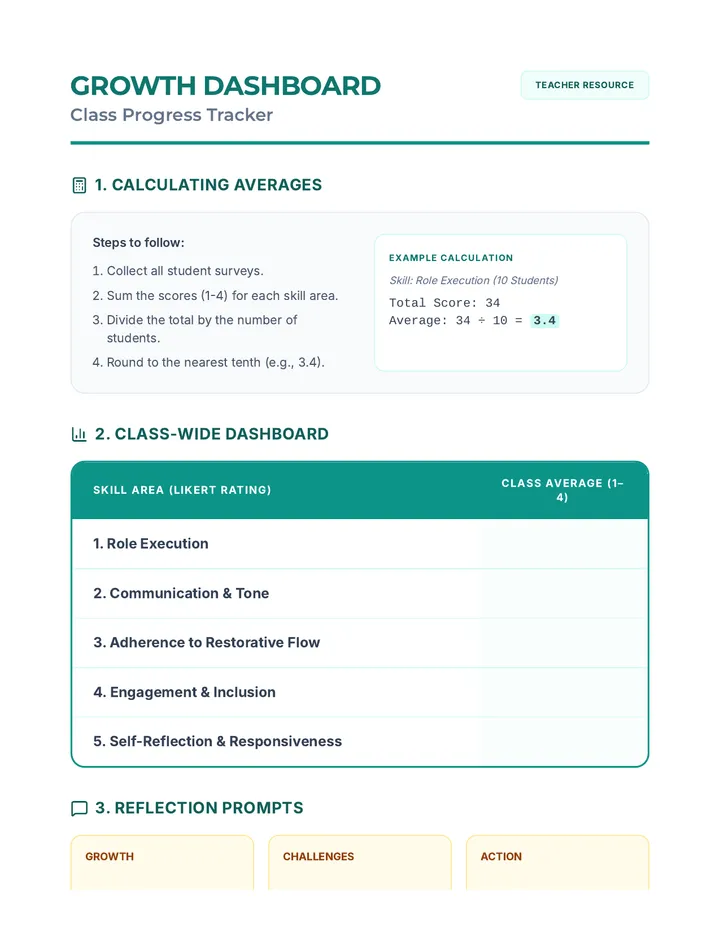
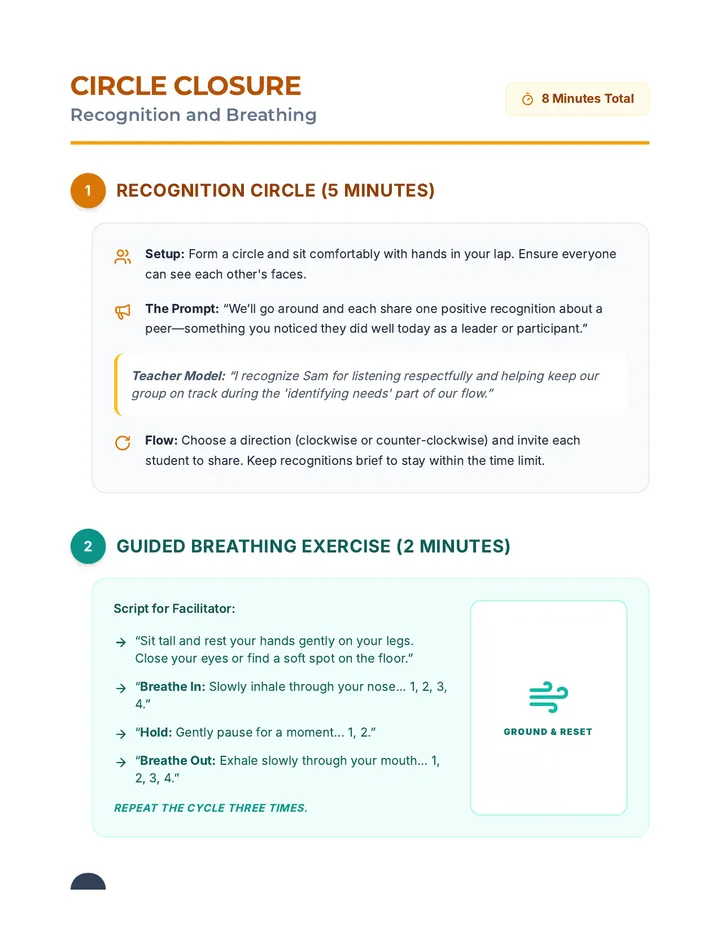
A 45-minute capstone lesson where 5th graders facilitate a restorative conference, analyze growth data via a dashboard, and create personal leadership plans. This session empowers students to take ownership of community-building and self-reflection.
A quick, actionable 10-minute lesson for high schoolers on conflict resolution using the 'Pause, Think, Act' method to manage emotions and communicate effectively.
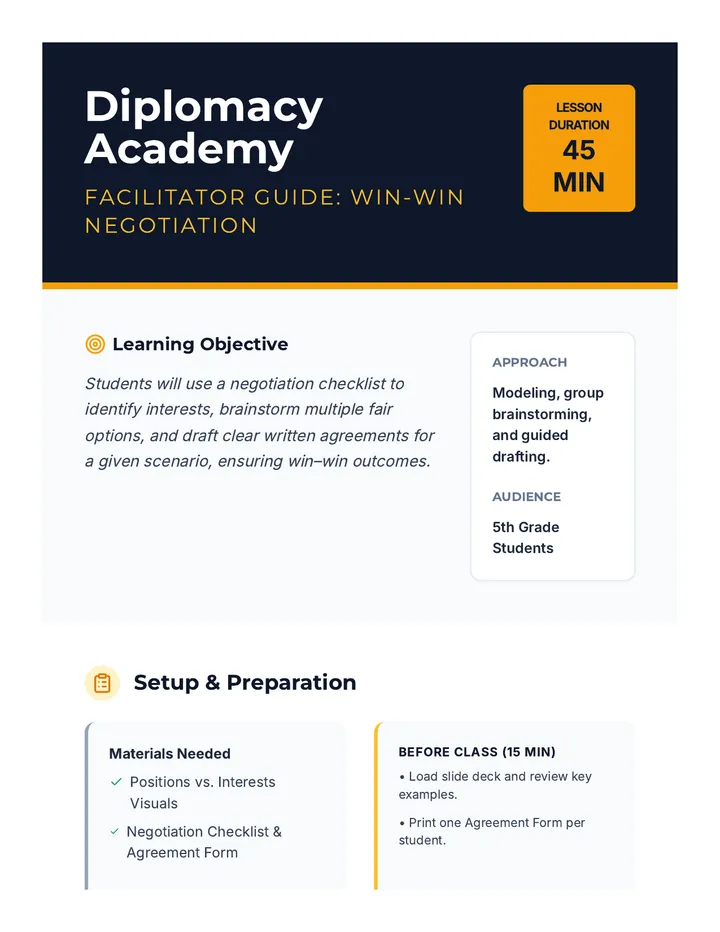
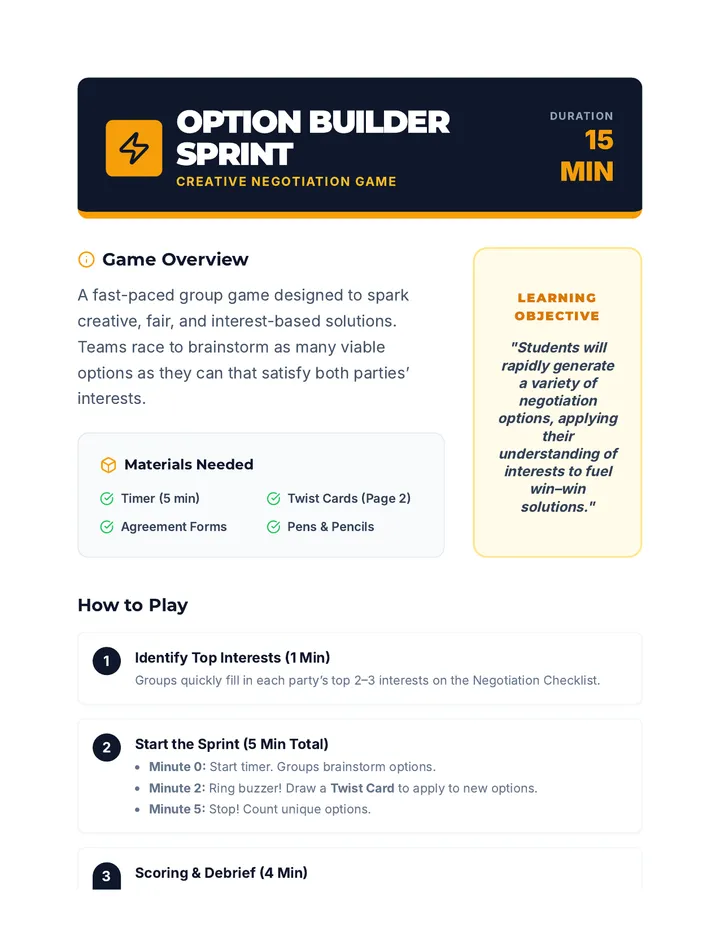
A 45-minute 5th grade lesson where students learn to distinguish positions from interests, brainstorm fair options, and draft written agreements for win-win outcomes.
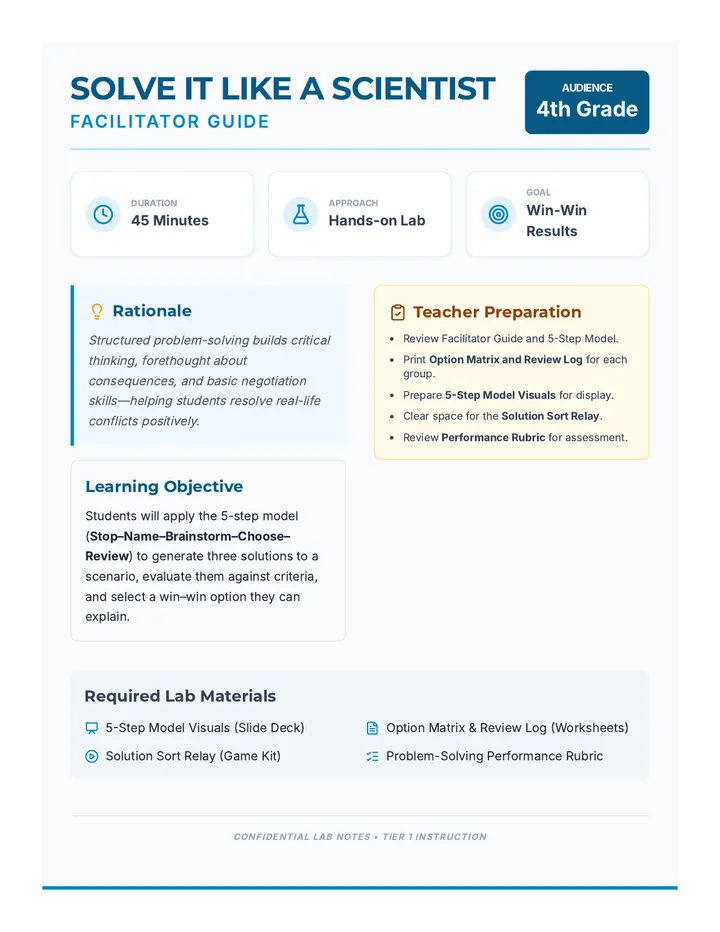
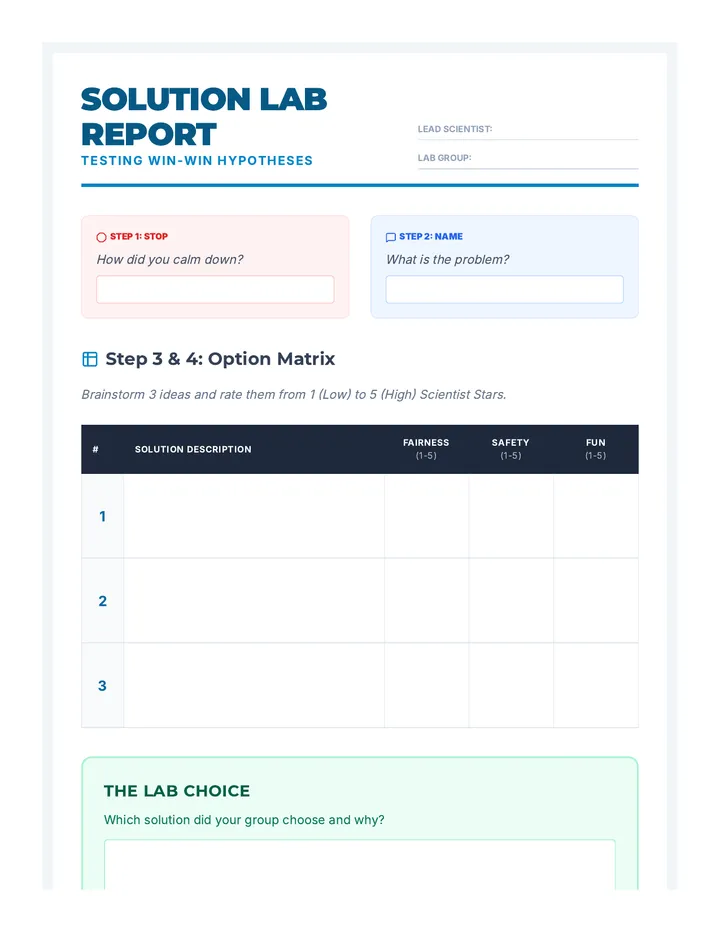
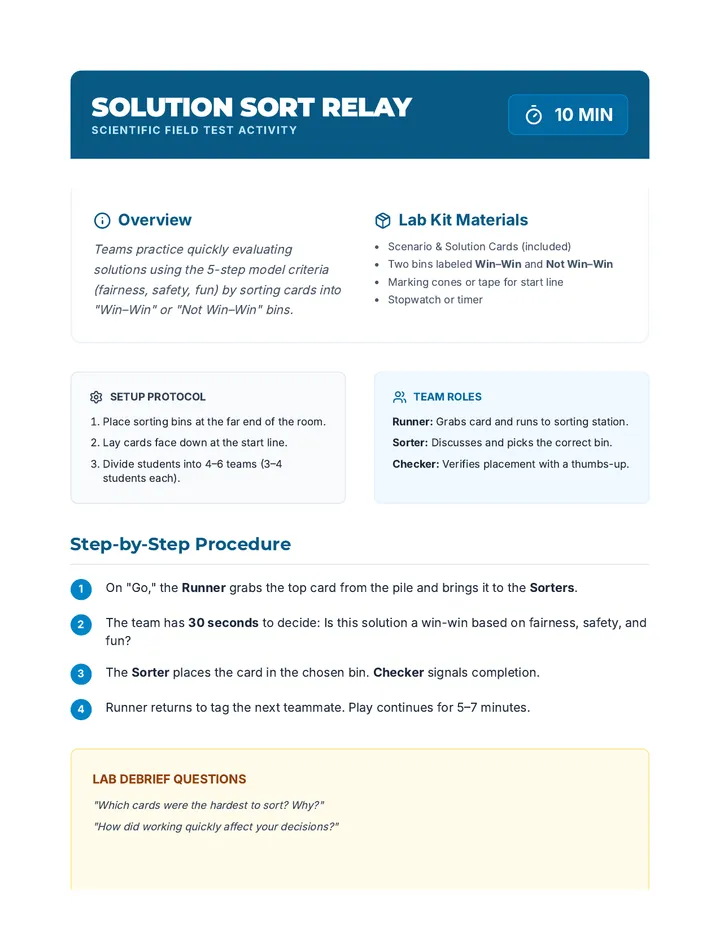
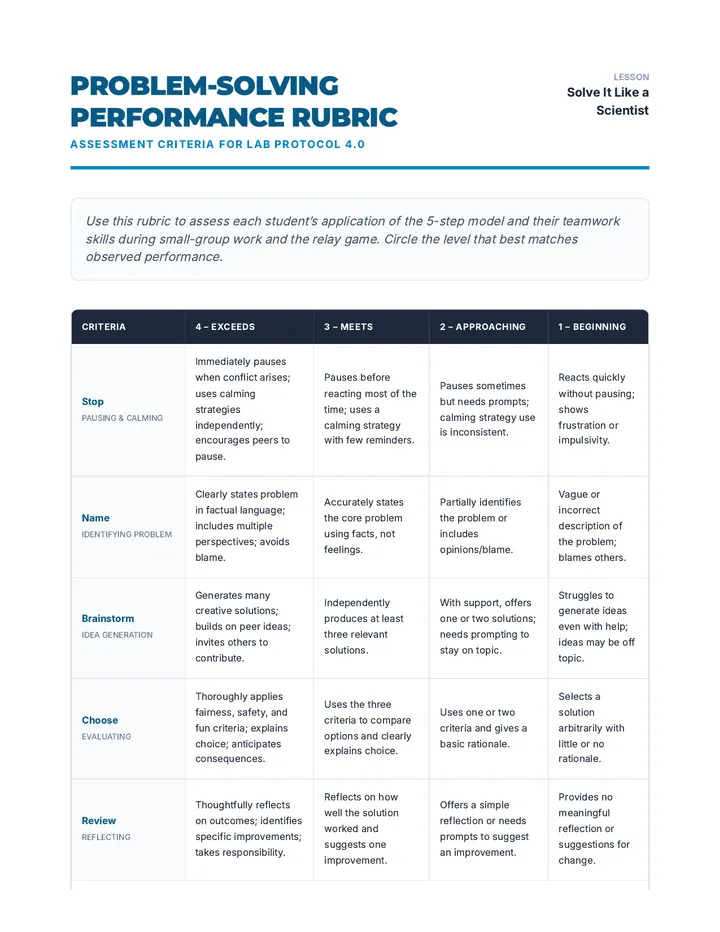
A 45-minute lesson for 4th graders to master a 5-step problem-solving model (Stop–Name–Brainstorm–Choose–Review) through collaborative activities and a relay game.