Collaborative techniques for role assignment, active listening, and joint problem-solving. Addresses group dynamics, consensus-building strategies, and individual accountability within a team framework.
A 6-session small-group course for 2nd grade boys designed to build self-control, manage impulsivity, and handle frustration using the 'Stop, Think, Shine' framework.
A four-part social-emotional learning sequence for 3rd graders designed to build essential friendship skills including communication, empathy, positive affirmation, and conflict resolution. Students participate in small-group discussions, role-plays, and reflective activities to foster a supportive classroom environment.
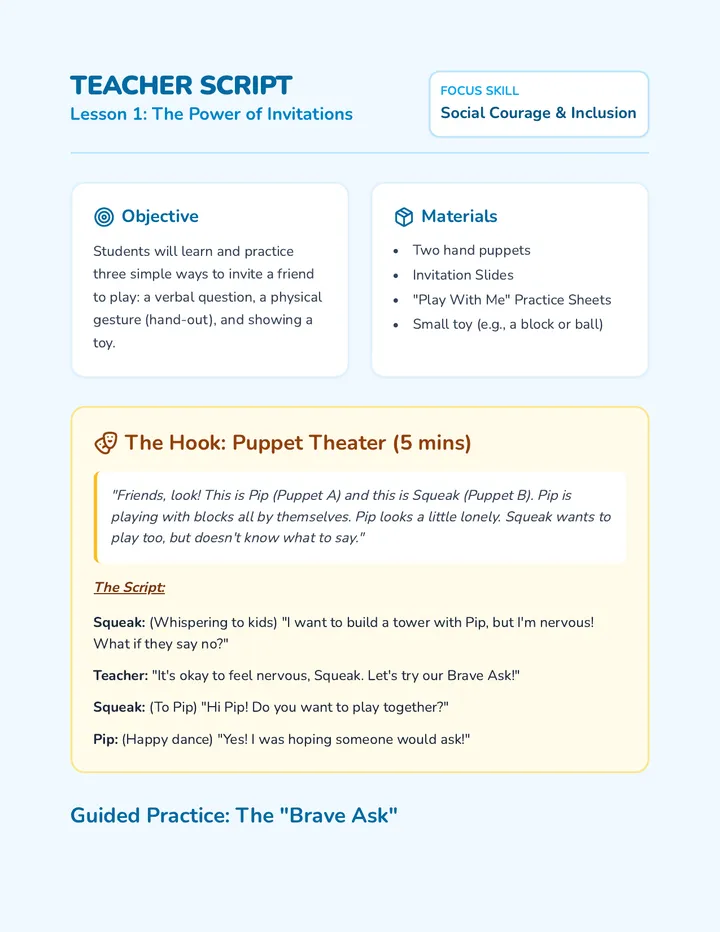
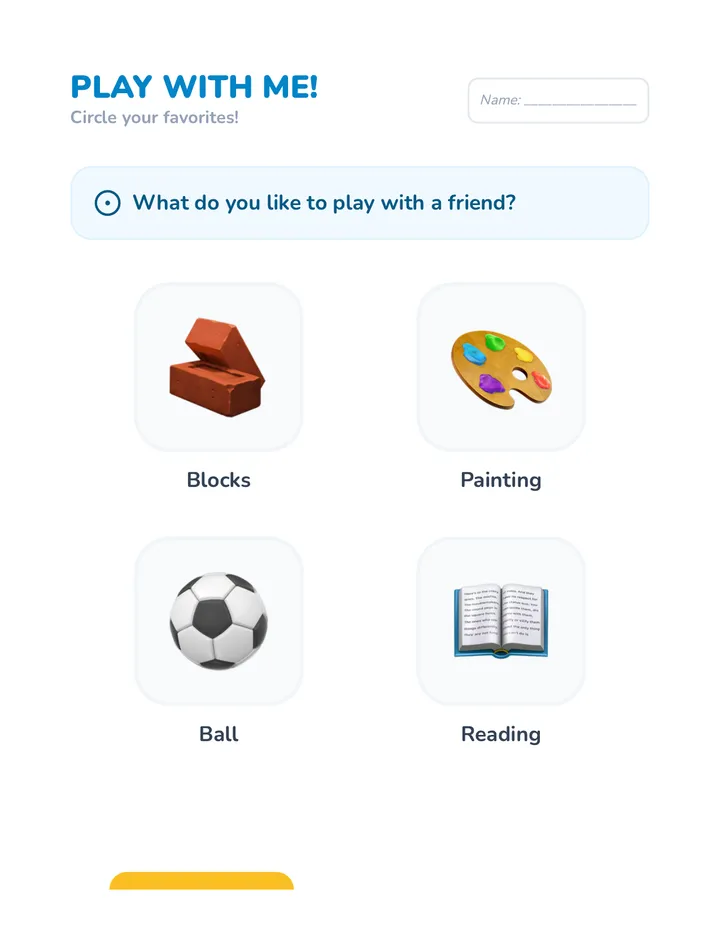
A Pre-K sequence focused on moving from individual joy to shared happiness through social connection, invitations, collaboration, and celebration. Students learn how community and play amplify positive emotions and build resilience.
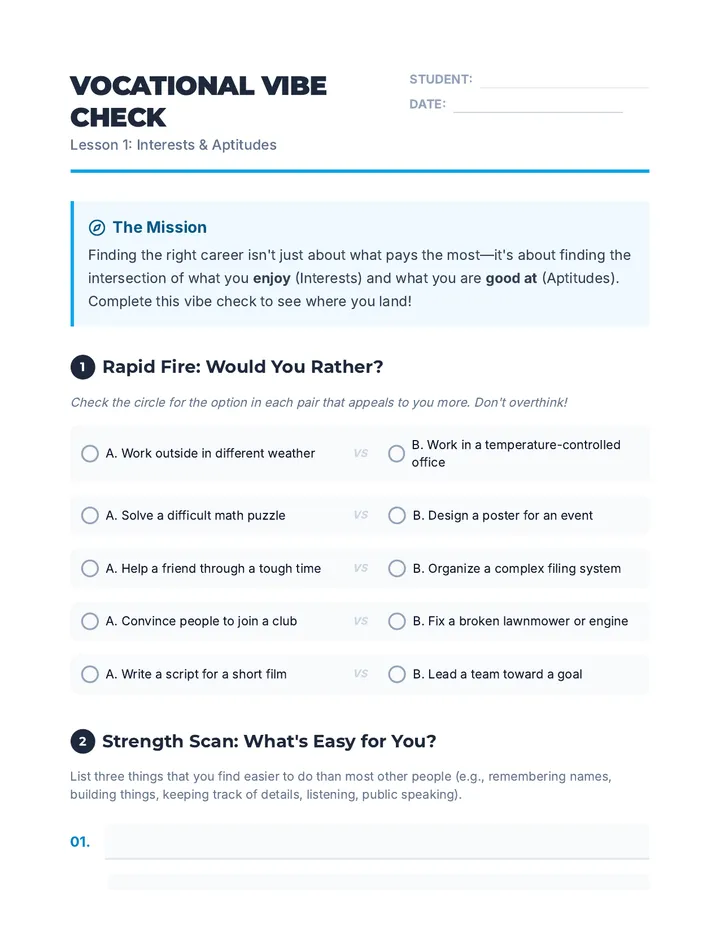
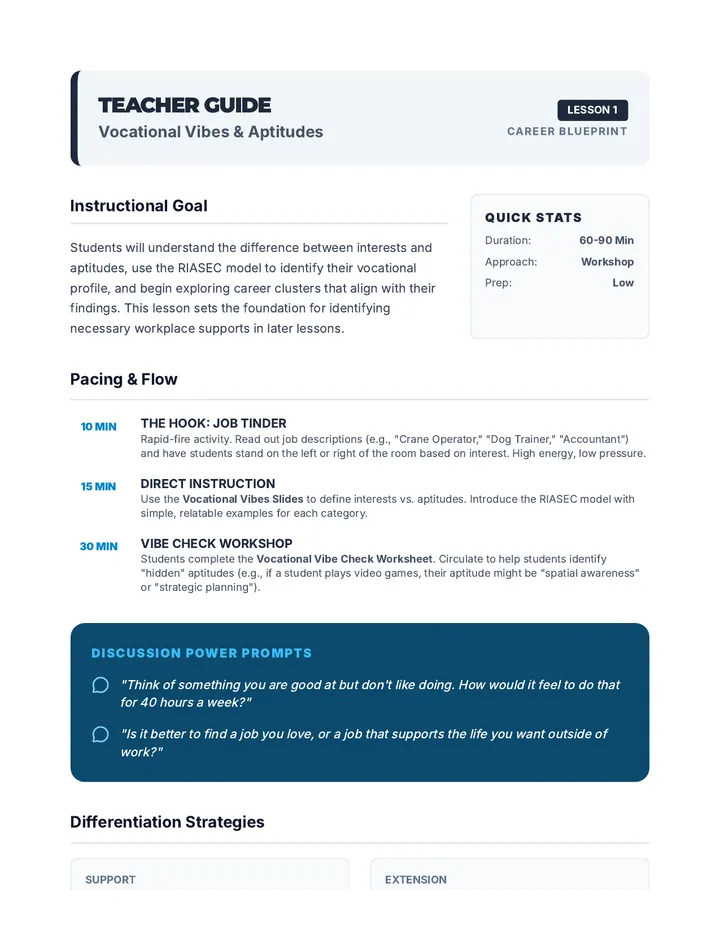
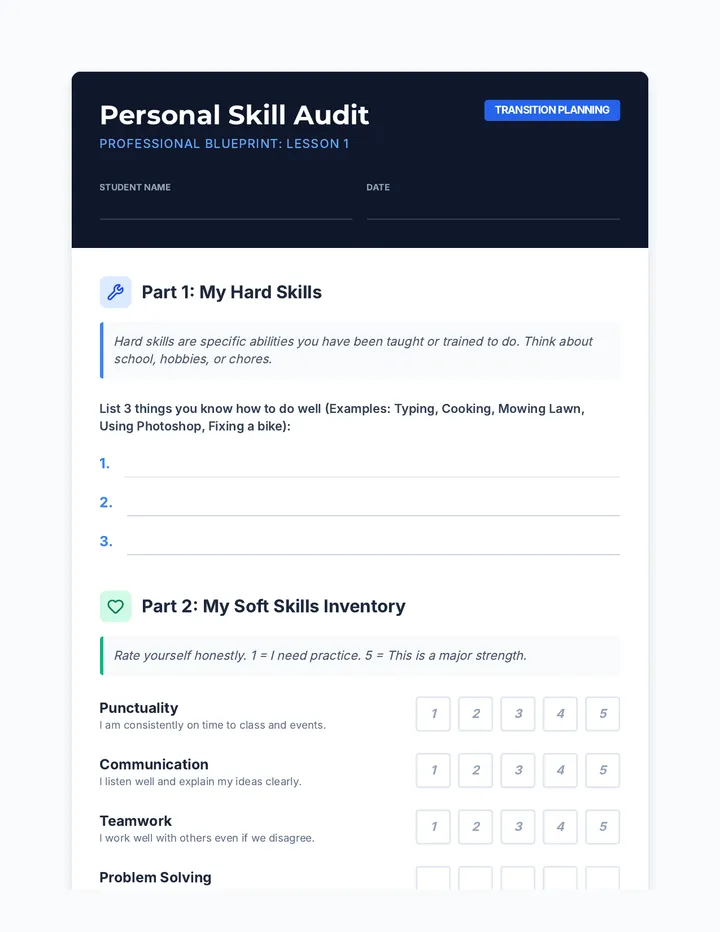
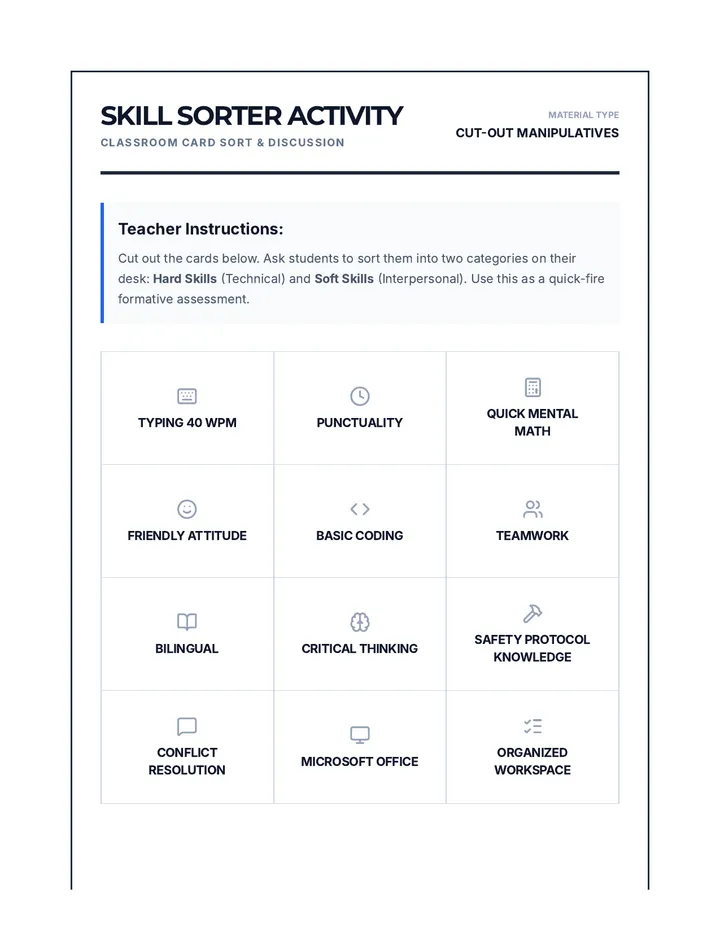
A comprehensive 5-lesson sequence designed for 12th-grade transition students to explore vocational pathways, understand workplace rights, and develop the self-advocacy skills needed for post-secondary success. Students will move from self-discovery to practical workplace navigation, culminating in a professional mindset and a plan for accommodation management.
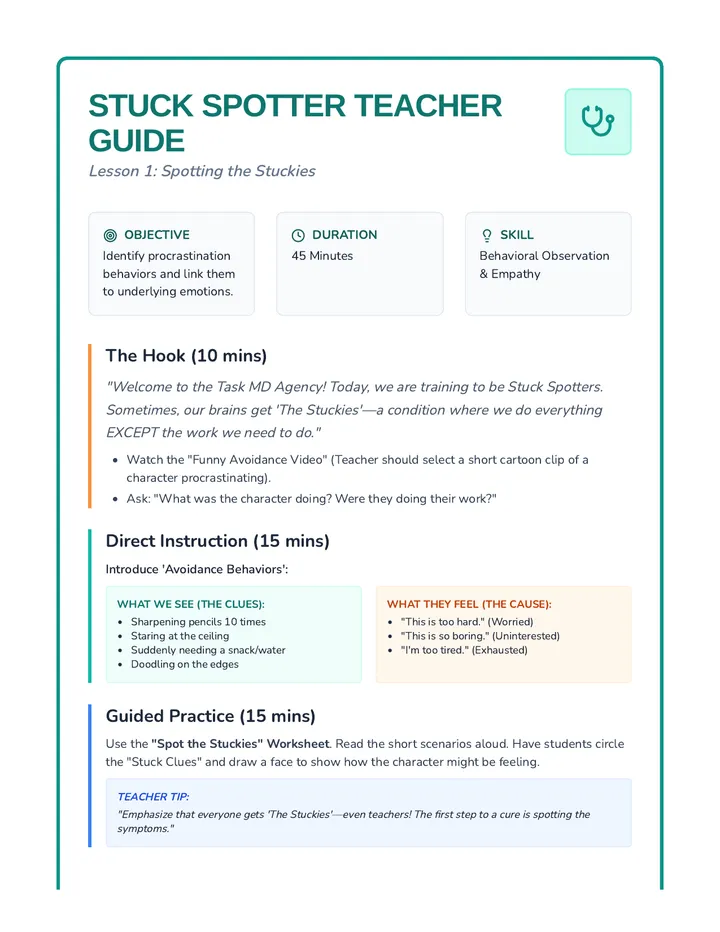
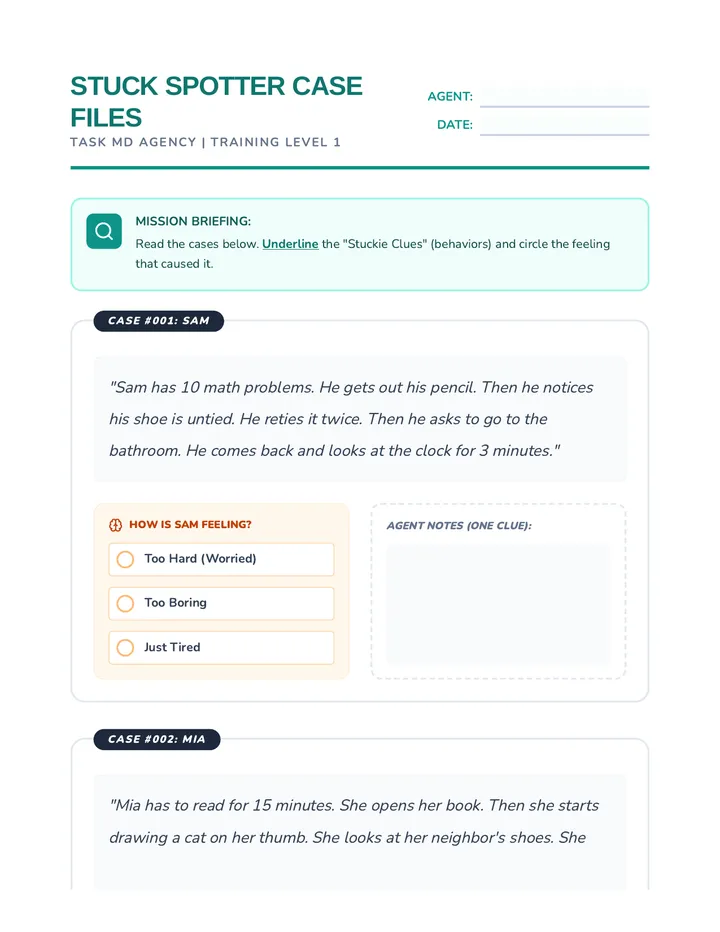
A sequence focused on helping students overcome emotional barriers to task initiation using a 'Task Doctor' theme. Students learn to identify avoidance behaviors, diagnose the root cause of being 'stuck', and prescribe effective self-talk solutions through role-play and reflection.
A comprehensive sequence designed for 9th-grade transition students to master the job acquisition cycle. Students progress from identifying soft skills to mastering resumes, applications, and interviews, with a heavy focus on the social 'hidden curriculum' of the workplace.
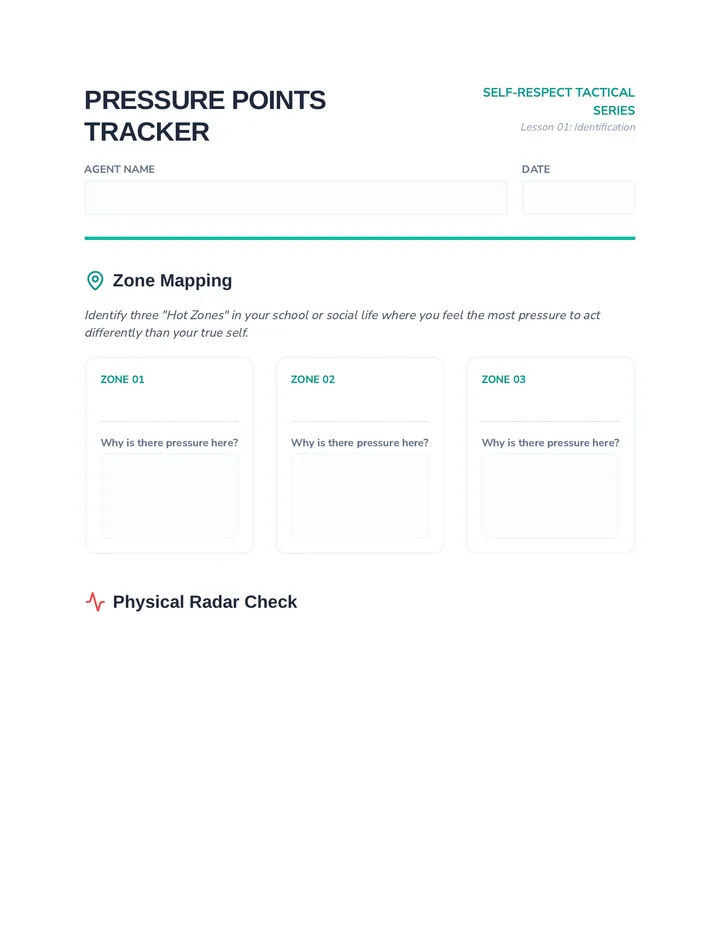
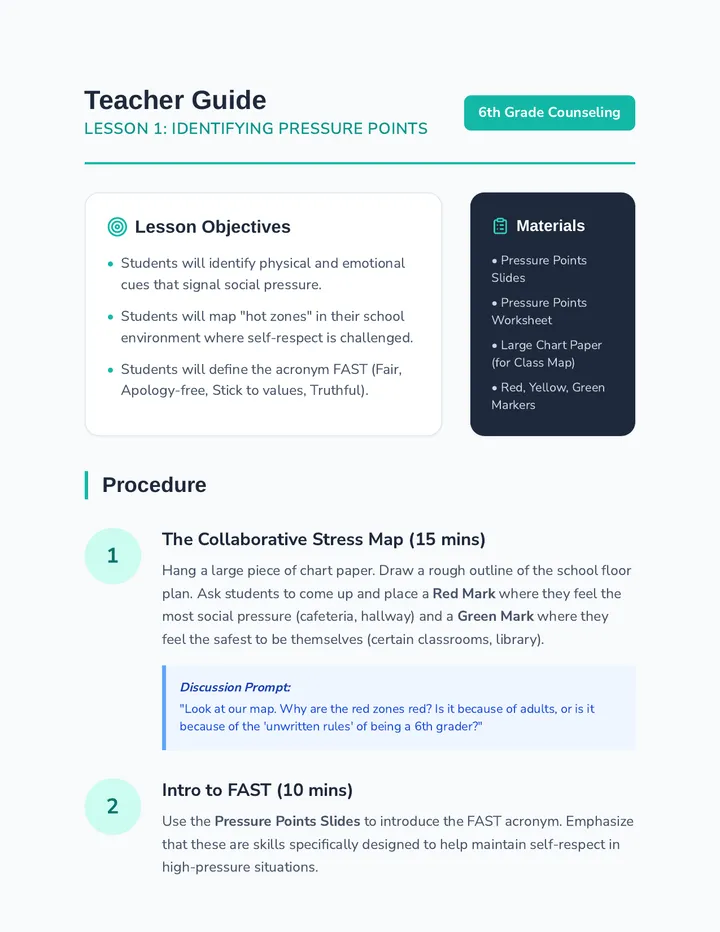
A simulation-heavy sequence teaching 6th graders to use DBT FAST skills (Fair, Apology-free, Stick to values, Truthful) to maintain self-respect during social challenges. Students engage in role-play and real-world scenarios to build integrity and refusal skills.
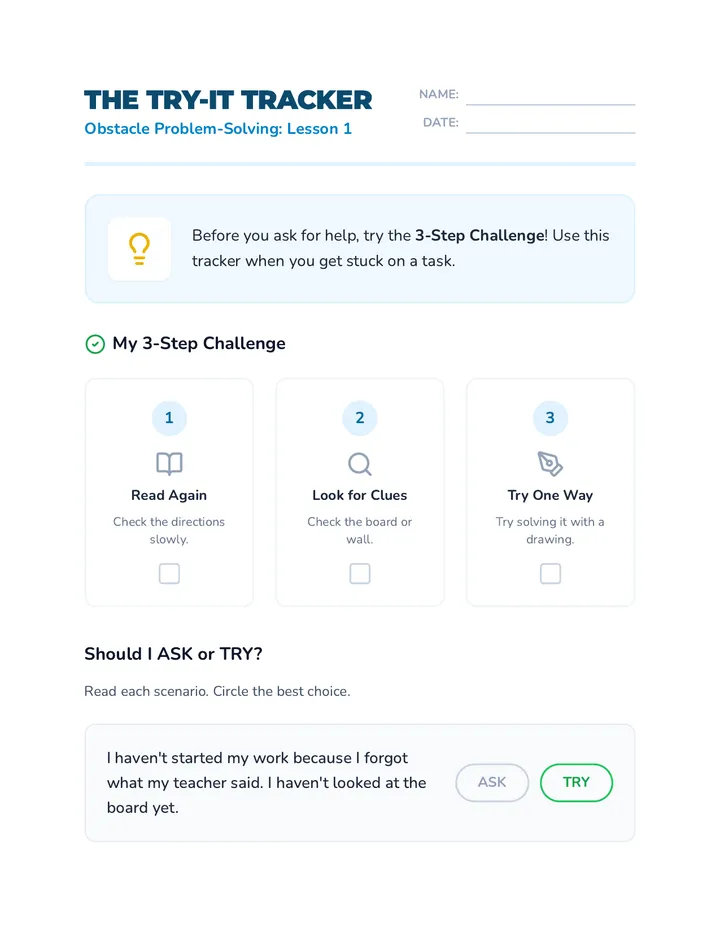
This sequence empowers 2nd-grade students with self-advocacy skills to navigate obstacles. It moves from recognizing when help is needed to choosing the right helper and using specific, actionable language or non-verbal signals.
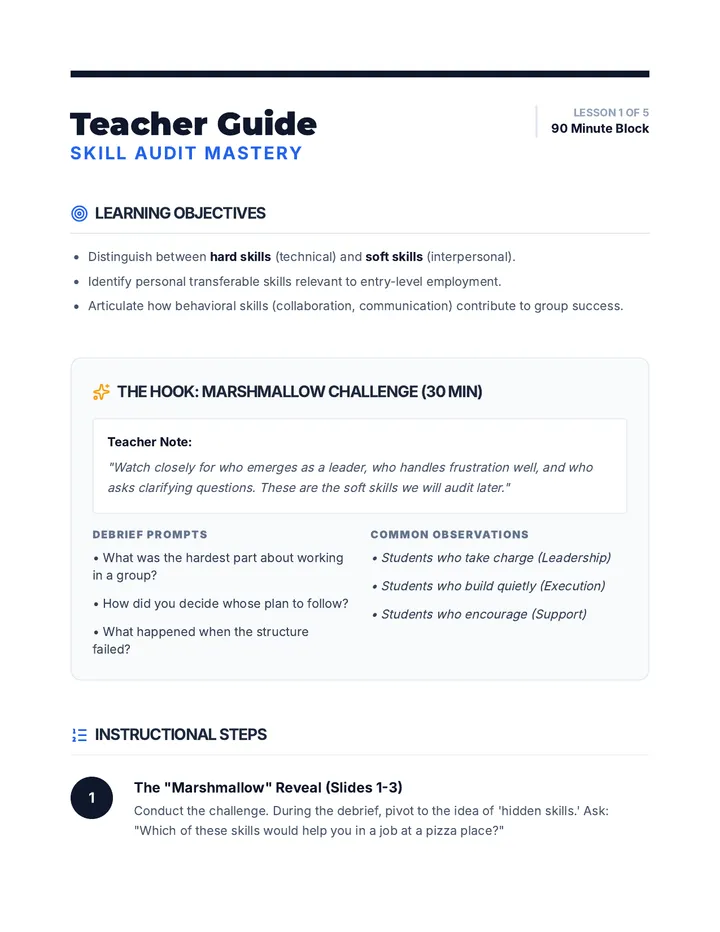
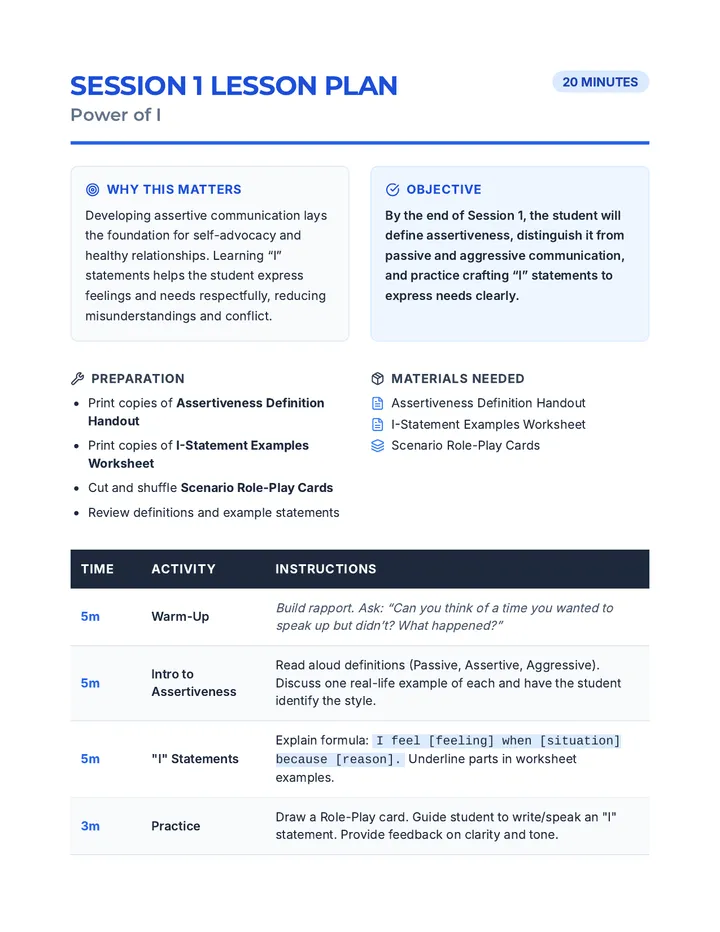
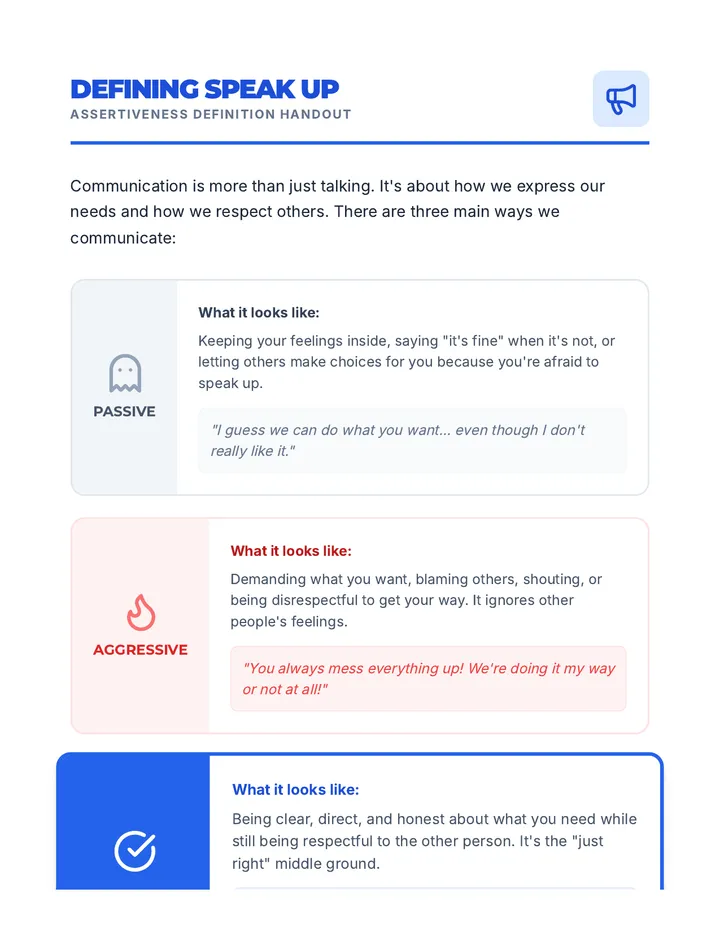
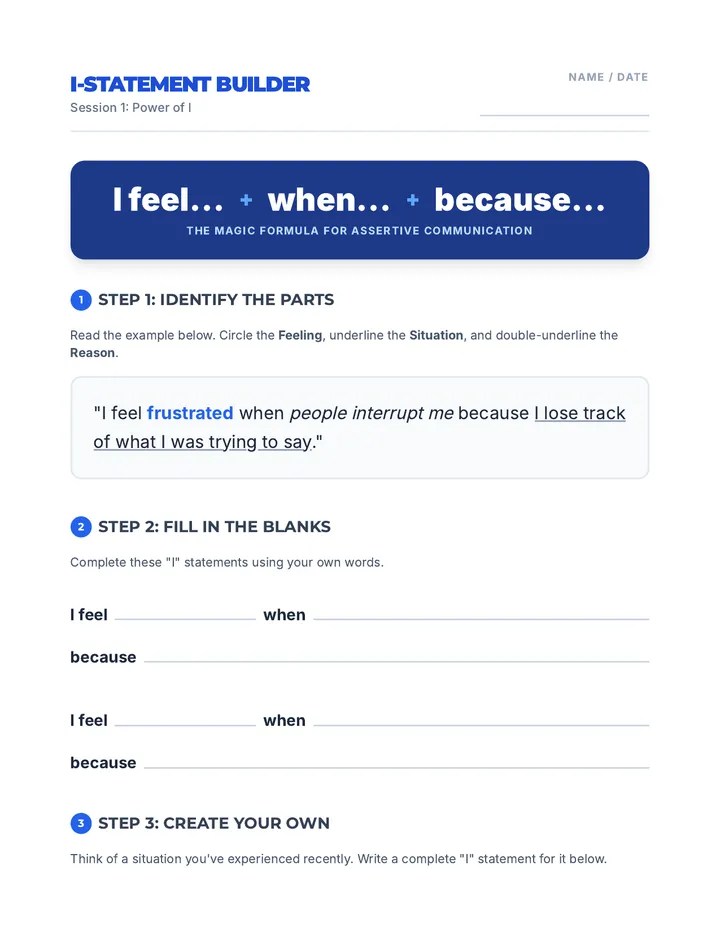
A 5-session intensive for middle school students to develop assertive communication skills, focusing on I-statements, boundaries, refusals, and long-term maintenance.
A kindergarten sequence exploring the difference between bossy behavior and responsible leadership. Students learn that true power comes from helping others, using words instead of force, and following fair rules that apply to everyone.
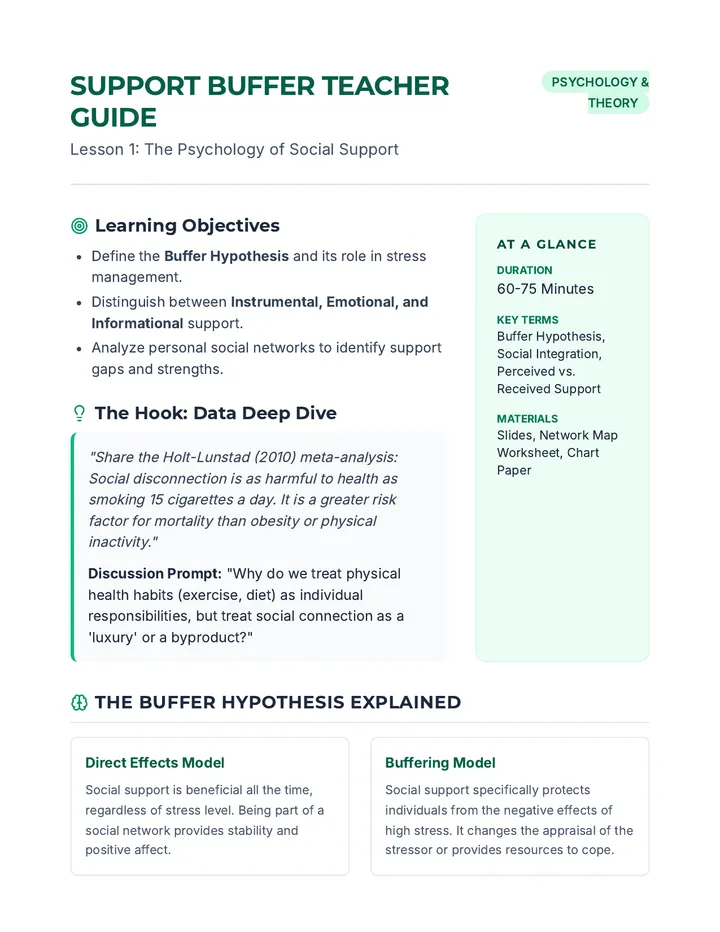
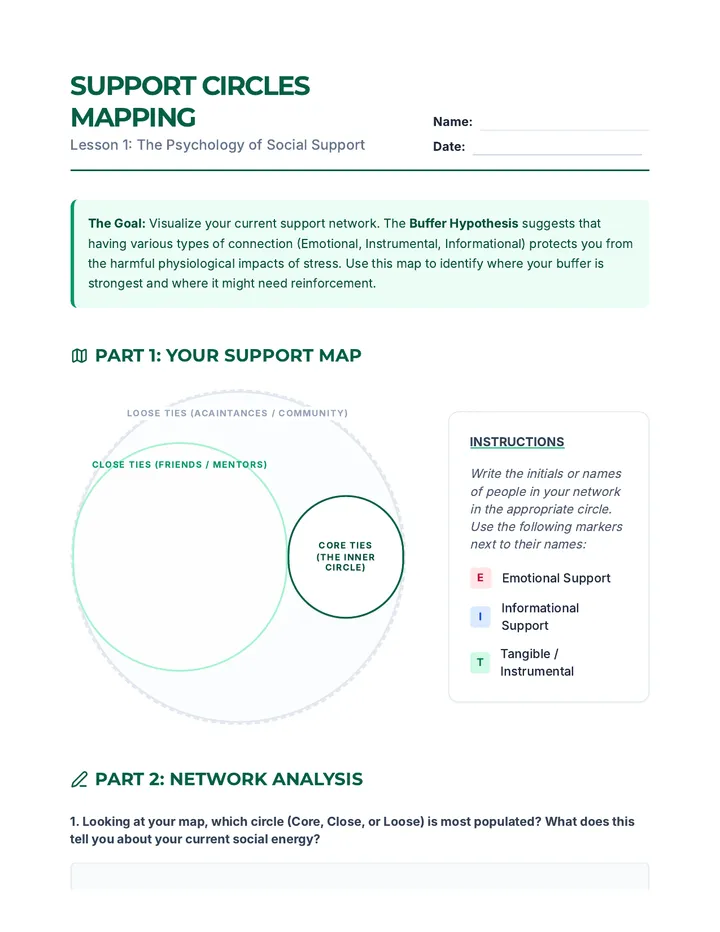
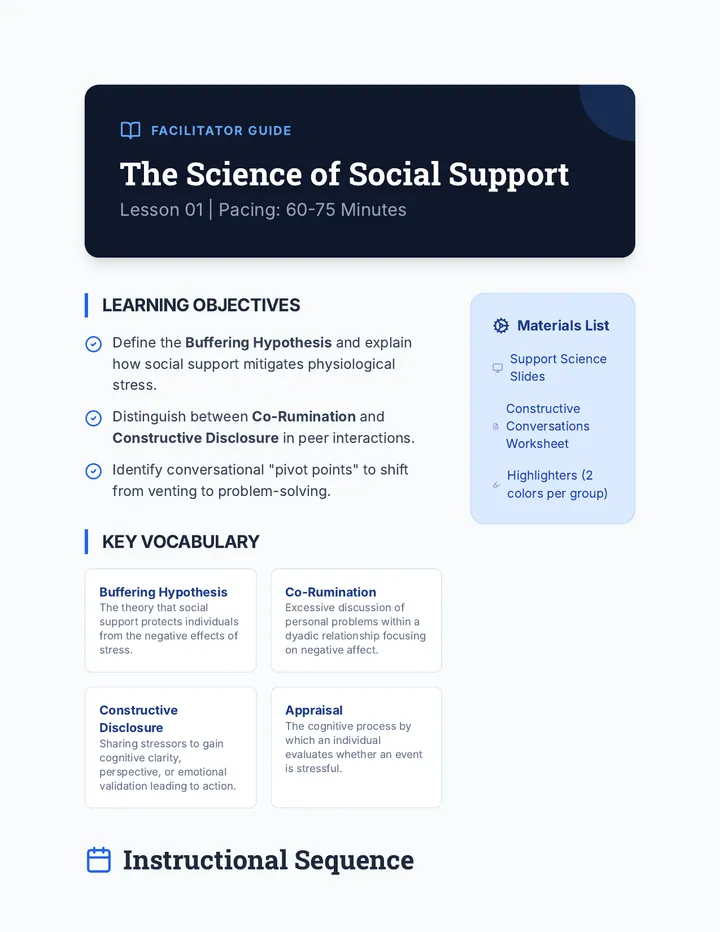
A comprehensive sequence for undergraduate students exploring the social psychology of stress and the practical skills needed to build resilient peer support networks. Students move from theoretical understanding to practical facilitation and community planning.
A graduate-level training sequence on facilitating peer support systems to mitigate stress and anxiety. Students learn the science of social support, micro-skills for active listening, boundary setting to prevent burnout, and group facilitation techniques to create sustainable communities of care.
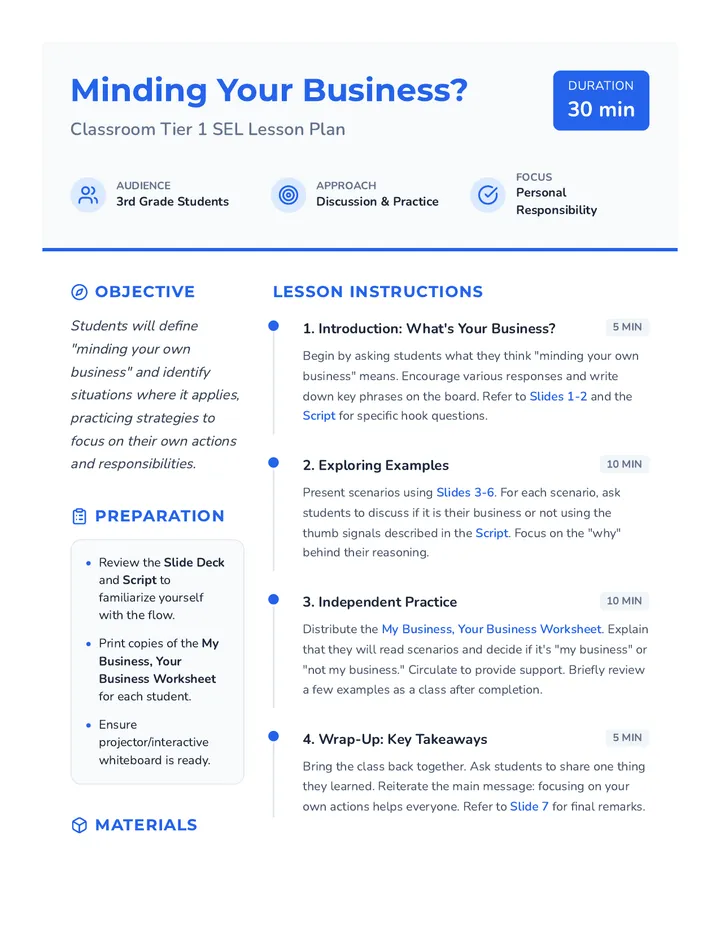
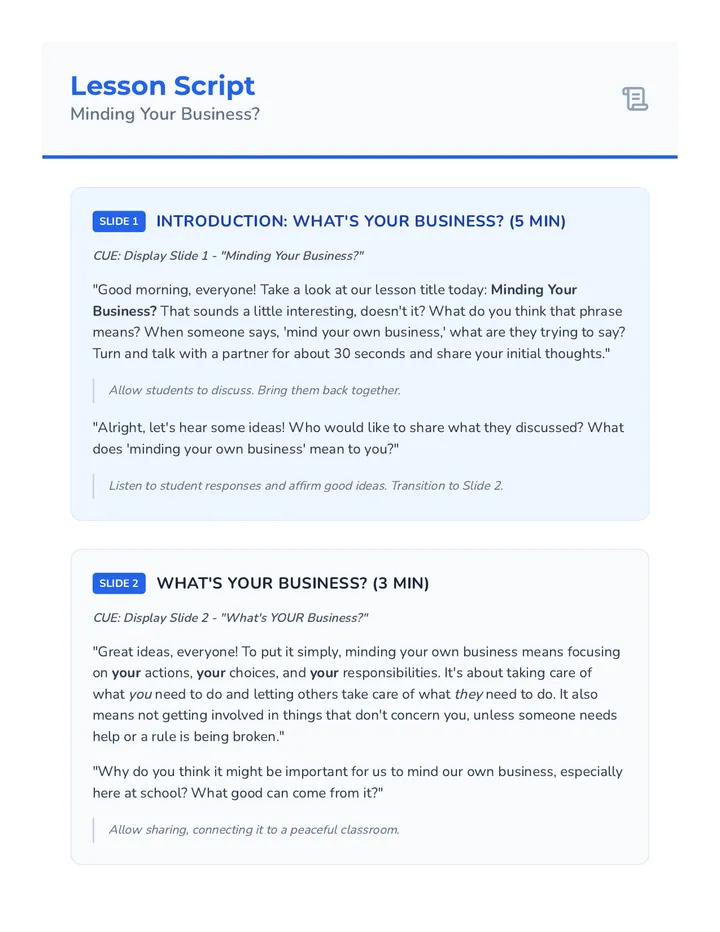
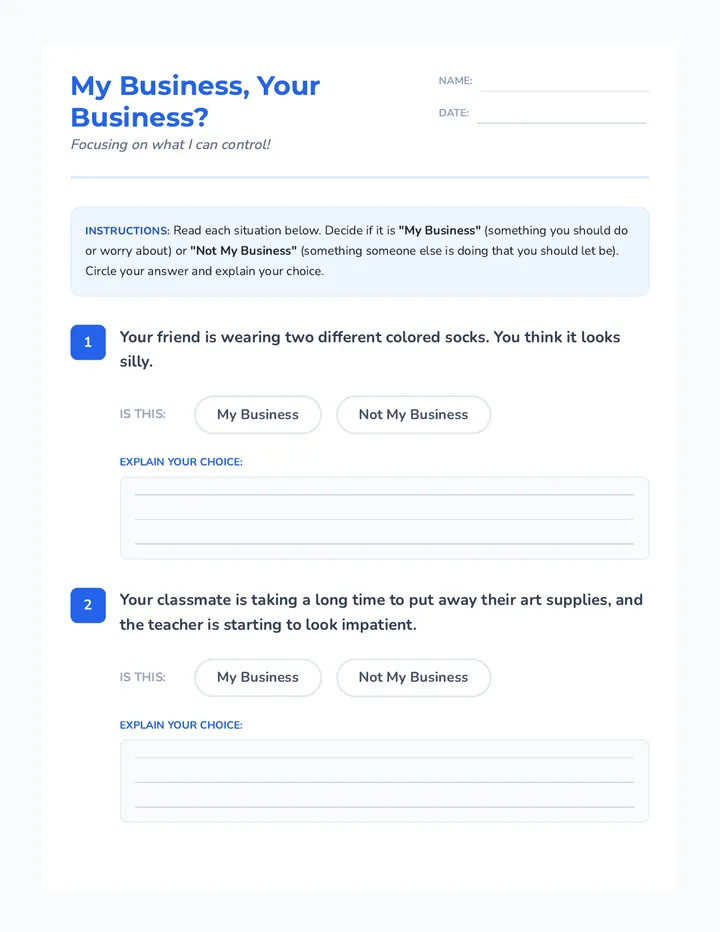
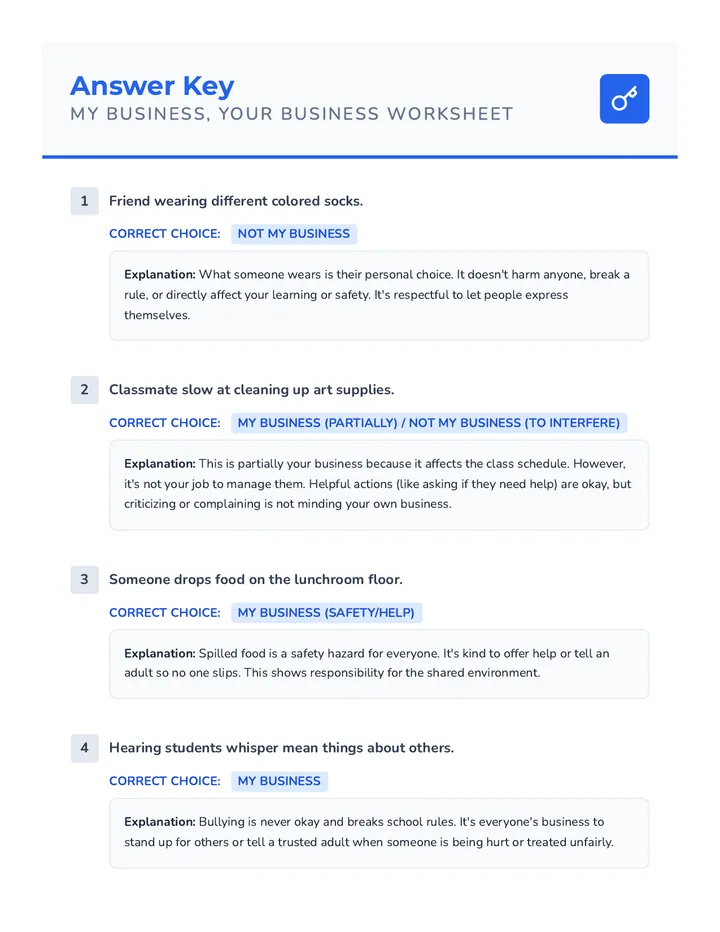
A 30-minute social-emotional learning lesson for 3rd graders that teaches the difference between personal responsibility and interfering in others' affairs through scenarios and discussion.
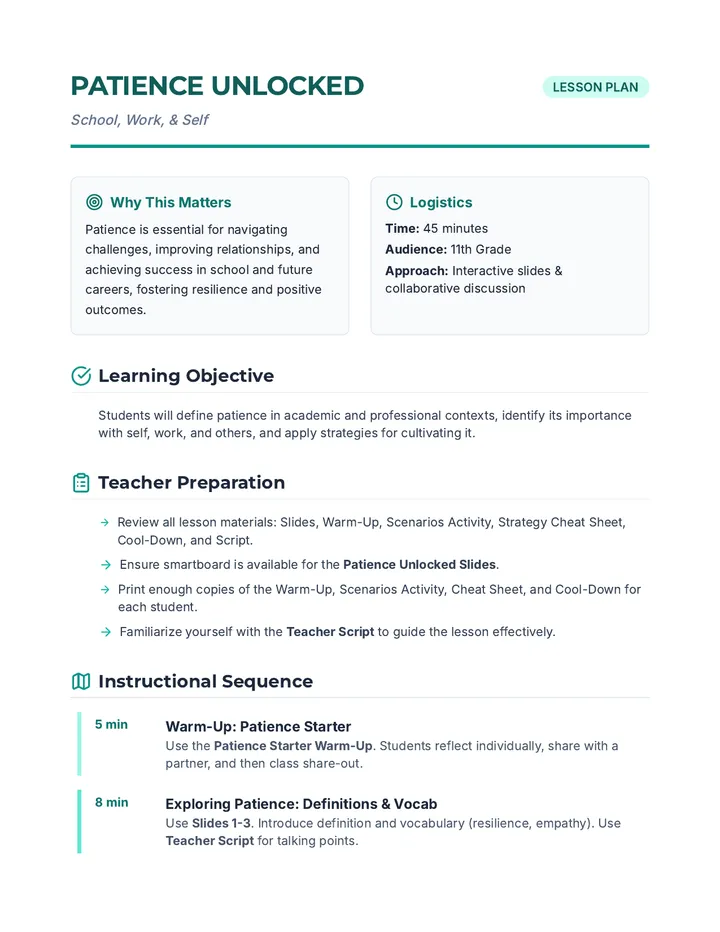
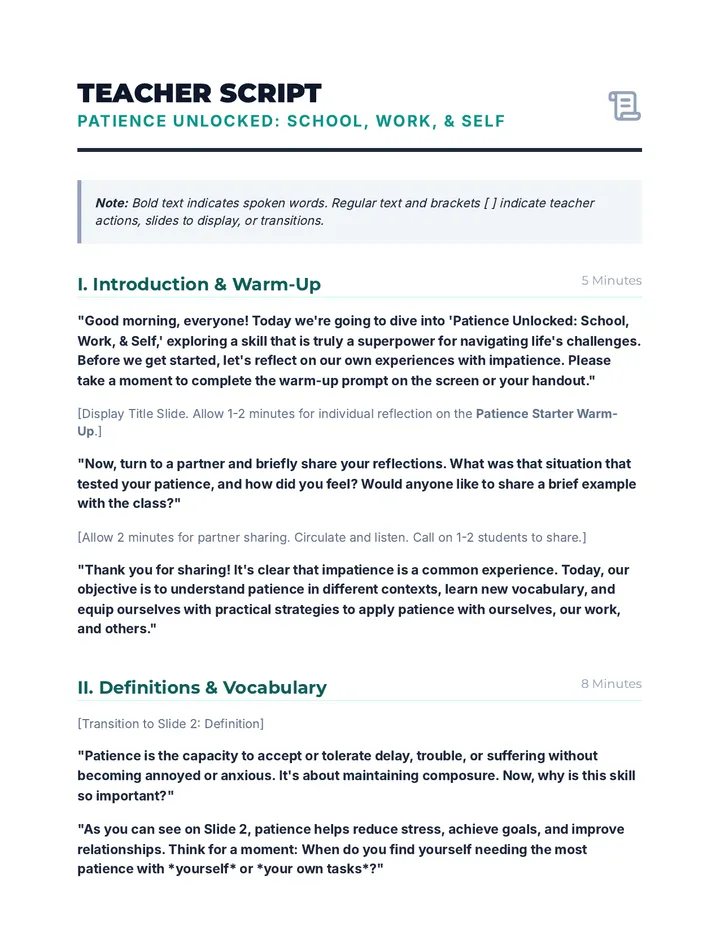
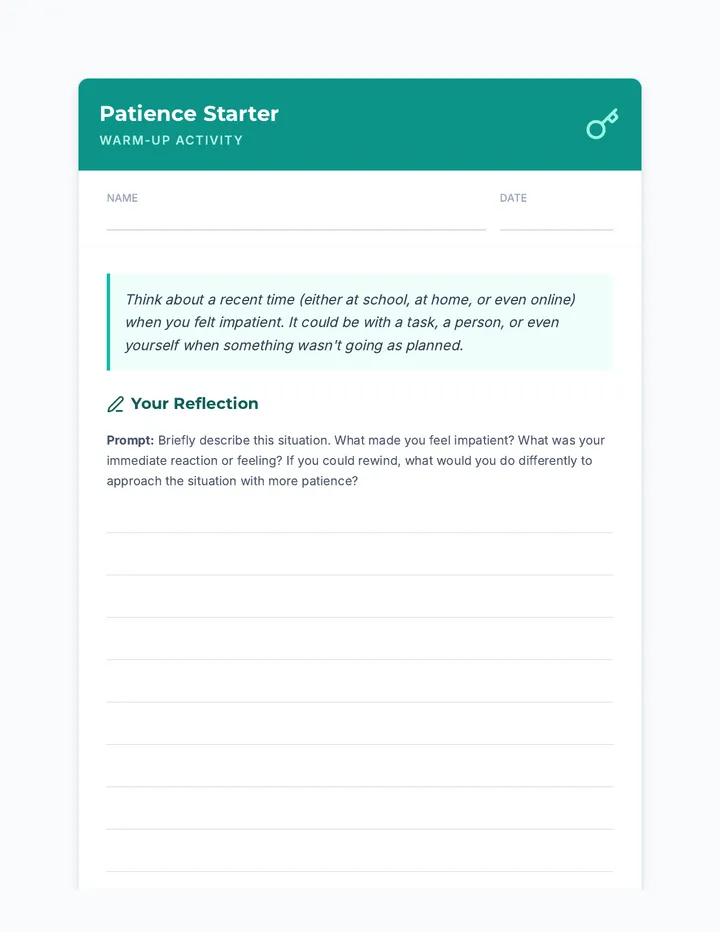
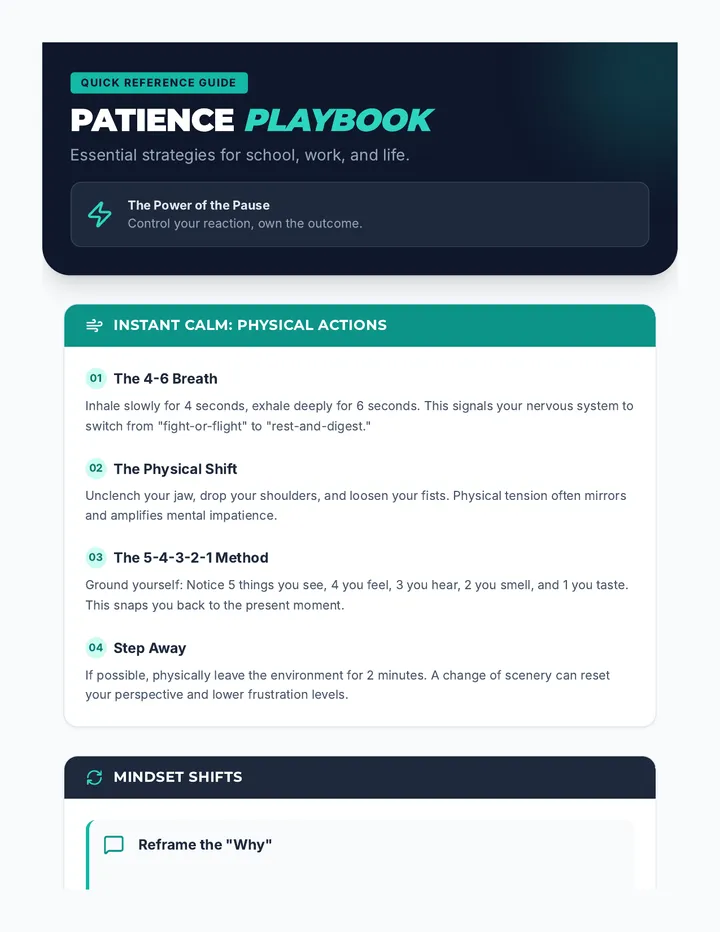
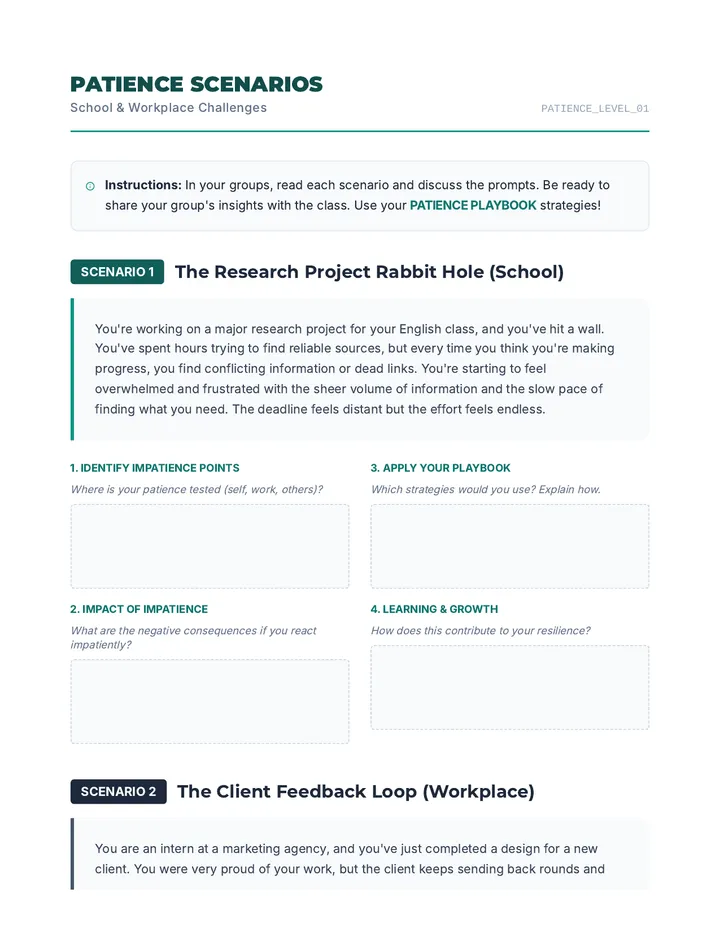
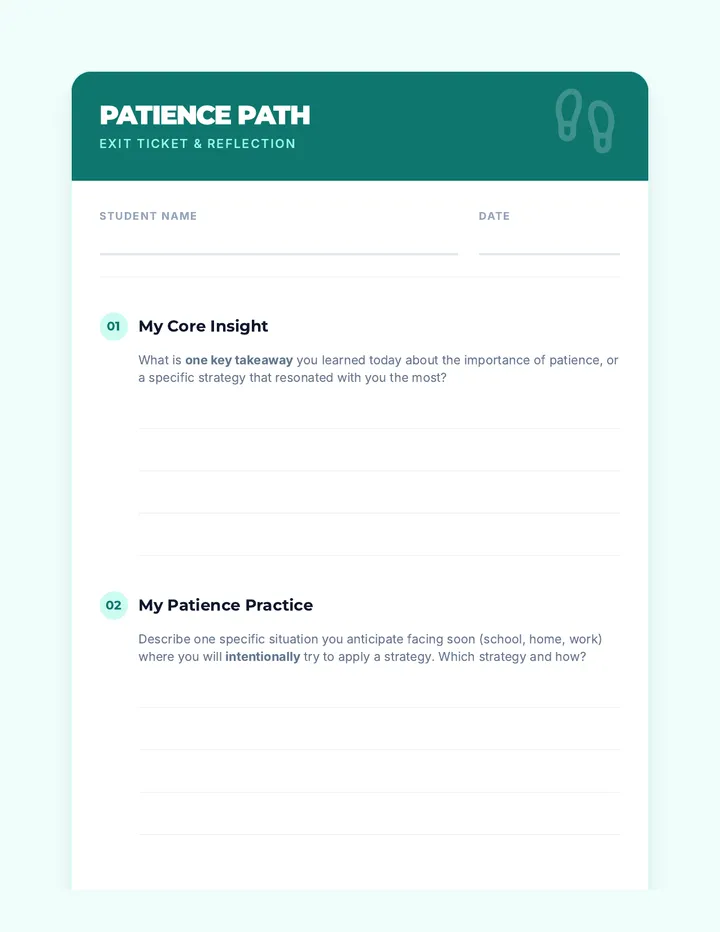
This lesson empowers 11th-grade students to cultivate patience as a critical skill in academic and professional settings. Students will explore strategies for managing impatience with themselves, their work, and others, fostering resilience and positive relationships.
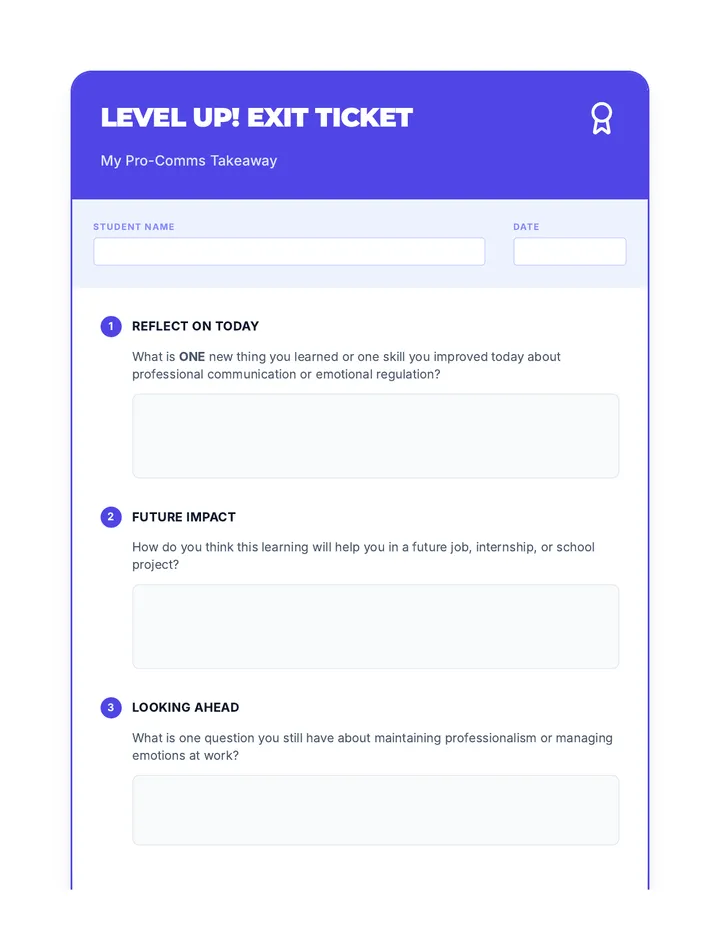
In this 30-minute Tier 1 lesson for 8th graders, students will explore what maturity means, why it matters, and how to demonstrate mature behavior in everyday situations. This lesson builds social-emotional skills and helps students reflect on their personal growth using a gaming-inspired 'Level Up' theme.
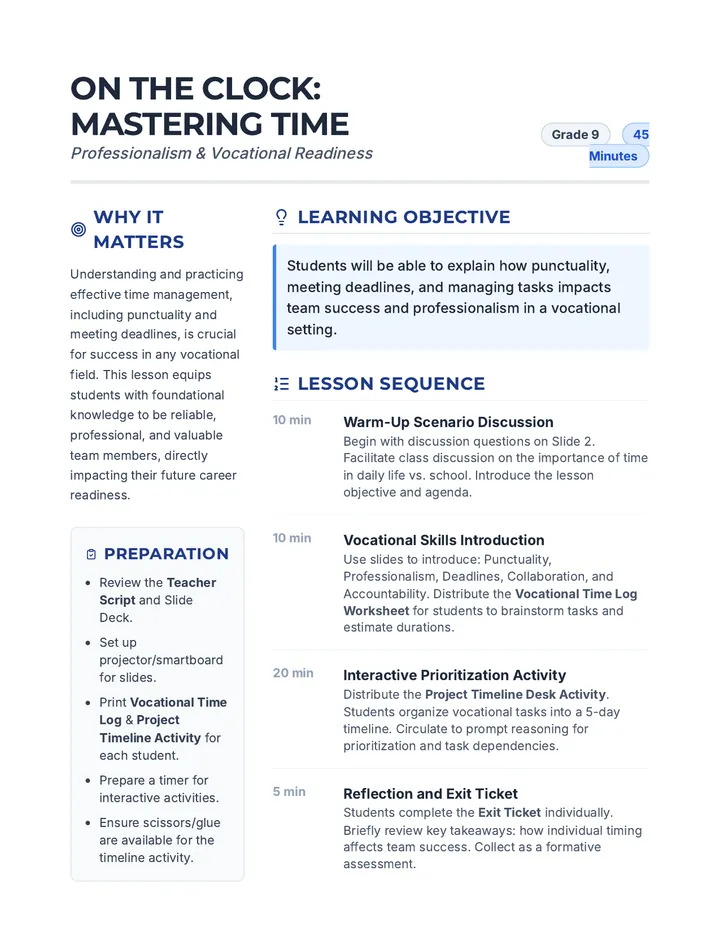
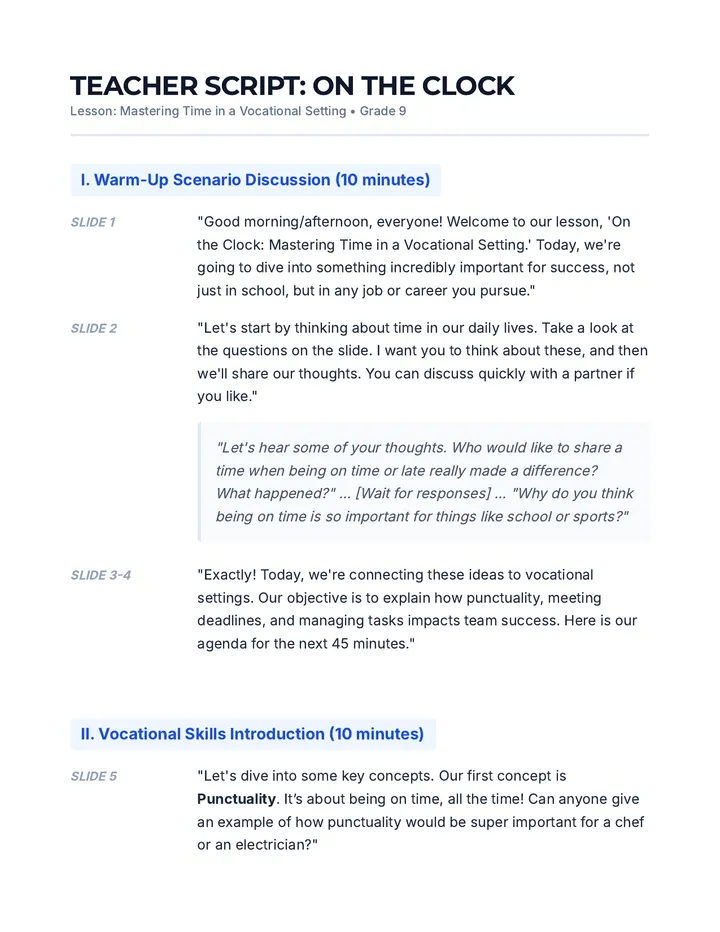
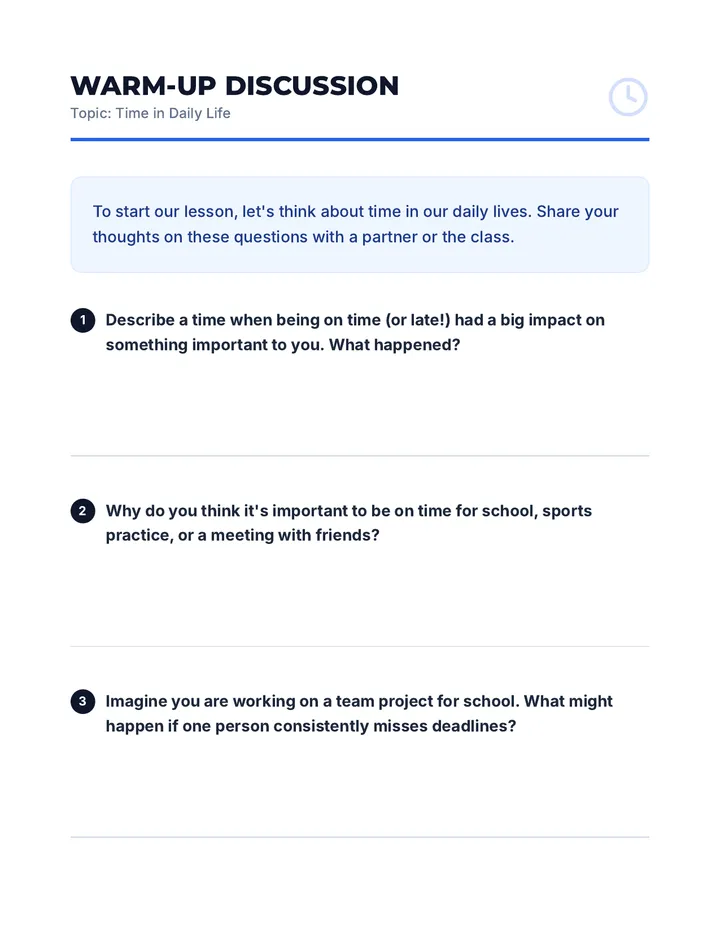
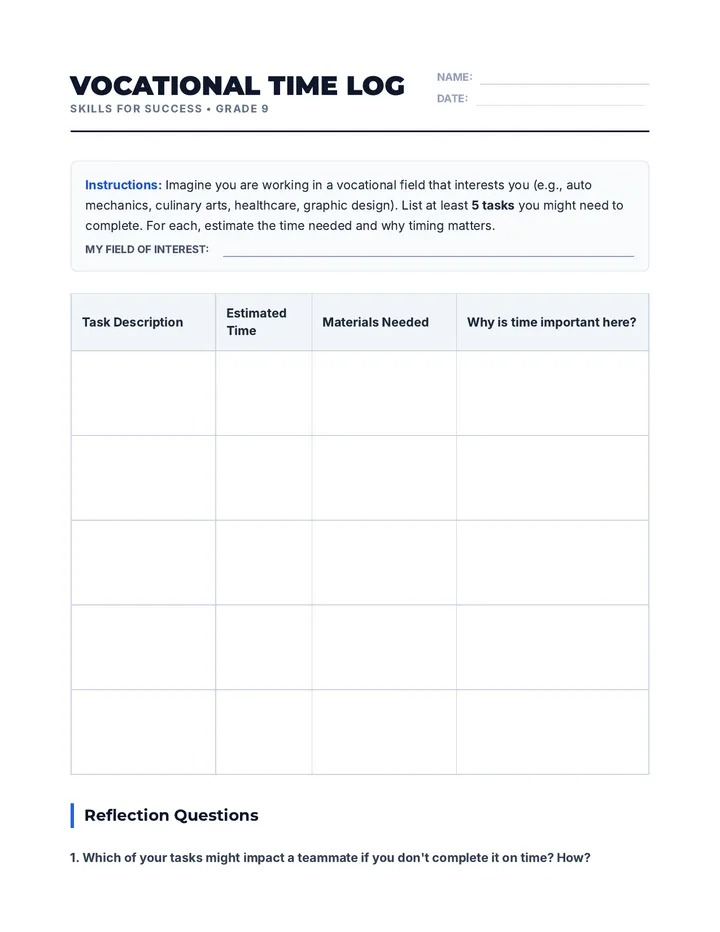
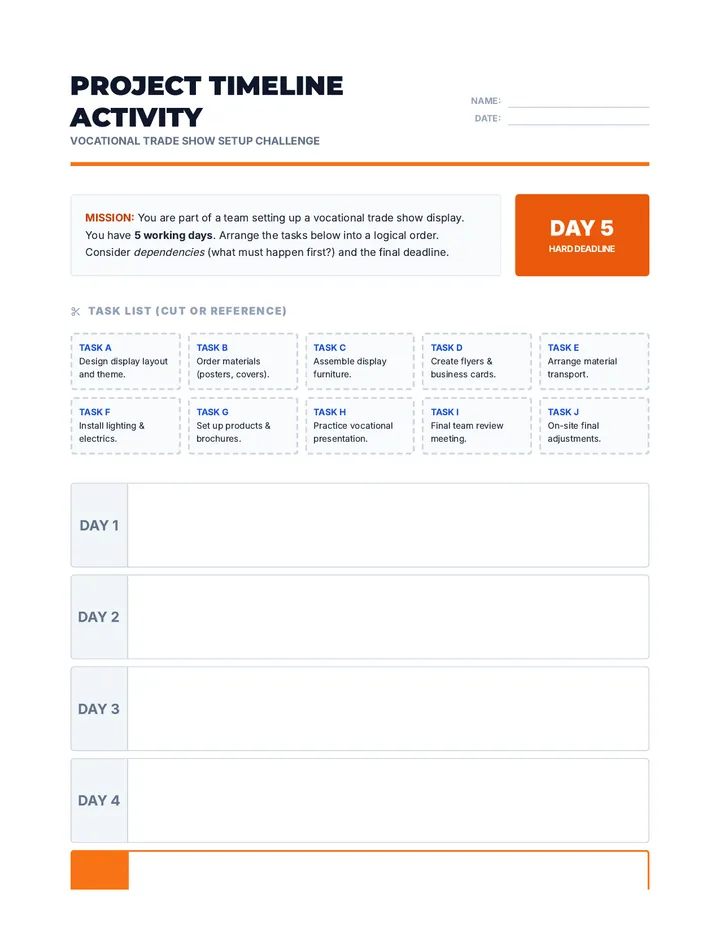
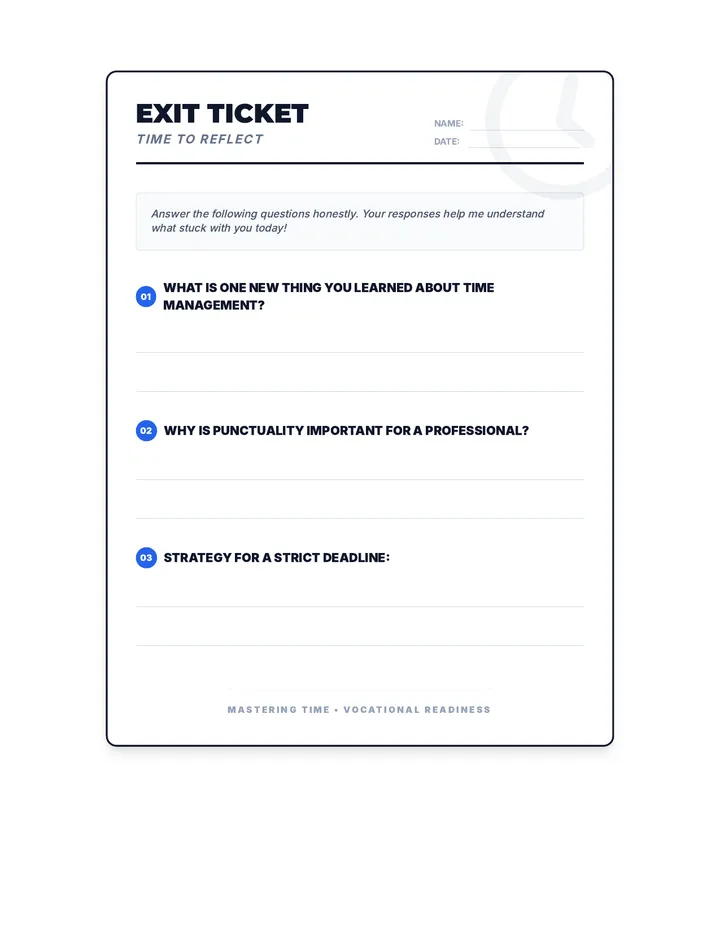
A 45-minute lesson for 9th-grade students on the importance of punctuality, meeting deadlines, and effective task management in vocational careers. Students explore key concepts of professionalism and collaboration through interactive activities like creating a project timeline for a trade show.
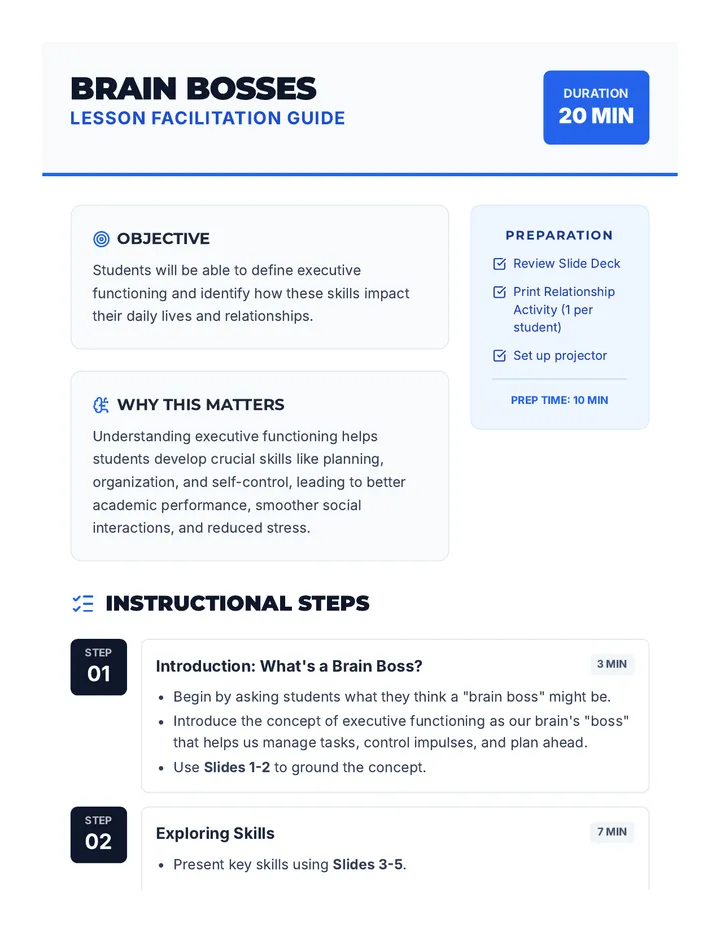
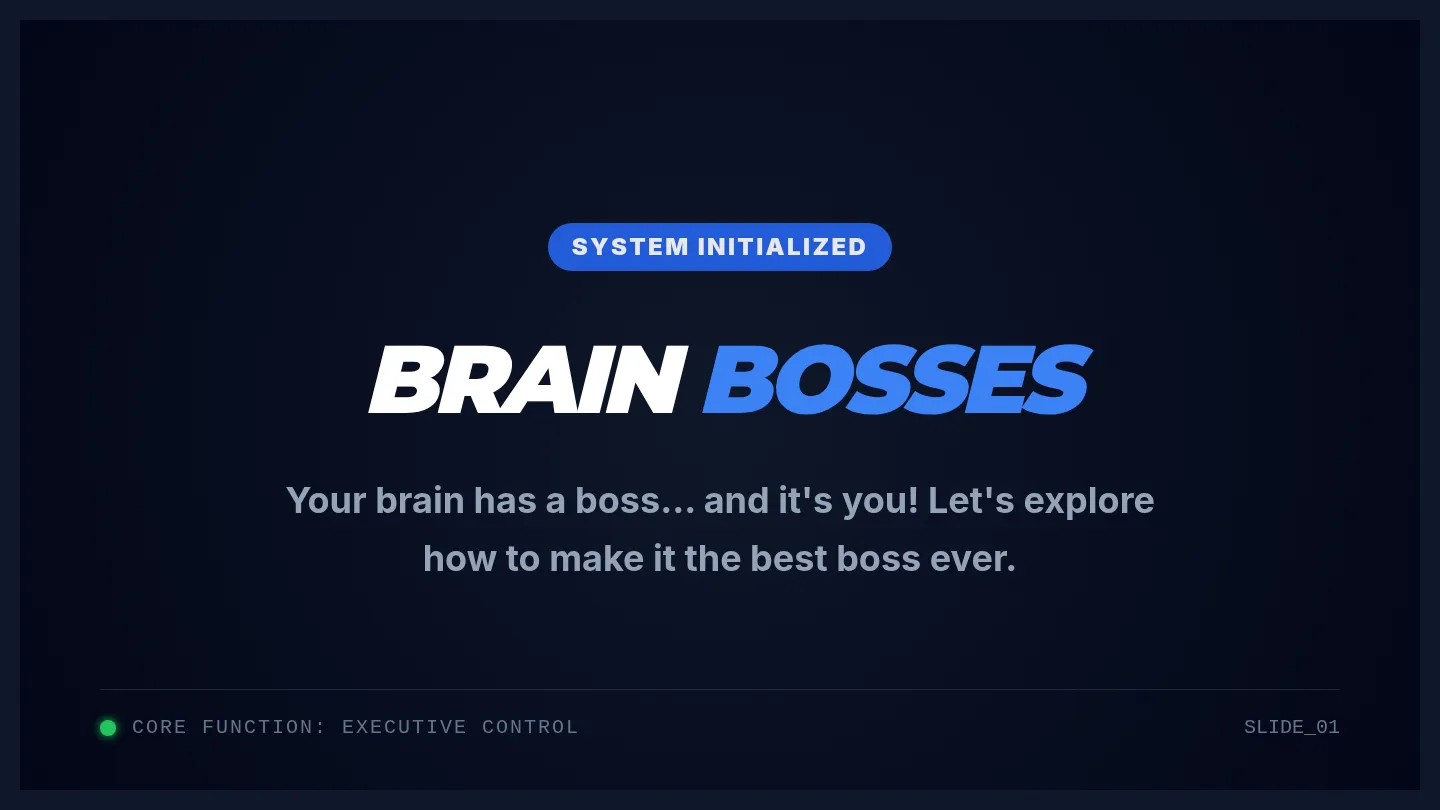
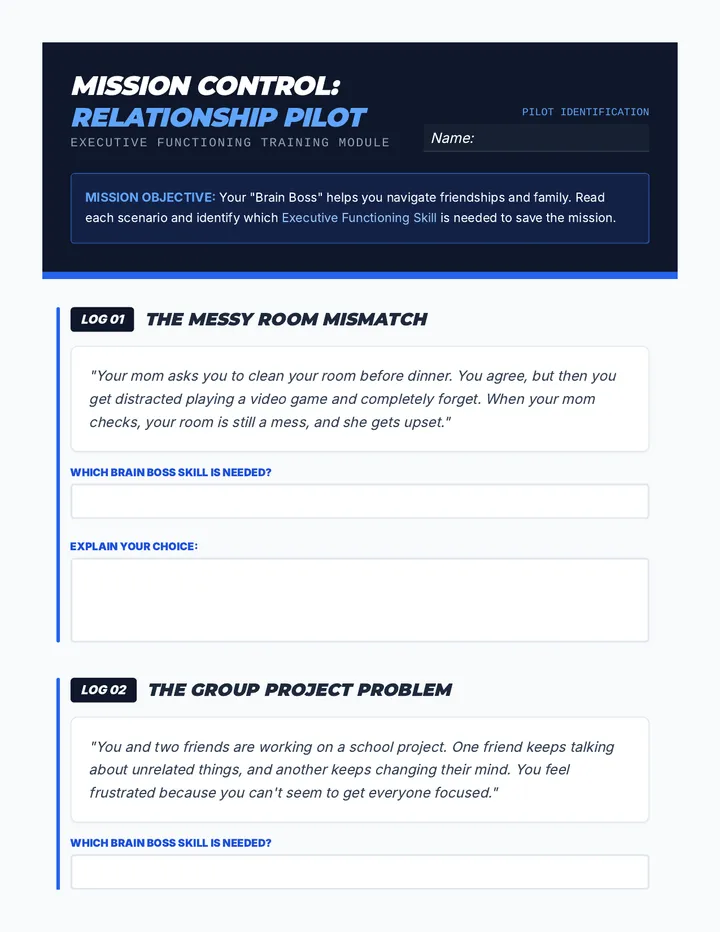
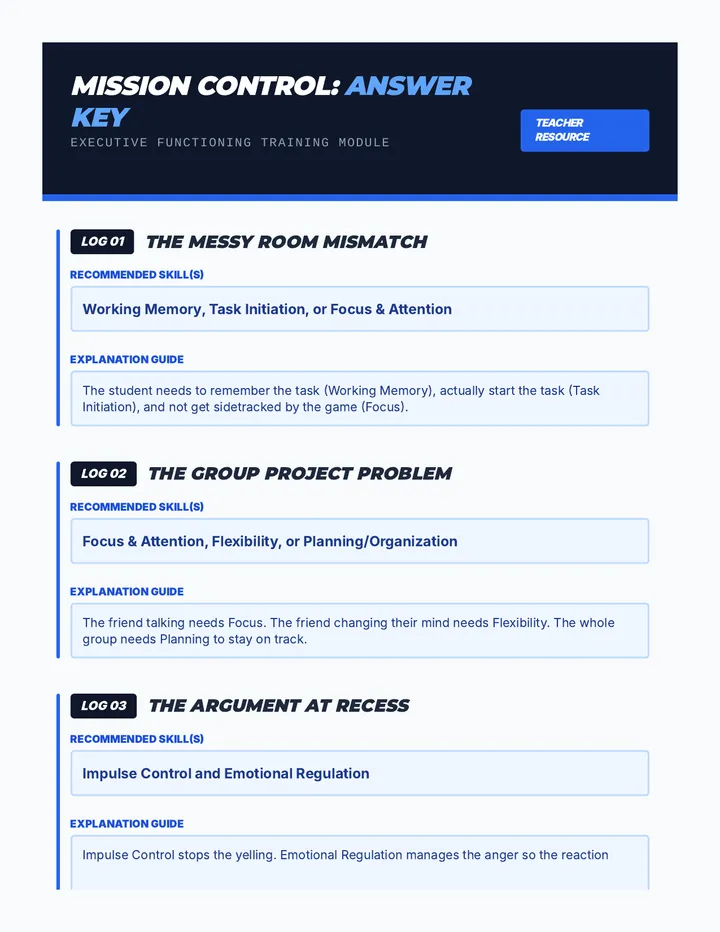
A 20-minute Tier 1 classroom lesson for 6th-grade boys introducing executive functioning as the 'brain boss' that manages tasks, impulses, and relationships.
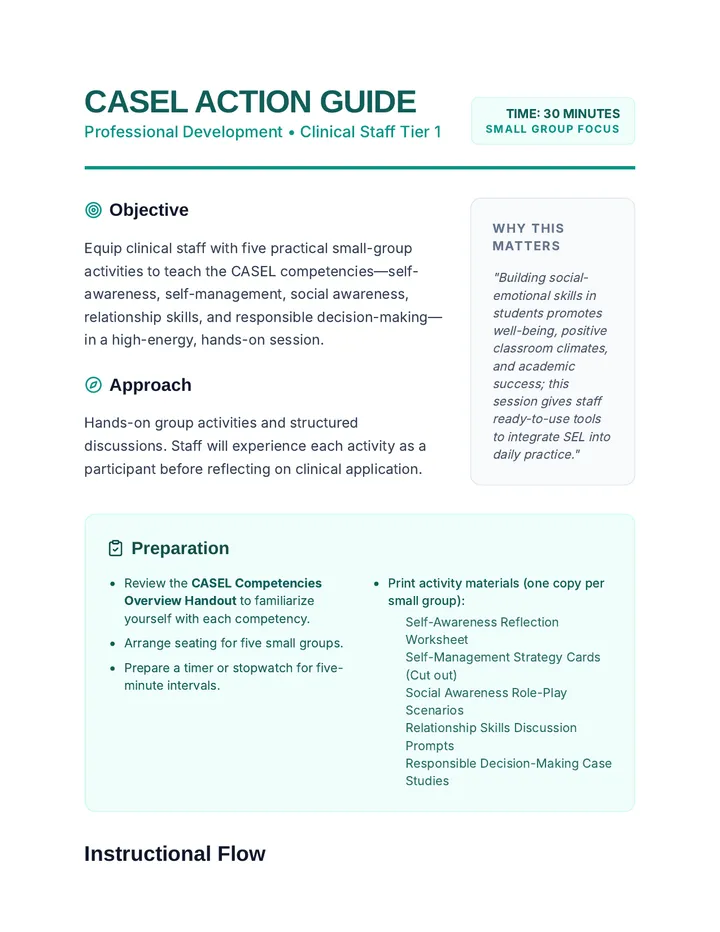
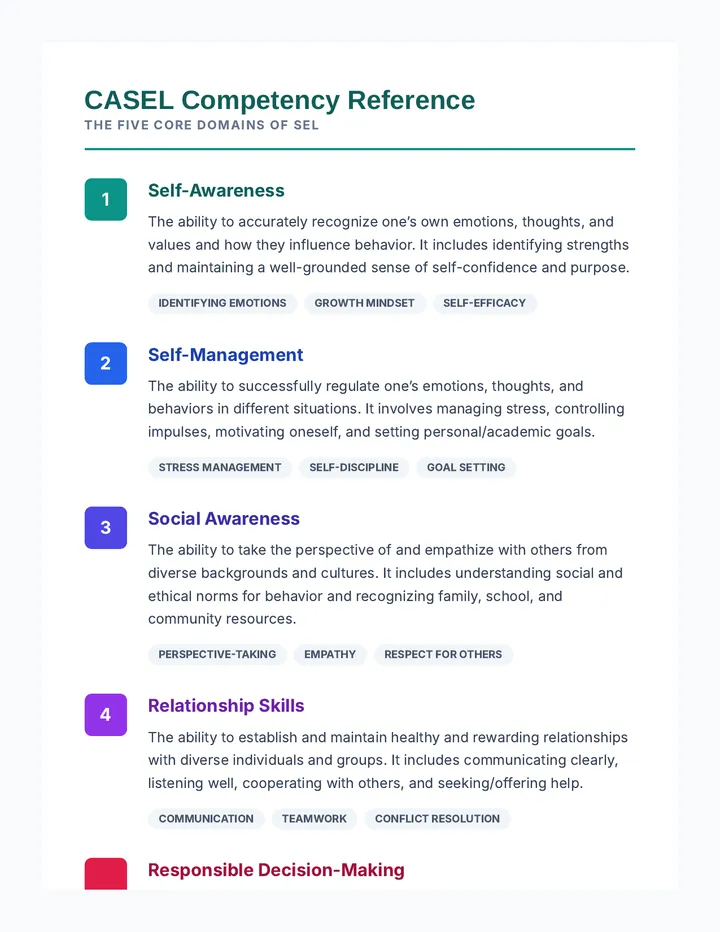
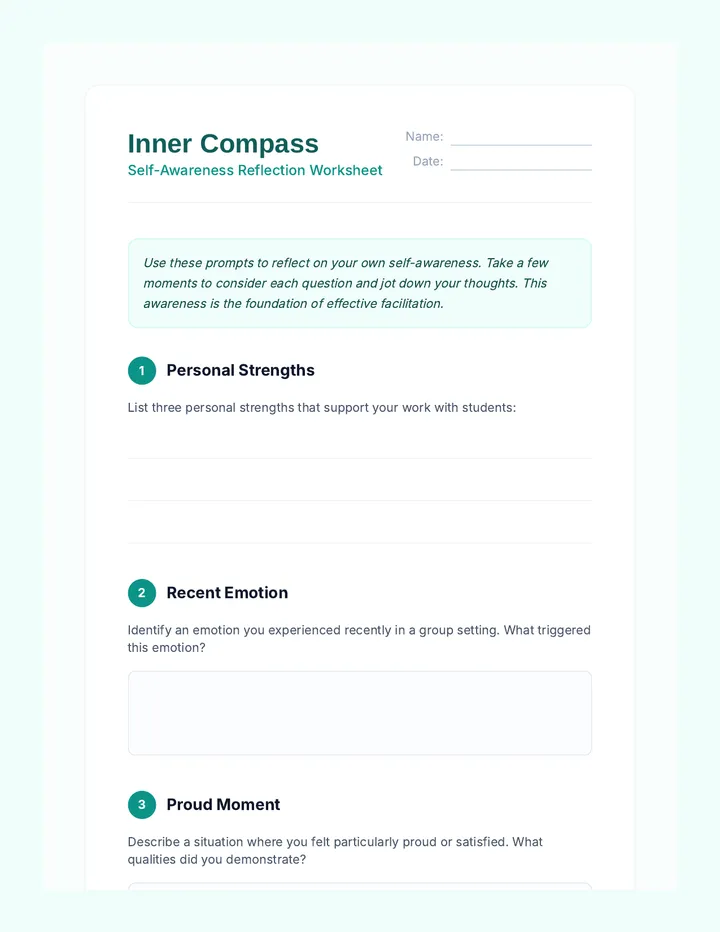
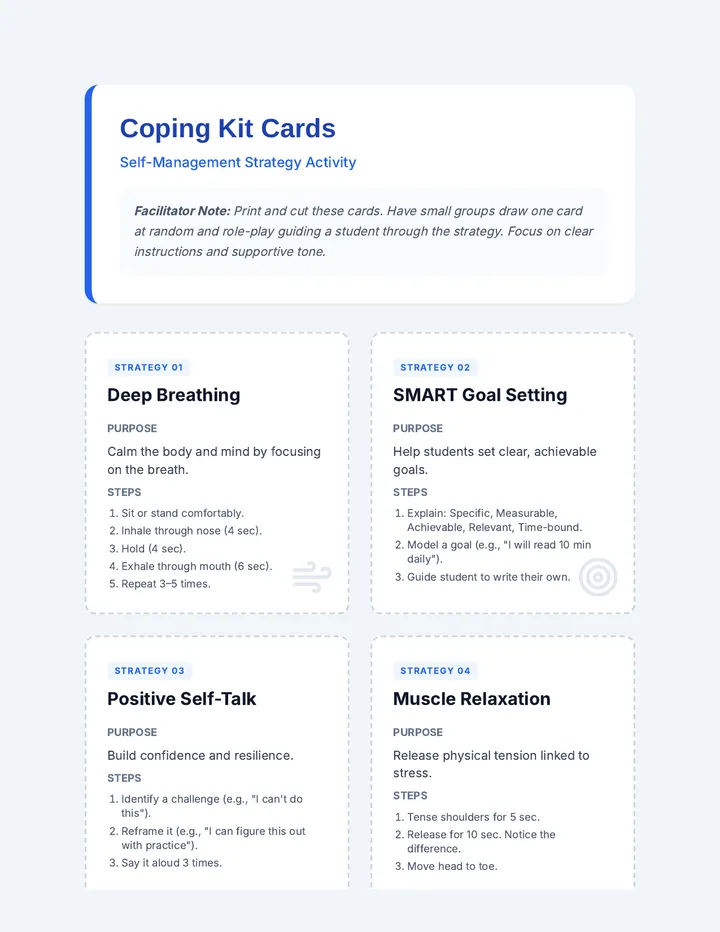
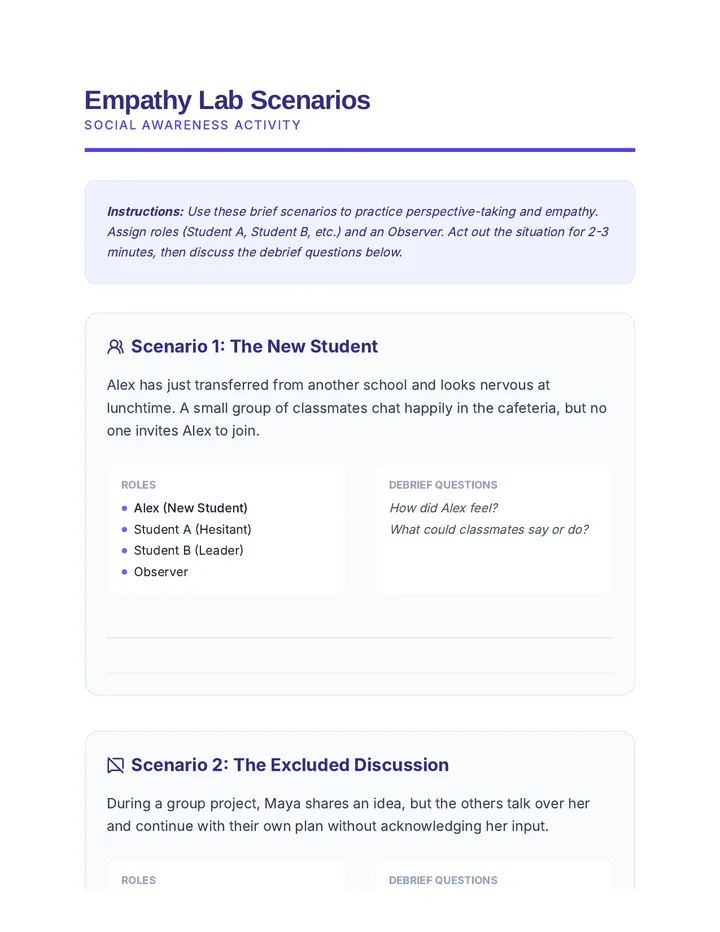
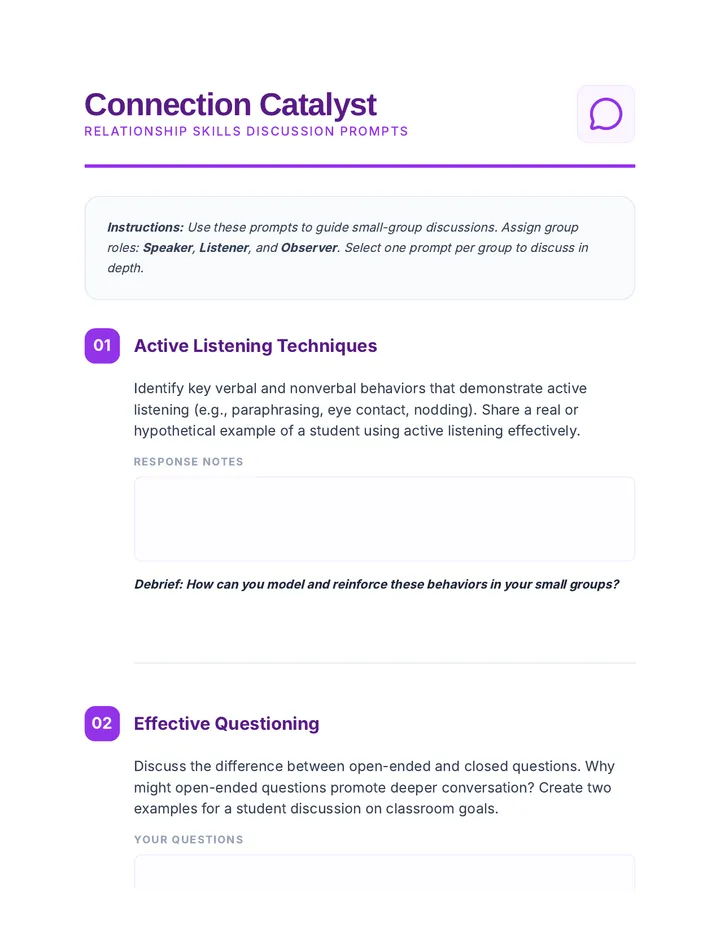
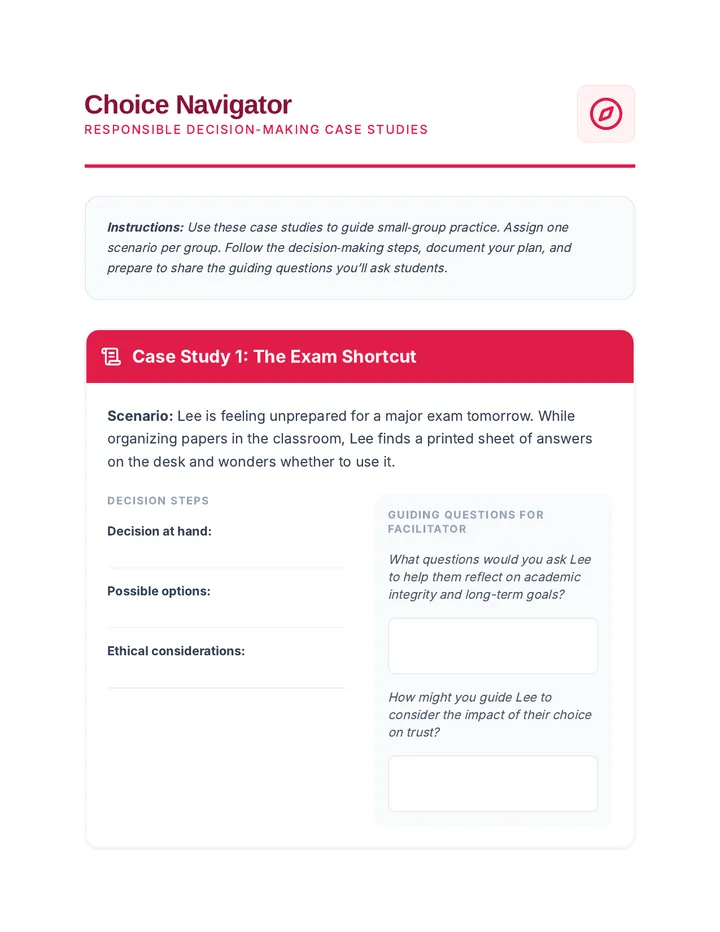
A 30-minute professional development session for clinical staff to master five practical small-group activities centered on CASEL social-emotional competencies.
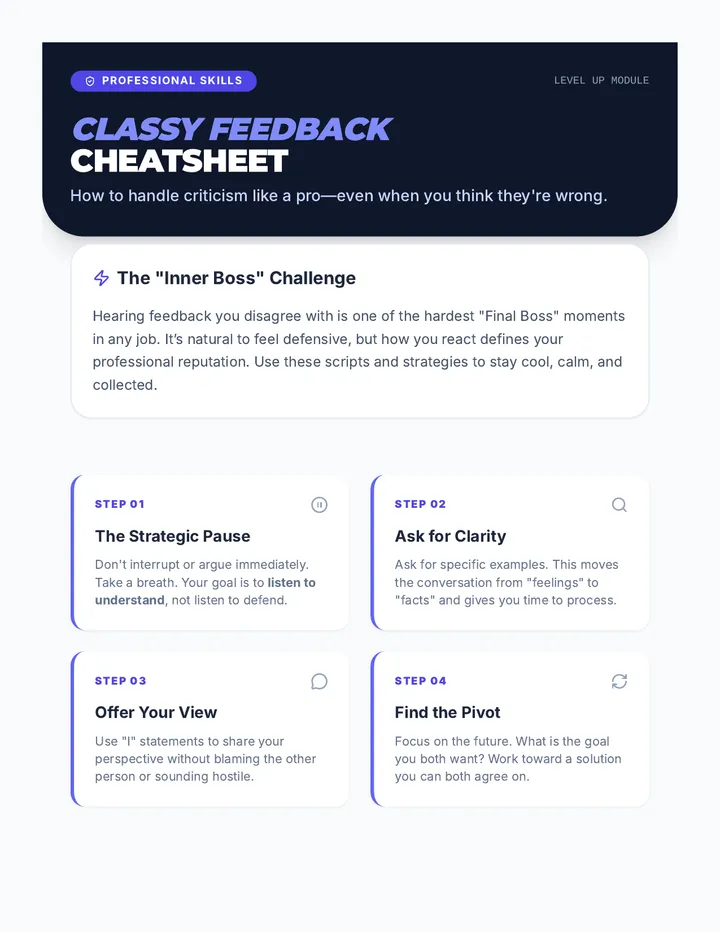
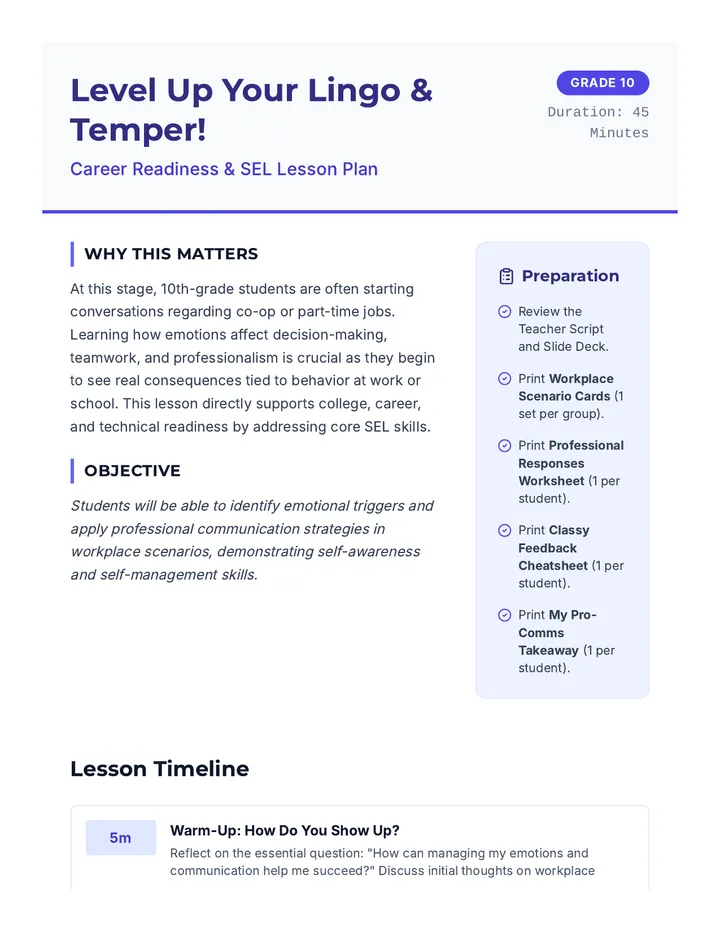
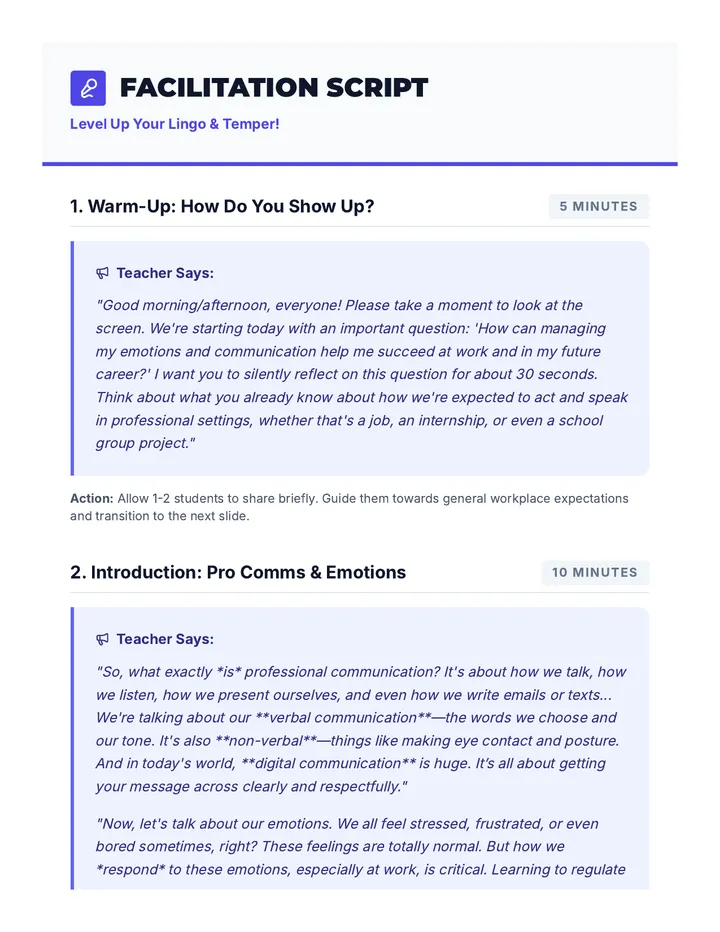
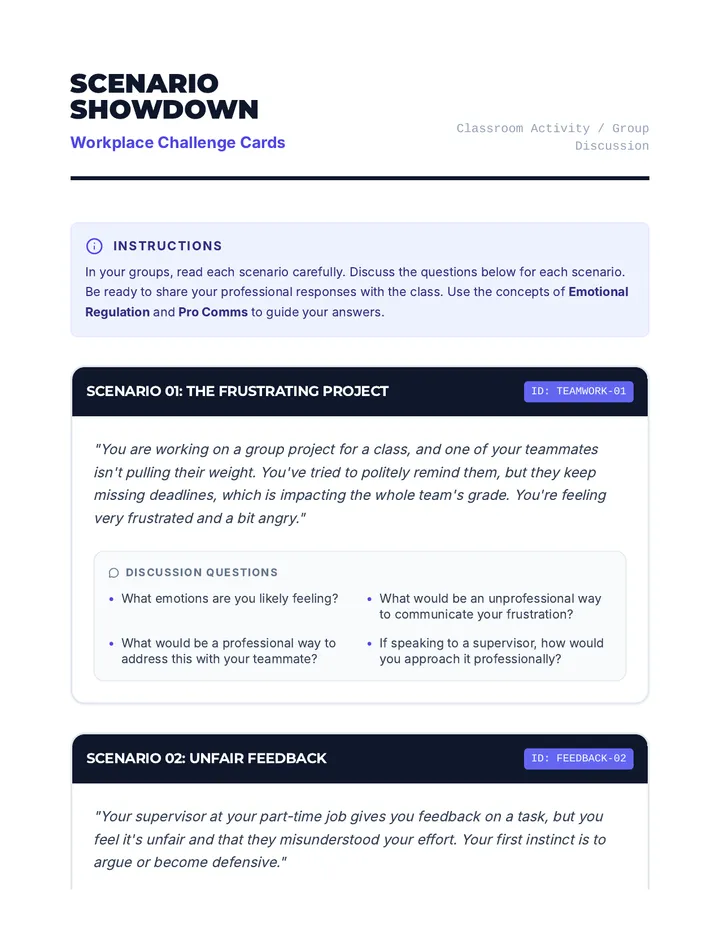
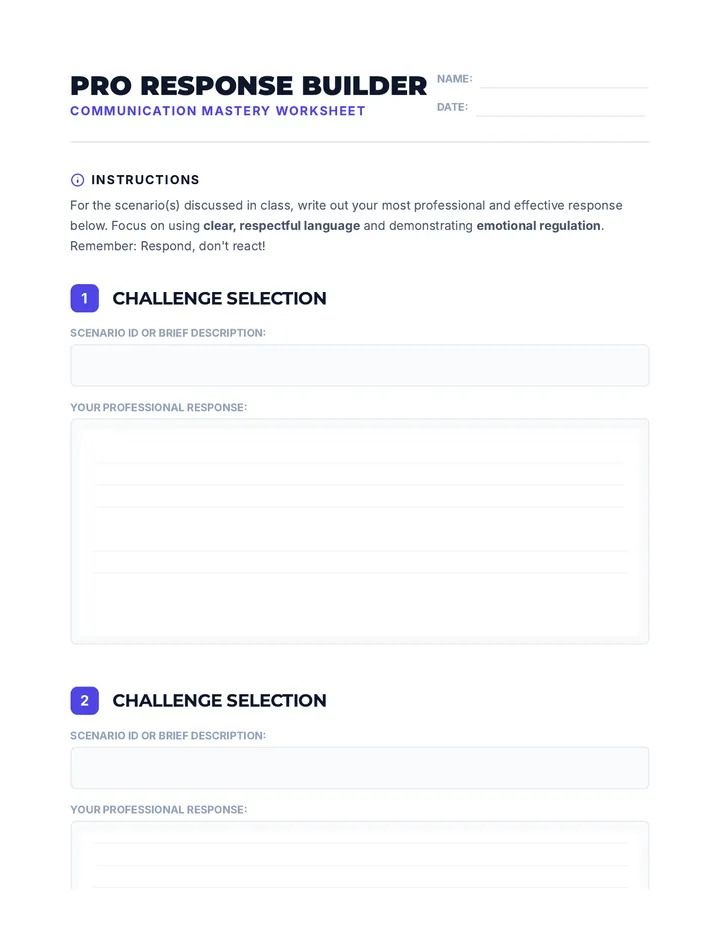
This lesson prepares 10th-grade students for future professional interactions by teaching them to recognize emotional triggers and apply professional communication strategies through scenario analysis and mock-response practice.
This 40-minute lesson establishes a 'Reaction Squad' environment where 5th-grade students build rapport through icebreakers and collaboratively create group norms to ensure a safe, supportive learning space.
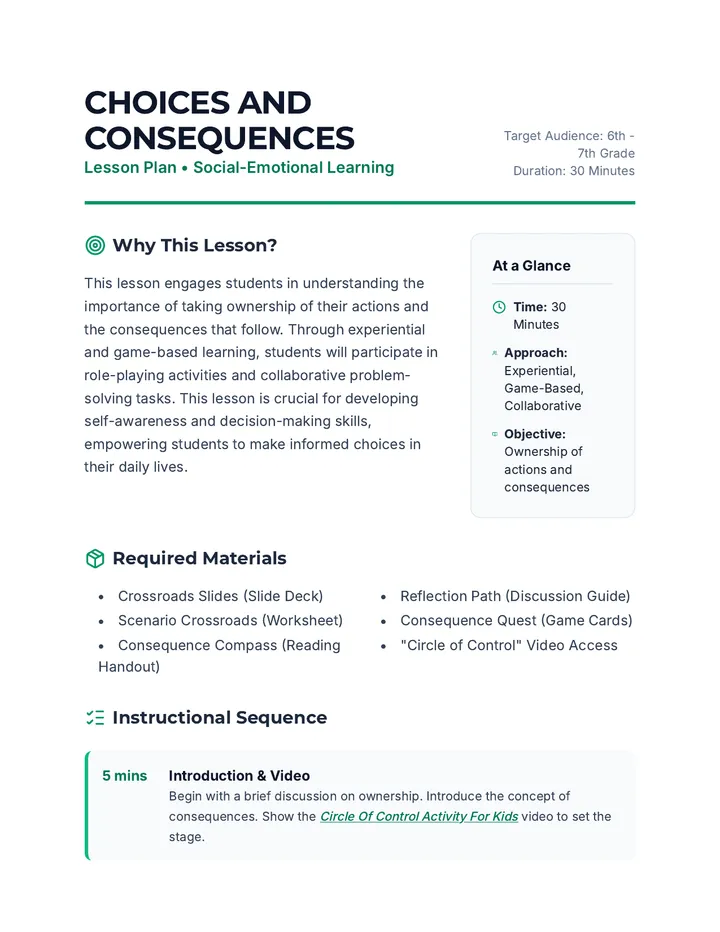
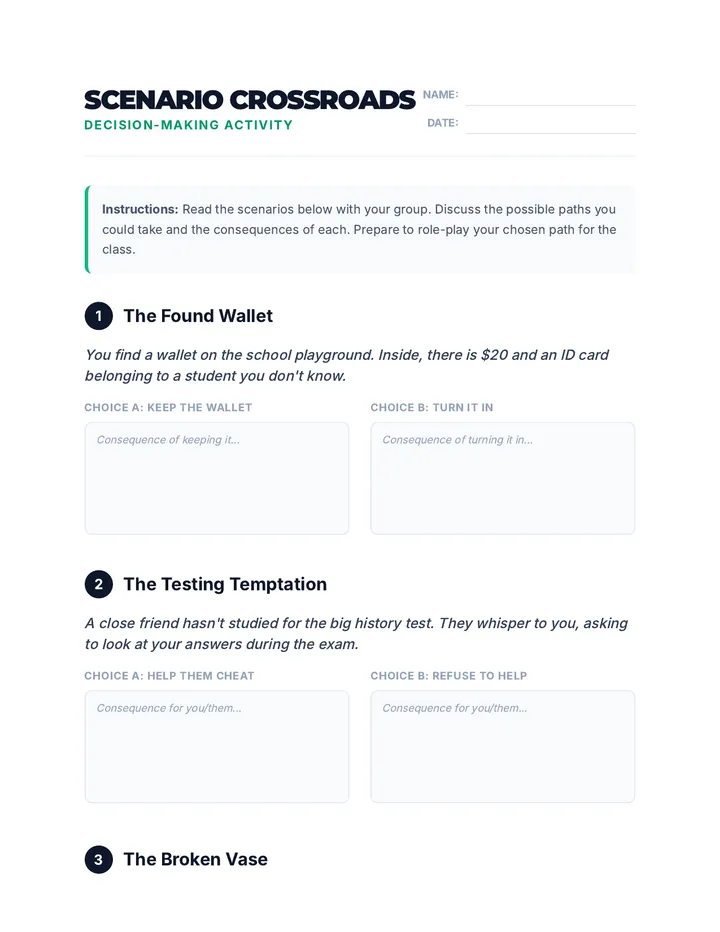
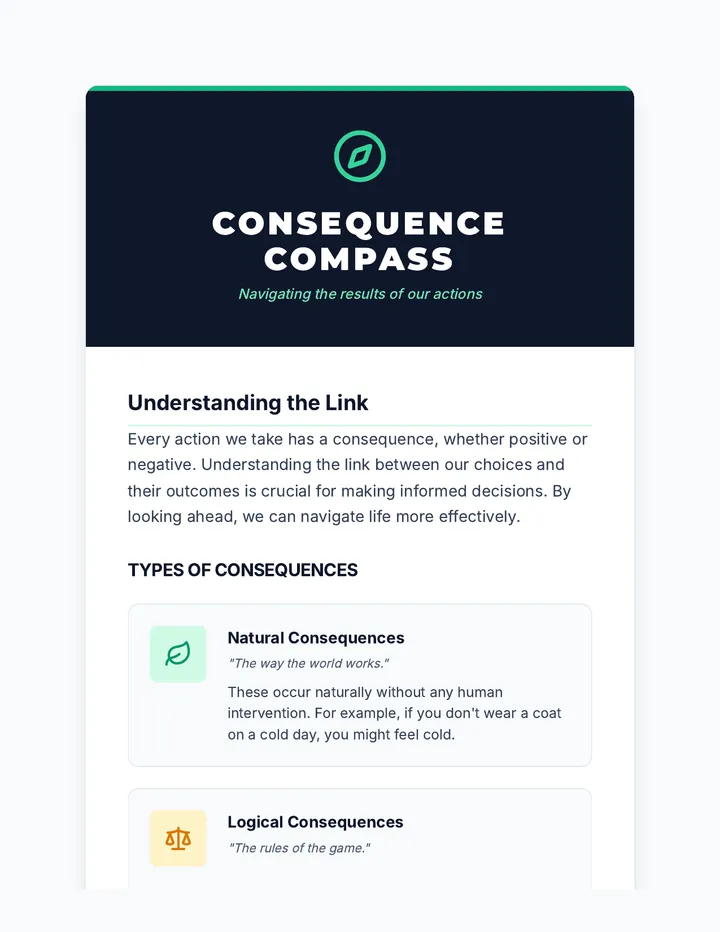
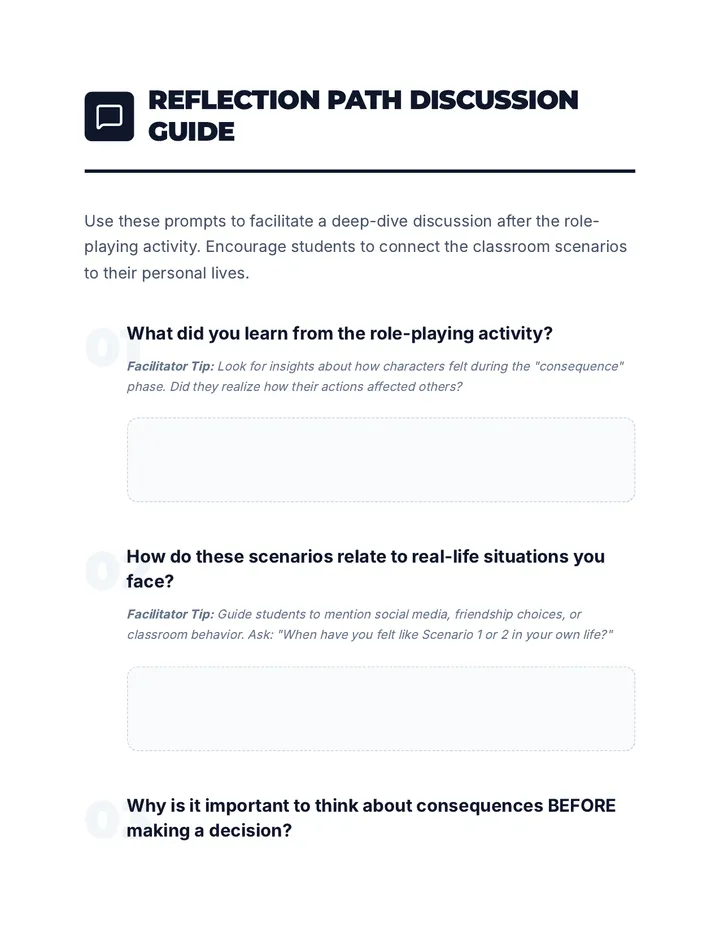
This lesson focuses on developing self-awareness and decision-making skills by exploring the link between choices and consequences through role-play and collaborative games.
This 30-minute activity helps 8th-grade students understand and articulate academic, social, and personal expectations for the upcoming school year. Students will identify key behaviors for success through group discussion and individual goal-setting.
A fun, interactive lesson for 1st graders to learn about respect through a Jeopardy-style game and a story about a 'Respectful Spot'. Students explore respect for friends, teachers, rules, and themselves.
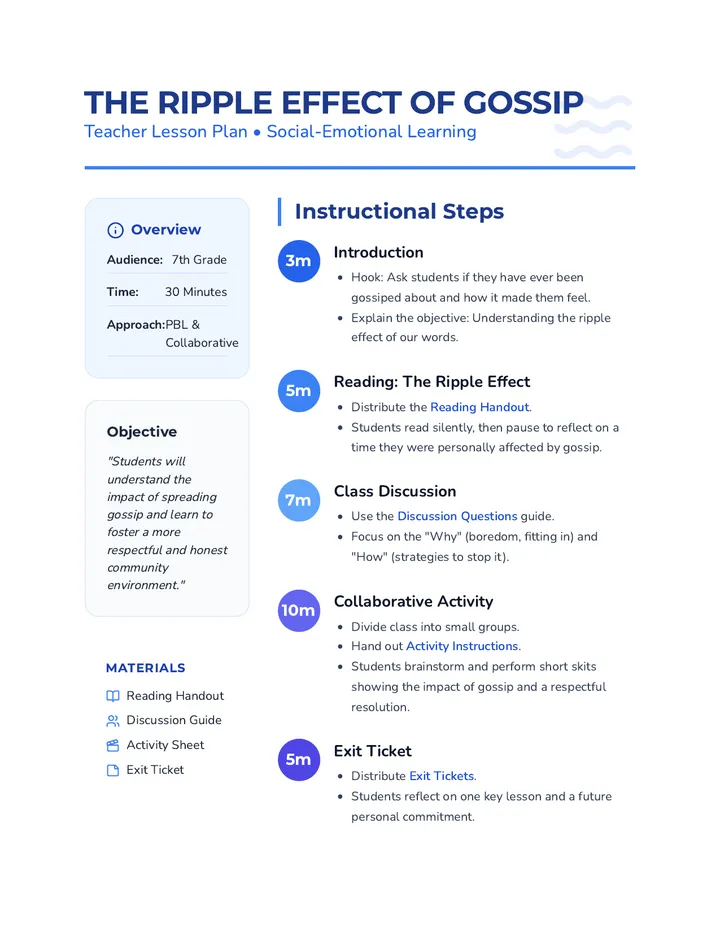
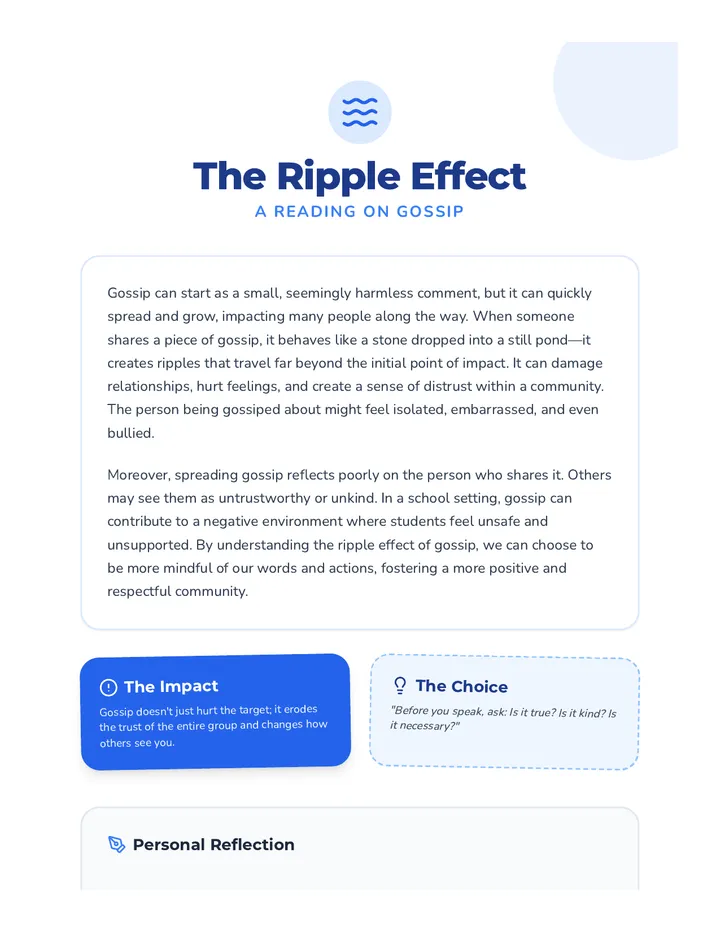
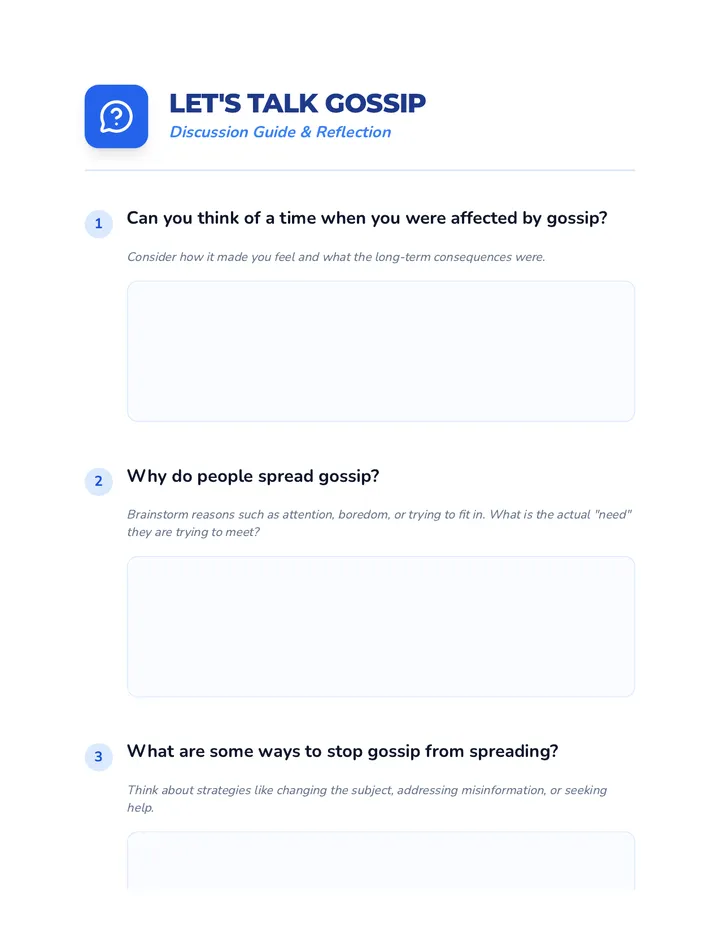
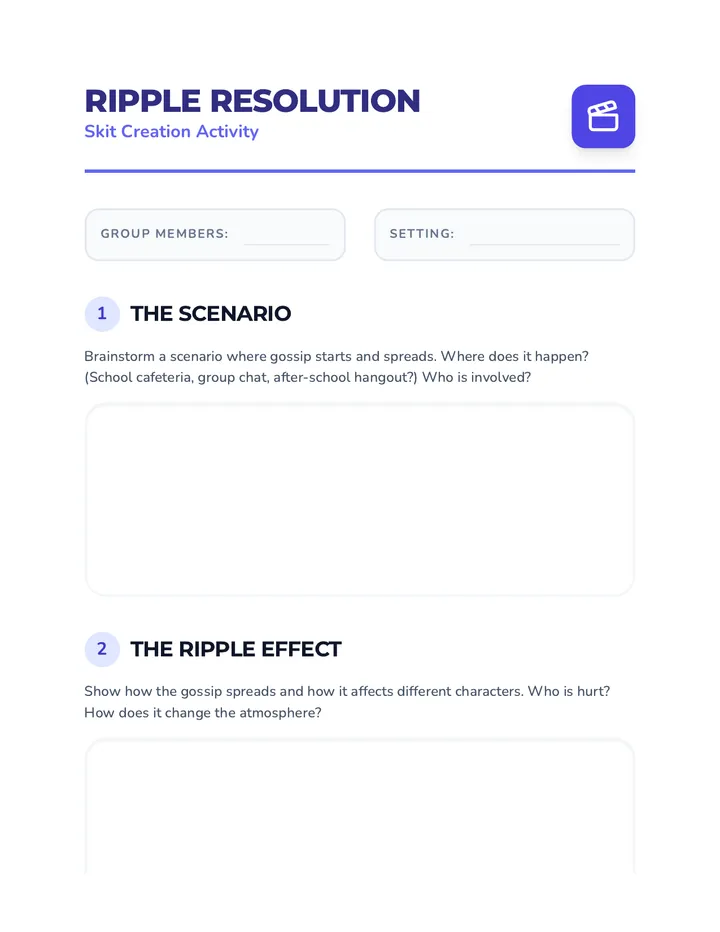
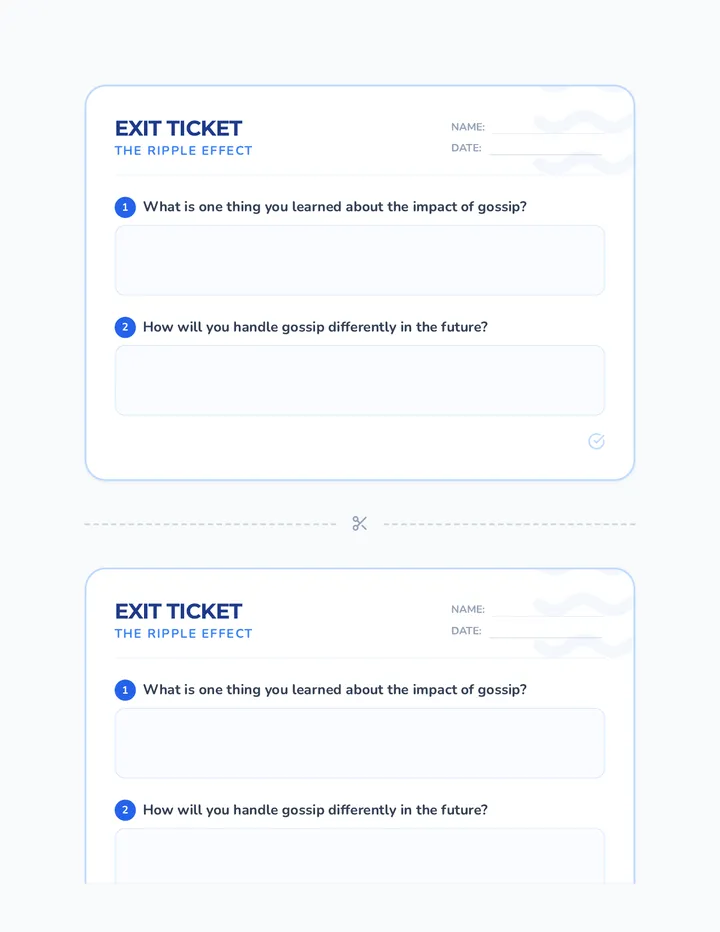
A 30-minute lesson for 7th graders to understand the negative consequences of gossip and learn strategies to foster a respectful community. Students engage in a reading passage, reflection, and collaborative skit-building.