Pressure Points Slides Navigating Social Pressure
Lesson 1: Identifying Pressure Points
The School "Stress Map"
Where does it happen?
Common Zones
The Cafeteria
The Locker Hallway
The Gym/Locker Rooms
Social Media / Group Chats
"Peer pressure isn't just someone telling you to do something bad. It's the feeling that you have to change who you are to fit in."
Think about our school building. Where do you feel the most "pressure" to act differently than you normally would?
Introducing: FAST Skills
Your toolkit for self-respect
F
Fair
Be fair to yourself AND the other person.
A
Apology-Free
Don't apologize for having an opinion or saying no.
S
Stick to Values
Don't sell out your integrity to be liked.
T
Truthful
Don't lie, act helpless, or exaggerate.
Radar Check
How do you know when you're under pressure?
Physical Cues
Racing heart, sweaty palms, "knot" in the stomach, tight jaw.
Mental Cues
Thinking "I have to do this or they won't like me" or feeling "trapped."
"Your body often knows you're in a tough spot before your brain does. Tuning into these signals is your first line of defense."
Mission Briefing
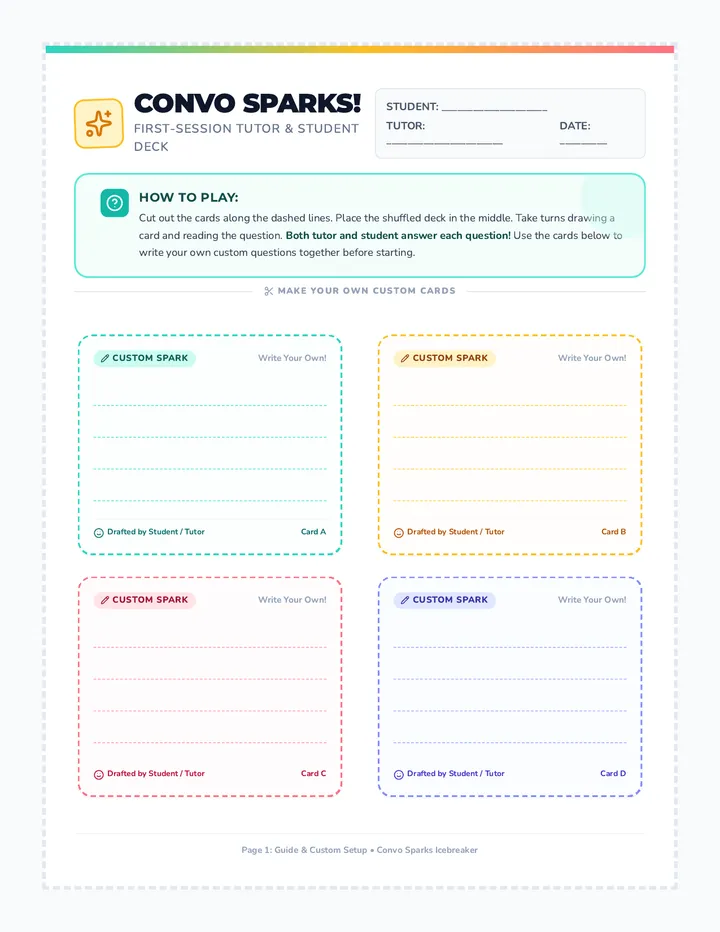
Grab your Pressure Points Worksheet . We are going to map out the hotspots in your life and identify YOUR unique pressure signals.
Pressure Points Worksheet Pressure Points Tracker
Self-Respect Tactical Series
Lesson 01: Identification
Agent Name
Date
Zone Mapping
Identify three "Hot Zones" in your school or social life where you feel the most pressure to act differently than your true self.
Zone 01
Why is there pressure here?
Zone 02
Why is there pressure here?
Zone 03
Why is there pressure here?
Physical Radar Check
Check all that you feel when you're under pressure:
Racing Heart
Tight Chest
Sweaty Palms
Dry Mouth
Knot in Stomach
Clenched Teeth
Shaky Hands
Quiet Voice
What is your "Number One" signal?
Core Compass (Stick to Values)
Self-respect means knowing what you stand for. List three things that are "Non-Negotiable" values for you (e.g., Honesty, Being Kind to Everyone, My Grades).
Tactical Navigation Sequence • Module 01 • End of Report
Pressure Points Teacher Guide Teacher Guide
Lesson 1: Identifying Pressure Points
6th Grade Counseling
Lesson Objectives
• Students will identify physical and emotional cues that signal social pressure.
• Students will map "hot zones" in their school environment where self-respect is challenged.
• Students will define the acronym FAST (Fair, Apology-free, Stick to values, Truthful).
Materials
• Pressure Points Slides
• Pressure Points Worksheet
• Large Chart Paper (for Class Map)
• Red, Yellow, Green Markers
Procedure
1
The Collaborative Stress Map (15 mins)
Hang a large piece of chart paper. Draw a rough outline of the school floor plan. Ask students to come up and place a Red Mark where they feel the most social pressure (cafeteria, hallway) and a Green Mark where they feel the safest to be themselves (certain classrooms, library).
Discussion Prompt:
"Look at our map. Why are the red zones red? Is it because of adults, or is it because of the 'unwritten rules' of being a 6th grader?"
2
Intro to FAST (10 mins)
Use the Pressure Points Slides to introduce the FAST acronym. Emphasize that these are skills specifically designed to help maintain self-respect in high-pressure situations.
Key takeaway: Self-respect isn't just 'liking yourself'; it's 'acting in a way that makes you proud of yourself.'
3
Radar Check & Personal Mapping (20 mins)
Students complete the Pressure Points Worksheet . Encourage them to be honest about their physical cues.
Teaching Tip:
Circulate the room. If students struggle with 'values', suggest examples like: sticking up for a friend, not lying to parents, or working hard in sports.
Differentiation & Support
Scaffolding
Provide a list of "Body Cues" on the board for students to choose from. Use a simplified school map with labels for those who struggle with spatial layout.
Extension
Ask students to write a short paragraph about a time they *did* listen to their physical cues and it helped them avoid a bad situation.
Refusal Skills Slides Scripting the Refusal
FAST Skill Focus: Stick to Values
The "Social Trap"
Why do we often say "yes" when we mean "no"?
Fear of being left out
Wanting to be "cool" or helpful
Avoiding awkwardness
The Truth:
Saying "no" isn't being mean. It's being honest about what matters to you.
S
Stick to Values
The core of the FAST skills
What it IS
Staying clear on what YOU believe is right, regardless of what others are doing.
What it ISN'T
Preaching to others, being judgmental, or trying to change their mind.
The Scripting Lab
The "Direct"
"No thanks, I'm not into that."
"I'm going to pass on that today."
The "Value-Based"
"That doesn't really fit with my goals right now."
"I've decided I'm not doing that anymore."
The "Exit"
"I'm actually heading to the library now, see ya."
"Can't do it, gotta get home."
Pro-Tip: Keep it short. Long explanations sound like excuses.
The Persistent Salesman
In a moment, one person will try to "sell" you on a bad idea. Your job? Use your script to hold the line without being mean.
Hold the line!
Refusal Lab Worksheet Refusal Lab
Module 02: Scripting Workshop
Date // Agent Name
Anchor Your Values
Before you write your scripts, what is the ONE value you are protecting today? (e.g., My health, My grades, Being a kind person)
1
The "I'm Bored" Pressure
Context: A friend is bored and wants you to join a group chat where they are making fun of a new student. They say, "Come on, it's just a joke, don't be so sensitive."
Script Idea: Direct No
Script Idea: Value-Based
2
The "Everyone's Doing It" Pressure
Context: A group is planning to skip the last 10 minutes of class to hide in the bathroom. They say, "Even the 'good' kids are doing it. You're the only one staying."
Script Idea: The Exit
Script Idea: Questioning
The "Apology-Free" Check (A)
Review your scripts above. Did you use the word "Sorry"? If so, cross it out. Practice saying your script out loud without apologizing for your choice.
Self-Respect Secret: When you apologize for saying "no," you're accidentally telling the other person that your values are a mistake. Stand firm!
End Scripting Workshop // Refusal Lab 2.0
Refusal Teacher Guide Teacher Guide
Lesson 2: Scripting the Refusal
Skill-Building & Simulation
Instructional Focus
This lesson focuses on the S (Stick to Values) and A (Apology-free) skills of FAST. Students often feel they need to justify or apologize for their boundaries. This lesson deconstructs that habit.
Skill: S
Identifying and maintaining personal boundaries under peer pressure.
Skill: A
Removing over-apologizing from refusal scripts to build confidence.
The Hook
Game: The Persistent Salesman.
One student tries to "sell" a bad idea (e.g., eating a bug) while the other practices their "no."
Game Setup: The Persistent Salesman
1. Pair up students. One is the "Pusher" and one is the "Protector."
2. The Pusher's Goal: Try to get the Protector to say "Yes" to a silly or minor request (e.g., "Let's run in the halls," "Give me your lunch snack"). They should use "gentle" social pressure ("Everyone is doing it," "Don't be a buzzkill").
3. The Protector's Goal: Use a script from the slides to say "No" firmly. They MUST NOT use the word "Sorry."
4. Time: Give them 60 seconds per round, then switch.
Facilitation Note:
Watch for students who giggle or look at the floor. Encourage them to maintain eye contact and a steady "pilot's voice."
Scripting Workshop Facilitation
A
The "Why" vs. "What"
Remind students that they don't owe a long "Why" to people pressuring them. A simple "What" (their decision) is enough for self-respect.
B
Tone and Body Language
Model the difference between an aggressive "NO!" and a firm, respectful, self-assured "No." The goal is the latter.
Post-Game Debrief
"Which was harder: coming up with the words, or saying them without apologizing?"
"How did it feel when the 'Salesman' kept pushing? What happened to your body signals?"
Conflict Resolution Slides Conflict Resolution
FAST Skill Focus: Fair & Truthful
The Self-Respect Balance
F
Be FAIR
Validate the other person's perspective. Don't attack them or ignore their feelings.
T
Be TRUTHFUL
Don't lie or act helpless. Speak your truth clearly and directly without exaggerating.
The "Three Paths"
The Doormat
"It's fine, I don't care." (Lying about feelings / Being unfair to yourself)
The FAST Path
"I'm upset you lost my notes, but I'm glad you told me. How can we fix this?" (Fair & Truthful)
The Hammer
"You always ruin everything! You're so irresponsible!" (Unfair & Exaggerating)
Mission: Conflict Simulation
Rules of the Simulation:
Draw a random card.
Act it out IMMEDIATELY.
Aim for "F" and "T".
"Self-respect doesn't mean winning every argument. It means ending the argument in a way that respects both people."
Conflict Scenario Cards Conflict Scenario Cards
Simulation Lesson 03 // Cut and Distribute
#01
The Borrowed Hoodie
"Your best friend borrowed your favorite hoodie last week. They just gave it back, and it clearly has a grape juice stain on the sleeve. They haven't mentioned it."
Goal: Fair + Truthful
#02
The Group Project Slacker
"You're working on a poster with a friend. They've spent the whole class drawing doodles on their own paper instead of helping. You're worried the poster looks bad."
Goal: Fair + Truthful
#03
The Accidental Spoilers
"A friend just blurted out the ending of the movie you were planning to see tonight. They think it's funny, but you're actually really annoyed."
Goal: Fair + Truthful
#04
The Last-Minute Cancel
"You've been planning to go to the park all week. Your friend just texted 10 minutes before you were supposed to meet to say they'd rather stay home and play video games."
Goal: Fair + Truthful
#05
The "Private" Secret
"You told a friend something private about your crush. You just found out they told someone else in the cafeteria, claiming 'it slipped out.'"
Goal: Fair + Truthful
#06
The Unfair Blame
"A teacher is correcting the whole class for being loud. Your neighbor was the one talking, but they are acting like it was your idea."
Goal: Fair + Truthful
Helpful Sentence Stems
Fairness Stems
"I understand you didn't mean to..."
"I can see why you'd think that..."
Truthfulness Stems
"The truth is, I feel frustrated when..."
"I need to be honest, it really bothered me..."
Conflict Reflection Worksheet Simulation Debrief
Module 03: Fair & Truthful Evaluation
Agent Name:
1. Your Scenario
Which scenario did you act out? Briefly describe it.
F
The "Fair" Test
How did you show that you understood the other person's side? Write down one specific thing you said to be Fair .
T
The "Truth" Test
How did you state your feelings without exaggerating or lying? Write down one specific thing you said to be Truthful .
3. Passive/Aggressive Check
Was it harder to avoid being "Passive" (hiding your true feelings) or "Aggressive" (blaming/attacking)? Why?
Integrity Check
Did your solution maintain your self-respect?
Y
Yes
N
No
Reputation Reflection Slides Reputation Reflection
Lesson 4: The Long Game
What is a Reputation?
It's not about being "popular." It's about what people expect from you.
The "Doormat" Reputation
People expect you to say yes to everything. They might not respect your time or your values.
The "FAST" Reputation
People know you are fair, but they also know you won't be pushed around.
The Flash Forward
One choice today creates two different futures.
The "Short-Cut" Path
You agree to help someone cheat because you're afraid they'll be mad.
Future: They keep asking for "favors." You feel stressed and guilty. They don't actually value your friendship, just your work.
The "FAST" Path
You say, "I'm not comfortable with that, but I can help you study later." (Stick to Values + Fair)
Future: You keep your integrity. They might be annoyed now, but they know you have limits. You find friends who respect those limits.
A
The "A" Power Move
Stop apologizing for existing.
When you don't over-apologize, your reputation changes from "unsure" to "confident."
If you didn't do anything wrong, don't say sorry for having a boundary. It tells people your boundary is a mistake.
Reputation Map Worksheet Reputation Map
Module 04: Consequential Thinking Workshop
Agent Name
The Choice Point
Imagine a scenario where a popular student asks you to do something that violates your values (like being mean to a friend or lying to a teacher).
What is the "Self-Respecting" choice in this moment?
Path: The Doormat
Result after 1 Week:
How do you feel about yourself?
Result after 1 Month:
What do others expect from you now?
Path: The FAST Skill
Result after 1 Week:
How do you feel about yourself?
Result after 1 Month:
What do others expect from you now?
The Self-Respect Verdict
Look at your map. Which "Future Version" of you are you more proud of? What is one thing you can do TODAY to make sure you stay on the FAST path?
End Consequential Analysis // Reputation Tracker 4.0
Reputation Teacher Guide Teacher Guide
Lesson 4: The Reputation Reflection
Consequential Thinking
Instructional Focus
This lesson moves beyond the *how* of FAST skills and into the *why*. Students examine the long-term impact of their social choices. The goal is for them to realize that self-respect builds a sustainable social identity, while "people-pleasing" creates long-term stress.
The "A" Factor:
Emphasize that 6th graders often feel a "need" to apologize for setting boundaries. This lesson reinforces that A (Apology-free) is a respect-builder.
The Hook
The Flash-Forward Skit:
Perform two 30-second skits with a student volunteer.
Scene A: You are the "Doormat."
Scene B: You use FAST skills.
Skit Facilitation: The Split Path
Path 1: The Doormat
Student: "Hey, can I copy your math homework? I forgot mine."
Teacher (as Doormat): "Uh... sure, I guess. Sorry, I didn't mean to be mean earlier."
Analysis: The teacher apologized for nothing and gave in. Result? The student will do it again tomorrow.
Path 2: The FAST Response
Student: "Hey, can I copy your math homework? I forgot mine."
Teacher (as FAST): "I can't let you copy, it's not fair to the work I did. But I can show you how to do the first few problems if you want."
Analysis: No apology. Fair to self and other. Stick to values. Result? Clear boundary set.
Worksheet Coaching
• 1 Week vs 1 Month: Help students see that Path A (Doormat) feels easier *right now* (1 week) but harder *later* (1 month).
• The Verdict: Encourage students to define what they want their reputation to be. Do they want to be "The Nice Person Everyone Uses" or "The Person People Actually Respect"?
Debrief Discussion
"Is it possible to be 'Fair' to someone else but also 'Fair' to yourself? How did we see that in the FAST skit?"
Focus on how the "A" (Apology-free) skill changed the tone of the second skit.
Discuss how reputations are built slowly over time, choice by choice.
Gauntlet Slides THE GAUNTLET
Final Mastery Challenge
Mission Rules
Operation: FAST
1
Move through 5 Social Stations in order.
2
At each station, a Conflict will be presented to you.
3
Use your FAST skills to navigate the pressure effectively.
Mastery Criteria:
No unnecessary apologies.
Stick to your personal values.
Maintain "Fair" eye contact.
Speak the truth clearly.
The 5 Stations
01
The Borrowers
Someone wants your stuff... again.
02
The Gossip Hub
"Did you hear what they said?"
03
The Rule Breaker
"Nobody is looking, just do it."
04
The Last Spot
Saving a seat for the "wrong" person.
05
The Teacher Trap
Correcting a mistake respectfully.
Gauntlet Complete
Self-respect isn't a destination, it's a practice. Which station was the hardest for you? Why?
Carry your FAST tools everywhere.
Gauntlet Station Guide Station Guide
Final Simulation: The Gauntlet
Teacher Use Only
Transform your classroom into the "Gauntlet." Set up five distinct stations. At each station, place a student "Actor" (or yourself) to present the challenge. Use the scripts below.
Station 01: The Borrowers
Focus: S + A
Challenge Script:
"Hey, can I borrow your special markers again? I lost my last set. Please? You're so nice, I know you'll say yes."
Coaching Goal: No apologies. Direct refusal if it violates the student's boundary.
Station 02: The Gossip Hub
Focus: T + S
Challenge Script:
"Did you hear what [Student Name] did at the party? It was so embarrassing. I heard they actually cried. Don't you think that's hilarious?"
Coaching Goal: Remaining truthful without joining in or exaggerating. Sticking to the value of kindness.
Station 03: The Rule Breaker
Focus: S + T
Challenge Script:
"Quick, the teacher is in the hallway. Let's look at the answer key on the desk. Just one peek. It's not a big deal, nobody is here."
Coaching Goal: Sticking to values (honesty) even when it's "easy" to break them.
Station 04: The Last Spot
Focus: F + T
Challenge Script:
"You're saving this seat for [Unpopular Student]? Seriously? Sit with us instead. They won't care, they're used to being alone."
Coaching Goal: Being Fair to the other person and Truthful about your choice to be kind.
Station 05: The Teacher Trap
Focus: F + A
Challenge Script (Teacher as Actor):
"I noticed you got a 50% on this test. You clearly didn't study at all. I'm very disappointed in your effort." (Teacher should act as if they are mistaken—maybe they grabbed the wrong paper).
Coaching Goal: Correcting an authority figure respectfully (Fair) without over-apologizing (Apology-free).
Gauntlet Passport Gauntlet Passport
Mission: 100% Self-Respect
Official Document
Agent Name
Status
Active
01
The Borrowers
Pressure to give in / Over-apologize
Fair
Apology-Free
Values
Stamp
Here
02
The Gossip Hub
Pressure to join in / Exaggerate
Truthful
Values
Fair
Stamp
Here
03
The Rule Breaker
Pressure to compromise integrity
Values
Truthful
Stamp
Here
04
The Last Spot
Pressure to be unfair for "coolness"
Fair
Truthful
Values
Stamp
Here
05
The Teacher Trap
Respectful correction / No apology
Apology-Free
Fair
Truthful
Stamp
Here
Mission Debrief
Which station required the most "Stick to Values" (S) for you? Why?
Mission Accomplished // End of Tactical Navigation Sequence