Impulse control techniques and decision-making frameworks to manage immediate reactions. Equips students with pause strategies, consequence evaluation, and reflective exercises for social-emotional growth.
A 5-week individual lesson series for 8th-grade students with social-emotional disabilities, introducing core DBT modules: Mindfulness, Distress Tolerance, Emotion Regulation, Interpersonal Effectiveness, and Walking the Middle Path.
A comprehensive two-part unit for Secondary 1 and 2 students focusing on developing impulse control. Students learn to navigate immediate urges using the 'Pause, Think, Act' and 'Pause, Process, Proceed' frameworks through interactive activities, real-world scenarios, and personal planning.
A comprehensive 5-session sequence for 6th-grade girls to manage anxiety through grounding, body awareness, cognitive reframing, support systems, and sensory mindfulness. Each 30-minute session provides practical 'chill skills' in a supportive small-group environment.
A Kindergarten sequence focused on teaching emotional regulation through positive actions. Students learn to use activities like physical movement, deep breathing, and creative expression to 'switch the channel' from negative to positive emotions, building a toolkit of coping strategies.
A 10-session Tier 3 social-emotional learning unit for students with ASD, focusing on identifying emotions, recognizing dysregulation, and applying self-regulation strategies through a space-themed journey.
This sequence introduces first-grade students to the fundamental connection between their actions and their emotions, serving as a foundational introduction to behavioral activation. Students explore how specific activities can shift their mood and create a personalized action plan for emotional regulation.
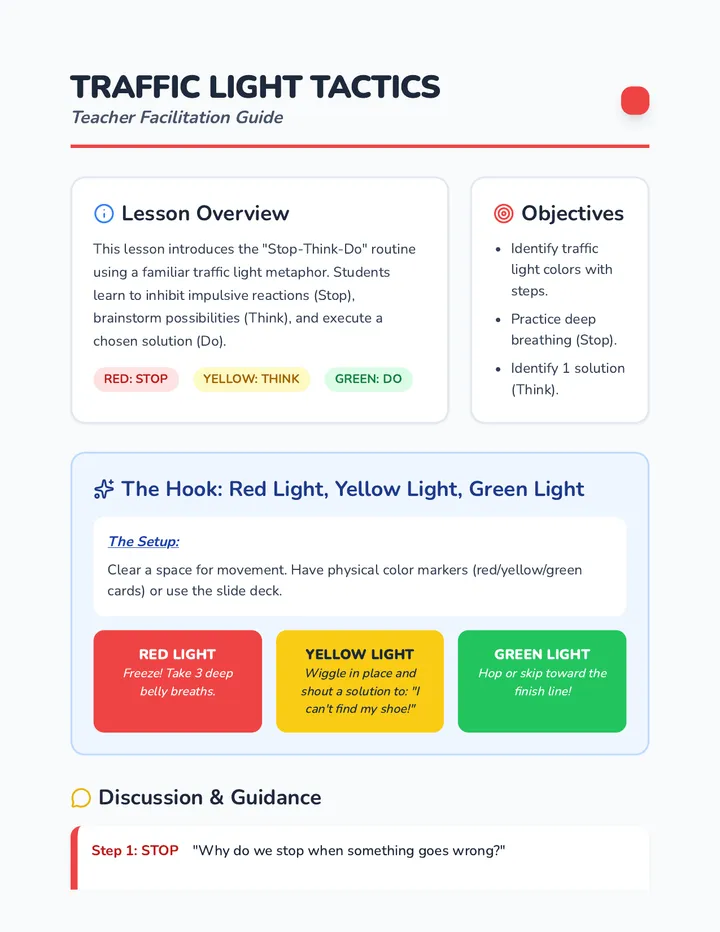
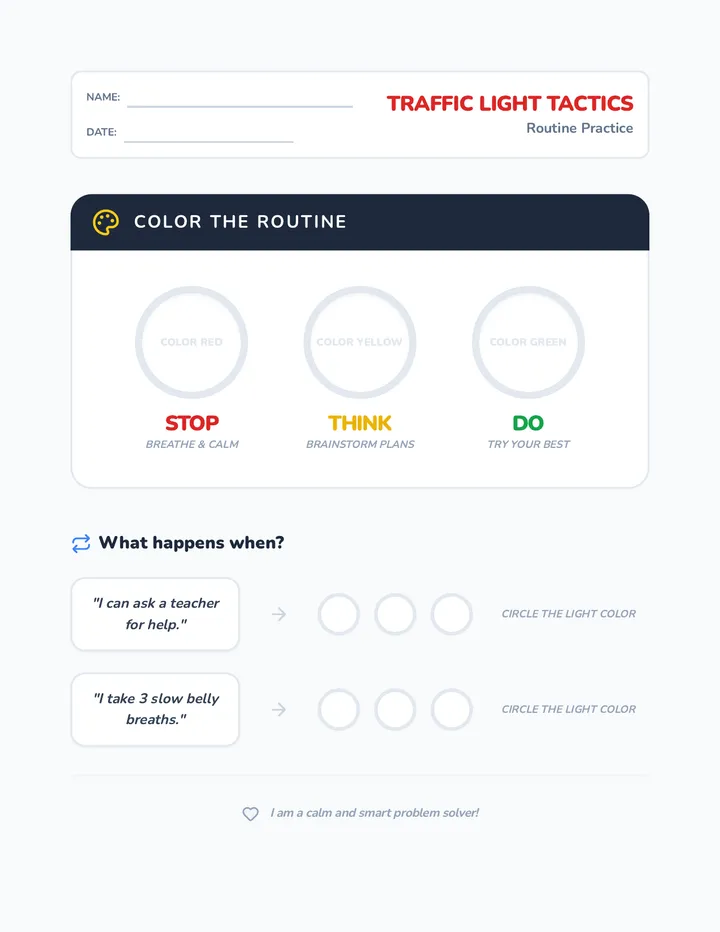
A Kindergarten sequence focused on teaching students a structured problem-solving routine (Stop, Think, Do) and applying it to multi-step challenges through games, sequencing activities, and a final detective project.
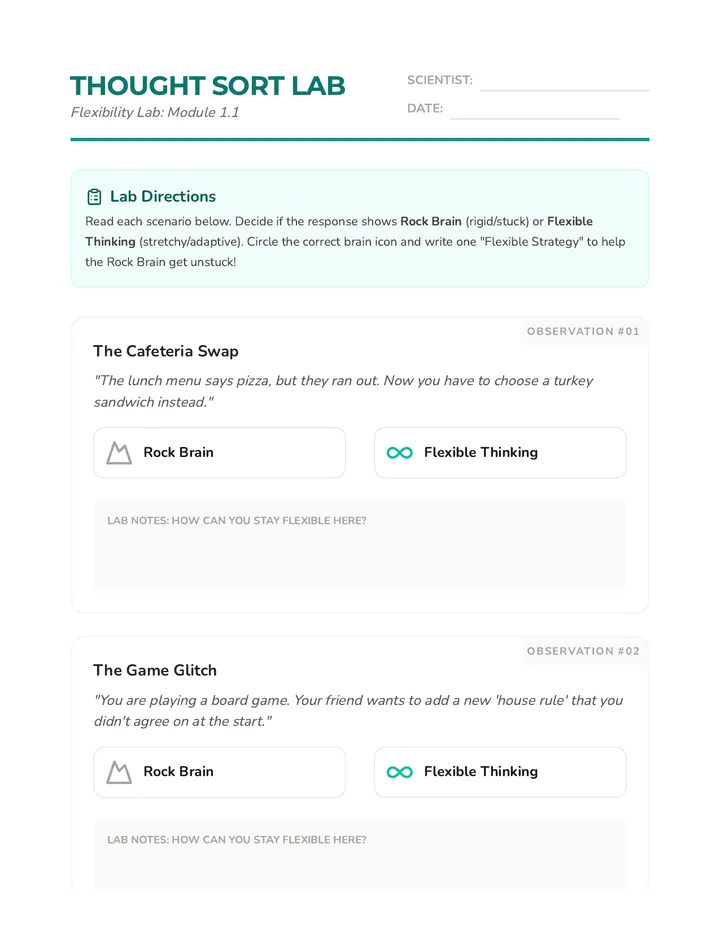
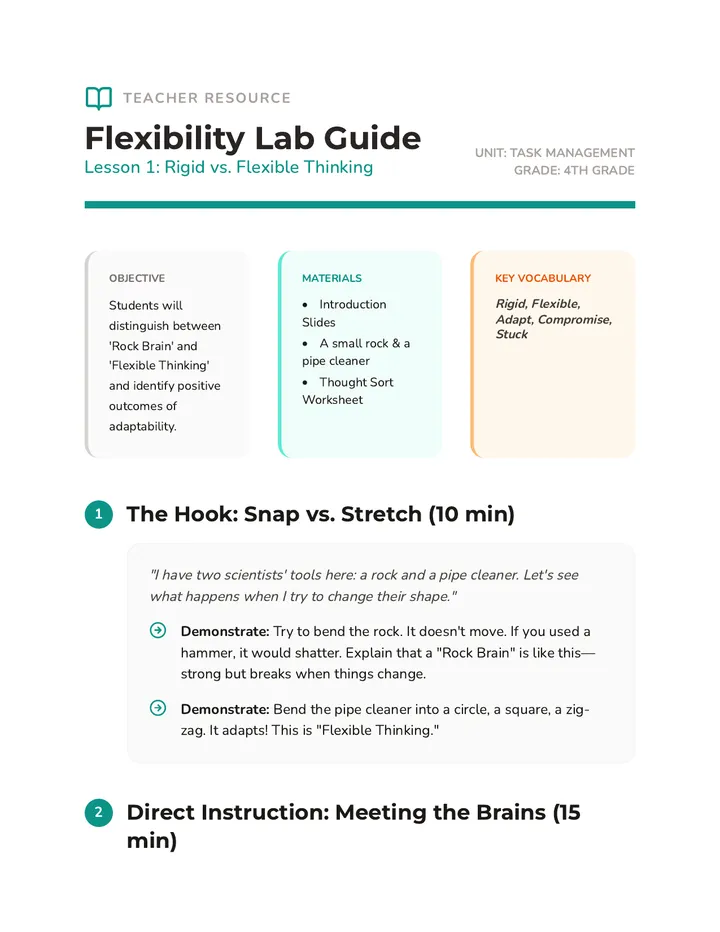
A 5-lesson sequence designed for 4th-grade students to build cognitive flexibility. Students learn to identify rigid versus flexible thinking, recognize physical stress responses to change, practice rapid task-switching, and apply emotional regulation strategies through role-play and a final 'flexibility obstacle course'.
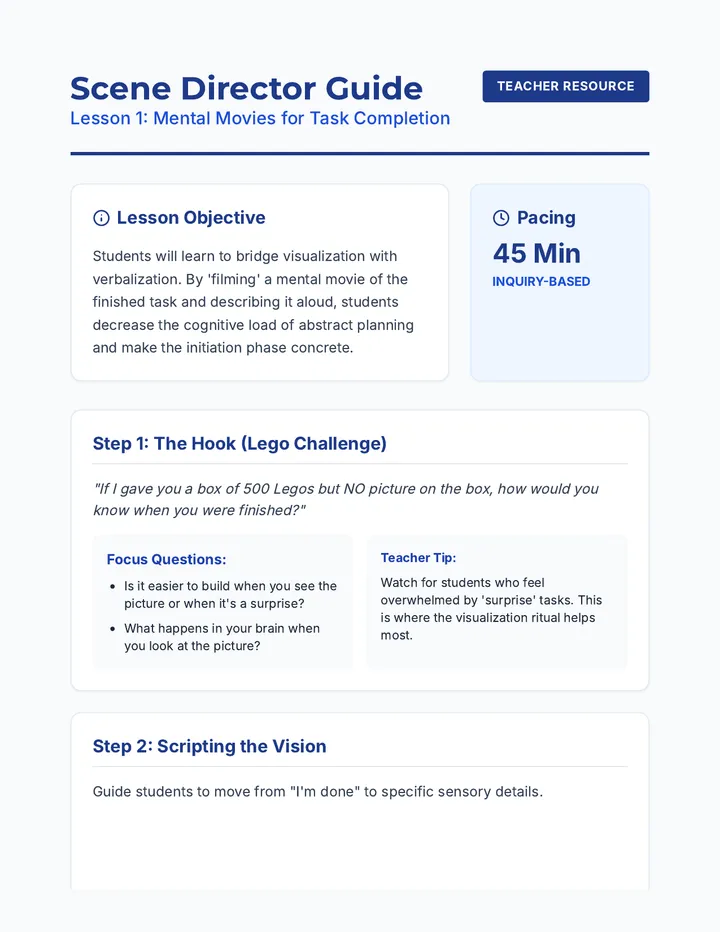
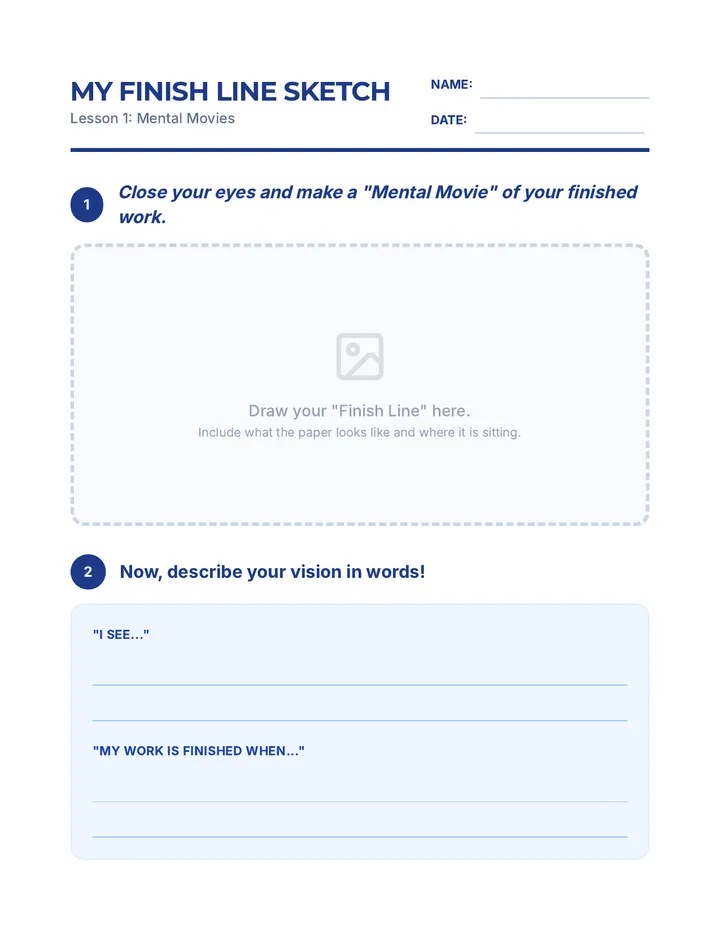
This sequence helps students overcome task initiation hurdles by combining visualization and verbal self-talk. Students learn to 'see' the finished product, reverse engineer the steps, estimate time accurately, and use micro-goals to take the first step.
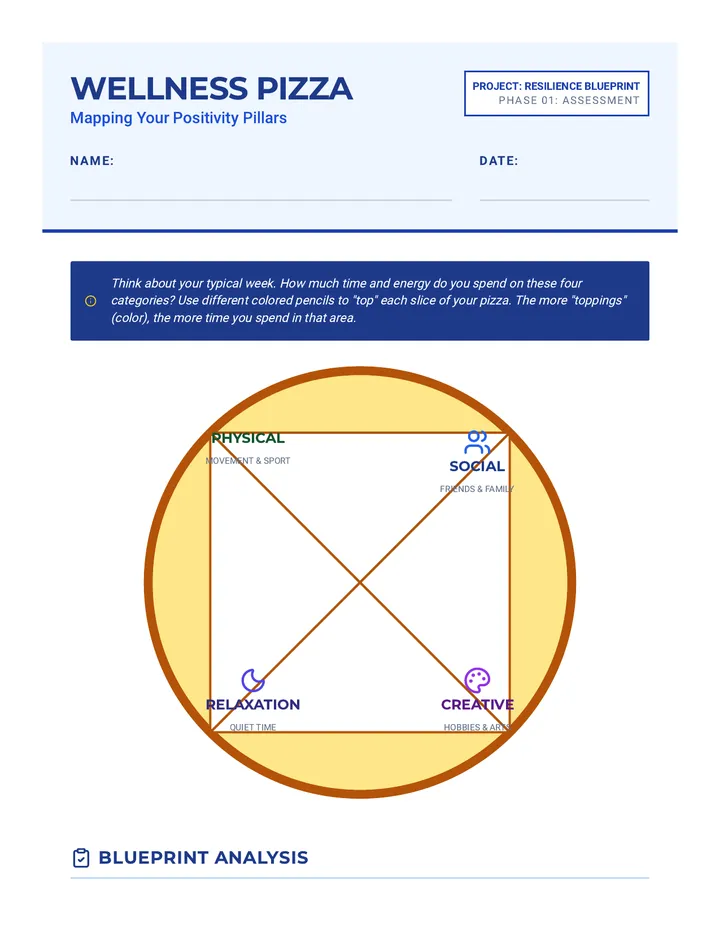
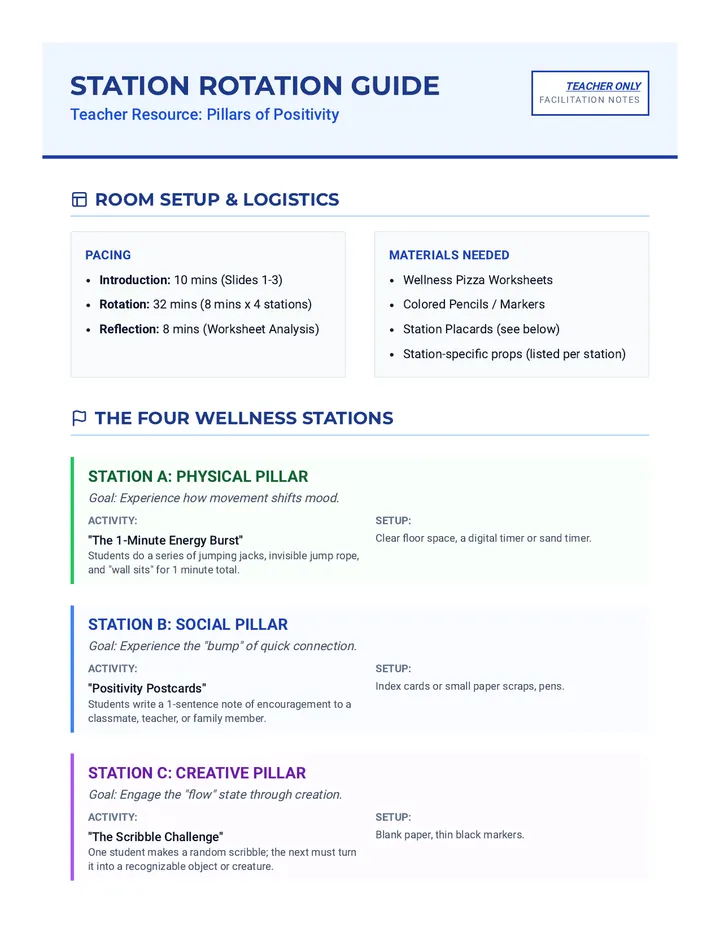
A 5-lesson project-based sequence for 5th graders focusing on building positive experiences through routine design and habit formation. Students learn to categorize wellness activities, overcome barriers like inertia, use habit-stacking techniques, and create a sustainable weekly wellness schedule to build emotional resilience.
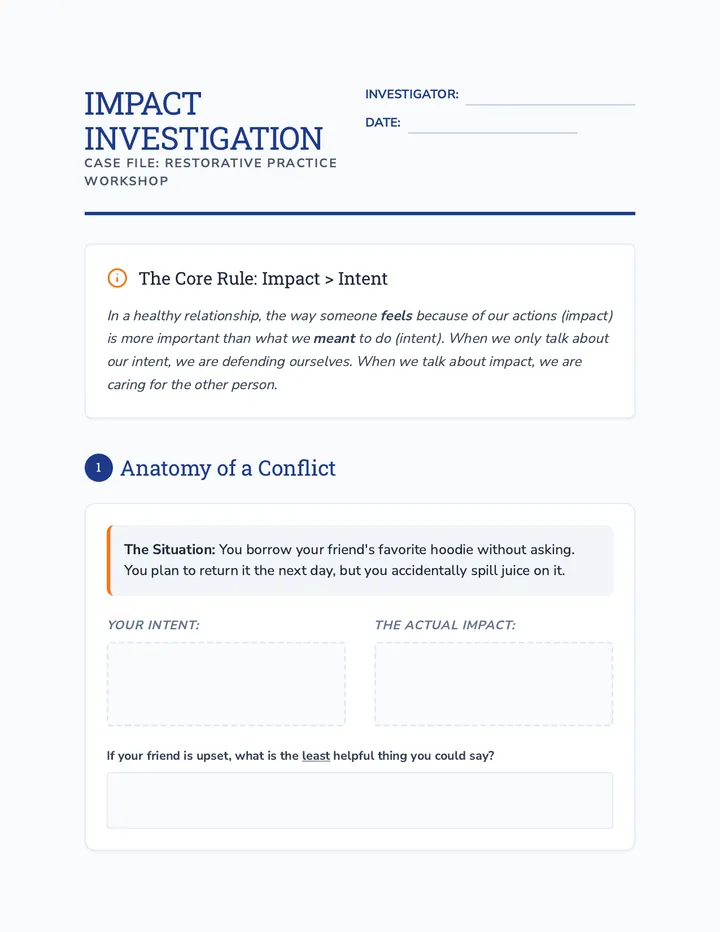
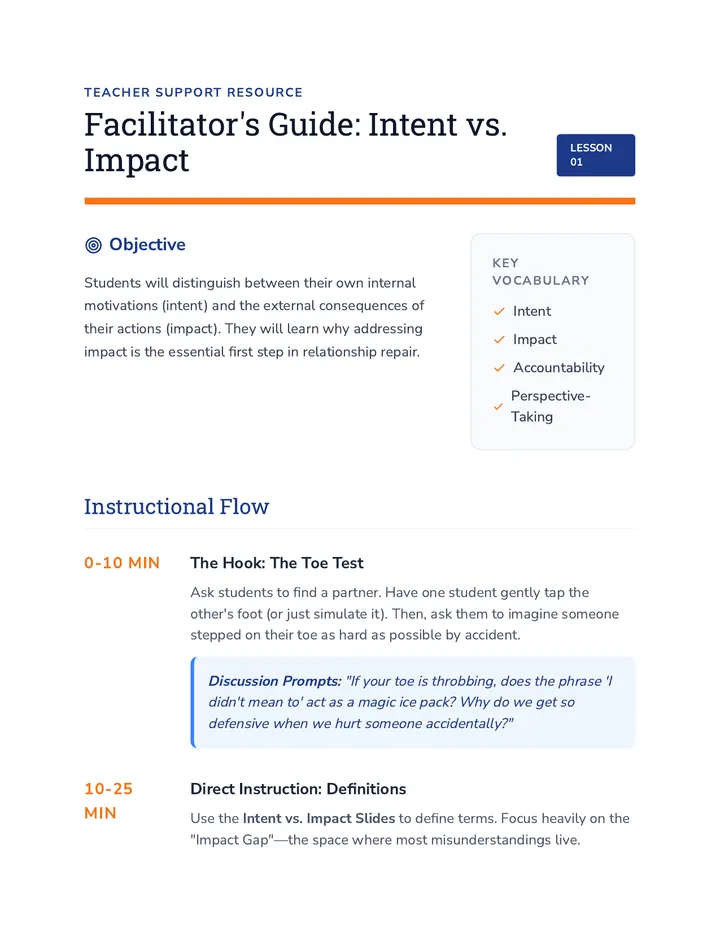
A 5-lesson sequence for 7th grade students focusing on restorative practices, the difference between intent and impact, crafting genuine apologies, and the long-term process of rebuilding trust after conflict.
An 8-week social skills group for 3rd graders focused on social observation, expected behaviors, and problem-solving using a 'Social Detective' theme. Each session provides interactive instruction and hands-on practice to build emotional intelligence.
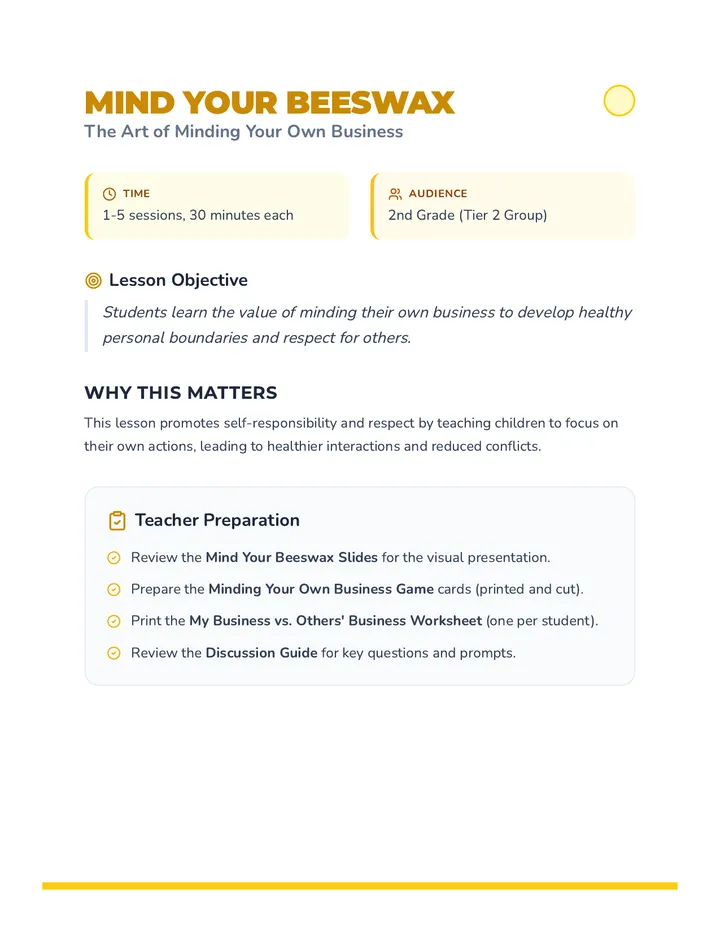
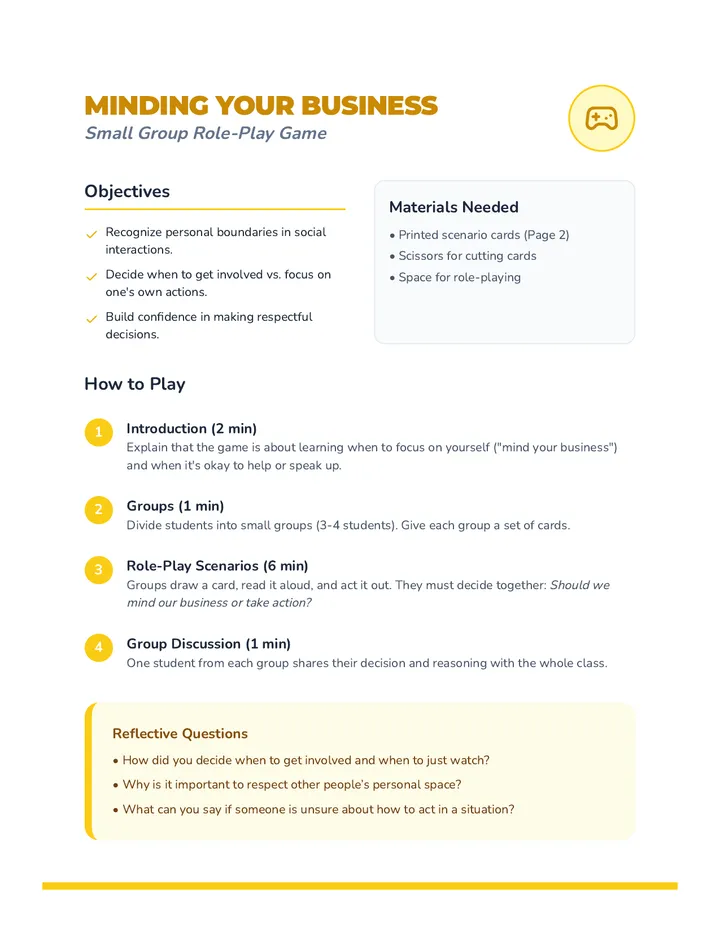
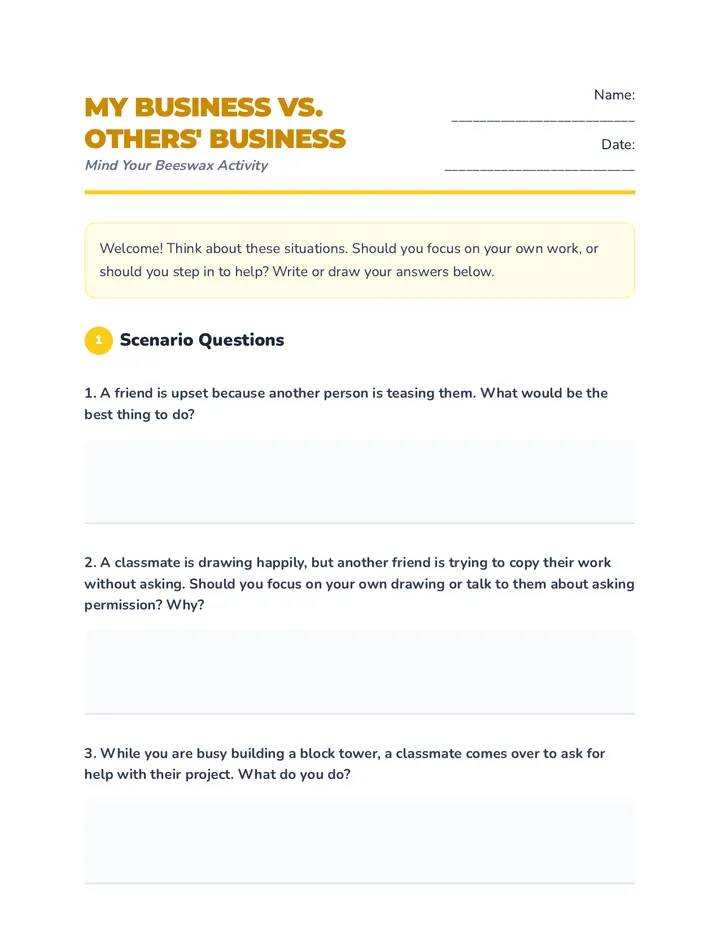
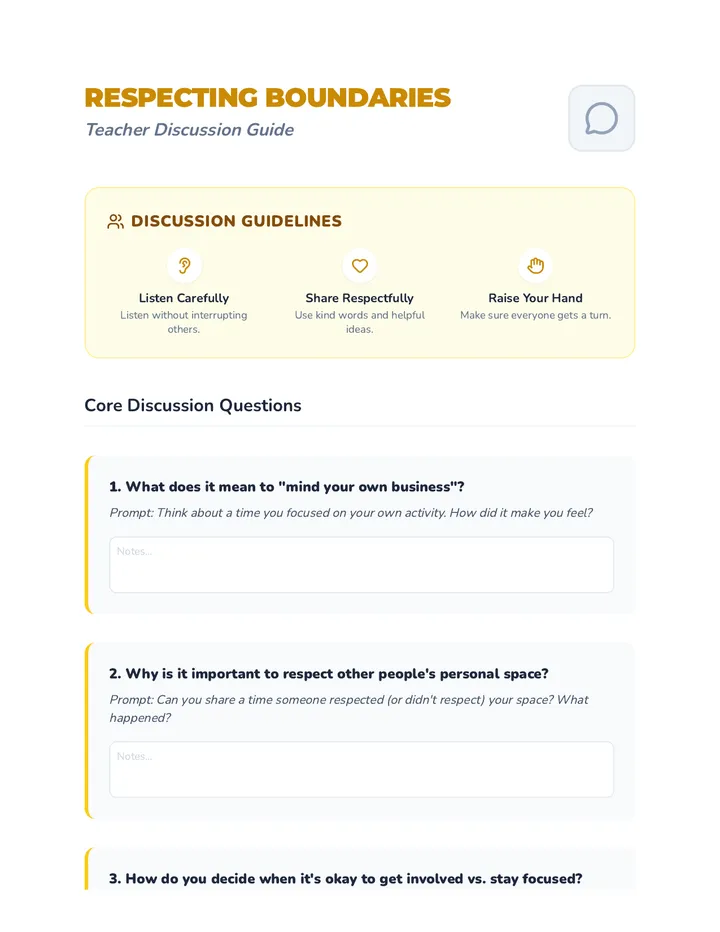
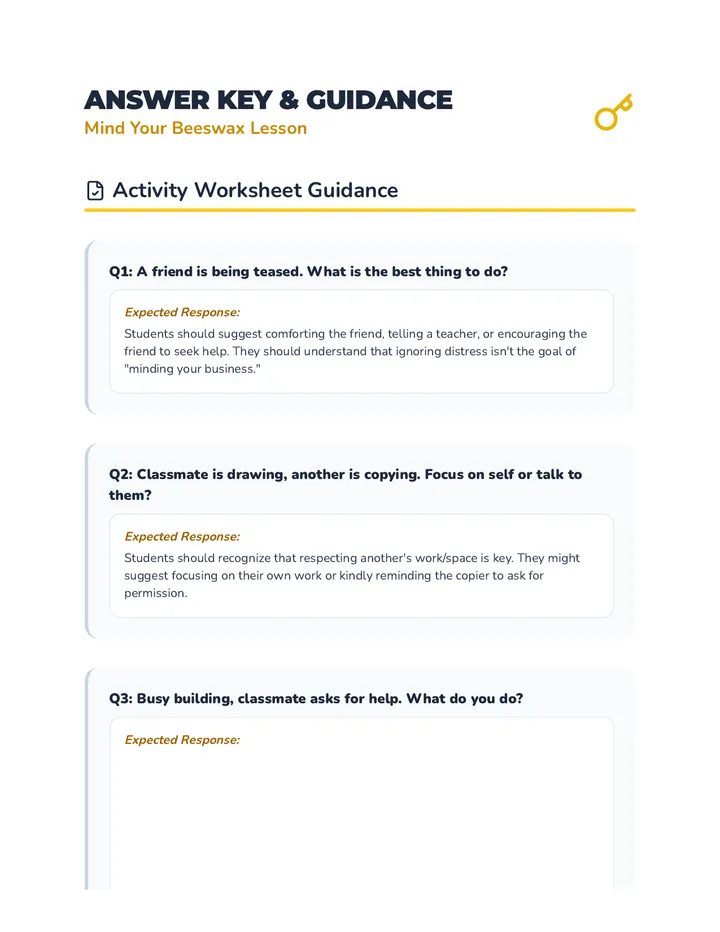
A social skills lesson for 2nd graders focusing on understanding personal boundaries and learning when to focus on one's own tasks versus when to intervene in others' business.
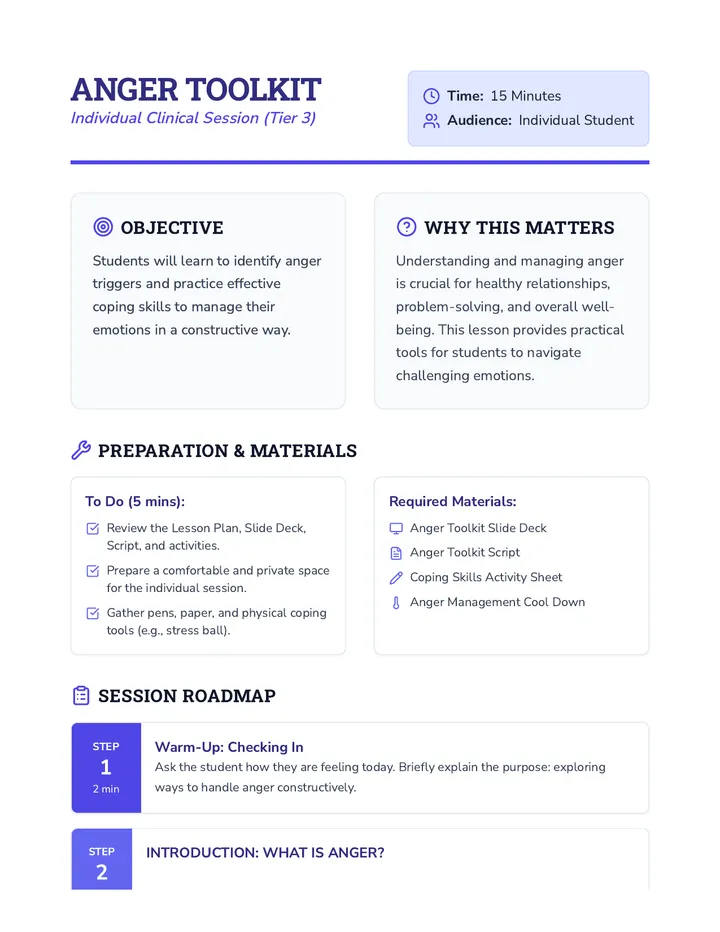
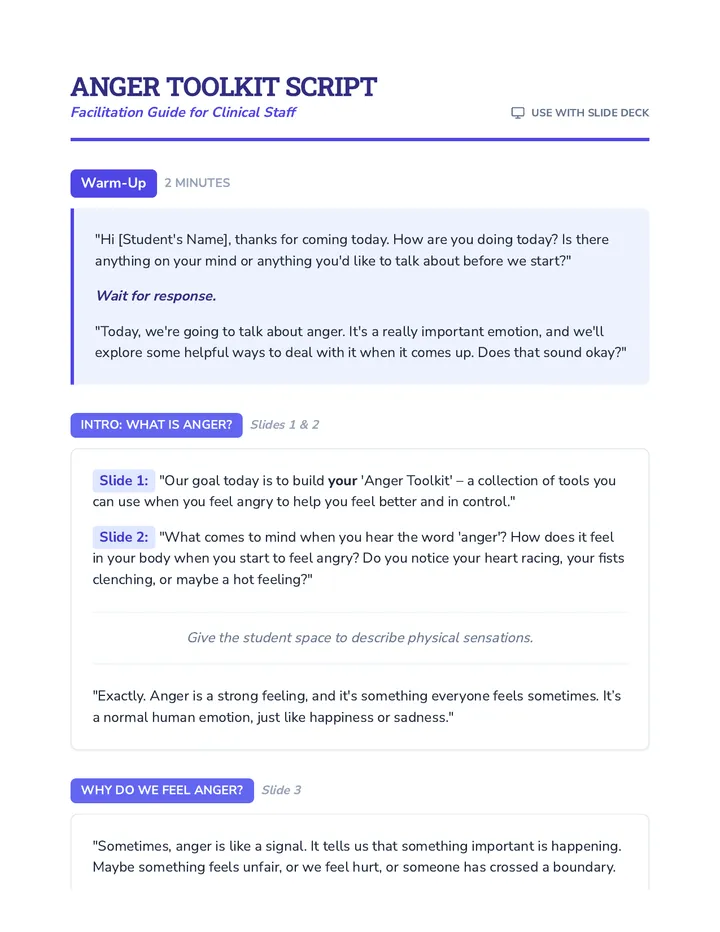
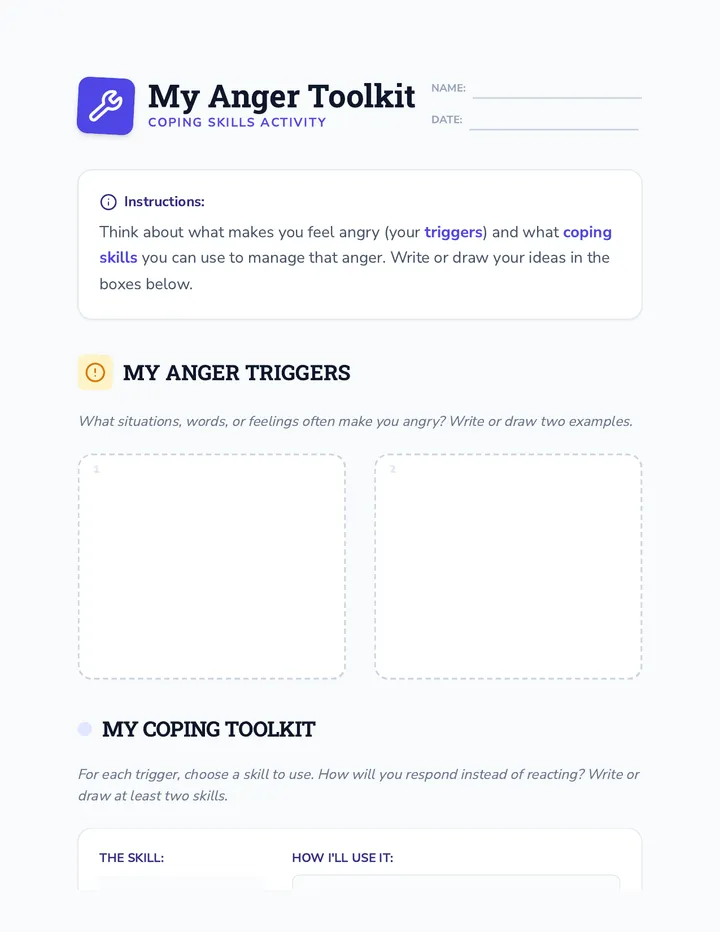
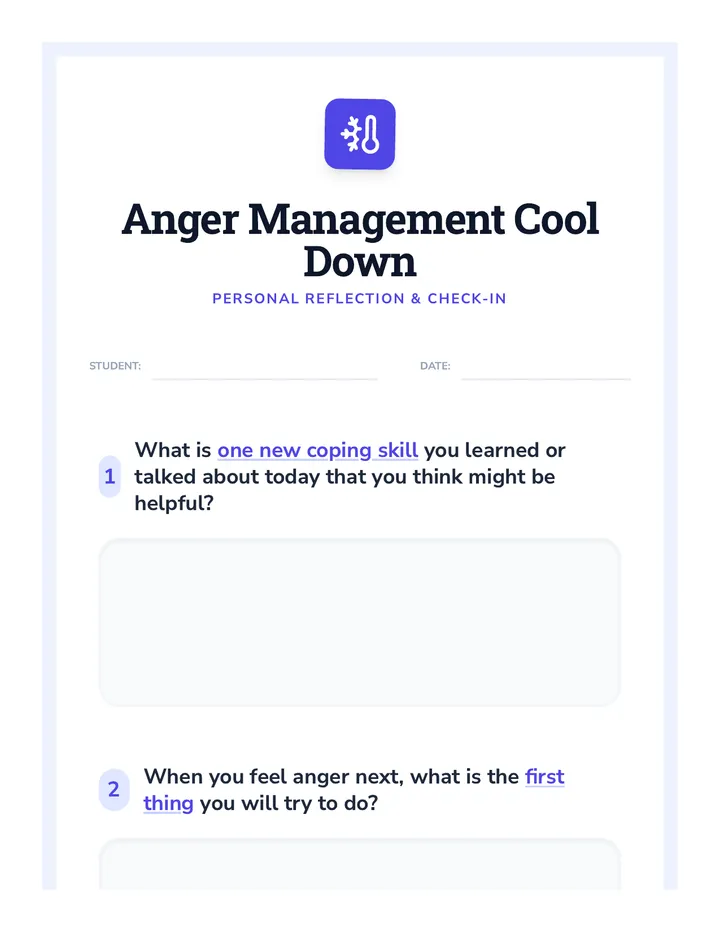
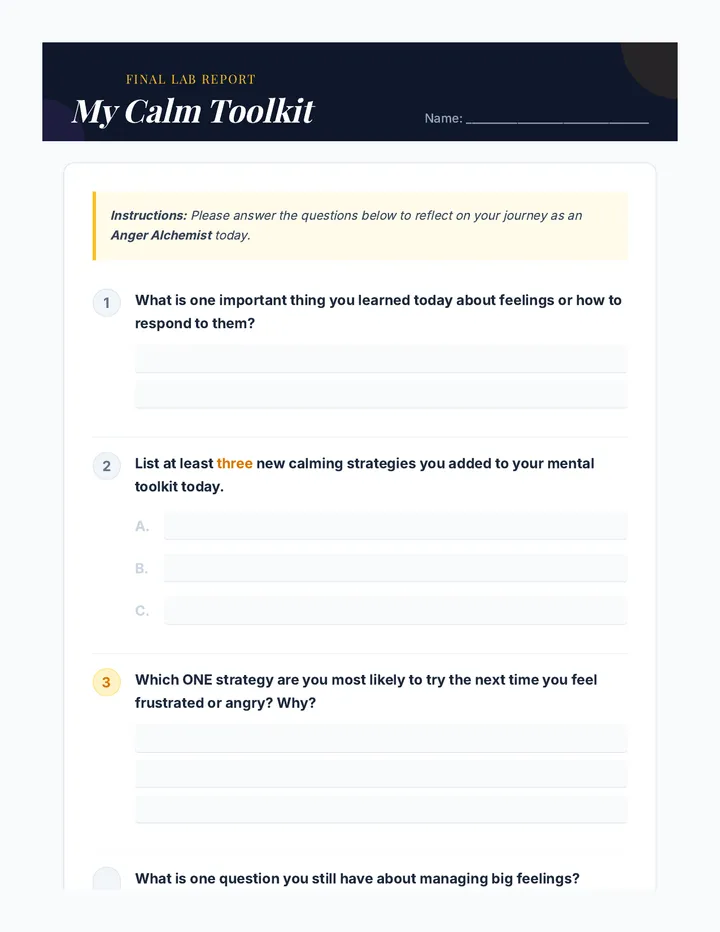
A 15-minute Tier 3 clinical lesson designed to equip individual students with practical anger coping strategies, trigger identification, and emotional regulation tools.
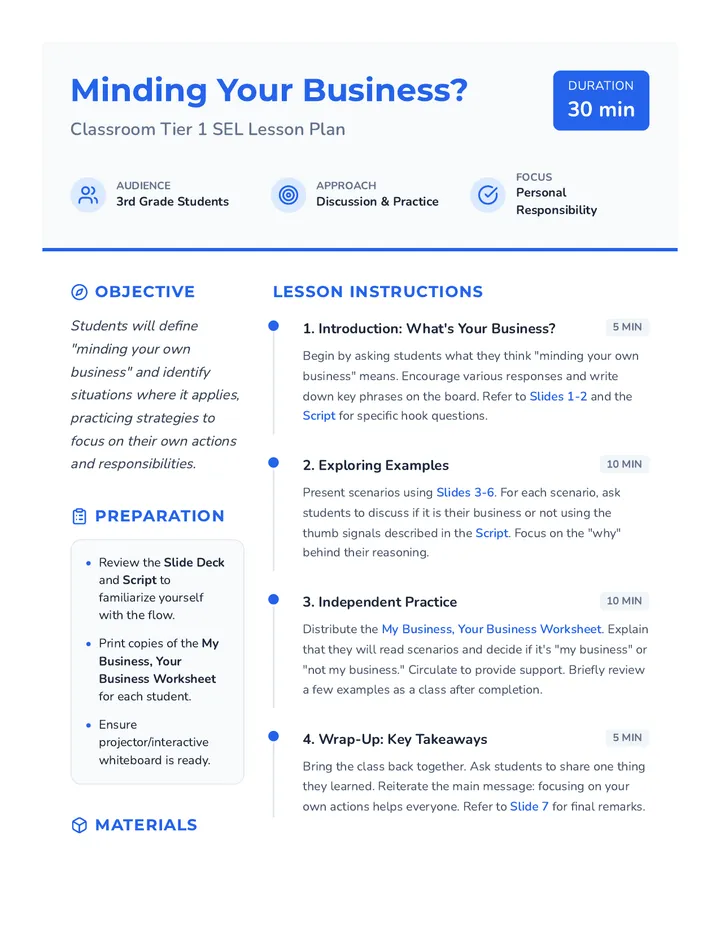
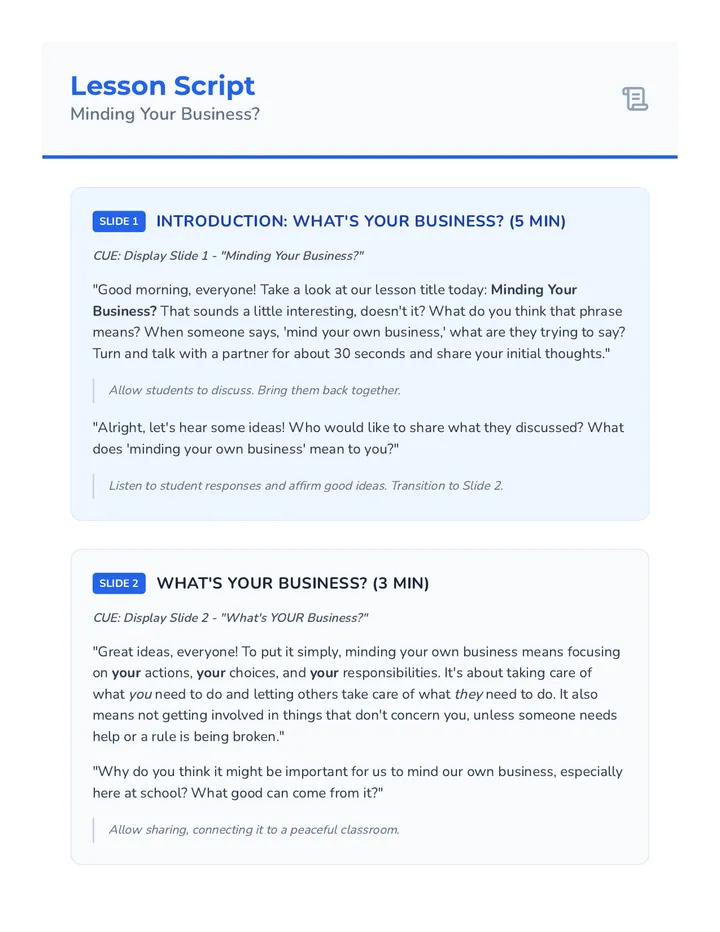
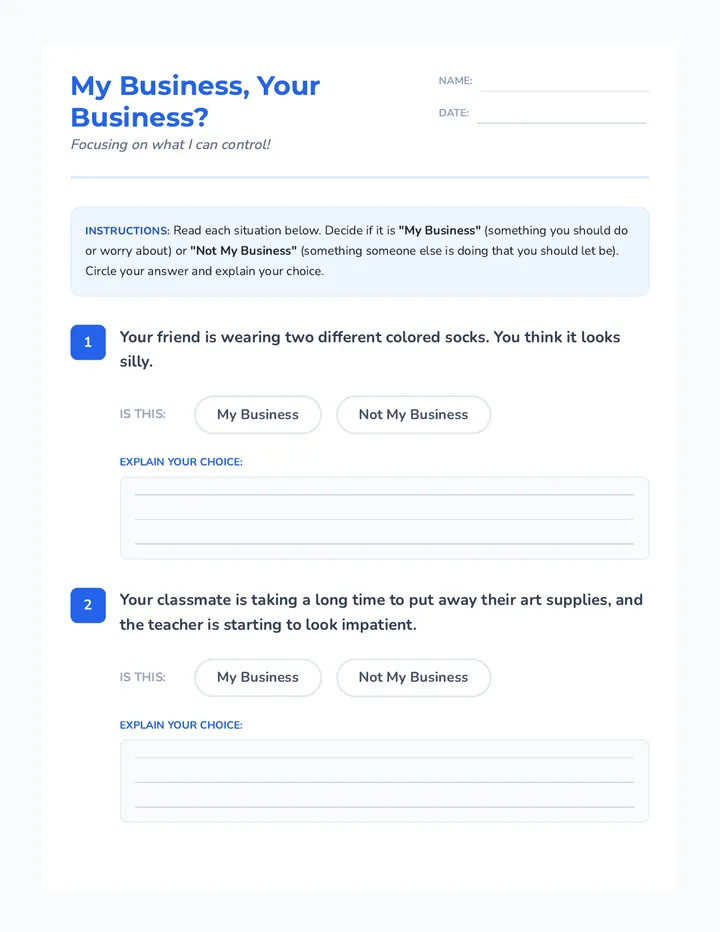
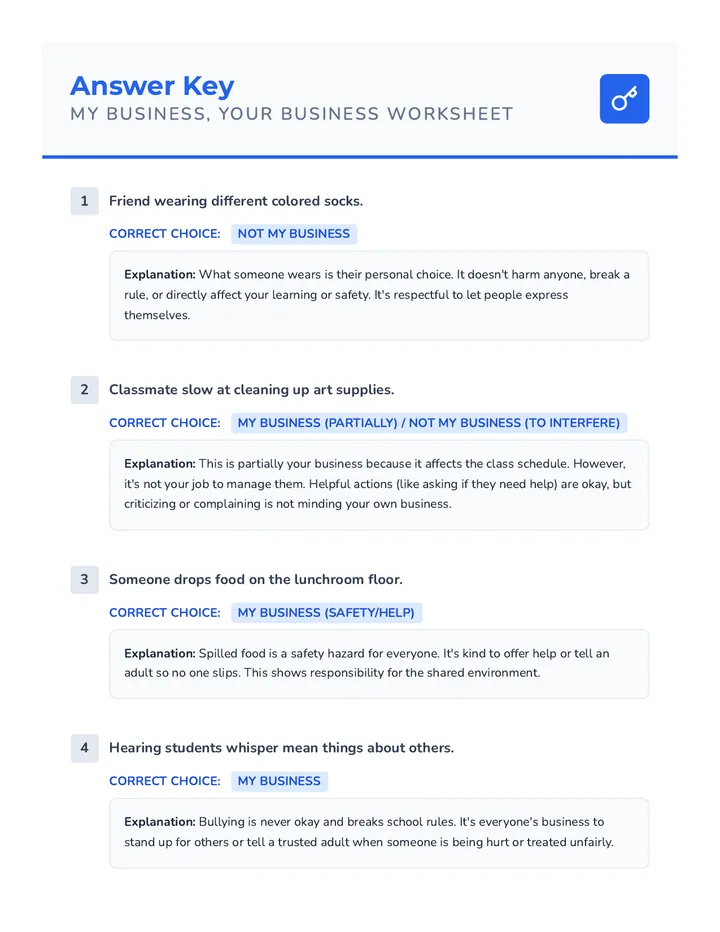
A 30-minute social-emotional learning lesson for 3rd graders that teaches the difference between personal responsibility and interfering in others' affairs through scenarios and discussion.
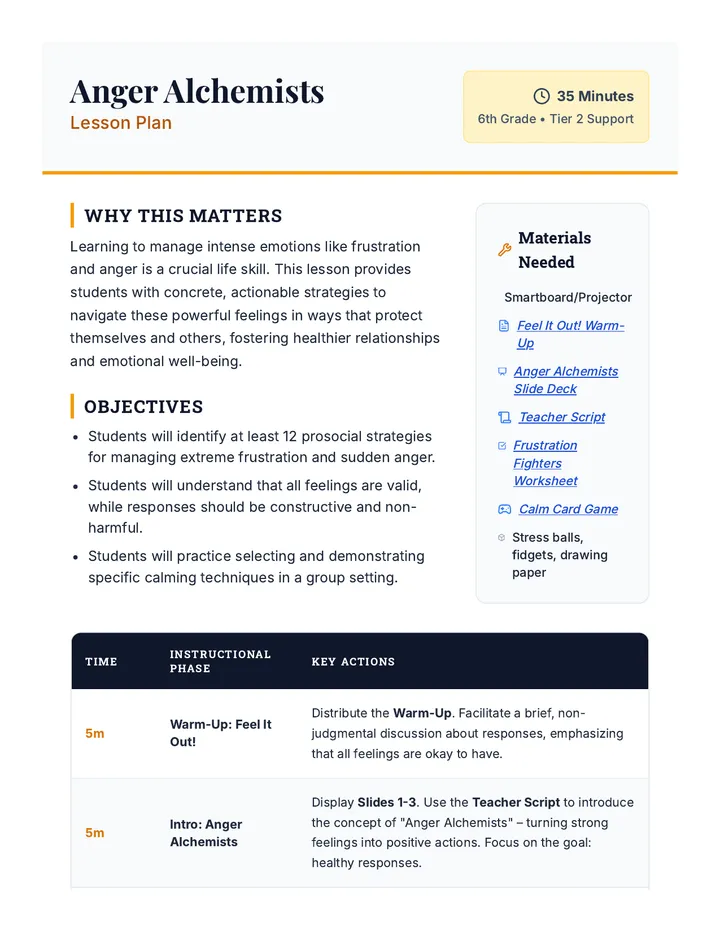
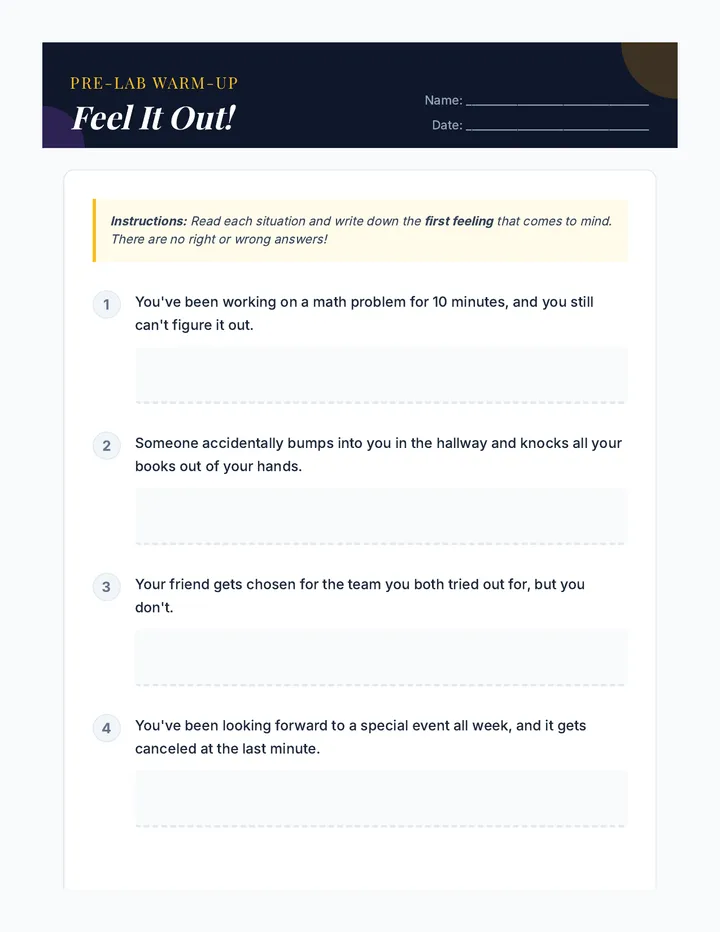
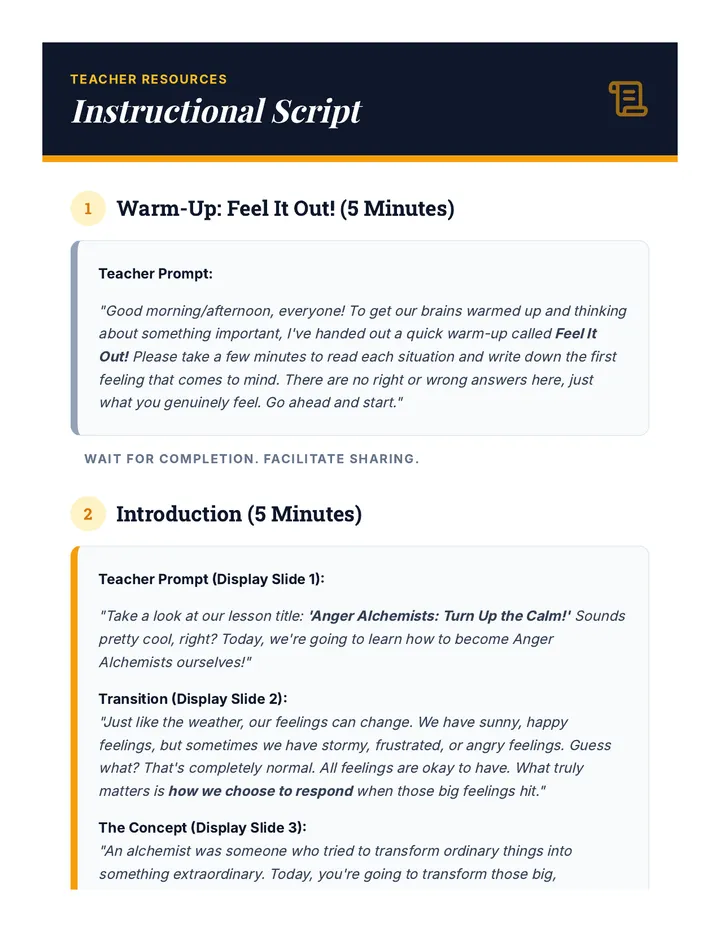
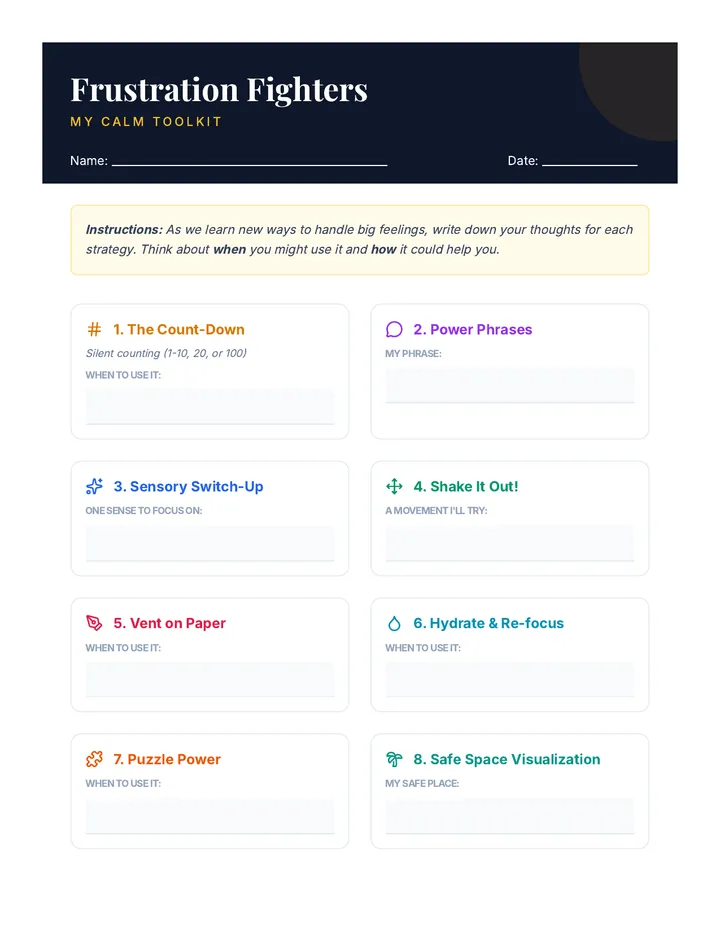
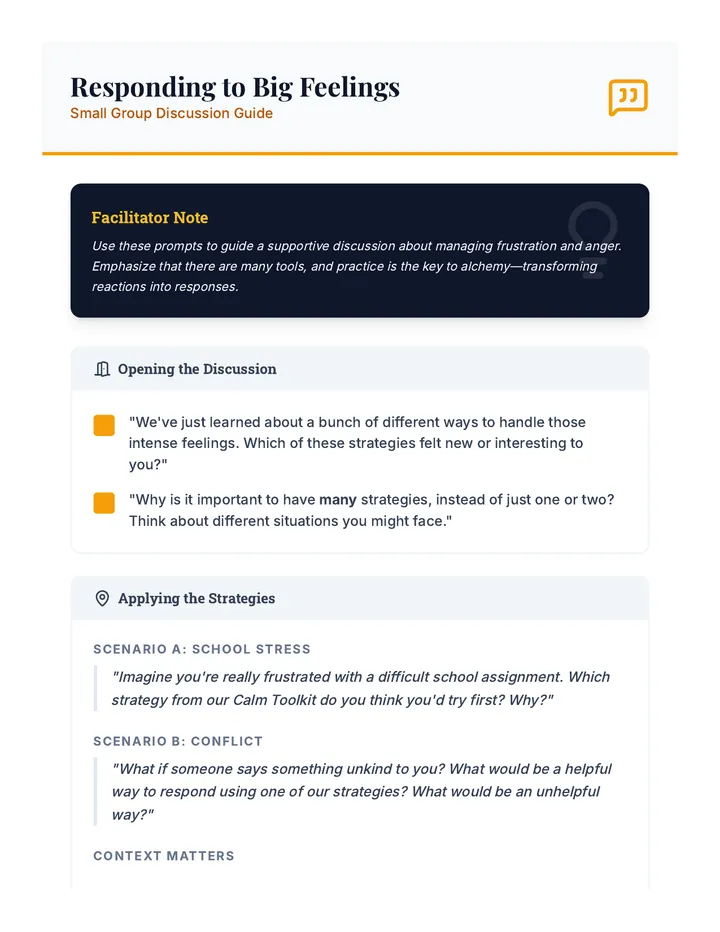
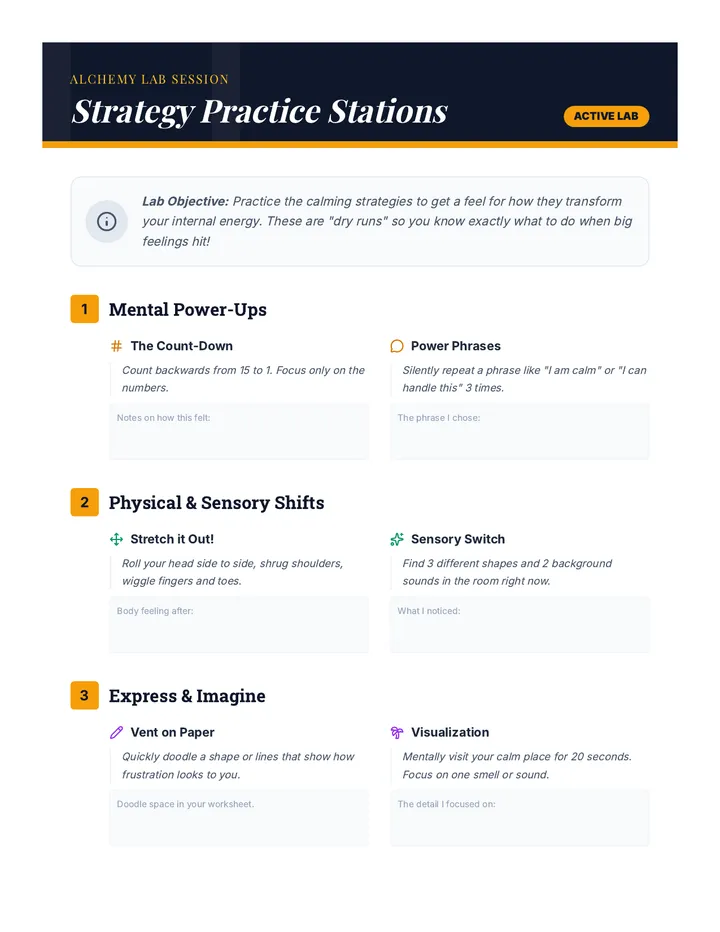
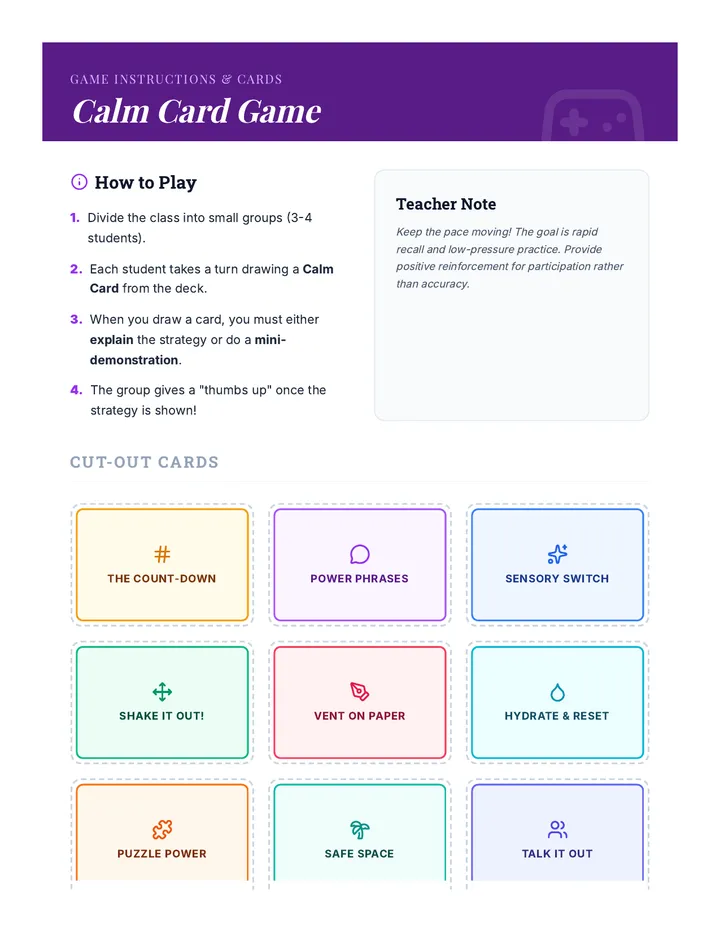
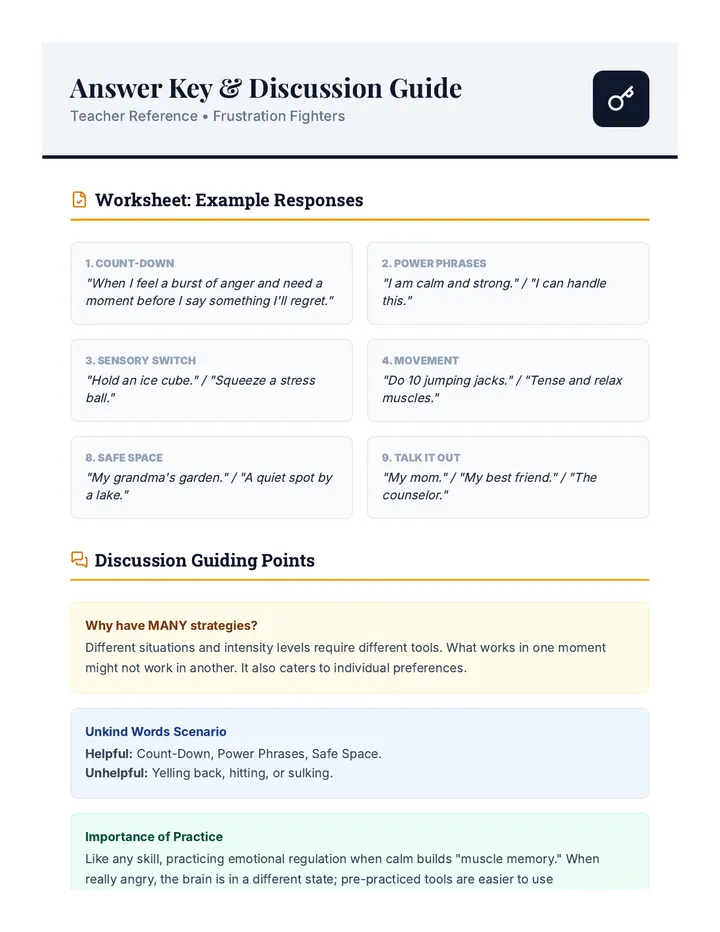
A 35-minute Tier 2 lesson for 6th-grade students to learn over 12 prosocial strategies for transforming intense frustration and anger into constructive responses.
In this engaging 30-minute Tier 1 lesson, 2nd graders will explore the concept of respect by reading 'A Little Respectful Spot,' participating in a hands-on sorting activity, and engaging in a meaningful class discussion. This lesson builds social-emotional skills, fosters a positive classroom environment, and helps students recognize respectful behaviors in everyday life.
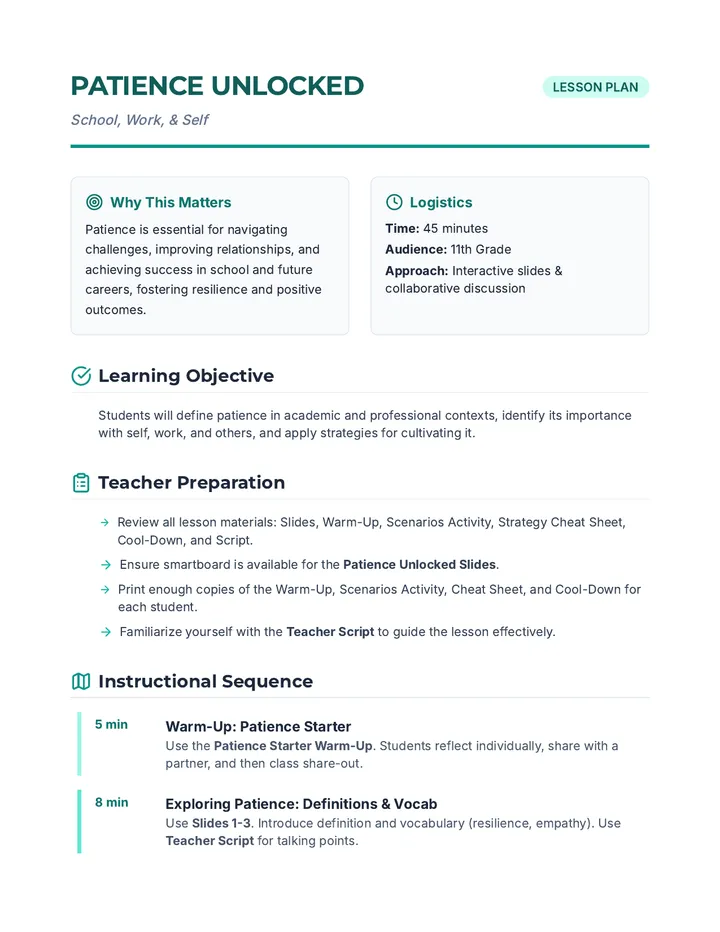
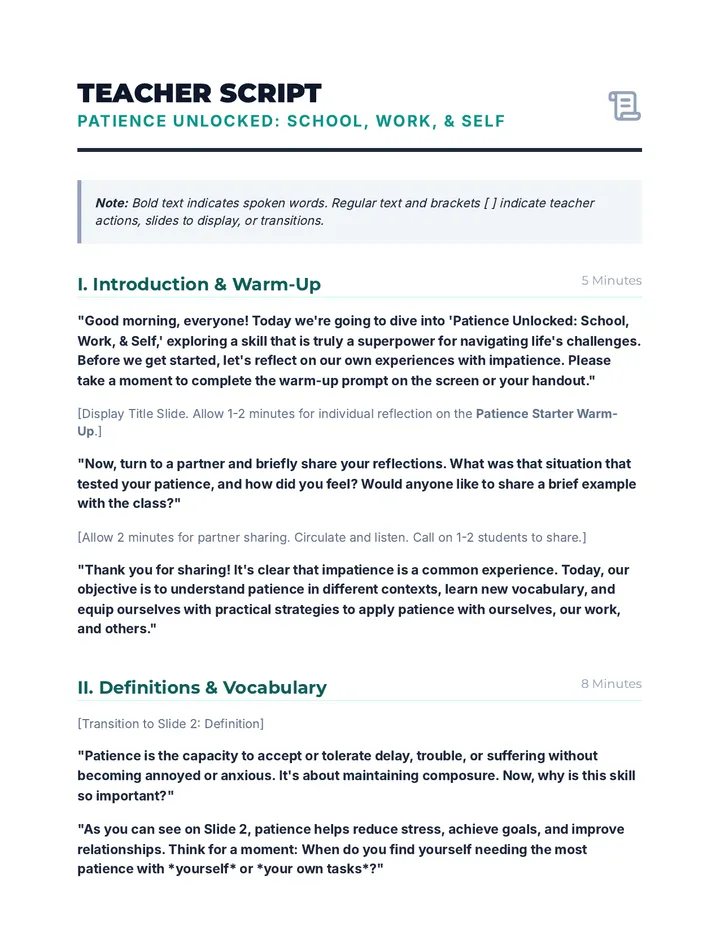
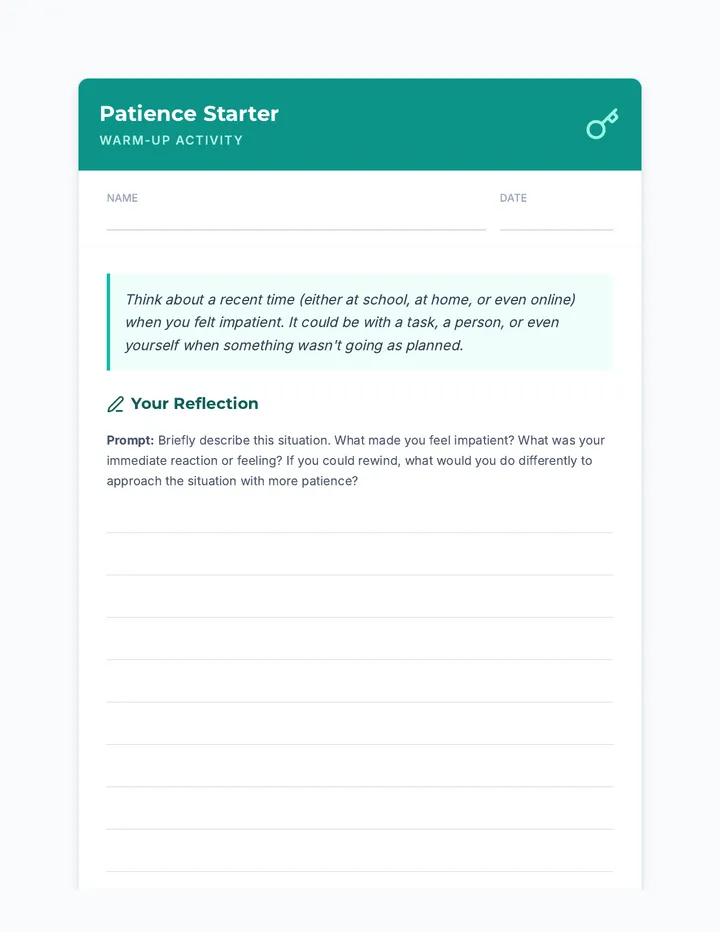
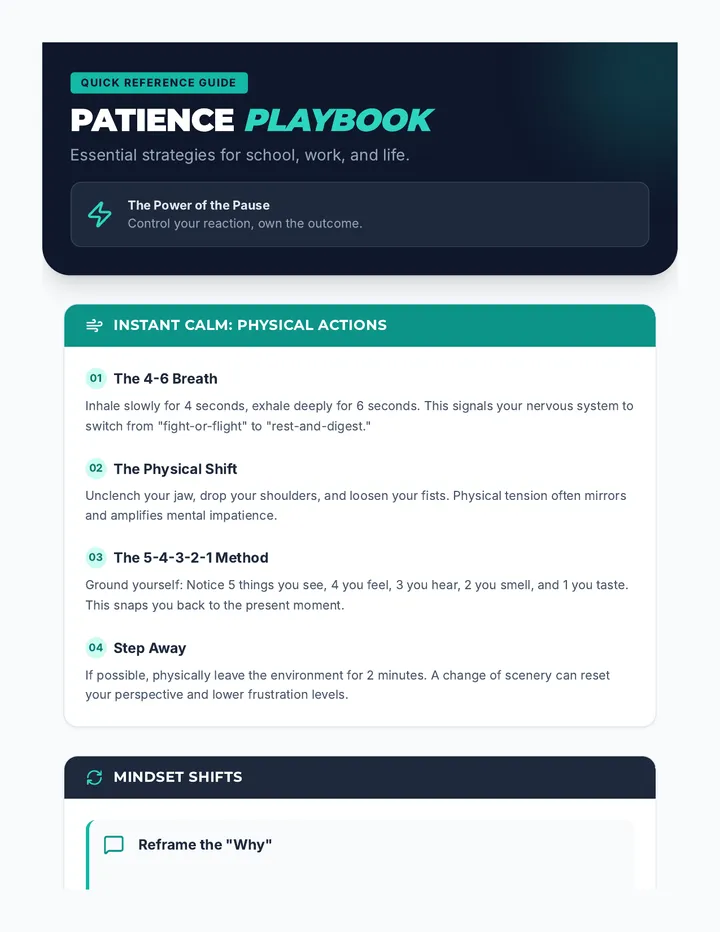
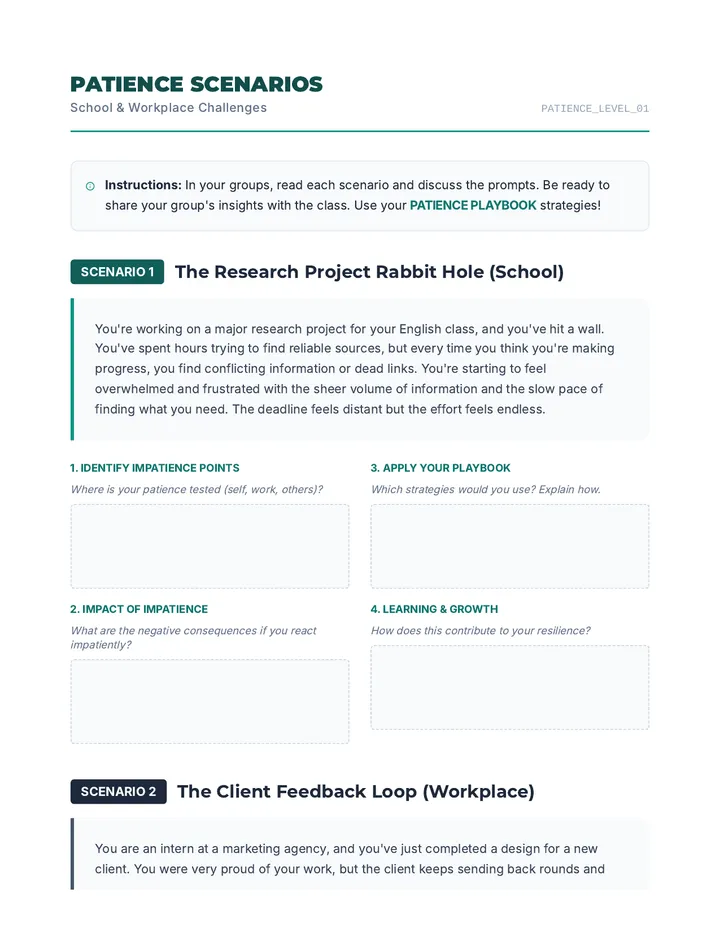
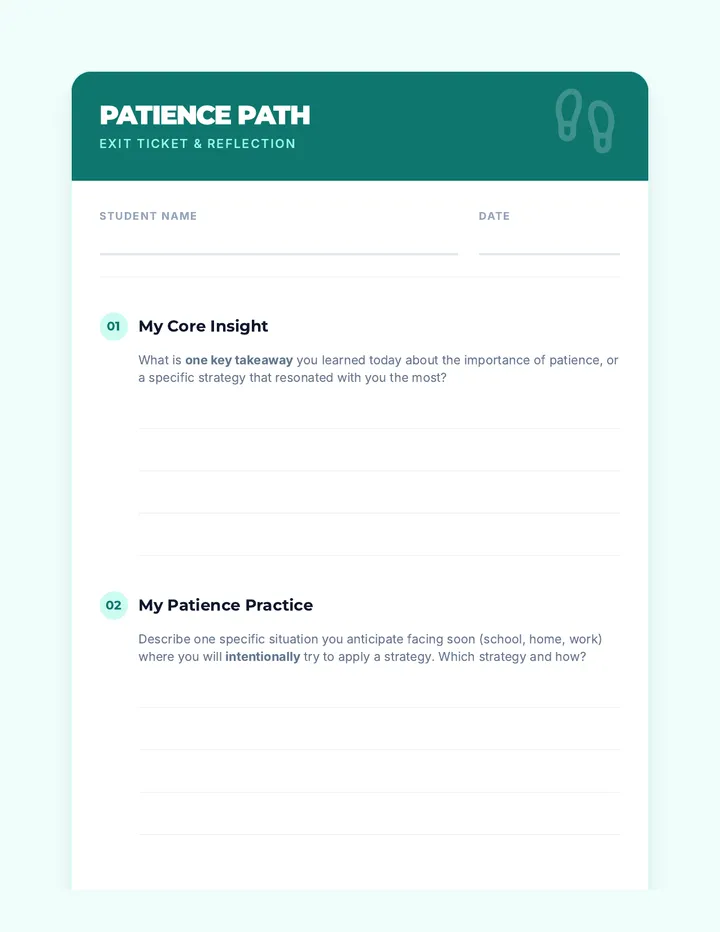
This lesson empowers 11th-grade students to cultivate patience as a critical skill in academic and professional settings. Students will explore strategies for managing impatience with themselves, their work, and others, fostering resilience and positive relationships.
A 45-minute lesson for 9th-grade students to master the Eisenhower Matrix, learning to distinguish between urgent and important tasks to boost efficiency and reduce stress.
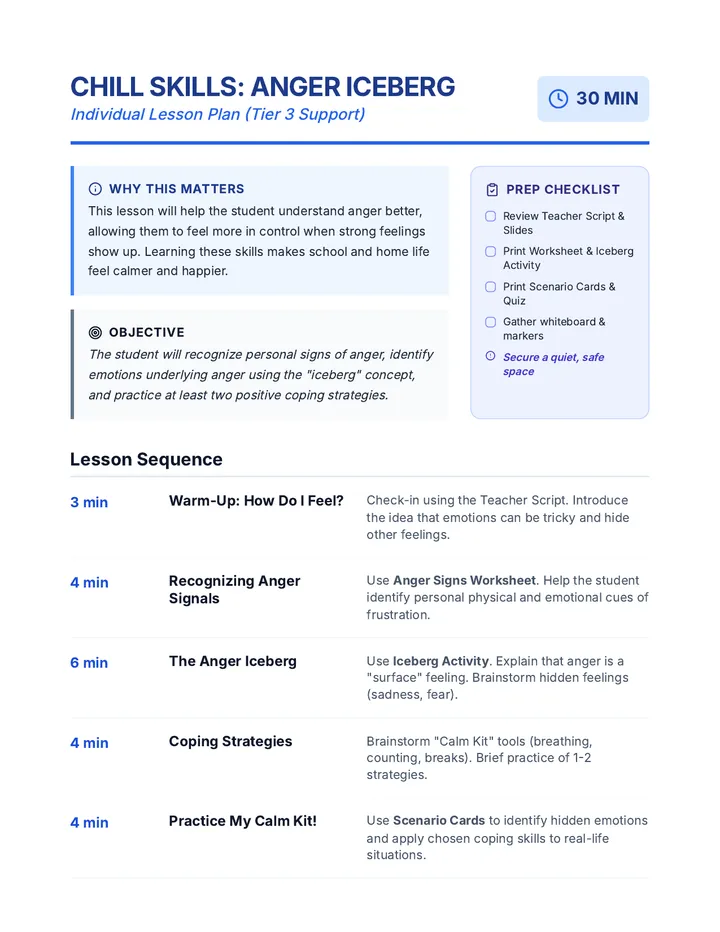
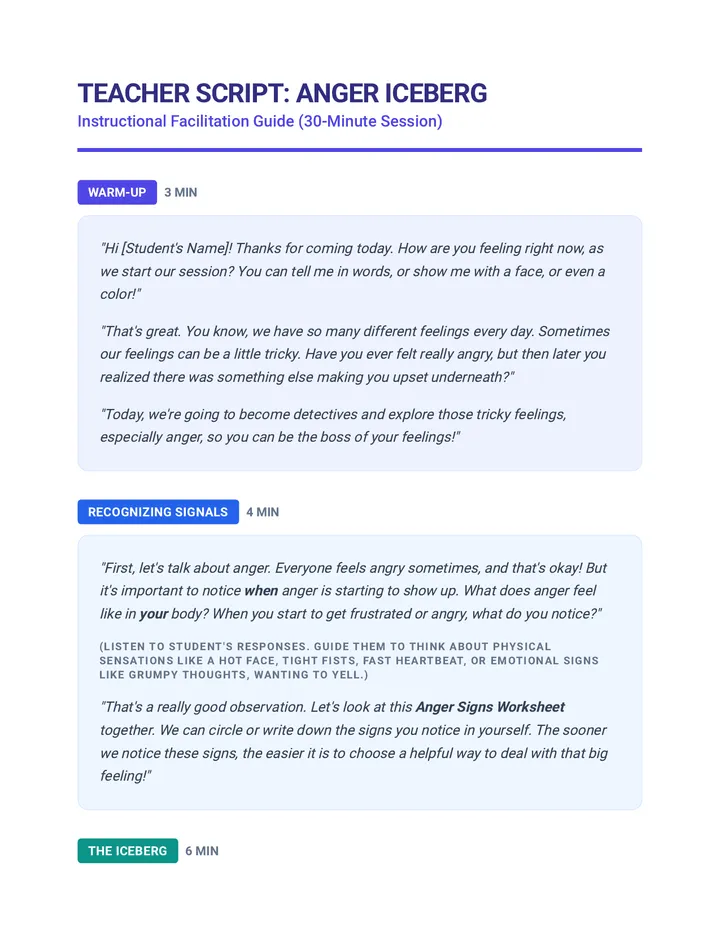
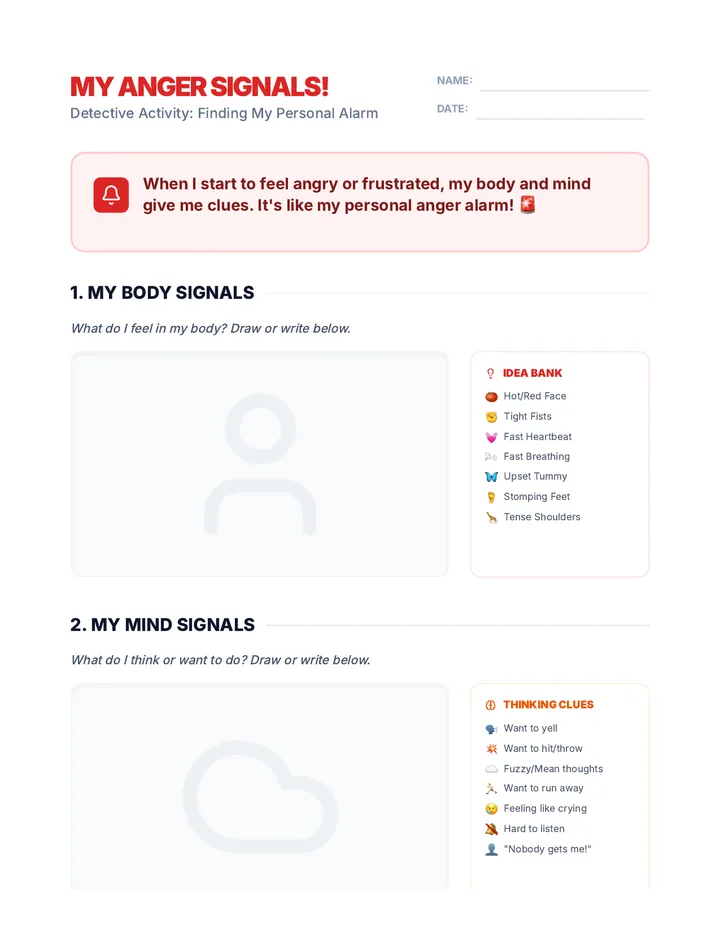
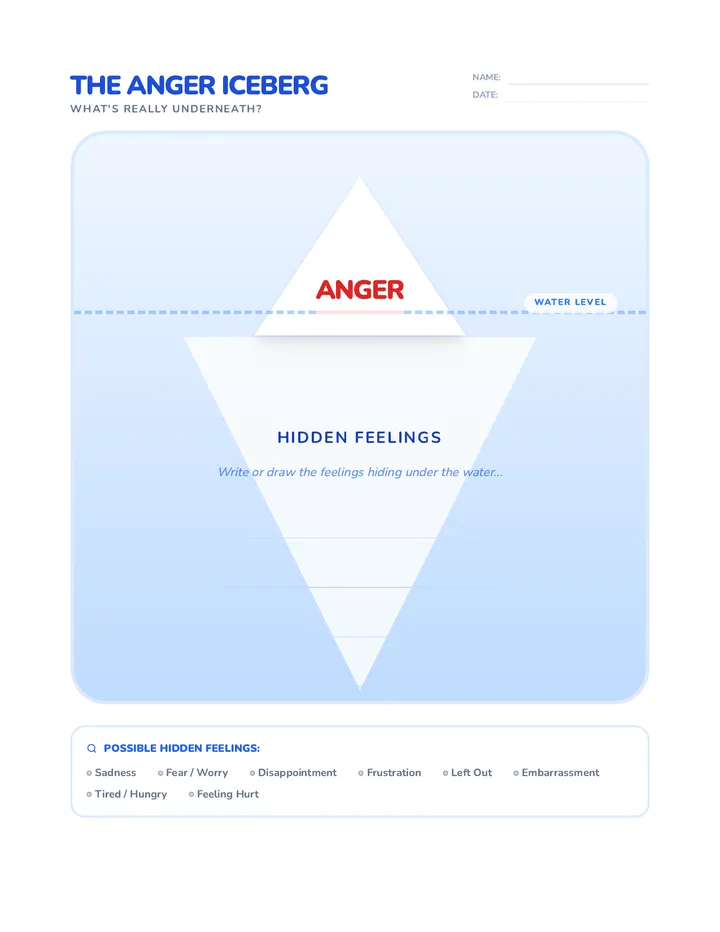
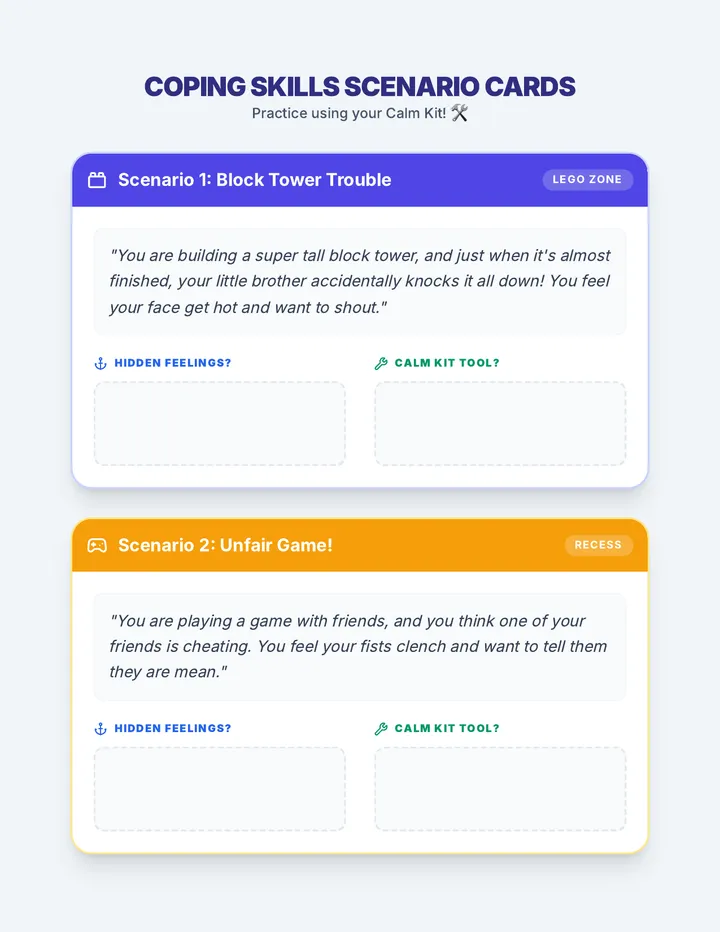
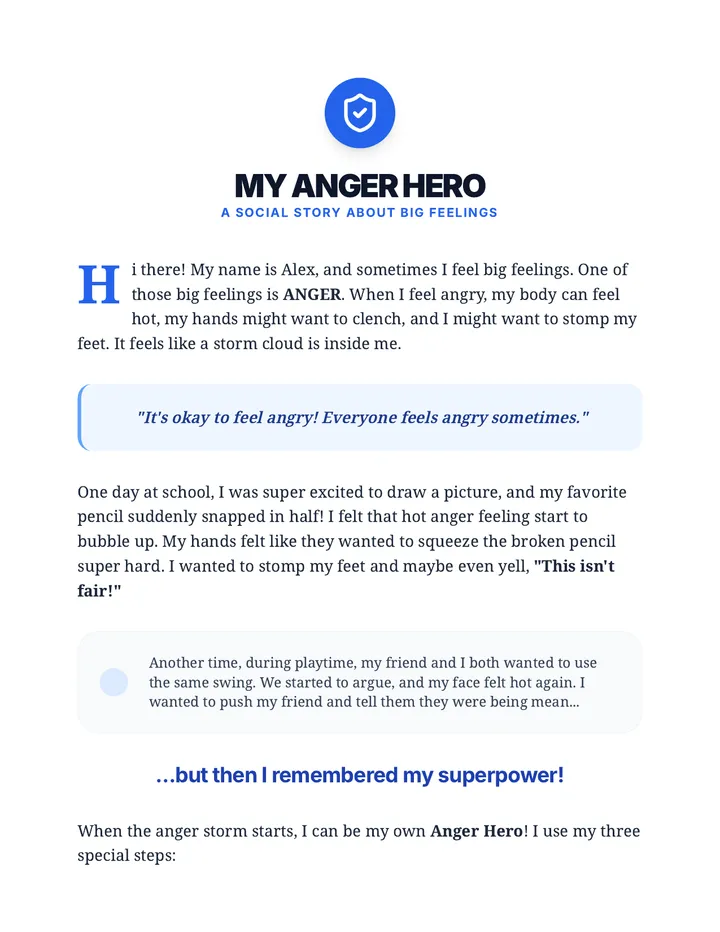
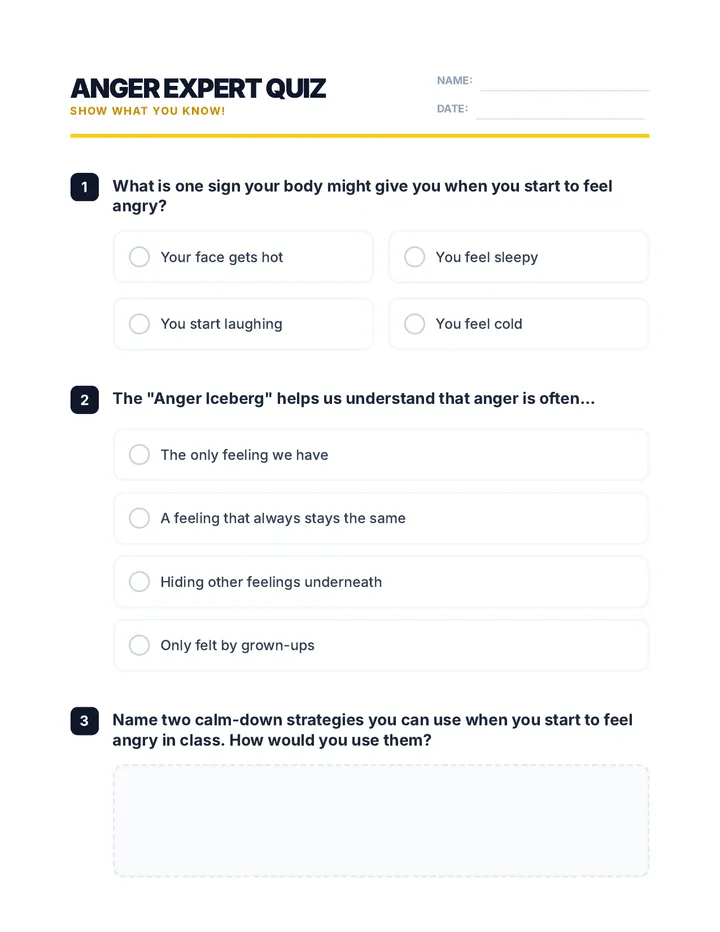
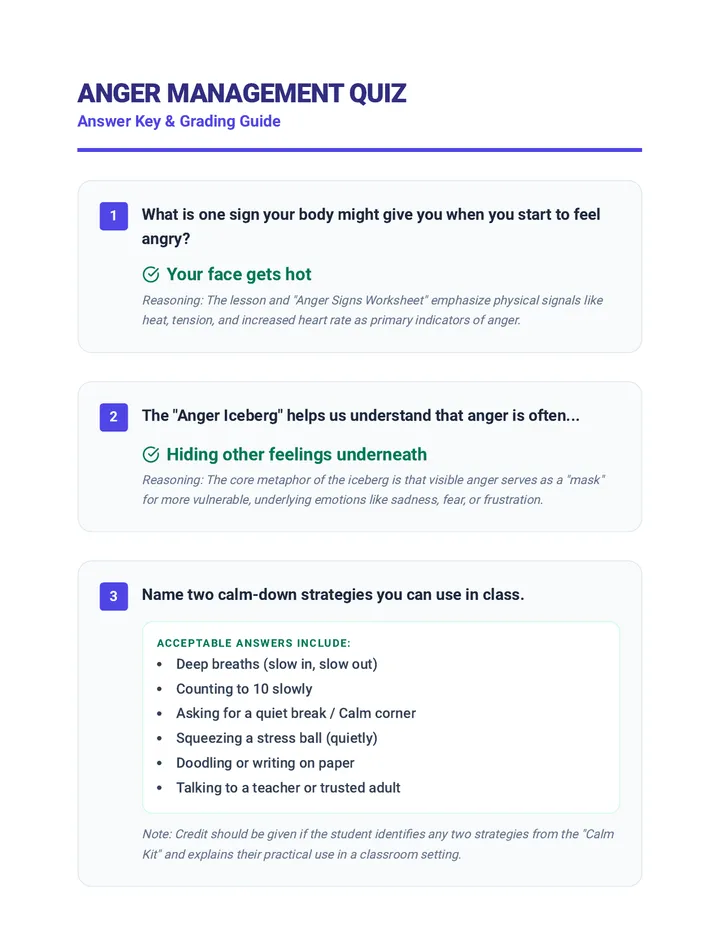
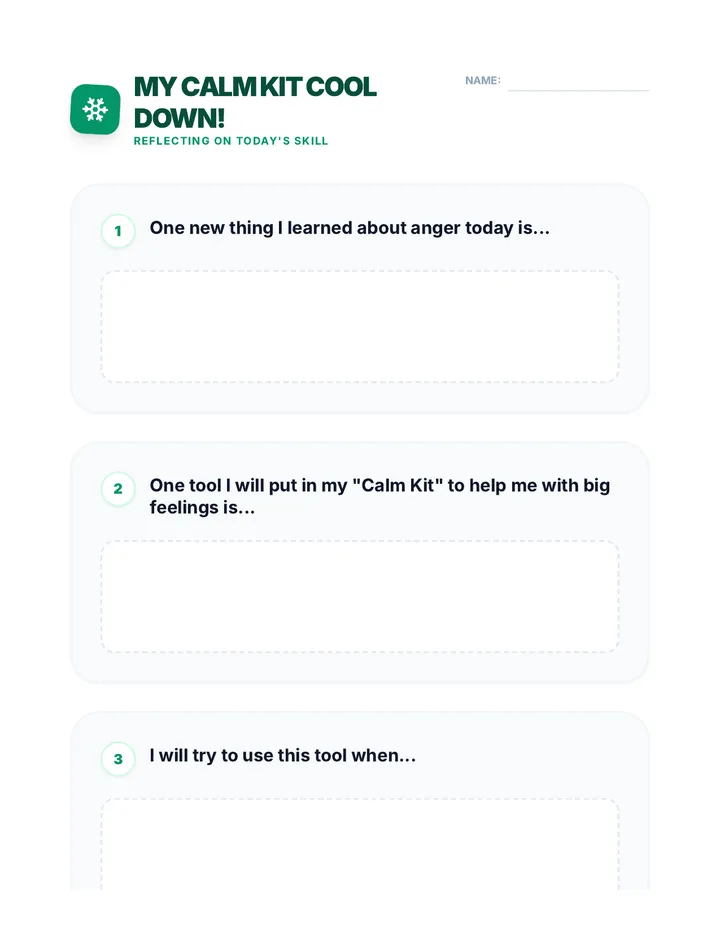
A 30-minute individual Tier 3 lesson for 3rd-grade students focused on identifying anger signals, understanding underlying emotions through the anger iceberg concept, and practicing coping strategies.
A 30-minute Tier 1 lesson for 4th graders focused on defining accountability and practicing taking responsibility for actions through scenario analysis and personal reflection.
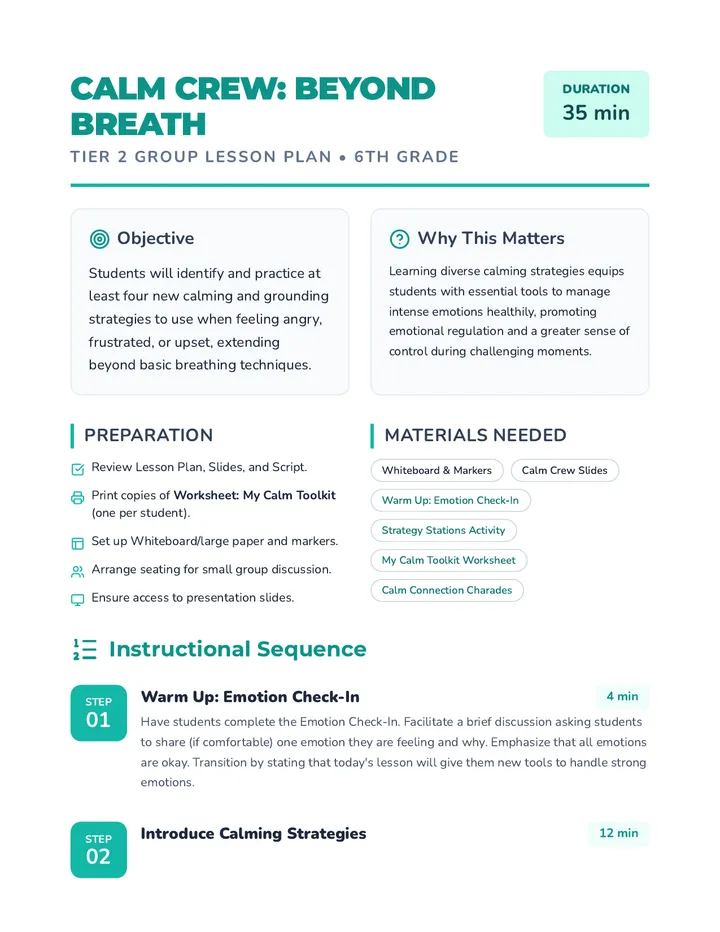
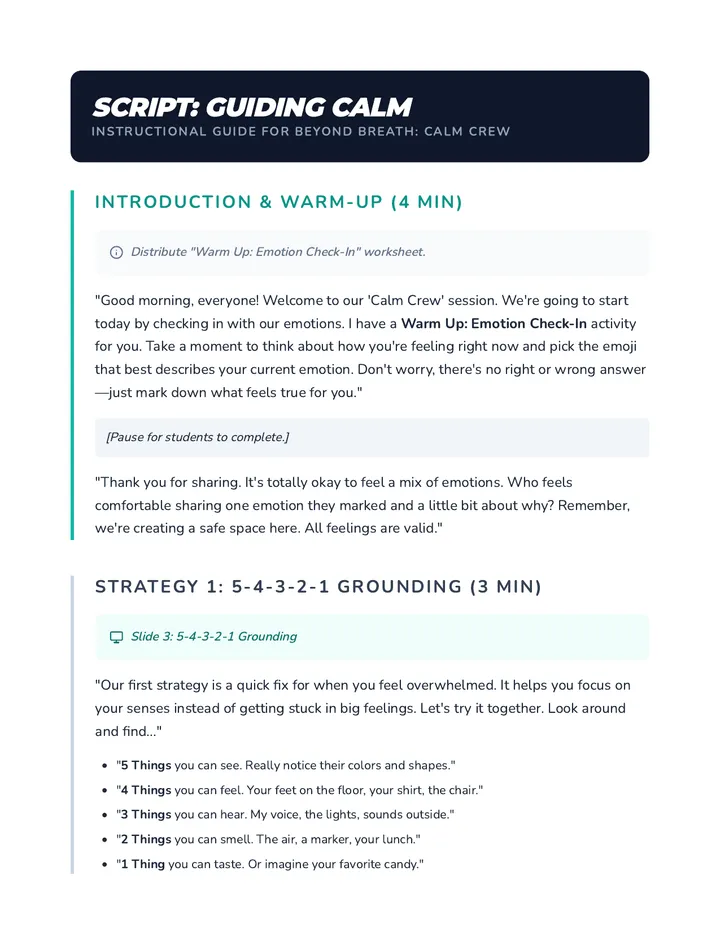
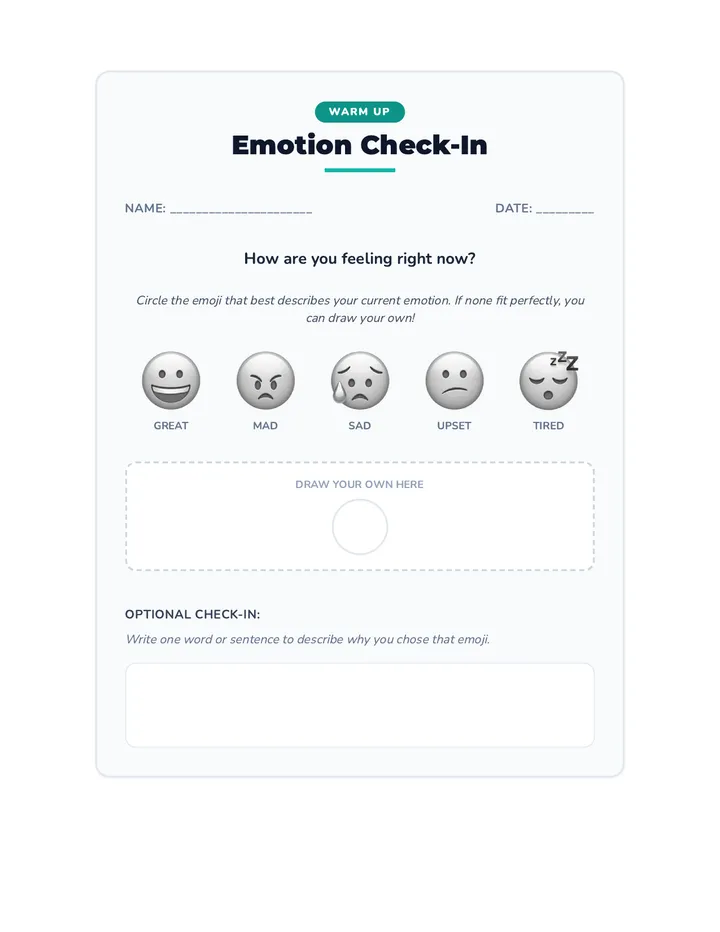
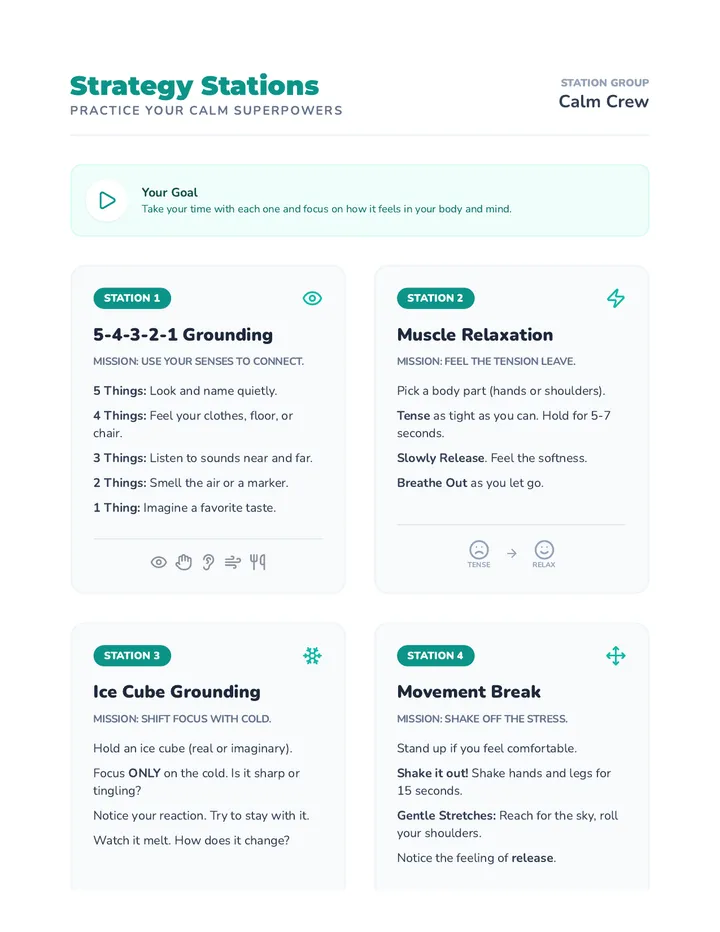
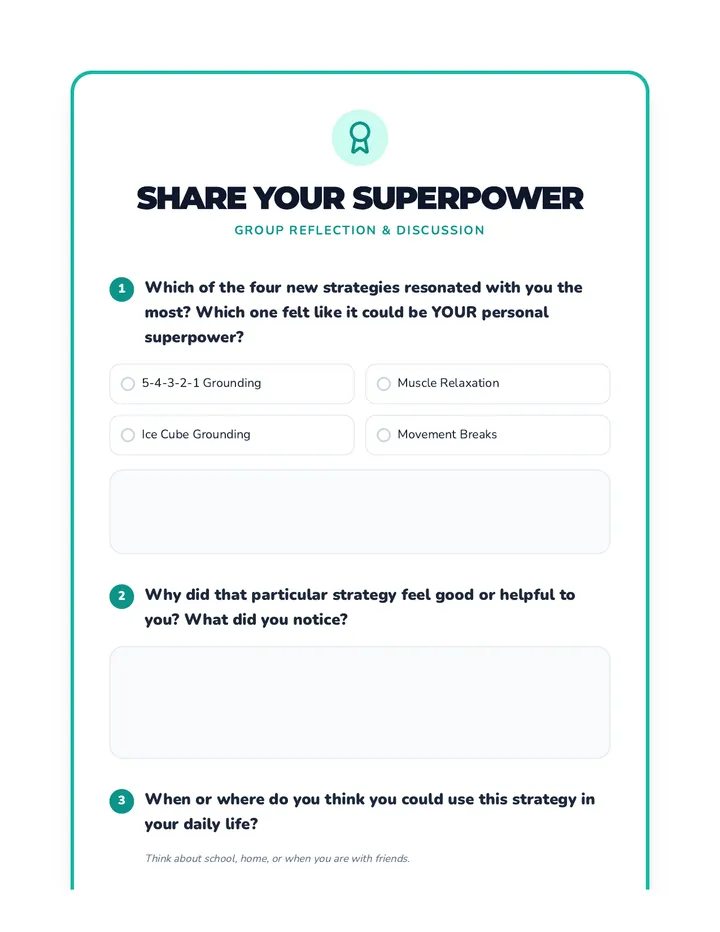
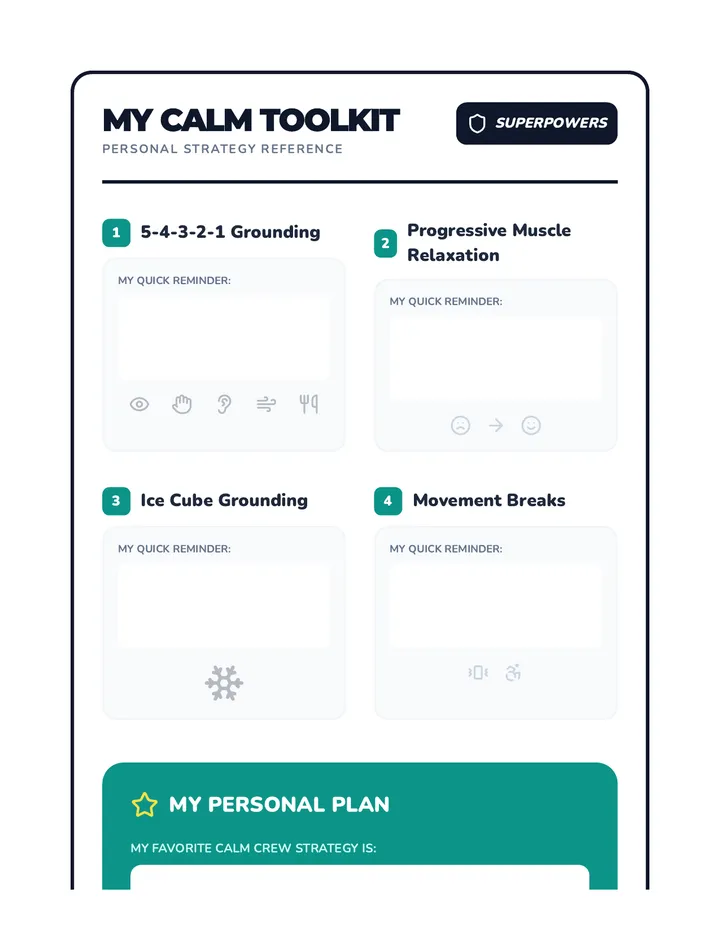
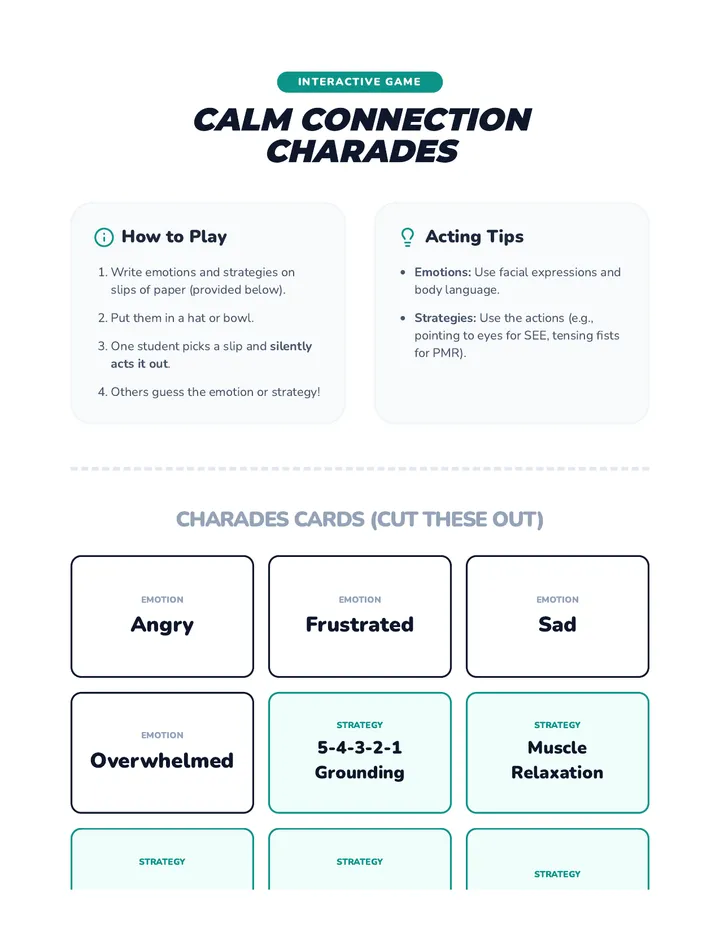
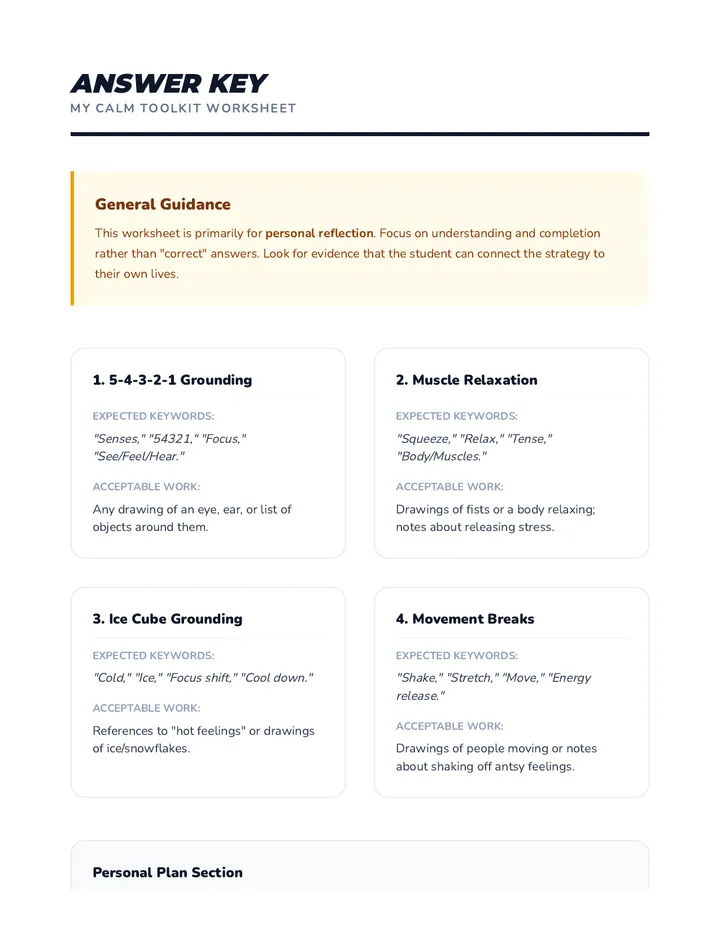
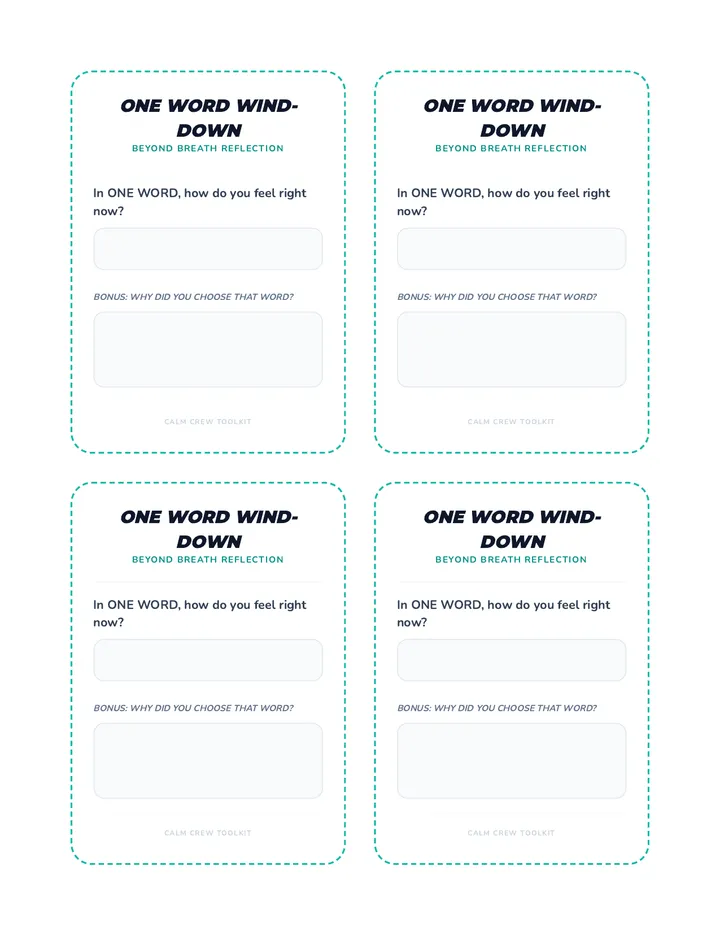
A 35-minute Tier 2 group lesson for 6th graders that introduces and practices various calming and grounding strategies beyond basic breathing, providing students with a toolkit to manage anger, frustration, and upset feelings.
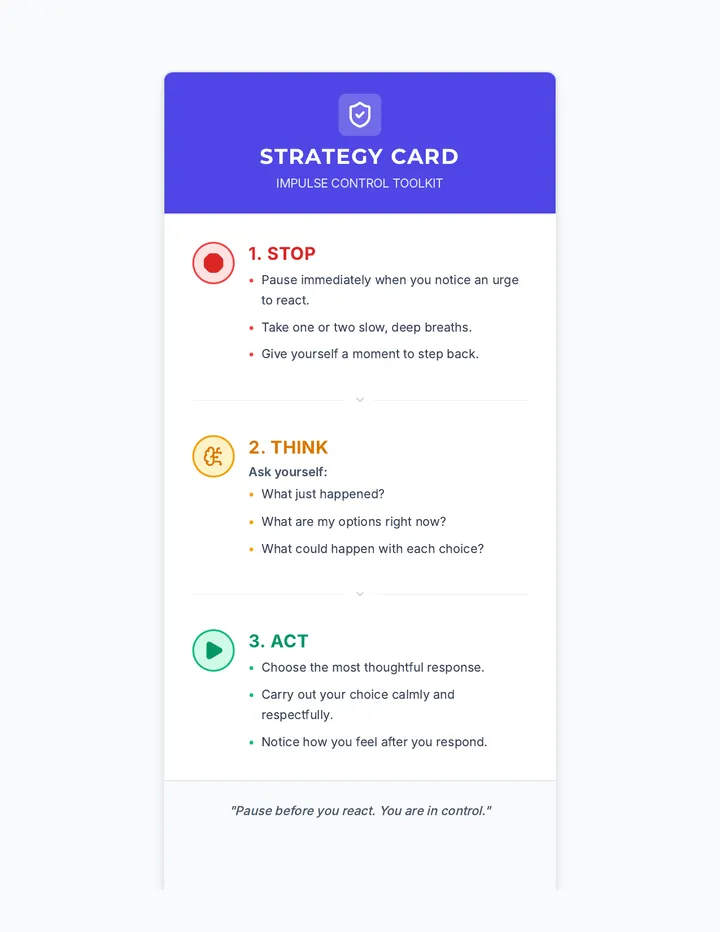
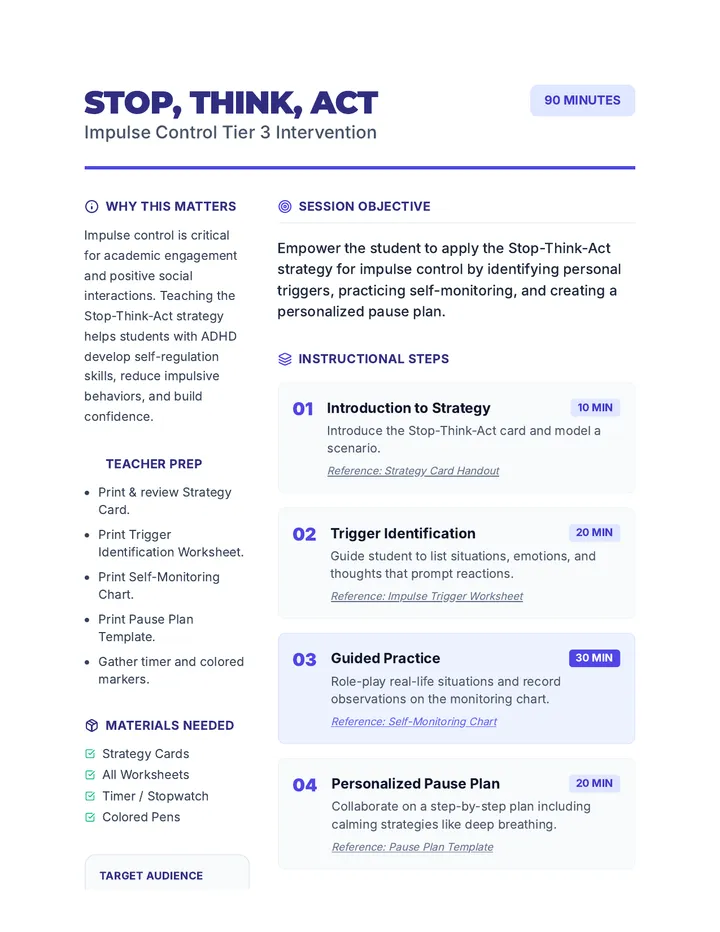
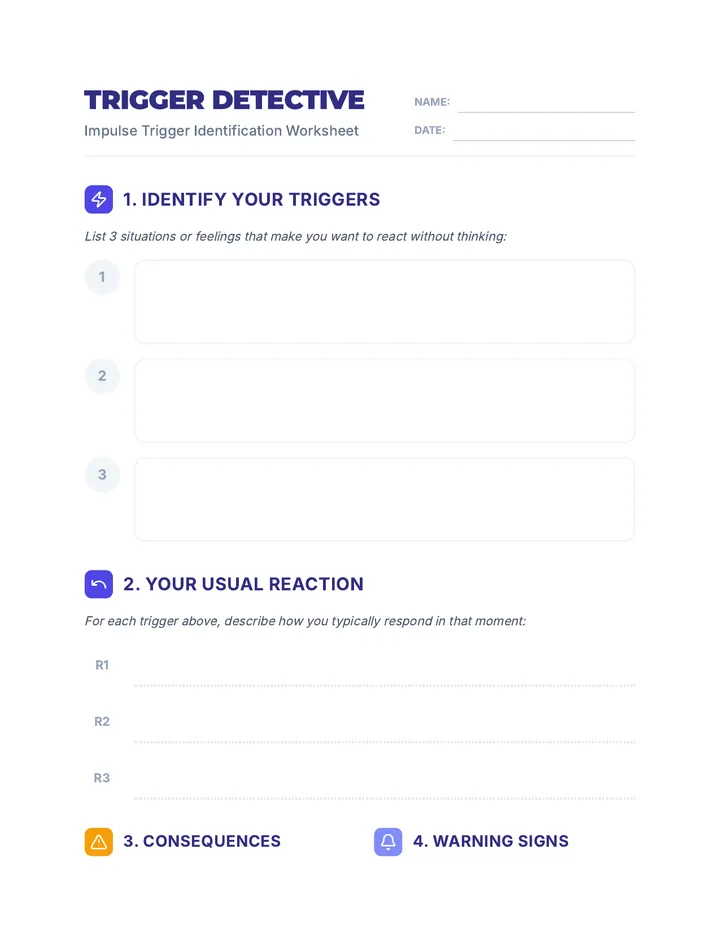
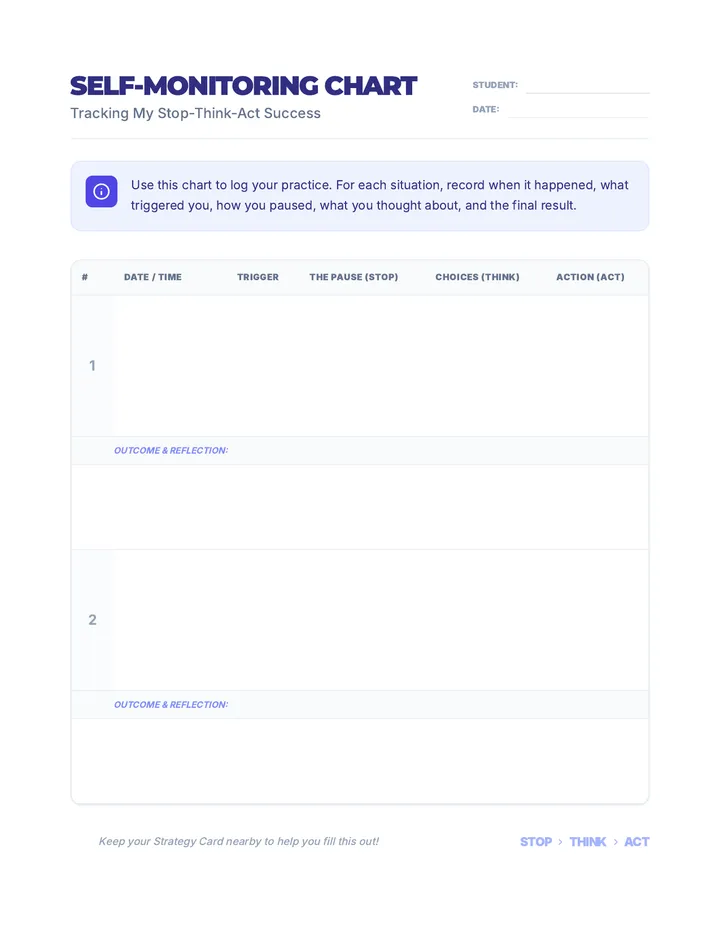
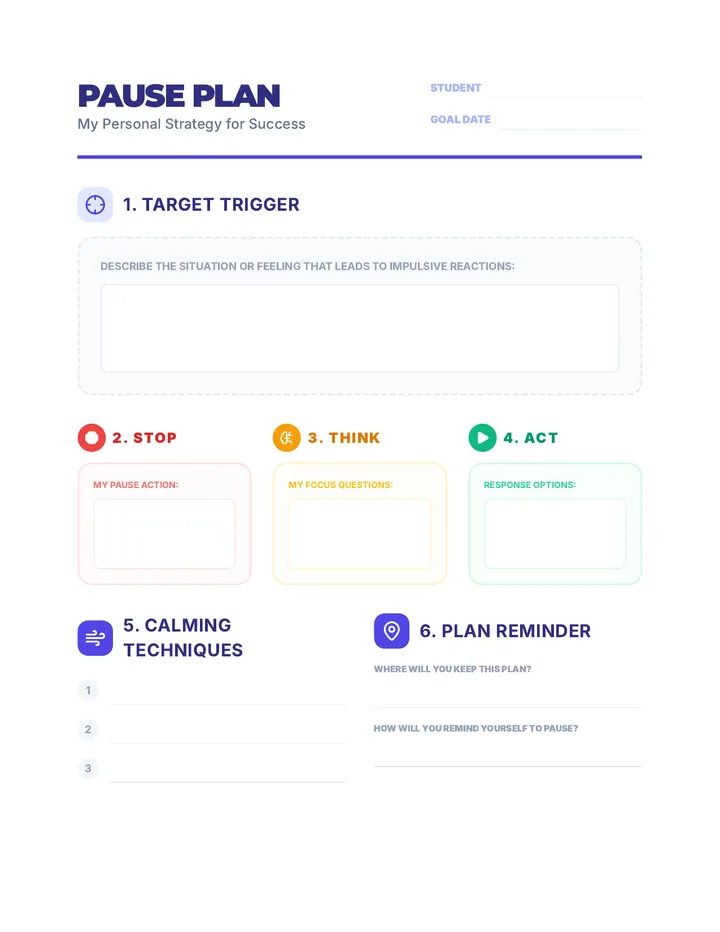
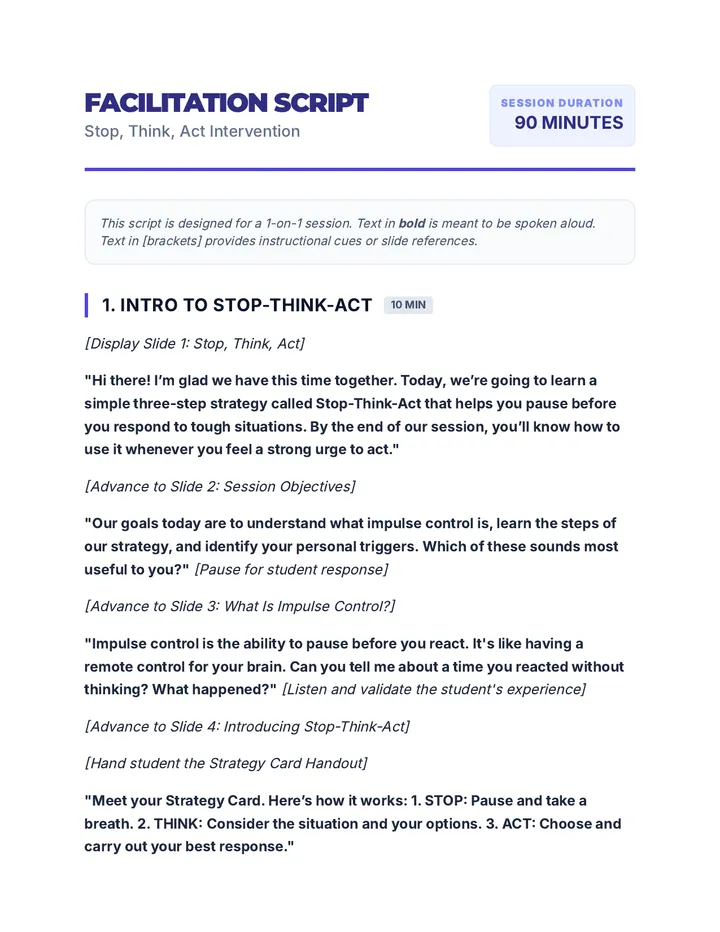
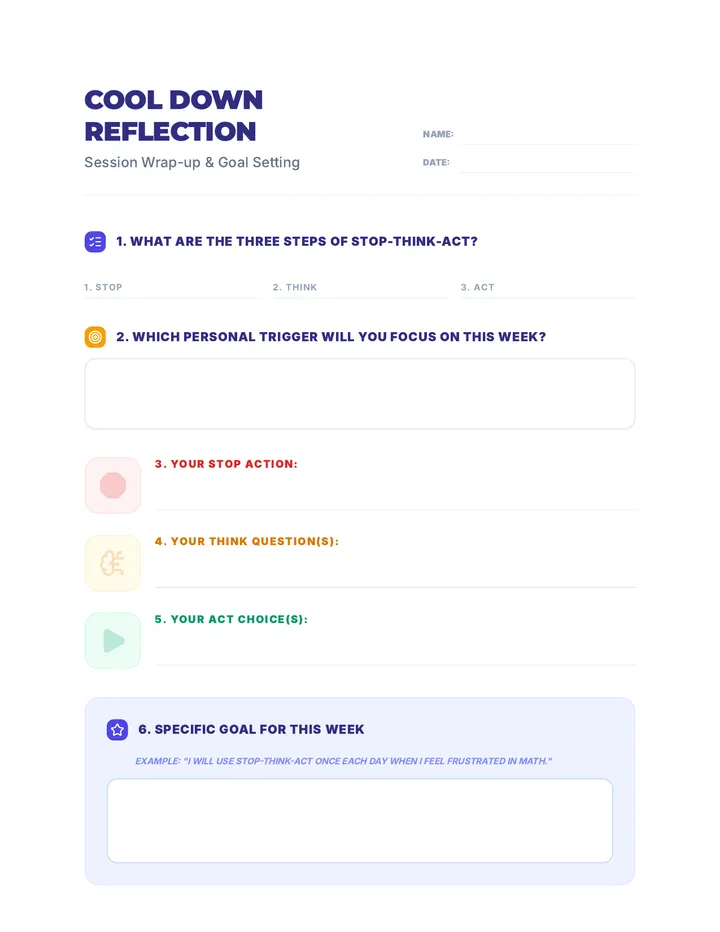
A 90-minute intensive Tier 3 intervention for 7th grade students with ADHD, focusing on the Stop-Think-Act strategy to build impulse control and self-regulation skills.
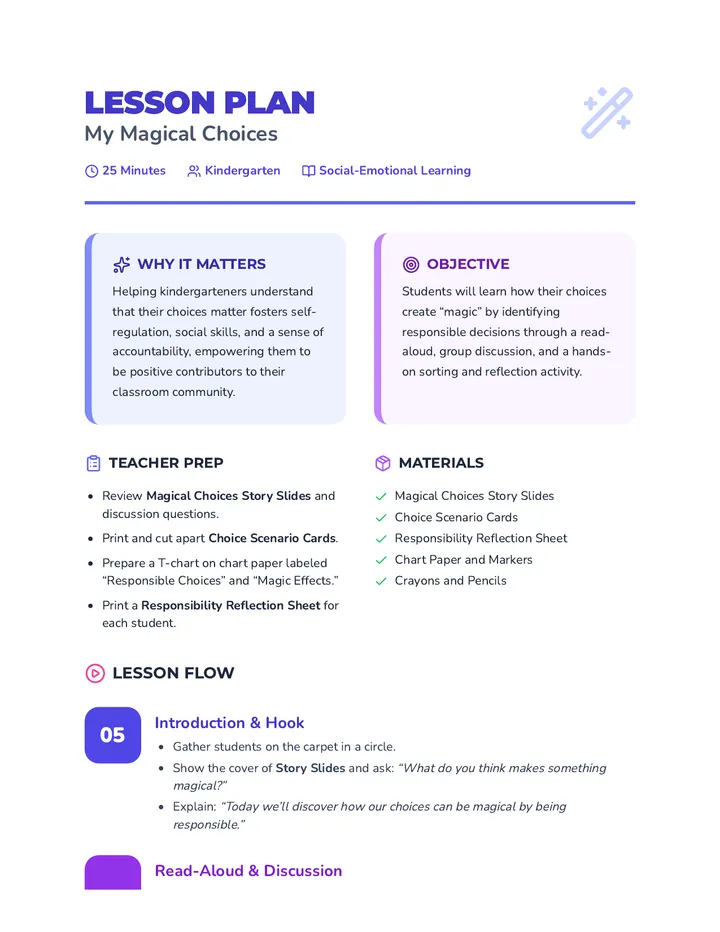
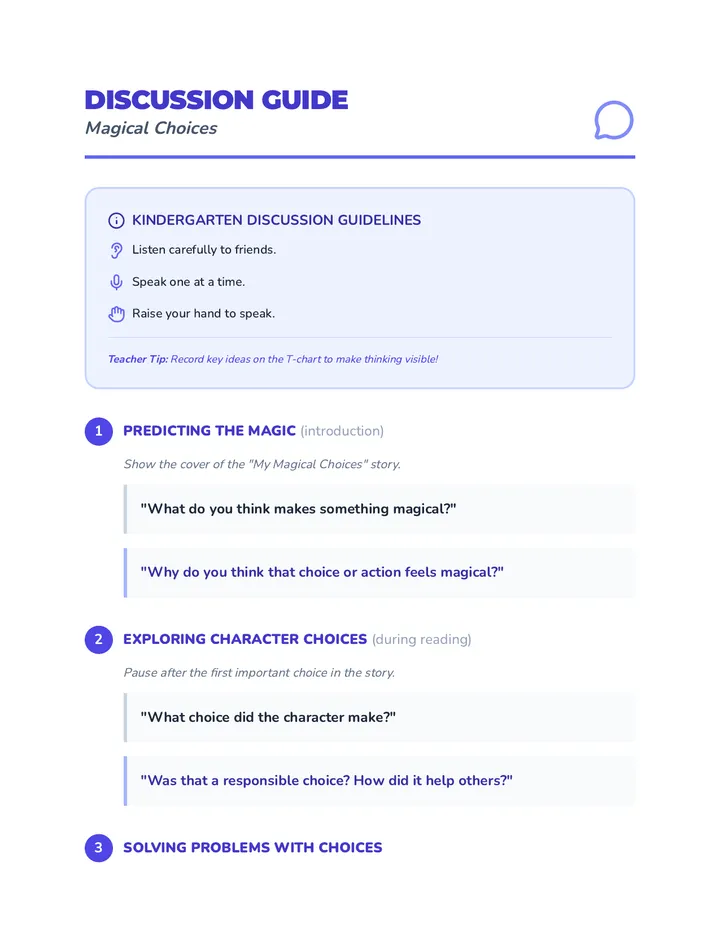
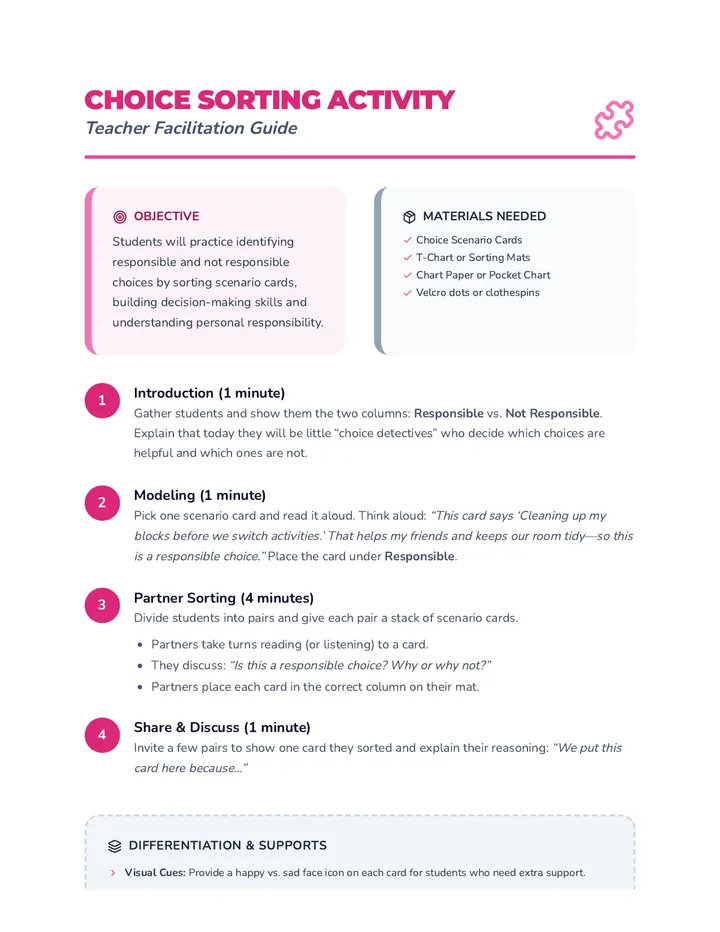
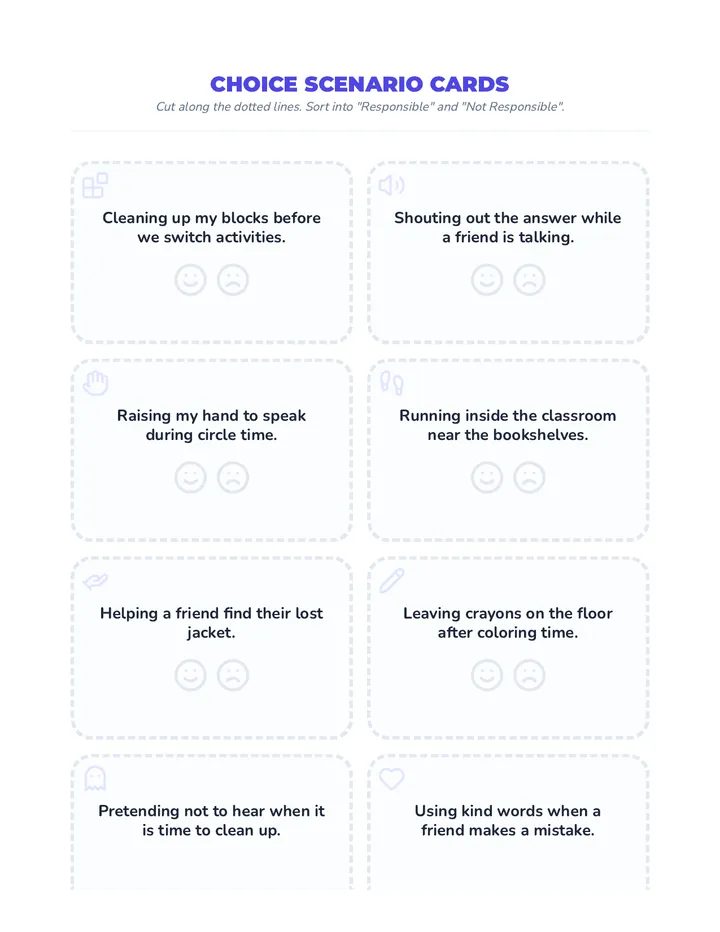
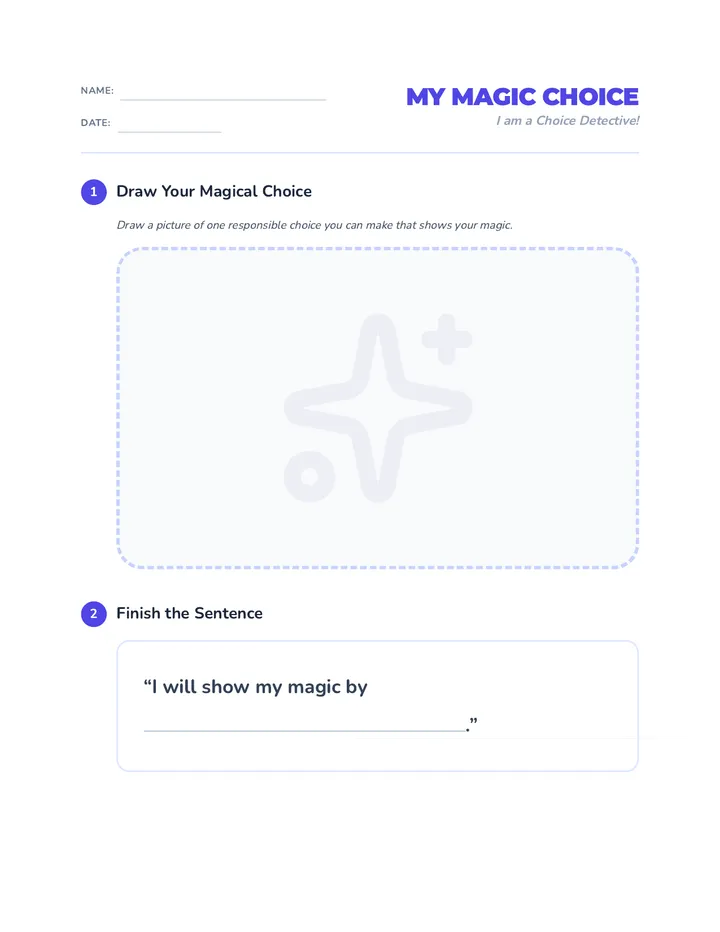
In this engaging kindergarten lesson, students explore how their choices make them responsible citizens through a fun read-aloud and hands-on activity. This 25-minute lesson builds decision-making skills and personal responsibility while celebrating each child’s unique 'magic.'