Techniques for overcoming setbacks, managing stress, and maintaining effort toward long-term goals. Develops emotional regulation and problem-solving skills to navigate challenges effectively.
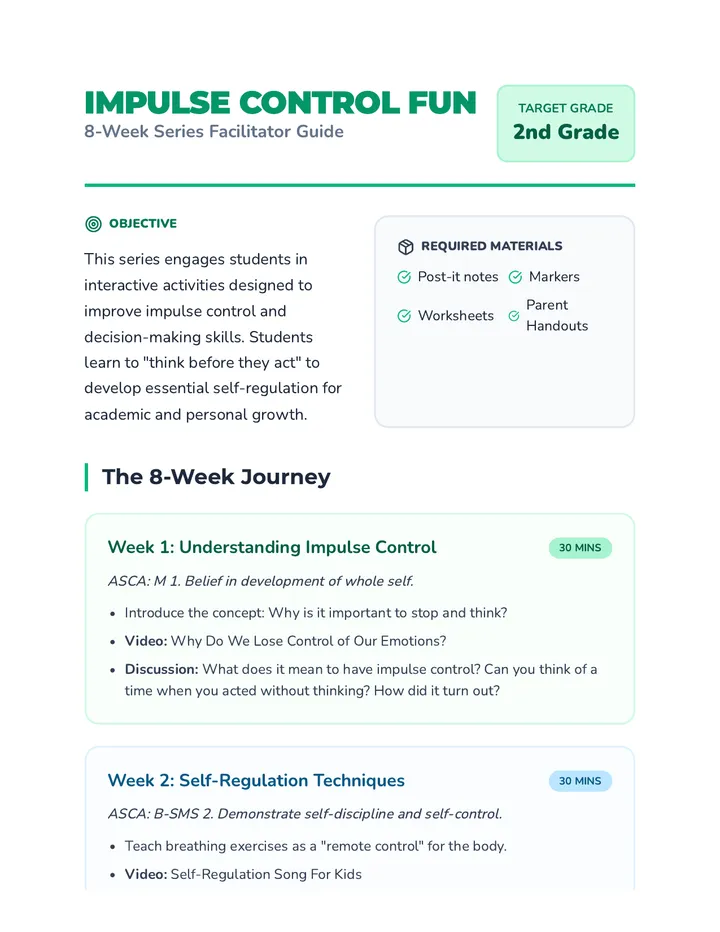
An 8-week series for 2nd graders to develop impulse control, self-regulation, and decision-making skills through interactive activities and reflection.
A 10-week series of 30-minute group lessons for high school students exploring Cognitive Behavioral Therapy. Each session builds practical skills in identifying and reframing thoughts, managing emotions, and engaging in healthy behaviors through interactive activities. This Tier 2 program develops resilience and mental wellness.
A 6-week Tier 3 intervention sequence designed for a student with an IEP, focusing on identifying triggers, developing coping strategies, and practicing self-regulation to manage anger and anxiety.
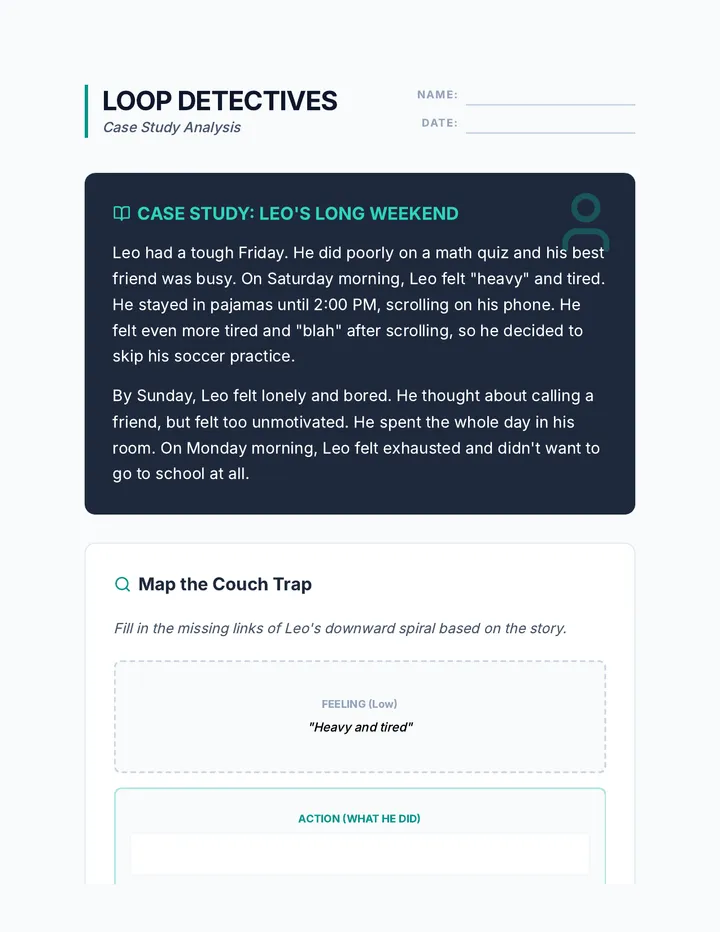
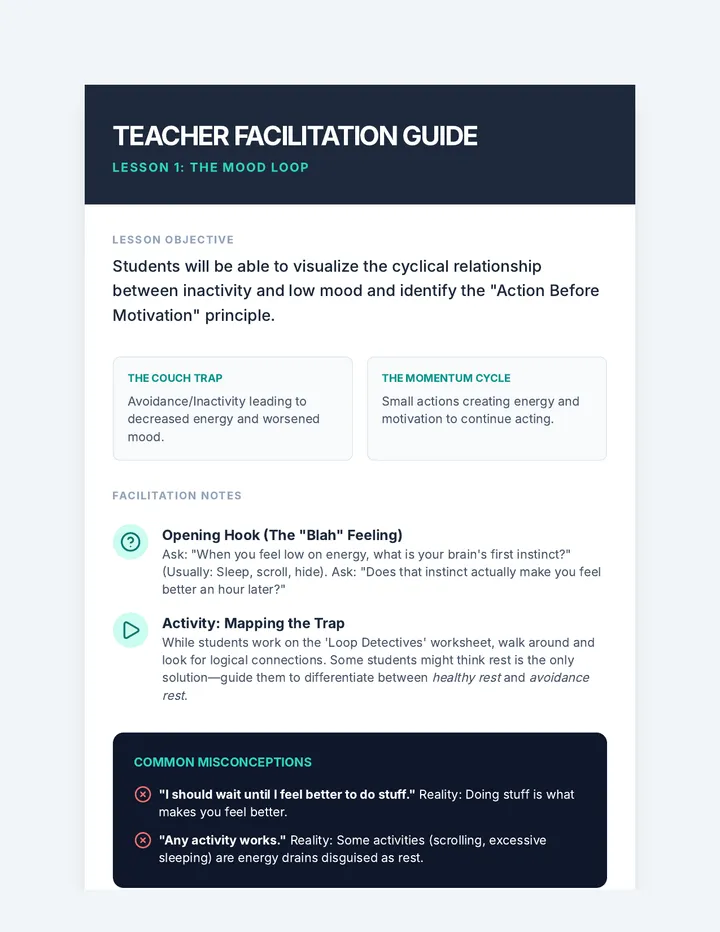
This sequence introduces first-grade students to the fundamental connection between their actions and their emotions, serving as a foundational introduction to behavioral activation. Students explore how specific activities can shift their mood and create a personalized action plan for emotional regulation.
A comprehensive sequence for 6th graders to understand and apply behavioral activation. Students learn how their actions impact their emotions, track their energy levels, brainstorm nourishing activities, and create a sustainable weekly schedule to improve their mental well-being.
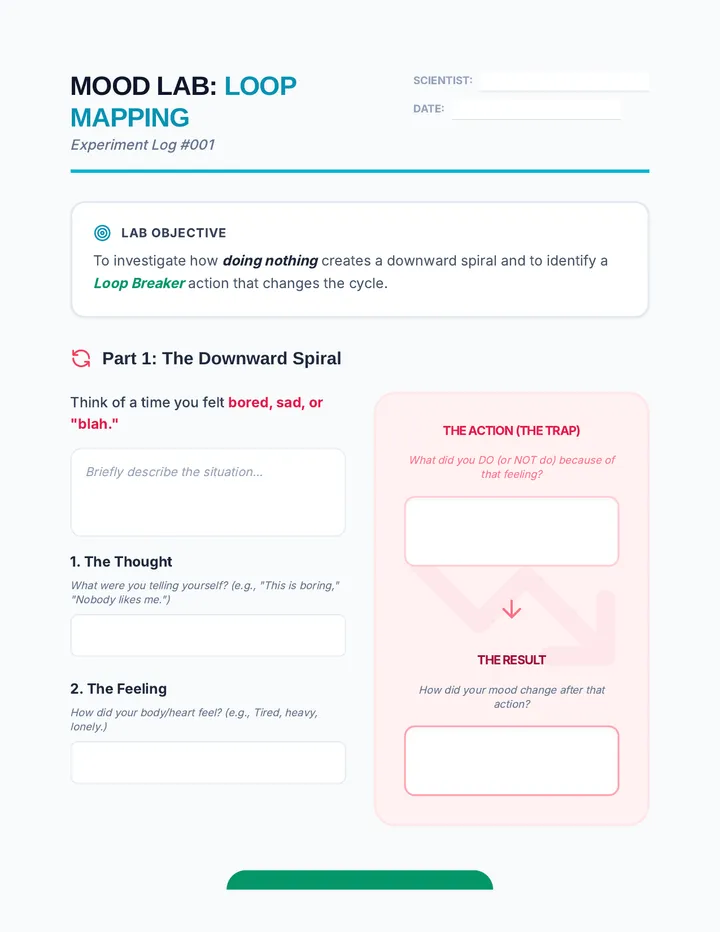
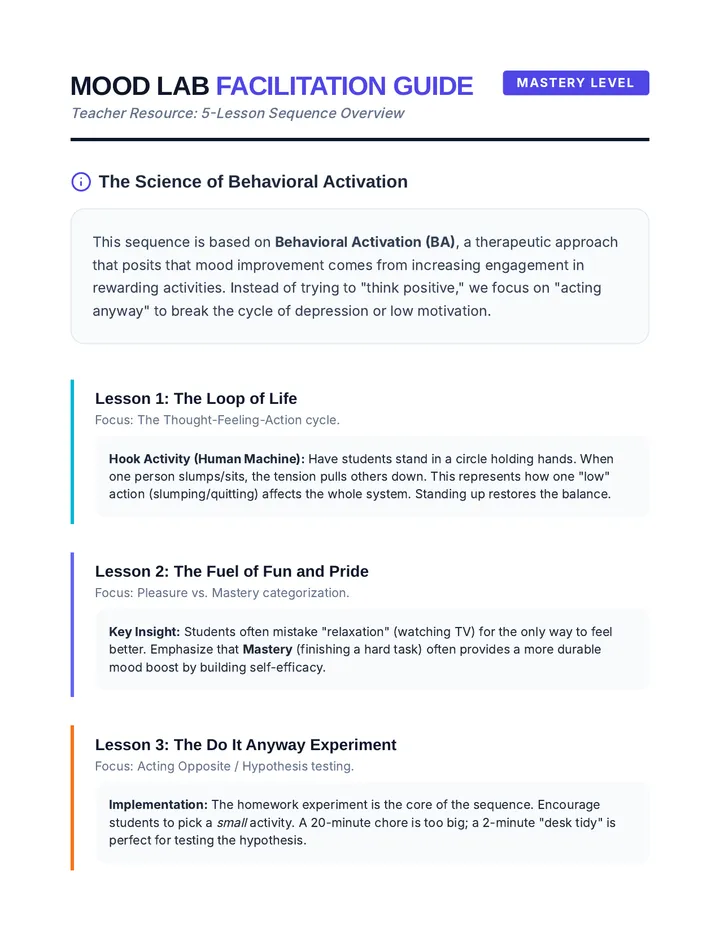
In this inquiry-driven sequence, students explore behavioral activation, investigating how their actions influence their emotions. They learn to distinguish between pleasure and mastery activities, conduct personal experiments to track mood changes, and create a personalized evidence-based plan for mood regulation.
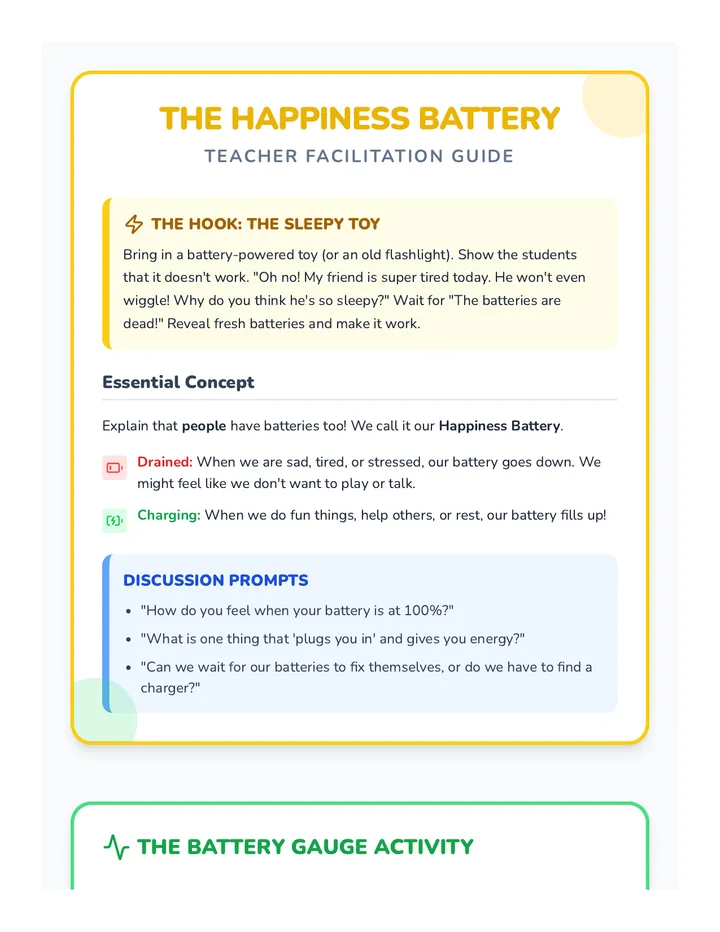
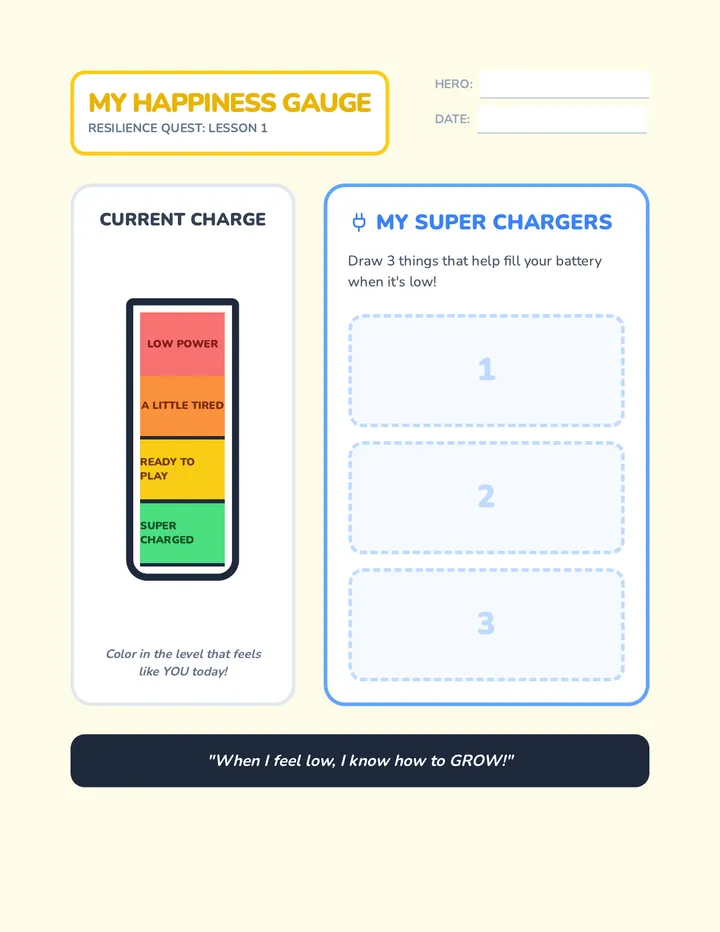
A 1st-grade counseling sequence that uses game-based mechanics and metaphors to teach behavioral activation, emotional resilience, and the importance of daily positive routines.
A 5-lesson project-based sequence for 5th graders focusing on building positive experiences through routine design and habit formation. Students learn to categorize wellness activities, overcome barriers like inertia, use habit-stacking techniques, and create a sustainable weekly wellness schedule to build emotional resilience.
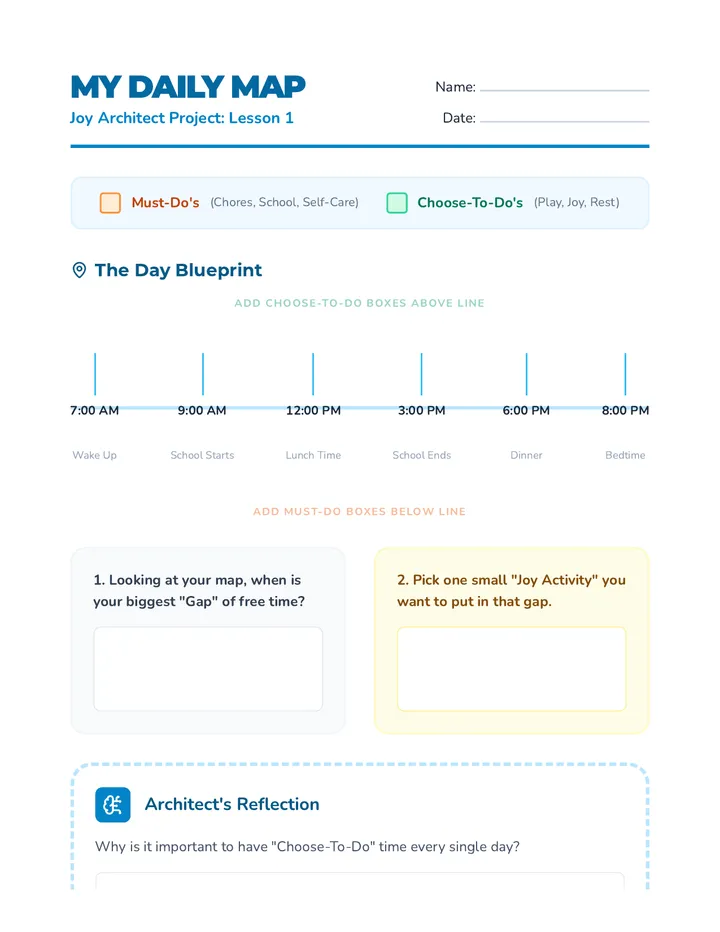
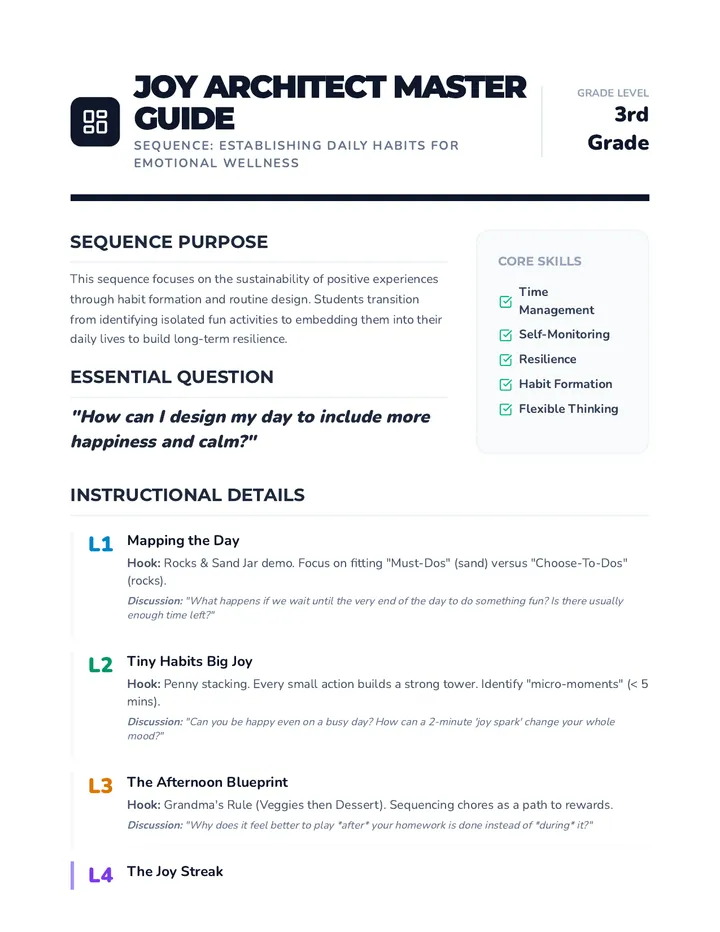
A 5-lesson unit for 3rd graders focused on building emotional resilience through habit formation. Students learn to audit their time, identify small 'micro-moments' of joy, and design balanced daily schedules that prioritize positive experiences.
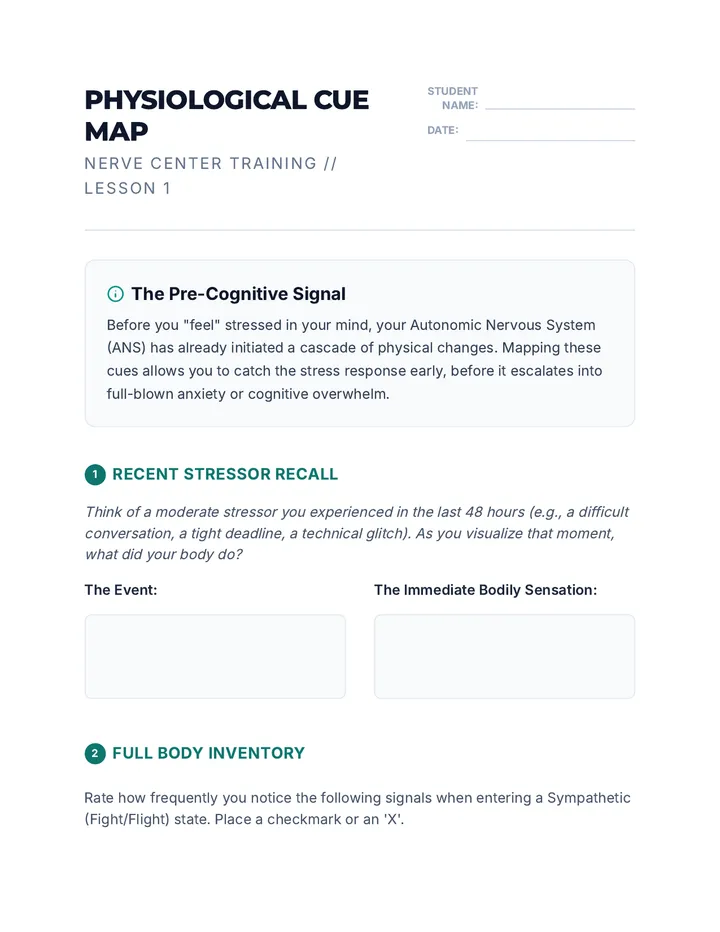
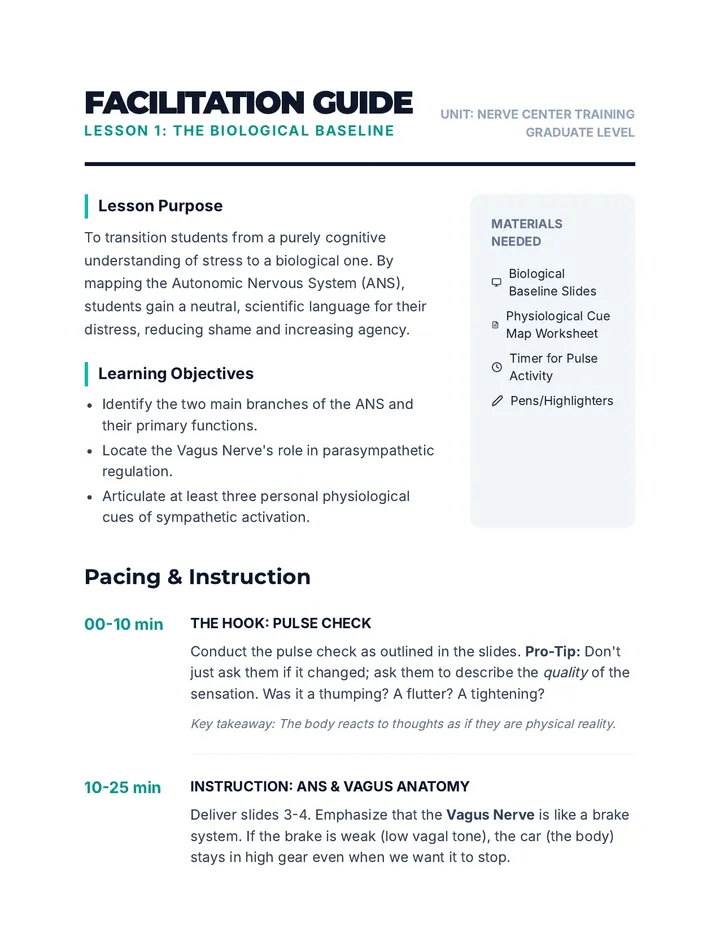
A graduate-level exploration of the biological underpinnings of stress. Students move from theoretical understanding of the autonomic nervous system and Polyvagal Theory to practical application of somatic regulation and interoceptive awareness, culminating in a personalized physiological safety plan.
Students design and create a personalized 'Coping Kit' (mental or physical) containing tools for managing crisis moments. This project-based sequence guides 3rd graders through self-reflection, visualization techniques, tool selection, and the creation of a comprehensive safety plan.
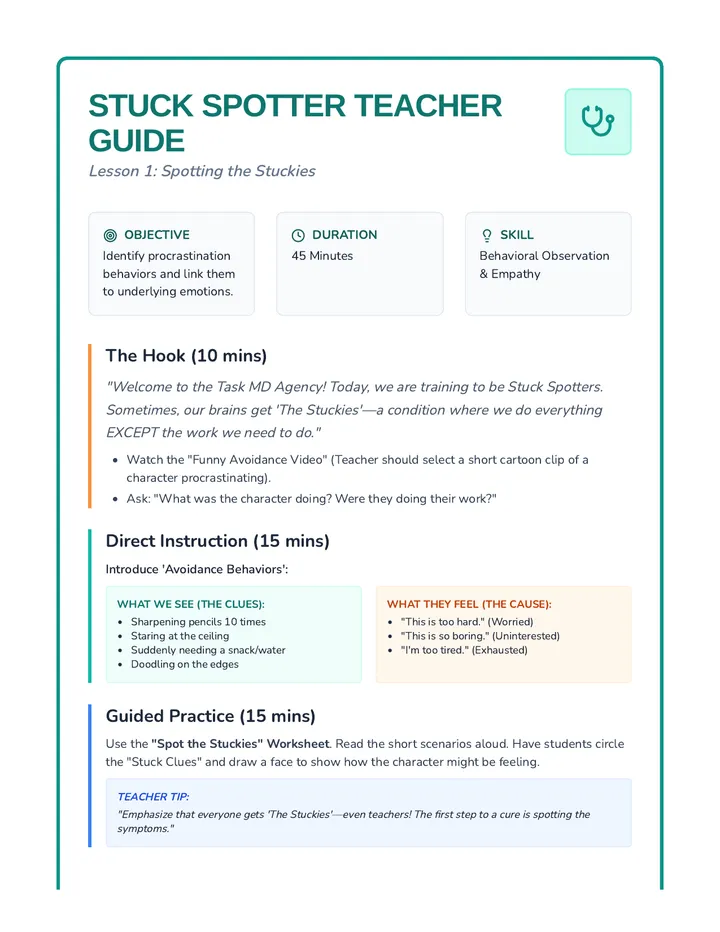
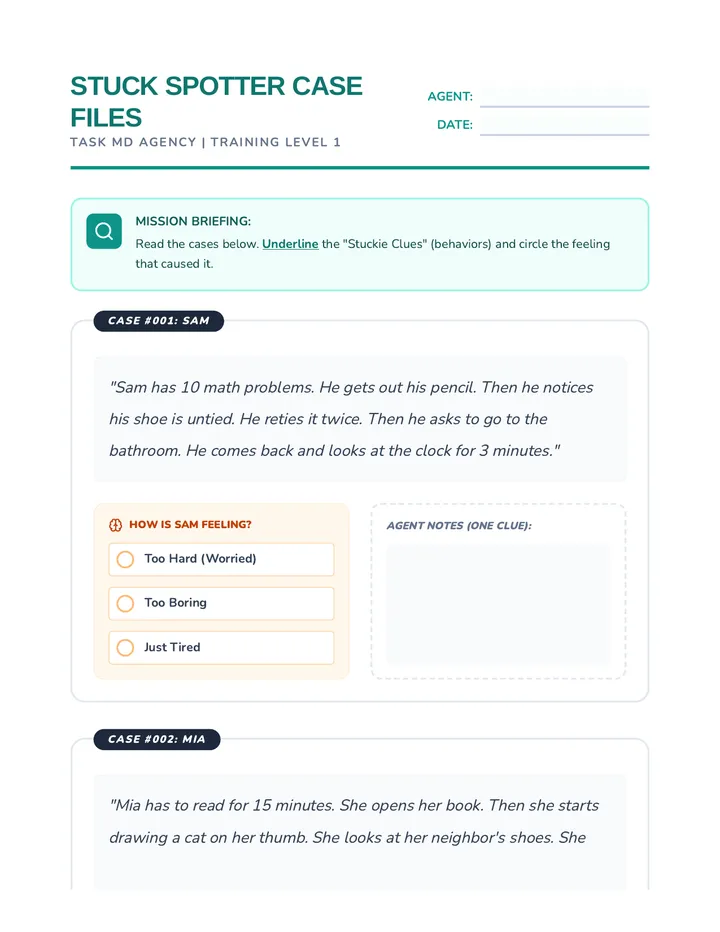
A sequence focused on helping students overcome emotional barriers to task initiation using a 'Task Doctor' theme. Students learn to identify avoidance behaviors, diagnose the root cause of being 'stuck', and prescribe effective self-talk solutions through role-play and reflection.
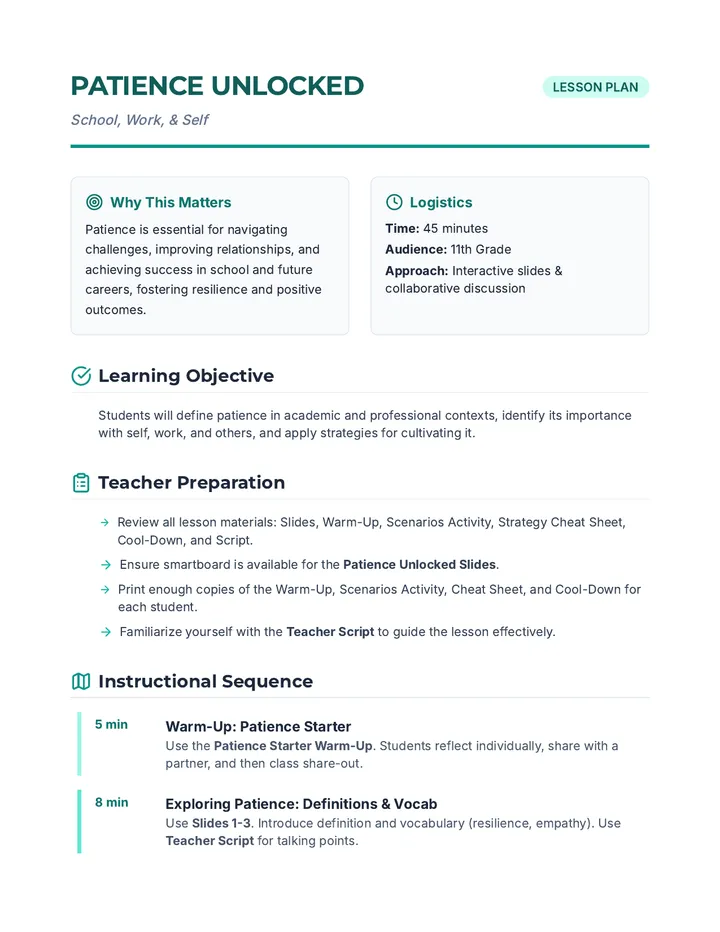
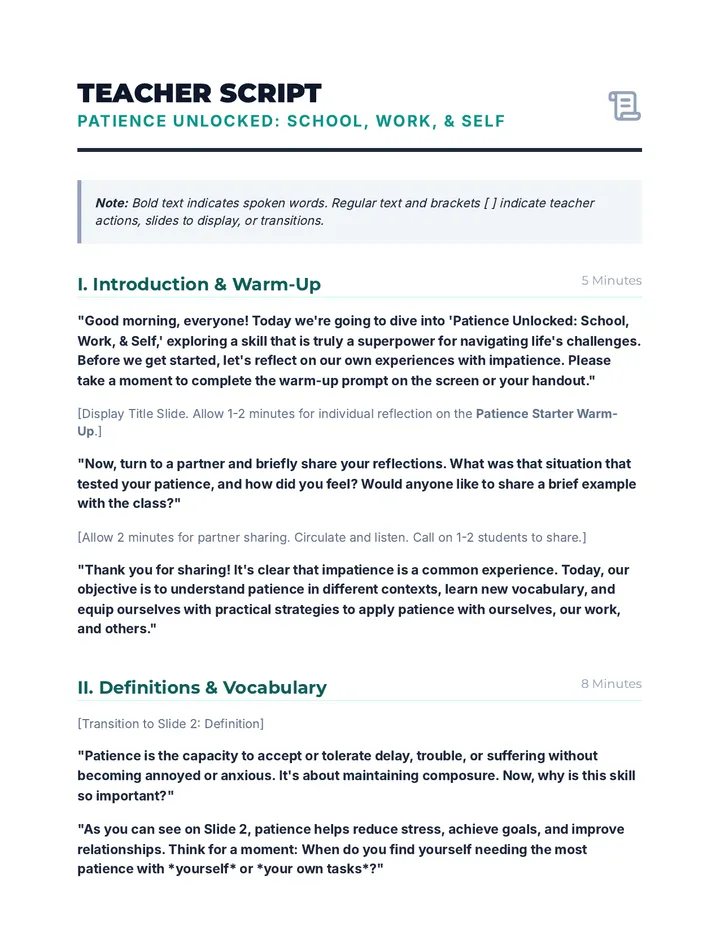
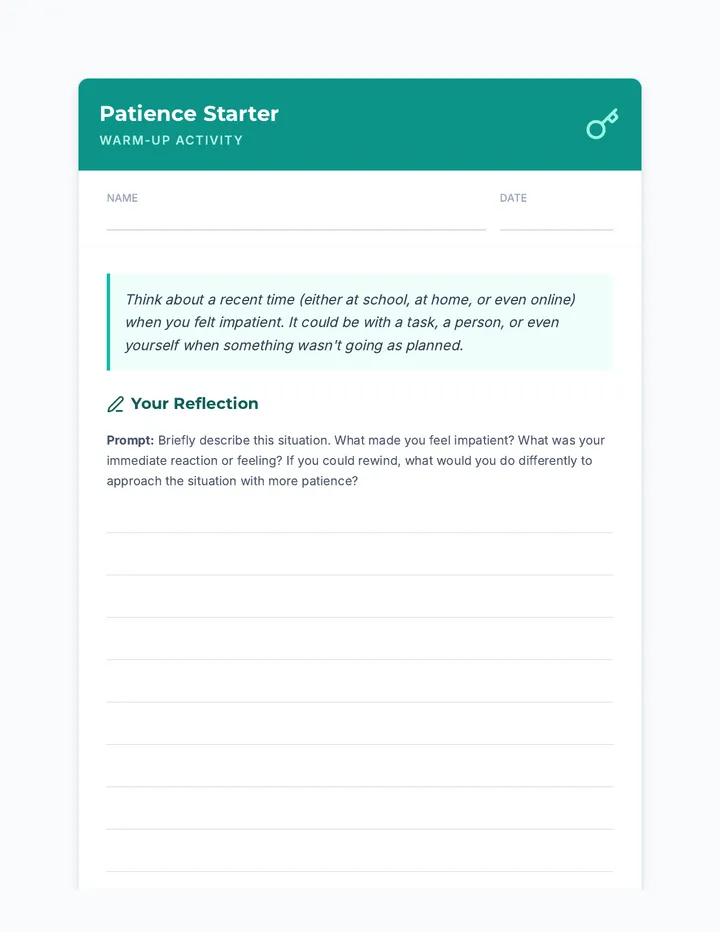
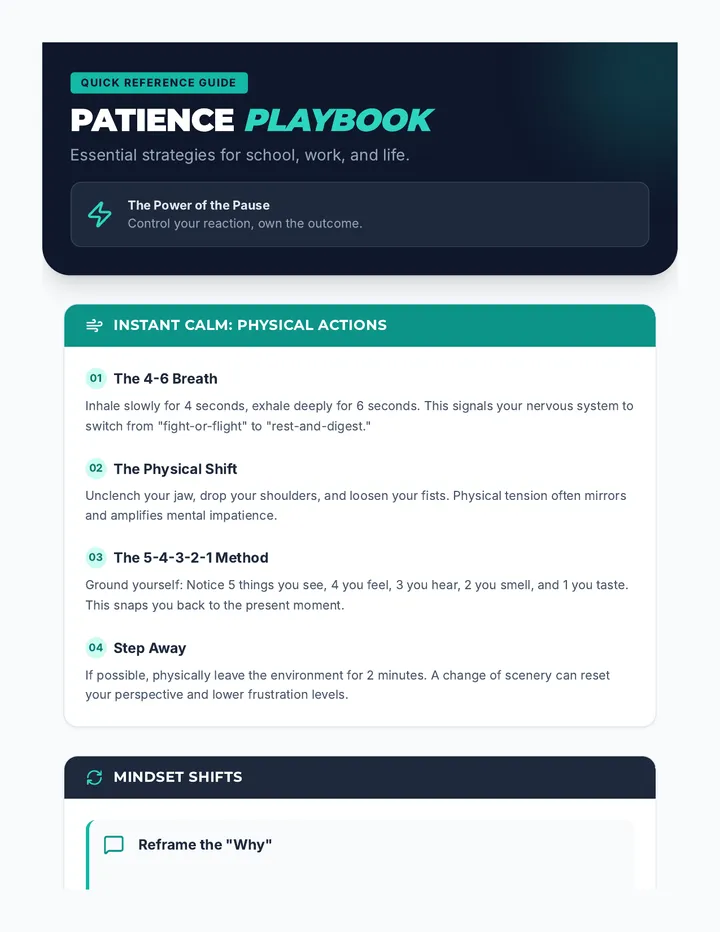
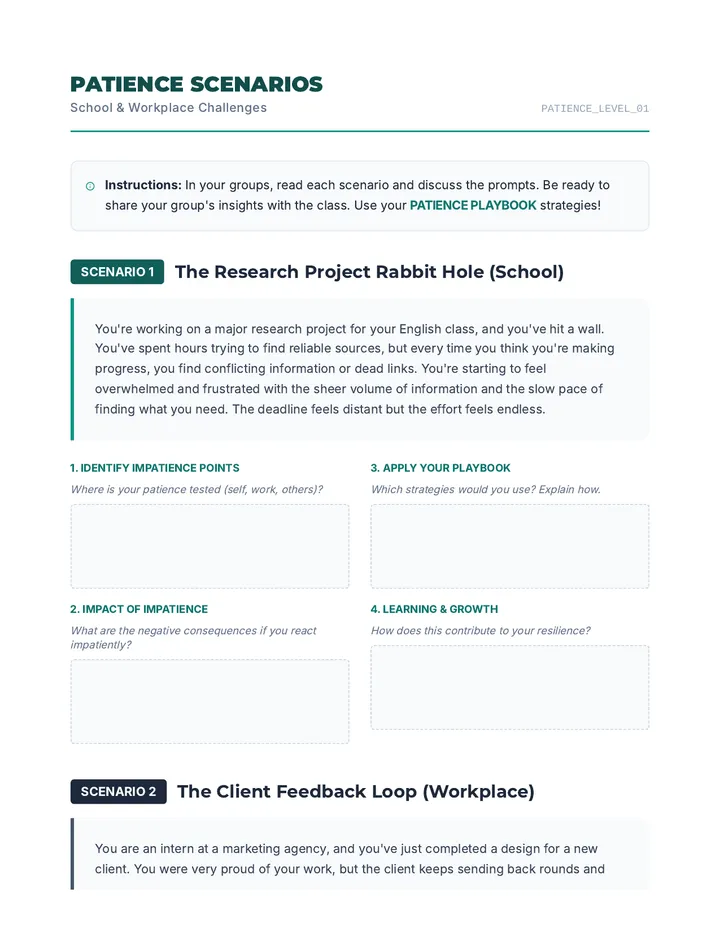
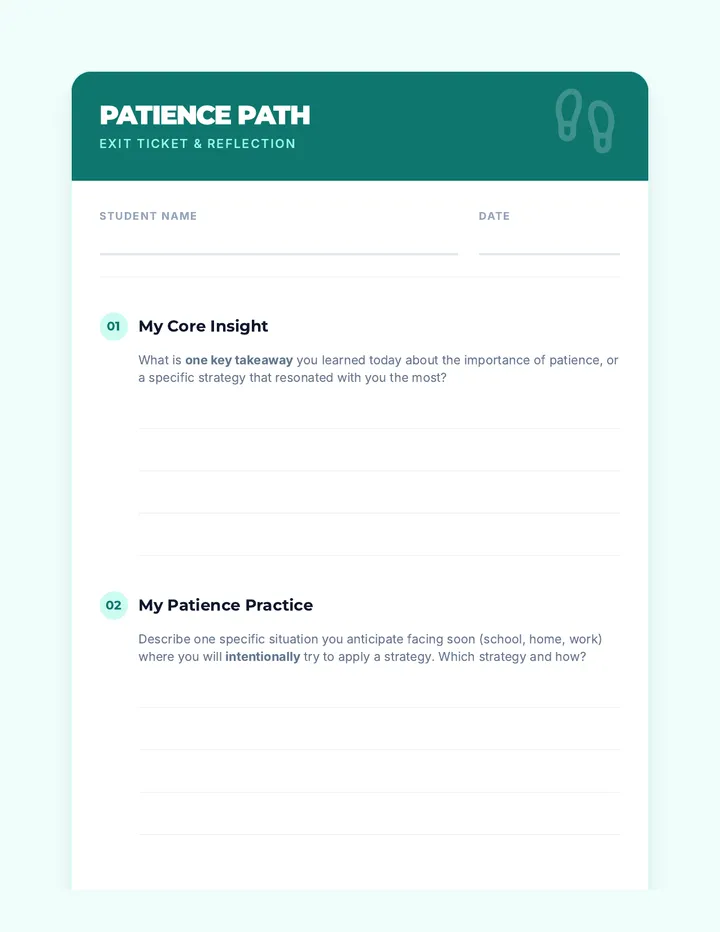
This lesson empowers 11th-grade students to cultivate patience as a critical skill in academic and professional settings. Students will explore strategies for managing impatience with themselves, their work, and others, fostering resilience and positive relationships.
A 45-minute lesson for 6th graders on executive functioning and study skills, using the 'Inner CEO' metaphor to help students master organization, planning, and task management.
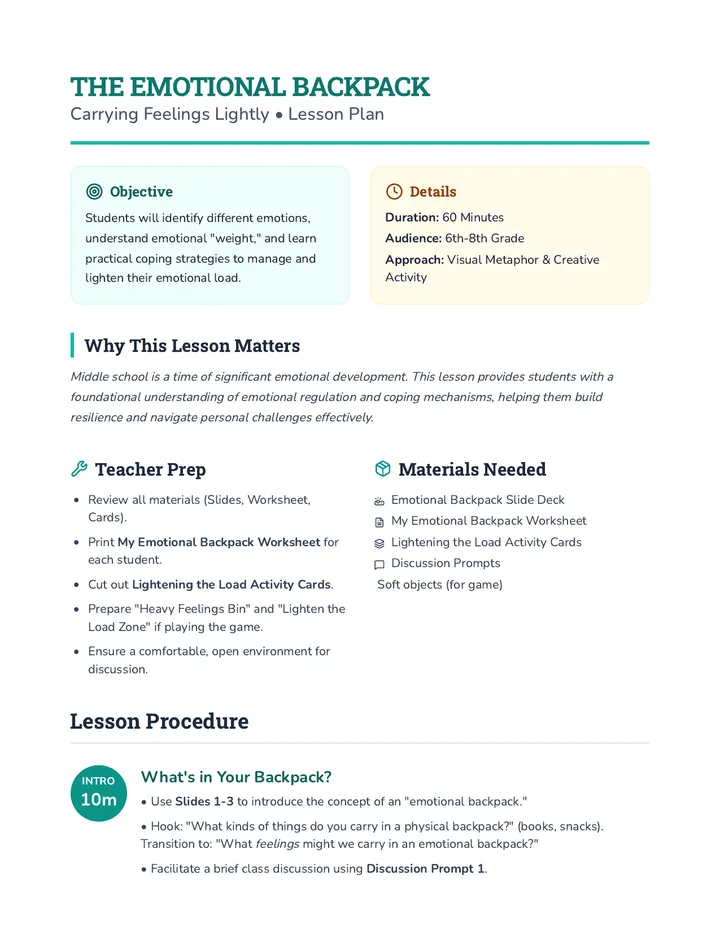
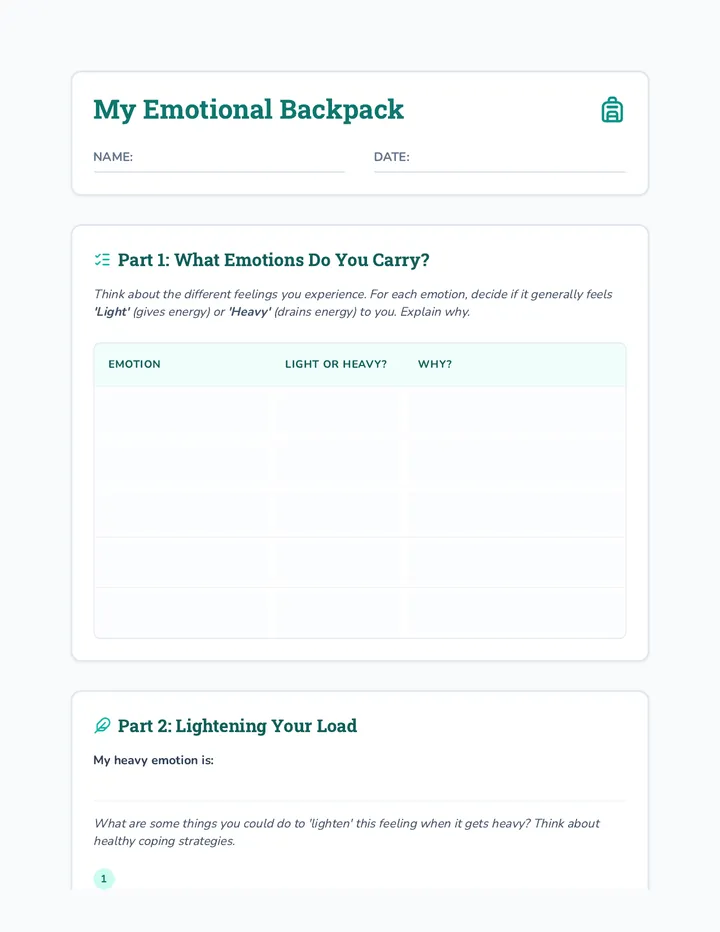
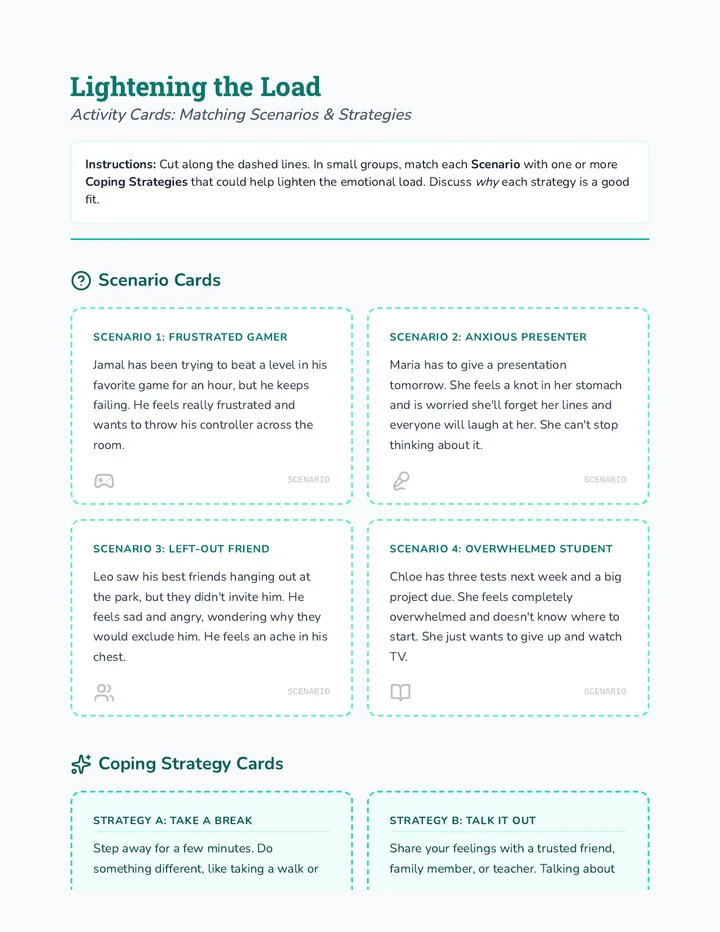
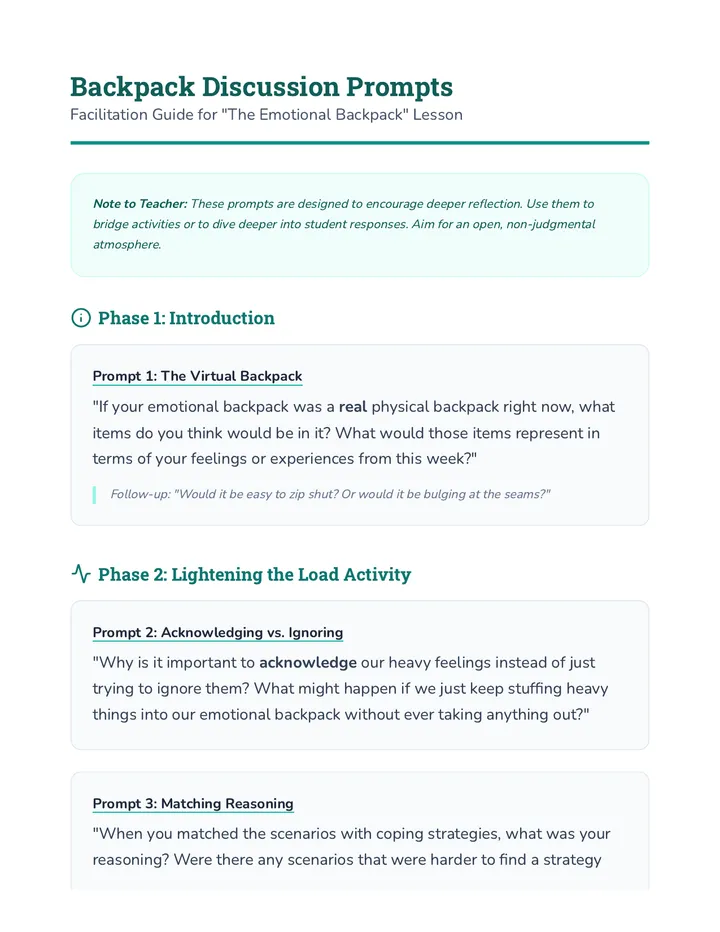
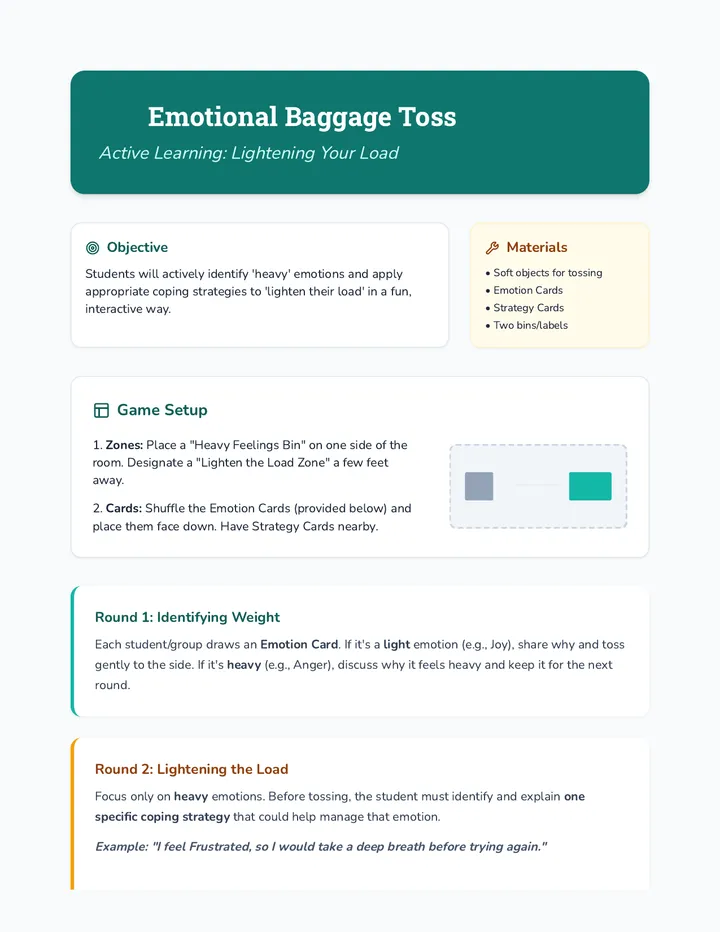
A 60-minute lesson for middle schoolers that uses the metaphor of a backpack to help students identify emotional weight and practice healthy coping strategies.
A 15-minute lesson for 4th graders on strategies to overcome feeling overwhelmed and 'stuck' using 'Brain Booster' techniques.
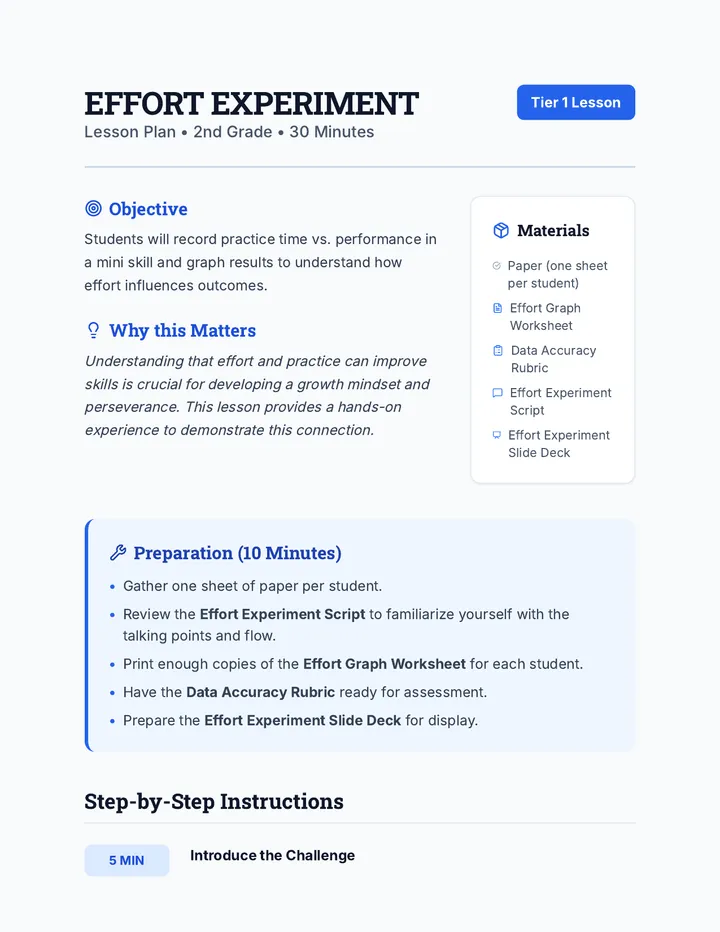
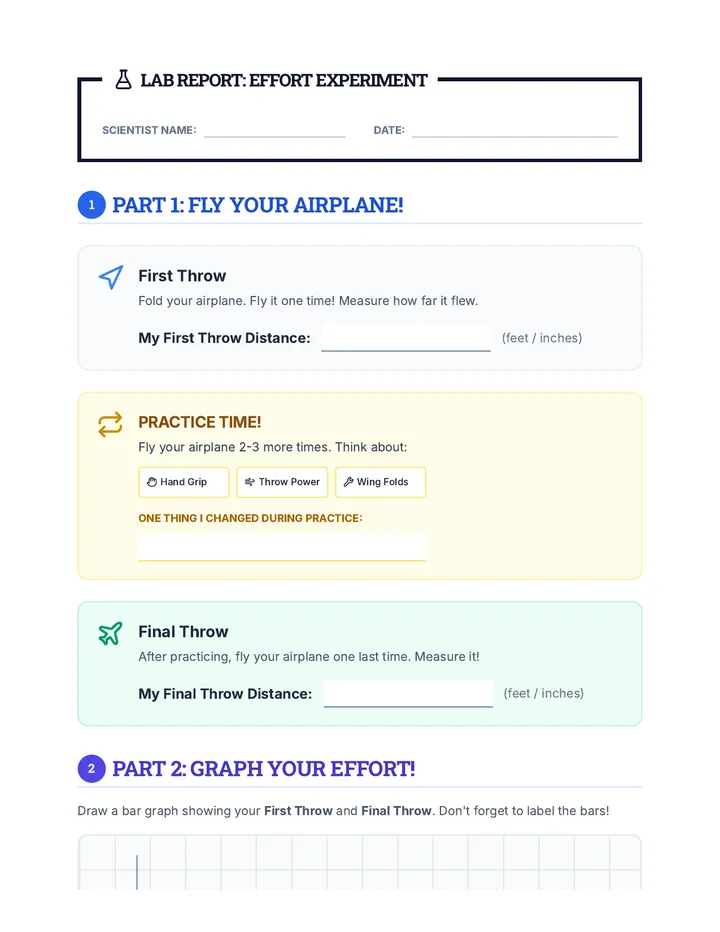
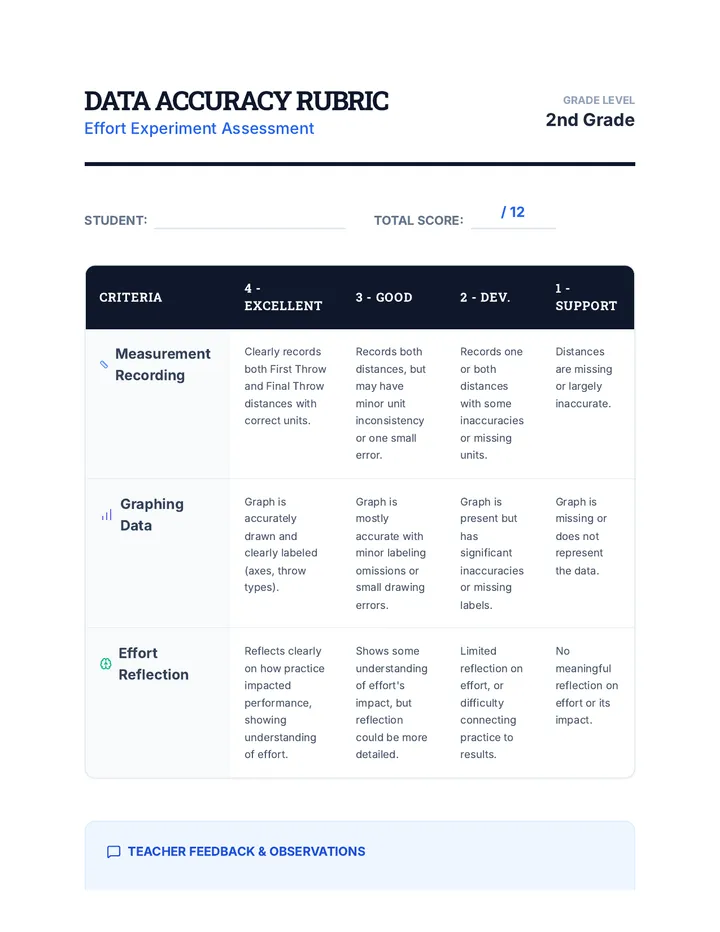
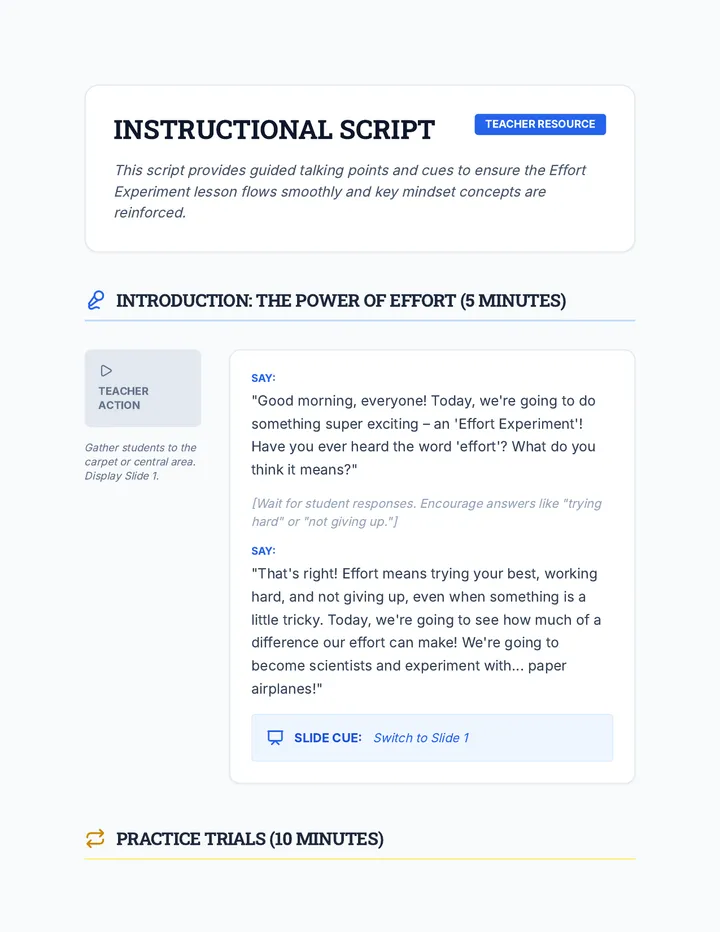
A hands-on paper airplane challenge where 2nd-grade students explore the link between practice and performance, developing a growth mindset through data collection and graphing.
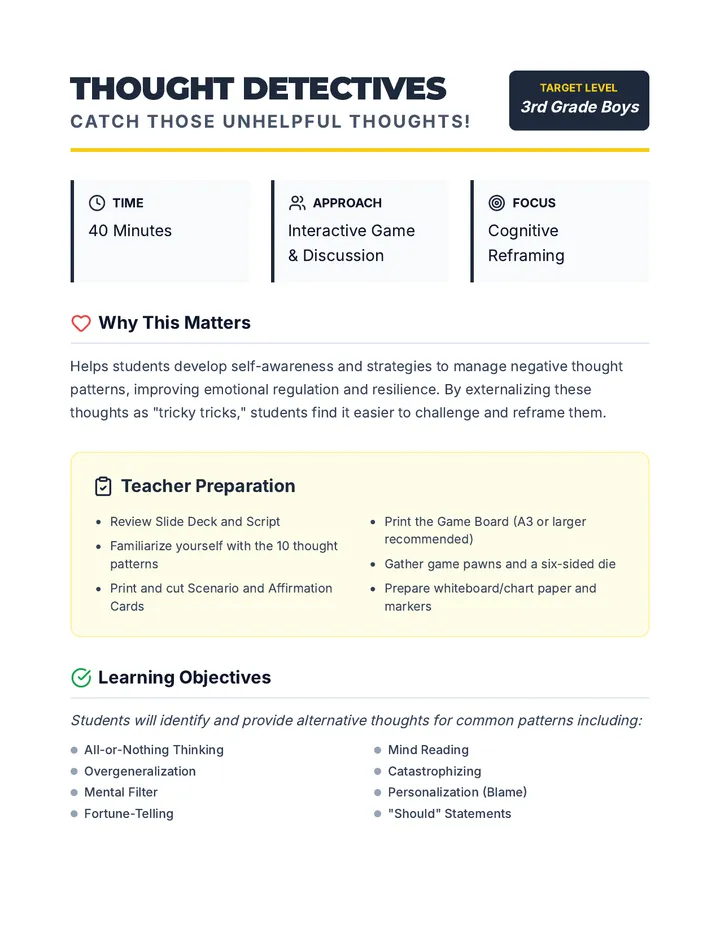
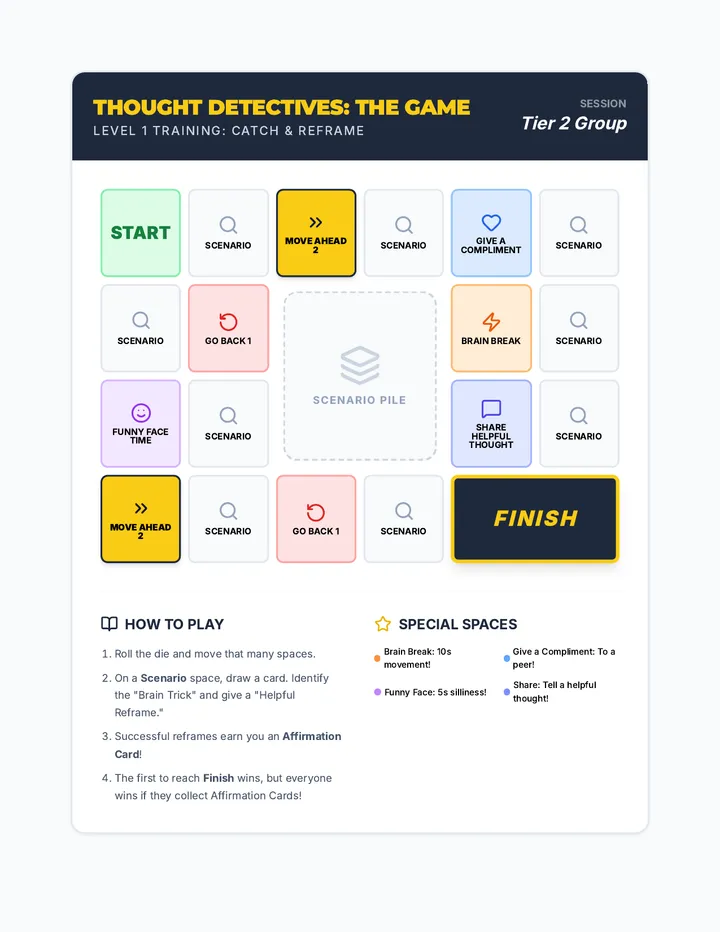
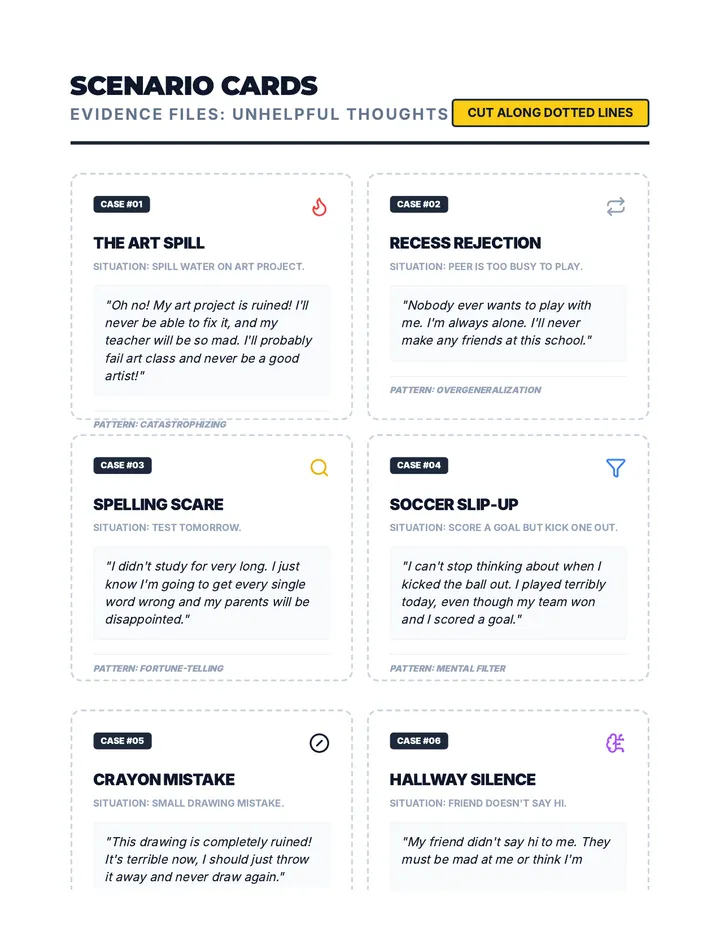
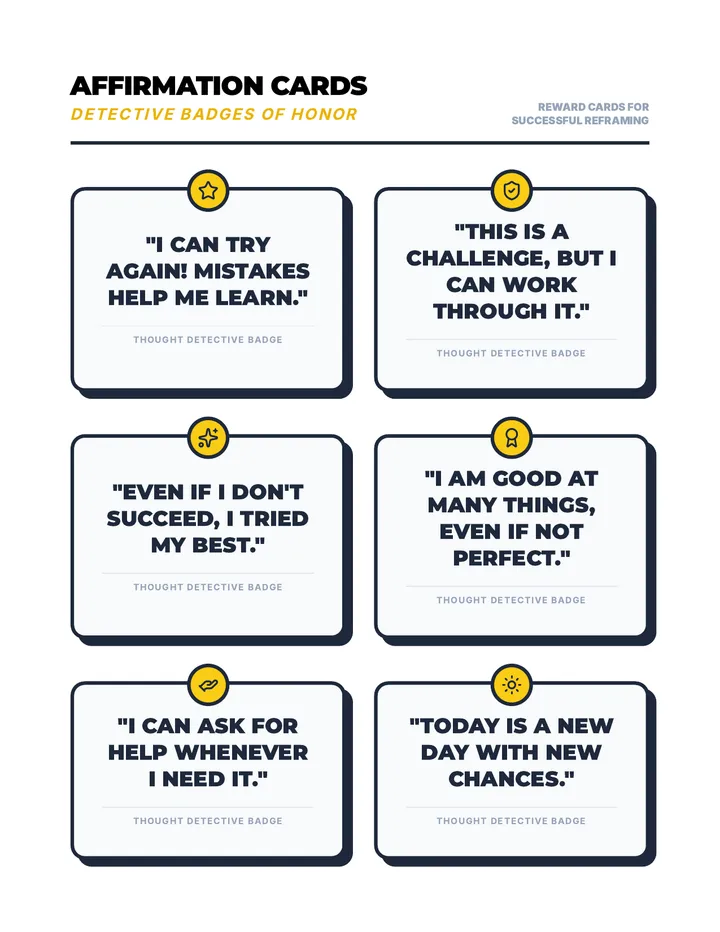
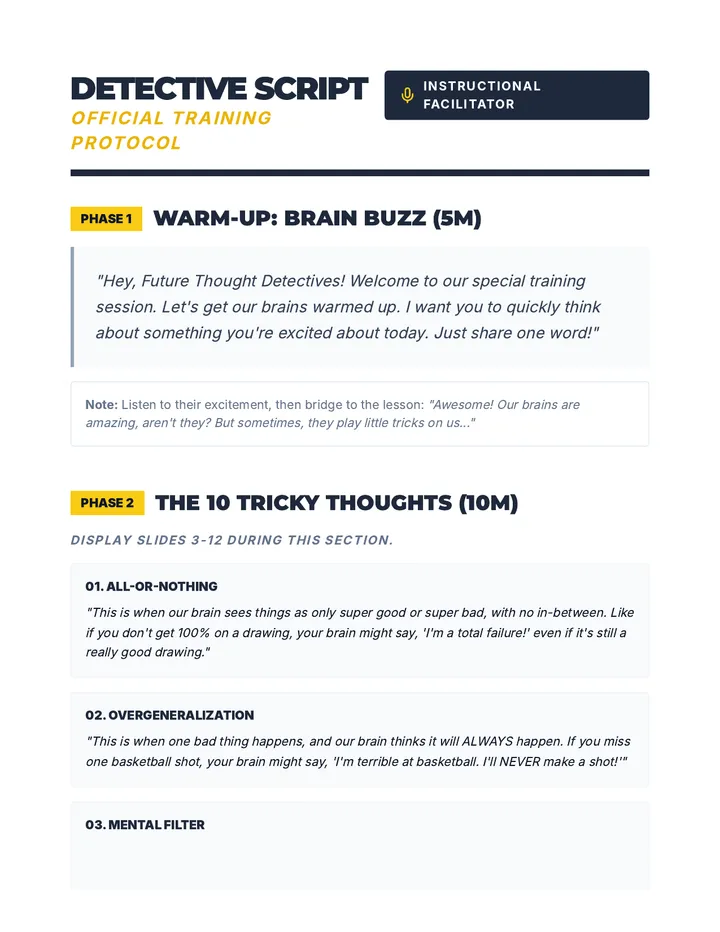
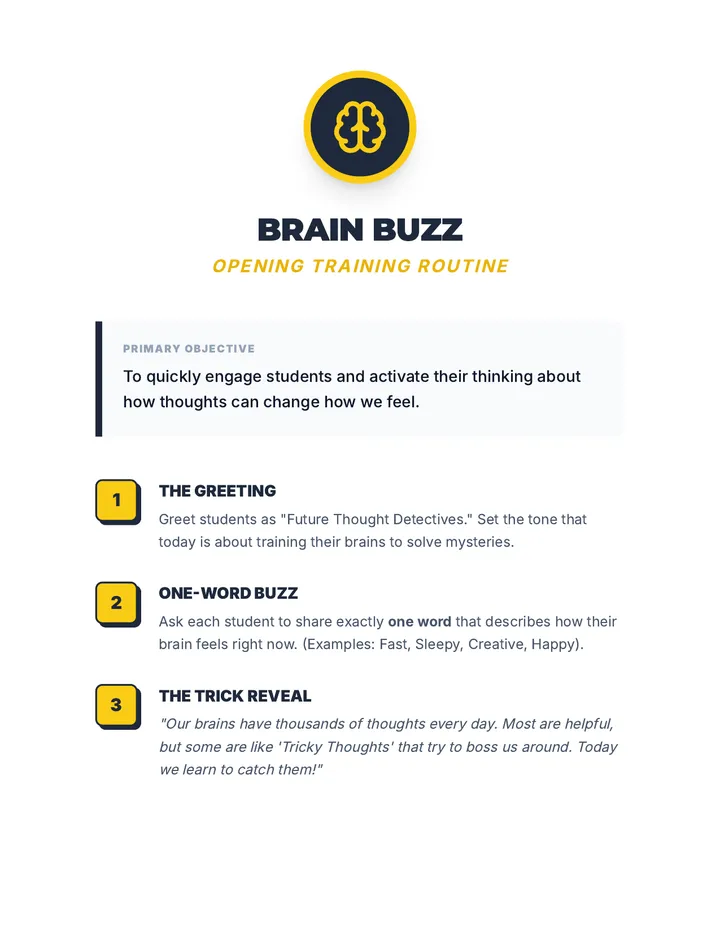
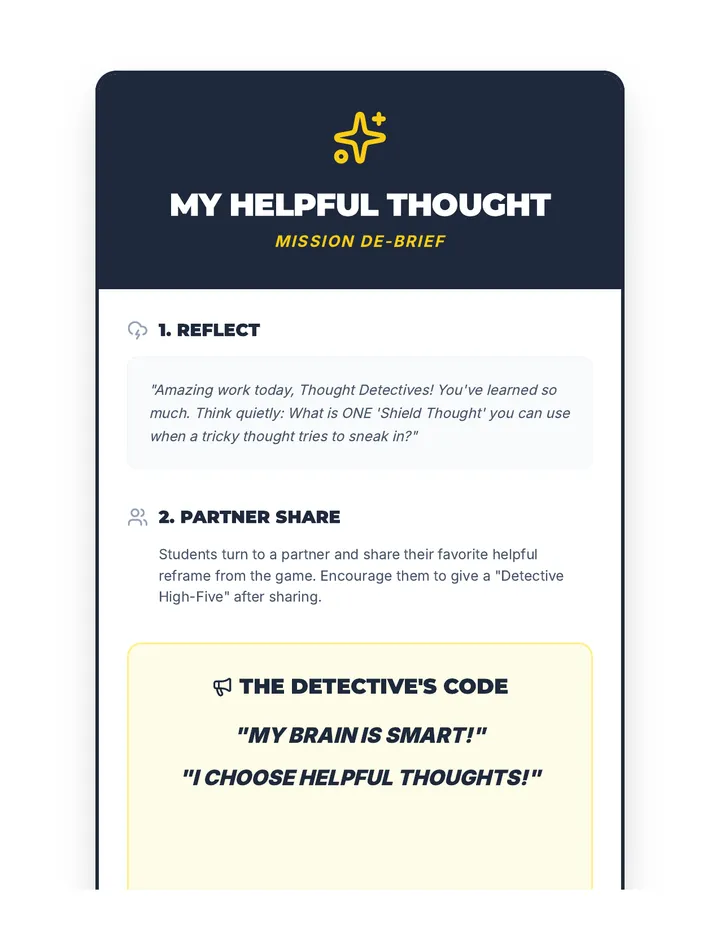
An interactive game-based lesson for 3rd-grade boys to identify and reframe unhelpful thought patterns like catastrophizing and overgeneralization using a detective theme.
This lesson helps 12th graders recognize and address imposter syndrome, normalize feelings of inadequacy, and build self-compassion as they transition to post-secondary life. Students engage in reflective journaling and peer validation to acknowledge their inherent worth beyond external achievements.
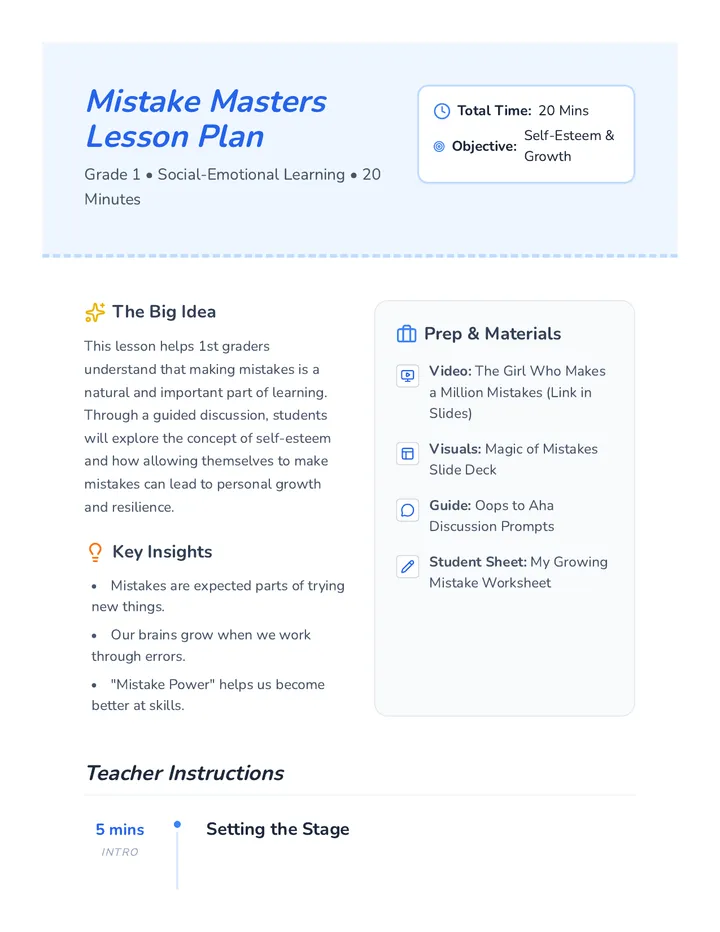
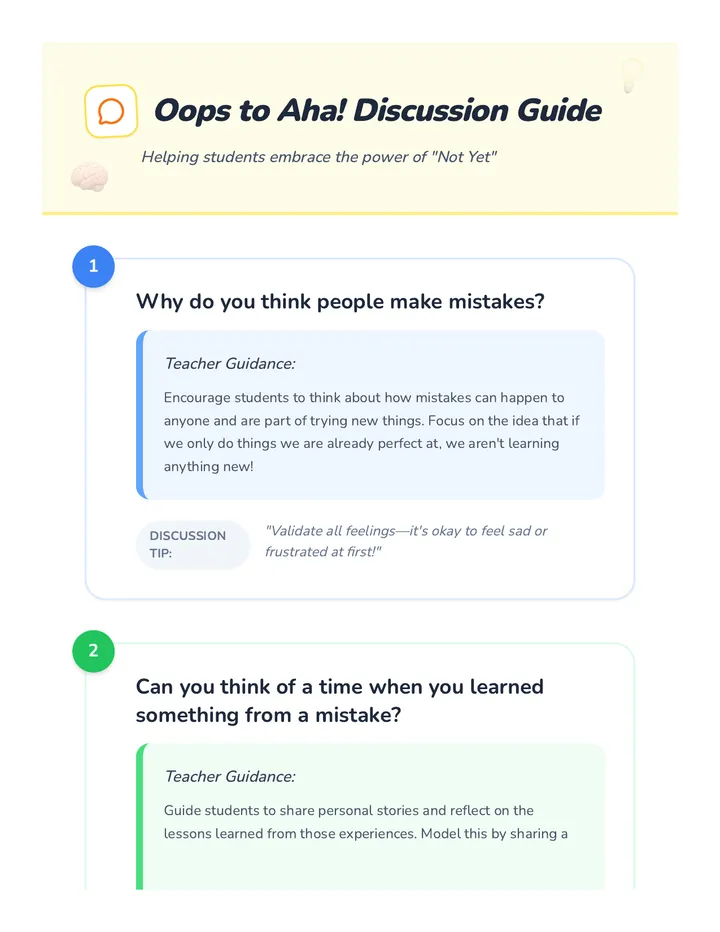
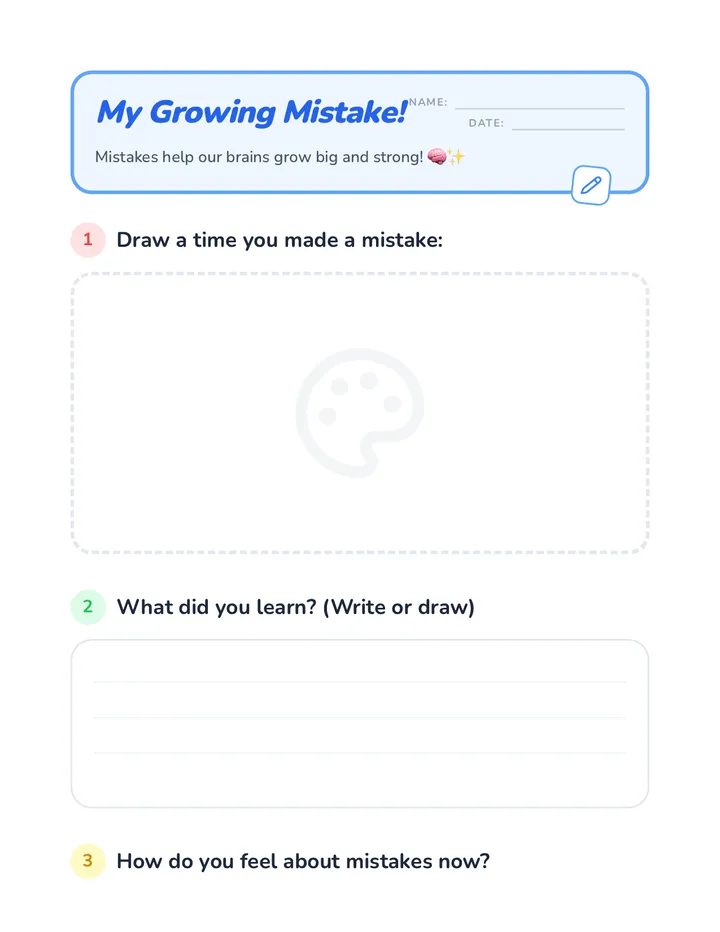
A 20-minute SEL lesson for 1st graders that reframes mistakes as essential steps in the learning process, fostering resilience and self-esteem through storytelling and guided discussion.
A Tier 2 group lesson for 2nd-grade girls to understand anxiety's physical effects on their bodies and learn 'superpower' breathing strategies to improve school confidence and attendance.
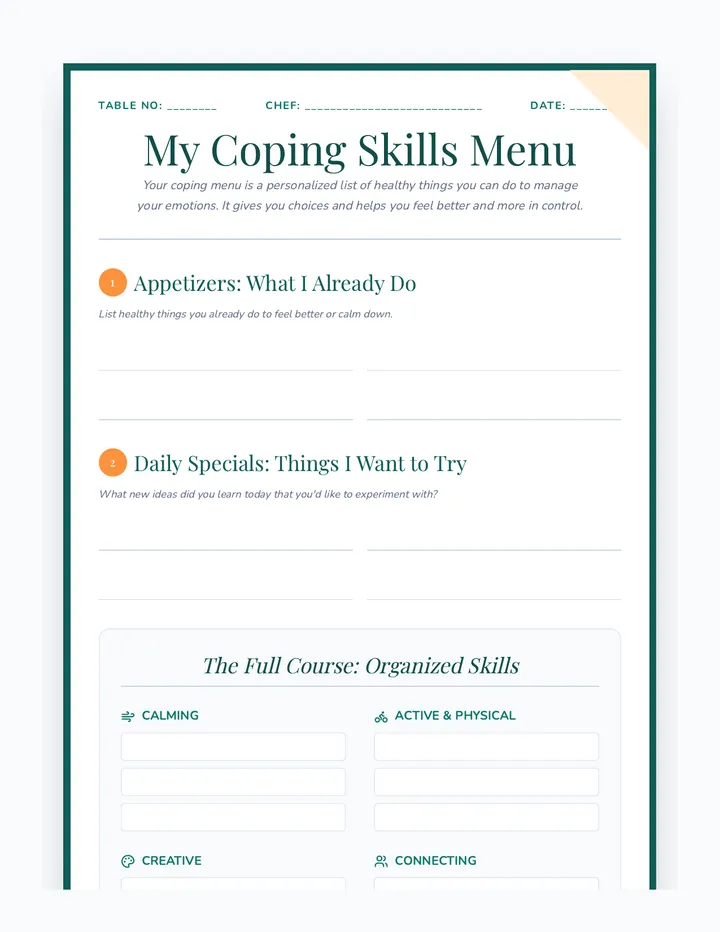
A 30-minute lesson for 6th graders to identify and categorize personalized coping strategies using a 'menu' metaphor to manage emotions and build resilience.
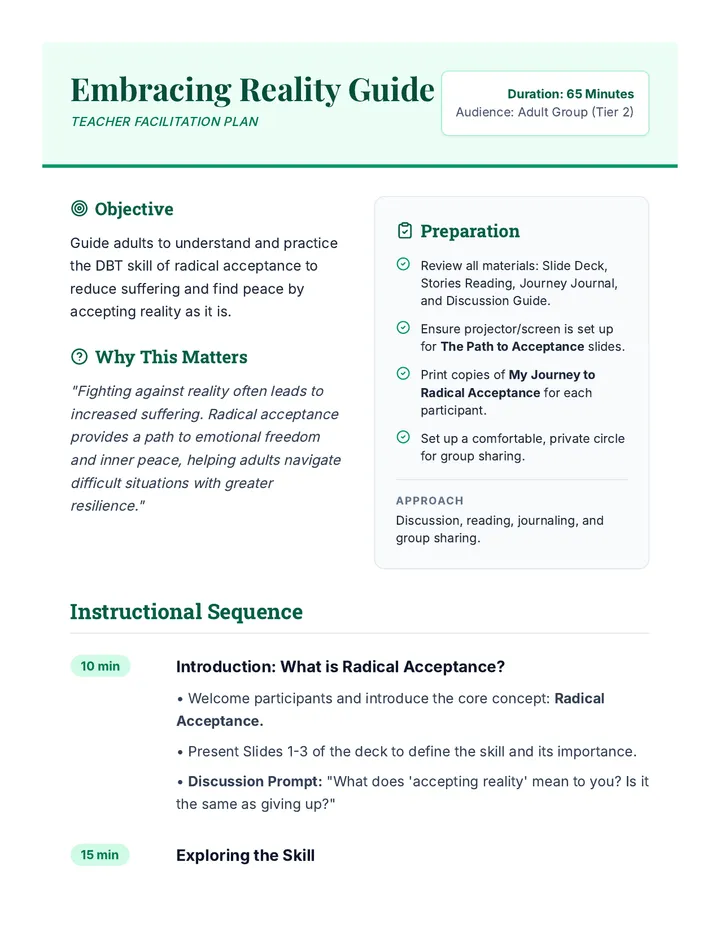
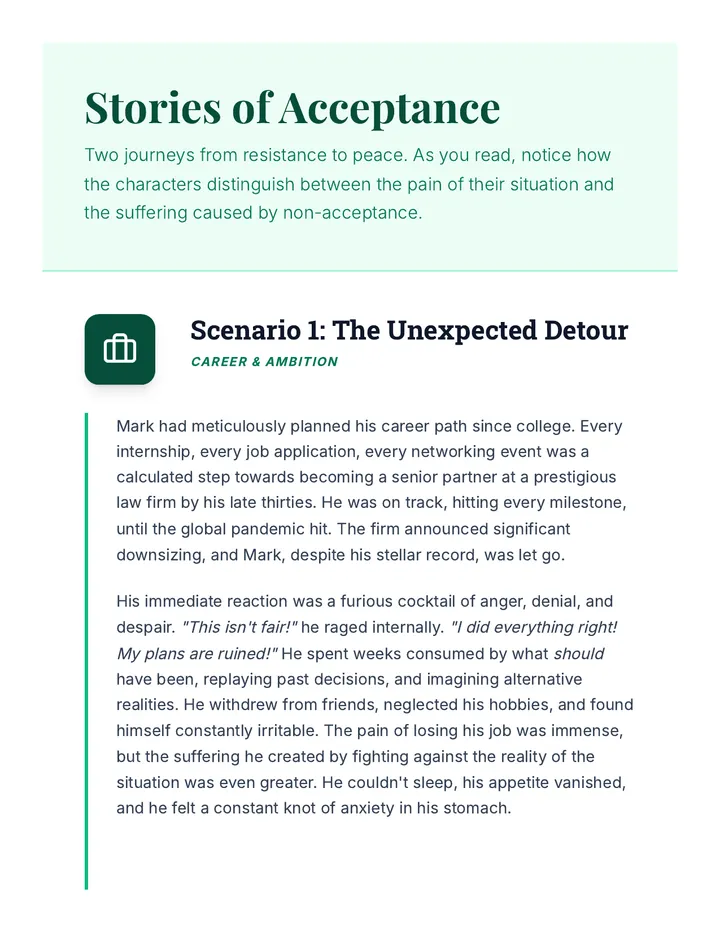
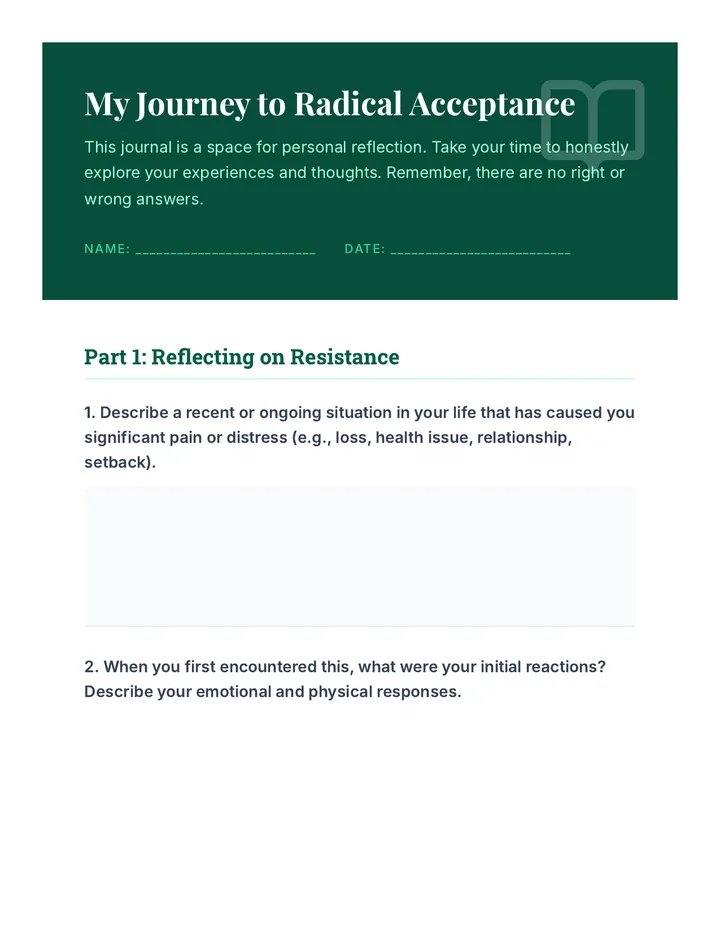
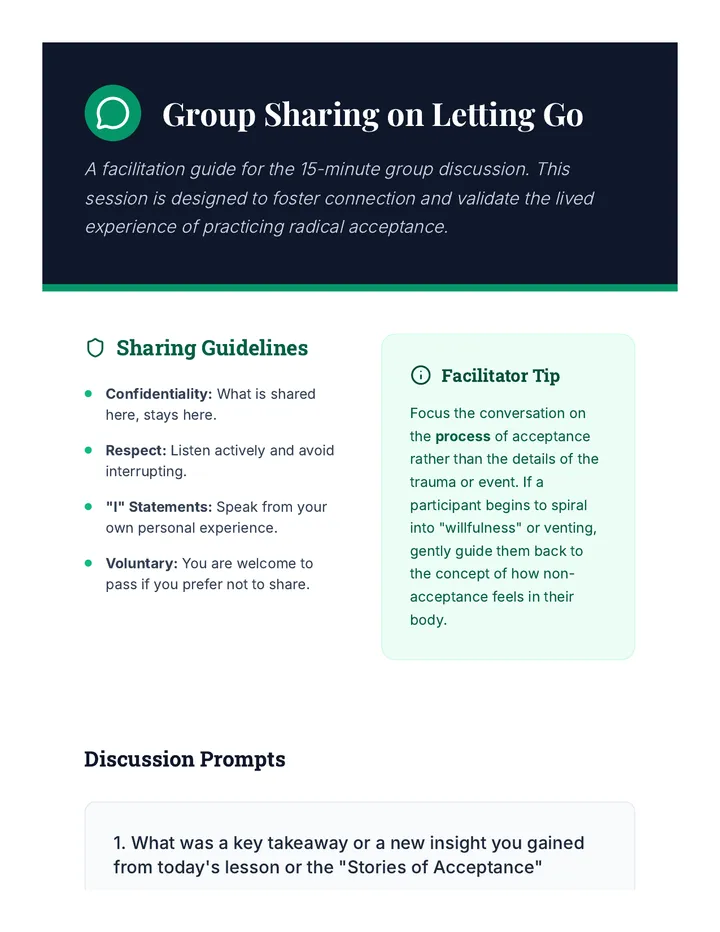
A 65-minute DBT-based lesson for adults focusing on the skill of Radical Acceptance to reduce suffering and find emotional freedom. Participants will explore the difference between pain and suffering, distinguish willingness from willfulness, and apply acceptance to personal life situations.
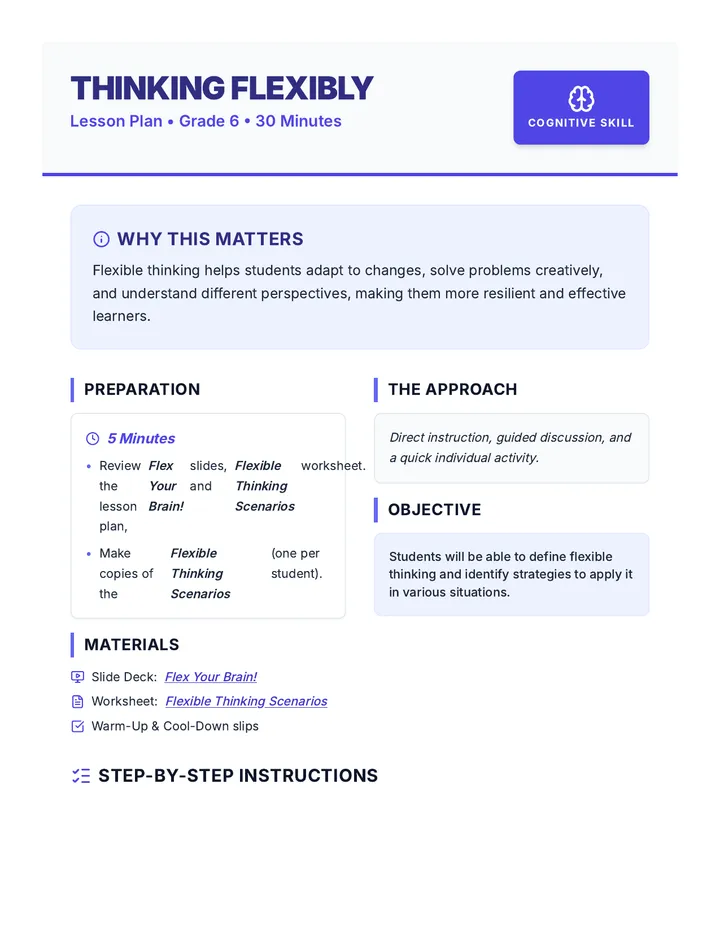
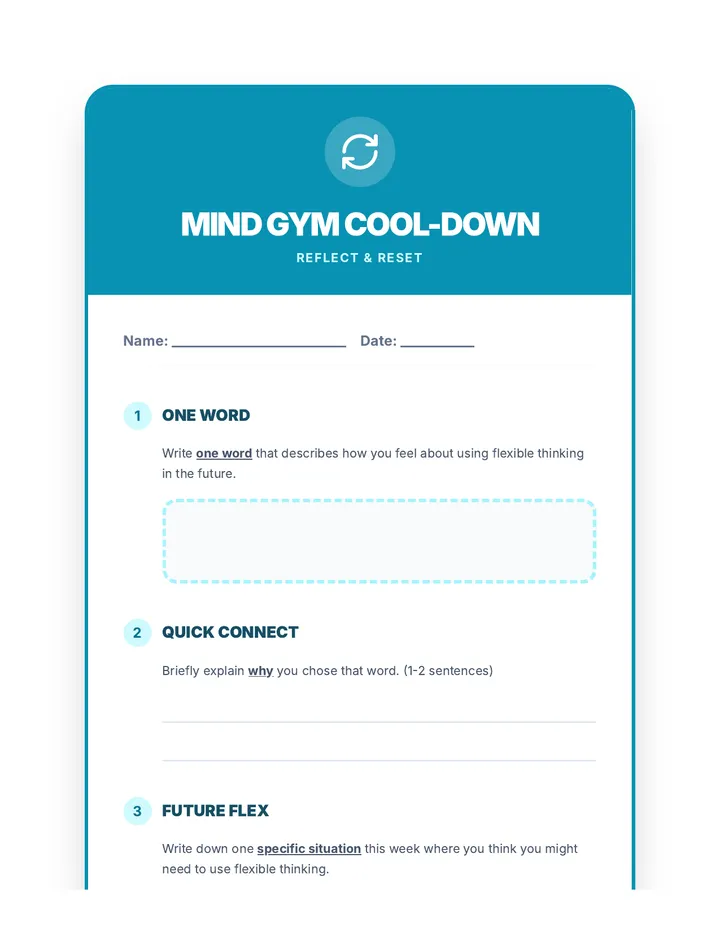
A 30-minute introductory lesson for 6th graders on flexible thinking, covering its definition, importance, and practical strategies for adaptation and problem-solving.