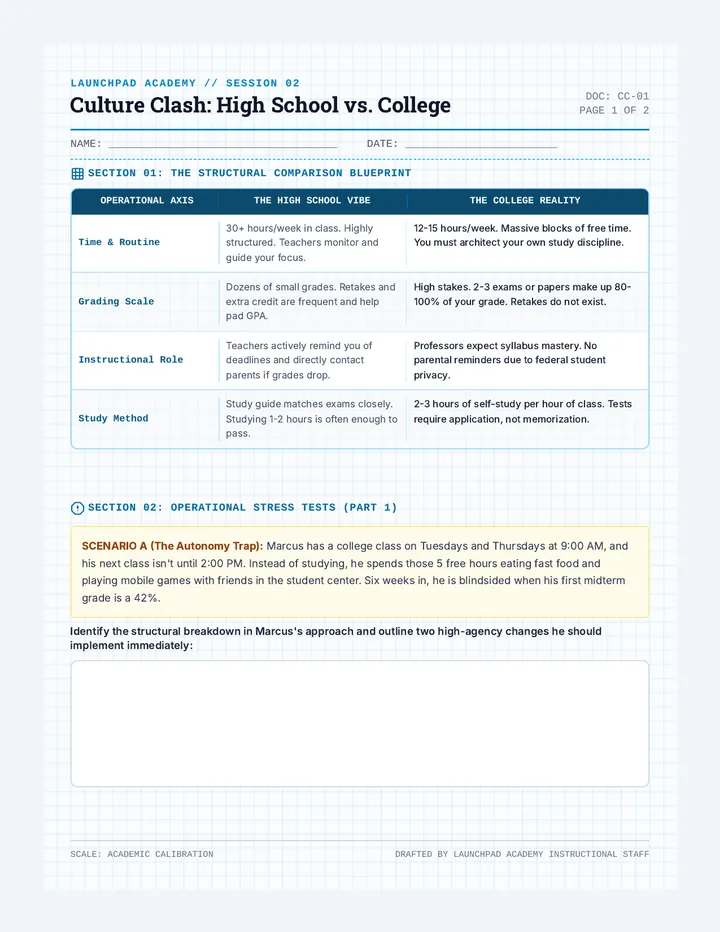
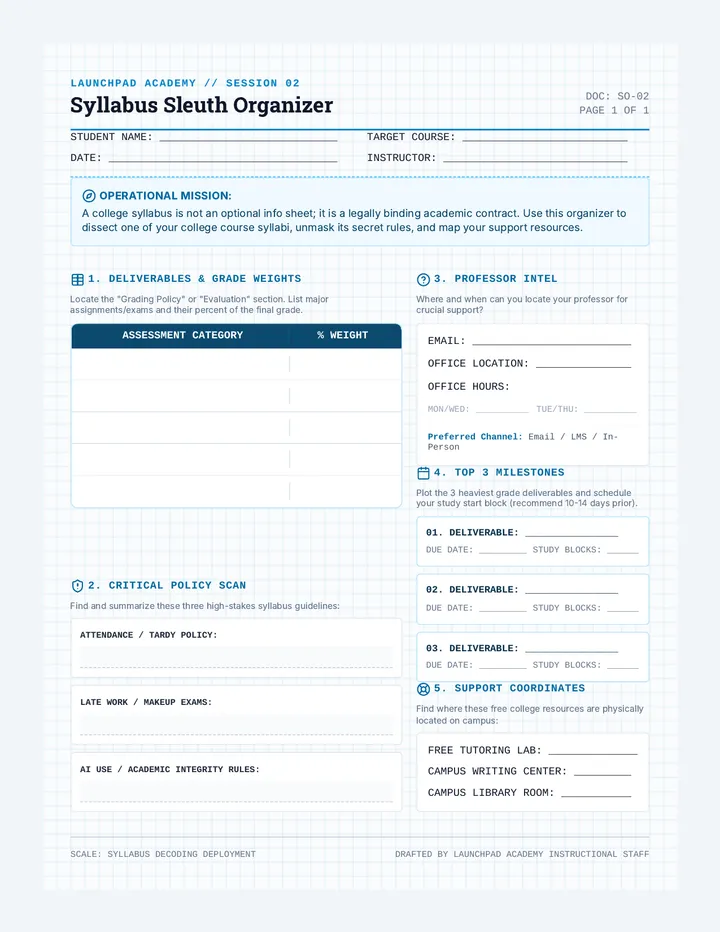
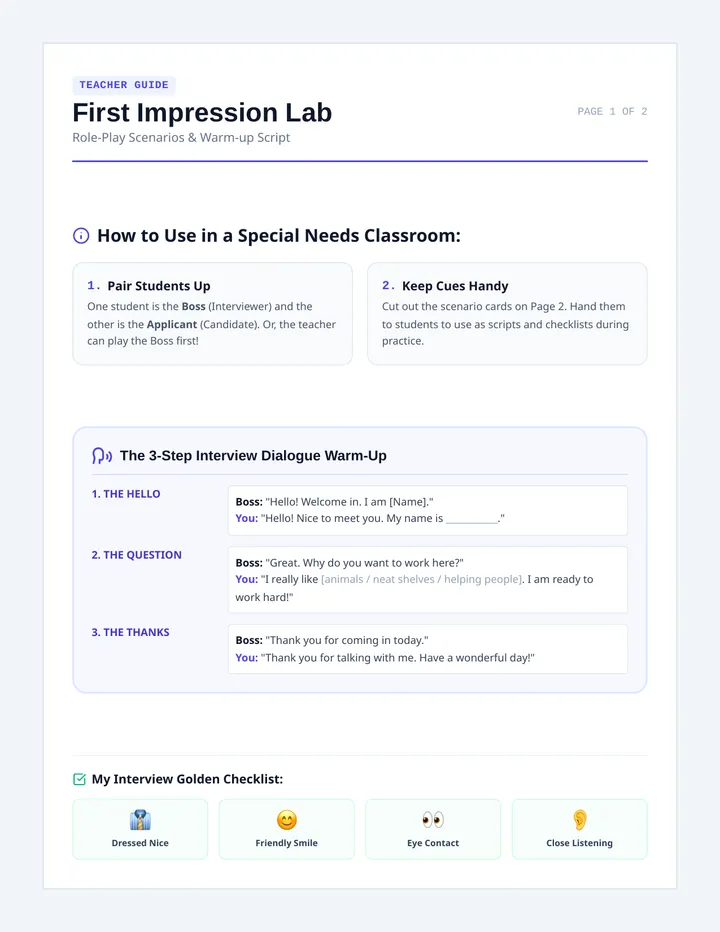
Beyond the Score Lesson Plan Beyond the Score
Understanding Imposter Syndrome
Lesson Plan
Grade 12 • 60 Minutes
Objective
Students will recognize and address imposter syndrome, normalize these feelings, develop strategies for self-compassion, and acknowledge their achievements and inherent worth beyond external validation.
The "Why"
Imposter syndrome is a prevalent experience among high-achieving students, leading to anxiety, self-doubt, and burnout. Addressing it helps students build resilience, self-esteem, and a healthier relationship with their accomplishments as they prepare for post-secondary education and careers.
Quick Specs
Duration
60 Minutes
Approach
Guided Discussion & Reflection
Prep Time
15 Minutes
Required Materials
Beyond the Score Slide Deck
My Worth, My Story Journal
Acknowledging Achievements Activity
Open Dialogue Discussion Guide
Sticky notes & Large Paper
Teacher Preparation
1
Review the Beyond the Score Slide Deck thoroughly to ensure smooth pacing.
2
Print My Worth, My Story Journal for each student (consider double-sided for a booklet feel).
3
Prepare materials for the Acknowledging Achievements Activity (sticky notes, large poster paper for groups).
4
Familiarize yourself with the Open Dialogue Discussion Guide to facilitate safe sharing.
Instructional Sequence
1. What is Imposter Syndrome?
10 MIN
Hook question: "Have you ever felt like your success was a fluke? Like you didn't truly deserve it?"
Introduce concepts using Slide Deck (Slides 1-3).
Facilitate short discussion using the Open Dialogue Guide to gauge initial student familiarity.
2. Personal Experiences: Journaling
15 MIN
Distribute My Worth, My Story Journal .
Allow 10-12 minutes for silent, personal reflection on prompts.
Safety Note: Emphasize that sharing is optional; the journal is for them.
3. Building Self-Compassion Activity
20 MIN
Divide students into groups of 3-4.
Follow the Acknowledging Achievements Activity steps.
Circulate and offer support, ensuring the tone remains compassionate and objective.
4. Strategies & Group Share
10 MIN
Bring class back together for brief takeaways (volunteer basis).
Use Slides 4-6 to introduce combat strategies: reframing, seeking support, and celebrating wins.
5. Conclusion & Reflection
5 MIN
Reiterate inherent worth beyond performance.
Use final Journal prompt as an exit ticket or homework.
Beyond the Score Slides Mental Health Series
BEYOND THE SCORE
"Have you ever felt like your success was just a fluke?"
Understanding Imposter Syndrome
Welcome students and introduce the day's topic. Start with an engaging question to pique their interest and connect to the core idea of imposter syndrome. "Have you ever felt like your success was a fluke? Like you didn't truly deserve it, even if you worked hard?" Listen to a few student responses to build connection before revealing the term 'Imposter Syndrome.'
What is Imposter Syndrome?
It's a feeling of inadequacy despite evident success.
Feeling like a fraud Believing your achievements are due to luck, timing, or deceiving others.
Fear of being exposed Worrying that others will discover you're "not that capable."
Key Fact
It is extremely common among high-achievers . Many of the world's most successful leaders, scientists, and artists feel this way every day.
Define imposter syndrome clearly. Emphasize that it's a feeling, not a reflection of reality, and that it's common. Highlight that despite external evidence of competence, individuals with imposter syndrome remain convinced that they are intellectual frauds and will be exposed.
Does This Sound Familiar?
"I just got lucky."
"They're going to find out I don't know what I'm doing."
"My success is a fluke."
Open Dialogue
Let's Discuss as a Group
Discuss the common feelings associated with imposter syndrome. Encourage students to think about times they might have felt this way. Link to the Open Dialogue: Imposter Syndrome Discussion for an initial group share.
Strategy 1: Self-Compassion
Be kind to yourself, especially when you feel like a fraud.
1
Recognize Humanity
Understand that everyone makes mistakes and has moments of doubt.
2
Self-Kindness
Treat yourself with the same warmth you would offer a best friend.
Journaling Time
Open your "My Worth, My Story" Journal
Introduce the idea of self-compassion as a foundational strategy. Explain what it means to be kind to oneself, especially during moments of perceived failure or self-doubt. This ties into the journaling and activity parts of the lesson.
Strategy 2: Reframe
Challenge negative self-talk and focus on facts.
Old Thought
My Worth My Story Journal My Worth, My Story
A Personal Reflection Journal
Confidential
Name
Date
Instructions
This journal is for your personal reflection. Please answer the prompts thoughtfully and honestly. You will not be required to share your full responses, but your reflections will help you process your feelings about imposter syndrome.
1
The "Aha!" Moment
Describe a time when you achieved something significant (e.g., got a good grade, won an award, succeeded in a difficult task), but you felt like it was due to luck, timing, or that you didn't truly deserve it. What thoughts were going through your mind?
2
The Inner Critic
What does your "inner critic" say to you when you experience self-doubt? Write down some of the negative thoughts or beliefs you have about your abilities or achievements.
3
Recognizing Reality
Now, think about that same achievement from Prompt 1. What objective evidence is there that you earned that success? What efforts did you put in? What skills did you use? Challenge those initial negative thoughts with facts.
4
Your Inherent Worth
Imposter syndrome often makes us feel like our worth is tied to our accomplishments. Reflect on this: What makes you a valuable person beyond your grades, awards, or external achievements? What are your unique qualities or contributions?
5
A Message to Yourself
Write a short, encouraging message to yourself for the next time you experience imposter syndrome. What words of self-compassion or reassurance would be most helpful?
Daily Affirmation (Optional Homework)
For the next week, try to identify one achievement (big or small) each day and silently acknowledge your effort and skill. How do you think this practice might change your perspective?
Acknowledging Achievements Activity Acknowledging Achievements
Small Group Activity Guide
Group Guide
Step-by-Step Instructions
1
Form Small Groups
Divide into groups of 3–4 students. Ensure everyone has their "My Worth, My Story" journal nearby for reference.
2
My Achievement, My Doubt
Each person takes a turn to share two things:
One achievement you are genuinely proud of (academic, personal, artistic).
One reason or "imposter thought" that makes you doubt it (e.g., "I just got lucky").
3
Group Affirmation
After a person shares, group members offer objective counter-evidence . Help them see the facts of their success.
"I saw how much time you spent practicing; that wasn't luck."
"You clearly demonstrated skill X when you did Y."
4
Rotate
Continue until everyone in the group has had a chance to share and receive affirmation.
Respect
Be supportive and maintain group confidentiality.
Facts
Focus on objective evidence and genuine efforts.
Empower
This is about building each other up with reality.
Open Dialogue Discussion Guide Open Dialogue
Imposter Syndrome Discussion Guide
Facilitator Tips
The goal of this discussion is to normalize the experience of imposter syndrome. Remind students that many of the world's highest achievers feel this way. Create a safe space where students feel comfortable admitting doubt without fear of judgment.
Part 1: Initial Prompts
Before Journaling
"
When you hear the phrase "imposter syndrome," what immediately comes to mind? Have you heard of it before?
"
Can you recall a time when you achieved something, but deep down, you felt like you didn't truly deserve the credit, or that you just got lucky? What was that experience like?
"
Why do you think it can be hard for people, especially successful people, to own their achievements?
Part 2: Deeper Dive
After Journaling / Activity
What was challenging or surprising about the journaling activity? Did any particular prompt make you think differently?
What did you learn from hearing your peers' experiences and offering them affirmations during the activity?
How might recognizing and addressing imposter syndrome benefit you as you transition to college, career, or future endeavors?
What's one small step you can take this week to practice self-compassion or acknowledge an achievement you've made?
Encouraging authentic dialogue since 2026