Critical analysis of unconscious bias and the social impact of harmful stereotypes. Equips learners with strategies for perspective-taking and promoting inclusive environments.
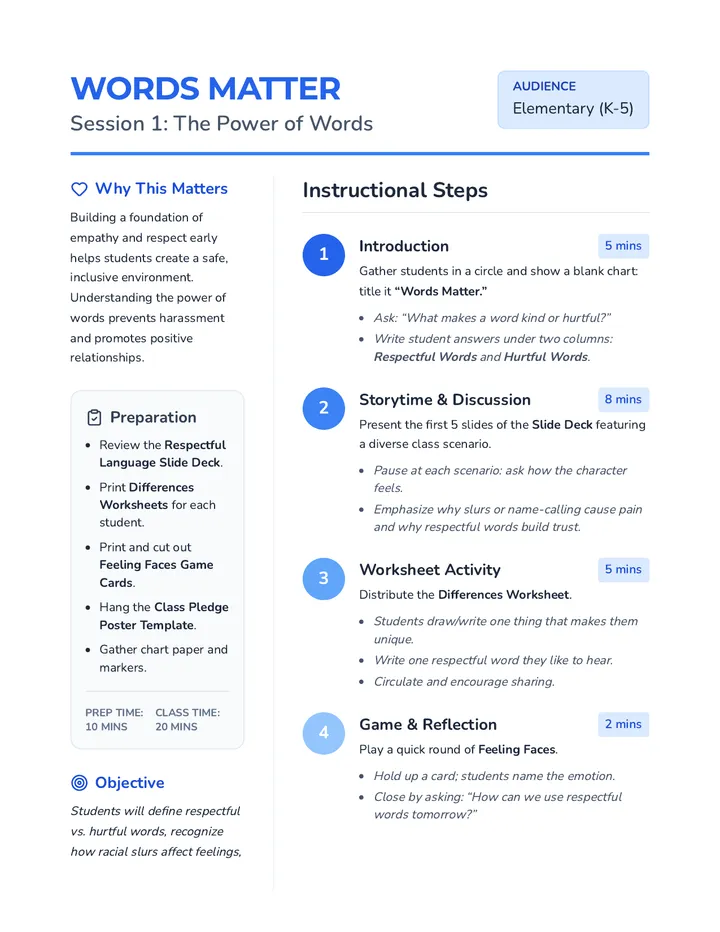
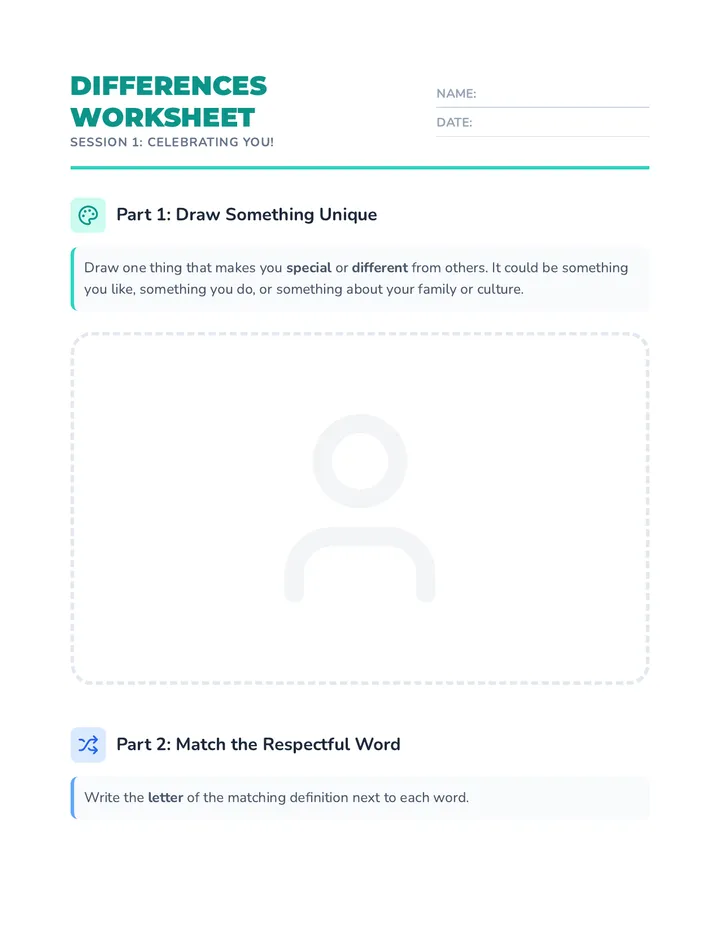
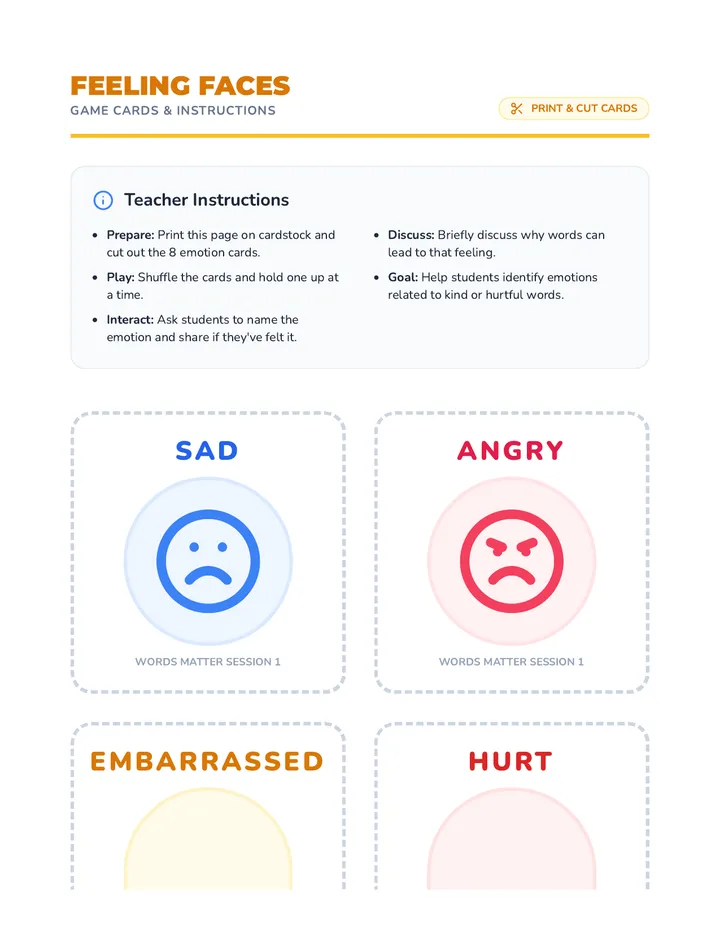
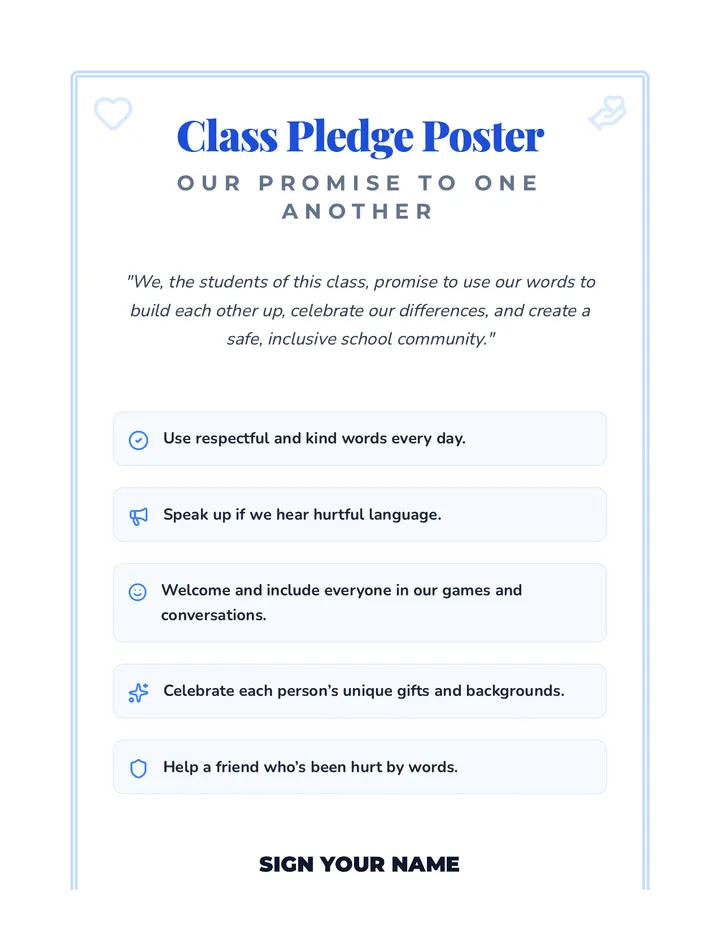
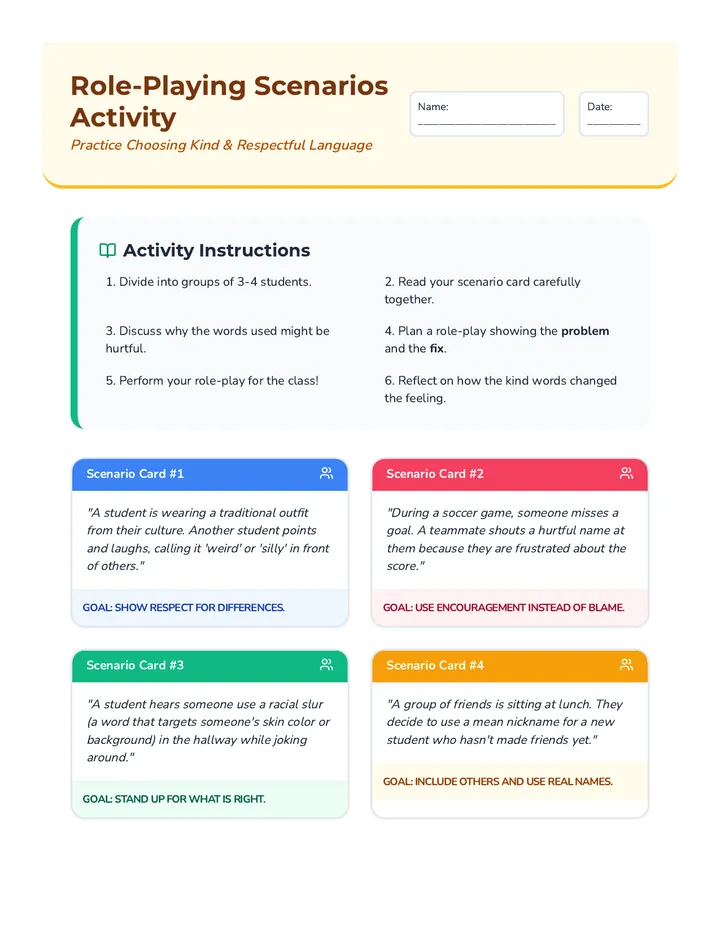
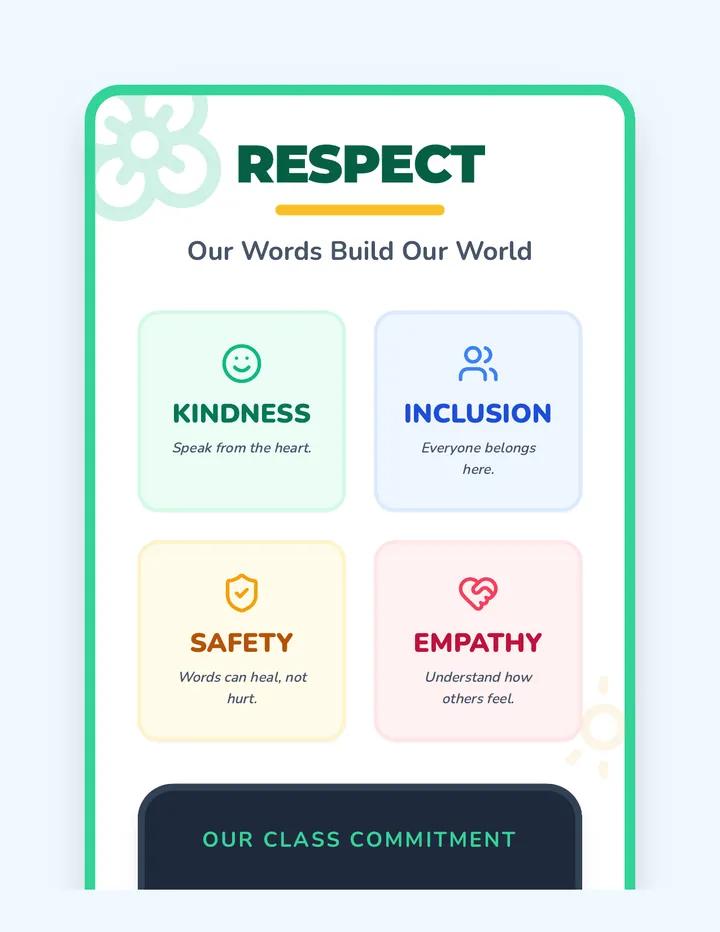
A 4-session Tier 1 sequence for K-5 students focused on racial slur prevention, respectful language, and celebrating diversity. Students learn empathy through role-play, sharing traditions, and creating a collective class pledge.
A six-lesson series for K-3 students with communication IEPs, specifically those who stutter. The sequence focuses on defining bullying, identifying feelings, building self-advocacy through brave words and I-statements, and fostering empathy to become upstanders.
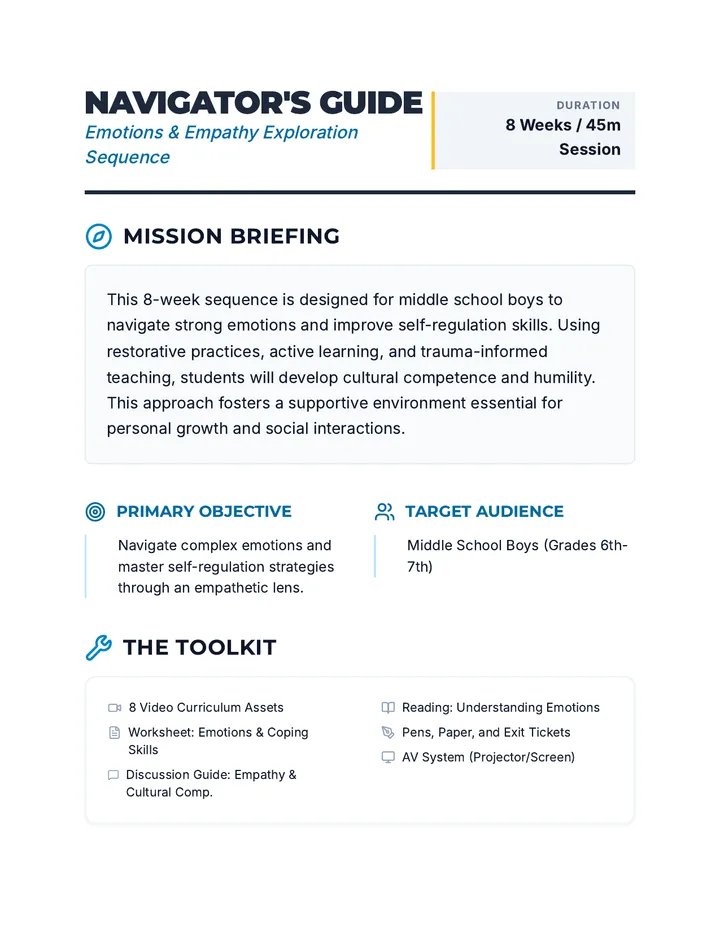
An 8-week series designed for middle school boys to navigate strong emotions, improve self-regulation, and develop empathy through cultural competence and restorative practices.
A comprehensive sequence for 9th-grade students focused on building interpersonal communication skills and applying them to difficult historical and social contexts, including reconciliation.
A 3rd-grade social-emotional learning sequence that empowers students to recognize bullying and transform into 'upstanders' who advocate for kindness and safety in their school community.
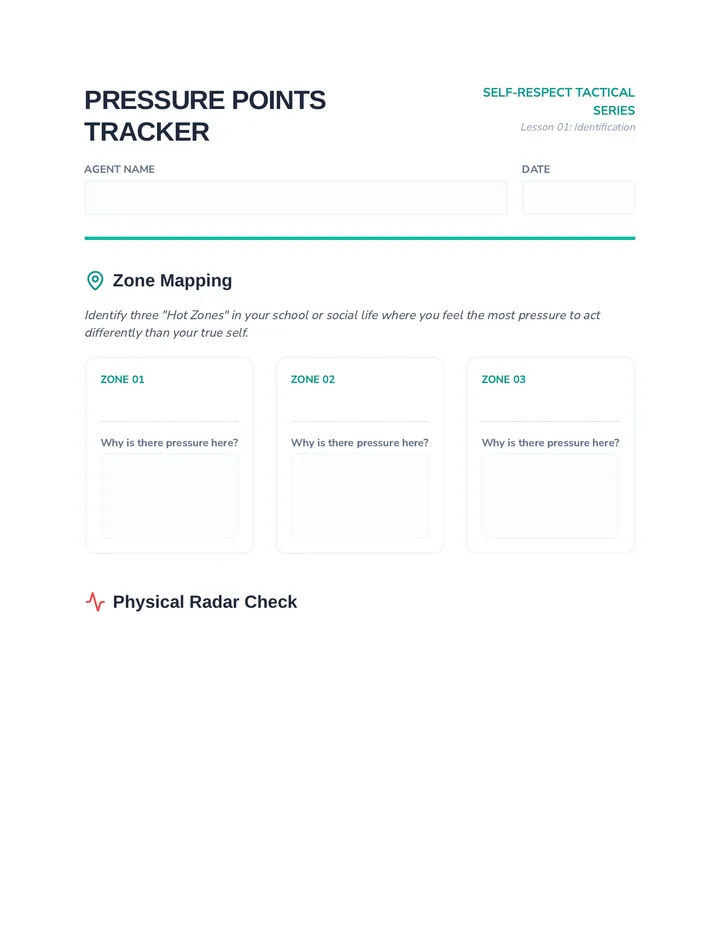
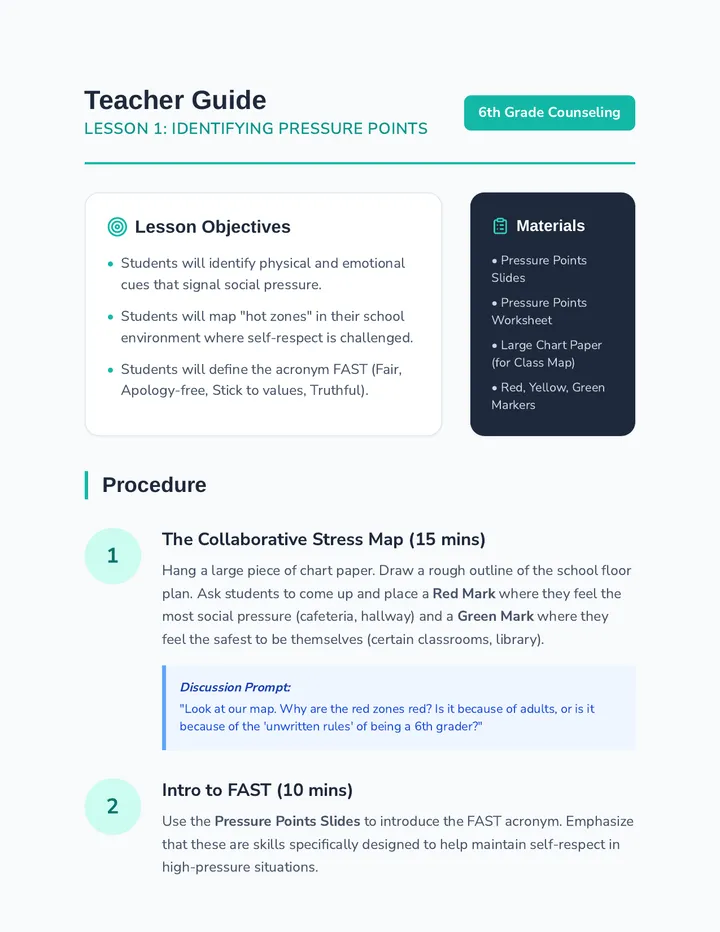
A simulation-heavy sequence teaching 6th graders to use DBT FAST skills (Fair, Apology-free, Stick to values, Truthful) to maintain self-respect during social challenges. Students engage in role-play and real-world scenarios to build integrity and refusal skills.
A sequence focused on developing empathy, emotional intelligence, and perspective-taking through a 'Perspective Detectives' theme. Students engage in games, simulations, and skill-building activities to understand the complexity of identities and challenge biases.
A six-session unit for 6th graders focusing on empathy, diversity, and restorative practices following incidents of bullying. Students learn to recognize bias, practice healthy communication, and build inclusive communities through a culminating restorative project.
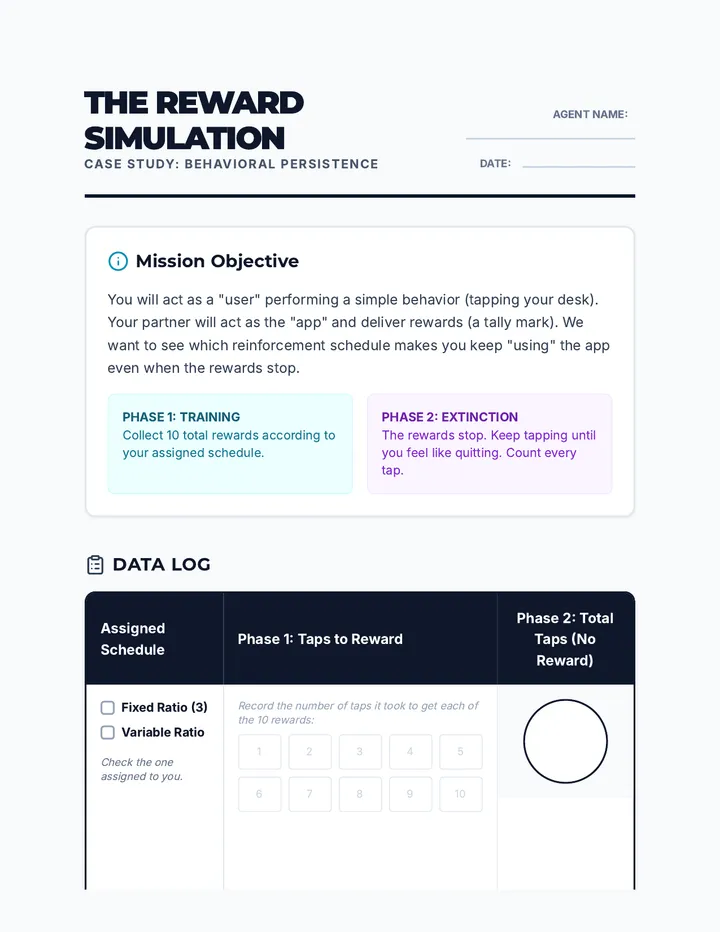
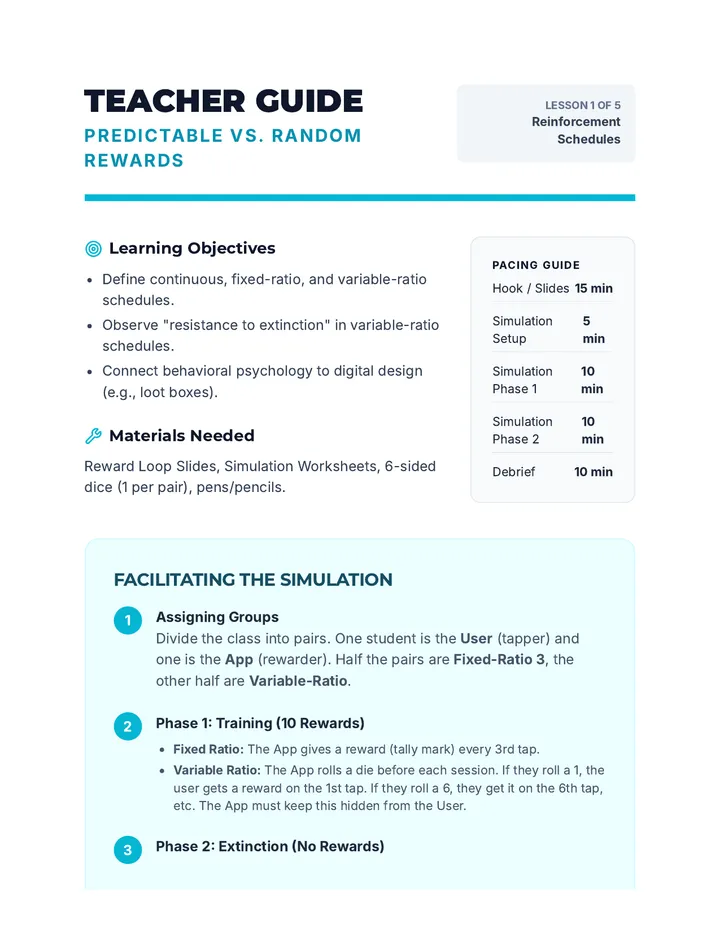
A 5-lesson sequence exploring how technology uses schedules of reinforcement (fixed and variable) to drive engagement. Students analyze gamification, social media mechanics, and ethical design to build digital literacy.
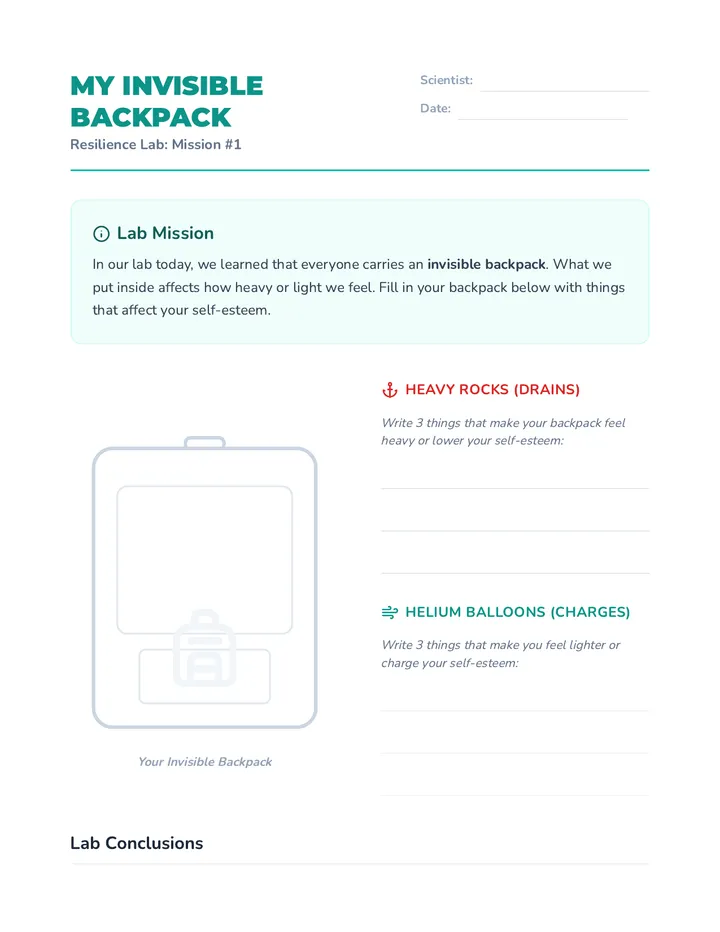
This sequence utilizes inquiry and case studies to examine the formation of self-esteem and the impact of external feedback. Students analyze sources of self-worth, critique media messages, and develop a personal toolkit of resilience strategies.
An advanced course for graduate students exploring the intersection of neurobiology, psychological theory, and organizational leadership. Students develop high-level social and emotional competencies to navigate complex professional environments and foster psychological safety.
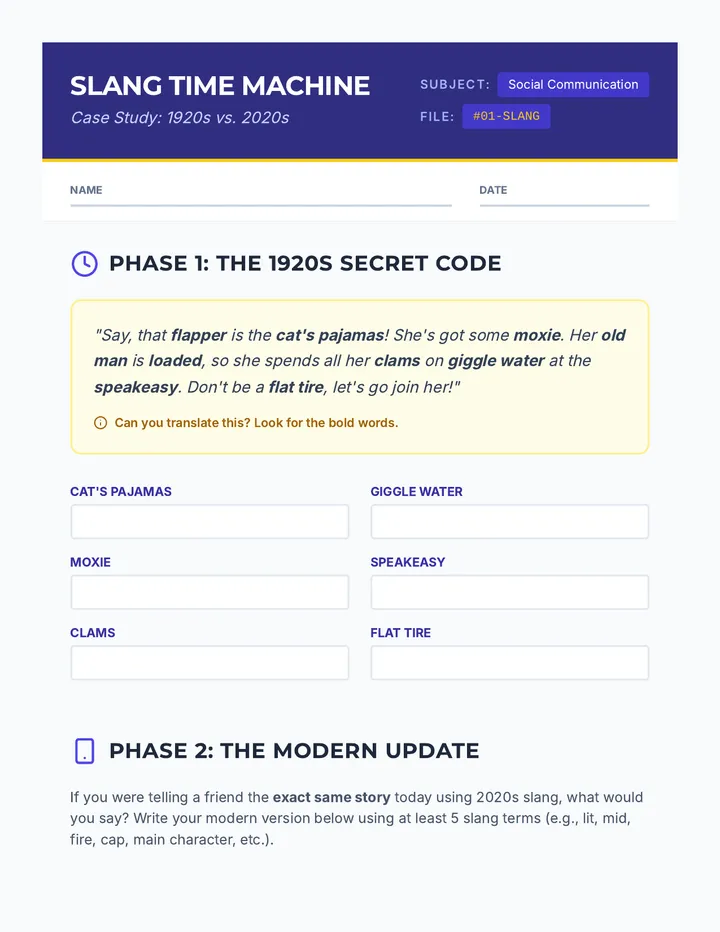
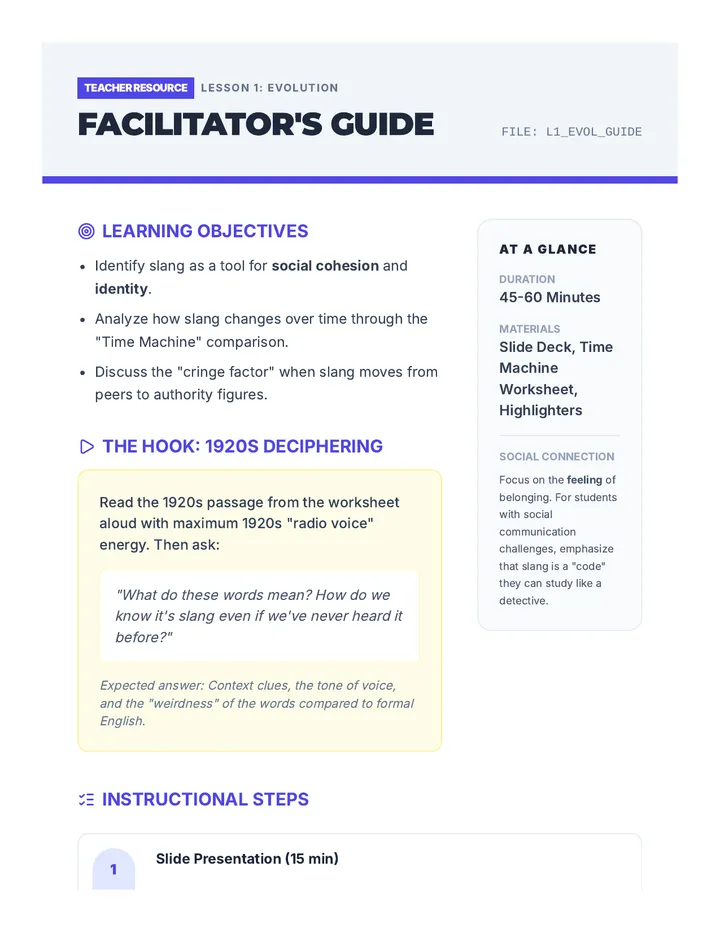
A 10th-grade sequence focused on sociolinguistics and social communication. Students analyze slang as a social code, learn to distinguish between playful and offensive language, observe social subcultures, and master conversation repair strategies.
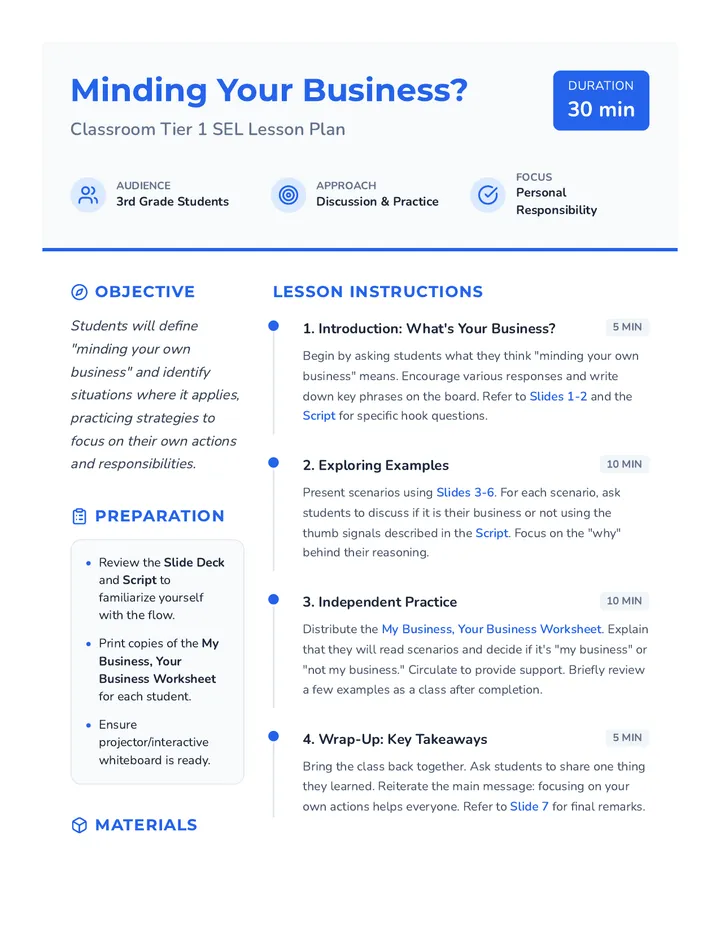
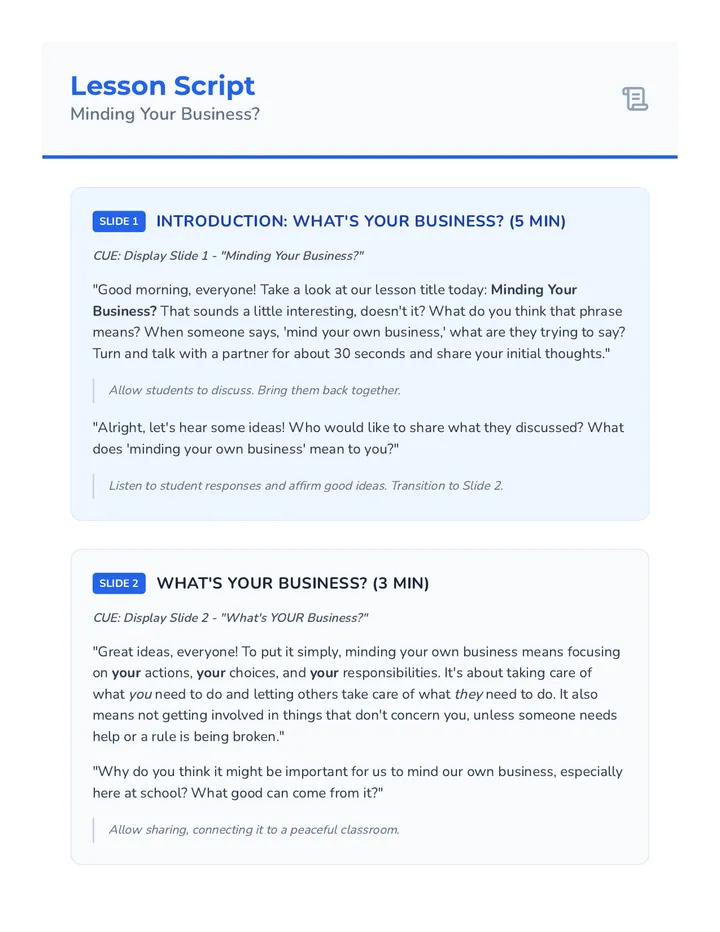
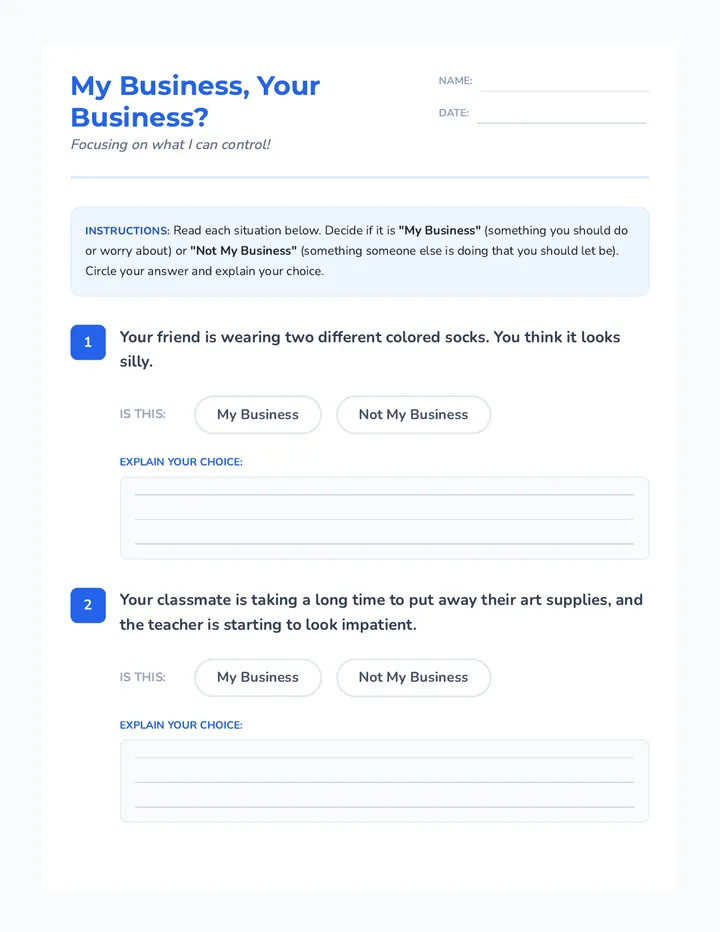
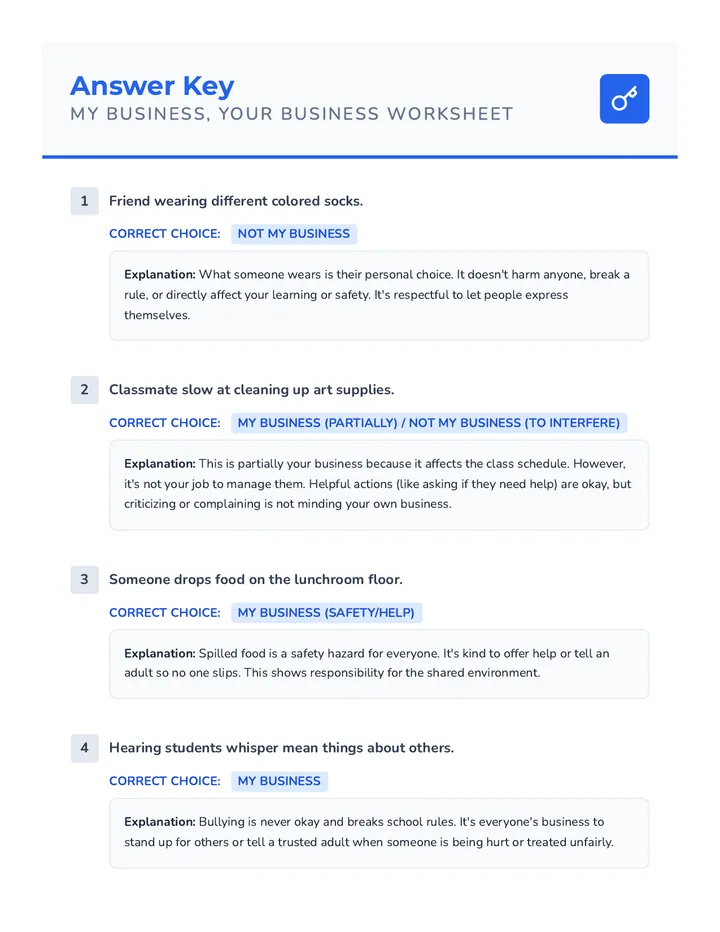
A 30-minute social-emotional learning lesson for 3rd graders that teaches the difference between personal responsibility and interfering in others' affairs through scenarios and discussion.
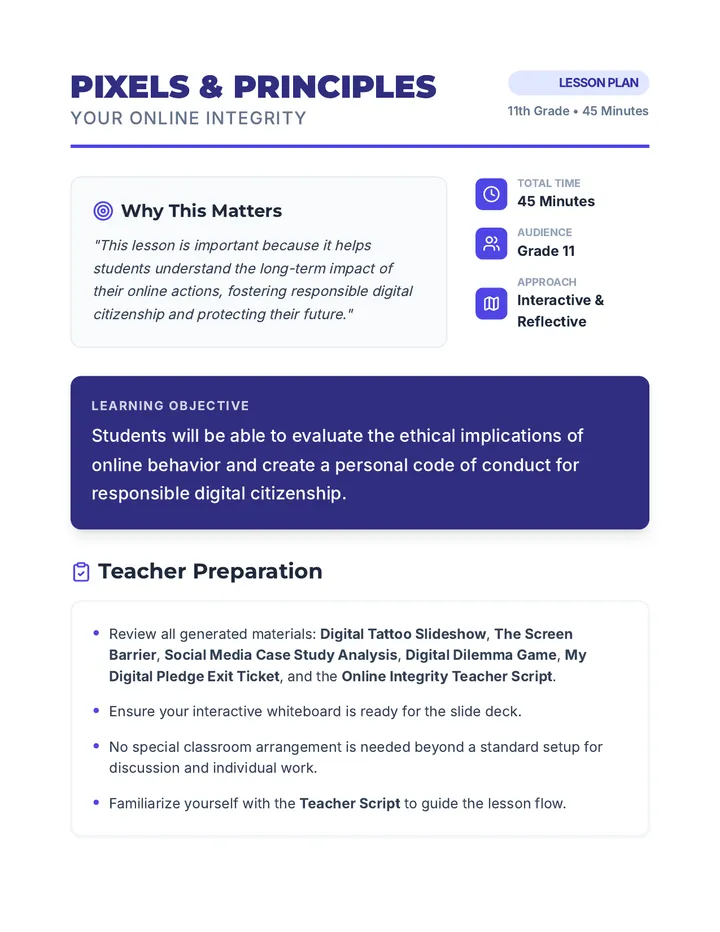
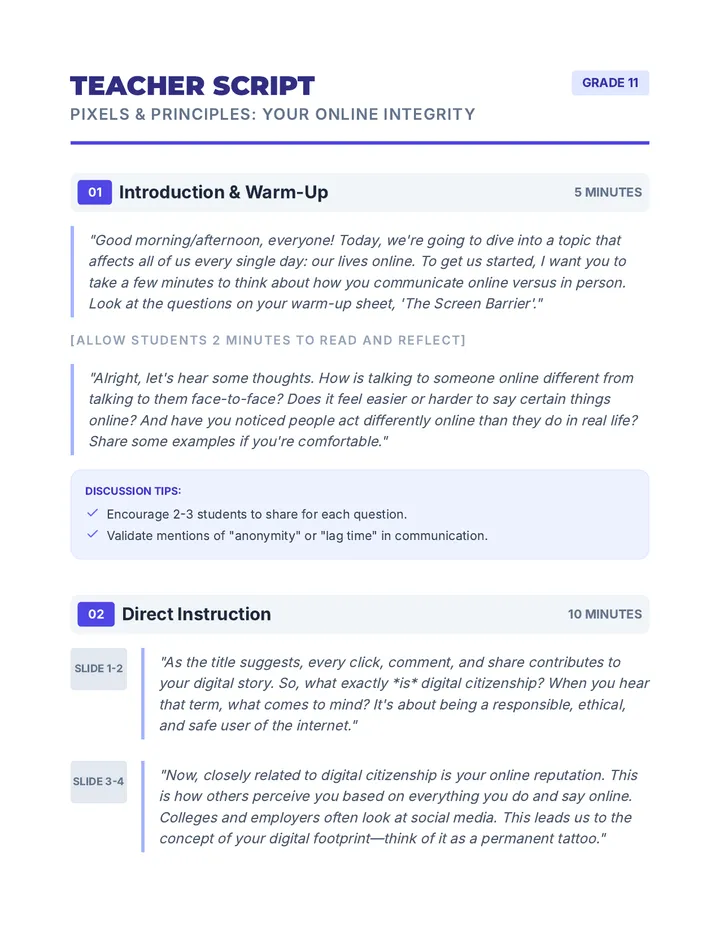
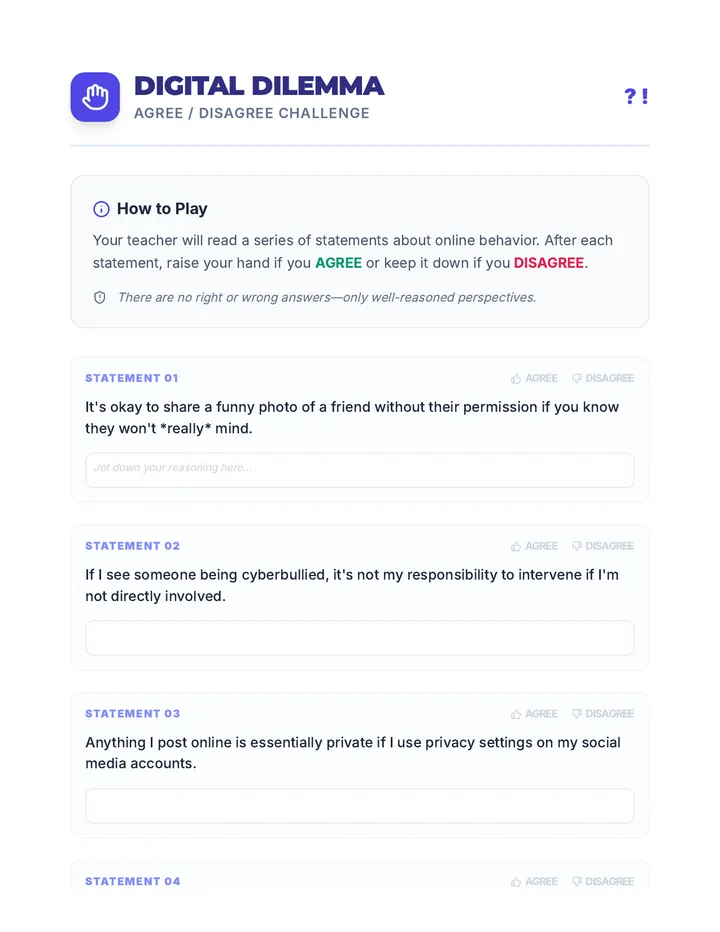
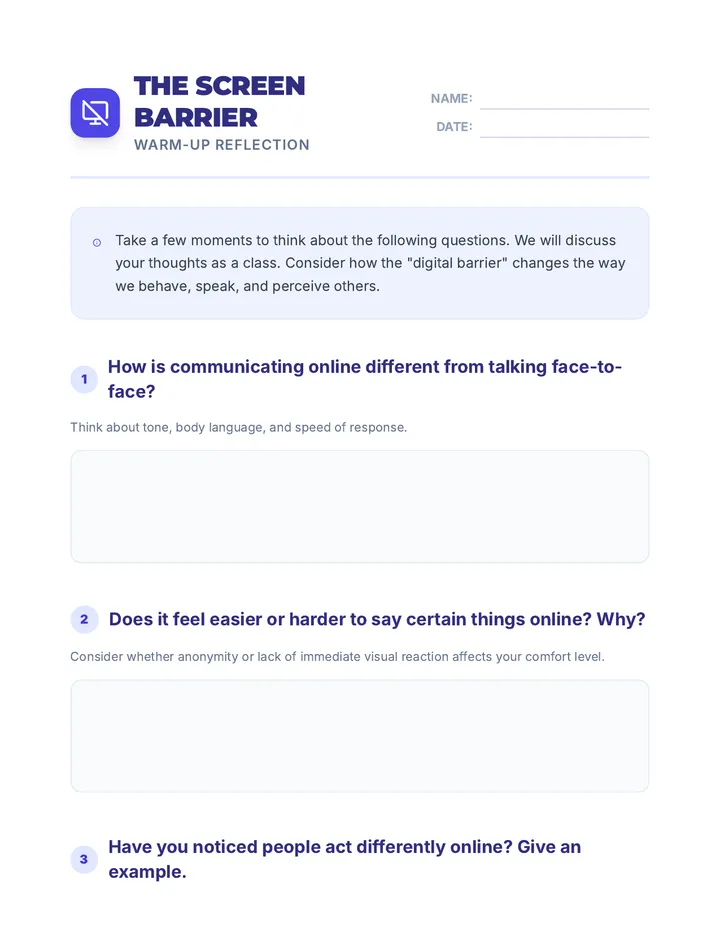
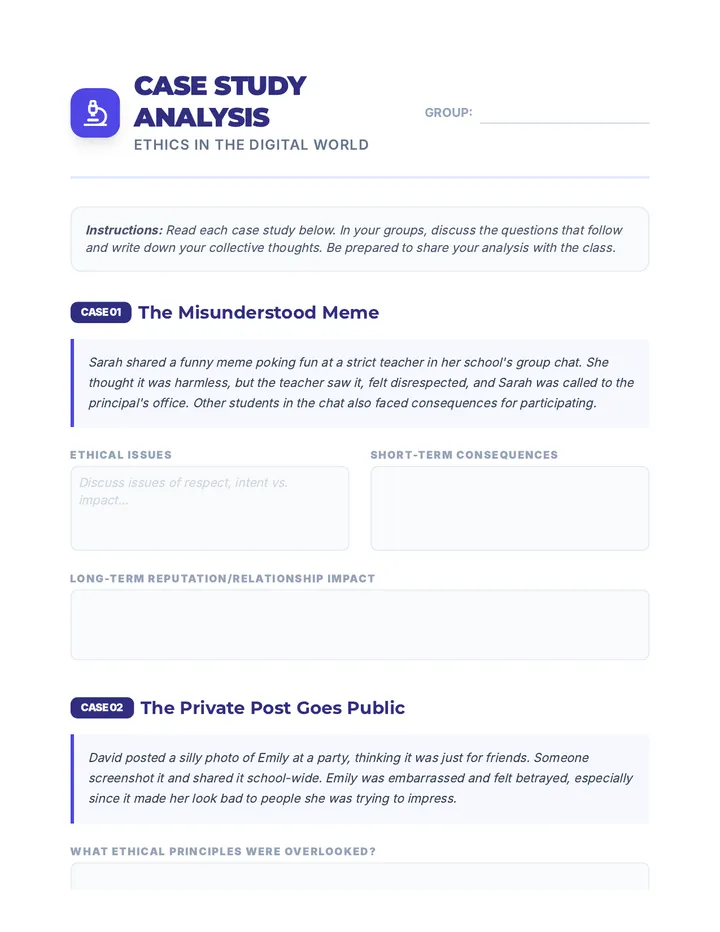
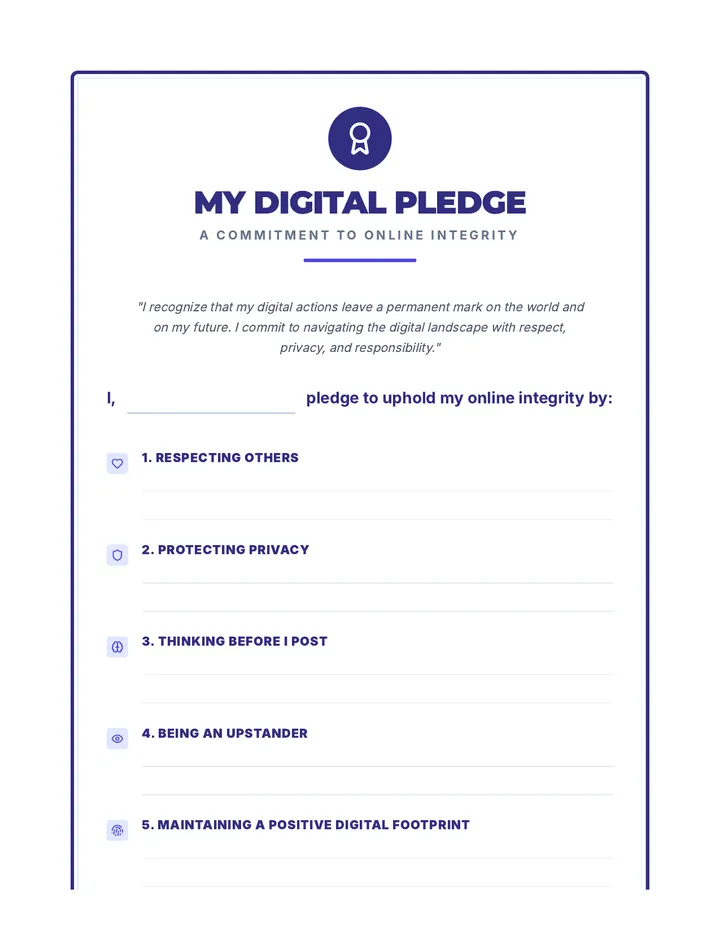
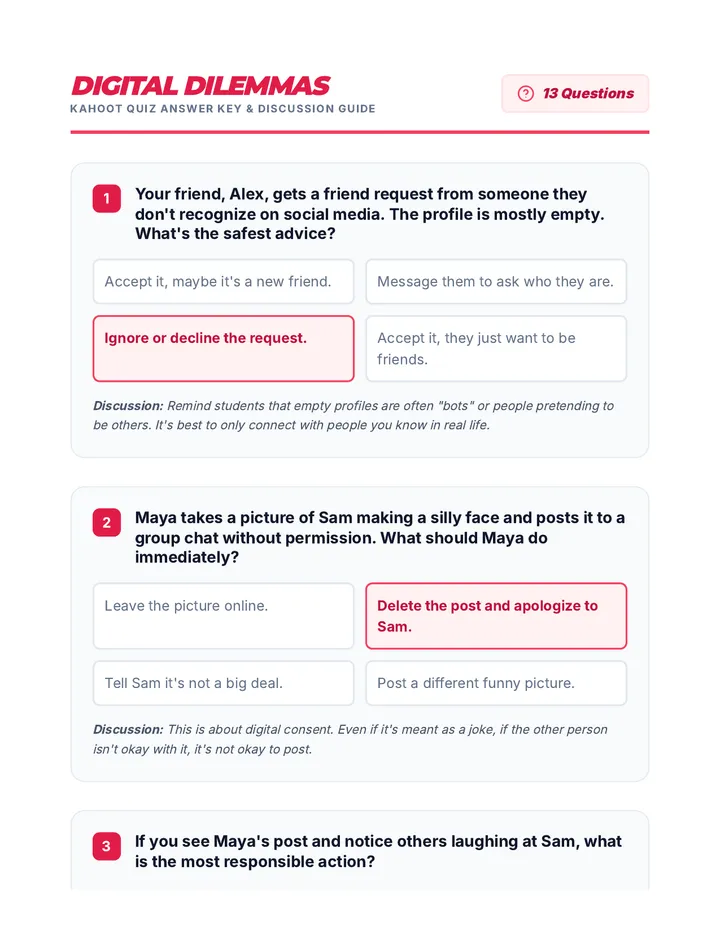
This lesson empowers 11th-grade students to critically evaluate ethical online behavior and develop a personal code for responsible digital citizenship through case studies, discussions, and a personal pledge.
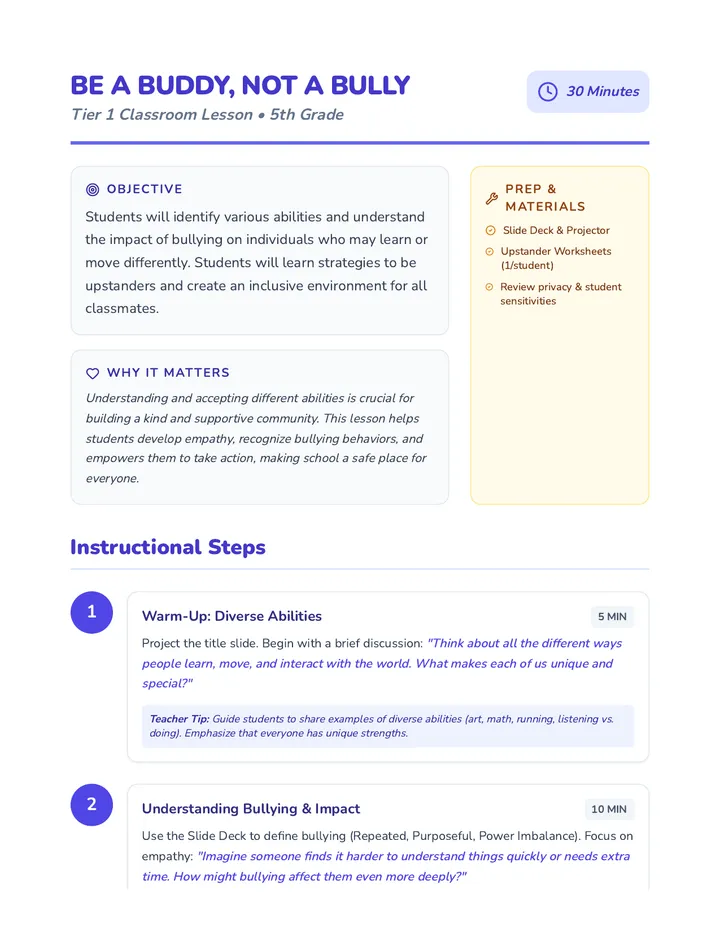
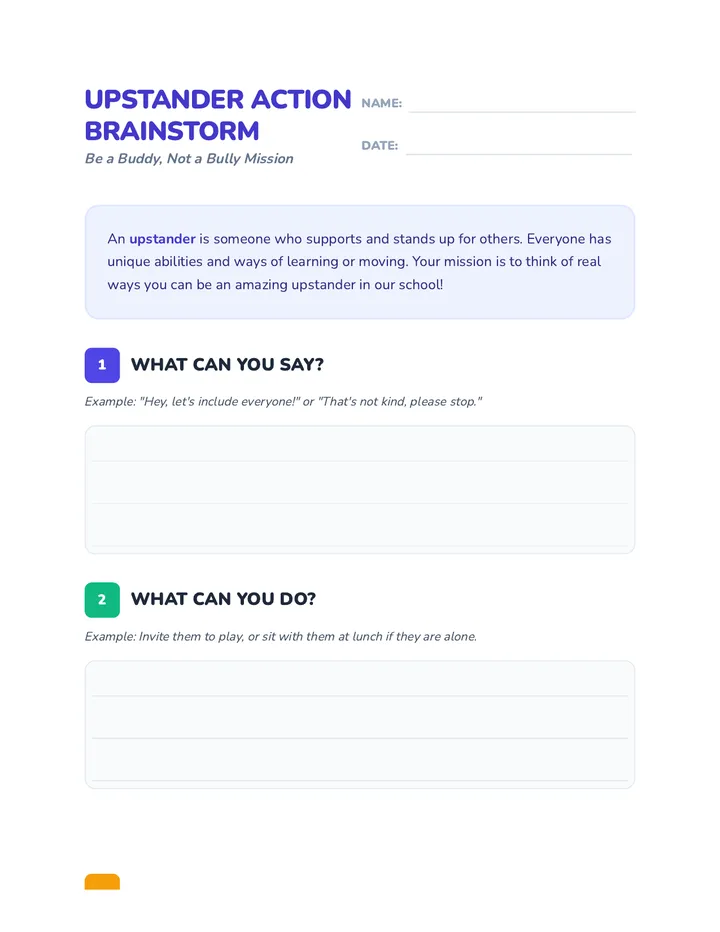
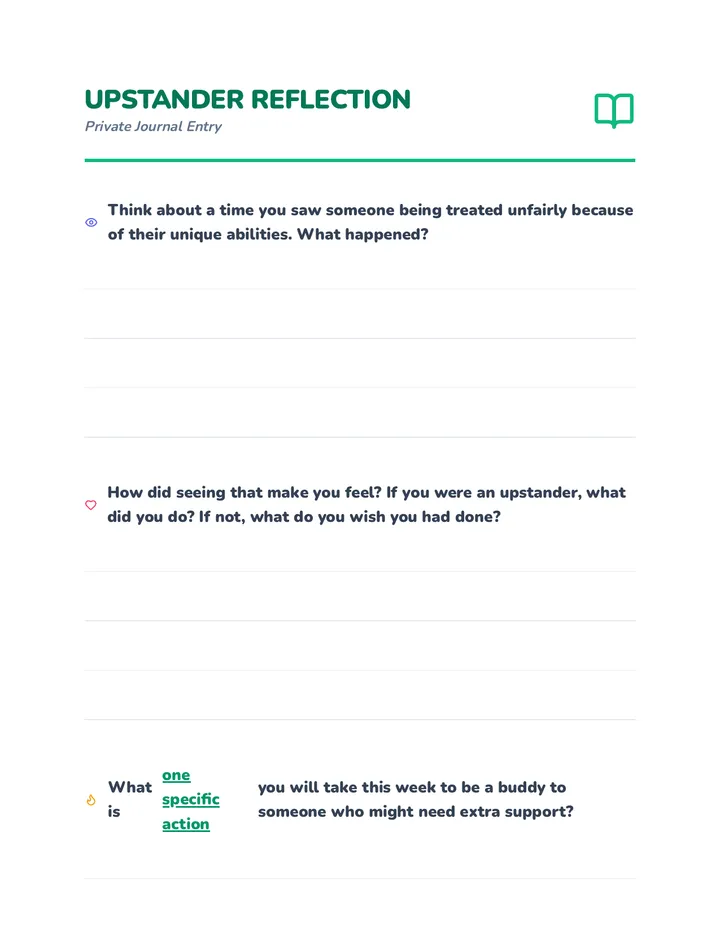
A 30-minute, Tier 1 lesson for 5th-grade students focused on understanding diverse abilities, recognizing bullying behaviors, and empowering students to become upstanders who foster an inclusive classroom environment.
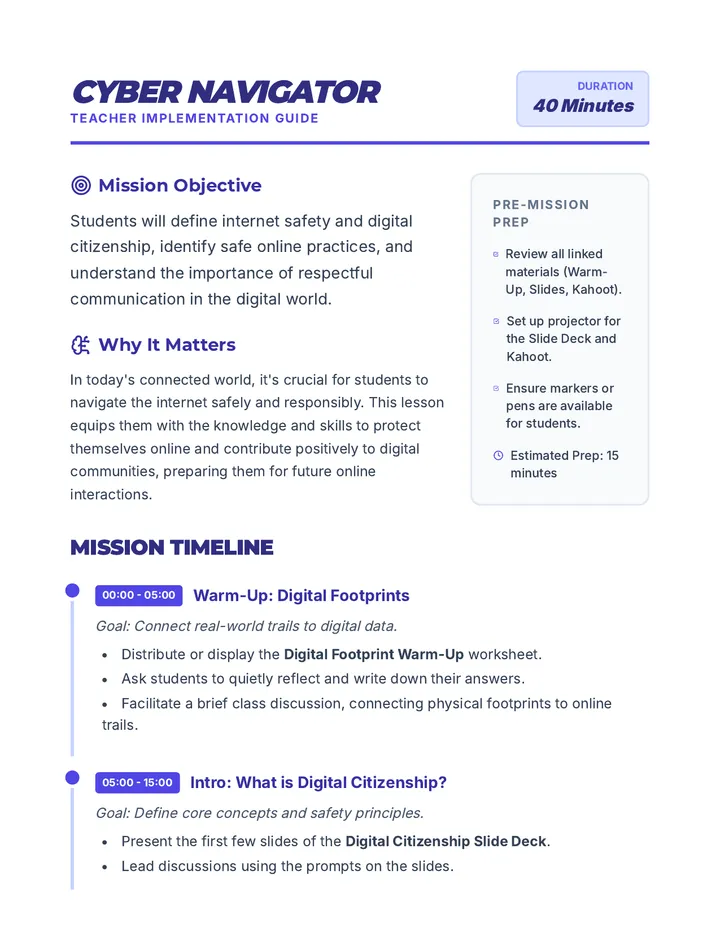
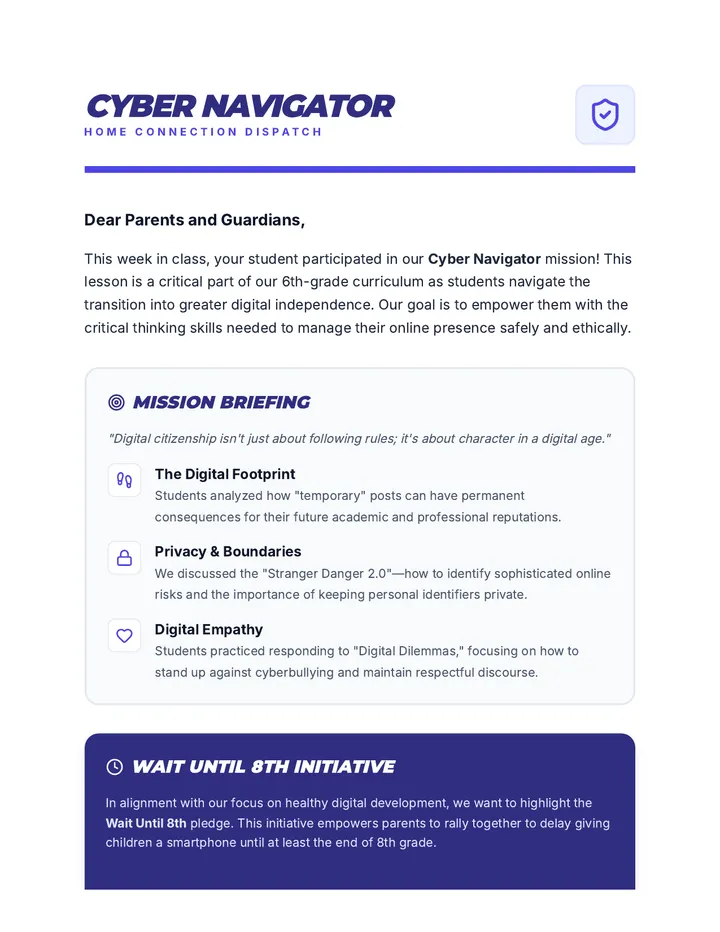
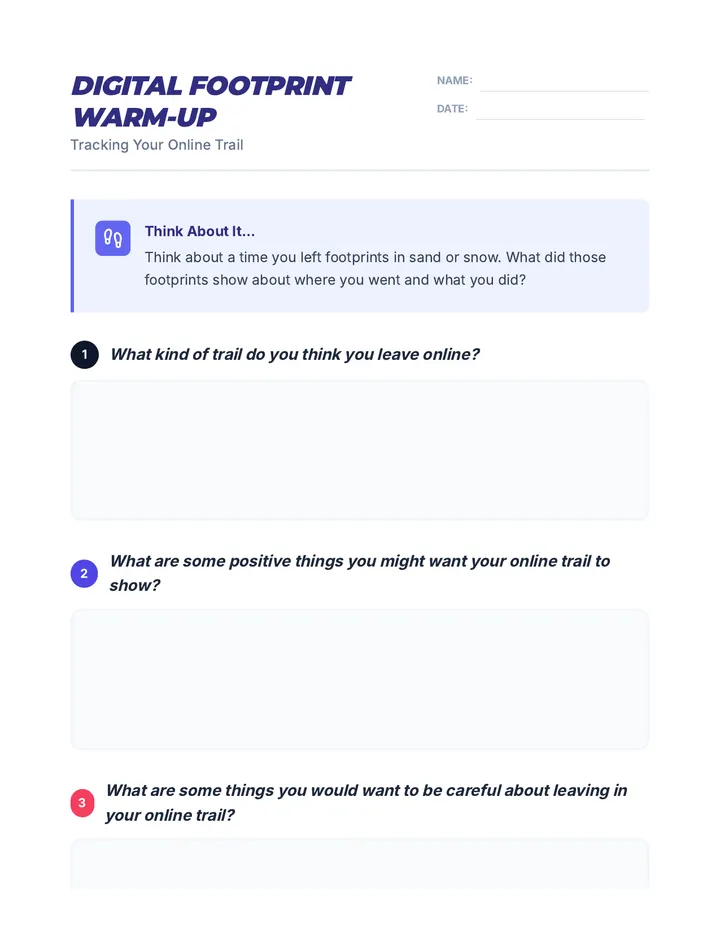
This lesson empowers 6th-grade students to become responsible digital citizens by understanding internet safety and the value of positive online interactions. Students will analyze their digital footprints, discuss safety principles, and practice decision-making through interactive scenarios.
A 30-minute Tier 1 guidance lesson for 5th graders to distinguish everyday drama from bullying and learn practical strategies for maintaining a respectful classroom environment.
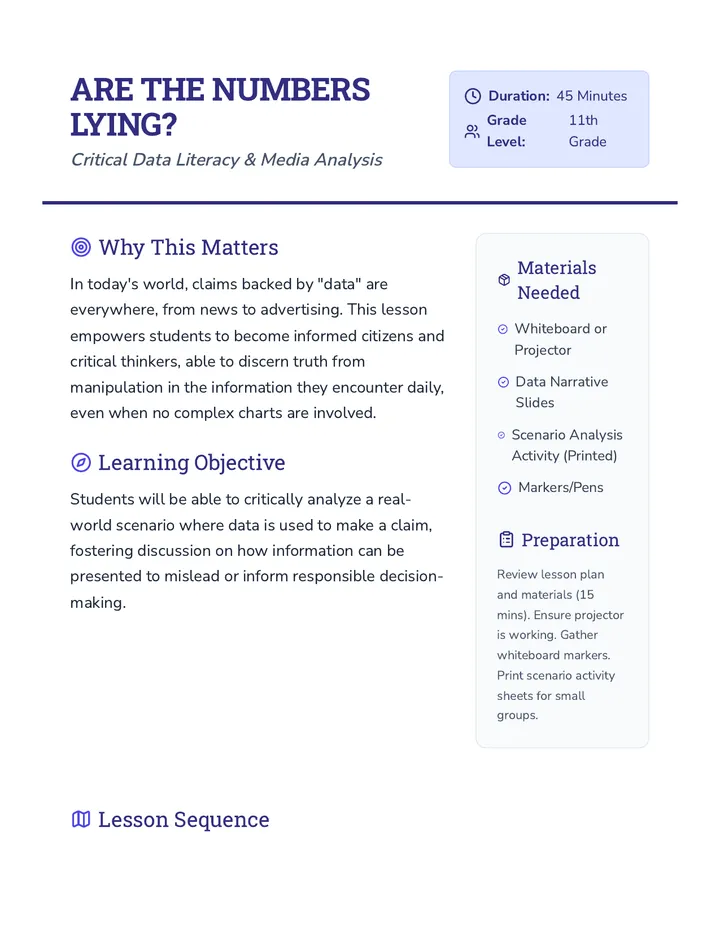
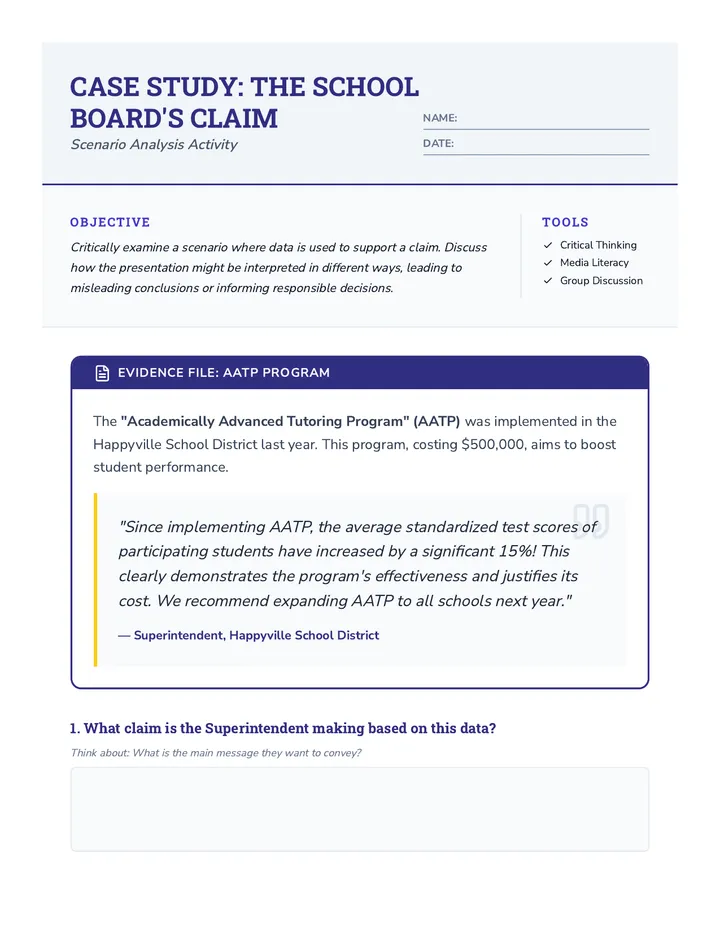
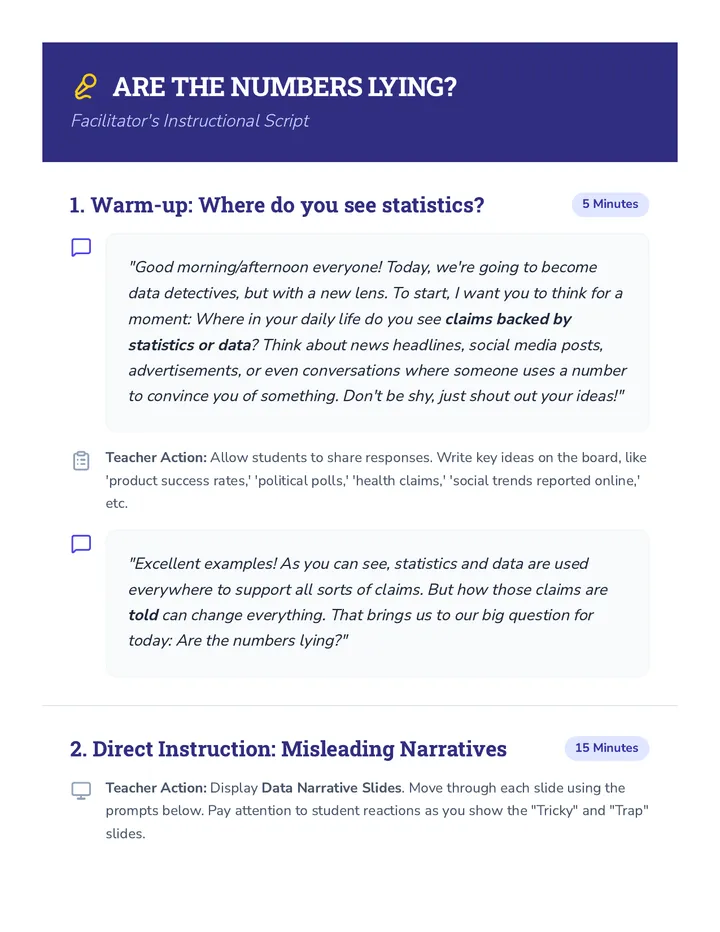
This 45-minute lesson for 11th-grade students explores how data narratives can be used to mislead or inform. Students critically analyze real-world scenarios to develop media literacy and responsible decision-making skills.
A 15-minute lesson for 5th graders focused on empathy, the impact of impulsive speech, and the 'THINK' filter to promote respectful communication.
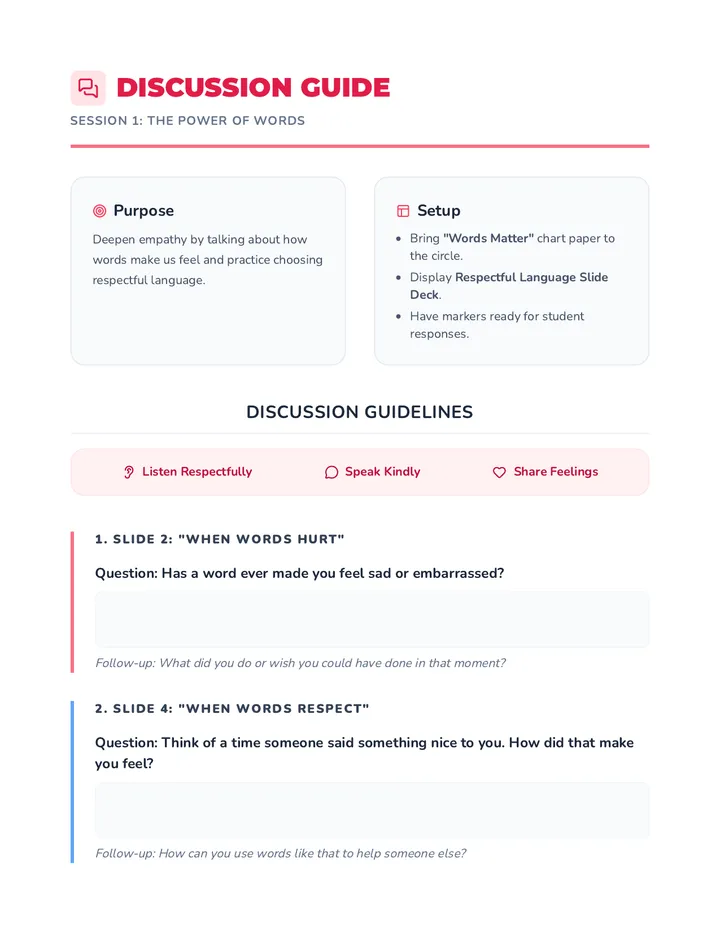
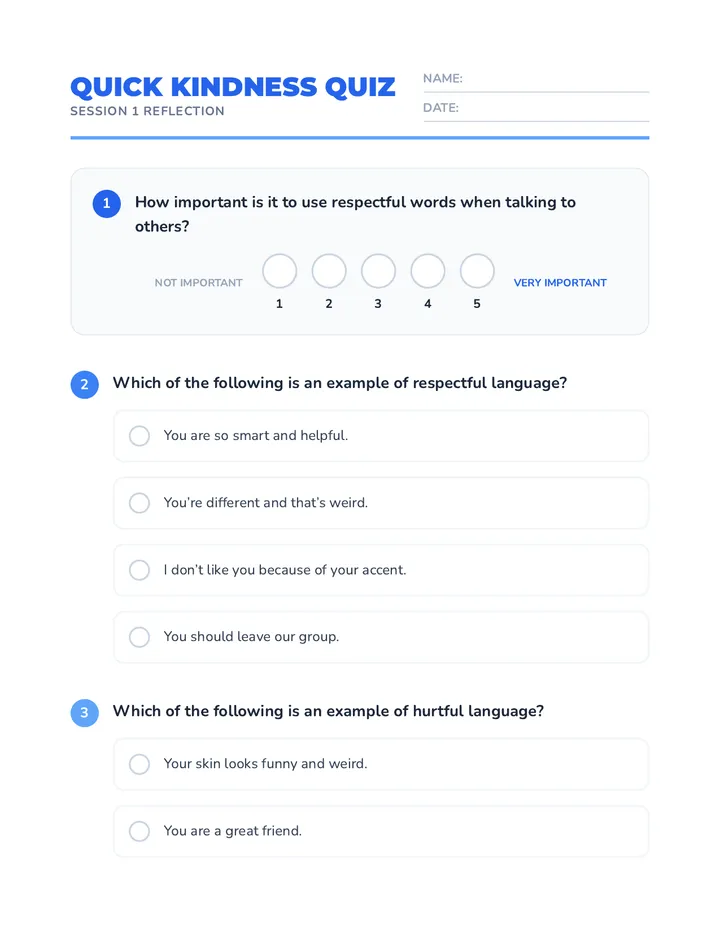
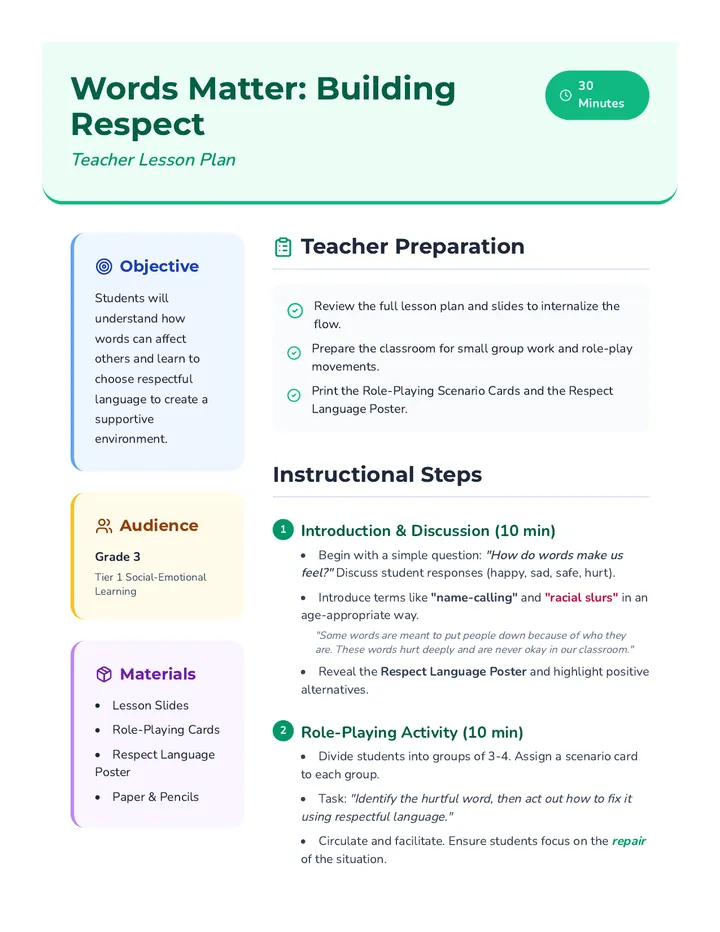
This 30-minute lesson for 3rd graders explores the power of words, focusing on the impact of name-calling and racial slurs while promoting respectful, kind language to build a supportive classroom community.
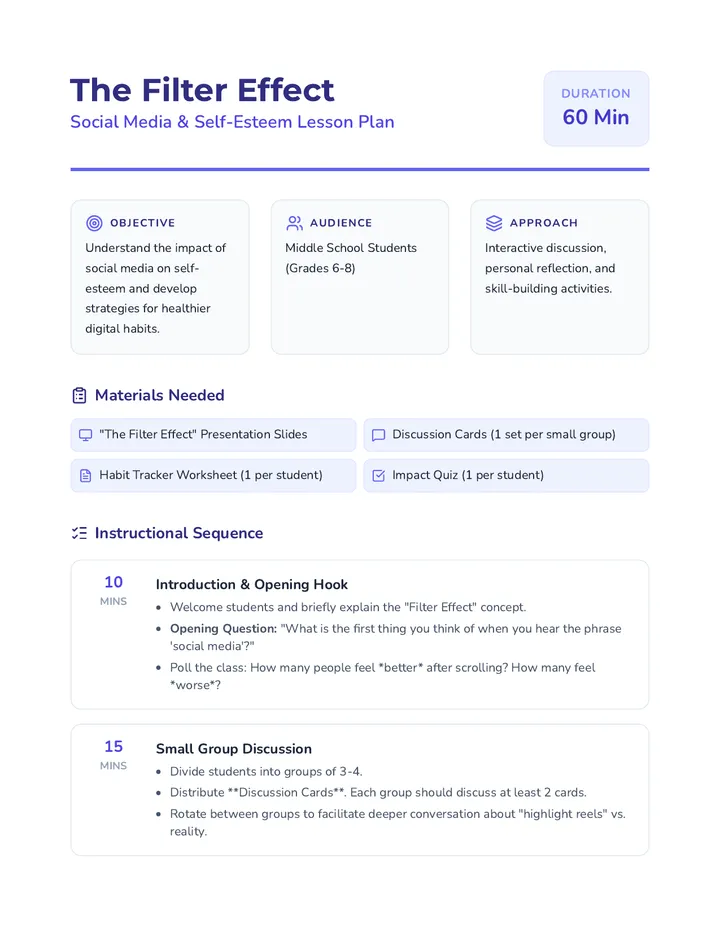
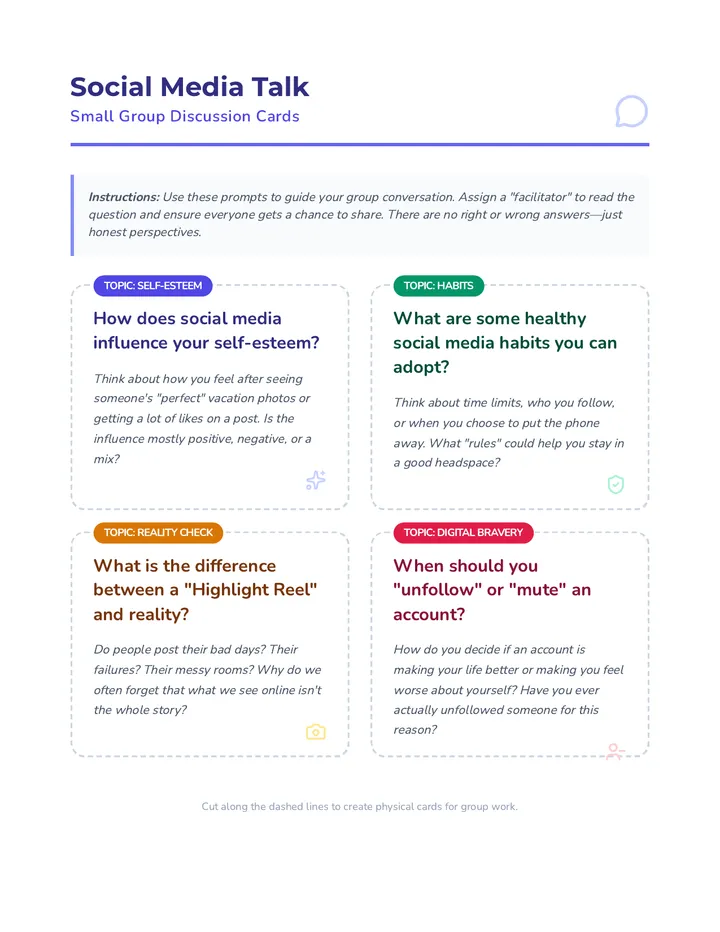
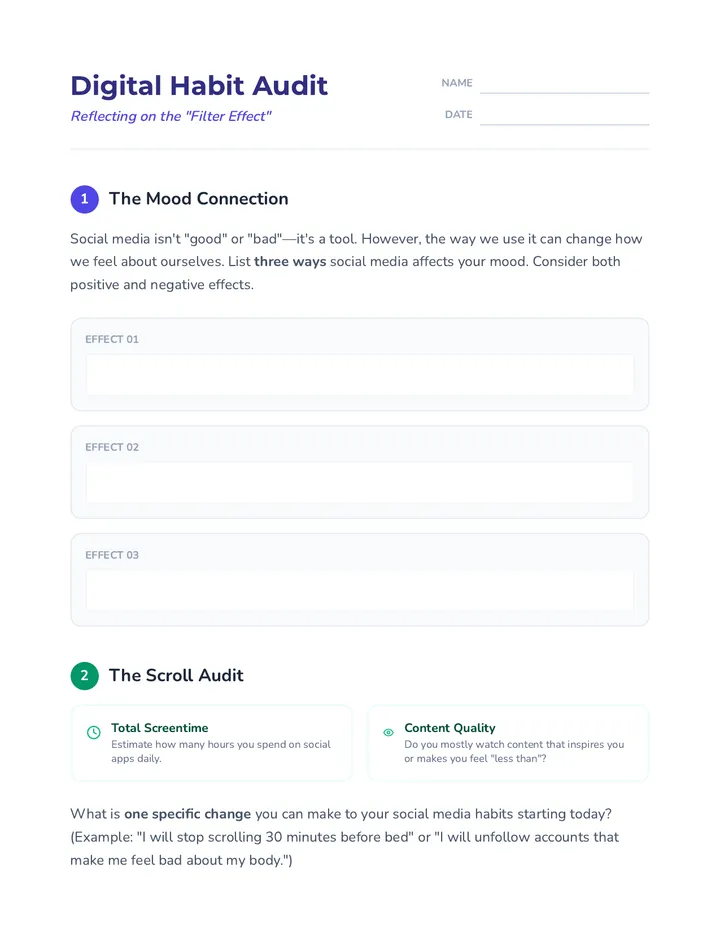
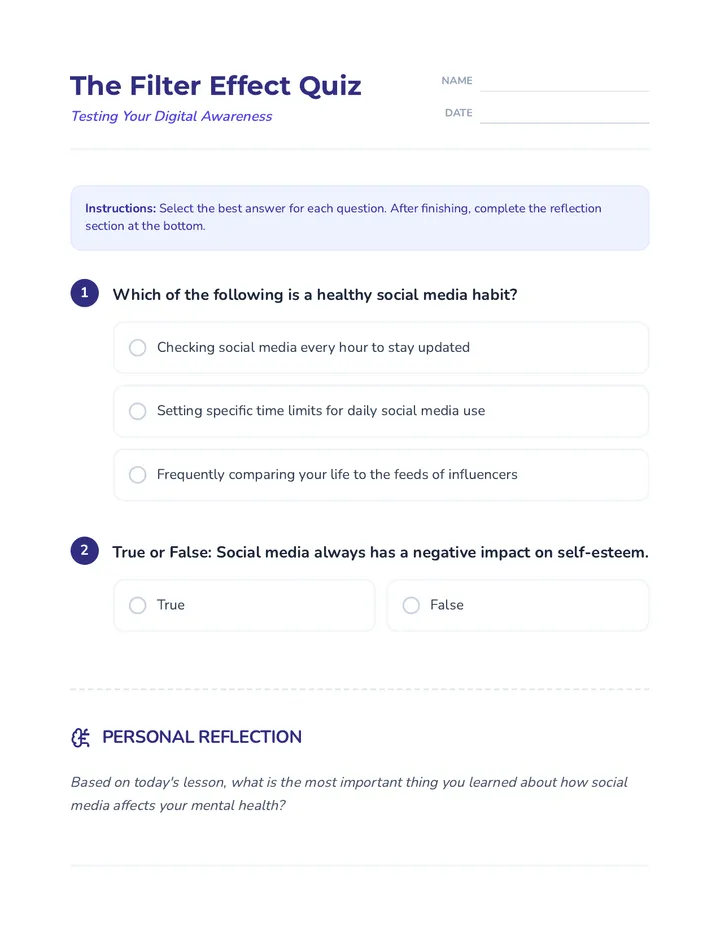
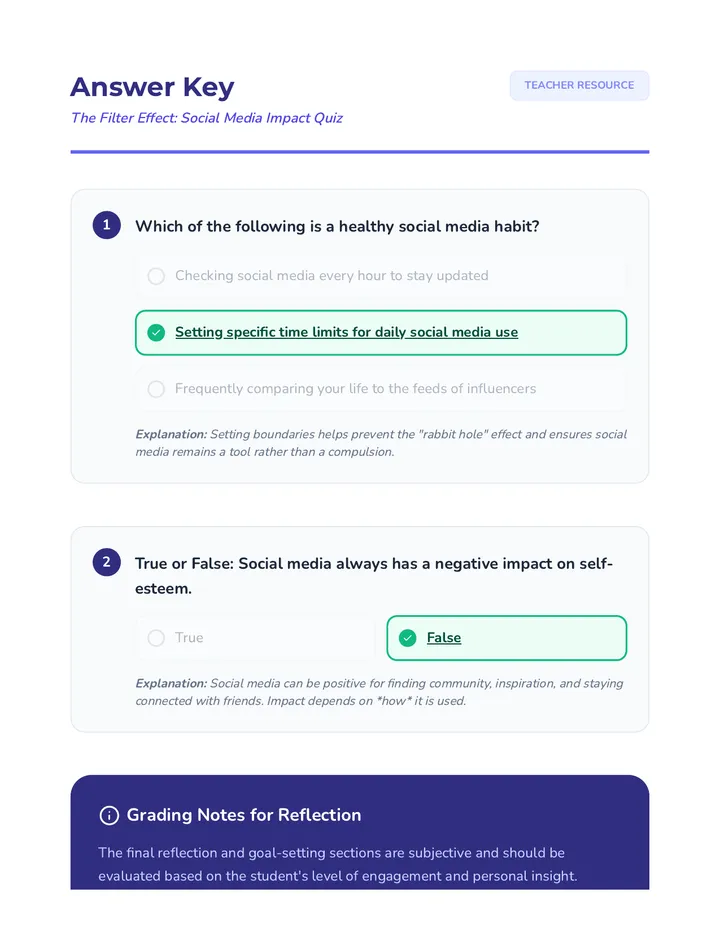
A comprehensive lesson for middle schoolers exploring how social media affects self-esteem, featuring interactive discussions, habit reflection, and practical strategies for a healthier digital life.
A 30-minute lesson for 5th-grade multiply disabled students focused on identifying bullying behaviors and practicing kindness and allyship through role-play and reflection.
This lesson helps 7th-grade students understand and manage the 'spotlight effect' – the feeling that everyone is watching and judging them. It provides strategies for seeking help and approaching reading tasks without feeling overwhelmed, fostering confidence and reducing anxiety in group settings.
This lesson aims to educate 7th and 8th graders on how to respond to bullying positively using the DASA framework. It includes a discussion on the definition and tenets of DASA, a worksheet for reflection, and a video to illustrate positive responses to bullying.