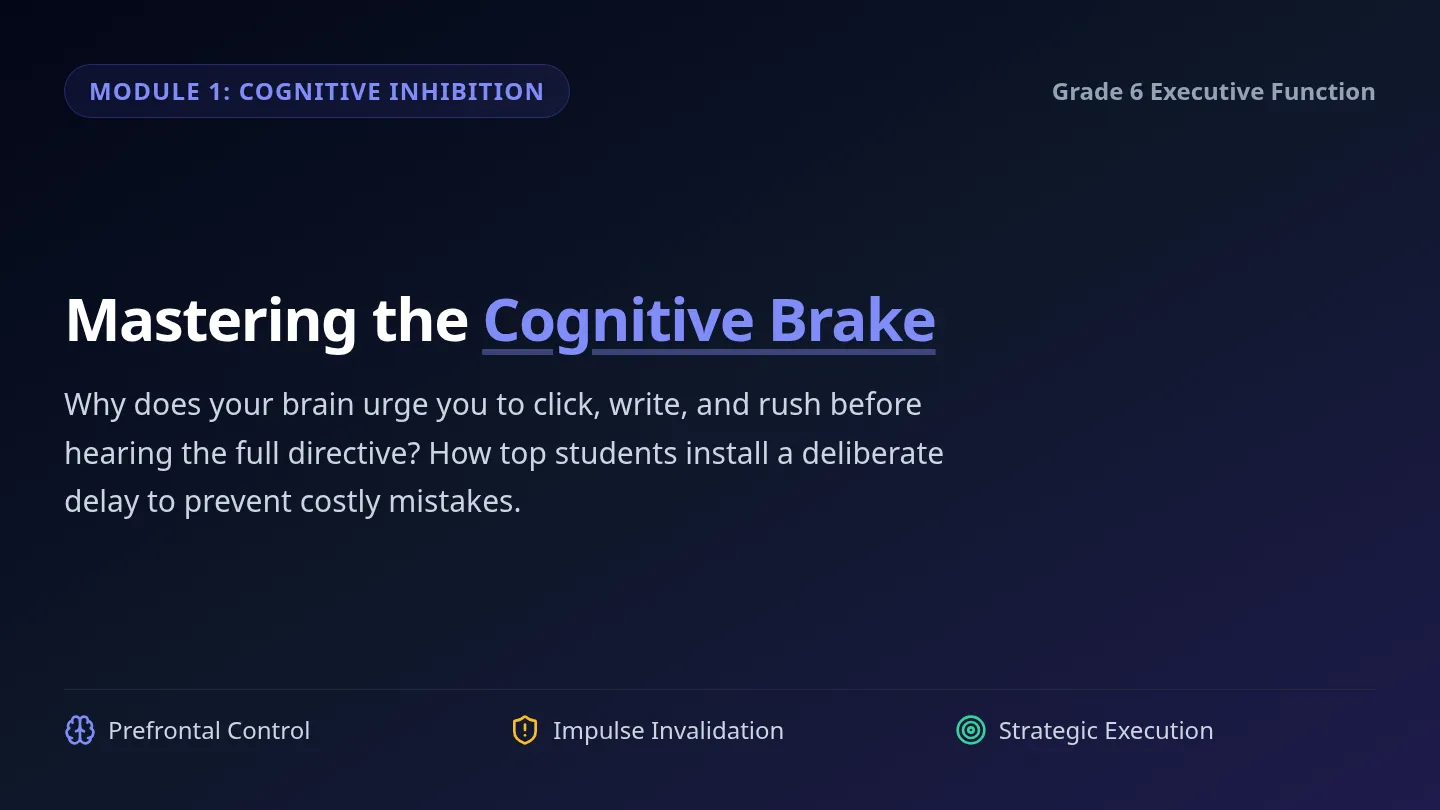
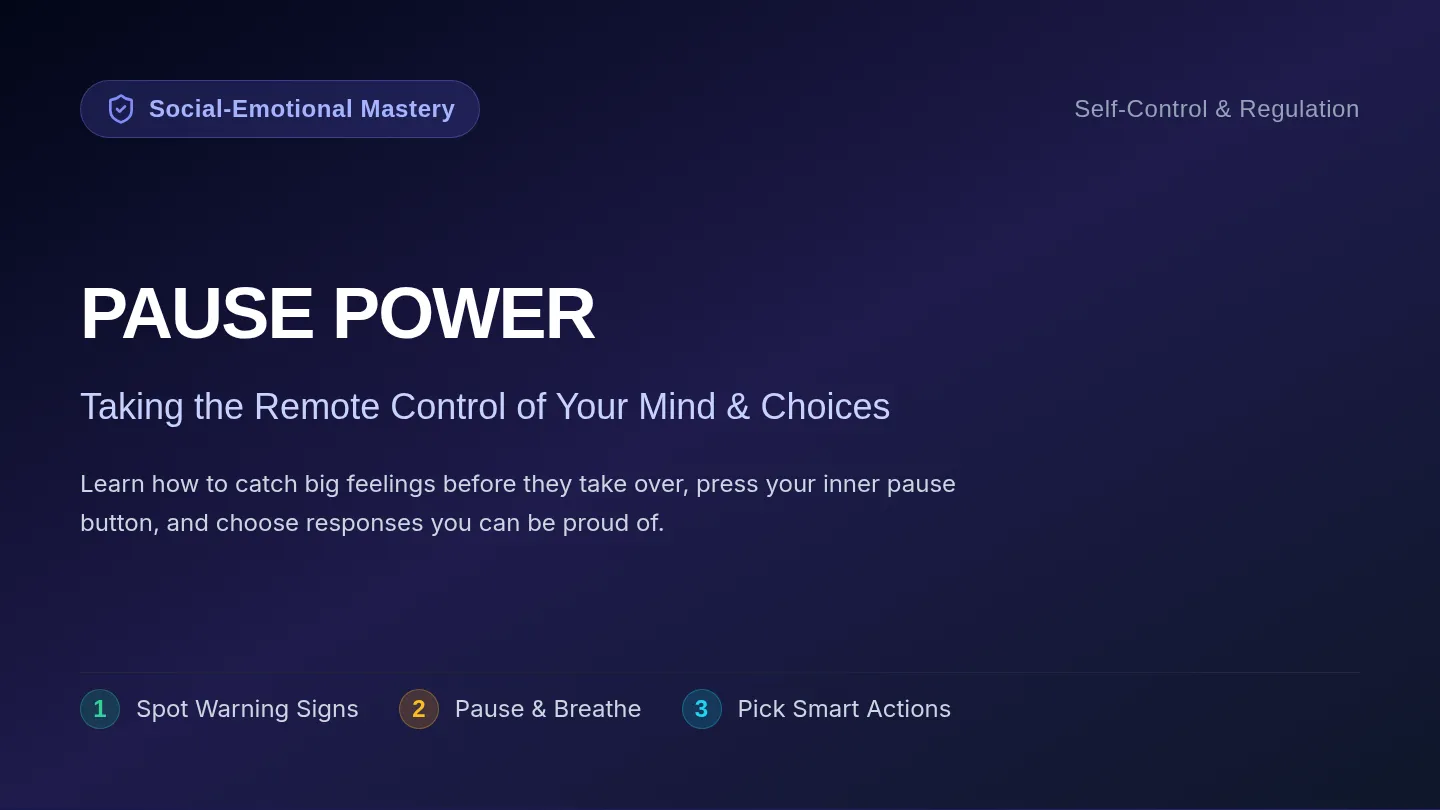
Empathy Exploration Facilitation Guide Navigator's Guide
Emotions & Empathy Exploration Sequence
Duration 8 Weeks / 45m Session
Mission Briefing
This 8-week sequence is designed for middle school boys to navigate strong emotions and improve self-regulation skills. Using restorative practices, active learning, and trauma-informed teaching, students will develop cultural competence and humility. This approach fosters a supportive environment essential for personal growth and social interactions.
Primary Objective
Navigate complex emotions and master self-regulation strategies through an empathetic lens.
Target Audience
Middle School Boys (Grades 6th-7th)
The Toolkit
8 Video Curriculum Assets
Worksheet: Emotions & Coping Skills
Discussion Guide: Empathy & Cultural Comp.
Reading: Understanding Emotions
Pens, Paper, and Exit Tickets
AV System (Projector/Screen)
Deployment Schedule
Week 1: Intro to Emotions
45 MIN
Identifying, thinking, and practicing skills.
Welcome & establish importance of self-regulation.
Video: Understanding Your Emotions
Process 3 Steps: Identify feelings, Think of skills, Practice skills.
Assessment: Exit Ticket.
Week 2: Understanding Empathy
45 MIN
Empathy vs. Sympathy in cultural contexts.
Video: Brené Brown on Empathy
Facilitate "Empathy & Cultural Competence" discussion.
Introduce cultural examples of emotional expression.
Assessment: Exit Ticket.
Week 3: Identifying Emotions
45 MIN
Personal triggers and collaborative sharing.
Workshop: Emotions & Coping Skills Worksheet
Video: Managing Feelings & Emotions
Peer-to-peer sharing and cultural difference discussion.
Assessment: Exit Ticket.
Week 4: Coping Skills
45 MIN
Mastering the mechanism of regulation.
Review previous strategies. Video: Coping Mechanisms
Role-playing scenarios for real-world practice.
Reflect on effectiveness and cultural background influence.
Assessment: Exit Ticket.
Week 5: Empathy in Action
45 MIN
Real-life application and active listening.
Video: 4 Things All Great Listeners Know
Personal story sharing and connection building.
Discussion: Empathy and relationship improvement.
Assessment: Exit Ticket.
Week 6: Emotional Intelligence
45 MIN
The science of EQ and components.
Reading: Understanding Emotions
Video: Emotional Intelligence
Active listening and communication drills.
Assessment: Exit Ticket.
Week 7: Building Cultural Competence
45 MIN
Perspectives and ice-breaking skills.
Video: How to Break the Ice
Reflection on personal cultural bias and experiences.
Identify similarities and differences in emotional norms.
Assessment: Exit Ticket.
Week 8: Reflection & Closure
45 MIN
Growth assessment and moving forward.
Video: How to Move On and Find Closure
Personal growth reflection and goal setting.
Final debrief and "Showcase" preparation.
Final Assessment: Week 8 Exit Ticket.
Intro to Emotions Slides The Navigation System
Week 1: Introduction to Emotions
Emotions & Empathy Exploration
The Mission
Understanding our emotions is like having a GPS for life.
Navigate strong feelings without "crashing."
Understand how others view the world.
Build stronger, more respectful connections.
"He who can conquer his own emotions is greater than he who can conquer a city."
Understanding Your Emotions
VIDEO BRIEFING
Embedded media
Watch closely: How do emotions influence our actions?
The 3-Step Strategy
1
IDENTIFY
Name the feeling. Is it anger, frustration, or maybe just hunger?
2
THINK
Stop. Think about your coping skills. What works for you?
3
PRACTICE
Use the skill. Take the breath. Walk away. Do the work.
Next Steps
Today we opened the map. Next week, we'll dive deeper into Empathy and how it helps us understand the people around us.
Complete Your Exit Ticket
Week 1 Exit Ticket Quiz Week 1 Exit Ticket
Intro to Emotions
Name:
Date:
Select the best answer for each question below to complete today's mission.
01
What are the three steps to managing emotions discussed today?
Identifying feelings, thinking about coping skills, practicing skills
Ignoring feelings, reacting immediately, blaming others
Identifying feelings, suppressing emotions, avoiding situations
02
Why is empathy important in understanding emotions?
It helps us connect with others and understand their perspectives
It allows us to ignore others' feelings
It makes us focus only on our own emotions
Quick Note
One thing I learned about my own emotions today was...
Understanding Empathy Slides The Bridge Builders
Week 2: Understanding Empathy
Empathy & Cultural Competence
Getting in the Hole
Sympathy
"I feel sorry for you."
Standing on the edge.
Trying to "fix" it or "silver line" it.
Empathy
"I'm in this with you."
Climbing down into the hole.
Connecting with something in yourself that knows that feeling.
Brené Brown on Empathy
Case Study
Embedded media
The Global Perspective
"Empathy is the core of cultural competence. We can't respect what we don't try to understand."
Emotional Norms
Different cultures express "respect" and "connection" in unique ways. Empathy helps us bridge that gap.
The Power of Choice
Choosing to see from another's lens isn't just nice—it's a leadership skill.
Challenge
This week, find one moment to choose empathy over fix-it mode.
Next Stop: Personal Triggers
Empathy & Cultural Competence Discussion Guide Empathy & Cultural Competence
Facilitator's Discussion Guide
This discussion explores the concept of empathy and its importance in cultural competence. Students will discuss how empathy can help them understand and respect diverse backgrounds.
01
What is the difference between empathy and sympathy?
Instruction: Use examples from the video to illustrate the differences. Encourage students to think about the "hole" analogy.
02
How can empathy help us understand people from different cultures?
Instruction: Discuss how taking the perspective of others can lead to better cultural understanding and humility.
03
Share a time when you felt empathy for someone. How did it affect your actions?
Instruction: Encourage students to think about how empathy influenced their behavior, choices, and relationships.
Restorative Circle Tip
If facilitating in a circle, use a talking piece to ensure every boy feels heard without interruption.
Week 2 Exit Ticket Quiz Week 2 Exit Ticket
Understanding Empathy
Name:
Date:
Select the best answer for each question below.
01
What is the main difference between empathy and sympathy?
Empathy involves understanding and sharing feelings; sympathy involves feeling sorry for someone
Empathy is feeling sorry for someone; sympathy is understanding and sharing feelings
Empathy and sympathy are the same
02
How can empathy improve cultural competence?
By helping us understand and respect diverse perspectives
By making us ignore cultural differences
By focusing only on our own culture
Deep Dive
One way I can show empathy this week is...
Identifying Emotions Slides Under the Hood
Week 3: Identifying Emotions
Triggers & Responses
The Trigger Effect
What sparks the flame?
A trigger is a situation, person, or event that causes an immediate emotional reaction.
"If you don't name your triggers, they will drive you."
Being ignored or dismissed
Feeling unfairly treated
Sudden changes in plans
Managing Feelings & Emotions
LEVEL UP
Embedded media
Different Vibes
Not everyone expresses emotions the same way. Cultural backgrounds influence how we show:
Anger or Frustration
Grief or Sadness
Respect or Calmness
Reflection
Does your family or community have specific "rules" about showing emotions? Is it okay to be loud? Is it better to be quiet?
Your Turn
It's time to map out your own Triggers and Responses.
Open Worksheet: Emotions & Coping Skills
Emotions & Coping Skills Worksheet Emotions & Coping Skills
Personal Strategy Map
ID:
Date:
This worksheet helps you identify your emotional triggers and develop coping strategies. Think about your own experiences and be as specific as possible.
1
The Spark: List Three Emotions & Triggers
Think about situations, interactions, or even times of day that lead to these emotions.
Emotion
Trigger (What starts it?)
2
The Strategy: Coping Skills
Identify two coping skills you can use for each emotion listed above. (e.g., deep breathing, counting to 10, listening to music, talking to a friend).
Coping Skill A
Coping Skill B
Coping Skill A
Coping Skill B
Coping Skill A
Coping Skill B
3
The Reflective Win: A Recent Success
Reflect on a recent situation where you managed your emotions well. What did you do? Describe the situation, your feelings, and the specific coping skills you used to stay in control.
Master of Self
Emotions & Empathy Exploration Series
Week 3 Exit Ticket Quiz Week 3 Exit Ticket
Identifying Emotions
Name:
Date:
01
What is an emotional trigger?
A situation or interaction that leads to a specific emotion
A tool to suppress emotions
A way to ignore feelings
02
Why is it important to identify emotional triggers?
To better manage and respond to emotions
To avoid dealing with emotions
To blame others for our feelings
Personal Check-In
One trigger I identified today was...
Coping Skills Slides Mastering the Tools
Week 4: Coping Skills Mastery
The Power of Choice
The Toolkit
Coping skills aren't about hiding emotions.
They are about driving them.
"A skill is something you practice until it becomes a reflex."
Breath
Calm the nervous system.
Movement
Shake off the energy.
Voice
Speak it out loud.
Logic
Analyze the situation.
Coping Mechanisms
THE VIDEO
Embedded media
The Simulator
Scenario A
"A teammate makes a joke at your expense in front of the group. Everyone laughs."
Choose your move:
Breath Walk Away Confront
Scenario B
"You just got a grade that was much lower than you expected. You feel a surge of heat in your chest."
Choose your move:
Journal Ask why Box Breathe
Does it Work?
Reflection: Which skill felt the most natural to you? Which one felt weird?
"Your cultural background might influence which skills feel 'right.' There is no one-size-fits-all. Find your rhythm."
Week 4 Exit Ticket Quiz Week 4 Exit Ticket
Coping Skills Mastery
Name:
Date:
Complete the check-out for today's session.
01
What is a coping skill?
A strategy to manage emotions effectively
A way to ignore emotions
A method to blame others for our feelings
02
Why is it important to practice coping skills?
To improve emotional regulation and well-being
To avoid dealing with emotions
To suppress feelings
My Primary Move
If things get heated this week, my first move will be:
DEEP BREATH
COUNT TO 10
WALK AWAY
Empathy in Action Slides Walk the Talk
Week 5: Empathy in Action
Listen. Connect. Lead.
Putting it to Work
Empathy isn't just a feeling. It's an action.
How does understanding someone else's "why" change how you treat them?
Improves Relationships
Reduces Conflict
Builds Cultural Respect
4 Things Great Listeners Know
THE KEY TO EMPATHY
Embedded media
The Listener's Checklist
Eye Contact
Show you are present. (Wait—how does this differ across cultures?)
Kill the Noise
Put away the phone. Close the tab. Be here.
Ask, Don't Tell
"What I'm hearing is... is that right?"
Body Language
Lean in. Your posture says more than your mouth.
Empathy Challenge
Share a time when empathy changed your actions.
Think about a time you were angry at a friend, then realized they were going through something difficult at home. What did you do next?
Week 5 Exit Ticket Quiz Week 5 Exit Ticket
Empathy in Action
Name:
Date:
01
How can empathy improve relationships?
By fostering understanding and connection
By ignoring others' feelings
By focusing only on our own needs
02
What is one way empathy can be applied in real-life scenarios?
By considering others' perspectives before reacting
By ignoring others' emotions
By focusing only on our own feelings
Action Plan
One "Active Listening" skill I will practice this week is...
Emotional Intelligence Slides IQ vs. EQ
Week 6: Emotional Intelligence Mastery
Self-Awareness
Social Skill
Empathy
The Science of Feel
Emotional Intelligence (EQ)
The ability to identify, understand, and manage your own emotions—while also recognizing the emotions of others.
"IQ gets you the job. EQ gets you the promotion and keeps you happy."
01
Self-Awareness
02
Self-Regulation
03
Empathy
04
Social Skills
Emotional Intelligence Explained
DEEP DIVE
Embedded media
Cultural Intelligence
EQ isn't the same everywhere. Cultural norms dictate how "high EQ" is expressed.
Example:
In some cultures, showing high EQ means staying calm and stoic during stress. In others, it means being passionate and expressive.
Respect
...is the universal language of EQ.
Digging Deeper
Read the 'Understanding Emotions' guide to discover the Why behind your feelings.
Material: Understanding Emotions Reading
Understanding Emotions Reading Material Understanding Emotions
Navigating the Inner Landscape
Session Reference WEEK 06
Emotions are a natural part of our lives, influencing how we think and act. They can be powerful and sometimes overwhelming, but learning to manage them is crucial for personal well-being and social interactions.
Recognizing Emotions
• Emotions can be triggered by various situations, such as stress, relationships, or changes in our environment.
• Identifying what we feel and why is the first step in managing emotions effectively.
Responding to Emotions
• Once we recognize our emotions, we can choose how to respond. This might involve using coping skills like deep breathing, talking to someone, or engaging in a calming activity.
• It's important to remember that all emotions are valid, but how we express them can impact ourselves and others.
Building Emotional Intelligence
Emotional intelligence involves understanding our own emotions and those of others. It helps us navigate social situations and build strong, empathetic relationships.
"Practicing empathy, active listening, and open communication are key components of emotional intelligence."
By understanding and managing our emotions, we can improve our mental health and foster positive interactions with those around us.
Week 6 Exit Ticket Quiz Week 6 Exit Ticket
Emotional Intelligence
Name:
Date:
01
What is emotional intelligence?
Understanding and managing our own emotions and those of others
Ignoring emotions
Focusing only on our own feelings
02
Why is emotional intelligence important?
It helps us navigate social situations and build strong relationships
It allows us to ignore others' feelings
It makes us focus only on our own emotions
Self-Rating
How would you rate your EQ awareness today?
1
2
3
4
5
Building Cultural Competence Slides Beyond the Horizon
Week 7: Building Cultural Competence
Perspectives
Respect
Competence
The Global Tool
Cultural Competence
The ability to understand, communicate with, and effectively interact with people across cultures.
"You don't have to be from a culture to respect it. You just have to be willing to learn."
Awareness of Biases
Attitude of Respect
Knowledge of Norms
How to Break the Ice
Connection Tool
Embedded media
The Mirror Test
We all have biases—shortcuts our brain takes based on our own culture.
Competence means catching those shortcuts before they turn into judgments.
Reflect:
"When I meet someone from a different neighborhood or background, the first thing I usually assume is..."
"How can I use EMPATHY to see past that assumption?"
Final Challenge
Next week is our final session. Think about your Growth. How have you changed since Week 1?
Week 7 Exit Ticket Quiz Week 7 Exit Ticket
Cultural Competence
Name:
Date:
01
What is cultural competence?
Understanding and respecting diverse cultural perspectives
Ignoring cultural differences
Focusing only on our own culture
02
How can empathy contribute to cultural competence?
By helping us understand and respect diverse perspectives
By making us ignore cultural differences
By focusing only on our own culture
Cultural Mirror
One way I can be more respectful of someone else's background this week is...
Reflection and Closure Slides The Final Debrief
Week 8: Reflection and Closure
Growth
Goals
Closure
The 8-Week Trek
Weeks 1-2
The Map: Intro to Emotions & Empathy
Weeks 3-4
The Tools: Triggers & Coping Skills
Weeks 5-6
The Action: Listening & EQ
Weeks 7-8
The Summit: Culture & Reflection
How much further can you see now?
How to Move On and Find Closure
FINAL DEBRIEF
Embedded media
Mission Continues
This isn't the End. It's the Upgrade.
"What is ONE goal you have for your emotional growth in the next month?"
Cultural Awareness Check
"How can your new understanding of other cultures help you build better relationships at home or school?"
Emotions Showcase
Time to present your projects! Skits, posters, videos—show us what Empathy looks like in your world.
Launch Project
Week 8 Exit Ticket Quiz Week 8 Exit Ticket
Reflection & Closure
Name:
Date:
01
What is one key takeaway from this series on emotions and empathy?
Understanding and managing emotions is crucial for personal growth
Ignoring emotions is the best strategy
Focusing only on our own feelings is important
02
How can you continue to practice empathy and self-regulation in your interactions?
By considering others' perspectives and managing emotions effectively
By ignoring others' feelings
By focusing only on our own needs
Final Reflection
Looking back at Week 1, the biggest way I've grown is...