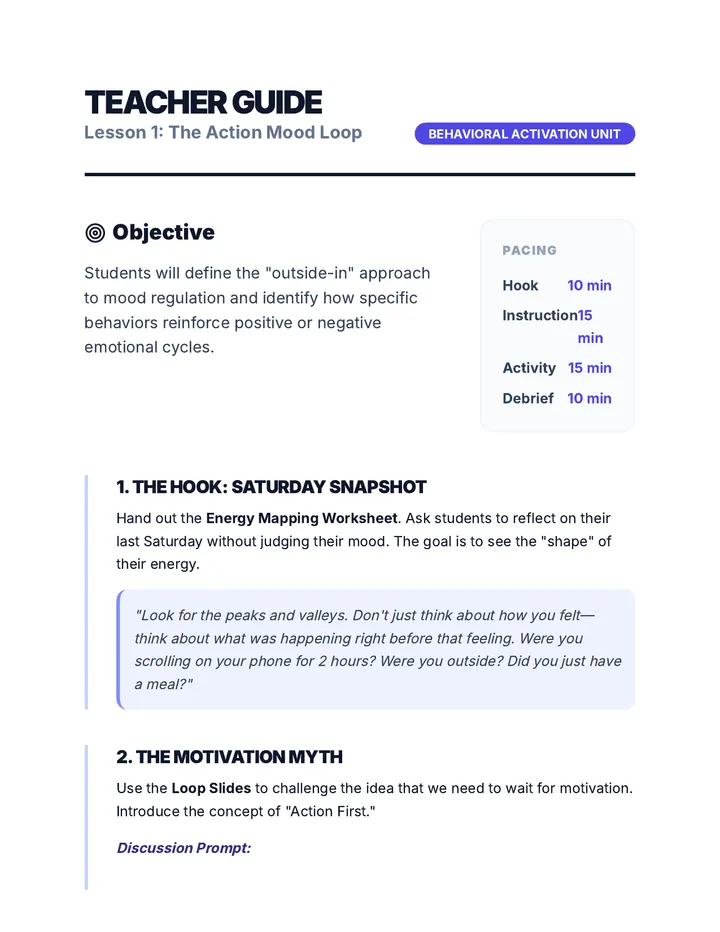
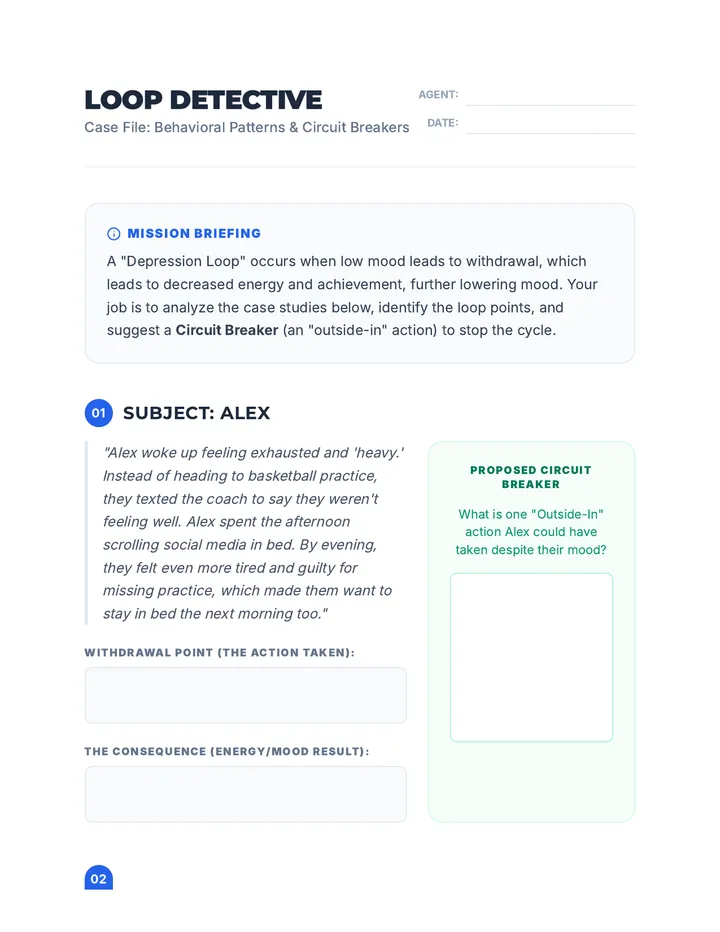
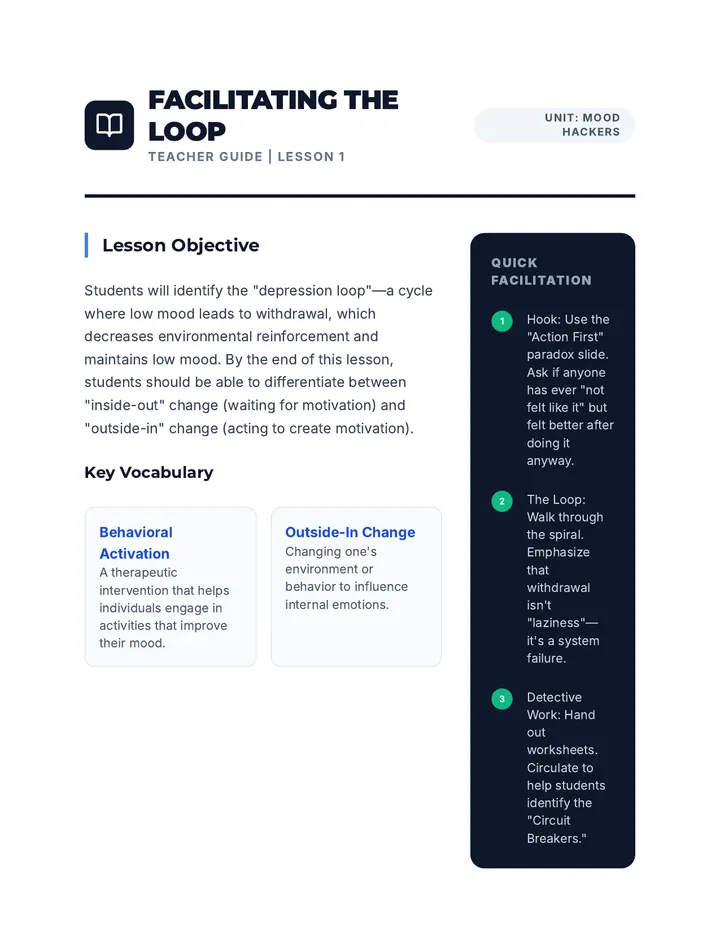
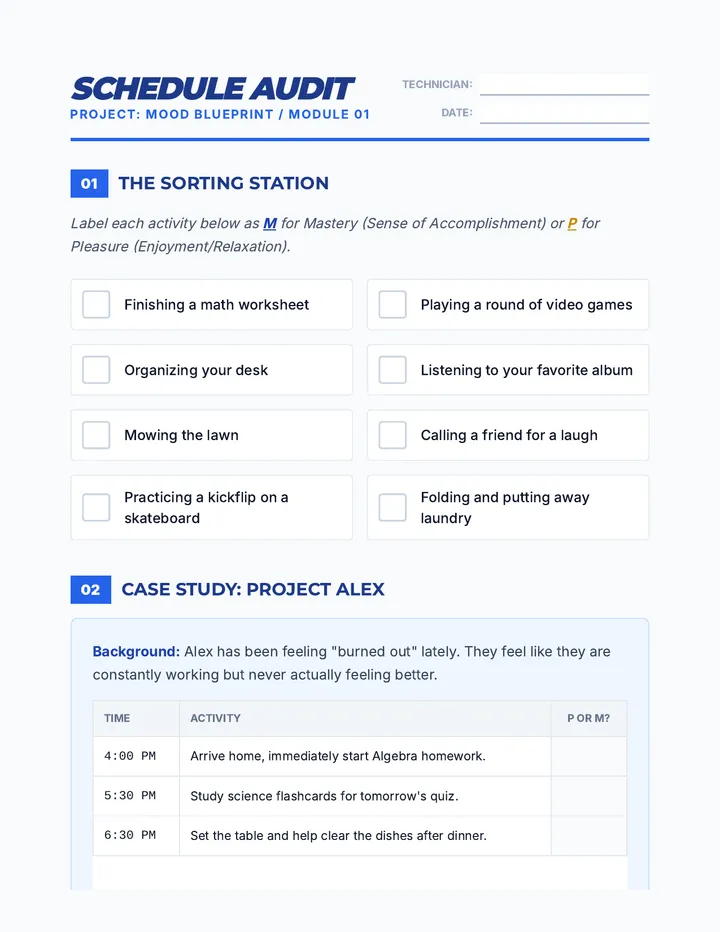
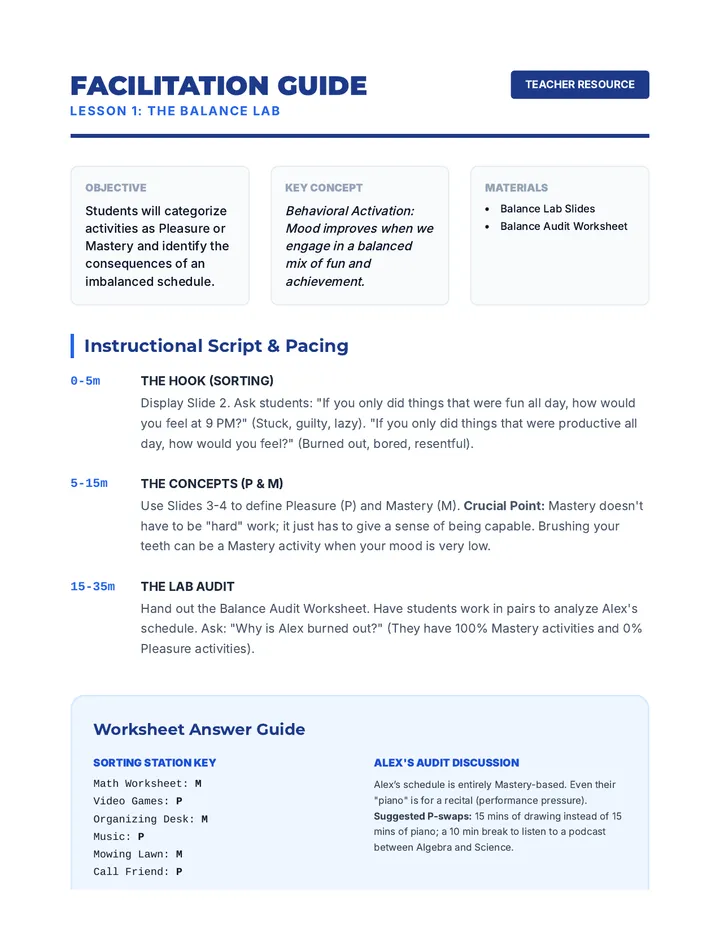
Behavioral activation strategies and techniques for identifying rewarding activities to combat depression and anxiety. Develops emotional resilience through consistent engagement in positive routines and habit-building.
A three-session individualized program for middle school students to transition from negative thought patterns to a positive, resilient mindset through self-awareness and reframing strategies.
A 6-week Cognitive Behavioral Therapy (CBT) program designed to help students identify and challenge negative thoughts, develop healthier coping mechanisms, and build a stronger sense of self-worth.
This sequence introduces first-grade students to the fundamental connection between their actions and their emotions, serving as a foundational introduction to behavioral activation. Students explore how specific activities can shift their mood and create a personalized action plan for emotional regulation.
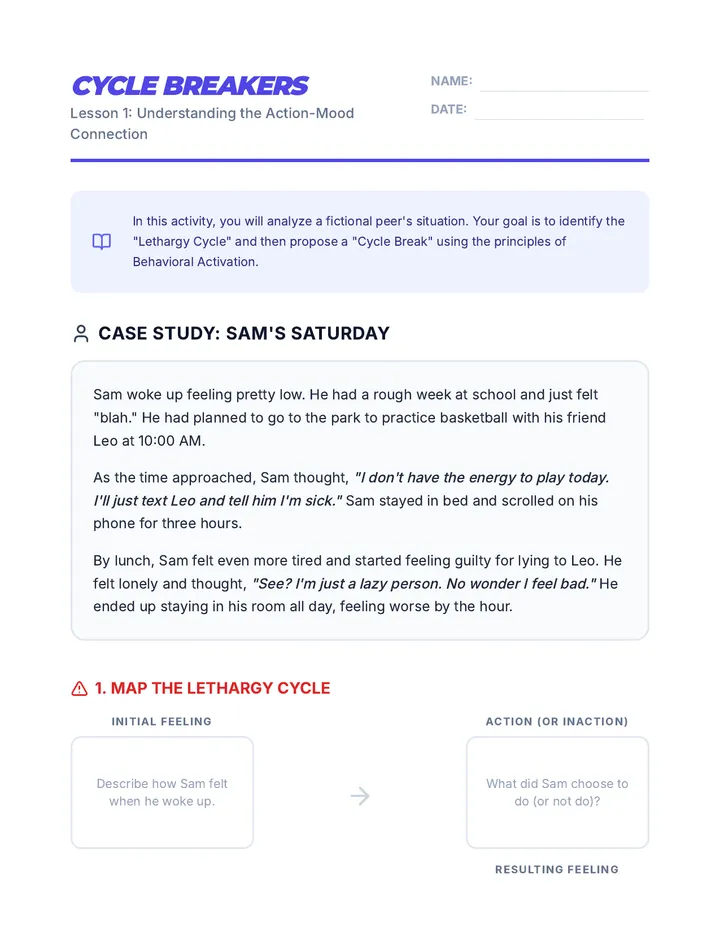
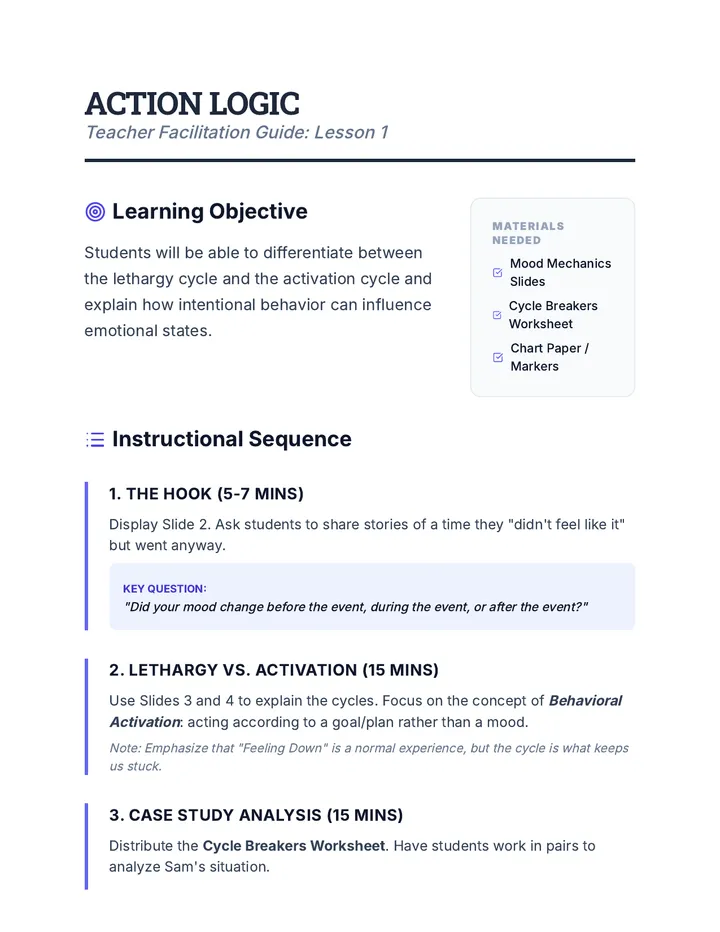
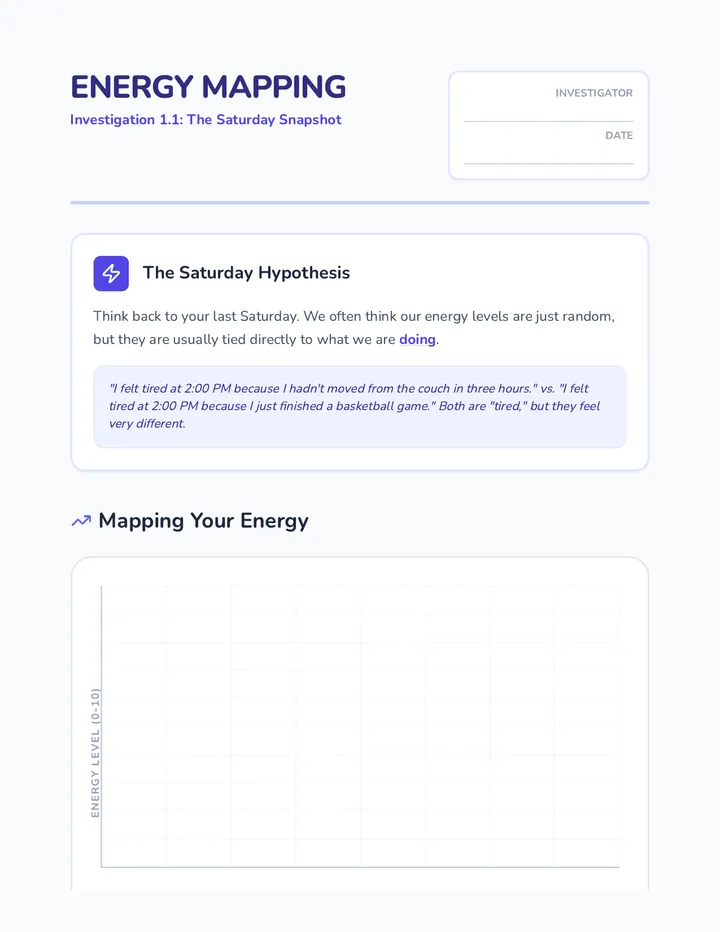
A comprehensive sequence for 6th graders to understand and apply behavioral activation. Students learn how their actions impact their emotions, track their energy levels, brainstorm nourishing activities, and create a sustainable weekly schedule to improve their mental well-being.
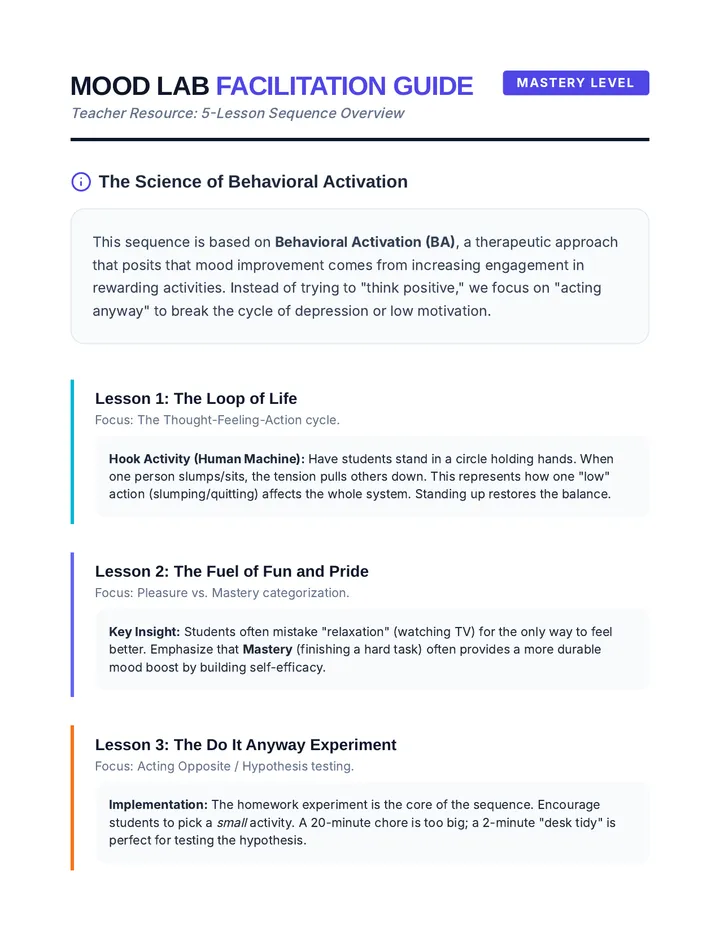
In this inquiry-driven sequence, students explore behavioral activation, investigating how their actions influence their emotions. They learn to distinguish between pleasure and mastery activities, conduct personal experiments to track mood changes, and create a personalized evidence-based plan for mood regulation.
This 7th-grade sequence teaches the principles of behavioral activation, helping students understand how their actions influence their moods. Through self-monitoring, activity categorization, and strategic planning, students develop a toolkit for proactively managing their mental well-being.
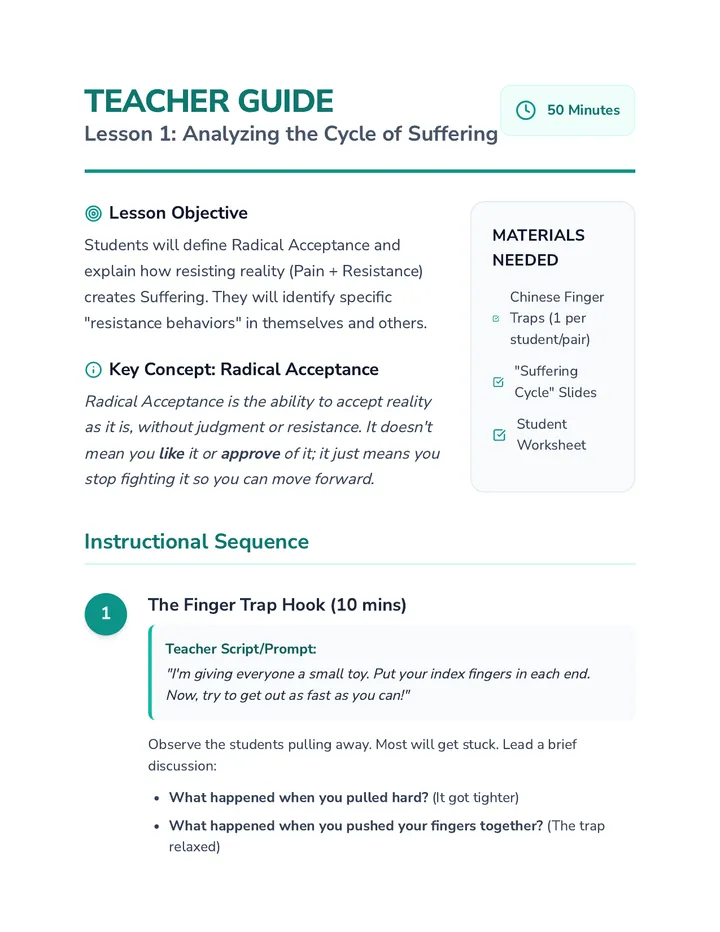
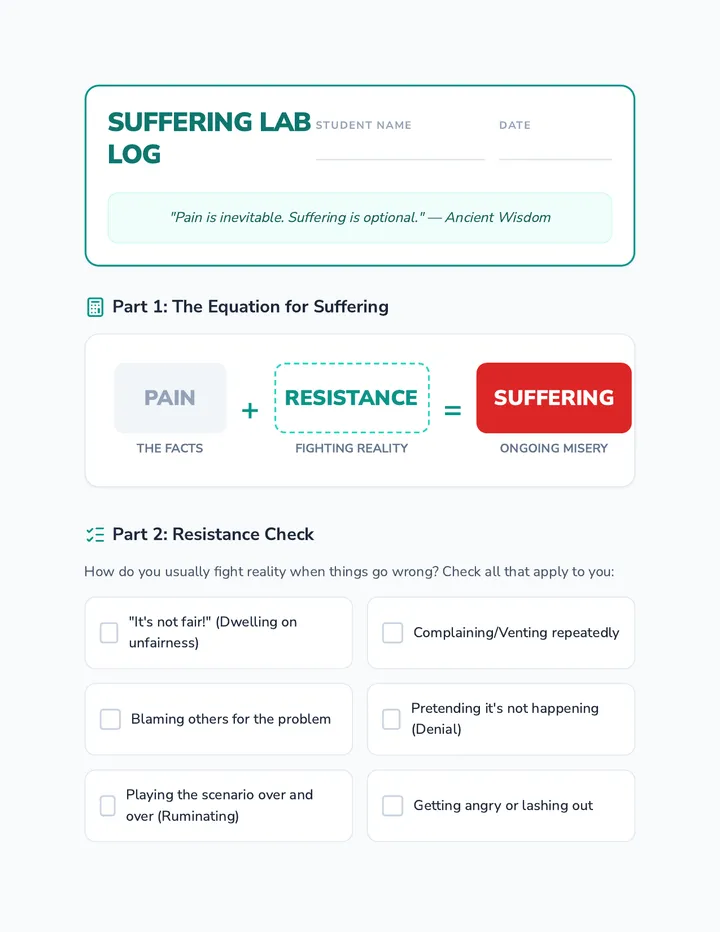
This middle school sequence focuses on building distress tolerance through Radical Acceptance. Students move from understanding the 'Cycle of Suffering' to practicing resilience in academic and social scenarios, ultimately learning to pivot from disappointment to proactive problem-solving.
A comprehensive sequence for 8th-grade students on behavioral activation, focusing on the cyclical relationship between actions and mood, habit tracking, and aligning behaviors with personal values.
A comprehensive 12th-grade sequence on Behavioral Activation (BA), teaching students how to interrupt negative mood cycles through values-aligned activity scheduling and barrier management.
This sequence guides 11th-grade students through Behavioral Activation, teaching them to audit their routines, categorize activities by mastery and pleasure, and design a personalized schedule to proactively manage their mood and mental well-being.
A 5-lesson series for 8th graders to design personalized behavioral activation plans. Students learn to balance pleasure and mastery, create activity menus, set micro-goals, and troubleshoot barriers to build a sustainable mood-boosting routine.
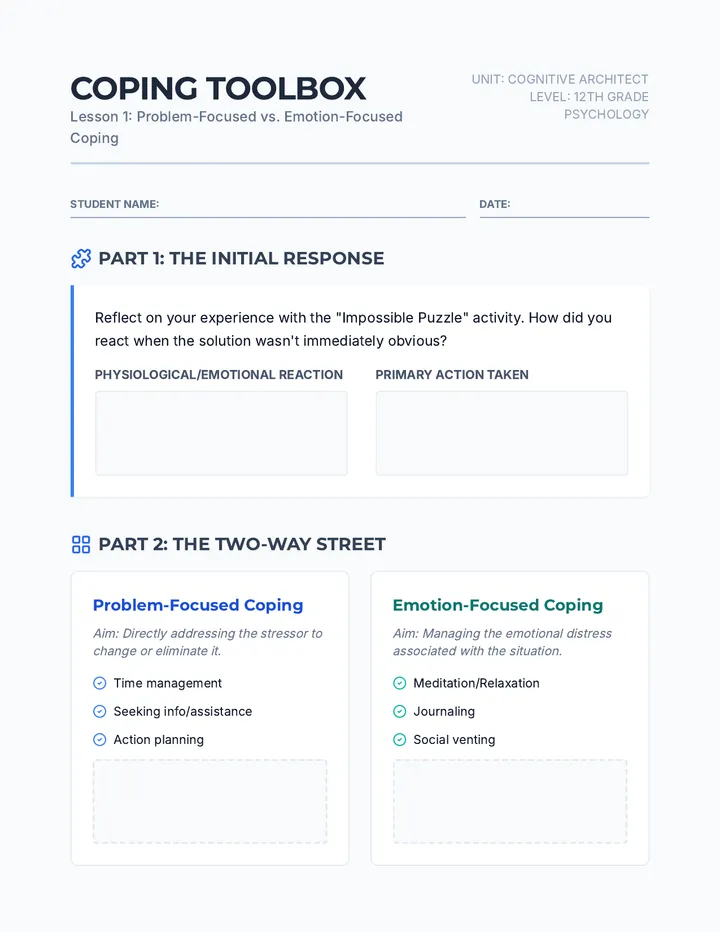
A comprehensive psychology unit for 12th graders focused on evidence-based coping mechanisms, cognitive restructuring, and the development of personal resilience plans. Students move from understanding physiological stress to applying CBT techniques and social support theories.
A 25-minute individual Tier 3 session for teens focused on identifying emotions through an emotion wheel, learning ACT-based coping strategies (Acceptance, Defusion, Values-Based Action), and expressing feelings through art therapy.
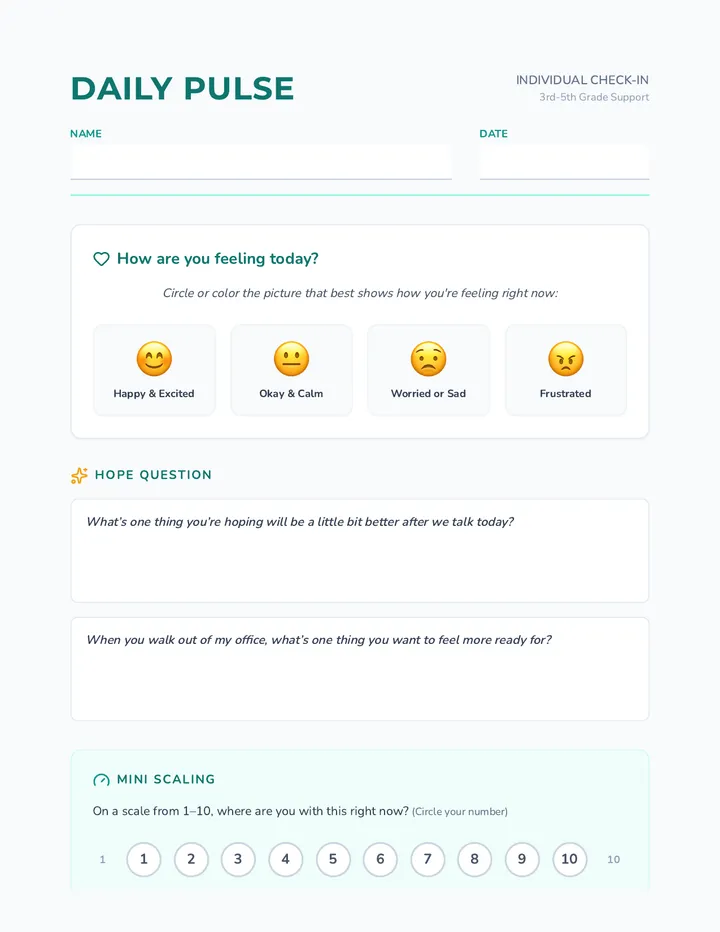
A structured 10-minute individual check-in for 3rd-5th grade students to reflect on their emotions, identify strengths, and set small, manageable goals.
A 40-minute lesson for high schoolers in a sub-separate environment that explores personal values and resilience using ACT principles. Students identify core values and brainstorm small, actionable steps to live by them.
A 40-minute lesson for high school students in sub-separate settings exploring self-care, community care, and their impact on automatic thoughts. Students will define key terms and create actionable plans for their well-being.
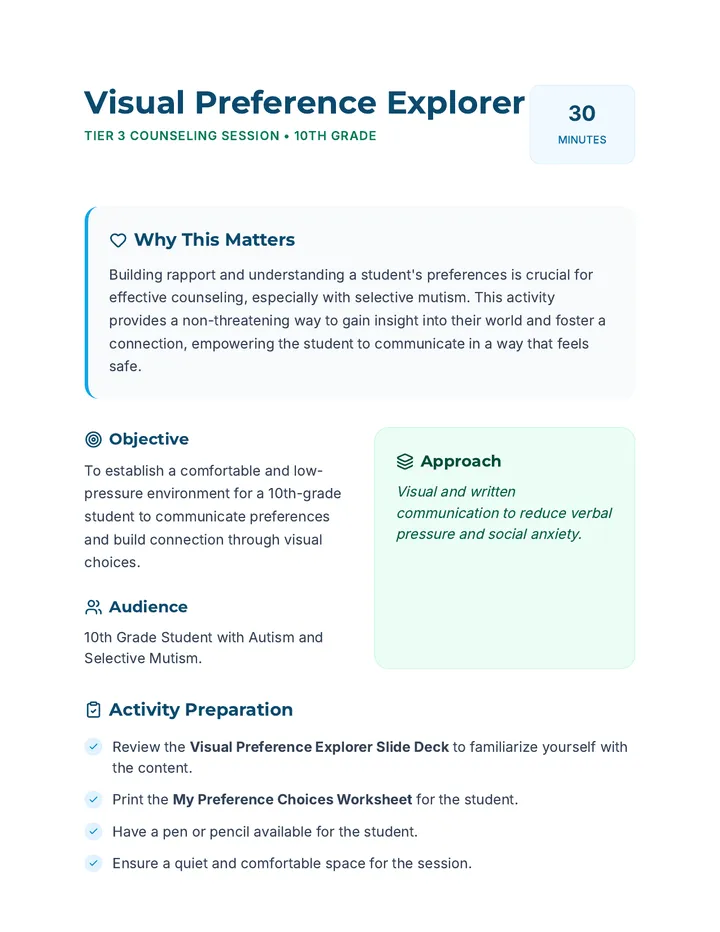
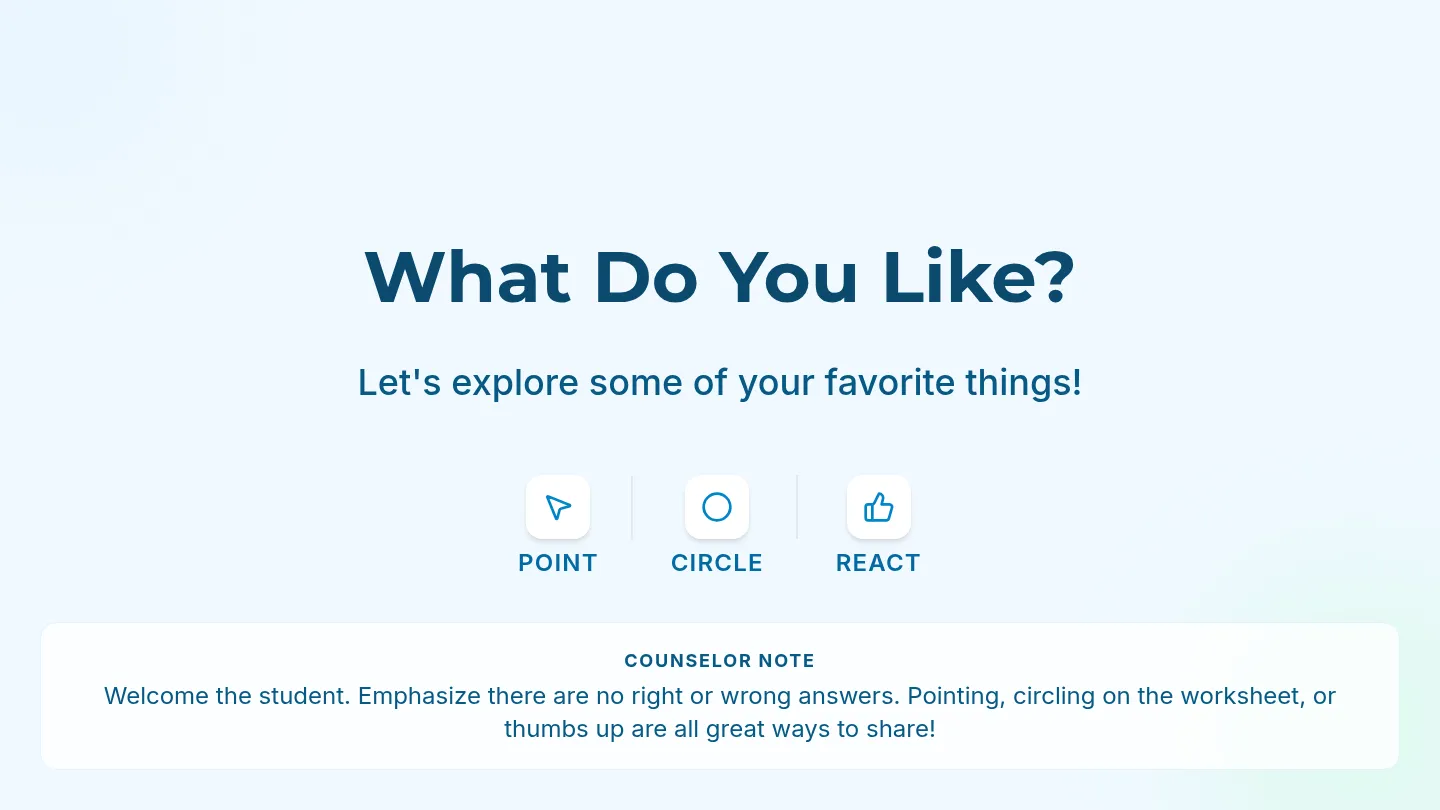
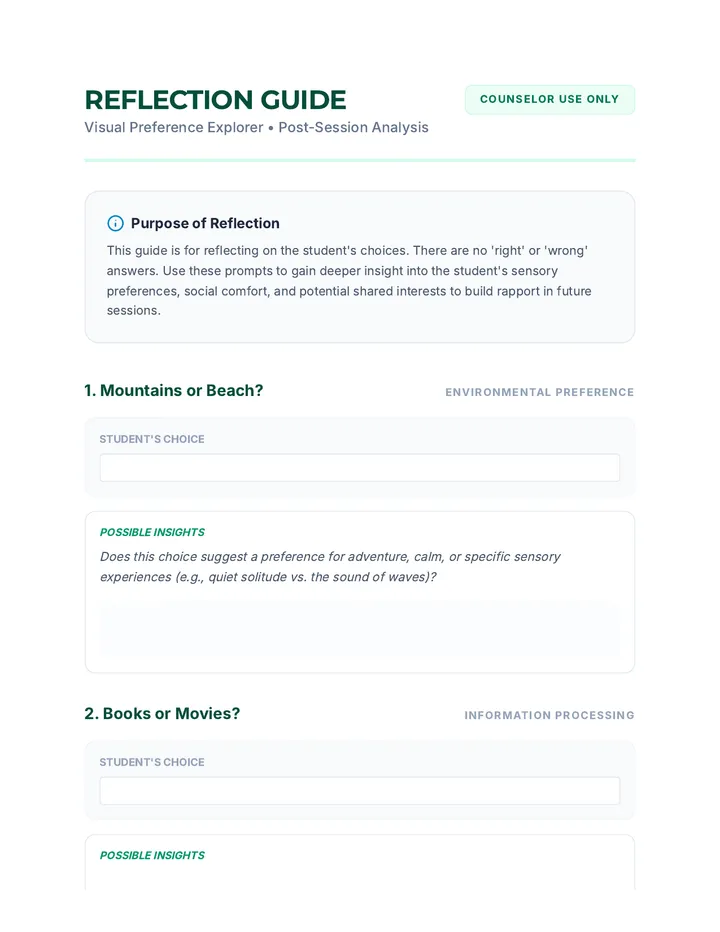
A Tier 3 counseling session designed for a 10th-grade student with autism and selective mutism. This lesson uses visual choices and low-pressure communication to build rapport and explore student preferences.
A 60-minute parent workshop designed to teach the principles of gradual exposure and how to use a 'bravery ladder' to help children overcome fears and build resilience.
A 49-minute lesson for 7th graders introducing the ABC skill (Accumulating Positives, Building Mastery, Coping Ahead) to build emotional resilience and proactive coping strategies.
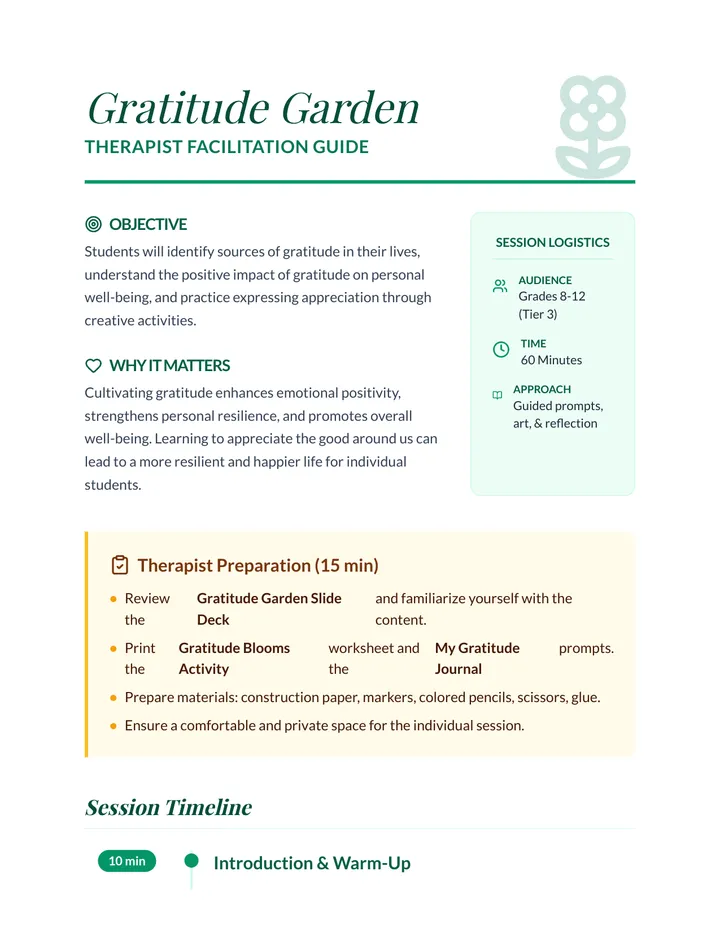
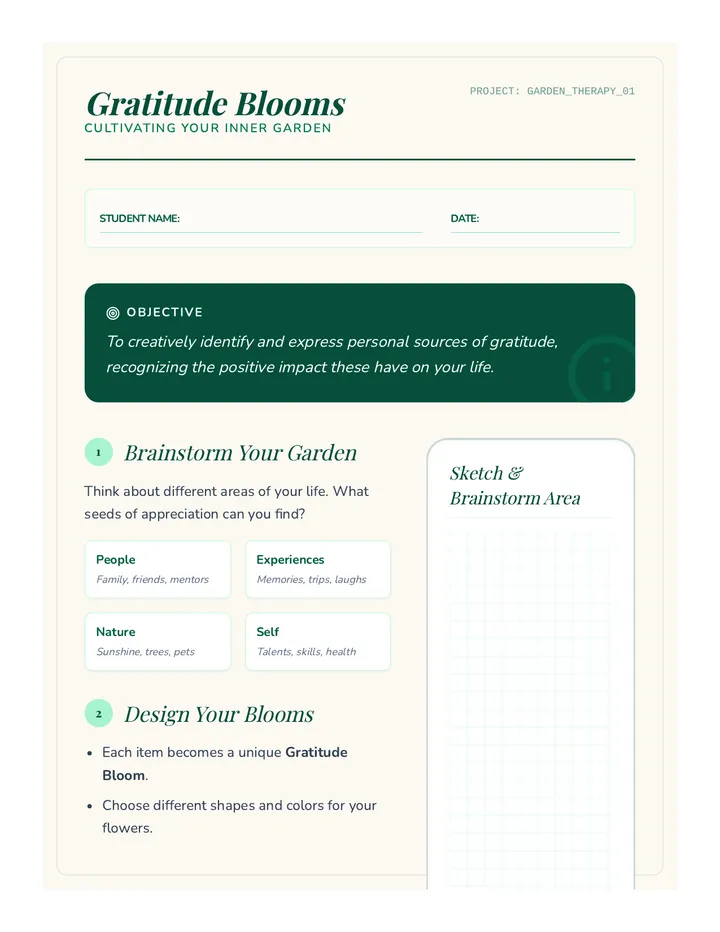
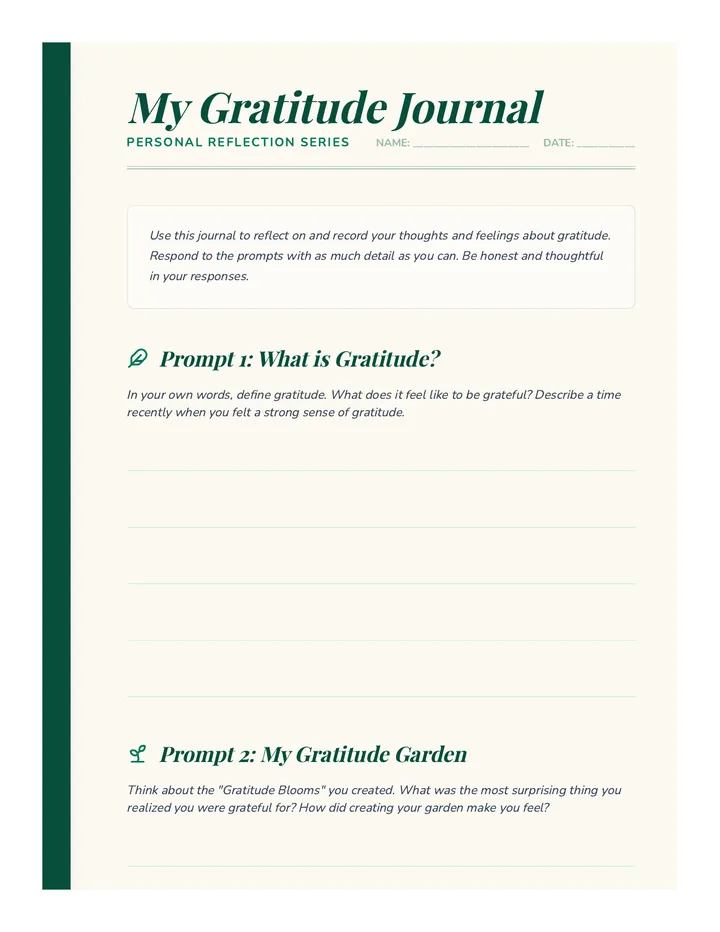
A therapeutic lesson for grades 8-12 focusing on cultivating gratitude through creative expression and reflection. This individual session uses a botanical metaphor to help students identify sources of appreciation and understand the benefits of a grateful mindset.
This 20-minute small group session for 6th graders introduces the concept of depression in age-appropriate terms and teaches behavioral activation strategies through the 'Behavior Boost' technique. Students identify mood-boosting activities and commit to a 'Boost Challenge' to manage difficult feelings.
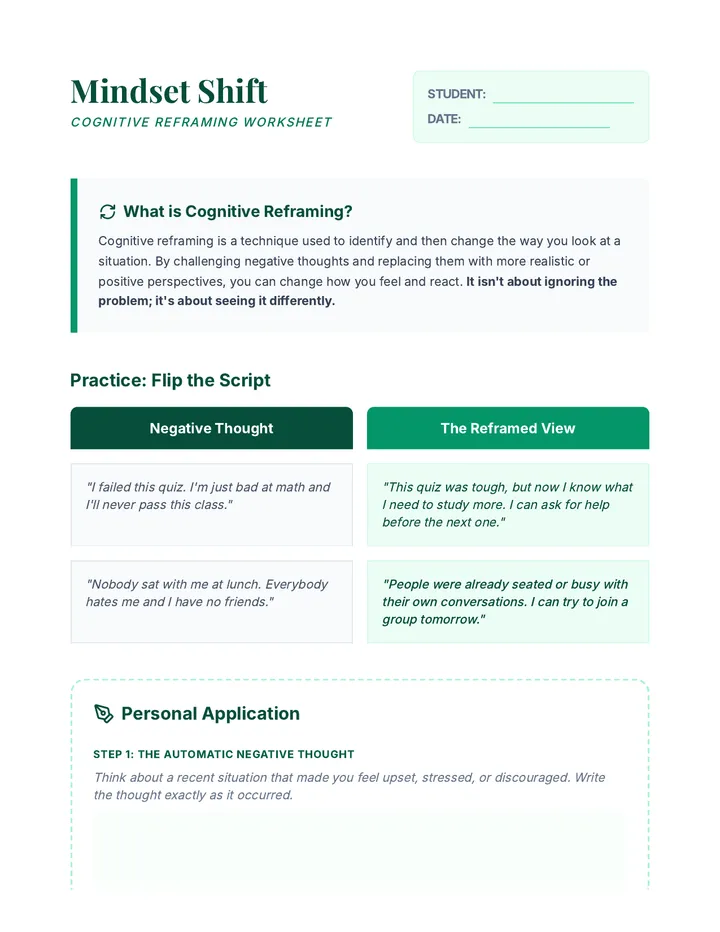
A comprehensive lesson for grades 8-12 focusing on identifying emotions, cognitive reframing, and gratitude to build emotional resilience.
A 45-minute Tier 2 small-group session for 10th graders using SFBT techniques to visualize success and map concrete steps toward personal goals. Students use the 'miracle question' to define their vision and create actionable plans.
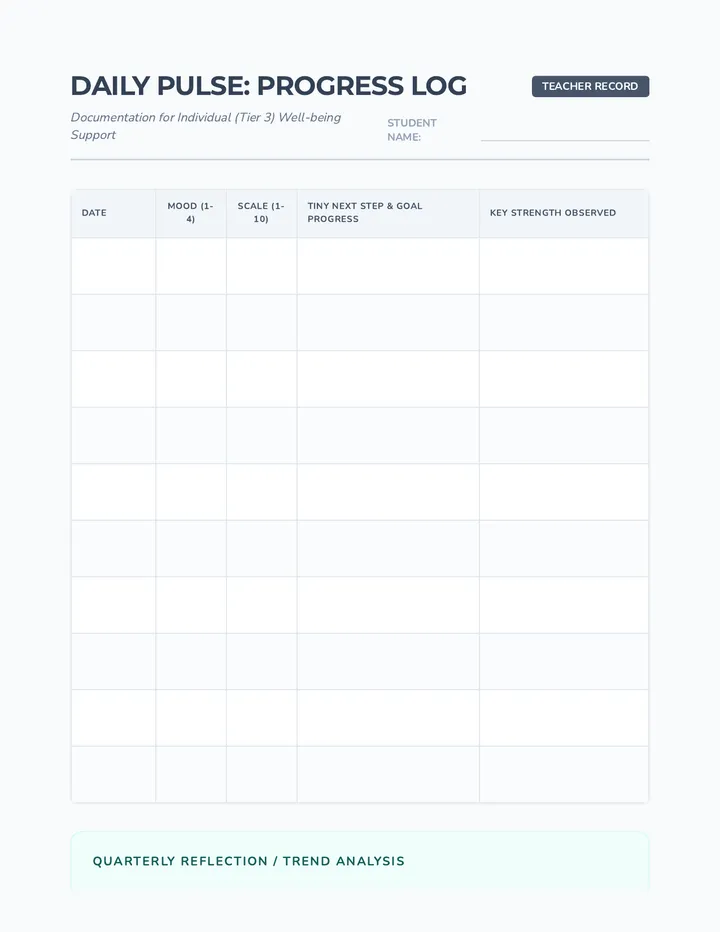
A quick 10-minute check-in for 3rd-5th grade students to reflect on their feelings and outlook using solution-focused questions. This Tier 3 intervention helps educators monitor student well-being and co-create small, actionable steps for improvement.