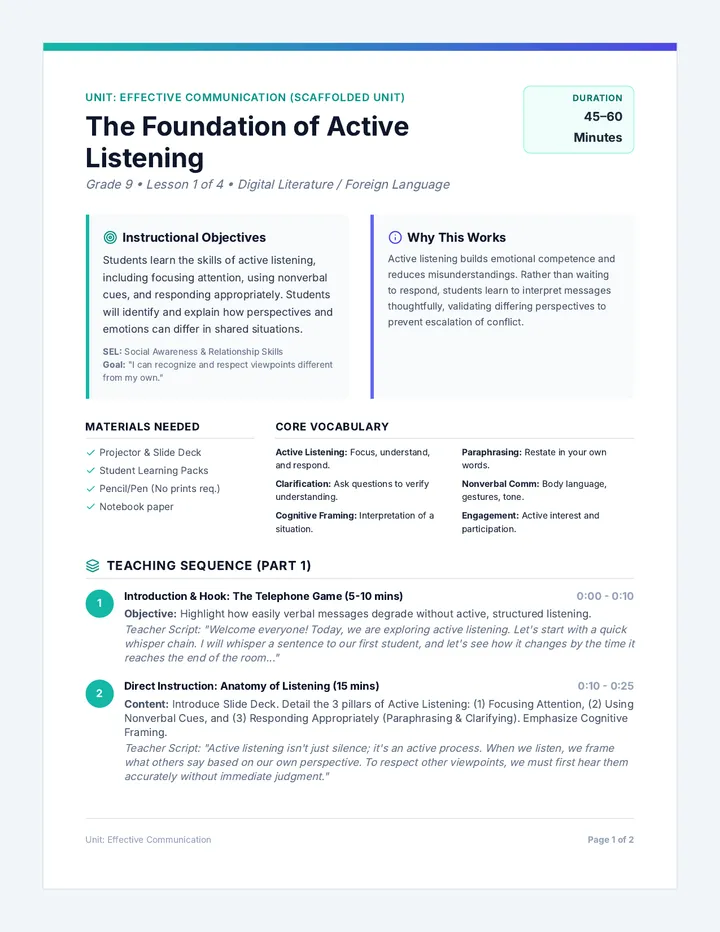
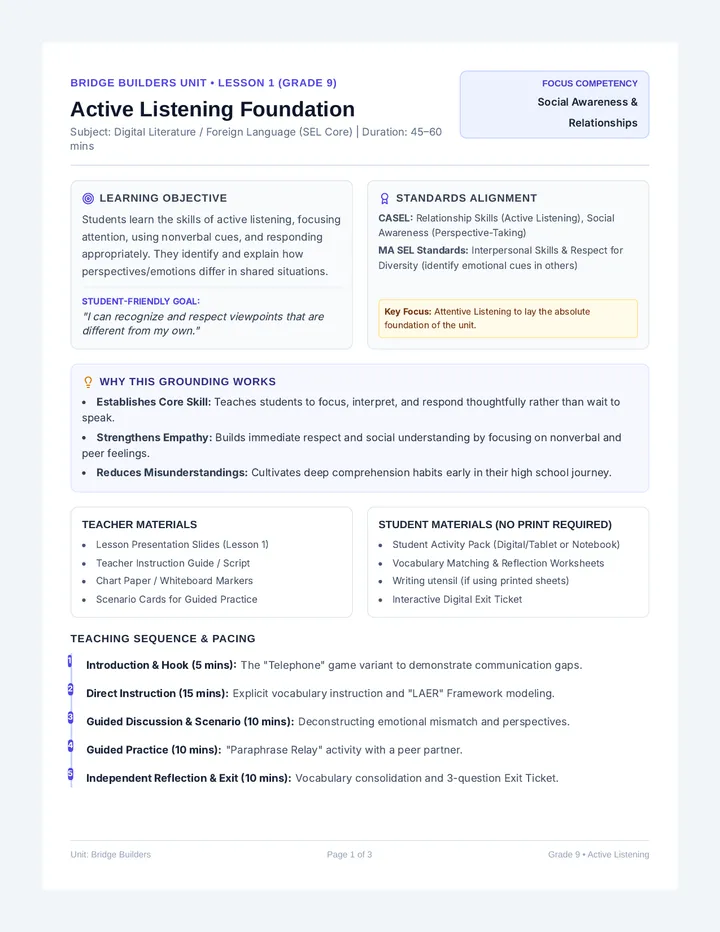
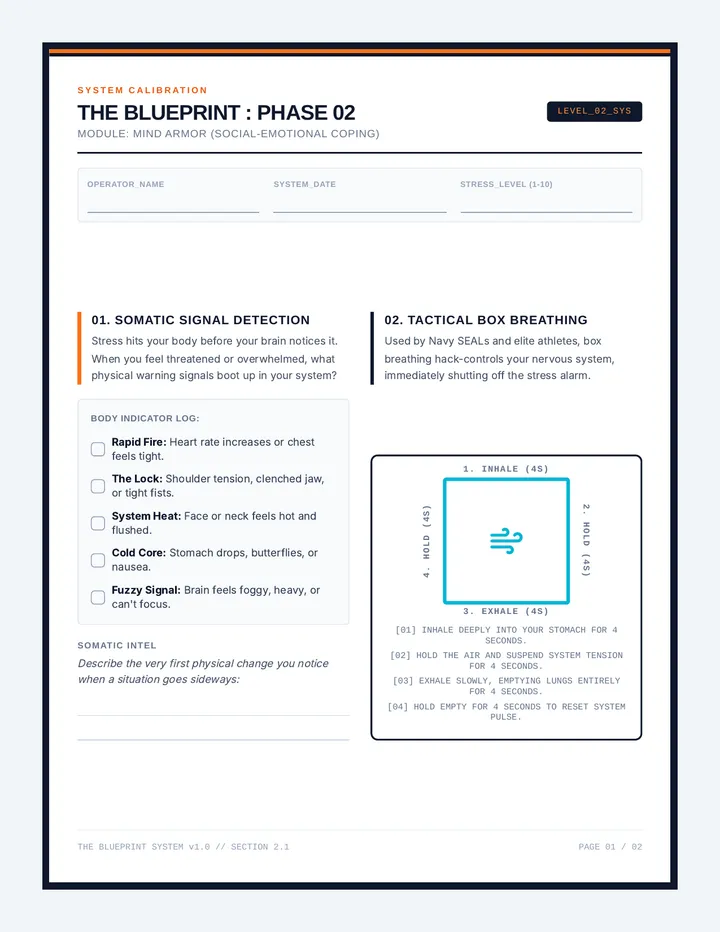
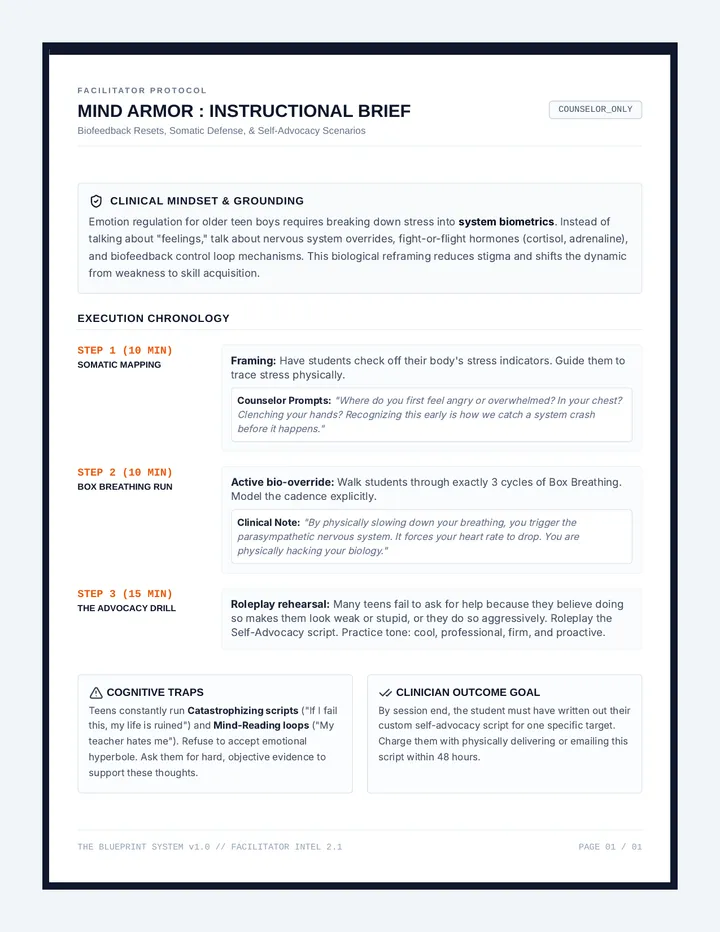
Resilience Lesson PlanBuilding Emotional Resilience Teacher Lesson Plan Grades 8-12 Time: 35 Minutes Why This Matters This lesson equips students with the skills to manage their emotions effectively, fostering emotional intelligence and resilience. By discussing emotions openly and practicing strategies like cognitive reframing and gratitude, students learn to bounce back from challenges and maintain a healthier mental state. Objective Students will identify various emotions and practice specific coping mechanisms (reframing and gratitude) to build resilience. Materials Needed Discussion Questions Handout Cognitive Reframing Worksheet Gratitude Exercise Handout Pens and Paper Prep Tasks Print student worksheets (1 per student) Set up slide deck for visual guidance Arrange seating for group discussion Lesson Instructions 5 Mins Introduction Begin with a brief introduction to the concept of emotional resilience: the ability to "bounce back." Explain the importance of understanding and managing emotions for long-term well-being. Outline the objectives of today's lesson. 10 Mins Discussion on Emotions Use the provided discussion questions to facilitate a conversation about emotional experiences. Encourage students to share thoughts and experiences (remind them of the "safe space" rules). Highlight the importance of recognizing and naming emotions to gain control over them. 10 Mins Cognitive Reframing Distribute the Cognitive Reframing Worksheet. Guide students through the process: identifying a negative thought and challenging it with a positive or neutral perspective. Allow students to work individually or in pairs to complete the examples. 5 Mins Gratitude Exercise Hand out the Gratitude Exercise Handout. Instruct students to list three things they are grateful for and reflect on how this shifts their mood. Briefly discuss the science-backed benefits of regular gratitude practice. 5 Mins Closure Recap key points: naming emotions, reframing, and gratitude. Ask students to share one new thing they learned or one strategy they will try this week. Encourage daily practice of these resilience "muscles."
Resilience Discussion JournalResilience Reflections Class Discussion Journal Name: Date: What does emotional resilience mean to you? Think about resilience in terms of bouncing back from challenges or navigating tough situations. Can you share a time when you felt a strong emotion? How did you handle it? Reflect on your emotional responses and the coping strategies you used in that moment. Why is it important to recognize and name our emotions? Consider how identifying specific emotions can help in managing them effectively.
Cognitive Reframing WorksheetMindset Shift Cognitive Reframing Worksheet Student: Date: What is Cognitive Reframing? Cognitive reframing is a technique used to identify and then change the way you look at a situation. By challenging negative thoughts and replacing them with more realistic or positive perspectives, you can change how you feel and react. It isn't about ignoring the problem; it's about seeing it differently. Practice: Flip the Script Negative Thought The Reframed View "I failed this quiz. I'm just bad at math and I'll never pass this class." "This quiz was tough, but now I know what I need to study more. I can ask for help before the next one." "Nobody sat with me at lunch. Everybody hates me and I have no friends." "People were already seated or busy with their own conversations. I can try to join a group tomorrow." Personal Application Step 1: The Automatic Negative Thought Think about a recent situation that made you feel upset, stressed, or discouraged. Write the thought exactly as it occurred. Step 2: The Resilience Reframe How can you look at this situation from a different perspective? Focus on what you can control or what you learned.
Gratitude Shift HandoutGratitude Shift Refueling Your Resilience Name: Date: "Gratitude turns what we have into enough." Today, I am grateful for... Emotional Reflection Take a moment to sit with these thoughts. How does focusing on these three things change your current emotional state? Does it shift your perspective on any stressors you are currently facing? Practice this daily to build your resilience muscle.
Resilience Lesson SlidesBuilding Emotional Resilience Bouncing Back & Growing Through What is Resilience? Resilience is the ability to adapt to difficult situations. When stress, adversity, or trauma strikes, you still experience anger, grief, and pain, but you're able to keep functioning. It is not: Never feeling bad Being "tough" and hiding emotions Going through life alone Class Discussion 01 What does emotional resilience mean to you? 02 How did you handle a strong emotion recently? 03 Why should we name our emotions? "Name It to Tame It" Research shows that when we put feelings into words, we can actually decrease the brain's emotional response. Cognitive Reframing Reframing is a way of viewing a situation differently to change its emotional impact. The Process Identify the negative thought. Challenge its accuracy. Look for a more helpful view. The Reframing Flip Old Thought "I'm terrible at this and I should just give up." Reframed Thought "This is hard for me right now, but I can improve with practice." The Gratitude Shift Gratitude isn't about ignoring the bad stuff—it's about magnifying the good stuff. Let's practice together. Resilience is a Muscle NAME IT Label your feelings. REFRAME IT Change your view. GIVE THANKS Focus on the good. What is one strategy you will try today?