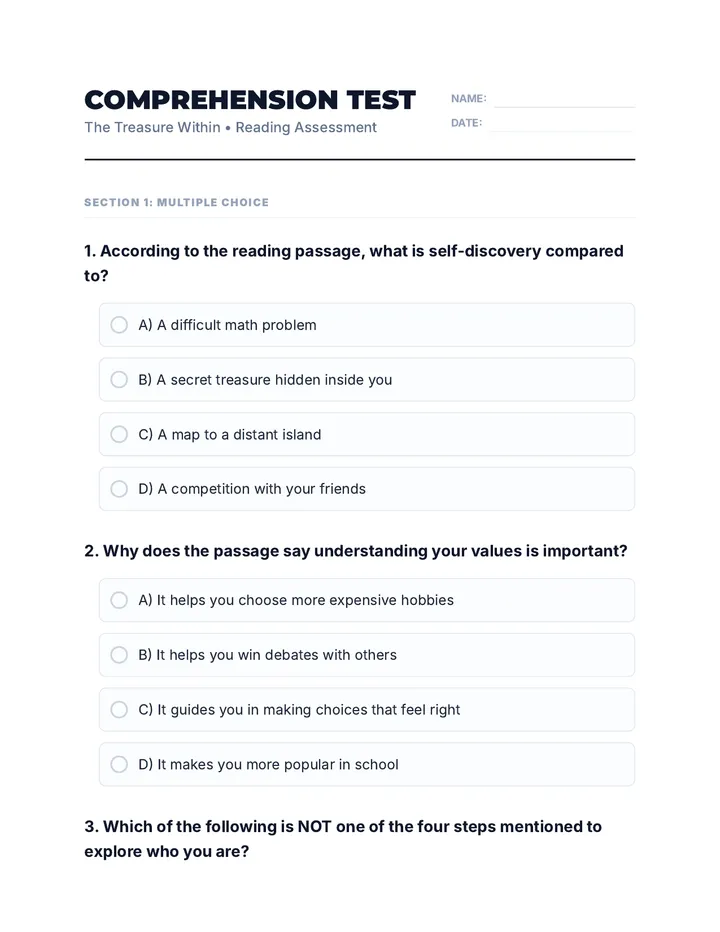
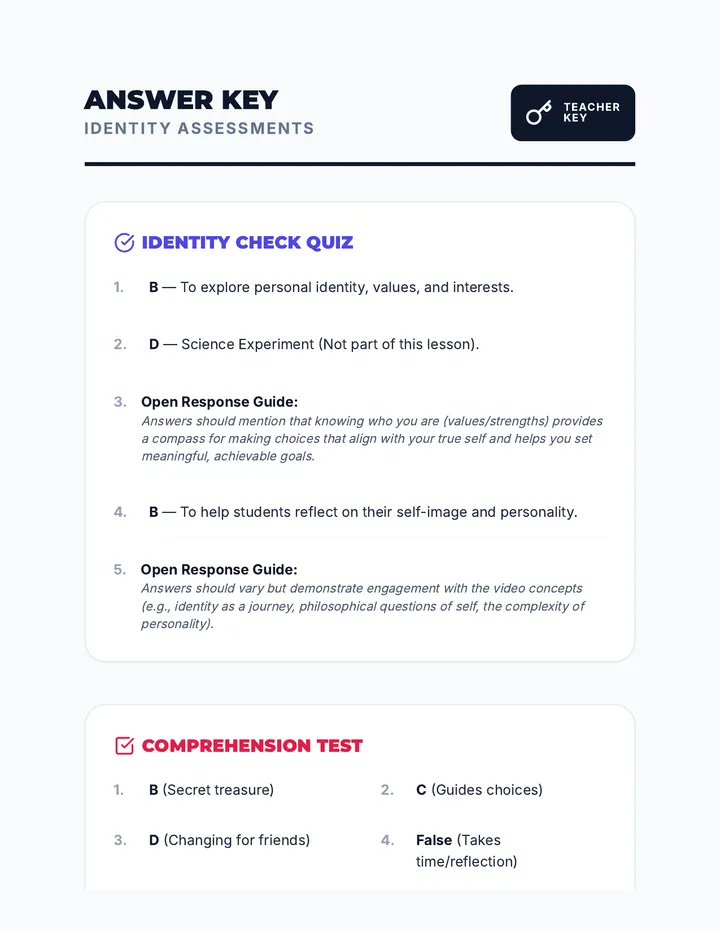
Tools for identifying personal talents and areas for improvement through structured reflection. Builds student confidence while establishing concrete goals for personal development.
A 5-week individual lesson series for 8th-grade students with social-emotional disabilities, introducing core DBT modules: Mindfulness, Distress Tolerance, Emotion Regulation, Interpersonal Effectiveness, and Walking the Middle Path.
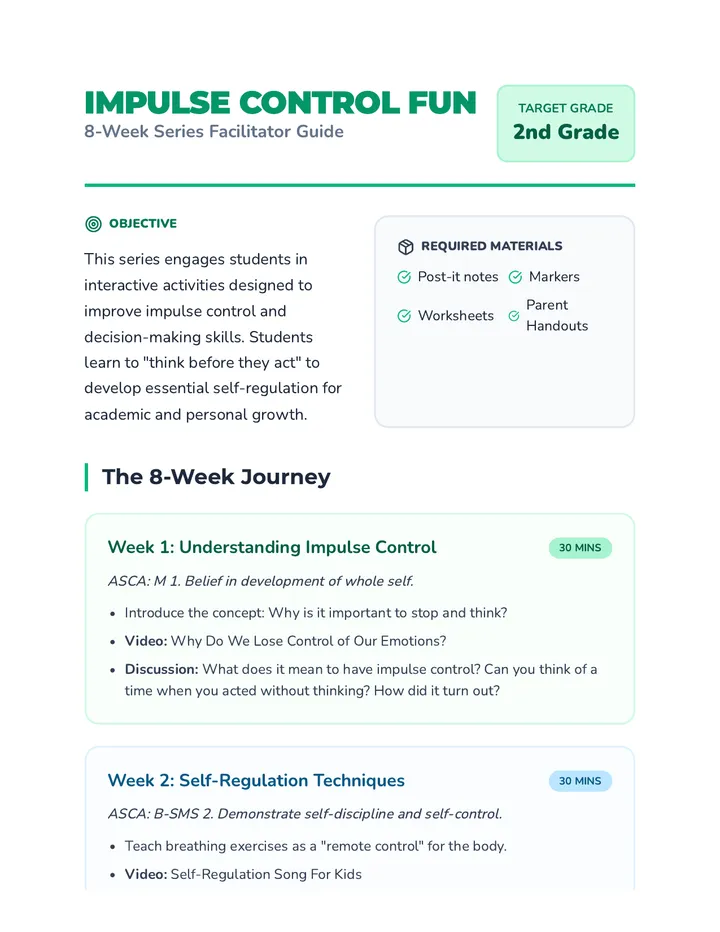
An 8-week series for 2nd graders to develop impulse control, self-regulation, and decision-making skills through interactive activities and reflection.
A Kindergarten sequence focused on teaching emotional regulation through positive actions. Students learn to use activities like physical movement, deep breathing, and creative expression to 'switch the channel' from negative to positive emotions, building a toolkit of coping strategies.
A 10-session Tier 3 social-emotional learning unit for students with ASD, focusing on identifying emotions, recognizing dysregulation, and applying self-regulation strategies through a space-themed journey.
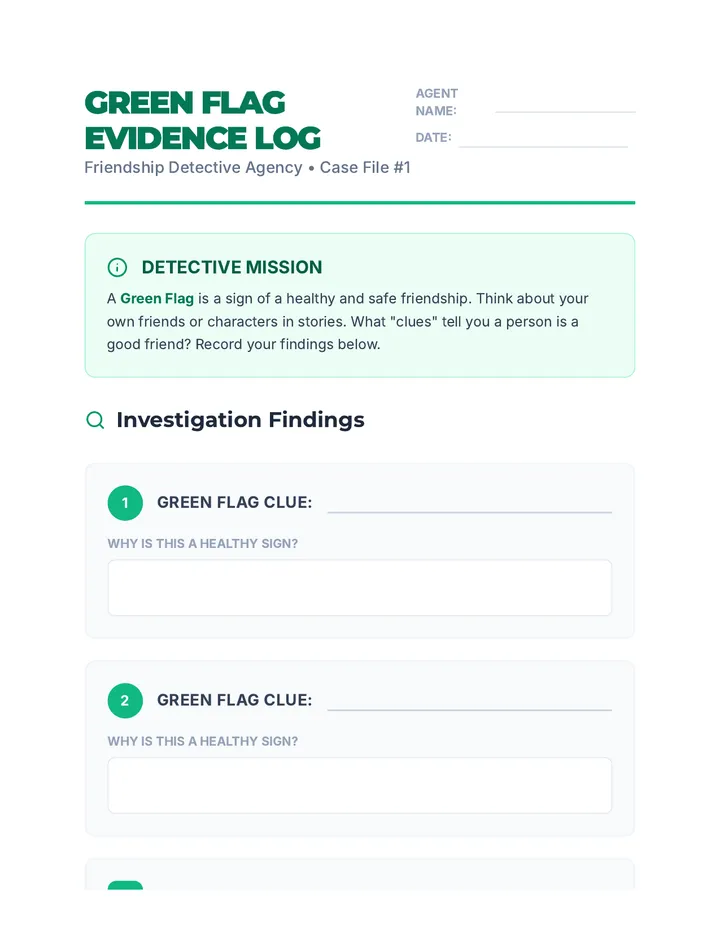
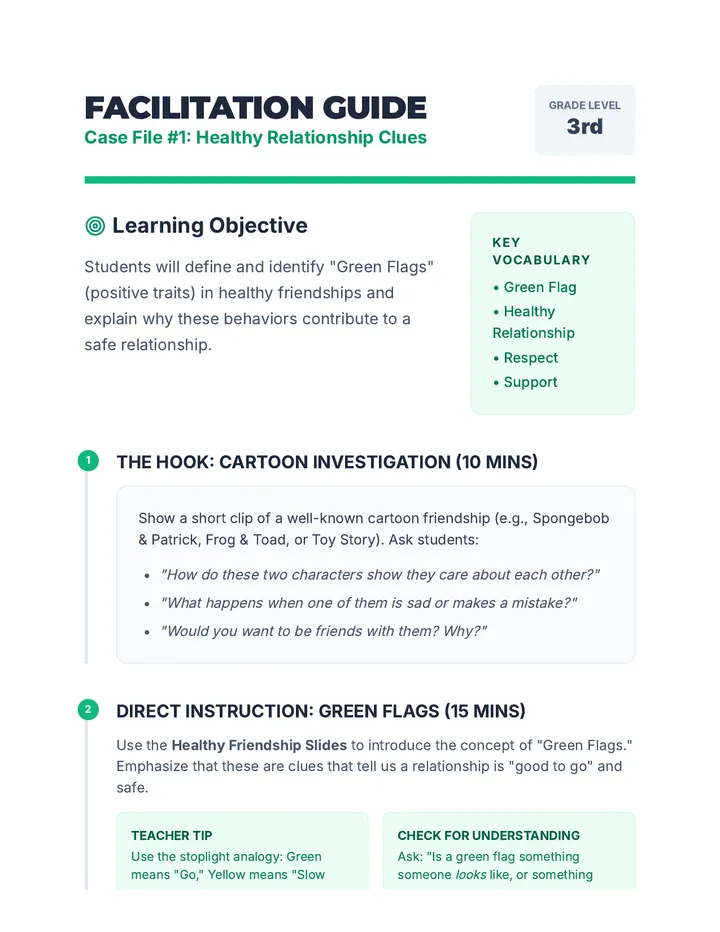
A 5-lesson unit where students become 'Friendship Detectives' to identify healthy and unhealthy relationship dynamics. Using case studies, sorting games, and creative projects, students learn to recognize green and red flags, distinguish between teasing and bullying, and resolve conflicts safely.
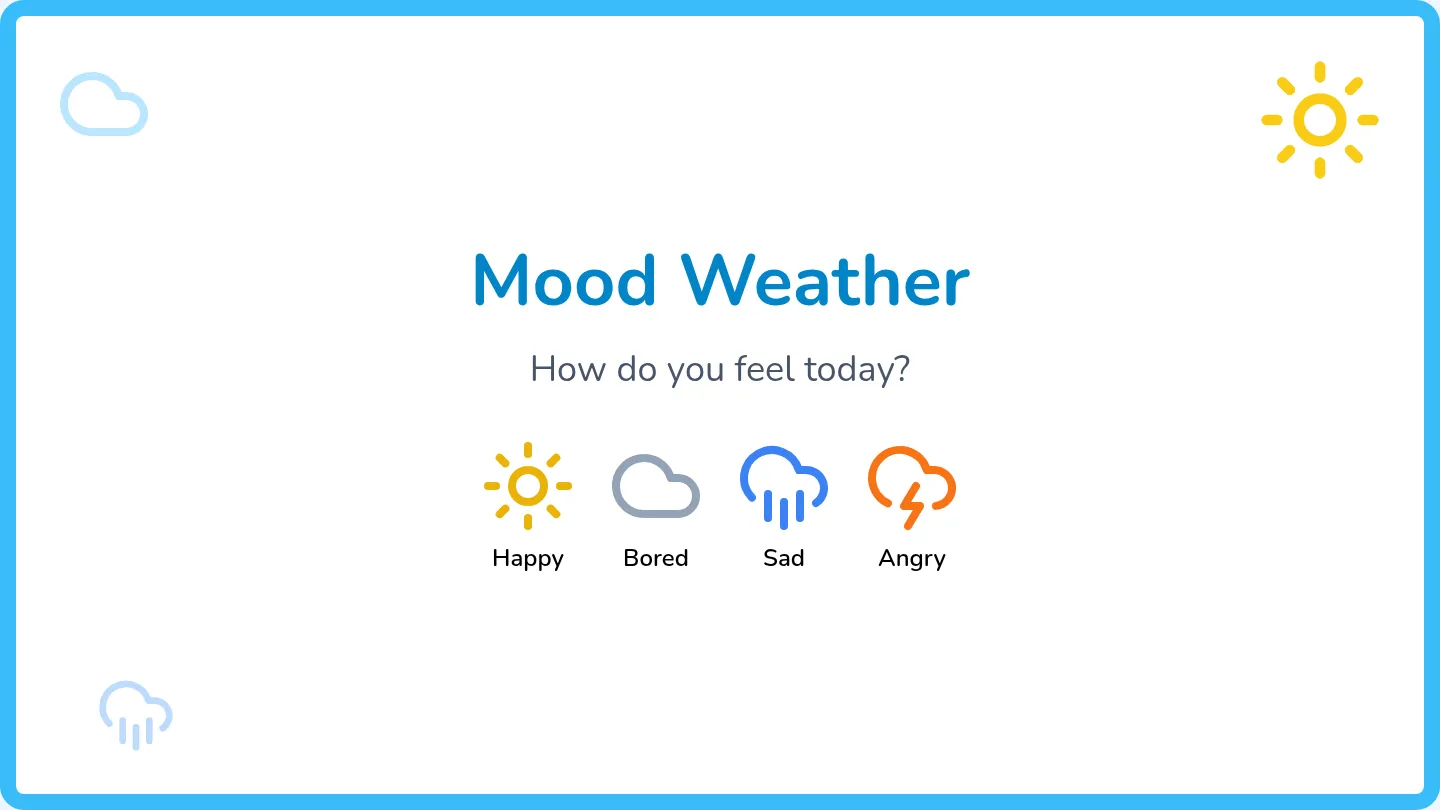
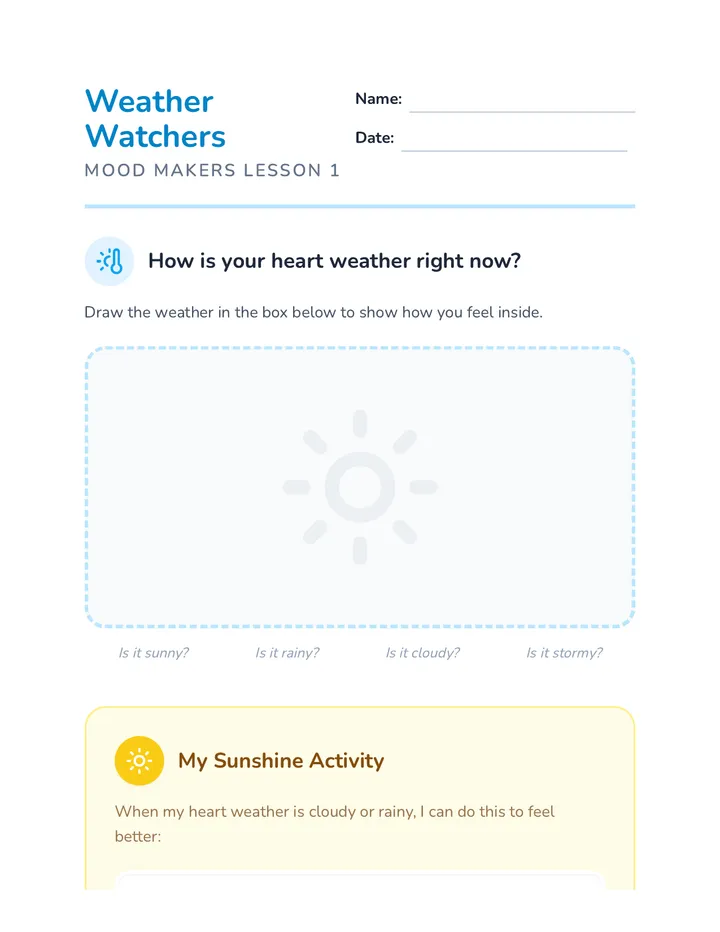
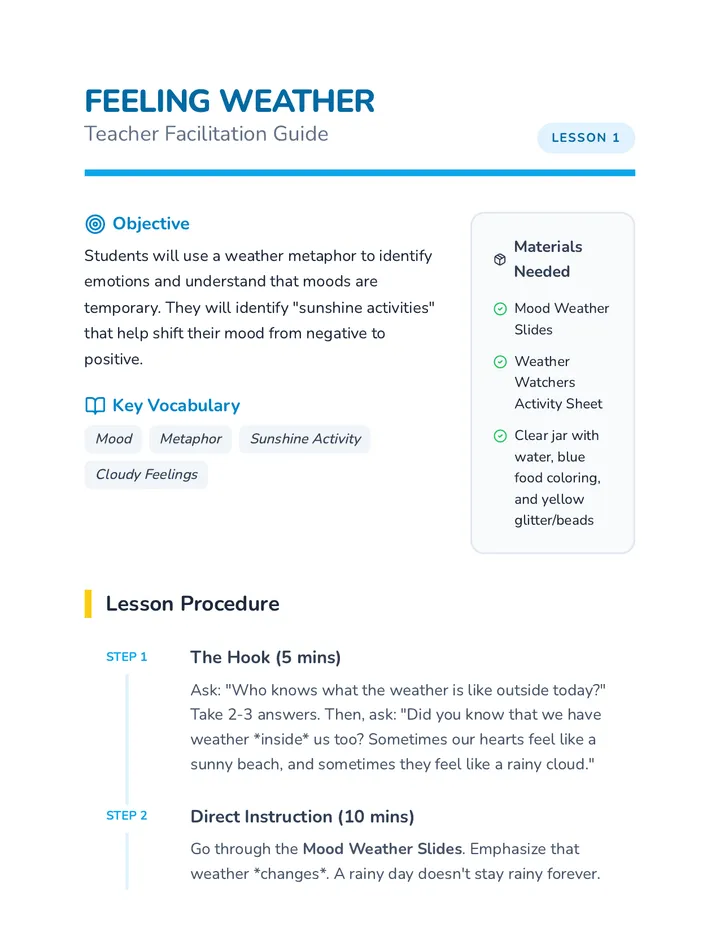
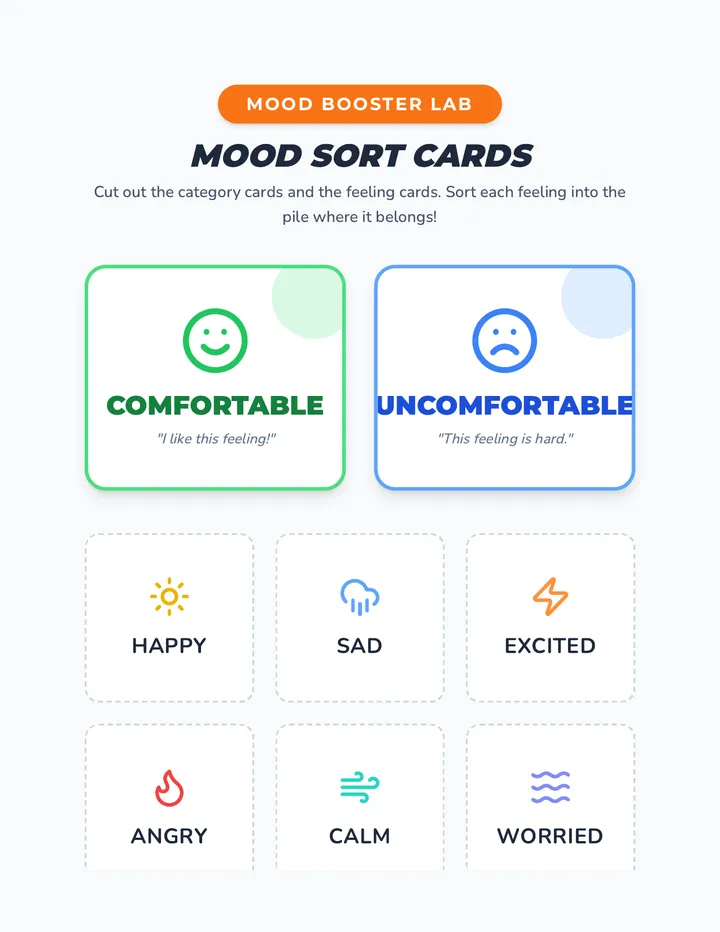
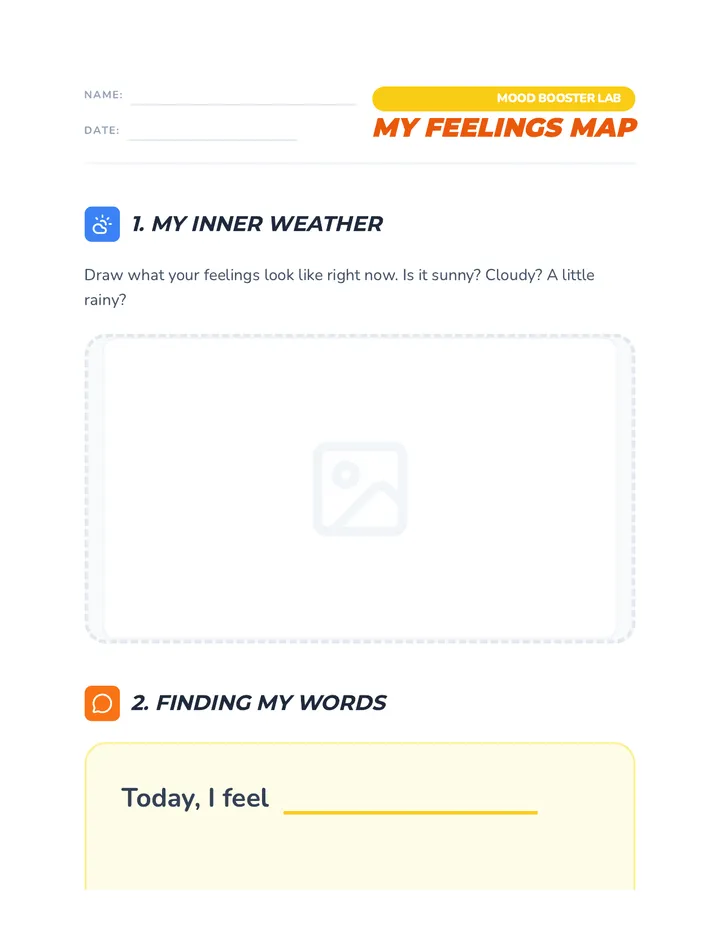
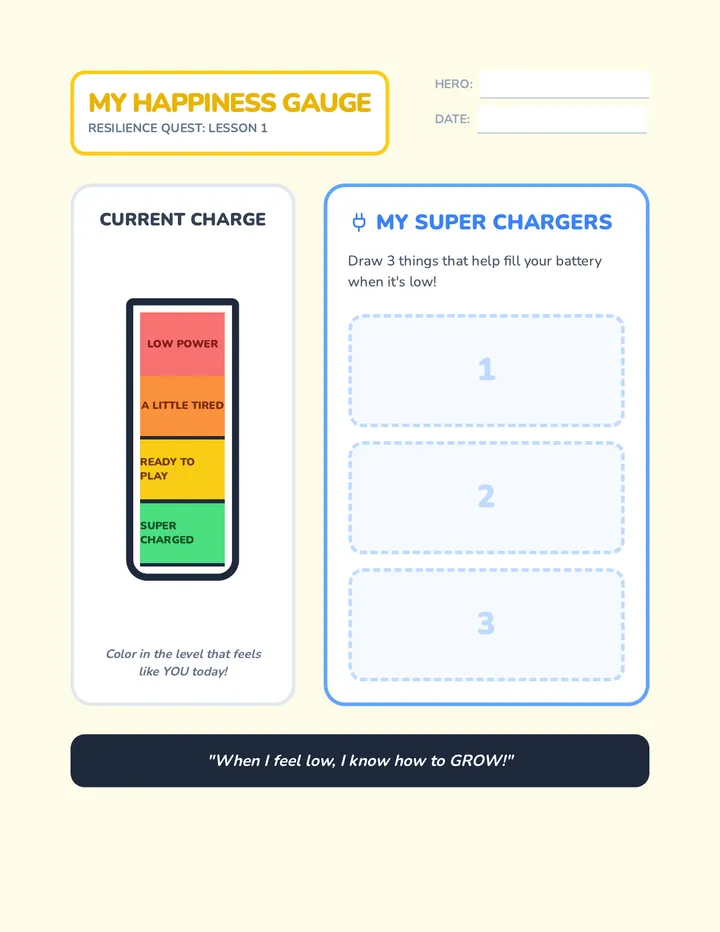
This sequence introduces first-grade students to the fundamental connection between their actions and their emotions, serving as a foundational introduction to behavioral activation. Students explore how specific activities can shift their mood and create a personalized action plan for emotional regulation.
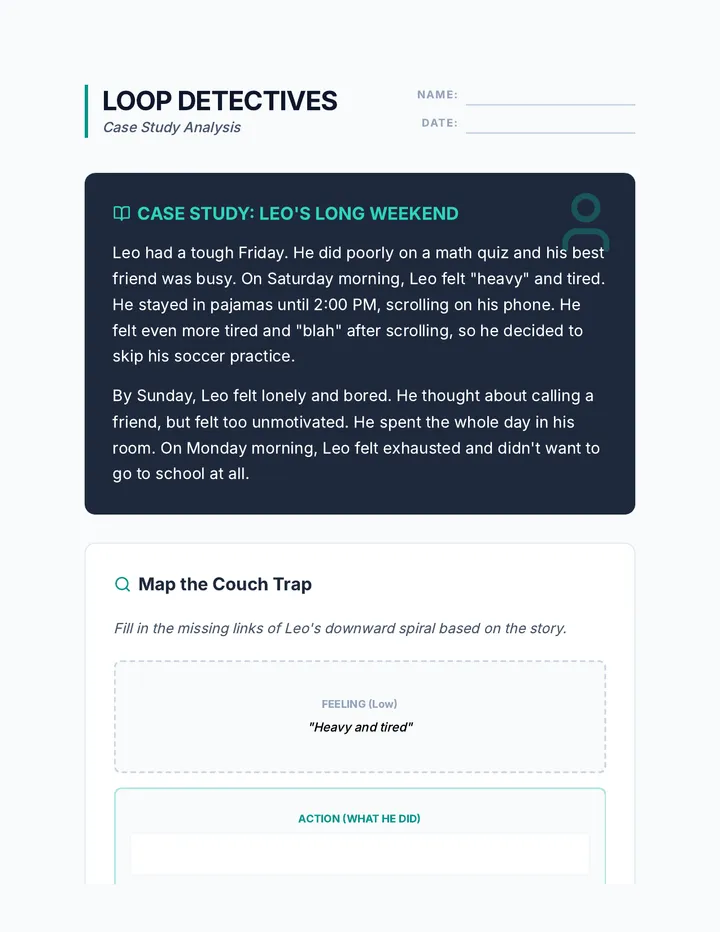
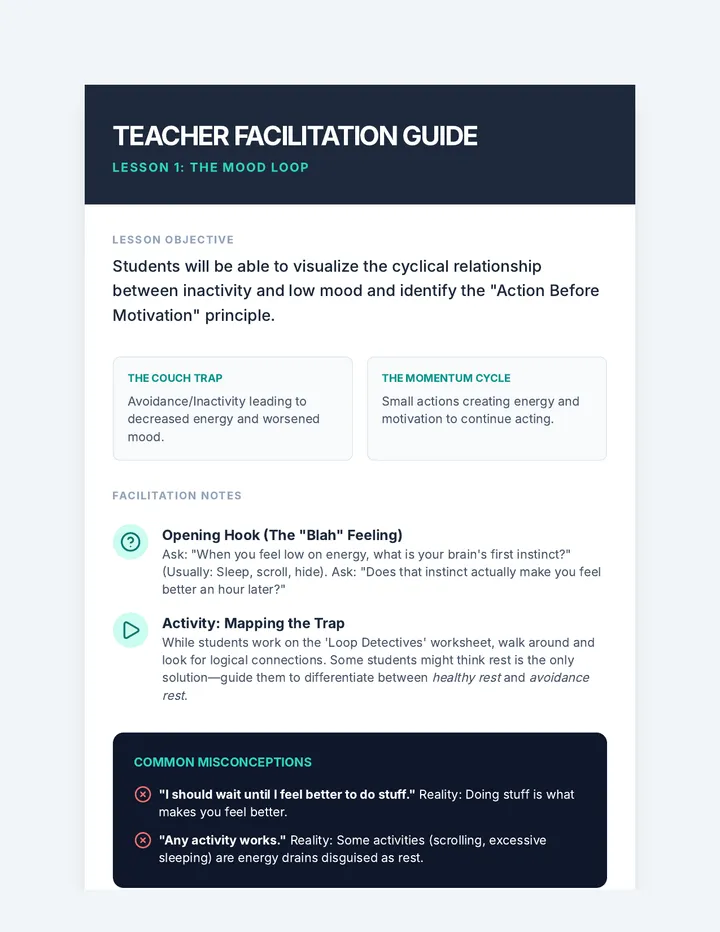
A comprehensive sequence for 6th graders to understand and apply behavioral activation. Students learn how their actions impact their emotions, track their energy levels, brainstorm nourishing activities, and create a sustainable weekly schedule to improve their mental well-being.
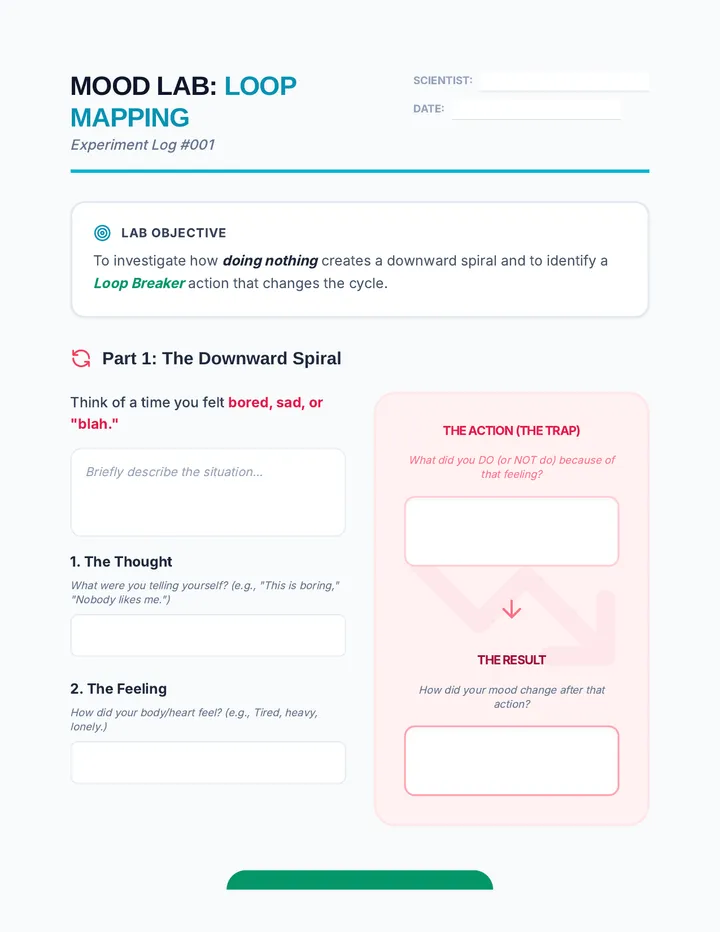
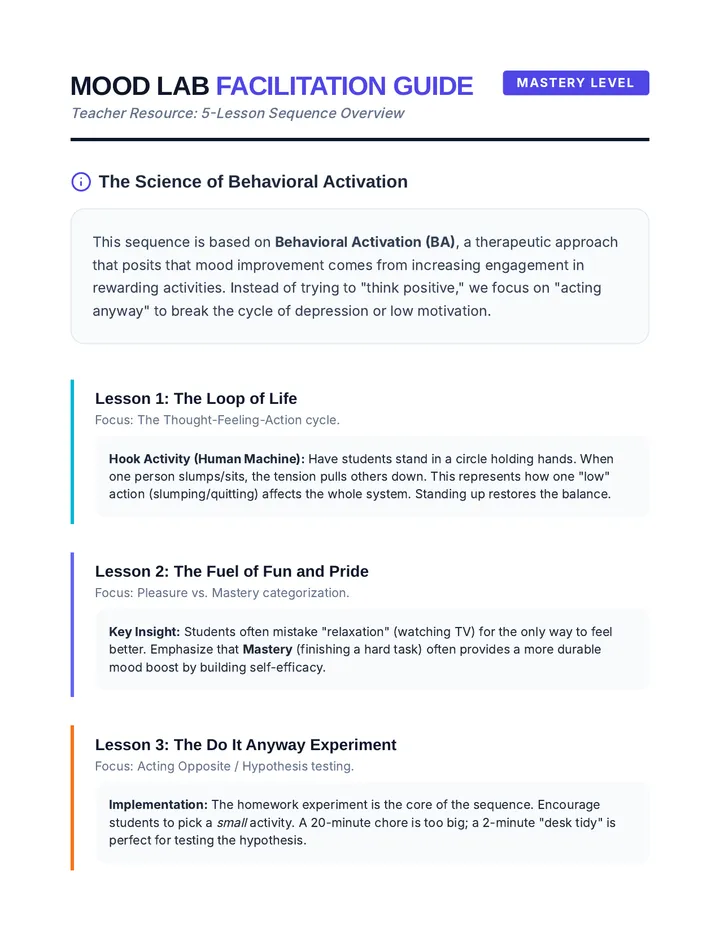
In this inquiry-driven sequence, students explore behavioral activation, investigating how their actions influence their emotions. They learn to distinguish between pleasure and mastery activities, conduct personal experiments to track mood changes, and create a personalized evidence-based plan for mood regulation.
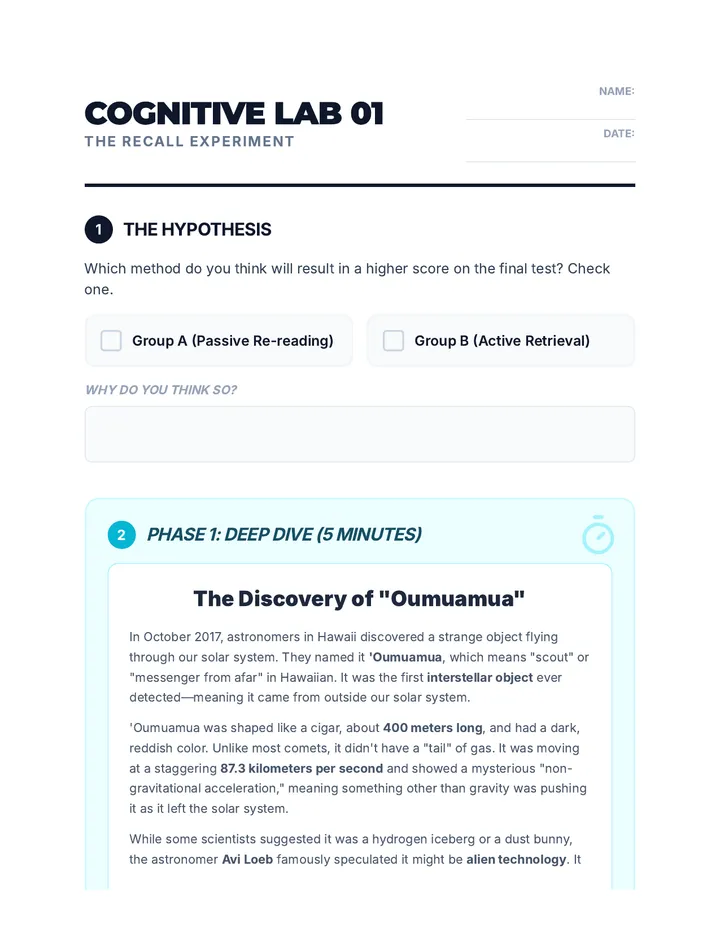
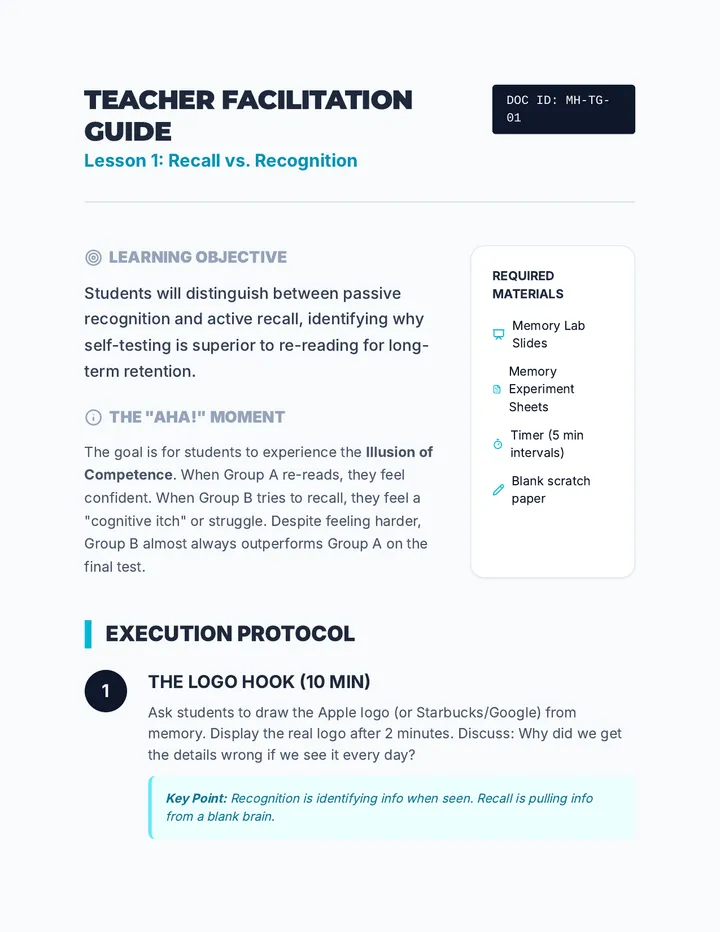
This sequence shifts focus from the design of the study guide to its utility, emphasizing active recall and self-testing strategies to help students distinguish between familiarity and actual mastery of material.
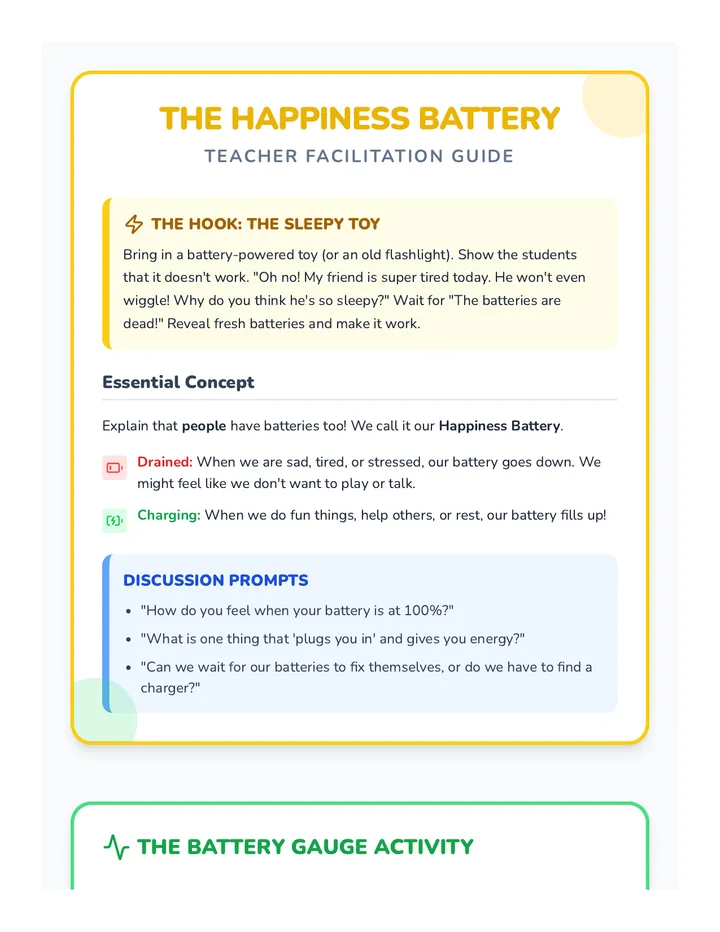
A 1st-grade counseling sequence that uses game-based mechanics and metaphors to teach behavioral activation, emotional resilience, and the importance of daily positive routines.
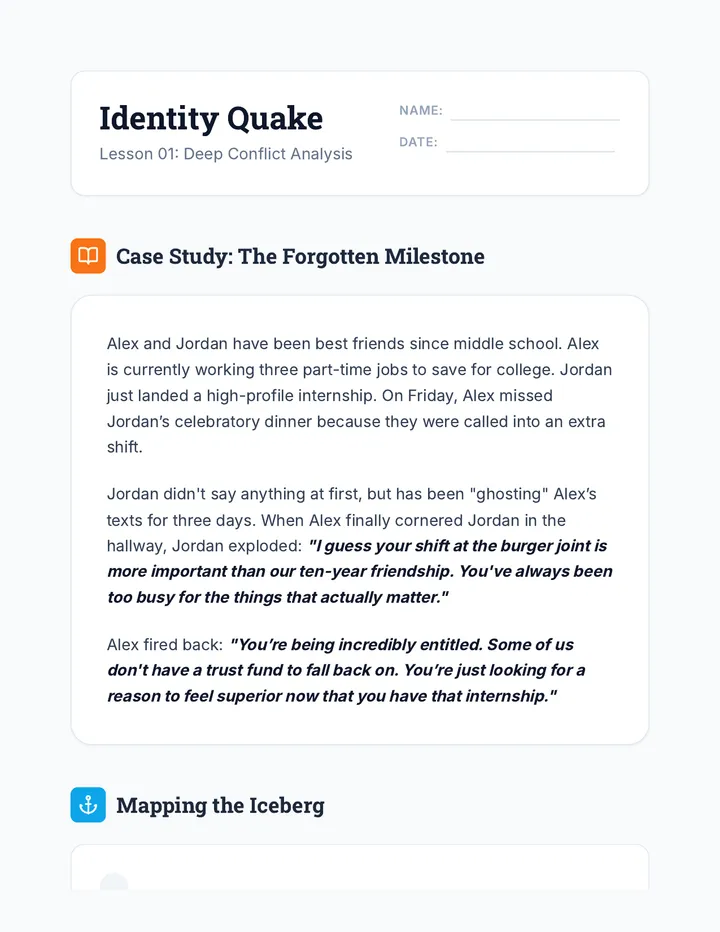
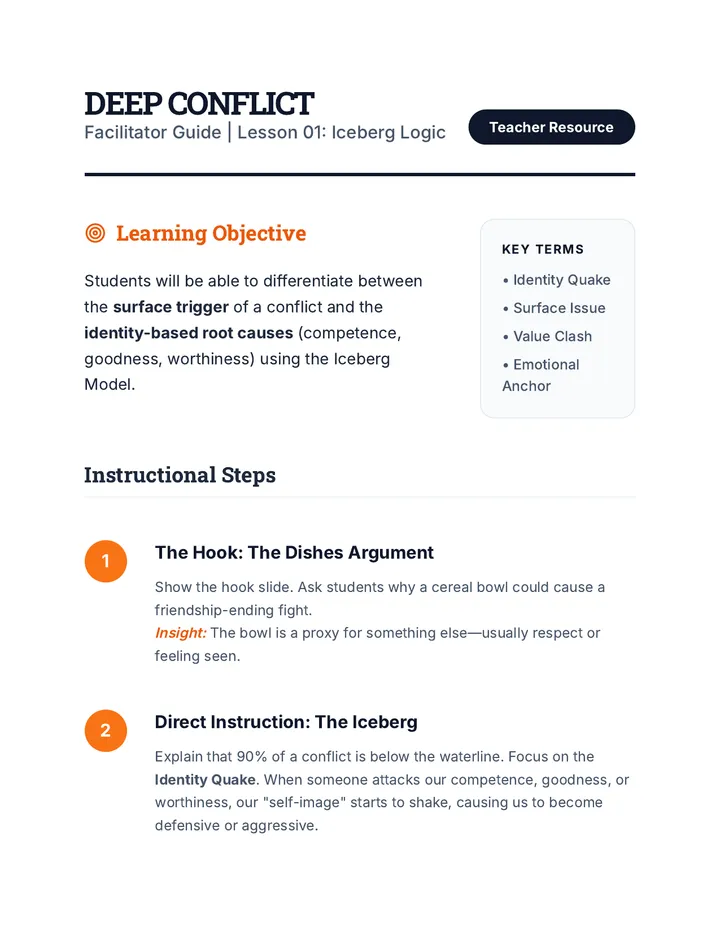
This sequence explores complex conflict navigation for 12th graders, moving from the psychological roots of identity-based conflict to the practical application of restorative circles and sustainable resolution design.
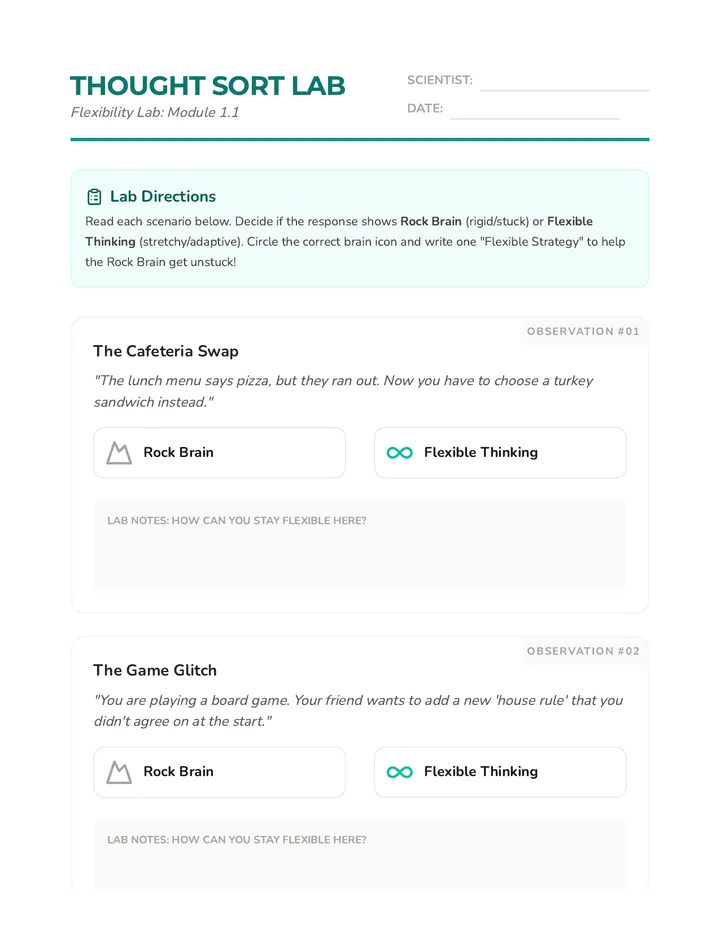
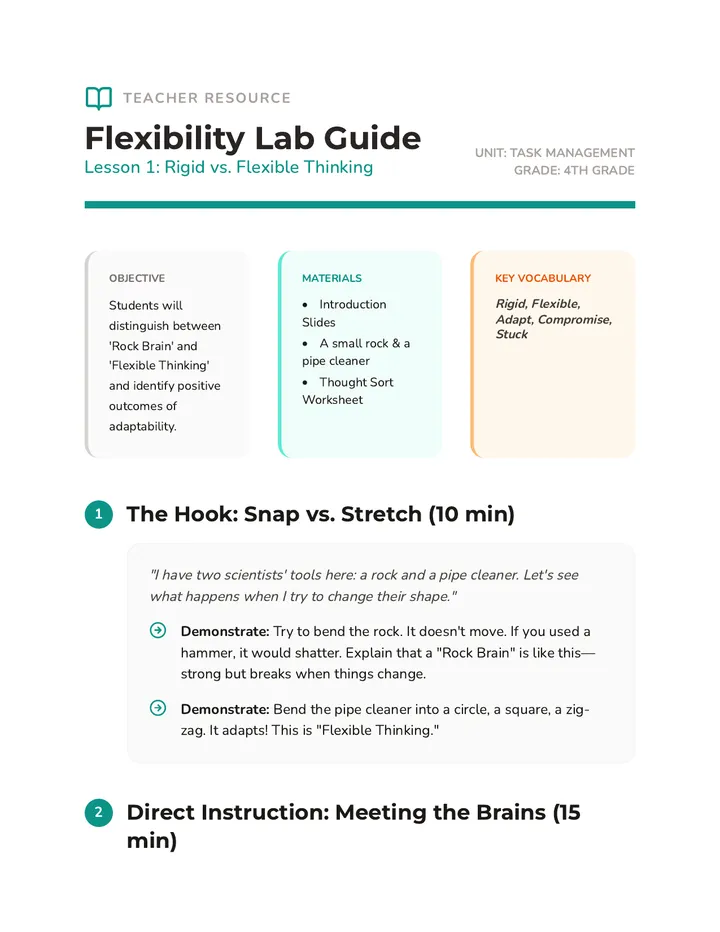
A 5-lesson sequence designed for 4th-grade students to build cognitive flexibility. Students learn to identify rigid versus flexible thinking, recognize physical stress responses to change, practice rapid task-switching, and apply emotional regulation strategies through role-play and a final 'flexibility obstacle course'.
A fun fair station for 4th-5th graders to explore and celebrate their unique strengths through interactive activities, games, and art.
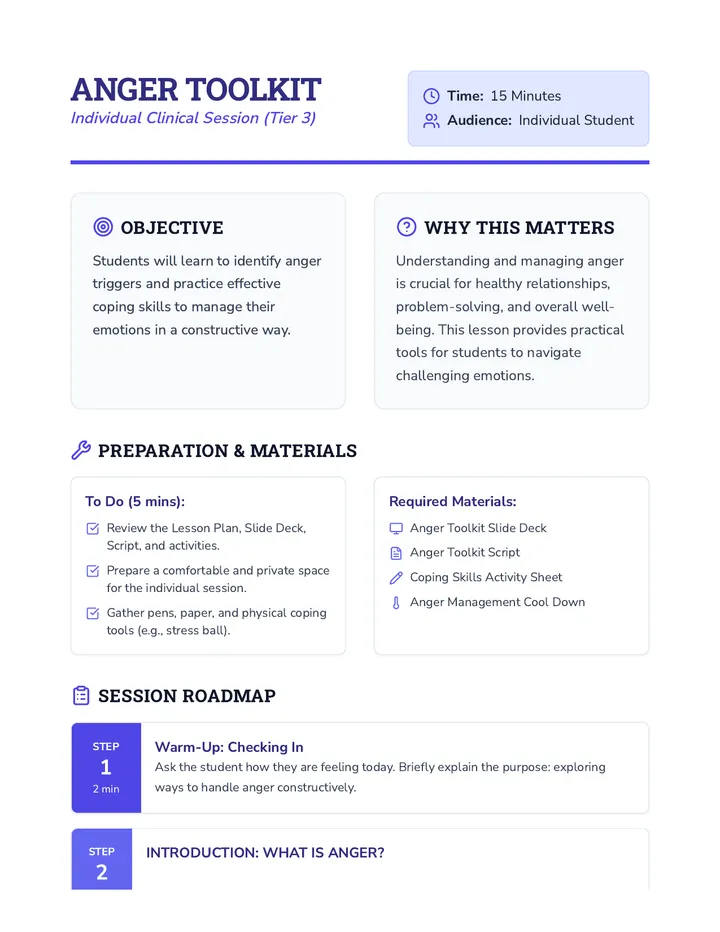
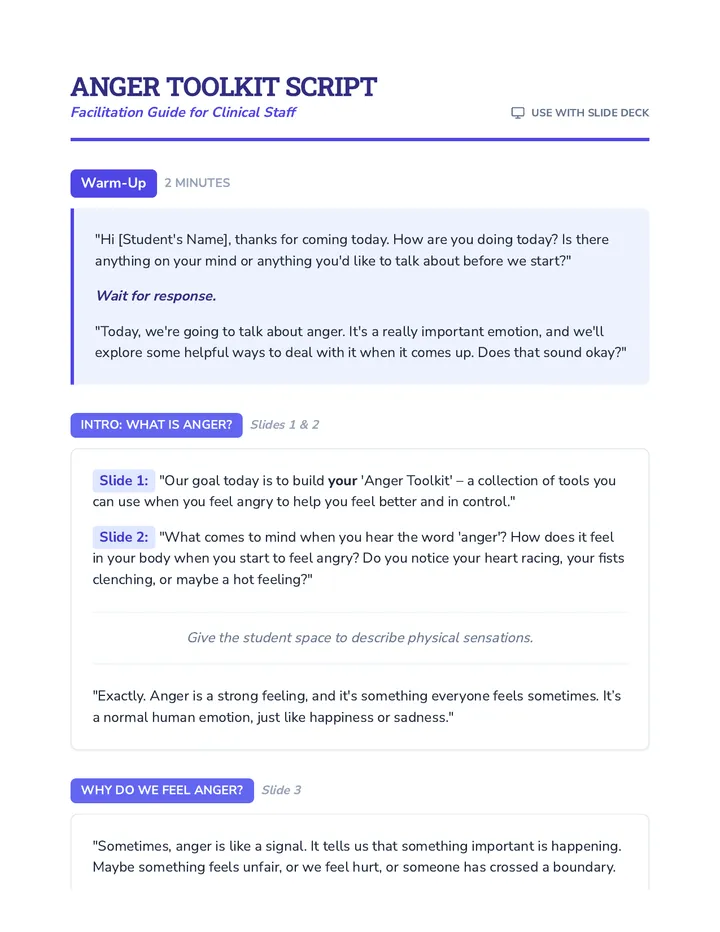
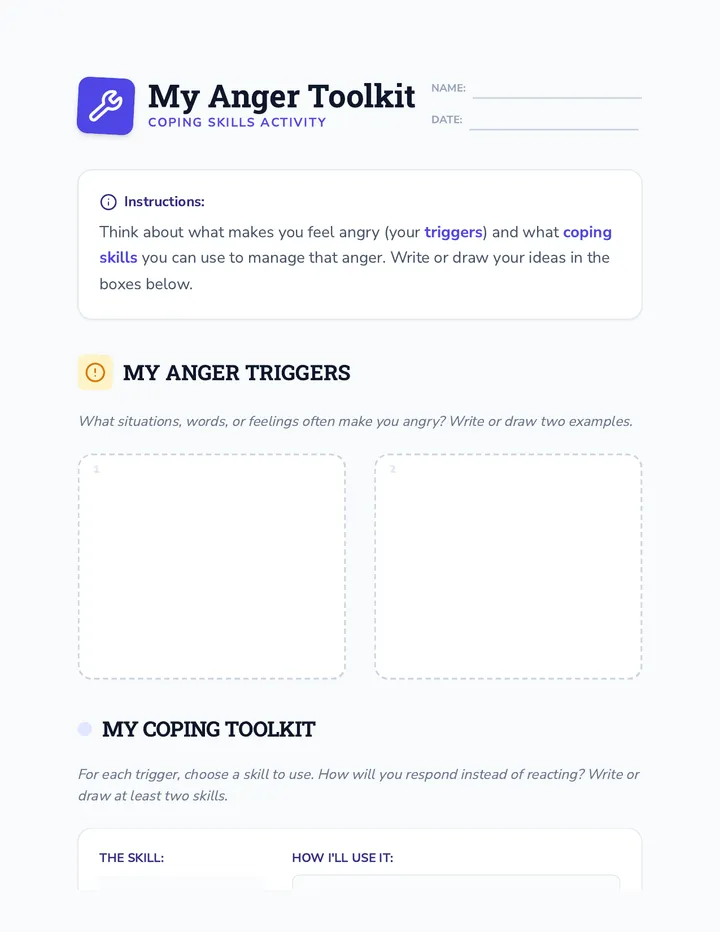
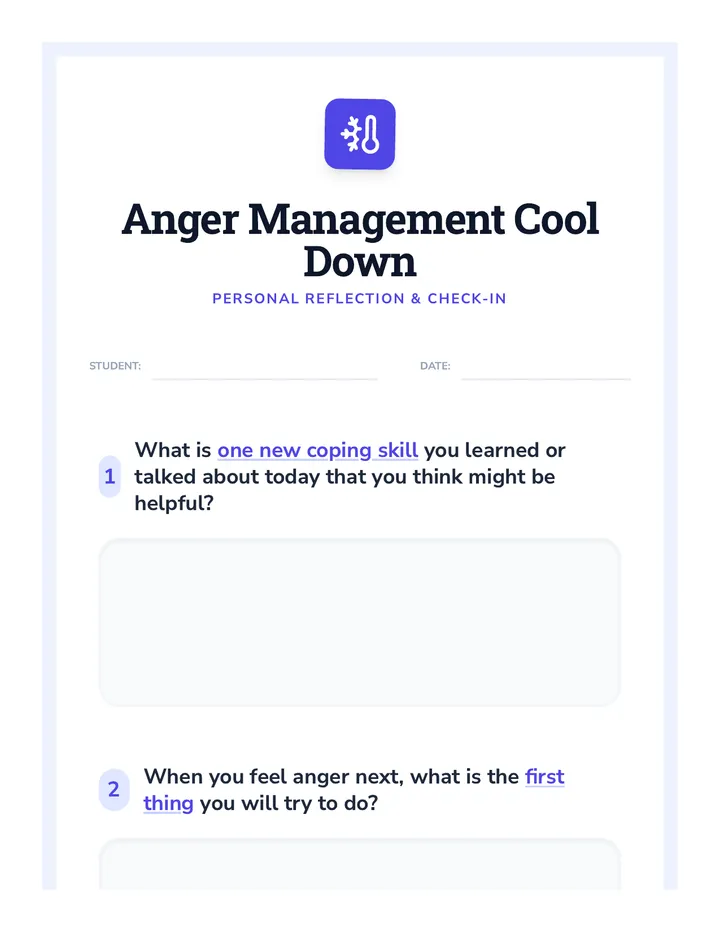
A 15-minute Tier 3 clinical lesson designed to equip individual students with practical anger coping strategies, trigger identification, and emotional regulation tools.
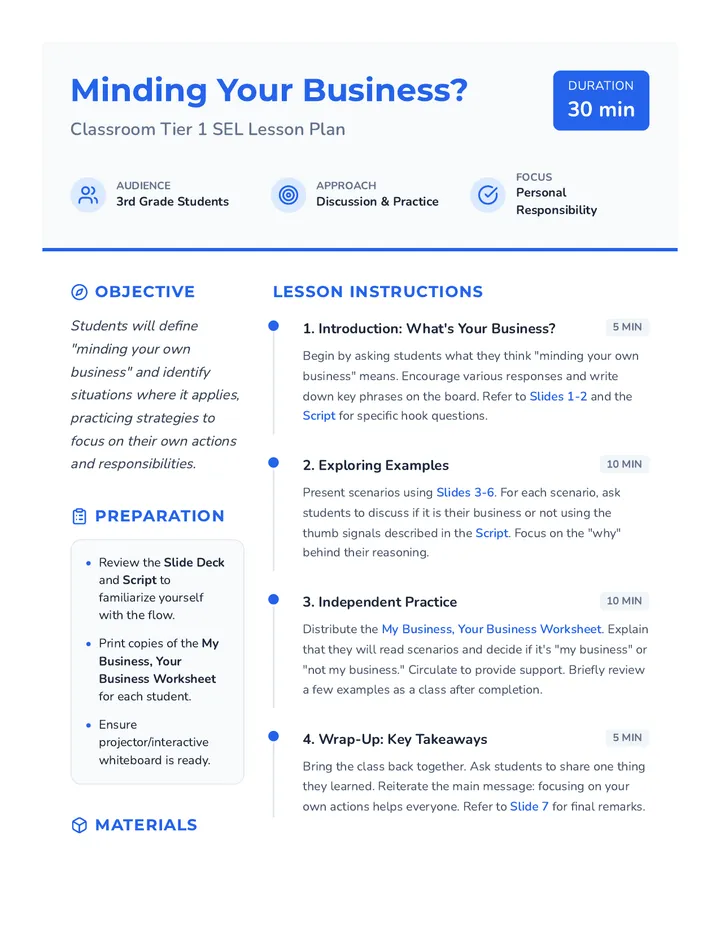
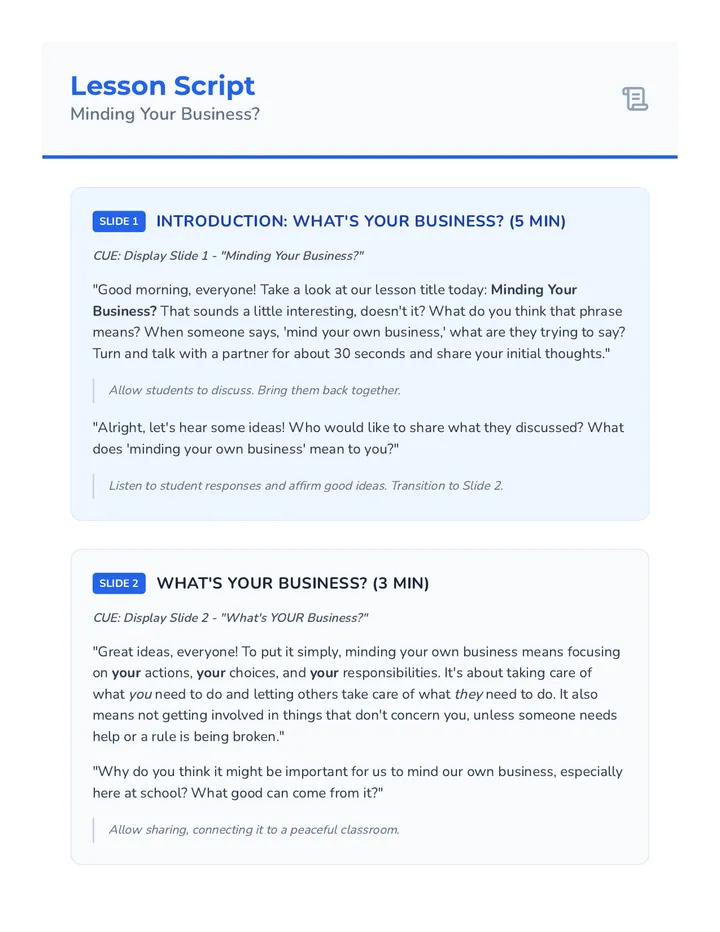
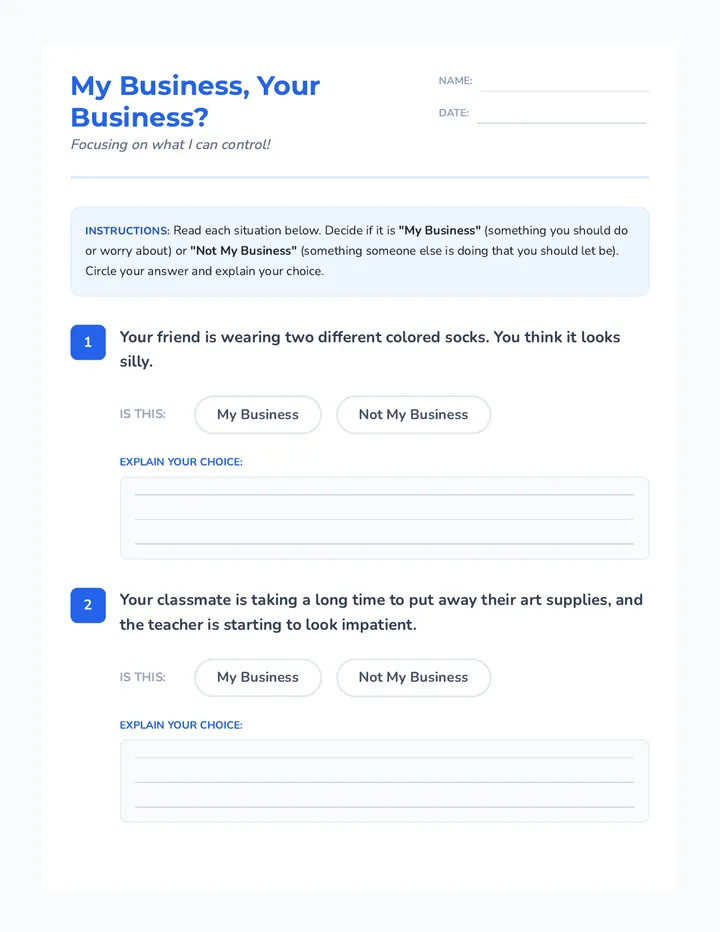
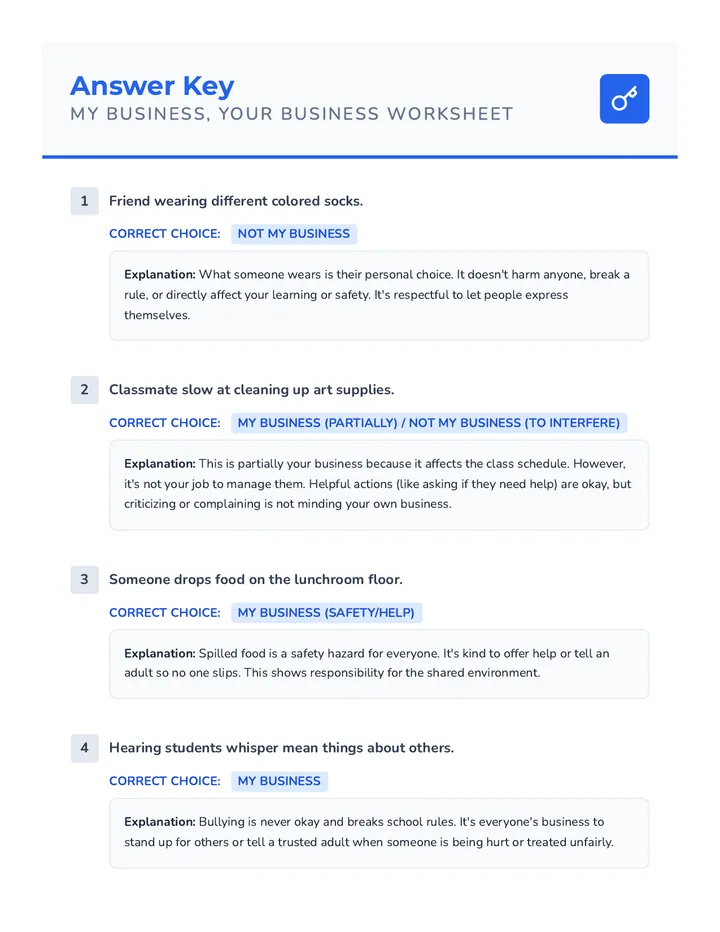
A 30-minute social-emotional learning lesson for 3rd graders that teaches the difference between personal responsibility and interfering in others' affairs through scenarios and discussion.
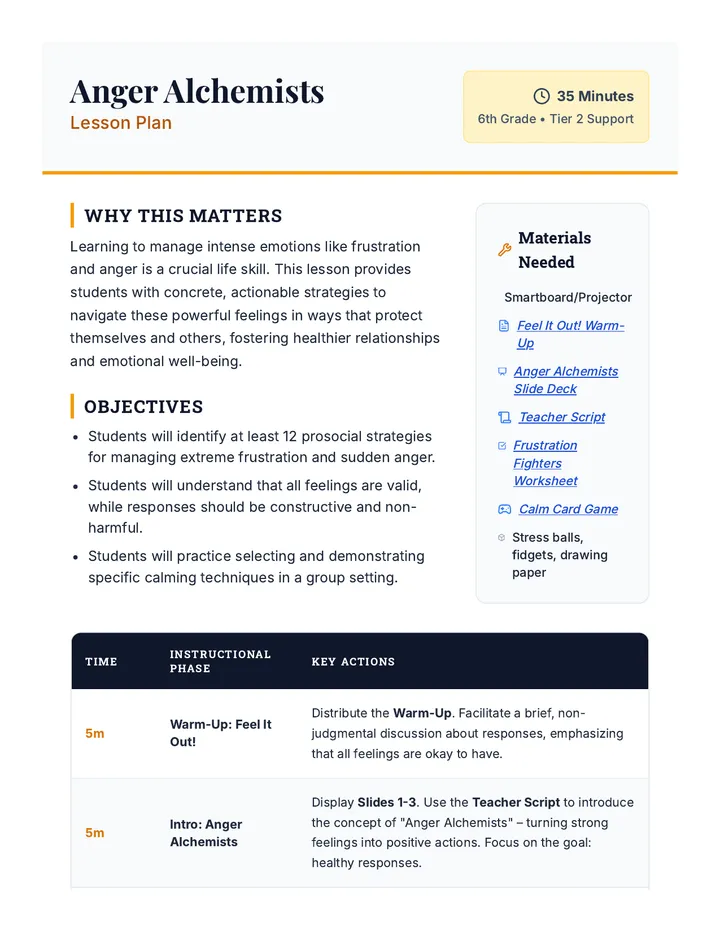
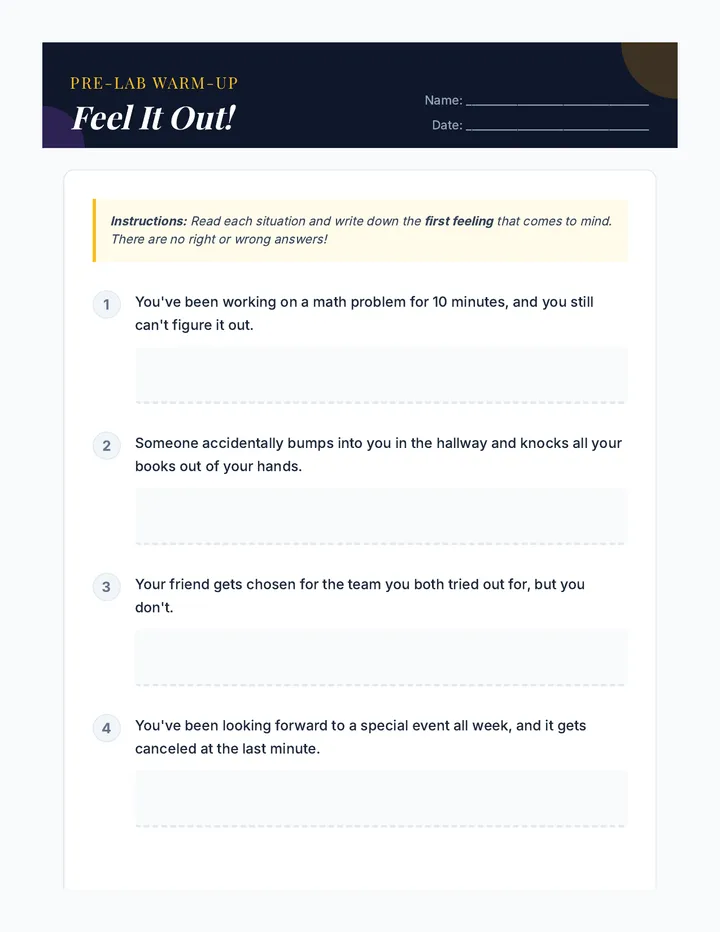
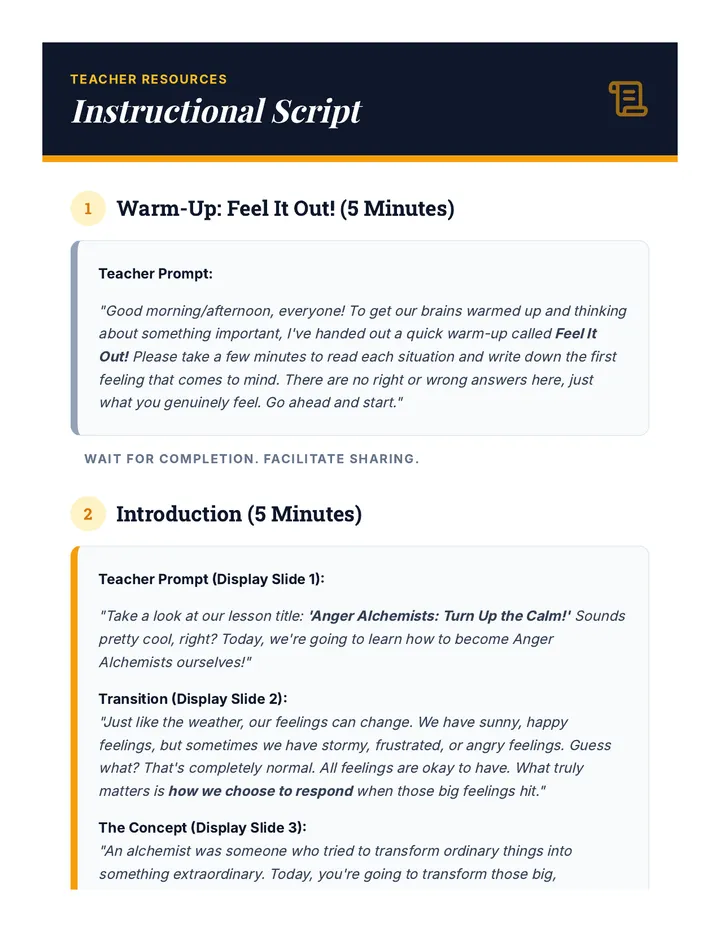
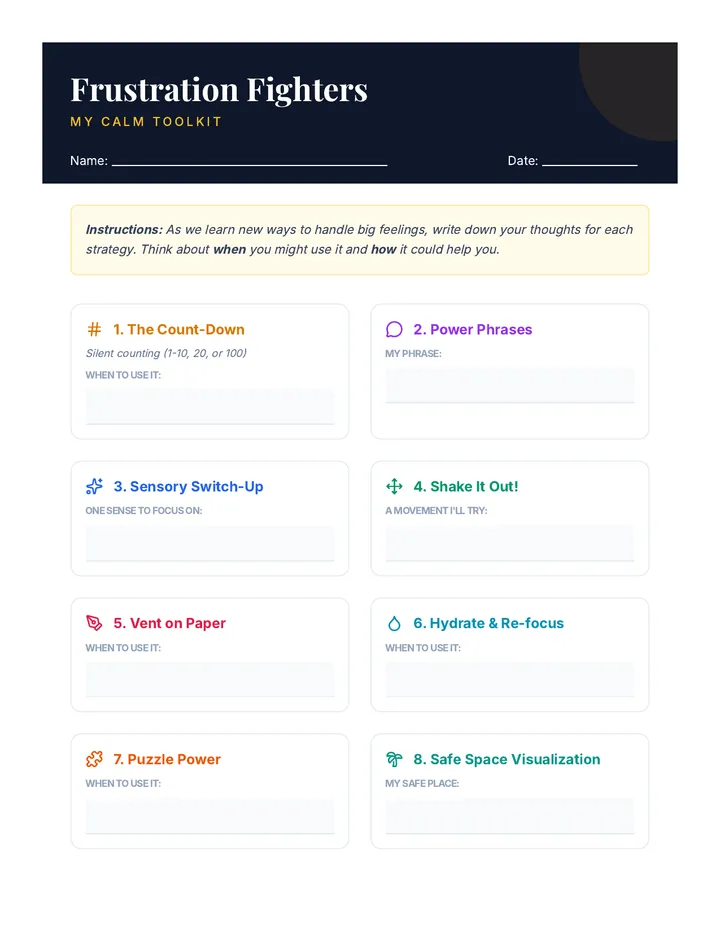
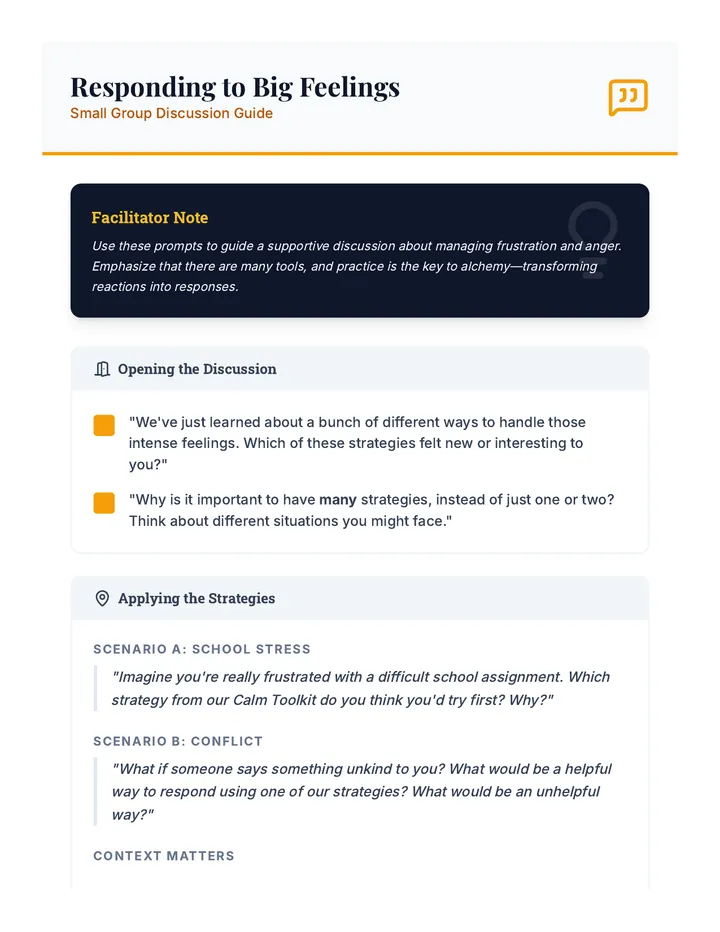
A 35-minute Tier 2 lesson for 6th-grade students to learn over 12 prosocial strategies for transforming intense frustration and anger into constructive responses.
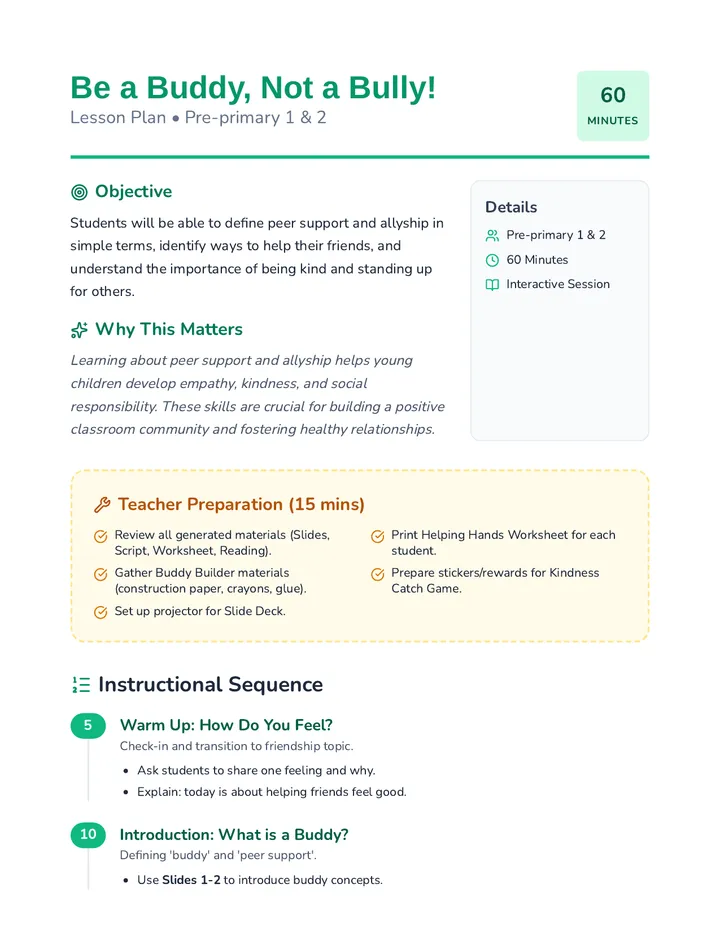
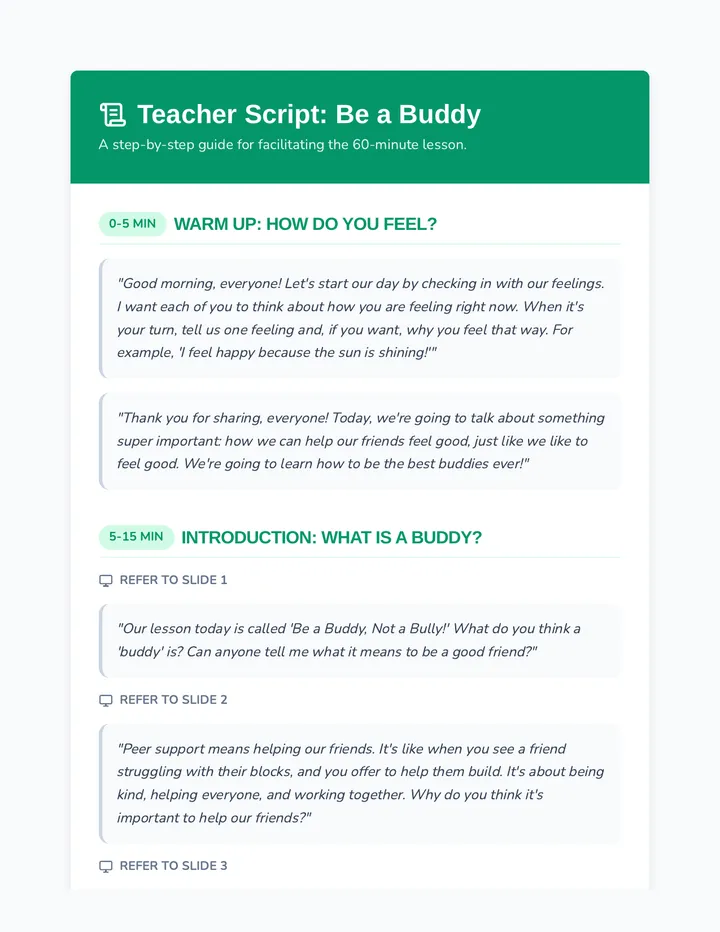
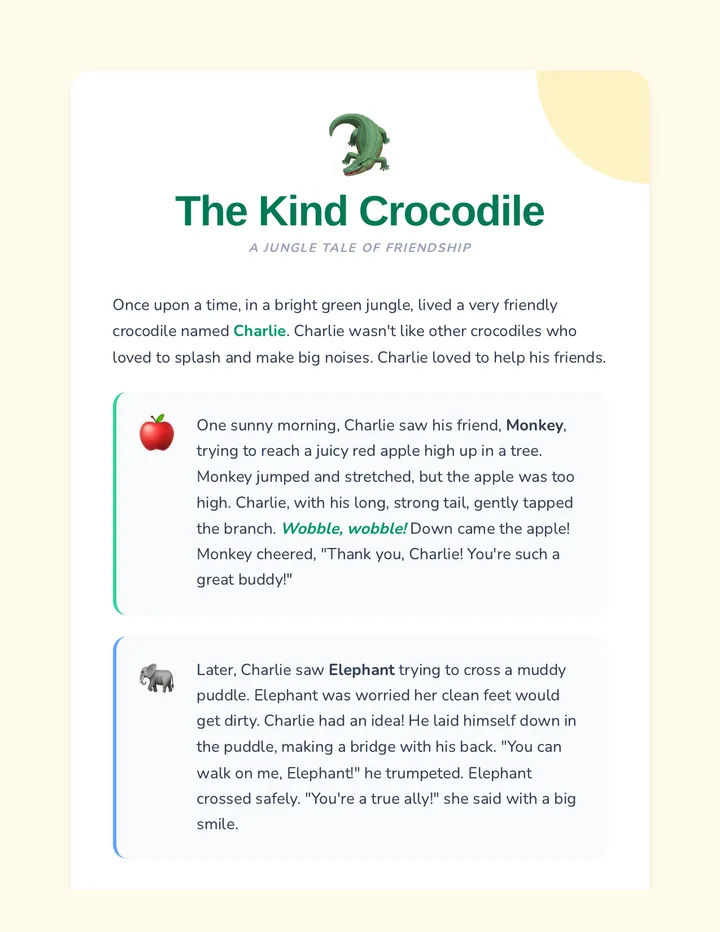
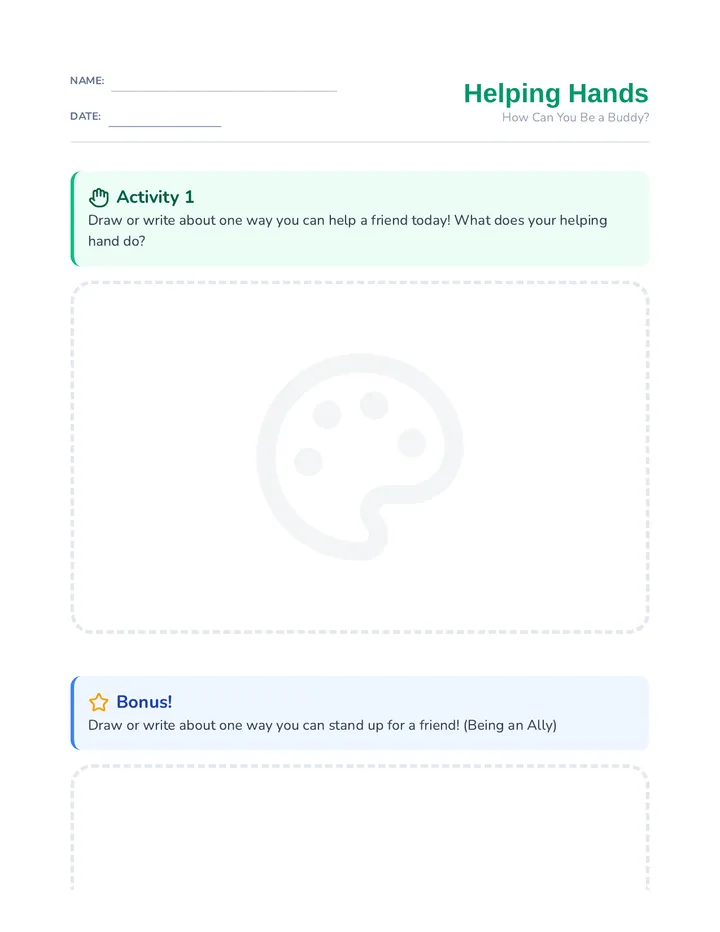
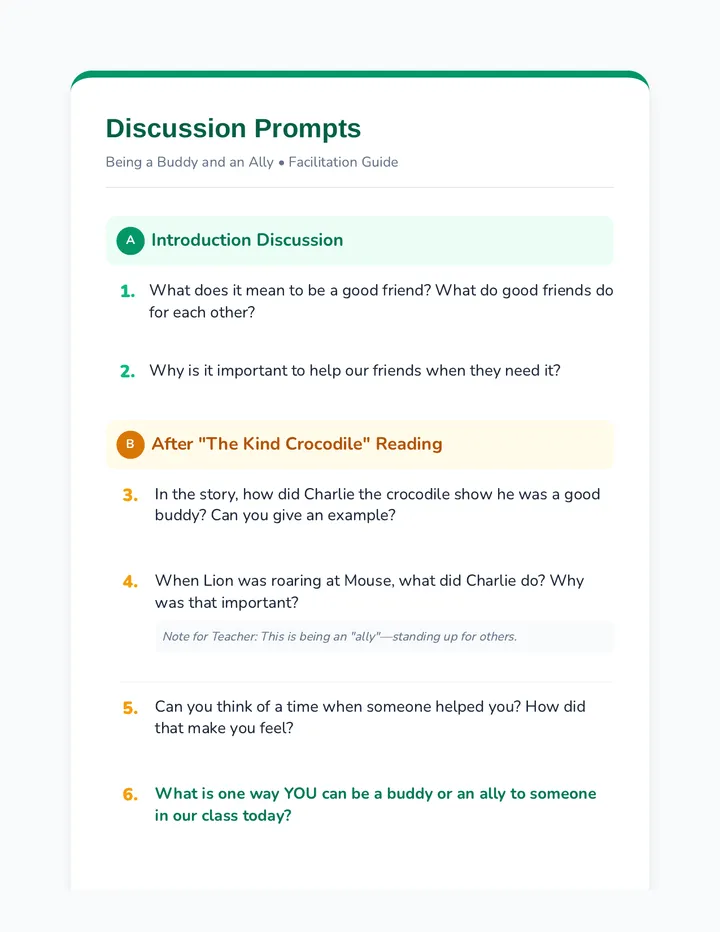
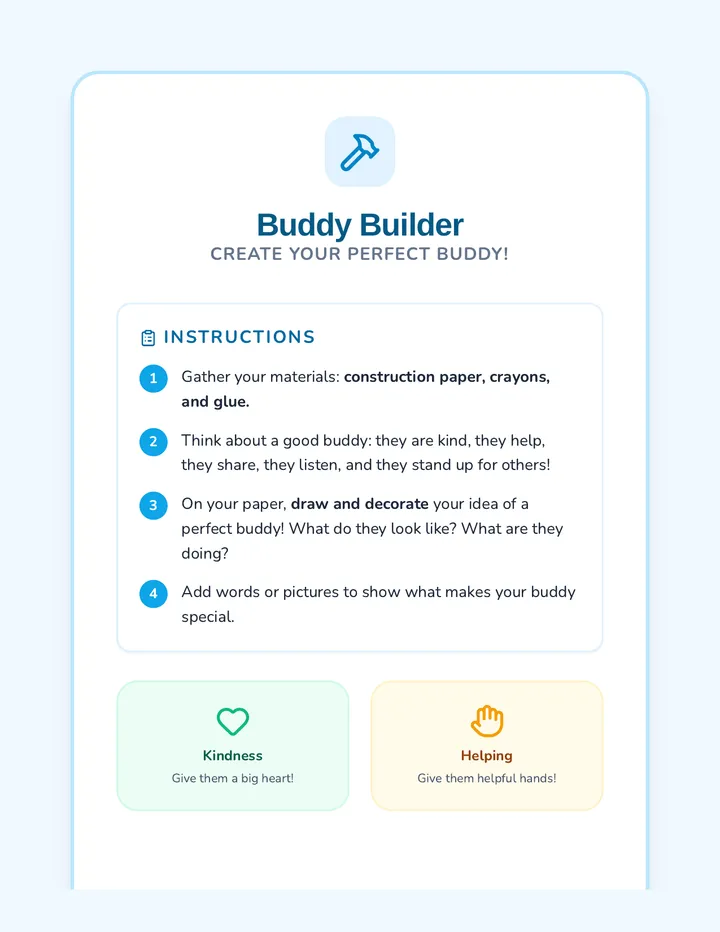
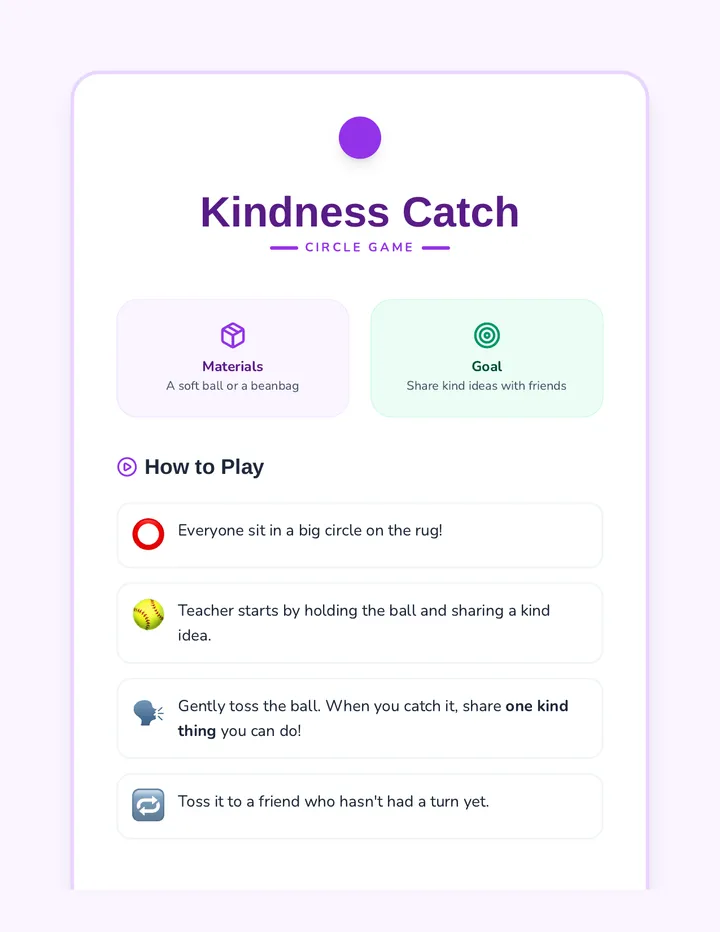
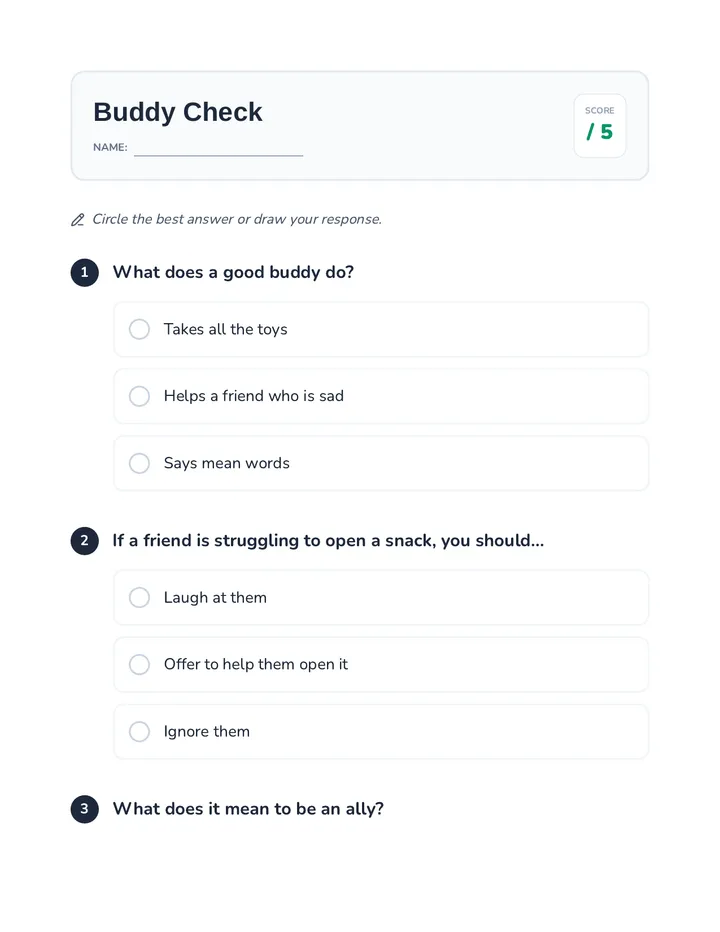
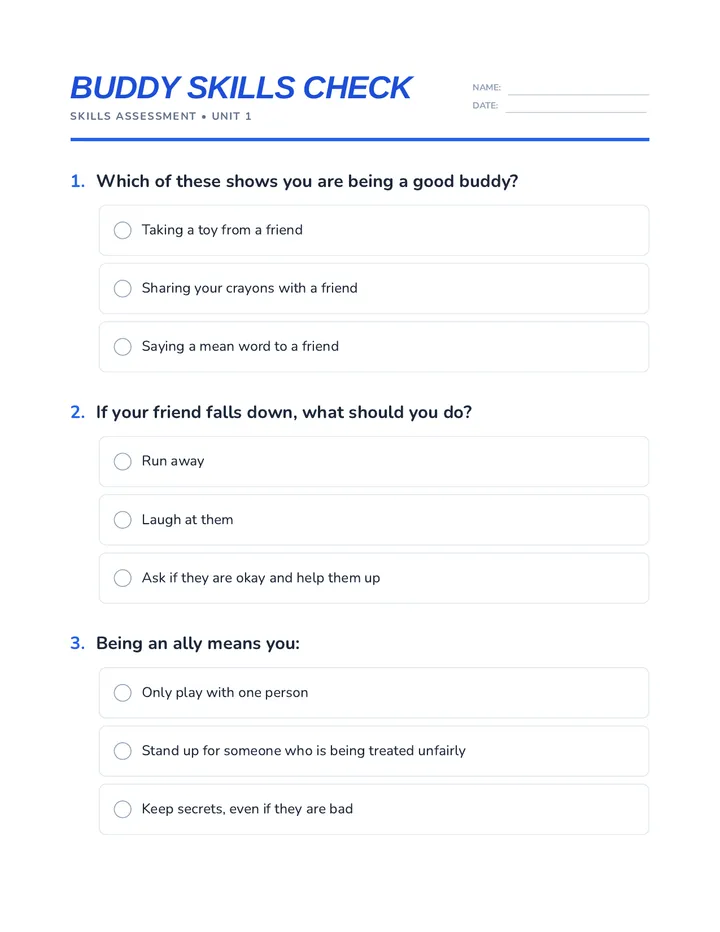
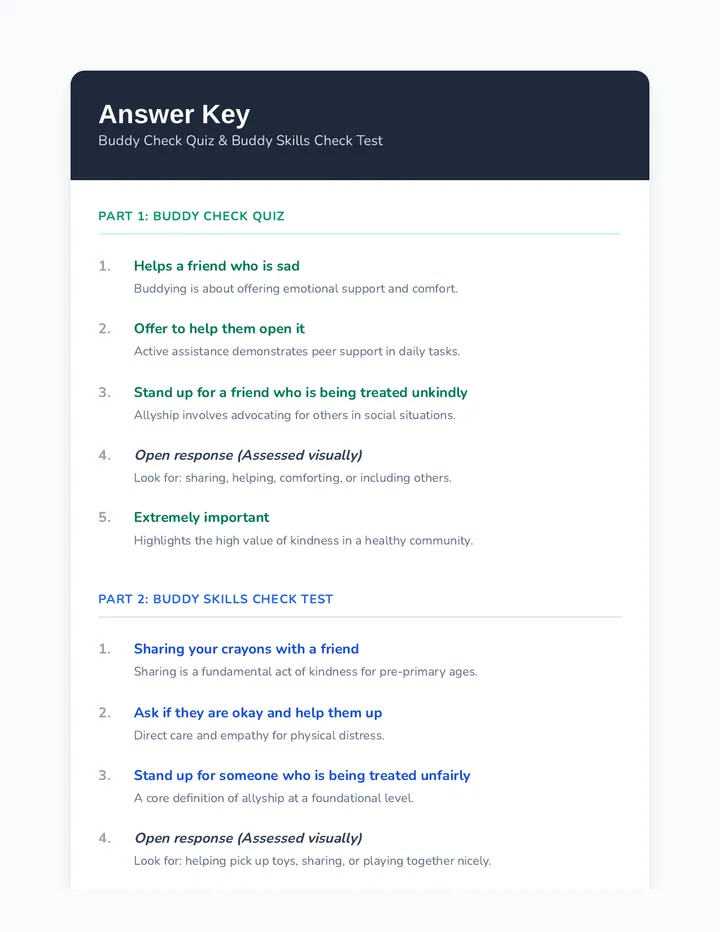
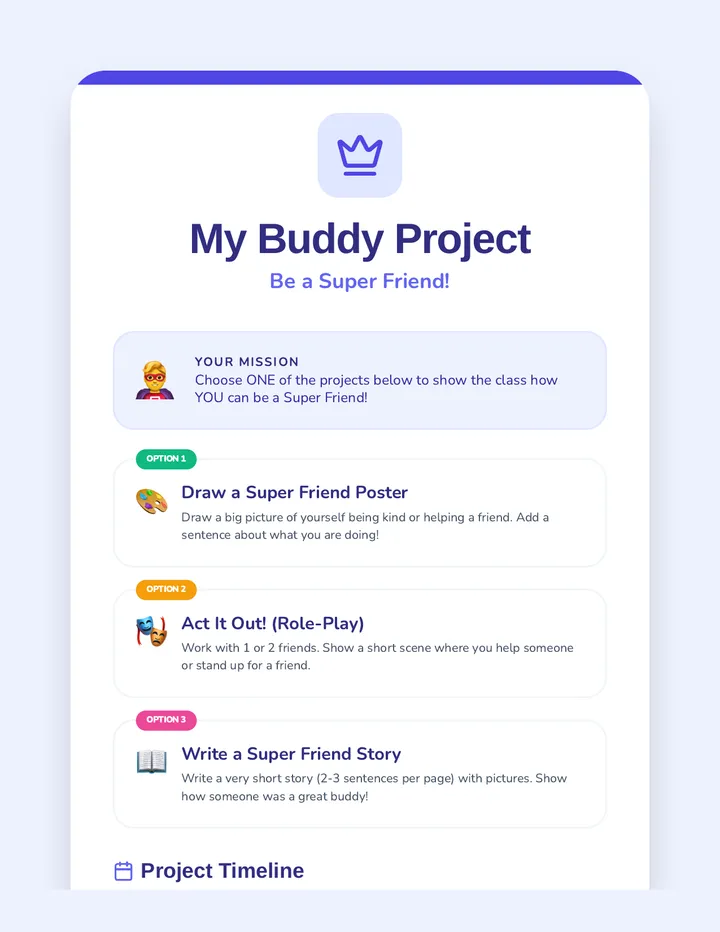
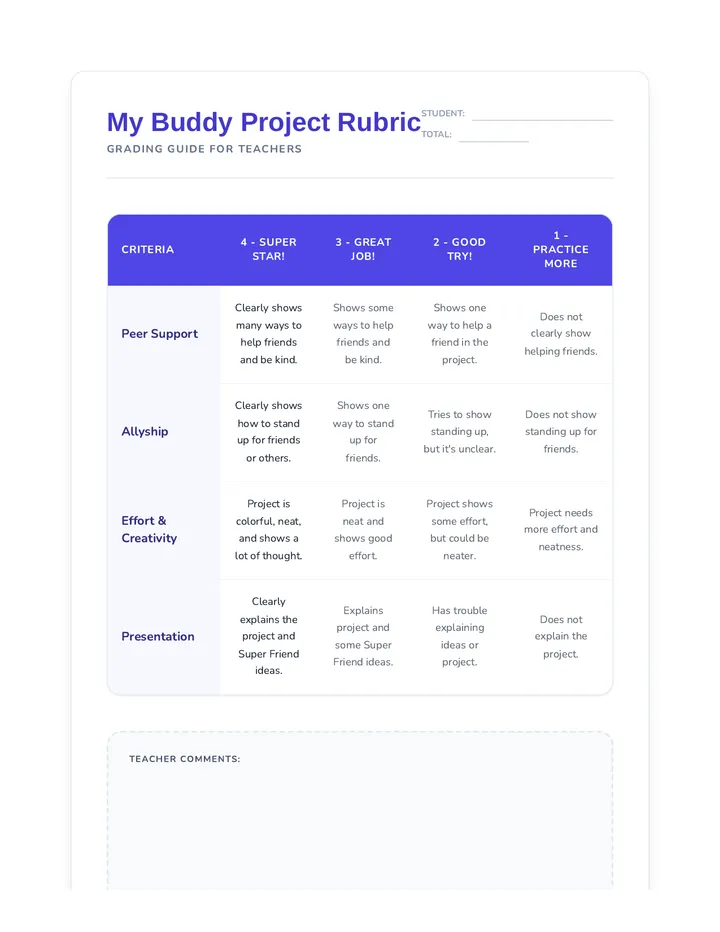
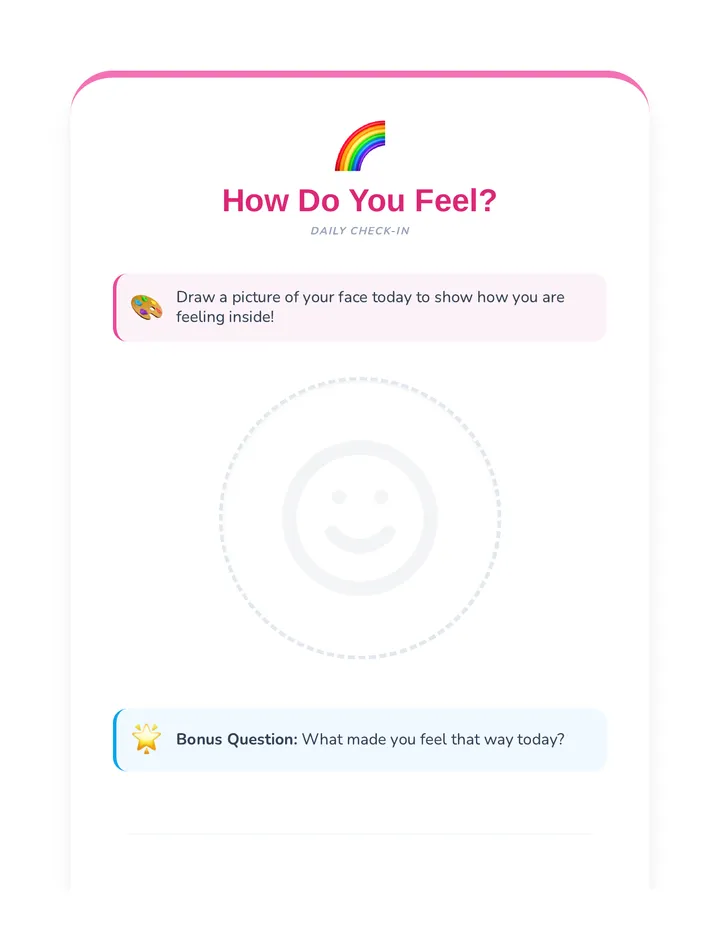
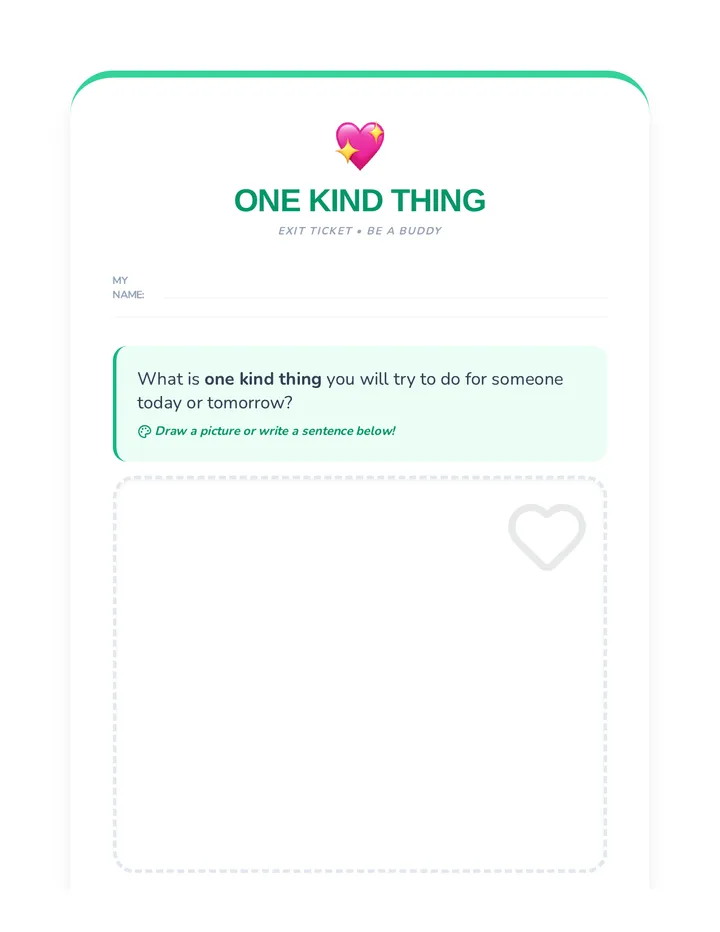
This lesson introduces Pre-primary 1 and 2 students to the concepts of peer support and allyship. Students will learn how to be kind, helpful friends and stand up for others through stories, activities, and games.
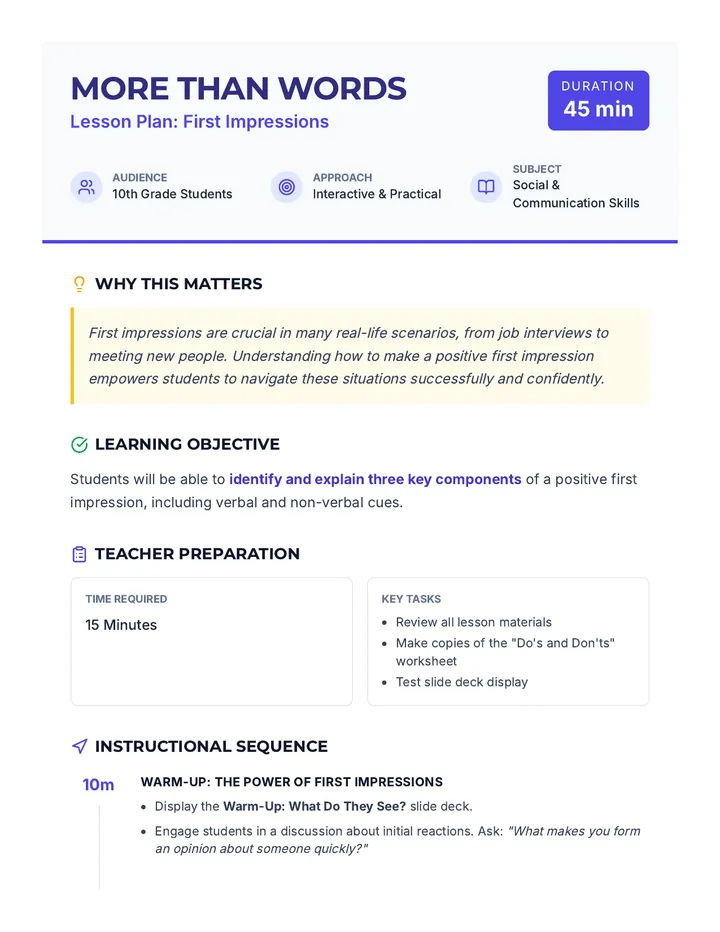
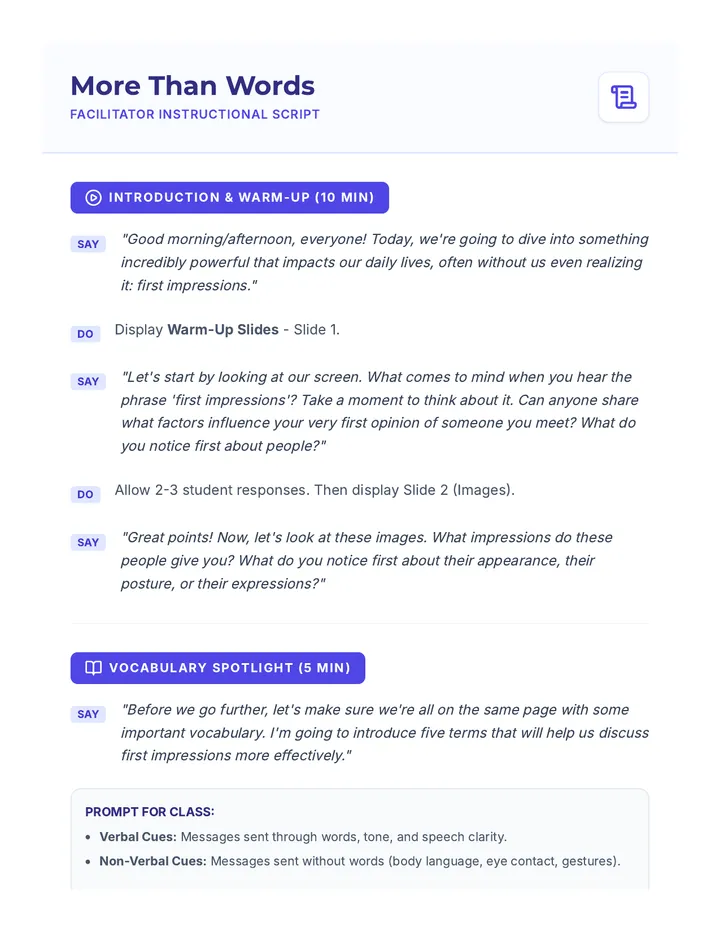
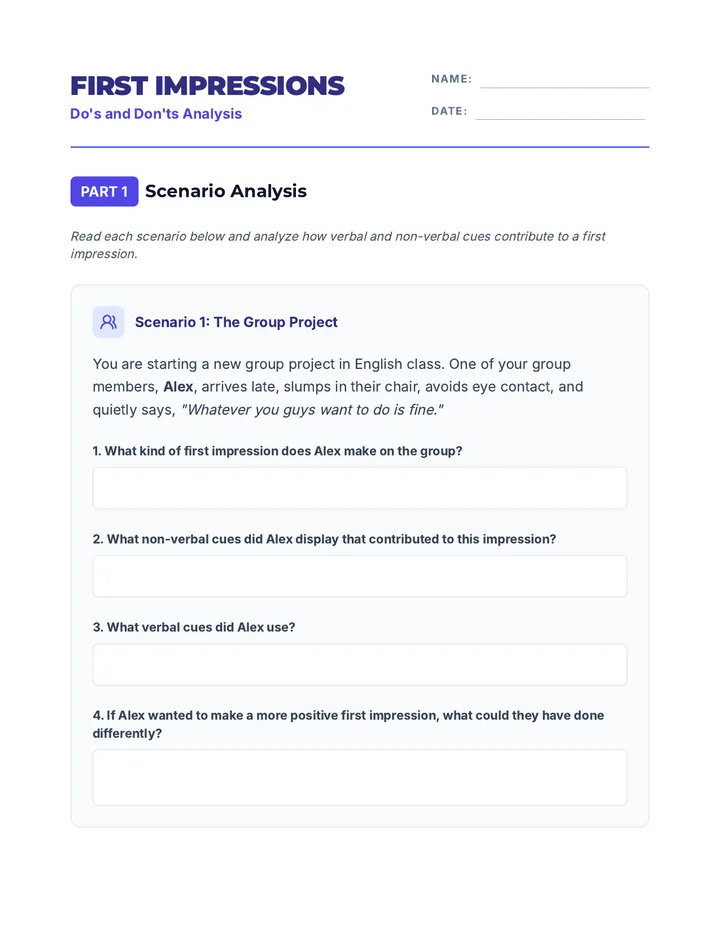
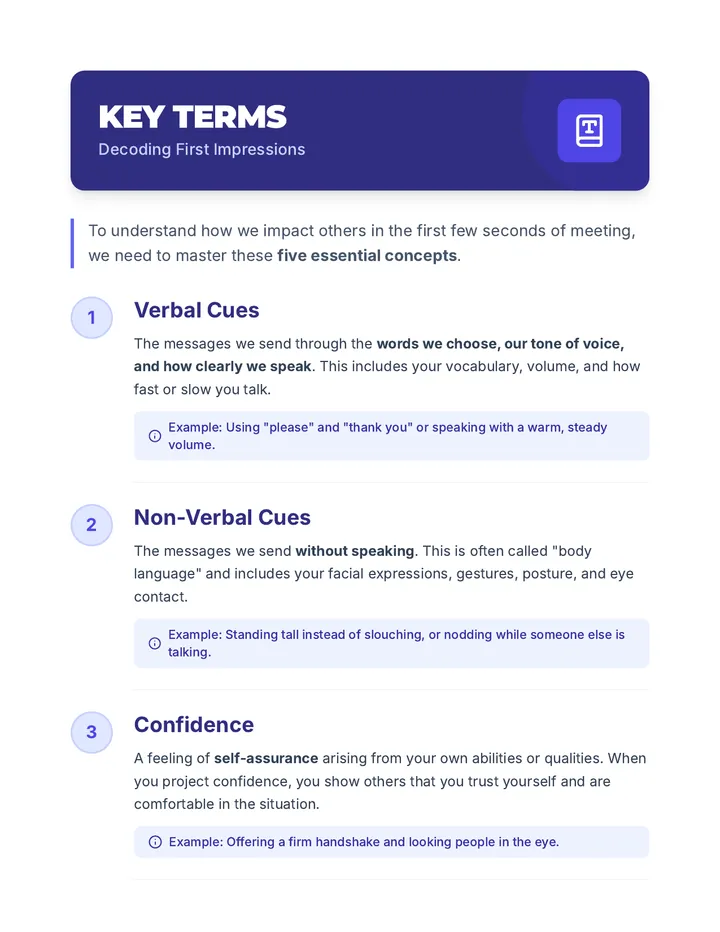
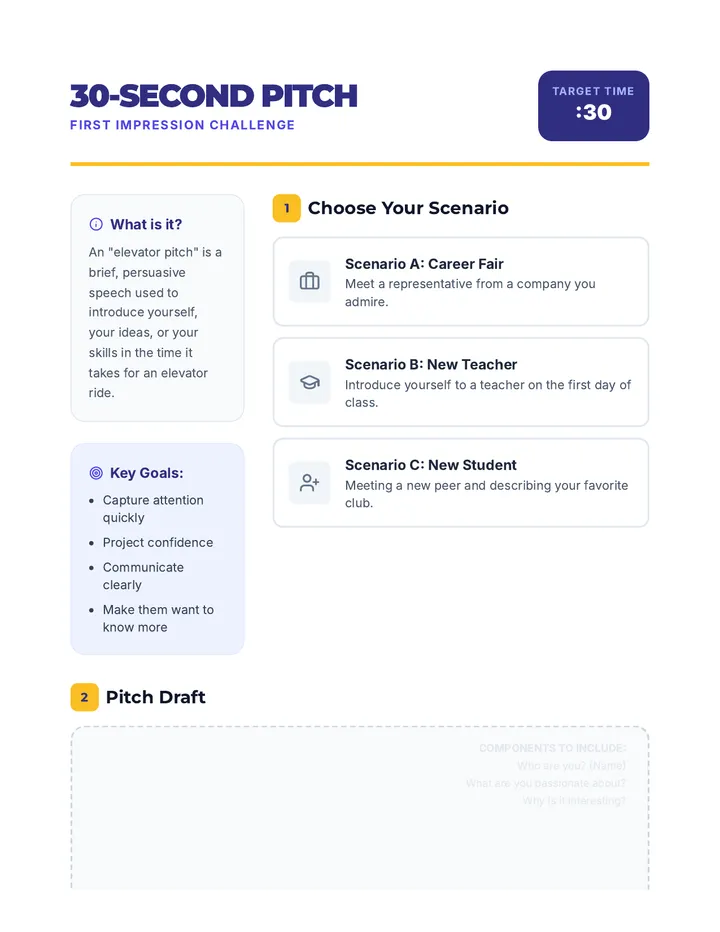
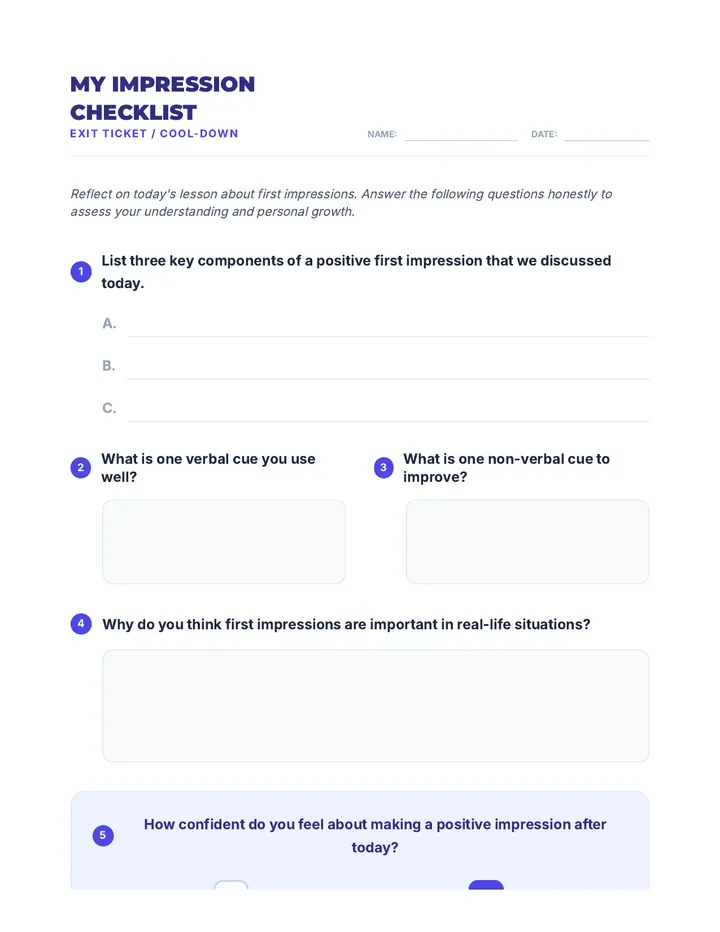
This lesson helps 10th-grade students understand the critical role of first impressions in various situations. It covers identifying key verbal and non-verbal cues to make a positive impact.
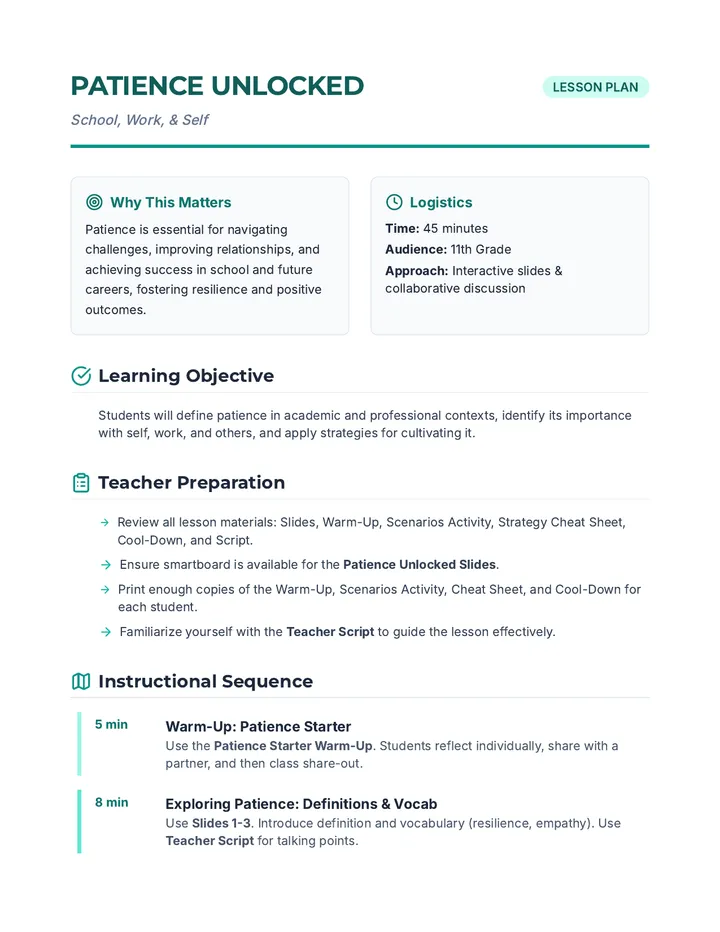
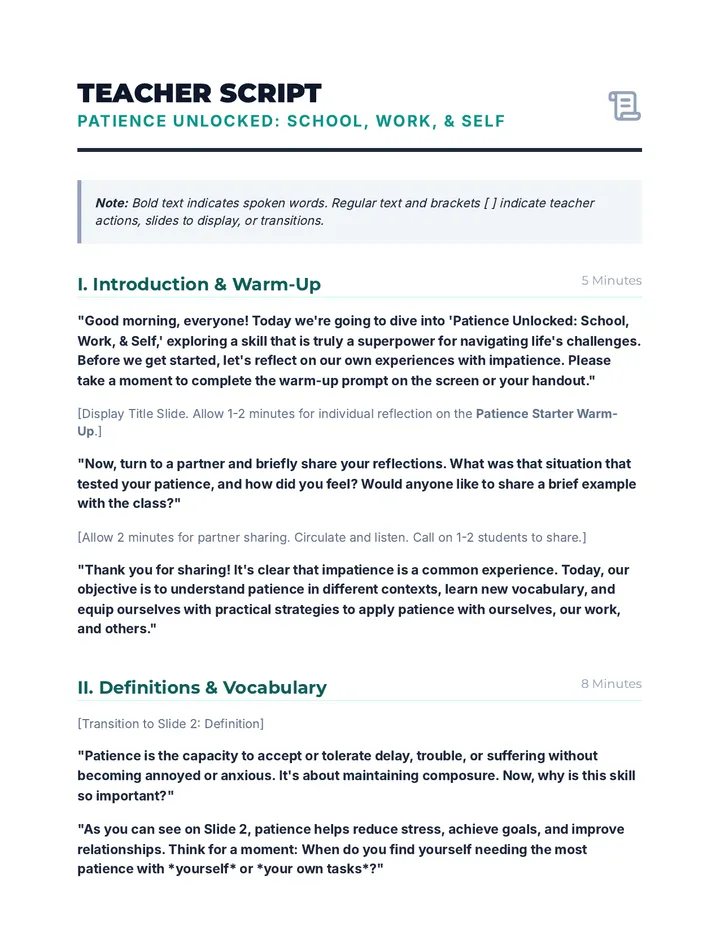
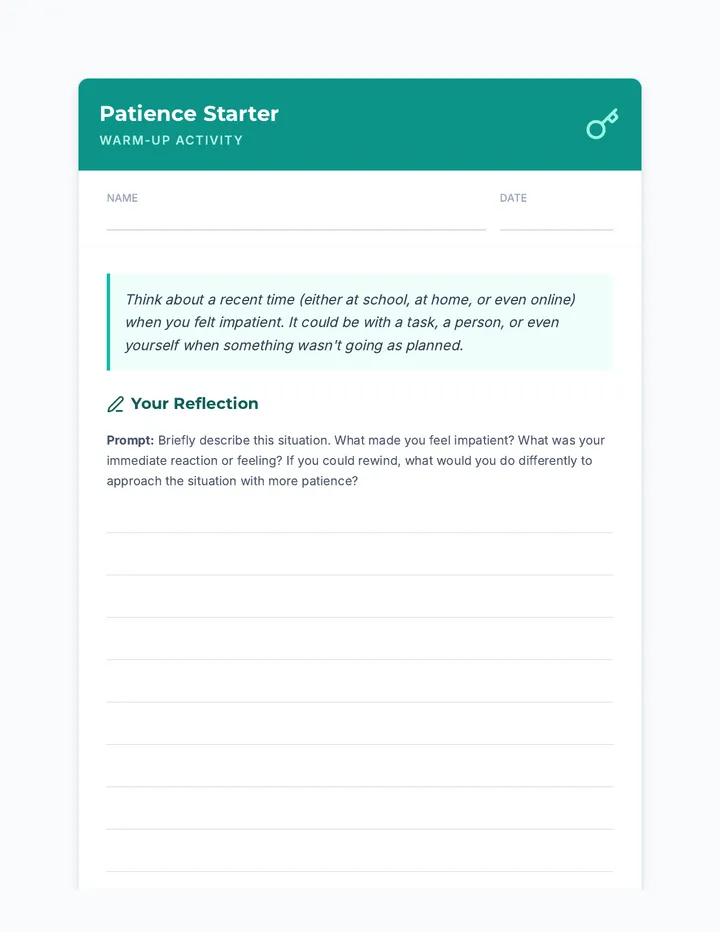
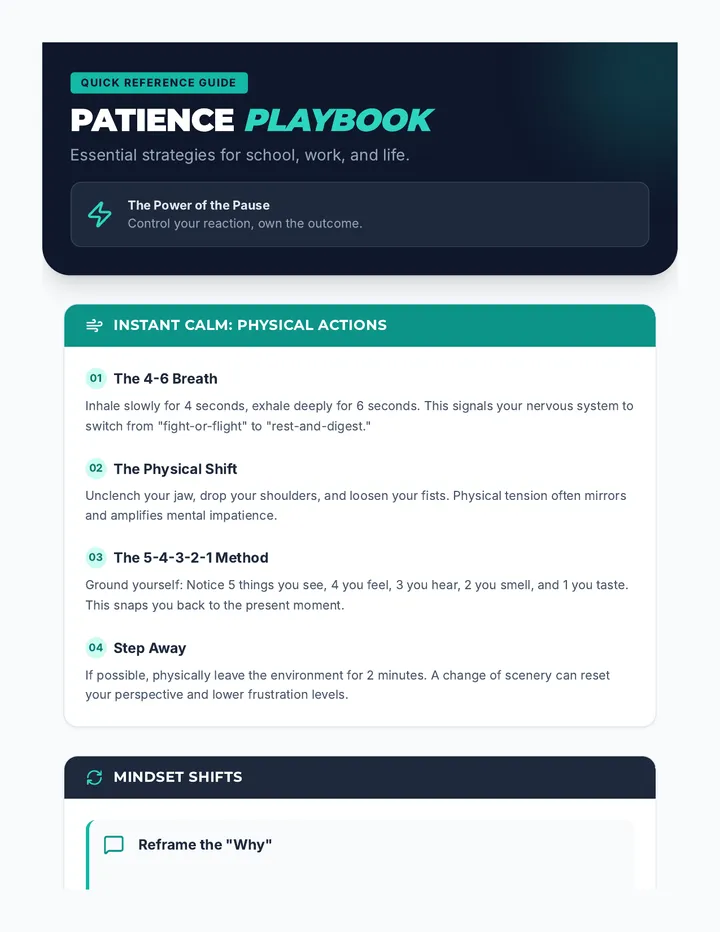
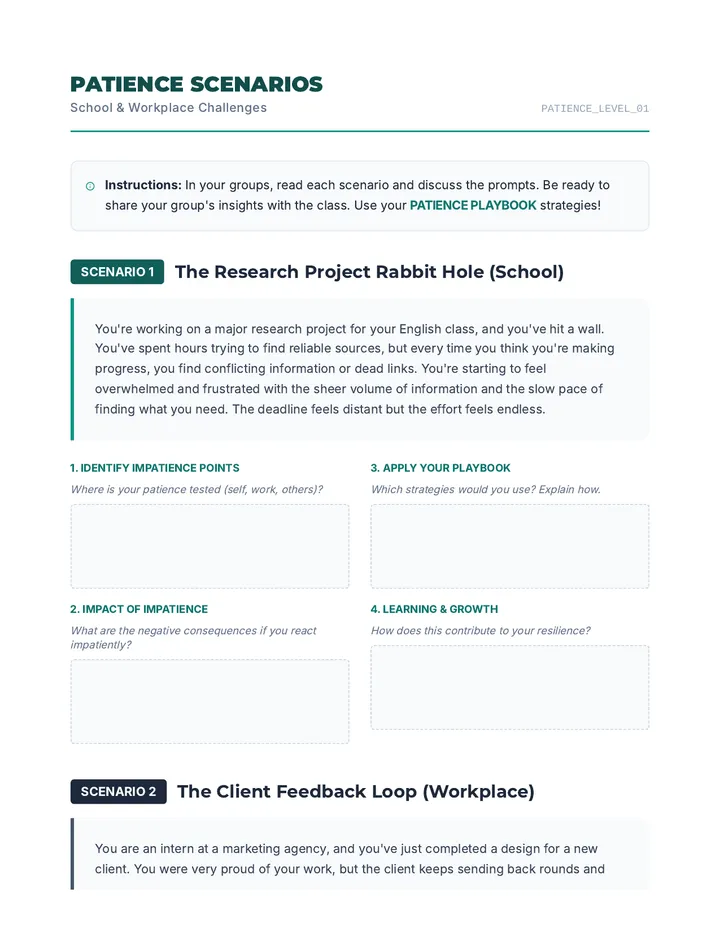
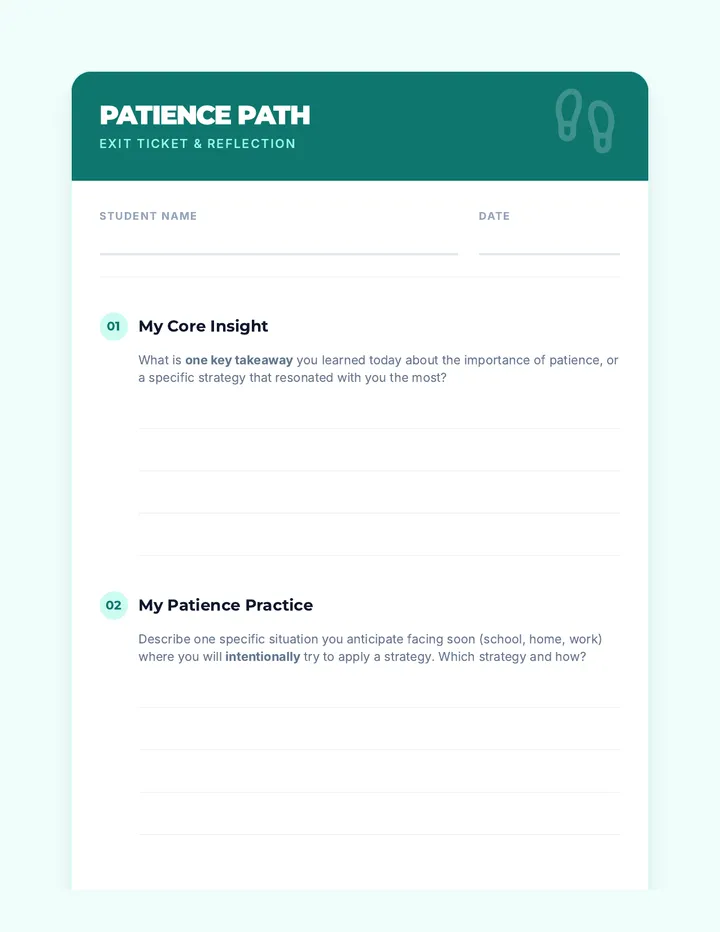
This lesson empowers 11th-grade students to cultivate patience as a critical skill in academic and professional settings. Students will explore strategies for managing impatience with themselves, their work, and others, fostering resilience and positive relationships.
A 60-minute lesson for 5th and 6th-grade students designed to foster an inclusive classroom environment by celebrating individual uniqueness and understanding the broad dimensions of diversity.
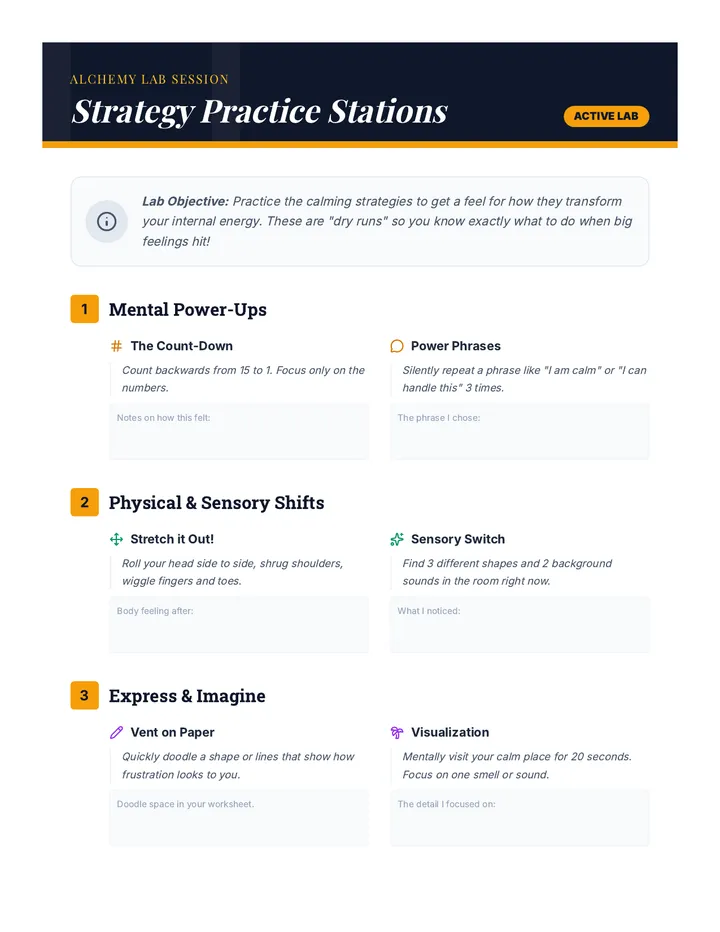
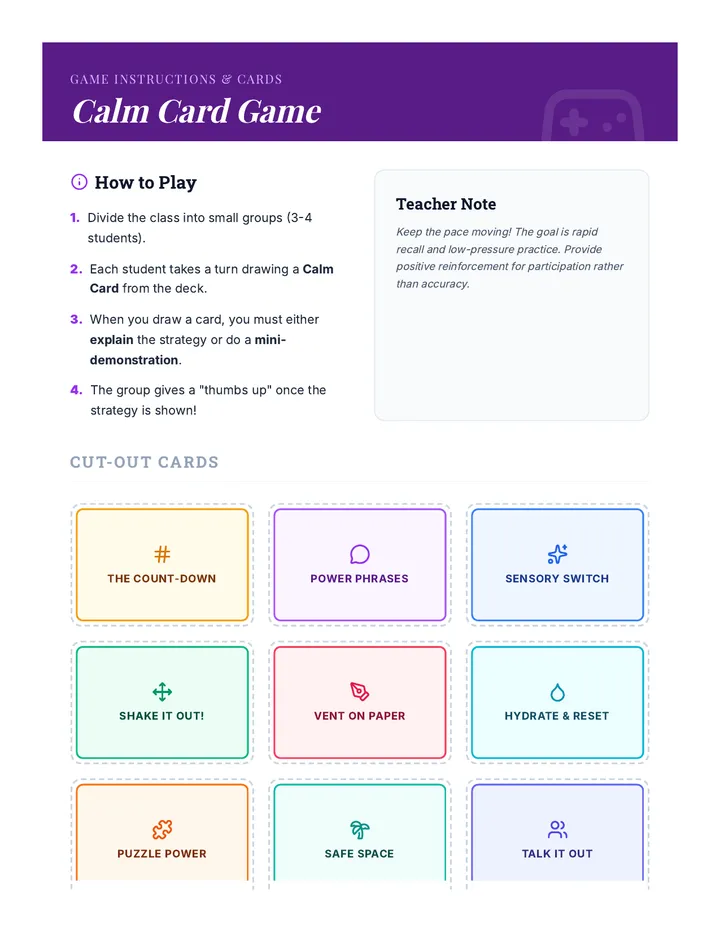
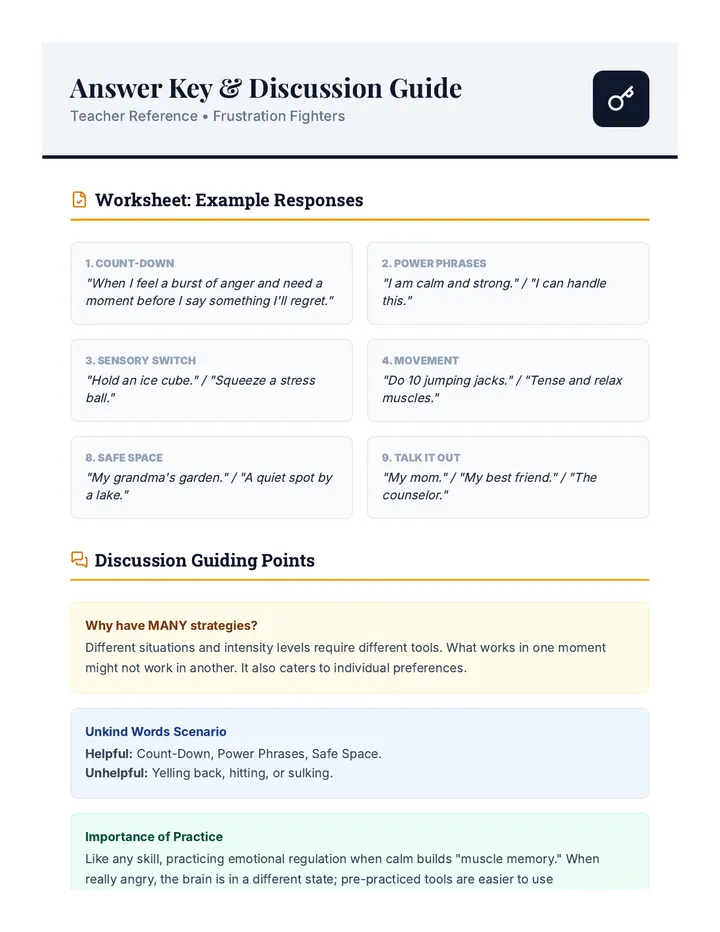
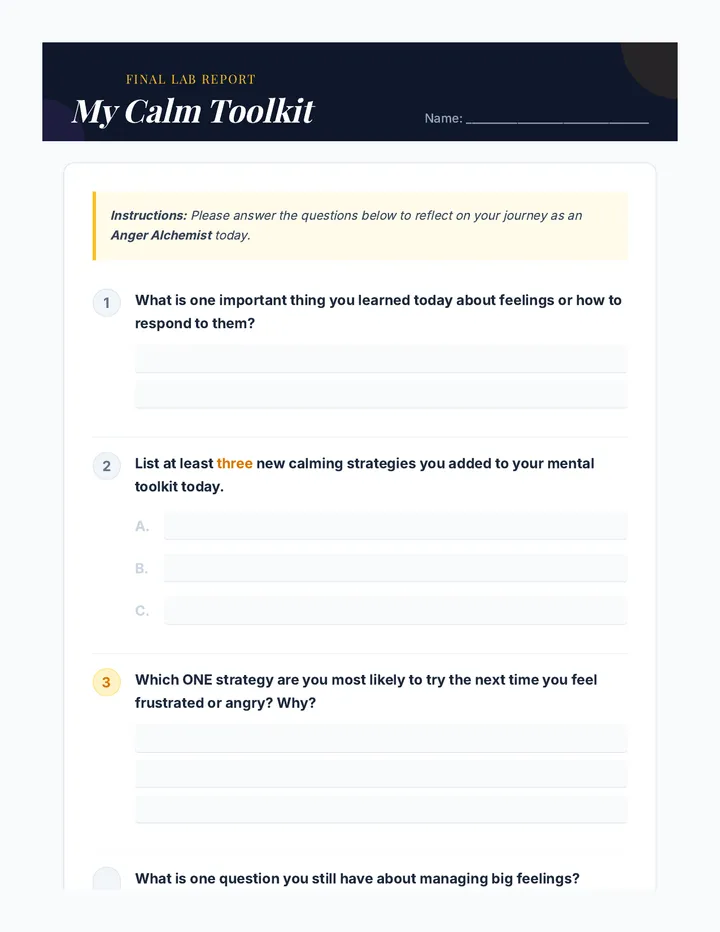
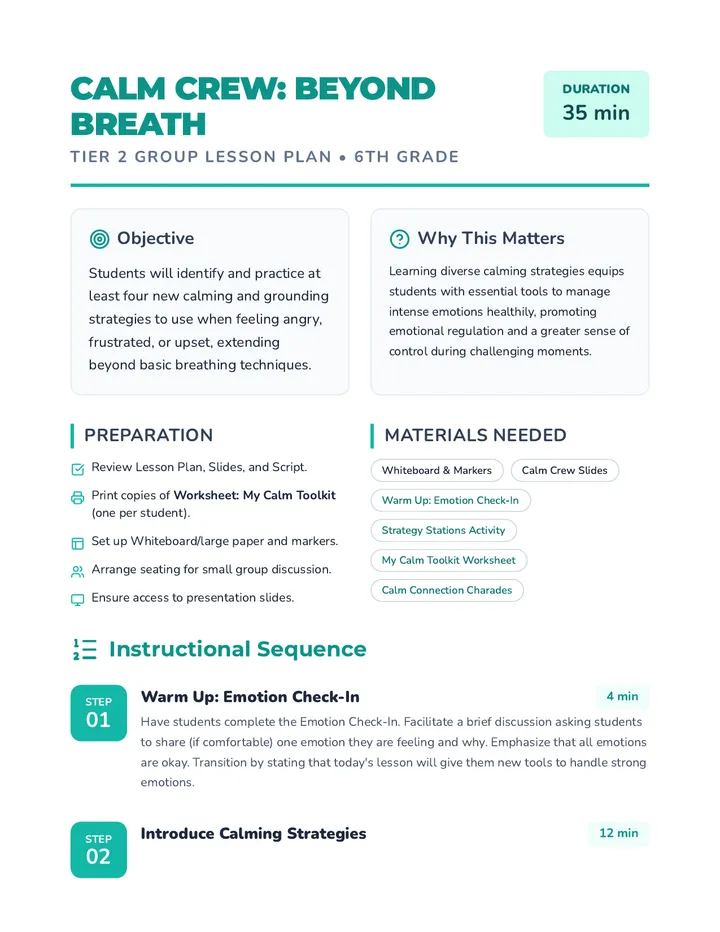
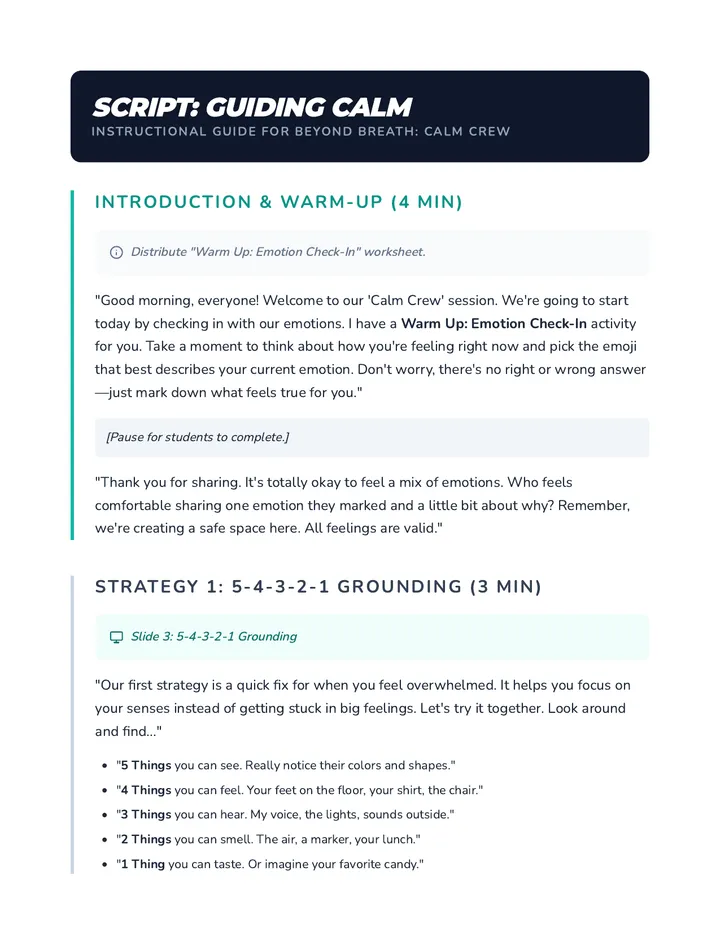
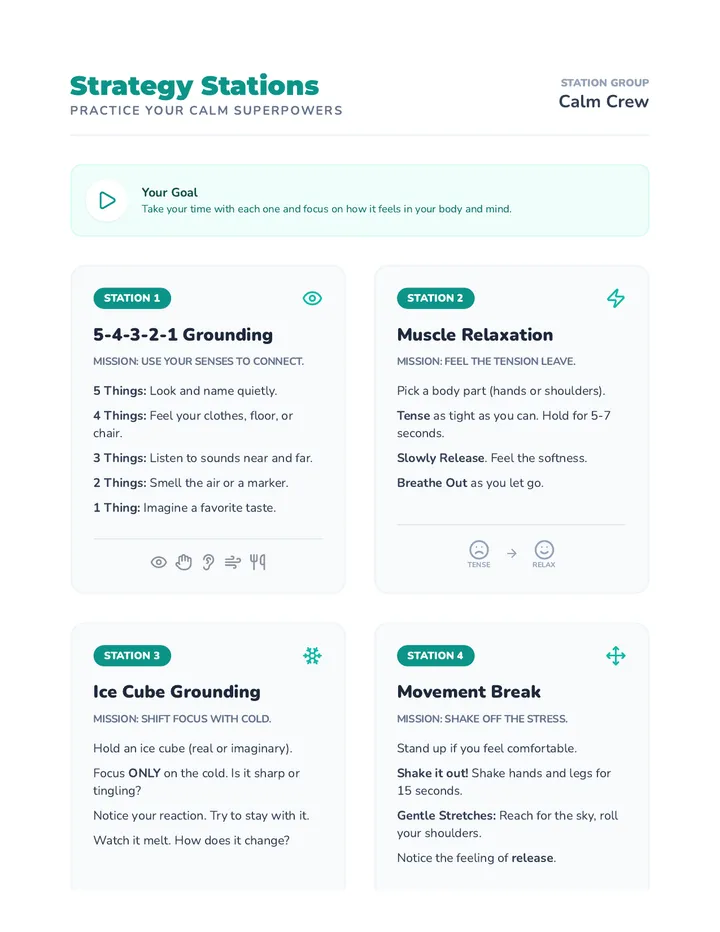
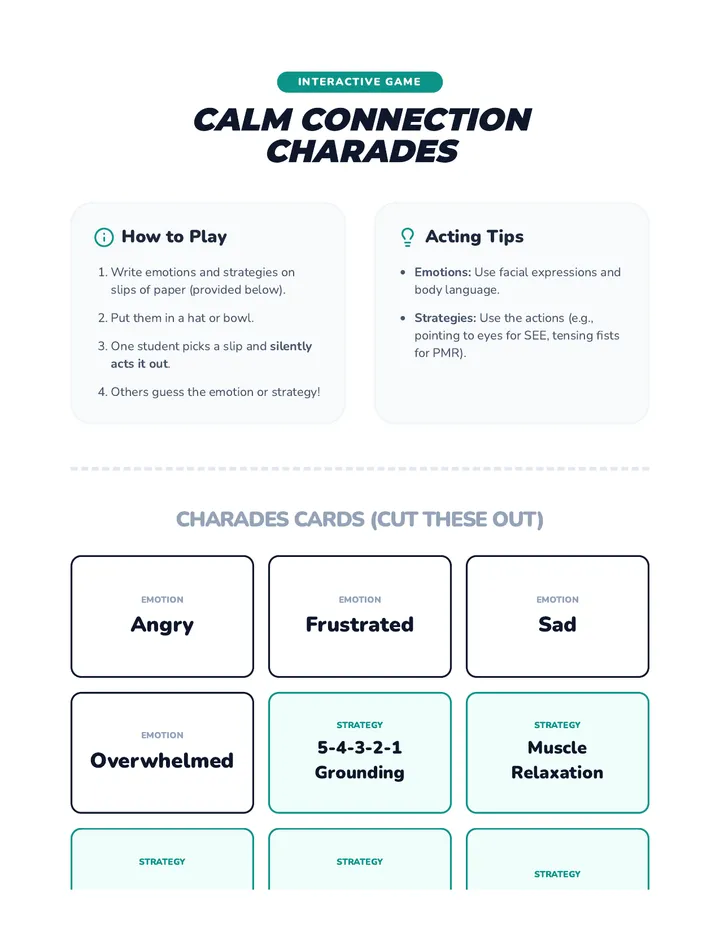
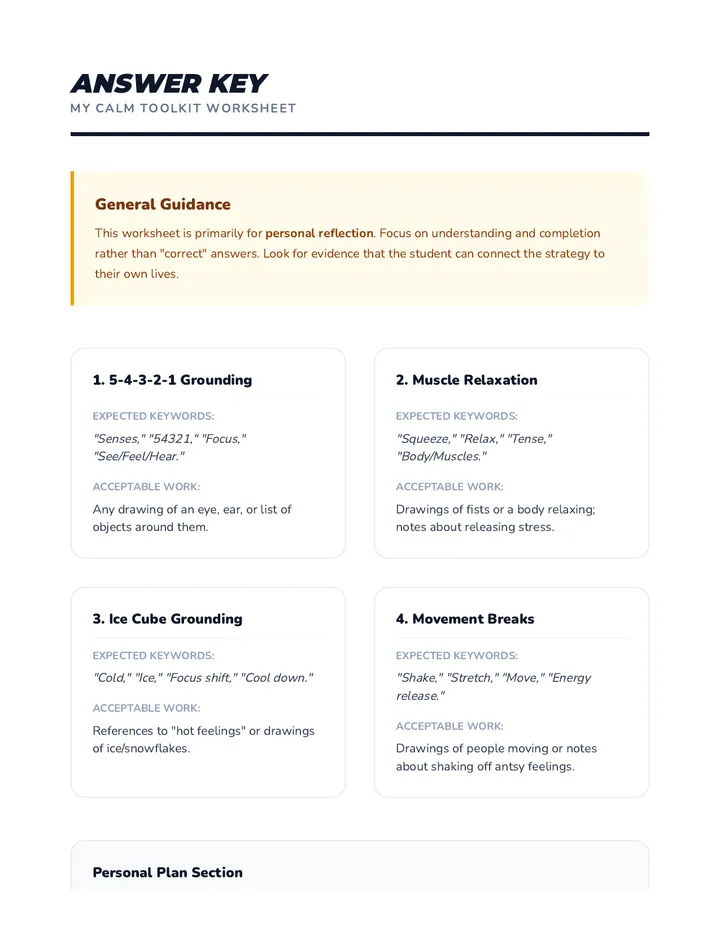
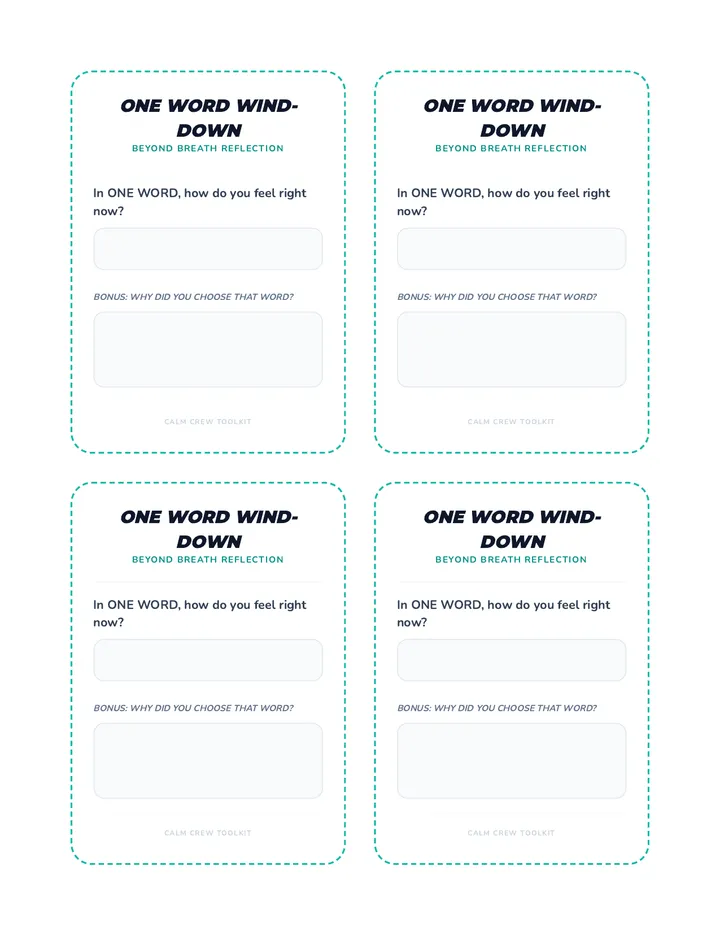
A 35-minute Tier 2 group lesson for 6th graders that introduces and practices various calming and grounding strategies beyond basic breathing, providing students with a toolkit to manage anger, frustration, and upset feelings.
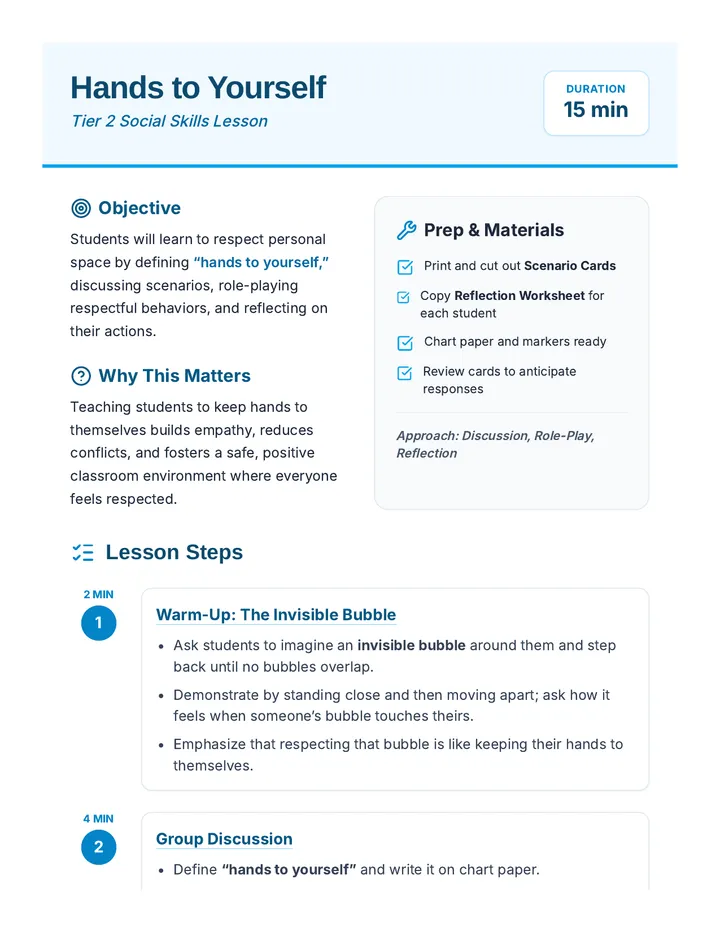
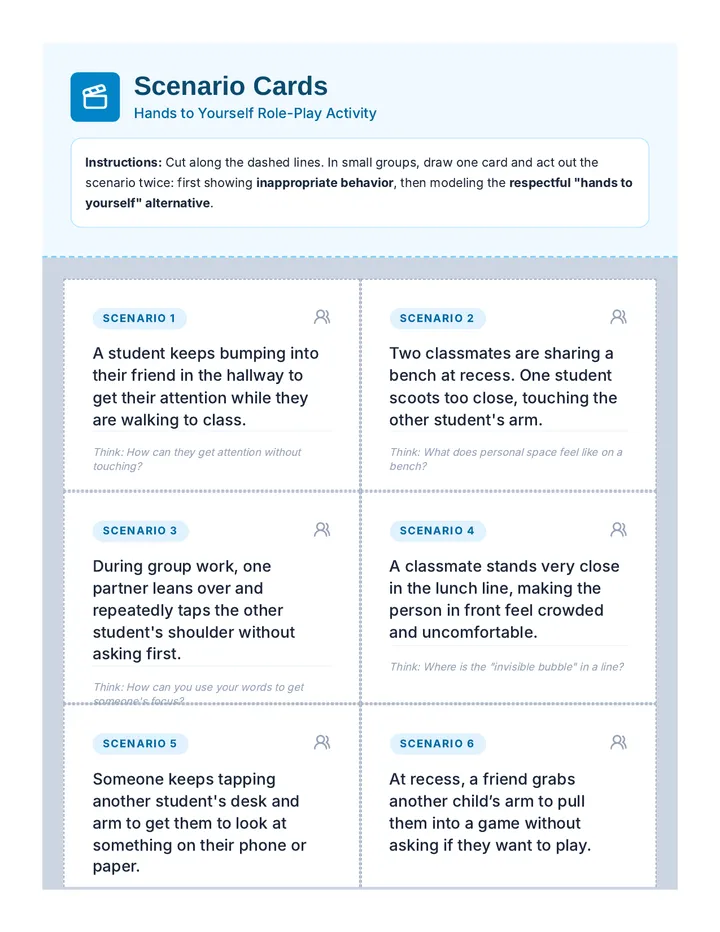
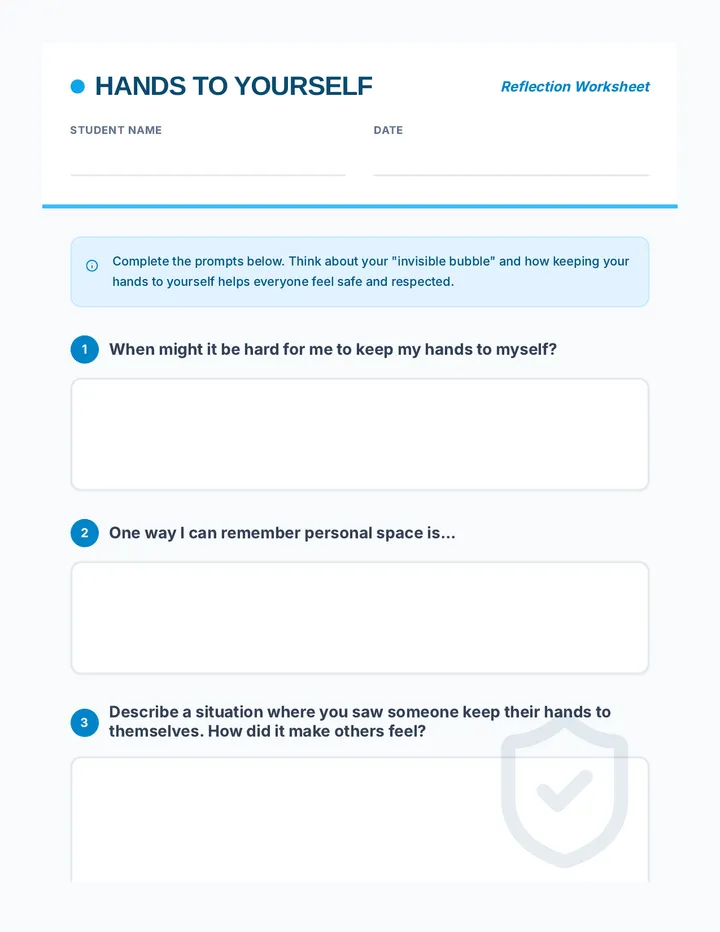
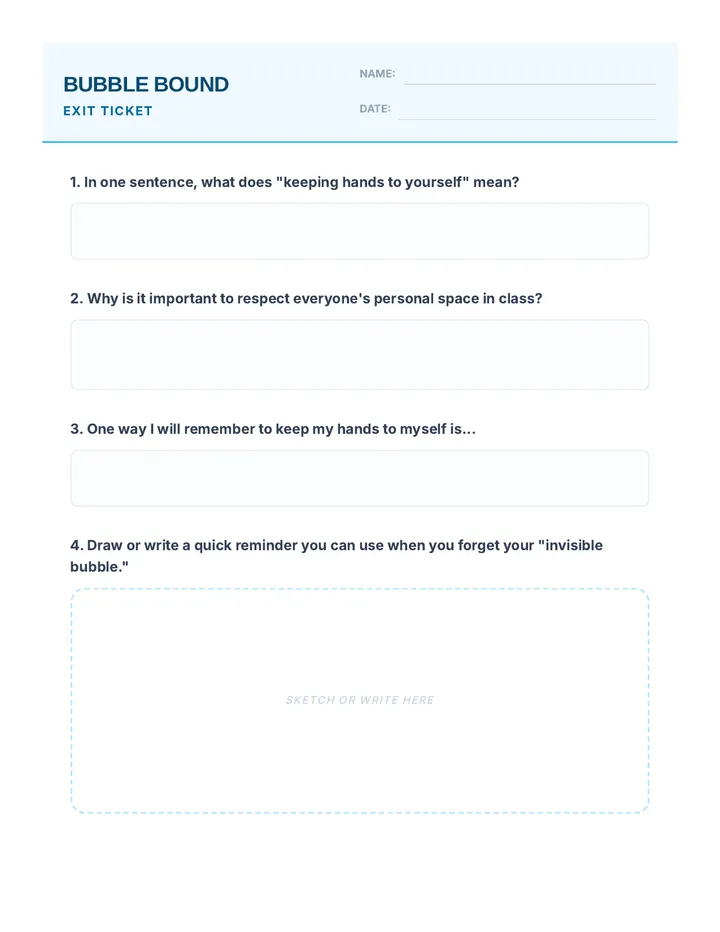
A 15-minute Tier 2 lesson for 5th graders focused on respecting personal space and physical boundaries through the concept of 'invisible bubbles'. Students engage in discussion, role-play, and personal reflection to strengthen social skills and empathy.
In this 30-minute Tier 1 lesson for 8th graders, students will explore what maturity means, why it matters, and how to demonstrate mature behavior in everyday situations. This lesson builds social-emotional skills and helps students reflect on their personal growth using a gaming-inspired 'Level Up' theme.
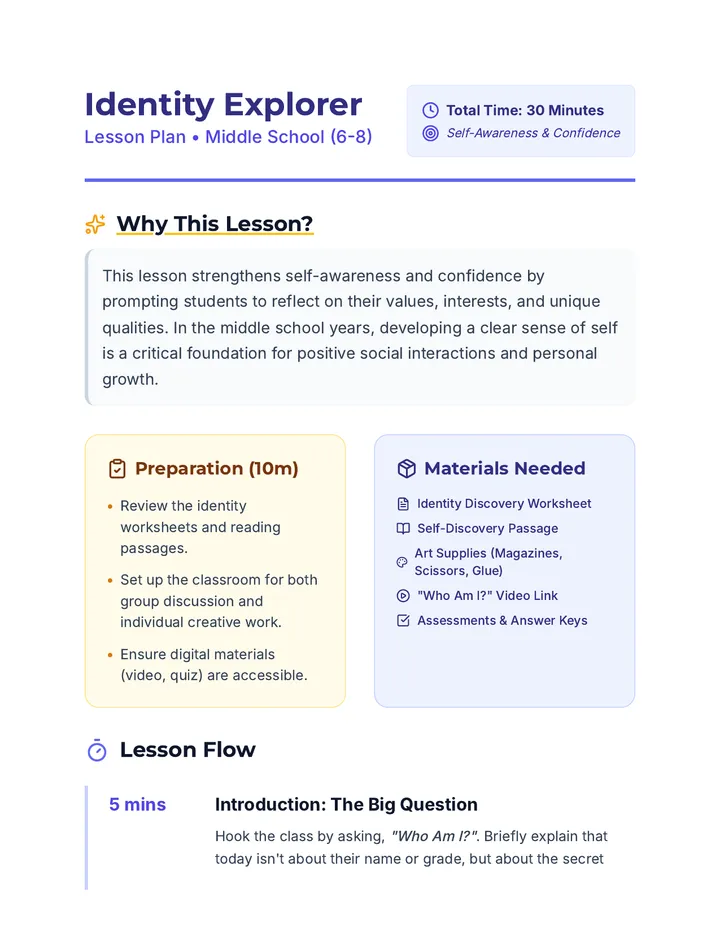
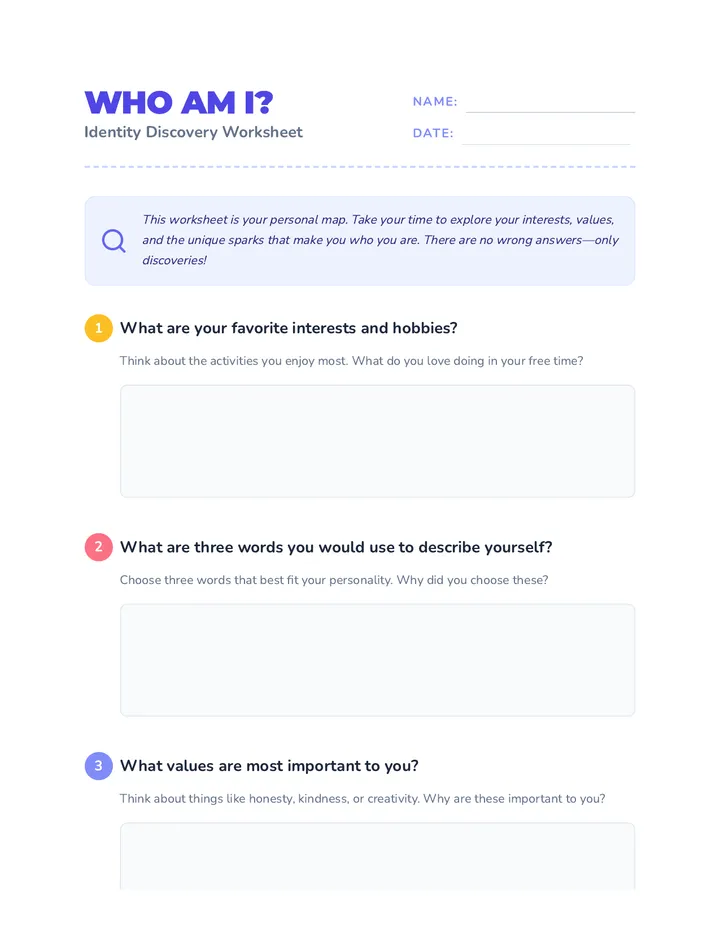
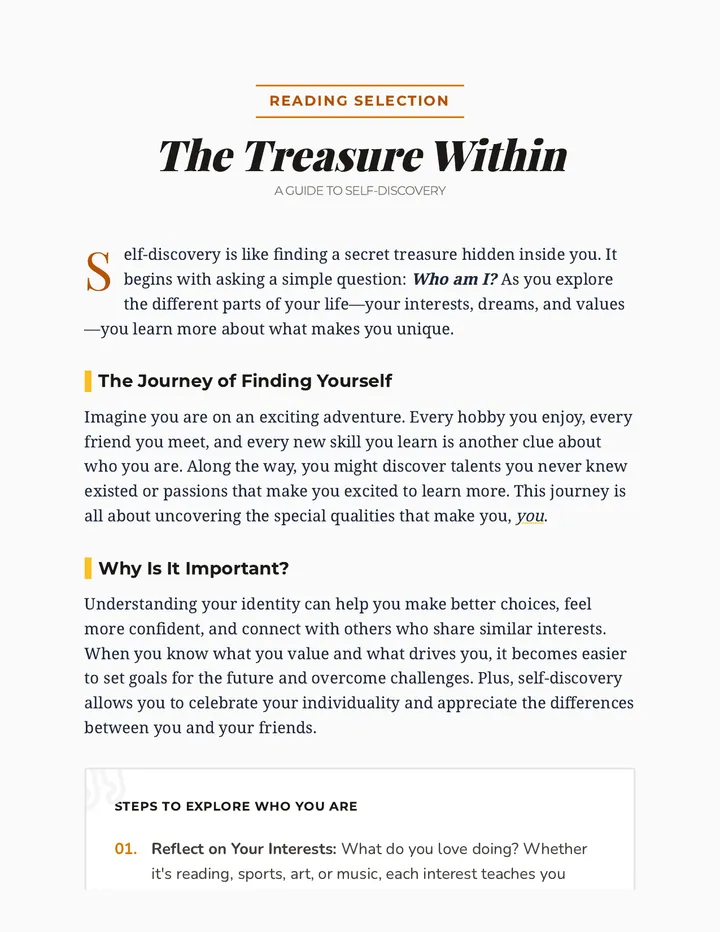
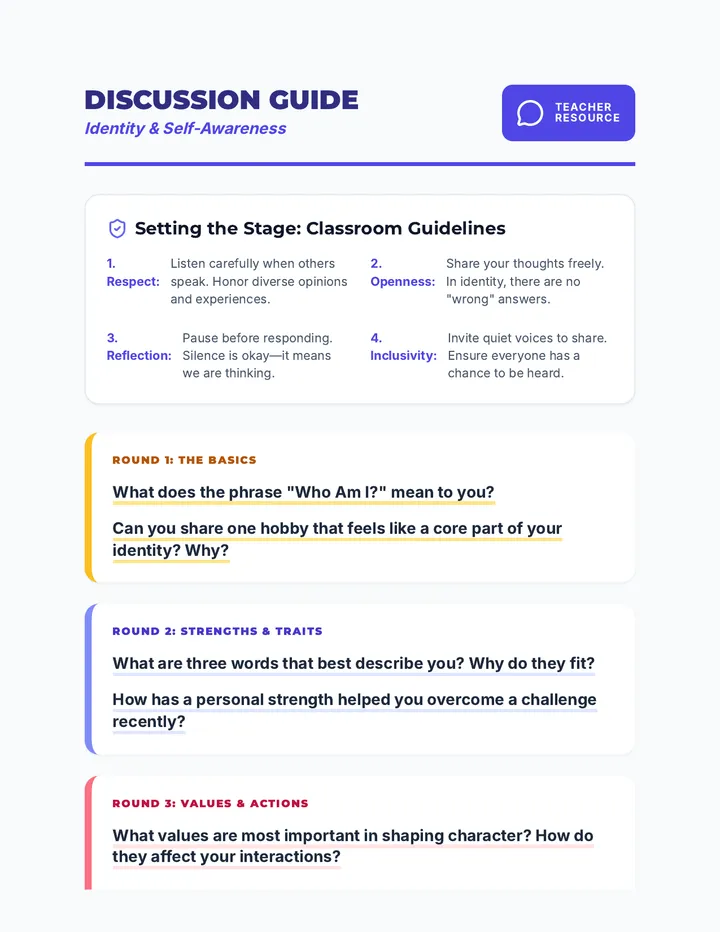
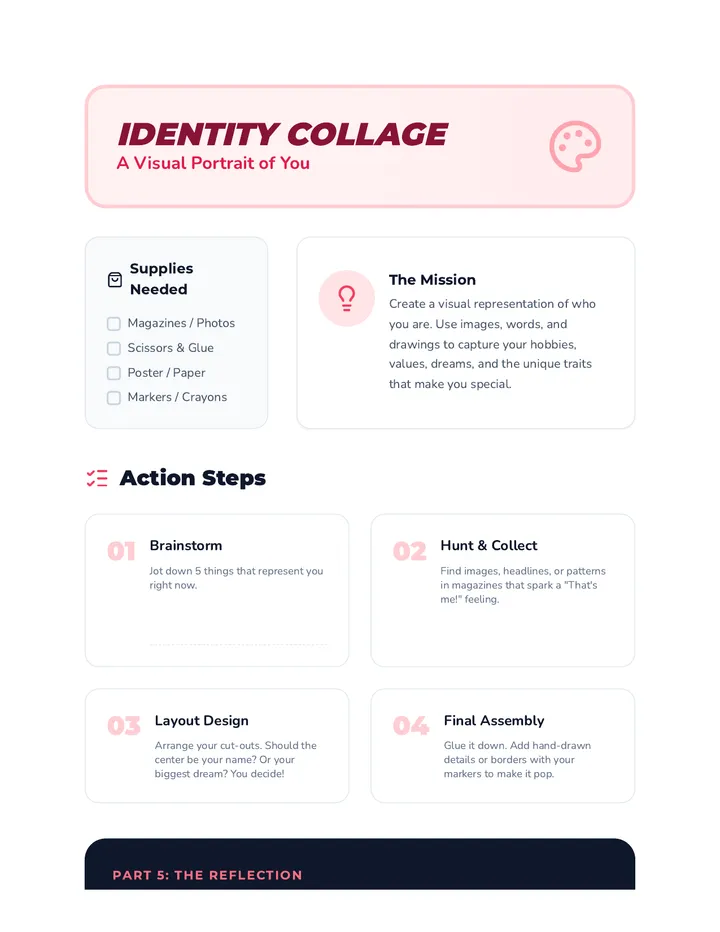
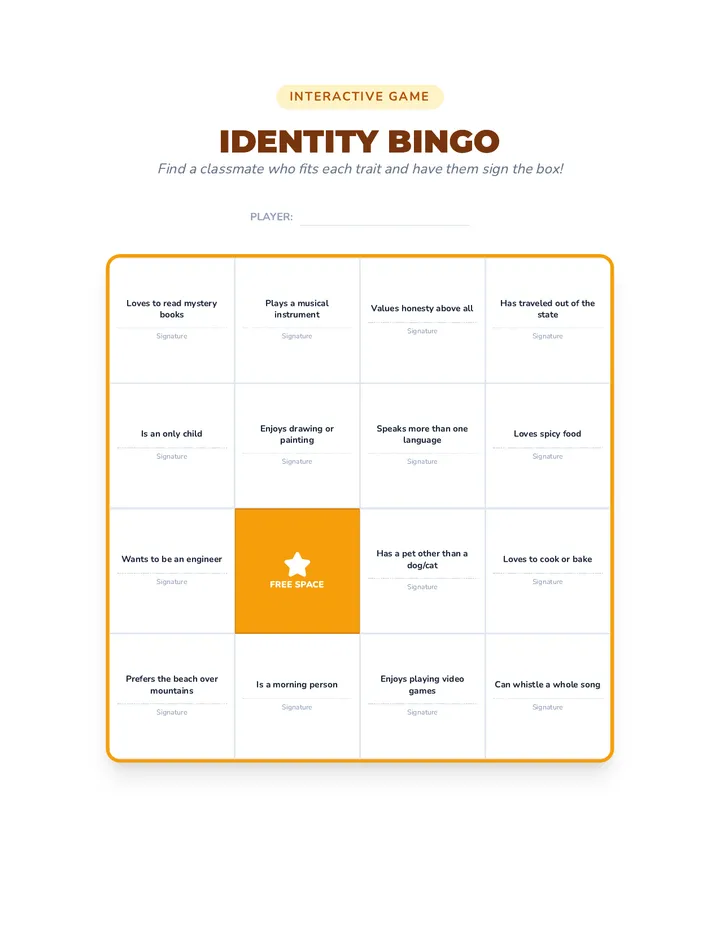
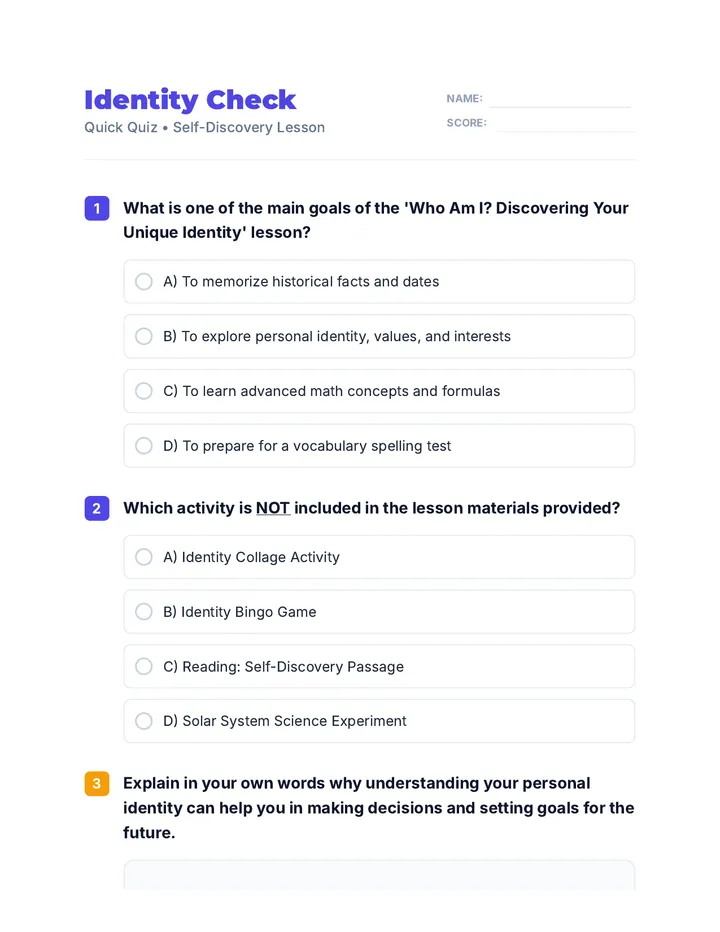
A middle school lesson designed to build self-awareness and confidence by exploring personal identity, values, and strengths through interactive activities and reflection.