Sensory regulation strategies, grounding techniques, and progressive muscle relaxation to manage acute emotional distress. Develops self-awareness of physiological triggers to facilitate independent de-escalation.
A 6-week Tier 3 intervention sequence designed for a student with an IEP, focusing on identifying triggers, developing coping strategies, and practicing self-regulation to manage anger and anxiety.
A 6-session small-group course for 2nd grade boys designed to build self-control, manage impulsivity, and handle frustration using the 'Stop, Think, Shine' framework.
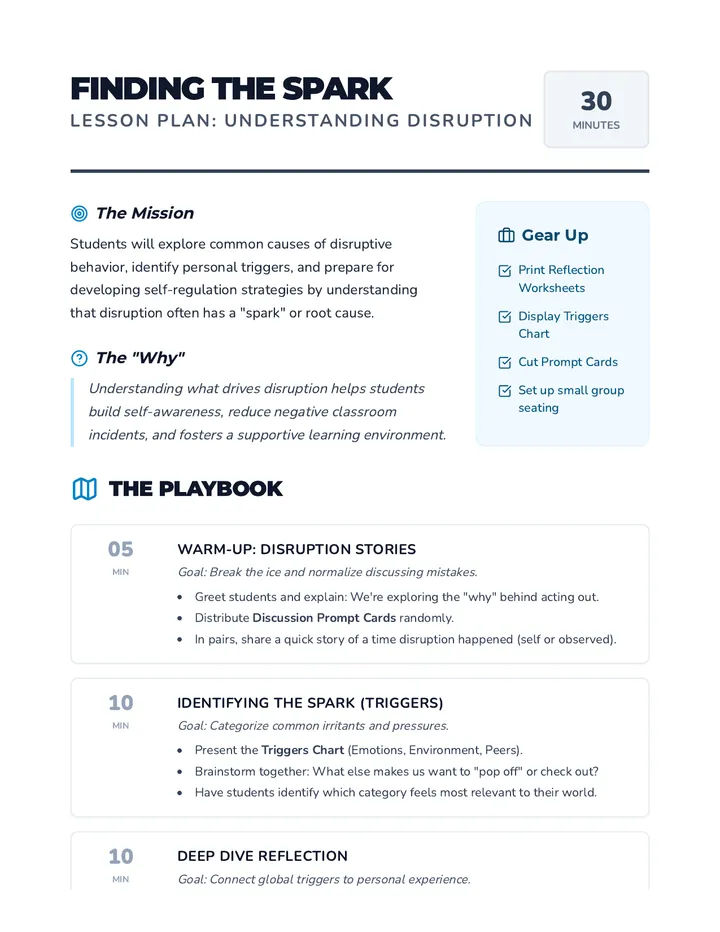
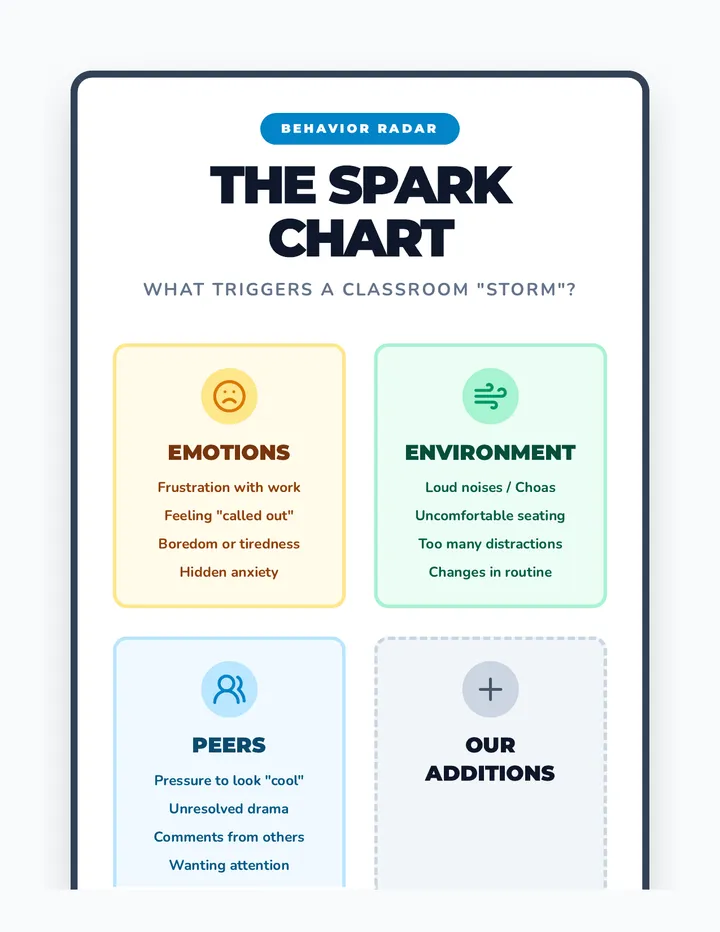
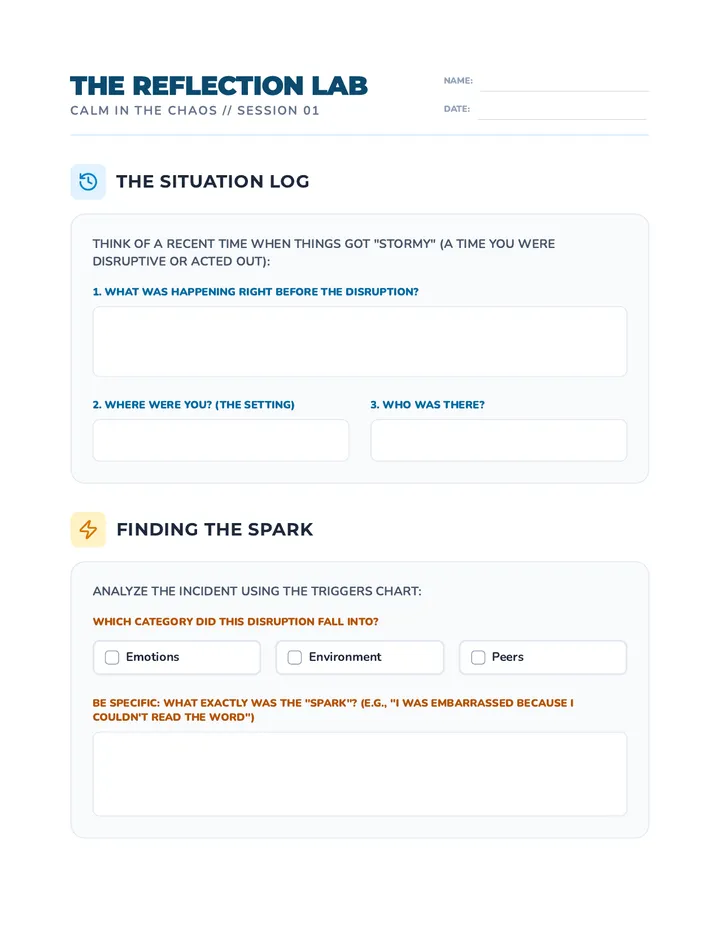
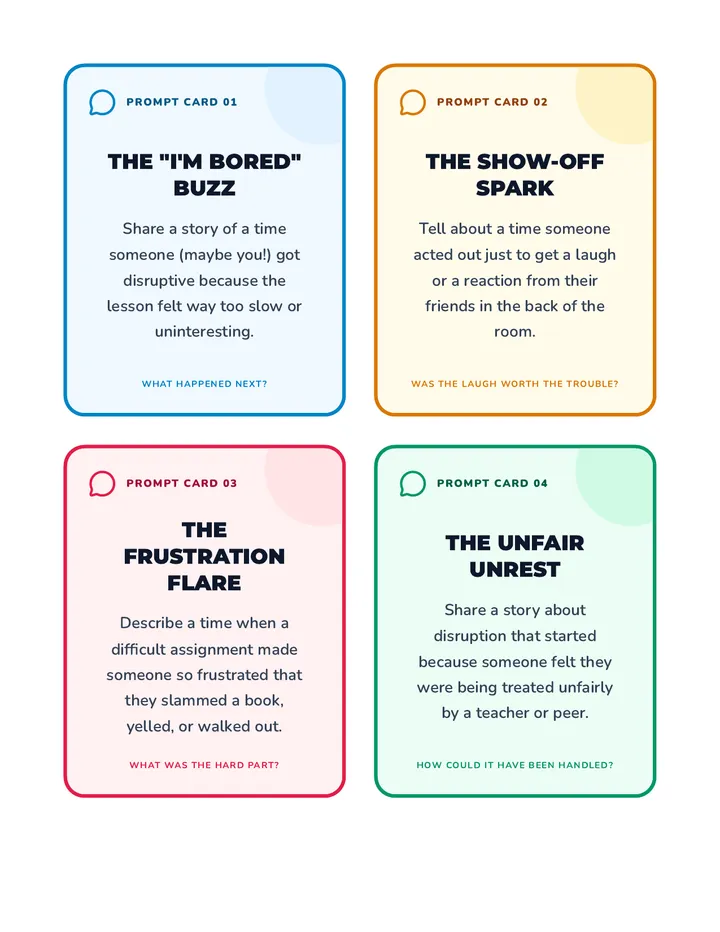
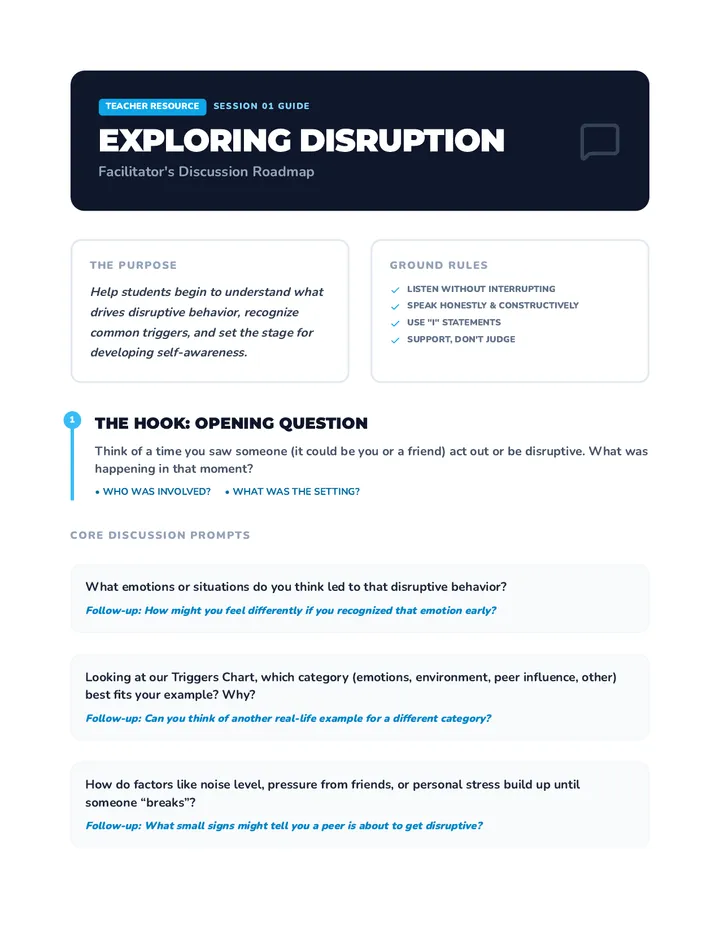
A two-session mini-unit for middle school small groups focused on understanding disruptive behaviors, identifying personal triggers, and developing concrete self-regulation strategies. Students move from awareness of external and internal pressures to practicing and planning constructive responses.
A 6-session Tier 2 small-group program for 2nd graders focused on self-control, cooperation, and positive behavior using engaging tasks and guided practice.
A 10-session Tier 3 social-emotional learning unit for students with ASD, focusing on identifying emotions, recognizing dysregulation, and applying self-regulation strategies through a space-themed journey.
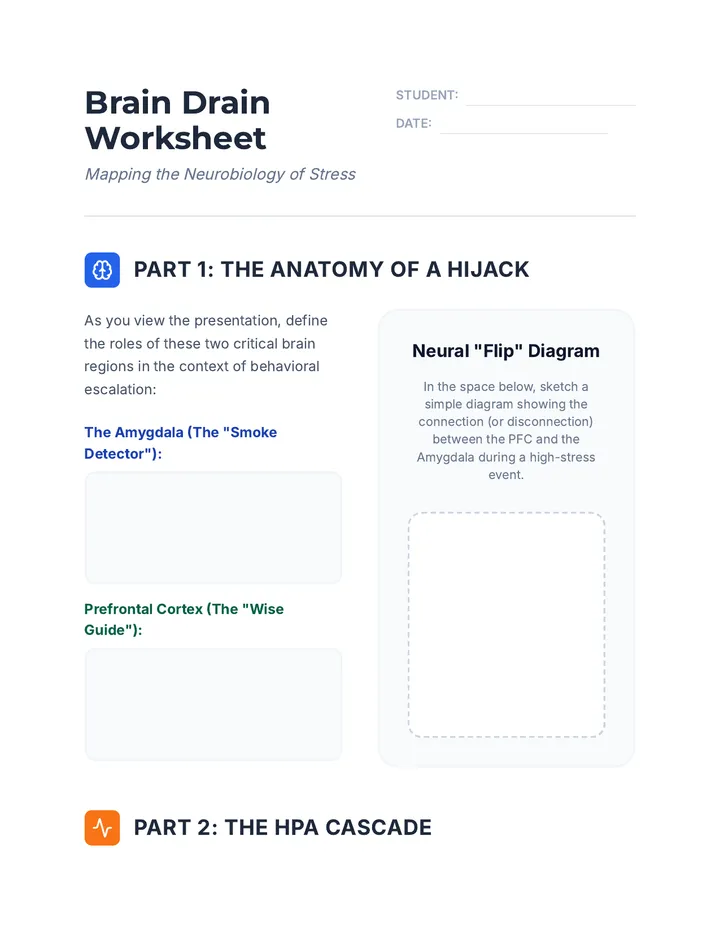
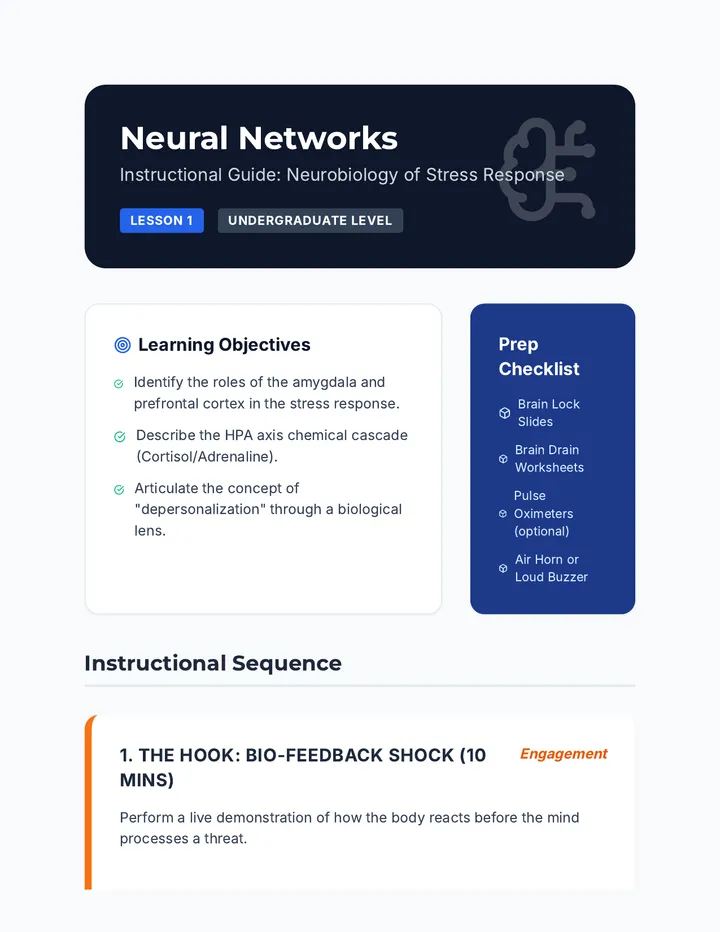
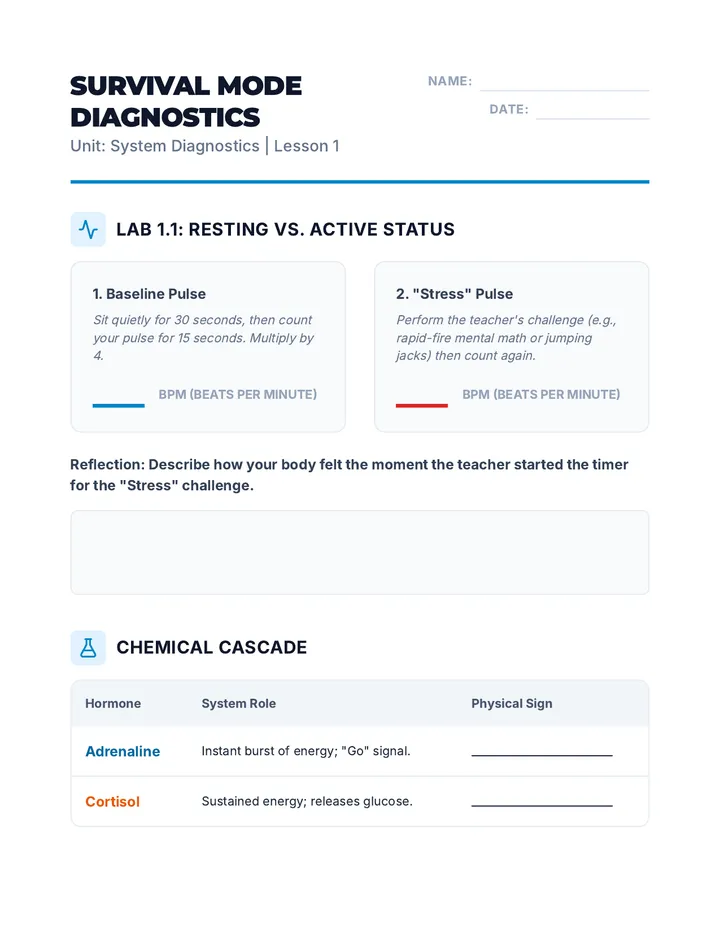
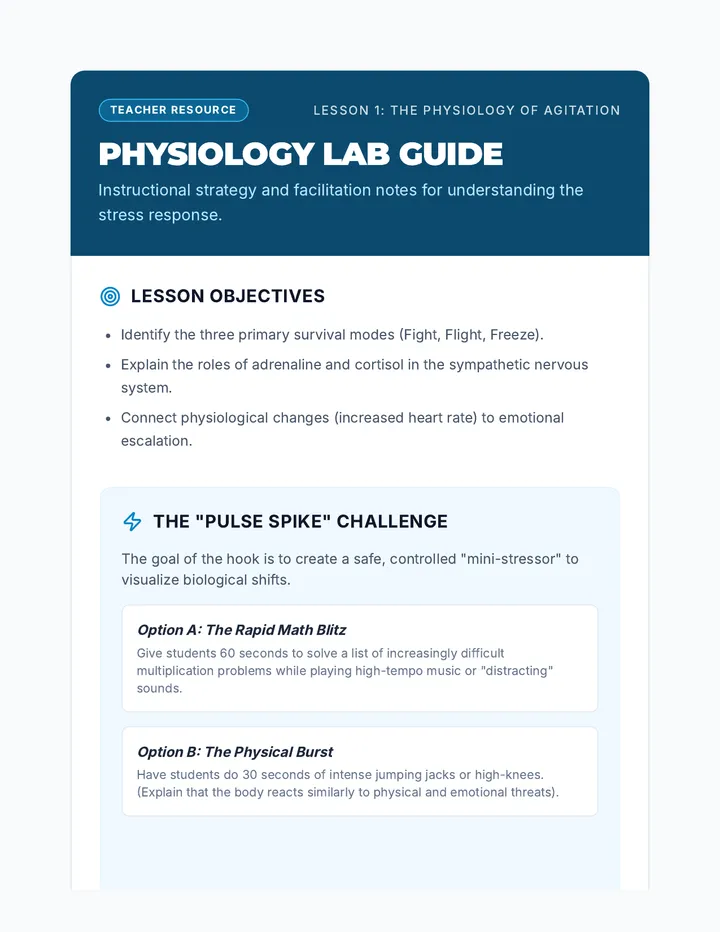
This sequence explores the neurobiological foundations of student escalation, connecting internal physiological stress responses (the 'amygdala hijack') to observable external warning signs. Students will learn to depersonalize behavior by understanding it as a biological survival mechanism, training them to recognize subtle somatic, respiratory, and muscular cues before a full behavioral outburst occurs.
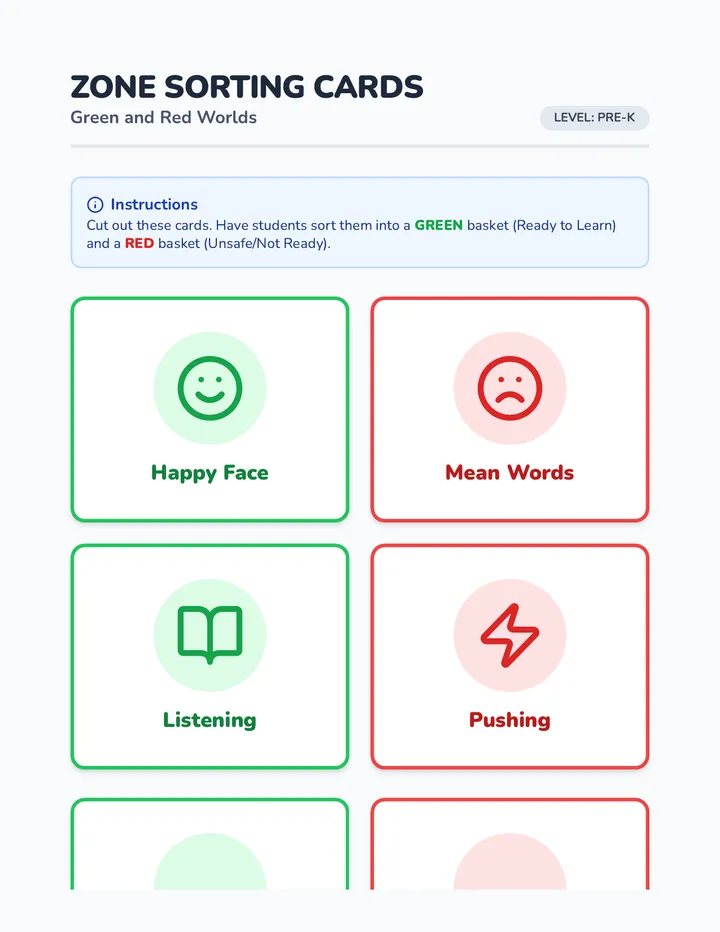
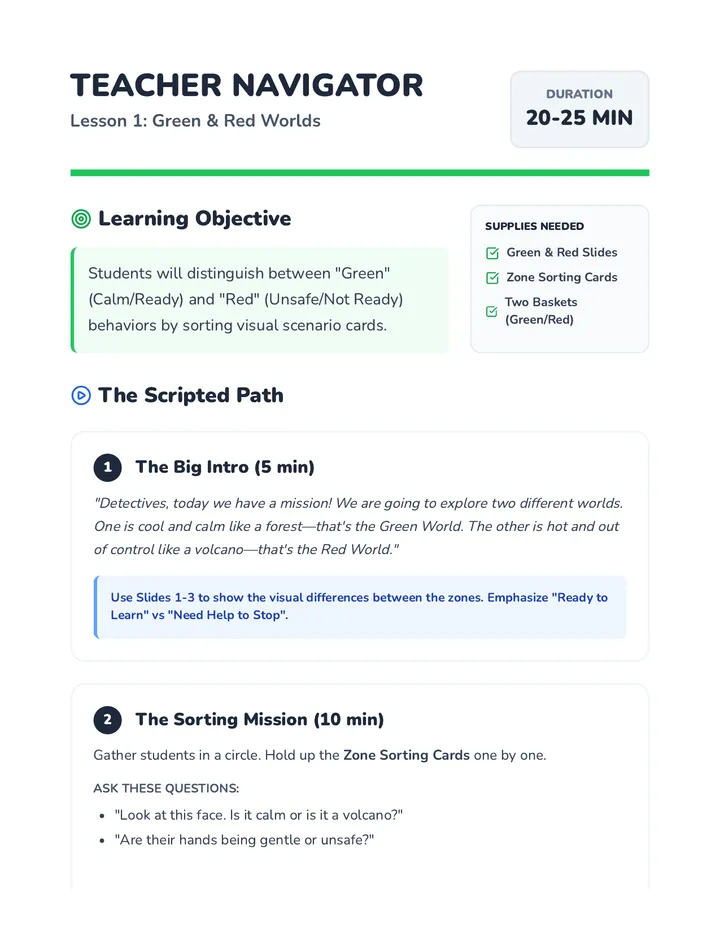
A color-coded behavioral support sequence for Pre-K students focused on identifying emotional intensity. Students learn to distinguish between 'Green' (calm), 'Yellow' (warning), and 'Red' (crisis) zones, with a heavy emphasis on recognizing the 'Yellow Zone' signs before escalation occurs.
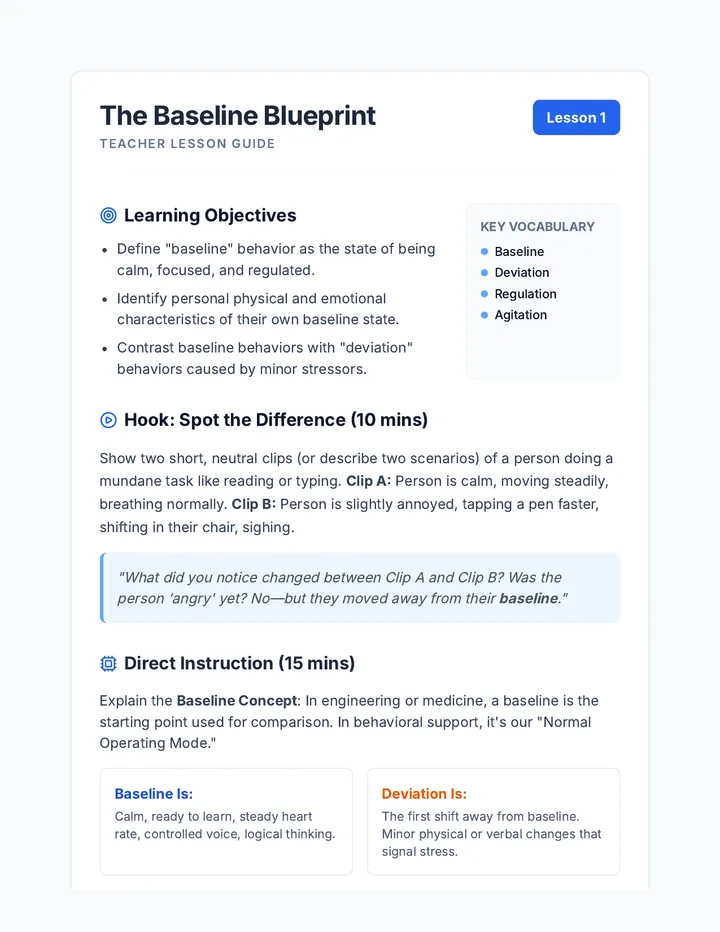
A comprehensive 5-lesson unit for 7th-grade students to identify internal and external signals of emotional escalation. Students move from establishing baseline behaviors to creating a personalized 'Escalation Map' to help them recognize when to engage coping strategies before a crisis occurs.
A 5-lesson sequence for Kindergarten students focusing on interoception and the procedural steps of requesting and returning from a break to support self-regulation.
A 5-lesson sequence for 9th-grade students focusing on the physiological and cognitive aspects of emotional escalation. Students learn to identify early warning signs in their bodies and minds to prevent crises through self-awareness and personalized monitoring protocols.
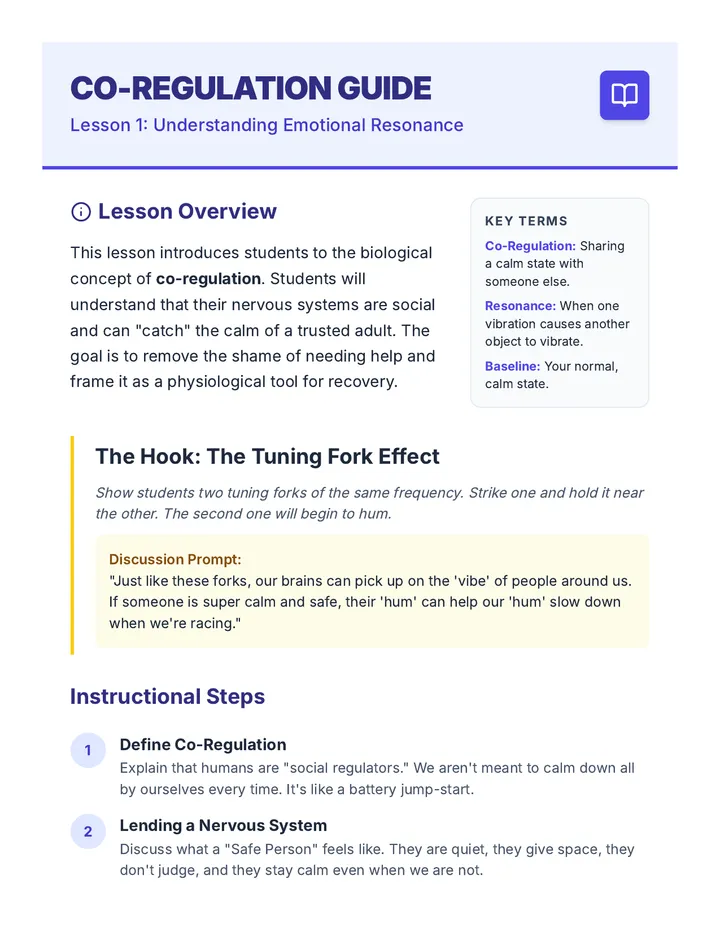
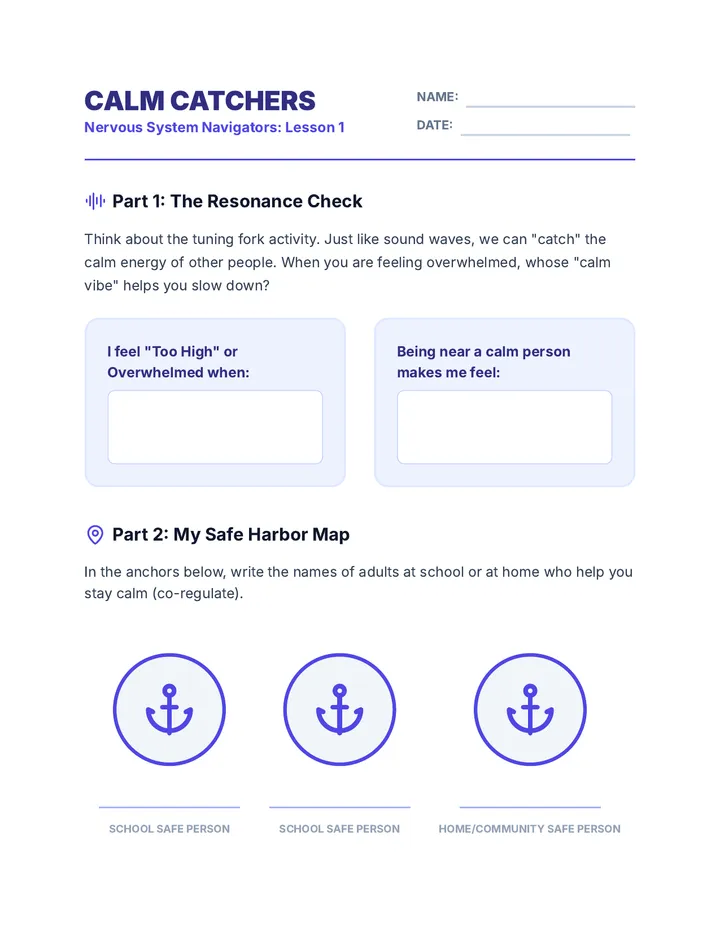
A 5-lesson sequence for 5th-grade students focused on co-regulation, non-verbal communication, and self-advocacy during dysregulation recovery. Students learn to leverage adult support to return to an emotional baseline.
A 1st Grade sequence connecting behavioral tracking to emotional literacy. Students explore color-coded regulation zones, create personal tracking tools, and learn to select coping strategies based on their internal 'data'.
A fun, interactive lesson using beloved SpongeBob characters to help 1st-grade students understand and practice appropriate voice volume in various classroom settings.
A 45-minute lesson for 6th-grade students with ASD to learn about the Zones of Regulation, identifying emotions and building self-regulation tools.
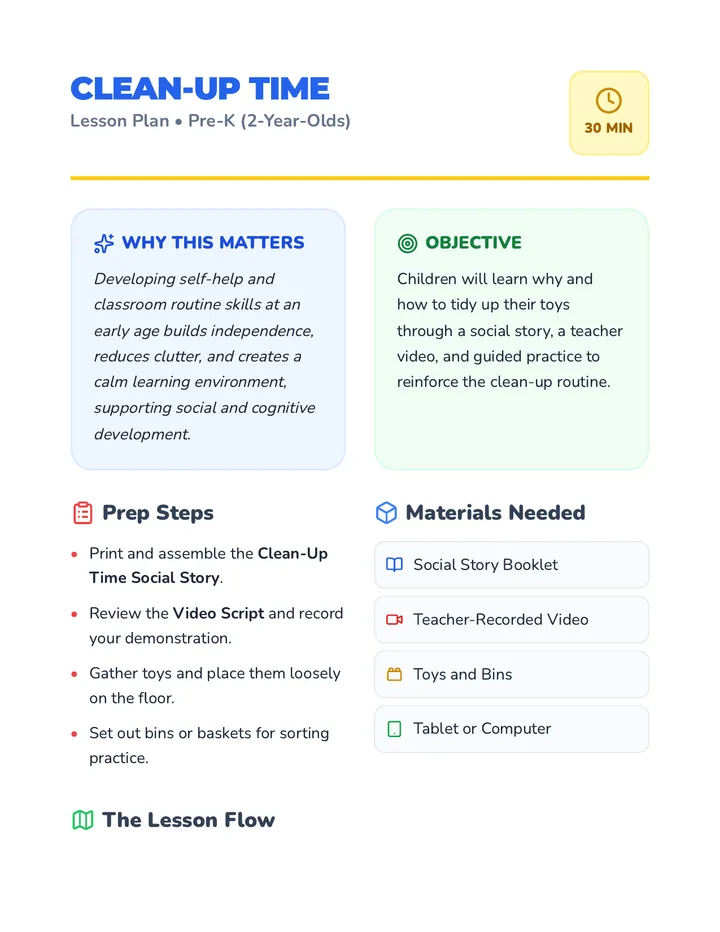
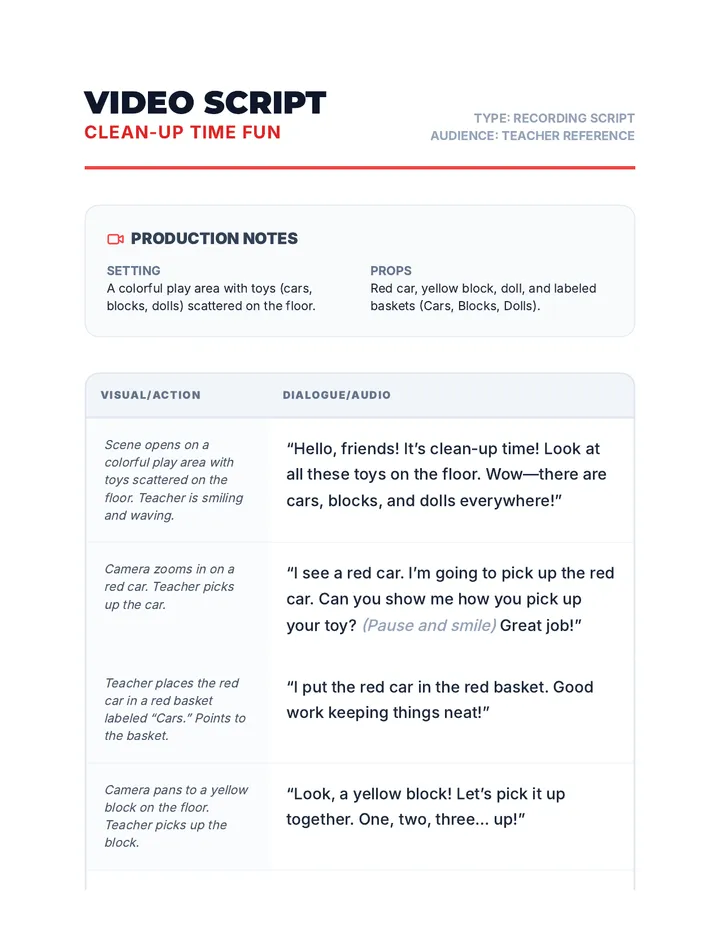
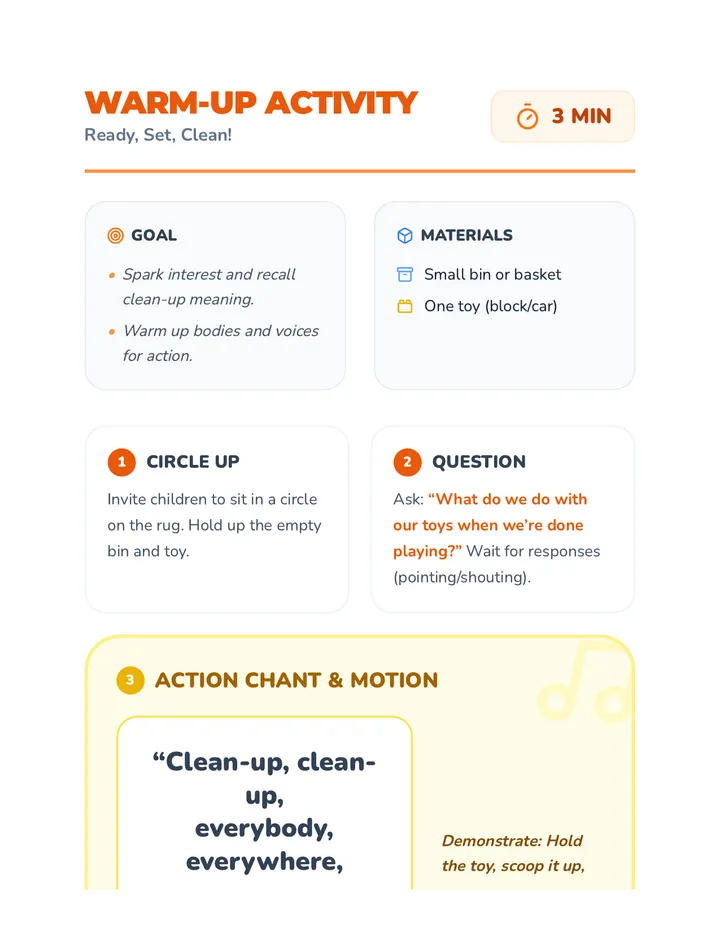
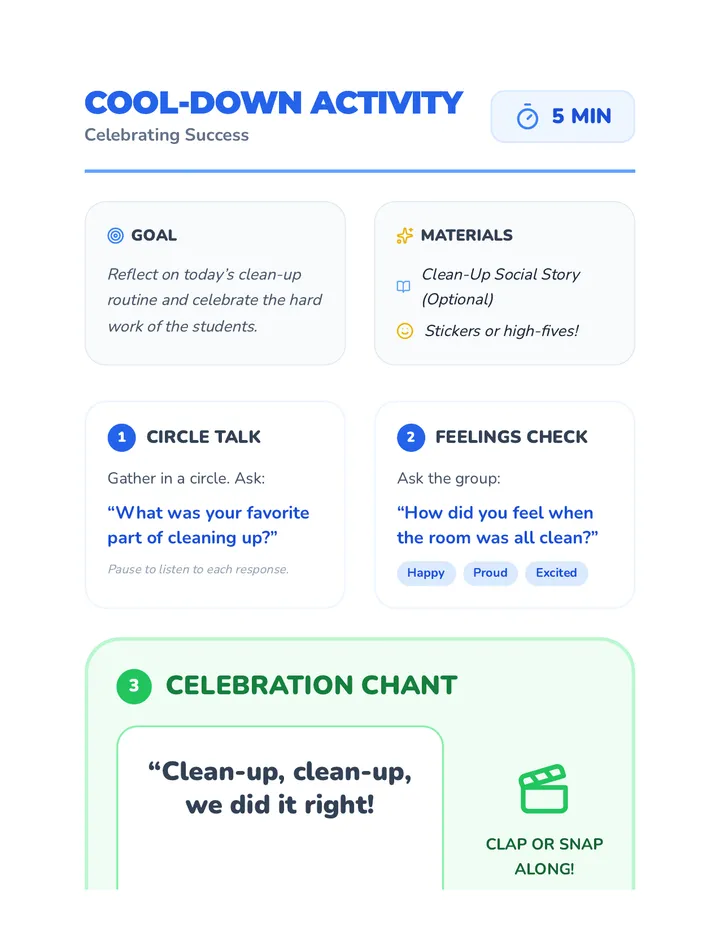
A foundational Pre-K lesson teaching 2-year-olds the routine of tidying up toys through a social story, teacher-led video, and guided practice.
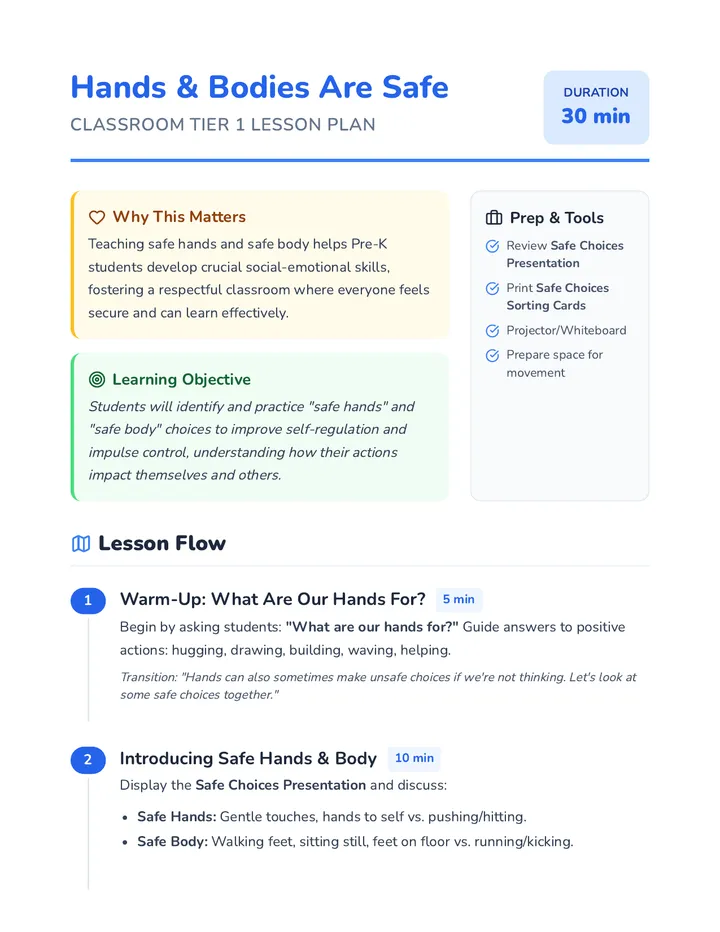
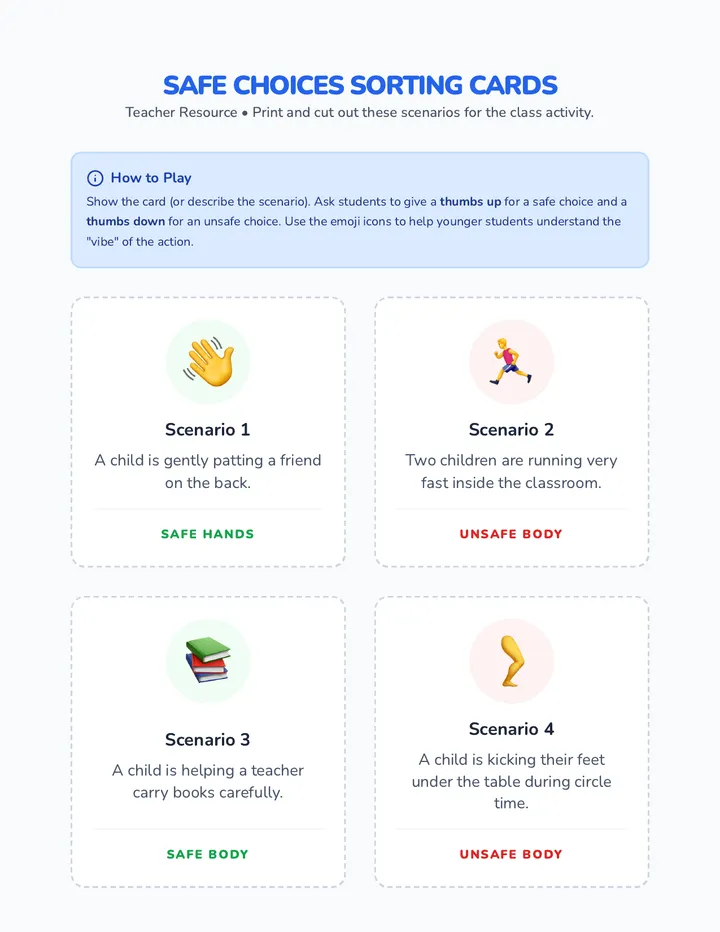
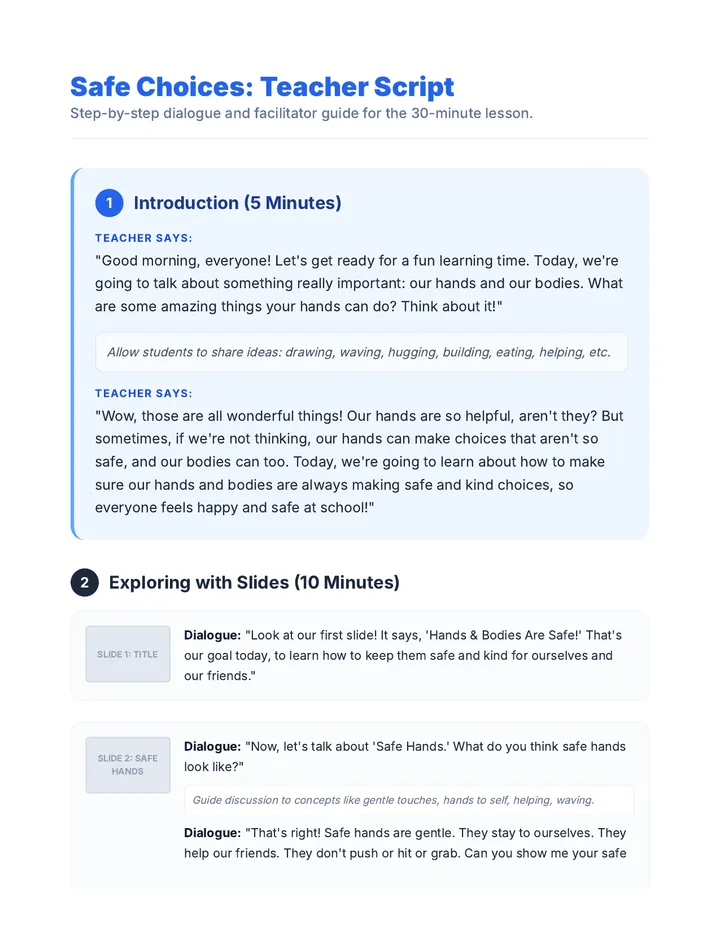
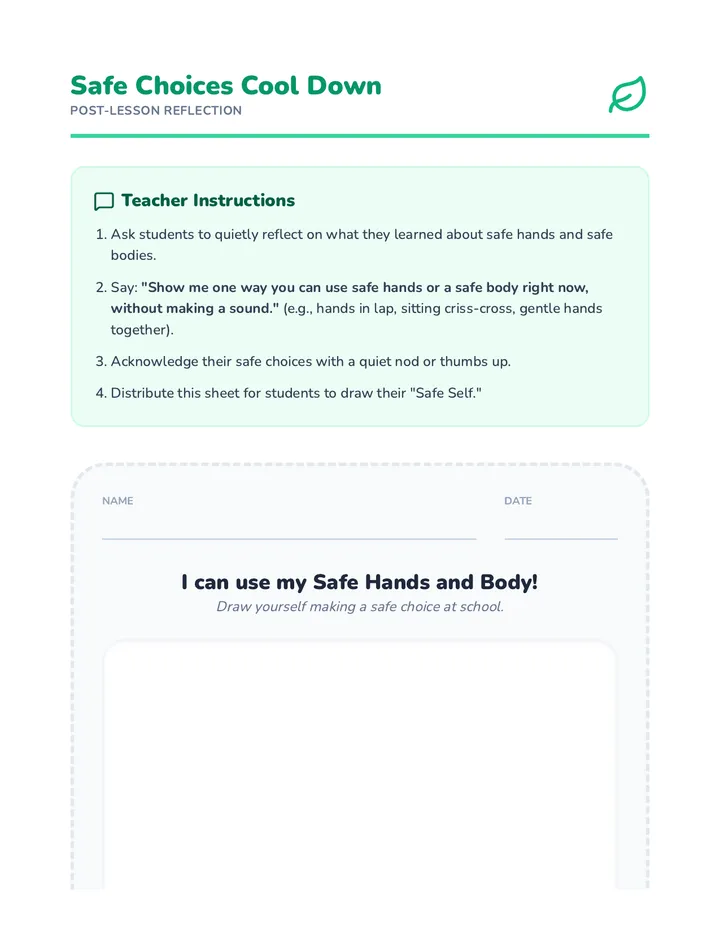
This lesson helps Pre-K students understand and practice safe hands and safe body choices, fostering self-regulation and a positive classroom environment.
This 30-minute lesson for Kindergarten students teaches the importance of keeping hands to ourselves to ensure a safe and respectful classroom environment. It focuses on gentle hands, personal space, and asking for permission.
A fun, interactive lesson for 1st graders to learn about respect through a Jeopardy-style game and a story about a 'Respectful Spot'. Students explore respect for friends, teachers, rules, and themselves.
An individual Tier 3 Pre-K lesson focusing on replacing hitting behaviors with gentle hand actions and identifying emotions. Students learn that hands are for helping, play, and gentle touches through visual aids, role-play, and creative activities.
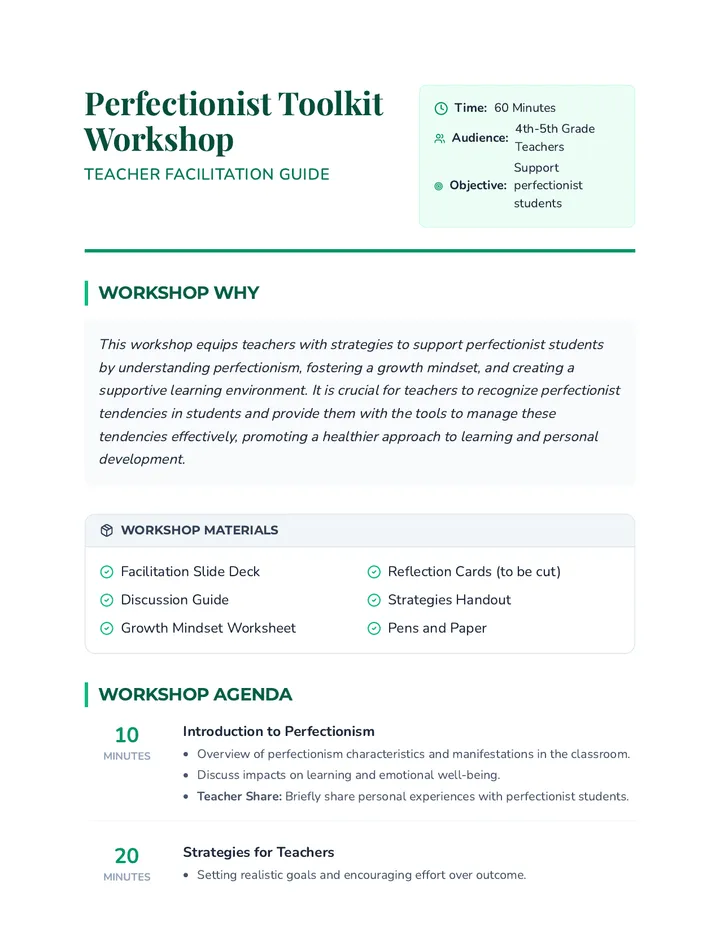
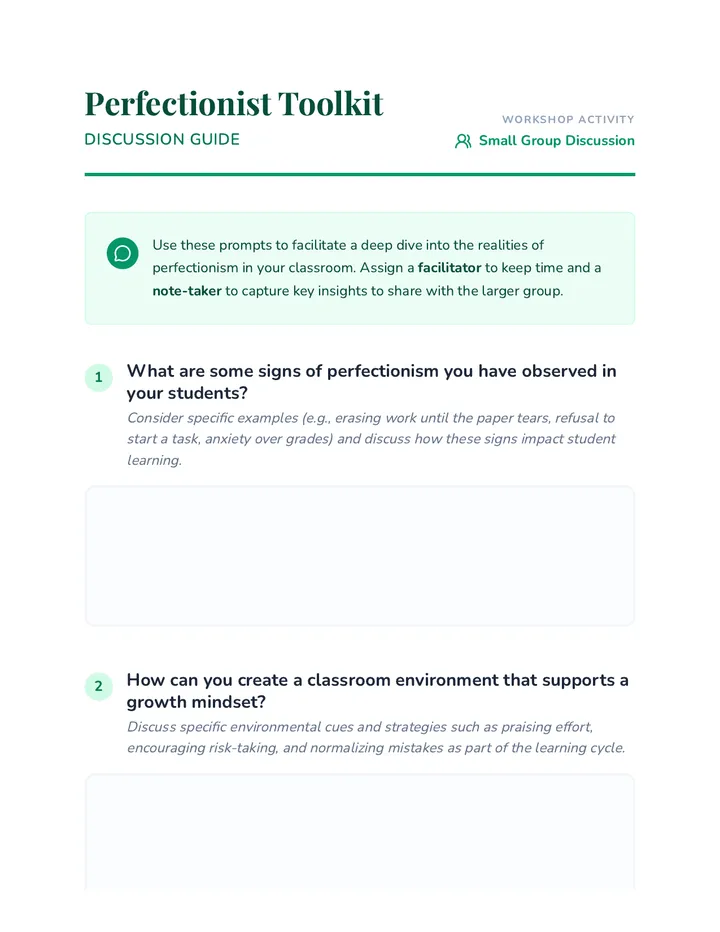
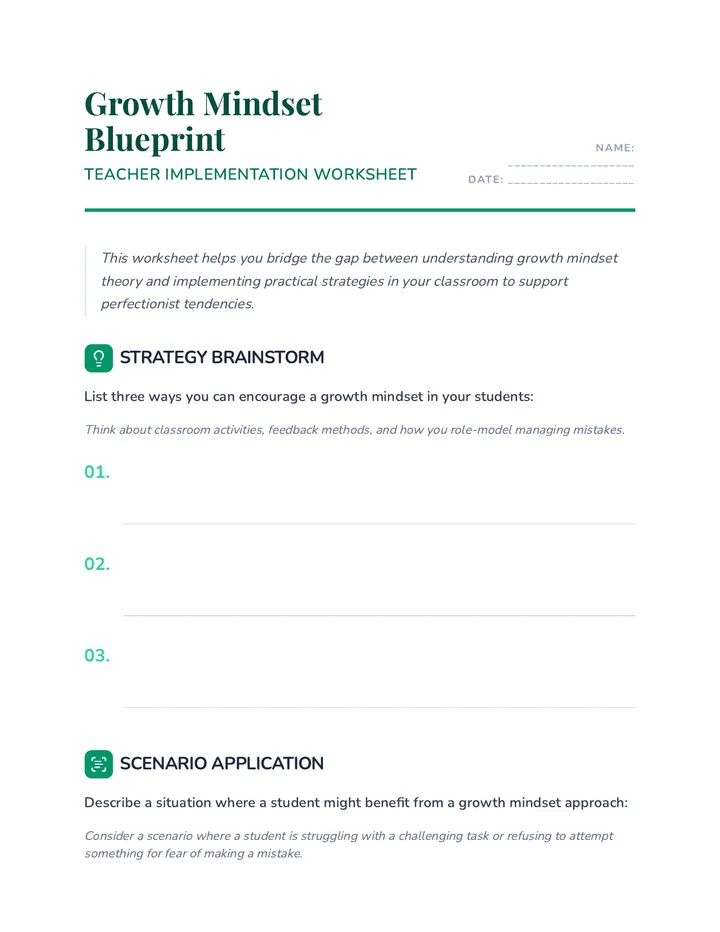
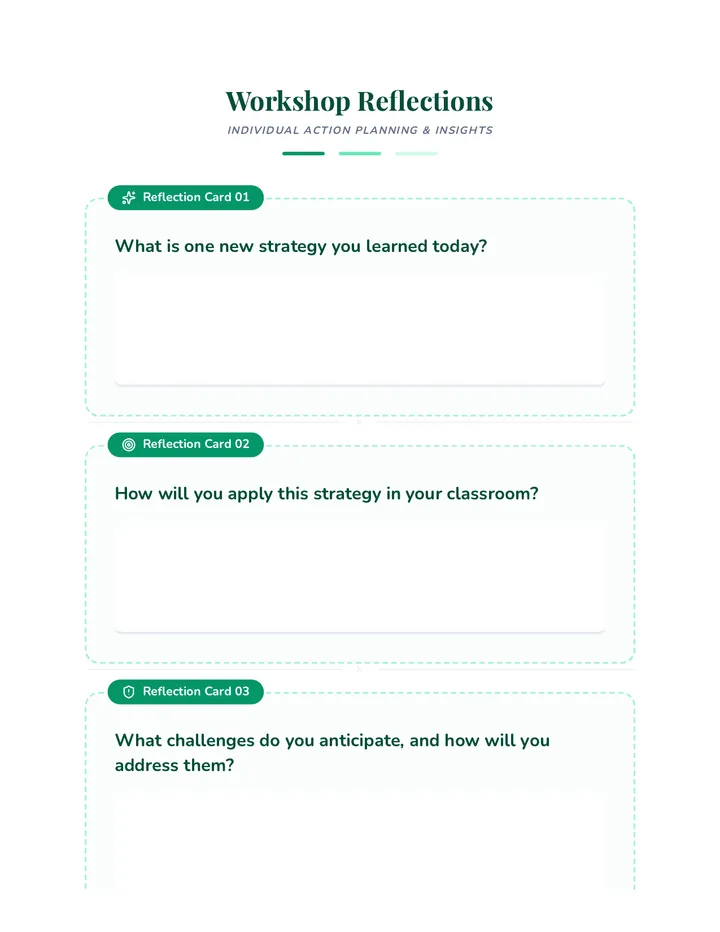
A professional development workshop designed for teachers of 4th and 5th-grade students to understand perfectionism, foster growth mindsets, and implement practical support strategies.
In this 30-minute session, 7th grade students learn to identify verbal threats and inappropriate gestures, reflect on their emotional impact, and practice respectful communication strategies to foster a safe classroom environment.
A Tier 3 individual lesson for a 2nd-grade student focused on understanding school safety rules regarding gun talk and threatening language. The lesson emphasizes respect, the impact of words, and fostering a safe environment through interactive discussion and visual support.
A Kindergarten social-emotional learning lesson focused on identifying the 'Red Zone' of high-arousal emotions and learning to stop and regain control to keep bodies safe.
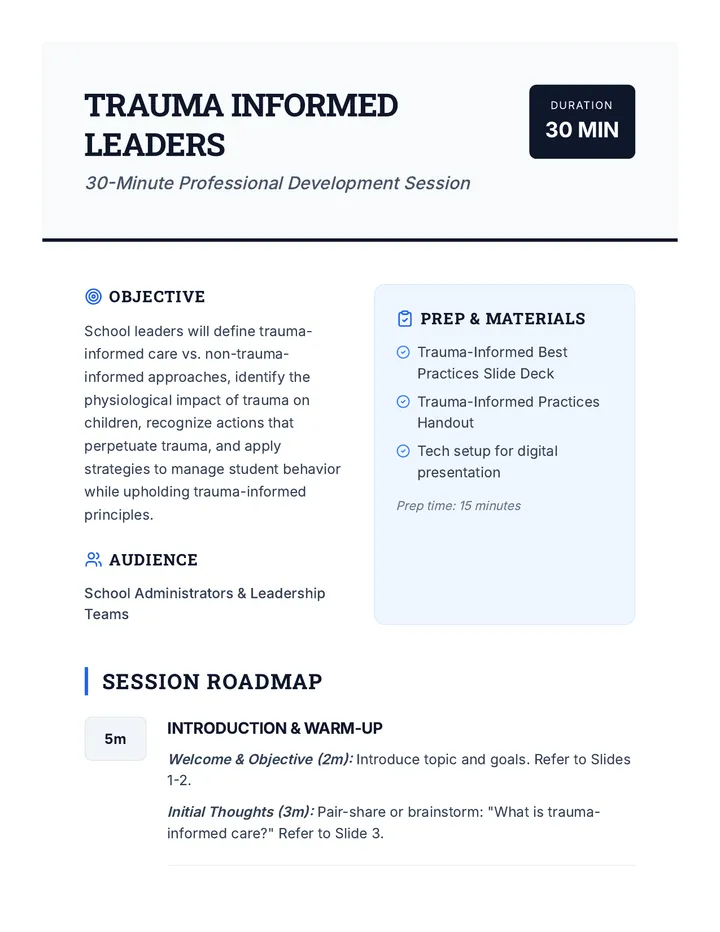
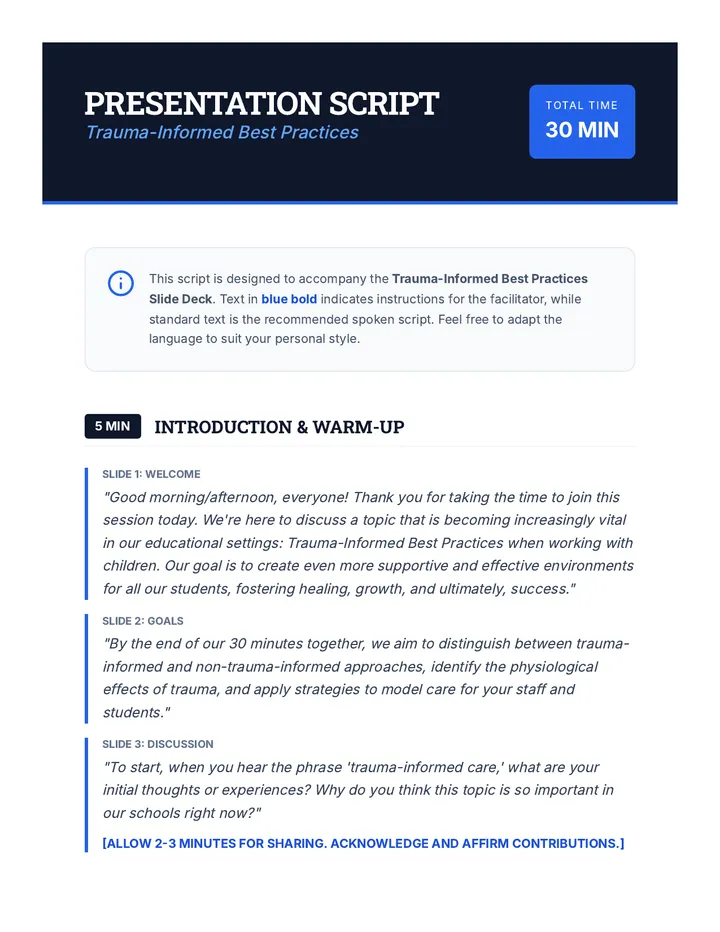
A 30-minute professional development session for school leaders focused on understanding trauma-informed practices, the physiological impact of trauma on students, and strategies for modeling these practices for staff while maintaining high expectations for student behavior.