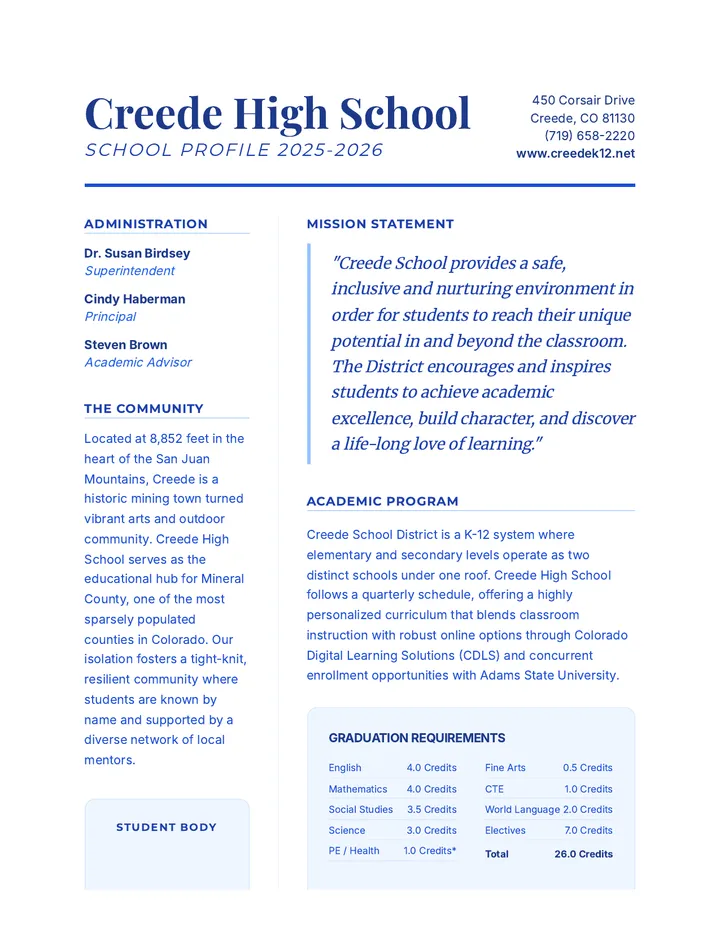
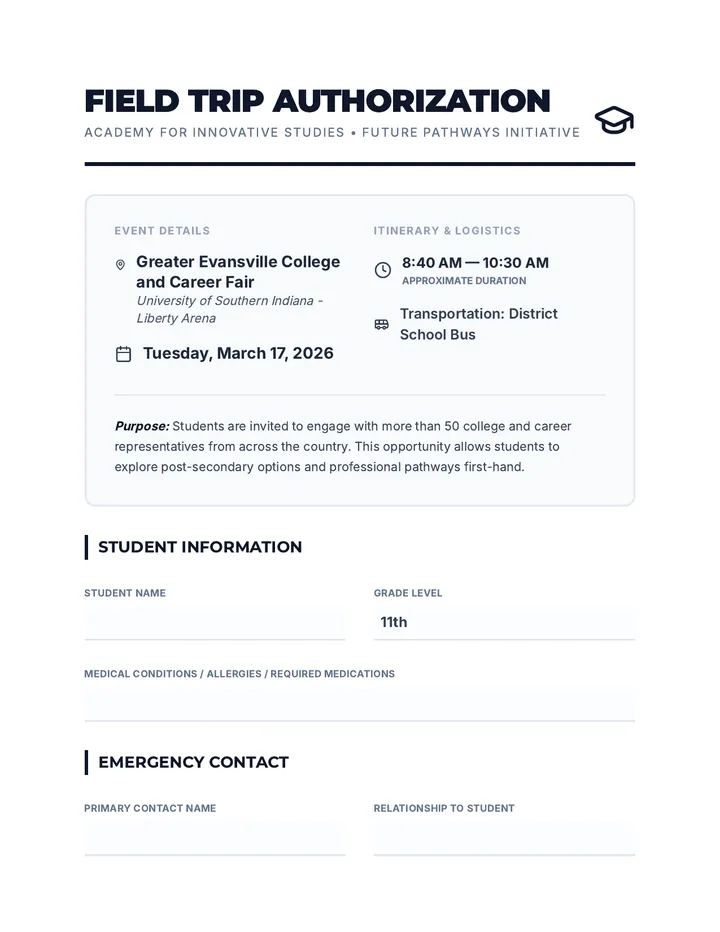
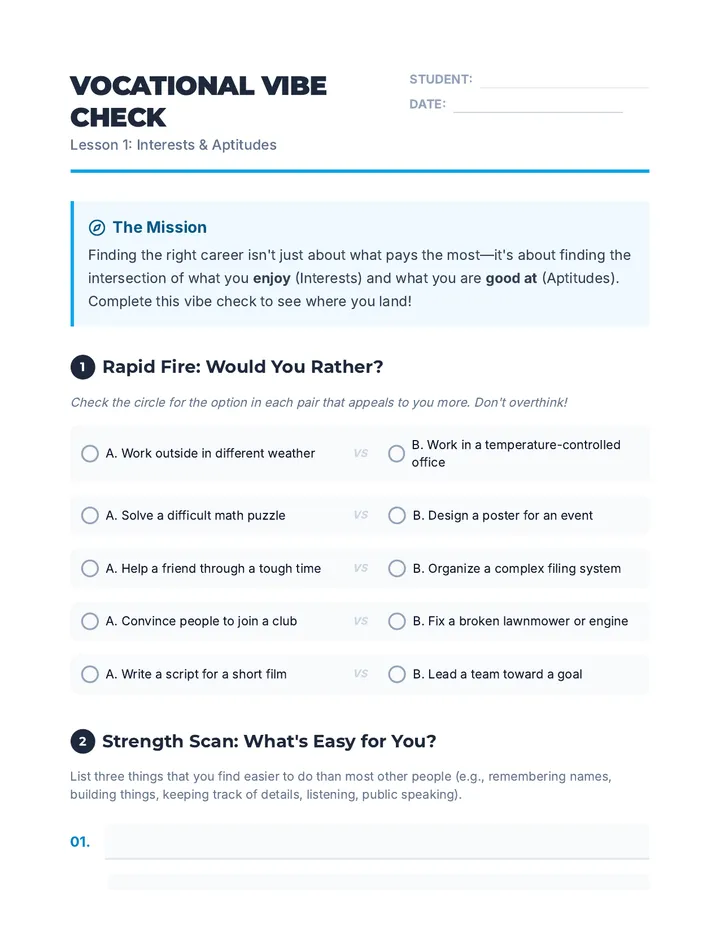
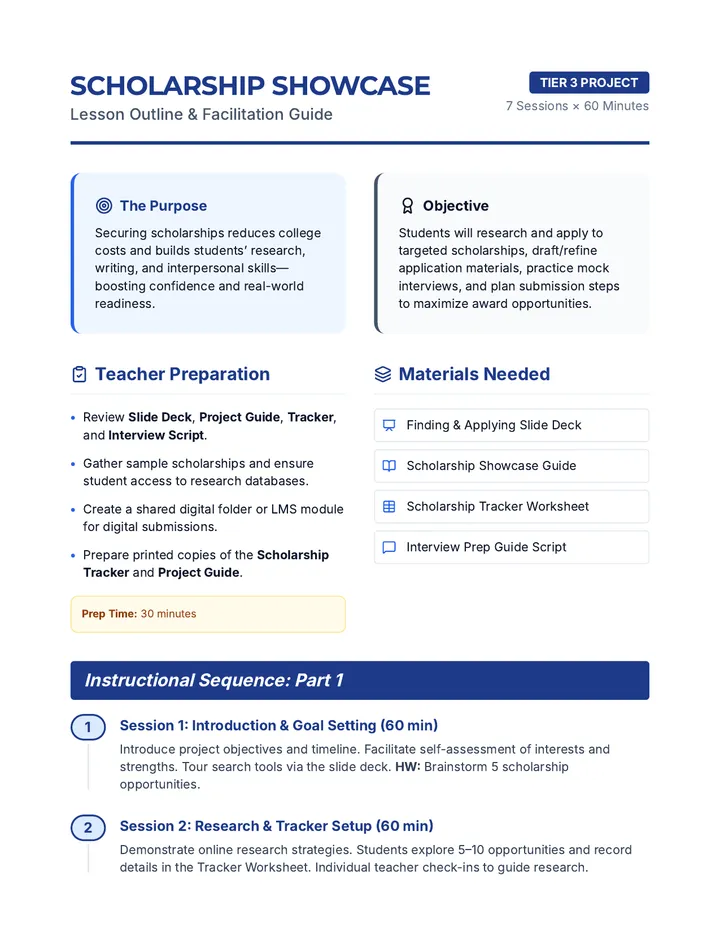
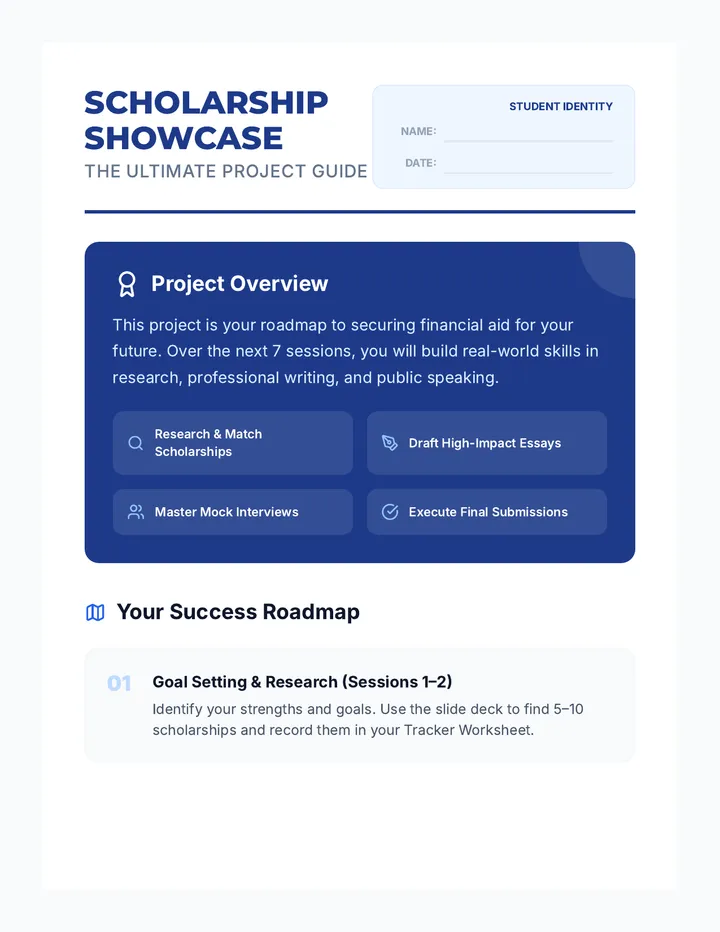
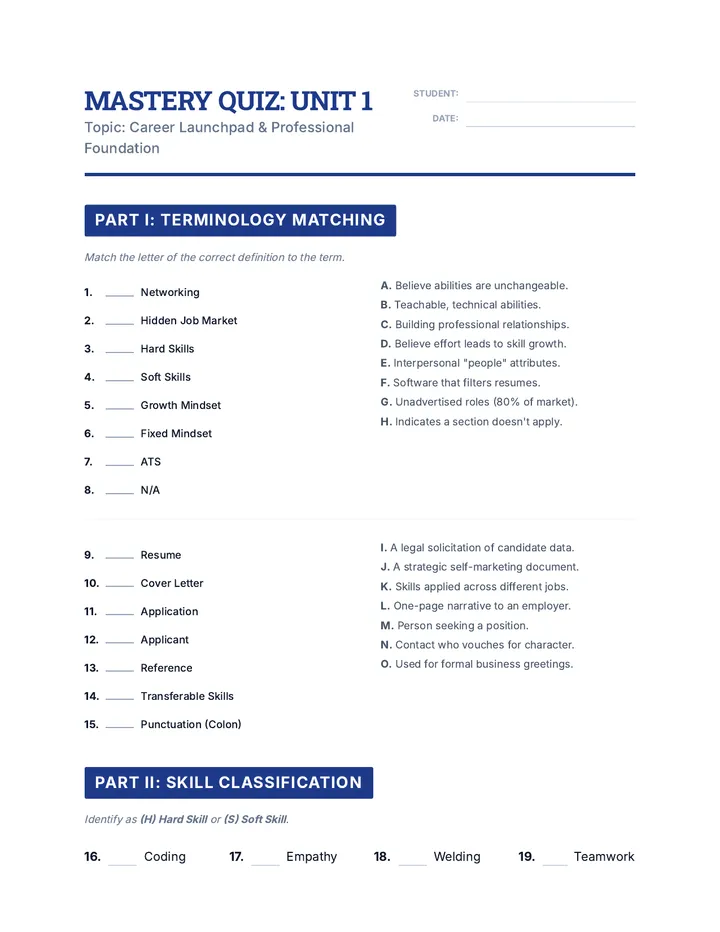
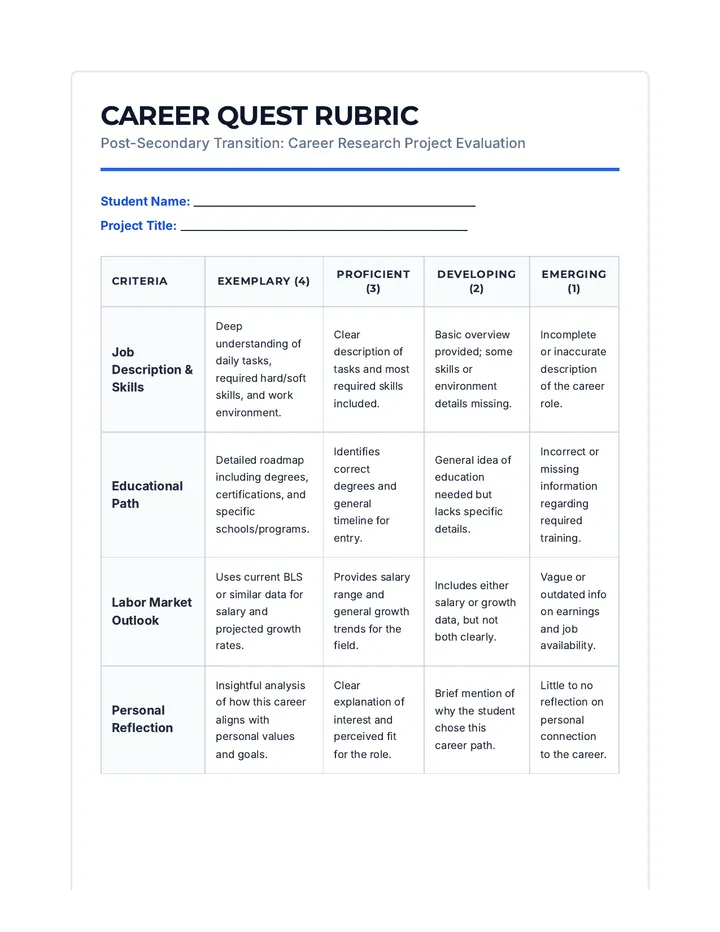
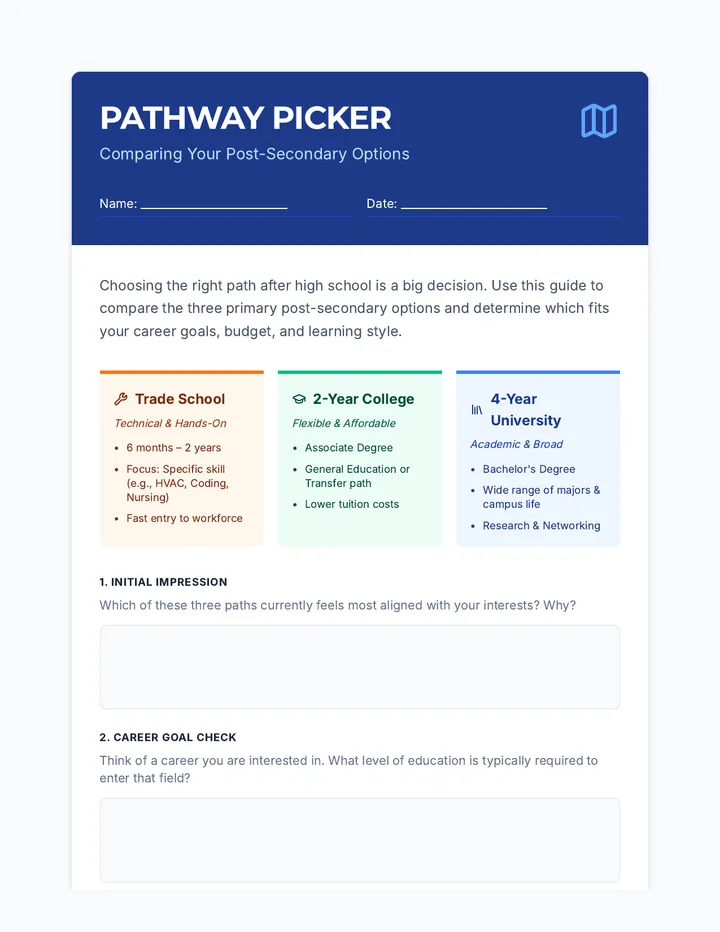
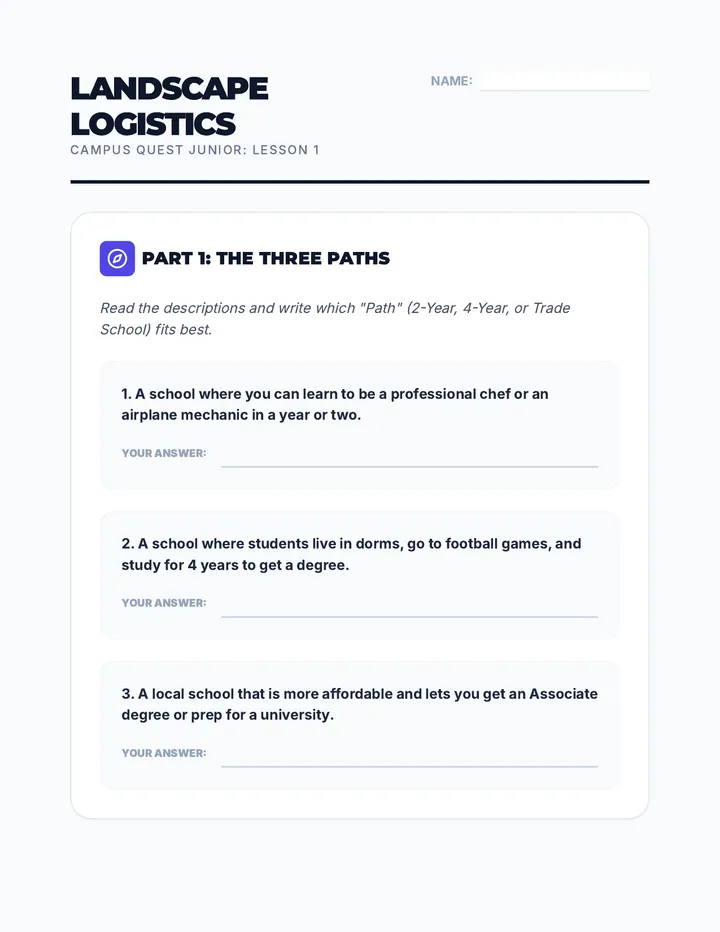
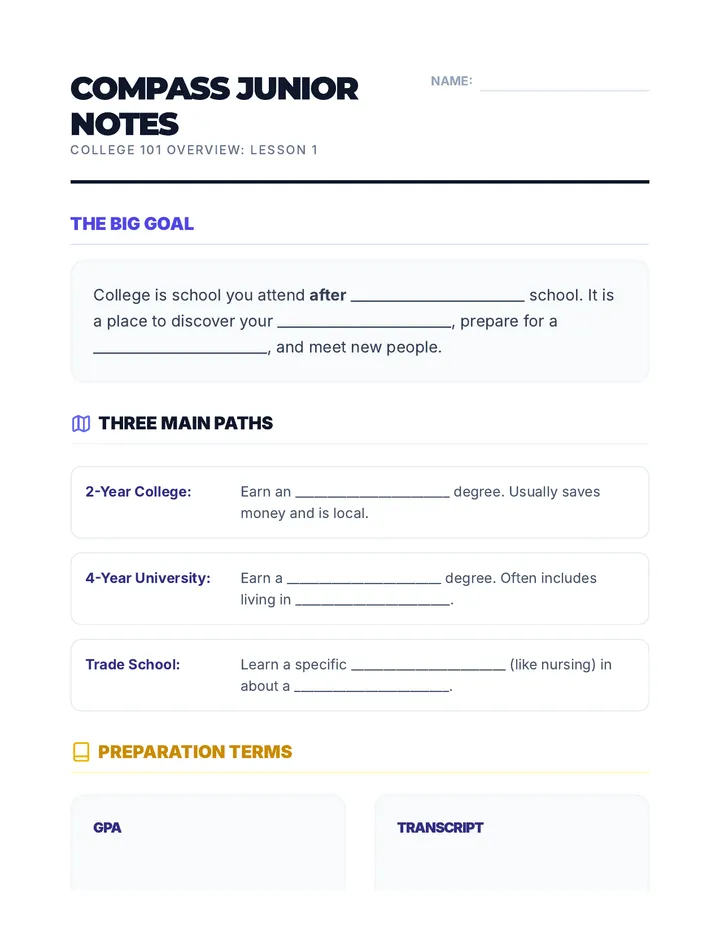
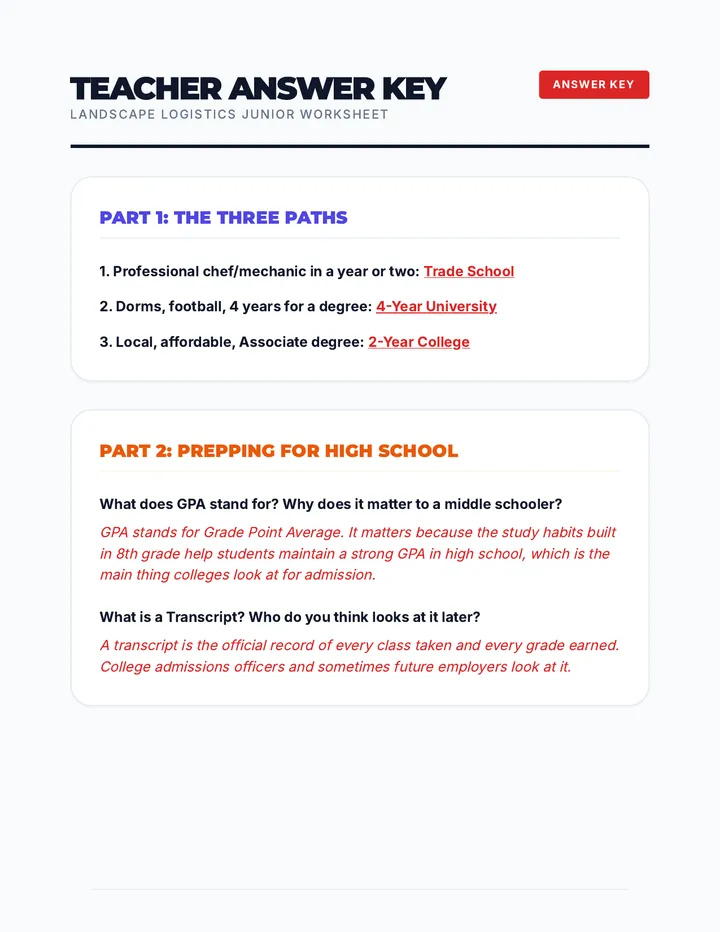
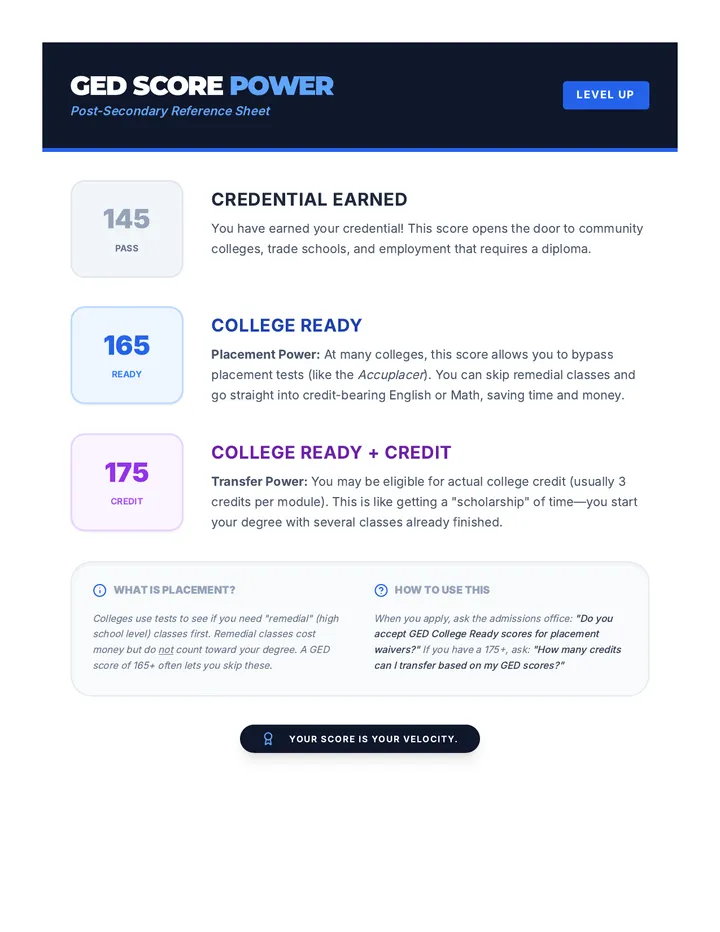
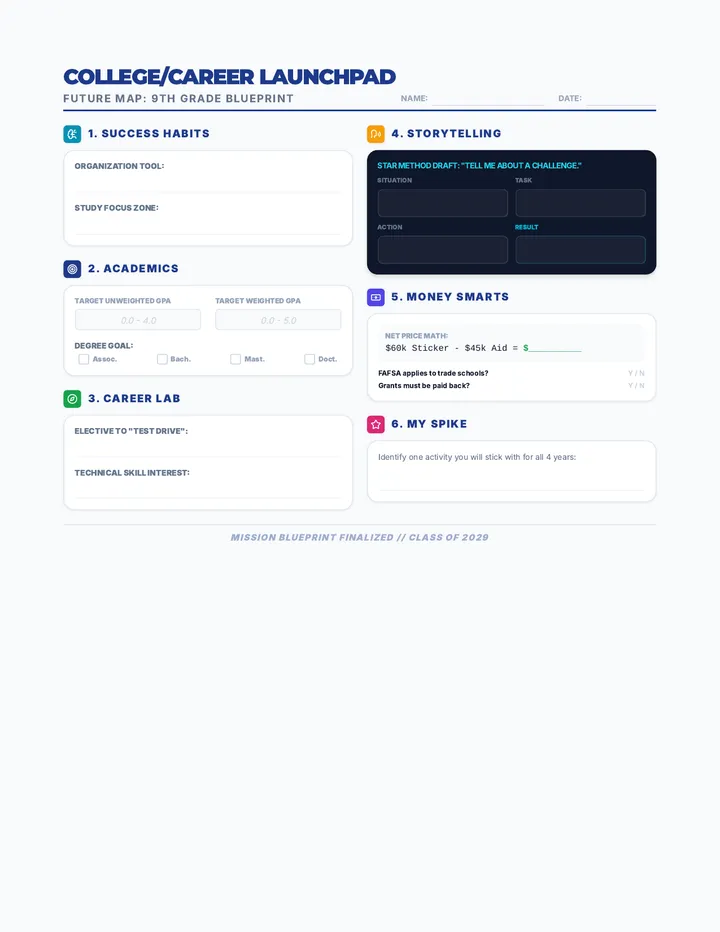
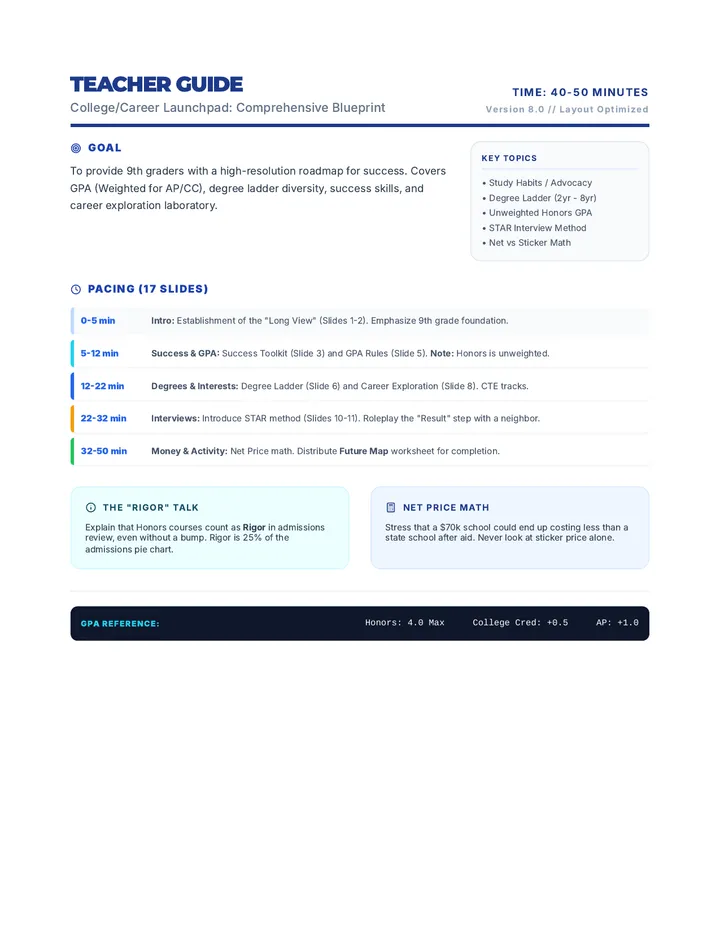
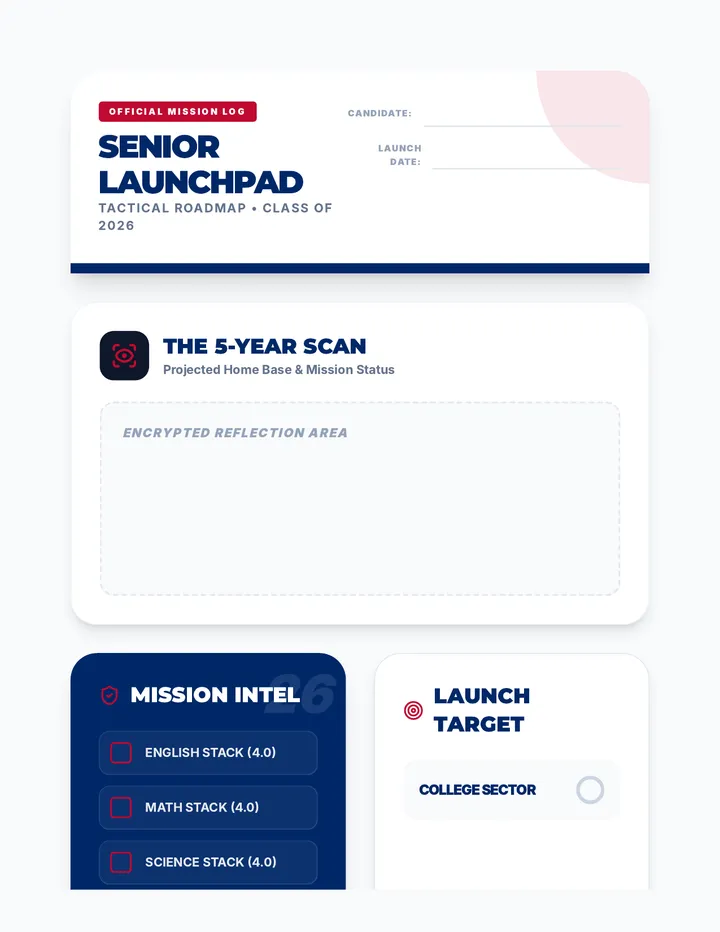
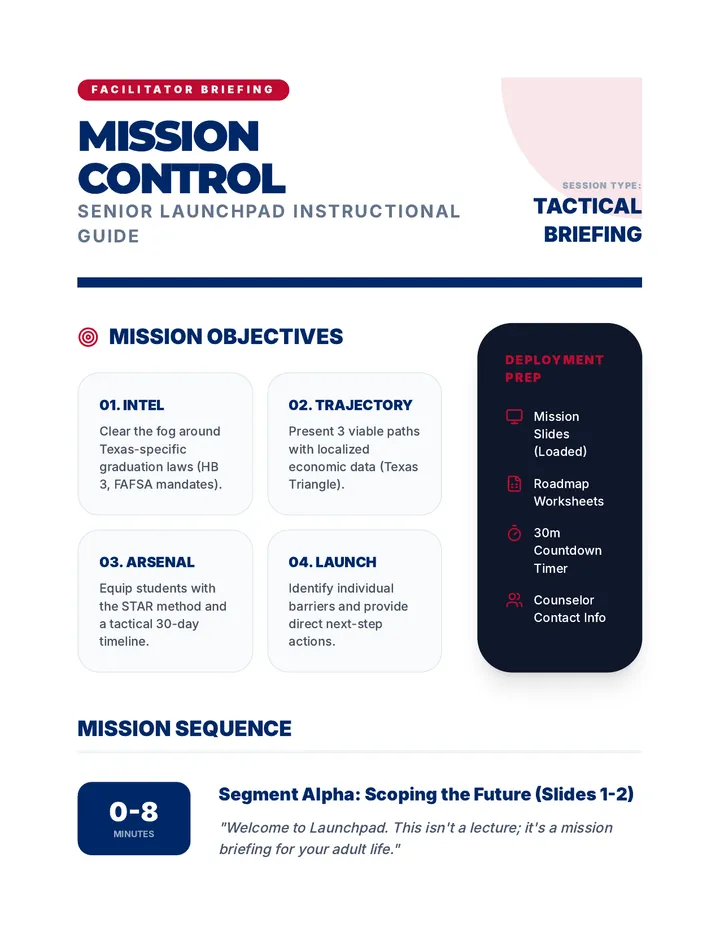
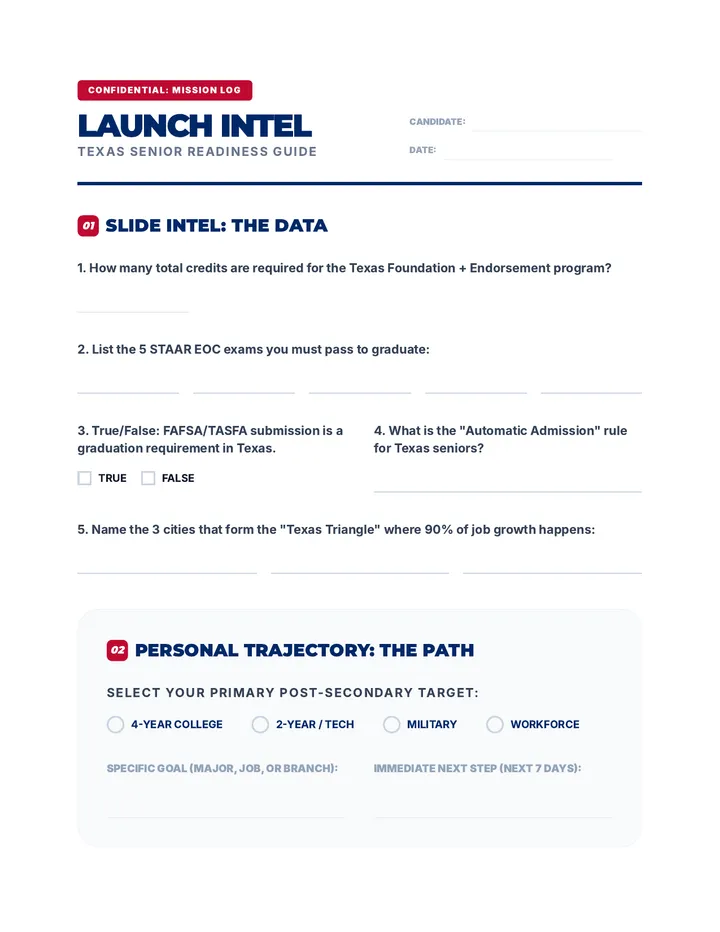
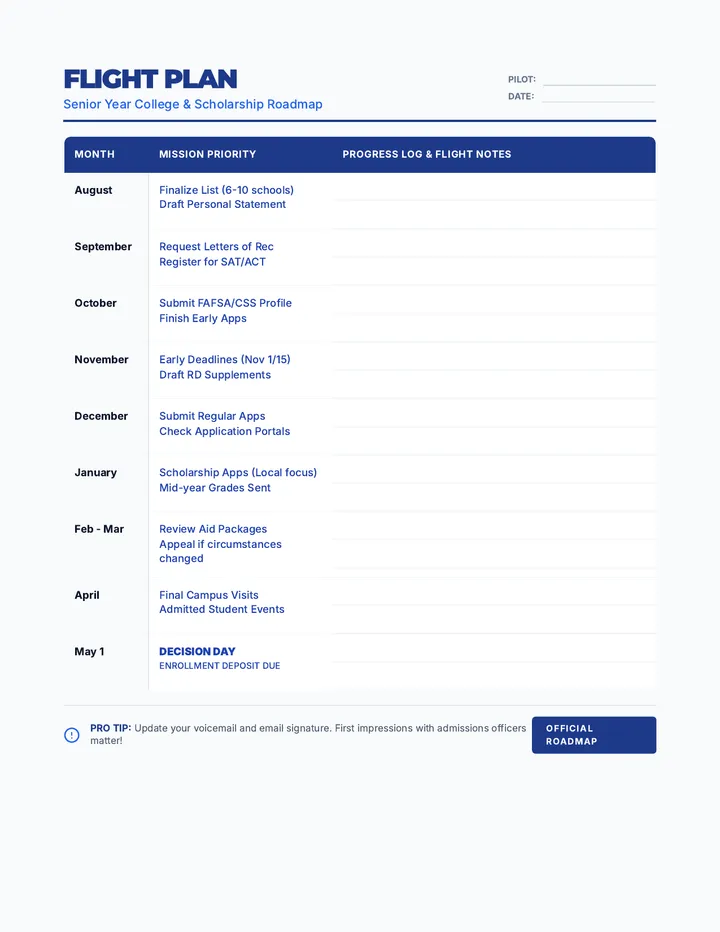
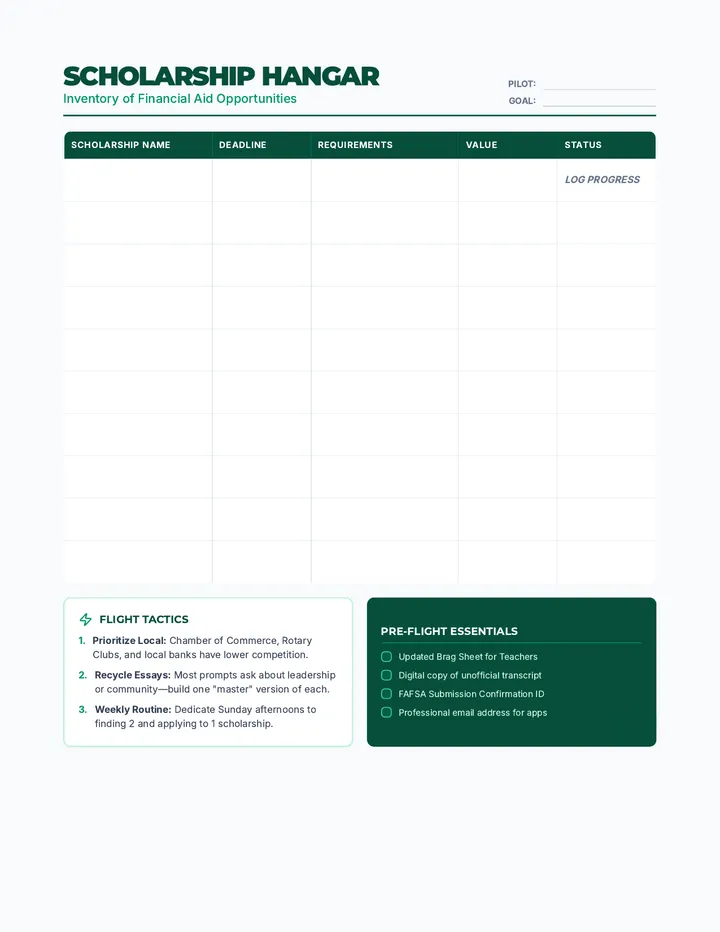
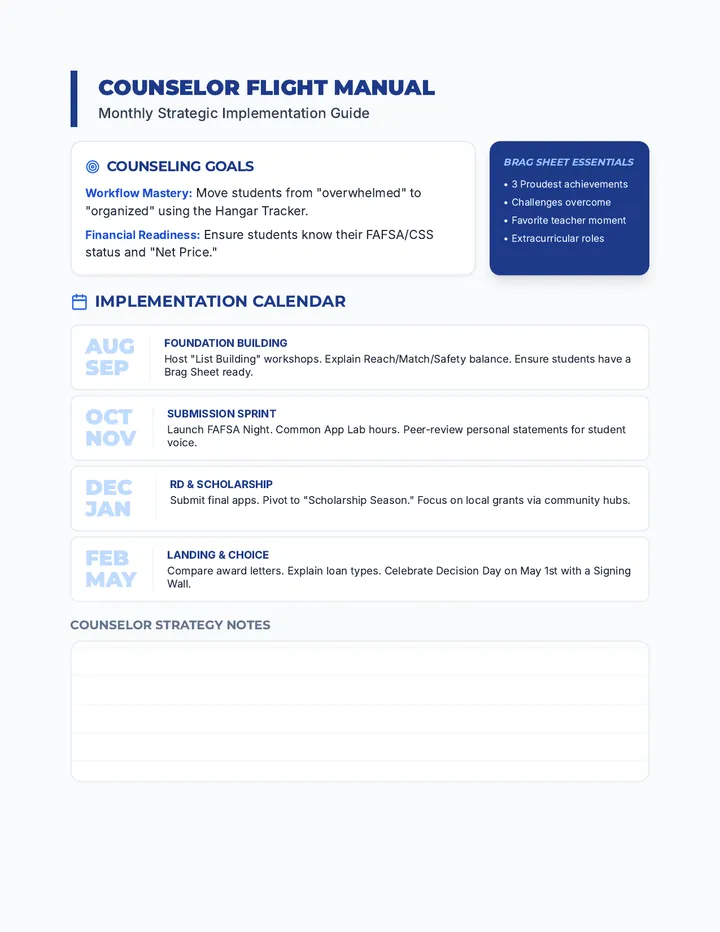
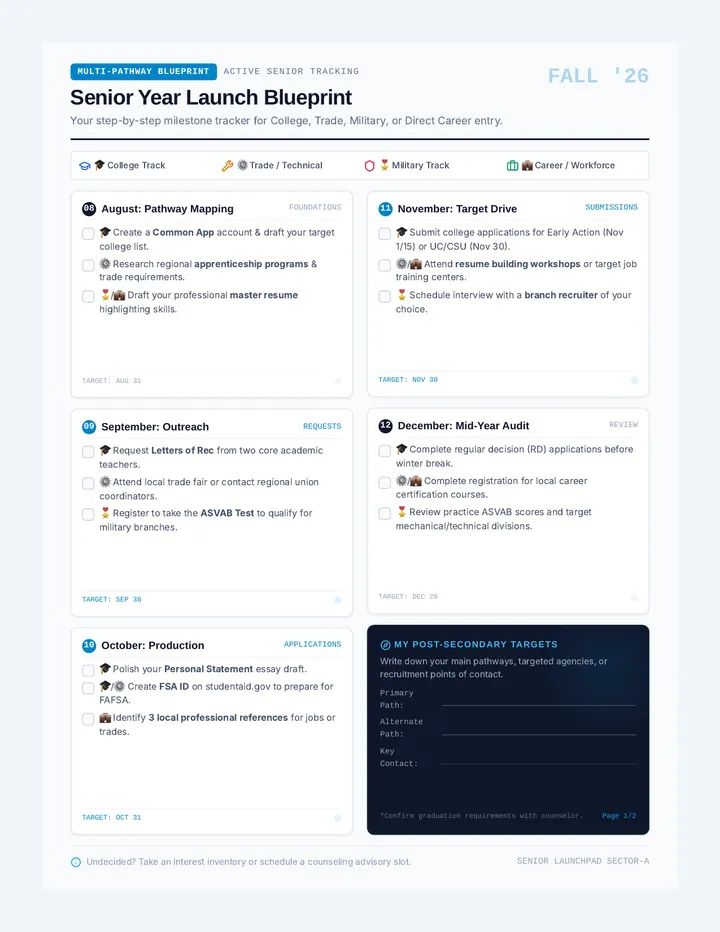
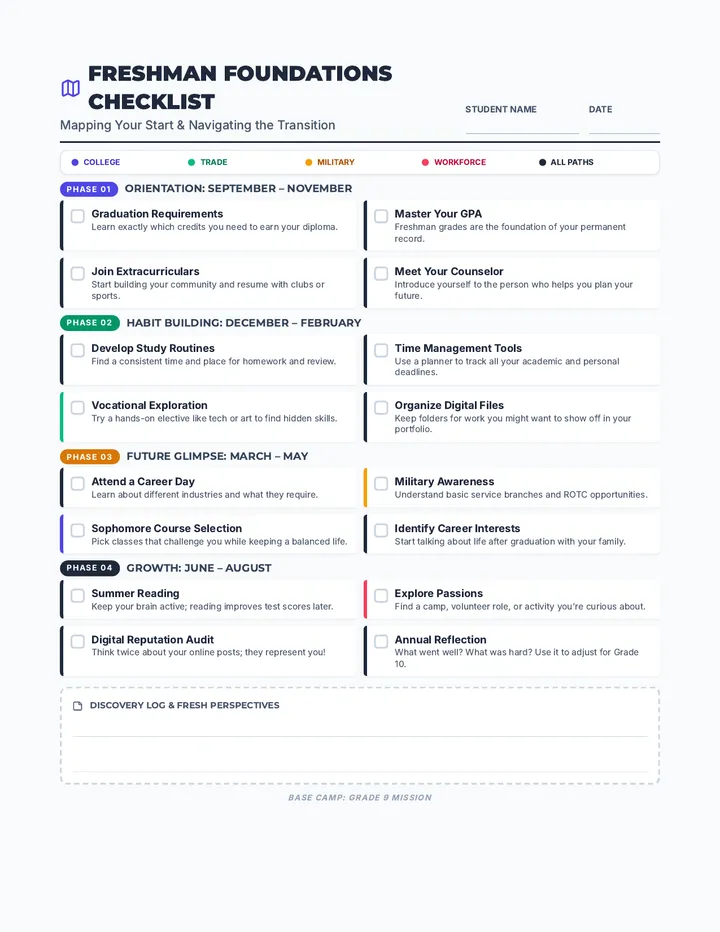
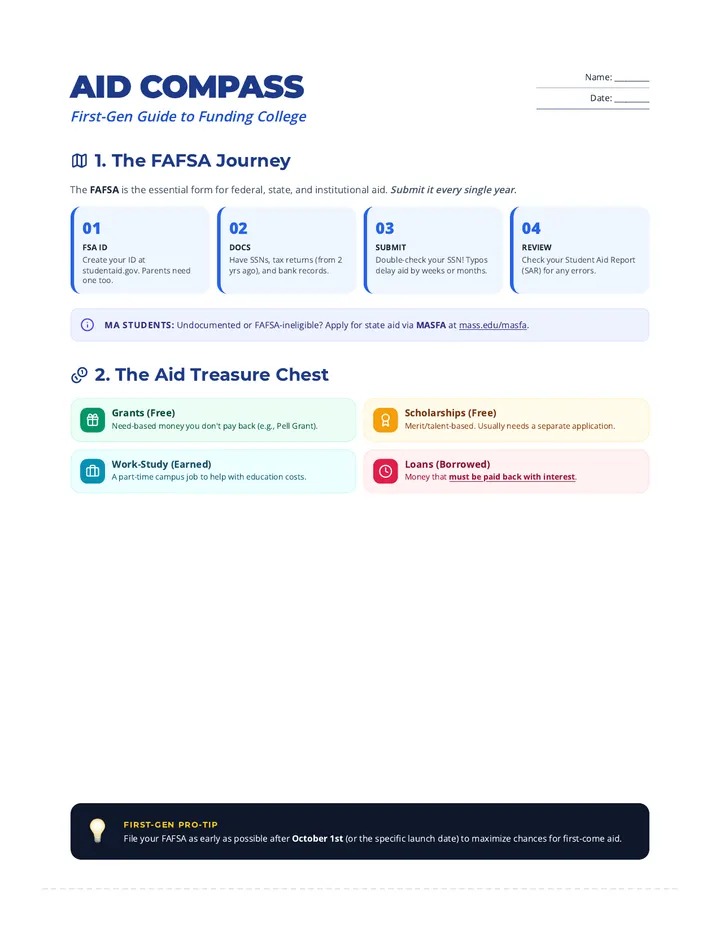
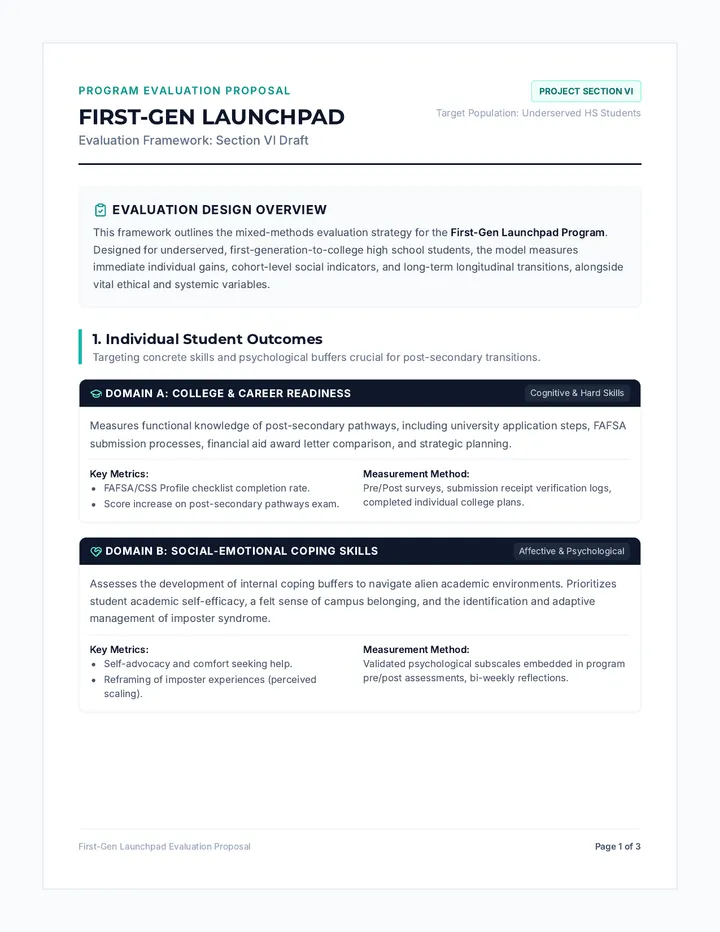
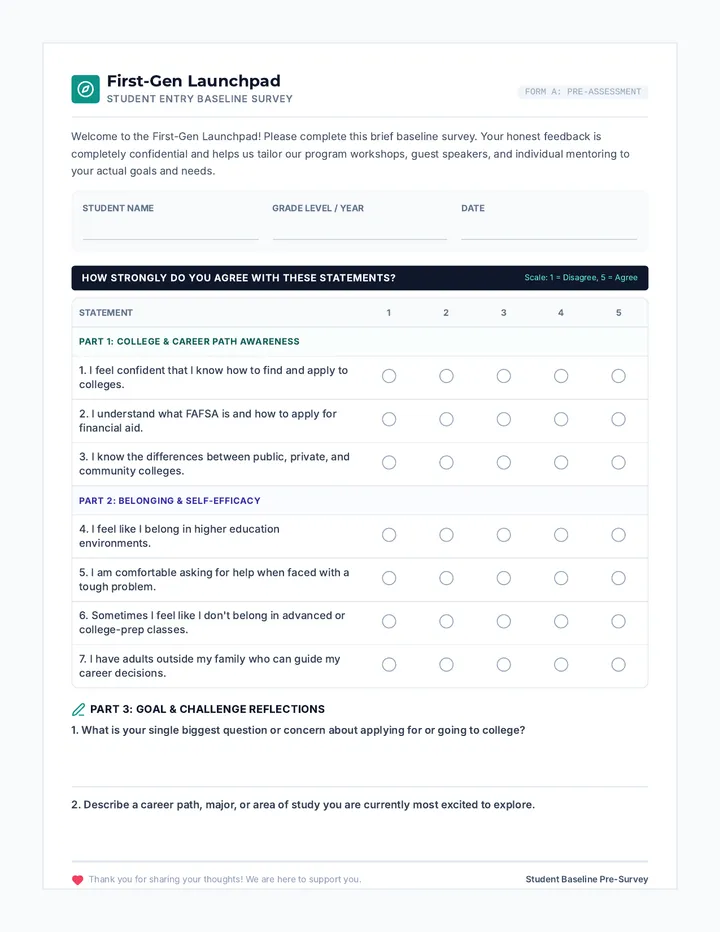
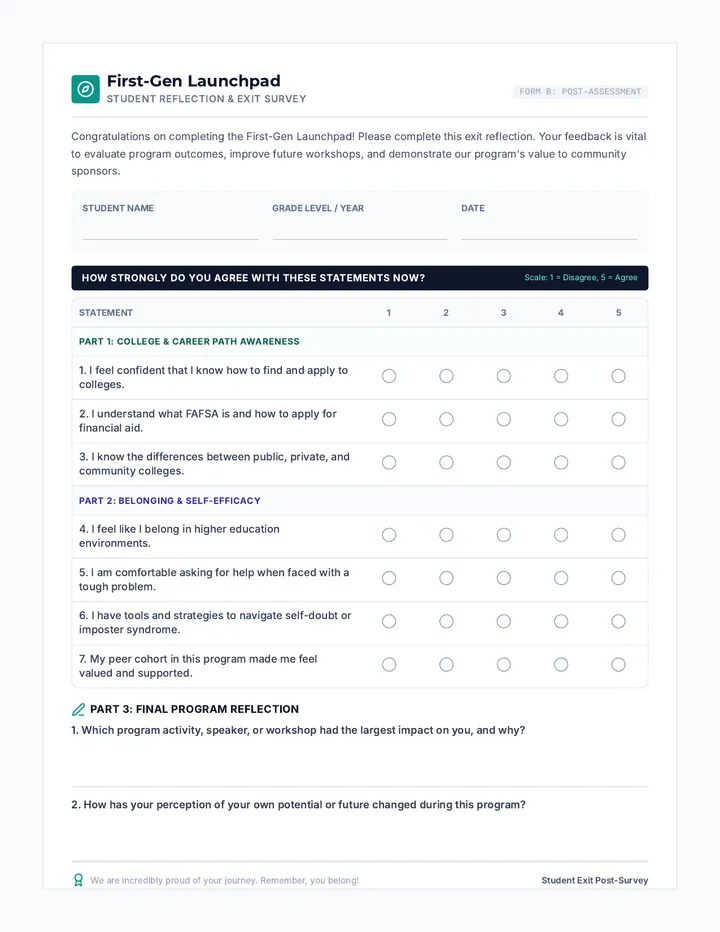
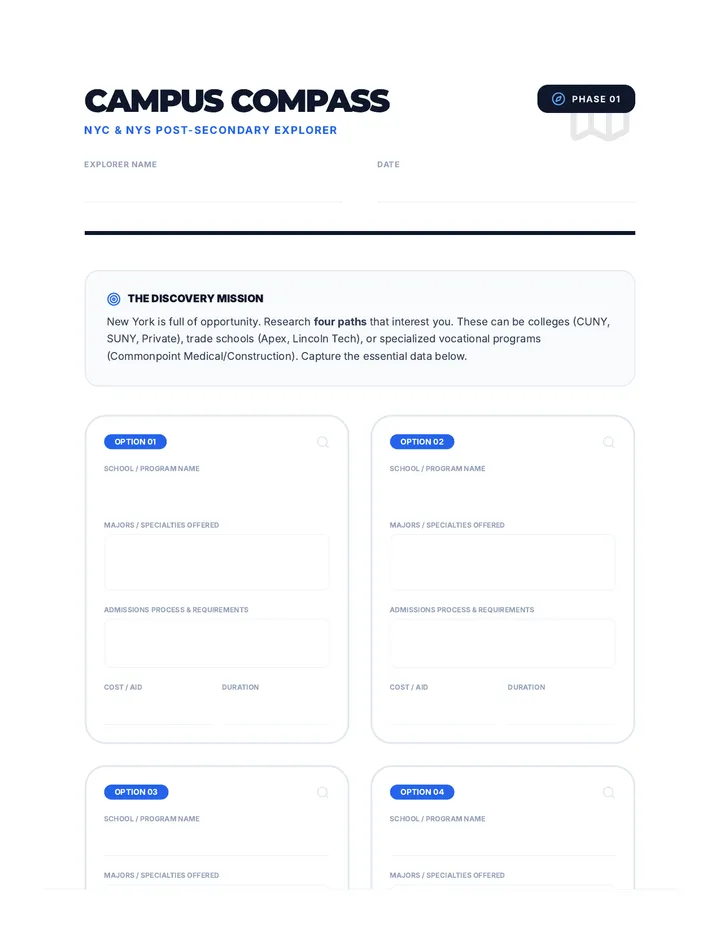
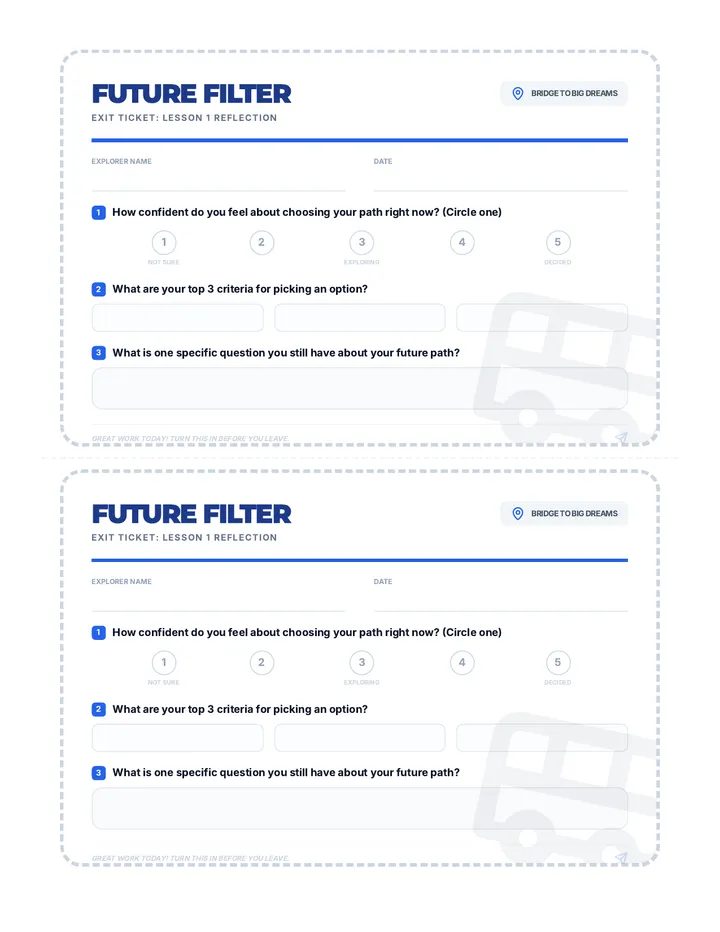
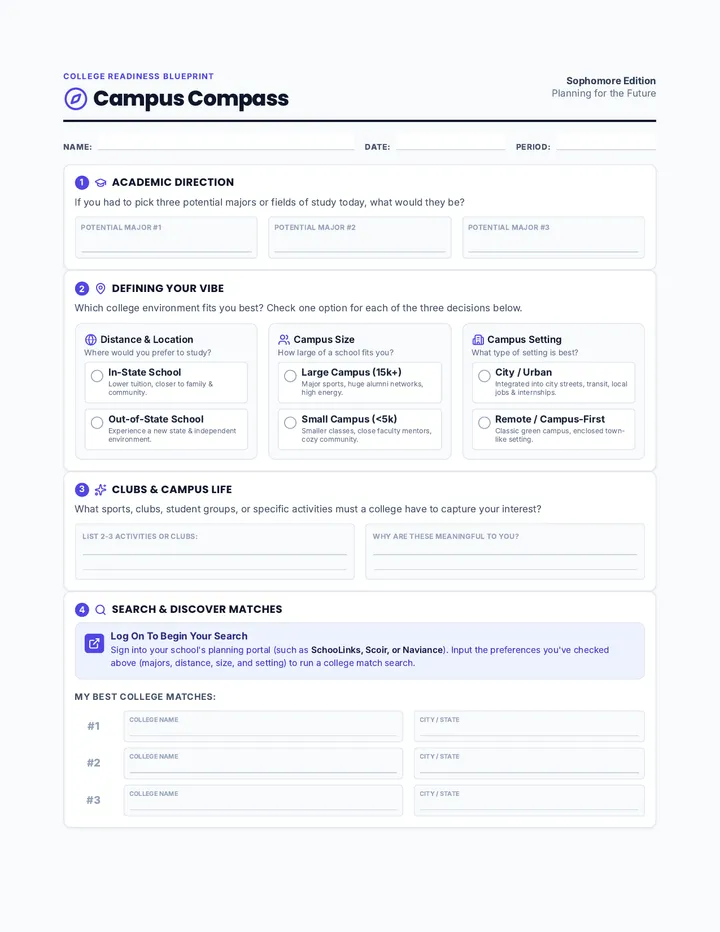
College selection, application workflows, and financial aid navigation including FAFSA and scholarship acquisition. Builds skills in personal statement writing and career exploration to align post-secondary choices with long-term professional goals.
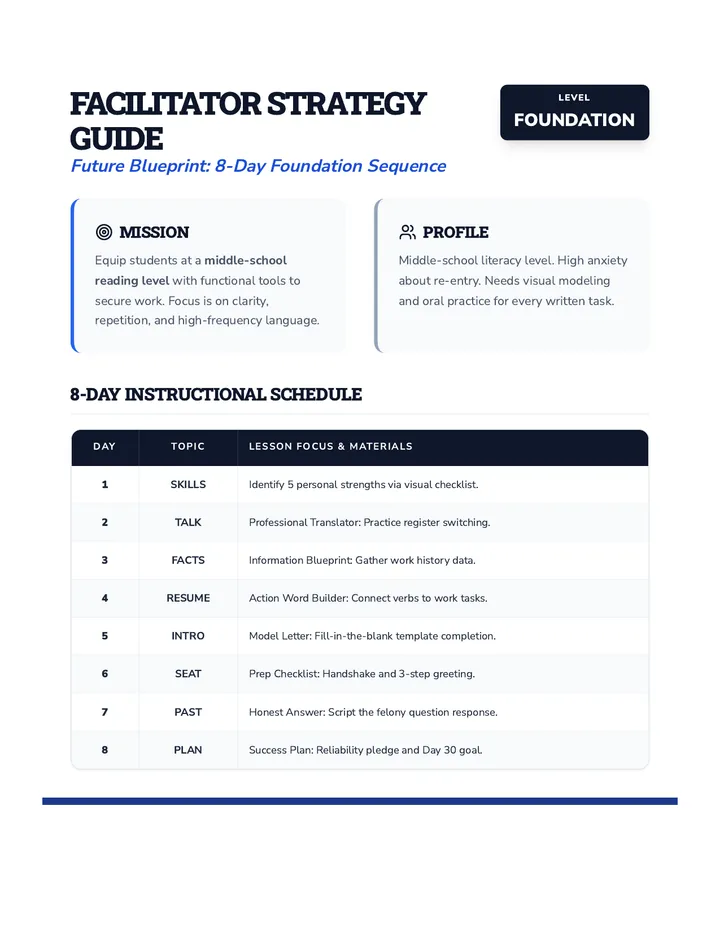
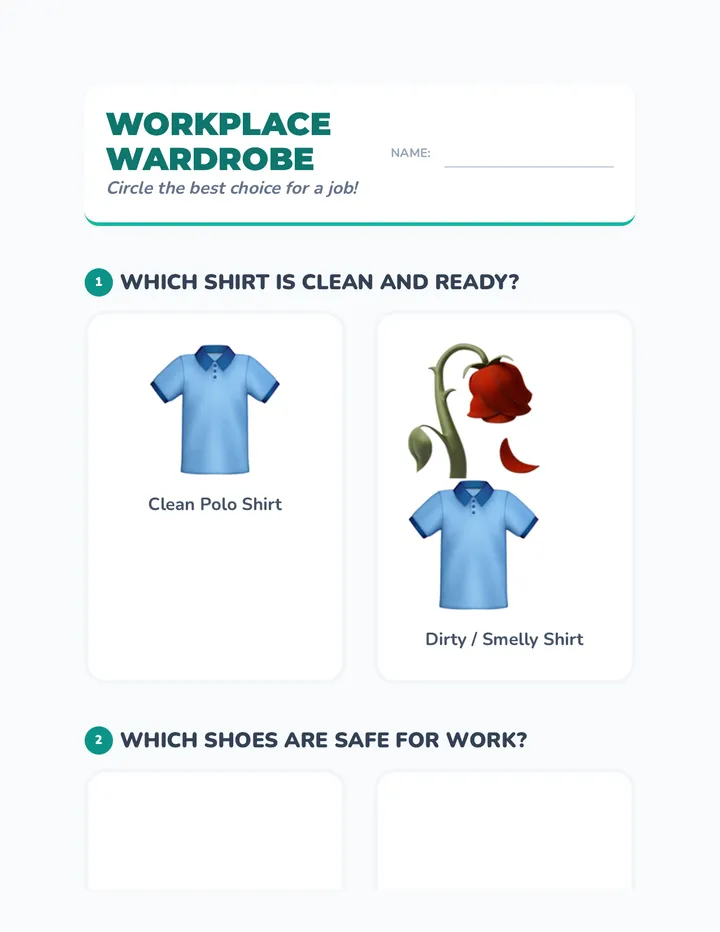
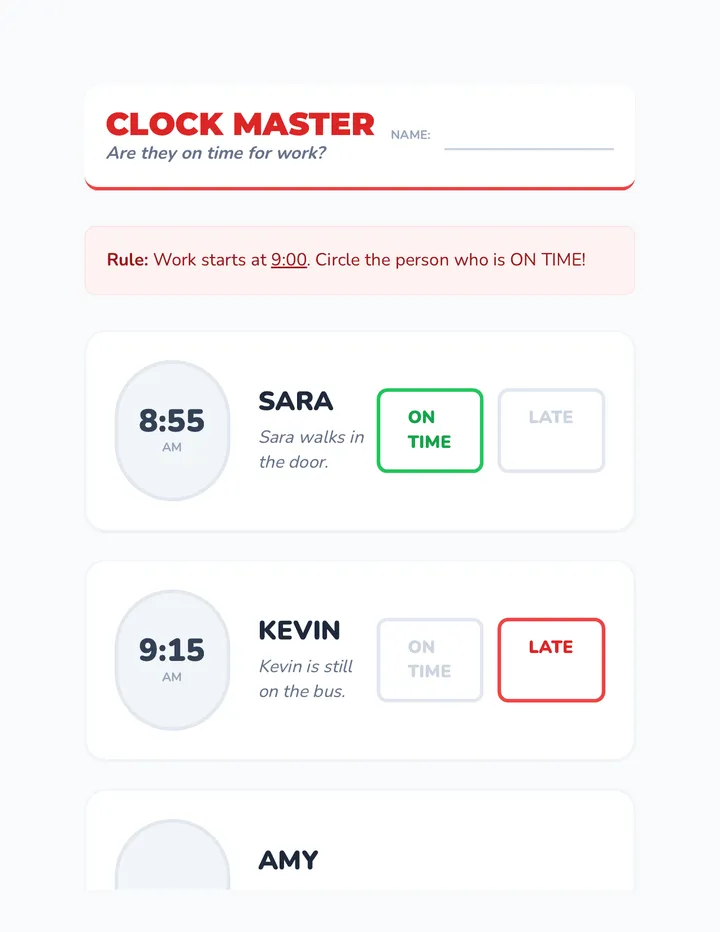
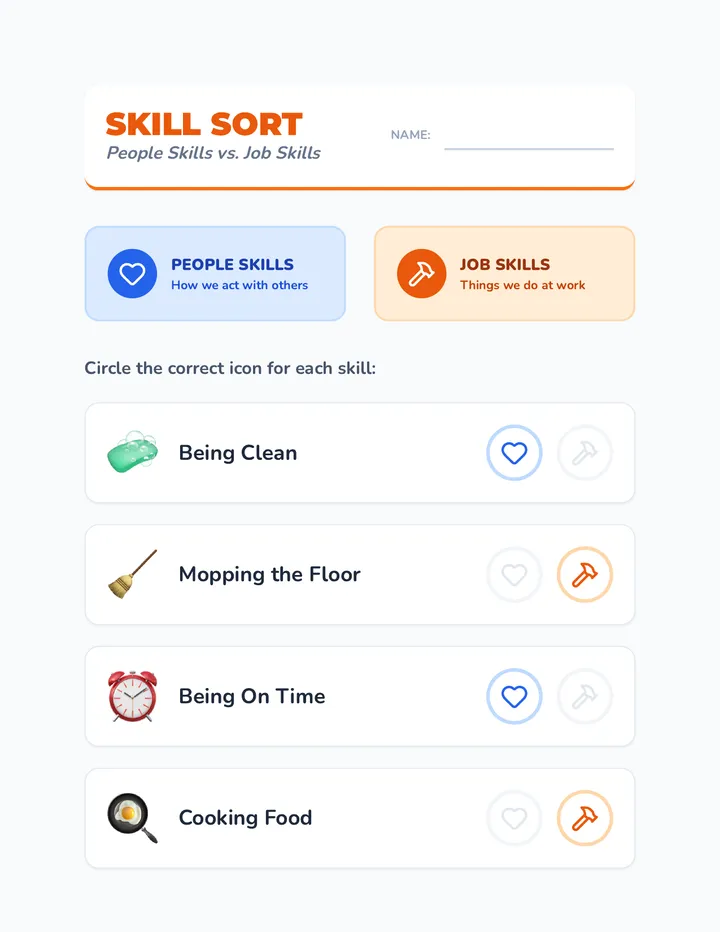
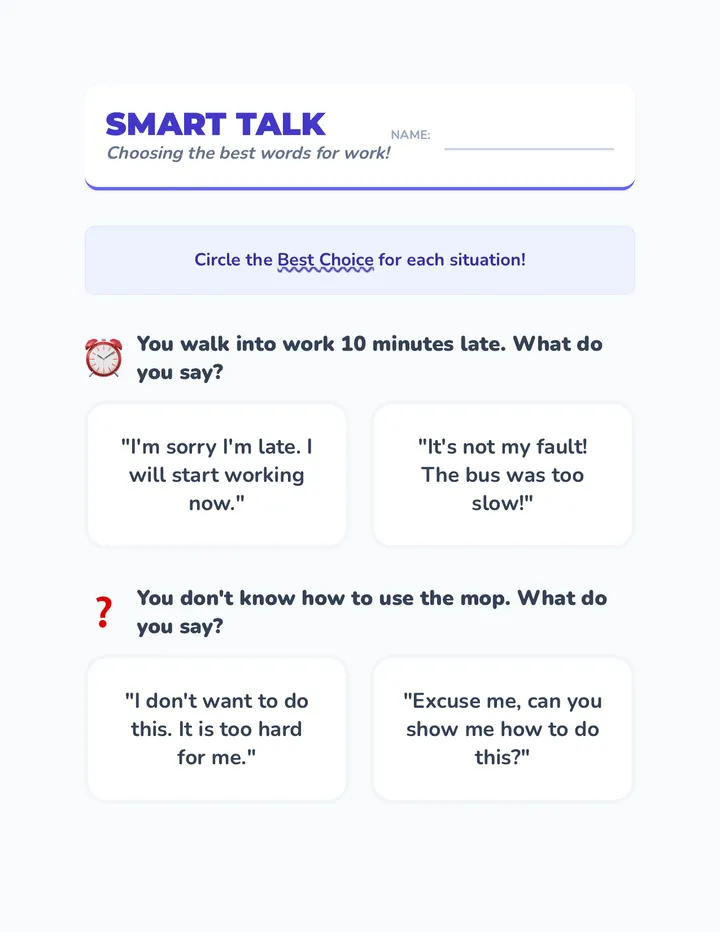
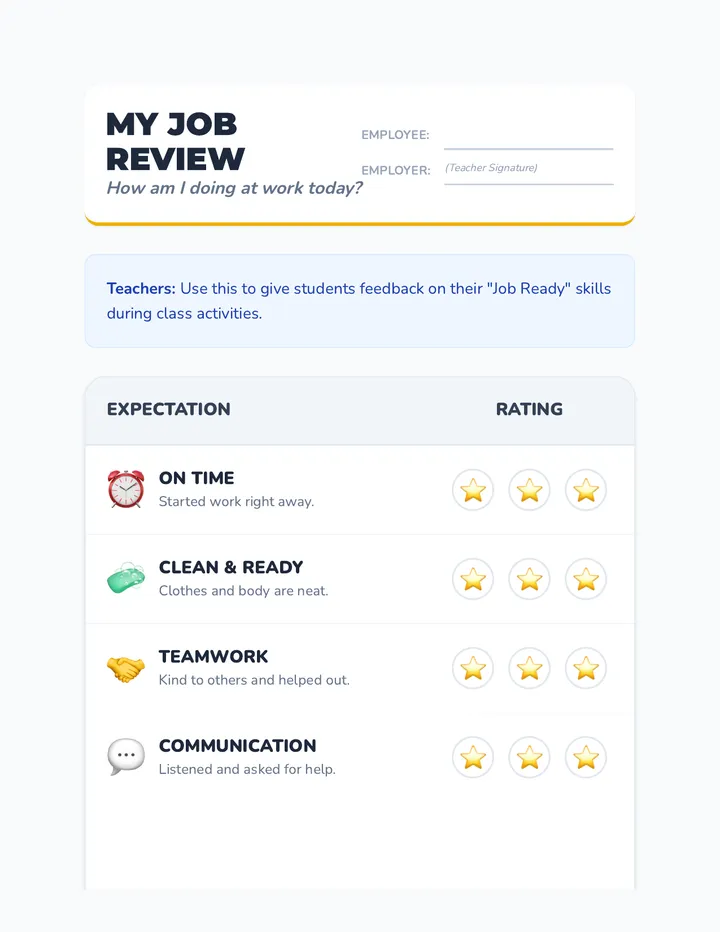
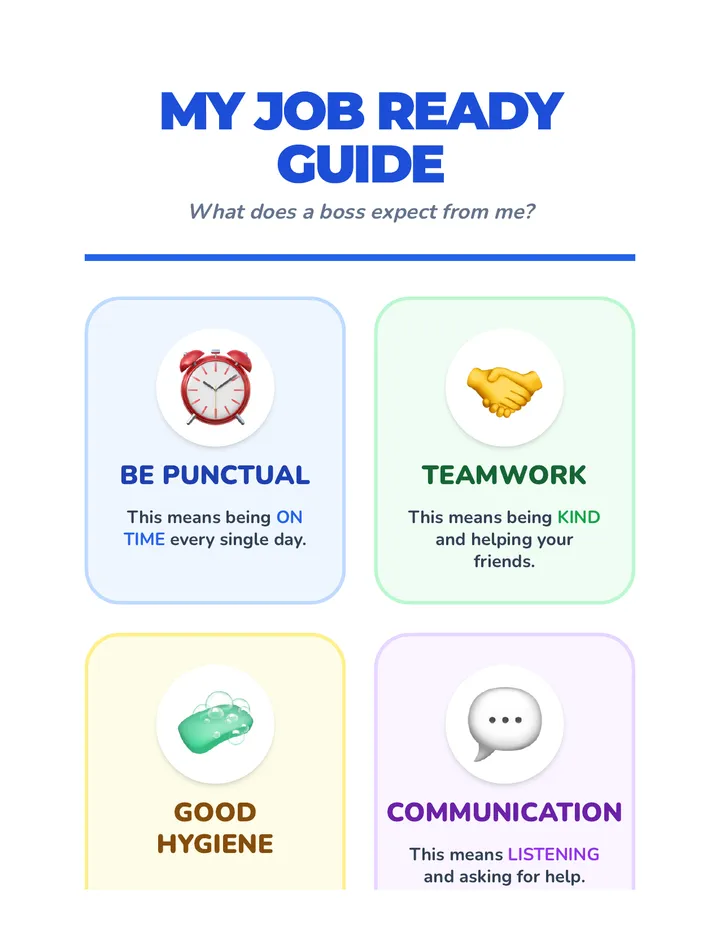
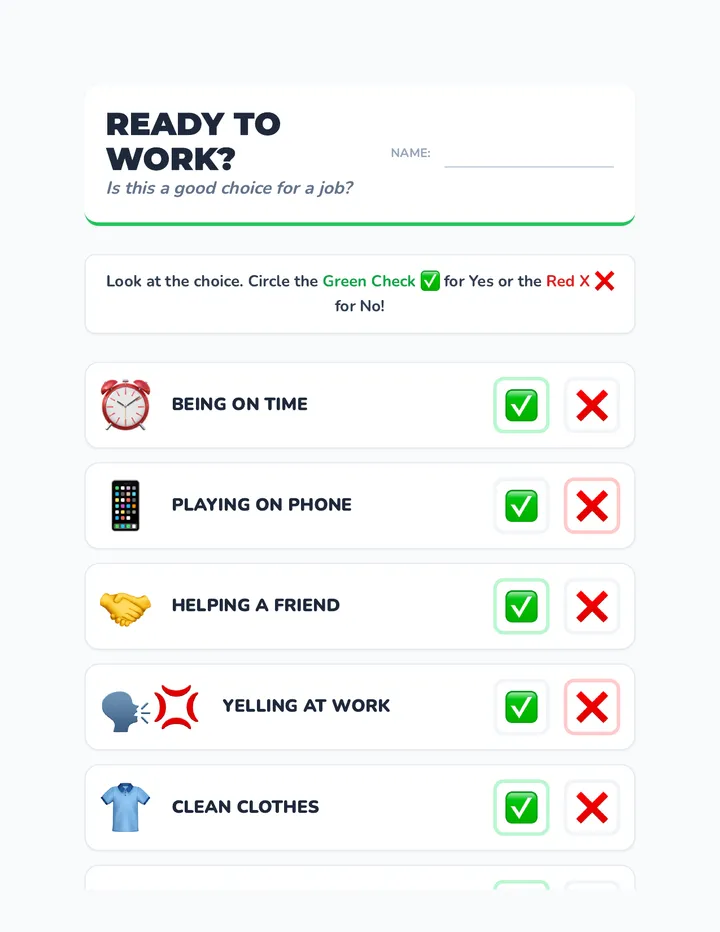
A comprehensive 3-hour one-on-one employment readiness curriculum designed for adults with disabilities. The sequence focuses on self-discovery, workplace etiquette, and practical application skills through engaging, accessible worksheets.
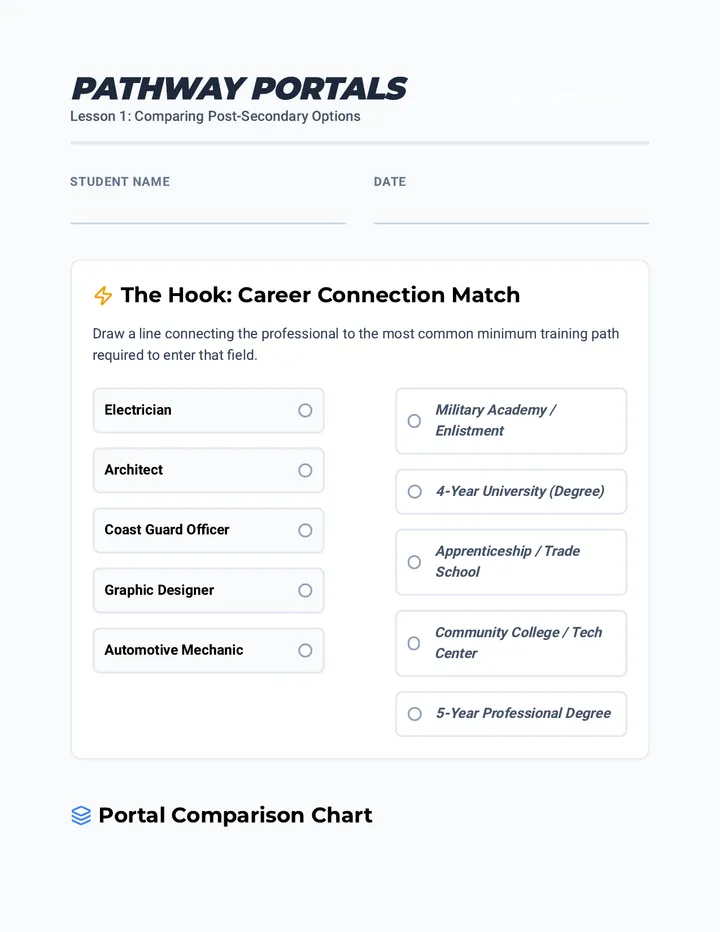
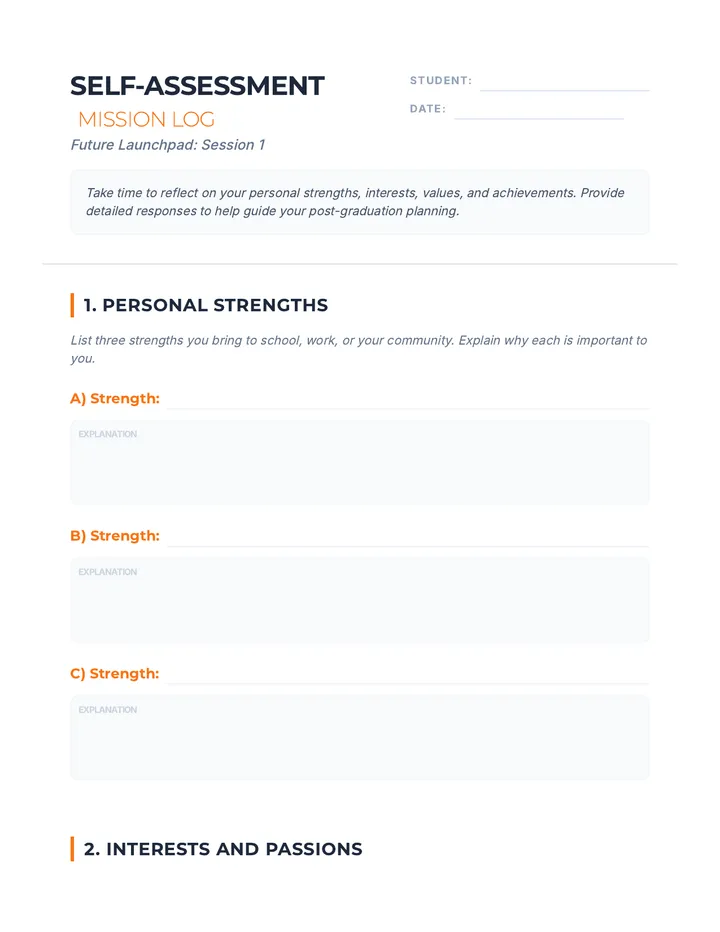
A career and college readiness series designed to help high school students navigate the transition from school to the workforce, military, or higher education.
A career-readiness sequence designed for older students and undergraduates to identify their current skills, potential growth areas, and personality types using the Ikigai and Quadrant of Success models. Students move from auditing their time to creating a strategic roadmap for professional development.
A career exploration and self-discovery unit for 8th-10th graders that reframes 'passion' from a specific hobby to a personal 'environment' or 'nature,' using Jay Shetty's teachings and the DISC model.
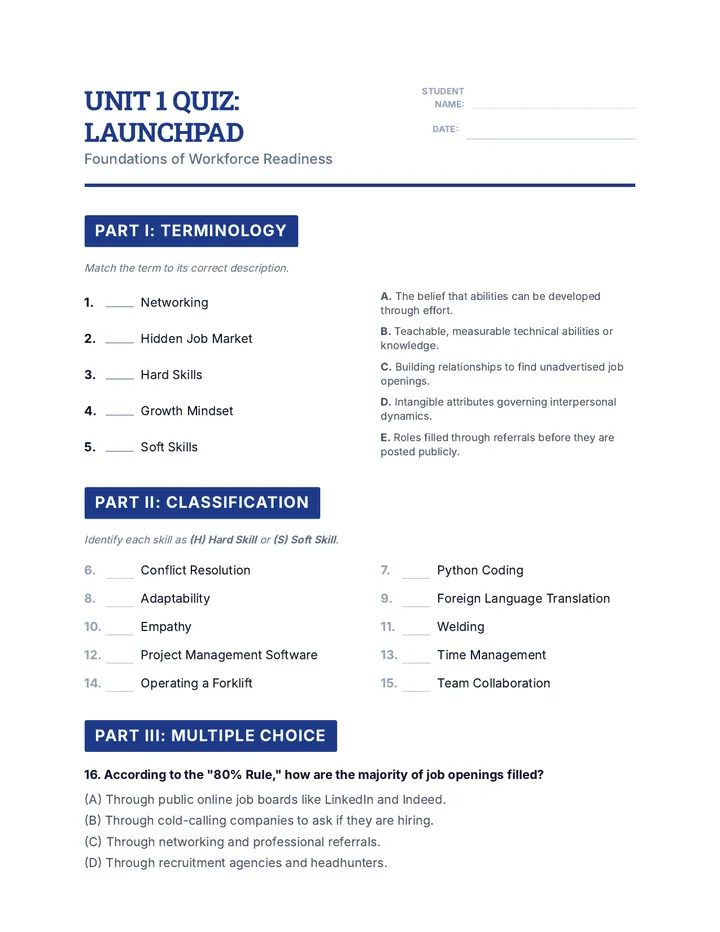
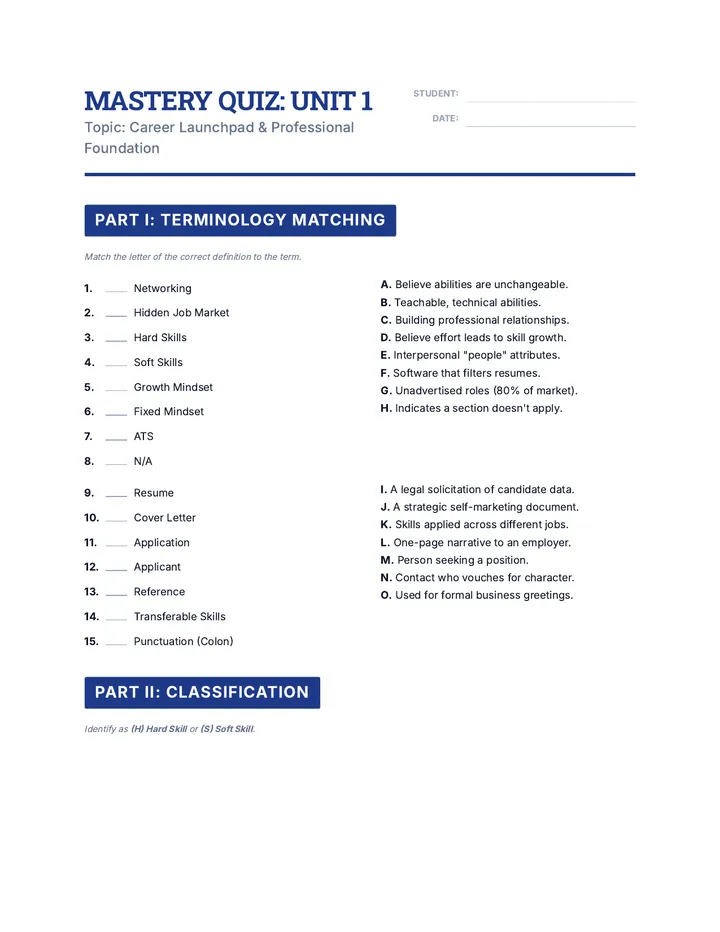
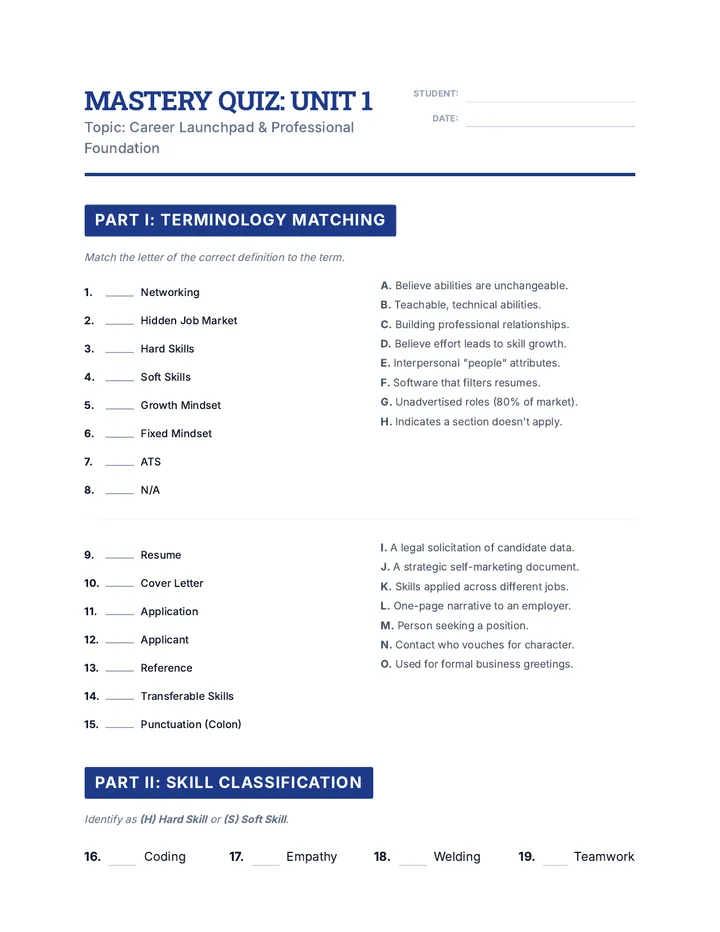
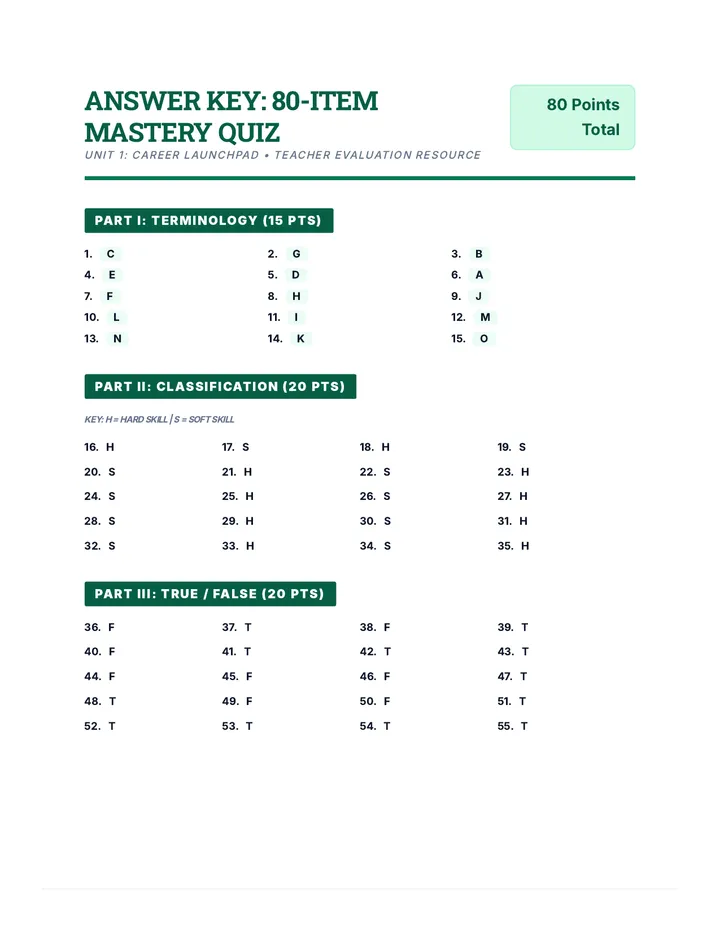
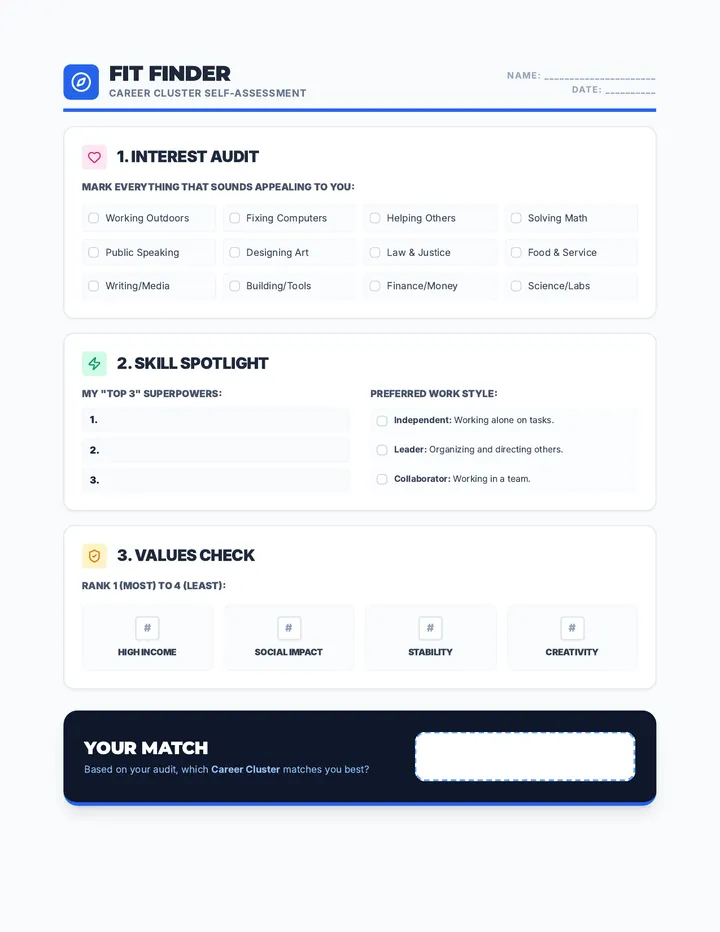
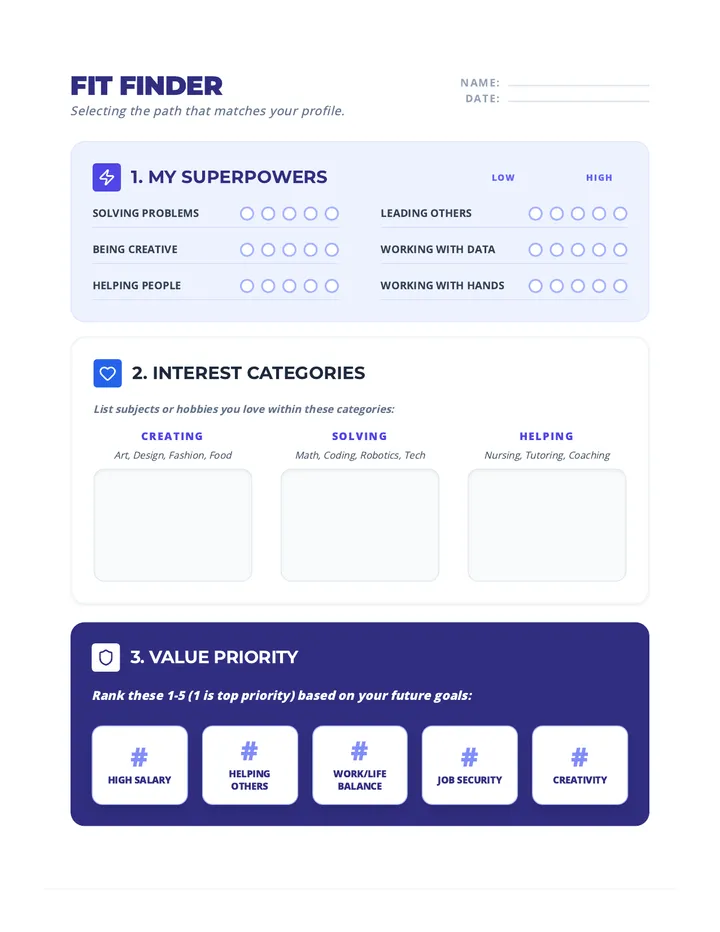
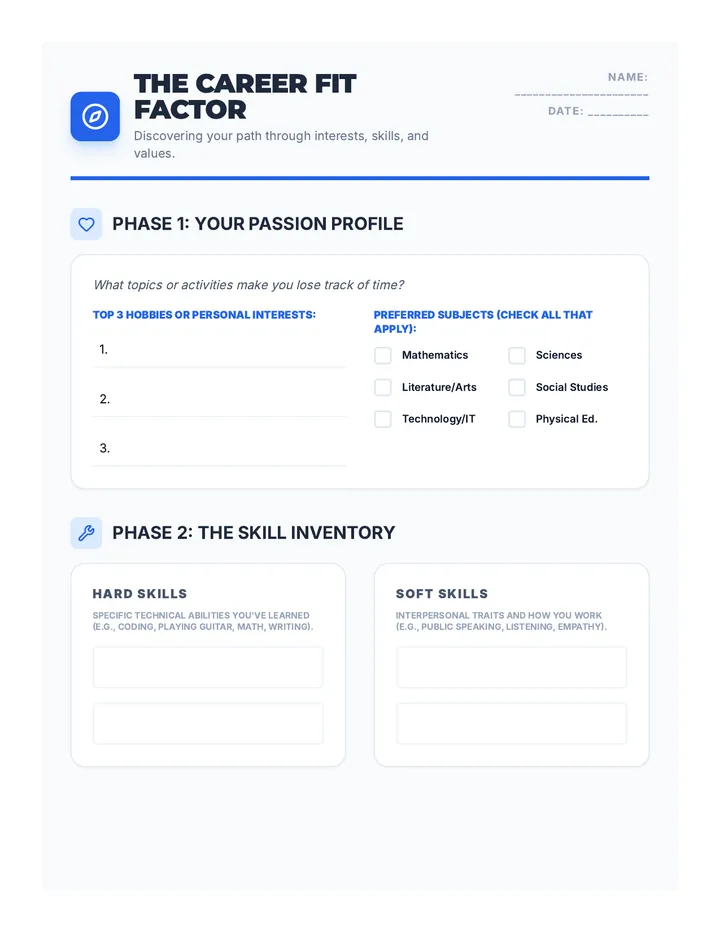
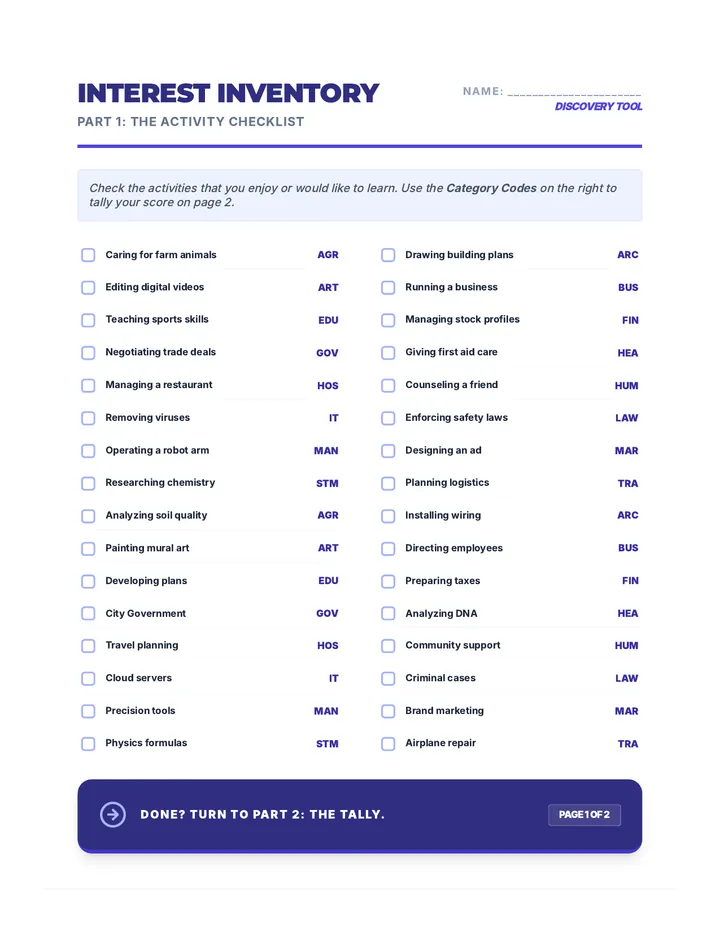
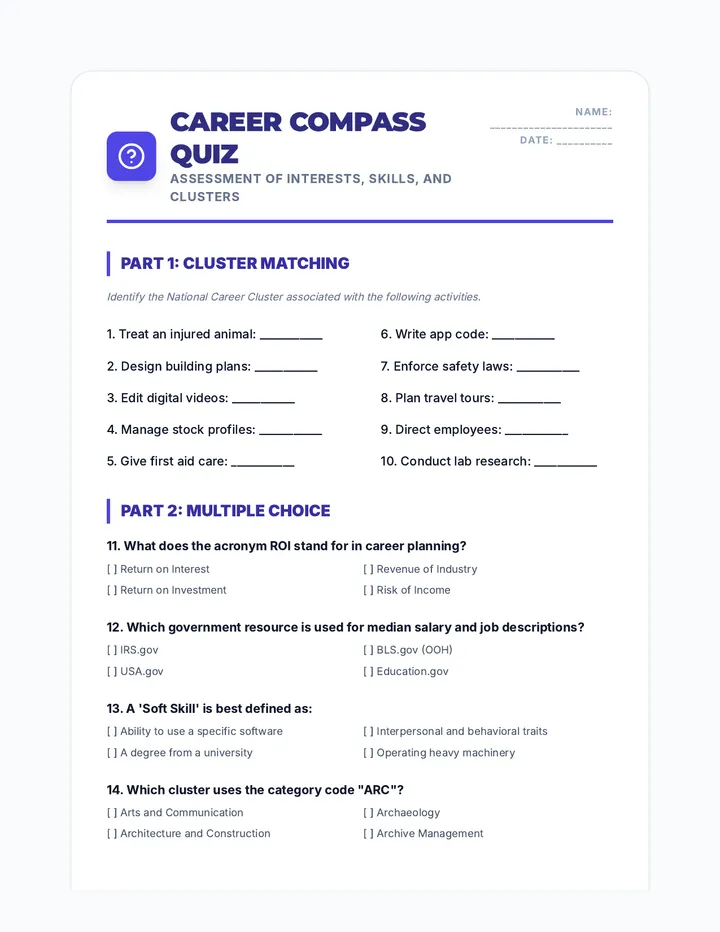
A comprehensive 2-hour lesson sequence focused on career exploration, starting with O*NET interest profiling and transitioning into an in-depth study of hard and soft skills. Students will explore skill definitions, transferability, and development through reading, role-play, and interactive activities.
A series of six 20-minute small group lessons for Kindergarteners focused on the importance of school attendance. Students explore how showing up daily supports teamwork, learning, friendship, and future goals through interactive play and discussion.
A foundational career exploration unit designed for Headstart and Pre-K students, focusing on identifying community helpers, matching tools to jobs, and imagining future roles.
A comprehensive unit for middle school students to explore various post-secondary options including college, vocational training, military, and workforce entry, helping them connect current interests to future paths.
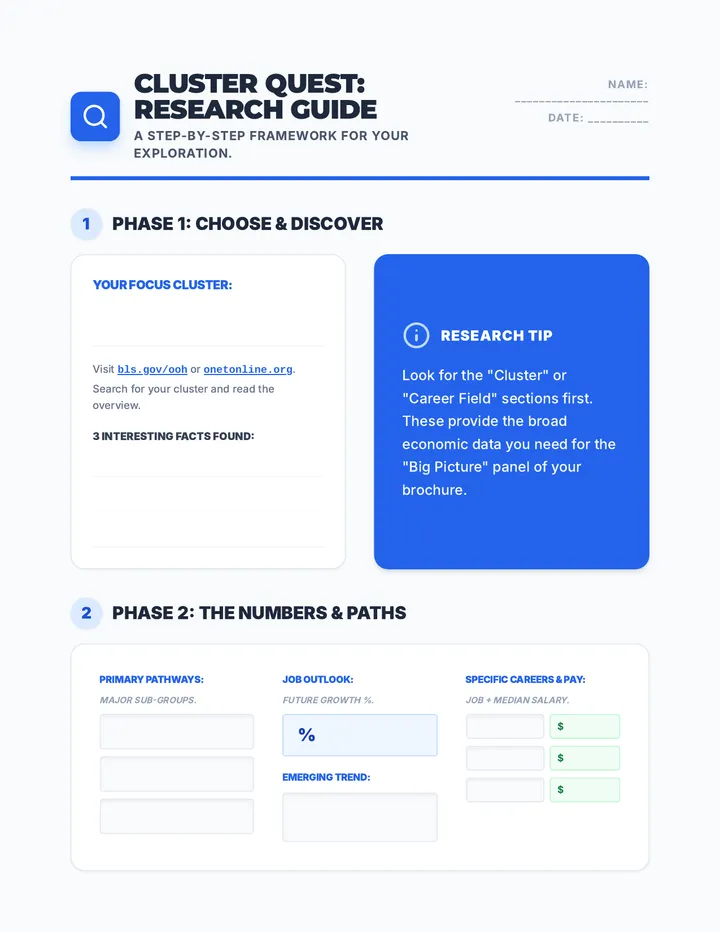
A career exploration sequence designed for students interested in creative technology, focusing on researching paths in cartoon and video game design with structured steps.
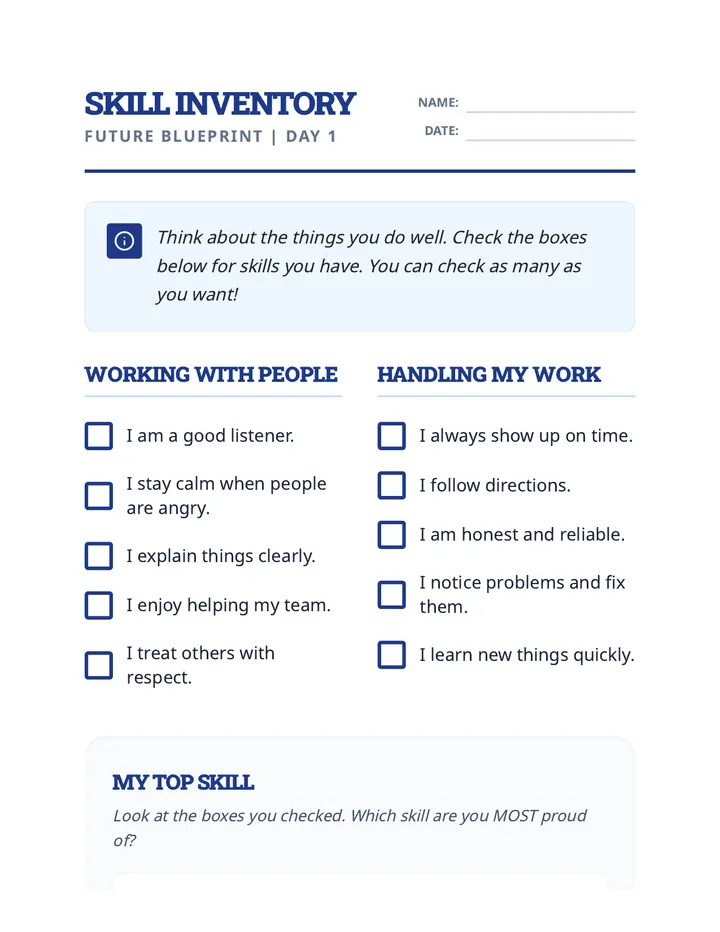
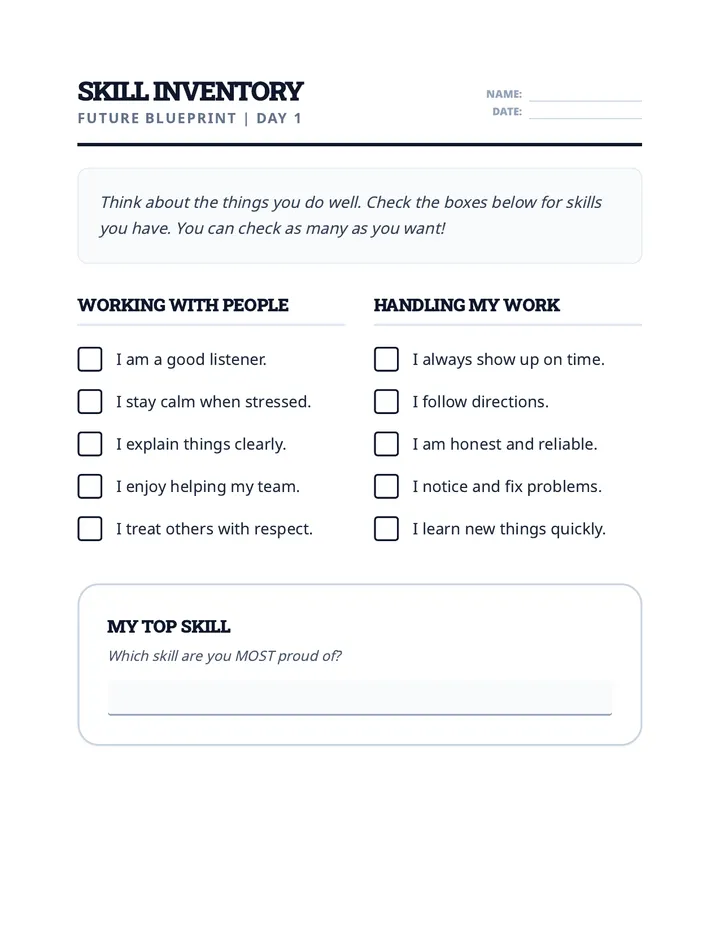
A comprehensive 9-week curriculum designed to equip young adults with essential skills for personal well-being, effective communication, and healthy relationships. This course uses a 'blueprint' theme to help students architect their own futures through goal-setting, stress management, and interpersonal growth.
A collection of quarterly bulletin board designs for TRC, providing visual blueprints and printable components to help students navigate orientation, skill-building, and transition planning.
A 6-week small group curriculum designed to help 8th graders navigate the social, academic, and emotional transition to high school using a 'Blueprint' theme.
A professional development and outreach series designed to clarify the role of the modern school counselor and strengthen school-home partnerships.
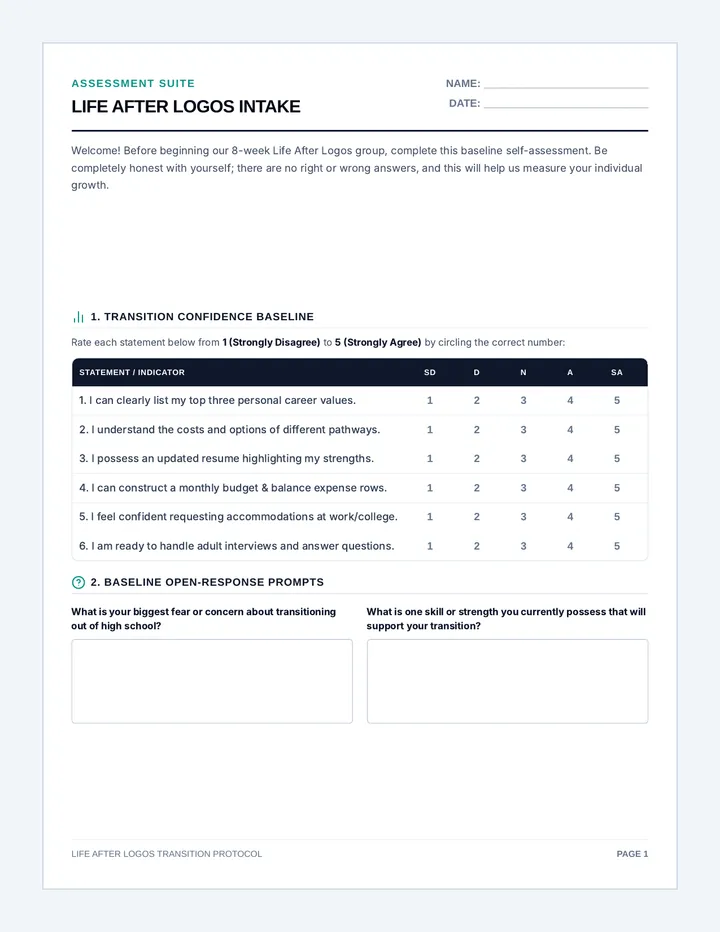
An 8-session intensive support group curriculum designed for seniors at risk of not graduating, focusing on academic accountability, self-advocacy, and post-secondary planning.
A series of lessons designed to help elementary students understand the value and real-world application of their education through a 'Superpower' and 'Mission' theme.
A 6-week empowerment curriculum for 11th and 12th grade Latina students, focusing on self-esteem, self-advocacy, anxiety management, and navigating family expectations through a culturally responsive lens.
An 8-week comprehensive unit designed to prepare high school students for entering the workforce, covering everything from legal working papers and job applications to interview techniques and long-term career planning.
A comprehensive 7-week curriculum designed to prepare high school students for the college transition, covering admission strategies, financial aid, and major-to-career pathways.
A comprehensive unit designed to guide students through the stages of career development, from initial exploration to professional communication and job readiness.
A comprehensive 6-week small group curriculum designed for female-identifying high school seniors. The program focuses on identity, boundaries, practical life skills, wellness, safety, and goal-setting to ensure a confident transition to college life.
A comprehensive executive functioning curriculum for 11th-grade students, focusing on high-level planning, organization systems, time optimization, and emotional self-regulation.
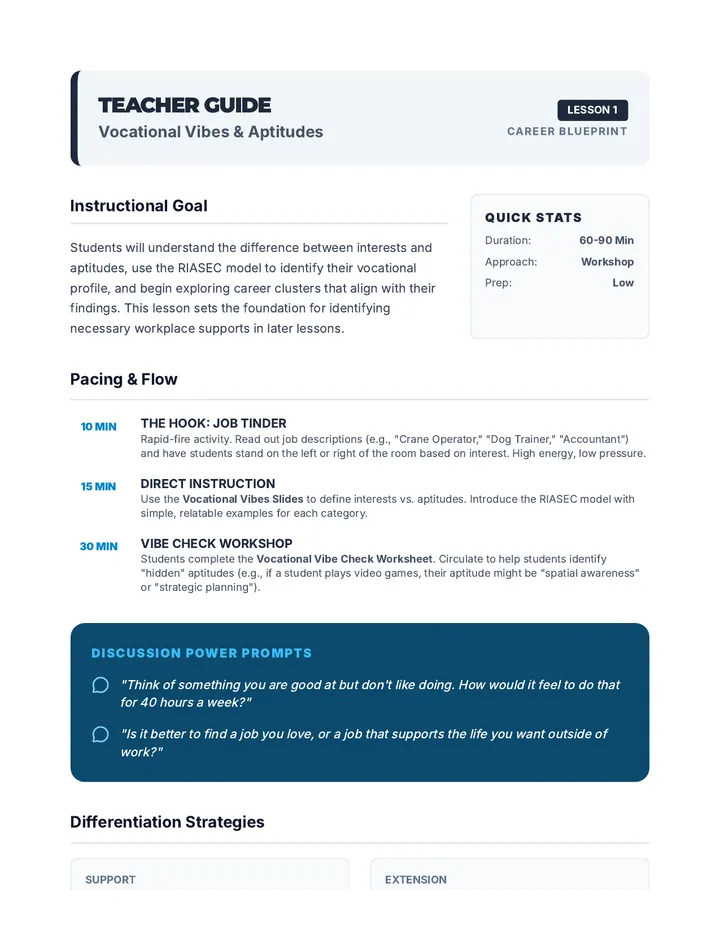
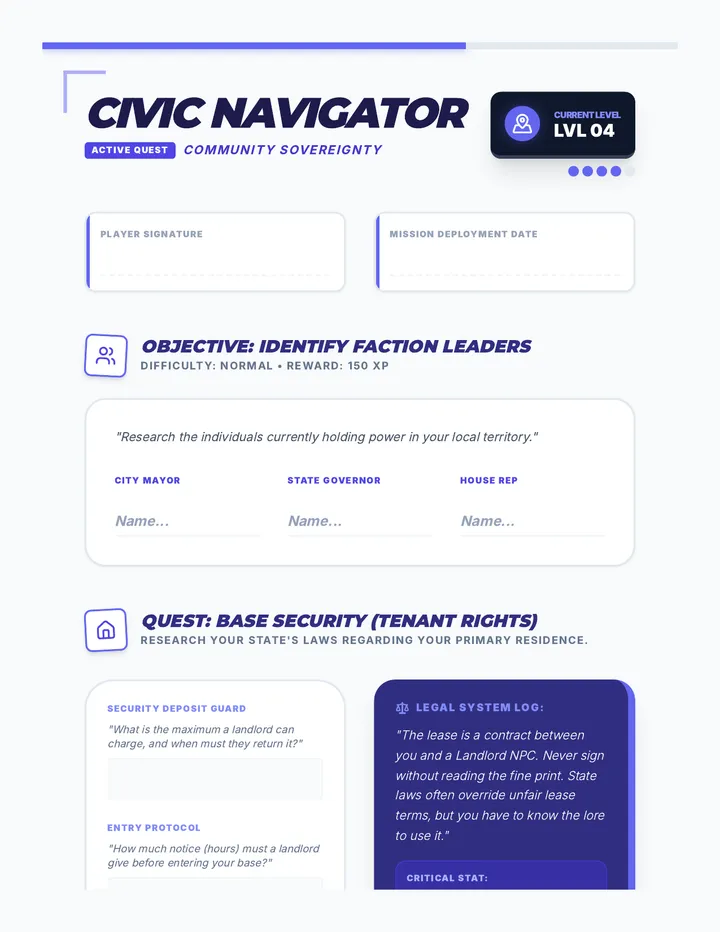
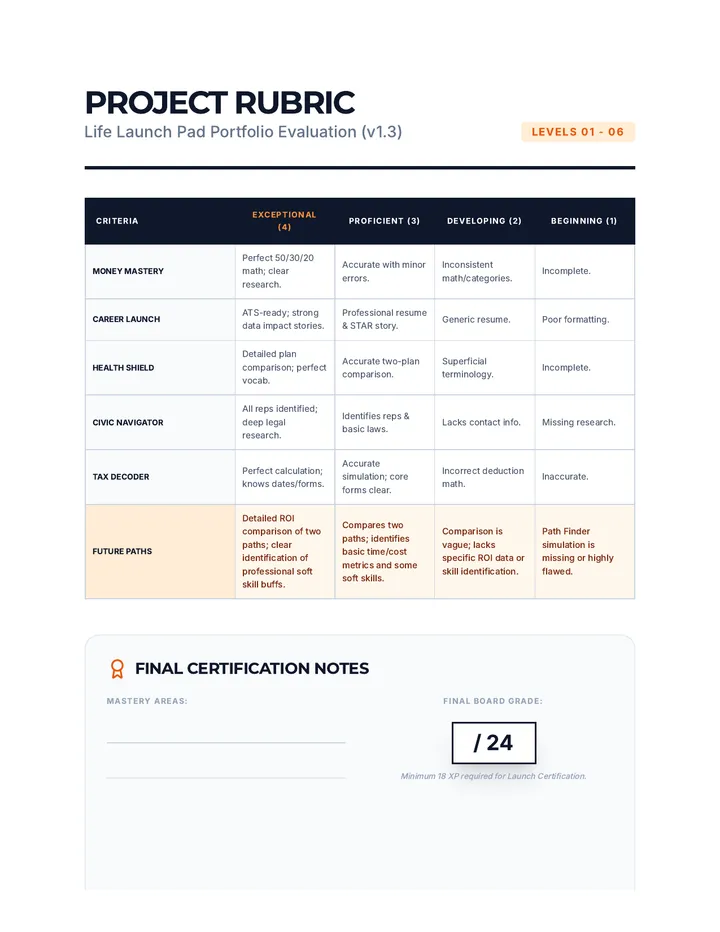
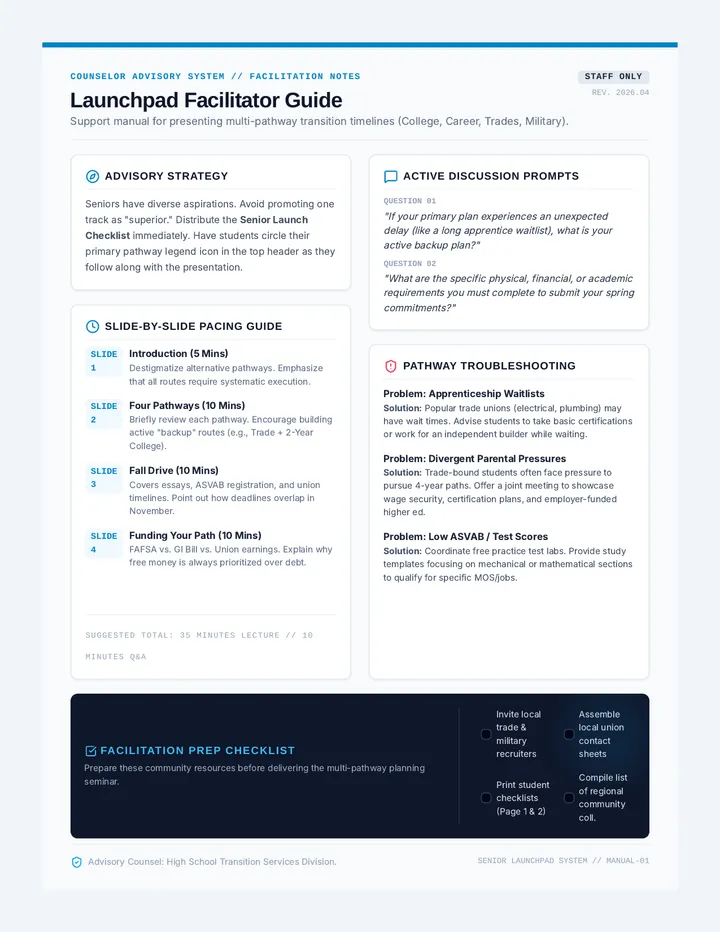
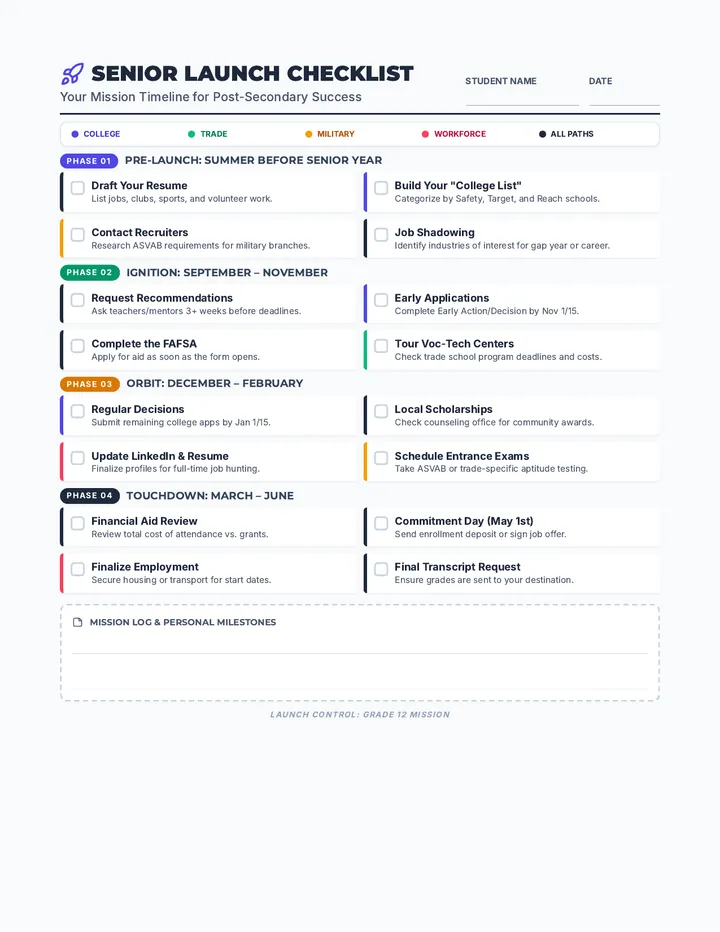
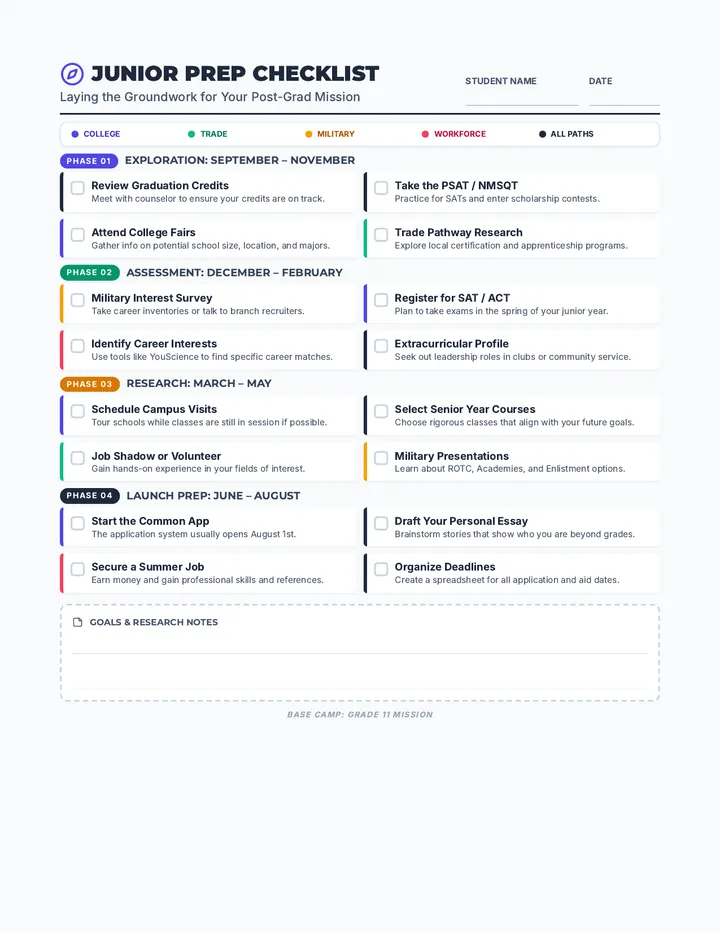
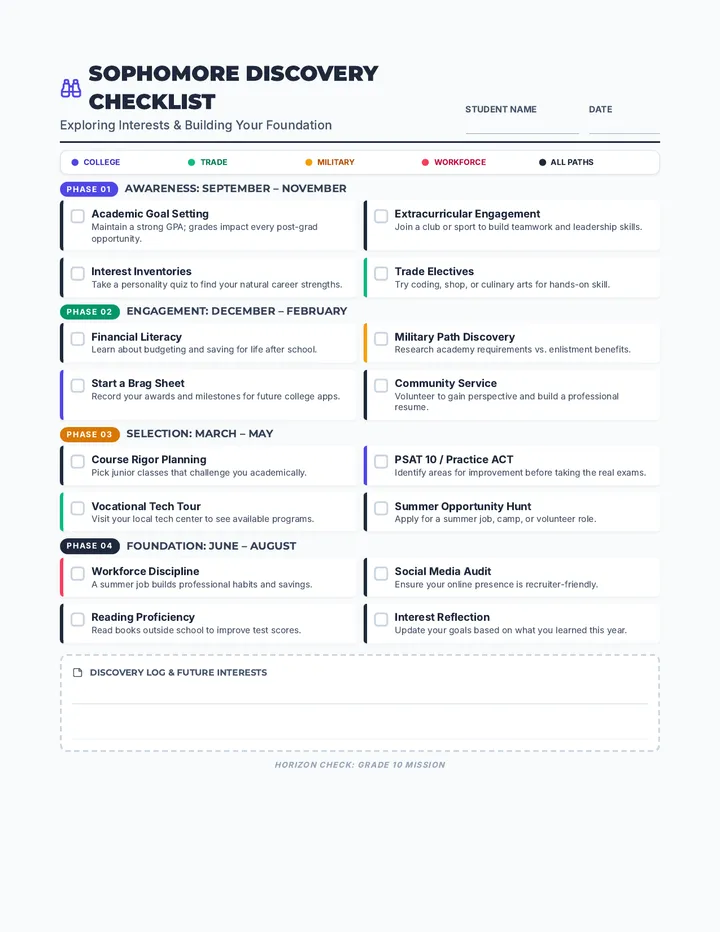
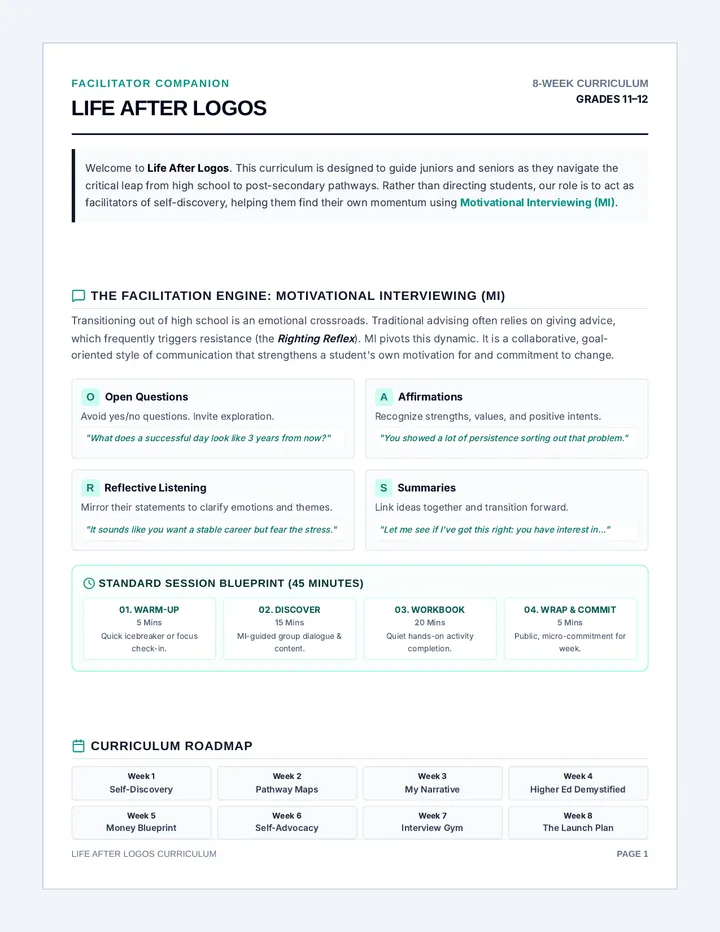
A comprehensive guide to help students navigate the transition from high school to post-secondary life, covering career exploration, college applications, financial aid, and essential life skills.
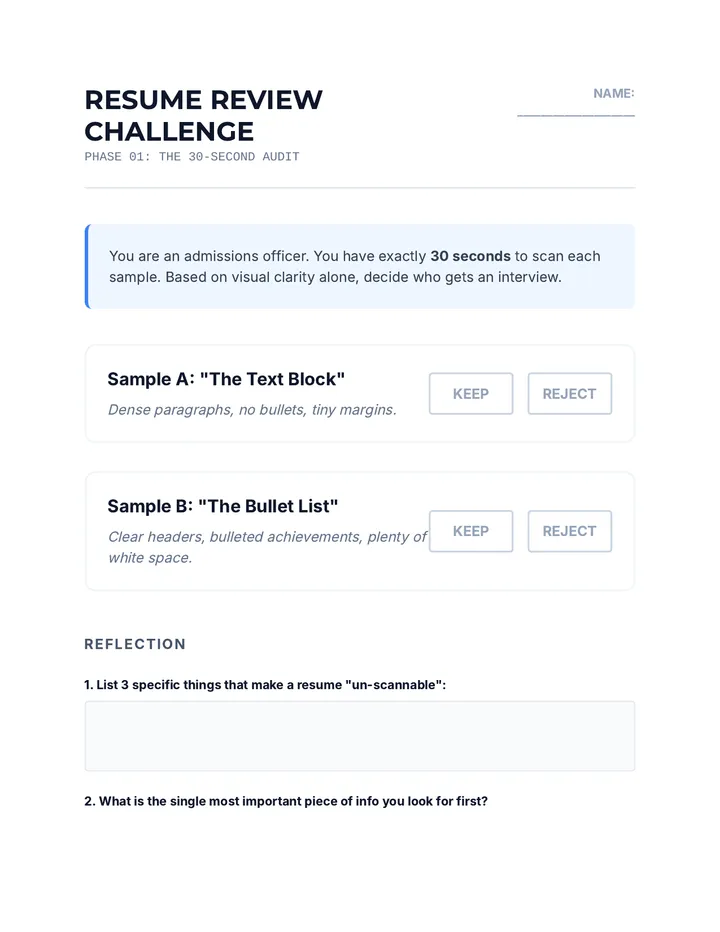
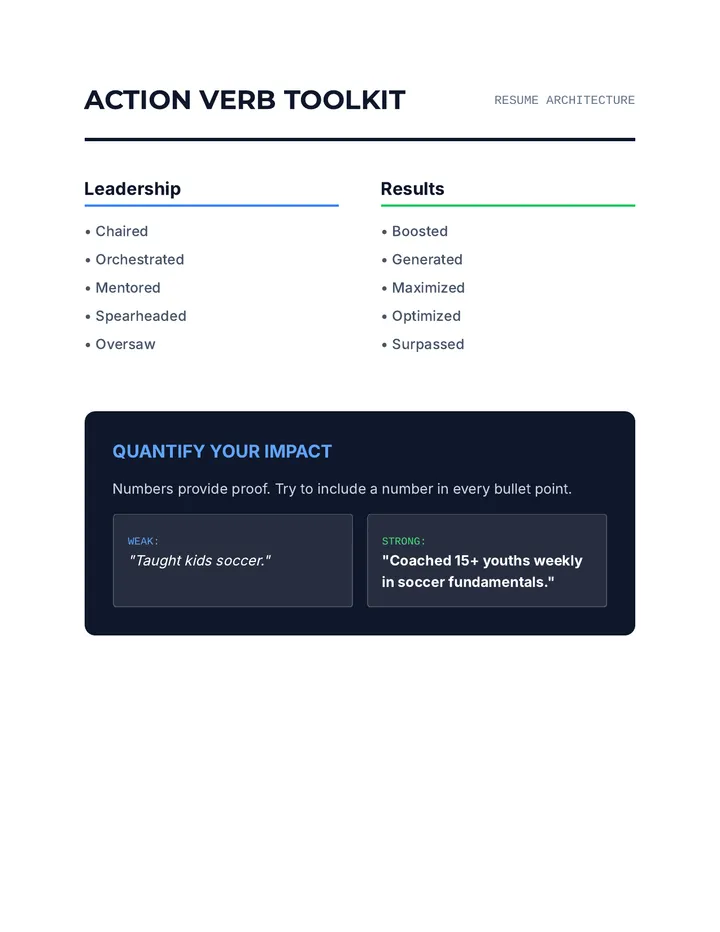
A comprehensive unit designed to prepare students for the transition from high school to adulthood, focusing on post-secondary pathways, resume building, and professional interview skills.
A four-part series designed to empower high school students with self-advocacy skills and knowledge of post-secondary pathways. This sequence focuses on identifying personal needs, exploring institutional options, and navigating support systems.
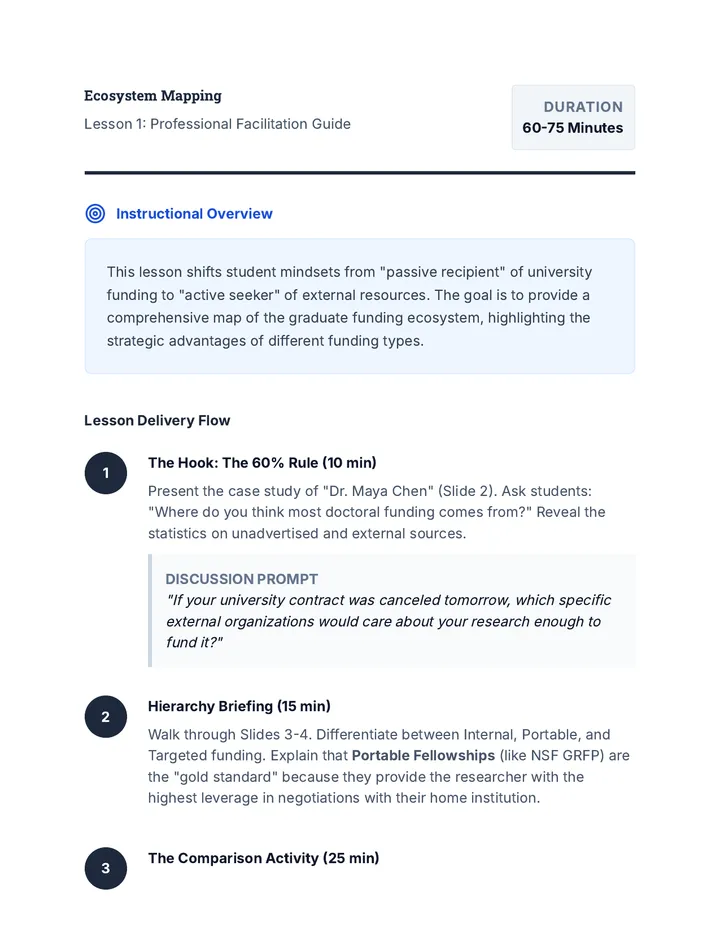
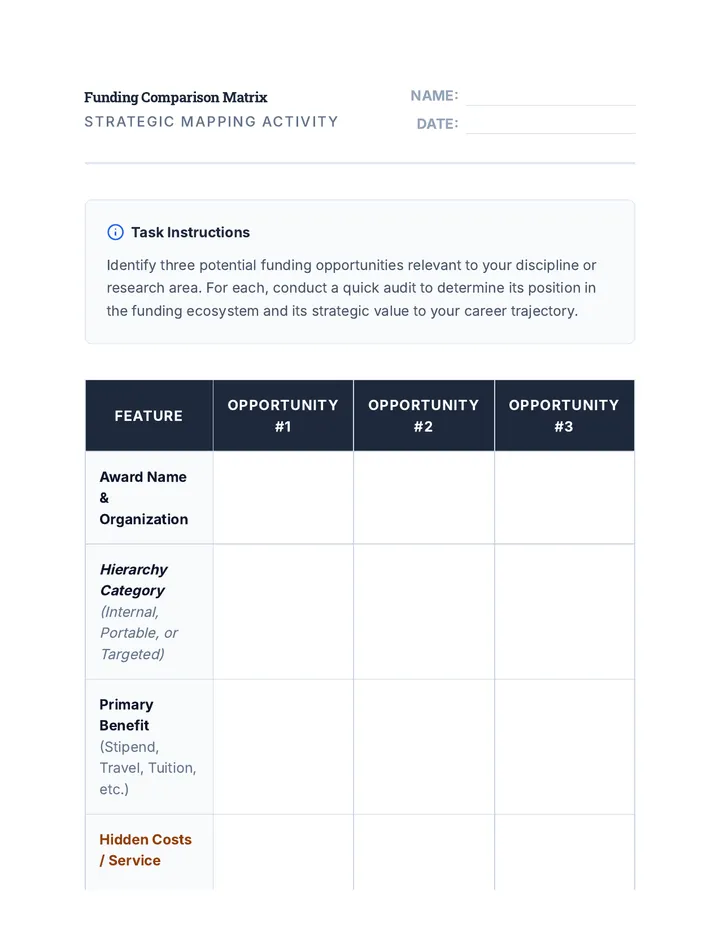
A comprehensive sequence for graduate students to navigate the complex landscape of advanced degree funding, including fellowships, grants, and assistantships. Students will learn to analyze funder missions, leverage niche databases, and build a strategic 12-month funding roadmap.
A comprehensive graduate-level sequence exploring the diverse landscape of post-secondary admission requirements across R1 universities, liberal arts colleges, vocational institutes, professional schools, and international systems. Students develop a comparative framework to understand how institutional missions shape admission protocols and cultural values.
A graduate-level inquiry into the role of quantitative metrics in admissions, exploring the technical mechanics of GPA recalculation and the ethical implications of standardized testing through an equity lens.
A 9th-grade academic support sequence focused on teaching students how to use advanced graphic organizers—specifically criteria-based Venn diagrams and comparison matrices—to analyze information, compare perspectives, and synthesize findings into written arguments. Students move from basic observations to evaluative decision-making using structured visual tools.
A higher-education and career-readiness sequence for 12th-grade students focused on using matrices to synthesize complex, conflicting, and multi-variable information. Students move from basic data organization to high-level comparative analysis and source evaluation.
This 11th-grade workshop-style sequence guides students through the tactical process of selecting and applying to competitive continuing education and adult learning programs. Students develop personalized rubrics, audit requirements, craft educational resumes, write personal statements, and practice interview techniques.
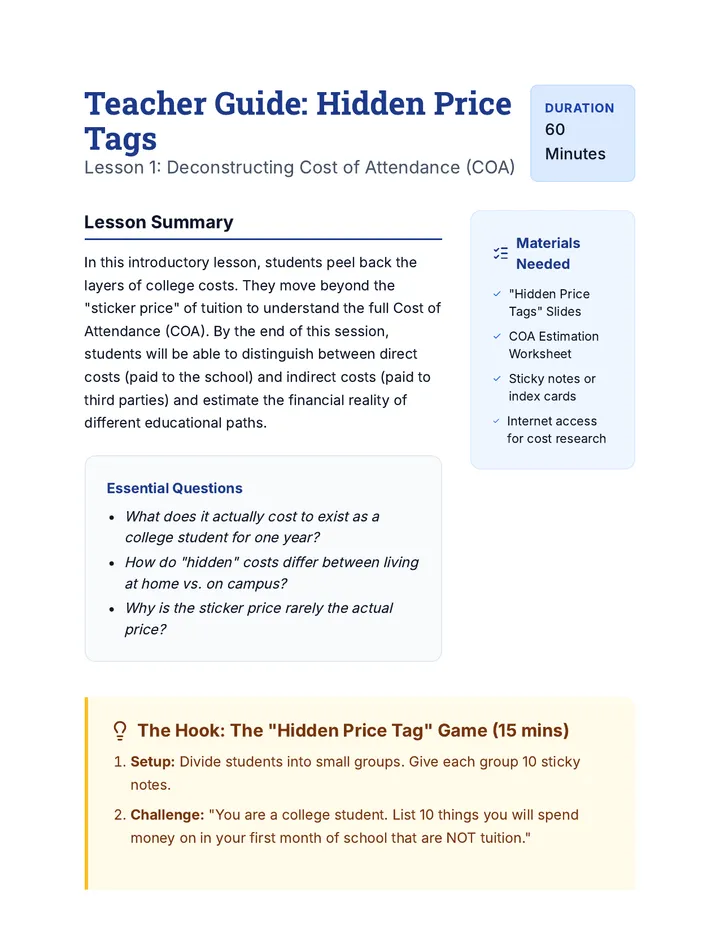
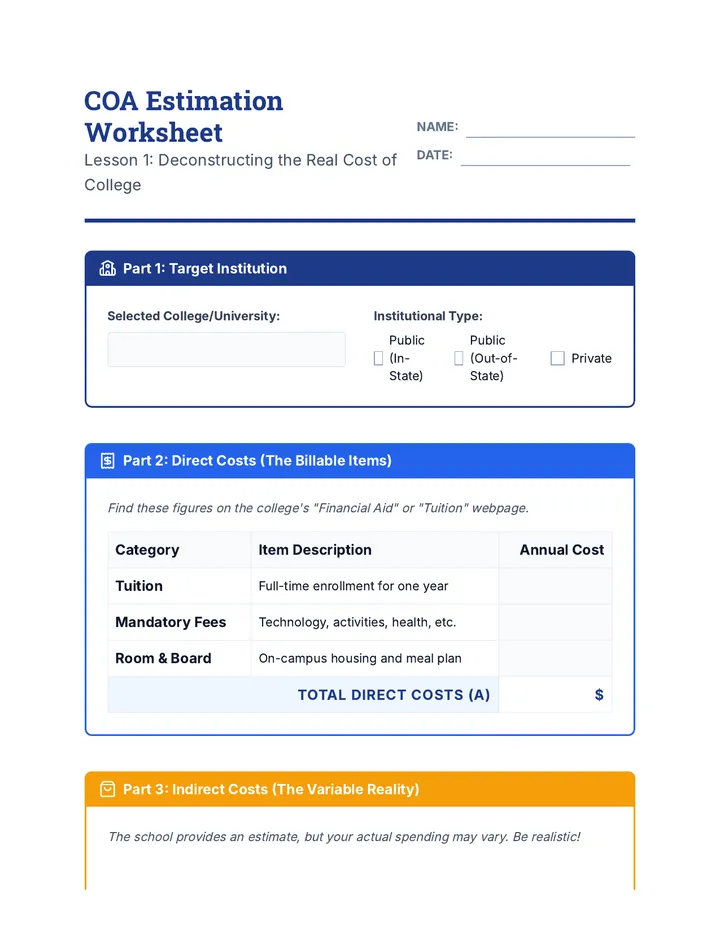
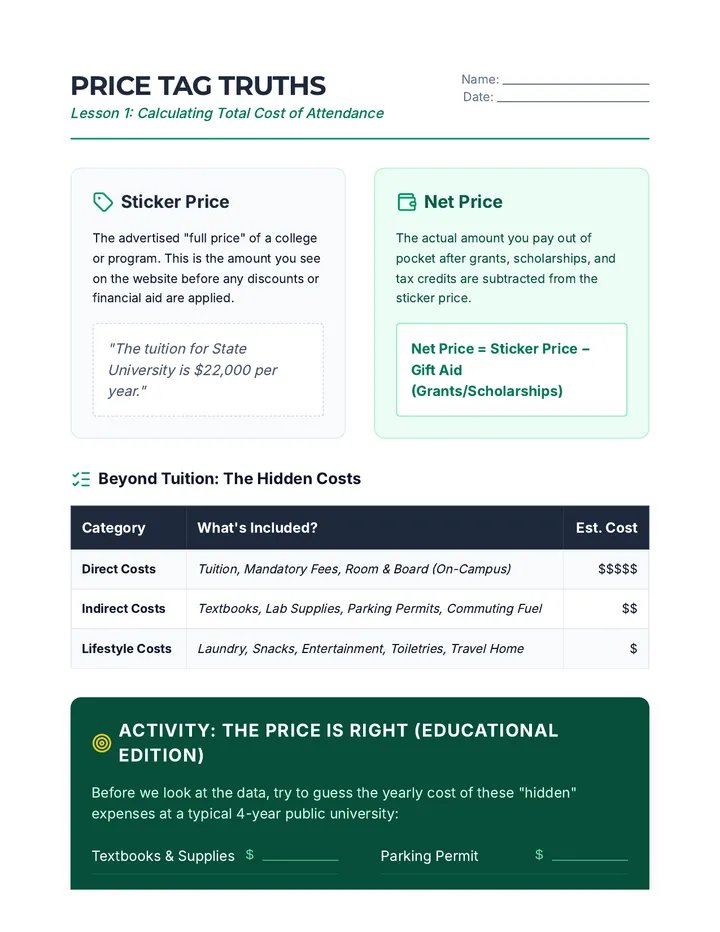
Students analyze the financial viability of post-secondary education by calculating total costs, exploring financial aid, and projecting return on investment based on career earnings. The sequence culminates in a strategic financial plan for a chosen educational path.
A comprehensive series on evaluating post-secondary education through a financial lens, focusing on ROI, funding mechanisms, opportunity costs, and long-term financial planning for undergraduate students.
A comprehensive workshop-style sequence for undergraduate students to master the mechanics of graduate school applications. Students will develop high-quality personal statements, academic CVs, and strategic plans for recommendation letters and program alignment.
A comprehensive workshop sequence for graduate students applying to terminal degree programs (Ph.D., Ed.D., JD, MD) or competitive fellowships. This series shifts focus from basic qualifications to strategic narrative alignment and research fit.
A comprehensive sequence for 11th-grade students focusing on the metacognitive and self-advocacy skills needed for using Text-to-Speech (TTS) technology in post-secondary environments. Students investigate cognitive science, legal frameworks, and practical communication strategies to ensure accessibility in college and career.
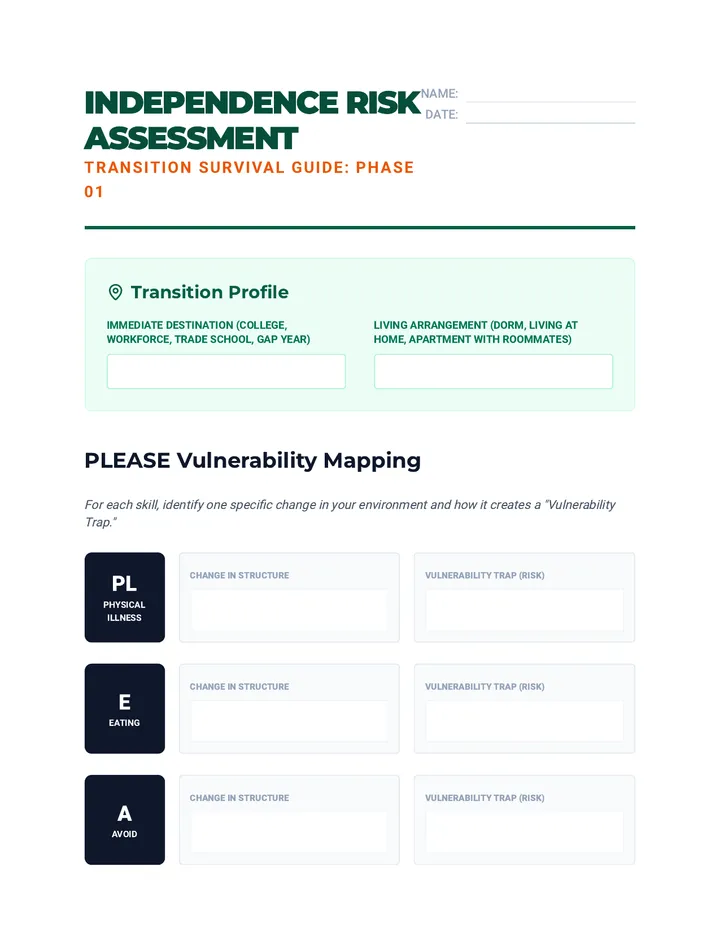
This project-based sequence prepares 12th graders for independent living by applying the PLEASE skills to future scenarios. Students identify potential disruptions to their physical and emotional health during major life transitions and develop a 'Transition Survival Guide' to maintain emotional stability.
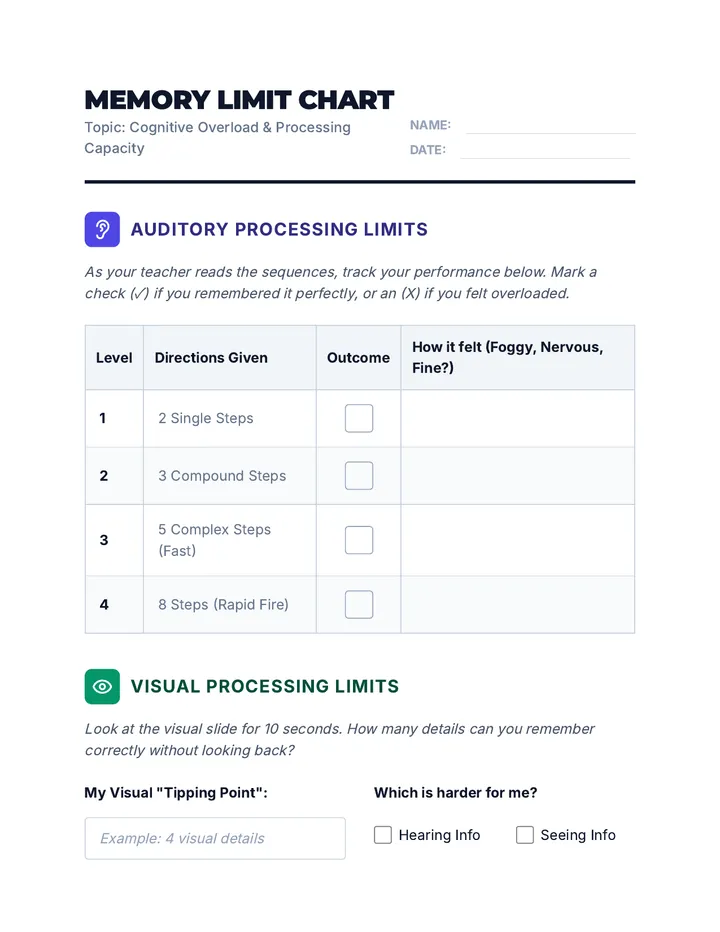
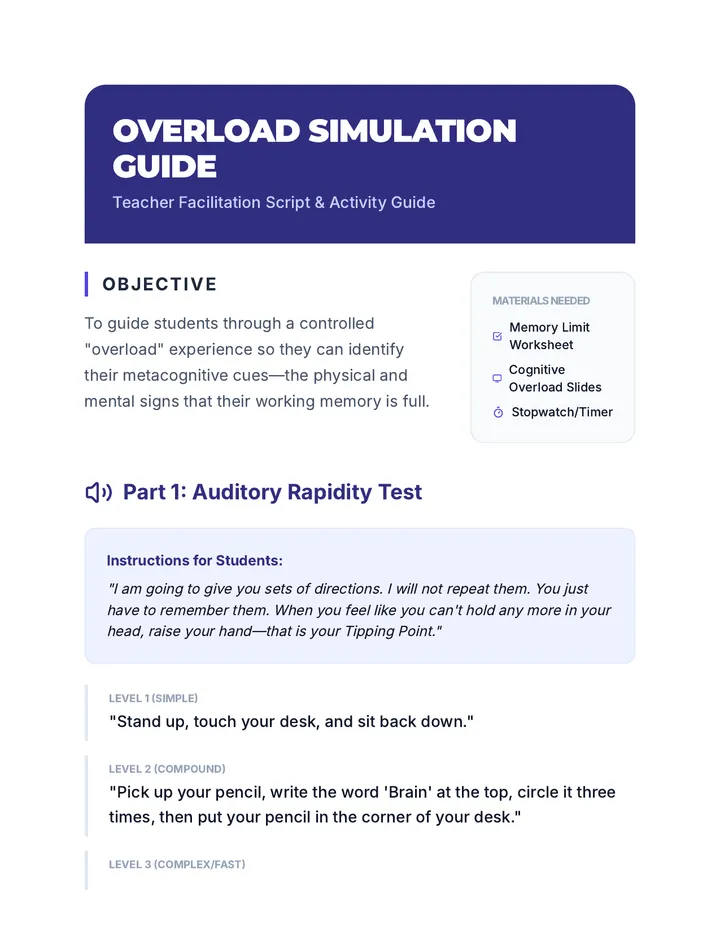
A 12th-grade sequence focused on empowering students with working memory challenges to advocate for single-step directions in professional and academic settings. Students learn to recognize their processing limits, draft professional scripts, and practice high-stakes role-play to ensure they can manage information overload effectively.
This sequence teaches 11th-grade students how to customize their computing environment using keyboard-based accessibility tools like Sticky Keys, screen reader commands, and custom macros. It focuses on workplace readiness, technical troubleshooting, and self-advocacy for digital accommodations.
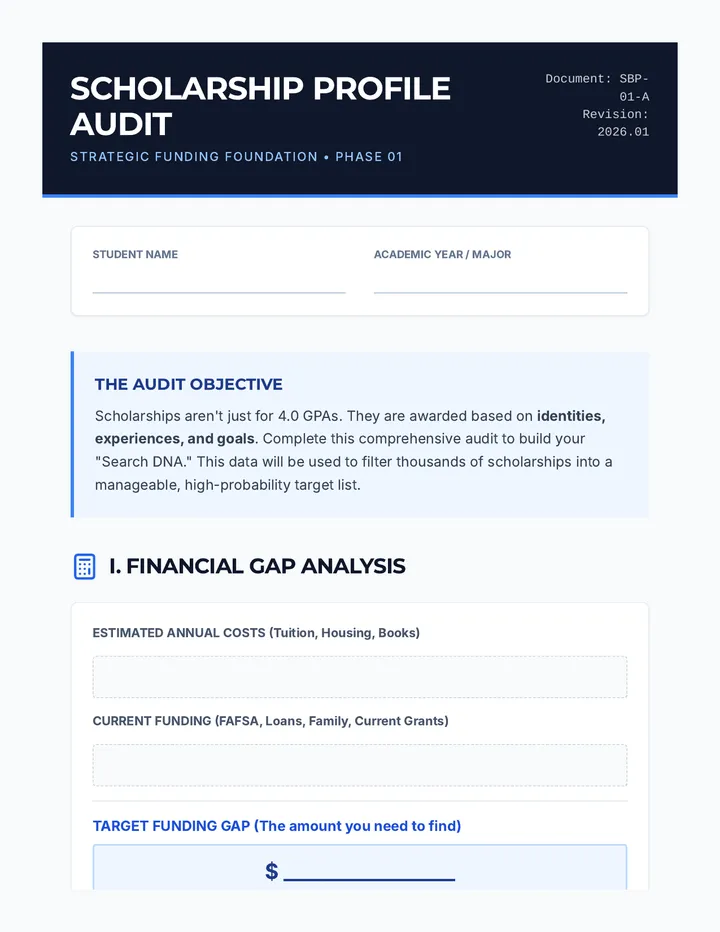
A comprehensive guide for undergraduate students to systematically search for, evaluate, and manage scholarship applications. The sequence covers self-auditing, database navigation, ROI analysis, project management, and donor mission alignment.
A 12th-grade sequence focused on transitioning from teacher-provided scaffolds to student-designed visual memory systems for college and career readiness. Students analyze cognitive load, design flowcharts and SOPs, and optimize their environments to support executive function.
A comprehensive 12th-grade sequence focused on evaluating and selecting assistive technology, specifically speech recognition and dictation, for post-secondary transition. Students act as technology analysts to compare solutions, assess hardware, and build a personalized advocacy plan for college and the workplace.
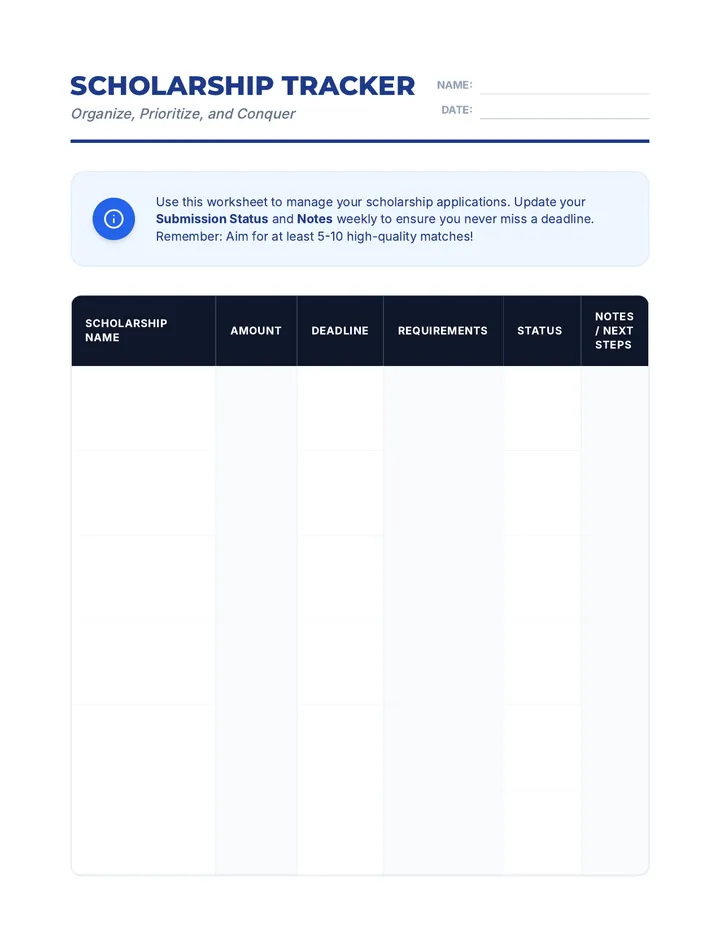
This 10th-grade sequence equips students with the skills to find and manage scholarships. Students learn to navigate databases, decode eligibility, avoid scams, and build a digital tracking system to prepare for post-secondary funding.
An advanced sequence for 10th-grade students focusing on interleaved practice as a companion to spaced repetition. Students move from understanding the 'mixing' effect to building sophisticated retrograde study calendars for cumulative exams.
This sequence transitions 12th-grade students from manual study methods to digital spaced repetition software (SRS). Students will master advanced card-creation techniques, interpret retention data to optimize their learning, and develop long-term maintenance strategies for post-secondary success.
A graduate-level exploration of the admissions 'black box,' where students act as admissions officers to navigate the complexities of holistic review, institutional priorities, and systemic bias in post-secondary gatekeeping.
This sequence empowers 12th-grade students with neurodivergent profiles to design, test, and advocate for personalized note-taking systems. By analyzing real-world information demands and exploring digital and analog tools, students prepare for independent living and post-secondary success.
A comprehensive workshop series for 12th-grade students to master visual scaffolding techniques, reducing cognitive load and enhancing long-term retention during academic tasks. students transition from understanding cognitive science to real-time application of hierarchical, sequential, and comparative note-taking structures.
A project-based sequence designed for 11th-grade students with working memory needs. It applies professional project management systems like Kanban and the Eisenhower Matrix to the complex process of post-secondary transition planning, helping students break down abstract goals into manageable, visual tasks.
A comprehensive sequence for 10th-grade students focusing on the financial realities of student loan repayment, the impact of debt-to-income ratios, and evaluating the long-term ROI of post-secondary education choices. Students progress from basic math to strategic advisory, culminating in a complex case study analysis.
A project-based sequence for 10th-grade students to master the complexities of college funding. Students will learn to deconstruct costs, prioritize non-repayable aid, interpret confusing financial aid letters, and design a sustainable borrowing strategy to minimize long-term debt.
This sequence empowers 12th-grade students to take ownership of their personal, educational, and legal documentation as they transition to adulthood. Students will identify, secure, organize, and utilize essential records to foster independence and self-advocacy.
This sequence explores the long-term financial implications of student loans, focusing on repayment plans, budgeting, and return on investment (ROI). Students transition from understanding borrowing mechanics to simulating the real-world impact of debt on lifestyle and career choices.
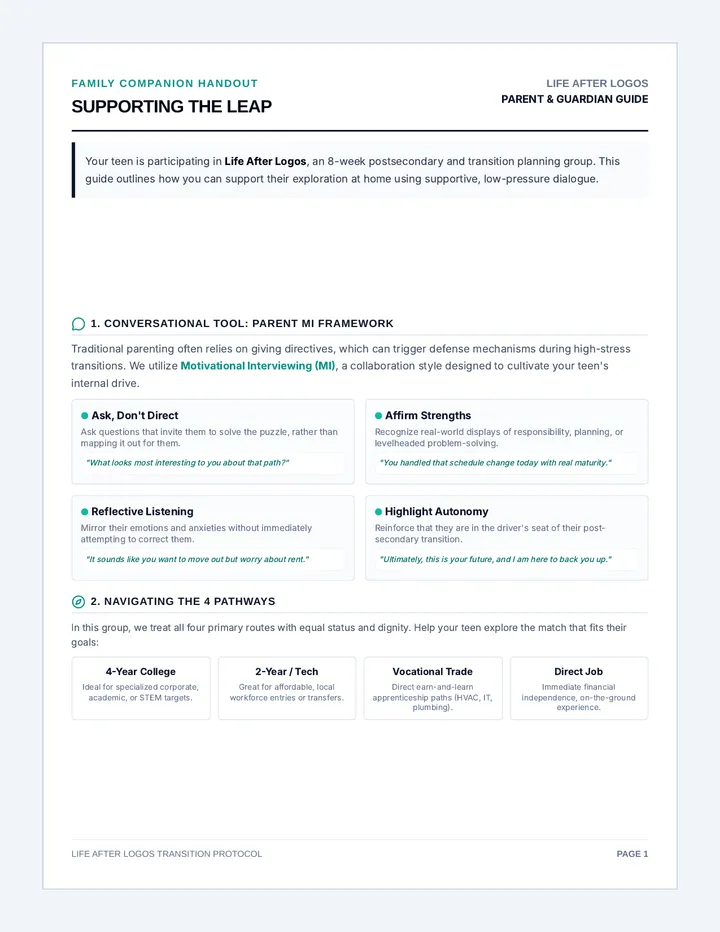
A specialized workshop sequence designed for high school parents to help them navigate the emotional complexities of their children's post-secondary transitions. The sequence focuses on moving from a 'pressure-based' approach to a 'support-based' framework using nautical metaphors.
This sequence transforms highlighting from a passive activity into a rigorous, systematic method for information processing. Students evaluate current habits, establish hierarchical color systems, develop marginal shorthand, and apply these strategies to complex texts to create effective study tools.
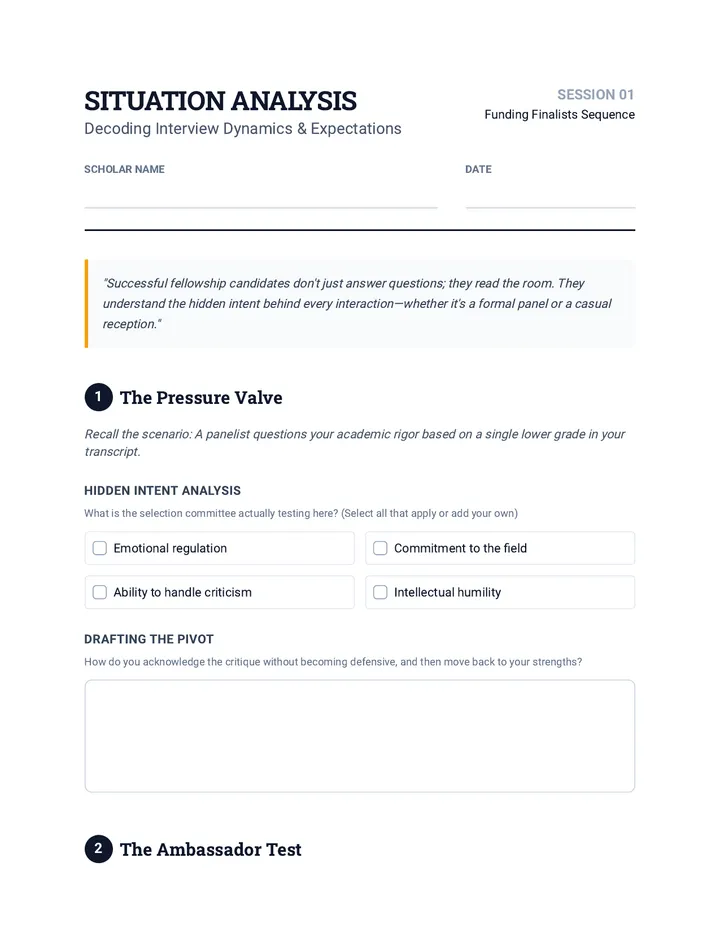
A comprehensive training program for graduate students preparing for prestigious fellowship interviews, focusing on various formats, research communication, behavioral responses, and intellectual agility.
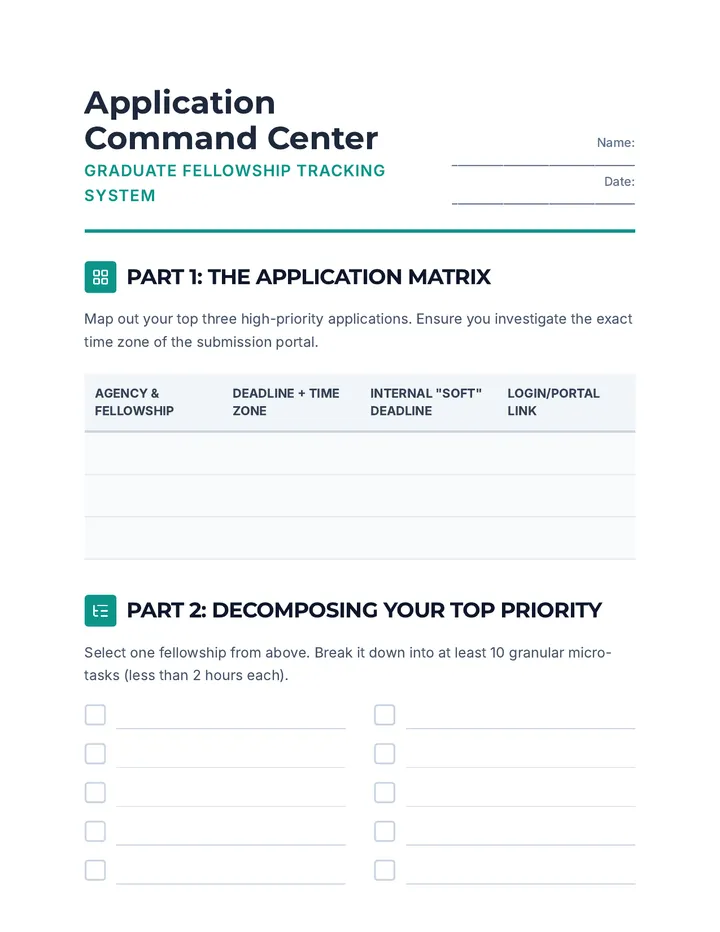
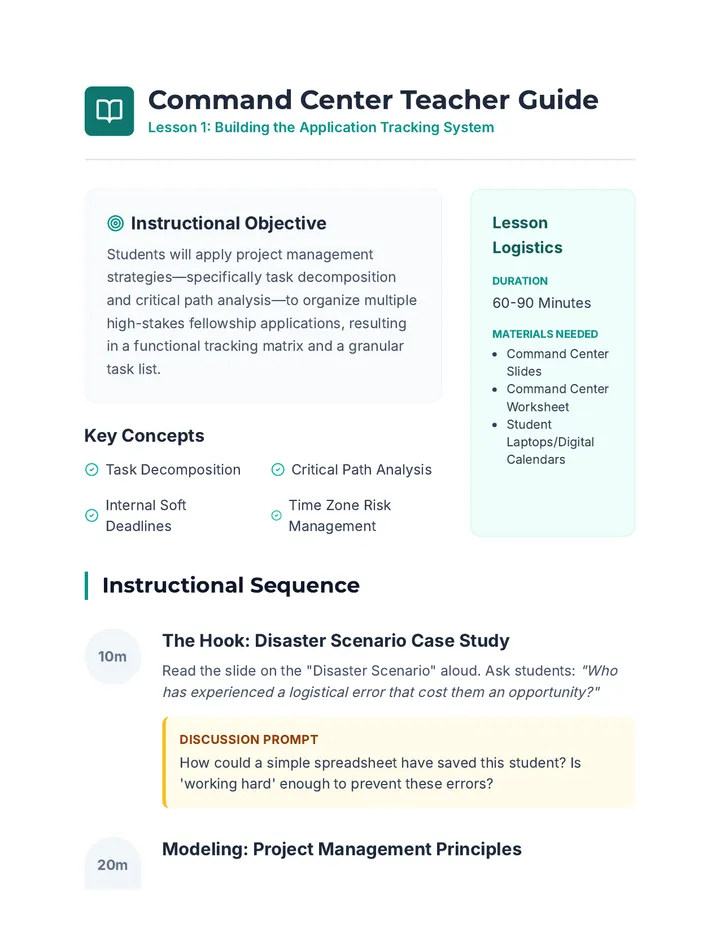
A comprehensive graduate-level sequence focused on the professional project management of fellowship and scholarship applications. Students learn to build tracking systems, manage recommenders strategically, curate funding-specific CVs, and ensure quality control for final submissions.
A comprehensive project-based sequence for graduate students focusing on the strategic curation and management of third-party application materials. Students learn to select recommenders, draft 'brag sheets', navigate ethical considerations like FERPA, and audit application packets for narrative consistency.
A masterclass-level sequence for graduate students on the rhetorical strategies of admissions essays. It covers genre deconstruction, thematic development, narrative techniques, and audience alignment to help applicants and coaches navigate high-stakes admissions.
This sequence immerses students in the mechanics of borrowing money, focusing specifically on the distinctions between federal and private lending. Students begin by understanding the fundamental concepts of principal, interest, and capitalization before diving into the specific terms of Subsidized and Unsubsidized Direct Loans.
This sequence empowers 12th-grade students to evaluate post-secondary program quality. Students explore accreditation systems, analyze outcome data, compare non-profit vs. for-profit models, and identify predatory marketing to make informed educational investments.
A workshop-style sequence for 12th graders to master the professional application process, covering resumes, personal statements, digital portfolios, networking, and interviewing.
A test-taking strategy unit designed to empower students with logical tools and anxiety-reduction techniques to approach exams with confidence and precision.
A comprehensive graduate-level sequence focused on the psychological and logistical aspects of high-stakes testing, including time management, anxiety reduction, and strategic decision-making.
A comprehensive sequence for undergraduate students focusing on using graphic organizers to support working memory during fast-paced lectures. Students learn to prepare skeletal notes, map STEM logic, track humanities arguments, leverage digital tools, and synthesize notes for long-term retention.
This sequence targets the ability of 12th-grade students with working memory challenges to decode and follow complex academic guidelines. It progresses from document analysis to auditory processing and technical protocols, culminating in a strategic planning challenge for post-secondary readiness.
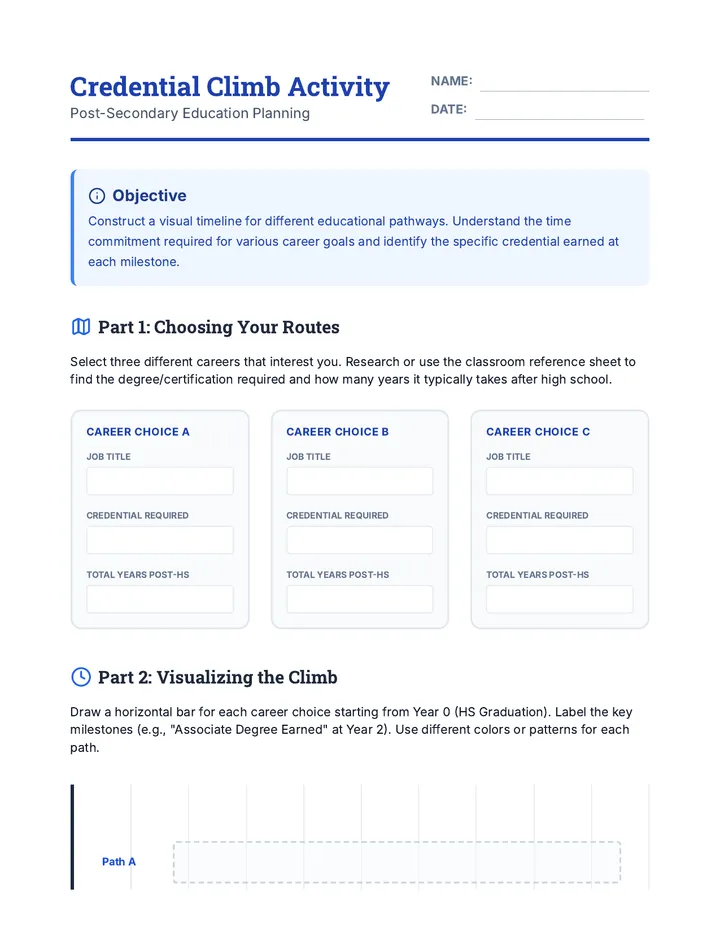
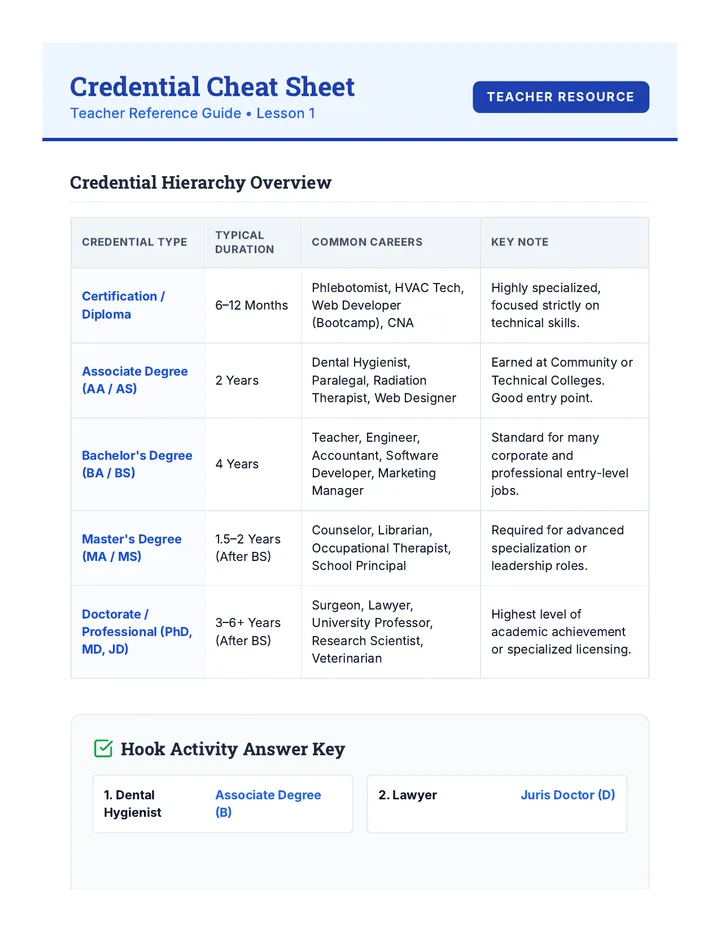
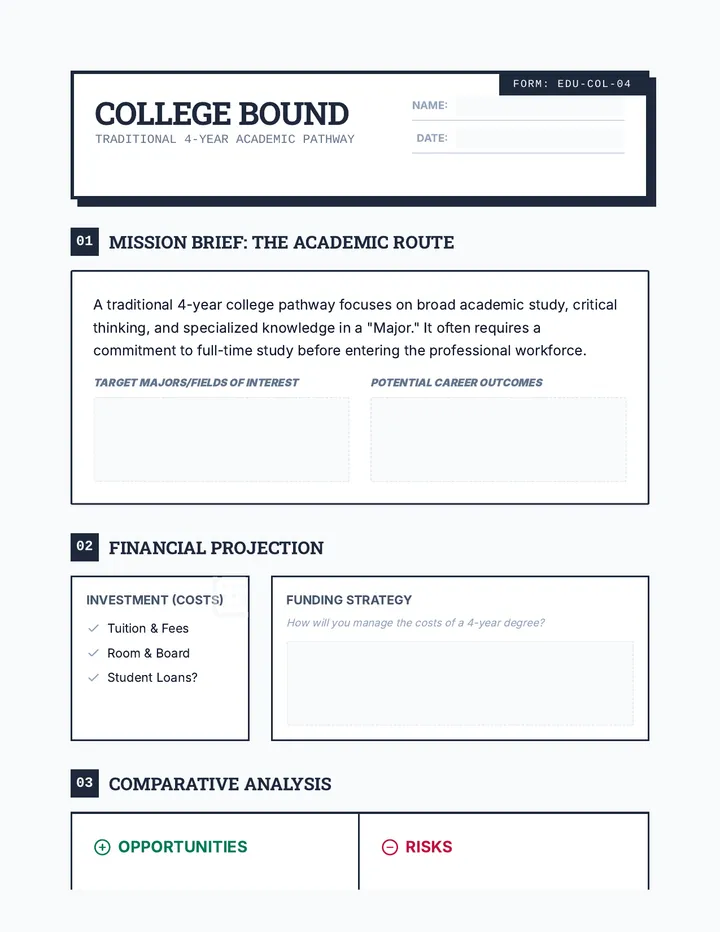
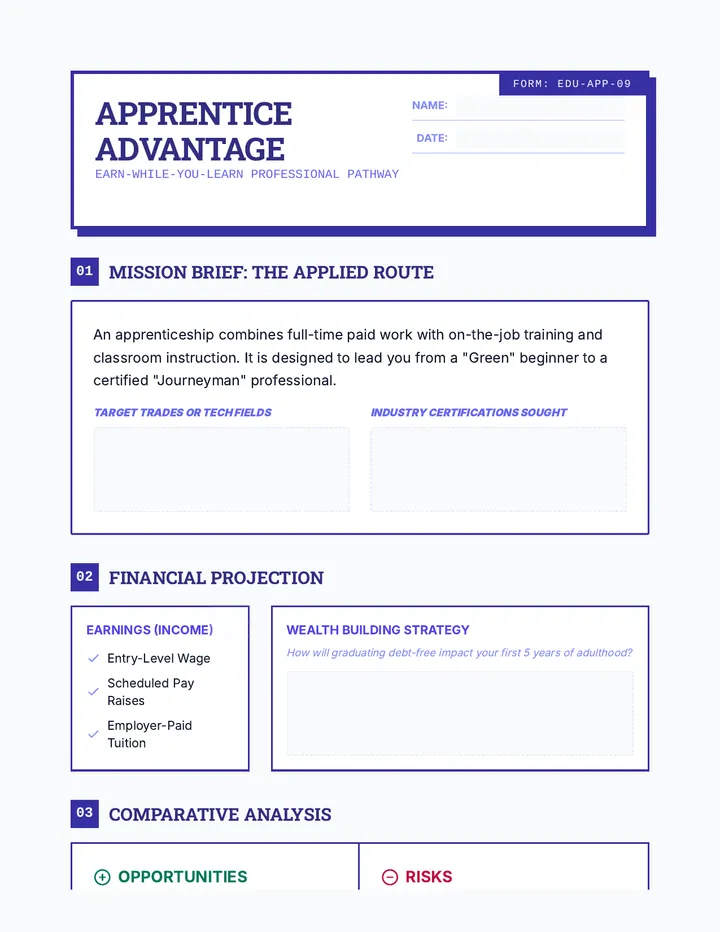
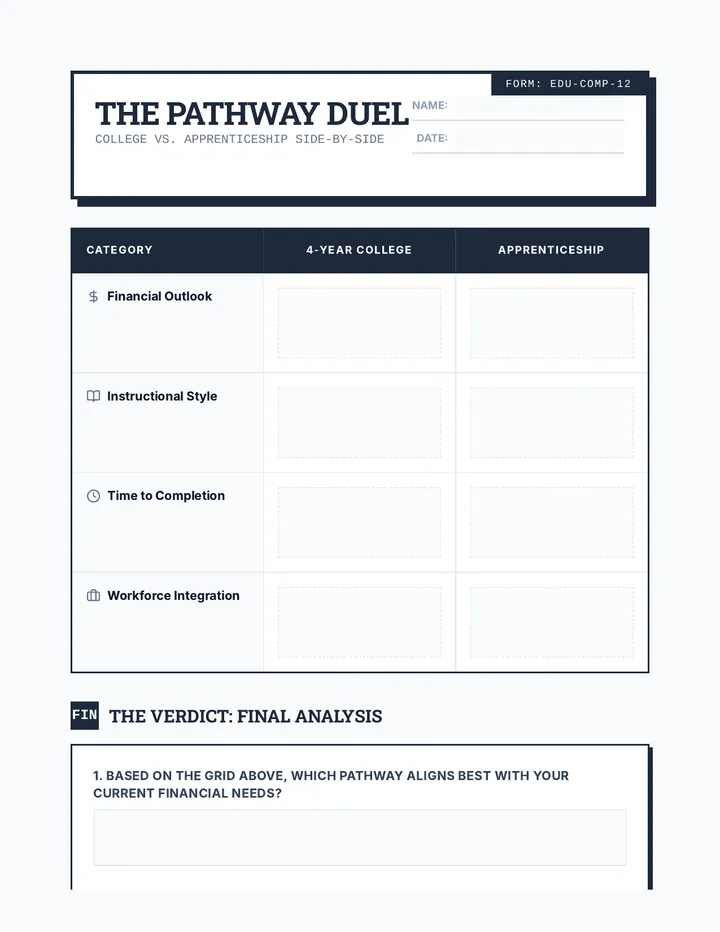
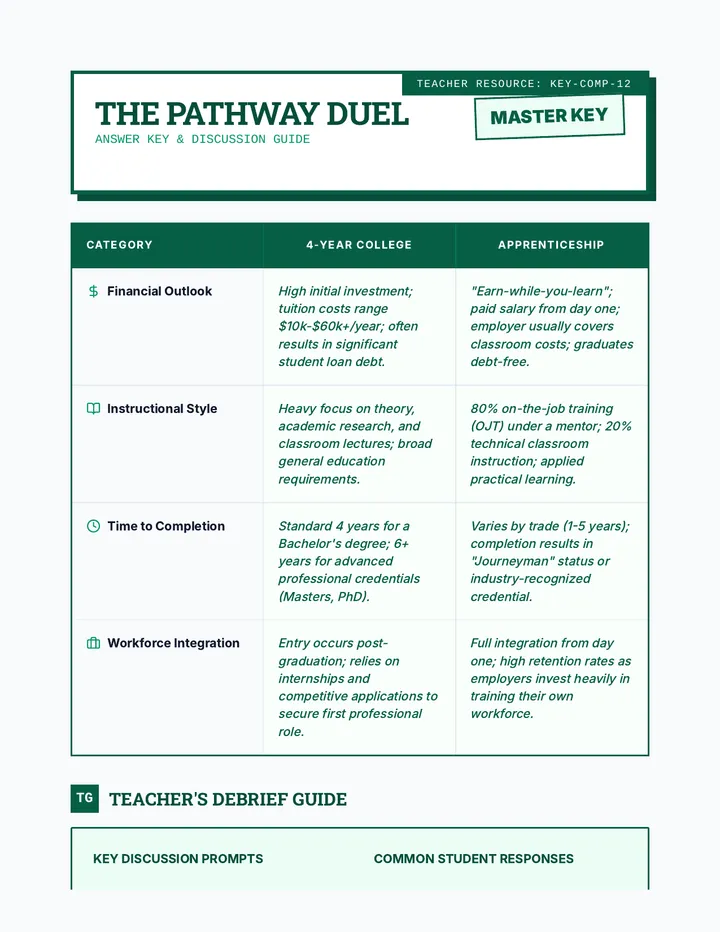
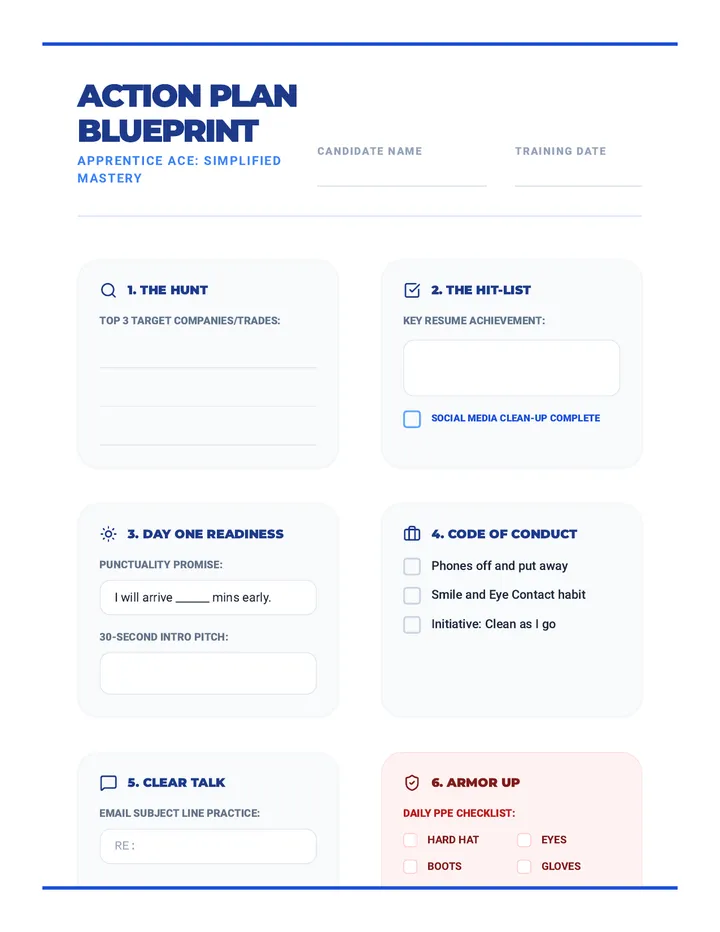
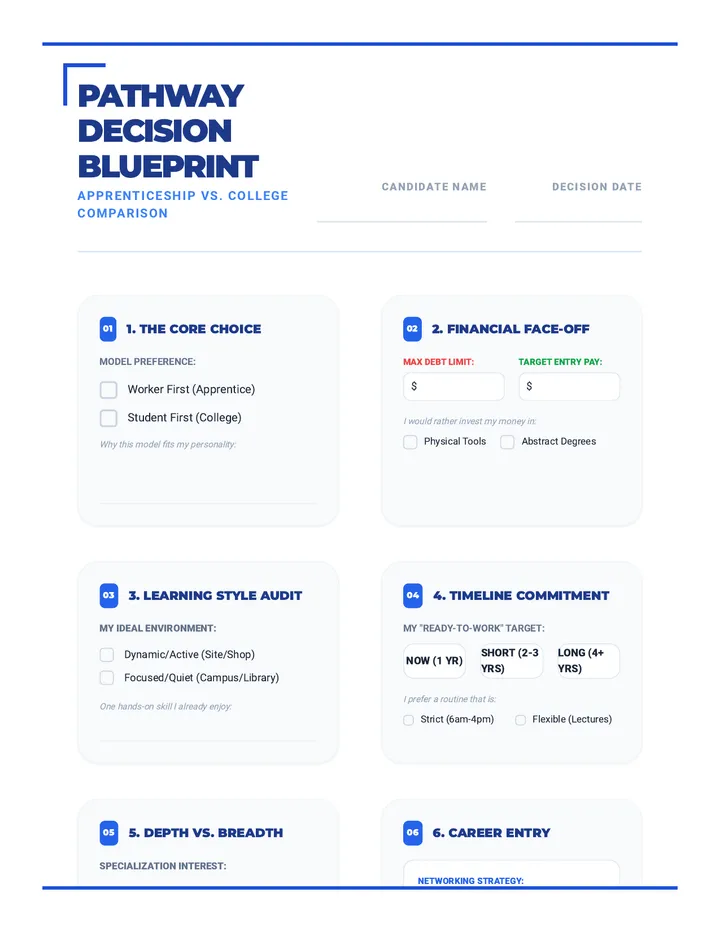
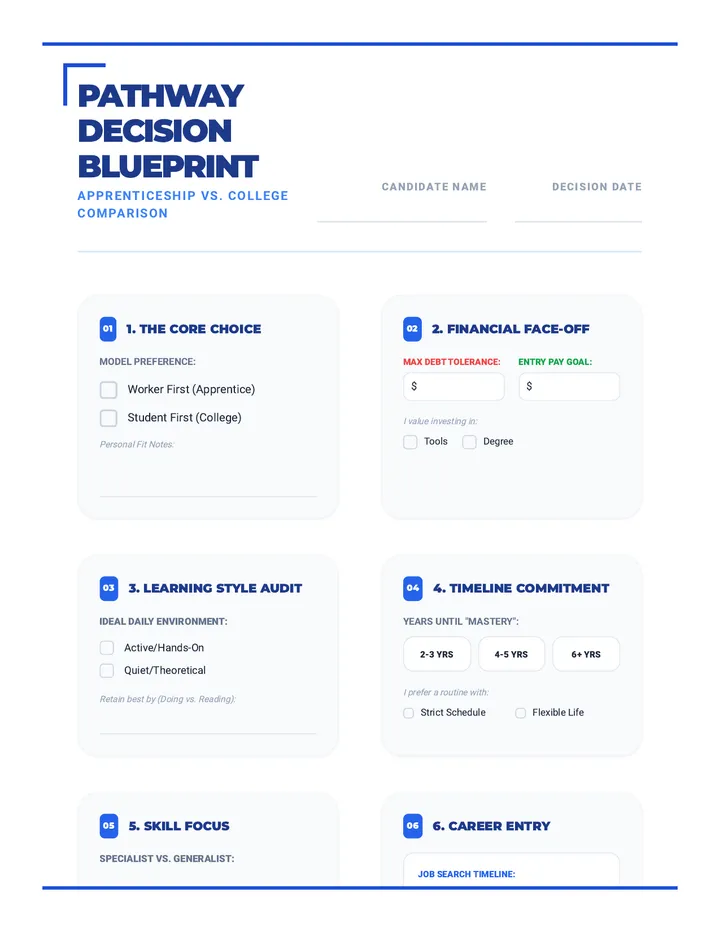
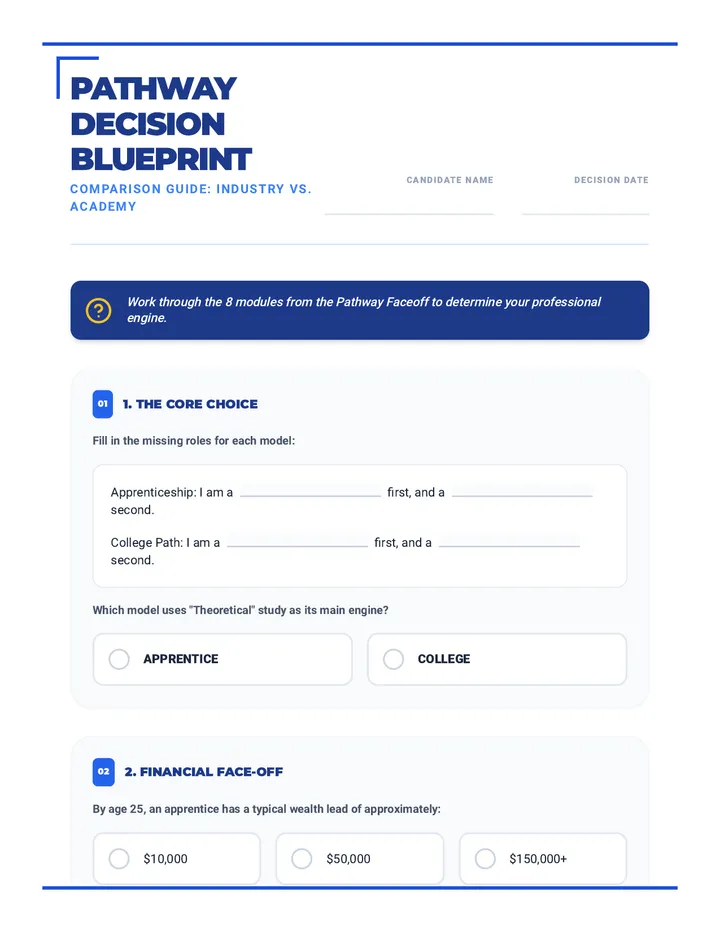
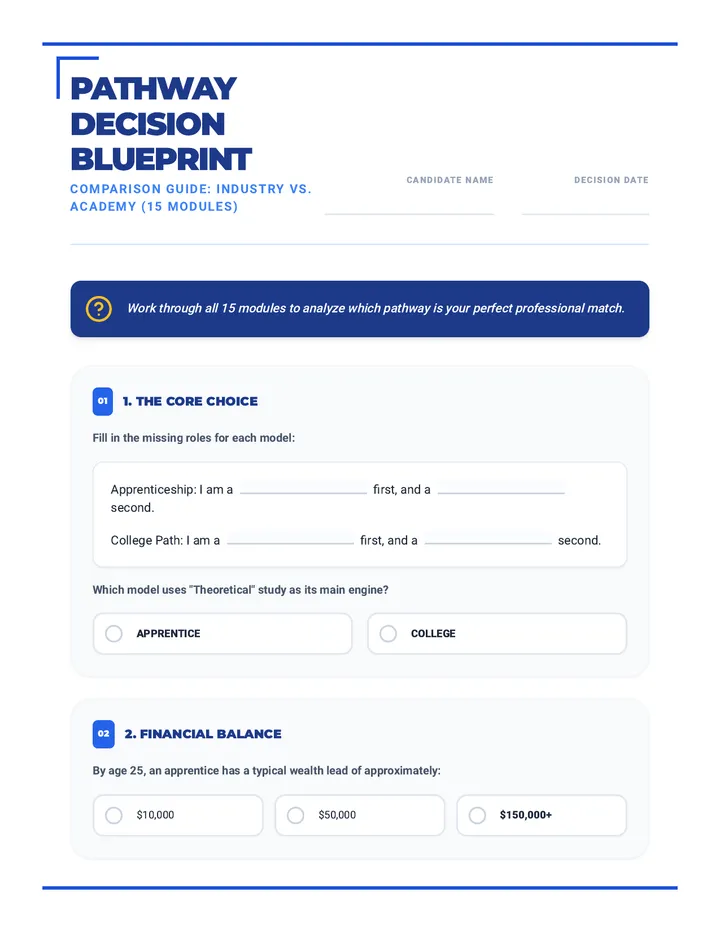
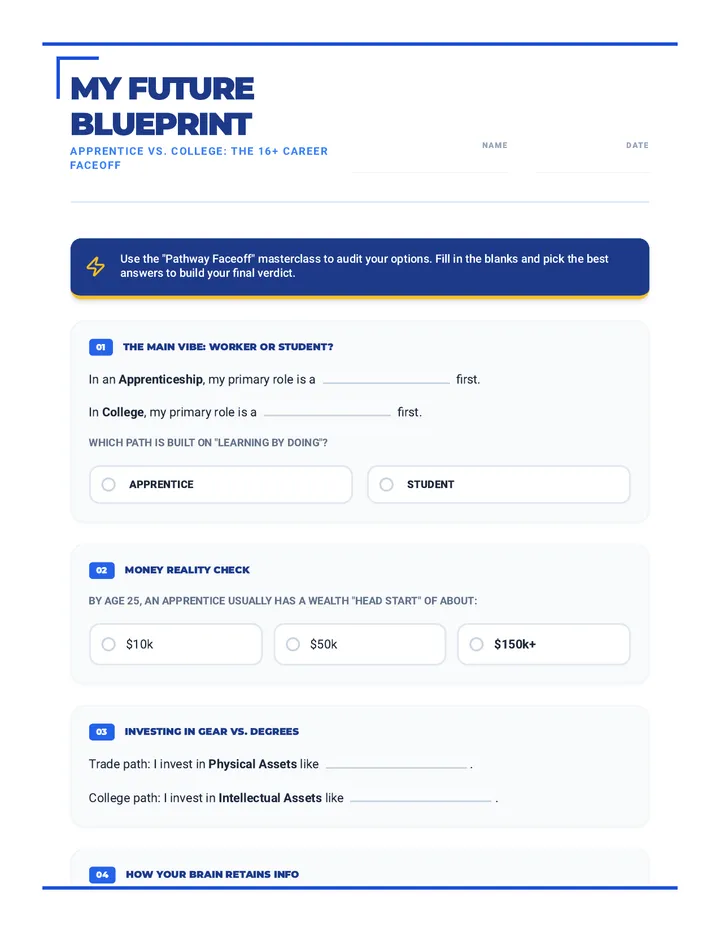
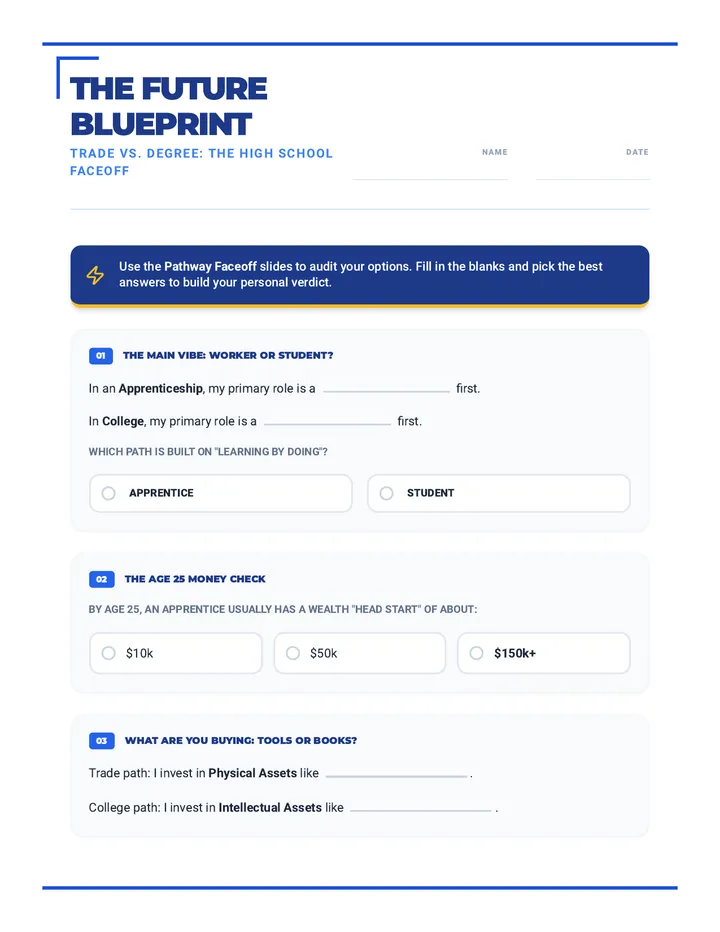
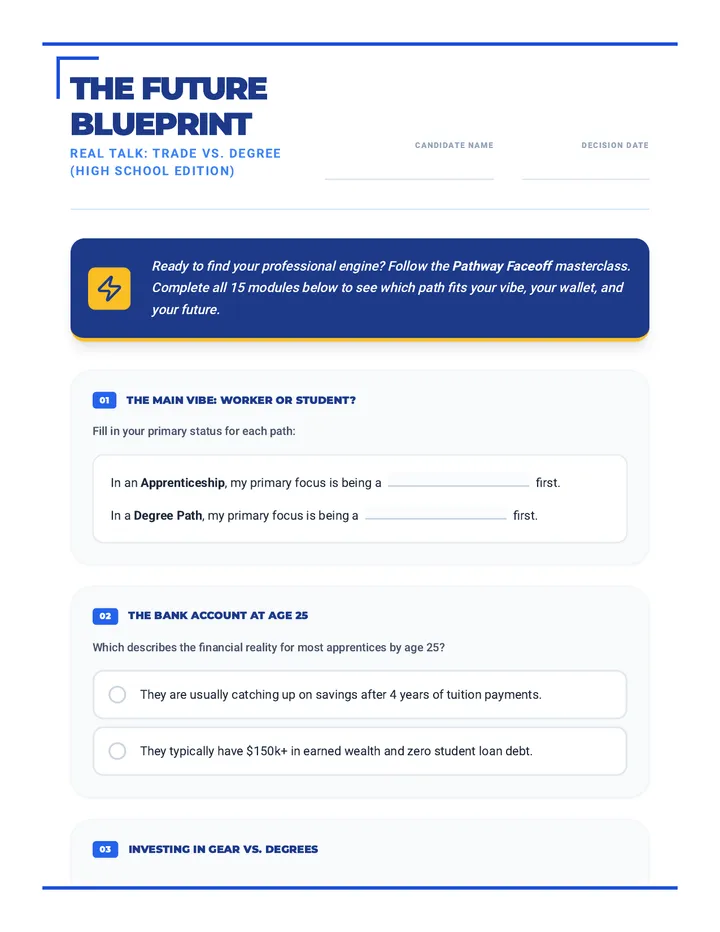
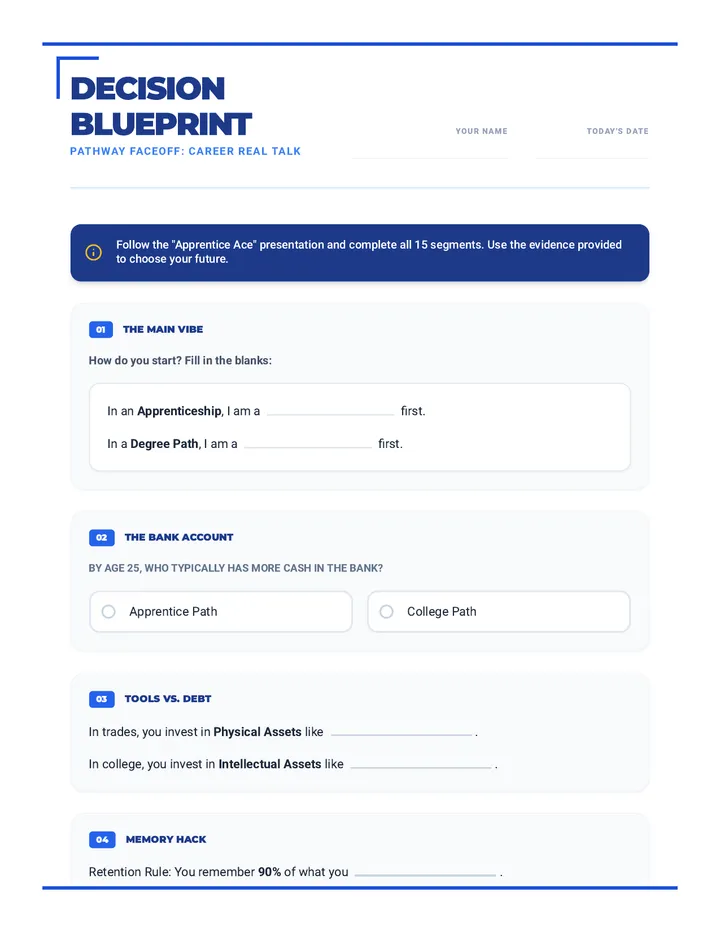
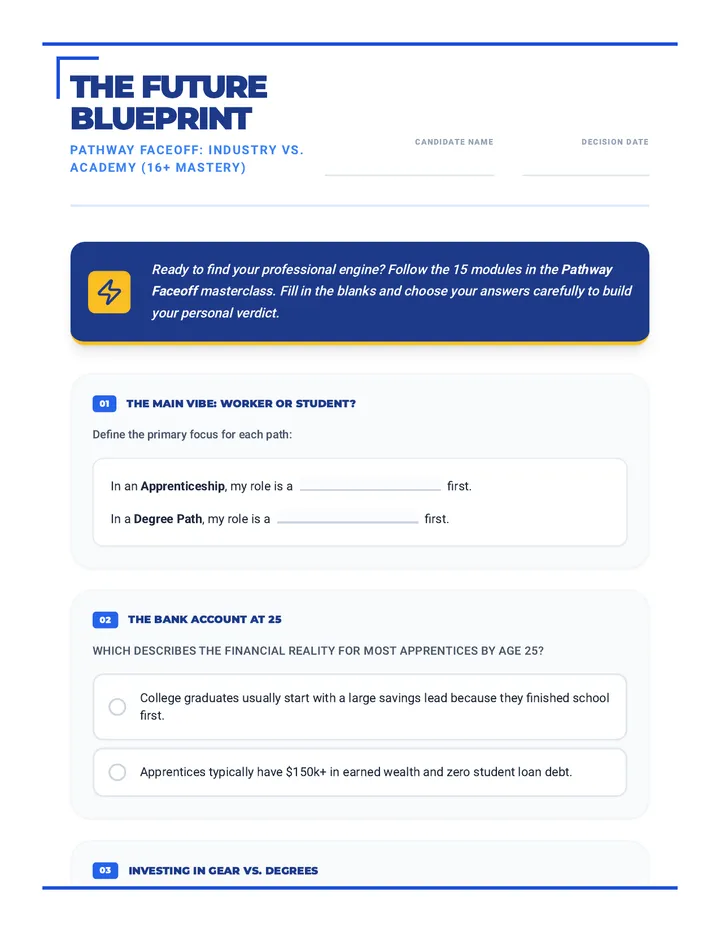
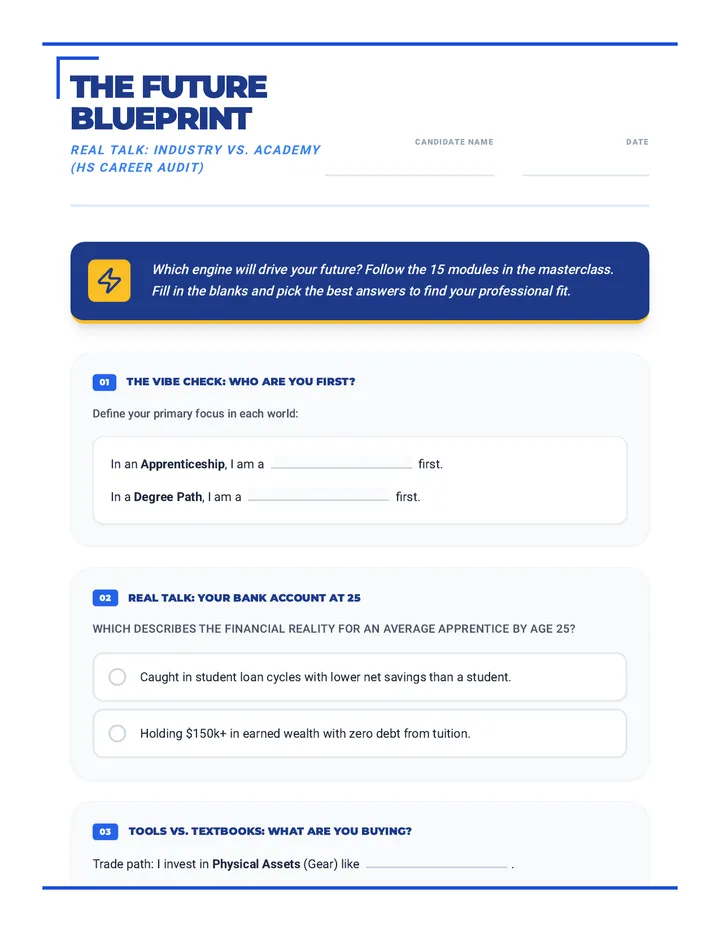
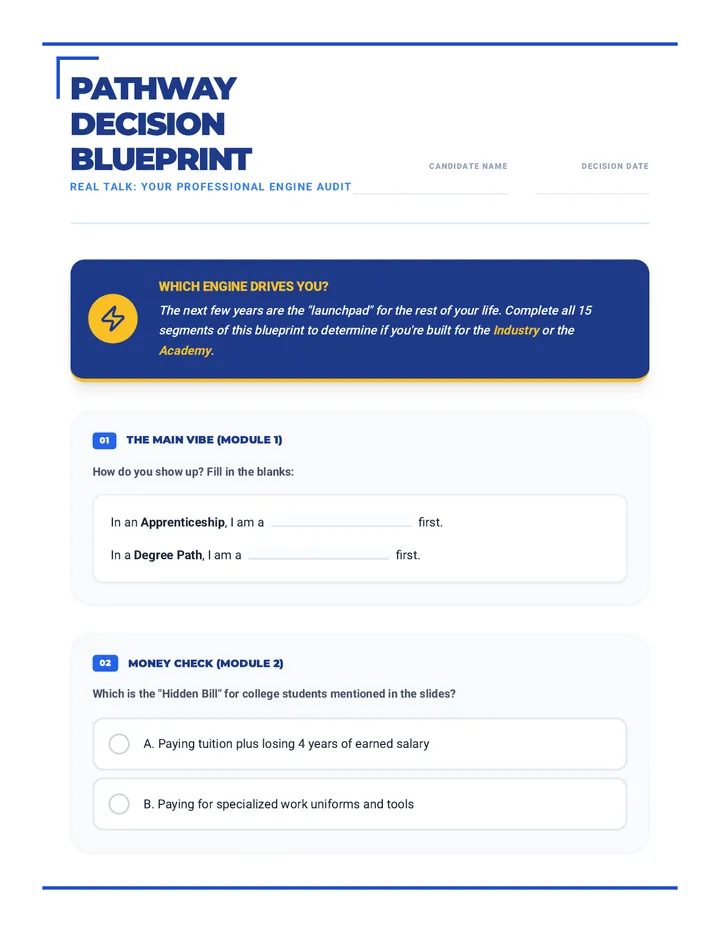
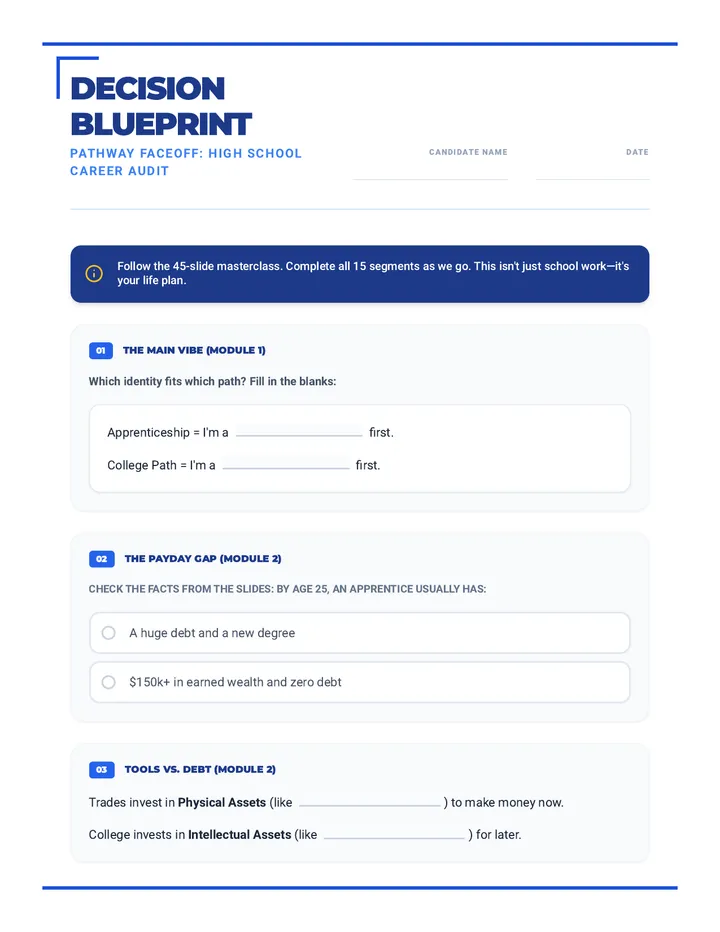
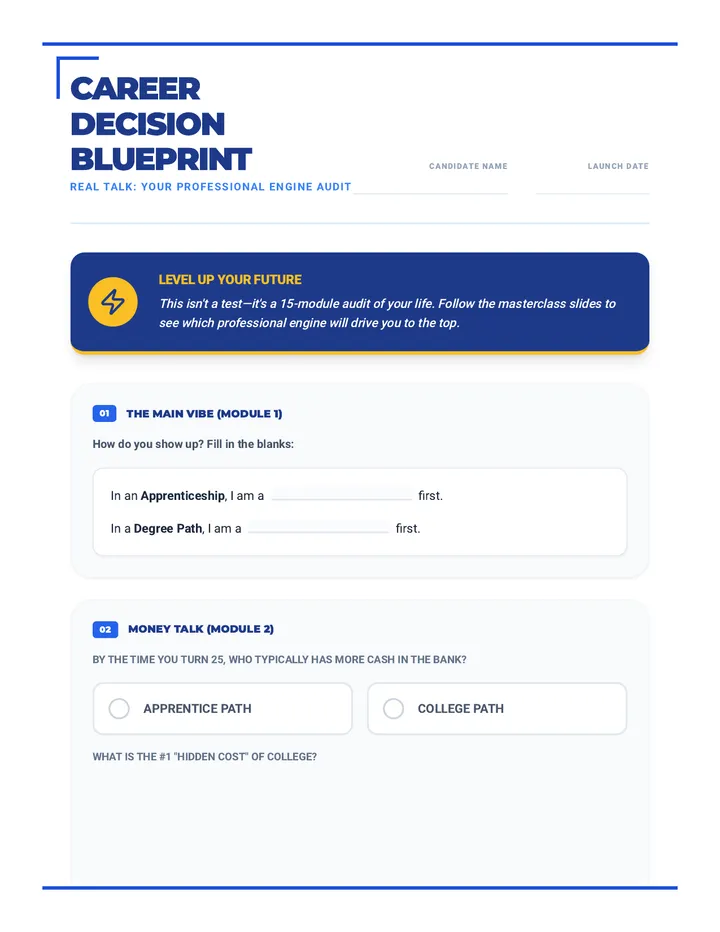
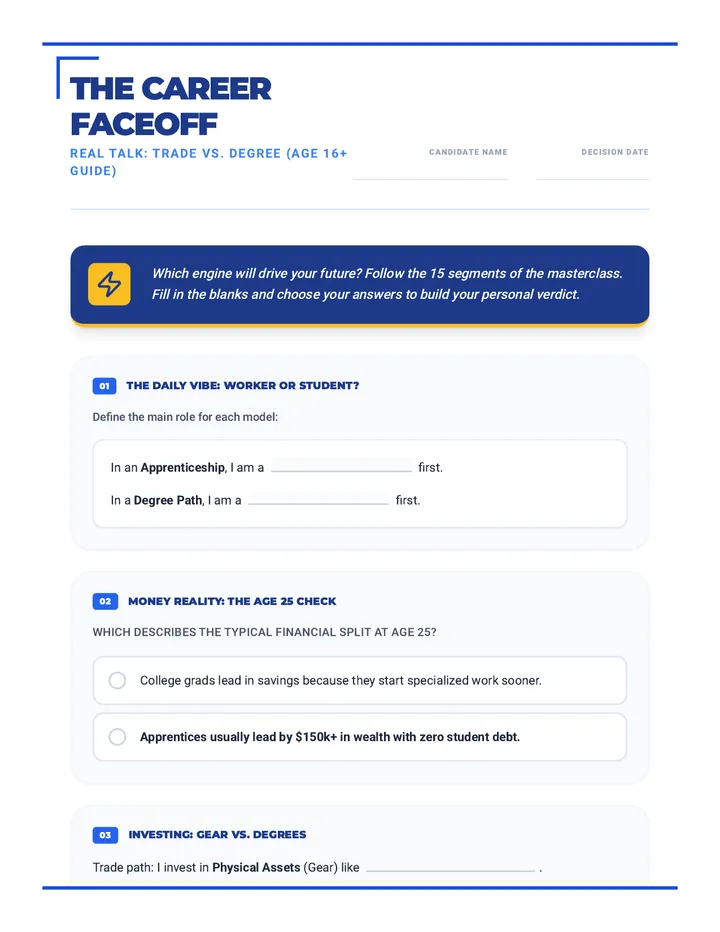
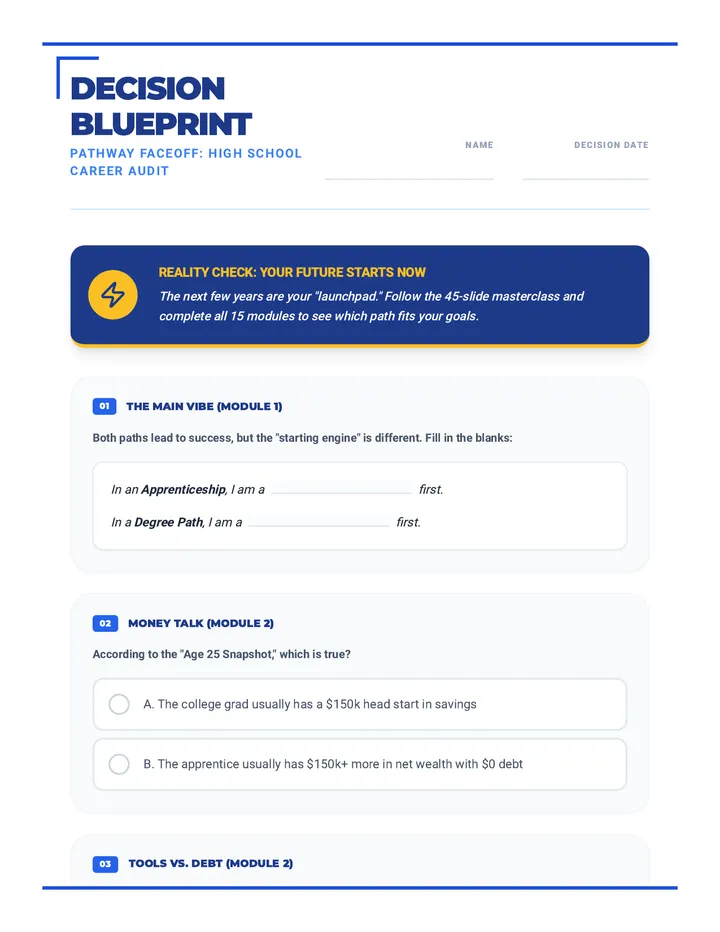
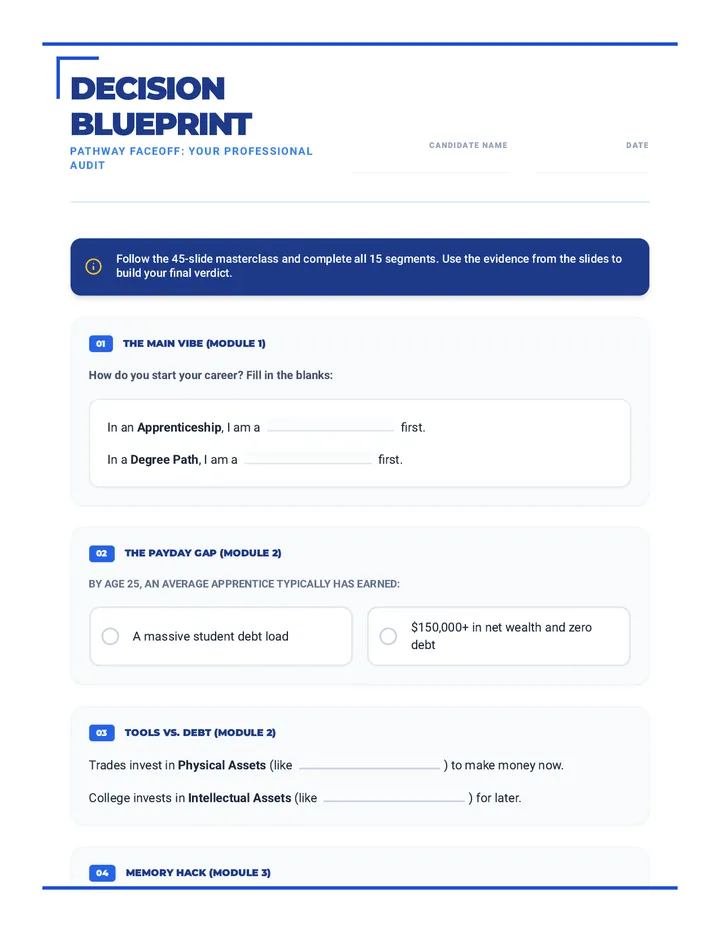
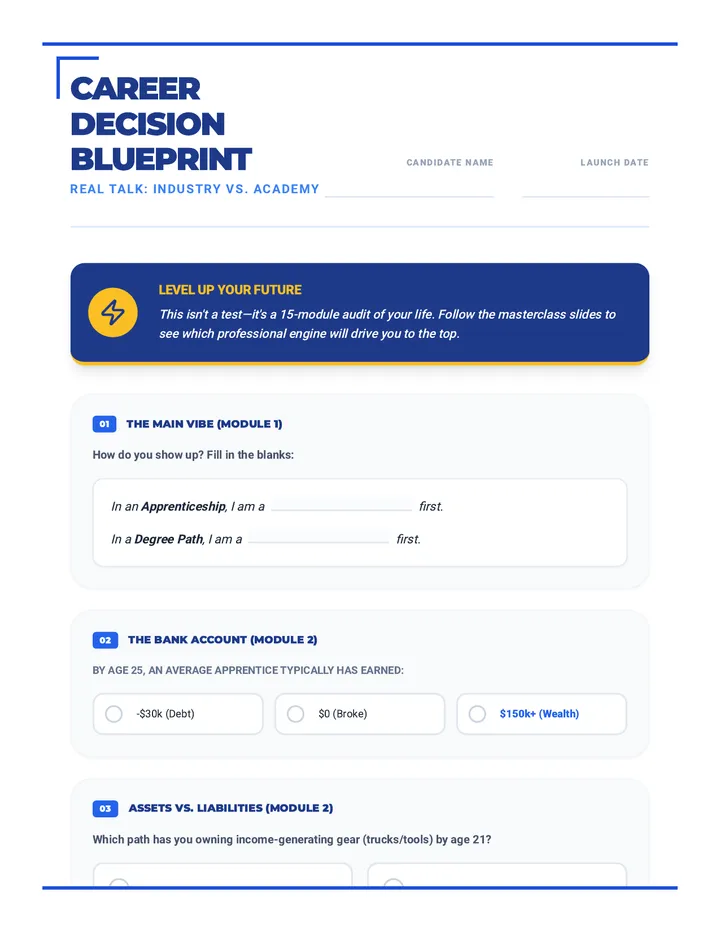
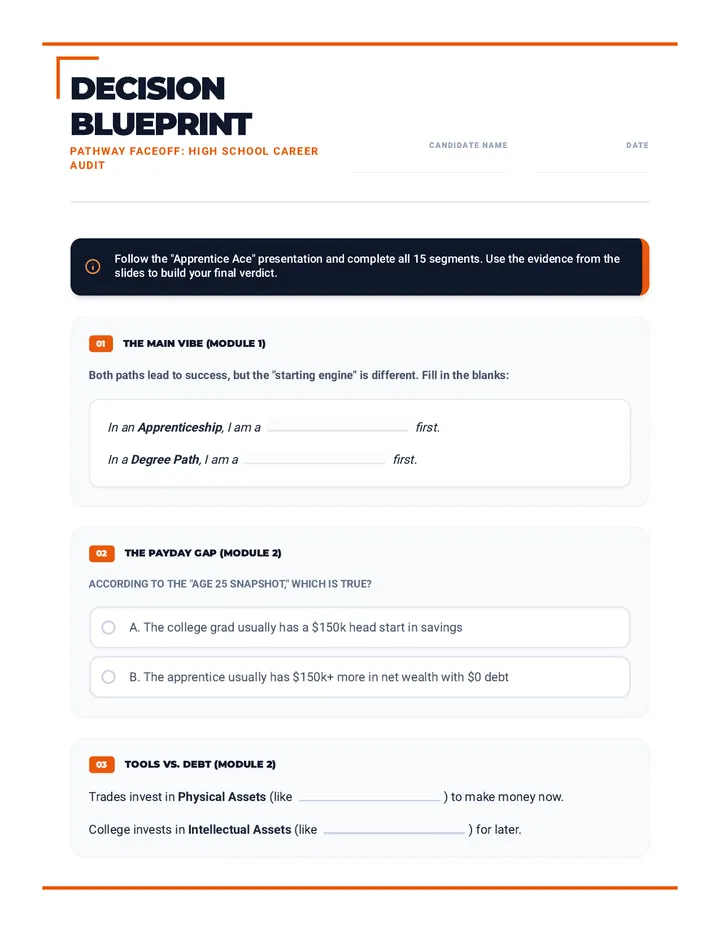
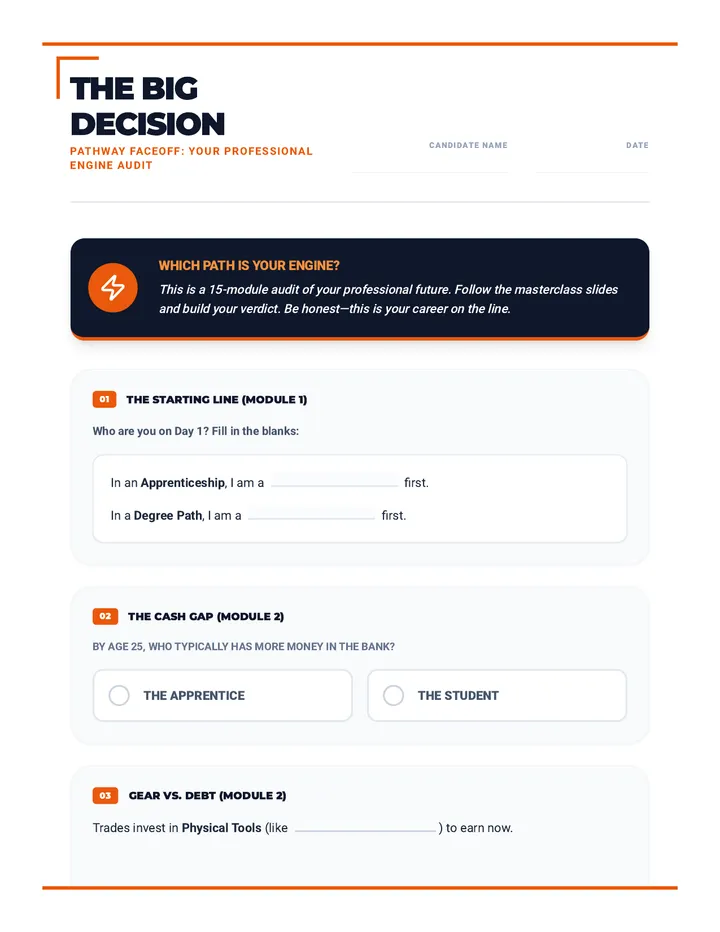
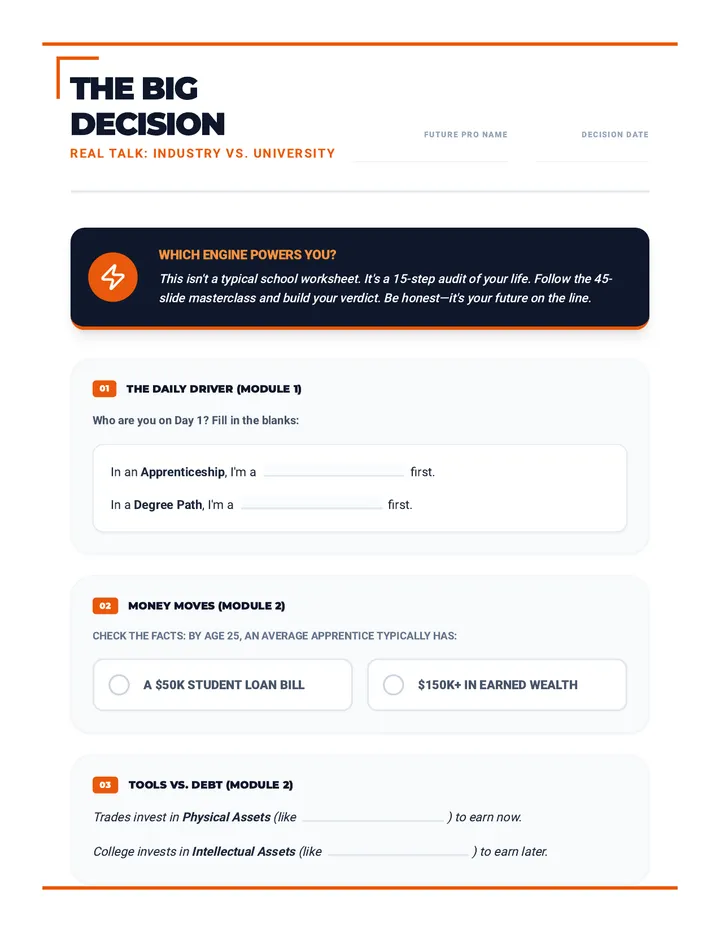
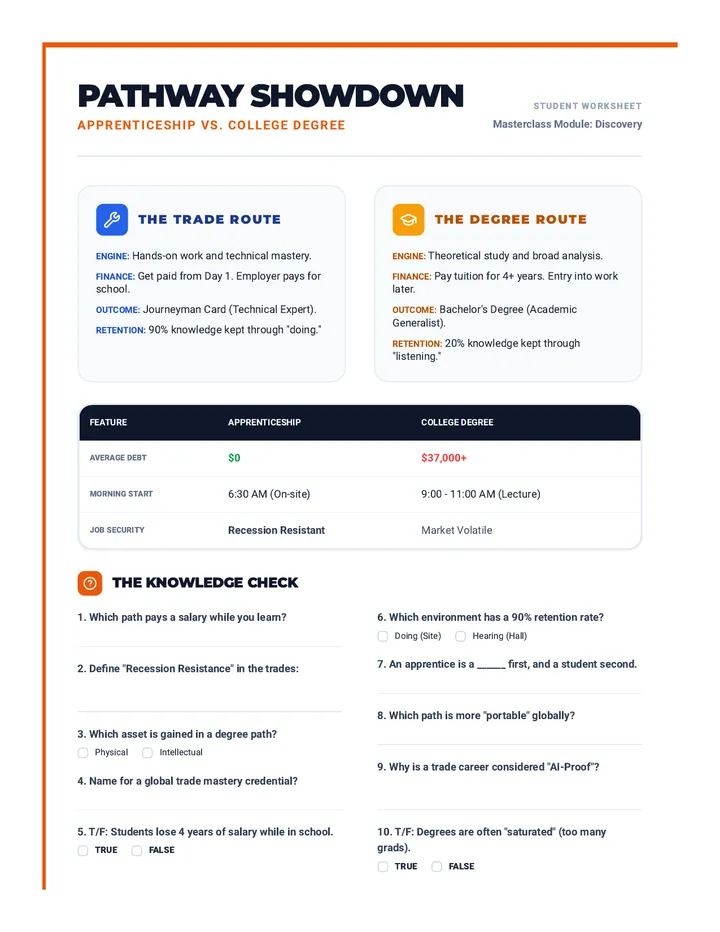
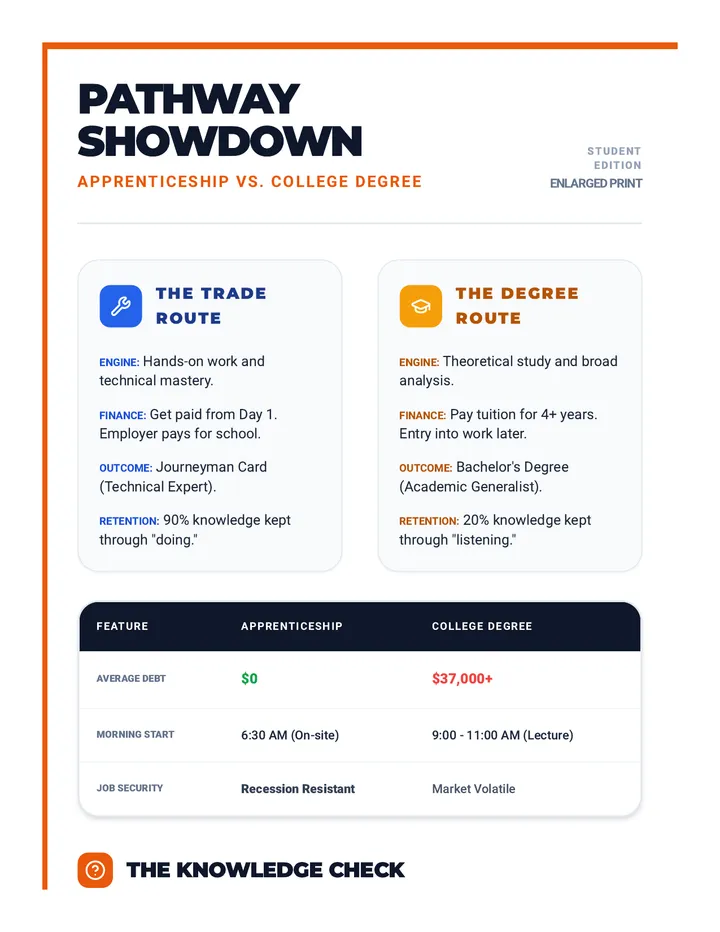
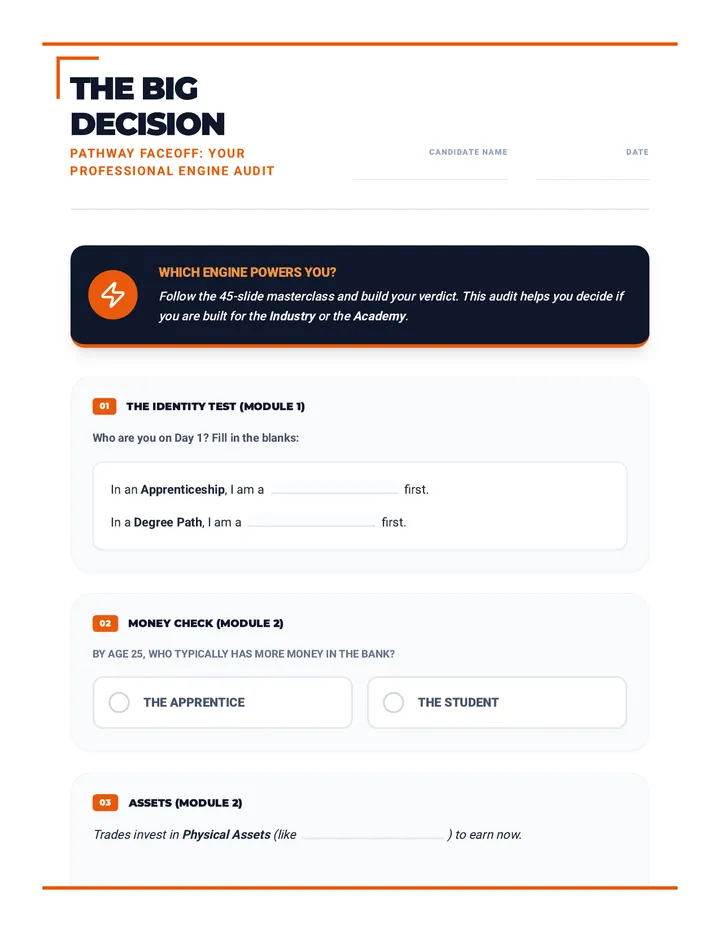
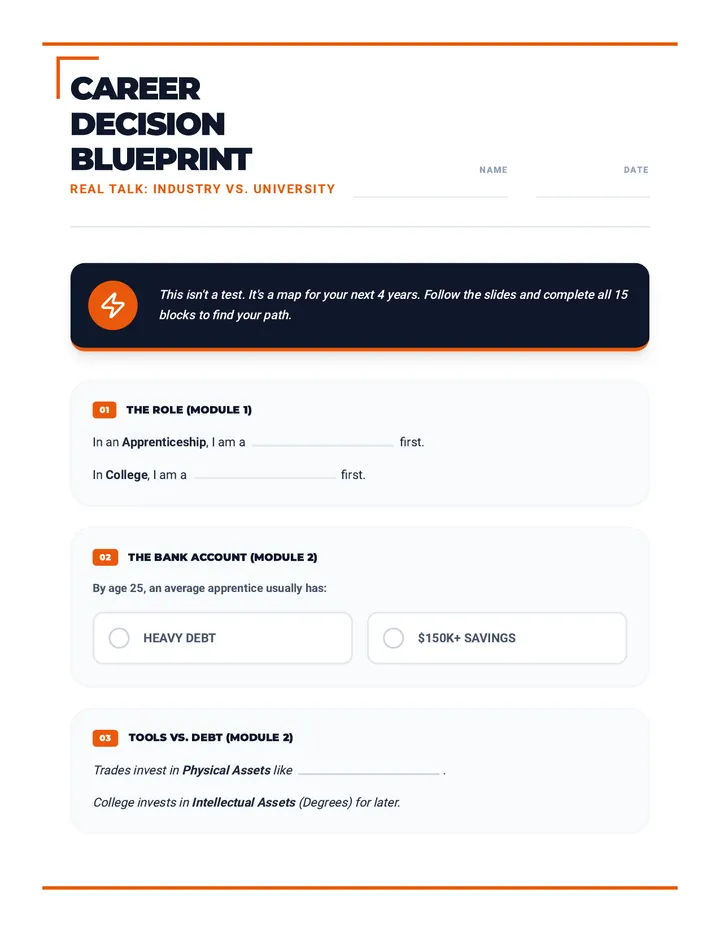
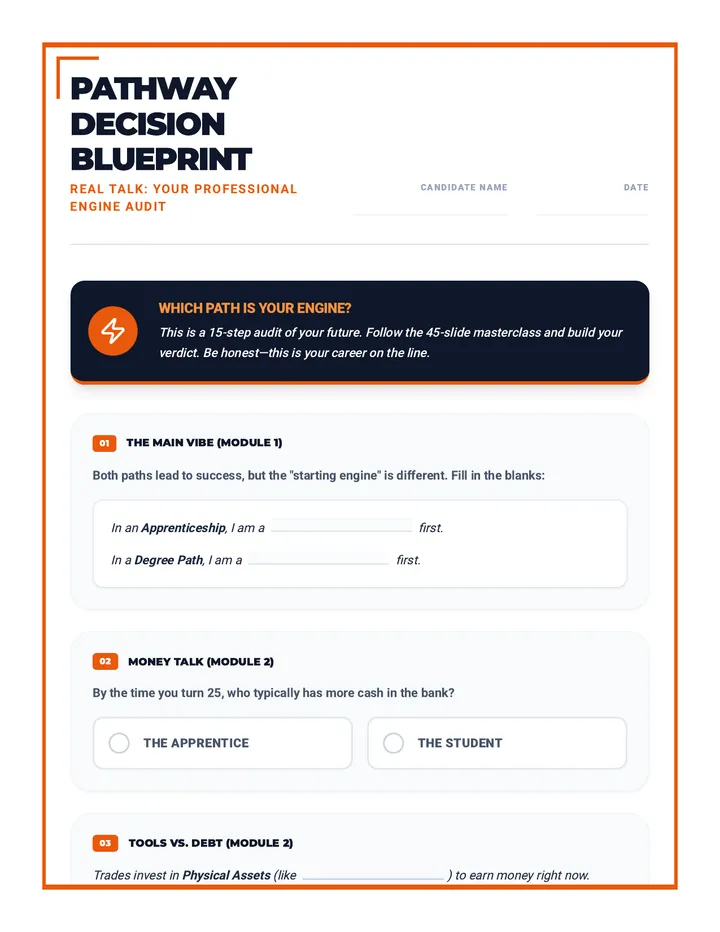
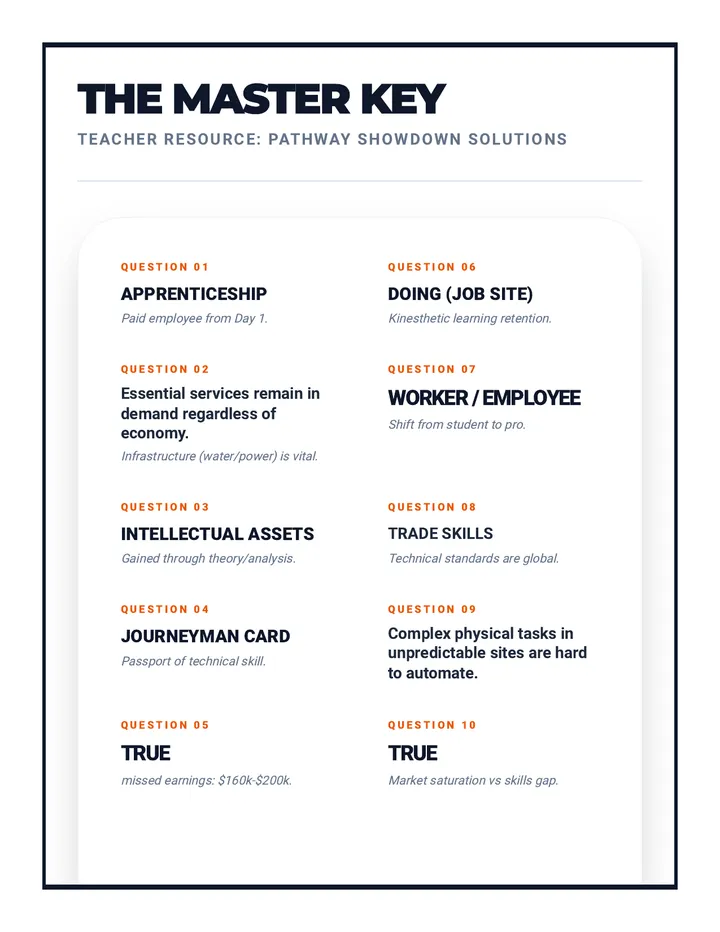
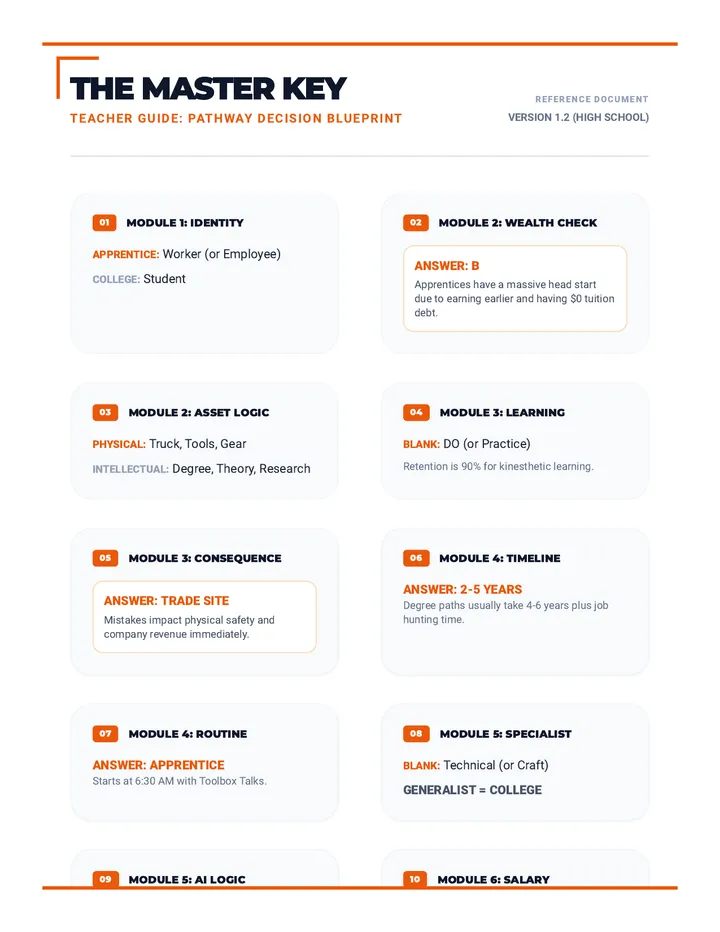
This sequence explores post-secondary education options beyond the traditional four-year degree, including trade schools, apprenticeships, coding bootcamps, and certificate programs. Students learn to evaluate the legitimacy of various programs and compare different career pathways based on cost, duration, and outcomes.
A comprehensive sequence for graduate students focusing on the craft of personal statements for competitive fellowships. Students will learn to deconstruct complex prompts, mine their life experiences for compelling hooks, bridge their past achievements with future goals, and tailor their narratives for diverse funding audiences through rigorous revision.
A workshop-style sequence designed to transform document creation and editing into a high-velocity, precision process for undergraduate students. It covers text selection, cursor manipulation, and formatting commands that are essential for academic writing and assistive technology efficiency.
A comprehensive sequence designed to guide 9th-grade students through the process of crafting persuasive personal statements for scholarships. Students move from self-reflection and inventorying their strengths to analyzing mentor texts, mastering the 'Show, Don't Tell' technique, and refining their drafts through peer review.
A 5-lesson workshop sequence for undergraduate students to understand, challenge, and overcome imposter syndrome through peer validation and evidence-based identity building.
A comprehensive sequence for graduate students to master the distinct conventions of academic and industry cover letters, focusing on genre analysis, narrative construction, and sector-specific adaptation.
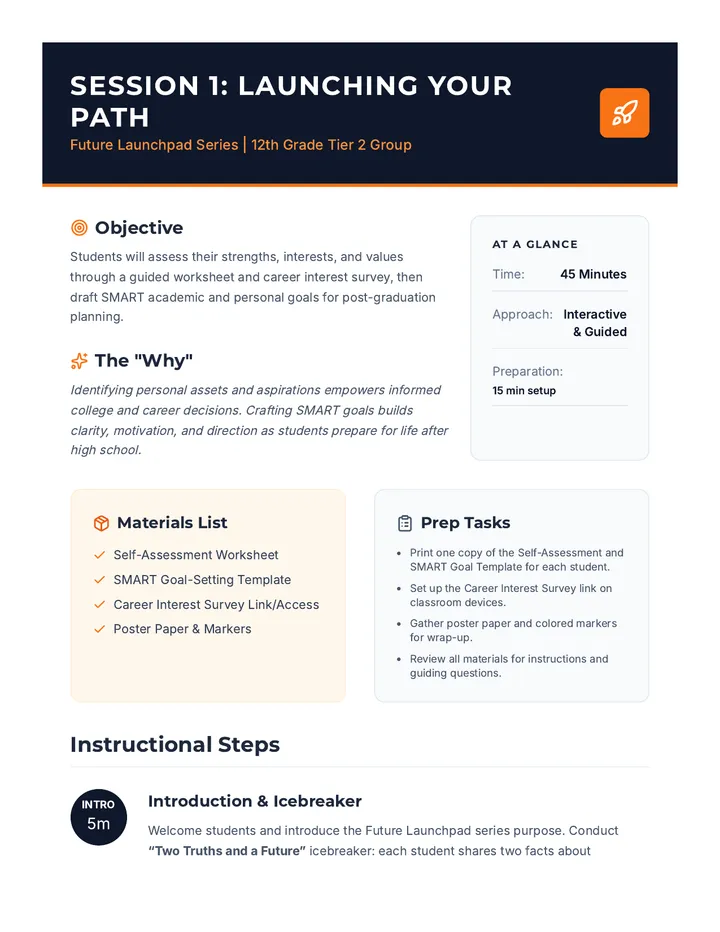
A 6-session Tier 2 group series for 12th-grade students to explore college and career pathways, develop application skills, and create a personalized post-graduation plan.
A high-level writing sequence for graduate students focusing on the final stages of personal statement revision. Students learn advanced techniques for conciseness, logical flow, authoritative tone, feedback management, and final submission quality assurance.
A comprehensive sequence for graduate applicants focusing on the strategic alignment of their personal statements with specific academic programs and institutions. Students move from deep research to drafting modular, high-impact 'fit' paragraphs that demonstrate institutional knowledge and faculty synergy.
This sequence guides graduate-level applicants through the structural engineering of a personal statement. Students transition from abstract ideas to a concrete narrative architecture, focusing on research competence, future impact, and rapid prototyping of a complete draft.
A graduate-level sequence focused on the rhetorical strategies of admissions writing, helping students distinguish between Personal Statements and Statements of Purpose while mastering the 'hidden curriculum' of graduate applications.
A 5-lesson sequence for graduate students to identify and articulate their professional and academic identity for personal statement writing. The sequence covers value identification, intellectual mapping, narrative construction, reframing challenges, and synthesizing a personal thesis.
A comprehensive workshop-style sequence designed to guide 11th-grade students through the iterative process of drafting, restructuring, and refining their college personal statements. Students transition from raw 'zero drafts' to polished, reflective essays using structural analysis, peer feedback protocols, and precision editing techniques.
A comprehensive sequence for 11th-grade students focused on refining the personal statement. This unit emphasizes authenticity, auditory revision, emotional tone auditing, and technical finalization to ensure a student's written voice remains genuine and impactful.
A comprehensive sequence for 9th-grade students focused on early scholarship planning, database navigation, scam prevention, and organizational tracking systems.
A comprehensive unit for 9th-grade students exploring the differences between federal and private student loans. Students learn to navigate financial aid terminology, calculate interest accrual, and evaluate the long-term impact of borrowing decisions.
This sequence guides 11th-grade students through the complexities of student loans, from distinguishing loan types to calculating long-term interest and simulating repayment strategies based on career goals.
This sequence equips graduate students with the quantitative tools and financial literacy needed to assess the true ROI of pursuing further advanced education. Students will model opportunity costs, analyze funding strategies, and forecast break-even points to create a comprehensive financial feasibility study.
A comprehensive guide for 12th-grade students to navigate the financial complexities of post-secondary education. Students analyze total cost of ownership, debt structures, and Return on Investment (ROI) to create a sustainable financial roadmap for their future.
A comprehensive sequence for 11th-grade students to demystify financial aid and prepare for the FAFSA application process. Students will explore aid types, establish digital identities, navigate dependency rules, interpret tax documents, and build a strategic timeline for senior year.
A comprehensive 5-lesson unit for graduate students that bridges the gap between FAFSA borrowing and long-term repayment. Students explore debt forecasting, repayment plans (IDR/PSLF), interest mechanics, and the legal implications of the Master Promissory Note.
This project-based sequence guides graduate students through FAFSA completion by framing it as a strategic business decision. Students will audit institutional costs, build realistic budgets, calculate precise borrowing needs, and learn to navigate professional judgment appeals to minimize long-term debt.
A comprehensive inquiry-based sequence for graduate students navigating complex FAFSA scenarios, including income changes, marital status impacts, and professional judgment appeals. Students learn to advocate for their financial reality when standard forms fall short.
A comprehensive workshop-style sequence for graduate students navigating the FAFSA as independent applicants, focusing on technical requirements, asset reporting, and strategic planning.
A comprehensive sequence for graduate students to master the nuances of federal financial aid, focusing on the strategic selection of Direct Unsubsidized and Grad PLUS loans to minimize long-term debt.
A comprehensive sequence for undergraduate students focusing on the long-term maintenance of federal financial aid eligibility. Students master Satisfactory Academic Progress (SAP), lifetime limits, loan aggregates, withdrawal consequences, and the annual renewal cycle.
A comprehensive sequence designed for undergraduate students to interpret FAFSA output, compare financial aid offers, and develop a strategic plan for college affordability with minimal debt.
This sequence guides undergraduate students through the complexities of FAFSA verification, professional judgment appeals, and unique filing statuses. It focuses on self-advocacy and navigating bureaucratic exceptions to ensure equitable financial aid.
A comprehensive simulation-based sequence walking undergraduate students through the FAFSA application. Students learn to navigate demographic entry, school selection, IRS data exchange, and complex family contributor scenarios.
A comprehensive workshop series designed to prepare undergraduate students for the administrative and documentation requirements of the FAFSA, focusing on account security, status determination, and document organization.
This sequence guides students through the post-submission phase of the FAFSA, including interpreting reports, navigating verification, making corrections, appealing for more aid, and comparing financial aid offers.
A simulation-based unit where 11th-grade students practice navigating the FAFSA form sections, focusing on data accuracy, school selection strategy, and financial document analysis to prepare for their senior year applications.
This workshop-style sequence focuses on the logistical preparation required before opening the FAFSA application. Students guide their families through the process of gathering necessary tax documents and successfully creating an FSA ID, emphasizing digital security and communication.
This 11th-grade sequence guides students through the complexities of the FAFSA, focusing on dependency status, household composition, and asset reporting. Students will use case studies to navigate diverse family structures and financial scenarios to ensure accurate aid calculations.
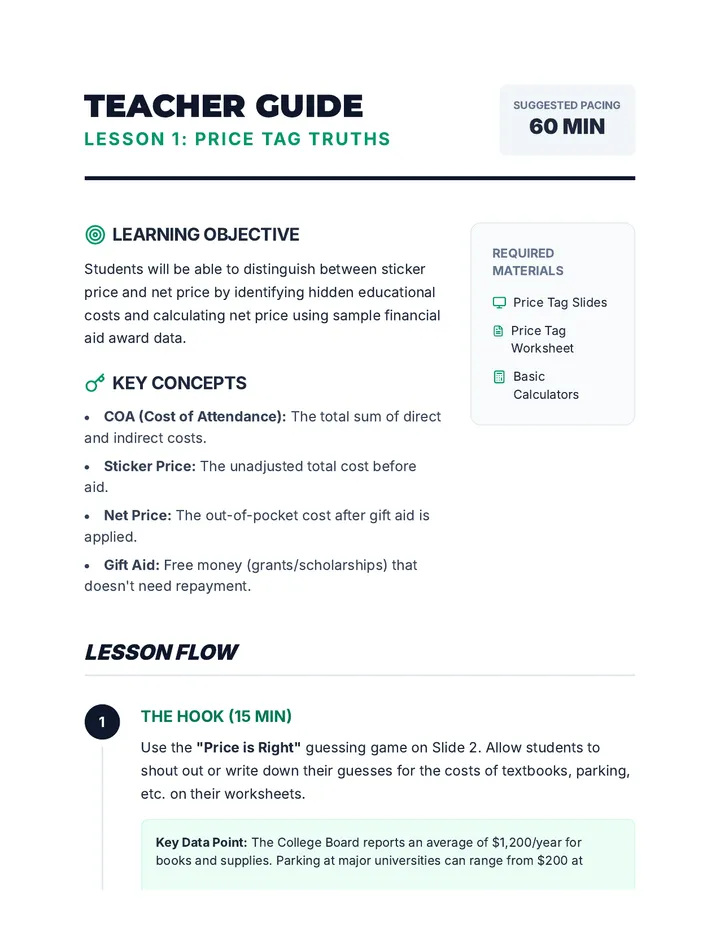
A comprehensive sequence for 11th-grade students to navigate the complexities of federal financial aid, FAFSA eligibility, and the actual cost of college. Students will move from understanding aid types to calculating net prices and debunking common myths.
A comprehensive literacy sequence for 12th-grade students focusing on federal student aid, interest mechanics, legal obligations of the MPN, and strategic repayment planning to ensure responsible borrowing.
This mastery-based sequence guides 12th-grade students through the post-FAFSA submission phase, teaching them to interpret the FAFSA Submission Summary (FSS), understand the Student Aid Index (SAI), navigate verification, and compare financial aid award letters. Students develop critical financial literacy skills to determine the true net price of college and make informed enrollment decisions.
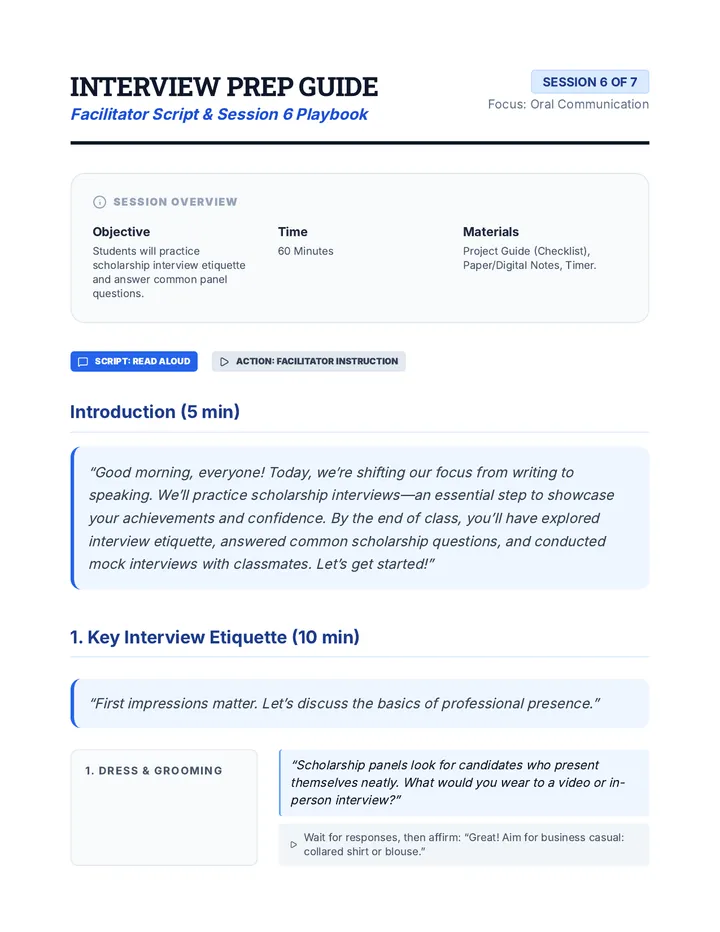
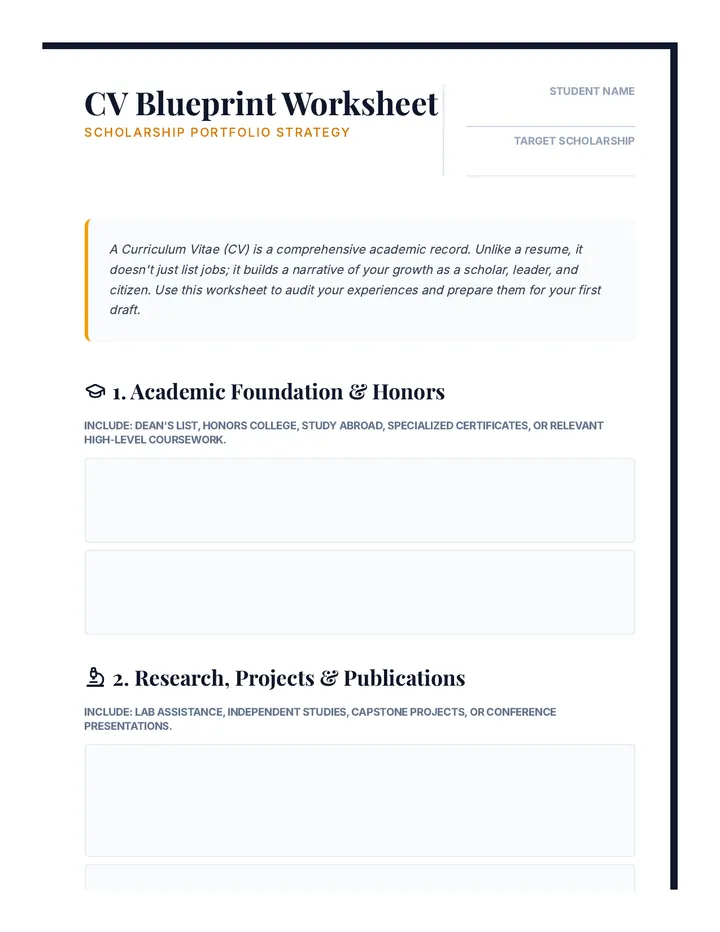
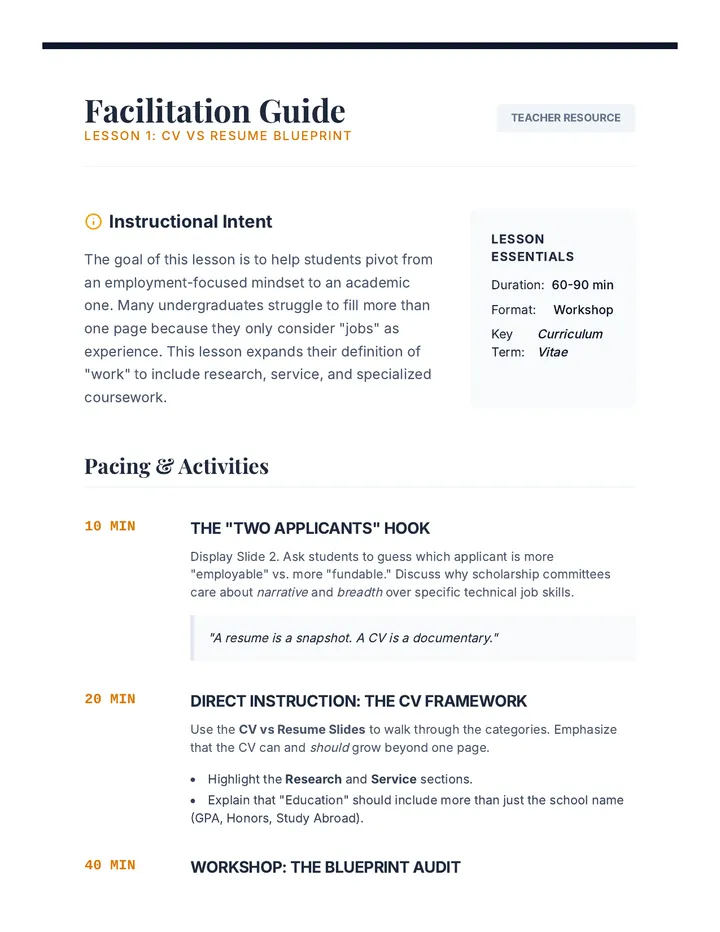
This sequence guides undergraduate students through building a professional scholarship portfolio and mastering the interview process. Students will transition from document creation (CVs, brag sheets) to interpersonal communication (STAR method, mock interviews), ensuring they present a cohesive and professional narrative to scholarship committees.
A graduate-level sequence exploring the professional, economic, and collaborative landscapes of contemporary printmaking. Students transition from studio practice to professional engagement through market analysis, collaborative simulations, and grant writing.
A comprehensive 5-lesson unit for 12th-grade students to master the art of writing persuasive, tailored cover letters. Students learn to decode job descriptions, craft compelling narratives, and apply professional business formatting.
A comprehensive sequence designed to equip 11th-grade students with the mindset and tools for lifelong career adaptability. Through trend analysis, resource exploration, and simulation games, students learn to navigate the shifting landscape of work, automation, and continuous education.
A 5-lesson sequence for 11th graders on professional certifications, micro-credentials, and stackable pathways as a viable alternative or supplement to traditional higher education. Students research industry standards, navigate licensure logistics, and design a 5-year credentialing roadmap.
This sequence guides undergraduate students through a strategic, design-thinking approach to professional development. Students will move from self-assessment and trend forecasting to designing a concrete 5-year growth plan and pitching their strategy for lifelong relevance in an evolving economy.
This sequence investigates the rapidly growing sector of non-traditional education, including coding bootcamps, MOOCs, and corporate training. Students learn to vet these pathways for quality, outcomes, and career alignment, moving from landscape survey to strategic decision-making.
This sequence guides undergraduate students through the complex landscape of professional certifications, micro-credentials, and licensures. Students will learn to evaluate the market value, legitimacy, and strategic fit of various post-secondary credentials to enhance their early career trajectories.
A professional development sequence for graduate students focused on navigating and negotiating employer-sponsored continuing education. Students learn to analyze corporate policies, build strategic business cases, and negotiate for flexibility to support their educational goals.
A graduate-level sequence focused on long-term career architecture through strategic continuing education. Students perform gap analyses, forecast industry trends, and use backward design to build a 'Living Syllabus' for their professional advancement.
A comprehensive sequence for graduate students to navigate the non-degree credential landscape, evaluate market value, and develop a strategic professional development roadmap.
A comprehensive sequence designed to prepare 12th-grade students for a dynamic professional landscape through labor market analysis, career mapping, and strategic 10-year planning. Students will learn to navigate technological shifts and develop a mindset of professional agility.
A comprehensive 12th-grade unit exploring post-secondary success through non-degree pathways, including apprenticeships, technical bootcamps, and stackable credentials. Students analyze program rigor, industry demand, and cost-benefit ratios to build viable alternatives to traditional 4-year degrees.
A comprehensive sequence for graduate students to master executive functioning, long-term project management, and high-stakes assessment preparation, treating their degree as a professional project.
A comprehensive workshop-style sequence for 10th graders focusing on adaptability, soft skills, and career readiness in a rapidly evolving, automated, and decentralized economy. Students learn to audit human-centric skills, collaborate remotely, navigate gig economy contracts, and plan for continuous upskilling.