Forecasting Stressors Slides Forecasting
Stressors
The Independence Risk Assessment
Unit: Personal Wellness Plans
Freedom vs. Structure
The Freedom
• No curfew or check-ins
• Choice of every meal
• Complete control of schedule
• No one nagging about chores
The Risk
• No one to ensure you sleep
• Nutritional "autopilot"
• Health neglected until crisis
• High emotional vulnerability
"When structure disappears, emotional vulnerability skyrockets."
The PLEASE Skills
Emotional stability starts with preventative maintenance of the physical body.
PL
Physical Illness
Treat physical illness promptly.
E
Eating
Balanced and regular meals.
A
Avoid
Avoid mood-altering substances.
S
Sleep
Consistent, restful sleep cycles.
E
Exercise
Regular physical activity.
Forecasting Stress
In three months, you will likely be in a new environment. Identify three major shifts in your daily structure.
Example: Dorm life means late-night socializing + 8 AM classes.
Example: No parent to remind you to eat vegetables or hydrate.
The Independence
Risk Assessment
You will now map out exactly how your new-found freedom will challenge your physical maintenance. Be brutally honest.
Open your "Risk Assessment Worksheet" to begin.
Risk Assessment Worksheet Independence Risk Assessment
Transition Survival Guide: Phase 01
NAME:
DATE:
Transition Profile
Immediate Destination (College, Workforce, Trade School, Gap Year)
Living Arrangement (Dorm, Living at home, Apartment with roommates)
PLEASE Vulnerability Mapping
For each skill, identify one specific change in your environment and how it creates a "Vulnerability Trap."
PL Physical Illness
Change in Structure
Vulnerability Trap (Risk)
E Eating
Change in Structure
Vulnerability Trap (Risk)
A Avoid
Change in Structure
Vulnerability Trap (Risk)
S Sleep
Change in Structure
Vulnerability Trap (Risk)
E Exercise
Change in Structure
Vulnerability Trap (Risk)
Personal Risk Heat Map
Prioritize your focus
Consider the risks you listed on page 1. Which one is **most likely** to happen? Which one would have the **biggest negative impact** on your emotional stability?
Impact = How much this will make you "feel crazy," irritable, or unable to handle daily life.
Likelihood
Severity of Impact
X
Vulnerability Summary
Based on your heat map, what is your #1 priority for maintenance during your first month of independence? Why?
Biological Budgeting Slides Biological
Budgeting
The Cost of Keeping Cool
Lesson 2: Resource Allocation
The Biological Tax
When you cut financial corners on your physical needs , you pay a tax in emotional stability .
"I saved $40 on groceries this month, but I spent 3 days too exhausted to focus and snapped at my partner."
Low Budget Eating
High sugar, low protein = Mood Swings
Saving on Comfort
Cheap mattress/loud room = Insomnia
Skipping Copays
Untreated illness = Panic/Burnout
The $60 Challenge
You have $60 per week for groceries. You must sustain your mood.
Ramen Noodles (12 pack) $6.00
Fresh Spinach & Berries $12.00
Bulk Chicken/Tofu (5lb) $20.00
Frozen Pizza (3 pack) $15.00
Discussion Point:
"Is it better to eat 'cheap' and have money for entertainment, or eat 'clean' and have stable emotions?"
Class Debate
Budgeting for PLEASE
Eating
Groceries vs. Dining Out
PL / Exercise
Meds & Gym Fees
Avoid
The "Habit" Budget
Let's build your Biological Budget .
Biological Budget Worksheet The Biological Budget
Transition Survival Guide: Phase 02
ESTIMATED MONTHLY INCOME:
$ ________________
"Independence means choosing where your money goes. If you don't budget for your biology, your body will bankrupt your emotions." Allocate funds for the following areas to ensure you maintain your PLEASE skills.
The Fuel Fund (Eating)
Wellness Item / Category Priority (1-5) Estimated Monthly Cost Fresh Produce (Vegetables/Fruit)
|
| Protein (Chicken, Tofu, Beans, Eggs) |
|
|
| Hydration (Reusable bottle, filter, drinks) |
|
|
| Subtract: Fast Food / Eating Out |
|
|
Total Monthly Eating:
$
Maintenance (PL & Exercise)
Physical Illness (Meds, Copays, First Aid)
Monthly Prescription / OTC Needs
Emergency "Wellness" Savings
Exercise (Gym, Gear, Classes)
Gym Membership or Activity Fees
Active Gear / Shoes Fund
The "Avoid" Dividend
Calculate how much money you save per month by avoiding mood-altering substances (Alcohol, Nicotine, Energy Drinks, Excessive Caffeine).
Substances Avoided
Total Monthly Savings
$
The Wellness Trade-Off
Strategic Sacrifice
Identify one "Want" expense (e.g., streaming service, trendy clothes, gaming) you are willing to cut to fund one of your "Biological Needs" above.
Cutting This:
To Fund This PLEASE Skill:
Monthly Biological Total
This is the non-negotiable cost of your emotional stability.
$
Navigating Pressure Slides Navigating
Pressure
Protecting Your Biological Baseline
Lesson 3: Social Boundaries
Social vs. Biological
In your first months of independence, your need for social connection will often clash with your physical needs .
The Trap:
Saying "Yes" to the party to make friends, even though you haven't slept and your emotional vulnerability is at a 9/10.
The Sleep Trap
"Stay up just one more hour, we're all playing games!"
The Substance Trap
"It's just one drink, it helps everyone loosen up."
The Eating Trap
"We're skipping dinner to save money for the concert."
Biological Boundaries
A Biological Boundary is a non-negotiable standard for your physical maintenance that protects you from emotional burnout.
Healthy Boundary
"I'd love to hang out, but I need to be in bed by 11 to handle my 8 AM tomorrow."
The Compromise
"I'll stay for 30 minutes, but I'm not drinking because I want to keep my mood stable."
The Refusal Toolkit
DEAR
Describe, Express, Assert, Reinforce
Use this structure to protect your PLEASE skills without losing friends.
Role Play Challenge:
"Your roommate wants to pull an all-nighter for a project you share. You know that missing sleep will trigger your anxiety."
Practice Now
Boundary Blueprint Worksheet Boundary Blueprint
Transition Survival Guide: Phase 03
NAME:
DEAR
MAN
Interpersonal Effectiveness
Describe the facts.
Mindful of your goal.
Express your feelings.
Appear confident.
Assert your request/No.
Negotiate a compromise.
Reinforce the positive.
1
Scenario: The "Loud" Roommate
"It's 11 PM on a Tuesday. Your roommate has 3 friends over playing video games in the common area. You have a huge exam at 9 AM and you KNOW that getting 8 hours of sleep is the only way you'll stay calm and avoid a panic attack."
Describe (Facts)
Express & Assert
Reinforce (Benefit)
2
Scenario: The "Social Drinker"
"You're at a party. You've been feeling depressed lately and you're working hard on the 'Avoid Mood-Altering Substances' skill to keep your meds effective. Someone hands you a drink and says, 'Come on, loosen up! It's Friday!'"
Build a "Broken Record" Response (A short, firm refusal to be used repeatedly):
"I'm actually good with my water tonight, but thanks for the offer! I'm trying to stay sharp for tomorrow."
3
Scenario: The "Grind" Culture
"A group of classmates is heading to the library at 10 PM to study for tomorrow's final. They plan to stay until 3 AM. You haven't eaten dinner yet because you were in class late."
The Compromise Strategy
How can you stay social/connected without sacrificing your Eating (E) or Sleep (S)?
The Refusal Strategy
What do you say if you decide that your biology is more important than this study session?
The Hardest Boundary
Of the 5 PLEASE skills, which one is hardest for you to protect from social pressure? Why? What is the one sentence you can memorize NOW to use when that pressure comes?
My Refusal Phrase:
Resource Scavenger Hunt Slides The Blueprint
Designing Your First Month
Lesson 4: Strategic Planning
Resource Scavenger Hunt
Your wellness plan is only as good as your intel . You need to know where your resources are before you need them.
Your Mission:
"Locate the nearest pharmacy, the healthiest affordable grocery store, and a place you can go to be completely silent."
Nutrition Intel
Where is the nearest grocery store with fresh produce?
Physical Health Intel
Where is the campus clinic or local urgent care?
Exercise Intel
What are the gym hours? Is there a park nearby?
Defining Non-Negotiables
A Non-Negotiable is a standard you set for yourself that cannot be broken, regardless of social pressure or workload.
Sleep
"I will be in bed by 12 AM at least 5 nights a week."
Nutrition
"I will eat at least two servings of greens every day."
Health
"I will call the clinic if I feel sick for more than 48 hours."
Drafting Your Plan
Use your Risk Assessment, your Budget, and your Boundary scripts to build the first draft of your Transition Survival Guide .
Open the "Independent Living Plan Template" to begin your workshop.
Independent Living Plan Template Transition Survival Guide
Independence Wellness Blueprint
PLAN OWNER:
The PLEASE Rhythm
Outline your non-negotiable rhythm for your first month of independence.
Monday
Tuesday
Wednesday
Thursday
Friday
Saturday
Sunday
Sleep (Target Bedtime & Wake Time)
Eating (Meal Prep Days & Grocery Run)
Exercise (Activity & Duration)
The Intel Directory
Primary Healthcare (Clinic/ER)
Name & Location
The "Healthy" Grocer
Affordable Produce Source
The Quiet Zone
Where to escape for sensory rest
Support Contact
Peer or Mentor for accountability
Early Warning Protocols
Yellow Alert: Vulnerability Slip Criteria: Missing 2+ days of PLEASE skills
Corrective Action (e.g., Cancel plans tonight, Go to bed by 10 PM, Buy a salad)
Red Alert: Emotional Crisis Criteria: Burnout, panic, or intense instability
Immediate Intervention (e.g., Call campus health, Contact therapist, Go home for the weekend)
The Independence Pledge
"I recognize that my physical health is the foundation of my emotional freedom. I commit to protecting my biological baseline, even when it is socially difficult, because I value my stability more than temporary approval."
Signed:
Survival Guide Rubric Survival Guide Rubric
Final Project Evaluation
Total Score / 50
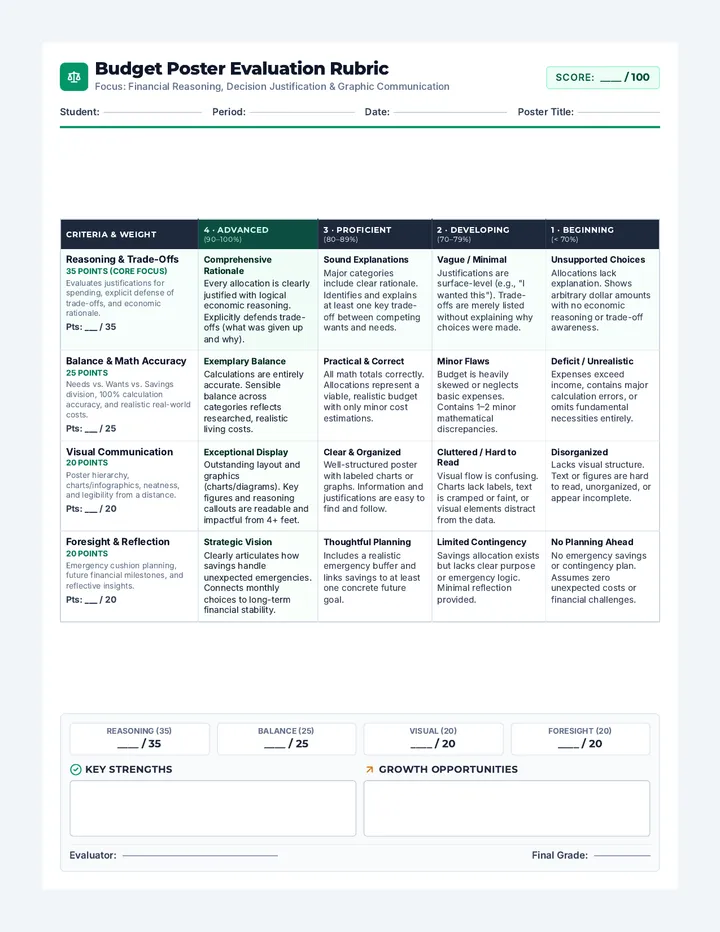
Criteria Level 3: Expert (10 pts) Score PLEASE Integration Clearly identifies specific risks and maintenance strategies for all 5 PLEASE skills in a future scenario. Financial Realism Budget is mathematically accurate and reflects realistic costs for groceries, healthcare, and active living.
|
| Boundary Mastery | Demonstrates effective refusal skills (DEAR MAN) for likely social pressures that threaten physical health. |
|
| Protocol Quality | Yellow and Red Alert protocols are actionable, specific, and identify actual local resources. |
|
| Sustainability | The overall plan is realistic for a first-year independent adult; avoids "perfectionism" traps. |
|
The "Mentorship Pitch" Element
In your presentation, you must address a "Hypothetical Freshman." Explain why physical maintenance is your secret weapon.
Key Question to Answer:
What is the one thing you'll tell people when they pressure you to ignore your health?
Visual Evidence:
Show us your "Intel Map" or a picture of your "Ideal Maintenance Meal."
Instructor Feedback Peer Critique Form Peer Feedback: Survival Guide
Presenter: ________________ Reviewer: ________________
Provide constructive, honest feedback to help your peer strengthen their plan for independence. Focus on realism and sustainability.
1
Strength: The most realistic part
What part of their maintenance plan do you actually believe they will stick to? Why?
2
Concern: The "Red Flag"
Is there a part of their plan that seems too difficult or expensive? What is the risk of burnout here?
3
Strategy: The "Better Way"
Offer one suggestion for a better resource or a simpler boundary script they could use.
The "Golden Rule" of Wellness Feedback
"We are not here to judge their lifestyle, but to help them protect their stability."