Future Pathways Slides Pathful Exploration Lab
Career Discovery Series
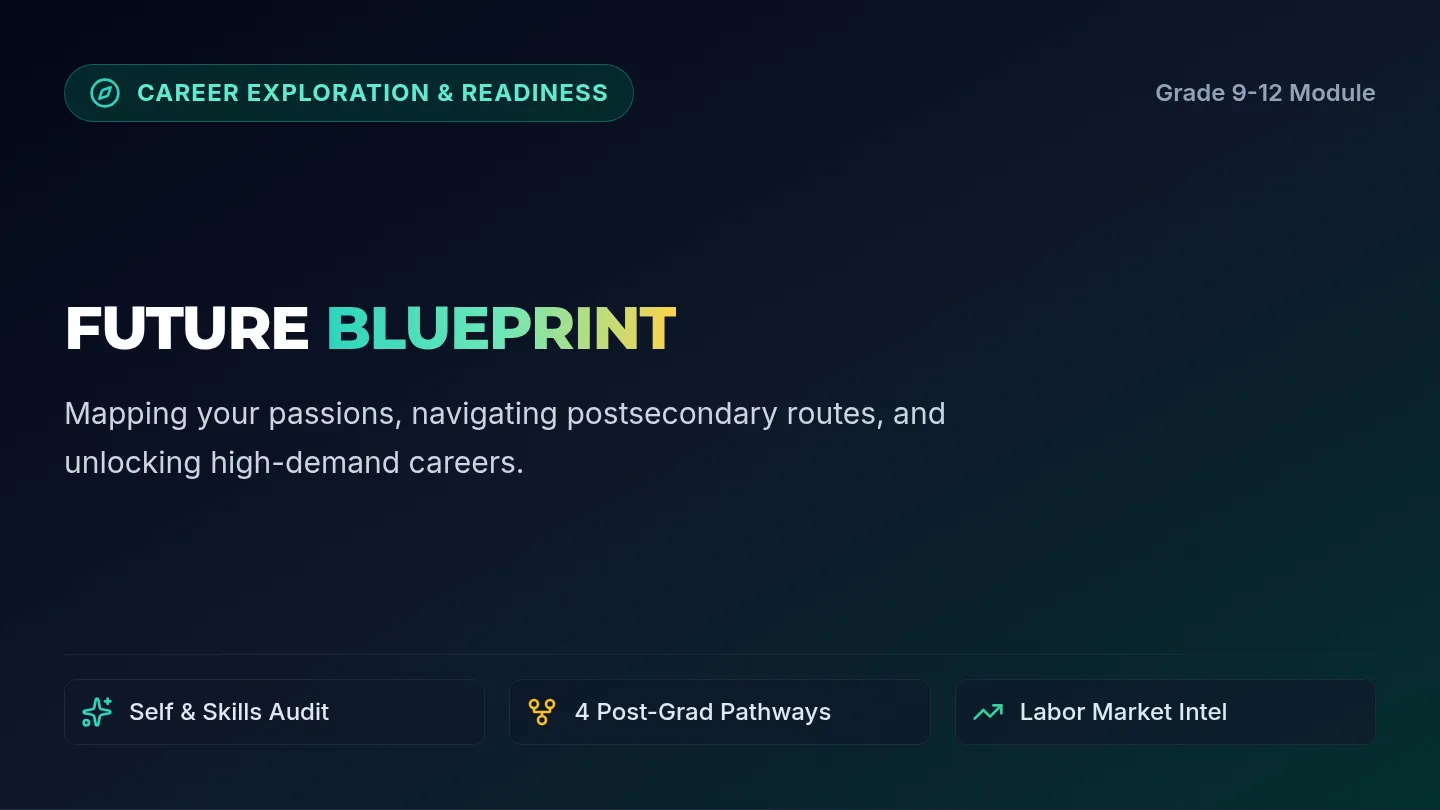
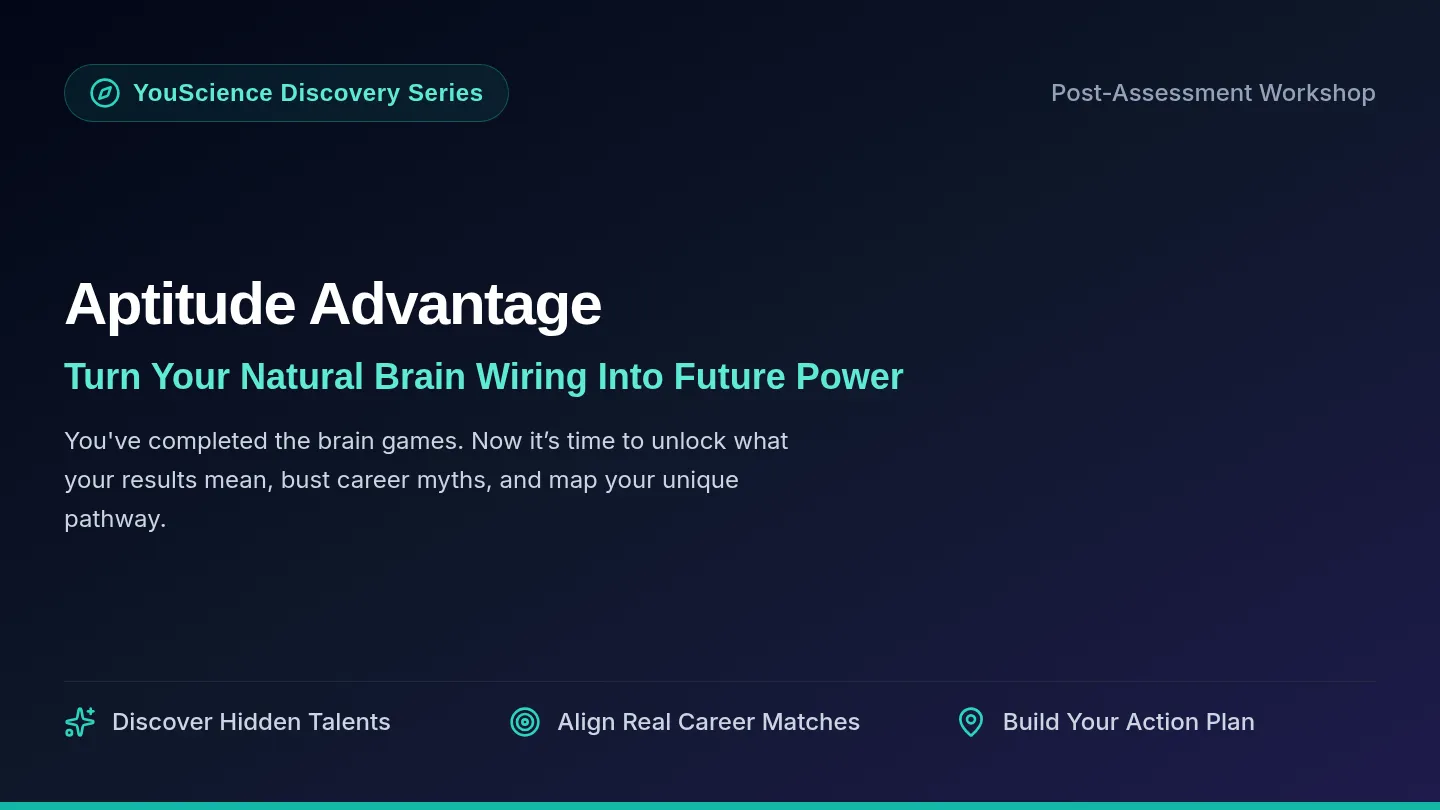
Unlock Your Future Pathway
Investigate high-growth occupations, workplace readiness skills, and actionable routes from classroom to career.
1. Explore Careers
2. Map Key Skills
3. Plan Next Steps
The Big Picture 01 / Why Career Discovery Matters
Designing Your Journey Early
Career discovery is not picking one job forever—it is building an informed roadmap.
Visibility
Discover hundreds of emerging roles beyond the few jobs you see every day.
Growth & Pay
Examine realistic salary ranges, future demand, and regional hiring trends.
Multiple Paths
See routes through apprenticeships, technical certificates, and 2- or 4-year degrees.
Key Insight: The fastest-growing jobs combine specialized technical skills with adaptable communication.
Platform Overview 02 / Inside Pathful
Your Virtual Discovery Portal
Pathful connects classroom learning directly to industry professionals and data.
Virtual Job Shadows
Watch real practitioners demonstrate their daily work environment
Hear honest perspectives on challenges, perks, and lifestyle
Discover surprising careers within major industries
Career Profiles & Data
Verified labor data: median wage, entry wage, and projected growth
Exact education, certifications, and licenses required to begin
Direct breakdown of essential workplace and technical competencies
Tip: Filter by Career Cluster to see related jobs you might love. 16 Recognized Career Clusters
Analysis Strategy 03 / Pathway Anatomy
How to Dissect a Career Profile
When reviewing an occupation on Pathful, extract these four critical pillars.
Day-to-Day Tasks
What problems do they solve? What does an average Tuesday look like?
Work Environment
Education Routes
Is a certificate, apprenticeship, associate, or bachelor's needed?
Entry Gateway
Compensation
What is the difference between starting pay and experienced pay?
Financial Reality
Skill Demands
Which hard tools and human soft skills drive success in this role?
Readiness Check
Focus Question: Would this career fit your natural interests, lifestyle priorities, and personal values?
Workplace Readiness 04 / Skill Synergy
Technical Skills vs. Durable Skills
Employers look for candidates who balance specialized expertise with transferable strengths.
Technical / Hard Skills
Specific, teachable abilities and knowledge required for a role.
Data analysis, coding, CAD drafting
Medical diagnostic equipment, CPR
Financial budgeting, electrical diagnostics
Durable / Transferable Skills
Interpersonal and cognitive skills that carry into any profession.
Active listening & articulate communication
Creative problem solving & adaptability
Time management & emotional intelligence
Pro Tip: You are already practicing durable skills right now in school projects, sports, hobbies, and student organizations.
Independent Exploration 05 / Your Mission
Career Compass Lab Protocol
Complete the Career Compass Worksheet as you navigate Pathful today.
Step 1
Search & Select
Pick 2 distinct occupations in Pathful Explore (one familiar dream job, one completely new role).
Step 2
Watch & Record
Watch at least one virtual job shadow video per career. Record tasks, education paths, and wages.
Step 3
Compare & Assess
Identify transferable skills you have now and skills you will need to build in high school and beyond.
Activity Time: 25-30 Minutes
Keep your Career Compass Worksheet handy
Action Planning 06 / Next Steps
Turning Discovery into Action
A career interest becomes a reality when paired with concrete next steps.
Academic Coursework
Which CTE pathways, electives, or AP/dual-credit classes align with this field?
Extracurriculars
What clubs (Robotics, DECA, HOSA, SkillsUSA), volunteer work, or hobbies can grow your skills?
Mentors & Contacts
Who can you interview? What questions will you ask during Pathful Connect sessions?
Exit Ticket Challenge: Commit to 1 SMART educational goal before leaving today!
Pathful Navigator Teacher Guide Instructional Facilitation Plan • Grades 8–12
Pathful Navigator Teacher Guide
Empowering students through career pathways, workplace readiness, and action planning
Duration 50–60 Minutes
Lesson Objectives
Explore 2+ career profiles via Pathful
Analyze entry education, pay, and growth
Identify durable vs. technical skills
Formulate 1 actionable SMART goal
Standards Alignment
ASCA M&B: M 4, B-LS 7, B-SMS 10 (Long-term career planning)CTE Readiness: Career Ready Practices 1, 3, and 10 (Critical thinking, pathway management)
Materials Needed
1:1 Student devices & headphones
Pathful student login credentials
Projector & Future Pathways Slides
Career Compass Worksheet (copies)
Future Steps Exit Ticket (copies)
Pre-Lesson Technology & Environment Setup
1. Account Verification: Confirm single sign-on (SSO via Google/Clever) or distribute individual Pathful username/password strips before starting class.
2. Audio Requirements: Because Pathful features virtual job shadow videos with practitioner interviews, ensure all students have wired/wireless headphones.
3. Filter Awareness: Familiarize yourself with the 16 Career Clusters so you can nudge undecided students toward broad interest categories.
4. Accessibility Features: Demonstrate Pathful's closed-captioning and multilingual subtitle toggles on video players for language learners.
Instructional Timeline & Scripting (Part 1)
1 The Hook & Opening Mindset (Slide 1–2) 7 Minutes
Teacher Talk: "Raise your hand if an adult has asked you: 'What do you want to be when you grow up?' That question can feel stressful because you don't need to decide your entire life today. Today is about discovering what problems you love solving, what environments excite you, and which skills give you freedom of choice."
2 Platform Modeling & Decoding Pathways (Slide 3–4) 10 Minutes
Project Pathful on screen. Model searching for a sample occupation (e.g., "Biomedical Equipment Technician" or "Software Quality Engineer"). Point out the difference between entry wage and experienced wage. Highlight that education includes apprenticeships, 2-year technical degrees, and certifications—not just standard 4-year college tracks.
3 Workplace Readiness Framing (Slide 5) 5 Minutes
Distribute the Career Compass Worksheet . Explain the distinction between technical hard skills (teachable specific techniques) and durable transferable skills (critical thinking, communication, punctuality, collaboration). Challenge students to identify durable skills they already practice daily in school.
Career Compass Worksheet Pathful Investigation Log
Career Compass Worksheet
NAME
DATE
PERIOD
Mission: Log into Pathful , explore career profiles, watch the video job shadows, and record your findings. Part 1: Primary Interest
Career Title #1 (Familiar Goal or Dream Job):
Career Cluster / Industry Sector:
Day-to-Day Responsibilities (Pathful Video):
Work Environment & Setting:
Office / Remote Field / Outdoors
Hospital / Lab Industrial / Workshop
Specific setting notes from practitioner:
Required Education / Entry Credential:
High School / OJT Apprenticeship Tech Cert / 2-Yr Deg 4-Yr Bachelor's
Recommended college majors or certifications:
Earnings & Job Outlook (Pathful Data):
Starting Wage:
Median / Experienced:
Projected Growth:
Top Technical / Hard Skills Needed:
Top Durable / Transferable Skills:
Alignment Gut-Check: Does this career match your personality and preferred lifestyle? Why or why not?
Future Pathways • Career Compass Worksheet Page 1 of 2
Part 2: Unfamiliar Career Discovery
Rule: Must be from a DIFFERENT career cluster
Career Title #2 (New Discovery):
Career Cluster:
Daily Job Reality:
Entry Requirements:
Median Pay & Growth:
Key Technical Tools / Hard Skills:
Key Durable / People Skills:
Part 3: Comparative Analysis & Readiness Audit
1. Comparing Pathways: Between Career 1 and Career 2, which has a more accessible entry route? Explain why.
2. Shared Skills: What is ONE transferable skill required in BOTH careers? Give an example of how you currently practice it.
3. Growth Edge: Which skill from either career do you feel LEAST prepared for today, and what class or activity could help you build it?
4. Video Takeaway: What is one memorable detail or piece of advice shared by a professional during your Pathful exploration?
Future Pathways • Career Compass Worksheet Page 2 of 2
Future Steps Exit Ticket Session Reflection & Goal Setting
Future Steps Exit Ticket
NAME
DATE
PERIOD
Directions: Complete this reflection to summarize your Pathful career discovery and define your immediate next steps.
1. Top Career Takeaway From today's exploration
Career you found most intriguing:
Primary training / education needed:
Why did this career capture your interest? (Describe the work or lifestyle):
2. Transferable Skills Self-Audit Rate yourself: 1 (Emerging) to 4 (Proficient)
Communication (Listening actively, speaking clearly, writing well)
[ ] 1[ ] 2[ ] 3[ ] 4
Problem Solving (Troubleshooting issues, creative thinking)
[ ] 1[ ] 2[ ] 3[ ] 4
Teamwork & Collaboration (Respecting diverse viewpoints, sharing credit)
[ ] 1[ ] 2[ ] 3[ ] 4
Work Ethic & Time Management (Meeting deadlines, reliability)
[ ] 1[ ] 2[ ] 3[ ] 4
3. My Concrete Next Step (SMART Goal) Actionable
Course / Elective to explore:
Club, sport, or activity to join:
Target completion date:
Write 1 specific action you will take in the next 30 days to prepare for your future pathway:
4. Question for an Industry Professional
If you could speak to the professional you saw in Pathful Connect or a video shadow, what is ONE question you would ask them about their career journey?
Future Pathways • Career Discovery Reflection Exit Ticket