Calm Connections Activity Menu
Counseling Intervention Menu Tier 2/3 Individual & Small Group
Calm Connections Activity Menu
Dual-target strategies for classroom anger de-escalation and peer friendship building
Core Strategy Rule
Regulate the body first, then build the friendship bridge.
Clinical Focus: Children who explode physically often desperately desire friends, but peers withdraw due to unpredictability. These activities teach somatic warning signs, discharge physical tension safely, and pair regulation directly with social play.
1
Track A: Somatic Radar & Safe Motor Discharge
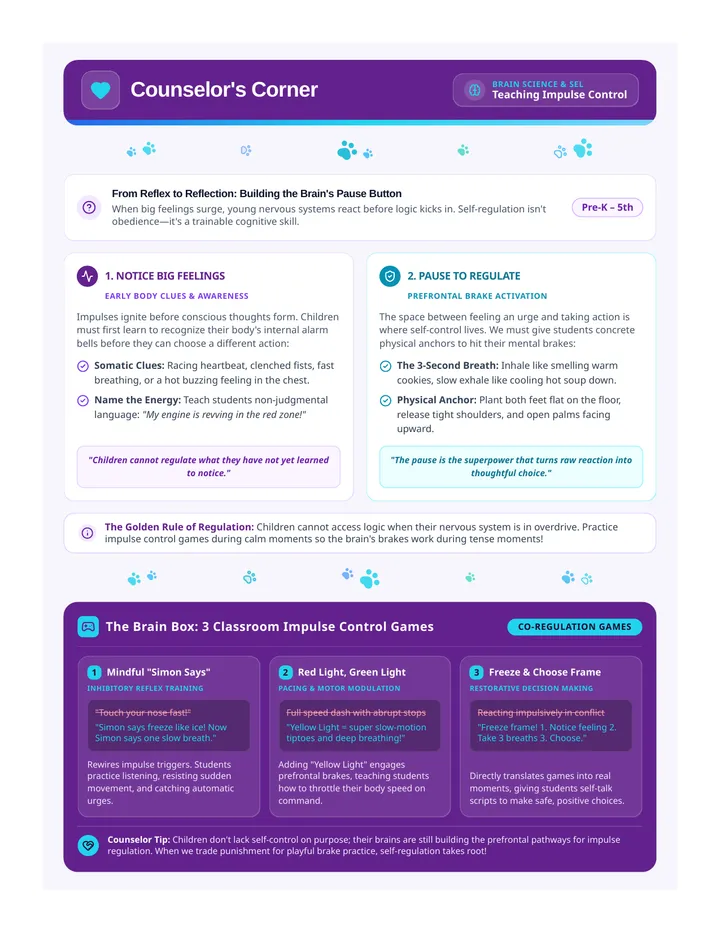
Before words happen, the body speaks
The Volcano Radar Body Map
Somatic Awareness
The Activity: Roll out life-sized butcher paper and trace the child's body outline. Use colored markers and textured stickers (sandpaper, bubble wrap, cotton) to pinpoint physical "pre-rumble" cues (clenched jaw, pounding heart, hot ears, tight fists).
Counselor Prompt: "What does your stomach feel like 60 seconds before your hands want to hit?"
Friendship Bridge: Teach the child that peers can't read their mind, but they can see tense fists. Spotting the signal early protects friendships.
Heavy Work Hero Circuits (Wall Push Battles)
Proprioceptive Discharge
The Activity: Physical anger requires motor discharge, not just sitting still. Build a 3-station circuit in your office: 1) "Wall Bulldozer" (pressing palms flat into the wall with max effort for 10 seconds), 2) Heavy medicine ball slam into a gym mat, and 3) Resistance band rip-pulls.
Classroom Adaptation: Create a discreet "Heavy Job" agreement with the teacher (carrying library book tubs or stacking chairs).
Friendship Bridge: "Energy has to go somewhere. We send it into the wall or the ground so our friends stay safe."
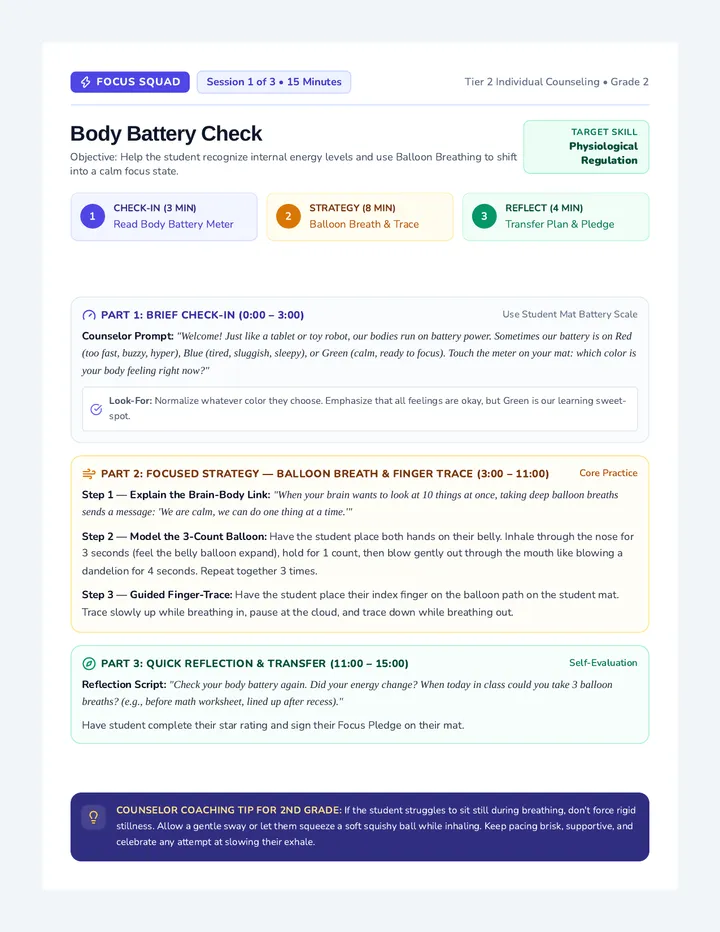
Freeze & Flush Brake Drills
Impulse Control
The Activity: High-energy dance or fast balloon volleyball. When the counselor calls "RED BRAKE!", the child must instantly freeze, drop their shoulders, exhale like blowing out 10 birthday candles, and unclench their hands completely.
Skill Target: Rehearses switching from sympathetic fight-or-flight to parasympathetic braking within 3 seconds.
Friendship Bridge: Practice this during games so the student learns that game pauses don't mean losing.
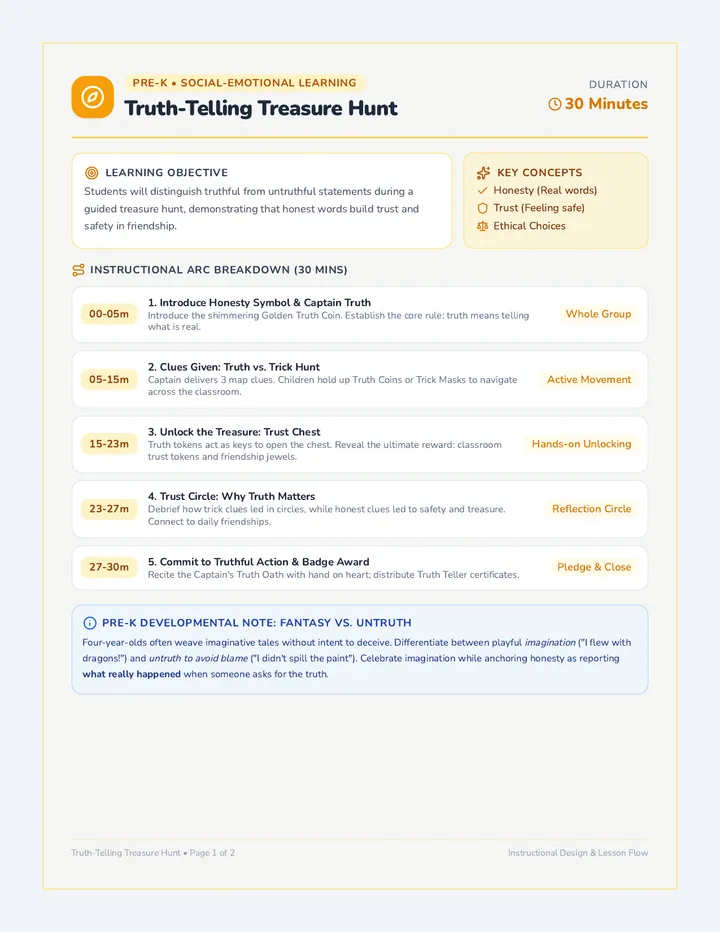
Calm Connections Counseling Menu Page 1 of 2: Regulation Foundations
Track B & C Social Integration & Repair
Frustration Games & Friendship Bridges
Peer Alliance Focus
Sabotage Tower (Micro-Frustration Inoculation)
Frustration Tolerance
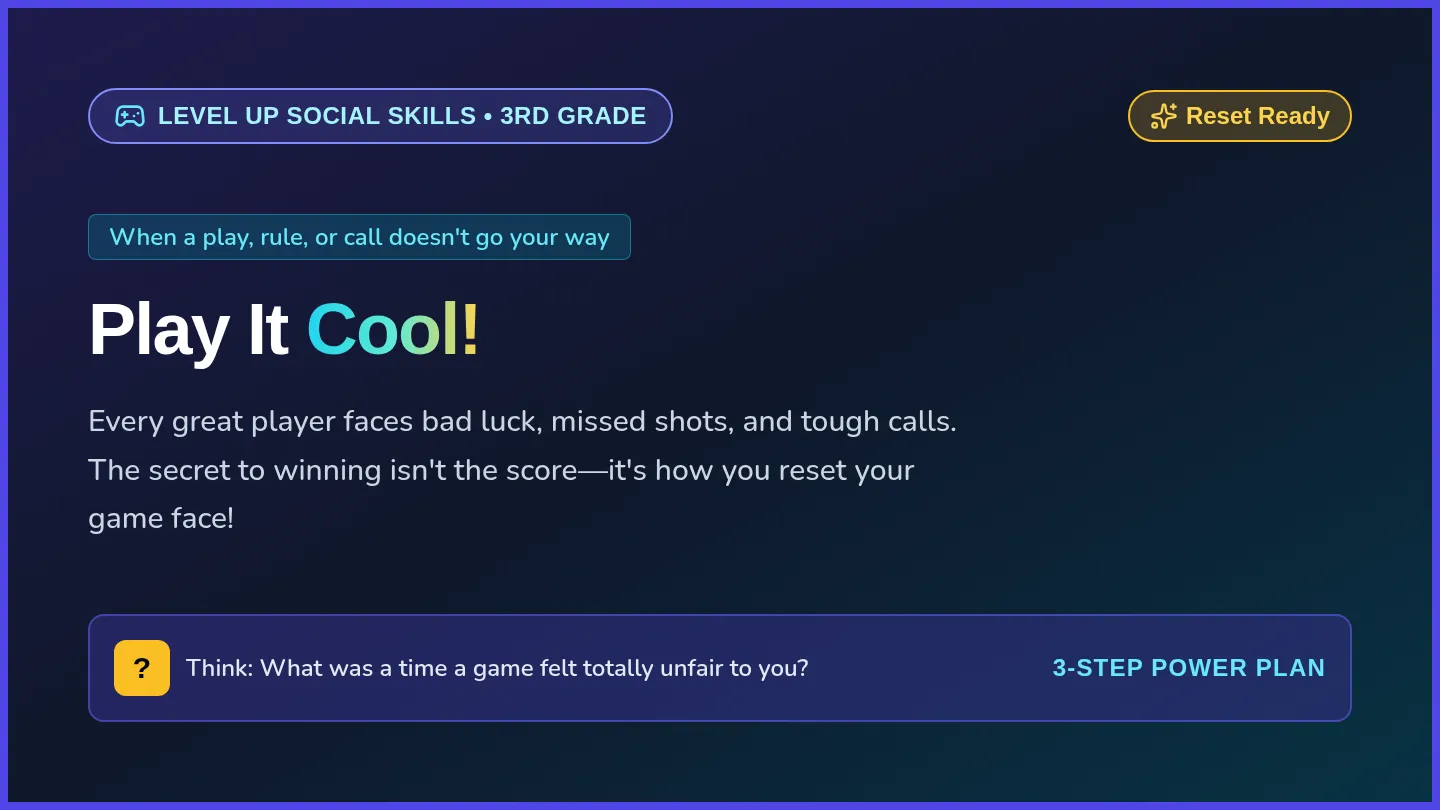
The Activity: Play Jenga or Connect 4 with intentional mini-frustrations introduced via "Challenge Cards" (e.g., "Use your non-dominant hand," "You lose a turn," "Remove two blocks"). Award "Chill Champ Points" not for winning, but for calm reactions when a play fails.
Script Rehearsal: Practice saying aloud: "That stinks, but it's just one turn. My body stays cool."
Friendship Bridge: Kids love playing with peers who don't flip the board when they make an error.
The Lego Barrier Challenge (Co-Op Communication)
Partner Collaboration
The Activity: Sit across a table with a cardboard barrier between child and partner (counselor first, then an invited peer). The child has a built model and must verbally guide the partner to replicate it without pointing or touching.
Skill Target: Replaces frustration yells with descriptive clarification ("Let's pause, find the red 2x4 block").
Friendship Bridge: Builds cooperative pride and shared success without competition.
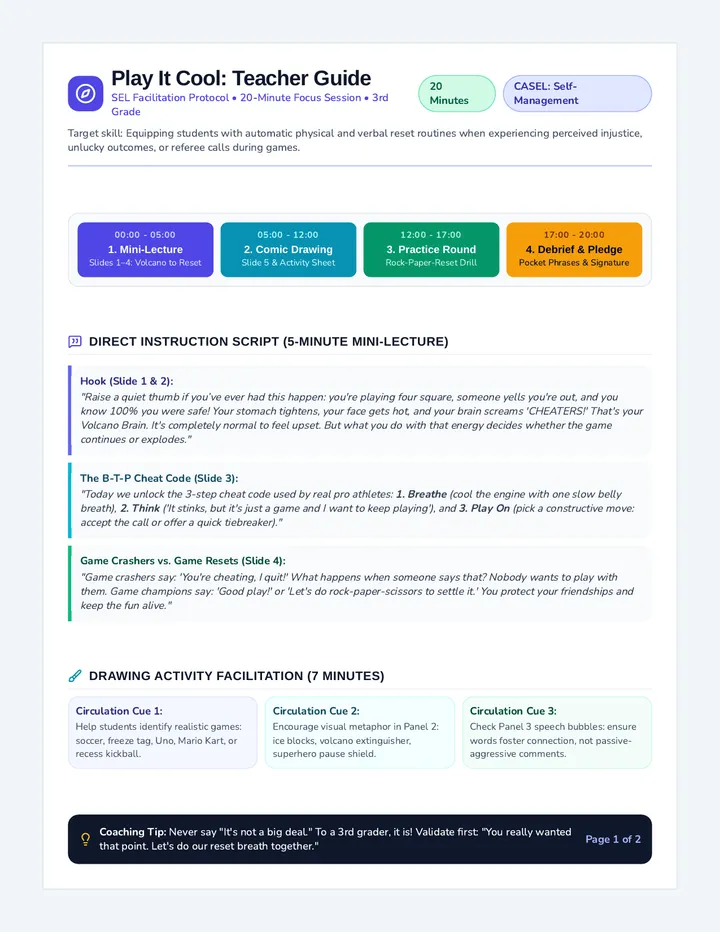
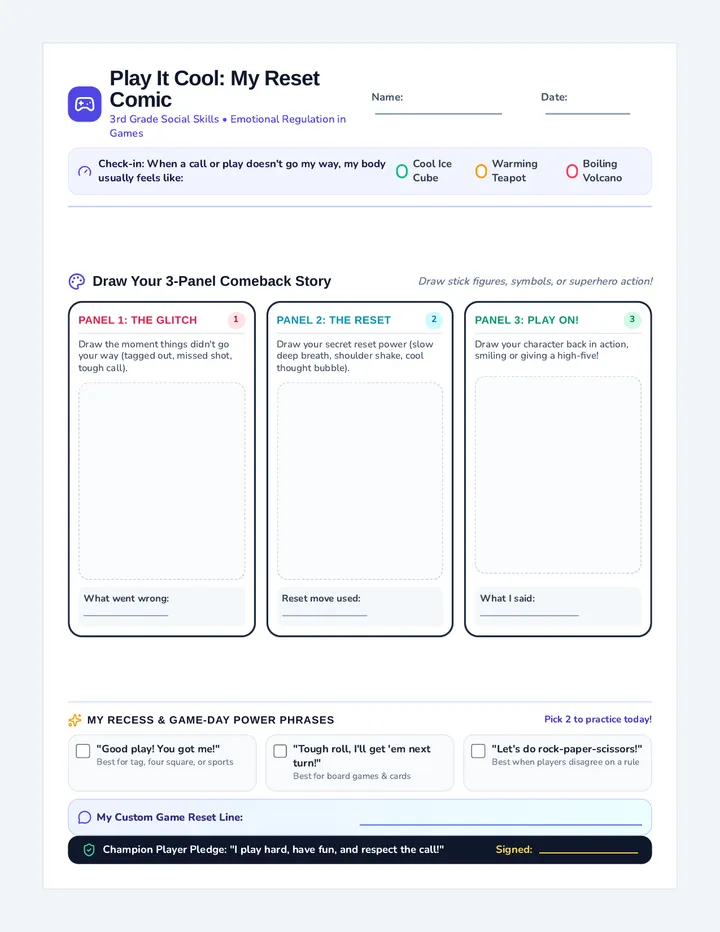
The 4-Step "Friendship Reset" Comic Strip
Post-Breakdown Repair
The Activity: Draw a 4-panel comic strip after calm is restored. Panel 1: What felt unfair. Panel 2: The explosion. Panel 3: The reset script. Panel 4: Rejoining the group. Practice the script: "My engine was in the red earlier. I'm calm now. Can I rejoin?"
Why It Works: Eliminates toxic shame and gives concrete words to replace awkward classroom silence.
Friendship Bridge: Friends forgive quickly when they see someone acknowledge the bump and re-enter gently.
Session Progression: From Solo Office to Recess Yard 3-Stage Scaffold
Stage 1: Solo Office
Master Volcano radar, heavy push circuits, and safe brake drills 1-on-1 with counselor.
Stage 2: Invited Peer Game
Invite 1 kind peer to the counseling office for Lego Challenge or cooperative board game.
Stage 3: Recess Wingman
Counselor observes recess; child uses designated signal to take a 2-min body reset before rejoining.
Calm Connections Counseling Menu Page 2 of 2: Social Play & Conflict Repair